Geopolitics & International Declarations
Julia Lisco, Researcher at American University’s Center for Latin American & Latino Studies and the Immigration Lab, International Affairs Policy Analysis in Global Migration MA candidate
Singing and soccer are so deeply intertwined; they exist at the core of sports fandom. Throughout a game, crowds will sing songs, often with altered lyrics, in support of a player or to express their discontent with the actions on the field.
Occasionally, chants are politically informed, particularly at the national-team level, even at the World Cup despite FIFA’s attempts to prohibit political statements. These policies did not stop politically charged chants from ringing out among the fans after kick-off across several matches.
Australian Fans and Current Politics
Australian fans drew international ire with their chant, crafted specifically for this World Cup. Cries of “Aussie boys are on a bender, Donald Trump is a sex offender” echoed in stadiums, pubs, and across America and Canada. The chant is believed to be in reference to the President’s alleged relationship with convicted sex offender Jeffrey Epstein, and his inclusion in the Epstein Files.
Argentina and Historical Memory
Argentina is infamous for its political and anti-English chants, even when they are not playing England. In The Five-Minute Ritual, I discuss their 2026 semi-final clash, the hostility that permeated the match, and the Falklands context, but the hostility was not contained to these events.
The 1982 Falklands War is frequently referenced in Argentinian songs. One of the most famous Argentinian football chants, regardless of tournament or opponent, is “Y ya lo ve, y ya lo ve, El que no salta, Es un ingles!” (“And now you see, and now you see, whoever doesn’t jump is English!”), which is sung while fans across the stadium jump in unison.
After Argentina beat Switzerland on July 11, 2026, in the quarter-finals, videos were posted online of players singing: “Por Malvinas, por el Diego, por la ultima de Leo” (“For the Malvinas [The Falklands], for Diego [Maradona], for Leo [Messi]’s last one”) from the locker room; and in 2022, while on the hunt for the World Cup trophy, several long chants included call-outs to the war and berating the English.
This animosity is healthily returned by English fans. Enzo Fernandez, a high-profile Argentinian player, has played in England since 2023. Just after the World Cup concluded, the player completed a high-profile, €100 million transfer from FIFA Club World Cup Champions Chelsea to Manchester City, who have won the Premier League six times since the 2017-2018 season. During his debut for the club on September 5, 2026, at home against Coventry City, the crowd rang out with a new custom chant for the player. This is not unusual for new players, but generally songs are focused on the player, and not political commentary. “The Falklands are ours, the Falklands are ours. Enzo Fernandez, the Falklands are ours” was sung so loudly that it was clearly heard over the television broadcast, despite match commentators speaking over the feed.
Scotland and National Identity
Smaller and lower-ranked nations throughout the tournament repeatedly dominated the hearts and minds of fans, regardless of the proportion of fans in the stands. One of these nations, despite not progressing out of the group stage, was Scotland.
Interestingly, Scotland’s participation as an independent nation in international sports is not fully representative of its nuanced legal status. Scotland’s status is legally complex; it is an independent nation with “devolved and reserved powers,” and significant essential infrastructure is controlled by Westminster, including defense, military, border enforcement, and currency (they use British Pounds, but they do have their own Scotland-specific notes which can be used across the UK interchangeably).
Only in the Olympic Games does the United Kingdom compete as the joint entity “Team Great Britain.” Otherwise, the UK member states, including Scotland, compete as independent entities. This is due to specific regulations that grandfather them, and a few other territories, like Puerto Rico, into international competition qualification. When Scotland qualified for the World Cup for the first time since 1998, they did so as an equal to England, to whose political authority they’ve been subject for centuries.
Scotland fans were extremely excited to return to the World Cup and support their entire team against Brazil, Haiti, and Morocco. Nowhere was this passion as evident as during the playing of the national anthem. As part of the UK, Scotland does not have its own legal national anthem separate from “God Save the King”; instead, “Flower of Scotland” is the unofficial national anthem, which is sung before every Scotland game, regardless of sport. When Flower of Scotland rings out before a match, a nation with a complex international designation gets two minutes where Scottish national pride is central without the shadow of England.
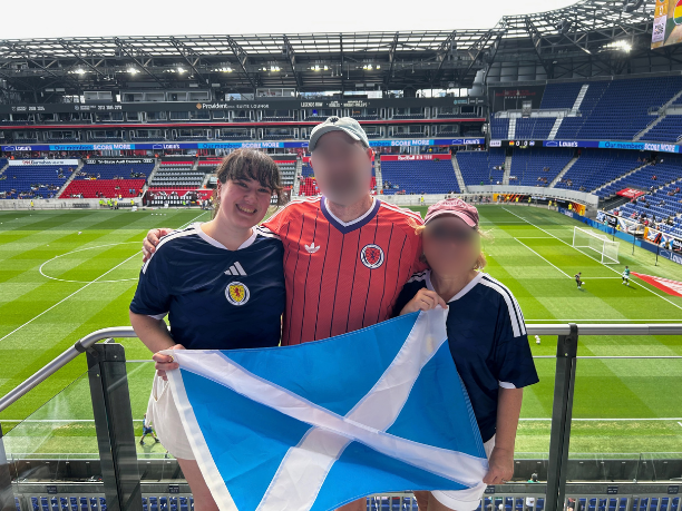
Scotland never expected to win the tournament, but for those three matches, every Scotland fan around the world reveled in those few minutes. In unison, millions would profess their love for their country and their team, manifesting the love these teams carry for their fans and countrymen around the world in a display that is more than just meaningless ceremony. I did not get to experience Scotland’s World Cup campaign in person, but I did attend their final pre-tournament match against Bolivia on June 6, 2026, and I dare say few nations sing their national anthem as passionately as the “Tartan Army,” particularly one of the song’s final concluding phrases, “But we can still rise now, And be a nation again…”
With the referendum of understanding between Scotland, Northern Ireland, and Wales signed on September 14, 2026, in which each government’s First Minister confirms they will call votes for independence from Westminster’s authority, this statement may ring true sooner than most Scotland fans may have believed during the tournament.