
Part 1: The Diaspora Stadium

Visas, Belonging, Unaffiliated fans, and the 2026 World Cup

Julia Lisco, Researcher at American University’s Center for Latin American & Latino Studies and the Immigration Lab, International Affairs Policy Analysis in Global Migration MA candidate
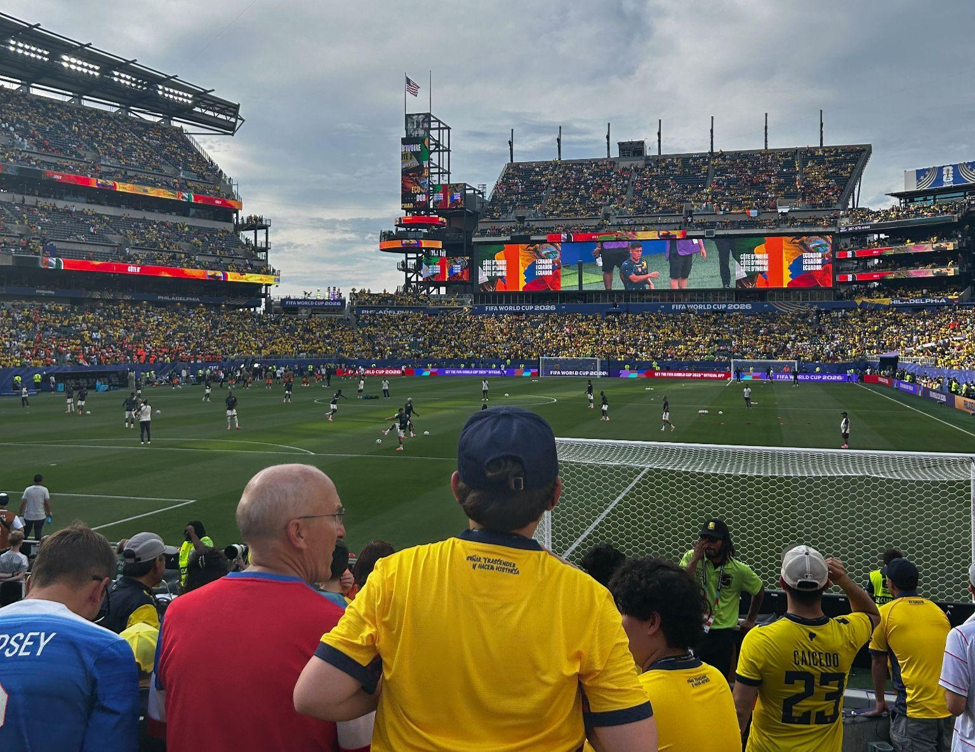
Image by Julia Lisco of the June 14th, 2026, Ecuador v Côte d’Ivoire FIFA World Cup 2026 game, with a Team USA jersey visible in the crowd.

With exorbitant prices required to attend the matches due to dynamic pricing and the extensive immigration bans instituted by the US, many fans were unable to make the expensive pilgrimage to witness their national team compete in the 2026 FIFA World Cup.

Of the 48 participating countries, only a handful had a 100% success rate for fan visa applications, disproportionately excluding smaller and poorer nations. Canada was also extremely strict when issuing visas for both players and fans. While soccer may not be the most popular sport in the U.S., it does have something that made it uniquely equipped to welcome the world: vast and diverse diaspora communities. In fact, it was largely diaspora communities that filled the stands and made up the heart of the tournament.

Many diaspora communities have complex relationships with their homeland; often separated by generations, political ostracism, or forced relocation, bringing with it a host of complex emotions. As Daniel Alarcón discussed on The Athletic’s “Pablo Torre Finds Out” podcast in June 2026, supporting one’s national team is often a less emotionally complicated way for diaspora members to connect with their homeland without the socio-political baggage that comes with other attachments and the history they carry.

The homeland relationship is complicated, but diasporas overwhelmingly brought their hearts to the tournament and made every team feel like they had a bit of home with them. But it wasn’t just diaspora members and local fans filling the stands.

As was the nature of ticket sales for this tournament, many fans, eager to pay the cheapest rate, committed to matches not knowing who would be playing, only the time and location of the match. This led to significant portions of every stadium being made up of observers who held no particular affinity or affiliation with either nation. Some would select a side to support for the day, letting themselves get wrapped up in the energy, while others, refusing to wear a jersey for any other nation, would wear their team’s shirt to the match, despite them not playing.

Ecuador v Côte d’Ivoire

I was one of the many fans who secured tickets to a match without knowing who would play. That game ended up being the June 14th, 2026, Ecuador v Côte d’Ivoire game. I didn’t have any loyalty toward either team, and, not wanting to spend a small fortune on a jersey for either, I wore the Scottish Women’s new alternative shirt to the game. Once in my seat, directly in front of me was a group of men in various USA jerseys. Throughout the stadium, I also noticed many people wearing Colombia jerseys, which look extremely similar to the Ecuador shirts, both sharing a similar solid yellow base. Once I saw one, I saw many, and I was nowhere near the only person in a non-represented team’s jersey.

On the way to the stadium, which was, by my estimation, roughly 85% (at least) filled with Ecuadorian fans, we were swept up in their songs on the subway. Once in the stadium, during the national anthem (as for all matches), the lyrics are displayed on the jumbotrons, and my family, surrounded by Ecuadorian fans, joined right in in their joyous rendition of Salve, Oh Patria, pulled into the expression of their passion for their country and team.

This is not to say that there weren’t many genuine Ecuadorian fans in the stadium, while Côte d’Ivoire supporters made up a passionate minority. The disparity in the stadium between the number of fans for this match is twofold. The Ecuadorian diaspora is one of the largest in the New York metro area, and Philadelphia Stadium (more commonly known as Lincoln Financial Field when it’s not being rented by FIFA), where the match was played, is an easy day trip for the passionate community, drawing significant numbers of genuine Ecuadorian fans.

The second factor contributing to disproportionate attendance is visa restrictions. At the time of the tournament, Côte d’Ivoire had been subject to a visa ban since December 16, 2025, severely limiting possible entry for fans from the small African nation, even if they were able to secure tickets. Meanwhile, Ecuador has not been subject to any country-specific visa restrictions under the Trump administration.

France v Senegal.

One of the most anticipated matches of the tournament was France v Senegal on June 16, 2026, largely due to their shared long colonial history. Senegal was one of the many countries affected by the immigration restrictions; meanwhile, France was one of the few whose fans faced no specific legal restrictions, yet this could not be felt in the stadium.

Unlike the Ecuador match, I was in the stadium as an on-field Pre-Match Ceremony volunteer, standing along the edge of the Senegalese flag on the pitch while more than 80,000 people passionately sang the French and Senegalese national anthems. The stadium was overwhelmingly decked in blue France jerseys (with most unaffiliated fans backing the 2018 World Cup champions, and large Francophile diasporas in the New York Metro area populating the stadium), but when the national anthems were being sung, that discrepancy completely melted away, with Senegalese fans singing just as loudly as the French fans.

I’ve never seen such expressions of pure joy and excitement as than I did at the matches I got to attend as a fan and as a volunteer. National identity and pride are complicated concepts for many to reconcile within themselves, but when applied to sport, much of the weight of history is lessened, and for a moment people get to embrace the joy, whether it’s for their country or for the love of the game. 
A Challenge Becoming an Opportunity: The Venezuelan Diaspora’s Journey to Social Integration

By Danjha Leon Martinez


Peru has become one of the top destinations for Venezuelan migrants, second only to Colombia, with close to a million Venezuelans now calling it home. The Venezuelan diaspora started their mobilization journey after being forcibly displaced due to the socio-political situation in their home country.

Most migrants are young adults aged 18 to 34. About half hold technical or university degrees. Despite this, they had been encountering difficulties finding enough opportunities suitable for their professional or occupational credentials. In terms of resettlement, Peru still faces challenges in delivering the social services needed for effective migrants’ social integration. Specifically, the Peruvian system does not expedite their access to primary services such as documentation, healthcare, housing, and education during the early stages of their integration into the country. Thus, Venezuelans find themselves working in the informal economy as street vendors, construction workers, or housekeepers, taking any opportunities that they can find.

For many migrants, the choice to settle in Peru isn’t random. They are drawn by the country’s steady economic growth and its notable progress in reducing poverty. Others come to reunite with family or because Peru’s legal migration procedures are comparatively easier than those of other nations.


Diego: When I arrived in Peru, I said ‘Vaya! Hay Audis, Mercedes Benz, Starbucks…’ In Peru, I found opportunities… I was able to open a barbershop and take a loan to buy a car.


Venezuelan arrivals have put a slight increase in demand on Peru’s public services, with hospitals, schools, and social programs. But a growing population will grow the economy and produce more opportunities for all in Peru. Locals have noticed more competition for low-wage jobs, fueling worries about unemployment and sparking some anti-immigrant attitudes that are tied to xenophobic sentiment.

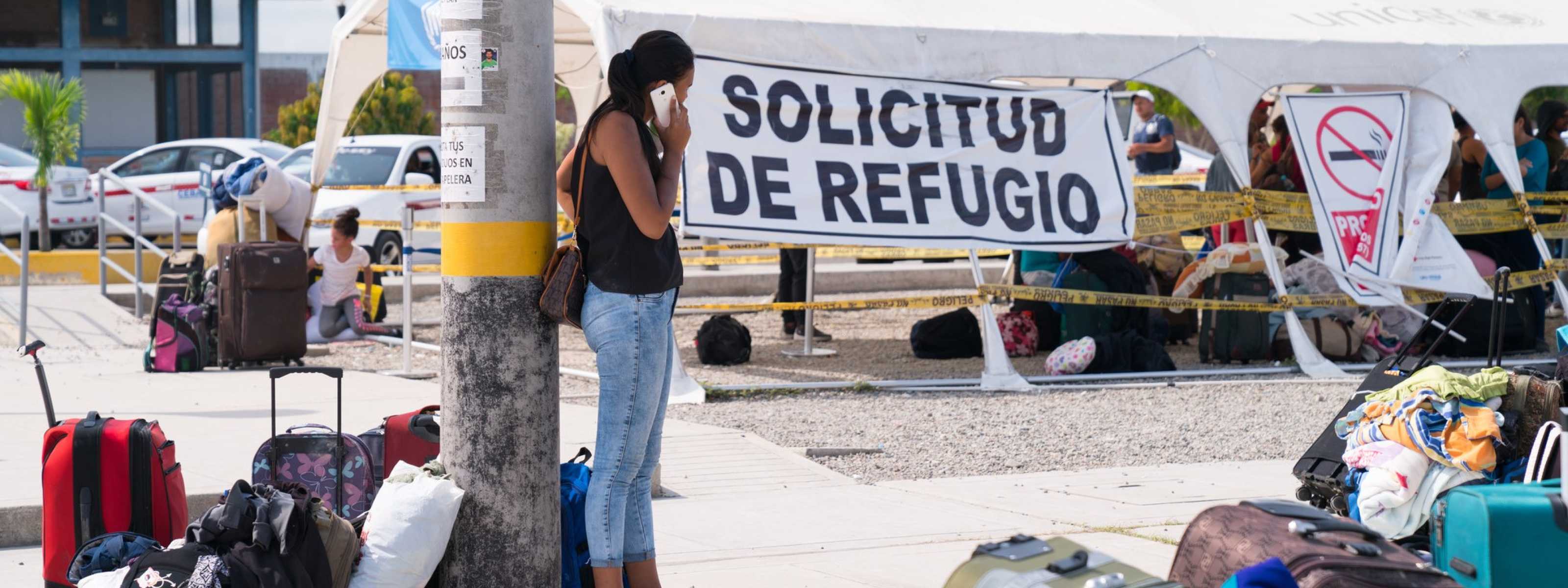
Lutheran World Relief, 9/16/2021, Tumbes, Peru (https://lwr.org/blog/2021/veninformado-una-plataforma-digital-para-migrantes-y-refugiados-venezolanos-en-peru)

Given the high degree of informality in Peru’s economy, migrants can find work quickly, and open migration policies have made it easier for them to get temporary permits. Still, Venezuelans in Lima, the capital of Peru, face hurdles in getting formal jobs, leaving many with higher education degrees to work as street vendors, housekeepers, and in small trades just to get by.

For this reason, Venezuelans heavily rely on transnational and local social networks, which provide crucial support, including information about job opportunities, housing, and other resources that aid economic survival.


Pedro: (former employee at PDVSA, Petróleos de Venezuela): During the first three months that I was here in Peru, I could not find a job. I survived only with the support of my countrymen. 


Despite issues such as job precariousness and limited rights, Lima offers better economic opportunities than other potential destinations in Peru’s main cities. 


Saul: I feel like I really prospered. When I arrived, the challenges were overwhelming, but the benefits I gained from it are invaluable. Now I can give stability to my family, and I own a business which I’m proud of.

Jose (Venezuelan mechanic who moved to Lima in 2018): “The minimum wage here in Peru… it’s not feasible for a Venezuelan to live with dignity because the rent prices and groceries cost basically the whole salary.” 


Despite the funding and technical support from several international NGOs to implement humanitarian assistance, there has been a disconnect between the results of these initiatives and the intended outcomes. Almost 70% of the Venezuelan community still need to accelerate their migration process and acquire a formal status, requiring international protection. Coping strategies for financial survival include juggling multiple informal jobs, entrepreneurial activities, and sharing housing to reduce living costs, often under precarious conditions. Venezuelan migrants who plan for a future in Peru balance hopes for stability with the need to adapt to informal economic contexts and local cultural idiosyncrasies.

Peru’s political will towards the integration of the Venezuelan diaspora could be reflected by future policy frameworks that help secure legal immigration statuses and access to social programs with fewer bureaucratic hurdles. Even after facing a difficult journey, Venezuelan migrants have significantly contributed to Peru’s economy and society. They have filled critical labor gaps in sectors such as construction, food services, and informal vending, thereby driving economic growth, particularly in low-wage jobs. Many have also opened small businesses, diversifying local economies and creating jobs.

Overall, migration brings development opportunities to a country. As of now, the Venezuelan diaspora is still in the process of integration and organizing mutual support. Given the diaspora’s positive impact on the country’s development and Peru’s long-standing history of economic growth driven by the arrival of diverse migrant clusters, it would be beneficial for both the vulnerable community and the host country to advocate for the protection and effective integration of the Venezuelan diaspora.

Danjha Leon Martinez is a Research Assistant for the Immigration Lab at the Center for Latin American & Latino Studies. She is a Development Management graduate student at American University with a focus on humanitarian aid and global migration.

Edited by Ernesto Castañeda, Director of the Center for Latin American and Latino Studies (CLALS) and the Immigration Lab, Katheryn Olmos, Research & Data Coordinator, and Vincent Iannuzzi-Sucich, Research Intern at the Immigration Lab.