Guatemala’s President Arévalo: When Honesty is Not Enough

By Ricardo Barrientos*

Source: Guatemala’s Ministerio de Desarrollo Social (MIDES)

Around the world, increasing numbers of voters are electing rulers with authoritarian, anti-democratic, or even, openly dictatorial profiles. Disenchantment with democracy is on the rise, while respect for basic freedoms, inclusion, equality, and progressive thinking – or, just thinking – is on the decline. When Bernardo Arévalo took office in January of 2024, after a legal battle to defend the previous year’s electoral results, Guatemala appeared a notable exception in the global slide towards authoritarianism. Recognized as a politician highly committed to democracy, human rights, and the rule of law, Arévalo emerged as a beacon for democracy and freedom in Central America and beyond.

Arévalo’s campaign was simple: be honest and fight corruption. This proved to be a highly effective electoral offer, as voters were tired after several administrations plagued with corruption scandals, and the ominous capture of important public institutions, most notably the General Attorney’s Office. After more than half of his four-year presidential term, Arévalo has carried through on that promise. He and most of this cabinet are perceived as honest, and corruption is not understood to be a problem within the Executive branch. Arévalo is also highly praised internationally, in contrast to his predecessors and some of his current regional neighbors. His administration has proved highly sagacious in managing international and diplomatic relations, achieving the best possible results with such challenging topics as dealing with the Trump administration in the US.

    Arévalo’s time in office would appear to be an outstanding success, deserving of applause by the Guatemalan people. Well, not quite.

    A survey conducted in May of 2026 shows that citizen support for Arévalo has plummeted. Only around 37 percent of Guatemalans approve of his government, putting him among the six worst rated presidents in Latin America. His popularity is well below several of the least democratic presidents, like Nayib Bukele of El Salvador or Daniel Ortega of Nicaragua, who enjoy high levels of citizen support. The reason is simple: since the beginning of his tenure, the Arévalo administration has suffered severe difficulties managing the budget, most notably, public investment in infrastructure.

    With four ministerial changes in just two years and the lowest rate of budgetary execution among all ministries, the Ministry of Communications, Infrastructure, and Housing is surely a particular nightmare for the president. It continues to suffer from deeply rooted structures of corruption, contractors linked to organized crime and campaign financing for rival parties, compounded by a lack of technical experts within Arévalo’s own party, Movimiento Semilla, capable of assuming high-profile ministerial positions. This chaotic situation is reflected in roads that are in very bad condition and no construction of new ones. Understandably, Guatemalans become angry when poorly maintained roads aren’t improved, and not even a kilometer of new road has been built.

    Arévalo’s administration has also proven extremely weak when dealing with Congress. Since 2024, the only way the Executive branch has managed to get the legislation it needed approved is by increasing the money for what congressional members and mayors most want: fully flexible budget allocations to local governments, especially through so-called “extraordinary” transfers to local development councils. In 2024 this tactic seemed to work, as the Arevalo administration finally got its budget expansion approved, followed by extensions and modifications of the 2025 and 2026 budgets. But this “solution” for Congress to pass legislation worked only for those bills that Congress members, mayors, and the Executive all wanted. It did not work for other measures to protect children and youth, or to regulate the use of water, among many others.

    Of course, the tactic of “buying” the will of Congress is never sustainable over the long term. Arévalo’s team discovered that the appetite of congressional members and mayors for extraordinary transfers to local development councils proved insatiable: in 2026 extraordinary transfers rose to around US $1,420 million, or more than 18 times what they were in 2022. However, the actual execution of this huge increase through transfers is very low. In 2025, execution was only 59 percent of what was allocated. And as of July 2026, it stands at 16 percent, while the rest of the budget’s execution averages around 42 percent. Among the reasons is technical incompetence. But the most worrisome is that Congress has been passing exceptions to the Organic Budget Law, allowing non-executed allocations to be carried over to the next year. This effectively allows mayors and congressmembers to accumulate and finally execute them all in 2027, when general elections will be held. It will also likely be too tempting for mayors and congressional representatives not to divert these funds to their own re-election campaigns.

    Thus, due to the Arévalo administration’s weakness when dealing with Congress and its inability to deliver public investment works through Central Government ministries, it has not only transferred huge amounts of money, but a large share of political power to mayors and Congress. And, if the general perception is that Arévalo and his ministers are honest, that perception is surely not the same with regard to mayors and members of Congress: they belong to the “old politics”; many have been accused of corruption and of having links to organized crime, which is why such colloquial terms as “narco-mayor” or “narco-deputy” continue to be widely used.

    President Arévalo is highly praised for his honesty and recognized internationally as a true democrat. But most Guatemalans reject him for not being an effective ruler in delivering the needed public investment in goods and services. The worst possible outcome of this mess is that Guatemalans approve of honesty and democracy, while also believing that they are not enough to achieve the necessary results. As is happening around the world, many Guatemalans have become convinced that not only are democracy and honesty not enough, but that they prefer less democratic and less honest rulers in exchange for more effectiveness in delivering real products and results. This is perhaps the most probable outcome in Guatemala for the upcoming 2027 election: if mayors and members of Congress manage to execute the accumulated budget through their local development councils, this will show that, they, local narco-politicians and practitioners of the “old politics,” are in fact more reliable for delivering the public goods and services, such as roads, that people desperately need. In the wake of a new electoral cycle, Guatemalans could be applying to President Arévalo the old saying, “Street lamp, darkness at home.”

    * Ricardo Barrientos is the executive director of the Central American Institute for Fiscal Studies (ICEFI).

    Changing Birthright Citizenship Would Weaken American Democracy

    By Ernesto Castañeda

    American University

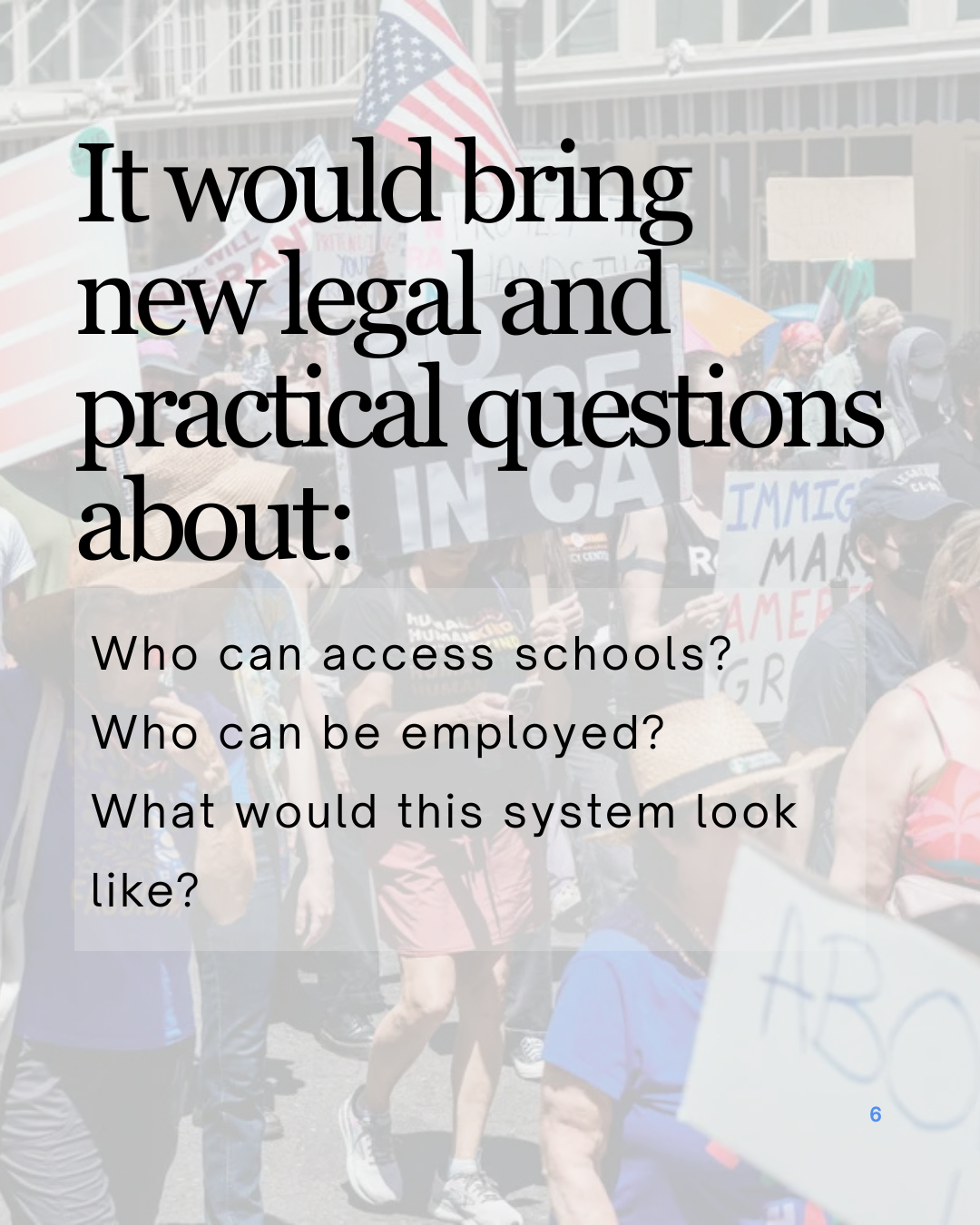
    The U.S. Supreme Court will soon announce its ruling on Birthright Citizenship. If it sides with the Trump administration, it will revoke the practice of automatically obtaining citizenship by birth in U.S. territories. The outcome of this case has the potential not only to change how immigration law functions but also how citizenship is defined for everyone in the United States. Doing away with it would permanently damage the Supreme Court’s reputation.

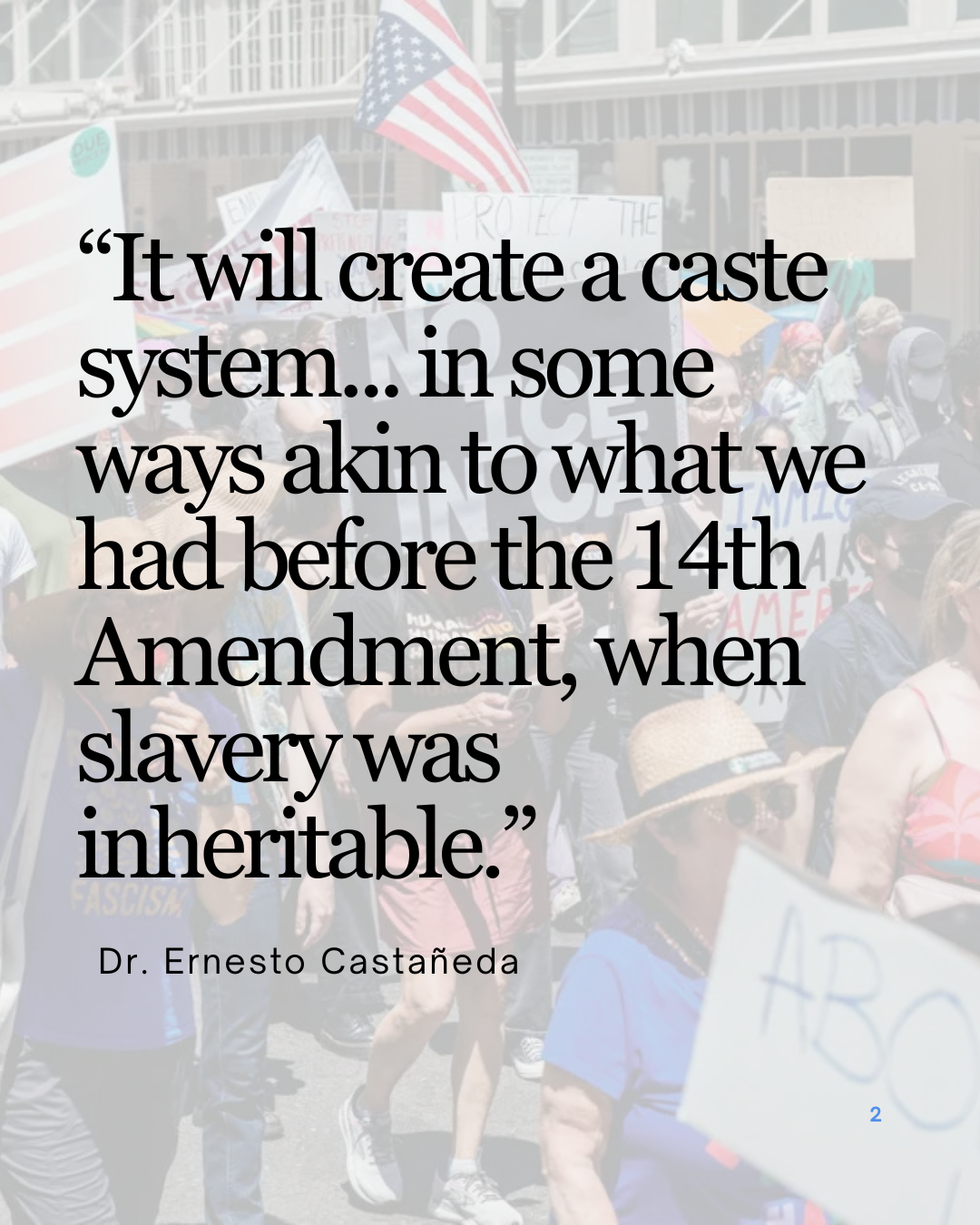
    Birthright Citizenship is part of the 14th Amendment and has been a right guaranteed to anyone born within the country since 1868. The amendment was originally implemented to guarantee citizenship to formerly enslaved people and means that anyone born on American soil is an American citizen, regardless of their parents’ citizenship at birth. Slaves were not considered citizens nor had the same political rights, and their status was inherited through maternal lines and thus also affected the children slave-owners had with enslaved mothers.

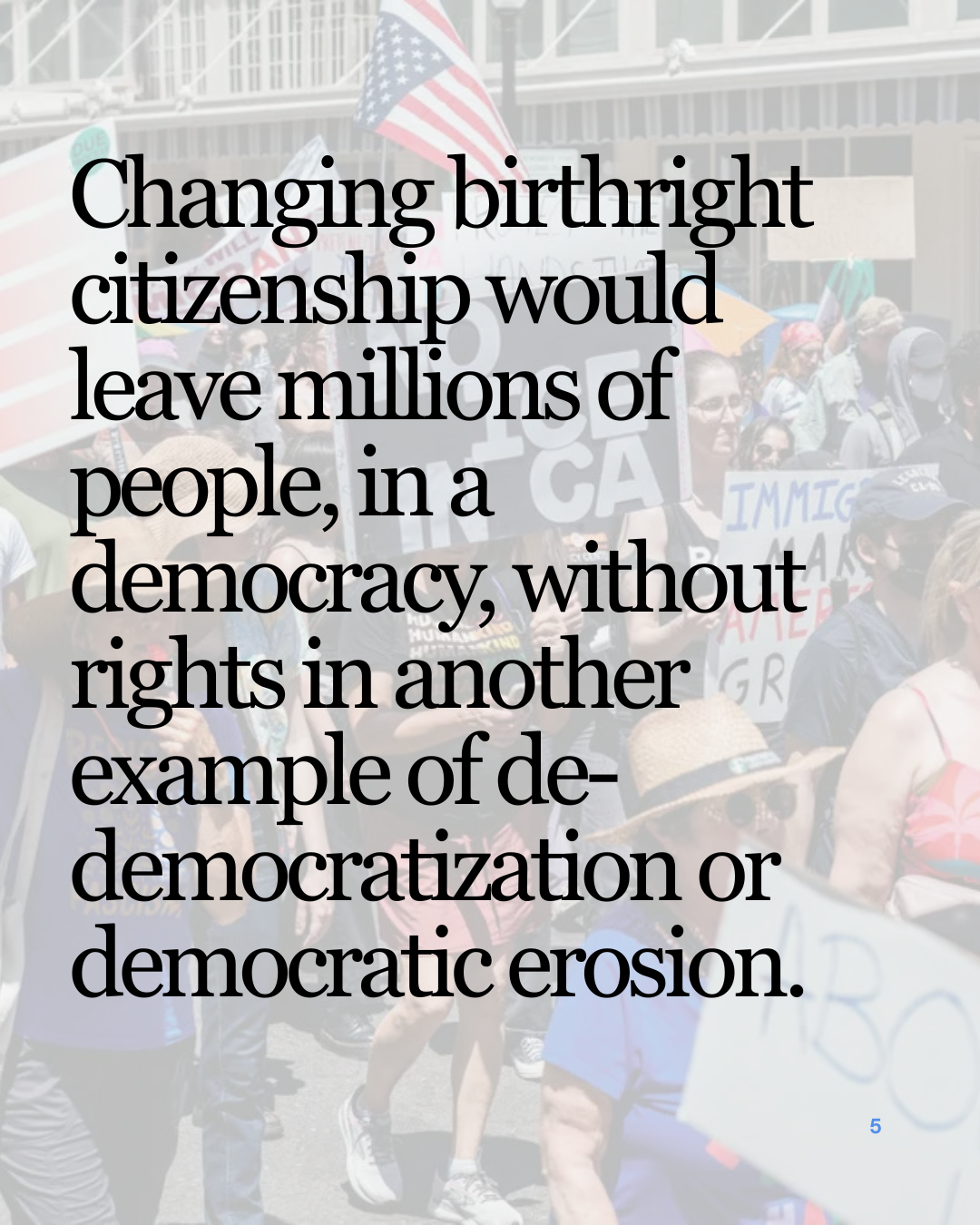
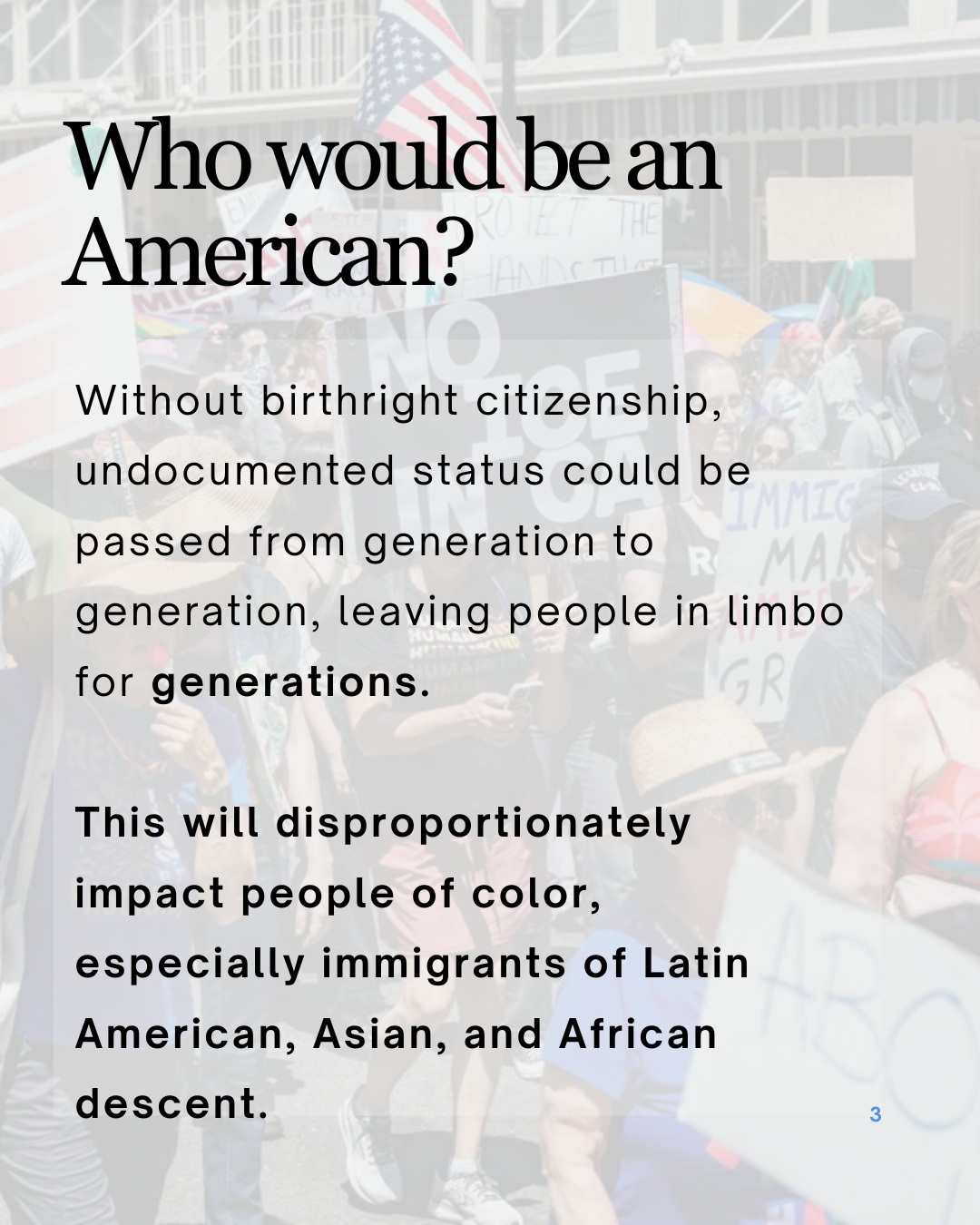
    Revoking Birthright Citizenship would immediately bring into question the citizenship of hundreds of thousands of children born each year, both to citizens and to undocumented or temporary residents with permission to work and study in the United States, and not officially representing a foreign country.  It would reinstate the inheritance of status that existed during slavery, where a mother’s status, in this case, documentation, would be passed down to her children, possibly for generations. It would create a group of people in the U.S. with no rights, greatly deepening inequality and democratic erosion.

    Previous court decisions have upheld Birthright Citizenship regardless of the parents’ immigration status. There is a strong precedent for birthright citizenship. Even during previous periods of immigration restriction in the US, like during the years following the Chinese Exclusion Act, the U.S.-born children of undocumented Chinese parents were American citizens. Changes to birthright citizenship would directly impact newborns from undocumented parents as well as the children of foreign workers with permission to reside in the country. Systems like this have existed before in countries like Germany, but were abandoned due to their impracticality and the enduring inequalities they created.

    A small group is fighting to end birthright citizenship. Most Americans do not have a problem with birthright citizenship; 64% of Americans support it. The widespread impact of ending birthright citizenship would be felt not just by everyday people but also by foreign-born CEOs, scientists, healthcare professionals, and, yes, agricultural and service workers. It would impact U.S. innovation for decades to come. It would deter people from immigrating and bringing new ideas and approaches to common problems. The U.S. would no longer be the main global hub of intellectual exchange and creativity that it has been for decades.

    Ernesto Castañeda is a political, social, and cultural analyst.

    Between Giants: How Uruguay Is Expanding Its Global Trade Strategy

    Source: Wikimedia Commons

    By Juan A. Bogliaccini, Professor of Political Science, Universidad Católica del Uruguay

    This small South American country is seeking new markets and investment while remaining anchored to MERCOSUR and balancing ties with the United States and China.

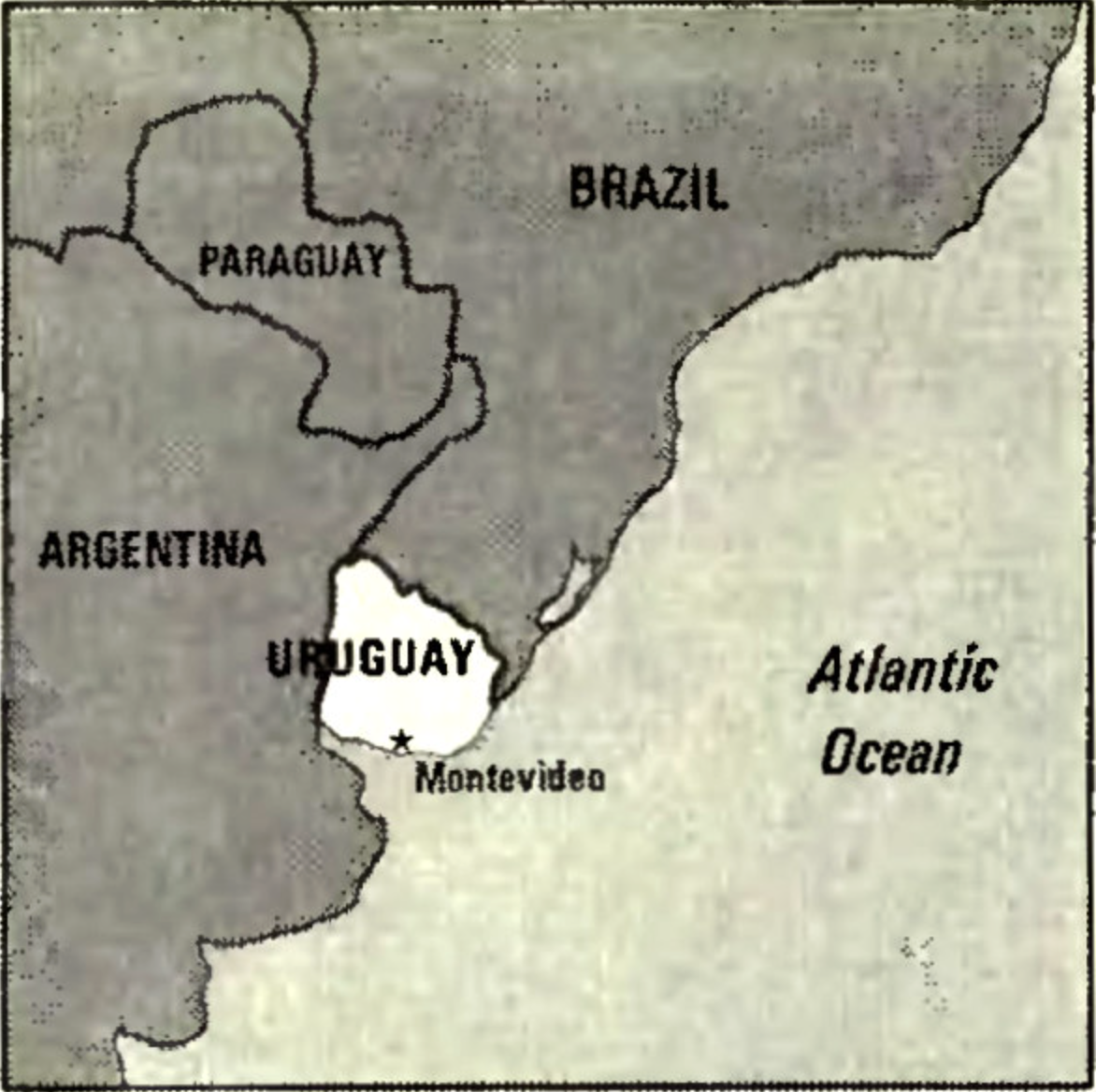
    For more than three decades, Uruguay’s strategy for international economic integration has revolved around the Southern Common Market, MERCOSUR. Founded in 1991 by Argentina, Brazil, Paraguay, and Uruguay, the bloc emerged at the end of the Cold War with the goal of deepening regional economic integration and strengthening trade among its members. For Uruguay, a small country of just over three million people located between two regional giants, the bloc initially proved highly beneficial. During the 1990s, MERCOSUR became the main engine of Uruguayan exports and foreign investment.

    That dynamic began to shift at the end of the decade. Brazil’s currency devaluation in 1998 and Argentina’s financial collapse in 2001 exposed the vulnerabilities of Uruguay’s economic dependence on its neighbors. At the time, a majority of the country’s exports was destined for these two markets, and the crises had profound effects on Uruguay’s economy.

    These events triggered a long-running debate within the country’s political and economic elites about the future of Uruguay’s international trade strategy. At the center of the discussion was one of MERCOSUR’s key institutional rules: member states cannot negotiate individual free trade agreements outside the bloc. Critics argued that this constraint limited Uruguay’s ability to diversify its economic partnerships in an increasingly globalized world.

    For many years, much of the political center-right advocated a strategy similar to that pursued by Chile—signing bilateral free trade agreements across multiple regions of the world. The center-left generally defended remaining firmly within the regional framework, emphasizing the importance of political and economic integration with neighboring countries.

    Over time, however, both sides gradually converged toward a more pragmatic position. Today there is broad consensus that Uruguay should remain in MERCOSUR while pushing for greater flexibility within the bloc allowing for members to pursue complementary trade agreements. In practice, leaving MERCOSUR has never been a realistic option. Brazil and Argentina remain crucial trading partners, particularly for exports linked to regional value chains and cross-border production networks.

    At the same time, the bloc itself has increasingly sought to expand outward. In recent years, MERCOSUR has concluded trade agreements with Singapore and the European Free Trade Association (EFTA), which includes Iceland, Liechtenstein, Norway, and Switzerland. In 2026, after more than twenty-five years of negotiations, MERCOSUR also finalized a landmark trade agreement with the European Union. Across successive governments representing different political parties, Uruguay has consistently supported these negotiations as part of a long-term strategy of gradual trade opening.

    Meanwhile, Uruguay’s broader trade relationships have evolved significantly. Over the past two decades, China has become the country’s principal destination for goods exports, particularly agricultural commodities such as soybeans and forestry products like cellulose pulp. At the same time, the United States has become the main market for Uruguay’s rapidly growing service sector, especially software development and business services.

    These trends have positioned Uruguay within a complex global landscape shaped by growing geopolitical competition between the world’s two largest economies. Rather than aligning strongly with either side, successive Uruguayan governments have sought to maintain a careful balance between Washington and Beijing while preserving strong ties with their regional partners.

    Recent administrations have also attempted to broaden the country’s commercial horizons. During the presidency of Luis Lacalle Pou (2020–2025), Uruguay applied to join the Comprehensive and Progressive Agreement for Trans-Pacific Partnership (CPTPP), one of the world’s most significant multilateral trade agreements. Although accession negotiations are only beginning, the move signaled Uruguay’s intention to deepen economic ties with Asia-Pacific markets.

    The Lacalle Pou government also explored the possibility of negotiating a bilateral free trade agreement with China. While the initiative ultimately did not move forward—largely because Beijing made clear it preferred negotiations with MERCOSUR as a whole—the effort served an important political purpose. Alongside the negotiations with the CPTPP, it signaled to Uruguay’s regional partners that the country was determined to pursue broader trade opportunities.

    The current administration of President Yamandú Orsi has continued this strategy of balanced engagement. Diplomatic outreach to both the United States and China reflects Uruguay’s pragmatic approach in an increasingly multipolar global economy. Promoting exports has become particularly important as the strength of the Uruguayan peso makes international competitiveness more challenging for domestic producers.

    Despite these global ambitions, Uruguay’s integration into international value chains remains heavily regional. Much of the country’s participation in global trade occurs through “import-to-export” production models, particularly in agro-industrial sectors that rely on imported inputs and regional processing networks. A large share of these exports continues to be destined for MERCOSUR markets, reflecting the enduring importance of regional economic integration.

    This structural reality explains why Uruguay’s leaders have consistently pursued a dual strategy: maintaining strong economic ties with Argentina and Brazil while simultaneously seeking new markets and investment partners around the world.

    The recently concluded trade agreement between MERCOSUR and the European Union may represent an important step in that direction. Together with the agreements with Singapore and EFTA—and the expected accession of Bolivia to MERCOSUR—the deal could gradually expand the economic horizons of a country that remains heavily dependent on a limited number of export sectors.

    For Uruguay, the stakes are significant. Since the end of the global commodity boom in the early 2010s, economic growth has slowed. As a result, it has become more difficult to reduce a fiscal deficit that hovers around 4 percent of GDP while public debt continues to rise gradually. Expanding exports and attracting foreign investment have therefore become central priorities for policymakers.

    Yet Uruguay’s small domestic market inevitably limits its appeal to international investors. The country’s greatest economic asset lies instead in its potential role as a stable regional hub within the much larger South American market. With strong institutions, political stability, and relatively high levels of human capital, Uruguay often presents itself as a reliable gateway for companies seeking access to the region.

    Realizing that potential, however, will require more than trade agreements alone. Expanding Uruguay’s global economic presence will depend on developing new productive sectors, increasing productivity in existing industries, and moving gradually toward exports with higher value added.

    For a small country navigating between two regional giants and competing global powers, this is no simple task. But Uruguay’s strategy remains clear: maintain its regional anchor while steadily expanding its reach into the global economy.

    Costa Rica 2026: Political Continuity and Signs of Democratic Erosion

    Source: Wikimedia Commons

    By Ilka Treminio-Sánchez, Political Scientist of the University of Costa Rica.  

    The national elections held in Costa Rica on February 1, 2026, marked a turning point in the country’s recent political trajectory. Contrary to expectations of a runoff—common in a highly fragmented party system—the ruling party candidate, Laura Fernández, won in the first round with 48.3 percent of votes counted. This result not only ensured the continuity of the political project championed by President Rodrigo Chaves but also consolidated a deeper transformation of the Costa Rican political system. 

    The election saw a 69 percent voter turnout, the highest since 2010. This increase can be interpreted as a sign of civic revitalization, but also as a consequence of growing polarization. During the campaign, two distinct blocs emerged: on one side, the ruling party, organized around Chaves’s personalistic leadership; on the other, a fragmented opposition that, despite its ideological differences, shared concerns about the country’s institutional direction, and which ultimately consolidated most of its votes around the National Liberation Party. In the run up to the election, supporters of traditional and emerging parties came together. Concerned about the country’s democracy, they spontaneously organized various forms of collective action outside event venues. These activities culminated in the so-called “multicolored caravans,” named for the diversity of party flags displayed under the unifying slogan: “Out with Chaves!” But, despite such mobilizations, and in line with poll results, the opposition did not advance to a runoff. 

    From an organizational standpoint, the process was impeccable. The Supreme Electoral Tribunal once again demonstrated high standards of transparency and efficiency, reaffirming the technical soundness of the Costa Rican electoral system. However, this procedural strength contrasts sharply with the political tensions that accumulated during Chaves’s presidency, characterized by a confrontational discourse toward oversight bodies and the judiciary. 

    The Ruling Party and the Construction of Continuity 

    Fernández’s victory cannot be understood without considering the central role of the outgoing president. Although constitutionally barred from immediate reelection, Chaves devised a succession strategy based on personal loyalty and the symbolic transfer of his leadership. The official campaign revolved around the slogan “continuity of change,” presenting Fernández as the custodian of the president’s political mandate and as its guarantor of continued power. 

    The electoral vehicle was the Sovereign People’s Party (PPSO), created after Chaves fell out with the leadership of the Social Democratic Progress Party, with which he rose to power in 2022. The reorganization allowed it to concentrate the vote and achieve not only the presidency, but also 31 of the 57 legislative seats, an absolute majority unprecedented in recent decades. 

    This result substantially alters the conditions for governance. While previous administrations had to govern with small and fragmented factions, the new government will have a robust parliamentary group, although of late some friction has emerged among its leaders. Nevertheless, only the National Liberation Party – historically the most dominant political force in Costa Rica – had achieved a similar number of representatives in 1982, during an exceptional economic crisis. 

    This legislative majority opens the door to the possibility of far-reaching political reforms. During his presidency, Chaves repeatedly expressed interest in expanding the executive branch’s powers, limiting oversight bodies’ authority, and promoting a transformation of the state that his supporters call the “Third Republic,” a successive step in the destruction of the Second Republic inherited after the 1948 Civil War, whose foundations were laid by the liberationist José Figueres Ferrer. Without a supermajority, such reforms were not feasible. Today, the balance of power looks different. 

    During the transition period, two unprecedented decisions were announced. First, the president-elect expressed her intention to appoint Rodrigo Chaves as Minister of the Presidency, the sole responsible for coordinating actions between the executive and legislative branches. Second, the outgoing president appointed Laura Fernández as Minister of the Presidency for the remaining months of the administration. Chaves also stated that, in his future role, he would seek to bring on board members of the National Liberation Party to form the supermajority necessary to approve constitutional reforms.

    Populism, Leadership, and Institutional Tensions 

    Rodrigo Chaves’s governing style represented a break with traditional Costa Rican political patterns. His confrontational rhetoric, directed against media outlets, public universities, judges, and opposition members of parliament, reinforced an anti-establishment narrative that resonated with sectors disillusioned with the status quo.  His rhetoric fits into the political model followed by other populist presidents on the continent. 

    Surveys conducted by the Center for Political Research and Studies (CIEP) at the University of Costa Rica showed that his supporters primarily valued his ability to “impose order” and “produce results.” These attributes reflect a social demand for strong leadership and swift decisions, even if such an approach creates tension with the deliberative procedures inherent in liberal democracy. 

    In this sense, the Costa Rican case fits into a broader regional trend. The political and inspirational affinity with Salvadorian President Nayib Bukele’s influence was evident throughout the campaign, particularly regarding public safety and proposals to toughen the prison system. Likewise, the first congratulatory messages to Fernández came from far-right figures such as Chilean president-elect Antonio Kast, and Mexican media figure Eduardo Verástegui, suggesting the integration of Costa Rica’s new leadership into transnational conservative-right networks. This realignment does not necessarily imply a break with traditional partners, but it does signal an ideological shift that redefines the country’s international standing. 

    Security, Social Cohesion, and a Democratic Future 

    The new government’s main challenge will be public security. The sustained increase in homicides and expansion of organized crime have eroded Costa Rica’s reputation as a peaceful exception in Central America. Policies implemented so far have been lax and ineffective, to the point that candidates labeled them permissive during the campaign debates. 

    Added to this are structural problems: the deterioration of the education system, the strain on the healthcare system, and the weakening of environmental policies that historically formed part of a national consensus. These issues not only affect social well-being but also undermine the legitimacy of a democratic system seemingly unable to improve the situation. 

    The 2026 elections do not simply represent a change or continuity of political parties. They reflect a reconfiguration of the political system around a personalistic leadership that combines right-wing populism, social conservatism, an evangelical agenda, and challenges to institutional checks and balances. The electoral strength of the ruling party is undeniable; so too is the broad-based support it received. 

    The underlying concern is undoubtedly that the new continuity government could further the trajectory of democratic erosion. When anti-institutional rhetoric is legitimized by those in power and the political concentration of that power is presented as a condition for effective governance, the risk is not an abrupt collapse but rather an incremental erosion. 

    For a society with a long tradition of stability and the rule of law, the central challenge will be to rebuild a minimal consensus around respect for horizontal checks and balances and pluralistic deliberation. The continuity of Chaves’s political project opens a new cycle. Its outcome will depend not only on the Executive and its legislative majority, but also on the capacity of the citizenry and institutions to maintain the balances that have historically defined Costa Rican democracy. 

    Beyond the ITT Initiative: How Ecuador’s Civil Society Reclaimed the Future of Yasuní

    By Edgar Aguilar

    _RDL8169

    Photo from flickr

    The failure of Ecuador’s Yasuní-ITT Initiative in 2013—an internationally recognized proposal to leave oil in the ground in exchange for global compensation—sparked a nationwide civic response. Civil society actors mobilized not only to oppose oil drilling in Yasuní National Park but to redefine what environmental governance could look like in Ecuador’s constitutional context.

    Indigenous federations condemned threats to ancestral territory and the rights of uncontacted peoples. Environmental organizations cited Yasuní’s status as one of the most biodiverse regions on Earth. Youth activists framed the issue around climate justice and generational rights. Meanwhile, oil producing communities, local governments and the state oil company defended drilling as a source of critical state revenue and social investment.

    In this context, YASunidos was born. Formed in 2013 by a coalition of artists, students, lawyers, environmentalists, and Indigenous youth. YASunidos set out to trigger a national referendum to halt extraction in Block 43. By early 2014 it collected over 756,000 signatures—well above the legal threshold. Yet Ecuador’s National Electoral Council invalidated more than half on technical grounds, effectively blocking the referendum.

    Over the next decade, YASunidos evolved. Faced with institutional barriers, the group pursued a multi-pronged strategy: legal challenges in domestic and international courts, cultural campaigns, public education, and transnational alliances. Their demands were anchored in Ecuador’s 2008 Constitution, which enshrines both the Rights of Nature and participatory democracy, a globally unique legal foundation that positioned extraction in Yasuní not only as an environmental threat but as a constitutional violation.

    Crucially, YASunidos helped keep the issue in the national spotlight. Even when the media cycle moved on or administrations changed, they maintained public pressure. Through sustained outreach and alliances with indigenous federations, human rights defenders, and global environmental networks, the group broadened its message and constituency. Rather than frame Yasuní as a niche ecological issue, they positioned it as a symbol of the country’s democratic and development crossroads.

    That civic pressure paid off. In May 2023, Ecuador’s Constitutional Court approved a binding referendum on oil drilling in Block 43. On August 20, nearly 60 percent of Ecuadorian voters opted to halt extraction, which marked the first time a national electorate democratically voted to leave oil in the ground. The result was globally unprecedented, representing a major step in participatory environmental governance.

    Still, the vote revealed important nuances. In oil-producing provinces like Orellana and Sucumbíos, where jobs and infrastructure depend on extraction, a majority voted to continue drilling. These regional differences underscored a key tension: while many voters perceived few benefits from extractive activity despite its costs, others remain economically dependent on it. Civil society’s challenge was—and remains—to articulate a just transition that resonates across these divides.

    Following the vote, the Ministry of Energy announced plans to decommission the Ishpingo B-56 well, beginning a phased shutdown of Block 43. The court-mandated timeline requires full dismantling within one year, though the Energy Ministry estimates the process will take five years and cost over $1.3 billion. Whether the state follows through remains uncertain, which makes the ongoing need for civil society oversight critical.

    The Yasuní case shows how civil society can do more than resist. It can reshape national debates. YASunidos didn’t just oppose drilling; the coalition reframed it as a matter of constitutionality and democratic participation. By grounding its message in Ecuador’s legal framework and sustaining civic pressure over time, it turned an aborted referendum into a test of the country’s democratic and legal architecture.

    The coalition’s success also underscores the value of adaptability. When formal avenues were blocked, YASunidos shifted tactics. They combined litigation, media, and grassroots organizing, without losing focus. Few civic movements sustain relevance over a decade, let alone drive constitutional interpretation and national decision-making. YASunidos did both.

    Finally, the decade-long social discourse around Yasuní demonstrates that public debate matters. It was not just a legal battle, but a cultural and moral one about how Ecuador defines development and whose voices count. The 2023 referendum wasn’t the end of that conversation, but a civic milestone in a much longer struggle.

    As Ecuador begins to implement the results of the referendum, civil society remains a critical force not only in holding the government accountable but in imagining and advancing alternatives that confront the complex realities on the ground. In many oil-producing regions, communities have received some benefits—such as jobs or infrastructure—but have also shouldered the heaviest environmental and health burdens. The perceived gains have often been limited, unevenly distributed, and insufficient to justify the long-term damage. YASunidos demonstrated that civic engagement can do more than just oppose extractivism. It can defend rights, reframe national debates, and build lasting democratic momentum.

    Edgar Aguilar is a Researcher at the Center for Latin American and Latino Studies and a graduate student in International Economics at American University

    Edited by Rob Albro, Associate Director, Research, at the Center for Latin American and Latino Studies

    *This post continues an ongoing series, as part of CLALS’s Ecuador Initiative, examining the country’s economic, governance, security, and societal challenges, made possible with generous support from Dr. Maria Donoso Clark, CAS/PhD ’91.