Testimonies of Sexual Violence while Migrating from Latin America

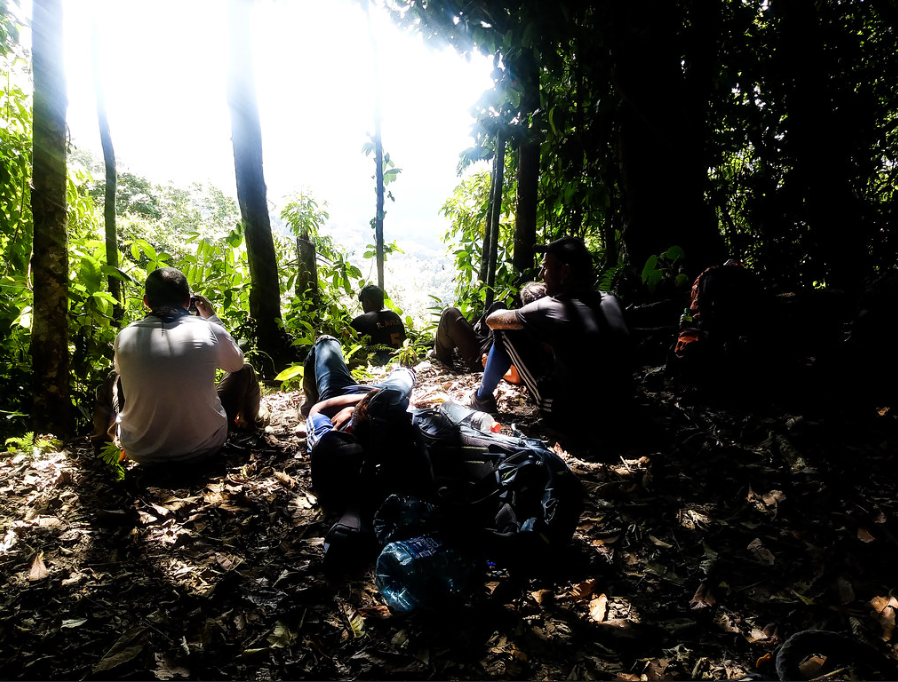
Image Source: https://www.flickr.com/photos/rentman1225/26864902068/

By Maggie McMahon   

Sexual violence during migration journeys is rarely addressed in the current political climate. Yet this issue is rampant for many migrants, especially those making the journey from Latin America to the United States. The personal experiences and testimonies from those who completed this journey provide valuable insight into the dangers that migrants face in this region. This problem demands more attention, as it is one of the many dangers that migrants face while attempting to reach the U.S. 

In her late 20’s and from Ecuador, Verónica details her lengthy and dangerous journey to the United States, where she walked many miles to the US-Mexico border and experienced rough traveling conditions, including falling off a train.

Ay me están esperando llorar. Bueno, sufrí mucho, pasé mucha hambre, dormí en parque—muchas cosas feas…Bueno, después de eso, yo cambié de tren y me subí a otro tren que ese sí era el que me traía, pero ese tren se quedó 3 días en el desierto. Ahí entonces yo como que le daba gracias a Dios de no haberme subido a ese tren porque yo me pude subir, pero me dio miedo y no me subí, pero mucha gente se subió y algunos se cayeron, incluidos niños. Bueno, ese tren me avanzó hasta la frontera, de ahí yo me bajé y camine bastante. Yo llegué a este país con los pies podridos ensangrentados porque yo caminé artístico.[1]

Oh, this is making me want to cry. Well, I suffered a lot. I went very hungry, slept in a park—many ugly things… Well, after that, I changed trains and got on another one, the one that was supposed to bring me here. But that train stayed stranded in the desert for three days. At that point, I felt like thanking God for not getting on the earlier train. I could have boarded it, but I was scared and didn’t. Many people did get on, and some fell off, including children. Well, that train took me to the border, from there I got off and walked a lot. I arrived in this country with rotten feet, bloodied because I walked a tremendous amount. 

When asked if she felt in danger during her trip, Verónica shared her experience in Guatemala:

Uh no yo siempre diré que Guatemala es el peor país que yo pude conocer ahí, así que no te digo. A mi en bus me tocaron los senos, las partes íntimas. Me sacaron todo el dinero.

Oh no, I will always say that Guatemala is the worst country I could have known there, so I tell you. They touched my breasts and private parts on the bus. They took all my money.

After arriving in the United States, Verónica’s friend provided her a place to stay and food for a few weeks. She now works as a delivery driver.

Another woman, Mariana, also shared her experience with sexual violence during her journey. In her fifties and from El Salvador, she has been in the US for over two decades. During her journey from El Salvador, she recalls that:

Fíjese que yo fui víctima de eso. No llegar al acto sexual porque gracias a Dios no me llegaron a violar, pero en el camino para acá si fui tocada por los hombres. Puedo recordar de que no sé si todas percibirán eso, pero yo sí lo viví. Sí. Sería porque yo cuando venía ya venía …, pero yo parecía… yo era bien delgadita, parecía una niña de 14 años. No sé si por eso es que abusaron de mí de esa manera. Pero sí pudeir tocada por más de 2 hombres en el camino. 

I remember that I was a victim of that. Not in a sexual act, thanks to God, they did not rape me, but on the way here I was touched by men. I can remember that I didn’t know if anyone else sees that, but I did experience that…it must have been because when I came…I seemed to be very thin, I looked like a 14-year-old girl. I don’t know if that’s why they abused me in that way. But I was touched by more than 2 men on the way.

Mariana’s story demonstrates how persistent the dangers of migration have been for women over the years. 

These instances of sexual assault are not isolated. Samuel, born in Colombia in the late 1990s, migrated to Venezuela as a child due to political violence and the unfavorable economic situation. He moved to Brazil as a young teen to work in the mines after his parents separated and migrated to the US in 2024. 

While traversing the Darién Gap, a remote thick jungle crossing between Colombia and Panama, David witnessed many violent situations. The Darien Gap is known for its dangerous and difficult conditions, with many people experiencing gang violence, crime, sexual violence, disease, and death. 

David reported that while on the Panamanian side of the Darien Gap, he witnessed a group of Indigenous men rape a woman traversing the crossing. He also saw this group of men shoot the woman’s husband. 

Hay indios que agarraron a una mujer y se la violaron. Y al esposo… viendo que están pasando eso, el esposo se le baten o se levanta, le pegan un tiro. El indio agarró con una escopeta y le pegó el tiro. Puso, se lo pegó aquí… Así, puff, le pegó el tiro aquí …. Ahí quedaron los dos y salieron los indios. Antes habían robado y todo, pero después estaban violando a la mujer ahí ante el grupo. 

There are Indians who grabbed a woman and they raped her. And the husband … seeing that they are going through that, the husband fights him or gets up, they shoot him. The Indian grabbed a shotgun and shot him. He put it, he stuck it here… So, poof, he shot him here…. The two of them laid there and the Indians left…Before, they had robbed and everything, but after they were raping the woman there in front of the group.

Sexual violence is unfortunately a common experience in the Darién Gap. Other migrants we interviewed also reported witnessing instances of it, as with the case of Mauricio. Born in Venezuela, Mauricio migrated to the US four years ago to find better opportunities for his three young children. He traveled to Caracas, Venezuela and then on to Colombia and Peru. During his migration, Mauricio faced many dangerous situations, such as sleeping on the streets and crossing the jungle. As he recounts: 

En Panama fui testigo una violencia que pasó pero eso fue ya entrando en la selva. Violaron una niña y alguna mujer. Entonces yo estuve ahí, o sea, fui vi todo con mis ojos y fui testigo de eso.

In Panama I witnessed violence that happened, but that was already deep in the jungle. They raped a girl and a woman. So, I was there, that is, I saw everything with my eyes and witnessed that. 

Instances of sexual violence were then increasing in the Darién Gap since Panamanian authorities were not monitoring the crossing. Additionally, many instances of sexual violence go unreported due to stigma and shame. With the absence of policing in these remote largely uninhabited areas, armed criminal groups are able to take advantage of vulnerable people traversing the crossing.  Though lately, the Panamanian government has mobilized the army to patrol those areas, as movement north has decreased and now many people are heading south.

Sexual violence have long-term psychological and physical impacts for those who experience and witness it. Victims of rape can suffer sexually transmitted infections, unwanted pregnancies, and physical trauma. Sexual violence can also cause feelings of depression, anxiety, PTSD, and social isolation, as well as heighten an individual’s risk of substance abuse.

Given the ongoing instability faced by many Latin American countries, migration through the Darién Gap is likely to increase. Panamanian authorities must take further action to closely monitor the dangerous conditions in the crossing and provide support for the vulnerable populations crossing it. Greater support for the physical, psychological, and financial needs of migrants should also be implemented in the United States. 

Maggie McMahon is a research intern at the Immigration Lab. She is a senior majoring in international studies. 

Edited by Elizabeth Angione and Vincent Iannuzzi-Sucich


[1] This and the following accounts have been taken from interviews conducted with recent arrivals to the Washington DC-metro region and New York City as part of an ongoing research project of the Immigration Lab in American University’s Center for Latin American and Latino Studies. This project received IRB approval. Given the vulnerability of this population, we have taken steps to ensure the human subjects involved are protected, including eliciting the consent of all research subjects, the use of pseudonyms, and elimination of any individually identifying information.

China in Latin America: Exaggerating Medical Diplomacy

By Christopher Kambhu*

Peru’s Foreign Ministry greets Sinopharm staff/ Ministerio de Relaciones Exteriores/ Flickr/ Creative Commons License

China has garnered positive media coverage throughout Latin America for its COVID‑19 diplomacy, but it is far from clear if these efforts have altered the country’s regional standing. Coverage of its medical diplomacy has oversold its impact compared to the United States and obscured varying levels of support between countries.

  • Since the pandemic’s emergence across Latin America in early 2020, China has engaged in diplomatic efforts to send medical supplies – and later vaccines – throughout the region. Research by CLALS shows that, as of this month, China has donated $253 million worth of medical supplies, from masks to field hospitals. In addition, Beijing and its diplomatic corps have facilitated donations worth tens of millions of dollars from other Chinese entities, including foundations, businesses, and provincial and local governments. China has sold 409 million doses of domestically developed vaccines and further donated 1 million doses in Latin America and the Caribbean.

Deliveries of vaccines and medical supplies typically include photos ops at the airport, with Chinese flags conspicuously placed on packaging. Announcements of medical donations often include ceremonies at the Chinese embassy in the recipient country, even when the donation is from a non-state entity. These events obscure the line between state and non-state aid, and between vaccine sales and donations. By blurring these distinctions, some media have given unearned credit to Beijing by reporting “Chinese donations” without specifying the source.

  • This communication strategy has effectively created a narrative that China is gaining influence in Latin America through its medical diplomacy. The resulting media coverage – particularly think pieces analyzing geopolitical implications – has overshadowed the fact that Washington has provided more regional assistance than Beijing. As of this month, the United States has donated $310 million in medical supplies and cash assistance, significantly more than what China has donated. The same is true with vaccines: the U.S. has sold 427 million doses of domestically developed vaccines and donated 46 million more, outpacing Chinese efforts.
  • The narrative surrounding China’s medical diplomacy has also buried differences between individual countries. None of the countries that recognize Taiwan – Guatemala, Haiti, Honduras, Nicaragua, and Paraguay – have received any medical donations, nor have they been able to procure Chinese vaccines. In April 2020, Paraguay’s legislature debated switching recognition to China from Taiwan to appease Beijing and gain access to Chinese support.
  • The Chinese government has also used vaccines to quell criticism from regional leaders. In May 2021, Sinovac executives reportedly told Brazilian officials that vaccine shipping delays were due to Brazilian President Jair Bolsonaro’s continued ridicule of China as COVID-19’s country of origin. Acting under reported pressure from Beijing, the executives indicated that improved Sino-Brazilian relations would resolve the issue.

As the pandemic continues wreaking havoc on Latin American economies and societies, China’s medical diplomacy faces a changing landscape. The United States has increased its own vaccine diplomacy in recent months, including donations totaling 2.6 billion doses to COVAX, a UN-backed initiative distributing vaccines to low- and middle-income nations (China has only contributed 120 million doses). The Administration of President Joe Biden now is also promoting its medical diplomacy efforts with as much fanfare as Beijing.

  • While China’s efforts have generated a positive narrative, they have not fundamentally altered its standing in Latin America. Politicians, public health workers, and citizens appreciated the donations of masks and other medical supplies in the pandemic’s early days, but the response to China’s vaccines has been more muted. Access to Chinese-made vaccines is better than none, but they do not match the higher efficacy (real and perceived) of U.S. and European vaccines. Moreover, regional leaders are not rushing to embrace Beijing; Bolsonaro continues denigrating China even while its vaccines constitute more than one third of Brazil’s supply. Despite its successful communication strategies to date, China must look long-term to convert this generally positive narrative into improved public opinion.

November 23, 2021

* Christopher Kambhu is a Program Coordinator at CLALS. This research is part of a CLALS project on China’s Messaging in Latin America and the Caribbean, supported by the Institute for War & Peace Reporting with funding from the U.S. Department of State. 

Central American Youth Migrants Show Signs of PTSD and Stress

By Daniel Jenks and Ernesto Castañeda*

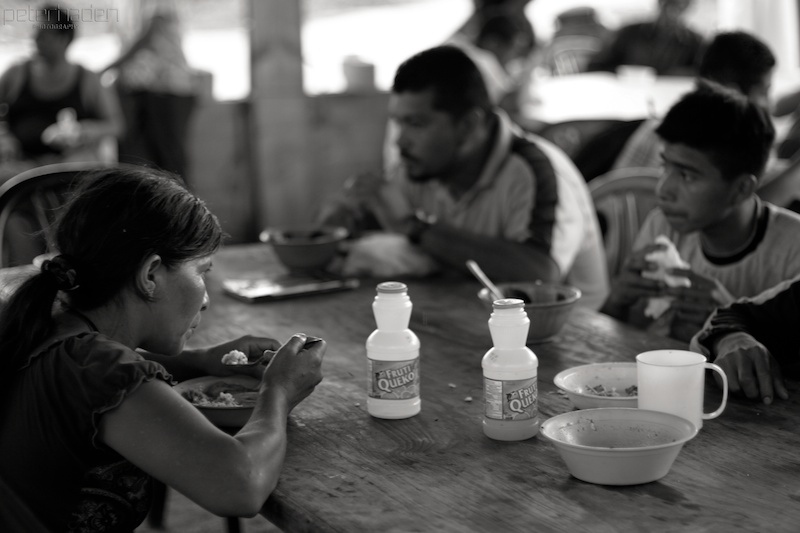
Central American migrants/ Peter Haden/ Flickr/ Creative Commons License

The trauma experienced by Central American minors before, during, and after their unaccompanied journeys to the United States puts them at high risk of post-traumatic stress disorder (PTSD) and other mental health problems, creating further obstacles to their success in school and broader integration into U.S. society. New research into results from the CLALS Pilot Project Household Contexts and School Integration of Resettled Migrant Youth, which included interviews and qualitative surveys (including a validated PHQ-9 Modified for Teens and the Child PTSD Symptom Scale, CPSS), revealed that about one-third of unaccompanied minors from El Salvador, Honduras, and Guatemala show symptoms of moderate to severe PTSD — significantly higher than the general population.

  • The study team interviewed or administered surveys to more than 100 subjects, including youths who arrived in Maryland before 2017, their parents, and social service providers, teachers, and local officials. At least 20 percent of the youth respondents exhibited symptoms of mild or moderate depression, and 38 percent said that they felt sad or depressed most days during the last year.

Many of the youths suffered deeply from separation from parents who preceded them in traveling to the United States, sometimes blaming them for problems and abuses they suffered back home, but they generally fared better than those whose parents had not emigrated. Those most deeply harmed were forced from their homes by gang violence, police corruption, and other symptoms of low state capacity, and suffered trauma along the journey to the United States. They were able to come to the U.S. and escape those problems because they had family in the United States.

  • Carlos, who migrated when he was 15 years old, left El Salvador because he was facing death threats from local gangs because he refused to join. He was scared to go to home and school. Other youths experienced pre-migration trauma that included natural disasters, war, gang violence, victimization, witnessing a crime, physical and sexual abuse, or attacks based on their sexual orientation or gender identity. (Other studies document the particular abuses faced by girls and young women.)
  • Migrating from Honduras at 13 years old, Samantha was on a bus near the Guatemala-Mexico border when gangs barricaded its door and threatened to set it on fire if they were not given a hefty fee. For the rest of the trip through Mexico, the coyotes gave her and others enough to eat only once a day. Indeed, the increased risk of undernutrition, dehydration, assault, kidnapping, and other forms of violence was common for unaccompanied youths.

Inside the United States, many face the stresses of family reunification and issues of acculturation, although our research indicates that the resulting anxiety is less severe than from the in-country and en-route traumas they experience. One mitigating factor is having access and feeling welcome to use supportive social services, education, healthcare, and employment opportunities.

  • Resentment toward parents who “abandoned” them in Central America — even those parents who were loving, reliable providers — is often deep. School challenges, language struggles, and stress related to their own legal status or that of their family further tax mental health. Complex, intimidating legal proceedings, threats of deportation, and prolonged forced separation from family get many youths off to a stressful start. Many also experience discrimination and hate crimes, becoming more aware of them as they learn English. Real or perceived lack of access to social services exacerbates stresses, and fear of dealing with authorities means that many problems go unreported.
  • Some learn to prosper. Diana, a 16-year-old from El Salvador, was scared and apprehensive when she started school in Maryland, but she found friends whom she could trust and could help her in school, and her mood improved drastically for the better.

We found that the psychological distress and disorders experienced by Central American youths in a troubling number of cases can exacerbate existing obstacles to integration, family reunification, and success in school. These obstacles, in turn, can create new stressors that exacerbate PTSD, depression, and anxiety.

  • Dealing with the traumas that plague youths in Central America is a massive undertaking that, rhetorically at least, the United States and Central American governments are addressing. Inside the United States, successful cases show that the cycle of further trauma exposure, depression, and PTSD can be overcome by making migrant processing more humane, increasing access to mental health services and education, and providing guarantees of protection to those who seek help – reforms that will be very challenging. The underlying problems are deep-rooted, and even when the Executive or Legislative branch pushes particular elements of reform, change will be hard to implement because of institutional and cultural barriers.

August 26, 2021

* Ernesto Castañeda directs the Immigration Lab and teaches sociology at American University, and Daniel Jenks is the Lab’s deputy director. This article is adapted from their full study published in Trauma Care journal.

Mexico: Setting a “New Social Ethic” of Sustainability?

By Veronica Limeberry*

Maize plot using agro-ecological options in Mexico/ International Maize and Wheat Improvement Center/ Flickr/ Creative Commons License

Mexican President Andrés Manuel López Obrador’s decree phasing out the use of the herbicide glyphosate and genetically modified (GMO) corn has strong support in Mexico – for now – and could conceivably show a way ahead on sustainable development for other countries. Announcing the decree on New Year’s Eve, AMLO framed it as creating a “new social ethic” in food production that puts the wellbeing of the Mexican people before the interests of private companies and profits. The government is moving ahead with implementation of the decree this month despite rapid and harsh pushback from Mexican and U.S. agribusiness. The U.S. Farm Bureau Federation, whose members sell GMO corn to Mexico, appealed to U.S. Agriculture Secretary Vilsack to oppose Mexico’s move.

  • Advocates of sustainable development have long opposed the use of glyphosate, the world’s most commonly used herbicide. The chemical was declared a probable carcinogen in a 2015 World Health Organization (WHO) report. Concern about glyphosate has surged in Mexico since a 2019 study by the University of Guadalajara found that all 148 children in the study had glyphosate in their urine, and all had chronic health conditions. The herbicide’s producer, Bayer-Monsanto, is in the midst of one of the largest settlements in history ($10.9 billion) involving tens of thousands of suits claiming that it causes cancer and death. Despite these growing concerns, glyphosate sales grew from $3 billion in 2015 to $8.5 billion last year, and industry watchers forecast them to be over $13 billion by 2027.

AMLO’s decree on GMO corn also reflects growing interest in Mexico to reclaim the country’s agricultural biodiversity. Mexico is the center of origin of over 59 food varieties, including corn, beans, squash, and cocoa. Mexican corn has long been part of the country’s national identity. The campaign Sin Maíz No Hay País (Without corn there is no country), launched more than a decade ago, embraces the grain as “the basis of our culture, our identity, adaptability and diversity.” Nonetheless, Mexico imported 18 million tons of GMO corn from the United States in 2020, comprising 40 percent of corn consumption. Seeking to reverse this, progressive deputy agriculture minister Víctor Suárez led the push for the decree and emphasizes “achieving self-sufficiency and food sovereignty.”

The decree includes radical terminology and establishes agroecology as national policy informed by Mexican food identity and traditions. AMLO and Suárez have defended its emphasis on sustainable, ethical, and increased food production “through the use of agroecological practices and inputs that are safe for human health, the country’s biocultural diversity, and the environment, as well as congruent with the agricultural traditions of Mexico.” The measure has the support of rural communities and both houses of Congress.

  • Some of the AMLO Administration’s rhetoric seems intended to provide leadership to other countries seeking alternatives to herbicides like glyphosate as well as GMO foods while trying to decenter the needs of industry. Numerous studies point to agrarian crises in many countries – such as the farmers’ movement in India – for which AMLO’s move conceivably offers a model. The Mexican decree offers language of community, sovereignty, and wellbeing attractive to advocates of agricultural sustainable development for the future. It will take some time, however, to see if Mexico’s approach persuades others that it can be implemented and retain popular support over the long term.

March 31, 2021

* Veronica Limeberry is a doctoral student at American University focusing on agroecology, food sovereignty, and indigenous territorial rights.

Argentina: Legalized Abortion Demonstrates Feminists’ Hard-Won Clout

By Cora Fernández Anderson*

March for Safe Abortion in Argentina/ International Women’s Health Coalition/ Flickr/ Creative Commons License

Argentine approval of legal abortion – signed into law by President Alberto Fernández on January 14 – validates activists’ claim that women’s rights are never simply granted; they must be fought for. Fifteen years after the launch of the Campaign for Safe, Free and Legal Abortion in Argentina, the Senate voted 38-29 to legalize abortion until 14 weeks. The Lower Chamber approved the measure on December 11 by a vote of 131-117. On December 30, after Senate approval, the streets of Buenos Aires filled with green – symbol of the movement – and demonstrators’ tears and joy, hugs and chants overwhelmed the scene. Feminist leaders proclaimed, “It is a day that we imagined and dreamed of many times.”

  • A strong abortion rights movement was essential to placing the issue on the national agenda and raising awareness about it. The influence of the Catholic Church, coupled with the stigma around abortion nestled in the identification of womanhood with motherhood, had created a strong barrier to any policy change. (Argentina is the home country of Pope Francis.)
  • Until very recently, most politicians, whether from the right or the left, perceived abortion reform as politically costly – a risky issue commonly referred in Argentine slang as pianta-votos – something that makes votes “escape.” Through decades of intense work, the movement showed politicians that society has changed, that new generations have different priorities, and that it is possible to win elections advocating for legal abortion. President Fernández promised to support the initiative in his campaign and he delivered.

Abortion in Argentina used to be ruled by the 1921 Criminal Code, which said it was legal only when the life or health of the woman was at risk and in cases of rape. For most of the 20th century, this regulation was not challenged, and – because the wealthy could afford the necessary certifications and medically safe abortions – class divides had deadly implications: Those with limited resources risked their lives and health in attempts to interrupt their pregnancies.

  • Only after the transition to democracy in 1983 were feminists able to promote debate on the need to legalize abortion. Led by mostly middle-class professional women, early initiatives were very small and did not have much political impact at the time. In 2001, however, protests over political and economic crises toppled the government and sparked a wave of activism that included creation of the Assembly for the Right to Abortion. This built a cross-class alliance that gave the movement a strong foothold – leading, on May 28, 2005, to launch of the Campaign credited with driving last month’s historic bill. The movement’s iconic green pañuelo – emblazoned with the main slogan, “Sexual education to decide; contraception so as not to have an abortion; legal abortion so as not to die” – became ubiquitous.

The campaign’s success can be attributed to the growth of a broader feminist movement, which shifted some public focus onto women’s realities. For example, the increase in the number of femicides inspired the movement ‘Ni una menos’ (Not one less), a grassroots collective fighting to put an end to violence against women. Recent efforts framed criminalization of abortion as another example of violence against women, making the state responsible for their inaction in the face of preventable deaths.

  • In addition to proving that it was possible to win a presidential election on a platform to legalize abortion, the Argentine campaign has inspired and given renewed hope to activists across Latin America – like those in Colombia awaiting the decision of the Constitutional Court on a case that might lead to the decriminalization. Women in Chile, who in 2017 won a few exceptions to the total ban on abortion, are now pushing harder to remove that legacy of the Pinochet years. This past week, the Chilean Parliament began to discuss a bill that would legalize abortion until 14 weeks in line with the law recently passed in Argentina.
  • The fight is not over even in Argentina, however, because opponents want the law declared unconstitutional and many doctors want to be conscientious objectors. But the movement is aware of the challenges and is ready for the fight. Indeed, feminists are not resting on their laurels. The movement will play an important role in monitoring the implementation of the law and disseminating accurate information about it so as to make abortion access a reality across the country.

January 28, 2021

* Cora Fernández Anderson is Assistant Professor of Comparative Politics at Mount Holyoke College. She is the author of Fighting for Abortion Rights in Latin America. Social Movements, State Allies and Institutions. Portions of this analysis appeared here in Ms. Magazine.

Mexico and Central America: Taking Aim at Corruption in Pharmaceutical Procurement

By Thomas Andrew O’Keefe*

Secretary of Health Headquarters, Mexico City, Mexico / Diego Delso / Wikipedia, Not Modified / Creative Commons License

Under pressure to reduce the cost of medications and medical supplies, the governments of Mexico, Guatemala, and Honduras have resorted to an international facilitator to combat inefficiencies and a lack of transparency in medical procurement while attempting to build their own capacity to manage purchases and reduce related corruption in the future.

  • The Mexican government has been trying to obtain lower prices from manufacturers and distributors of patented or single-sourced medications and medical devices since at least 2008, when it created a Coordinating Commission to Negotiate the Prices of Medications and Other Health Inputs. A pooled procurement mechanism overseen by the country’s Social Security Institute (IMSS) was established in 2013 to purchase pharmaceutical products and medical supplies on behalf of various federal and state agencies. When President Andrés Manuel López Obrador (AMLO) took office at the end of 2018, he labelled the Coordinating Commission as ineffectual and IMSS’ pooled procurement process as hopelessly corrupt – and terminated both. He consolidated purchasing authority for Mexico’s public health sector in the Secretariat of Finance and Public Credit, which also proved incapable of handling the task. To address widespread shortages throughout the country that were putting lives at risk, the Secretariat was signing contracts at exorbitant prices.
  • Last July, the AMLO administration executed an agreement with the United Nations Office for Project Services (UNOPS), a not-for-profit agency based in Copenhagen better known for implementing humanitarian and development projects. For 2021, the Mexican government is expected to spend some $4 billion to procure medications through UNOPS on behalf of federal entities and 26 of Mexico’s 32 states. UNOPS will reportedly net a 1.25 percent commission for what will be its largest single procurement project to date. In 2022, UNOPS will set up an electronic reverse auction system to conduct the bidding process with international suppliers.

Guatemala and Honduras reached out to UNOPS, with good results, years ago.

  • In 2014, UNOPS began assisting the Honduran Social Security Institute (IHSS) and Ministry of Health to establish a more effective and transparent procurement system for purchasing medications and medical supplies. After a year, UNOPS was able to procure medications at costs at 40 percent or more lower than what had previously been paid. Government funding remains a problem, but allegations of corruption in medical purchases have dropped sharply.
  • Following major corruption scandals at Guatemala’s Social Security Institute (IGSS), the Guatemalan government signed a contract with UNOPS in 2016 that involved both procurement and technical assistance to the IGSS to enhance transparency and strengthen its procurement processes. As a result, the Guatemalan government estimates the IGSS achieved an estimated 57 percent reduction in the prices of procured medicines and a 34 percent savings in surgical medical supplies and cochlear implants. The IGSS claims it was able to utilize these savings to, among other things, build new hospitals and extend health insurance coverage to more Guatemalans.
  • These experiences build on Guatemala and Honduras’ participation since 2010 in a mechanism overseen by the Council of Ministers of Health of Central America and the Dominican Republic (COMISCA) to jointly negotiate the prices of medications and medical devices for subsequent purchase by the public health sector in their countries.

Ensuring efficiency and reducing corruption in medical purchases will ultimately depend on the governments’ ability to reform their own systems, not on developing a permanent dependency on UNOPS or other international entities. UNOPS is scheduled to hand the entire procurement system over to the Mexican government in 2024. The recently created Mexican Institute of Health for Well-Being (NSABI) will initially oversee distribution within Mexico, but the AMLO administration has indicated that this function will eventually be taken over by a more specialized agency that will also have warehousing capabilities (including cold storage facilities).

  • AMLO signed an executive decree at the end of October that recognizes the health safety certificates issued by regulatory authorities in other countries as being equivalent to those issued by the Federal Commission for Protection against Health Risks (COFEPRIS) in Mexico. The decree also simplifies the process for COFEPRIS to issue certifications for the sale and consumption of all imported medications in Mexico. These moves are intended to undermine the ability of unscrupulous pharmaceutical firms to “capture” the regulatory approval process and thereby hinder competition.
  • The positive experiences in Guatemala and Honduras with UNOPS may encourage reformers in other Latin American countries, as just happened in Mexico, to look to the self- financing UN agency for assistance in clamping down on corruption, ensuring better management of the public health care sector, and implementing modern procurement systems to address the longstanding challenge of getting essential medical supplies to citizens who need them. The COVID 19 pandemic has made health a global priority and exposed serious deficiencies that no longer can be ignored. Without robust and equitable public health care systems, there is no sustainable economy.

December 21, 2020

* Thomas Andrew O’Keefe is president of Mercosur Consulting Group, Ltd. and lecturer with the International Relations Program at Stanford University.

Brazil: Presidential Lockdown?

By João Jarochinski Silva*

Bolsonaro Questioned

Bolsonaro addresses the press, May 2019/Palácio do Planalto/ Flickr/ Creative Commons License

Brazilian President Jair Bolsonaro faces mounting crises that could cut short his term in office and prolong Brazil’s multi-year political turmoil. The departure last month of two of his most widely respected cabinet members – Health Minister Luiz Henrique Mandetta and Justice Minister Sérgio Moro – came on the heels of other bad news as Bolsonaro completed his 16th month in office.

  • Brazil’s GDP grew only 1.1 percent in 2019 despite the government’s promise that pension reform and other measures would make it almost double that. Most of the growth, moreover, came from the informal sector, not the entrepreneurial class that was expected to back Bolsonaro. Moreover, all predictions are that economic performance will decline significantly because of COVID-19.
  • A number of disputes have significantly eroded his political base. In his first year as president, he left the Liberal Social Party (PSL), which gave him a home and crucial help in his campaign and early days of government. Since November, he has been trying to create a new party, Aliança pelo Brasil, but it is unlikely that he will have it ready to participate in this year’s municipal elections (Brazil has 5,000 municipalities) or able to attract politicians, mainly deputies and senators, to form a consistent base in Congress. These likely failings will affect the party budget and its TV time in the national elections of 2022. Social media was central to Bolsonaro’s successful formula last year, but observers wonder if the magic will remain.

In this context, his decision to fire Mandetta and Moro’s decision to resign are particularly severe blows.

  • Bolsonaro and Mandetta had clashed over how to deal with the COVID‑19 crisis. Bolsonaro wanted to reopen some sectors of the economy, but the minister – with apparently strong public support – sought to follow the international protocols established for “flattening the curve” to protect the health system from collapse.
  • Moro disagreed with the President’s decision to fire the commander of the Federal Police when investigations appeared to be closing in on some activities of his sons. As lead ex-judge of the Lava Jato investigations, when Moro joined the administration, he brought credibility among some sectors to the Bolsonaro government’s stated commitment to anti-corruption. Moro’s speech on leaving the ministry suggested that he felt betrayed.

Bolsonaro’s strategy at this point appears to focus on reaching out to two constituencies that he considers reliable: Evangelical Christians and the military.

  • Two of his sons, while managing to keep their government positions, shifted to the Partido Republicano, which has strong links with the Universal Church of the Kingdom of God and the second most-watched TV channel in Brazil, and other Evangelical groups. These groups are historically linked with the Centrão, a group of parties that do not have long-term political allegiances but support anyone who promotes their most immediate interests on issues such as federal administration and control over some areas with great budgetary power in the government.
  • Bolsonaro has also given the military a central political role in his government. Several government posts are held by retired and active-duty military officers, some of whom, like Moro, brought good levels of public approval to the administration. Some were seen as agents capable of taming Bolsonaro’s impulsiveness, even if evidence of success has been lacking. By lashing himself to military officers, however, Bolsonaro has tied the armed forces to his own fate and essentially coopted the officer corps into supporting him. In the event of an impeachment or other trauma, Vice President Hamilton Mourão, a retired general, and others would be held responsible for the government’s failure.

At this point, there is no good scenario for the Bolsonaro government – and COVID and other factors raise the specter of very bad scenarios in which courting the Centrão will be costly politically and financially. His alliances with the Centrão and the military also put at risk what little credibility he may have had remaining on anti-corruption after Moro’s defection. The military may not always want to be the guarantors of the government for public opinion.

  • The military will assume a technical role in dealing with the consequences of the coronavirus, including managing the impact of the economic decline such as a worsening of social tensions, but the results in terms of governance are unpredictable.
  • As Bolsonaro gropes for a way ahead, Vice President Mourão seems unlikely to willfully trip him up. Despite investing in a more thoughtful and responsible image than the president, he has not projected himself as an alternative. But the pressures for impeachment could mount steadily. Former Justice Minister Moro will be an important factor in any future scenario, but he will have to face angry supporters of Bolsonaro, mainly on social networks. A deep sense in the ranks of the other parties that he had a political agenda and lacked impartiality in the trials related to former President Lula by the Brazilian Supreme Court promises to continue the fireworks.

May 5, 2020

* João Jarochinski Silva is a CLALS fellow and professor at the Universidade Federal de Roraima (UFRR).

Regionalism in the Time of Coronavirus: The Only Way Forward?

By Leslie Elliott Armijo*

Coronavirus Latin America

Map of the COVID-19 outbreak in Latin America as of 30 April 2020/ Pharexia/ Wikimedia Commons (modified)

To overcome the multiple challenges of the COVID‑19 crisis, Latin America’s leaders will need to build regional cooperation around pragmatic solutions – an elusive goal for countries with a legacy of disunity and weak collaboration. The coronavirus has hit at a moment of economic vulnerability. Regional growth averaged only 1.9 percent in 2010-19, worse than in the “lost decade” of the debt-crisis 1980s (2.2 percent). Labor productivity, which in 1960 was almost 250 percent of the world average, has fallen steadily in every subsequent decade, and in 2019 sat at a mere 90 percent of the global mean. Persistent squabbling among Latin countries has meant that major global trading states, including the United States and more recently China, could dictate the terms of bilateral trade and investment agreements in ways that favored these larger powers.

  • In negotiating global trade, Latin America and the Caribbean have shown little shared identity or cohesion, whether as a region or as sub-regions. As of late 2018, as global value chains coalesced around three regional hubs – China/East Asia, U.S./North America, and Germany/European Union – Mexico, Central America, and the Caribbean were linked to the U.S. but lacked bargaining power to seize more advantageous positions vis-à-vis the United States. South America has deindustrialized since the turn of the century, returning to its historic role of commodity exporter to all three hubs. Intra-regional trade as of 2017 was only 22 percent of all Latin American trade and had fallen since 2013.
  • This is a shaky foundation from which to face the health and economic challenges of COVID‑19. The IMF’s scenario, which assumes an optimistic return to business mostly-as-usual in the third quarter, predicts a contraction of GDP in 2020 of 5.2 percent in the region, driven by brutal collapses in the two largest economies, Brazil and Mexico, of -5.5 and -6.6 percent respectively. The extra-regional markets for Latin America’s exports certainly will shrink due to both short-term reasons of global depression and longer-term ones of enhanced economic nationalism abroad. Remittances and tourists from the U.S. and elsewhere will not return to their previous numbers for a long time.

A coronavirus-solidarity virtual summit last month showed that some regional leaders realize the need for joint action. Nine of 12 South American presidents participated, although Brazilian President Jair Bolsonaro – who has made intemperate and dismissive remarks about his fellow leaders – gave his seat at the video conference to his foreign minister, Ernesto Araújo.

  • Argentine President Alberto Fernández participated despite Bolsonaro’s snub (including on previous occasions) and his previously chilly relations with the sponsoring body, PROSUR, founded in 2019 by center-right Presidents Iván Duque of Colombia and Sebastián Piñera of Chile as an explicit counter to the pre-existing regional body, UNASUR, which leaned left during the presidency of Bolivia’s Evo Morales (now in exile in Argentina). In so doing, Fernández demonstrated the pragmatism and understanding that Latin American and Caribbean leaders often eschew: if you want to solve policy challenges, you must maintain dialogue with people with whom you disagree.

If there is any light at the end of this tunnel, it could be psychological, as crises tend to focus minds. The disruption in international relations beyond Latin America probably will accelerate the move away from the post-Cold War “unipolar moment” and fuel domestic economic nationalism that will shake up the three major global trading hubs – a reorganization in which the region could redefine its place. In this scenario the best defense for Latin America is a strong offense. As Alicia Bárcena, Executive Secretary of the UN’s Economic Commission on Latin America and the Caribbean (CEPAL), said recently, the region’s resilience likely depends on “investment in strengthening regional production chains” to create “complementarities in production structures and regional integration.”

  • Diplomacy enables states to share knowledge and engage in collective action to meet real cross-border challenges, including those of the current crisis. Regional solidarity does not require headquarters buildings, formal treaties, and summit pageantry, nor even similar domestic political systems. The considerable achievements of the loose, informal clubs known as the G7, the G20, and the BRICS prove the value of cooperative models that need not boast costly institutional scaffolding. The Association of Southeast Asian Nations (ASEAN), formed in 1967 by 10 countries that were at least as mutually suspicious of one another as they were of China, provides another lesson about somewhat effective regional cooperation that Latin America would do well to note.

April 30, 2020

* Leslie Elliott Armijo is an associate professor at the School for International Studies, Simon Fraser University, Vancouver. Her most recent book, coauthored with C. Roberts and S.A. Katada, is The BRICS and Collective Financial Statecraft (Oxford University Press, 2018).

Cuba: Dealing with the Global Pandemic

By Ricardo Torres*

Cuban nurses carrying the Cuban flag

COVID-19 Response: Over 100 Cuban Nurses Arrive Barbados / Flickr / Public Domain

Cuba faces a “perfect storm” – a global health crisis – that poses the latest in a long list of challenges to its government, but a systematic destabilization of the country is highly unlikely, if not remote, for now. The COVID‑19 pandemic has caused an unprecedented disruption to the world economy, the devastating effects of which no country has escaped. The Cuban economy is critically dependent on tourism and remittances, two areas that have been deeply affected. Those countries from which visitors and cash flow to Cuba are greatest – the United States, Canada, Western Europe, and China – have been hit hard.

  • The shock is compounded by a drop in Cuba’s average annual growth from 2.7 percent in 2010‑15 to 1.4 percent in 2016‑19. The causes of that decline include the economic crisis in Venezuela; the cancellation of medical services agreements in Bolivia, Brazil, and Ecuador; the end of the international tourism bonanza; and the effect of new U.S. sanctions. Washington’s actions have complicated trade, foreign investment, and travel. The measures have limited remittances, reduced Cuba’s ability to import fuel, and clamped down on foreign firms operating in Cuba, such as through the first application of Title III of the “Helms-Burton Act.”
  • Another factor has been the disappointing results of Cuba’s internal economic reform, which has been wrapped up in political contradictions and a lack of clarity of its objectives. One costly flaw in these circumstances has been the government’s inability to stimulate industries that provide essential products, particularly food. Combined with the international challenges, including fresh, tough sanctions by the United States, this problem has contributed to a situation in which the Cuban people face growing shortages of all kinds of products, including food, medicines, and fuel.

The government’s response to COVID‑19 has evolved from caution to the gradual imposition of increasingly radical measures.

  • In mounting a medical response, the centralization and verticality of the Cuban model allows authorities to adapt plans and resources in the face of new priorities. The Cuban health system, for example, is known for its national coverage and access to resources (including 848 doctors and 5.5 beds per 100,000 inhabitants), and it has experience dealing with epidemics. Decisions have been taken around the concept of epidemiological vigilance, including closing the borders on April 2 and bolstering research, although the inability to carry out massive testing has been a weakness. The government has also guaranteed workers’ income and employment, except for parts of the private sector and informal economy, and expanded food-rationing to a broader list of products.

The economic impact in the medium term should not be underestimated. GDP growth will enter negative territory. Financial problems will surely deepen. Shortages of an array of basic necessities are going to worsen. Restructuring of foreign debt is necessary.

  • Internally, Cuban policymakers are going to have to take into consideration the new socioeconomic structure of the country and the need to focus support where it’s needed most. The crisis provides a good opportunity to give substance to longstanding rhetoric about improving agricultural production. Greater flexibility in regulating private businesses is also an obvious policy option. Accelerating and broadening digital access throughout society should also be a priority under the wisdom of “not putting off till tomorrow what can be done today.”

The Cuban Government is not presiding over a terminal crisis, however. Even considering the system’s weaknesses before the pandemic, this perfect storm is not its responsibility. For the medical challenge, Cuba is prepared and probably will overcome some of the criticisms made abroad about its medical missions, as brigades of Cuban doctors deploy to 19 countries. The country’s biotechnology industry also stands to make advances. It’s too early to say whether Cuba will be able to profit from these opportunities, but Havana may benefit from its willingness and ability to be a responsible international partner.

  • Washington’s policies also put it in sharp contrast with China, which continues to provide help during these difficult times. If the pandemic has made anything clear in Cubans’ minds, it’s that the United States is disqualifying itself as a positive force for change on the island.

April 17, 2020

*Ricardo Torres is a professor at the Centro de Estudios de la Economía Cubana at the University of Havana and a former CLALS Research Fellow.


Nicaragua in the Time of COVID-19

By Kenneth M. Coleman*

Presidente de El Salvador participa en Cumbre SICA-Nicaragua.

President of Nicaragua Daniel Ortega /Flickr / Creative Commons

Nicaraguan President Daniel Ortega and his wife, Vice President Rosario Murillo, have not appeared in public for 28 days, but their response to the threat of COVID‑19 has consistently been the equivalent of “Don’t worry, no problem, we got this!” Government policies suggest it is going out of its way to pretend the virus poses no threat to Nicaraguans.

  • On April 4, the pro-Ortega city council of Altagracia on the tourist island of Omotepe promoted a motorcyclist gathering by offering free fuel and free transport on very crowded ferries. Press photos of the event show no masks and no social distancing.
  • Several days earlier, the government orchestrated the arrival of hundreds of supporters to celebrate the opening of a bridge in Granada, with a similar absence of anti-viral measures.
  • In late March, “health brigades” were mobilized to visit households and provide information on how to avoid COVID‑19, but some citizens refused the visitors because of the lack of social distancing.
  • Private schools have closed, but public schools and universities have not. Media reports are that primary and secondary teachers are being pressured to schedule exams to compel attendance. Some parents are keeping their children at home anyway.
  • On March 13, Murillo convoked a march (but did not personally participate) entitled “Love in the Time of COVID-19,” with thousands of party supporters and public employees and their children marching in close contact.

Citizens say the government’s posture has not been reassuring and are taking action themselves. The government has not revealed the number of tests conducted, but has reported only six cases of coronavirus, all people who had been abroad, with one confirmed death. It reports no community transmission inside Nicaragua, although three Cuban women have tested positive for the virus after visiting Nicaragua. Dora María Téllez, who was a Health Minister in the 1980s, says the government is not seriously pursuing contact tracing. Costa Rica’s admission of 502 confirmed cases makes people doubt Managua’s figures. Local leaders, most affiliated with the government, have shown little willingness to taking independent action on the virus.

  • In a mid-March survey, CID-Gallup found that 65 percent of Nicaraguans were “not at all satisfied” with the government’s handling of the virus, while 11 percent were “dissatisfied.” In the same survey, 57 percent said they felt there was “much risk of contagion” in their neighborhood, and another 25 percent felt there was “some risk.”
  • Taking matters into their own hands, family-owned market stalls in public markets started closing weeks ago. Two major companies in maquila zones last week furloughed 19,000 workers to protect their health. Citizens have created an Observatorio Ciudadano COVID‑19 to collect data on cases and exposures to the virus. The Superior Council of Private Enterprise (COSEP) has pleaded with the government to close schools and allow private hospitals to test for the virus, and it joined the Central American Institute for Business Administration (INCAE) and other private-sector organizations to encourage social distancing, urge debt relief for the poor, and create a Humanitarian Assistance Fund. The government has not responded to their offers to cooperate.

Nicaraguan experts, such as epidemiologist Leonel Argüello, fear the country could eventually have as many as 500,000 COVID‑19 infections, implying thousands of deaths. The consequences for Nicaragua’s years-long political standoff are unclear. While the business community is extending an open hand to deal with the crisis, the government seems disinclined to cooperate. The one situation that would alter this dynamic is if Daniel Ortega himself – who has not appeared in public for four weeks now – were to be incapacitated. On COVID‑19, Rosario appears to be calling the shots, but if Daniel is seriously ill, internal dynamics, over time, might prove unpredictable. Were he to die, it would put in jeopardy the dynastic succession that he and Murillo (and her two sons) have worked hard to put in place. Rosario and the sons are already under sanctions by the U.S. Department of the Treasury. Even members of their party might see some disadvantages to having a president unable to conduct most international banking transactions.

April 9, 2020

* Kenneth M. Coleman is Director for Partner Programs at the Association of American Universities. The views expressed herein are his own.