
Why El Salvador is Turning to Soft Power

Sonja Wolf, Research Professor at the Panamerican University in Mexico City*

El Salvador’s elected autocrat claims to have ended gang violence. Soft power is central to Bukele’s efforts to legitimize his rule through these results. Yet the tactic invites greater scrutiny, revealing the state’s inability to tackle violence effectively.

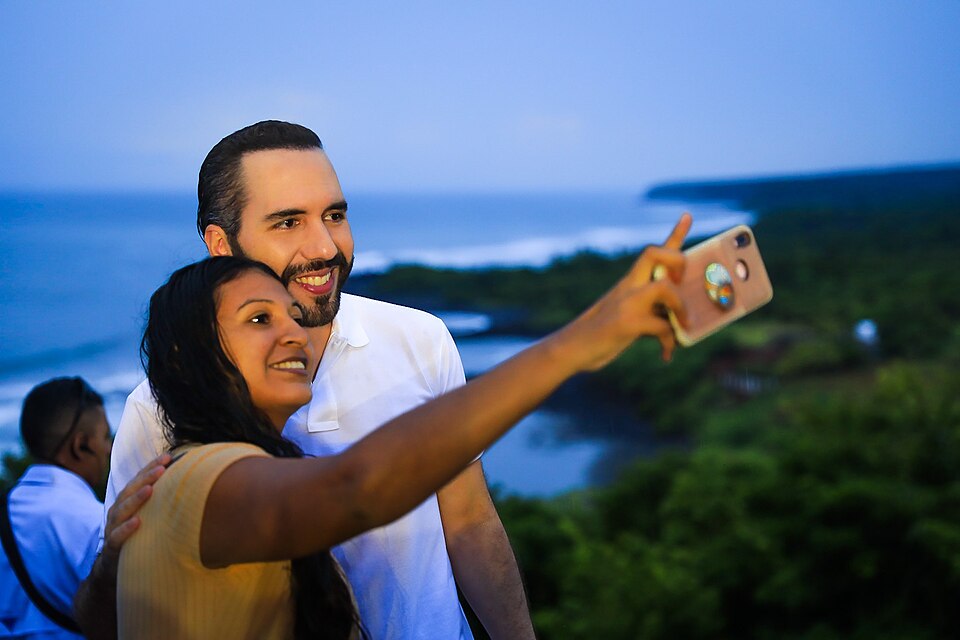
Source: Wikimedia Commons

El Salvador’s Nayib Bukele, a former advertising executive, first rose to power in 2019 promising to root out corruption and eradicate gang violence. In 2024 he won a second term in office, despite a constitutional ban on immediate presidential re-election. During his time in power, Bukele has systematically dismantled the country’s democratic institutions. The ongoing state of emergency has made headlines around the world for both its spectacle of cruelty and its controversial nature as a security policy. Police have detained over 91,500 citizens, including more than 33,000 people without gang involvement, and prison abuses have led to at least 523 deaths in state custody. Nonetheless, the measure remains widely popular with Salvadorans who, for decades, were terrorized by gangs.

Bukele’s electoral autocracy hides behind a democratic façade to maintain legitimacy. To demonstrate effectiveness and maintain support, both domestically and abroad, the regime is building its soft power. According to the official narrative, the president is leading El Salvador’s transformation from the world’s murder capital into a safe and modern nation that is open to tourists and investors. To lend credence to this rhetoric, and to raise the brand visibility of Bukele and El Salvador, the country has been hosting major sports and cultural events. In recent years, it has held international surfing competitions, a Miss Universe pageant, and a five-show residency by Shakira. At the 2026 Venice Biennale, El Salvador debuts with its first-ever national pavilion. Adding to this soft power projection is the growing number of self-published hagiographies that extol Bukele’s leadership and the performance of his administration.

A recent example is The Bukele Method by Andrés Guzmán. Until recently, the Colombian lawyer and cybersecurity consultant served as El Salvador’s Presidential Commissioner for Human Rights and Press Freedom. In this role, Guzmán was tasked with countering external criticism of the country’s backsliding on democracy and the rule of law. His text is a compilation of half-truths that appear designed to whitewash the Bukele regime’s human rights record and bolster its legitimacy by touting its alleged security gains.

To take on the gangs, Guzmán asserts, the administration had to begin by stamping out the corruption that had permitted these groups to build their criminal empires. The author takes particular aim at the pacts that the traditional parties, ARENA and the FMLN, had brokered with the gangs to mobilize electoral support and reduce visible homicides. Rather than driving an institutional clean-up, Bukele’s lawmakers passed, in 2021, reforms that placed the justice system under the president’s control. Appointments of regime loyalists, mass firings of non-aligned state workers, and the dismantling of public sector unions concentrated power in the president’s hands. Investigations into government corruption and Bukele’s own gang pacts folded, while tighter transparency restrictions eroded independent oversight.

Guzmán justifies the state of emergency by pointing to its alleged results. In typical populist rhetoric, he paints the autocrat as a hero who made tough decisions, defied his enemies (the opposition, the gangs, international watchdogs), and attained his goals: the dismantling of the gangs and a historic decline in homicides. Or, as the author puts it, mothers can finally sleep without the fear of a gang member knocking on the door at night. This story hides the fact that the “security miracle” relied on Bukele’s gang deals, whose breakdown triggered the state of emergency, as well as statistical manipulation — the homicide count excludes killings by police, murders in prisons, and bodies found in unmarked graves.

Guzmán claims to have rigorously reviewed all human rights complaints and found them to have been exaggerated. But this contradicts independent reports showing that the state has hidden thousands of allegations and rejected thousands of habeas corpus petitions. A recent report by an international group of experts concluded that the human rights violations may in fact amount to crimes against humanity. Guzmán admits that mistakes were made, referring to arbitrary detentions. However, only some 8,000 citizens have been liberated, under conditions, and it was their testimonies that shed light on the prison abuses. The remains of dead detainees speak for themselves.

In defending the state of emergency, the author poses a false dilemma: the government could pursue this measure, or do nothing in the face of an existential threat. But this either-or fallacy ignores that police intelligence about gang members had long existed. Bukele chose to act on this information only once he had institutional control and no longer needed the gangs.

Following Bukele, who defines democracy as simply the will of the people, Guzmán contends that the president’s resounding re-election victory in 2024 validated his security strategy. In this deceptively simple logic, international watchdogs have no right to interfere in the domestic affairs of a sovereign nation. What matters is that Salvadorans endorsed the state of emergency by granting their leader a democratic mandate. But depicting “the people” as a homogenous group, unified in their support for Bukele, erases the voices of those who try to stand up to his abuse of power.

Ultimately, the state of emergency is a simulation of legality that tries to hide the state’s incapacity to deal with violence. Laws passed by Bukele’s Legislative Assembly have reshaped a justice system that lacked the capacity to successfully prosecute offenders. In mass trials involving hundreds of defendants in a single proceeding, citizens with no prior gang involvement sit alongside real gang members. In the absence of any meaningful defense, prosecutors present flimsy evidence and unreliable witnesses to achieve convictions of entire criminal structures. Soft power efforts such as Guzmán’s publication promise the kind of performance-based legitimacy that the Salvadoran regime craves. The “Bukele method” should indeed be examined — not because it constitutes a blueprint for security, but because closer scrutiny reveals it to be, like Bukele himself, a marketing product.

*Sonja Wolf is the author of Mano Dura: The Politics of Gang Control in El Salvador (University of Texas Press, 2017).

China, Taiwan and Paraguay

By Esteban Caballero

Political Scientist, Independent Investigator for FLACSO-Paraguay, and Columnist for Ultima Hora

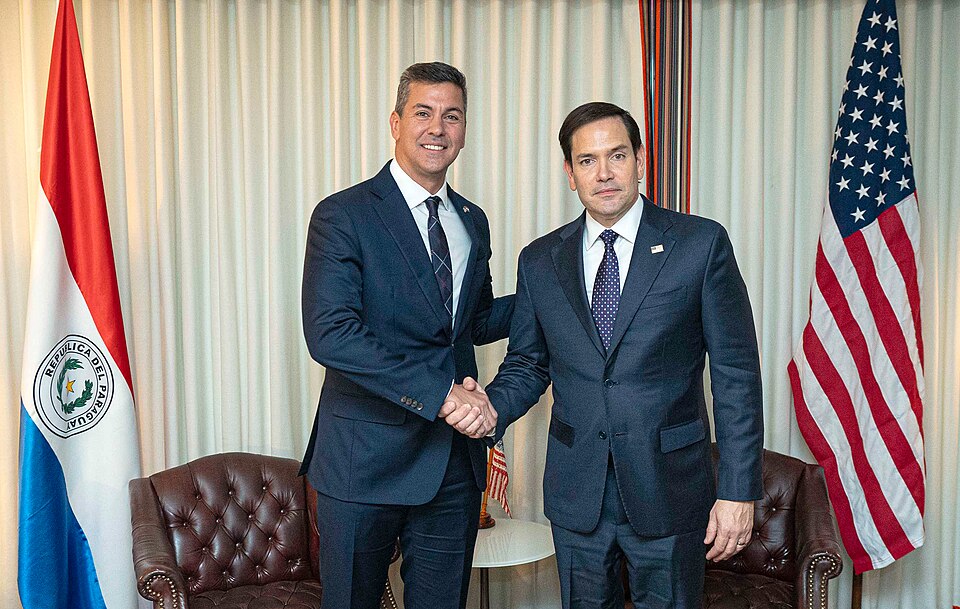
Secretary Marco Rubio meets with Paraguayan President Santiago Peña at the Department of State in Washington, D.C., January 21, 2025. (Official State Department photo by Freddie Everett) Source: Wikimedia Commons

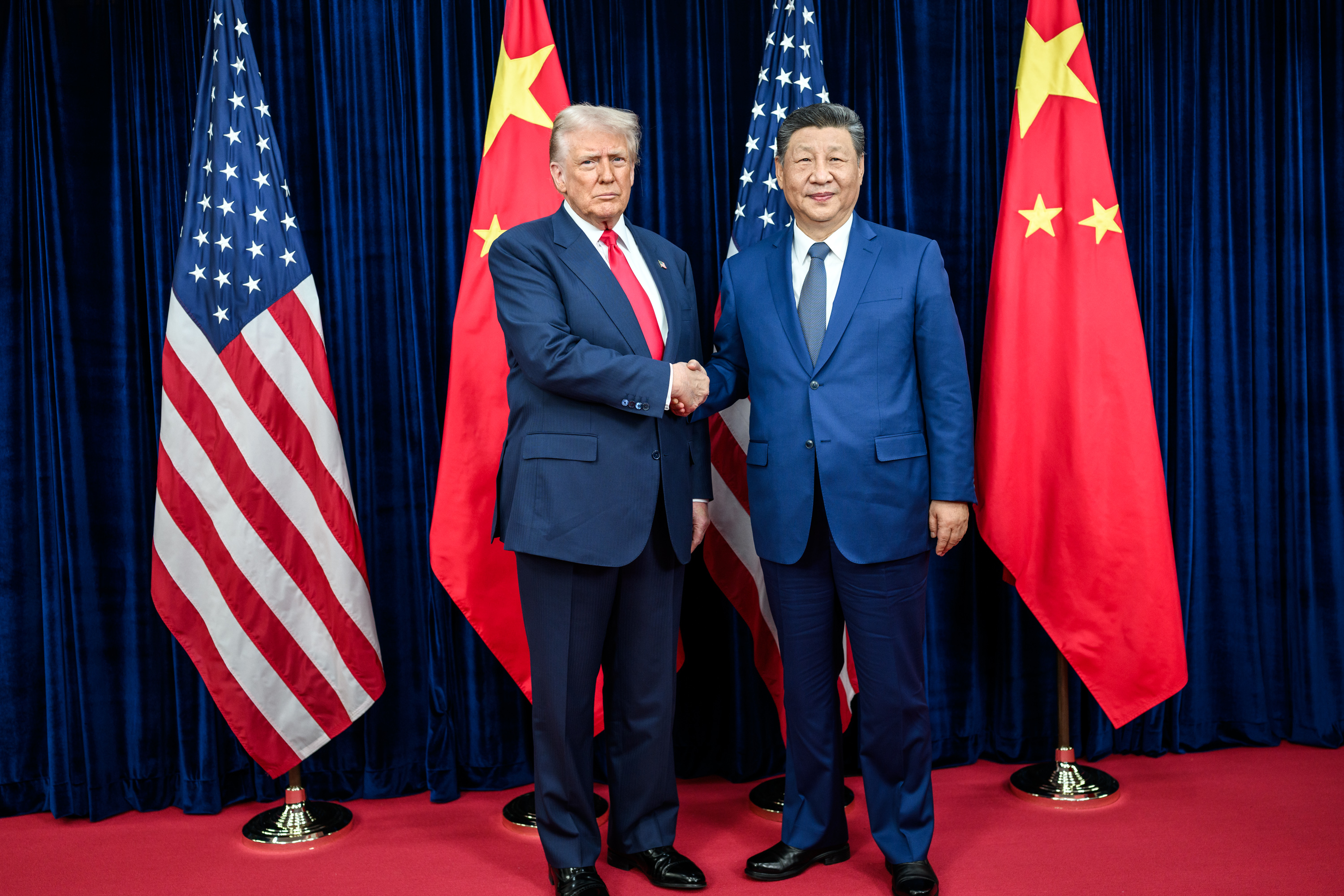
Xi Jinping’s warning that “the Taiwan issue is the most important matter in relations between China and the United States” will go down in history. However, for the government of Paraguay, Donald Trump’s subsequent statements on the subject could prove even more unsettling. Speaking in a measured tone, the U.S. President acknowledged that Xi “holds a very firm opinion and does not want to see an independence movement,” adding that he, too, “does not intend for anyone to declare independence.” Furthermore, he left it unclear whether or not he would authorize a new arms sale to Taiwan.

Even if these amounted to only a few of the many assertions made by the heads of state of China and the United States at their recent summit, Santiago Peña and his Foreign Minister, Rubén Ramírez Lezcano, likely paused for a moment to reconsider Paraguay’s stance regarding Taiwan. Should they, perhaps, review their close relationship with Taipei in light of a potential shift in global geopolitics? Paraguay belongs to the small group of 12 countries that still recognize Taiwan; alongside Guatemala, it is one of only two Spanish-speaking nations to do so.

The doubts to which we allude do not concern the progress of cooperative agreements and trade relations with Taiwan. Both are advancing favorably. These are matters involving technical cooperation, market access, and infrastructure financing. During Santiago Peña’s administration, this kind of cooperation with Taiwan has been significantly bolstered—a progression that culminated during the President’s recent visit to the island in May 2026. Returning from that visit, he announced an agreement for a massive AI data center project, although its feasibility remains to be assessed.

What may well have generated uncertainty within the Paraguayan government is Trump’s apparent complacency in the face of warnings from Xi Jinping. Such an attitude on the part of the U.S. President would signal a departure from the tougher stance of American foreign policy hawks and would compel the Paraguayan Foreign Ministry to rethink its strategy—particularly the approach of presenting ties with Taiwan as proof of its firm rejection of Chinese influence in Latin America in order to ingratiate itself with the Trump administration. Nothing is set in stone, but this possibility is increasingly making its way into their deliberations.

Management of relations with Taiwan forms part of the Santiago Peña administration’s—in our view, excessive—effort to draw closer to the Trump administration and align itself with the State Department, headed by Marco Rubio. In this vein, Paraguay has backed U.S. military intervention in Venezuela and Iran, declared itself an unwavering ally of Israel, and supported the Trump Corollary to the Monroe Doctrine. Furthermore, alongside Argentina, it is the only other Latin American country to serve on Trump’s Board of Peace. Added to this is its enthusiastic participation in the Shield of the Americas summit, held in Miami in March of this year.

Demonstrations of alignment have also been made through measures of cooperation and collaboration regarding migration, security, and the fight against drug trafficking. The Peña administration has cooperated with the United States in the realm of migration, including a willingness to function as a “third country”[1] to process asylum applications for the U.S. It also endorsed a memorandum to facilitate the return of migrants denied admission to U.S. territory back to their countries of origin “with the assistance”[2] of Paraguay.

In the realm of security, Peña announced the designation of the Cartel de los Soles, the Comando Vermelho, and the Primeiro Comando da Capital as terrorist organizations, in line with the U.S. narrative regarding transnational organized crime and its links to state networks in the region. Concurrently, Paraguay signed a Status of Forces Agreement with the U.S.—a legal instrument that governs the status of foreign troops, including their entry, criminal jurisdiction, taxation, immunities, and operational protocols. In practice, such agreements typically facilitate troop deployments, military exercises, and defense cooperation; however, they can also spark domestic debate concerning the scope of immunity of foreign personnel, the extent of the host state’s oversight, and the tensions they may trigger with neighboring nations, such as Brazil.

This alignment has led to Paraguay being regarded as a reliable ally of the United States, and the measures adopted are presented as a reaffirmation of the historic alliance between the two countries. Today, that relationship is expressed within a new framework of cooperation, in which “security” and “counterterrorism” occupy a central place.

Nevertheless, the concrete benefits for Paraguay have not been particularly visible. It appears that Paraguay is conceding far more than the United States is yielding. Consequently, the prevailing opinion in various circles is that this has been too high a price to pay for the lifting of sanctions—imposed by the Treasury Department during the Biden administration—against the companies owned by Horacio Cartes, the former president and current chairman of the ruling party.

This is also the reason why concerns are arising regarding the scope of current foreign policy. If one observes the steps that have been taken, a pattern seems to emerge: a short-term outlook and the absence of a cohesive state policy. Santiago Peña has committed himself to a U.S. administration that may not endure in its current form following the November 2026 midterm elections. President Trump’s popularity is on the decline; the Democrats are gaining ground. The decision to align with the U.S., even in violation of international law, overlooks the fact that small states must uphold the protections afforded by such law regarding the defense of their sovereignty. Forging such a close alliance with Israel, and the most radical elements of the Netanyahu government, has isolated Paraguay from the international community. Finally, coupling all of this with an adoption of far-right rhetoric may yield short-term gains; however, once that political cycle concludes—as was the case in Hungary—the ensuing disappointment could be profound.


[1] See Signing of a Safe Third Country Agreement with Paraguay – United States Department of State

[2] See: https://www.mre.gov.py/paraguay-y-ee-uu-amplian-cooperacion-migratoria/

Muddling Through: Assessing Prospects for Brazil-U.S. Relations in an Election Year

By Felipe Rezende, Research Fellow and Visiting Scholar in Residence at American University’s Center for Latin American and Latino Studies (AU-CLALS), from the University of Brasília (UnB), Brazil. 

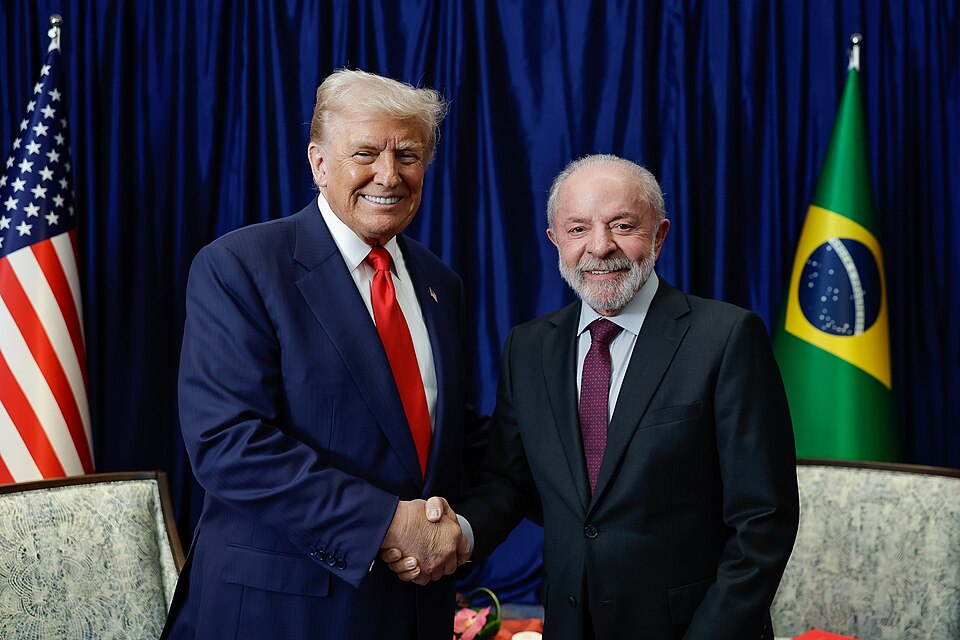
Meeting of U.S. President Donald Trump and Brazil’s President Luís Inácio Lula da Silva in Kuala Lumpur October 26, 2025. Source: Wikimedia Commons

Notwithstanding the “excellent chemistry” cited by Donald Trump in reference to a brief September 2025 meeting with Lula da Silva on the sidelines of the 80th United Nations General Assembly, in recent times the bilateral Brazil–U.S. relationship has yet to produce the quantity and quality of results one might have expected. Whether a result of different national and international commitments, or differing approaches to foreign policy, at least for the short term the interplay of a variety of factors has cooled the potential for advances in the relationship between the two countries. Reviewing recent developments in the bilateral relationship between Brazil and the U.S., here I consider how the current pattern of this relationship, together with upcoming electoral considerations, are likely to determine its limits and possibilities for the near future.

Sources of Direct and Indirect Friction between the White House and the Palácio do Planalto

Trump’s preferred trade policy in his second term, based on the unilateral imposition of tariffs upon numerous countries, with the declared objective of establishing an alleged fair balance (“Leveling the Playing Field”) in U.S. trade relations with the world, has lately been a primary factor of direct friction in the bilateral relationship with Brazil.

The historical U.S. surplus in trade with Brazil did not prevent the application in June 2025 of a 50 percent tariff on imports of Brazilian products. This imposition greatly hindered the flow of Brazilian agricultural production to North America, generating an oversupply in the South American country and inflation in the U.S. for such consumer products as beef, coffee, soybeans, orange juice, and other fruits.

In November 2025, pressured by domestic demand in the U.S., and interested in advancing strategic talks with Brasília, Washington withdrew the tariff weeks before the U.S. Supreme Court declared such practices illegal. At that time, the Palácio do Planalto appeared to have avoided the domestic political consequences of the tariff standoff by successful mobilization a narrative appealing to Brazil’s sovereignty and to the impropriety of such practices.

Since the inauguration of Trump’s second term, the influence campaign by groups linked to former Brazilian President Jair Bolsonaro – sentenced to 27 years in Brazil for an attempted coup d’état and violent abolition of the Democratic Rule of Law – has also been decisive in dampening official bilateral activity between Brazil and the U.S.

This included months of lobbying with the MAGA movement and gatekeepers of the Trump administration by his son Eduardo Bolsonaro, who endorsed the decision to impose additional tariffs, and suggested that justices of Brazil’s Federal Supreme Court (STF) be sanctioned, which was understood as an attempt to constrain the Court’s role in judging the case concerning the attempted coup d’état on January 8th, 2023.

In response the U.S. revoked valid visas for entry into the U.S. for almost all ministers of the Court, including Justice Alexandre de Moraes, who was rapporteur in the trial of the January 2023 rioters. The U.S. also applied financial sanctions under the Magnitsky Act, effective between July and December 2025, when they were withdrawn.

Under Lula Brazil’s foreign policy, and Ministry of Foreign Affairs, has continued to follow certain traditional patterns of Brazilian diplomacy, grounded in multilateralism, pacifism, and the reform – rather than rejection – of already existing institutions, organizations, and regimes of global governance, beginning with the United Nations — something that does not necessarily converge with U.S. foreign policy practices under Trump.

This was reflected, for example, in the Lula administration’s reluctance to accept an invitation to join the so-called “Board of Peace” in January 2026, created by Trump as a better alternative – in his view – to managing international conflicts. Lula publicly commented that Trump’s initiative appears to overlap with the competences ascribed to the UN, an important institution for the pursuit of Brazil’s interests as a middle power.

Lula’s skepticism toward Trump’s Board of Peace, with Trump as its self-appointed permanent Chairman and its likely promotion of U.S. foreign-policy interests, was compounded by the White House’s proposed Gaza peace plan even while the U.S. actively initiated global conflicts, especially its most recent incursion into Iran — a fact that delayed the meeting between Lula and Trump.

The May 7th Meeting and What Comes Next: Between Appearances and Substance 

The approximately three hour meeting between Lula and Trump revolved around three principal issues. First was the question of bilateral trade, where disagreement remained as to the use of tariffs and U.S. allegations of unfair trade, refuted by the Brazilian side. Brazil, instead, sought unsuccessfully to convince the Trump administration of a U.S. trade surplus of USD 400 billion over the last 15 years.

With the possibility looming of the reapplication of a 30 percent tariff on Brazilian products, considered within the scope of ongoing investigations undertaken by the U.S. Trade Representative, Brazil achieved at least temporary relief, with the institution of a 30-day delay for the counterparts to reach a common understanding regarding the terms-of-trade scenario.

Second was a potential partnership for the exploitation of critical rare earth minerals in the South American country, which holds the world’s second-largest reserve. The condition set by Brazil is U.S. investment in local processing of the minerals and integration into the production chain. The legal framework to regulate this is on the verge of approval in the Brazilian Congress, thus enabling the U.S. and other countries to invest in this sector in Brazil.

What seems not to have been mentioned at this meeting is Brazil’s government-backed payment method, called PIX, often criticized by U.S. Vice President JD Vance. The White House is bothered that this payment method, in force since 2020, departs from the traditional payment models embraced by U.S. credit-card networks. Above all, the U.S. is concerned about the possibility of extending this model, currently being studied by the New Development Bank, to other BRICS countries.

Third, the meeting addressed questions of public security and cooperation against organized crime. Brasília emphasized that at present there is no significant volume of narcotics produced in the country entering the U.S., while the number of synthetic drugs and American weapons—especially originating from the state of Delaware—entering Brazilian territory is increasing. Brazil’s interest lies in deepening cooperation around preventive measures to stem these illicit flows.

On this topic, the principal unspoken point concerns the U.S. intention of characterizing Brazilian criminal factions, such as the Primeiro Comando da Capital (PCC) and Comando Vermelho (CV), as terrorist cells, which could provide a pretext for U.S. interference in domestic issues related to the repression of crime in Brazilian territory. The view of the Palácio do Planalto is that cooperation in public security and in combating organized crime should involve other approaches than mere classification of these groups as terrorists.

The May 7th meeting between Trump and Lula at the White House highlighted the sensitivity of these and other topics, which have been sources of frictions in the official relationship between the countries. It became clear that during the meeting an effort was made by both parties to minimize potential disagreement or embarrassment.

This does not mean, contrary to what the niceties of diplomacy might suggest, that the meeting was in fact productive. Despite appearances and exchanges of compliments between the two leaders – both of whom are facing declining popularity with decisive elections on the horizon – in objective terms this meeting does not seem to have gone much beyond a meeting to schedule other meetings, marking the triumph of aesthetics over politics.

Final Considerations

Despite a certain optimism generated by the May 7th meeting, the recent past demonstrates that a show of courtesies in the Brazil–U.S. relationship does not necessarily mean an absence of conflicts or, still less, indicate the likelihood of productive results in the short term. It is to be expected that evident foreign policy disagreements between Lula and Trump will not overturn a pattern of high-level pragmatism governing the relationship between the two great American powers, with more than two centuries of strong ties.

However, when each pursues their own objectives, including those conflicting with the specific interests of maintaining the bilateral relationship, these meetings become little more than an empty performance. Meanwhile, international far right networks continue to show that they are capable of interfering in the official relationship between Brazil and the U.S., undermining or complicating opportunities to deepen mutual gains while threatening democratic process in both countries.

The prevalence of ties among far-right movements continues to threaten the productivity of the official Brazil–U.S. relationship. Flávio Bolsonaro, another son of Brazil’s former president and a pre-candidate for the Brazilian presidency in the 2026 elections, visited the White House in late May to restore his reputation among voters, with his candidacy facing a setback after his name surfaced in the Banco Master scandal, the worst bank fraud in Brazil’s history. The next day, Marco Rubio declared both the PCC and CV terrorist groups.

Amid distinct tones of populism, it is regrettable that the Brazil–U.S. relationship remains hostage to personalistic interests that often end in transactional bargaining without producing durable results. Overall, it seems unlikely that the Lula-Trump relationship will deliver anything substantive beyond cordial meetings used primarily to restore the domestic reputations of each, particularly given a polarized electoral landscape in Brazil that continues to treat the Bolsonaro-Trump relationship as a relevant factor.

Magical Thinking Won’t Produce Cuba’s Final Hour 

Robert Albro, Associate Director, Center for Latin American and Latino Studies, American University 

Fulton Armstrong, Research Fellow, Center for Latin American and Latino Studies, American University 

Philip Brenner, Emeritus Professor of International Relations and History, American University 

William LeoGrande, Associate Vice Provost for Academic Affairs and Professor of Government, American University 

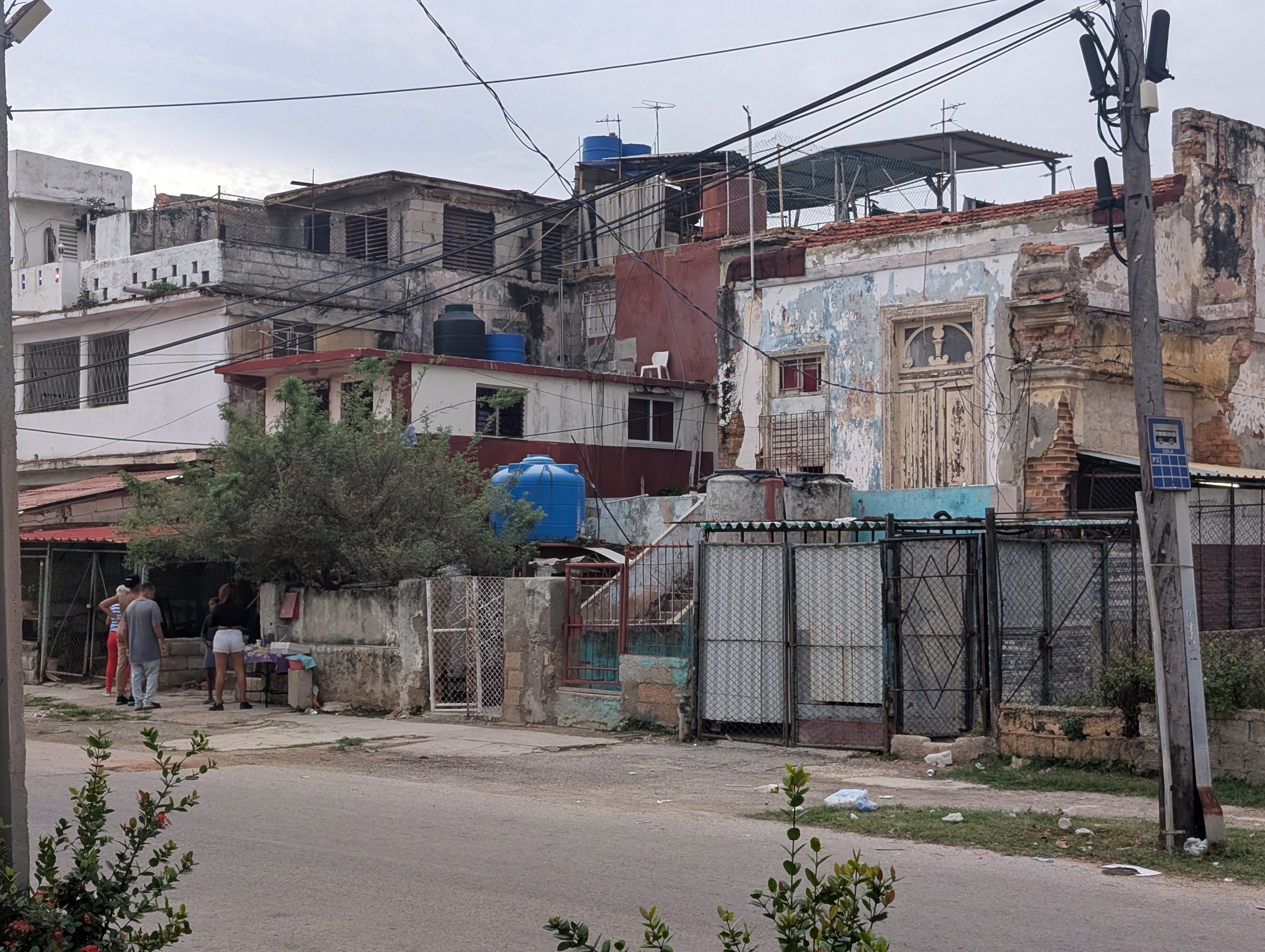
“A block in the Vedado neighborhood of Havana, Cuba.” Source: Robert Albro 

In 1992, veteran Miami Herald journalist Andrés Oppenheimer brazenly forecast the downfall of the Cuban government. He reportedly asked Simon & Schuster to rush Castro’s Final Hour into print because the collapse seemed imminent. In the wake of the U.S. abduction of Venezuelan president Nicolás Maduro and his wife Cilia, pundits are once again predicting that the Havana government’s days are numbered. Based on our research during a recent visit* to Cuba, we conclude that headlines echoing Oppenheimer’s prediction are wrong again. 

The feeding frenzy has been fueled by President Donald Trump and Secretary of State Marco Rubio. Early in January Trump called Cuba a “very badly failing nation,” and later asserted that “Cuba looks like it is ready to fall.” Rubio remarked at Trump’s January 3rd press conference that “Cuba is a disaster…it’s in total collapse.” Sources tell us that the Trump team believes regime change will occur by the end of 2026: the deepening immiseration of the Cuban people will lead dissenting government officials or military officers to declare that it’s time for the country to become a capitalist democracy, and poof, as if by magic, it will happen. Exactly how is unclear. Recent reports say Washington does not actually have a plan to bring this about but is in search of someone to lead the rebellion. Meanwhile, the U.S. goal remains fixed on creating a humanitarian disaster in Cuba.   

The electrical blackouts that have plagued Cuba for the past several years will certainly get worse as Trump maintains the current policy of blocking Venezuelan oil shipments to the island. The small increase in oil coming from Mexico is hardly enough to replace the reduced supply from Venezuela. Most of the Cuban population already is suffering from shortages of food, medicine, medical care, gasoline, and necessities that regular electrical power would provide, such as functioning water pumps, lights, and working refrigerators. U.S. sanctions – which include severe limitations on tourism, remittances, and most trade, as well as the financial straitjacket the Trump administration imposed without justification by placing Cuba on the State Department’s list of “State Sponsors of Terrorism” – are the major source of Cuba’s misery.  

But the organization of Cuba’s economy also contributes to its dysfunction. Subsidies for inefficient state enterprises, regulations that discourage foreign investment, and limitations imposed on farmers and private sector companies stifle productive economic activity. Cuba imports roughly seventy percent of its food despite an abundance of arable land and supply of fish. In 2025 it purchased more than $300 million in agricultural commodities, such as frozen chicken, from the United States. Notably the government had to sell some of its precious Venezuelan oil to China to earn enough hard currency to continue that level of food importation.  

Lists of proposed economic reforms circulate in Havana, but while proposals may have merit in theory, they rarely take into account the constraints—both economic and political—under which the government is operating. Cuba is trying to implement a macroeconomic stabilization program with almost no foreign reserves, an intensifying U.S. embargo, and no access to help from the World Bank or International Monetary Fund.   

On prior trips to Cuba, we were dismayed that some Cuban officials expressed little recognition that Cubans were becoming desperate and the government was facing a crisis of legitimacy. But in December we found this attitude had changed. The change became evident earlier in the year when President Miguel Díaz-Canel fired the Minister of Labor and Social Security for denying that there were real beggars looking for food in trash bins. Now there seems to be a sense of urgency, a recognition that the Cuban regime can no longer survive by muddling through. 

Shortly after we arrived, the Communist Party took the unusual step of canceling the party congress scheduled to convene in April. In the past, party congresses have been the venue for announcing major reforms, so the reason for the cancellation became the focus of widespread speculation. One explanation we dismissed was that under the circumstances, the cost of bringing and housing so many delegates would be prohibitive or at least unseemly. Three other explanations struck us as more plausible. One was that party leaders were still arguing over which economic reforms the government should make. A congress that did not announce major changes would demoralize the population even further. A second explanation was that popular discontent was so great the leadership feared a convocation of grassroots party delegates might produce harsh criticism of the leadership’s handling of the crisis. A third, about which several of us are skeptical, was that national party leaders had reached consensus on reform measures but felt a need to move swiftly rather than wait for four months to conduct the grassroots discussion that normally precedes a party congress.  

In any event, it appears that serious economic change might actually occur this year. While we were there, the government took two steps it had long resisted: it legalized the use of U.S. dollars in retail sales and floated the Cuban peso against the dollar and various other foreign currencies.  Frustrated with the lack reforms, Vietnam and China have made deeper cooperation contingent on change. With the loss of Venezuelan oil, Cuba will need to rely even more on its international friends and will need to make the reforms necessary to reassure them that Havana is a reliable economic partner.   

Reforms are not the only reason the Cuban government is unlikely to collapse. Economic despair does not automatically generate an opposition movement capable of overthrowing the government. Foreign diplomats in Havana told us that they perceive organized opposition in Cuba is weaker today than at any time in recent memory. Spontaneous anti-government demonstrations are likely to continue. But without a sustained organization to channel discontent security forces will be able to contain occasional outbursts. Moreover, the “maximum pressure” policy of the Trump administration is having exactly the opposite of its intended effect. Even Cubans who freely criticize government policies and leaders told us they resent U.S. actions and statements they view as exploiting their current difficult conditions to humiliate and dominate them.  

In short, President Trump is more likely to realize his commercial interests in Cuba by sitting down with the government to see what sort of a deal can be made rather than waiting for the government to collapse—something U.S. presidents have been anticipating ever since 1959. 

*The authors traveled to Cuba this past December 14-19. 

Does Colombia Pose a Threat to U.S. Security?

By Jorge Rojas Rodríguez

Former Deputy Foreign Minister of Colombia 

Gustavo Petro in 2022. (Source: Wikimedia)

The question in the title would seem to have no logical basis were it not for the fact that President Donald Trump, Secretary of State Marco Rubio and Secretary of War Pete Hegseth have all accused the president of the South American nation, Gustavo Petro, of being “a drug trafficking leader” and “sponsor of narco-terrorists,” and the U.S. has cancelled his visa and put him on the sanctions list of the Treasury’s Office of Foreign Assets Control (OFAC).

At the same time the Trump administration implemented operation “Southern Spear,” deploying U.S. naval and air forces in the Caribbean and directing attacks, with missiles, against vessels accused of transporting cocaine in the Caribbean and Pacific. As of this writing, 23 boats have been destroyed and 87 persons killed. Official sources indicate that at least one of these attacks occurred in Colombian waters.

Initially, Washington justified these actions in terms of the need to “protect our homeland from drugs that kill our people.” But the U.S. has subsequently begun referencing “antiterrorist actions,” accompanied by assertions of operations along the Colombian-Venezuelan border involving armed groups such as the FARC dissident groups,[1] the ELN,[2] and Hezbollah.

Clearly this military deployment by the U.S., and attacks, are disproportionate, leading to civilian deaths that could be declared war crimes, because they violate international humanitarian law. In addition, the cocaine allegedly destroyed represents a fraction of the volume of drugs transported on ships that cross the Pacific Ocean, not the Caribbean. Furthermore, as has been explained by U.S. intelligence agencies, neither Colombia nor Venezuela produces or traffics in fentanyl, the cause of most drug deaths in the U.S. According to the Centers for Disease Control and Prevention, in 2023, 107,500 Americans died from overdoses, 74,700 from fentanyl, and 29,000 from cocaine. In 2024, deaths totaled 70,596, with fentanyl the main cause of death from overdoses.

Drug policy in Colombia changed since leftist Gustavo Petro became president in 2022; his administration decided to attack the clandestine laboratories, seize the cocaine already processed (especially at sea), extradite large-scale drug-traffickers and go after their wealth. Petro’s is a very different policy from that of previous administrations, which focused their efforts on attacking those who grow the coca leaf, considered the weakest link in the chain.

The result is that the current administration has seized 2,700 tons of cocaine, destroyed approximately 15,000 laboratories, and extradited 400 drug traffickers to the U.S. In contrast to these figures, the volume of coca leaf grown has expanded during the same period. According to the UN’s Integrated System for Monitoring Illicit Crops, Colombia today has 255,000 hectares of coca and produces approximately 2,664 tons of cocaine that is exported illegally to the U.S., Europe, and Asia.

The government of Colombia has undertaken a policy of the voluntary eradication of coca crops, substituting legal agricultural alternatives in place of coca, while supporting peasant farmers with agricultural land –  a policy that has shown positive results, even though its effects are slower in coming.

It is clear that the government of Colombia is engaged in combatting drug-trafficking, the president has been firm in fighting the drug mafias, and the arguments brandished by Washington show a profound lack of knowledge of what drug-trafficking has meant for this Andean country.

President Petro has proposed a policy of cooperation to Trump to combat the cultivation of coca leaf, production and commercialization of cocaine, as has been done with prior governments over the course of the long strategic relationship between the two countries. There has been no response and some have begun to wonder whether drug-trafficking isn’t just a pretext for the Trump administration to intervene politically in Latin America, encouraged by sectors of the far right in Florida, as has now happened in Venezuela.

The paradox is that the problem of cocaine cannot be resolved by militarizing the Caribbean, invading countries and killing civilians on the high seas but instead by adopting a harm reduction policy that works to better understand the harms to both producers  and consumers, to prevent continued drug consumption, and provide effective and publicly available treatment options for those who continue to be trapped in the world of drugs. In this way the current figure of 5.3 million habitual users of cocaine in the U.S. would decline.

While the United Nations takes steps to improve upon failed models of the past, and is forming an independent commission to evaluate the “war on drugs” of the last 50 years, the U.S.  is backsliding toward militaristic policies that, while they might serve any number of purposes, will not overcome the trafficking and consumption of cocaine.


[1]   Factions of the Revolutionary Armed Forces of Colombia, or FARC, some of which did not go along with the 2016 peace deal between the Government of Colombia and FARC, and others that demobilized in 2016 and then took up weapons anew.

[2]   ELN: National Liberation Army, which has fought the government continuously since 1964.

This piece was authored by Jorge Rojas Rodríguez, translated by Charlie Roberts, and edited by Robert Albro, CLALS Associate Director.

El Salvador Risks Becoming a Zone of Silence  

By Sonja Wolf 

Research Professor, School of Government and Economics, Panamerican University, Mexico

Nayib Bukele on Salvadoran Independence Day in 2024. (Source: Wikimedia)

On December 17, 2025, a local court released lawyer Alejandro Henríquez and pastor José Ángel Pérez. Seven months earlier, the two activists had been arbitrarily detained under El Salvador’s state of emergency and charged with public disorder and aggressive resistance. The arrests occurred when Henríquez and Pérez were attending a peaceful rally of the El Bosque cooperative outside President Nayib Bukele’s private residence. The El Bosque cooperative is a farming community that had obtained its lands because of agrarian reforms in the 1980s and was now making a last-ditch effort to prevent the eviction of more than 300 families from their plots. In a bittersweet turn of events, Henríquez and Pérez pled guilty to regain their freedom after an abbreviated judicial process. Each received a suspended three-year prison sentence that essentially prohibits them from participating in protests during this time. The verdict criminalizes social movement activity and is a reminder that the state of emergency has become a tool to silence critical voices. 

Generalized citizen discontent with the country’s traditional parties and his own anti-establishment campaign had propelled Bukele to the presidency of El Salvador in 2019. Since then, he has quickly established an electoral authoritarian regime that retains a democratic façade but sees him wield executive control over other branches of government. His party, Nuevas Ideas, obtained a legislative supermajority in both the 2021 and 2024 elections. Bukele capitalized on these wins to neutralize all checks and balances on his power and to engineer his successful run for an unconstitutional second mandate in 2024. A secret pact with the country’s street gangs helped mobilize voters and contributed to Bukele’s early triumphs at the ballot box. In late March 2022, the breakdown of this agreement prompted gang members to kill 87 people in three days. By then, Bukele no longer needed the gangs to consolidate his rule.  

Following this latest escalation in violence, he asked the Legislative Assembly to declare a state of emergency to crack down on these groups. The measure, which suspends certain constitutional rights and allows extended pretrial detention, dismantled the gangs as the country knew them and sharply cut the number of registered homicides. While the administration appears to be manipulating crime statistics, its perceived results made the state of emergency widely popular with Salvadorans and helped Bukele’s re-election in 2024. Far from being of a temporary nature, the measure has come to fulfill an essential function in the regime’s propaganda and repression. Some 90,000 people have thus far been detained, including human rights defenders and political opponents. Often apprehended on the spurious charge of illicit association, individuals find themselves mired in a justice system that does not ensure a fair trial. Civil society groups have extensively documented the systematic human rights violations committed under the state of emergency. The abuses are particularly egregious in the prisons where, by December 2025, they had occasioned at least 473 deaths. 

The weaponization of the state of emergency follows the progressive closure of El Salvador’s civic space. Bukele’s regime has severely restricted access to public information, making it difficult for reporters and transparency activists to obtain data about government policies, contracts, spending, and statistics. If anything, this opacity has increased under the state of emergency. Since he came to power, Bukele has denied independent journalists access to press briefings and subjected them to systematic campaigns of stigmatization and delegitimization. Efforts aimed at undermining critical media workers range from online harassment and defamation to surveillance and abusive legal tactics such as Strategic Lawsuits Against Public Participation or SLAPPs, initiated to exhaust targets financially and emotionally.  

At El Faro, an award-winning investigative outlet, journalists received physical threats and Pegasus spyware attacks. Advertisers were harassed, and the newspaper faced spurious money laundering accusations and frivolous audits. Jorge Beltrán is a veteran reporter who had been covering organized crime and gangs for El Diario de Hoy, one of El Salvador’s oldest mainstream newspapers. In 2022 Beltrán was targeted with a $10 million SLAPP after an exposé about Israeli cyber espionage firms in Mexico. A relative of the director of El Salvador’s state intelligence agency was mentioned in the piece and subsequently sued both the newspaper and Beltrán for moral damage. While the court rejected the compensation claim, it required El Diario de Hoy to publish an apology and withdraw the article. Beltrán himself went into exile in June 2025 because of a reasonable fear of being arrested on fabricated criminal charges.  

For Salvadoran civil society, however, it was the arbitrary detention of Ruth López that constituted a watershed moment. As lead anti-corruption investigator for Cristosal, a prominent human rights NGO, López had worked on cases of government corruption and irregularities in public contracts involving Bukele’s relatives. Her arrest in May 2025 on spurious grounds of illicit enrichment had a chilling effect. Since 2020, at least 130 journalists and human rights defenders have gone into exile, though most of them left El Salvador in the aftermath of López’s capture to avoid meeting a similar fate. In addition to individual departures, NGOs and independent media organizations also felt compelled to exit the country. El Faro had already moved its legal office to Costa Rica in 2023, whereas Focos and the Journalists’ Association of El Salvador (APES) did so two years later. As government repression increased throughout 2025, El Faro and Cristosal moved all of their staff abroad for their own safety. The decision to reduce the organizations’ in-country presence,  while understandable, will pose new challenges to documenting abuses of power, defending its victims, and holding officials accountable. 

Bukele’s regime found an additional mechanism to quash dissent with the Foreign Agents’ Law passed in May 2025. The legislation requires non-profits to register with the interior ministry and pay a 30 percent tax on all foreign funding they receive. The decree gives the administration broad powers to monitor, sanction, and dissolve organizations that fail to register or that engage in political activities that threaten the stability of the country. In response, some NGOs voluntarily decided to close, many others try to keep operating with a low profile. The Jesuit Central American University, long a vocal advocate for the poor and oppressed, is known in El Salvador for its research, public opinion surveys, and human rights reports. Its leadership, however, must now hope to avoid a repeat of what happened in Nicaragua where the Ortega regime seized the school’s property and assets in 2023. In El Salvador, meanwhile, proposed reforms to the rules governing communal associations suggest a government intent upon hindering community organizing. For anyone working in NGOs, media, and academia, self-censorship becomes a survival strategy. As journalist Raymundo Riva Palacio remarked, regarding the erosion of press freedom in his native Mexico, self-censorship is the most effective form of censorship, because it leaves no trace, creates no scandal, and normalizes silence.  

Self-imposed exile and self-censorship are turning El Salvador into what the Inter-American Commission on Human Rights has called a “zone of silence.” The term is typically associated with areas where violence against journalists leaves entire communities misinformed, as has happened in Mexico. A similar trend is occurring in El Salvador since the Bukele administration is deploying “technologies of censorship” to inhibit public scrutiny and criticism. The resultant information vacuum is filled by the official narrative, extensively promoted through government-controlled television channels, newspapers, and social media accounts. Influencers and pro-Bukele trolls do their part to spread regime propaganda and attack human rights defenders, journalists, and opposition politicians. Since citizens primarily rely on television and social media to access information, Salvadorans are likely relatively unaware of major government decisions and their impacts on people’s lives. 

Exiles may have escaped state terror at home. Some stay out of the public eye to keep their relatives in El Salvador out of harm’s way. Others continue their professional work as best as they can, but they have started to be impacted by Bukele’s methods of transnational repression. The United Nations Human Rights Office defines transnational repression as acts that a state or its proxy commits to deter or punish advocacy directed towards it from abroad. It can take various forms, including digital attacks, reprisals against in-country relatives, the arbitrary refusal of consular services, harassment through INTERPOL red notices, and physical violence. Ingrid Escobar directs Socorro Jurídico Humanitario, a legal aid organization that assists victims of the state of emergency, and has repeatedly been subjected to online defamation campaigns. Ivania Cruz and Rudy Joya of the human rights organization UNIDEHC were targeted with INTERPOL red notices but managed to have these lifted. 

Given the Bukele regime’s persistent attempts to intimidate journalists and activists, it is vital that these groups create international pressure to denounce abuses and demand respect for human rights. It is equally important that exiles find spaces for collective solidarity and resistance. Their ability to continue their work is key, more so since parts of the international community are either reluctant to criticize the democratically elected Bukele or perceive his security “model” as effective. APES documents and reports abuses against journalists and offers media workers safety guides and legal assistance. In Mexico City, Casa Centroamérica has become a home for Central Americans fleeing political and legal persecution. The NGO can provide recent arrivals with temporary shelter, is building an archive of national publications, and researches the causes of exile. 

Realistically, the state of emergency only stands a chance of being dismantled if El Salvador returns to democracy. Many citizens choose not to report abuses or speak out against Bukele’s regime for fear of being arbitrarily detained. Constitutional reforms passed in July 2025 extend the presidential term to six years, permit indefinite re-election, abolish the runoff election, and brought the next presidential election forward to 2027. Bukele can comfortably perpetuate himself in power if abstention levels are high and the political opposition fails to present a compelling alternative to his vision of the country. During Bukele’s time in government, economic growth has been weak, and poverty has increased as soaring debt and corruption have depleted state resources. A fiscal adjustment insisted upon by the International Monetary Fund requiring a smaller public sector has already led to massive job losses in areas such as health and education. These cuts will affect the quality of public services and likely fuel social discontent. The country’s economic woes, which Bukele will be unable to resolve as quickly as the security situation, may ultimately help bring about the demise of his regime.

What is behind the US Escalation of Threats against Venezuela?

By Ernesto Castañeda

Regarding the question of what is happening between the United States and Venezuela, the answer is that this is a partially unintended, unanticipated international focus at the end of the first year of Trump’s second term. While the governments of the U.S. and Venezuela have not been close for a while, this path opened up as other areas of intervention, such as the Russia-Ukraine war, got stuck at a standstill. 

The potential intervention in Venezuela is not a popular option. There is little support among experts about its merits. Likewise, Venezuelans are not eager to go to war.

This was not a priority for Trump in the past. But three key members of his cabinet and White House staff have zeroed in on Venezuela in the last few months.

As an article in the Washington Post on December 18, 2025, explains convincingly by drawing from inside sources and visible actions, Steven Miller, Deputy Chief of Staff and Homeland Security Advisor, and the main engine behind the aggressive anti-immigrant agenda, wanted to conduct military attacks in Mexico as another way to curb immigration, his long obsession. But as undocumented and asylum-seeker arrivals at the border have approached zero —in part thanks to Mexico’s role—, Miller looked further south. 

Trump campaigned in the 2018 midterms and the 2020 elections, bashing MS-13 and Salvadoran immigration. But this time around, he found an ally in Salvadoran President Bukele. Other Central American governments have also collaborated, so he zoomed in on Venezuela through Tren de Aragua (TdA) as an excuse to expedite deportations. Tren de Aragua-related deportations to CECOT in El Salvador became a fiasco and highly unpopular, not to say unlawful. So, the administration moved to declaring the so-called Cartel de los Soles as a terrorist organization with Venezuelan President Nicolas Maduro as its supposed head. After targeting small boats off the shores of Latin America and the Caribbean, then the excuse became fighting drug trafficking and then to old claims on permits to exploit Venezuelan oil by Exxon-Mobil and other oil companies, without discarding the ideas of regime change as the support for Machado grew internationally, and as the Chief of Staff, Susie Wiles, told Chris Whipple to get rid of Maduro, to put pressure on Venezuela until Maduro would give up or “call uncle.”

On the other hand, Marco Rubio—both National Security Advisor and the Secretary of State, which in other countries would be called Secretary of Foreign Affairs—has long had an obsession with the regime in Cuba, which he sees as related to Venezuela. This is partly because of the financial and oil support that Venezuela gave to Cuba for many years, which, although it continues—it seems that the first oil tanker that was seized was going from Venezuela to Cuba—though the Venezuela support is no longer the support it once was, and it’s not enough to help the Cuban regime, which is in deep economic trouble. Officials in Cuba see this as a move with them ultimately in mind. 

Marco Rubio is especially interested in attacking the Cuban and Venezuelan regimes, and there is nobody left in the White House to contradict him, not Susie Wiles, as John Kelly would have done in the first Trump administration, to stop such a bad idea.

According to the Washington Post article mentioned before, Secretary of Defense Pete Hegseth was happy to jump into the frenzy to protect his job following Signalgate. He was eager to prove himself, show “leadership,” and get more attention in the spotlight and ingratiate himself with Miller. So, he found the idea of bombing the small boats appealing, and he would probably like to lead a small incursion into Venezuela.

The objective is not truly drug trafficking. Most of the cocaine that reaches the United States doesn’t come from Venezuela. There are a few shipments that pass through Venezuela and then to the Caribbean; these drug shipments were going to other islands in the region, and perhaps some of that cocaine would eventually reach Europe, but very little reaches the United States. The Coast Guard has been in charge of seizing these vessels for many years, and the DEA could be conducting more formal investigations, so this idea of ​​the drugs as the rationale to threaten Venezuela is not believable. The American people don’t believe it, and this new pseudo-label of “narco-terrorists” isn’t logically convincing either legally or at the logical or expert levels. Indeed, it seems that the administration is already giving up on that; also, with the pardon for the president of Honduras, the drug angle is less convincing. The contradiction remains, and they are rightly not going to attack Mexico or Colombia over the drug issue in the near future.

Things changed a bit with Maria Corina Machado’s visit to Oslo to receive the Nobel Peace Prize regarding democracy in Venezuela and regime change. And lately, there have been a few statements from Trump about the interests of U.S. oil companies in Venezuela. The U.S. oil lobby has been a key factor in Trump’s re-election. So, another goal is for U.S. oil companies to regain access to Venezuela, although there is already an American company doing business there: Chevron. So, this is not something of a priority. All this to say, there is no master strategy behind it.

It is partly a personal animosity between Trump and Maduro, evident in public declarations and supposed ideological differences, but the two governments have also had occasions when they handled structured negotiations very well. There have been instances of negotiations resulting in detained individuals returning from Venezuela to the United States, deportations with permission of Venezuelans from the United States, and then from El Salvador. So, it’s not that there has been a terrible personal relationship between Trump and Maduro or their intermediaries.

Marco Rubio’s obsession is the main driver. He has made recent public statements presenting new arguments and rationales, but they have seemed improvised and unconvincing. Even an overt, public declaration of a return to the Monroe Doctrine is not enough to justify this; it is mainly good news for Russia and China

To justify an attack on Venezuela and the boats around the coasts, members of the Trump administration have claimed that they wanted to combat terrorism, foreign enemies in the American war on terror, to accelerate deportations, but they still haven’t been able to win that mediatic battle or the legal or logical argument, but they have not done so not even in the local or federal courts. Although the Supreme Court hasn’t stopped them either.

Steven Miller is mainly interested in the idea of a war with Venezuela or with someone else, as a pretext to push through certain laws, such as the Alien Enemies Act and the Insurrection Act, both of which require the U.S. to be at war to be invoked. But this is not even necessary to continue with the mass deportations as they have been. They are deporting many people. Detaining people, they are practically at war with immigrant-based communities, though they are violating human rights and constitutional protections within the country. A declaration of war would not change that reality or make it any more appealing to citizens.

It is very clear that the majority of the American public opinion, even part of the MAGA base, is against the U.S. getting directly involved in any new war. They would be against an invasion or bombing of Venezuela, whether prolonged or even for a short period. It would be more difficult to stop something like an Iran-type one-targeted bombing situation, but removing Maduro probably wouldn’t be as quick or simple.

So, the American people are quite against an intervention in Venezuela. Furthermore, as we see with the debates surrounding the small fishing boats, critics, including legislators in the Senate and House, Democrats and Republicans, see these bombings of ships off the Latin American coasts as extralegal. They are putting a lot of pressure on the Pentagon to release the videos showing the killing of two survivors, and to either stop this type of operation, to explain what is happening, and if the intention is to engage in war, then, to make the case to Congress of why the U.S. needs to wage a war, on what basis, and with what objective.

All indicates it would not be something Congress would easily approve. Trying to get the Republicans in Congress to do that could cost some of them their seats in 2026. So, it’s a war, a strategy without rhyme or reason, hence the clear disorder. Venezuela is very worried about Trump’s pronouncements, but their aimlessness is nothing new. So, no one knows what’s going to happen, not even the Pentagon, which has deployed elements that are not sufficient for sustained ground intervention, though they are spending a lot of money bringing the ships there.

They thought military mobilization would be enough to intimidate Maduro, but it obviously hasn’t been. The Nobel Prize hype around Machado has already passed, and it hasn’t changed anything on the ground. The Venezuelan diaspora is asking for military intervention, but that is not enough. Understandably, from their point of view and personal experiences, they are asking Trump to do something. Those who are more established, have money, and have been here for a while, are still upset they were forced to leave. But the more recent Venezuelan migrants who came here seeking asylum after the pandemic are being denied asylum, their work permits revoked, and deported. So that is also a contradiction about Venezuela supposedly being a narco-state. So, the whole armed intimidation of Venezuela is bullying to the extreme, but it is incoherent as foreign policy.

The majority in the United States are against this war in Venezuela and the attacks on the small boats, oil tankers, and the possibility of bombings or military action. Contrary to what some in the White House bubble seem to believe, a war with Venezuela would not be enough to distract from the economic and political situation in the U.S. It would not totally change the narrative, help speed deportations to what would become a war zone, and the attempts to further concentrate power on the executive could be more directly opposed by the legislative branch which is the one supposed to declare and fund wars. The oil tanker confiscations and chases are just the latest in a series of policies in which the administration’s words, threats, and actions are not enough to scare Maduro or convince the public of the righteousness of these actions. 

Ernesto Castañeda is the Director of the Center for Latin American and Latino Studies at American University, Washington, D.C. The opinions expressed are his alone.

What Does It Mean to Provide Sanctuary? 

by Ernesto Castañeda, PhD. Director of CLALS and the Immigration Lab, American University

Photo Credits to Jeff Haynes/AFP/ Getty Images in “Churches have a long history of being safe havens — for immigrants and others.”

The term “sanctuary” dates back to late-imperial Rome and pre-16th century Western Europe, when temples, monasteries, and churches were places where victims, run-away serfs, and fugitive criminals were provided protection from local or remote government authorities. Religious houses would provide temporary protection to walkers who wanted to protect themselves from crooks or lords based on the Christian traditions of intercession between persecuted individuals and political authorities, and the ability of religious authorities to provide penance and to rehabilitate people through faith, prayer, and sometimes communal labor or what we would call now “community service.” Churches and hostels along pilgrimage routes welcomed strangers, who were protected due to their participation in religious rituals en route to shrines and sacred places. Think of today’s walking pilgrimages on the road to Santiago de Compostela in Spain and the hostels and inns along the way. Authorities would then recognize this practice. Emperor Constantine, “guaranteed sanctuary in Christian churches in 324 C.E.” (Rabben 2011: 55). Pope Leo I also wrote about sanctuary and gave Bishops the role of intercessors and advocates in favor of fugitives (Rabben 2011: 56).  

The early practice of providing sanctuary in Europe is similar to how churches, along with religious and activist networks, were used to construct the Underground Railroad in the United States during slavery. This secret network helped enslaved people escape the South to free states, Canada, or Mexico. Harriet Tubman, a key figure in this movement, was deeply motivated by her religious faith and played a crucial role in freeing others. Her mission to help free enslaved people would not have succeeded without the support of White allies, who were less likely to raise suspicion. 

Starting in the 1980s, a group of U.S.-based religious activists, State Department workers, journalists, and human rights activists helped people fleeing political persecution in El Salvador and Guatemala. These individuals were escaping U.S.-backed dictatorial regimes and sought safety in American cities like Los Angeles, San Francisco, and Washington, D.C. James Cobert, an activist Quaker, would call it a “pro bono coyote operation … the activists would help Salvadorans cross into the U.S., then hide people’s homes and in churches until it was safe to interior of the country” (Blitzer 2024:60). Soon after immigration agents dragged a Salvadoran teenager from a Lutheran Church in LA after an outcry by parishioners, the local INS Director produced an order, “in essence, saying the church is a sanctuary, but it is not established in law” (Blitzer 2024:69). This marked the birth of the modern sanctuary movement in the United States. Individuals acted because the U.S. government was unwilling to accept people from these countries as refugees, all while helping the regimes that caused their migration.  

These actions partly merged with a nascent immigrant rights movement in the U.S., paralleling movements in France, where undocumented immigrants sought protection from deportation by living inside churches in Paris and other cities. With media coverage, public support, and pressure, some of them were able to legalize their status after months of living in sanctuary.  

At some point, larger jurisdictions, including cities, started declaring themselves “sanctuary cities.” However, this is largely a symbolic self-declaration. There is no federal legal definition because there is no federal ‘sanctuary’ law that specifies what this entails or what protection it guarantees. The practical meaning happens on a case-by-case basis. Though generally, these cities are places where there is tolerance for foreign-born, minority, and undocumented populations. 

After the end of the Obama administration, authorities in major cities such as New York and Los Angeles began adopting policies more friendly to undocumented migrants. One of the most important policies and practices is the type of collaboration they have with federal immigration agencies. When the local police arrest a person, their immigration status may come up, and with it the question of whether to notify federal immigration authorities, such as ICE, automatically or only in cases involving major crimes. When ICE finds that an undocumented person has been arrested, they may ask local authorities to hold them so that ICE can pick them up. Under agreements following Section 287(g) of the Immigration and Nationality Act, many jurisdictions, particularly in Republican-led Southern states, actively cooperate with ICE to seek the prosecution of undocumented people through federal agencies. In these areas, local police and sheriffs can become deputized to work as immigration law enforcement agents. Most sanctuary cities do not automatically cooperate in this way; what matters is whether they prioritize prosecuting actual crimes or primarily focus on identifying individuals who are circumventing immigration law, which is part of civil law, not criminal law. 

The key issue is whether local police wait for federal immigration authorities to intervene and sometimes initiate deportation proceedings, or release individuals who have not committed a serious crime. This is where local discretion is crucial and where being in a sanctuary city or not can make a significant difference. 

Because each state or local authority has its own laws, policies, and practices, local police departments, even those within the same metropolitan area, may or may not collaborate with federal immigration agencies. 

While living in a sanctuary city may offer some protection, there is no guarantee that local or federal authorities will not verify immigration status. Most immigrants understand this reality, so they try to limit their activities to home and work as much as possible, keep a low profile, and are extra careful not to commit crimes or violate any laws. This is partly why crime rates are significantly lower for immigrants than for U.S.-born people. Many immigrants distrust the police, so they avoid standing out and may refrain from driving or leaving home unnecessarily. 

But the Trump administration, like other Republican administrations in the past, is seeking maximum possible coordination and collaboration. The number of 287(g) agreements has increased, and Florida is the state with the most of these agreements.  

Zoom in and see more details on the ILRC’s interactive map here

In the contemporary United States, there has not been a true ‘sanctuary’ city, where federal agencies like ICE cannot arrest and initiate deportation proceedings. It is not true that an undocumented person can simply arrive in a sanctuary city, request asylum, and be protected from deportation. 

ICE agents have the authority to conduct raids in factories, stores, restaurants, as well as in public places and private residences, with certain limitations. ICE can do so with or without court orders, and they often do not inform local authorities in sanctuary cities ahead of time. 

Nevertheless, Trump and other Republican politicians have verbally targeted sanctuary cities and accused them of “protecting” undocumented people. They also say that sanctuary means immigrants abusing social programs. In reality, this is rarely the case as immigrants use welfare programs at lower rates than other groups. They pay more taxes and receive retirement benefits than others, even after retirement, because they cannot access Social Security payments, despite having contributed to the system. Immigrants often don’t ask for tax returns for overpaid, and many do not access assistance programs that they have the right to, so as not to be seen as a public charge. 

The refusal of sanctuary cities to cooperate with federal immigration agencies does not render these cities more dangerous or unlawful. Nonetheless, the federal government has threatened to withhold resources from sanctuary cities. 

The White House is currently trying to favor state and local authorities that align with its immigration policies. Republican administrations, such as those of George W. Bush and Donald Trump, have attempted to incentivize local authorities with resources to perform federal tasks, including reviewing immigration status and signing 287(g) agreements. 

On his first day in office, President Trump signed a series of executive orders on immigration that permitted federal agents to search for undocumented people in churches, schools, and hospitals—places that were previously considered “sensitive” and that should be exempt from immigration enforcement and raids. Even a church stopped offering masses in Spanish in fear that Latino migrants would be targeted. 

“Border czar,” Tom Homan openly spoke of targeting Chicago because of its sanctuary policies. Chicago and the state of Illinois are both governed by Democrats. Mayor Brandon Johnson and Gov. JB Pritzker have defended their support for sanctuary city laws known as “Welcoming City” ordinances. Tom Homan, along with the Secretary of Homeland Security, Kristi Noem, occasionally accompany immigration enforcement agents in field operations—often for media coverage and to put pressure on local authorities to collaborate with federal authorities.  

Even with sanctuary status, there is not much a mayor can do to prevent ICE from conducting raids or apprehensions. In addition to Chicago, other cities that have recorded raids or operations by federal agents include Denver, Houston, San Antonio, Miami, and Atlanta, and increasingly around the country

A college campus that calls itself a sanctuary campus does not provide any legal protection from deportation to people within its community. The important thing is that administrators, faculty, and university members treat everyone with respect and good intentions. Undocumented people have the right to attend public schools and attend college as well as graduate and professional schools, but unless they are under DACA, they are not protected from deportation under current laws. Something that is long overdue for Congress to fix. 

Mass deportations happened during the Biden and Obama administrations, but there was less day-to-day media follow-up of these deportations. Now, there is much more attention from the public to what is happening and how it is being done. 

This is partly because of the central role that Trump has given to mass deportations in his political agenda. Along with Homans, Noem, and Stephen Miller, Trump wants to conduct deportations on a larger scale, at a faster rate, and more aggressively than ever before in the United States. While doing so, they are violating many rules, including immigration law procedures, due process, and other constitutional rights. 

Going back to the beginning of the tradition of sanctuary, if citizens want to protect undocumented members of their communities from deportation, asking their city, town, or campus to declare themselves a sanctuary is not enough. They must call for amnesty in the mid- and long-term, and in the short term, they would have to take matters into their own hands, as monks and priests have done in the past. They have to revive underground railroads and do what the families hiding Anne Frank and others did to protect them from Nazi roundups, as depicted in the powerful series “A Small Light.”   

Edited by Katheryn Olmos. This piece builds on a piece published in Spanish on BBC News World, 28 January 2025, based on an interview with Castañeda by Darío Brooks. 

You can republish for free if you keep it whole and include the author’s name, or quote a section, crediting the author.

The U.S. Helped Destroy El Salvador—Now It’s Supporting Its Authoritarianism

By Valeria Chacon

El Salvador’s President Nayib Bukele speaks during a press conference before casting his vote in a parliamentary election in San Salvador, on February 28, 2021 (REUTERS / Jose Cabezas)

El Salvador’s President Nayib Bukele speaks during a press conference before casting his vote in a parliamentary election in San Salvador, on February 28, 2021 (REUTERS / Jose Cabezas)

When President Ronald Regan distributed billions of dollars in economic and military aid to El Salvador during its civil war in the 1980s, it fueled the displacement of roughly one million Salvadorans and the slaughter of thousands. Years later, many Americans forgot this chapter in U.S. history, as American politicians smeared the image of this small Central American country.  Senator Marco Rubio once described El Salvador’s suffering as “the result of bad leaders, rampant crime and natural disasters.” However, many Salvadorans—myself included—have not forgotten.

President Nayib Bukele was reelected in February of last year and has been credited with transforming El Salvador from one of the most dangerous countries in the world into the safest—despite growing concerns regarding human rights violations. Now, the U.S. government and President Trump bear responsibility for the current crisis of criminalized migration, as evidenced by the agreement between the U.S. and El Salvador to imprison migrants from multiple countries in the mega-prison CECOT. This development echoes the violence the U.S. once supported during El Salvador’s civil war, as the country now becomes the face of U.S. immigration hell.

U.S. Involvement in the Civil War

Between 1980 and 1990, during the brutal 12-year Salvadoran civil war, the United States provided over $1 billion in military assistance to El Salvador—including approximately $996 million for military education and training. That training was later used to terrorize and kill Salvadoran civilians.

One female participant interviewed by The Immigration Lab, from El Gavilàn, El Salvador, describes the horrors she witnessed during the war:

“Sometimes the guerrilla would pass by and force us to give them food, and the armed forces would realize what had happened. The problem was that if they [the guerrillas] passed by and forced us to give them food, we had to. My two uncles were killed that way—because they came to us asking to give them food, and when the armed forces realized that, they kidnapped and murdered them.”

It was U.S.-trained Salvadoran military, such as the Atlacatl Battalion, that were responsible for the El Mozote Massacre—one of the worst massacres in Latin American history. On December 11, 1981, residents of El Mozote were rounded up to be killed, dismembered, and raped. Nearly half of the victims were under 10 years old.

But why would the US government support such horrific acts of mass murder? During the Cold War, the left-wing militia Farabundo Martí National Liberation Front (FMLN), was at war with the Atlacatl Battalion. The guerrillas, influenced by left-wing politics and Catholicism, were one of the country’s most prominent political forces. President Ronald Reagan’s fear that El Salvador’s authoritarian government might fall to communism led the U.S. to excuse and cover up atrocities in the service of anticommunism and defeating the guerrillas.

A mother from Ayutuxepeque told us her reason for migrating to the U.S. was her fear that the Salvadoran armed forces would target civilians for their political beliefs.

“The fear was overwhelming, just because you had an affinity towards a certain group. The armed forces would come and murder you. That’s why people mainly fled.”

Misinformation about the massacre and its aftermath spread, as the U.S.-trained Salvadoran military denied responsibility for the deaths of hundreds of civilians, claiming that the massacre was “totally false.” However, the Truth Commission for El Salvador issued a report documenting human rights violations from 1980 to 1991. It found that 85% of the cases reported to the Truth Commission involved state agents or death squads allied with Salvadoran armed forces.

Another female participant from La Union, El Salvador, described her immense fear of the Salvadoran armed forces:

“One had so much fear. There was no sense of security at all. Dead people would appear in alleyways. I couldn’t even sleep because I was scared they [armed forces] would knock on my door. I suffered a lot.”


Aftermath

Due to the civil war, more than a million Salvadorans were displaced, and half a million fled to the United States during the 1980s. However, just 2% of asylum applications filed by Salvadorans were approved, making it incredibly hard to legally stay and work in the U.S. This stemmed from U.S. aid to the Salvadoran government—extending protection would have contradicted its own foreign policy. However, in 1990, Congress created a program and legal immigration status called Temporary Protected Status (TPS), providing temporary permission to reside in the U.S., a work permit, and protection from deportation for foreign nationals of designated countries that are facing an ongoing armed conflict, environmental disaster, or extraordinary and temporary conditions.

The growing Salvadoran Population in Los Angeles during the early 1980s led to the formation of Mara Salvatrucha (MS-13), a Salvadoran street gang formed to navigate life in impoverished neighborhoods and defend its community members from other gangs. However, mass deportations of young Salvadorans involved with MS-13 led to the further destabilization of El Salvador, contributing to the gang’s expansion.

By 2005, Salvadoran authorities estimated the gang population at 40,000, with MS-13 having significant control of the country, and Salvadorans were living in fear, once again. The gang recruited older children and teenagers, many of whom were vulnerable targets as they lacked the means to survive in a country suffering from economic turmoil and educational limitations.

By 2015, El Salvador had become the most dangerous country in the world, with 103 murders per 100,000 residents—many linked to MS-13 or its rival, the 18th Street gang. The brutality of MS-13 is often characterized by not just killing but also by torturing, maiming, and dismembering victims. This gang funded itself through extortion, and in 2019, MS-13’s estimated revenue was $31.2 million.

Salvadorans saw a glimmer of hope in February 2019 when Nayib Bukele won the presidency, as he pledged to combat the gangs in El Salvador. He began addressing the country’s high crime rate by increasing police and military presence in gang-dominated areas to diminish their control, declared a state of emergency in prisons, and placed them on lockdown to prohibit visitors in order to block out communication with the outside world. By 2022, El Salvador’s homicide rate dropped to 7.8 per 100,000 residents—due in part to the imprisonment of more than 50,000 gang members.

It’s no surprise that President Nayib Bukele’s actions have caused him to be highly popular. You can even walk through parts of the Washington metropolitan area with Salvadoran populations, such as Columbia Heights or Hyattsville, and see merchandise with Bukele’s face. But with many discrepancies in detainees dying and rampant due process violations, it is clear that the improvement on El Salvador’s gang problem came at the expense of massive human rights violations.

El Salvador now surpasses the U.S. as having the world’s highest incarceration rate. In 2022, as many as 3,000 children have been arrested without any connection to criminal activity—many imprisoned solely based on their appearance or anonymous tips. These detainees are being sent to CECOT, which held Kilmar Armando Abrego Garcia, and holds many Venezuelan and Salvadorian immigrants sent by the United States government. But beyond its most notorious facility, El Salvador has 25 prisons across the country, where people have been vanished to and have not been heard of again.

Inmates dying under suspicious and unexplained circumstances being buried in mass graves, mirrors the events from the Civil War. Ramón Abraham Vargas Ávila died in Santa Ana on April 14 and Lorena Abigail Escobar Mejía died in Apanteos prison on April 18. The lack of coverage surrounding their deaths speaks volumes about the unimaginable things occurring inside Salvadoran prisons. Many of the detainees come from impoverished communities, highlighting policies rooted in eugenic ideologies aimed at eliminating the country’s poor through mass incarceration, gentrification, and the expedited naturalization of white tourists. President Bukele offers free visas under the guise of boosting the country’s economy, yet fails to address the needs of Salvadorans living in impoverished neighborhoods with limited access to employment or educational opportunities.

It is nauseating to see other Americans visit and revel in the beauty of the land I’ll never fully know because of the atrocities of the 1980s and the need for my family to flee. It pains me to hear elder Salvadorans fall victim to the propaganda and misinformation about what El Salvador has become. History has conditioned Salvadorans to favor strong, authoritarian leaders, and the country has never truly been given a chance to heal from the Civil war.

The U.S. has made a $15 million deal with El Salvador to imprison deportees. Some 278 men deported by the Trump administration to El Salvador have been accused of being members of the Venezuelan gang Tren de Agua or Salvadorans allegedly affiliated with MS-13—often on baseless connections such as simply having tattoos. The current U.S. administration sees El Salvador as nothing more than a remote place to detain people in what is essentially a concentration camp, where people sit without being found guilty or provided due process. What Bukele is doing to these kidnapped men is what he has been doing to Salvadorans for years—and only now is the Salvadoran diaspora beginning to wake up.

Valeria Chacon is a former research assistant and recent graduate of American University.

Migration policies of the current US administration

By Ernesto Castañeda

Although the xenophobic discourse has not changed much, Trump’s second administration has been much more aggressive in its goal of reducing the number of immigrants arriving at the U.S./Mexico border and within the United States. New executive orders eliminate some of the modest practical achievements of the Biden administration, put in place to handle the search for asylum, safety, and stability in a more orderly and humane way. The new administration is planning to end many of the humanitarian “paroles” and temporary protected status (TPS) for people from many countries, including Venezuela, Haiti, Cuba, Nicaragua, and other places in Latin America and the Caribbean, as well as Afghanistan and Ukraine. So, more than reducing the number of undocumented immigrants, Trump is creating hundreds of thousands of new undocumented immigrants in the interior of the country with his executive orders. An amnesty would do the reverse. Which reminds us that immigration status is the result of legislative decisions and that with the signing of an official law or document by the legislative and executive powers, this status can be changed for millions of people almost immediately.

Unfortunately, Trump is not interested in negotiating with Democrats for a comprehensive immigration reform that includes regularizations, as well as more border security measures and pathways to immigrate legally in the future. On the contrary, Trump’s second administration is in the process of hindering and making legal migration much harder, and foreigners’ ability to stay, more tenuous.

Trump is obsessed with carrying out mass deportations. So, Trump’s DHS is being much more aggressive not only by deporting newly arrived people at the border, where the numbers are very low due to changes made during the last months of the Biden administration, and because Mexico is preventing more foreigners from reaching the US border through internal enforcement and the US military being deployed at the border — but deporting people from large cities, especially democratic-majority ones. Against precedent, authorities have entered churches and universities a few times looking for people to deport. Faith helps many to lower their anxiety and the fear of being deported, but does not give them a foolproof sanctuary, not even in their churches.

Studying, having a visa, DACA, or even a Green Card, are no longer as much of a protection from deportation as before. It is false that Trump 2.0 focuses on deporting violent criminals; the vast majority of deportees have no criminal record. Many men have been deported, but also women and children. If closed borders and mass deportations continue, the U.S. will surely enter a recession because of a decrease in workers.

Another development is how much Trump is pressing other countries to stop the arrival of migrants and asylum petitioners to the US and to receive national deportees from other countries. Venezuela and Colombia are sending their own airplanes to transport them back. Mexico, El Salvador, Honduras, Costa Rica, Panama, Ecuador, among others, are collaborating with the Trump government to divert migratory flows. This opens opportunities for the cities and countries of the region that actively receive and allow people who have to flee their homes for major reasons to settle down and work legally. Local growth due to an immigration population bonus can easily exceed revenue from remittances in large economies (Mexico, Brazil, Colombia). The smallest countries, where remittances are a significant part of GDP, will have to make more adjustments and sacrifices to look for organic economic growth alternatives. In both cases, the returning human resources could compensate or even exceed the portion of their salaries (less than 20%) of what they earned and spent abroad. Comprehensive research and public education are required to dispel anecdotes that portray immigrants as a threat. Legislation like that in France or Germany could be passed to disincentivize opportunistic politicians from weaponizing immigration, increasing xenophobia, and anti-immigrant animus for short-term political gain. The richest countries in the world have over ten percent of their population born abroad. This is an opportunity for Latin America to do so in a way that increases opportunities for everyone.

Poverty, violence, and organized crime will continue to force some people to move internally and across borders, but migration will be increasingly within the same country or region and not so much to the United States or Europe. In the medium term, this exogenous shock can produce a more local, sustainable economic growth with less family separation across borders.

Ernesto Castañeda, Director, Center for Latin American and Latin Studies, and The Immigration Lab, American University, Washington, D.C.