Fulton Armstrong, Research Fellow, Center for Latin American and Latino Studies, American University
Philip Brenner, Emeritus Professor of International Relations and History, American University
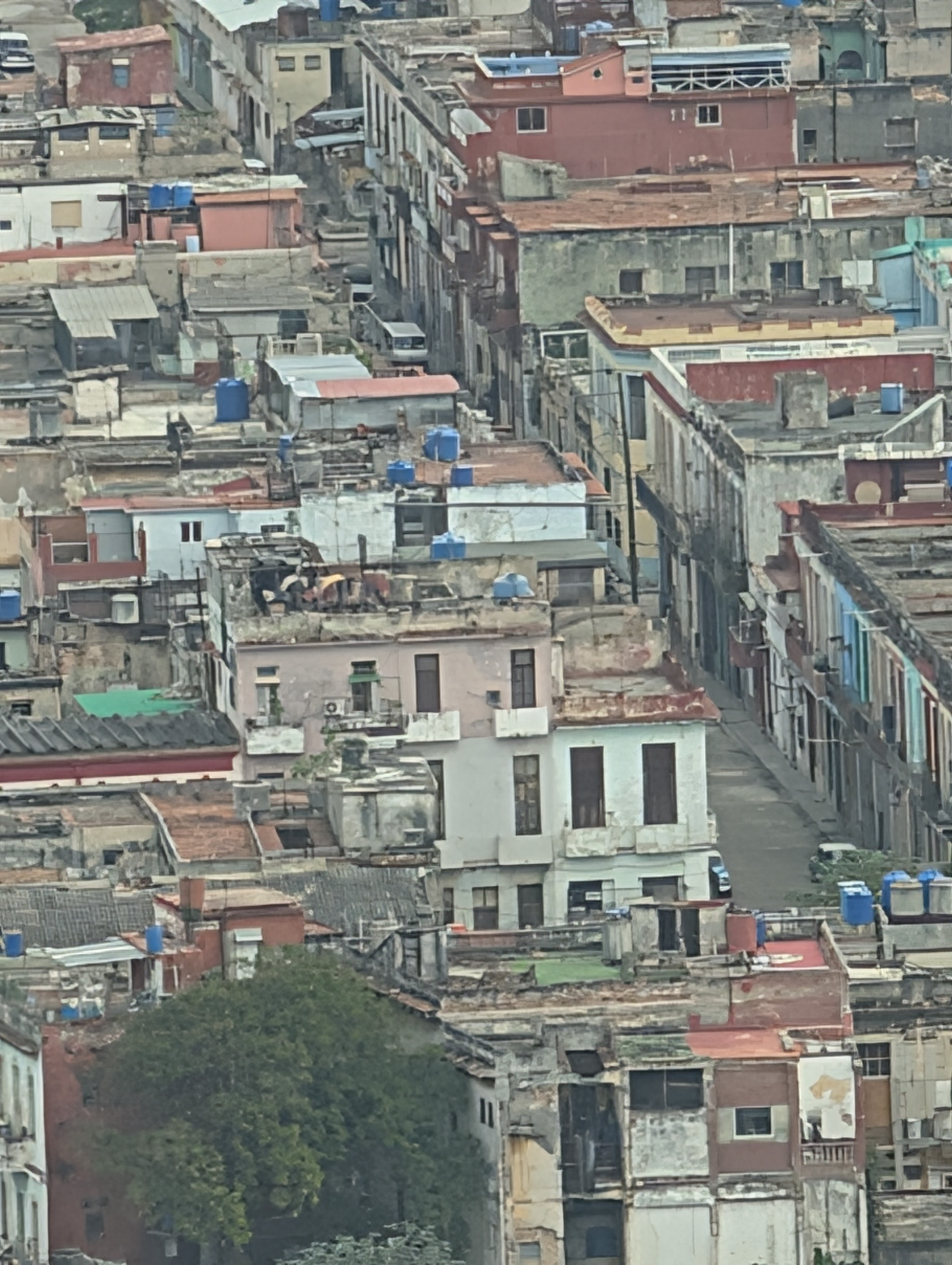
View of Havana, Cuba. Source: Robert Albro
The Trump administration has been applying to Cuba its credo that might makes right. At the United Nations President Donald Trump pointed to Cuba shortly after musing that he might “annihilate the Islamic Republic [of Iran]”, driving the Iranian people “into hell with no chance of survival.” U.S. escalation of its “extreme pressure” measures to effect regime change in Cuba, especially the oil blockade in place since January, amounts to the strongest attack from the United States since Fidel Castro marched into Havana more than 66 years ago, with little prospect of an outcome pleasing to the United States.
The across-the-board economic, diplomatic, and military steps to block all oil shipments to the Cuban oil processing and distribution industry – allowing only one small Russian shipment and a variety of small shipments of finished products to cash-paying clients in the private sector – are causing a multi-tiered humanitarian crisis. The blockade covers even solar panels, and shippers afraid of U.S. sanctions are delaying delivery of containers of food, medicine, and other essentials. Legal experts say these measures amount to a violation of international law.
Blackouts last 20 hours a day, and the whole national grid has crashed six times since January. Numerous press reports indicate that homes have no water because pumps cannot function without electricity. Patients needing hospital care are dying, with an estimated 100,000 people unable to obtain essential surgeries. Without fuel for trucks, garbage is piled high on city street corners, increasing the spread of mosquitoes bearing a range of diseases including chikungunya, dengue, and zika. The energy system has long been vulnerable because of previous embargo measures, such as prohibitions on the sale of spare parts with 10 percent or more of U.S. content, and because of inconsistent government policies. But the new U.S. actions have, by far, been the decisive cause of the current crises.
The underlying premise of U.S. policy since the 1960s is to spark a popular uprising that would lead to government collapse. The $60 million-$70 million a year the U.S. spends on information programs and other psychological operations directed at the island, primarily through social media, are clearly aimed at fomenting discontent, and many Cubans do blame their own government more than they do the U.S. for the lack of meaningful reform in past years.
But the government retains residual strengths that have enabled it to resist the U.S. pressure over these nine months. The people’s stoic and often creative survival strategies indicate that, even though they want change that will improve living conditions, they don’t want it dictated by Washington or Miami. The government has initiated and begun implementing significant economic reforms – at lightning speed compared to the past – that give the private sector huge new operating space, welcome foreign investment (including from expatriates) with very few conditions, and finally begin to dismantle inefficient state enterprises. Government officials say they’re not embracing capitalism, but their statements increasingly reflect acceptance of market mechanisms, decentralization, and a commitment to get the bureaucrats out of citizens’ way. Although they point out that Vietnam and China had drastically different conditions under which they implemented economic reforms in the 1980s, they’re not shy about signaling that they’re clearly moving toward a similarly mixed economy. The people won’t feel relief for some time, but change is in the air.
The U.S. Administration seems to think it will win this race for time – that Cuba will “fail” or “collapse” before the benefits of reform can be felt. It is doing all it can to fan the flames on the island, including through threats of military intervention. Trump and Secretary of State Marco Rubio want to make Cuba a “failed state,” but they don’t want to face the consequences of the humanitarian disaster that their aggression is creating. In response to deteriorating conditions, an estimated 1.5 million-to 2 million Cubans already have migrated in the last five years, mainly to Spain and Latin America. But those options are drying up, and Trump and Rubio certainly don’t want Cubans to take to the boats and arrive on Florida shores.
Even if the U.S. were to achieve its dream of effecting “regime collapse,” the island isn’t going to fall into its lap like a ripe fruit. The economic, infrastructural, and social damage will take decades to mend – and any new regime is going to face serious challenges to its legitimacy as a U.S. puppet and will struggle to maintain order. Indeed, government failure would probably benefit disciplined, orthodox enforcers rather than pro-democracy citizens with no experience. There is no pretty scenario at this point, but the less-ugly scenario would be to let the Cubans, without expressly excluding the party in charge, decide their own future. Cubans want change, but they want it to be evolutionary.
Reclaim or Rebuild? Washington’s Uneven Push for Regional Realignment
By Víctor Ortiz
Researcher, Instituto de Estudios Nacionales, Universidad de Panamá
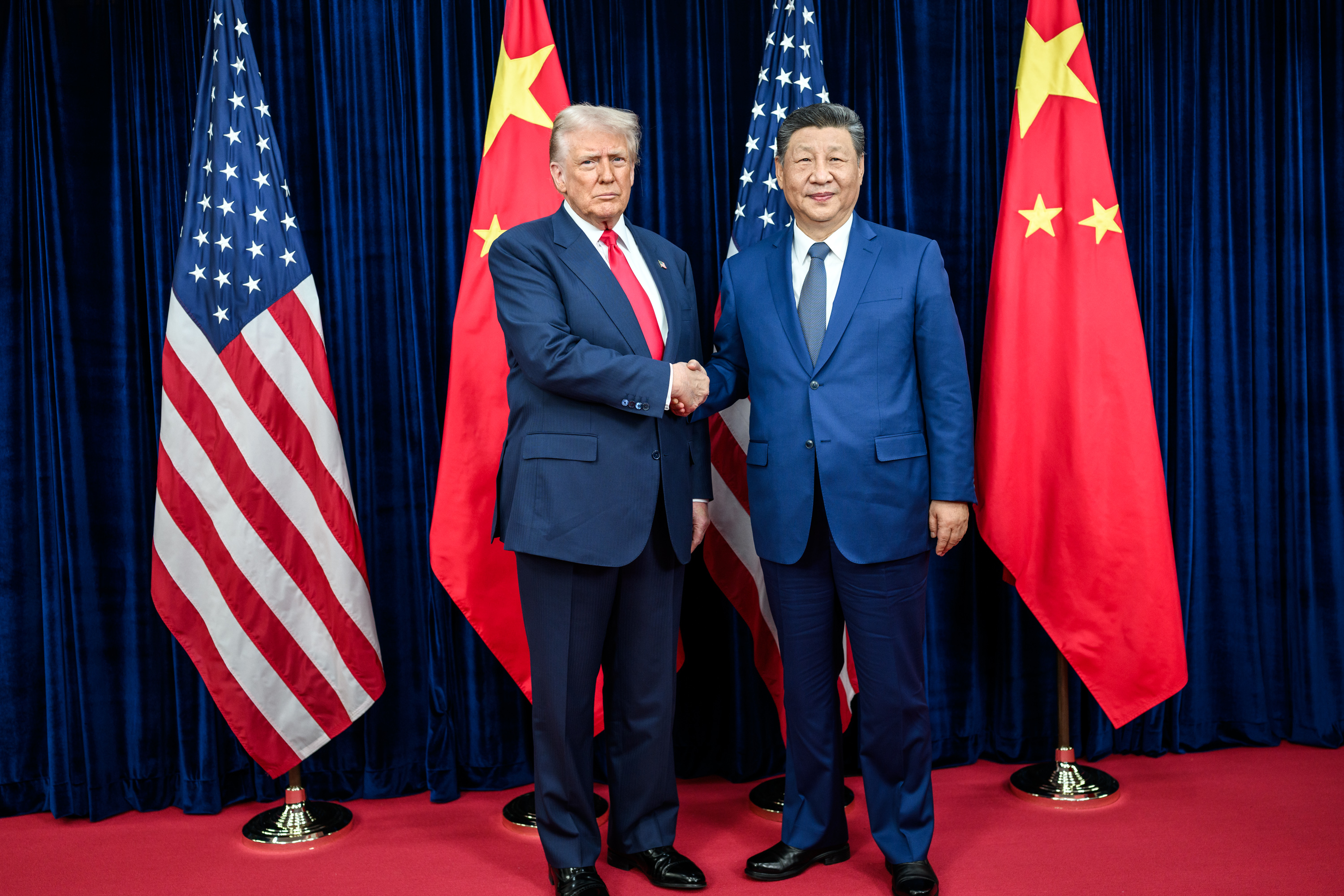
President Donald Trump greets Chinese President Xi Jinping before a bilateral meeting at the Gimhae International Airport terminal, Thursday, October 30, 2025 (Official White House Photo by Daniel Torok)
In his second term, US president Donald Trump placed the “reclaiming” of the Panama Canal among the central goals of his foreign policy. But this rhetoric cannot be read in isolation. It reflects a phenomenon that runs across all of Latin America, one in which the Canal occupies a central, though not exclusive, place. This raises two questions: Is Washington seeking to reclaim a hegemony it believes it has lost, or is it reacting to the perception that its hegemony has weakened? The distinction matters. In the first reading, this is simply a new edition of an old hemispheric discourse. In the second, a great power finds itself having to actively rebuild conditions it once took for granted, in the face of old and new threats: the fight against drug trafficking, illegal migration, and China’s growing influence in the region.
With Trump’s second administration, the shift was radical. Since December 2024 he has insisted that the United States give the Canal “to Panama, not to China,” and that the US was going to “take it back.” In February 2025, after meeting with Secretary of State Marco Rubio, President José Raúl Mulino announced that Panama would not renew its memorandum of understanding with China on the Belt and Road Initiative, without going so far as to break bilateral relations. Beijing, through its foreign ministry, called the move regrettable and accused Washington of resorting to pressure.
On April 8, 2025, Panama’s Minister of Public Security, Frank Ábrego, signed a memorandum with US Secretary of Defense Pete Hegseth that restored a rotational US military presence at the former American bases of Fort Sherman, Rodman and Howard in the former Canal Zone, and guaranteed priority transit for US warships through the Canal. Mulino insisted the agreement did not compromise Panamanian sovereignty; critics, however, argued that Washington had obtained, through a technical memorandum, a fraction of what Trump had openly demanded. Panama retains legal sovereignty over the canal zone, but that sovereignty now coexists with specific operational concessions — US military access to infrastructure outside the Canal itself, framed under the umbrella of protecting it and regional security.
Beijing’s response did not stop at the diplomatic protest of February 2025. After the Supreme Court ruling, China warned that Panama “will pay a high political and economic price” if it did not reverse the annulment of the concession. That warning translated into action: China detained 96 Panamanian-flagged vessels in March 2026 and 136 in April, 6.4 times the previous year’s average, in what the United States described as economic retaliation aimed at punishing Panama.
This episode reveals something about the nature of the “reclaiming” narrative. On March 4, 2025, before Congress, Trump presented the sale from Hutchison to BlackRock as if it constituted, in itself, the recovery of the Canal, and days later said on television that he preferred to see the asset in BlackRock’s hands rather than a Chinese company’s. Panama’s president responded that no such “recovery” had taken place: the ports do not control the Canal, since the two are run under entirely separate arrangements, with the Canal itself administered by the Panama Canal Authority (ACP). The sequence is telling: a private transaction, in which the Panamanian state was not a negotiating party, was narrated by the White House as a geostrategic victory over China. And when Panama did intervene directly on the ports front, it did not do so to hand the asset to Washington, but to annul the concession and open it to a new tender.
The Panamanian case is only one instance within this broader regional realignment. Since September 2025, Washington has sustained a military campaign in international waters against vessels accused of drug-trafficking activity in the Caribbean and the eastern Pacific, known as Operation Southern Spear, under which boats are destroyed even though doing so violates the flag state’s rights under international maritime law. In parallel, in March 2026 the “Shield of the Americas” was founded, a security and intelligence coalition that Panama joined at its inaugural summit in Doral, Florida, alongside Argentina, Ecuador, El Salvador, the Dominican Republic and Trinidad and Tobago; Peru and Colombia joined later that year.
This alignment reflects a prior structural subordination: these countries’ economies remain dependent on US trade and credit, their security forces — with the exceptions of Cuba and Nicaragua — are trained and equipped by the United States, and their political elites and economic power groups depend on staying on good terms with Washington.
Panama’s membership in the Shield adds to the 2025 memorandum and the port dispute — it does not replace them. While other governments in the hemisphere are linking themselves to Washington almost exclusively through that multilateral coalition, Panama is accumulating commitments at both levels simultaneously, the collective and the bilateral, making it the one point in the region where both layers of pressure converge on the same territory.
The evidence gathered suggests that the two readings posed at the outset are not mutually exclusive. Regional subordination is real and visible, as shown by the shift toward Washington-aligned governments across much of the hemisphere. Yet this subordination can no longer be taken for granted; it must be actively produced, through instruments ranging from security coalitions and lethal military campaigns, as in the Venezuelan case, to the simultaneous accumulation of bilateral and multilateral commitments, as in the Panamanian case.
If US hegemony were as solid today as it was in the era of the Monroe Doctrine or the Cold War, a single framework — one doctrine — would be enough to produce alignment across the region. What we observe instead is a deployment of distinct instruments, adapted to each country’s specific circumstances, at a political and legal cost that a comfortably exercised hegemony would not have to pay: allegations of possible war crimes in the naval campaign against drug trafficking, Panama’s judicial resistance that ended up annulling the concession despite US pressure, and China’s retaliation through the systematic detention of Panamanian vessels. That cost, repeated case by case, is the best evidence that Washington does not exercise the control it claims to have, but is rebuilding it — unevenly, country by country. Finally, it is worth asking whether this order will hold up regardless of who occupies the White House, as part of a consensus driven by the US national-security apparatus, one that Richardson had already flagged before Trump.
Marie Miller, Program Associate, Reiss Center on Law and Security, NYU School of Law
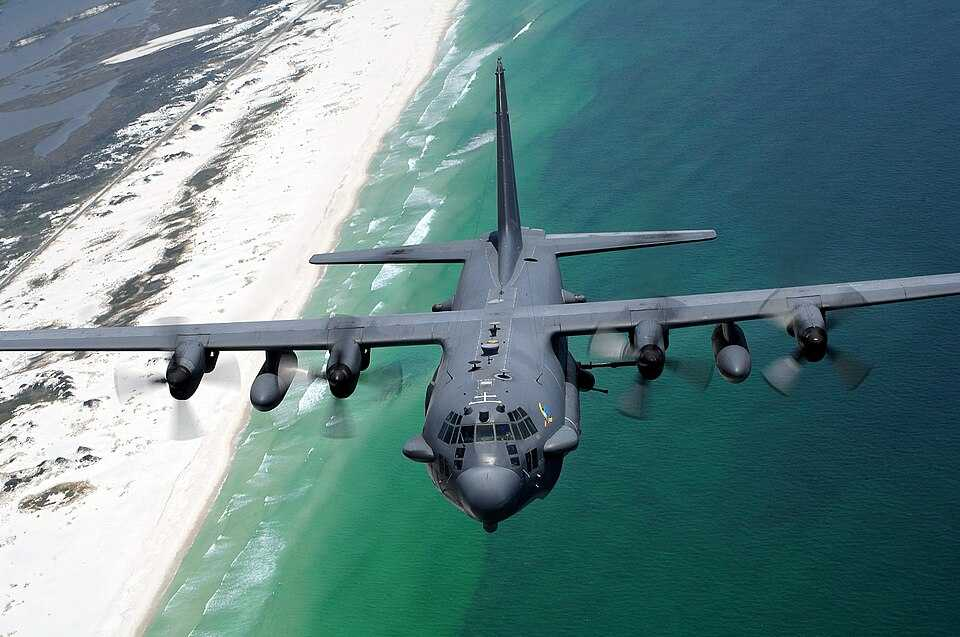
Source: Wikimedia Commons
On September 2, 2025, President Donald Trump announced that he had ordered a kinetic strike against a boat off the coast of Venezuela. U.S. military forces, he said, had identified those onboard as “narcoterrorists” of Tren de Aragua (TdA), a decentralized criminal organization with Venezuelan origins and a transnational reach. Thirteen days later, another strike, and a glimpse into the administration’s purported rationale: to disrupt narcotics networks affecting Americans—notwithstanding that Venezuela plays essentially no role in fentanyl production and smuggling. And then came another. Now, nearly a year later, more than 200 have been killed in 66 strikes by the U.S. Without evidence, without interdiction and trial, nor the administration’s stated legal authority made public, there’s still no telling when Operation Southern Spear, as the U.S. calls the campaign, will truly end.
With each strike, the administration has failed to make public any evidence that these boats are transporting drugs, much less that the passengers on board are affiliated with cartels or are participants in an “armed attack.” Most of the victims have not been identified, yet reports suggest victims include farmworkers and fishermen, compelled to participate in the trafficking network as independent laborers without ownership over the illicit product. With regard to cases where boats have been unusually crowded, one military official suggested that human trafficking victims could have been amongst those killed.
The Trump administration has claimed that the laws of war permit the killing of passengers smuggling narcotics in support of cartels designated as Foreign Terrorist Organizations (FTOs). In 2025, TdA was designated as such by Trump’s State Department, under a statutory authority delegated by Congress. Typically, the military can stop instances of trafficking with far less lethal force. If a vessel is suspected of ferrying drugs, it can be intercepted by the U.S. Coast Guard and its passengers arrested. Instead, it appears that boats merely suspected of drug trafficking have been blown to bits from above, taking the lives of those on board and occasionally leaving survivors who, eventually, are also presumed dead or missing at sea. Even if evidence had been provided that these individuals were indeed associated with TdA—and it has not—the administration’s justification for these strikes relies on a flawed legal basis.
An FTO designation made by the U.S. government can include financial, criminal, and immigration consequences for its material supporters. Importantly, despite having led to military operations in the past, the designation by itself does not create a state of war or armed conflict, nor does it authorize “wartime” authorities like targeting or detention. Nonetheless, in a classified memo notifying Congress of the administration’s legal basis for the operation, the “President determined that the United States is in a non-international armed conflict with these designated terrorist organizations.” The president can surely repel threats of terrorism when a sudden attack is imminent. Yet there is no evidence that this high threshold was met at the onset of Operation Southern Spear. The initial strikes were framed as “self-defense” against a critical threat to American life and security. A state’s self-defense is justified under the U.N. Charter’s Article 51 only in the case of preventing an armed attack or subduing an ongoing one.
In an undisclosed notice to Congress, the Trump administration apparently shifted its basis, indicating that the strikes go beyond discrete acts of self-defense, labeling the targeted cartels as “nonstate armed groups” whose actions amount to “an armed attack” against the U.S. Many legal experts, on the other hand, contend that drug trafficking and its effects cannot constitute an “armed attack” triggering the right of self-defense. In its description of non-international armed conflict, the International Criminal Tribunal for the former Yugoslavia refers to it as “protracted armed violence between governmental authorities and organized armed groups or between such groups within a State.” While the Trump administration has indicated that TdA is engaged in “irregular warfare” in the U.S., it has yet to define what this entails. Whether this amounts to “protracted armed violence” is uncertain and unsupported by available evidence.
In the absence of such an organized group engaged in protracted armed violence with the U.S., the law of armed conflict does not apply. Thus, the passengers on the boats—alleged associates of TdA, though not identified as such in the formal report from President Trump informing Congress of the initial strike—would not be combatants, nor civilians within an armed conflict. (If there was an armed conflict, the boaters’ civilian status would render them prohibited targets). Subsequently, the strikes would not be classified as war crimes. Outside of armed conflict, premeditated killing of suspected criminals is called murder. And under U.S. domestic law, it is prohibited. Article 6(1) of the International Covenant on Civil and Political Rights, to which the U.S. is a party, further prohibits arbitrary deprivation of life. Those responsible for authorizing the strikes may also be guilty of murder under Article 118 of the U.S. Uniform Code of Military Justice.
According to former U.S. State Department attorney Charlie Trumbull, with each of the 66 strikes constituting discrete acts of murder across a ten month window, the attacks can arguably be described as “widespread.” Crimes against humanity (CAH), one of three atrocity crimes alongside genocide and war crimes, are understood as part of a “widespread or systemic attack directed against a civilian population” in “furtherance of a State or organizational policy to commit such an attack.” A named policy—Operation Southern Spear—implemented by U.S. Southern Command in an organized manner, therefore, may meet the “state or organizational policy” requirement for CAH.
Operation Southern Spear appears to be one of many prongs of the Trump administration’s aggressive aims to reassert the U.S. preeminence in the western hemisphere, as part of the National Security Strategy’s “Trump Corollary to the Monroe Doctrine.” In spite of condemnation from civil society, a largely tepid response from Caribbean states met the U.S. militarization of the Caribbean and the capture of Maduro in January. While Cuba’s representative to the U.N. decried the “military aggression” of the United States against Venezuela, Trinidad and Tobago—whose military has partnered with the U.S. for joint exercises in Caribbean waters—verbally committed to the “cooperative efforts led by the United States to disrupt and dismantle networks that enable transnational crime,” remaining “steadfast” in support of U.S. “initiatives that strengthen regional security.” When Colombian President Gustavo Petro called one of the strikes “murder,” President Trump sanctioned members of his family, threatening to reduce aid and raise tariffs on the country. Since ending intelligence sharing with the U.S. (to, in his words, refrain from “collaborating with a crime against humanity”) Petro has reportedly toned down his criticism of U.S. Southern Command. Colombian authorities, moreover, have been slow to identify bodies that have washed ashore.
In the wake of Operation Absolute Resolve, which removed Venezuela’s president Nicolás Maduro from power, and the reported preparation of indictments against Cuba’s “political and military leadership,” Caribbean and Latin American states may be hesitant to further push back on the campaign, lest they risk falling into disfavor with a highly unpredictable Trump administration. In March, Ecuador began joint military exercises with U.S. Southern Command, with the intention of combatting drug trafficking. These led to various land and sea strikes, property destructions, and detentions. Since Operation Southern Spear appears to rely on a presumption that the U.S. is in an armed conflict with TdA, would the U.S. further target perceived associates—potentially including civilians—on land in Latin America? It is not outside the bounds of possibility.
If the relevant crime is indeed murder under U.S. law, the U.S. would hold prosecutorial jurisdiction. An ACLU case brought on behalf of the boat strikes victims’ families for wrongful death and extrajudicial killing is currently pending in Massachusetts, for instance. But if the killings are recognized as a crime against humanity, states outside of the U.S. may have universal jurisdiction status, in which international or foreign courts could step in when the U.S. fails to hold perpetrators accountable. This is why the distinction between war crimes and crimes against humanity matters. Despite President Trump’s ability to pardon those who have executed his orders in his chain of command, a determination that Operation Southern Spear is a crime against humanity would open new routes of accountability on the international level.
The International Criminal Court (ICC), for instance, can assert jurisdiction over crimes committed within the territory and maritime space of states that have ratified the Rome Statute. A point of comparative interest lies with the case of former Philippine president Rodrigo Duterte, who is now jailed after the ICC confirmed charges of crimes against humanity against him. In light of the murders of persons involved in drug-related criminal activity under the supervision of Philippines law enforcement, the ICC found reasonable grounds for the elements of crimes against humanity to be met. States can also prosecute crimes committed against their citizens abroad, such as the victims of the boat strikes, if they embrace passive personality jurisdiction and are able to either acquire prosecutorial custody or allow in absentia prosecution.
The geopolitical risks of accountability-seeking by victims’ states—Colombia or Trinidad, for instance—are evident. But the Trump administration won’t last forever. Right now, if they are able to muster the political will, Caribbean and Latin American states can quietly gather evidence of the strikes and secure witnesses. Once President Trump is out of office, indictments of perpetrators responsible for driving Operation Southern Spear on the state’s behalf can still come about.
Political Scientist, Independent Investigator for FLACSO-Paraguay, and Columnist for Ultima Hora
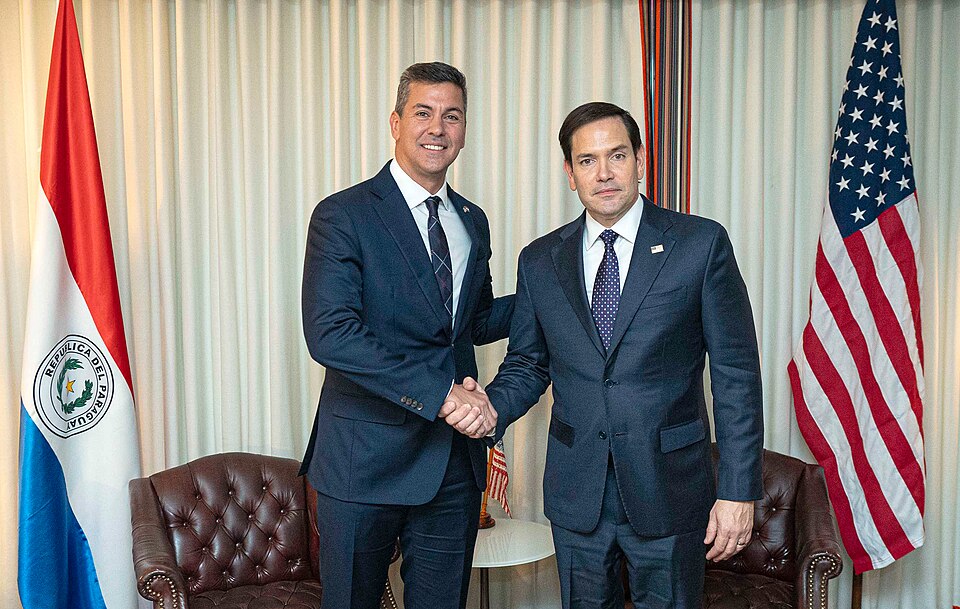
Secretary Marco Rubio meets with Paraguayan President Santiago Peña at the Department of State in Washington, D.C., January 21, 2025. (Official State Department photo by Freddie Everett) Source: Wikimedia Commons
Xi Jinping’s warning that “the Taiwan issue is the most important matter in relations between China and the United States” will go down in history. However, for the government of Paraguay, Donald Trump’s subsequent statements on the subject could prove even more unsettling. Speaking in a measured tone, the U.S. President acknowledged that Xi “holds a very firm opinion and does not want to see an independence movement,” adding that he, too, “does not intend for anyone to declare independence.” Furthermore, he left it unclear whether or not he would authorize a new arms sale to Taiwan.
Even if these amounted to only a few of the many assertions made by the heads of state of China and the United States at their recent summit, Santiago Peña and his Foreign Minister, Rubén Ramírez Lezcano, likely paused for a moment to reconsider Paraguay’s stance regarding Taiwan. Should they, perhaps, review their close relationship with Taipei in light of a potential shift in global geopolitics? Paraguay belongs to the small group of 12 countries that still recognize Taiwan; alongside Guatemala, it is one of only two Spanish-speaking nations to do so.
The doubts to which we allude do not concern the progress of cooperative agreements and trade relations with Taiwan. Both are advancing favorably. These are matters involving technical cooperation, market access, and infrastructure financing. During Santiago Peña’s administration, this kind of cooperation with Taiwan has been significantly bolstered—a progression that culminated during the President’s recent visit to the island in May 2026. Returning from that visit, he announced an agreement for a massive AI data center project, although its feasibility remains to be assessed.
What may well have generated uncertainty within the Paraguayan government is Trump’s apparent complacency in the face of warnings from Xi Jinping. Such an attitude on the part of the U.S. President would signal a departure from the tougher stance of American foreign policy hawks and would compel the Paraguayan Foreign Ministry to rethink its strategy—particularly the approach of presenting ties with Taiwan as proof of its firm rejection of Chinese influence in Latin America in order to ingratiate itself with the Trump administration. Nothing is set in stone, but this possibility is increasingly making its way into their deliberations.
Management of relations with Taiwan forms part of the Santiago Peña administration’s—in our view, excessive—effort to draw closer to the Trump administration and align itself with the State Department, headed by Marco Rubio. In this vein, Paraguay has backed U.S. military intervention in Venezuela and Iran, declared itself an unwavering ally of Israel, and supported the Trump Corollary to the Monroe Doctrine. Furthermore, alongside Argentina, it is the only other Latin American country to serve on Trump’s Board of Peace. Added to this is its enthusiastic participation in the Shield of the Americas summit, held in Miami in March of this year.
Demonstrations of alignment have also been made through measures of cooperation and collaboration regarding migration, security, and the fight against drug trafficking. The Peña administration has cooperated with the United States in the realm of migration, including a willingness to function as a “third country”[1] to process asylum applications for the U.S. It also endorsed a memorandum to facilitate the return of migrants denied admission to U.S. territory back to their countries of origin “with the assistance”[2] of Paraguay.
In the realm of security, Peña announced the designation of the Cartel de los Soles, the Comando Vermelho, and the Primeiro Comando da Capital as terrorist organizations, in line with the U.S. narrative regarding transnational organized crime and its links to state networks in the region. Concurrently, Paraguay signed a Status of Forces Agreement with the U.S.—a legal instrument that governs the status of foreign troops, including their entry, criminal jurisdiction, taxation, immunities, and operational protocols. In practice, such agreements typically facilitate troop deployments, military exercises, and defense cooperation; however, they can also spark domestic debate concerning the scope of immunity of foreign personnel, the extent of the host state’s oversight, and the tensions they may trigger with neighboring nations, such as Brazil.
This alignment has led to Paraguay being regarded as a reliable ally of the United States, and the measures adopted are presented as a reaffirmation of the historic alliance between the two countries. Today, that relationship is expressed within a new framework of cooperation, in which “security” and “counterterrorism” occupy a central place.
Nevertheless, the concrete benefits for Paraguay have not been particularly visible. It appears that Paraguay is conceding far more than the United States is yielding. Consequently, the prevailing opinion in various circles is that this has been too high a price to pay for the lifting of sanctions—imposed by the Treasury Department during the Biden administration—against the companies owned by Horacio Cartes, the former president and current chairman of the ruling party.
This is also the reason why concerns are arising regarding the scope of current foreign policy. If one observes the steps that have been taken, a pattern seems to emerge: a short-term outlook and the absence of a cohesive state policy. Santiago Peña has committed himself to a U.S. administration that may not endure in its current form following the November 2026 midterm elections. President Trump’s popularity is on the decline; the Democrats are gaining ground. The decision to align with the U.S., even in violation of international law, overlooks the fact that small states must uphold the protections afforded by such law regarding the defense of their sovereignty. Forging such a close alliance with Israel, and the most radical elements of the Netanyahu government, has isolated Paraguay from the international community. Finally, coupling all of this with an adoption of far-right rhetoric may yield short-term gains; however, once that political cycle concludes—as was the case in Hungary—the ensuing disappointment could be profound.
By Felipe Rezende, Research Fellow and Visiting Scholar in Residence at American University’s Center for Latin American and Latino Studies (AU-CLALS), from the University of Brasília (UnB), Brazil.
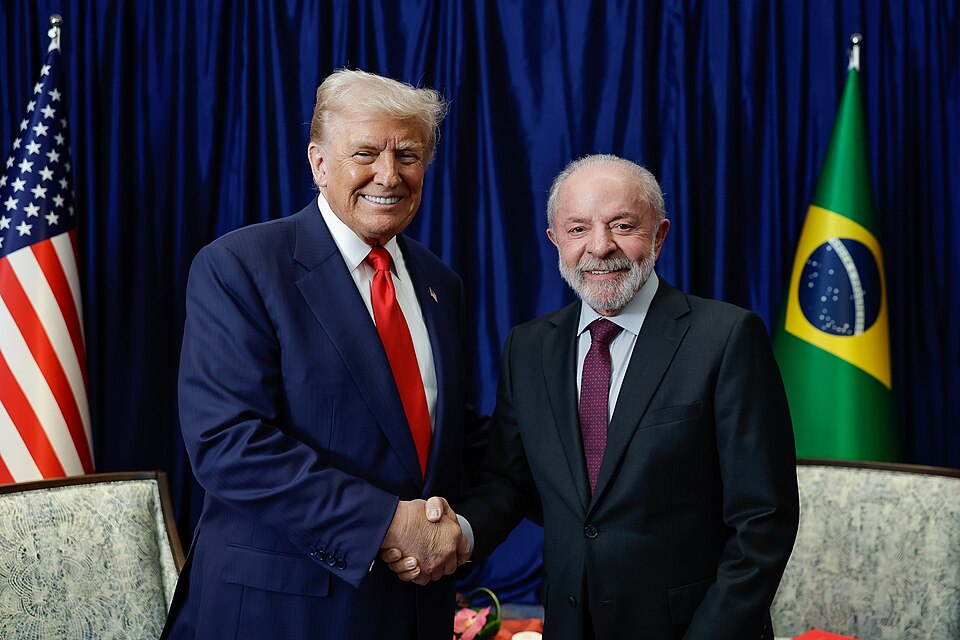
Meeting of U.S. President Donald Trump and Brazil’s President Luís Inácio Lula da Silva in Kuala Lumpur October 26, 2025. Source: Wikimedia Commons
Notwithstanding the “excellent chemistry” cited by Donald Trump in reference to a brief September 2025 meeting with Lula da Silva on the sidelines of the 80th United Nations General Assembly, in recent times the bilateral Brazil–U.S. relationship has yet to produce the quantity and quality of results one might have expected. Whether a result of different national and international commitments, or differing approaches to foreign policy, at least for the short term the interplay of a variety of factors has cooled the potential for advances in the relationship between the two countries. Reviewing recent developments in the bilateral relationship between Brazil and the U.S., here I consider how the current pattern of this relationship, together with upcoming electoral considerations, are likely to determine its limits and possibilities for the near future.
Sources of Direct and Indirect Friction between the White House and the Palácio do Planalto
Trump’s preferred trade policy in his second term, based on the unilateral imposition of tariffs upon numerous countries, with the declared objective of establishing an alleged fair balance (“Leveling the Playing Field”) in U.S. trade relations with the world, has lately been a primary factor of direct friction in the bilateral relationship with Brazil.
The historical U.S. surplus in trade with Brazil did not prevent the application in June 2025 of a 50 percent tariff on imports of Brazilian products. This imposition greatly hindered the flow of Brazilian agricultural production to North America, generating an oversupply in the South American country and inflation in the U.S. for such consumer products as beef, coffee, soybeans, orange juice, and other fruits.
In November 2025, pressured by domestic demand in the U.S., and interested in advancing strategic talks with Brasília, Washington withdrew the tariff weeks before the U.S. Supreme Court declared such practices illegal. At that time, the Palácio do Planalto appeared to have avoided the domestic political consequences of the tariff standoff by successful mobilization a narrative appealing to Brazil’s sovereignty and to the impropriety of such practices.
Since the inauguration of Trump’s second term, the influence campaign by groups linked to former Brazilian President Jair Bolsonaro – sentenced to 27 years in Brazil for an attempted coup d’état and violent abolition of the Democratic Rule of Law – has also been decisive in dampening official bilateral activity between Brazil and the U.S.
This included months of lobbying with the MAGA movement and gatekeepers of the Trump administration by his son Eduardo Bolsonaro, who endorsed the decision to impose additional tariffs, and suggested that justices of Brazil’s Federal Supreme Court (STF) be sanctioned, which was understood as an attempt to constrain the Court’s role in judging the case concerning the attempted coup d’état on January 8th, 2023.
In response the U.S. revoked valid visas for entry into the U.S. for almost all ministers of the Court, including Justice Alexandre de Moraes, who was rapporteur in the trial of the January 2023 rioters. The U.S. also applied financial sanctions under the Magnitsky Act, effective between July and December 2025, when they were withdrawn.
Under Lula Brazil’s foreign policy, and Ministry of Foreign Affairs, has continued to follow certain traditional patterns of Brazilian diplomacy, grounded in multilateralism, pacifism, and the reform – rather than rejection – of already existing institutions, organizations, and regimes of global governance, beginning with the United Nations — something that does not necessarily converge with U.S. foreign policy practices under Trump.
This was reflected, for example, in the Lula administration’s reluctance to accept an invitation to join the so-called “Board of Peace” in January 2026, created by Trump as a better alternative – in his view – to managing international conflicts. Lula publicly commented that Trump’s initiative appears to overlap with the competences ascribed to the UN, an important institution for the pursuit of Brazil’s interests as a middle power.
Lula’s skepticism toward Trump’s Board of Peace, with Trump as its self-appointed permanent Chairman and its likely promotion of U.S. foreign-policy interests, was compounded by the White House’s proposed Gaza peace plan even while the U.S. actively initiated global conflicts, especially its most recent incursion into Iran — a fact that delayed the meeting between Lula and Trump.
The May 7th Meeting and What Comes Next: Between Appearances and Substance
The approximately three hour meeting between Lula and Trump revolved around three principal issues. First was the question of bilateral trade, where disagreement remained as to the use of tariffs and U.S. allegations of unfair trade, refuted by the Brazilian side. Brazil, instead, sought unsuccessfully to convince the Trump administration of a U.S. trade surplus of USD 400 billion over the last 15 years.
With the possibility looming of the reapplication of a 30 percent tariff on Brazilian products, considered within the scope of ongoing investigations undertaken by the U.S. Trade Representative, Brazil achieved at least temporary relief, with the institution of a 30-day delay for the counterparts to reach a common understanding regarding the terms-of-trade scenario.
Second was a potential partnership for the exploitation of critical rare earth minerals in the South American country, which holds the world’s second-largest reserve. The condition set by Brazil is U.S. investment in local processing of the minerals and integration into the production chain. The legal framework to regulate this is on the verge of approval in the Brazilian Congress, thus enabling the U.S. and other countries to invest in this sector in Brazil.
What seems not to have been mentioned at this meeting is Brazil’s government-backed payment method, called PIX, often criticized by U.S. Vice President JD Vance. The White House is bothered that this payment method, in force since 2020, departs from the traditional payment models embraced by U.S. credit-card networks. Above all, the U.S. is concerned about the possibility of extending this model, currently being studied by the New Development Bank, to other BRICS countries.
Third, the meeting addressed questions of public security and cooperation against organized crime. Brasília emphasized that at present there is no significant volume of narcotics produced in the country entering the U.S., while the number of synthetic drugs and American weapons—especially originating from the state of Delaware—entering Brazilian territory is increasing. Brazil’s interest lies in deepening cooperation around preventive measures to stem these illicit flows.
On this topic, the principal unspoken point concerns the U.S. intention of characterizing Brazilian criminal factions, such as the Primeiro Comando da Capital (PCC) and Comando Vermelho (CV), as terrorist cells, which could provide a pretext for U.S. interference in domestic issues related to the repression of crime in Brazilian territory. The view of the Palácio do Planalto is that cooperation in public security and in combating organized crime should involve other approaches than mere classification of these groups as terrorists.
The May 7th meeting between Trump and Lula at the White House highlighted the sensitivity of these and other topics, which have been sources of frictions in the official relationship between the countries. It became clear that during the meeting an effort was made by both parties to minimize potential disagreement or embarrassment.
This does not mean, contrary to what the niceties of diplomacy might suggest, that the meeting was in fact productive. Despite appearances and exchanges of compliments between the two leaders – both of whom are facing declining popularity with decisive elections on the horizon – in objective terms this meeting does not seem to have gone much beyond a meeting to schedule other meetings, marking the triumph of aesthetics over politics.
Final Considerations
Despite a certain optimism generated by the May 7th meeting, the recent past demonstrates that a show of courtesies in the Brazil–U.S. relationship does not necessarily mean an absence of conflicts or, still less, indicate the likelihood of productive results in the short term. It is to be expected that evident foreign policy disagreements between Lula and Trump will not overturn a pattern of high-level pragmatism governing the relationship between the two great American powers, with more than two centuries of strong ties.
However, when each pursues their own objectives, including those conflicting with the specific interests of maintaining the bilateral relationship, these meetings become little more than an empty performance. Meanwhile, international far right networks continue to show that they are capable of interfering in the official relationship between Brazil and the U.S., undermining or complicating opportunities to deepen mutual gains while threatening democratic process in both countries.
The prevalence of ties among far-right movements continues to threaten the productivity of the official Brazil–U.S. relationship. Flávio Bolsonaro, another son of Brazil’s former president and a pre-candidate for the Brazilian presidency in the 2026 elections, visited the White House in late May to restore his reputation among voters, with his candidacy facing a setback after his name surfaced in the Banco Master scandal, the worst bank fraud in Brazil’s history. The next day, Marco Rubio declared both the PCC and CV terrorist groups.
Amid distinct tones of populism, it is regrettable that the Brazil–U.S. relationship remains hostage to personalistic interests that often end in transactional bargaining without producing durable results. Overall, it seems unlikely that the Lula-Trump relationship will deliver anything substantive beyond cordial meetings used primarily to restore the domestic reputations of each, particularly given a polarized electoral landscape in Brazil that continues to treat the Bolsonaro-Trump relationship as a relevant factor.
By Felipe Rezende, Research Fellow and Visiting Scholar in Residence at American University’s Center for Latin American and Latino Studies (AU-CLALS), from the University of Brasília (UnB), Brazil.
In the current context of jingoistic nationalisms and divisive political projects, particularly in the United States, where the current Trump administration has intensified a political agenda anchored in anti-immigration discourse and practices, reflecting upon the challenges and opportunities for re-imagining what people across the America’s might have in common, in terms of identity, culture and shared belong, is at present particularly important. Contemporary cultural developments such as Bad Bunny’s performance at the Super Bowl LX and Brazil’s global awarded film industry illustrate how notions of “American” belonging can also be culturally and politically contentious.
Hemispheric Myths of National Assimilation
At first glance, imagining a unitary cultural identity across the Americas appears challenging. Although Latin American nation-states might share similar colonial and post-colonial histories, their different national and subnational cultural commitments have also been forged in dynamic relation with cultural assets from elsewhere influencing what is now recognized as latino culture. Similarly, the idea of a North American identity does not emerge as an empirically verifiable cultural synthesis, but rather as the contingent result of ongoing symbolic disputes marked by racial hierarchies, power asymmetries, and competing projects of belonging.
Mid-twentieth century notions such as the meltingpot in the United and the myth of the so-called cosmic race or mestizaje in Latin America, offer different but comparable assimilationist narratives for the nation, narratives which obscure persistent structural conflicts within post-colonial American societies. Such accounts function largely as ideological constructs aimed at producing one or another sort of unified national identity. In this sense, contemporary debates about pluri- or multiculturalism in the Americas carry an inherent ambiguity: cultural diversity is recognized rhetorically but also regulated through mechanisms that posit and reproduce racial and other social asymmetries.
This multicultural dilemma in the Americas, therefore, derives from the tension between the political recognition of plural identities, on the one hand, and the impulse to preserve national identity as previously imagined, on the other. In this context, artistic and cultural production and its diffusion emerge as privileged arenas of symbolic mediation, contestation of meaning, and negotiation of belonging, which often seek to transcend closed assumptions of national identity. We might understand the hemispheric and global diffusion of national artistic production from Latin American countries as more than just cultural industry content, and as helping to circulate diverse cultural perspectives.
Latin American Pop Culture is Having a Moment
Recently, numerous products of Latin American popular culture have achieved global recognition, potentially serving as pillars for re-imagining a broader and more cohesive sense of identity across the Americas, and in ways increasingly independent from taken-for-granted nationalist mythologies across the continent. Especially in times of growing international fragmentation, authoritarian threats to democratic systems, and dysfunctional global regimes that fail to produce international cooperation the cases below illustrate new opportunities for re-imagining identity, culture, and belonging in the Americas.
In recent years musical artists like the Colombian Karol G and Puerto Rican Bad Bunny have come to exemplify the consolidation of Latin urban pop as a transnational cultural phenomenon, with a strong presence in the global music industry and recurring visibility through numerous nominations and awards in the GRAMMY and Latin GRAMMY circuits. Bad Bunnywon the 68th GRAMMY Awardsin the following categories: Best Música Urbana Album and Best Album Cover, for DeBÍ TiRAR MáS FotoS, and Best Global Music Performance for EoO. Also, his 2026 Super Bowl LX halftime performance made history as the first solo Latino artist to headline the show, bringing renewed attention to discussions about what it means to be “American.”
Also in music, Liniker, a Black Brazilian trans woman songwriter, won three categories at the 26th Latin GRAMMY Awards: Best Portuguese-Language Contemporary Pop Album, and Portuguese-Language Urban Performance for Caju, as well as Best Portuguese-Language Song for Veludo Marrom. In addition, the album Milton + esperanza (2024), a collaboration between the acclaimed North American jazz artist Esperanza Spalding and the Brazilian master Milton Nascimento, was nominated for the 67th GRAMMY Award in the category Best Jazz Vocal Album.
In cinema, Brazilian audiovisual productions have undeniably entered the global mainstream, particularly through films addressing the memory of political tragedies such as that country’s military dictatorship. “I’m Still Here” (2024) won the 2025 Academy Award for Best International Feature Film, the 2025 Golden Globe for Best Actress in a Motion Picture – Drama (Fernanda Torres), and more than 70 additional international awards. “The Secret Agent”(2025) won Best Director (Kleber Mendonça Filho) and Best Actor (Wagner Moura) at the 2025 Cannes Film Festival, and later won the 2026 Golden Globe for Best Non-English Language Film and Best Actor in a Motion Picture – Drama (Wagner Moura). The film is also nominated for the 2026 Academy Awards in the categories Best Picture, Best Actor, Best International Feature Film, and Achievement in Casting.
In literature, the growing presence of Latin American authors within global circuits of recognition can also be observed through the wider international circulation of their books, increasing number of translations, and their selection for prestigious literary prizes. For example, the Brazilian novelist Itamar Vieira Junior, author of Torto Arado (2019), saw the 2023 English translation shortlisted for the 2024 International Booker Prize.
Each Latin American cultural producer mentioned here successfully transformed historically localized experiences – often addressing political violence, state terrorism, racism, and patriarchy, among other challenging topics – into aesthetically communicable narratives accessible at a transnational scale. But it is important to note that these recent successes in music, film and literature cannot be explained solely by the artistic genius of their creators. Beyond their evident creative excellence, also important has been the existence of public policies supporting the production and diffusion of national cultural assets, which have also contributed to the international success of Latin American popular culture.
Take the case of Brazil, which put in place a set of public policies that directly incentivize and support contributions to the country’s cultural economy. These include the so-called Rouanet Law, providing tax incentives to support the completion and circulation cultural projects. In the audiovisual field specifically, the Audiovisual Sector Fund (FSA) ensures public resources for film production and distribution. They also include the National Aldir Blanc Policy (PNAB), which established a continuous and decentralized state-funding model strengthening cultural infrastructure and expanding access to cultural rights at the local level. The international reach of works such as “I’m Still Here” (2024) and “The Secret Agent” (2025) should also be understood as the result of a public infrastructure that sustains the competitiveness and global insertion of Brazilian audiovisual products.
What Hemispheric Cultural Diplomacy Has to Offer
Whether through voluntary cultural cooperation, institutional support from domestic cultural public policies, or efforts of public and cultural diplomacy, the growing presence of Latin American artistic production in the hemisphere is neither accidental nor merely the result of its exoticization by Global North audiences. Despite long-standing legacies of stereotyping and archetypal representations of Latin American peoples and cultures, contemporary Latin American cultural products, which circulate throughout the hemisphere and beyond, help us to reconfigure the hemisphere’s identity in new and pluricultural ways.
Even amid the challenges posed by a context of fragmentation, competition, and new threats of geopolitical violence, the aesthetic innovations and moral premises foregrounded by contemporary Latin American artists, and informed by expressions of human rights, peaceful coexistence, and American belonging, present rich opportunities for new imaginaries of hemispheric identity and culture. In this sense, imagining what people across the Americas might have in common can cease to be just an idealistic abstraction and become one critical horizon for revitalizing mutual respect and democratic coexistence in the hemisphere.
Public Policy and International Relations Institute (IPPRI-Unesp)
National Institute of Science and Technology for the Studies of the United States (INCT-INEU)
President Donald Trump meets with Brazilian President Luís Inácio Lula da Silva during the ASEAN Summit at the Kuala Lumpur Convention Center. (Source: Wikimedia Commons)
The White House’s initial imposition of tariffs may at first glance make little sense, since it appears to disregard its economic interests. The US enjoys a trade surplus with Brazil, and there is not sufficient production in the US of many of the tariffed products to meet national demand. That is the case for coffee, fruit, and a variety of industrial supplies. However, to understand the source of the crisis, it is necessary to consider its non-commercial dimensions. These include i) the transnational articulation of far-right movements, ii) Big Tech’s economic interests, and iii) US geostrategic considerations.
Brazilian and US far-right currents are deeply connected. Eduardo Bolsonaro, son of the former president, has worked to promote the Brazilian radical right abroad. During his father’s trial, he took a leave from Congress to launch a pressure campaign in the US against the Brazilian Supreme Court (STF) and the Lula government. With cooperation from sympathetic US leaders, he lobbied against the Lula administration, claiming that the trial was a “witch hunt,” his father was the victim of political persecution, and asking that the US government impose penalties on the Brazilian authorities responsible. This effort complicated Brazil’s relation with Foggy Bottom and the White House. Much of the language used by the White House to justify the new round of tariffs reflected this lobbying effort.
Another factor that explains US policy toward Brazil are the interests of Big Tech companies. Brazil’s Supreme Federal Court took up a case relating to the responsibilities of social media platforms for user-posted content, ruling that social media platforms should be civilly liable if they failed to remove undemocratic, discriminatory, or crime-inciting content. In response, the US Computer and Communication Industry Association (CCIA) welcomed the imposition of sanctions against Moraes. They argued that the ruling in Brazil violated “free expression,” a strategy often used by Big Tech actors, in conjunction with far-right political leaders, to oppose the regulation of social media in Brazil and elsewhere.
Finally, larger geostrategic considerations are also in play. The current US administration seeks to reassert US regional and global hegemony. Brazil, for its part, wants to promote its Global South leadership, framed as part of a “multipolar world order.” Promoting the BRICS forum is an important component of Brazil’s approach. The new tariffs were announced a few days after the BRICS summit in Rio de Janeiro, with the US president also threatening to impose tariffs on other countries that associate themselves with the BRICS+ group. This timing illustrates US opposition to the BRICS and pressure on Brazil to align with Western countries instead of its Global South partners.
Tariffs backfire and the future of US-Brazil relations
However, the Trump administration’s aggressive strategy against Brazil has not led to the expected results. Brazil’s government managed to control the domestic narrative, framing US tariffs as an attack on Brazilian sovereignty, a strategy supported by public opinion, as polls show. The US approach also became an incentive for Brazil to shore up its relations with Global South leaders. Following the tariffs, Lula reached out to the presidents of China and India to discuss the expansion of trade relations. The tariffs also proved unpopular in the US, and harmful for the White House, since they drove up the cost of coffee and other products.
These several factors explain Trump’s subsequent decision to change direction. He opened a dialogue with Brazil, first announced at the UN General Assembly, and then confirmed his goodwill in a bilateral meeting in Malaysia. High-level negotiations, and the unpopular inflationary trend in the US, led to the recent removal of tariffs from many Brazilian products. It also signals an end to this most recent period of bilateral crisis.
Nevertheless, there might still be consequences over the middle and long term. US sanctions communicate to the Brazilian government that, while a global power, the US is not a trustworthy partner, even when it comes to such non-strategic, everyday issues as the export of coffee and fruit. At the same time recent events have helped to cement the transnational partnerships of far-right leaders while also serving to illustrate how these relationships are impacting US government decision-making.
On the other hand, the recent US decision to alleviate the tariffs is a signal for both partners that the US-Brazil bilateral relationship is an important one. Even if this relationship is imbalanced, given the US’s economy and global influence, the recent tariff episode illustrates that the US cannot simply dictate policy to Brazil, and that the two countries’ economic interdependence can function as a structural constraint upon the political will of far-right political actors.


.jpg)