Testimonies of Sexual Violence while Migrating from Latin America

Image Source: https://www.flickr.com/photos/rentman1225/26864902068/

By Maggie McMahon   

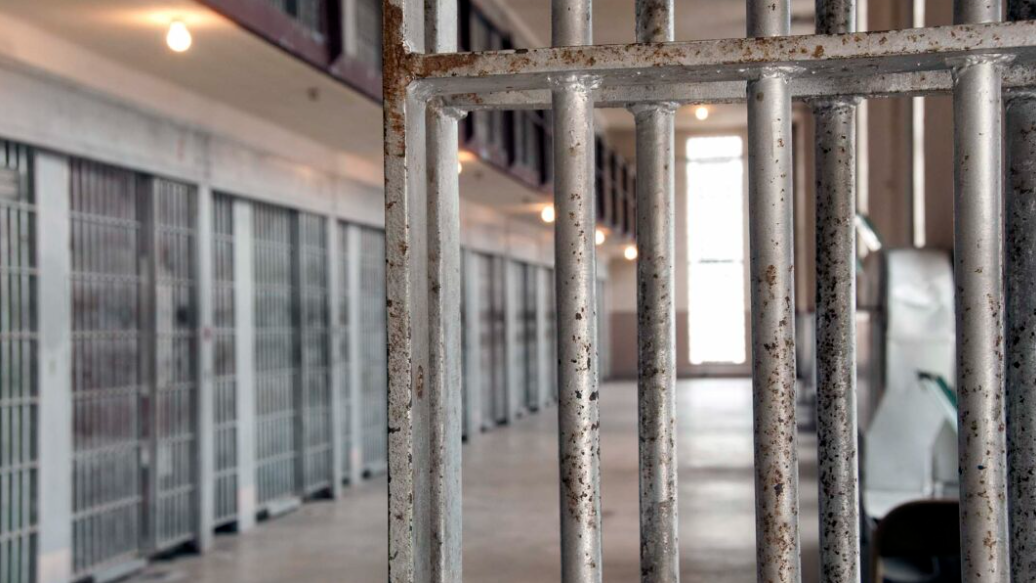
Sexual violence during migration journeys is rarely addressed in the current political climate. Yet this issue is rampant for many migrants, especially those making the journey from Latin America to the United States. The personal experiences and testimonies from those who completed this journey provide valuable insight into the dangers that migrants face in this region. This problem demands more attention, as it is one of the many dangers that migrants face while attempting to reach the U.S. 

In her late 20’s and from Ecuador, Verónica details her lengthy and dangerous journey to the United States, where she walked many miles to the US-Mexico border and experienced rough traveling conditions, including falling off a train.

Ay me están esperando llorar. Bueno, sufrí mucho, pasé mucha hambre, dormí en parque—muchas cosas feas…Bueno, después de eso, yo cambié de tren y me subí a otro tren que ese sí era el que me traía, pero ese tren se quedó 3 días en el desierto. Ahí entonces yo como que le daba gracias a Dios de no haberme subido a ese tren porque yo me pude subir, pero me dio miedo y no me subí, pero mucha gente se subió y algunos se cayeron, incluidos niños. Bueno, ese tren me avanzó hasta la frontera, de ahí yo me bajé y camine bastante. Yo llegué a este país con los pies podridos ensangrentados porque yo caminé artístico.[1]

Oh, this is making me want to cry. Well, I suffered a lot. I went very hungry, slept in a park—many ugly things… Well, after that, I changed trains and got on another one, the one that was supposed to bring me here. But that train stayed stranded in the desert for three days. At that point, I felt like thanking God for not getting on the earlier train. I could have boarded it, but I was scared and didn’t. Many people did get on, and some fell off, including children. Well, that train took me to the border, from there I got off and walked a lot. I arrived in this country with rotten feet, bloodied because I walked a tremendous amount. 

When asked if she felt in danger during her trip, Verónica shared her experience in Guatemala:

Uh no yo siempre diré que Guatemala es el peor país que yo pude conocer ahí, así que no te digo. A mi en bus me tocaron los senos, las partes íntimas. Me sacaron todo el dinero.

Oh no, I will always say that Guatemala is the worst country I could have known there, so I tell you. They touched my breasts and private parts on the bus. They took all my money.

After arriving in the United States, Verónica’s friend provided her a place to stay and food for a few weeks. She now works as a delivery driver.

Another woman, Mariana, also shared her experience with sexual violence during her journey. In her fifties and from El Salvador, she has been in the US for over two decades. During her journey from El Salvador, she recalls that:

Fíjese que yo fui víctima de eso. No llegar al acto sexual porque gracias a Dios no me llegaron a violar, pero en el camino para acá si fui tocada por los hombres. Puedo recordar de que no sé si todas percibirán eso, pero yo sí lo viví. Sí. Sería porque yo cuando venía ya venía …, pero yo parecía… yo era bien delgadita, parecía una niña de 14 años. No sé si por eso es que abusaron de mí de esa manera. Pero sí pudeir tocada por más de 2 hombres en el camino. 

I remember that I was a victim of that. Not in a sexual act, thanks to God, they did not rape me, but on the way here I was touched by men. I can remember that I didn’t know if anyone else sees that, but I did experience that…it must have been because when I came…I seemed to be very thin, I looked like a 14-year-old girl. I don’t know if that’s why they abused me in that way. But I was touched by more than 2 men on the way.

Mariana’s story demonstrates how persistent the dangers of migration have been for women over the years. 

These instances of sexual assault are not isolated. Samuel, born in Colombia in the late 1990s, migrated to Venezuela as a child due to political violence and the unfavorable economic situation. He moved to Brazil as a young teen to work in the mines after his parents separated and migrated to the US in 2024. 

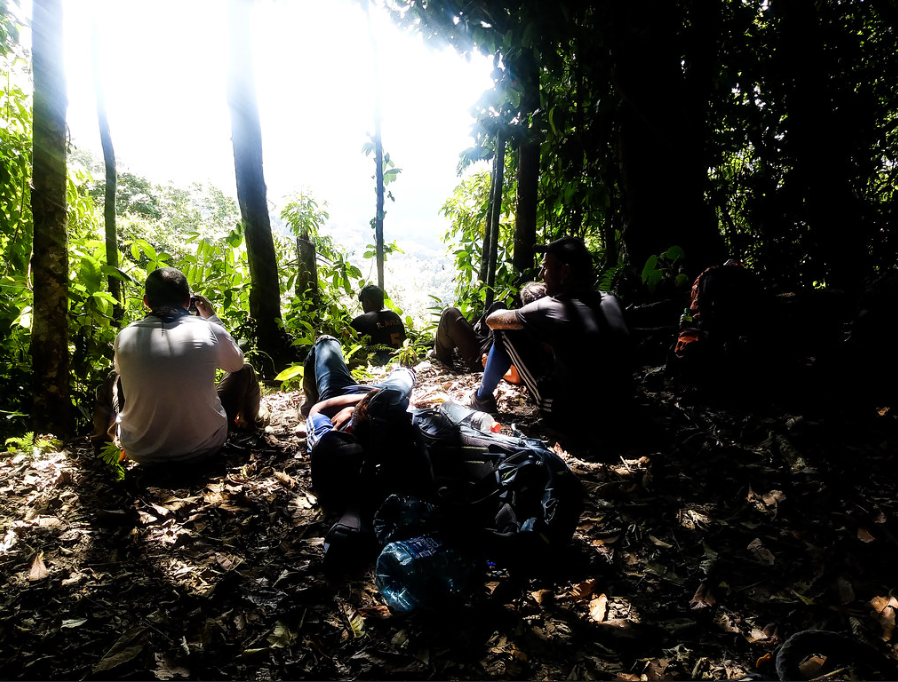
While traversing the Darién Gap, a remote thick jungle crossing between Colombia and Panama, David witnessed many violent situations. The Darien Gap is known for its dangerous and difficult conditions, with many people experiencing gang violence, crime, sexual violence, disease, and death. 

David reported that while on the Panamanian side of the Darien Gap, he witnessed a group of Indigenous men rape a woman traversing the crossing. He also saw this group of men shoot the woman’s husband. 

Hay indios que agarraron a una mujer y se la violaron. Y al esposo… viendo que están pasando eso, el esposo se le baten o se levanta, le pegan un tiro. El indio agarró con una escopeta y le pegó el tiro. Puso, se lo pegó aquí… Así, puff, le pegó el tiro aquí …. Ahí quedaron los dos y salieron los indios. Antes habían robado y todo, pero después estaban violando a la mujer ahí ante el grupo. 

There are Indians who grabbed a woman and they raped her. And the husband … seeing that they are going through that, the husband fights him or gets up, they shoot him. The Indian grabbed a shotgun and shot him. He put it, he stuck it here… So, poof, he shot him here…. The two of them laid there and the Indians left…Before, they had robbed and everything, but after they were raping the woman there in front of the group.

Sexual violence is unfortunately a common experience in the Darién Gap. Other migrants we interviewed also reported witnessing instances of it, as with the case of Mauricio. Born in Venezuela, Mauricio migrated to the US four years ago to find better opportunities for his three young children. He traveled to Caracas, Venezuela and then on to Colombia and Peru. During his migration, Mauricio faced many dangerous situations, such as sleeping on the streets and crossing the jungle. As he recounts: 

En Panama fui testigo una violencia que pasó pero eso fue ya entrando en la selva. Violaron una niña y alguna mujer. Entonces yo estuve ahí, o sea, fui vi todo con mis ojos y fui testigo de eso.

In Panama I witnessed violence that happened, but that was already deep in the jungle. They raped a girl and a woman. So, I was there, that is, I saw everything with my eyes and witnessed that. 

Instances of sexual violence were then increasing in the Darién Gap since Panamanian authorities were not monitoring the crossing. Additionally, many instances of sexual violence go unreported due to stigma and shame. With the absence of policing in these remote largely uninhabited areas, armed criminal groups are able to take advantage of vulnerable people traversing the crossing.  Though lately, the Panamanian government has mobilized the army to patrol those areas, as movement north has decreased and now many people are heading south.

Sexual violence have long-term psychological and physical impacts for those who experience and witness it. Victims of rape can suffer sexually transmitted infections, unwanted pregnancies, and physical trauma. Sexual violence can also cause feelings of depression, anxiety, PTSD, and social isolation, as well as heighten an individual’s risk of substance abuse.

Given the ongoing instability faced by many Latin American countries, migration through the Darién Gap is likely to increase. Panamanian authorities must take further action to closely monitor the dangerous conditions in the crossing and provide support for the vulnerable populations crossing it. Greater support for the physical, psychological, and financial needs of migrants should also be implemented in the United States. 

Maggie McMahon is a research intern at the Immigration Lab. She is a senior majoring in international studies. 

Edited by Elizabeth Angione and Vincent Iannuzzi-Sucich


[1] This and the following accounts have been taken from interviews conducted with recent arrivals to the Washington DC-metro region and New York City as part of an ongoing research project of the Immigration Lab in American University’s Center for Latin American and Latino Studies. This project received IRB approval. Given the vulnerability of this population, we have taken steps to ensure the human subjects involved are protected, including eliciting the consent of all research subjects, the use of pseudonyms, and elimination of any individually identifying information.
A Challenge Becoming an Opportunity: The Venezuelan Diaspora’s Journey to Social Integration

By Danjha Leon Martinez


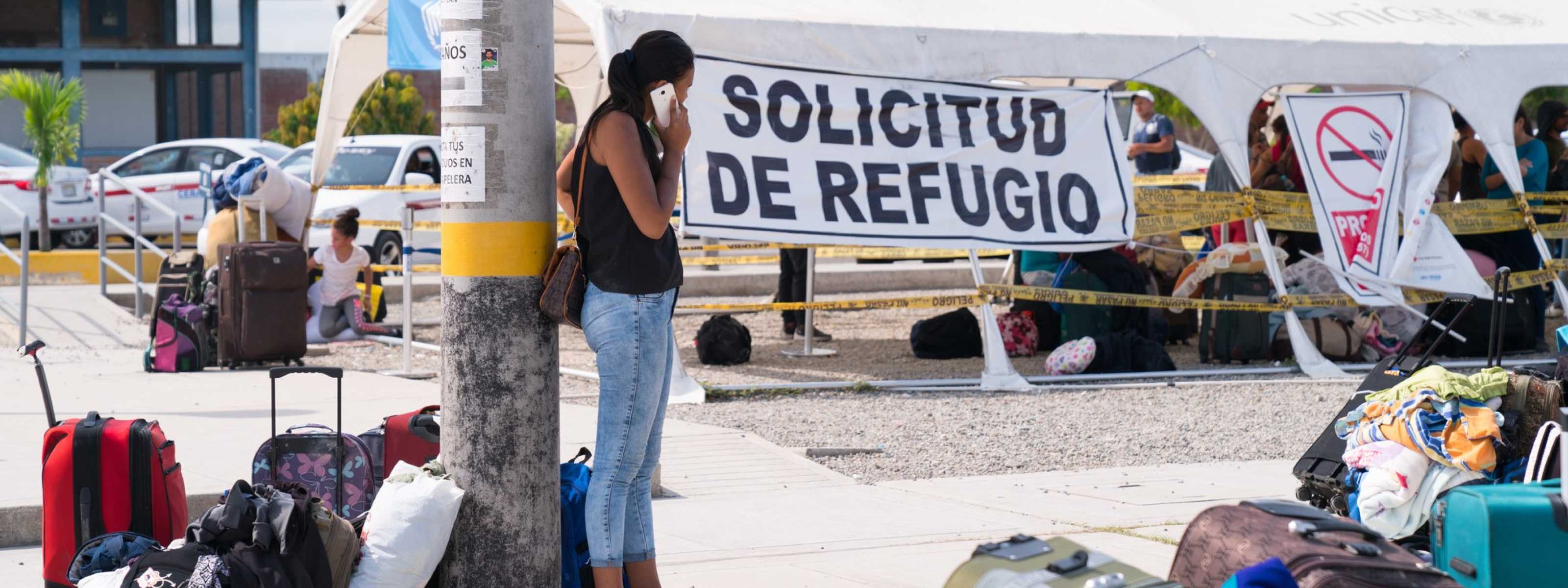
Peru has become one of the top destinations for Venezuelan migrants, second only to Colombia, with close to a million Venezuelans now calling it home. The Venezuelan diaspora started their mobilization journey after being forcibly displaced due to the socio-political situation in their home country.

Most migrants are young adults aged 18 to 34. About half hold technical or university degrees. Despite this, they had been encountering difficulties finding enough opportunities suitable for their professional or occupational credentials. In terms of resettlement, Peru still faces challenges in delivering the social services needed for effective migrants’ social integration. Specifically, the Peruvian system does not expedite their access to primary services such as documentation, healthcare, housing, and education during the early stages of their integration into the country. Thus, Venezuelans find themselves working in the informal economy as street vendors, construction workers, or housekeepers, taking any opportunities that they can find.

For many migrants, the choice to settle in Peru isn’t random. They are drawn by the country’s steady economic growth and its notable progress in reducing poverty. Others come to reunite with family or because Peru’s legal migration procedures are comparatively easier than those of other nations.


Diego: When I arrived in Peru, I said ‘Vaya! Hay Audis, Mercedes Benz, Starbucks…’ In Peru, I found opportunities… I was able to open a barbershop and take a loan to buy a car.


Venezuelan arrivals have put a slight increase in demand on Peru’s public services, with hospitals, schools, and social programs. But a growing population will grow the economy and produce more opportunities for all in Peru. Locals have noticed more competition for low-wage jobs, fueling worries about unemployment and sparking some anti-immigrant attitudes that are tied to xenophobic sentiment.

Lutheran World Relief, 9/16/2021, Tumbes, Peru (https://lwr.org/blog/2021/veninformado-una-plataforma-digital-para-migrantes-y-refugiados-venezolanos-en-peru)

Given the high degree of informality in Peru’s economy, migrants can find work quickly, and open migration policies have made it easier for them to get temporary permits. Still, Venezuelans in Lima, the capital of Peru, face hurdles in getting formal jobs, leaving many with higher education degrees to work as street vendors, housekeepers, and in small trades just to get by.

For this reason, Venezuelans heavily rely on transnational and local social networks, which provide crucial support, including information about job opportunities, housing, and other resources that aid economic survival.


Pedro: (former employee at PDVSA, Petróleos de Venezuela): During the first three months that I was here in Peru, I could not find a job. I survived only with the support of my countrymen. 


Despite issues such as job precariousness and limited rights, Lima offers better economic opportunities than other potential destinations in Peru’s main cities. 


Saul: I feel like I really prospered. When I arrived, the challenges were overwhelming, but the benefits I gained from it are invaluable. Now I can give stability to my family, and I own a business which I’m proud of.

Jose (Venezuelan mechanic who moved to Lima in 2018): “The minimum wage here in Peru… it’s not feasible for a Venezuelan to live with dignity because the rent prices and groceries cost basically the whole salary.” 


Despite the funding and technical support from several international NGOs to implement humanitarian assistance, there has been a disconnect between the results of these initiatives and the intended outcomes. Almost 70% of the Venezuelan community still need to accelerate their migration process and acquire a formal status, requiring international protection. Coping strategies for financial survival include juggling multiple informal jobs, entrepreneurial activities, and sharing housing to reduce living costs, often under precarious conditions. Venezuelan migrants who plan for a future in Peru balance hopes for stability with the need to adapt to informal economic contexts and local cultural idiosyncrasies.

Peru’s political will towards the integration of the Venezuelan diaspora could be reflected by future policy frameworks that help secure legal immigration statuses and access to social programs with fewer bureaucratic hurdles. Even after facing a difficult journey, Venezuelan migrants have significantly contributed to Peru’s economy and society. They have filled critical labor gaps in sectors such as construction, food services, and informal vending, thereby driving economic growth, particularly in low-wage jobs. Many have also opened small businesses, diversifying local economies and creating jobs.

Overall, migration brings development opportunities to a country. As of now, the Venezuelan diaspora is still in the process of integration and organizing mutual support. Given the diaspora’s positive impact on the country’s development and Peru’s long-standing history of economic growth driven by the arrival of diverse migrant clusters, it would be beneficial for both the vulnerable community and the host country to advocate for the protection and effective integration of the Venezuelan diaspora.

Danjha Leon Martinez is a Research Assistant for the Immigration Lab at the Center for Latin American & Latino Studies. She is a Development Management graduate student at American University with a focus on humanitarian aid and global migration.

Edited by Ernesto Castañeda, Director of the Center for Latin American and Latino Studies (CLALS) and the Immigration Lab, Katheryn Olmos, Research & Data Coordinator, and Vincent Iannuzzi-Sucich, Research Intern at the Immigration Lab.

Europe, an Alternative to the United States for Central American Immigrants

by Jonathan Valenzuela

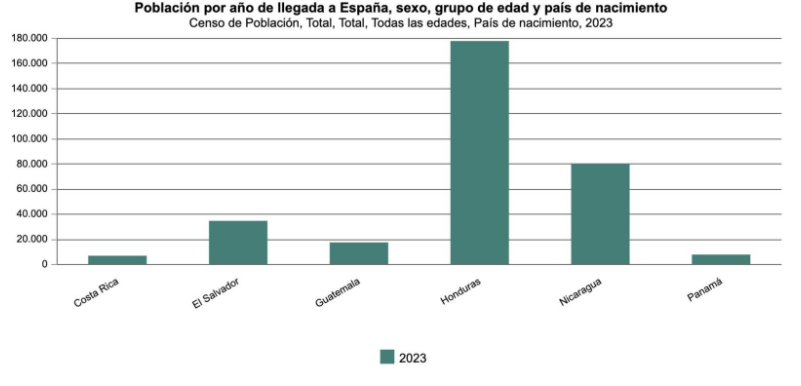
During President Trump’s first term (2017-2021), a variety of immigration policy changes were implemented, which contributed to a shift in migration from Central America away from the United States and towards Europe. Now, in his second term more extreme anti-immigration policies alongside the rollback of Biden-era practices, such as the ending of the CBP One app, similar shifts of destination countries for Central American immigrants may continue. In 2023, it is estimated that there are about 4.3 million Central American immigrants in the United States, and 323,000 Central American immigrants in Spain.  

Source: Instituto Nacional de Estadística (https://www.ine.es/jaxiT3/Tabla.htm?t=70341)

Migration of Central Americans to the United States and Europe began during the armed conflicts of the 80s and 90s. It marked the start of a migration pattern which has only continued to grow. The most recent wave of Central American migrants to Europe began with Nicaraguan women in the mid-2000s to the early 2010s. 

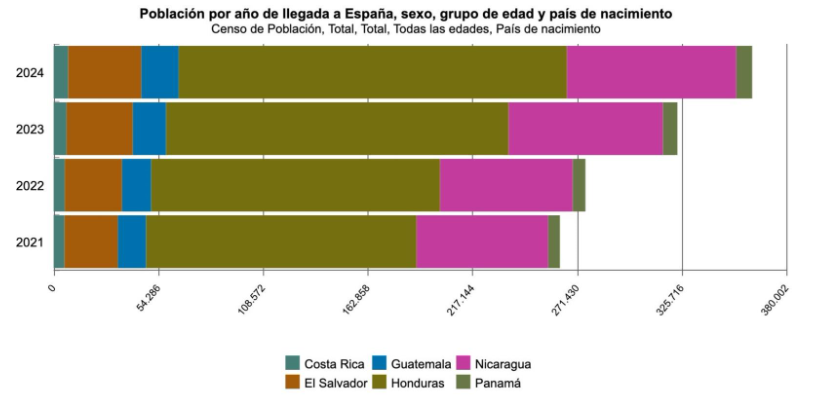
The largest Central American population is in Spain, with Hondurans most prevalent in Catalonia, Nicaraguans in the Basque Country, and Salvadorans in Madrid and increasingly in Seville. These populations have concentrated in these regions primarily because of established immigrant communities, strong labor markets, and an unmet need for labor in sectors such as elder or childcare. Notably, the population of Central Americans in Europe is composed primarily of Hondurans, Salvadorans, Guatemalans, and Nicaraguans. Costa Rican and Panamanian immigrants remain at a smaller number than those from the other four countries.

The outlook of Central American immigrants in Spain is both different and like those in the United States. On one hand, many female members of both communities work in domestic jobs such as childcare or housekeeping, but a main difference is that the Central American home in Europe is headed by the women of the household, who struggle less to find jobs than men do.  

The acceleration of Central American immigration to Europe has notably grown because of the increased militarization of the United States’ southern border and policy changes since the first Trump administration. The increased difficulty of migrating to arrive to the United States made Central Americans seek other destinations. Spain is a solid option because of the ease of entering the country due to a lack of visa requirements, a perceived welcoming environment, an easier immigration process, a shared language, and similar cultural elements. From 2021 to 2024, the number of Central American immigrants in Spain grew by some 60,000. 

Source: Instituto Nacional de Estadística (https://www.ine.es/jaxiT3/Tabla.htm?t=70340)

The United States is the preferential destination for most Central American as it is the home of the largest diasporas. Experts agree that increased hostility on the Mexico-U.S. border, especially during the first Trump administration, is tied to the increase of Central American immigration to Europe. Through increased collaboration with Spain, the United States seeks to reduce the flows of immigration from the region towards itself, but not necessarily to stop it altogether. 

Now, it is only a matter of time until this pattern further evolves with the second Trump administration, which has signaled its desire to further deter immigrants from entering the country. Regardless of the paid ads or policy changes the administration pushes, people will continue to immigrate.  

Spain has continued to receive immigrants from Latin America and is considered to have “solved” immigration and it has the fastest growth of any European economy thanks to immigration. However, with anti-immigration protests in the country and throughout the world, the question remains whether these deterrent efforts will successfully push Central American immigrants to other destinations? And how long will these destinations such as Spain remain open to Central Americans before they decide to implement stricter migration policies as well? Or whether we are starting to see an equilibrium between the people needing to leave Central America, the people settling in other countries in the region, Mexico, the United States, and Spain, and the decrease in gang violence and economic opportunities in Central America.   

Jonathan Valenzuela Mejia is a Guatemalan-American legal professional based in New York City. He completed a B.A. in Global Studies and a B.A. in Public Affairs with a minor in Central American Studies from UCLA. 

Edited by Ernesto Castañeda, Director of the Immigration Lab and the Center for Latin American and Latino Studies. 

Misconceptions, Latino Youth, and the Path Ahead: The Immigration Realities for Latino Communities in Washington, DC 

By Maria Muradyan 

Most of the narratives about immigration are wrong. They are simplistic, outdated, and dangerous. — Ernesto Castañeda.  

This quote carries particular weight here in Washington, DC, where harmful rhetoric and harsh policy are produced just a couple of blocks away from immigrant communities who face its consequences directly. For decades, the topic of immigration has been at the forefront of American political discourse. Americans on opposite ends of the aisle have consistently disagreed on immigration policy and whether or not we as a country have a responsibility to accept people who cross the border and enter America “illegally”. Opinions on the topic, though always polarizing, have transformed and intensified drastically in the last decade, with the election of President Donald Trump and the emergence of the “MAGA” movement. The slogan “Make America Great Again” can be most often associated with right-wing populism, conservative nationalism, but perhaps most famously, a narrative that casts Latin American immigrants as threats to national security and as a strain on American society. 

The current administration’s rhetoric and policy on immigration have single handedly created one of the most polarized political environments in American history. As the political climate has shifted, these ideological divisions have fueled a wave of widespread misconceptions and stereotypes about Latino immigrants, who they are, why they come, and the impact they have on American society. These harmful misinterpretations not only distort public attitudes but also pave the path for harsh immigration policies and are used to justify the unlawful and inhumane deportation practices carried out by ICE in Washington, DC, and across the nation. 

In an effort to better understand these stereotypes and the effects they have on victims and their families, I conducted an interview with Dr. Ernesto Castañeda, a migration scholar, professor, and Director of Immigration Lab at American University’s Center for Latin American and Latino Studies. Dr. Castañeda is a leading voice on how misconceptions shape the lived experiences of immigrant communities in DC, and how enforcement, family separation, and uncertainty shape the lives and psychological well-being of youth. 

The first false assumption he addressed is the belief that America has become ‘overflooded with immigrants’. Dr Castañeda pointed out that actual population data proves just the opposite. According to a Pew Research study conducted in 2023, immigrants make up roughly 15% of America’s population (52% being from Latin America). Not only this, but out of the total number of individuals not born in America, undocumented immigrants made up a mere 27% (Pew Research 2025). Locally, immigrants constitute about the same share of the D.C. population as they do nationally. All immigrants make up about 13% of the population, out of which 11.3% identify as Latino (American Immigration Council 2025) 

When looking at data from the 2024 election year, an analysis of tens of thousands of statements made by Trump showed that he repeated the sentence ” [South American countries are] emptying out their prisons and their mental institutions into the United States ” or similar ones over 560 times during his most recent re-election campaign (Marshall Project 2024). Dr. Castañeda explains how these repeated claims are what perpetuate stereotypes such as Latinos are ‘dangerous criminals, ‘ invading the country, and ‘using up public resources. ’ When average Americans, with little knowledge or exposure to immigrants, hear these statements repeatedly, they will inevitably begin to accept them as facts. However, long-term empirical studies show us otherwise. Research analyzed by the Journal of Criminology over the span of 24 years showed that no evidence exists that links undocumented immigrants to the number of violent crimes in the country. Not only this, but this study found that increases in the immigrant population within the states correspond to decreases in the prevalence of violence and crime (Light & Miller, 2018). 

According to Castañeda, current narratives fail to take into account that the vast majority of Latino immigrants come to America to ‘study, work, contribute to science, to work in hospitals, to get married, and that is rarely part of the story’. Furthermore, as he explains both in his book Immigration Realities and in our interview, immigrants actually rely on public assistance at lower rates than U.S. citizens, and this is true even for their U.S born children. They also play an essential role in keeping the economy and population growing. Immigrants contribute to scientific progress, cultural creativity, and the continuation and spread of American ideas and culture. Any evolving society needs new people to sustain itself, and throughout history, immigrants have taken on that role in the United States. 

While these negative narratives dominate the national conversation, their most immediate impact becomes visible in places like DC, where families must confront fear and instability while navigating their day to day lives. The Shrine of the Sacred Heart, a Catholic Church, which is just a short bus ride from the White House, has long served as a place of worship for the Catholic Latin American community in DC. However, in the last several months, it has become a hub for ICE attacks this October. The Associated Press reports that over 40 members of the parish have been recently deported as churchgoers are ‘fearful to leave their homes, get food, medical care or attend Mass’. The Archdiocese of Washington describes these mass deportations as “instruments of terror” for the Latino community of DC. The climate in the city remains especially volatile for mixed status families, who must live with the fear that their loved one will be detained while doing their daily tasks. This became a reality for one member of the Sacred Heart Church whose husband was detained by ICE while selling fruits and vegetables at the family owned fruit stand. She says, “ It’s been a very difficult, bitter month of crying and suffering…our lives changed forever one day to the next” (Associated Press, 2025) 

Stories like these are not limited to Sacred Heart but are a reflection of the unique set of challenges that mixed-status families face in DC and across the nation. These effects are already being felt in DC high schools and universities, where Dr. Castañeda notes the current political environment is having consequences on youth in these mixed status families. He states, “Youth are afraid for themselves and are afraid for their families, for their friends, for the communities…that makes it harder to focus on school, we see that in the universities, we see that with colleagues, we see that with staff members who have undocumented family members”. A 2024 study published by the Journal of Latinx Psychology followed a sample of youth who are US citizens but lived in mixed status families. They discovered that exposure to current violent immigration enforcement, such as witnessing a parent or loved one deported, significantly increases severe anxiety, fear, and depression among the sampled youth. These psychological effects extended beyond the immediate family members, as the trauma was felt even when enforcement actions targeted people in their community rather than someone directly inside the home. Their study also confirmed that anti-immigration stigma quickly becomes internalized, as adolescents in the study reported feeling ashamed of their background, immigrant family, and language (Lieberman et al., 2024). 

These effects could be expected to be felt especially strongly in DC due to the high prevalence of Latino youth immigrants who arrived a decade prior. Beginning in 2014, DC saw a large surge in unaccompanied youth, between the ages of 13-18, who came to America to unite with their parents, grandparents, or extended families. Castañeda explains that since this group of youth has reached a legal adult age, ICE agents might be ‘looking for an excuse to deport them’. As ICE revisits these old cases of unaccompanied minors, they are also using this as an opportunity to track down their immediate and extended families as well as their sponsors. Subsequently, the result is a painful cycle in which youth who once struggled to reunite with their family, once torn apart by borders, must now live in psychological torment and fear of losing each other once more. Current immigration enforcement practices are undoubtedly a form of psychological violence that produces hypervigilance, fear, and depression, and will cause long term trauma in immigrant communities. 

Looking ahead, it is clear that America is in dire need of immigration reform, one that is based on facts, research, and empirical evidence, rather than stereotypes. However, Castaneda notes that the general public is not to blame, as one cannot expect regular Americans to understand topics as complex as immigration law. Rather, this responsibility falls on our lawmakers who must put aside partisanship and focus on creating solutions that maintain the dignity of immigrants, while addressing the realities of the current day border.  

Castañeda explains the best form of immigration reform would be what he calls “generous amnesty”, or a broad pathway to legalization. Individuals and families who have been living in America for an extended period of time and have built entirely new lives must be given a path to citizenship. This is both a moral imperative but also it is a sentiment that, according to him, is largely supported by most Americans on both sides of the aisle. Recent Gallup polls confirm this fact, as 64% of Republicans and 91% of Democrats classify immigration as a positive (Gallup, 2025). A generous amnesty does not mean an open borders concept. Rather, it is a way to create legal paths to citizenship, so that migrants have other options rather than resorting to crossing the border. It is only natural that individuals and families desperate for survival will resort to the only option available to them.  

Second, the US is becoming an aging nation with a retiring workforce and a declining birth rate. With the declining population and lowered birth rates, many key industries, such as agriculture, are having projected worker shortages, unable to meet the labor demands. The Economic Policy Institute finds that “Achieving historically ‘normal’ GDP growth rates will be impossible, unless immigration flows are sustained” (Bivens 2025). Employment based immigration is one way through which the government can offset this issue. Granting a greater number of H-1B and H-2B visas can help balance these effects by bringing in younger and eager individuals who are ready to work in these essential positions. 

In conclusion, data, decades of research, the realities in DC, and Dr. Castañeda’s expertise make one point unmistakably clear. The narratives that dominate our national conversation about immigration are misinformed, outdated, and harmful to those who live with its consequences daily. The political rhetoric from our nation’s leaders creates instability, fear, and psychological trauma in immigrants while simultaneously distorting the public’s perception of the issue. Research continues to show that immigrants make America stronger, enriching society, unifying communities, and bettering the economy. Dr. Castañeda’s work reminds us that looking ahead, we must demand from our lawmakers a change that is rooted in the recognition of these principles and the creation of dignified paths to citizenship.  

As I reflect on my childhood and the little girl I was when I first arrived in America, I see no difference between myself and another little girl today arriving from El Salvador, Mexico, Honduras, Cuba, or Guatemala. We all carried the same fears of an unfamiliar place, the same uncertainty, the same dreams of a brighter, better future in this country. The only difference between the treatments we received was the country we came from and the political implications that country brought with it. It is time that we begin to approach immigration with greater empathy, remembering that we ourselves, or our parents, grandparents, and great-grandparents, once stood in these very same shoes. Latino immigrants have positively shaped this nation from the beginning of its history, and they continue to do so today. These facts are unmistakable, the human suffering is devastating, and the need for humane immigration reform has long been overdue. 

Maria Muradyan is a senior at UCLA studying Political Science with a strong interest in American politics and public policy. She participated in UCLA’s UCDC program in Washington, DC. Her interests include immigration policy and community advocacy, with a particular emphasis on how political institutions and policy frameworks shape social and economic outcomes. Through her research and writing, Maria aims to contribute to a more nuanced understanding of contemporary policy debates and their real-world implications. 

References 

Castañeda, Ernesto (2025, November 21st), Personal Interview on Immigration. 

Geiger, A. (2025, August 21). What the data says about immigrants in the U.S. Pew Research Center. https://www.pewresearch.org/short-reads/2025/08/21/key-findings-about-us-immigrants/  

Immigrants in the District of Columbia – American Immigration Council. (2025). American Immigration Council. https://map.americanimmigrationcouncil.org/locations/district-of-columbia/?utm_source=chatgpt.com  

The Marshall Project. (2024, October 21). Fact-checking Over 12,000 of Donald Trump’s Statements About Immigration. The Marshall Project. https://www.themarshallproject.org/2024/10/21/fact-check-12000-trump-statements-immigrants 

Light, M., & Miller, T. (2018). Does Undocumented Immigration Increase Violent Crime? Criminology, 56(2), 370–401. https://doi.org/10.1111/1745-9125.12175  

Henao, L. A., & Stanley, T. (2025, October 27). Immigration crackdown sows fear among Catholic church community in US capital. AP News. https://apnews.com/article/immigration-crackdown-catholic-church-washington-874e6deca9e54a4e14081c63adca7718  

Jamile Tellez Lieberman, Dsouza, N., Valdez, C. R., Pintor, J. K., Weisz, P., Carroll-Scott, A., & Martinez-Donate, A. P. (2024). Interior immigration enforcement experiences, perceived discrimination, and mental health of U.S.-citizen adolescents with Mexican immigrant parents. Journal of Latinx Psychology. https://doi.org/10.1037/lat0000263  

Saad, L. (2025, July 11). Surge in U.S. Concern About Immigration Has Abated. Gallup.com; Gallup. https://news.gallup.com/poll/692522/surge-concern-immigration-abated.aspx  

The U.S.-born labor force will shrink over the next decade: Achieving historically “normal” GDP growth rates will be impossible unless immigration flows are sustained. (2025). Economic Policy Institute. https://www.epi.org/publication/the-u-s-born-labor-force-will-shrink-over-the-next-decade-achieving-historically-normal-gdp-growth-rates-will-be-impossible-unless-immigration-flows-are-sustained/?utm_source  

Immigration Myths Die Hard

One Year into Trump 2.0, Some Immigration Myths are Shattering, but Some of the Big Lies from the 2024 Trump Campaign Continue

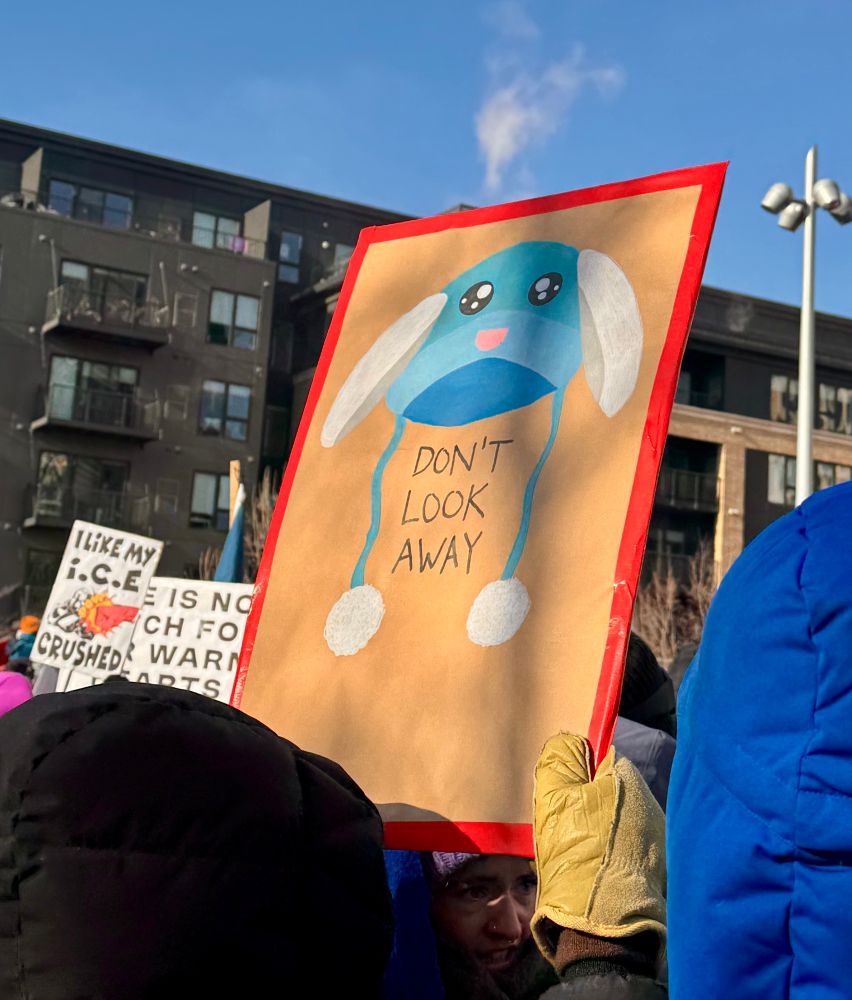
Protest in Minneapolis on January 23. Photo by protestor used with permission.

By Ernesto Castañeda, PhD

One year into Trump’s second administration, significant developments have reshaped U.S. immigration policy. This piece examines key changes and events, clarifies factual misunderstandings, and analyzes how immigration has been framed and discussed in media coverage and political commentary.

Biden Did Not Have an Open Border

It is factually wrong to claim that “Biden had an open border policy and welcomed a record number of undocumented immigrants.” Although this claim is frequently repeated, it is misleading. Following the COVID-19 Pandemic, the U.S., along with the rest of the world, closed its borders for months. Under the pretense of public health, Title 42 was used to block access to asylum at the border. Thus, many individuals seeking asylum, attempting to reunite with family members, or workers reporting to jobs in the United States were trapped en route. Ultimately, a lot of people were forced to wait in Mexico for their opportunity to request asylum, and hundreds of thousands of people were deported from the border shortly after entry. 

Interestingly, after the end of the pandemic and the eventual lift of Title 42, members of the Biden administration came up with creative solutions to deal with a border surge — which again was not caused by the Biden administration but was a by-product of the pandemic and the terrible political, economic, and security conditions across much of Latin America and the Caribbean. In response, the Biden administration implemented the use of the CBP One mobile application, an app developed during the first Trump administration, which allowed individuals to obtain a spot in line to present themselves at border ports of entry for an orderly metered process to enter and request asylum. This was not a promise that all of them would be granted asylum or allowed to stay, but it did allow them to start their legal process. 

There were technical problems with this trial app, and in practice, it amounted to an online algorithmic lottery that created competition among hundreds of thousands of people for appointments. Nevertheless, it was an improvement from sleeping in camping tents during the winter while in line at border entrances in Mexico, or having notebooks where people wrote their names to hold their place in line on a first-come, first-served basis. The CBP One app also generated data on who sought to enter the country and on those permitted to enter. 

Other alternatives to detention, such as ankle bracelets and other tracking apps, allowed the U.S. government to identify newcomers and track their whereabouts. These tools have been used by ICE under the current Trump administration to locate and deport individuals who entered legally under these programs. As I said following Trump’s election, ICE agents would be tempted to detain and deport these easy-to-find immigrants in temporary or between immigration statuses in order to fulfill quotas while inflating the numbers of “dangerous” deportees.

Given hemispheric geopolitics, the Biden administration also created a legal program, known as CHNV, for certain people with family or contacts in the US who could offer financial support if needed and vouch for them to enter the U.S. legally through airports from Cuba, Haiti, Nicaragua, and Venezuela, to apply for asylum. These new programs were created for populations from countries to which the U.S. was sympathetic, and because these countries would not accept deportations. These programs shifted what could have been undocumented immigration flows into technically legal immigration flows. These new arrivals quickly received work permits so that they could work legally. This system became a lifeline for the U.S. economy and a lifeline for essential workers, allowing the U.S. economy and society to recover faster from the negative effects of the COVID pandemic.

Images of lines at the border and people sleeping in the streets of El Paso and in front of the Roosevelt Hotel in New York City after the busing of immigrants and the unfortunate statements from New York’s Mayor Adams seemed to make these arrivals unmanageable, but as we have researched at The Immigration Lab, new arrivals have managed to find jobs to pay for the housing, food, and other expenses and even send some money to family in their places of origin. These individuals enter with permission from the government, which knows who and where they are. They are not undocumented nor “illegal.”

The Biden administration deported hundreds of thousands of people from the border, and people from Mexico and many other countries were not allowed in. 

The Biden administration actively helped individuals fleeing crises in Cuba, Venezuela, Haiti, Nicaragua, as well as those displaced from violent conflict in Ukraine and Afghanistan. Most people were coming into the U.S./Mexico border, raising their hands, waving, presenting themselves to authorities at the border, giving their information, and then following the procedures and instructions that they were given. Many, but not all, of them were then legally allowed into the country, granted work visas soon after staying a few days on the streets of host cities like El Paso, New York City, or Washington, DC. The great majority of the new arrivals eventually found places to rent and obtained jobs in the broader economy. Today, many are either still working or have been deported with no legal grounds or reasons beyond fulfilling ICE quotas to reduce the number of people of color born abroad.

Any serious discussion of immigration must take into account the barriers preventing people from returning and rebuilding a life in their country of origin, including instability, political repression, and economic hardships in countries like Venezuela and Haiti. 

Claims that the Border is Now Secured 

Border communities in the United States have long been safe, as documented in our book “Immigration Realities.” It is true that fewer people are arriving at the U.S.-Mexico border seeking entry, but this is not purely a Trump effect.  There are five main reasons for this: 

1) The pandemic created a bottleneck influx of immigrants that eventually eased during the second part of the Biden administration. The programs discussed above (CBP One and CHNV) onboarded quickly those people who had been waiting at the border for years before. These numbers had already begun to decrease in the last months of the Biden administration due to policy changes and the organic leveling off from the bottleneck and pent-up demand. 

2) There was lower demand for people from Ukraine and Afghanistan to enter through the border. 

3) Mexico, Guatemala, El Salvador, Panama, and Colombia were pressured by the U.S. to make it even harder to cross the Darien Gap and to get close to the U.S./Mexico border. Many of these countries used their military to control, dissuade migration, and deport people, often without due process. As a result, new arrivals stopped.

4) On January 20, 2025, Trump declared a national emergency at the border and sent the military to certain areas of the border. 

5) People from Latin America are largely no longer arriving seeking to apply for asylum because, contrary to international and U.S. law, people are not allowed to enter the country by applying for asylum at the borders. Title 42 conditions have become chronic. These immigration policies, along with the strong campaign rhetoric, dissuaded many from entering the country, whether illegally or legally.

At his January 20, 2026, press conference, Trump compared his desire for the U.S.-Mexico border to that of North Korea. Likewise, in order to carry out these mass deportations quickly, authoritative actions of going against civil liberties are needed, as seen in Minnesota. He also boasted that “the border is secure” and with “no legislation” on the topic. 

For those concerned about “chaos at the border,” or upset that some new migrants were entering with permission at the border while others could not previously, do not worry. Most of the new arrivals have lost their legal status; many have been detained or deported, or are in the process of moving back. Their absence will have negative consequences for the U.S. employers, neighbors, and communities that relied on them. 

All Immigrants Are Criminals

Trump promised he would deport “the worst of the worst.” Many voters, and even some immigrants themselves, supported and voted for Trump, believing that he was referring only to criminals, not themselves or their loved ones.  As 2026 is already showing, nothing could be further from the truth. Most people detained and deported have no criminal records. For Trump and MAGA, no immigrants from non-majority White countries were welcome or innocent. Even if they had an H1-B visa.

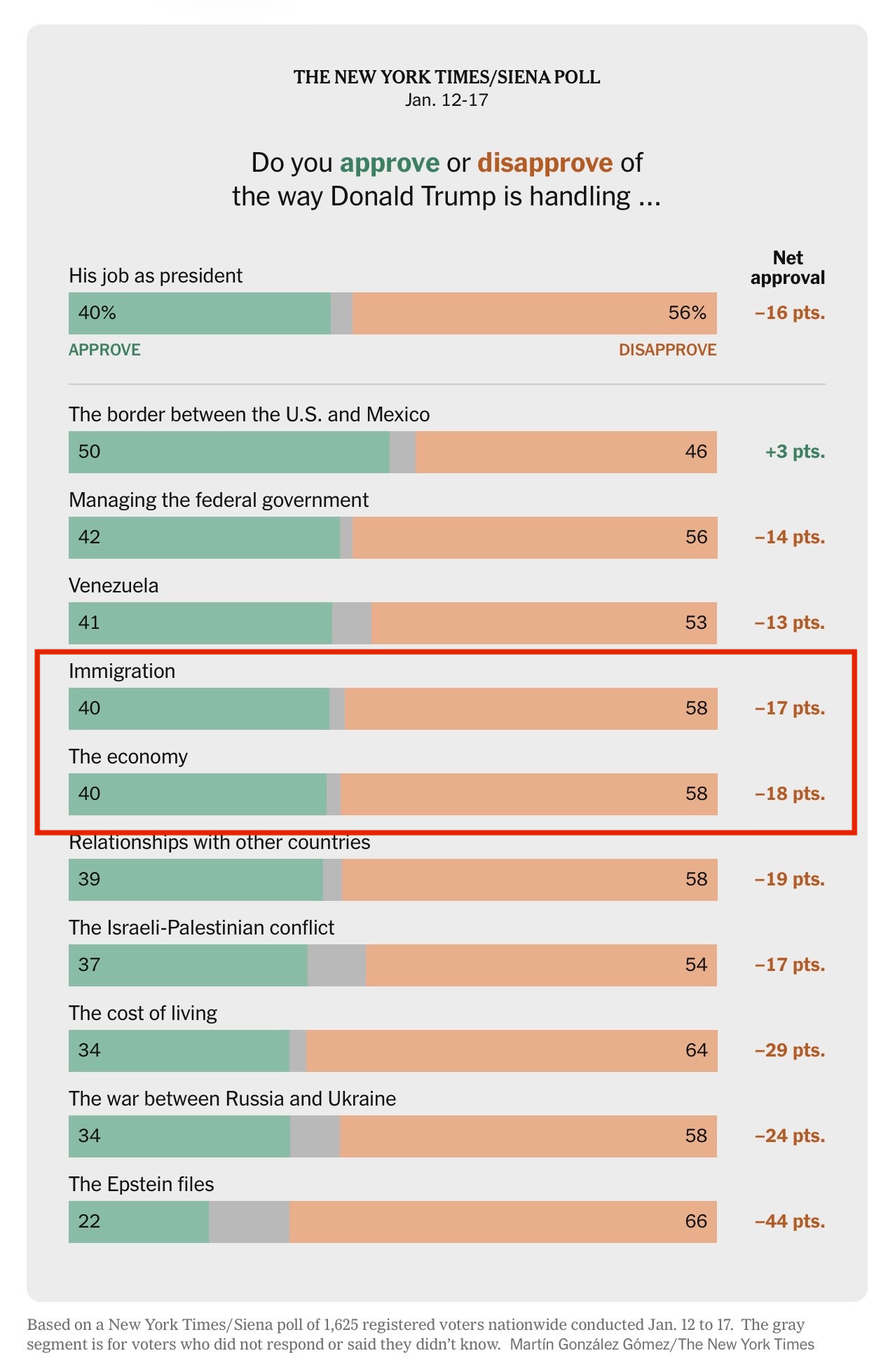
The goal to deport the “worst of the worst” to send ICE or the National Guard to reduce crime in cities was always a lie. There is no need to keep repeating it as either a supposed campaign promise or ICE’s mission, only to compare it to the excesses we have seen on the streets this year. We do not need to abolish ICE; we need amnesty to regularize people. Local police and courts can handle the small percentage of foreign-born individuals who commit crimes. At some point, Trump officials said that most immigrants detained had a criminal record or could build one in the future. In hindsight, the criminalization of migration that Trump and Vance were promoting during the 2024 presidential campaign was successful because they (barely) won the elections. But since the election, those happy with Trump closing the border were in the low 50s in polls at their highest points in time. On January 23, 2026, the views on the border are 50/50; nothing to campaign on. Most people who identify as Democrats and the great majority of independents oppose ICE. Regarding immigration policies in general, the administration is underwater, with many more people saying they have gone too far than supporting it.

In 2025, many Democratic elected federal politicians had been saying on TV interviews that Trump had won the immigration argument, meaning electorally but also implying empirically and in terms of policies. Immigration policies as a whole have been toxic. Contrary to the desire of people in the center right to deport all people without a current immigration status, detentions and deportations in the first year of this Trump administration have largely focused on people who entered legally with a visa or CBP One, people applying to renew their TPS, or asking for asylum. People have been arrested in immigration courts even when judges have not asked for removal. Some individuals have been arrested during their naturalization ceremonies just minutes before becoming citizens. This makes sense if one cares more about quotas and about removing people who are not seen as White before they become American citizens and/or have more U.S.-born children. Trump has also gone after birthright citizenship and has asked for denaturalizations —stripping citizenship from those who proactively jumped all the hoops to become citizens. These facts, along with the many dog whistles and open loudspeaker broadcasting to extreme right subcultures in public speeches, conferences, and X posts, show that the energy behind all these immigration policies is White Christian Nationalism. A dream about racial purity, one not too far from being open to using violence to achieve it, possibly leading to genocide if nobody opposes it. Fortunately, most Americans are against that. But many of those in favor of the current full immigration agenda openly say they do not want religious and racial minorities in the U.S., and even want more to be done. There is no staying neutral on these matters while people are shot at, imprisoned, and terrorized.

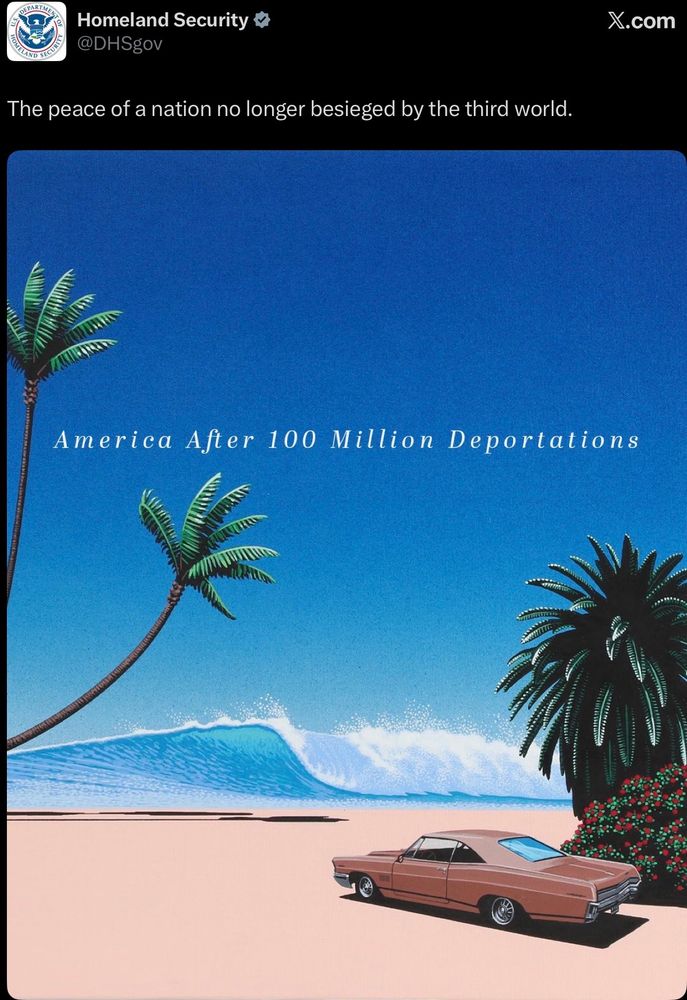
Official post from DHS on X idealizing a future where all people of color have been deported from the U.S.

Unfortunately, in early 2026, I still hear some elected Democrat officials and operators saying that Trump “had won the immigration debate.” That is false. Others claim without evidence that Trump won, including in 2024, because of his promise to close the border. They forget the 2016 promise about the border wall and how little he built. They do not explain why anti-immigrant claims against caravans and Central American immigration did not help him win in 2000. Other problematic praises from Democratic officials come along the lines of saying, “Trump did a great job closing the border to undocumented immigrants, and that this is a good thing, that should continue.” MAGA without MAGA.

That is disrespectful to the undocumented immigrants and their communities, which would prefer to vote Democrat but are repulsed by such Trumpian comments. In another sense, polls and massive protests show that most people in the interior do not really care about the status of border crossings. What most people care about today is what we see in Minneapolis and what we saw before in Los Angeles, Chicago, Washington, New Orleans, and many other places around the country. That is an excessive use of force by ICE to find our neighbors who happen to be undocumented. Violations of the Bill of Rights, unconstitutional stops, entering homes without judicial orders, and racial profiling.

Caption of poll about favorability along a number of issues. The “border” does not break 50% and it will continue to go down, along with the other areas.

Mass Deportations are Regular Politics

The number of undocumented people in the U.S., between 8 and 15 million, and probably around 11 million when Trump retook the Presidency constitutes around 3% of the overall population in the United States. For the U.S. to get rid of all its undocumented population, it would indeed need something related something akin to an authoritarian state. That is what we have started to see, and that is what most people don’t like because there are undocumented kids in schools. There are undocumented nurses. There are undocumented teachers, agricultural workers, construction workers, and also people with their own businesses providing professional services, designing and renovating homes, etc. So, in order to find them, we will have to trample the civil liberties of many citizens. Is it worth it? I don’t think so. So, rather than just calling for the abolition of ICE, reform, or a return to the status quo so that the minimum due processes are followed before deportation, we have to start talking again about amnesty, paths to citizenship, and expanding chosen ways for legal immigration. Because, despite a false rhetoric that this was about “illegality,” this second Trump administration has also limited the legal pathways for migration. He has limited people’s ability to seek asylum. He has really reduced the number of refugees, made it more difficult and expensive to obtain professional visas like the H-1B visa, and curtailed other forms of legal migration, including for international students, the diversity visa lottery, and other programs that had bipartisan consensus that they were good for the country. He has also limited the ability to apply for new immigrant visas and green cards for people from over 75 countries, plus a travel ban of at least 19 countries, and has declared places such as Belize as safe third countries, making gaining asylum in the U.S. more difficult if people passed through those countries and making it easier to deport people from third countries there.

So, it is a masquerade to say that this was only about illegal immigration or getting criminals off the streets. These have been other of the big lies of the 2016 and 2024 campaigns. It is time that we get rid of those lies and we talk about the truth. We need immigration reform that allows people who are already living and paying taxes in the U.S. to do so legally, safely, and as fully recognized members of society. And lastly, we must establish a new legal pathway for newcomers because the country needs workers to keep the U.S. population and economy growing. So that’s what we need today. That’s the truth about immigration.

Ernesto Castañeda is a Professor at American University, where he leads the Immigration Lab and the Center for Latin American and Latino Studies. He has been studying immigration scientifically for over 20 years and has written many books on the subject, among them “Reunited: Family Separation and Central American Youth Migration” and “Immigration Realities: Challenging Common Misperceptions.”

Understanding Deportation for Children, Teens, and Their Parents

By Ernesto Castañeda

If you are a young student in the United States and you are worried that you, a classmate, or a loved one could be deported by ICE agents, as you have seen on social media, TV, or in your neighborhood, this short text is for you.

School dance. Photo by Ernesto Castañeda.

Why are people in pseudo-military clothes and vests with the initials ICE, HSI, CBP,* and others patrolling the streets and aggressively arresting people in public? It all starts with the popular but dangerous idea that a country must have closed borders, allowing only invited people to pass through. This makes sense for private houses, schools, and other large private institutions, but cities and countries do not work like that. Think about it most people born in the United States can move in their cities, towns, as well as to other cities or towns in the 50 states without having to ask permission from any political authority. They can even move to Guam, the Virgin Islands, or Puerto Rico.

*ICE [Immigration and Customs Enforcement], HSI [Homeland Security Investigations], CBP [U.S. Customs and Border Protection, agency that houses the Border Patrol which has now also being mobilized to both coast and Chicago] are all immigration enforcement agencies within the Department of Homeland Security (DHS). Under the current administration other federal and local agencies have also been assigned to help carry out raids and aid in deportation efforts.

People in Any Country Are Not All the Same  

Another dangerous myth is that all the people in a country must share a language, culture, and even look the same, as if related by blood. But countries are not big extended families, so this is a fable. But many adults believe this was true in the past and want it to happen soon in the places where they live. As you know, not everyone is the same. Even within the same family, a student club, or sports team, people have differences that make them who they are.

People in some large cities complain about a few people around them speaking a different language in the streets or having a different religion. This is not new; some people have always done so in any booming city. 

Even While Most People Stay Put Most of the Time, Mobility is Normal 

Many people go to other countries to travel, study, work, or visit family members and friends. Most people get visas, which are permits from a country’s government to visit or move in with permission. People from the United States and Europe rarely need visas to visit other countries, but it is not the same the other way around. People from most of Africa, Asia, and Latin America need vetted visas to visit Europe, the United Kingdom, the United States, Canada, or Australia. 

In some exceptional cases, people have to leave the countries where they were born because of war or persecution because of their religion, ethnicity, or political views. It may be hard for them to get immigration visas after that. Other countries are supposed to provide refuge, a safe place to stay for groups facing persecution. But many countries’ governments like to look the other way or play hot potato with people.

Work Abroad is Often More Available than Working Papers 

Other people may have informal verbal (spoken) job offers from restaurants, farms, and small businesses in the United States, but they cannot get visas because the people in charge of approving visas in U.S. consulates abroad think those people would stay in the country, and they think they do not have the savings and education to make them “desirable” to come to the United States. These are not necessarily the views of the people approving visas, but the informal instructions they are told to follow by their bosses.  

Nonetheless, some people from towns with a long history of long-distance migration from point A to B have the contacts, paths, and know-how to go to other countries without the U.S. government’s permission. This is what people refer to as “illegal immigration.” 

Remember, we should not use the term illegal to name a person, because a living human being cannot be “illegal,” but people can commit acts that go against the law, in this case, entering another country without getting their passport inspected and stamped. 

“No Human Being is Illegal.”  Elie Wiesel

People without a legal immigration status, who we can call undocumented, are not automatically bad people. They are just caught in a hard and vulnerable situation. Some adults say they should respect the law of a country and “get in line,” but for many of them there is no line to wait in. And for some of the people with close family members legally in the U.S., the wait in line to reunite can be ten years of longer. Therefore, some people live for over a decade away from their parents or minor children. As we recount in the book, Reunited: Family Separation and Central American Youth Migration.

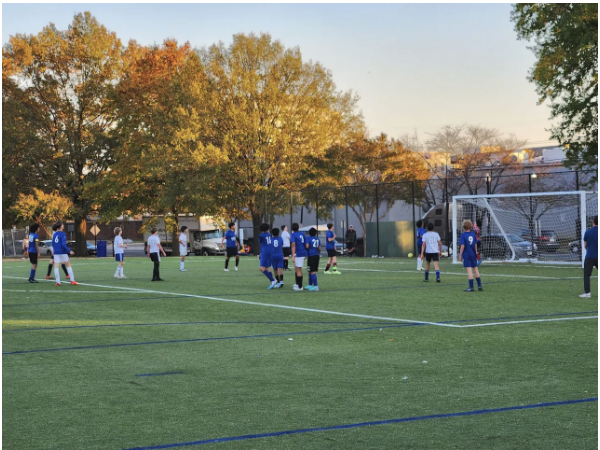
Middle schoolers playing soccer. Photo by Ernesto Castañeda.

For most of U.S. history, lawyers have not labeled this a crime but more a “civil” infraction, something like a minor driving infraction, such as driving without insurance, or watching a movie without paying a ticket. But in those examples, people are getting something without paying or putting others at potential financial risk. Immigrants come to the U.S. to work, to pay for all of their expenses, those of their family members, and to send money to loved ones who stayed in the places they came from. Preventing people from moving to a country, and more appropriately to a particular city or neighborhood, even if they can pay for their housing, is like public parks or libraries not allowing only certain people in. 

The problem with the label of “illegal” (rude name-calling) is that it conjures or brings together the idea of coming as a family without a visa, along with generalizations and stereotypes that only people who are poor and of different races are “illegal.” That “illegals” are inferior, potentially dangerous criminals, a threat to the homogeneity (looking or being similar) of a country. These all false.

In recent U.S. history, the label of “illegality” has been applied to people from Mexico and Central America with limited English and/or African and indigenous features working in sectors such as agriculture, construction, contracting, food preparation, etc. There are business owners who are undocumented as well as people from Canada and Europe, but it is easier for them “to pass.” 

Immigrants who commit violent crimes are not immune (protected) from being stopped by police and imprisoned. But for many decades, people in the news have said that people without papers are dangerous and taking things from U.S. citizens. Many adults have come to believe this after hearing it so many times. 

Some politicians run for office sometimes with as little as promising to “get rid of” all the undocumented people in a country. This has been the case of President Trump, and he has acted on this words. His team has set ambitious goals to find people without valid visas or immigration permits and to remove them from the country, which is what we call deportations. He and his team campaigned on closing the border to new arrivals, deporting people with criminal convictions, and with the signs and slogans of mass deportation

How do you carry out mass deportations quickly in a country with over 350 million people, where less than 3% of the population is undocumented? 

Unlike a classroom, there is no list of everyone living in the U.S. that includes everyone’s immigration status. So, this federal administration is trying to reach its goal is by deporting under any pretext some people who are renewing visas, trying to get papers to stay longer, become citizens, or get protection from deportation because they fear for their safety if they were sent back to dangerous places. 

Another shortcut by ICE is to go to places where many stereotypical potentially undocumented immigrants gather and stop and ask for papers from people based only on their physical appearance, job, and accent. (Lawyers call this racial profiling).

Communities with many Latinos are specially afraid about deportations hitting close to home. Over 68,000 people are in immigration detention centers at the end, so of them will be let go after proving they are citizens or have valid permits. Many others will eventually be deported without their family members. 

Because of this, families with undocumented members are afraid of spending time in public and may always fear it may be their last day together. So, it is important to be patient and supportive of people who could be in that situation. It is understandable if your classmates or even friends do not want to talk about this. Their parents may have told them not to share their immigration status or that of their parents, afraid that it could be used against them. Many live with the continuous fear that an enemy could call la migra (ICE) on them. The have lived with this fear sometimes for decades.

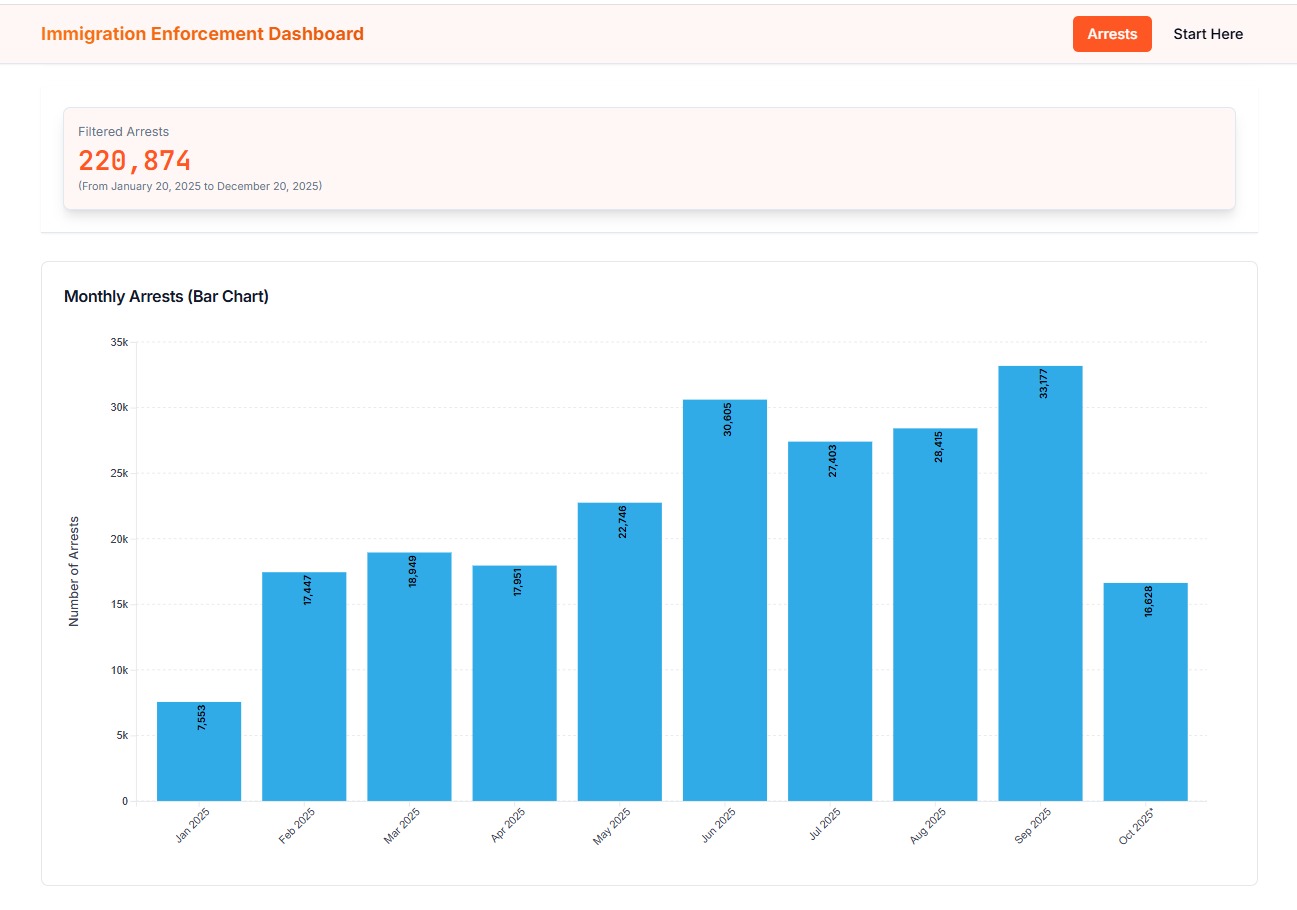
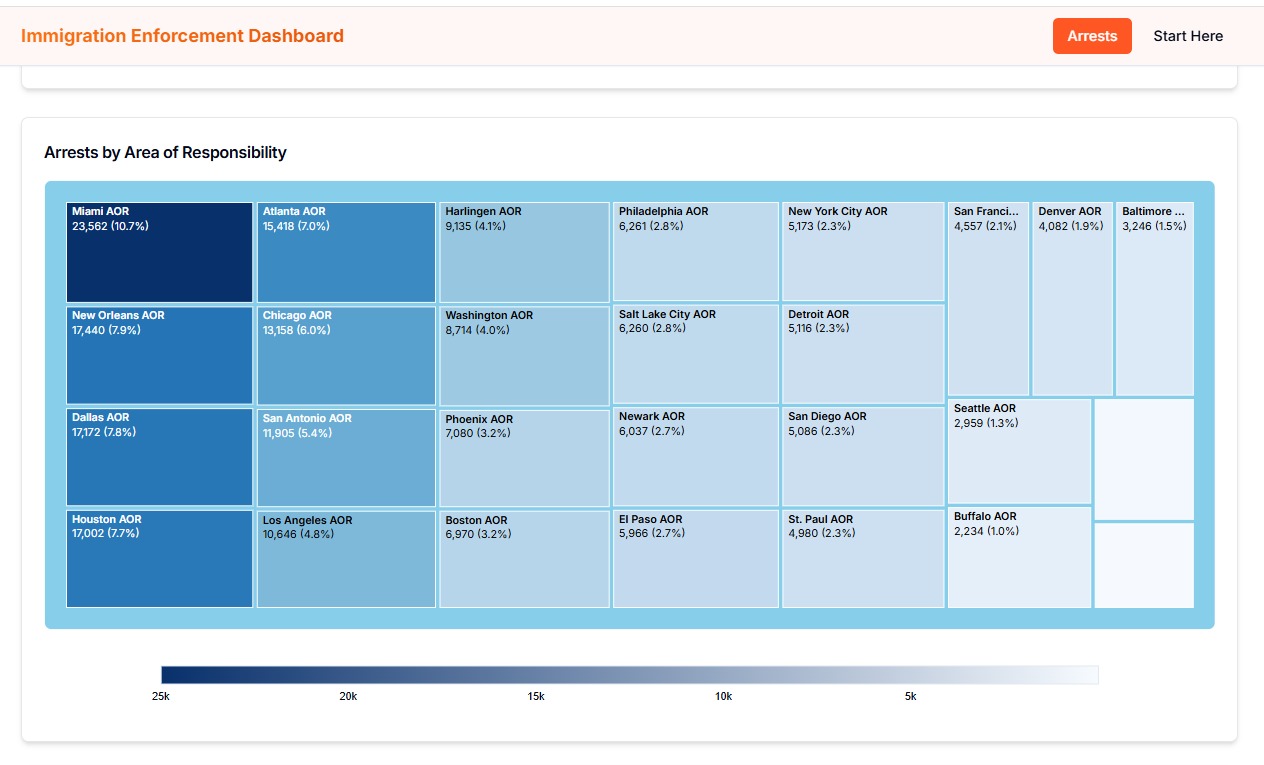
ICE Arrests from Immigration Enforcement Dashboard

People who are undocumented have to try to act perfectly

Afraid about her only daughter being caught by surprise, an interviewee we talked to confidentially, recounts that she told her 13-year-old daughter this year that she was “illegal,” and that she should be careful not to skip class, misbehave, or even think about experimenting with illegal drugs, alcohol, or marijuana because this could cause her deportation and that of her mother and maybe other family members too. 

She had never before realized she was undocumented; she thought she was like anyone else in her class, and she is and so she is at risk of deportation. She cannot help but be worried, but how worried should her best friends be? Well, there were around 11 million individuals who were undocumented when Trump became president again on January 20, 2025. Because of changes to immigration laws, procedures, and programs, there may be 14 million people out of status a the end of 2026. 

In 2025, the Trump admin, with its aggressive policing, raiding, and detaining, forcibly deported between 200k and 600k people. Self-deportation is a luxury that many immigrants do not have. The official estimates for this are not credible. 

So, let’s do some simple math for the probability of being forcible deported by DHS by dividing the maximum estimate for 2025 deportation by a medium-high estimate for the number of undocumented: 600,000/14,000,000=.04 or 4%. This is the probability that an undocumented person is deported each year that these mass deportation goals continue along with large federal agent deployments and police collaboration in some localities [287(g) agreements]. The probability of being detained while attending an immigration court appointment is also low. So, while it is possible this may happen to you, your mom, or your friend, most immigrants won’t be deported. Clearly, the likelihood varies by location. In some places, other certain groups are targeted, like Somalis in the Twin Cities recently. But detaining people and deporting them in this way is very expensive, damaging for the U.S. economy and society, and currently very unpopular. Over 60% percent of U.S. adults oppose these policies. Tell the people you know in this situation not to despair or give up.

Deportation by City. Immigration Enforcement Dashboard

Despite sad cases about children receiving cancer treatment, nurses and care worker women being deported, the numbers show that, because of profiling, most of the people deported are working-age men from Mexico, Guatemala, and Honduras. Over 70% of them have no criminal record whatsoever, and only a very small percentage have a violent crime conviction. Meaning most people are innocent hard workers, fathers, sons, but they have been deported because they look like the stereotype. There are good and bad people everywhere. This may remind you of why some teachers and adults may tell you the importance of not generalizing, not falling for common stereotypes and prejudices, and of getting to know people from all backgrounds and with origins in all parts of the world. Learning how to put yourself in their shoes is the best way to understand them, comfort them, and protect them, in the future, by changing the way we aim to deal with undocumented immigration, not by mass deportations or having people afraid of deportation, but by giving them a way to become documented through new laws voted in Congress. Your care and your voice matter.

Ernesto Castañeda is a Professor at American University, where he leads the Immigration Lab and the Center for Latin American and Latino Studies. He has been studying immigration scientifically for over 20 years and has written many books on the subject, among them “Reunited: Family Separation and Central American Youth Migration” and “Immigration Realities: Challenging Common Misperceptions.”

Fleeing Collapse, Facing Barriers

Fleeing Collapse, Facing Barriers: The Venezuelan Crisis and U.S. Immigration Hurdles 

By Katheryn Olmos, Emma Wyler, & Isabella Serra

Photo of popular Venezuelan activist, Rafael Araujo, holding a sign that says, “Feb 12th 2014-2015 Impunity Persecution and Torture,” at a protest in Caracas, Venezuela on February 12, 2015. Image retrieved from Wikimedia Commons.

Severe Humanitarian Emergency in Venezuela

Just a few decades ago, Venezuela stood as a beacon of economic prosperity and oil wealth on the Caribbean coast of South America. However, the rise of authoritarian rule led to economic collapse, widespread corruption, and rampant inflation, creating a dangerous political climate that forced millions to flee their homes.

For many Venezuelans, including the 48 living in the Washington Metropolitan region (DMV) whom we interviewed, migrating to the U.S. was not their first choice when pursuing a more stable life. Previously, many Venezuelans migrated to and were displaced from places closer to home, from neighboring countries such as Venezuela, Colombia, Peru, Chile, and Brazil.

Venezuelan displacement is driven by a myriad of circumstances. Almost all of the Venezuelans we interviewed expressed that the economic situation in their home country, including hyperinflation, food scarcity, and inadequate wages, is not viable to sustain themselves or their families.

“No hay trabajo. [Cuando] hay trabajo y te quieren pagar, son 20 dólares semanales. Sí, y eso es muy poco dinero para los consumos de mi mamá, mis hijas. Nada más un bote de leche son 10 dólares. ¿Y me quedan 10 dólares para qué?”

“There’s no work. When there is work and they want to pay you, it’s 20 dollars a week. Yes, and that’s very little money for my mom and daughters’ basic needs. Just one gallon of milk costs 10 dollars. That leaves me 10 dollars for what?”

— Gabriel, Venezuelan Man, 28

When asked about corruption and impunity playing a role in the reason they migrated, the answer is almost always “yes.” Many of our participants experience corruption and political persecution from their government.

“Pues primero por la escasez de comida, y segundo, el barrio donde yo vivía era uno de los barrios más peligrosos de Venezuela… No tanto por parte de los que te roban sino más que todo por la policía. A la policía no importa si eres sano, si eres delincuente, igualito te extorsionaban, te sembraban drogas, de todo… nada más por el hecho de que uno perteneciera a La Cota 905 pensaban que ya uno estaba relacionado con [la pandilla]. Sí a todo el mundo que agarraron o sembraron le daban golpe, lo metieron preso, lo desaparecía… Te mataban y te ponían un arma, y ponían carajo de la banda de La Cota 905, cuando no es así. Entonces esa fue uno de los principales motivos porque me vine: La policía.”

“Well, first, because of the scarcity of food, and second, the neighborhood where I lived was one of the most dangerous neighborhoods in Venezuela…Not so much by people who rob you, but mostly by the police. It doesn’t matter to the police if you’re normal or if you’re a criminal; they still extorted you, planted drugs, everything. Just because you belonged to La Cota 905, they thought you were part of the gang. Everyone they grabbed or planted on was beaten, imprisoned, disappeared… They’d kill you and put a gun on you, and they’d say you were from La Cota 905 gang, when that’s not true. So that was one of the main reasons why I left: The police.”

— Andres, Venezuelan Man, 25

Humanitarian Protection Terminated

Given the unsafe conditions back home, many of the interviewees entered the United States under humanitarian parole, a common pathway to seek protection. The discriminatory attempt by the second Trump administration (now being blocked in federal court) to terminate humanitarian parole for Venezuelans, Cubans, Haitians, and Nicaraguans (CHNV) has upended the legal status for over half a million immigrants, and threatens to block all new applicants from these countries from receiving humanitarian protection. As of December 2024, 117,330 Venezuelan nationals had entered the U.S. under humanitarian parole. As Nicolas, a 29-year-old Venezuelan man, described:

“Entré con un permiso humanitario… A través de la aplicación [CBP One]. Ahorita no tengo los papeles, pero estoy en Estados Unidos gracias al permiso humanitario que ofrece Estados Unidos. Me lo aprobaron. … Cuando estaba en Chile, me aprobaron la entrada legal.”

“I came in with a humanitarian parole… Through the [CBP One] application. Right now, I don’t have the papers, but I’m in the United States because of the humanitarian parole that the United States offers. They approved me. … When I was in Chile, they approved me for legal entry.”

— Nicolas, Venezuelan Man, 29

In the appointment-making process for their asylum cases and legal processing, many interviewees used the CBP One app.

“Había hecho varios registros [en la aplicación CBP One] y todo eso, y no salía nada… Y trabajé hasta que me salió la cita… Estuve casi 12 meses, 11 meses [en México esperando la cita]… Entonces, de ahí, me dieron [la cita] para San Ysidro… Cuando por fin crucé, pues, solo la felicidad de estar aquí, todo fue, bueno, incluso mejor. Y de ahí llegué, compré [un boleto], tomé mi vuelo, y luego volé hasta aquí.”

“I had done several registrations [on the CBP One app] and all that, and nothing came up… And I worked until I got the appointment… I spent almost 12 months, 11 months [in Mexico waiting for the appointment]… So, from there, I got [the appointment] for San Ysidro… When I finally crossed, well, just the happiness of being here, everything was, well, even better. And from there, I arrived, bought [a ticket], I got my flight, and then I flew here.”

— Diego, Venezuelan Man, 19

The CBP One app, once a tool to schedule asylum appointments, was shut down by Trump and transformed “self-deportation” tool. This effectively weaponizes one of the only services for Venezuelans to legally process their asylum applications.

Venezuelans we spoke to often had experience with the Temporary Protected Status (TPS) program. TPS provides temporary protection and work permits to individuals who are unable to safely return to their home countries.

In February of 2025, President Trump announced his intentions to upend TPS for Venezuelans, stripping the 700,000 who would have been eligible for the program. While ending TPS for Venezuelans backpedals on basic humanitarian protection policy, our interviews shine a more nuanced light on the program’s existing limitations. TPS was too temporary to be a pathway.

“Ah sí, porque con el estatus temporal, o sea, lo dan solo por 18 meses. Y el asunto es que, para cuando lo recibes, ya casi se está acabando, así que nadie te va a dar un trabajo por un mes y luego te quedarás, ya sabes, sin los papeles legales.”

“Oh yeah, because with the temporary status, I mean they give it for only 18 months. And the scene is by the time you receive it. It’s almost already sparse, so I mean, nobody will go in to give you a job for a month, and then you will be, you know, without the legal paper.”

— Alejandra, Venezuelan Woman, 73

Despite its limitations, now that TPS is terminated, Venezuelans in the U.S. have lost their temporary work authorizations and currently risk deportation. The sensationalization of Venezuelan deportations by the Trump administration is an escalation of racial profiling experiences that interviewees previously reported.

Experiences in the U.S.

The hardships Venezuelans face do not end at the border. Our team looked deeper into the immigrant experiences of Venezuelans upon entering the U.S.

Many of our interviews uncovered further obstacles, including racial profiling, political persecution, labor exploitation, health implications, and detainment.

A commonality we discovered within our interviews is that people who seek refuge in the United States are criminalized based on their country of origin. Many Venezuelans interviewed experienced racial profiling committed by American police enforcement. The following interview, along with several others, reported job exploitation and unlivable wages. Racial profiling by police is a common thread among our interviews.

In our interviews with Venezuelans who had been detained in the United States, there were reports of close confinement and stress leading to health issues. On his experience being detained, a young man shared:

“Hubo un momento en que, prácticamente por tanto encierro, se me estaba cayendo el cabello del estrés y de tanto pensar. A veces quería pedir la deportación, y a veces me decía a mí mismo, ‘No estoy aquí, ya no estoy aquí’… Entonces aguanté, y cuando salí, me rapé la cabeza porque se me estaba cayendo el cabello.”

“There was a moment when, practically from so much confinement, my hair was falling out from the stress and the thinking. Sometimes I wanted to ask for deportation, and sometimes I said [to myself], I’m not here, I’m not already here… Then, I held on, and when I came out, I shaved my head because my hair was falling out.”

— Jose, Venezuelan Man, 23

U.S. Border Patrol agents process migrants at the Central Processing Center in McAllen, Texas, Sunday, June 17, 2018. Retrieved from picryl.

Key Takeaways

Venezuelans had to leave their worlds behind to escape the humanitarian crisis, just to face repeated struggles in an escalating authoritarian regime seizing power in the United States. Daniel, a 46-year-old Venezuelan man, described that throughout the difficult journey across the Americas, all he was doing was:

“Buscando una oportunidad de vida y una mejor calidad de vida, buscando una forma en la que me puedan dar una oportunidad o de tener mis documentos. Buscar un estatus.”

“Looking for an opportunity and a better quality of life, searching for a way in which they can give me the opportunity of having documents… a chance to have a status.”

— Daniel, Venezuelan Man, 46

ICE now weaponizes these discriminatory views of Venezuelans, painting them as gang members or terrorists. These are not unlike the claims with which the government in Venezuela used to persecute normal citizens back home.

The rampant political corruption, lack of transparency and due process, and smothering of dissent are escalating in the United States. This is a story Venezuelans know because they have already witnessed the fall of a functioning democracy to authoritarian excesses.

At the end of the day, a Venezuelan man responds to the question of whether he sees himself as an immigrant, saying:

“Yo le digo una cosa, todos somos iguales porque somos personas, somos seres humanos [a pesar de haber] nacido aquí y allá en diferentes ciudades. O sea, no quiere decir que seas tú más que el otro porque tengas más dinero. Todos vamos a morir, vamos a un solo hueco.”

“I’ll tell you what, we’re all the same because we’re people, we’re human beings [despite being]… born in different cities. In other words, just because you have more money doesn’t mean you’re more than everyone else. We’re all going to die; we’re going to the same hole.”

— Liam, Venezuelan Man, 29


Katheryn Olmos, Research and Data Coordinator at the Immigration Lab and graduate student in the Sociology Research and Practice program at American University.

Emma Wyler, Research Assistant at the Immigration Lab and undergraduate student at American University.

Isabella Serra, Research Assistant at the Immigration Lab and recent graduate of American University.

Edited by Jacqueline Aguirre De La O, Noah Green & Ernesto Castañeda

“I was extorted, not a gang member”

How the United States Classification of MS-13 as a Terrorist Organization Complicates Immigration for Salvadorans

By Edwin Santos

El Salvador has long struggled with the legacy of organized violence, most notoriously through gangs like Mara Salvatrucha (MS-13) and Barrio 18. Until recently, these gangs wielded near-total control over neighborhoods, operating extortion rackets that shaped the daily lives of ordinary Salvadorans. While recent efforts by President Nayib Bukele’s administration have dramatically curtailed gang activity, the effects of past criminal governance continue to haunt Salvadorans, especially those navigating the United States immigration system. The 2025 executive order issued under the Trump administration, classifying MS-13 as a terrorist organization, may have aimed to combat transnational crime, but it also intensified the exclusion of Salvadorans in and from the United States. This designation renders many Salvadorans inadmissible to the United States and ineligible to receive immigration benefits—not because they pose a threat, but because they were once forced to “pay rent” to survive.

Photograph of Federal Court by Carol M. Highsmith. Retrieved from Raw Pixel.

Before El Salvador’s recent crackdown, gang extortion was a widespread and normalized form of criminal taxation. For years, MS-13 and Barrio 18 demanded weekly or monthly payments from residents, street vendors, and business owners. Refusal to pay often led to harassment, violent retaliation, or even death. This practice was not a matter of choice—it was a matter of survival. Victims lived in a state of constant psychological distress, stripped of agency and decreasing trust in institutions.

Extensive journalistic investigations documented this grim reality. The 2020 VICE documentary Pay Up or Die: The Gangs Extorting a Nation featured firsthand accounts from Salvadorans who, to stay alive, had to close businesses, relocate, or pay gangs what they could. Similarly, Killers on a Shoestring: Inside the Gangs of El Salvador, a 2016 report by The New York Times, illustrated the staggering scale of gang influence, which, according to this article, once spanned 94 percent of El Salvador’s municipalities. These criminal groups extracted payments from nearly 70 percent of small businesses at their peak. For many Salvadorans, paying rent to a gang was not collaboration—it was a survival mechanism.

In January 2025, the Trump administration issued an executive order that allowed criminal organizations to be designated as Foreign Terrorist Organizations (FTOs) or Specially Designated Global Terrorists (SDGTs). A month later, the U.S. Department of State officially designated MS-13 as such. While this classification may have served political objectives and enhanced the United States government’s ability to prosecute gang leaders, it also marginalizes Salvadoran nationals who were once coerced into coming into contact with the gang. This classification now has serious repercussions for Salvadorans navigating the United States immigration system.

Creative Commons Licenses.

Under Section 1182 of the Immigration and Nationality Act (INA), individuals who have provided “material support” to terrorist organizations are considered inadmissible to the United States. This includes anyone who has paid money, offered food, or given shelter to a designated group. Crucially, the Board of Immigration Appeals (BIA) case, Matter of M-H-Z, 26 I&N Dec. 757, established that even when providing material support to a terrorist organization is done under duress, it still constitutes a bar to admissibility under the INA. Thus, Salvadorans who previously paid extortion fees to MS-13 to protect themselves and their families could still be barred from entering the United States. As such, a Salvadoran street vendor who once paid $10 a week to avoid being killed by MS-13 may be barred from entering the United States to visit a loved one on a tourist visa or to come to our border and seek asylum the “legal way”—even if they are fleeing the very violence the United States condemns.

This legal rigidity is not only unjust—it is blind to the realities that Salvadorans have endured and the lives they now wish to lead. The landscape in El Salvador changed significantly in the last few years due to mass incarcerations under the Bukele government’s state of exception. Today, many Salvadorans are not fleeing imminent violence, but wish to reunite with their loved ones who once fled the Civil War or gang violence that once terrorized the country. Many may seek to travel to the United States to participate in their loved ones’ most important moments: meeting a newborn grandchild, attending a sibling’s wedding, or celebrating a child’s graduation.

For Salvadorans in the United States with deep transnational ties to El Salvador—especially in cities like Los Angeles, Washington, D.C., and Houston—these visits are acts of love and family unity, not security risks. Yet the application of terrorism-related inadmissibility rules still casts a wide and indiscriminate net, making it nearly impossible for some to obtain even a tourist visa if they had any past contact with MS-13, regardless of context. Not to mention those who have legitimate persecution claims and are fleeing from violence. This legal structure contradicts both humanitarian principles and the reality of criminal governance in El Salvador. The majority of those who interacted with MS-13 did so under threat, not allegiance.

There is no doubt that MS-13 committed acts of brutality. Their transnational reach and harm are undeniable. However, the blanket classification of the organization as a terrorist entity, combined with a rigid application of immigration law, fails to account for the nuance of civilian life under criminal regimes. Salvadorans who were extorted by gangs are not terrorist sympathizers or supporters; they are victims. Continuing to penalize them under blanket statutes undermines the humanitarian values the United States claims to uphold.  This United States policy punishes those who suffer, treating survivors of violence as security threats rather than individuals in need of protection.

United States policymakers must revise the implementation of immigration statutes, such as Section 1182, to recognize the lived experiences of those under criminal control. Anything less is a failure to distinguish oppressors from the oppressed. This includes incorporating mandatory exemptions for individuals who acted under duress and updating the waiver process to be transparent, accessible, and timely. Additionally, it means recognizing that people migrate not only to flee but to connect—to love, to celebrate, to live. Salvadorans deserve the chance to do so without being condemned for surviving a past they never chose.

Constitutional Crisis: Donald Trump’s Immigration Policies Put Us All in Danger

By Caryalyn Jean

Photo by Anthony Sandoval

President Donald Trump’s executive orders surrounding immigration have sparked fear amongst marginalized groups and controversy amid those who hold America’s policy process dear. On January 20, 2025, Trump signed the Protecting the Meaning and Value of American Citizenship order which proposes the end to birthright citizenship. Although several judges have blocked the order and several other lawsuits have been filed, this specific executive order has caused concerns surrounding the integrity of the Constitution.

One major issue with Trump’s birthright citizenship order is his interpretation of the 14th Amendment. While he recognizes that the 14th amendment was originally intended to extend citizenship to formally enslaved African Americans during Reconstruction, his argument misinterprets the phrase “subject to the jurisdiction of the United States.” In this order, a mother’s and father’s immigration status at the time of birth determines if a federal department or agency can grant or recognized documents recognizing the United States citizenship of their child. However, there is no recent legal precedent supporting the use of a parent’s citizenship status to determine if a person born within the United States is a proper interpretation of the Amendment or any immigration law. Although Trump acknowledges the historical context in which the 14th Amendment was written, his interpretation would not be applicable to historical context Trump is supposedly intending to preserve. Ironically, Trump’s call for a stricter interpretation of the 14th Amendment calls into question how case law has broadened our understanding of how we view citizenship, even for corporations, which the law considers “artificial people” [see Santa Clara Co. v. Southern Pac. Railroad, 188 U.S. 394 (1886); Citizens United v. Federal Election Com’n, 588 U.S. 310 (2010)].

As a result of this Executive Order and many other policies which have led to the recent increase in ICE activity around the nation. President Nayib Bukele of El Salvador proposed a deal with the Trump Administration to allow for the United States to transport both deportees and imprisoned U.S. citizens to El Salvador for a fee. Despite some praise of El Salvador’s President Nayib Bukele’s “tough on crime” approach, this deal raises concerns about the conditions of these prisons. Since 2020, organizations such as Human Rights Watch and Amnesty International have reported on the lack of due process, deaths under custody, and living conditions that are below international standards. Although American immigration law would allow El Salvador to accept deportees in an instance in which a deportee returning to their country of origin is “impracticable, inadvisable, or impossible,” those factors are not the basis of President’s Bukele’s offer. Likewise, the deportation of American citizens in unconstitutional and violates the rights of incarcerated people. Nonetheless, on April 8, 2025, Press Secretary Karoline Leavitt affirmed that President Trump discussed the possibility and legality of deporting American citizens deemed “violent repeat offenders.”

The offer to accept American prisoners further cements the controversial slave status placed upon incarcerated people in the United States and El Salvador. The 13th Amendment abolishes slavery except for punishment for a crime within the United States and territories within its control. This manifests as the use of prison labor in both the public and private sector in exchange for pennies an hour. Similarly, Salvadoran prisoners make use of prison labor through their Cero Ocio program where prisoners were used to renovate schools, hospitals, and police headquarters under the guise of rehabilitation of prisons. Through this deal, El Salvador is on pace to economically benefit from accepting deportees and American prisoners in exchange for a fee as well as potentially increasing their prison labor force in a system reminiscent of slavery.

The relationship between the Trump Administration and El Salvador has already manifested into negative consequences for deportees and documented immigrants. Despite a U.S. District Judge ordering a temporary halt of the deportation of alleged Venezuelan gang members under the Alien Enemies Act, the flight continued anyway. This decision to disregard the order was a move cosigned by President Bukele on his official X account. Furthermore, Kilmar Abrego Garcia, a permanent resident living in Maryland was deported to El Salvador due to an “administrative error” and his return is being delayed due to pending litigation.

Trump’s birthright Executive Order and El Salvador’s proposal should be cause for concern for everyone regardless of immigration or citizenship status. These actions serve as a reminder of the Trump administration’s total disregard for the law and that solidarity is necessary for preserving human rights. Marking undocumented people and incarcerated citizens as undesirable leads us to overlook the harm being done and what is to come if we do not speak out against it.

Caryalyn Jean is a Research Assistant at The Immigration Lab at American University

(Not) Welcome to Florida: The Impact of Anti-Immigrant Policies

By Katheryn Olmos

Image of Welcome to Florida: The Sunshine State sign retrieved from Flikr

The atmosphere is so thick in Florida, you could cut it with a knife. Immigrants feel like they cannot catch a breath. As one immigrant told me, “every day there is something new.” Imagine having to check a map of zones to avoid every time you want to go outside, commuting further away from home to shop for groceries, having to refrain from speaking your native language in public, or avoiding going out to get coffee with a friend to lower the risk of encountering ICE raids or deportation. Living in constant fear, paranoia, and mistrust is no way to live.

State patrols will sit along highways to spot white working vans. In one case, a construction worker was pulled over in his working white van one evening at the end of January because his headlights were “too opaque.” The police officer asked him, “How long have you been in the U.S.?” to which the worker replied, “Over 20 years.” Then the officer gives him a ticket for driving without a license and tells him to go on with his day.

Shortly after the incident, Florida Governor Ron Desantis announced that he would enforce Section 287(g) of the Illegal Immigration Reform and Immigrant Responsibility Act of 1996. Therefore, the Florida Highway Safety and Motor Vehicles (FLHSMV) will join forces with the U.S. Immigration and Customs Enforcement (ICE). Through this partnership, ICE authorizes the Florida Highway Patrol to arrest and detain undocumented immigrants. State troopers will now ask individuals about their immigration status on day-to-day traffic stops. Additionally, state troopers are authorized to detain those suspected to be undocumented, regardless of their actual immigration status. This would completely dismiss the notion of “innocent until proven guilty,” leading to racial profiling of Latino drivers and causing fear among Florida residents. Florida residents have seen an increase in law enforcement. Latinos are more frequently reporting seeing people they know stopped and detained by law enforcement. It feels that this policy is only targeting the brown and immigrant community in Florida.

As Florida faces various problems, including the housing crisis, high home and auto insurance premiums, environmental crisis, and idle hurricane impacts, Desantis believes the so-called “immigration crisis” is the biggest issue at hand. On February 13, Desantis signed the “toughest immigration law in the country.” With this legislation, Desantis will allocate $298 million for detaining and deporting immigrants and increase the penalty for crimes committed by immigrants, including requiring the death penalty for undocumented immigrants who commit capital crimes. Additionally, Desantis is creating a new crime of entering the state of Florida as an undocumented person on top of the already existing federal crime of entering the U.S. through an irregular pathway.

There has been an increase in people moving in from out-of-state, including former residents of New York, California, and New Jersey. Many of them are moving to a state where their out-of-state wages for remote work or social security payments get them further, and the politics better align with their conservative beliefs. The changing demographics and anti-immigrant politics in Florida have also been creating a hostile environment for immigrant Floridians.

While Florida is experiencing an increase in residents from out of state, there is also an increase in immigrant residents moving to safer places out of state. Fleeing persecution is a recurring theme for immigrants; they often find themselves in a state of movement and fear while hoping to one day achieve the American Dream. Those who have lived in Florida for many years, even decades, face significant challenges when it comes to leaving their homes. Many immigrants who have established homes, businesses, children, and pets would prefer to remain in Florida. Immigrants who have built lives in Florida or lack the financial resources to leave are modifying their social and economic behaviors out of fear of deportation.

Florida is already witnessing the impact of migrants no longer participating in their social and economic atmosphere. Businesses that rely on Latino consumers are feeling this impact. Restaurants and other franchises that tend to be busy on weekend nights are empty. Rosy, a frequenter of Jacksonville, Florida’s Latino nightlife, says local Latino bar and club events are practically empty. She states that Latino clubs that always had long wait times to enter now have no lines.

Construction work is down due to high interest rates, weather conditions, and labor shortages. Despite Desantis’ push for mass deportations to solve the housing crisis in Florida, we need immigrants to solve the housing crisis in Florida. On February 20, 6 Mexican workers were detained at a gas station on Southside Blvd. in Jacksonville, Florida. Every day more and more innocent Latinos are detained by ICE. Instilling fear against our most vulnerable yet essential members of the community is not the solution to any of the state’s problems

Katheryn Olmos is a Research Assistant at the Center for Latin American and Latino Studies and a graduate student at the Sociology Research and Practice program at American University.

Edited by Ernesto Castañeda, Director, and Emma Wyler, Wilfredo Flores, intern at the Center for Latin American and Latino Studies and the Immigration Lab.