Haiti: Yet More Lost Opportunity

By Emma Fawcett*

Photo Credit: Nacho Fradejas Garcia / Flickr / Creative Commons

Photo Credit: Nacho Fradejas Garcia / Flickr / Creative Commons

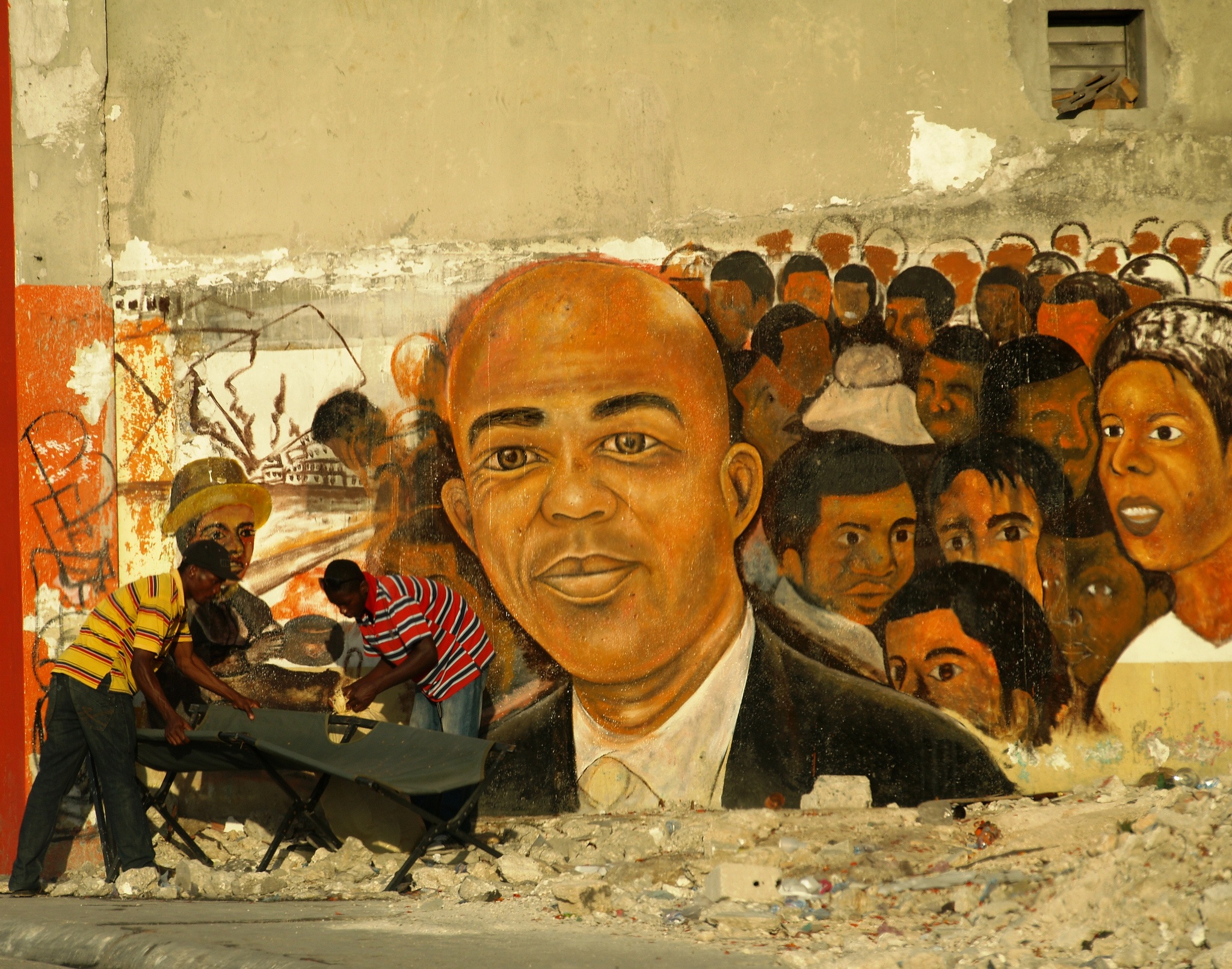
Six months into Haiti’s most recent political crisis, popular uncertainty and frustration are palpable – amid indications that even the Obama Administration may be tiring of corruption and mismanagement under President Martelly.  Officials in Washington in April expressed concerns over the abrupt release of gang leaders alleged to have ties to Martelly who had been held on kidnapping charges.  Recent U.S. Embassy tweets have focused on the importance of press freedom and free and fair elections.  Protests are a regular occurrence, and anti-government graffiti covers buildings throughout Port-au-Prince.  Martelly’s network of old friends – whom some long-time Haiti-watchers have called “nefarious characters” – has been politically useful to him, and various press reports indicate that criminal prosecutions against them for drug trafficking, kidnapping, and worse have mysteriously dropped off the books.  Criticism of his record on other issues is also strong.  A visit from Beyoncé on May 16 led the US Embassy to ask its Facebook followers: “Where should she go to see the progress in Haiti? Let us know!”  Social media users mocked, “What progress?” and derided the embassy for asking.  Washington politics, such as criticism of Bill and Hillary Clinton’s role in Haiti, is further casting a shadow on Martelly and his government.

The country has made partial progress towards holding its long overdue elections, but – if history and Martelly’s record are any guide – obstacles could easily arise.  A list of candidates has been approved, and dates have been set – August 9 for Parliamentary elections (all 118 seats in the Chamber of Deputies and 20 of the 30 seats in the Senate).   Presidential elections will take place on October 25, with a December 27 runoff if necessary.  But the process has not been without controversy: a quarter of the 2,039 who had registered to be candidates have been disqualified for various reasons.  (First Lady Sophia Martelly wanted to run for Senate but was not accepted because she is a U.S. citizen.)  As the government has not provided explanations in most instances, accusations that the exclusions were politically-motivated abound.

Martelly’s carefully calculated consolidation of power over the last four years has led many observers in Haiti to wonder whether he will actually make elections happen and leave office on schedule.  Many of them are perplexed by what they perceive as steadfast U.S. support for him.  Even in January, when an agreement on elections fell through once again and Martelly commenced to rule by decree, the State Department’s admonishment was widely seen as weak.  Rather than building bridges at home, Martelly has often appeared more externally focused – capitalizing on his ties to the Clintons, who along with the OAS helped him secure the contested presidency in the first place; declaring that Haiti is “open for business”; and holding his historic meeting earlier this month with French President Francois Hollande.  Indeed, the Hollande visit resulted in yet more protests in Port-au-Prince’s streets from those frustrated by France’s refusal to pay reparations for past abuses – such as the “independence debt” that France demanded, which consumed 80 percent of Haiti’s budget for 125 years (the equivalent of $17 billion dollars today).  Predictions about the elections and transition of power at the end of the year would be premature, but Martelly already seems to have squandered his chance to leave a legacy of progress, institution-building, and stability for the nascent Haitian democracy. 

June 1, 2015

*Emma Fawcett is a PhD candidate in International Relations at American University.  Her doctoral thesis focuses on the political economy of tourism and development in four Caribbean case studies: Haiti, Dominican Republic, Cuba, and the Mexican Caribbean.

Ecuador: Stacking the Deck Against Democracy

Enlace Cuidadano

Ecuadorian President Rafael Correa during one of his weekly broadcasts Enlace Ciudadano / Mauricio Muñoz / Flickr / Creative Commons

By Catherine M. Conaghan*

Taking a page from Hugo Chávez’s playbook, Ecuadorian President Rafael Correa is intimidating and steadily increasing controls on his opponents.  He regularly uses his Saturday morning broadcasts to name and shame them.  Actors from all walks of Ecuador’s civil society – journalists, lawyers, activists, academics, bloggers, union and social movement leaders – have been the target of his insults and thinly veiled threats on the weekly program, Enlace Ciudadano.  In February, Correa’s show was skewered by HBO comedian John Oliver – and, to Oliver’s delight, Correa fired back by tweeting insults (click here and here).  Journalists and civil society leaders applauded Oliver for drawing attention to the continuing deterioration of civil liberties in Ecuador.  Correa’s virulent rhetoric and intimidating use of media is part of a larger matrix of policies endangering freedom of expression and association in Ecuador.  Over the last two years, the Correa administration has worked methodically to mount a legal framework allowing for greater government control over the media and civil society organizations.

  • The 2013 Law of Communication and a new oversight agency, the Superintendence of Information and Communication, are intended to ensure that all print and broadcast media provide “truthful information” that is “verified, contrasted, precise, and contextualized.”  Superintendent Carlos Ochoa was selected from a short-list of nominees provided by Correa.  Among alleged violations recently singled out for sanctions are items in the leading newspaper El Universo and its accomplished political cartoonist, Xavier ‘Bonil’ Bonilla.
  • Issued in 2013, Executive Decree 16 also has civil society – from neighborhood associations to think tanks, business chambers, unions, and advocacy groups – under pressure. In addition to elaborate regulations for the legal registration of organizations, the decree stipulates conditions allowing the government to “dissolve” them.  These include group involvement in “partisan activity” and “interfering in public policies.”  To date, only one organization – the Fundación Pachamama involved in environmental activism – has been dissolved, but civic leaders fear that the decree will induce ”self-censorship” and stifle participation.

The new laws amount to a project – unprecedented for Ecuador – of surveillance and regulation.  They provide the government with a tempting arsenal of weapons to use, if necessary, in upcoming battles on other important legal matters, especially on the issue of presidential re-election.  After years of pledging that he would not seek a third term in office, Correa reversed course and has tasked his legislative super-majority with finding a swift route to amending the constitution.  Most public opinion polls show, however, that a majority of Ecuadorians would prefer a referendum to decide whether or not yet another consecutive re-election should be allowed.  The road to re-election may be more difficult than Correa and his advisors imagine, but they enter the fray with the weight of the law on their side.  With powers to control the media and limit the activity of civil society, the Correa administration enjoys the upper hand as 2017 approaches.

March 12, 2015

*Catherine Conaghan is the Sir Edward Peacock Professor of Latin American Politics at Queen’s University in Kingston, Ontario.  She specializes in Andean politics.  She is the author of an article, “Surveil and Sanction: The Return of the State and Societal Regulation in Ecuador,” in the April issue of the European Review of Latin American and Caribbean Studies.

Panama: A Central American Singapore?

By Tom Long*

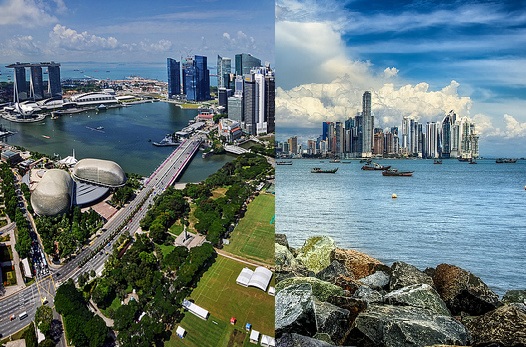
Singapore (left) and Panama City (right) / William Cho and Jim Nix / Flickr / Creative Commons

Singapore (left) and Panama City (right) / William Cho and Jim Nix / Flickr / Creative Commons

As a transportation hub, logistics center, and regional financial player, Panama has long been painted by investment bankers and Panamanian politicians as a potential “Singapore of Latin America,” but that vision still seems a way off.  In some respects, Panama’s story has been quite impressive.  For a decade, it has boasted GDP growth far beyond the regional average, even surpassing 10 percent in some recent years.  Unlike many of its neighbors, its dollar-based economy relies on services, not exports of commodities or low-value-added light manufacturing.  Since the 1989-1990 U.S. invasion to unseat General Manuel Noriega, the total size of the Panamanian economy has quadrupled in constant dollars.  It is also different from Singapore in important ways.  Singapore’s approach to planning and public housing might be helpful in Panama City, which has suffered traffic, environmental degradation, and inadequate housing for the poor as a consequence of poorly planned growth.

In other important ways, however, the Panama-Singapore comparison is less apt.

  • Singapore is a city, with nearly two million more people than Panama has spread across 100 times the landmass. Urban-rural divides are wide in Panama, with poor delivery of health and education services outside the cities, exacerbating inequality.  A Singapore-style strategy in Panama would leave the countryside behind – and indigenous and Afro-Caribbean populations would benefit much less.
  • Differences between the two countries in governance – for better and worse – are profound. The Panamanian people are much freer under the country’s democracy than they would be under a single-party-dominated system like Singapore’s.  In other ways, though, Panama’s governance leaves much to be desired.  Corruption is a massive problem, and watchdog groups highlight weakness in the rule of law, judicial independence, and press freedom.  Projects to expand the Panama Canal and build a capital city subway are over budget and behind schedule, and have suffered from strikes, contract disputes, and questionable bidding practices.  While it may seem easy to blame the corruption on former President Martinelli, who faces criminal charges, the problem has much deeper roots.
  • The two countries have very different policies toward education. Singapore invested, and continues to invest, heavily in world-class universities.  Panama lacks these, weakening its ability to compete globally in industries where innovation is key.  While Panama’s primary education has improved, its research and development lags.
  • A final difference is where the countries find themselves in their political and economic evolution. Singapore became independent 50 years ago, but it has been only a quarter century since Panama ended its kleptocratic, military rule.  It has been just 15 since the United States officially turned control of the canal over to Panamanian authorities.  The roots of its problems cannot be easily or quickly extirpated.

Panama’s boosters often use the comparison to highlight the areas in which Panama excels – economic growth, unique geography, and infrastructure crucial to global shipping and air transit.  The comparison might be more helpful in highlighting areas where Panama needs to improve.  These include dedicating resources to higher education and R&D, addressing inequality, rooting out corruption, and enhancing political and bureaucratic accountability.  Singaporean scholar Alan Chong argues that Singapore’s attempt to present itself as a model, global city is in part a foreign policy strategy of “virtual enlargement.”  The city-state’s wealth, reputation, and active role in international organizations allow it to “punch above its weight” in Southeast Asia and beyond.  Some chapters of Panama’s recent economic story might be the envy of neighbors with their own canal dreams, but the country will need to focus on governance and accountability if even its logistics-hub strategy is in fact going to deliver shared welfare at home and enhanced influence abroad – let alone become a Latin American equivalent of an Asian Tiger.

March 2, 2015

* Dr. Long is a visiting professor in International Relations at the Centro de Investigación y Docencia Económicas in Mexico City.  He is the author of Latin America Confronts the United States: Asymmetry and Influence, which is forthcoming with Cambridge University Press.

Who Will Attend the OAS Presidential Summit in Panama?

By Fulton Armstrong and Eric Hershberg

OAE-OAS & tgraham / Flickr / Creative Commons Attribution-NonCommercial-ShareAlike 2.0 Generic (CC BY-NC-SA 2.0)

OAE-OAS & tgraham / Flickr / Creative Commons Attribution-NonCommercial-ShareAlike 2.0 Generic (CC BY-NC-SA 2.0)

The Summit of the Americas isn’t until next April, but interest in how Panama as host handles near-unanimous pressure from Latin America to invite Cuban President Raúl Castro, and how the United States and Cuba will respond, is growing fast.  Speaking to reporters at the United Nations last week, U.S. Assistant Secretary of State Roberta Jacobson answered several questions on the U.S. position.  Key excerpts follow:

  • Asked “if the United States is still opposed to Cuba attending.”  On the Summit of the Americas, I think we’ve been pretty clear in our position on the summit, which is that obviously Panama is the host country for the summit, and as the host country they will make the decisions on invitations to that summit.  …  And the fact of the matter is we have said from the start that we look forward to a summit that can include a democratic Cuba at the table.  We also have said that the summit process, ever since Quebec in 2001, has made a commitment to democracy, and we think that’s an important part of the summit process.  But the decision about invitations is not ours to make, and obviously there’s been no invitations formally issued to the United States and other countries. And so there is no acceptance or rejection yet called for or made. …
  • Asked “is there a chance that the U.S. might refuse going.”  Again, I think you won’t be surprised to hear me say that we’re really not going to answer hypotheticals in the future yet.  Obviously, the Summit of the Americas is in April and that’s not a situation that we can answer, although I think we have made clear that we believe the summit process is committed to democratic governance and we think that the governments that are sitting at that table ought to be committed to the summit principles, which include democratic governance. And therefore that’s our position at this point.  Obviously, we have a position on Cuba which does not at this point see them as upholding those principles.

Panama’s likely invitation to Cuba – reflecting the consensus of 32 hemispheric nations at the last Summit – will draw protests from official quarters in Washington.  But it’s far from certain that the Obama Administration would risk blame for torpedoing the 20-year Summit process.  Obama survived a handshake with Raúl Castro at Nelson Mandela’s funeral last December, and being in the same room with him again as a President in the second half of his second term will have little political consequence.  A workshop in Mexico City in June, in which CLALS researchers participated, and another in Ottawa in September, sponsored by the Center and the University of Ottawa, explored likely outcomes.  Mexican international relations specialists speculated that a reasonable outcome was for the United States to show up like a polite guest, and thus avoid having the anachronism of U.S. antagonism toward Cuba overshadow its broader relations with Latin America.  Canadian experts were deeply concerned that Cuba’s inclusion might undermine the centrality to the OAS of the Inter-American Democratic Charter, but they agreed that failure to convene a Summit would constitute a serious blow to the OAS and to the regular summits that provide Canada a seat at the inter-governmental table.

The reality is that Cuba does not conform to the Democratic Charter or to the broader OAS criteria of democratic rule, but equally real is that Latin America sees Cuba as a full member of the hemisphere and has lost all patience with those in Washington who would deny that.  Either Washington — and Ottawa — set aside their objections to Cuba’s inclusion or they bid farewell to such fora and their constructive impact on regional relationships that ought to matter to them.  Moreover, if they acquiesce to Cuban participation but then try to commandeer the agenda and make the Summit a seminar on democracy and human rights, it will only reinforce the widespread sense in the region that Washington cannot move beyond its obsession with the trivial matter of Cuba and get on with a serious conversation among equal partners.  They would thus sacrifice an opportunity to discuss issues on which significant, substantive advances are possible through dialogue among leaders of countries throughout the hemisphere.  The value of the Summit rests with the capacity of all involved to act like grownups.  President Obama did so at Mandela’s funeral, and it will be telling whether he can do it again in Panama this coming April.

October 2, 2014

Downsides of Decentralization: Lessons from Peru

By Eric Hershberg
Embed from Getty Images
Decentralization – the buzzword among Washington-based specialists on governance during the 1990s and well into the first decade of the 21st century – failed to fulfill technocrats’ lofty expectations wherever it was implemented in the absence of a strong central government.  In one country after another, the World Bank, Inter-American Development Bank, and USAID prescribed political and administrative decentralization as a recipe for deepening democracy and boosting efficiencies in the delivery of governmental services.  An alliance of strange bedfellows united behind the “good governance” cause of decentralization, including grassroots democracy activists of the left who, in the aftermath of authoritarian rule, valued the notion of devolving decision-making authority to the citizenry.  Neoliberal economists, in turn, were attracted to virtually any initiative that would diminish the authority of central states, which they considered to be incorrigible bastions of inefficiency, rent-seeking and patronage.  Cautionary notes from skeptical political scientists were routinely dismissed as anachronistic.  At a seminar in Lima around a decade ago, USAID staff were utterly perplexed by the suggestion that, in the absence of central institutions holding the new regional authorities accountable, the headlong quest to political decentralization in Peru could bring extremely serious adverse consequences for democratic governance.  In their view, the capabilities of the central government had nothing to do with the success of decentralization.

Their enthusiasm was not entirely misplaced – but in many places the reforms eventually backfired.  The authoritarian regime of Alberto Fujimori (1990- 2000) had centralized power excessively, eliminating the handful of regional governments that had been created during the 1980s and ensuring that the social programs they had administered would be entirely dependent on the executive branch.  Fiscal decentralization, already minimal, was eliminated to make provincial municipalities completely dependent on transfers from the central government.  The few regional authorities who survived the Fujimori period were appointed by the president.  When President Alejandro Toledo (2001-06) and his Peru Posible party took office, the need to restore some decentralization was clear, but the two traditional parties – the APRA and Acción Popular –gradually coopted the movimientos regionales, creating clientelistic networks employing mafia-style tactics.  In the Ancash Department, for example, a rogue president is associated not only with corruption scandals – common in regional governments – but also with the assassination of his political enemies, including a political opponent murdered in March.  President Ollanta Humala has frozen the region’s assets, thereby putting a stop to some of the corruption but at the same time delaying needed infrastructure projects and social services.

The emergence of authoritarian enclaves was predictable of fledgling democratic regimes in Latin America, and the phenomenon is not unique to Peru (click here).  Sub-national authorities have access to vast resources to distribute to their clients (and themselves), and all too often the central state lacks the capacity or control over the purse strings to rein them in.  Social scientists have long been aware of the “paradox of decentralization,” and indeed at American University it is a concept that we typically teach freshmen in Comparative Politics – that decentralization only promotes democracy when it follows the consolidation of a strong central state.  This insight escaped the gaze of the technocrats so enamored of decentralization in Peru.  There, as elsewhere, the absence of horizontal accountability – that is, the ability of different branches of government to check one another’s authority – is aggravated by the inability of civil society to hold leaders accountable and allows for the emergence of local mafias in control of sub-national institutions.  Decentralization took on such steam at a time when Latin America’s national governments had been weakened by the economic crisis of the 1980s and the ideological assault on the central state that continued well into the current century.  It will take many years to rectify the damage.  

Will Costa Rica Seize the Opportunity?

By Fulton Armstrong

Embed from Getty Images

Costa Rican voters have given President-elect Luis Guillermo Solís a mandate for change, but they have also given him a Legislature and culture of political inertia that will make revitalizing the country’s democracy very difficult.  The withdrawal of opponent Johnny Araya from the presidential runoff on Sunday threatened to trigger such low voter turnout that Solís feared his legitimacy would be questioned from the start, but he received 78 percent (1.3 million) of the total votes – more than any other recent presidential victor.  Although he was deeply involved in the National Liberation Party (PLN) until nine years ago, he established himself and the Citizen Action Party (PAC) as viable alternatives to the PLN and Costa Rica’s other discredited traditional party, the PUSC.  His public persona – as a university history professor, former diplomat, a non-corrupt political neophyte, and an unglamorous campaigner – has engendered sympathy even if, as the head of a party with no record, people don’t really know what they’re getting in terms of policy.  Various business groups have signaled they can work with him and presented their wish lists – all touching on energy availability and prices – but that agenda also remains vague.

The composition of the Legislature, elected in February, poses a formidable obstacle to any agenda that Solís develops.  (Click here to see AULABLOG’s first read on this.)  His PAC won two more seats in Parliament – up to 13 out of a total of 57 – but the PLN won 18, the Broad Front (FA) won nine, and the PUSC won eight.  Outgoing President Chinchilla, of the PLN, had a broader base – 24 seats – but obstructionism from across the political spectrum made Executive-Legislative relations rough throughout her term.  The country’s premier economic newspaper, El Financiero, last week gave a generally positive review of President Chinchilla’s performance in ten crucial economic policies – poverty, unemployment, exports, fiscal deficit, and more – and even if that assessment is too generous, the Costa Rican political machines have treated her like an unmitigated failure.  With both traditional parties out of the Executive, maneuvering in the parliament is likely to intensify and be more damaging.

Statements by Costa Rican academics and opinion makers since the lackluster, non-substantive campaigning in the recent elections, suggest a concern that the country is in a funk over the quality of its democracy and democratic institutions.  The political elites are held in low regard for putting their own (often pecuniary) interests before all others.  When Solís takes office on May 8, Costa Ricans will have an opportunity to shake themselves out of that mentality, taking advantage of the new president’s outsider image and his lack of a political machine eager to attach itself as a parasite on the government and economy.  Johnny Araya’s cowardice and his failure to even pretend to have a political program worth fighting for in the second-round campaign, however, bodes poorly for whether the traditional parties are interested in revitalizing Costa Rican politics.  Being the best democracy in Central America has been important to Costa Ricans for decades; being the best it can be is the new challenge.

Haiti: Crisis as Usual

By CLALS Staff

World Bank Group President Jim Yong Kim and Haitian President Michel Martelly / Photo credit: World Bank Photo Collection / Foter / CC-BY-NC-ND

World Bank Group President Jim Yong Kim and Haitian President Michel Martelly / Photo credit: World Bank Photo Collection / Foter / CC-BY-NC-ND

Half way through his term, President Martelly and his opponents have shown the same weak leadership and shallow commitment to democracy and transparency that has long plagued Haitian politics.  The IMF recently reported preliminary data indicating that Haiti’s GDP grew around 4 percent in FY2013; that inflation dropped from almost 8 percent to 4.5 percent; and that, although the fiscal deficit was larger than planned, domestic revenues were in line with projections.  On the streets, however, popular suffering shows no sign of abating.  Some 170,000 remain homeless since the earthquake almost four years ago; hundreds of thousands still have no prospect of employment, and poverty rates remain sky-high.  Suspicions about the whereabouts of more than a billion dollars in foreign aid are growing.  The World Bank last week criticized the lack of government transparency regarding funds from Venezuela’s “Petrocaribe” program, worth about $300 million a year to Haiti, and repeated its call for an end to the government’s use of “non-compete” contracts.  Corruption, a perennial concern, was a main theme of several large protests last month, involving thousands of citizens demanding Martelly’s resignation.

United Nations officials have repeatedly called on Haiti to hold parliamentary elections originally scheduled for two years ago.  The lower house of parliament in November passed a bill protecting the tenure of certain members of the senate – which the UN Secretary General’s senior representative in Haiti praised as “an important step for the organization of inclusive, transparent, and democratic elections” – but myriad other preparations remain undone.  The UN last August found that failure to hold elections by next month “runs the risk of [the Parliament] becoming inoperative,” but the Security Council went ahead and renewed the MINUSTAH mission for yet another year, albeit with fewer troops and police.

Donor fatigue – when the international community tires of lending a hand – seems to have been overtaken by donor disinterest, and the Haitian political elite appears much obliged.  Martelly, whose stage name was Sweet Micky during his singing career, has failed to use his fame and charm to promote serious reform among Haitians, as he promised, nor has he weaned his government and its supporters off the lucre of corruption.  His detractors, like those organized against Presidents Préval and Aristide before him, are better at mobilizing opposition than they are at mustering support for any political alternatives.  The Obama Administration’s commitment after the earthquake to help Haiti “build back better” has faded.  A central element of its vision was construction of an industrial park in northern Haiti, which more than a year after its inauguration has created fewer than 2,000 of the 65,000 jobs it promised.  As long as Haitians and their international supporters are satisfied with bandaid solutions to systemic problems, the country will wallow in its misery until the next crisis makes things yet worse again.

Subnational Regimes Reveal Uneven Nature of Democracy

By Agustina Giraudy

Peruvian mayoral campaign poster / Photo credit: Pedro Rivas Ugaz / Flickr / CC-BY

Peruvian mayoral campaign poster / Photo credit: Pedro Rivas Ugaz / Flickr / CC-BY

Most Latin American countries have transitioned away from autocracy and authoritarianism over the past three decades, but much of their democratic advancement has been territorially uneven and mostly limited to the national level.  In Argentina, Peru, Brazil, Bolivia, Mexico and other countries, democracy has not trickled down to subnational levels of government.  Many provinces, states, and municipalities in these (and other) countries continue to be governed in ways that resemble the period of undemocratic rule.  In these subnational undemocratic regimes (SURs), the political and civic rights of regular citizens and the political opposition are severely curtailed.

In SURs such as Formosa, San Luis or La Rioja in Argentina; Oaxaca (pre 2010), Puebla (pre 2010), or Tabasco in Mexico; and Goiás in Brazil, provincial autocrats use a variety of undemocratic, illegal, and informal actions – such as electoral fraud, electoral violence, and changes in electoral rules and political institutions – to prevent the opposition from gaining access to state positions.  My research and others’ indicates that, to further protect their own power, these subnational rulers frequently and arbitrarily reshuffle provincial- and state-level supreme courts, capriciously remove opposition mayors from office, deny funding to municipalities controlled by the opposition, and arbitrarily commission provincial- and state-level audits to investigate contrived financial misdeeds of opposition mayors.  They also co-opt or divide local organized groups, such as small unions, social movements, and street vendors, to undermine potential opposition.

The existence of SURs within national democracies underscores the difficulty of assessing the quality of a democracy from a purely national perspective.  As recent research has shown, the continuation of SURs in national democracies requires that we take a different approach and, importantly, grasp how seemingly democratic national-level leaders benefit from and, in some circumstances, encourage the SURs as a reliable base outside the capital.  Subnational undemocratic rulers, who typically control voters and legislators in the national congress, are seen by national officials as key partners for crafting winning electoral and legislative coalitions.  To the extent that national democratic incumbents succeed at inducing and securing autocrats’ cooperation, the former have strong incentives to help the latter stay in power.  Ironically, the accepted practice of democratic coalition-building contributes to the obstruction of democratization at the subnational level.  In the second decade of the 21st century, the quality of Latin American democracies depends at least as much on subnational democracy – and reducing the influence of SURs – as on the quality of national-level institutions.

Honduran Election Crisis Marks New Phase in Country’s Agony

By CLALS Staff

Juan Orlando Hernández Photo credit: Tercera Informacion / wikimedia commons / and Xiomara Castro / Photo credit: hablaguate / Flickr / Creative Commons

Juan Orlando Hernández Photo credit: Tercera Informacion / wikimedia commons / and Xiomara Castro / Photo credit: hablaguate / Flickr / Creative Commons

Yesterday’s election in Honduras was peaceful and orderly – the 61 percent voter turnout forced polls to remain open an extra hour – but anomalies in the vote count have cast a dark shadow over the legitimacy of the results. Although most polls for months indicated that Libre candidate Xiomara Castro had a several-point lead over National Party candidate Juan Orlando Hernández (and a few polls showed they were in a dead heat), the Superior Electoral Tribunal (TSE) said the Nationalist beat Castro by more than a five percentage point  margin – 34.2 percent to 28.6 percent. Castro and other candidates had repeatedly claimed the National Party activist who heads the TSE (which has no representative from the nontraditional parties or Libre) would skew the results and, citing exit polls, she has alleged that fraud tainted up to 20 percent of yesterday’s votes. The TSE’s claim that, of more than 1.6 million ballots cast, there were no null or blank votes – when party poll watchers reported many – has also drawn attacks on its credibility. Nonetheless, the U.S. Ambassador and the European Union observer team hastily declared the process transparent and clean.

Hernández and Castro have both declared victory – promising high tensions in at least the short term. Castro is the wife of former President Mel Zelaya, who was ousted in a coup in 2009, and has assembled a broad and deep popular base in Libre outside of Honduras’s two traditional parties. The government, military, economy and, importantly, news media are all dominated by elites that have long resisted the sort of popular movement she has built.  Few observers believe that, particularly with U.S. endorsement of the election results, Castro’s demands for a recount or other review of the results will be heeded.

If the results had been seen as accurate and fair, the election could have helped Honduras close the dark chapter of tensions and violence that started when the military forced President Zelaya into exile three and a half years ago. If Hernández is allowed to take office, his low vote – barely a third of all votes cast – alone promises a prolonged crisis like that which has plagued current President Lobo since his inauguration, a period during which both criminal and political violence has skyrocketed, public finances have deteriorated alarmingly, and political polarization has reached unprecedented heights. Under a Hernández presidency, the crisis may become even worse. Castro ran a campaign explicitly committed to peace and reconciliation and consistently urged her supporters to give democratic process a chance. She has never shown even the slightest inclination to call her supporters to violence, but popular anger has festered since the 2009 coup and there’s no guarantee that some frustration will not spill into the streets.  The surge in right-wing violence in Honduras since the coup – reminiscent of death squad activities in other Central American countries in the 1980s – has persuaded many protesters to keep their heads down, but this election may lead to desperate acts which the death squads will be eager to respond to, threatening a spiral of violence the hemisphere’s second-poorest country can ill-afford.

Costa Rica: Losing Faith in Democratic Institutions?

By Fulton Armstrong

Supreme Elections Tribunal President Luis Antonio Sobrado / Photo credit: izahorsky / Foter.com / CC BY-NC-ND

Supreme Elections Tribunal President Luis Antonio Sobrado / Photo credit: izahorsky / Foter.com / CC BY-NC-ND

Costa Rica is approaching February’s presidential and legislative elections with a distinct lack of enthusiasm, if not with dread.  Most international surveys present Costa Rica as the “world’s happiest country” (the Happy Planet Index), or in the elite club of the world’s “full democracies” (ahead of Japan and Belgium in The Economist’s list), or as the 48th least-corrupt country (out of 174 reviewed by Transparency International).  The economy is expected to grow about 3 percent this year, and the country’s access to foreign direct investment is blunting the impact of the government’s fiscal deficit of about 5 percent of GDP.  Crime is on the rise, but Ticos know that their pain is small compared to that wreaked by the narcos and maras in Guatemala, El Salvador and Honduras.

Reputable polls show, however, that Costa Ricans are gloomy about the state of their political institutions and specifically about their upcoming elections.  According to polls, about 32 percent of the country’s 3 million eligible voters say they plan to abstain, citing corruption, a lack of leadership, insensitivity to the average citizen, and unemployment as reasons to reject not just the candidates but also the political elite in general.  The President of the Supreme Electoral Tribunal (TSE), Luis Antonio Sobrado, acknowledged last month that the election was taking place in the context of “citizen uneasiness … and a lot of anger with politics and politicians.”  Abstentionism was high in 2006 (35 percent) and 2010 (32 percent), but commentators sense a much deeper and darker alienation this time around.  A columnist lamented that the “multiparty” system has been replaced by “atomization,” and another said the political parties have “disconnected themselves from the national reality.”

Further reflecting the malaise, President Chinchilla’s support has nosedived – a July poll showed only 9 percent of voters said she was “good” and none said “very good” – and pundits cite her ineffectiveness as the cause of collapsed highways, dengue outbreaks, and other calamities.  The nominee of her Partido de Liberación Nacional (PLN), Johnny Araya, is widely thought to have an edge in February, but his 12 years as mayor of San José have coincided with a deterioration in the city’s infrastructure and security, and his personal lifestyle (including five marriages) may be a factor in popular skepticism.  The government’s recent announcement that it will contract the services of 4,125 new employees in 2014, mostly in the education sector, drew immediate criticism as yet another example of political patronage to influence the race.

The self-doubt seems at this point indicative of concerns about Chinchilla and the crop of candidates, rather than a rejection of democracy.  Costa Ricans comparing themselves with the rest of Central America still feel good about themselves, and the green image that eco-tourists reinforce is comforting.  But crumbling infrastructure – including collapsing bridges and the exorbitant cost of repeated repairs – and shocking crimes, such as the recent assassination of an environmentalist protecting turtles on a Caribbean beach, fuel the sort of doubts that only effective political and economic leadership can quell.