Reclaim or Rebuild? Washington’s Uneven Push for Regional Realignment
By Víctor Ortiz
Researcher, Instituto de Estudios Nacionales, Universidad de Panamá
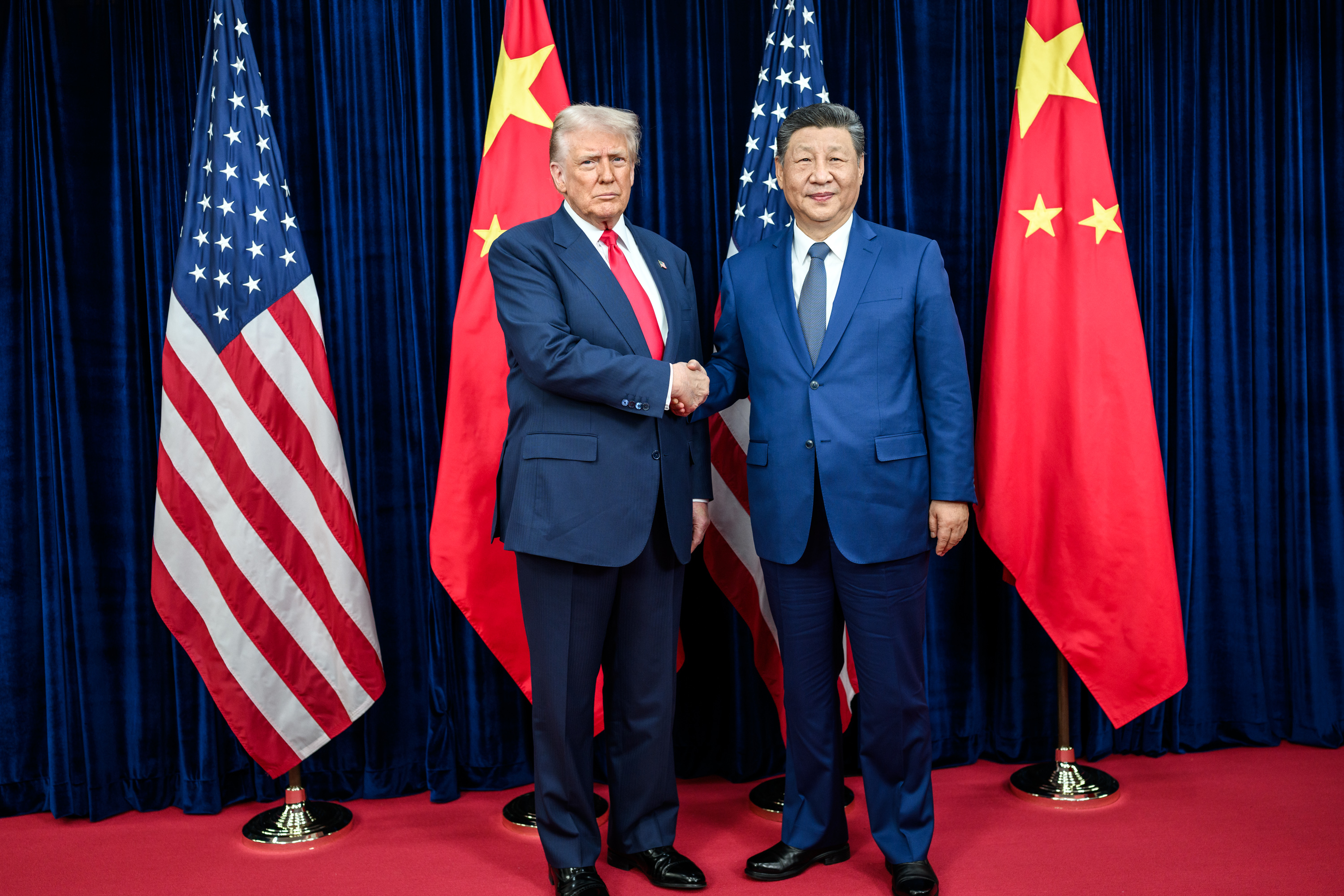
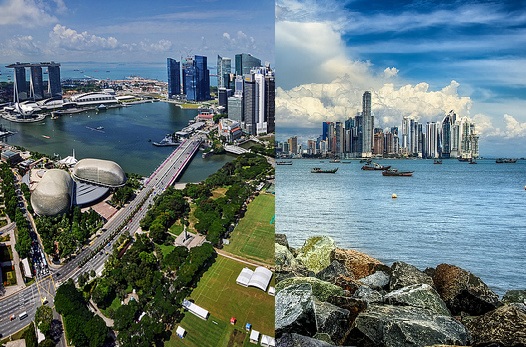
In his second term, US president Donald Trump placed the “reclaiming” of the Panama Canal among the central goals of his foreign policy. But this rhetoric cannot be read in isolation. It reflects a phenomenon that runs across all of Latin America, one in which the Canal occupies a central, though not exclusive, place. This raises two questions: Is Washington seeking to reclaim a hegemony it believes it has lost, or is it reacting to the perception that its hegemony has weakened? The distinction matters. In the first reading, this is simply a new edition of an old hemispheric discourse. In the second, a great power finds itself having to actively rebuild conditions it once took for granted, in the face of old and new threats: the fight against drug trafficking, illegal migration, and China’s growing influence in the region.
The concern did not begin with Trump. Under the Biden administration, then Southern Command chief Laura Richardson already had warned that US security depended on Latin America’s stability in the face of China’s growing presence, a power that had established itself as capable of contesting an area of control Washington had held almost unchallenged for two centuries — without regional economic dependence automatically translating into political subordination. One example: under President Juan Carlos Varela, Panama became the first country in the region to join the Belt and Road Initiative, in June 2017, and to break relations with Taiwan.
With Trump’s second administration, the shift was radical. Since December 2024 he has insisted that the United States give the Canal “to Panama, not to China,” and that the US was going to “take it back.” In February 2025, after meeting with Secretary of State Marco Rubio, President José Raúl Mulino announced that Panama would not renew its memorandum of understanding with China on the Belt and Road Initiative, without going so far as to break bilateral relations. Beijing, through its foreign ministry, called the move regrettable and accused Washington of resorting to pressure.
On April 8, 2025, Panama’s Minister of Public Security, Frank Ábrego, signed a memorandum with US Secretary of Defense Pete Hegseth that restored a rotational US military presence at the former American bases of Fort Sherman, Rodman and Howard in the former Canal Zone, and guaranteed priority transit for US warships through the Canal. Mulino insisted the agreement did not compromise Panamanian sovereignty; critics, however, argued that Washington had obtained, through a technical memorandum, a fraction of what Trump had openly demanded. Panama retains legal sovereignty over the canal zone, but that sovereignty now coexists with specific operational concessions — US military access to infrastructure outside the Canal itself, framed under the umbrella of protecting it and regional security.
The dispute has also extended to the ports of Balboa and Cristóbal, operated since 1997 by Panama Ports Company (PPC), a subsidiary of the Hong Kong-based CK Hutchison group. In March 2025, CK Hutchison agreed to sell its global port business, including the Panamanian terminals, to a consortium led by the US company BlackRock. But in January 2026, Panama’s Supreme Court declared the 1997 contract-law unconstitutional, ruling that it granted disproportionate benefits to PPC; the decision was published in the Official Gazette on February 23, 2026. The outcome, however, was not a transfer of the ports to the Panamanian state: PPC was left without legal standing, and temporary administration passed to APM Terminals, a subsidiary of Denmark’s Maersk group, while the state prepares a new international tender.
Beijing’s response did not stop at the diplomatic protest of February 2025. After the Supreme Court ruling, China warned that Panama “will pay a high political and economic price” if it did not reverse the annulment of the concession. That warning translated into action: China detained 96 Panamanian-flagged vessels in March 2026 and 136 in April, 6.4 times the previous year’s average, in what the United States described as economic retaliation aimed at punishing Panama.
This episode reveals something about the nature of the “reclaiming” narrative. On March 4, 2025, before Congress, Trump presented the sale from Hutchison to BlackRock as if it constituted, in itself, the recovery of the Canal, and days later said on television that he preferred to see the asset in BlackRock’s hands rather than a Chinese company’s. Panama’s president responded that no such “recovery” had taken place: the ports do not control the Canal, since the two are run under entirely separate arrangements, with the Canal itself administered by the Panama Canal Authority (ACP). The sequence is telling: a private transaction, in which the Panamanian state was not a negotiating party, was narrated by the White House as a geostrategic victory over China. And when Panama did intervene directly on the ports front, it did not do so to hand the asset to Washington, but to annul the concession and open it to a new tender.
The Panamanian case is only one instance within this broader regional realignment. Since September 2025, Washington has sustained a military campaign in international waters against vessels accused of drug-trafficking activity in the Caribbean and the eastern Pacific, known as Operation Southern Spear, under which boats are destroyed even though doing so violates the flag state’s rights under international maritime law. In parallel, in March 2026 the “Shield of the Americas” was founded, a security and intelligence coalition that Panama joined at its inaugural summit in Doral, Florida, alongside Argentina, Ecuador, El Salvador, the Dominican Republic and Trinidad and Tobago; Peru and Colombia joined later that year.
This alignment reflects a prior structural subordination: these countries’ economies remain dependent on US trade and credit, their security forces — with the exceptions of Cuba and Nicaragua — are trained and equipped by the United States, and their political elites and economic power groups depend on staying on good terms with Washington.
Panama’s membership in the Shield adds to the 2025 memorandum and the port dispute — it does not replace them. While other governments in the hemisphere are linking themselves to Washington almost exclusively through that multilateral coalition, Panama is accumulating commitments at both levels simultaneously, the collective and the bilateral, making it the one point in the region where both layers of pressure converge on the same territory.
The evidence gathered suggests that the two readings posed at the outset are not mutually exclusive. Regional subordination is real and visible, as shown by the shift toward Washington-aligned governments across much of the hemisphere. Yet this subordination can no longer be taken for granted; it must be actively produced, through instruments ranging from security coalitions and lethal military campaigns, as in the Venezuelan case, to the simultaneous accumulation of bilateral and multilateral commitments, as in the Panamanian case.
If US hegemony were as solid today as it was in the era of the Monroe Doctrine or the Cold War, a single framework — one doctrine — would be enough to produce alignment across the region. What we observe instead is a deployment of distinct instruments, adapted to each country’s specific circumstances, at a political and legal cost that a comfortably exercised hegemony would not have to pay: allegations of possible war crimes in the naval campaign against drug trafficking, Panama’s judicial resistance that ended up annulling the concession despite US pressure, and China’s retaliation through the systematic detention of Panamanian vessels. That cost, repeated case by case, is the best evidence that Washington does not exercise the control it claims to have, but is rebuilding it — unevenly, country by country. Finally, it is worth asking whether this order will hold up regardless of who occupies the White House, as part of a consensus driven by the US national-security apparatus, one that Richardson had already flagged before Trump.