Argentina: Who killed Alberto Nisman?

By Fulton Armstrong

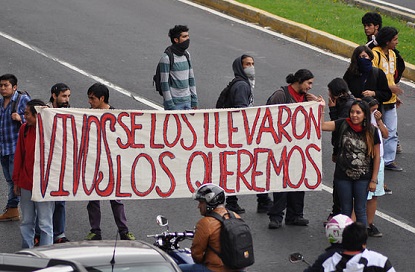
March for Nisman on January 19, 2015, Buenos Aires, Argentain. Photo Credit: jmalievi / flickr / Creative Commons

March for Nisman on January 19, 2015, Buenos Aires, Argentain. Photo Credit: jmalievi / flickr / Creative Commons

Conspiracy theories, accusations, and counteraccusations – usually driven by personal prejudices and political agendas – are not uncommon in Argentina, but the death of special prosecutor Alberto Nisman on January 18 has brought them to a crescendo.  Each theory probably contains a grain or more of truth, but none adequately explains how this respected man, who had spent 10 years investigating the bombing of a Jewish community center in Buenos Aires 20 years ago that killed 85 and injured hundreds, wound up dead on his bathroom floor with a bullet in his head just hours before he was to testify before Congress.  Three main scenarios have emerged.

Scenario A:  Nisman was a national hero whose assiduous investigation of the AMIA attack, aided by Argentina’s intelligence agency (SIDE), had conclusively demonstrated an Iranian role in planning and funding Hezbollah’s execution of the bombing.  He was about to request the arrest of President Cristina Fernández de Kirchner (CFK) and Foreign Minister Héctor Timerman on charges of colluding with Tehran to cover up Iran’s role – and they or unidentified loyalists ordered his murder to stop him.  Under this scenario, a stealth team working on behalf of the President suborned or sneaked by the 10 body guards placed around Nisman’s apartment to enter and – using a 22-caliber pistol that he’d borrowed from an aide – killed him.

Scenario B:  Nisman was a zealot manipulated by disgruntled SIDE officials and got in over his head in a plot to bring down the President and her government.  Nisman had charged Presidents with coverups before – accusing President Carlos Menem in 2006 of taking a $10 million bribe from Iran to keep investigations from leading to its operatives – and his distaste for CFK was well known.  In December, she fired long-time SIDE chief, Antonio Stiusso, who (according to this theory) sought revenge by helping Nisman make his case.  (Officials close to President made the unsubstantiated and dubious claim that the man who lent Nisman the gun, Diego Lagomarsino, was also an intelligence agent.)  Under this scenario, accepted by very few Argentines, Nisman took his own life.

Scenario C:  In the house of mirrors that is Argentine intelligence, power plays are shrouded in intrigue and hard to divine.  Under this scenario, persistent rumors suggest a struggle between pro- and anti-Stiusso factions in which Prosecutor Nisman was collateral damage, perhaps because of his eagerness to do the dismissed SIDE director’s bidding.  Precious little information is available to label the factions – pro- or anti-CFK, or pro- or anti-Israel, or even pro- or anti-Iran – but there’s a consensus that something was rotten in SIDE.  Eight days after Nisman’s death, CFK announced an effort to dissolve it and set up a replacement agency, and the Congress has already begun to take action.

However much partisans of one perspective or another want to believe these scenarios and their variants, information is too weak or contradictory to give much credibility to any.  CFK and Timerman’s advocacy of trade with Iran – primarily swapping Argentine grain for Iranian oil – and their negotiation on a joint investigation of the bombing weren’t secret.  The exchanges were the subject of numerous public statements since 2013, and a number of Argentine officials, including Stiusso and other senior SIDE officers, were involved in both initiatives.  Interpol officials, moreover, deny that either CFK or Timerman had ever requested suspension of arrest warrants for any of the Iranian suspects.  But the President’s attacks on Nisman before and after his death have been strident and personal – clearly crossing the line for a chief executive talking about a prosecutor – and her public statements, including flip-flopping on whether the death was a suicide, do have a certain odor that create the impression that, as Shakespeare’s Queen Gertrude in Hamlet might say, “the lady doth protest too much, methinks.”  The poisonous political climate in Buenos Aires over el caso Nisman appears likely to drag on – yet another crisis the country can ill afford.

February 9, 2015

Oil Scandal Besets Brazilian Politics … Drip-by-Drip

By Matthew Taylor and Luciano Melo*

Nestor Galina  / Flickr / CC BY-NC 2.0

Nestor Galina / Flickr / CC BY-NC 2.0

Brazil’s oil scandal – the largest corruption scheme in Brazil’s history – probably won’t bring down the government of President Dilma Rousseff but will keep it in constant peril.  Since March 2014 the Brazilian Federal Police have been investigating the disappearance of tens of billions of dollars allegedly siphoned from the national oil company, Petrobras.  The company is a national symbol, founded by legendary President Getúlio Vargas in 1953, and a powerful economic force, especially in light of the discovery of massive deepwater oil off Brazil’s coast and the massive investments that have been undertaken to develop those fields.  No image captured Brazil’s triumphant resurgence over the past decade than a famous 2006 shot of President Lula holding up his hand covered in oil at a ceremony celebrating Brazil’s oil self-sufficiency.  (The picture itself was a takeoff on an iconic photo of Vargas.)

President Dilma Rousseff – who had close ties to the company as chairwoman of its board (2003-2010) and Minister of Mines and Energy (2003-2005) – is now confronting the dark underside of Brazil’s oil dream.  She is respected for her personal probity; nobody has suggested that she gained personally from the brazen corruption within Petrobras.  But critics point out that she was either cognizant of corruption or woefully incompetent.  As a result, the scandal weakens her considerably, just as she faces a revitalized opposition, a restive group of political allies, an economy grinding to a near halt, and a very real possibility that Brazilian debt will be downgraded to junk status.  Indeed, the scandal increases the chances of each of those four outcomes considerably.

The good and bad news from Dilma’s perspective is that the courts are very slow in Brazil.  If this case moves as quickly as the vote-buying mensalão scandal of 2005 – which was actually relatively efficient and effective by the standards of the Brazilian court system – final legal resolution of the case is unlikely before 2021.  Furthermore, for now there seems to be little appetite among the opposition for impeachment, possibly in part because some opposition members are rumored to be implicated as well.  So Dilma seems likely to survive politically, even as the scandal threatens to remain part of the political geography for the remainder of her second term.  This will be excruciating, as each week brings further revelations.  Indictments against a host of politicians are expected as soon as next month.  Perhaps most damaging in the long-term, though, will be the realization that nearly a decade after the mensalão scandal, legislative coalitions continue to be held together by the glue of pervasive corruption, and campaign finance appears deeply rooted in the misappropriation of public resources.

*Matthew Taylor is an associate professor at American University’s School of International Service and currently a fellow at the Woodrow Wilson Center for International Scholars.  Luciano Melo is a Ph.D. student in the School of Public Affairs.

January 22, 2014

Mexico: Is Peña Nieto Missing the Point?

By Fulton Armstrong

Rodrigo Barquera / Flickr / CC BY

Rodrigo Barquera / Flickr / CC BY

The disappearance and apparent massacre of 43 students from a city in Mexico’s Guerrero state is a rude reminder to President Peña Nieto that economic reform and increased foreign investment aren’t enough to help the country overcome the scourge of narcotics-fueled violence.  Federal and State prosecutors agree that the police in Iguala – who, along with the city’s mayor, have strong ties to the Guerreros Unidos cartel – handed the students over to the narcos after a confrontation during a student protest turned violent, already leaving six students dead.  Residents on a nearby ridge noted an increase in police and truck traffic soon after the showdown, but the dozens of bodies uncovered by searchers at mass graves in the area so far have not been the students’.  The mayor and police chief are in hiding, but Federal authorities say three dozen police and accomplices have been arrested and many have confessed.  None apparently has identified where the bodies were dumped.

As the scope of the crime, which occurred three weeks ago, has become clearer, the President’s rhetoric has been increasingly forceful, committing to investigate and bring the perpetrators to justice.  The Federal police have been directed to take control of security in the area and nearby municipalities.  The government announced last Friday, that the “supreme leader” of the Guerreros Unidos has been arrested, while another committed suicide after a standoff with police.  But critics point out the federal authorities’ own problems with corruption, and criticism of Peña Nieto’s efforts to stem the violence has been growing, especially in the wake of his administration’s many self-congratulatory statements about progress in the security area.  A new 5,000-strong national civilian gendarmerie he rolled out in August was ridiculed as too little, too late.  His continuation of his predecessor’s emphasis on arresting drug kingpins – resulting this year in the spectacular arrests of Joaquín “El Chapo” Guzmán Loera (of the Sinaloa cartel), Héctor Beltrán-Leyva (of the Beltrán-Leyva Organization), Fernando Sánchez Arellano (of the Arellano Félix cartel), and others – has failed to eliminate the underlying systems of the drug trade.

During the presidential campaign in 2012, Peña Nieto promised to reduce violence, and his decision not to obsess over the problem – as his predecessor, President Calderón, had – may have given him a respite.  But his administration apparently ignored clear signals of trouble – such as indications that in Guerrero state and elsewhere the cartels’ were expanding and consolidating their influence over government – and the problem seems to be roaring back with a vengeance.  The President’s focus on reforming the economy and attracting foreign investment makes strategic sense, but its long timeline doesn’t help him fight the fires of violence that envelop parts of the country.  There’s also merit in creating something like the gendarmerie and other institutional tools, but that approach seems to ignore that the rot of corruption has deep roots at all levels – federal, state, and local – that must be dealt with and that an elite unit tied to a federal capital hundreds of kilometers away can do little in places like Guerrero.  Calderón had shown the challenge wouldn’t be easy, but Peña Nieto has not yet shown that he – and Mexican society – are up to it either.

October 21, 2014

Building State Capacity in Brazil

By Katherine Bersch, Sérgio Praça, and Matthew M. Taylor*

Photo Credit: Metrix X / Foter / Creative Commons Attribution-NonCommercial-NoDerivs 2.0 Generic (CC BY-NC-ND 2.0)

Photo Credit: Metrix X / Foter / Creative Commons Attribution-NonCommercial-NoDerivs 2.0 Generic (CC BY-NC-ND 2.0)

As the World Cup fades out and Brazilians turn their focus to the October elections, public debate will shift back to economic growth, social services, corruption, and – central to them all – the role of the state.  Is the federal government too big, inefficient and meddlesome, as the opposition argues, or does it need to be strengthened to play a leading role in Brazil’s state capitalist economy, as the incumbent Workers Party has sought?  In a recent paper (click here for draft), based on publicly available data of about 326,000 civil servants working within the 95 most important federal agencies in Brazil, we found a very diverse federal government, with agencies distributed widely on both capacity and autonomy.

Our findings empirically confirm a long literature that highlights the coexistence of so-called “islands of excellence,” with high capacity and high autonomy, alongside low-capacity, low-autonomy laggards.  “Islands of excellence” include Brazil’s Foreign Ministry (Itamaraty), the Central Bank, the Finance Ministry, the Justice Ministry, and the relatively young Comptroller General’s Office (CGU), created in 2001.  Laggards include almost all of the infrastructure agencies, as well as the Ministry of Sports, perhaps helping to explain the recent World Cup construction snafus.  Also interesting are the agencies with high capacity and low autonomy (such as the Federal Highway Police, which most state governors seek to empower and control within their own states), as well as agencies with low capacity and high autonomy, which few politicians seek to control (such as the Public Defenders Office).

We found solid evidence that agency corruption – one of the driving forces behind last year’s political angst and popular protests – is correlated with lower capacity and lower autonomy.  This finding could help frame debate in the upcoming campaigns and beyond: the keys to reducing corruption are to build agencies’ capacity and increase their autonomy from political partisans.  The debate over the role of the state has been ongoing since the return to democracy in the 1980s.  No matter who wins the October elections, the expansion of this data set and measurement effort will provide useful empirical data to more realistically evaluate the evolving performance of the Brazilian state, as well as to recognize the enormous differences and best practices within that state. 

*Katherine Bersch is a doctoral candidate at the University of Texas at Austin.  Sérgio Praça teaches Public Policy at the Federal University of the ABC in São Paulo.  Matthew Taylor, a regular contributor to AULABLOG, teaches at American University.

Guatemala: The War of Paz y Paz

By Steven Dudley*

CLALS Paz y Paz

Law professor and human rights attorney Claudia Paz y Paz’s selection as Guatemala’s first woman attorney general was a surprise, but strident opposition to her reappointment from the dark interstices of the political spectrum is not.  More hippy professor than government bureaucrat, she’s a woman who defied the odds when she took office in 2010.  Paz y Paz speaks with a soft, gentle tone to the point where she almost needs a microphone to run a staff meeting.  Yet, from nearly the moment she walked into the attorney general’s office, she made a difference.  She and her team arrested previously untouchable figures such Juan López Ortiz, alias Chamale, and dozens of members of the feared Mexican criminal group, the Zetas.  The country’s murder and impunity rates fell.  Paz y Paz also prosecuted former military officers, including former military dictator Ríos Montt and others allegedly involved in atrocities in the 1980s, and helped set up special offices to deal with violence against women.

Paz y Paz also demonstrated how, employing best practices, Guatemalan judicial institutions can excel.  Her office’s reliance on forensic evidence, telephone intercepts and video analysis made for stronger cases.  This took the onus off of eyewitness testimony, a notoriously unreliable means of fighting powerful criminal groups, especially those who have deeply penetrated the state.  Paz y Paz also widened the investigative net, looking at entire criminal structures, rather than focusing on single criminal acts.  She won praise from a broad array of international partners and pro-democracy forces inside Guatemala.  She was a 2013 Nobel Peace Prize nominee.

In spite of – or because of – these accomplishments, Paz y Paz is struggling to keep her job for another four-year term.  She has to be approved by a “postulation commission” made up of 14 lawyers who select the final six candidates, from which the president picks one.  Special interest groups, using shady brokers (some with ties to organized crime), are maneuvering to make sure that her attempt to reform Guatemala’s Attorney General’s Office ends sooner rather than later.  She has opened up many wounds and frightened Guatemala’s traditional elite, some of whose members worked with the Army during the civil war and believe they could be next on Paz y Paz’s list.  Efforts to block Paz y Paz’s second term underscore that Guatemala is a country that is still struggling to deal with its past civil war and its forever lopsided power structure.  Despite ending a nearly four-decade-old conflict in 1996, Guatemala is still at war –though the battles now take place in the courts – and the elites don’t want a formidable player like Paz y Paz to be in the game.

*Steven Dudley is co-Director of InSightCrime, which is co-sponsored by CLALS.  Click here for the full investigation of “The War of Paz y Paz.”

U.S.-Guatemala Relations: What Is Going On?

By Ricardo Barrientos*

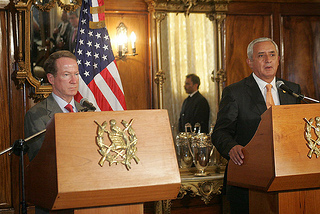
U.S. Assistant Secretary Brownfield and Guatemalan President Pérez Molina Photo credit: US Embassy Guatemala / Flickr / CC BY-NC-ND

U.S. Assistant Secretary Brownfield and Guatemalan President Pérez Molina
Photo credit: US Embassy Guatemala / Flickr / CC BY-NC-ND

Actions by the U.S. Congress, the U.S. Embassy in Guatemala, and the State Department have fueled speculation that something is askew in relations between Washington and Guatemala.  In January, the U.S. Congress passed the Consolidated Appropriations Act for 2014, with unusually severe measures for Guatemala.  Congress ordered the Treasury Department to direct its executive directors at the World Bank and the Inter-American Development Bank (Guatemala’s two main multilateral lenders), to support the reparations plan for damages suffered by communities during construction of the Chixoy Hydroelectric Dam in 1976-1983.  The project, funded by the two banks, resulted in numerous human rights violations, including the displacement of local communities, mostly of Maya Achi ethnicity, and the death of thousands in the Río Negro massacres perpetrated by the Guatemalan armed forces.  Additionally, the U.S. law conditioned U.S. assistance for the Guatemalan armed forces on credible advances in the Chixoy issue as well as the resolution of adoption cases involving Guatemalan children and U.S. adoptive parents since the end of 2007.

President Pérez Molina, a former army general, and his vice-president reacted with inflamed nationalistic rhetoric – just to be eclipsed by more U.S. actions.  After the Guatemalan Constitutional Court ruled that internationally acclaimed Attorney General Claudia Paz y Paz – a key actor in bringing to trial former Guatemalan Army General Ríos Montt on genocide charges – must step down in May (and not in December, as Paz y Paz supporters claim is the correct interpretation of the law), the U.S. Ambassador made a public statement supporting her.  A few days later, the U.S. Assistant Secretary for International Narcotics and Law Enforcement William Brownfield visited Guatemala, reiterating U.S. support to Paz y Paz and formalizing a $4.8 million donation supporting the UN International Commission Against Impunity in Guatemala (CICIG).  This further angered rightwing and pro-army sectors, dedicated detractors of both Paz y Paz and CICIG.  Brownfield tempered his message with praise for the “sensational” U.S.-Guatemala collaboration in counternarcotics.

These recent actions come from a combination of U.S. policy “hawks” and “doves” operating simultaneously.  U.S. Senator Patrick Leahy and his staff have the reputation in Guatemala as Capitol Hill hawks on human rights throughout Latin America, and acted accordingly by fostering the harsh legislative provisions for Guatemala.  U.S. Ambassador Chacón acted like a resident hawk, directly supporting Paz y Paz and praising her as a proven ally on the drugs issue.  Then, Mr. Brownfield, playing the role of the visiting dove balancing the harshness of the previous two actions, gave the badly needed financial aid to CICIG and supported Paz y Paz, consistent with his drug cooperation portfolio.  Guatemala’s role as a transit point for drug traffickers gives it leverage in the bilateral relationship, but that’s not enough.  Regional or global perspectives are important too: Guatemala recently completed its rotation on the UN Security Council, and the preliminary results of the elections in El Salvador and Costa Rica show that the region will continue under the influence of leftwing or left-leaning governments.  After Mr. Brownfield’s public statements, tension has eased and the angry rhetoric calmed down, but the chapter has not ended.  The bottom line is that Guatemala received an emphatic message: it must keep aligned with what the U.S. wants.  The problem for decisionmakers in the region is that it is not always clear what the U.S. wants.

*Ricardo Barrientos is a senior economist at the Central American Institute for Fiscal Studies (Icefi).

Subnational Regimes Reveal Uneven Nature of Democracy

By Agustina Giraudy

Peruvian mayoral campaign poster / Photo credit: Pedro Rivas Ugaz / Flickr / CC-BY

Peruvian mayoral campaign poster / Photo credit: Pedro Rivas Ugaz / Flickr / CC-BY

Most Latin American countries have transitioned away from autocracy and authoritarianism over the past three decades, but much of their democratic advancement has been territorially uneven and mostly limited to the national level.  In Argentina, Peru, Brazil, Bolivia, Mexico and other countries, democracy has not trickled down to subnational levels of government.  Many provinces, states, and municipalities in these (and other) countries continue to be governed in ways that resemble the period of undemocratic rule.  In these subnational undemocratic regimes (SURs), the political and civic rights of regular citizens and the political opposition are severely curtailed.

In SURs such as Formosa, San Luis or La Rioja in Argentina; Oaxaca (pre 2010), Puebla (pre 2010), or Tabasco in Mexico; and Goiás in Brazil, provincial autocrats use a variety of undemocratic, illegal, and informal actions – such as electoral fraud, electoral violence, and changes in electoral rules and political institutions – to prevent the opposition from gaining access to state positions.  My research and others’ indicates that, to further protect their own power, these subnational rulers frequently and arbitrarily reshuffle provincial- and state-level supreme courts, capriciously remove opposition mayors from office, deny funding to municipalities controlled by the opposition, and arbitrarily commission provincial- and state-level audits to investigate contrived financial misdeeds of opposition mayors.  They also co-opt or divide local organized groups, such as small unions, social movements, and street vendors, to undermine potential opposition.

The existence of SURs within national democracies underscores the difficulty of assessing the quality of a democracy from a purely national perspective.  As recent research has shown, the continuation of SURs in national democracies requires that we take a different approach and, importantly, grasp how seemingly democratic national-level leaders benefit from and, in some circumstances, encourage the SURs as a reliable base outside the capital.  Subnational undemocratic rulers, who typically control voters and legislators in the national congress, are seen by national officials as key partners for crafting winning electoral and legislative coalitions.  To the extent that national democratic incumbents succeed at inducing and securing autocrats’ cooperation, the former have strong incentives to help the latter stay in power.  Ironically, the accepted practice of democratic coalition-building contributes to the obstruction of democratization at the subnational level.  In the second decade of the 21st century, the quality of Latin American democracies depends at least as much on subnational democracy – and reducing the influence of SURs – as on the quality of national-level institutions.

Peru: Will Humala pursue deeper reforms?

By Marcela Torres

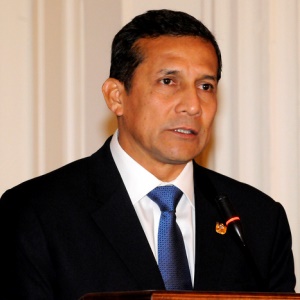
President Humala / Photo credit: OEA - OAS / Foter.com / CC BY-NC-ND

President Humala / Photo credit: OEA – OAS / Foter.com / CC BY-NC-ND

Facing growing public discontent, President Humala is attempting to navigate through yet another cabinet shuffle while struggling to advance reforms of the police, education, and health care.  The President’s approval rating has dropped from 65 percent soon after his inauguration in 2011 to an all-time low of 27 percent.  He swore in his fourth prime minister, César Villanueva, last week, after telling Prime Minister Juan Jiménez – in office for just 15 months – that it was time to “refresh” the cabinet.  Jiménez said he had been contemplating resigning for months, but recent polls suggest that growing crime and corruption, the two main issues citizens perceive to be afflicting the nation, forced him out.

Protests against Humala’s government have been growing.  In July, 8,000 demonstrators in Lima expressed their rejection not only of Humala’s government, but of the entire ruling political class.  Although still small compared with protests in other parts of Latin American, they were of a magnitude not been seen in the capital city since 2000, when protestors took the streets demanding President Fujimori´s resignation.  Unlike the rural indigenous protests over extractive industries, which have become commonplace under the administration, the participation of the middle class was evident and crucial in the July protests.  Social anger was sparked by a video showing members of the main political parties secretly negotiating highly controversial appointments involving individuals implicated in corruption.  Persons who had allegedly violated human rights were selected as the human rights ombudsman and as judges of the Constitutional Tribunal.  The uproar motivated Congress to immediately annul the secretly negotiated appointments, known as the repartija, which for many Peruvians resembled one of the traditional means by which the authoritarian government of Alberto Fujimori had avoided institutional checks and balances by placing regime-friendly officers in power.

The recent Peruvian protests are similar to social mobilizations taking place in Brazil, Chile and Colombia – other countries in which economic growth has not translated into broad public satisfaction.  While many protests in these countries have focused on the quality of social services, the recent Peruvian demonstrations have offered a critique of the country’s widespread corruption and backroom politics.  Peruvian demonstrators came from diverse sectors of society, including labor union members, students, artists, TV actors, gay rights activists, without clear leadership or coordinated demands.  This amorphous type of protest appears particular in Peru because civil society largely avoids political activism as a consequence of the stigmatization of collective social action after the defeat of Shining Path in the ‘90s.

Humala’s most recent cabinet reshuffle and his earnest but ineffective reform efforts suggest he appreciates the depth of the social discontent – now with middleclass support and the participation of youth.  Peruvians are not willing to tolerate the traditional corruption associated with the country’s politicians.  The lack of coordination among social movements that can connect rural and urban discontent, as well as the absence of political parties within the Peruvian landscape that can effectively mediate between citizens and the government, might limit the scope of social protests to isolated outcomes. If protestors come up with a clear agenda through legitimate leadership, however, President Humala will have to deepen his reforms or risk irrelevance through the remainder of his presidency.  Superficial changes appear unlikely to appease the middle class and civil society.

El Salvador: Memory, the Persistent Discomfort

By Héctor Silva Ávalos

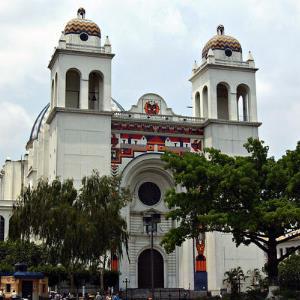
Mural that was removed from the Metropolitan Cathedral under Archbishop Escobar Alas / Photo credit: J. Stephen Conn / Foter / CC BY-NC

Mural that was removed from the Metropolitan Cathedral under Archbishop Escobar Alas / Photo credit: J. Stephen Conn / Foter / CC BY-NC

The sudden closure of the Legal Aid Service – Tutela Legal – of the Archbishop of San Salvador appears to be a massive blow to efforts to hold human rights violators and war criminals from the civil war accountable for their deeds.  Without previous notice or warrant, workers arrived at their offices on September 30 to find new locks on the doors and private guards blocking the entrance.  That same day some of the workers claimed to have discovered evidence indicating that Monsignor José Luis Escobar Alas, the Archbishop, had long before decided to close Tutela.  The office was opened in 1982 by Mons. Arturo Rivera Damas to fulfill a project designed by his predecessor, Mons. Óscar Arnulfo Romero, the Archbishop killed two years earlier during mass by a death squad and who is now under consideration for sainthood by the Vatican.  It holds one of the most detailed archives on the repression, crimes and human rights violations committed during the Salvadoran war, mainly by state-sponsored agents.

Mons. Escobar Alas has surprised observers in the past.  In late 2011, he ordered the removal of a mural by a popular Salvadoran artist from the Metropolitan Cathedral without any explanation to the artist or to the church’s large congregation.  The mural commemorated the earliest attempts at a negotiated settlement to the war.  Facing an outcry, Escobar Alas claimed the mural was Church property and that the Church was entitled to do with it as it pleased.  The same tone was evident after the Tutela closing as protests came not just from a good number of Catholics but from the Ombudsman’s office, the President of the Republic and 258 US and Salvadoran scholars who ran an ad in a major newspaper.  The Archbishop and his spokesmen provided at least three different versions of the event, saying alternately that Tutela was closed because it had already served the purpose for which it was created in the war years; it was closed to give its spaces to an ad hoc commission (with an unclear mandate and authorities); and that the Church had encountered financial wrongdoings in Tutela so grave that it had to close.

The closure happened at a time of important progress in human rights accountability.  At the center of it all was access to Tutela’s archives, some 50,000 files about the infamous 1980s – potentially crucial evidence in ongoing or upcoming judicial processes that Salvadoran elites have long tried to keep under wraps.  For the first time in a decade, last month the Attorney General’s office made public its intention to open a special unit committed to review war massacres such as the one in El Mozote, where some 1,000 peasants were killed by a U.S.-trained elite battalion.  Also, for the first time since the early post-war period, an independent Constitutional Chamber of the Supreme Court of Justice agreed to hold a hearing on the admissibility of a case under the Amnesty Law, the legal provision that has prevented many cases from being brought to justice.  And for the first time, there is a real chance for a Spanish court to address the murder of six Jesuit priests and their two aides after one of the accused in that massacre, a colonel, was convicted and imprisoned in a U.S. jail pending extradition to Madrid.  In all of these legal cases, the files held by Tutela Legal would provide crucial documentation to prosecutors.  The only credible explanation for the closing of the service is that pressure was brought to bear on the Archbishop by interests that wish to block access to this important body of evidence in the event that they are unable to prevent trials from opening. 

The ad hoc commission that the Archbishop said will be formed will include members with credibility – including Father José María Tojeira, former Jesuit envoy for Central America, and Mons. Jesús Delgado, Archbishop Romero´s biographer – and may hold some promise.  But the vagueness about its authority and technical questions, including the legal admissibility of Tutela files as the chain of custody is broken, raise serious doubts.  Whatever happens, the many Salvadorans who believe in the healing power of memory – and accountability – will need to remain constantly vigilant.  The same memory has been a persistent discomfort to some Salvadoran elites, who have long thwarted such efforts.


Moving Toward Religious Unity in Response to Violence?

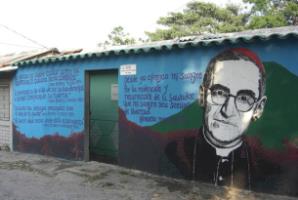
Bishop Oscar Romero mural, El Salvador / Photo credit: alison.mckellar / Foter / CC BY

Bishop Oscar Romero mural, El Salvador / Photo credit: alison.mckellar / Foter / CC BY

Many Latin American churches are struggling to address the criminal violence challenging their societies – and are finding new ways of promoting peace in ways reflecting each country’s different conditions.  As part of American University’s multi-year project (click here) on religious responses to violence in Latin America, 40 grassroots activists representing two-dozen faith-based ministries in seven countries gathered in Guatemala City in mid-July to share experiences ministering to victims of the region’s rampant violence.* Their ministries in Mexico, Central America and Colombia ranged from programs for at-risk youth, to rehabilitation centers for former gang members, to shelters for Central American migrants crossing through Mexico.  Just as they developed a range of responses to the threats posed by authoritarian governments in the past, religion-based activists today are adapting strategies to a wave of “new” violence, a battery of social ills that includes gang violence, gender-based violence, and violence against migrants, as well as the persistent violence in states that have formally democratized but failed to deliver basic security.

Conflicting interpretations of the Church’s message of peace affect how churches define victims, how they emphasize or downplay the structural causes of violence, and how they respond to human suffering.  Thus, while many of the participants characterized the current crisis in terms of structural or institutional violence, such convictions were not always reflected in churches’ proposed solutions to the crises facing their communities.  There was no consensus, for example, on how faith-based organizations can effectively engage state institutions and policies, particularly where governments are perceived as corrupt and ineffective:  some participants believe the church’s role is to condemn corruption, while others saw no alternative to holding elected and appointed authorities accountable by pressing them to deliver justice.  One of the participating ministries based in Honduras, for example, provides legal aid for victims and their families, encouraging them to press charges, provide testimony, and follow-up with police and courts until they obtain a conviction.

For many of those in attendance, the ecumenical meeting was a first – in the words of a Mexican participant, “historic” – by offering a unique opportunity for religious practitioners to learn about the realities of neighboring countries, exchange ideas about best practices responding to violence, and discuss possible means of collaboration across borders.  Despite diverse traditions and circumstances, the churches are becoming a more visible and potentially more unified force in the struggle against violence in Latin America. In a region marked by ecclesiastical competition, they are challenging traditional understandings of “accompaniment” and are recognizing their shared responsibility to respond to violence with concrete action.  Indifference, passivity, fear, and silence received the greatest condemnation from the meeting’s participants.  These churches are realizing that their diverse activities are in fact complementary, and that they have a critical role to play – both to mitigate existing suffering and to eradicate root causes of violence.  

*The seminar “The Role of the Church in the Face of Violence in Mesoamerica: Models and Experiences of Peace in Contexts of Conflict and Violence” was co-organized by AU’s Center for Latin American and Latino Studies and the Latin American Anabaptist Seminary (SEMILLA) based in Guatemala City.