Founder and Executive Director, Caracas Wire
Adjunct Professor, George Washington University
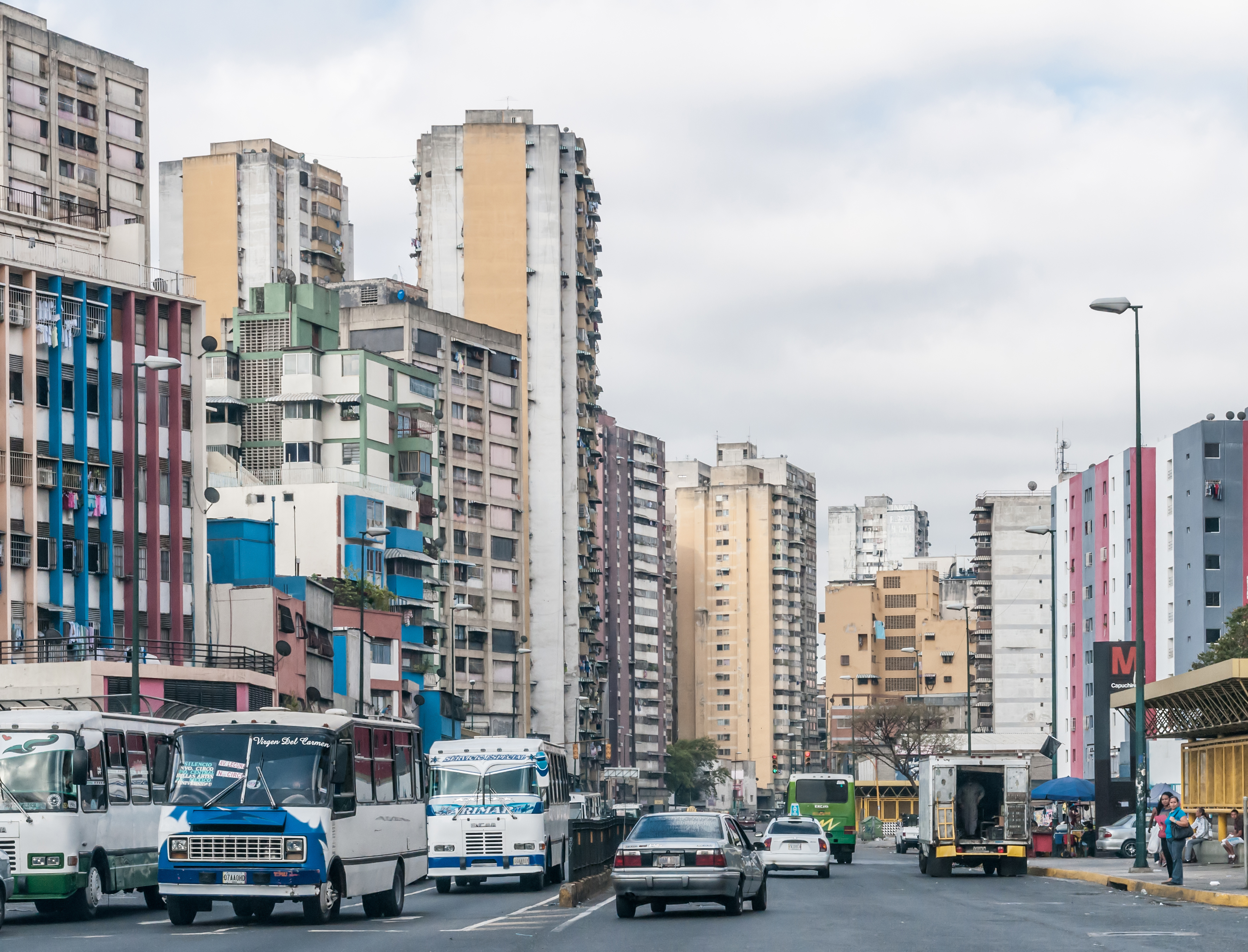
Roughly three months since US special forces forcibly extracted Nicolas Maduro and his wife Cilia Flores, Venezuela seems to have settled into a tense calm. Though the path to stability is not assured, and the critical issue of new Presidential elections is far from view. With Maduro on trial for narco-terrorism charges in New York, President Trump has publicly backed Delcy Rodríguez’s interim Presidency on multiple occasions, including taking the pivotal step of removing personal sanctions he previously placed on the then-Vice President in 2018. The political support for Rodríguez has gone hand in hand with the issuing of licenses for restored commercial relations and the reestablishment of normal diplomatic relations between the US and Venezuela.
Crucially, though, diplomatic normalization has thus far not provided Rodríguez’s government the economic stabilization promised in the first stage of Trump’s three-point plan – stabilization, recovery, and transition – for externally rebuilding Venezuela.
With inflation running at an average of 24 percent a month in January and February of 2026 (compared with a monthly average of 16 percent in 2025), and the comprehensive minimum wage of $160 covering roughly 25 percent of the cost of a basic basket of goods for a family of five, social tensions on the streets remain unalleviated. Moreover, amid headlines about new oil and gas deals signed with Rodríguez’s government and the Iran war oil price shock that has sent prices over $100 a barrel, economic expectations are sky high. Unsurprisingly, average Venezuelans are in instant gratification mode. With May Day approaching, the traditional date for governments to make salary increase announcements, household heads expect Delcy Rodriguez’s government to deliver results via a hike to the core minimum wage, anchored at $0.33 since 2022, not just offers of new one-off bonuses that provide transitory support.
The problem is that Delcy Rodríguez does not exercise international economic sovereignty over the proceeds from Venezuela’s oil sales, the source of around 90 percent of the economy’s foreign exchange. While President Trump’s January 9, 2026, Executive Order recognized oil sold to the US as Venezuelan, therefore, declaring the proceeds of sales as Venezuelan, too – an important definition at the time because Trump had made false claims that Venezuela “stole oil from US companies” – the US Treasury Department controls the flow of oil export proceeds. This raises questions about whether the US is treating Venezuela as a financial protectorate.
Consequently, Rodríguez currently has no new policy levers to pull, leaving her government in the awkward position of theoretically having the financial means to authorize spending increases but lacking the operational ability to execute them. It is an open question whether Washington and Caracas will be able to find a fix – perhaps via an agreed-upon external auditor mechanism – to speed up the transfer of funds to the Central Bank of Venezuela in time for Rodríguez to authorize spending before social tensions boil over. Reportedly, several billion dollars have already accrued in the first quarter of 2025. Either way, the transfer of full economic sovereignty back to Caracas seems unlikely to happen this year.
While there is more evidence of tangible political changes, the political environment is also tense, especially the fragile equilibrium within Chavismo. A significant portion of political prisoners have been released (around 40 percent of the recent Maduro-era political prisoner population). Meanwhile, a controversial Amnesty Bill passed by the ruling party-controlled Congress – a body that was not born in full democratic legitimacy but has passed important laws both supported by a small opposition congressional faction and recognized by the Trump administration – has opened the door to pardons for politicians and public figures previously jailed on highly politicized grounds. Some harder line elements of the opposition, which have key parts of their political leadership in exile, have expressed openness to working within the framework of the Amnesty Law.
Beyond prisoner releases and legislative reforms, the more charged political change has been the shuffling of the cabinet, an overhaul that seems to have the intention of achieving De-Madurification without dismantling Chavismo’s influence over the state. Rodríguez has fired Maduro family members and loyalists, replaced the Defense Minister who had an 11-year tenure and faces an indictment in the US, and orchestrated a slew of cabinet changes that promote economic reformists, a group led by Vice-President for the Economy Calixto Ortega. Delcy’s brother, Jorge Rodríguez, is the President of the National Assembly, where he controls the legislative agenda and operates as a bridge between the economic reformists and old guard elements. Diosdado Cabello, an original Chavista who participated in then-Colonel Hugo Chavez’s failed coup on February 4, 1992, has retained his Interior Minister post and overall influence despite facing an indictment, a decision that probably reflects a cold calculation by Rodríguez and the US that having him on the inside favors governability. The appointment of the new Defense Minister, the architect of repression for six years, as the head of the feared SEBIN intelligence force, is a further illustration of that cold calculation.
Operating in an atmosphere of fear from the possibility of a new US military attack, and aware that, economically, the country’s future could soon be brighter, the members of the new ruling coalition seem to be superficially getting along in this highly surreal post-Maduro moment for Chavismo. Indeed, with Trump declaring Venezuela is open for business, the pragmatism of ignoring Chavismo’s socialist roots finally holds real economic potential. Overall, then, the sources of regime cohesion have expanded from purely negative reasons – survival and fear of forcible removal by the US military – to include the positive agenda of rebuilding parts of the economy.
Above and beyond the national scene, the underlying question is what President Trump ultimately wants his Venezuela policy to be about. So far, it is all about securing oil supplies and working with the people who “have the guns today to ultimately move the country to a representative government and a better station,” as Secretary of Energy Chris Wright said in January, just days after the commando raid against Maduro. That posture leaves opposition standard-bearer Maria Corina Machado, now in exile but still by far the most popular politician in the country, on the outside. Even if Delcy Rodriguez’s ruling coalition crumbles, one gets the sense that Trump would prefer a more cautious political alternative, such as a national unity government, over convening snap elections.



 AULA Blog

_Uruguay.jpg)
.jpg)

