Testimonies of Sexual Violence while Migrating from Latin America

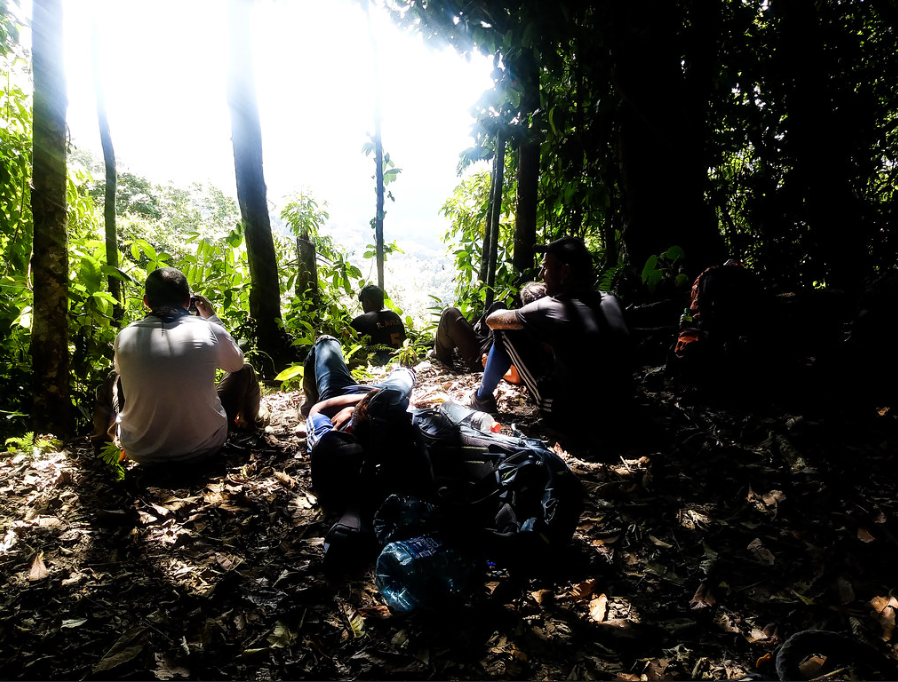
Image Source: https://www.flickr.com/photos/rentman1225/26864902068/

By Maggie McMahon   

Sexual violence during migration journeys is rarely addressed in the current political climate. Yet this issue is rampant for many migrants, especially those making the journey from Latin America to the United States. The personal experiences and testimonies from those who completed this journey provide valuable insight into the dangers that migrants face in this region. This problem demands more attention, as it is one of the many dangers that migrants face while attempting to reach the U.S. 

In her late 20’s and from Ecuador, Verónica details her lengthy and dangerous journey to the United States, where she walked many miles to the US-Mexico border and experienced rough traveling conditions, including falling off a train.

Ay me están esperando llorar. Bueno, sufrí mucho, pasé mucha hambre, dormí en parque—muchas cosas feas…Bueno, después de eso, yo cambié de tren y me subí a otro tren que ese sí era el que me traía, pero ese tren se quedó 3 días en el desierto. Ahí entonces yo como que le daba gracias a Dios de no haberme subido a ese tren porque yo me pude subir, pero me dio miedo y no me subí, pero mucha gente se subió y algunos se cayeron, incluidos niños. Bueno, ese tren me avanzó hasta la frontera, de ahí yo me bajé y camine bastante. Yo llegué a este país con los pies podridos ensangrentados porque yo caminé artístico.[1]

Oh, this is making me want to cry. Well, I suffered a lot. I went very hungry, slept in a park—many ugly things… Well, after that, I changed trains and got on another one, the one that was supposed to bring me here. But that train stayed stranded in the desert for three days. At that point, I felt like thanking God for not getting on the earlier train. I could have boarded it, but I was scared and didn’t. Many people did get on, and some fell off, including children. Well, that train took me to the border, from there I got off and walked a lot. I arrived in this country with rotten feet, bloodied because I walked a tremendous amount. 

When asked if she felt in danger during her trip, Verónica shared her experience in Guatemala:

Uh no yo siempre diré que Guatemala es el peor país que yo pude conocer ahí, así que no te digo. A mi en bus me tocaron los senos, las partes íntimas. Me sacaron todo el dinero.

Oh no, I will always say that Guatemala is the worst country I could have known there, so I tell you. They touched my breasts and private parts on the bus. They took all my money.

After arriving in the United States, Verónica’s friend provided her a place to stay and food for a few weeks. She now works as a delivery driver.

Another woman, Mariana, also shared her experience with sexual violence during her journey. In her fifties and from El Salvador, she has been in the US for over two decades. During her journey from El Salvador, she recalls that:

Fíjese que yo fui víctima de eso. No llegar al acto sexual porque gracias a Dios no me llegaron a violar, pero en el camino para acá si fui tocada por los hombres. Puedo recordar de que no sé si todas percibirán eso, pero yo sí lo viví. Sí. Sería porque yo cuando venía ya venía …, pero yo parecía… yo era bien delgadita, parecía una niña de 14 años. No sé si por eso es que abusaron de mí de esa manera. Pero sí pudeir tocada por más de 2 hombres en el camino. 

I remember that I was a victim of that. Not in a sexual act, thanks to God, they did not rape me, but on the way here I was touched by men. I can remember that I didn’t know if anyone else sees that, but I did experience that…it must have been because when I came…I seemed to be very thin, I looked like a 14-year-old girl. I don’t know if that’s why they abused me in that way. But I was touched by more than 2 men on the way.

Mariana’s story demonstrates how persistent the dangers of migration have been for women over the years. 

These instances of sexual assault are not isolated. Samuel, born in Colombia in the late 1990s, migrated to Venezuela as a child due to political violence and the unfavorable economic situation. He moved to Brazil as a young teen to work in the mines after his parents separated and migrated to the US in 2024. 

While traversing the Darién Gap, a remote thick jungle crossing between Colombia and Panama, David witnessed many violent situations. The Darien Gap is known for its dangerous and difficult conditions, with many people experiencing gang violence, crime, sexual violence, disease, and death. 

David reported that while on the Panamanian side of the Darien Gap, he witnessed a group of Indigenous men rape a woman traversing the crossing. He also saw this group of men shoot the woman’s husband. 

Hay indios que agarraron a una mujer y se la violaron. Y al esposo… viendo que están pasando eso, el esposo se le baten o se levanta, le pegan un tiro. El indio agarró con una escopeta y le pegó el tiro. Puso, se lo pegó aquí… Así, puff, le pegó el tiro aquí …. Ahí quedaron los dos y salieron los indios. Antes habían robado y todo, pero después estaban violando a la mujer ahí ante el grupo. 

There are Indians who grabbed a woman and they raped her. And the husband … seeing that they are going through that, the husband fights him or gets up, they shoot him. The Indian grabbed a shotgun and shot him. He put it, he stuck it here… So, poof, he shot him here…. The two of them laid there and the Indians left…Before, they had robbed and everything, but after they were raping the woman there in front of the group.

Sexual violence is unfortunately a common experience in the Darién Gap. Other migrants we interviewed also reported witnessing instances of it, as with the case of Mauricio. Born in Venezuela, Mauricio migrated to the US four years ago to find better opportunities for his three young children. He traveled to Caracas, Venezuela and then on to Colombia and Peru. During his migration, Mauricio faced many dangerous situations, such as sleeping on the streets and crossing the jungle. As he recounts: 

En Panama fui testigo una violencia que pasó pero eso fue ya entrando en la selva. Violaron una niña y alguna mujer. Entonces yo estuve ahí, o sea, fui vi todo con mis ojos y fui testigo de eso.

In Panama I witnessed violence that happened, but that was already deep in the jungle. They raped a girl and a woman. So, I was there, that is, I saw everything with my eyes and witnessed that. 

Instances of sexual violence were then increasing in the Darién Gap since Panamanian authorities were not monitoring the crossing. Additionally, many instances of sexual violence go unreported due to stigma and shame. With the absence of policing in these remote largely uninhabited areas, armed criminal groups are able to take advantage of vulnerable people traversing the crossing.  Though lately, the Panamanian government has mobilized the army to patrol those areas, as movement north has decreased and now many people are heading south.

Sexual violence have long-term psychological and physical impacts for those who experience and witness it. Victims of rape can suffer sexually transmitted infections, unwanted pregnancies, and physical trauma. Sexual violence can also cause feelings of depression, anxiety, PTSD, and social isolation, as well as heighten an individual’s risk of substance abuse.

Given the ongoing instability faced by many Latin American countries, migration through the Darién Gap is likely to increase. Panamanian authorities must take further action to closely monitor the dangerous conditions in the crossing and provide support for the vulnerable populations crossing it. Greater support for the physical, psychological, and financial needs of migrants should also be implemented in the United States. 

Maggie McMahon is a research intern at the Immigration Lab. She is a senior majoring in international studies. 

Edited by Elizabeth Angione and Vincent Iannuzzi-Sucich


[1] This and the following accounts have been taken from interviews conducted with recent arrivals to the Washington DC-metro region and New York City as part of an ongoing research project of the Immigration Lab in American University’s Center for Latin American and Latino Studies. This project received IRB approval. Given the vulnerability of this population, we have taken steps to ensure the human subjects involved are protected, including eliciting the consent of all research subjects, the use of pseudonyms, and elimination of any individually identifying information.
Migrants’ Mental Health Matters Too

By Maria De Jesus and Ernesto Castañeda, Center for Latin American and Latino Studies and Immigration Lab, American University

Image of holding hands. Retrieved from Public Domain Pictures.

Every 10th of October, we celebrate World Mental Health Day. The overall objective of this day is to raise awareness of mental health issues around the world and to mobilize efforts in support of mental health. It reminds us that mental well-being is a universal human right. Yet for millions of migrants across the globe, this right remains elusive. Migration often involves trauma, uncertainty, and systemic exclusion, which can erode mental health while simultaneously making care harder to access. If we are serious about “mental health for all,” we must recognize that migrants’ mental health matters too.

Our research at the Center for Latin American and Latino Studies (CLALS) and the Immigration Lab at American University in Washington, D.C., focuses on migration and health. In our recently published edited volume, “Migration and Migration Status: Key Determinants of Health and Well-Being”, we underscore the double bind migrants face. For example, research by Andrews et al. on Latinx communities in the U.S. Midwest shows that immigration-related stress and discrimination increase symptoms of depression and Post-Traumatic Stress Disorder (PTSD). These symptoms should, in principle, push people to seek help. But the same stressors also fuel avoidance of care out of fear of deportation, mistrust of institutions, or experiences of bias in healthcare settings. In other words, the very forces that intensify the need for care also erect barriers to accessing it. Migrants are left caught in what scholars call a “double-edged sword” of immigration-related stress and health access challenges.

Complementary research in California and Connecticut by Espinoza-Kulick and Cerdeña sheds light on the structural barriers behind these struggles. Latinx (im)migrants, especially women, often endure migration-related trauma, family separation, and gender-based violence. Once in the United States, they encounter linguistic barriers, a lack of insurance, restrictive policies, and discrimination in healthcare. These overlapping vulnerabilities produce high rates of anxiety and depression, yet leave communities underserved. The main takeaway from this research: we need a comprehensive model of care that expands insurance access, ensures Indigenous and non-English language services, trains providers in structural competency, and empowers community health workers.

The COVID-19 pandemic further exposed and deepened these inequities. De Jesus’ study of migrants in France found that asylum seekers and undocumented individuals endured what researchers called a “compounded crisis”: a health crisis, a protection crisis, and a socio-economic crisis all at once. Lockdowns disrupted mental health services, worsened already precarious living conditions, and stripped migrants of informal work opportunities. Migrants described feeling “stopped in time,” trapped by overlapping vulnerabilities with no clear path forward. Their experiences are not anomalies but emblematic of how crises magnify pre-existing inequities in migrant health.

Taken together, these studies deliver a clear message: migrant mental health is not an afterthought but central to public health and social justice. It reveals how systems of exclusion—from immigration enforcement to healthcare discrimination—translate directly into suffering, anxiety, and trauma. Ignoring this reality undermines not only individual well-being but also the broader goal of resilient, healthy societies.

On World Mental Health Day, we must resist the temptation to celebrate progress without confronting gaps. Yes, awareness has grown, but awareness alone cannot heal wounds inflicted by deportation fears, language exclusion, or confinement policies. If mental health is truly for all, migrants cannot be left outside the circle of care. Protecting and promoting their mental health is not charity, it is recognition of shared humanity and mutual flourishing.

World Mental Health Day asks us to imagine a future where no one is denied care because of who they are or where they come from. For migrants navigating borders and barriers, that future remains distant. But it is within reach—if we commit to policies and practices that affirm that their mental health matters too.


Maria de Jesus is the Senior Associate Director of Community-Based Research and Engagement of the Center for Latin American & Latino Studies at American University.

Ernesto Castañeda is the Director of the Center for Latin American & Latino Studies at American University.

Dual Perspective on Food Program Administration 

By Lia Sullivan

November 21, 2024

A table full of vegetables including celery and carrots.

Addressing and combatting food insecurity requires a coordinated approach across all sectors, including nonprofit organizations, government agencies, and private corporations. Although these varying groups may approach the cause differently, there is a shared goal of increasing food security. This analysis was influenced by my experience working in a nonprofit addressing food insecurity as well as the United States Department of Agriculture (USDA) in the Food and Nutrition Service. My experiences gave me valuable insights into the stark differences between government and nonprofit organizations. in understanding, approaching, and solving food insecurity between government and nonprofit organizations.  

The mission of the USDA Food and Nutrition Service is stated as, “To increase food security and reduce hunger in partnership with cooperating organizations by providing children and low-income people access to food, a healthy diet and nutrition education in a manner that supports American agriculture and inspires public confidence.”  They administer 15 federal assistance programs including SNAP (Supplemental Nutrition Assistance Program), school meals, CACFP (Child and Adult Food Care Program), WIC (Supplemental Nutrition Assistance Program for Women, Infants, and Children), TANF (Temporary Assistance for Needy Families). My responsibilities included reviewing and editing resources that program administrators used to properly procure and serve food that aligns with the nutritional standards set by the agency. This opportunity allowed me to gain experience in the federal processes that go into the nutrition programs that serve and assist millions of Americans.  

The nonprofit organization I worked with aimed their mission as, “Striving to eliminate hunger in the nation’s capital while enhancing the nutrition, health, financial stability, and overall well-being of low-income residents in the District.” Their main focuses are on D.C. resident participation in federal nutrition programs, improving public policies, and educating the public on the reality of hunger’s existence within the District. My responsibilities were increasing SNAP and WIC participation by creating relationships with residents and producing educational content. This role gave me first-hand experience with the communities directly affected by food insecurity and allowed me to see how the policy created by our government affects Americans every day.  

The differences I noted between the two experiences varied, from how the meetings were conducted to how they defined activism. Within the USDA, meetings were highly structured, with a specific focus on compliance with federal regulations and guidelines. I found the weekly staff meetings to be lively, with a lot of small talk and team activities. On the contrary, the nonprofit team meetings were centered around community intervention with little to no small talk and few team connection activities. These differences were notable for me, as they showed the discrepant level of urgency in the line of work between the two sectors.  This could be attributed to numerous factors, including different standards and regulations each organization is held to. Nevertheless, it shined light on the importance of nonprofit organizations supporting USDA policy.  

Additionally, the difference in staffing retention and burnout between the two organizations was striking. Throughout my year at the nonprofit, I saw many team members resign from positions due to the stress and emotional toll that comes with aiding underserved communities. Furthermore, there were few to no employees who had been with the organization for over four years.  In my year with the organization, I witnessed the reinstating of three different presidents and the resignation of two. Whereas in the USDA, most employees had high tenure, with some even reaching 20-25 years in the agency. This difference in retention is a common problem, in the nonprofit sector. With limited funding and resources, staff often are forced to take on responsibilities beyond their original job description, working long hours to meet deadlines, and to keep up with the needs of District residents. In the government, however, there are strict guidelines in place limiting hours worked by each employee and the duties they are permitted to perform, helping keep their retention rate high.  

 Beyond job loss from burnout, I also witnessed the nonprofit organization’s largest layoff period in its history. Essential positions such as communications and public relations coordinators, government affairs specialists, and others were released from the organization due to large budget cuts. Additionally, other employees were forced to take furlough days to keep their jobs afloat. In contrast, job stability within the government sector was a promising factor for prospective employees. The federal government, the largest employer in the United States, provides comprehensive benefits and job security. 

Overall, both organizations play vital roles in supporting and combatting food insecurity nationwide. The government creates vital policies and budgets to support the “boots on the ground” and educational information that nonprofit organizations work tirelessly to implement. Through these experiences, I was able to see the varying factors that go into supporting our neighbors who experience food insecurity every day.  Having worked at a nonprofit before the USDA allowed my work through the government to remain grounded in the experiences of those we are seeking to help. Therefore, policymakers and direct service providers should better collaborate in hopes of making these efforts more effective.  

Lia Sullivan is an MA student in the Sociology and Research Program at American University.

You can republish and reprint this piece in full or in part as long as you credit the author and link to the original when possible.