
Flávio Contrera, Lecturer at the Universidade Federal da Grande Dourados, Brazil
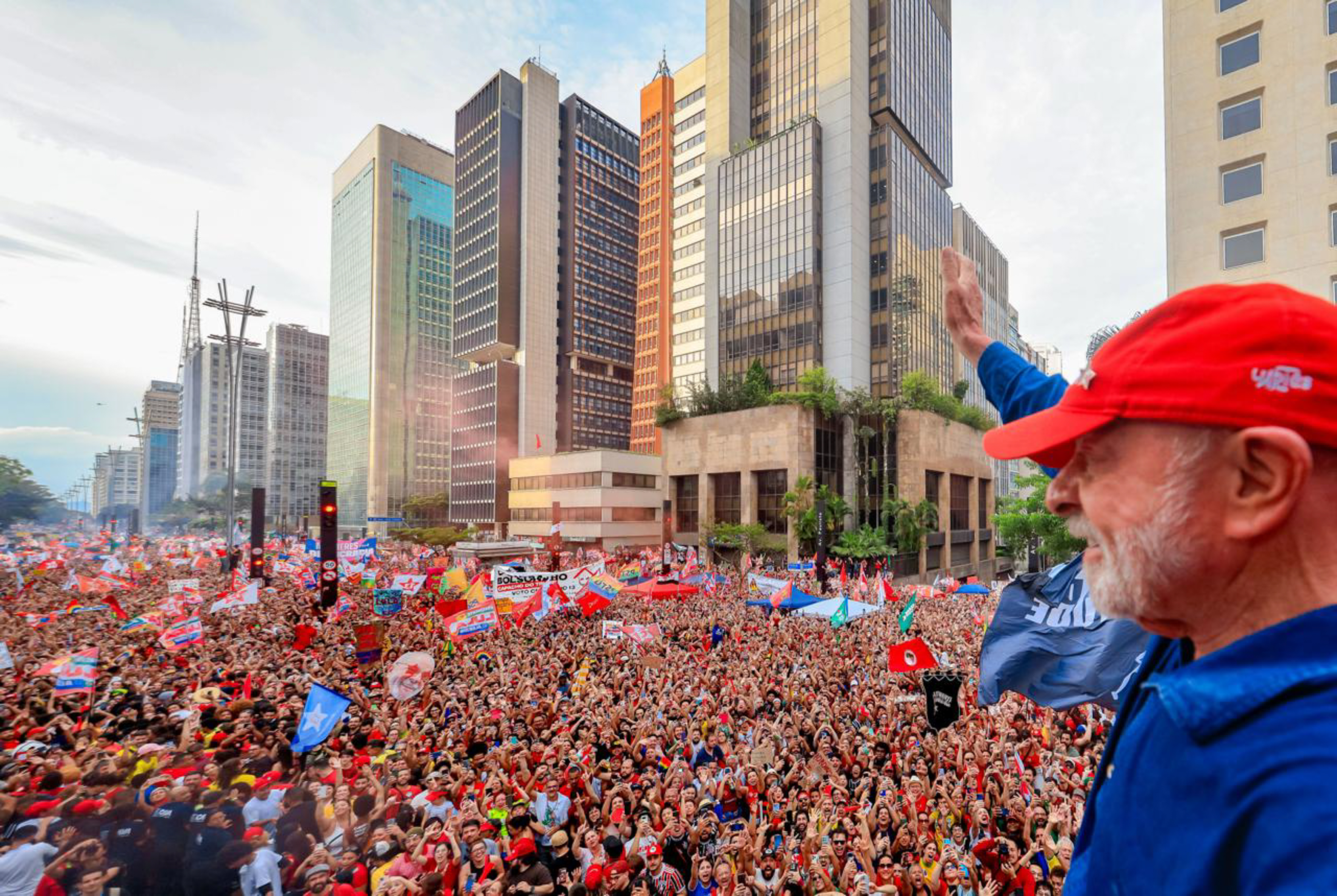
Luiz Inácio Lula da Silva’s victory in Brazil’s 2026 presidential runoff offers an opportunity to reflect on the strategies of mobilization capable of challenging the far right in a Latin American context marked by the growing strength of conservative forces. The result does not signal the end of Bolsonarismo, nor does it halt the rightward shift observed across the region. It does, however, demonstrate that this trajectory is not inevitable. In Brazil, the electoral contest was shaped by three interconnected dimensions that help explain political mobilization: streets, networks, and fear.
Streets: Political Mobilization and Intergenerational Engagement
The response to the first-round results began at universities. At Fluminense Federal University (UFF), in Niterói, students organized a demonstration on October 5, one day after the vote. Initially coordinated through WhatsApp groups and student organizations, the mobilization drew thousands of people and inspired demonstrations at more than 40 universities across 14 states and the Federal District. What began as a localized reaction developed into a national public mobilization (Brasil de Fato).
The significance of these demonstrations went beyond the number of participants. The streets became spaces for organizing, circulating messages, and revitalizing political engagement. Students mobilized classmates, relatives, and local communities, connecting the presidential race to concrete experiences. These included the impacts of funding cuts at federal universities during Jair Bolsonaro’s administration and concerns about the future of public policies.
This mobilization also had an intergenerational dimension. Reports published during the campaign described young people encouraging elderly relatives to vote and accompanying those with disabilities to polling stations. In some cases, voters who had gone years without voting returned to the polls. Meanwhile, voter absenteeism fell from 21.08% in the first round to 19.22% in the runoff, a reduction of approximately three million nonvoters (Agência Brasil; Viva).
The overlap between these initiatives and the decline in abstenteeism does not mean that street mobilization alone explains the change. Nevertheless, these episodes reveal an important political mechanism: electoral participation can be encouraged through close social relationships, with the engagement of one generation helping reactivate that of another. In a closely contested election, in-person organizing is not a remnant of traditional forms of activism. It is a mechanism for democratic participation.
Networks: Distributed Organizing and Platform Power
The second dimension was the ability to turn digital communication into collective mobilization. The WhatsApp channel Exército do Lula (“Lula’s Army”), coordinated by federal deputy André Janones, surpassed ten million followers during the campaign. The initiative circulated texts, audio recordings, videos, and guidance encouraging supporters to share content across different platforms. More than a communications channel, it became a coordination structure connecting participants and expanding the reach of political messages (Exame).
This experience shows that digital campaigns do not depend exclusively on formal party structures. Supporter networks can coordinate decentralized action, engage people beyond traditional channels of political activism, and bring political communication closer to everyday social relationships. The combination of digital organizing and street mobilization was particularly important after the first-round results, when the campaign needed to reach voters beyond its already engaged base.
But digital networks are not neutral spaces. Their infrastructure belongs to private companies that control advertising tools, content moderation, recommendation systems, and artificial intelligence. During the campaign, controversies involving Meta exposed the political consequences of this power. Tests reported in October showed that Meta AI refused certain requests to generate pro-Lula electoral images while accepting comparable requests involving Flávio Bolsonaro. Brazil’s Superior Electoral Court (TSE) ordered the company to ensure equal treatment in the distribution of posts, recommendations, and search results related to the candidates (Agência Brasil).
The controversy is not merely a technical problem. When digital tools are used to produce and distribute political communication on a large scale, differences in how these tools operate affect the conditions under which candidates compete for public attention. The difficulty of auditing political advertising prices and distribution, identified by NetLab at the Federal University of Rio de Janeiro (UFRJ) and the International Panel on the Information Environment, compounds the problem. Without sufficient transparency, campaigns, researchers, and the public struggle to understand how digital infrastructure shapes electoral competition (NetLab/UFRJ).
One lesson learned from Brazil’s recent presidential election is that digital mobilization must be accompanied by a public agenda for platform transparency and accountability. Democratic competition takes place not only among candidates and parties, but also within private environments that influence which messages circulate, how they are distributed, and which audiences they reach.
Fear: Material Conditions, Institutions, and Political Violence
The third dimension was fear. In the Brazilian election, it was associated with three concerns: the possibility of material losses, the future of democratic institutions, and political violence.
The first concerned employment, income, and the continuity of social programs. The debate over the fiscal adjustment proposed by Flávio Bolsonaro raised questions about the potential effects of spending cuts on income transfers, public services, and economic activity. A simulation by the Inter-Union Department of Statistics and Socioeconomic Studies (DIEESE) estimated that an adjustment of approximately 194 billion reais could put up to 2.2 million jobs at risk. The study relied on assumptions about the composition of the cuts because the measures had not been fully specified, but it made the social stakes of the fiscal debate explicit (UOL).
The second concern involved democratic institutions. Flávio Bolsonaro’s government platform proposed changes to the jurisdiction of Brazil’s Supreme Federal Court (STF), including ending part of its original criminal jurisdiction and limiting justices’ unilateral decisions. During the campaign, discussions also addressed changes to the Court’s composition and the possibility of impeaching justices (CNN Brasil; BBC News Brasil).
These proposals brought the scope of constitutional oversight and the relationship among the executive, legislative, and judicial branches to the forefront of the debate. The STF plays a central role in protecting the Constitution and constraining potential abuses of power. Changes to its composition and jurisdiction, therefore, have implications far beyond the internal organization of the judiciary: they affect the balance of power and the institutional safeguards of democracy. The prospect of changes of this kind was thus a substantive democratic concern in the election.
The third concern was political violence. During the 50-day first-round campaign, the organizations Terra de Direitos and Justiça Global recorded 134 cases of political violence in Brazil, including assaults and threats. The figure exceeded the 121 cases recorded during the first round of the 2022 election (Terra de Direitos and Justiça Global).
These episodes help explain the concrete meaning of defending democracy in a polarized environment. The issue is not simply preserving electoral procedures but also ensuring that political participation can take place without intimidation or violence. Defending democracy is therefore inseparable from protecting social rights, preserving constitutional checks on power, and safeguarding those who participate in public life.
Lessons for Latin America
Lula’s victory came at a time when right-wing forces have expanded their electoral presence across Latin America, often mobilizing concerns about public security, the economy, and dissatisfaction with established governments. The regional context also includes Donald Trump’s public support for ideological allies in Latin America and an increasingly intense struggle for political and economic influence in the hemisphere. An analysis by the Council on Foreign Relations highlights this tension: Lula’s reelection stands out against the regional trend, while the Brazilian right retains a substantial presence in Congress (CFR).
The Brazilian case offers three lessons. First, defending democracy requires organized participation that connects universities, social movements, communities, and voters across generations. Second, digital campaigns need their own communication networks while also requiring public rules that subject platform power to transparency and accountability. Third, defending democratic institutions gains political meaning when it is linked to material living conditions and protection from violence.
Flávio Bolsonaro’s electoral defeat does not eliminate Bolsonarismo or resolve the social and political conditions that sustain the far right. Nor does it guarantee that the mobilization that brought Lula to victory will remain active. The result nevertheless demonstrates that the expansion of conservative forces is not predetermined. Streets, networks, and fear help explain how an election can mobilize different sectors of society when collective organizing connects popular participation to the concrete conditions of democracy.
For democratic forces across Latin America, the remaining challenge is to transform electoral mobilization into a lasting capacity for participation, organization, and the defense of rights—even after the ballot box is no longer the center of political struggle.


