

Catherine Grau, Research & Data Coordinator of the Immigration Lab
Ernesto Castañeda, Director of the Center of Latin American & Latino Studies and the Immigration Lab
This is an excerpt from an upcoming book, A Mountain of Dreams, an ethnographic exploration of unaccompanied youth migration to the United States between 2019-2022. This project centers a small community of new arrivals in the DC area as they navigate new adulthood, immigration law, and complex relationships.
Note: Names have been changed where needed for interviewee privacy
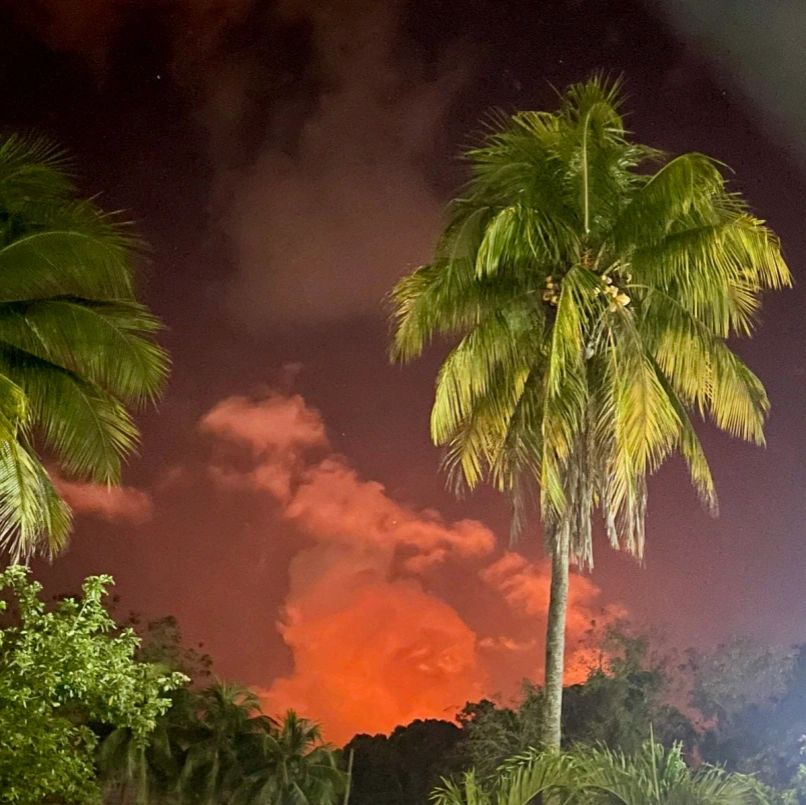
As the weeks stretched into months, even Sol stopped asking when her father was coming home. Her younger brother was still in diapers. Her mother had been working in the nearby city of La Libertad, El Salvador but she wasn’t making enough to support three kids on her own, so she moved further away. “For a long time, my mother had to go work in the big city, in San Salvador,” Sol expressed. Her mother explained that she was going to find work in the big city and send money to Sol’s sister for anything that they might need. She blinked the tears away as her mother explained why she had to leave, that Sol’s father wasn’t going to live with them again right now, and that her sister was going to be just like her mother and do all the things that her mother wouldn’t be able to do anymore. It made Sol sad to see her mother go, but she thought she understood. Her mother would come back; she just couldn’t be home right then.
Sol remembered, “I got a little bit used to the fact that my mother was gone, but the situation changed because I had my little brother. Now he was the one who was crying when she was gone, it was him who was sad. I felt really, really bad watching him, and aside from that I felt bad seeing that my sister was responsible for both him and me, basically she had to raise us”[1]. They were forced to start acting like adults at a young age. “At that time my sister was fourteen, and well, my brother, older sister, and I lived alone. To be honest, it was very difficult.”2 Her sister tried her best to take care of young Sol and their baby brother. Every morning, Sol’s sister combed her hair before she met her friends for the long walk to school. Her sister stopped attending school.
It was only in the years after her mother left that Sol began to understand how alone she and her siblings really were. They lived in the countryside; their nearest neighbors were little more than distant shapes beyond the fields in the morning. Three children living alone in an isolated house was not a secret that they wanted anyone to discover. They shuddered at each rustle in the sugarcane fields and shrank from the window as slow-moving trucks spat dusty gravel toward their door. For years, Sol and her siblings spent each night waiting anxiously for the morning to come. Eventually, Sol’s mother returned from the big city. Her worn sandals searched for open dirt along the overgrown footpath that led to her children. The door swung open, the barricade forgotten in a corner. Sweet words, small hands, and tight embraces all tumbled together. Once, Sol had been too small to wrap her arms around her mother’s shoulders. But she had grown in the years that had passed. They stood together awkwardly, all four of them, uncertain where one hug ended and the next should begin. The stars seemed a little brighter that night, and the whispers of the sugarcane field seemed a little further away. Then one morning, Sol watched her sister fold the same blouse that she always wore to church. Instead of putting it where it belonged, her sister packed it into a small bag. Sol was confused. Her sister said that she was going to live somewhere else. She said she was sorry. She promised that it was still going to be okay. She said that she would miss Sol very much. She kept talking after that, but Sol never heard what she said. Her ears felt as if the ocean was inside them.
Mothers were supposed to leave for work. Sisters weren’t supposed to leave at all. The bag she was holding looked much too small to carry Sol’s world away. The tears were back, and they wouldn’t stop coming. “When she left, I felt like I lost my other half. And that was where it all came spilling out…I cried every day, I was sad every day for a year,”[3] she said. Sol had grown to accept that her father was gone so long ago that the grief had been replaced by a dull ache. She had nodded her head when her mother left and tried her best to understand. But with her sister gone, Sol felt like a stranger in her favorite places. For years, she had fallen asleep knowing that her sister was only one whisper away. Now she wasn’t.[4] The day that her father appeared on her doorstep, the pandilleros had been waiting for him after work. They wanted money that wasn’t his to give. The man with the money was wealthy enough that everyone in the region knew his name. The Mara Salvatrucha knew it too. They couldn’t reach him, but they could reach the men who worked for him. They found Sol’s father first. “The only person that they could contact was him,” Sol remembers learning. “So, one day they stopped him, out of nowhere”[5]. Everything she knew was explained by her mother, who had heard it from her father. “They threatened him. They told him that he had to make the man pay them an enormous sum of money. I don’t know how much it was, but it was thousands and thousands of dollars and if he didn’t do it, my father, his wife–even though they weren’t together anymore–and my siblings and me, they would kill us all. That was how it all started,” Sol explained.
The first day that the men with tattoos looked at her, Sol told herself it was a coincidence and kept walking. She wasn’t sure on the second day, but her feet didn’t stop moving. By the third, they were calling after her. They told her that her father needed to pay. She kept walking. They told her they weren’t asking. She kept walking. The ocean in her ears wasn’t there to protect her. She heard every word clearly. There was no glass wall to separate her from them. She didn’t turn around. There was no barricade to protect her. She wasn’t even sure she would make it home. They shouted her name, drawing out the last letter into a leer. She couldn’t breathe. Their footsteps were close. She needed to keep moving. All that mattered was the door. She kept walking. “They told me that if they weren’t paid, before they killed us, they would do things to me…,”[6] Sol remembered. She made it home before she cried. That day and every day that came after, she always made it home before she cried. As soon as the door was barricaded, the tears poured out. She shut herself into the furthest corner and refused to talk to anybody. Sol remembers being more afraid than she had ever been before. The panic attacks came next. She gasped for air, choking on fear and desperation and temporary relief all at the same time. In the moments where her lungs simply refused air, she drew small breaths in a low rattle before the next round of sobs forced out more than she could hope to inhale again. Even as her mind screamed, her body refused to seek solace in the arms of her worried mother. “I didn’t want to talk to anybody. I was afraid, but I didn’t want my family to be more scared than they already were.”[7] Even if her mother hadn’t heard Sol crying, it would have been impossible for her to ignore her daughter’s uniform folded and untouched for days at a time. She knew that Sol had always dreamed of being an architect. But as more and more school days were spent behind a wooden beam at home, they both knew that it was all slipping away. Her first year of secondary school was unfinished. There was no chance for university anymore.
Sol’s teachers never knew what had happened to her. She had been a promising student; she imagined that her teachers would agree. Sol had been among the first to raise her hand when a new question was poised. She sat quietly while her classmates scribbled on the chalkboard and always waited for her turn to speak. Her assignments were always pristine, her uniform neatly pressed, and her words carefully chosen. When her classmates grumbled or folded their arms across their chests, Sol had pressed harder. She had dreamed of a scholarship to university for as long as she had known that they existed. She never missed a day of school. But suddenly, her desk was empty. When attendance was taken, her name went unanswered for weeks. She had never told her teachers about home, so sharing the details of her journey back from school had been unthinkable. By the time she might have wanted to explain or apologize, it hadn’t been safe for her to try. Sol hoped that her grades wouldn’t fall too far with all the assignments she had missed. Of course, if her name disappeared from the roster then it didn’t matter anyway. She wondered if anyone had asked about her. Maybe they just assumed that another empty desk meant another family gone in the night. Sol was still there, hiding in her home. But for all anyone outside knew, she was gone.
The pandilleros laughed as they saw the small family walking down the road to church, sending Sol and her family fleeing back to safety behind the wooden plank. Nothing changed. “You know, in that time we didn’t even think about leaving.” Sol explained, “After insisting and insisting to my father, he finally tried to file a report with the police. And, well, basically the police told him that they couldn’t do anything, that they were sorry, but they couldn’t involve themselves in this”[8].Nothing changed after the police report. Except that the pandilleros burnt the sugarcane fields next to their house. Sol was told that photos of the burned fields had landed in the rich man’s lap with a message that morning. MS-13 wanted silence, and they wanted money. The fields outside Sol’s house were a warning of what would follow if either of their demands remained unmet. “It wasn’t just words anymore,” Sol explained, “they were beginning to act physically…they were already committing actions. And that was when we started to search for alternatives, where to move or what to do, but in El Salvador the gangs are very organized.” Sol knew that their government-issued Documento Único de Identidad cards would prevent them from ever living somewhere that was not controlled by the Mara Salvatrucha. She also knew that moving anywhere controlled by Barrio 18 would mean death. The pandilleros there would see their former municipality printed right below their photos and assume that they were spies. “If we went to another place that also belonged to [MS-13], they would communicate with each other and then kill us,” she said. Their IDs meant that they could never simply disappear into another town. “So, we came to a point where there was nowhere to go in El Salvador, because the police didn’t do anything. The rich man too, he protected himself, but he didn’t protect us. My father didn’t do anything, and we couldn’t do anything”[9].
Sol’s mother called and explained everything to a friend living in the United States. “Thank God, he helped us, he could not pay for us to live in the U.S. indefinitely, but he could help us escape El Salvador if we wanted. We made the decision to accept his proposal, because we were desperate. We had no idea what to do,”[10] Sol remembered. Soon after, Sol, her mother, her brother, and her sister packed their backpacks and left. It was December of 2019, and Sol was sixteen years old.
1. “Pues después de eso, la situación cambió un poco, yo me llegué a acostumbrar un poco a que mi mamá se fuera, pero ahora la situación era distinta, porque tenía a mi hermano pequeño, y ahora él era el que lloraba cuando ella se iba, él que estaba triste, y pues, yo me sentía muy, muy mal viéndolo a él, y aparte me sentía mal viendo que mi hermana estaba responsable de él y mí, siendo ella una niña, básicamente.”
2.“Yo nunca tuve la certeza de si iba a permanecer en un solo lugar en toda mi infancia, y pues era muy triste para mí. Como hija de ellos, ver como ellos discutían y como pasaba todo. Y era muy triste para mí también ver mi mama muy triste ella.”
3. “Entonces, cuando ella se fue, yo sentí como que se fue mi otra mitad, y es donde se derramó todo. En ese tiempo yo estuve, se podría decir llorando todos los días, triste todos los días, como por un año. … Y pues, mi mamá regresó a casa, pero mi hermana fue la que se tuvo que ir, se tuvo que mudar, y pues básicamente yo me crié con mi hermana, y a falta de tener mi figura materna presente todo el tiempo, quien estaba presente para mí era mi hermana.”
4. We interviewed Sol (a pseudonym) in the DMV in 2026 and reconstructed this part of her life as part of a project for the Humanities Truck at American University and a book project we are working on.
5. “Entonces, un día se acercaron a él, así de la nada, entraron y todo. Yo no estaba, yo no presencié eso, pero me lo contó mi mamá, porque él habló con ella. Pero básicamente lo amenazaron. Le dijeron que él tenía que hacer que el señor les dieran una suma muy grande de dinero. No sé cuánto era, pero era una suma muy grande de miles de dólares y que, si no lo hacía, que mi papá, su esposa, me decían ellos que era mi mamá, pero ellos ya no estaban juntas, y sus hijos, que eran mis hermanos y yo, básicamente que nos iban a matar a todos. Y, este, pues para nosotros fue horrible.”
6. “Y empezaban a decirme que, si no les pagaban, de que antes de matarnos que me iban a hacer cosas a mí, ya saben en qué tono, no…lo decían de una forma horrible, sinceramente muy, muy fea. Pues básicamente ellos empezaron a seguirme, a acosarme, a decirme cosas feas, cosas vulgares, y yo me acuerdo de que yo me sentía muy insegura.”
7.“A mí en ese tiempo sí, ahora que me acuerdo me daban ataques de ansiedad. Cuando llegaba a la casa yo llegaba a llorar, me encerraba, no quería hablar con nadie. Porque estaba en yo, que estaba asustada y aparte porque no quería asustar a mi familia más de lo que ya estaba.”
8. “Pues fíjate que en ese momento no pensábamos en migrar, de hecho, en un tiempo, después de tanto insistir e insistir a mi papá, él intentó poner una denuncia, una denuncia con la policía, y pues la policía básicamente dijo que ellos no podían hacer nada, que lo sentían, que es que ellos no podían meterse en eso.”
9. “y ahí fue donde empezamos a buscar alternativas de a dónde movernos o qué hacer, pero en El Salvador las pandillas tenían esto que eran muy organizadas y si tú te ibas para un lado, que era, por ejemplo, era la MS-13, si nosotros nos íbamos para otro lugar que era también de la pues ellos se comunicaban y básicamente nos mataban. Y si nos íbamos a un lugar que no era de la MS 13, sino que de la 18, pues ellos decían que nosotros éramos como espías de ellos y también nos mataban. Entonces llegamos a un punto en el que nos encontramos sin salida en el país, porque la policía no hizo nada, el hombre rico tampoco, él sí se protegió él mismo, pero no nos protegió a nosotros. Mi papá no hizo nada, nosotros no podíamos hacer nada.”
10. “Y mi mamá le contó a un amigo de acá la situación y gracias a Dios, él nos ayudó, nos dijo que él no podía mantenernos pero que nos podía ayudar a salir del país. Y sí, nosotros queríamos venirnos para acá y pues tomamos la decisión de aceptar esa propuesta porque nos encontramos desesperados, no sabíamos qué hacer.