Fulton Armstrong, Research Fellow, Center for Latin American and Latino Studies, American University
Philip Brenner, Emeritus Professor of International Relations and History, American University
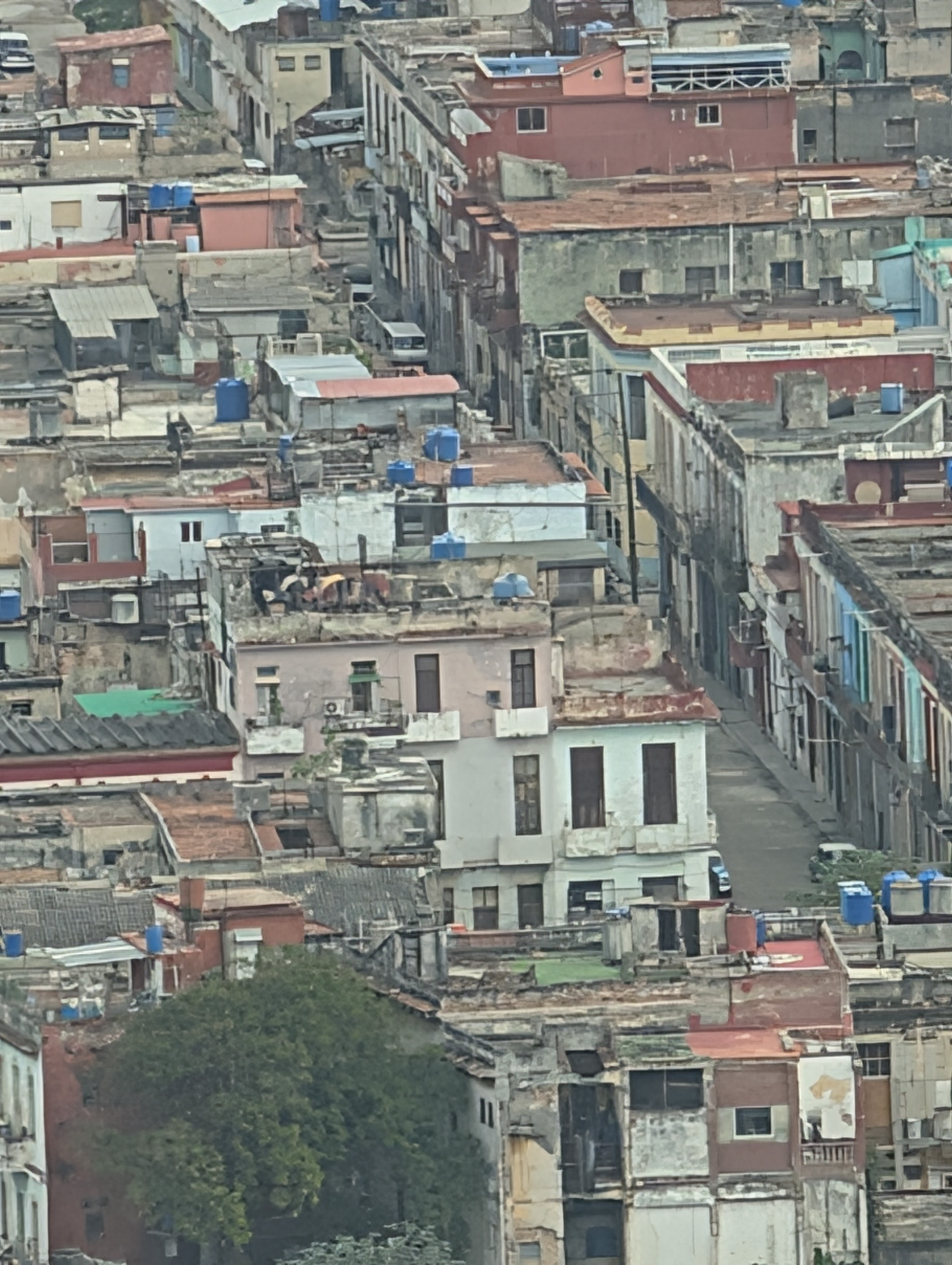
View of Havana, Cuba. Source: Robert Albro
The Trump administration has been applying to Cuba its credo that might makes right. At the United Nations President Donald Trump pointed to Cuba shortly after musing that he might “annihilate the Islamic Republic [of Iran]”, driving the Iranian people “into hell with no chance of survival.” U.S. escalation of its “extreme pressure” measures to effect regime change in Cuba, especially the oil blockade in place since January, amounts to the strongest attack from the United States since Fidel Castro marched into Havana more than 66 years ago, with little prospect of an outcome pleasing to the United States.
The across-the-board economic, diplomatic, and military steps to block all oil shipments to the Cuban oil processing and distribution industry – allowing only one small Russian shipment and a variety of small shipments of finished products to cash-paying clients in the private sector – are causing a multi-tiered humanitarian crisis. The blockade covers even solar panels, and shippers afraid of U.S. sanctions are delaying delivery of containers of food, medicine, and other essentials. Legal experts say these measures amount to a violation of international law.
Blackouts last 20 hours a day, and the whole national grid has crashed six times since January. Numerous press reports indicate that homes have no water because pumps cannot function without electricity. Patients needing hospital care are dying, with an estimated 100,000 people unable to obtain essential surgeries. Without fuel for trucks, garbage is piled high on city street corners, increasing the spread of mosquitoes bearing a range of diseases including chikungunya, dengue, and zika. The energy system has long been vulnerable because of previous embargo measures, such as prohibitions on the sale of spare parts with 10 percent or more of U.S. content, and because of inconsistent government policies. But the new U.S. actions have, by far, been the decisive cause of the current crises.
The underlying premise of U.S. policy since the 1960s is to spark a popular uprising that would lead to government collapse. The $60 million-$70 million a year the U.S. spends on information programs and other psychological operations directed at the island, primarily through social media, are clearly aimed at fomenting discontent, and many Cubans do blame their own government more than they do the U.S. for the lack of meaningful reform in past years.
But the government retains residual strengths that have enabled it to resist the U.S. pressure over these nine months. The people’s stoic and often creative survival strategies indicate that, even though they want change that will improve living conditions, they don’t want it dictated by Washington or Miami. The government has initiated and begun implementing significant economic reforms – at lightning speed compared to the past – that give the private sector huge new operating space, welcome foreign investment (including from expatriates) with very few conditions, and finally begin to dismantle inefficient state enterprises. Government officials say they’re not embracing capitalism, but their statements increasingly reflect acceptance of market mechanisms, decentralization, and a commitment to get the bureaucrats out of citizens’ way. Although they point out that Vietnam and China had drastically different conditions under which they implemented economic reforms in the 1980s, they’re not shy about signaling that they’re clearly moving toward a similarly mixed economy. The people won’t feel relief for some time, but change is in the air.
The U.S. Administration seems to think it will win this race for time – that Cuba will “fail” or “collapse” before the benefits of reform can be felt. It is doing all it can to fan the flames on the island, including through threats of military intervention. Trump and Secretary of State Marco Rubio want to make Cuba a “failed state,” but they don’t want to face the consequences of the humanitarian disaster that their aggression is creating. In response to deteriorating conditions, an estimated 1.5 million-to 2 million Cubans already have migrated in the last five years, mainly to Spain and Latin America. But those options are drying up, and Trump and Rubio certainly don’t want Cubans to take to the boats and arrive on Florida shores.
Even if the U.S. were to achieve its dream of effecting “regime collapse,” the island isn’t going to fall into its lap like a ripe fruit. The economic, infrastructural, and social damage will take decades to mend – and any new regime is going to face serious challenges to its legitimacy as a U.S. puppet and will struggle to maintain order. Indeed, government failure would probably benefit disciplined, orthodox enforcers rather than pro-democracy citizens with no experience. There is no pretty scenario at this point, but the less-ugly scenario would be to let the Cubans, without expressly excluding the party in charge, decide their own future. Cubans want change, but they want it to be evolutionary.


