U.S.-Mexico: Tariffs, Threats, and Trade Agreements

By Ken Shadlen*

Cargo ships

Cargo ships off shore of Galveston Island, TX / Jocelyn Augustino / Creative Commons / https://commons.wikimedia.org/wiki/File:FEMA_-_38860_-_Cargo_ships_off_shore_of_Galveston_Island,_TX.jpg

The United States’ threat last week to apply tariffs on imports from Mexico, unless Mexico revamped its approach to Central American migrants passing through the country, underscores the power asymmetries in the global economy – and undermines the credibility of U.S. trade agreements elsewhere. President Trump threatened to abrogate U.S. commitments under NAFTA (and the WTO) unless Mexico introduced measures in an area that is not addressed by NAFTA. While the tariffs won’t be applied, at least not now, and there is debate about just how much Mexico changed its migration policies as a result of Washington’s maneuver, the linkage between trade and “non-trade” issues such as immigration, especially within preferential trade agreements such as NAFTA, have deep implications for the political economy of international trade.

  • Many critics of Trump’s threats claim that immigration policy and trade policy are distinct, and that it makes no sense for the administration to link the two. But this misses the point: what is and is not “trade” is determined politically. Since the 1980s, the United States has conditioned market access on the introduction and enforcement of a wide range of “trade-related” policies, including investment, intellectual property, government procurement practices, and so on. Market size confers to the importing country the power to define what constitutes “trade,” and the definition of “trade” thus has changed according to Washington’s preferences. In that sense, Trump’s linkage maneuver is not at all new.
  • On the one hand, NAFTA is the outcome of massive linkage of this sort, as Mexico was required to introduce extensive changes to policies and practices in a range of trade-related policy areas in order to qualify for the agreement. On the other hand, NAFTA was meant to protect against further “ad hoc linkage,” with new conditions attached at the whim of the United States.
  • Prior to NAFTA, Mexico’s exports largely entered the U.S. market under the Generalized System of Preferences (GSP), which offers preferential market access to exports from developing countries under a wide range of conditions. But GSP preferences can be withdrawn unilaterally, and, as the importing country, the United States changed GSP preferences in response to its changing sentiments. Beneficiary countries always ran the risk of having the U.S. Congress and Executive attach additional conditions to the program, like ornaments on a Christmas tree.
  • NAFTA and other NAFTA-like trade agreements that have followed promised to deliver substantially more predictability and stability than the GSP.

Recent events question these premises. In 2017-18, Trump warned that Washington would withdraw entirely from NAFTA unless it was renegotiated on terms more to his liking. Last week’s threat to remove preferential market access unless Mexico changed its immigration policies and practices is precisely the sort of behavior that NAFTA was meant to protect against. The agreement supposedly replaced the unstable preferences of GSP, which were always vulnerable to the whims of U.S. politicians, with a new set of preferences that were clearly defined, had fixed conditions, and were less prone to being unilaterally withdrawn. But evidently it didn’t.

Washington’s actions are similar to if the Mexican government announced it would stop enforcing copyrights and patents of U.S. firms, unless the United States were to substantially increase science and technology assistance to help upgrade the stock of biologists, chemists, and engineers in Mexico. The reaction to such an announcement would be ridicule, and Washington would claim NAFTA (and the WTO) binds Mexico to protect intellectual property. The United States would assert, moreover, that its science and technology assistance is not covered by NAFTA; Mexico’s threat would elicit no change of behavior on the part of the US. 

  • Beyond NAFTA per se, these events make one wonder why any country would sign a trade agreement with the United States. After all, if countries already have preferential market access under the GSP, then one of the main benefits of reciprocal trade agreements is to lock-in and stabilize those preferences – even with the need to make substantial concessions on “trade-related” policy areas. If, in reality, only half of the bargain is locked in, if the benefits can be made to disappear at the whim of the U.S. President, then for many trading partners the benefits of such agreements will be unlikely to compensate for the costs.

June 11, 2019

*Ken Shadlen is Professor of Development Studies and Head of Department in the Department of International Development at the London School of Economics and Political Science.

Venezuela: Inching Toward Negotiations?

By Fulton Armstrong

A group of Venezuelans protest against International Contact Group for Venezuela. The Venezuelan flag is held in the background as a protester holding a young child looks on.

Community of Venezuelans protest against International Contact Group for Venezuela / https://www.shutterstock.com/image-photo/montevideo-uruguay-february-8-2019-community-1307825104?src=qNES6S7x3QlbnYg-a1h2wg-1-0 / Shutterstock

As Venezuelan National Assembly President Juan Guaidó reiterates his welcome to U.S. military intervention, his international supporters – rejecting a military solution – are moving toward promoting a negotiated settlement that would include President Maduro or, in one scenario, a chavista he designates. Guaidó publicly stated this past weekend that he has directed his representative in Washington to meet with the U.S. Southern Command, whose top officer recently said “we’re on the balls of our feet and ready to go,” to discuss “cooperation.” Although the 50-plus countries that recognized Guaidó’s claim as “interim president” in January have not abandoned him, press reports indicate that they are increasingly looking at alternatives to his strategy of instigating the Venezuelan military to overthrow Maduro and, failing that, asking Washington to do so.

  • The failure of Guaidó’s attempted coup in Operación Libertad, on April 30 – after other stalled initiatives over humanitarian aid at the Tienditas Bridge in February and numerous street mobilizations – has dispirited foreign supporters who joined Guaidó’s cause almost four months ago with the expectation that he would replace Maduro within days. Leaders in Latin America and the European Union have repeatedly expressed concerns about senior U.S. officials’ assertion that “all options,” including military action, are under consideration. (Secretary of State Pompeo last week repeated that the United States “will do what’s required.”)

These shifts give momentum to diplomatic initiatives to start and monitor a negotiated internal settlement. Advocates of negotiations, such as Spanish Foreign Minister Josep Borrell, who last week said the United States was acting “like cowboys,” have begun to push harder.

  • On May 3, the “Lima Group,” including 12 Latin American countries and Canada, called for the first time for broader consultations on initiatives undertaken by the International Contact Group (the ICG, consisting of eight EU countries plus Uruguay, Costa Rica, and Ecuador) and, over the objections of Guaidó’s representative at their meeting, called for dialogue with Cuba to explore ways of ending the crisis. The ICG, meeting on May 7 with the important participation of the Vatican and Lima Group hardliner Chile, agreed to send a “high-level political delegation” to Caracas to discuss “concrete options” with both sides. Soon after, Canadian Prime Minister Justin Trudeau called his Cuban counterpart, President Miguel Díaz-Canel, to urge Havana’s help. (Cuba’s position remains that it would gladly participate if Maduro requested it.)
  • Federica Mogherini, the EU’s chief of foreign affairs, has kept up criticism of Maduro, condemning the arrest last week of National Assembly Vice President Zambrano, but press reports indicate that she’s maneuvering the 28-nation community away from absolute support for Guaidó and toward an inclusive negotiation process that produces a “political solution and early elections.” She has softened her previous demand of Maduro’s departure as a precondition.

The United States still firmly rejects any negotiated settlement, steadfastly repeating that Maduro and the “occupation forces” – Cuba and Russia – must leave Venezuela immediately. But, even if starting a negotiation does not ensure a good settlement, most of the international community is reaching the conclusion that sanctions, such as those that are worsening humanitarian conditions in the country by the day, are increasingly unlikely to produce the desired regime change and stable outcome. Anyone watching Venezuela over the years knows that both the opposition and Maduro (the latter more frequently) have thrown wrenches into past negotiations in belief that they would win a war of attrition. Advocates of a return to negotiations are under no illusion that talks this time will be easy. The U.S. sanctions will soon begin to bite harder, but Guaidó’s stumbles have convinced many that humanitarian suffering does not translate into regime change – and they may even think that now is time to begin using the leverage of sanctions and at least try to get a process going. There are few guarantees in world affairs, of course, but pragmatists seem to be betting that the probability of rescuing Venezuela from an even deeper abyss is greater with negotiations than with more sanctions and rhetoric about military attack.

May 13, 2019

South America: Regional Integration or Presidential Posturing?

By Stefano Palestini Céspedes*

47389747662_9be46749b5_z

South American Presidents waving to the cameras in Santiago, Chile / Flickr / Creative Commons

Seven South American presidents’ launch of brand-new regional grouping called PROSUR last week was intended to give a boost to their personal agendas rather than take a serious step toward regional integration. The announcement was made on March 22 at a summit organized by Chilean President Piñera and attended by the presidents of Argentina, Brazil, Colombia, Ecuador, Peru, and Paraguay. The declared goal of the summit was to overcome what Piñera called the “paralysis” of the decade-old UNASUR.  Its final declaration emphasized the need “more than ever to work together to update and strengthen the South American countries’ process of integration” in the face of current and future challenges, including “inserting ourselves in an efficient way into the fourth industrial revolution and society based on knowledge and information.”

  • The creation of the Forum for the Progress of South America (PROSUR), however, delivered very little in terms of regional integration. The Santiago Declaration does not tackle the obstacles that hampered UNASUR, such as its decision-making procedure based on consensus. On the contrary, the declaration envisions PROSUR as a forum exclusively based on presidential diplomacy, in which all decisions by definition must be taken by consensus.
  • The Presidents said the new organization will focus on infrastructure, energy, health, defense, and dealing with natural disasters – the same areas where UNASUR had shown some progress. The declaration did not mention any particular ongoing crisis, such as Venezuela, but it made clear that it would work for full respect for democracy, constitutional order, and human rights. Again, this is not a departure from UNASUR, which also had a democracy clause adopted and ratified by the national parliaments.

The summit promised political gains for several participants. For President Piñera, it was an opportunity to project himself as a regional leader able to convene and coordinate South American heads of states, at a time that his domestic popularity is decreasing. Ecuadorean President Moreno – the only central-left president attending the summit – had yet a new opportunity to signal his willingness to coexist with pro-market governments in the region. For Brazilian President Bolsonaro, a well-known skeptic of South American integration, the summit was a platform to show a more palatable image closer to his liberal peers.

President Piñera and his guests blamed UNASUR’s bureaucracy for its lack of effectiveness, opting instead for a lean mechanism based on presidential diplomacy. Most long-time observers believe, however, that UNASUR’s effectiveness was undermined by its very weak organizational capacity, with a powerless Secretary General and personnel made up of low-ranking national diplomats instead of qualified international civil servants. Presidential diplomacy, unburdened by a bureaucracy of specialists who analyze problems and possible solutions, works well when Presidents get along in ideological terms, but precedent shows it is vulnerable to collapse when governments have divergent preferences or when states must agree on complex transnational issues such as migration, drug-trafficking, or deep economic integration.

  • PROSUR will work exclusively as a forum (not as a regional organization) and its decisions and initiatives will have to be executed and monitored by the national bureaucracies of the member states, which by definition look after national interests rather than regional interests. The Santiago Summit has demonstrated that when it comes to regional integration, leftist and right-wing heads of government look and act alike. No matter which ideology they claim, South American presidents fear collective institutions, cherish presidential diplomacy, and prefer to create new initiatives with pompous names from scratch, rather than make necessary reforms to existing ones. As Uruguayan President Vázquez – who did not attend the summit – put it, South America has a long history of integration initiatives that have not brought about integration. The region would be better served by reinforcing and overhauling existing mechanisms such as MERCOSUR, the Andean Community, or the Pacific Alliance, and try to make them convergent in any possible way, rather than adding yet another acronym.

March 29, 2019

* Stefano Palestini Céspedes is an Assistant Professor at the Institute of Political Science, Catholic University of Chile.

South America: Can it Navigate the Changes Ahead?

By Leslie Elliott Armijo*

Latin america

Latin America / Google Images / Creative Commons

Venezuela is the latest example of how Latin America, especially South America, has missed an opportunity to demonstrate the sort of hemispheric leadership it has long striven for – and instead has ceded that role to the United States and even Russia and China.  Although the United States, and the rest of the hemisphere more generally, have been slow to realize it, economic drivers are making the world more multipolar.  In a recent article by two colleagues and myself, we analyze international financial statistics covering 180 countries from 1995 to 2013 that reveal the slow relative decline of the United States as the reigning financial hegemon.  U.S. influence, although still formidable by some margin, is eroding.

  • The Trump Administration’s activities in the larger world are also undermining Washington’s influence. Policies in the WTO and other trade actions writ large – such as withdrawing from the Trans-Pacific Partnership (TPP) and threatening and implementing trade sanctions with little apparent logic – have brushed even allies back. Positions on the Paris climate accord, at the United Nations, and in the President’s relations with North Korean leader Kim Jung Un and Russian President Vladimir Putin have left many around the world increasingly reluctant to follow the U.S. lead.

In this increasingly multipolar world, Latin America, especially South America, is going to find itself not so much freed of U.S. influence – as intellectuals in the region have often stated their wishes – as exposed to new pressures.  The change will be manifest mostly in the economic arena.  New research by McKinsey Global Institute suggests that global value chains are ever more concentrated within multinational corporation networks, which tie major markets (essentially the United States, Western Europe, China, and Japan) to geographically contiguous countries.  This is arguably good for closer neighbors, such as Central America and the Caribbean in our hemisphere, but potentially harmful to those left out – including Sub-Saharan Africa, possibly the Mideast, and South America.

South America has diversified its trade – generally a good thing – among the United States, EU, and East Asia, with the latter having become the major trading partner for a number of countries. Chile and others have been pushing hard to build the Pacific Alliance, as well as to institutionalize the alliance’s relationship with Mercosur. This strategy will be put to the test if, as early trends indicate, the world regionalizes and South America comes under great pressure to refocus on its relations with the United States. To protect and advance their interests in the future, South American countries probably will try to find the right balance between embracing and rejecting the declining yet still dominant hegemon to the north and, as in the case of Venezuela, developing their own strategic vision, forging unity among themselves, and putting some muscle behind an agenda that prepares them for the future.

March 18, 2019

* Leslie Elliott Armijo is an associate professor at the School for International Studies, Simon Fraser University, Vancouver. She is the co-author, with Daniel C. Tirone (Louisiana State University) and Hyoung-kyu Chey (National Graduate Institute for Policy Studies, Tokyo), of The Monetary and Financial Powers of States: Theory, Dataset, and Observations on the Trajectory of American Dominance.

Latin America Takes on Big Pharma

By Thomas Andrew O’Keefe*

Colorful pills in capsule form and tablet form

Generic pills / Shutterstock / Creative Commons

For the past decade, Latin America has attempted to reduce the prices of high-cost medications through either joint negotiations, pooled procurement, or both, but so far with limited success.  The incentive for reducing prices is that all Latin American countries have national health care systems, and in some cases (such as Colombia and Uruguay) are legally obligated to provide their citizens with any required medication free of charge and regardless of cost.

  • In the bigger countries, such as Brazil and Mexico, the prices for certain pharmaceutical products and medical devices for public-sector purchase at the federal, state, and even municipal level are negotiated by a single governmental entity. Argentina, Chile, and Mexico also have mechanisms for pooled procurement of public-sector health-related purchases at all levels of government.  Given its huge internal market, Brazil also unilaterally caps prices on medications and threatens to issue compulsory licenses to extract concessions from pharmaceutical multinationals.

Latin American countries have also tried turning to sub-regional mechanisms to protect themselves from excessively high prices, albeit with meager results.

  • The Central American Integration System (SICA) has the most active regional mechanism to negotiate the prices of high-cost drugs and medical devices. The governments of Belize, Costa Rica, the Dominican Republic, El Salvador, Guatemala, Honduras, Nicaragua, and Panama have authorized the Council of Central American Ministers of Health (COMISCA) to negotiate lower prices on their behalf.  Those medications and devices that obtain a reduction are then acquired by the public sector utilizing each government’s procurement procedures.  By negotiating as a bloc, the SICA countries report total savings of about US$60 million on dozens of products since the initiative began in 2010.
  • In late 2015, MERCOSUR launched a mechanism to negotiate prices for both the full and associate member states. Since those 12 countries coincided with UNASUR’s membership, that entity was given a supporting role to create a continental data bank of pharmaceutical prices paid by each member government that would be used to support the MERCOSUR negotiations.  That data bank proved to be ineffective, however, as not all countries submitted the required information and the methodologies for determining prices was inconsistent.  To date, MERCOSUR has only obtained price reductions for one HIV medication, manufactured by an Indian firm eager to establish a market presence in South America, and reportedly for an immunosuppressive drug used after organ transplants to lower the risk of rejection.  Reduction offers by Gilead for its Hepatitis C cure have, so far, been rejected by the MERCOSUR governments as inadequate.

MERCOSUR’s limited achievements appear to have encouraged individual countries to press on alone.  Colombia, while initially supporting the MERCOSUR initiative as an associate member, eventually established its own national mechanism to negotiate prices, and in July 2017 announced that it had obtained cost savings of up to 90 percent for three Hepatitis C treatments.  MERCOSUR’s sparse track record also helps to explain why Chile’s Minister of Health announced in October 2018 that his country, Argentina, Colombia, and Peru would utilize the Strategic Fund of the Pan American Health Organization (PAHO) to purchase 10 state-of-the art cancer treatments.  Because of PAHO’s annual bulk purchases, it is often able to obtain significant price reductions from pre-qualified manufacturers and suppliers that are then passed on to member governments.  Member states facing a public health emergency can also make purchases without cash in hand, as the Strategic Fund will extend a short-term loan at no interest.  In the future, the Latin American countries are likely to pragmatically utilize a range of options in trying to contain the rising costs of new medications that include both national and regional mechanisms as well as PAHO’s Strategic Fund.  The challenge will be to avoid Big Pharma “red lining” the region and excluding it from accessing the most innovative medical cures such as gene therapies that can fetch a million-dollar price tag per treatment.

February 19, 2019

* Thomas Andrew O’Keefe is president of New York City-based Mercosur Consulting Group, Ltd. and a lecturer at Stanford University.  He is the author of Bush II, Obama, and the Decline of U.S. Hegemony in the Western Hemisphere (New York: Routledge, 2018).

Mercosur: Diversifying Partnerships

By Andrés Serbin*

Mercosur Summit

A seminar at the 53rd Mercosur Summit. / Sabrina Pizzinato / UCIM / Creative Commons

Mercosur’s signing of a memorandum to increase economic and commercial cooperation with the Eurasian Economic Commission (EAEU) signals the trading bloc’s interest in diversifying its trade and political relationships beyond the western hemisphere.  The presidents of the Mercosur countries – Brazil, Argentina, Uruguay, and Paraguay –signed the agreement at the 53rd Mercosur Summit, held last month in Montevideo.  At a ceremony at which he accepted the rotating presidency from Uruguay, Argentine President Mauricio Macri emphasized the need for Mercosur to open not just to the Pacific Alliance, but also to Central America, Asia, and Africa.

  • Proposals for closer cooperation with the EAEU have been under study for many years, since Russia first created the Commonwealth of Independent States (CIS) from among the former Soviet republics (except the Baltic countries) after the end of the Soviet Union in 1991. The CIS was intended as a post-Soviet space under Russia’s leadership that would reconnect its members within a “Eurasian” geopolitical region distinct from both Europe and Asia.  The EAEU, formalized in 2015 under the leadership of Russia and Kazakhstan, now also includes Belarus, Kyrgyzstan, and Armenia.  Mercosur ministers agreed to sign the memorandum during meetings immediately before the summit, stating that enhanced cooperation and coordination with the EAEU – with which Mercosur would account for a combined 6.5 percent of world GDP – was consistent with efforts to strike a similar arrangement with the European Union.
  • Mercosur’s decision comes amid international tensions over trade and protectionism, but it cannot be divorced from the ideological, cultural, and geopolitical elements of the vision for “Great Eurasia” of which Russian President Vladimir Putin has spoken (and which Chinese President Xi Jinping has shared). The tensions between Russia and Ukraine, and Western pressures in retaliation, were a key driver of Moscow’s push for formalization of the EAEU as a potential interlocutor with the European Union while at the same time putting a brake on U.S. presence in the region.  Western analysts have debated the power of “neo-Eurasian” identity as a tool of geopolitical projection beyond the creation of a new economic bloc.  China is also a factor in Russia’s calculations.  The “Shanghai Cooperation Organization” (OCS) fostered by both countries and Beijing’s “New Silk Road” project, through Central Asia and to the EU, have also increased the salience of “Great Eurasia.”  Russia and China have increased cooperation in trade, in technology (including military) and against terrorism and extremism.  Through the EAEU and OCS mechanisms, they have extended contacts all the way to India and Pakistan and, potentially in the future, Iran and other countries.

Mercosur’s trade with the EAEU is asymmetrical in favor of the Latin American countries, with the exception of Brazil (with which it is more balanced), according to EAEU officials.  The EAEU has high internal tariffs and limited internal trade – except in bilateral trade between Russia and Belarus – but there are already tariff exemptions for Mercosur members.  Food appears to be the biggest Mercosur export to the region.  Experts believe that trade between the two blocs can be significantly increased, and that a free trade agreement can be signed before the completion of the EU-Mercosur FTA, which has been under negotiation for 20 years.

Although many Western analysts remain doubtful about the success of efforts to form a “Great Eurasia,” Mercosur apparently has determined that engagement with it is low-cost and potentially beneficial.  Beyond the possibility of expanded trade, the memorandum of cooperation signed in Montevideo suggests Mercosur sees a geostrategic interest in signaling openness to such collaboration.  The right-leaning governments of Latin America and the Caribbean are likely to remain generally aligned with the United States, but they have learned the importance of trade diversification over the past two decades.  Setting tradition and ideology aside, most are trying to interact with whomever can bring good deals to their countries in terms of trade, investment, and cooperation.  In the context of Russia and China’s interest in a “Great Eurasia,” Mercosur’s increased outreach to EAEU also reflects an important piece in a strategy to undertake the necessary diversification of its foreign policy in a changing world.

  •  The United States may not appreciate the wisdom of Mercosur’s approach. Eurasia is a blind spot for Washington, which focuses on Russia’s actions in Europe and China’s in Asia – but not in Central Asia itself or as a bridge to India, Pakistan, Iran, Turkey, and the Arab world.

January 7, 2019

* Andrés Serbin is an international analyst and president of the Regional Coordinator of Economic and Social Research (CRIES), a network of more than 70 research centers, think tanks, NGOs, and other organizations focused on Latin America and the Caribbean.  This article is adapted from one published by Perfil.com.

Brazil: Far-Right Foreign Policy Ahead?

By Gilberto M. A. Rodrigues*

John Bolton and Jair Bolsonaro

U.S. National Security Advisor John Bolton (left) and Brazilian President-elect Jair Bolsonaro (right). / Prensa Latina / Creative Commons

Brazilian President-elect Jair Bolsonaro appears to be moving ahead with promises to steer the country’s foreign policy in the direction of his own far-right ideology.  He has accused the Workers’ Party (PT) of former President Lula da Silva (2003-10) and Dilma Rousseff (2011-16) of pursuing a foreign policy with a partisan left-wing ideology, and now he wants to “liberate” Itamaraty, the Ministry of Foreign Affairs, from what he considers an inappropriate ideological bias.

  • Bolsonaro says that President Trump is his inspiration, his “model” of leadership, and he has made policy coordination with Washington a priority. After a congratulations call to Bolsonaro, Trump tweeted that he and the president-elect “agreed that Brazil and the United States will work closely together on Trade, Military and everything else!  Excellent call, wished him congrats!”  Bolsonaro met last week with Trump’s National Security Adviser, John Bolton, to discuss joint efforts to achieve regime change in Cuba and Venezuela, among other topics.
  • Even before that, Bolsonaro had ramped up his already strong rhetoric against Venezuelan President Nicolás Maduro and reversed a long-standing policy of cooperation with Cuba, taking aim first at the 8,300 Cuban doctors in Brazil’s Mais Medicos. “We can’t allow Cuban slaves in Brazil,” he said, “And we can’t keep feeding the Cuban dictatorship.”  Havana began withdrawing the doctors before Bolsonaro could expel them.
  • Bolsonaro has barely mentioned UNASUR and is downplaying relations with Argentina, Brazil’s main strategic partner in the region, while emphasizing relations with what he calls “developed nations.” In addition to the United States, he is focused on Italy, Hungary – due to leaders’ far-right political affinities – and Israel.  The evangelical political forces who backed his election are pressing him to move the Brazilian embassy from Tel Aviv to Jerusalem, respecting “a sovereign decision of Israel.”  The Trump administration will warmly welcome the move, but Bolsonaro will face a potentially significant loss of trade among Middle Eastern and Asian partners.  The president-elect has yet to show his hand on China – Brazil’s main trading partner – and the other BRICS countries.  The Trump administration’s increasingly tough criticism of China’s activities in Latin America may temper the new government’s enthusiasm for closer ties with Beijing.

Bolsonaro has taken positions that set him at odds with the rest of the hemisphere.  He has denied the excesses of Brazil’s past dictatorship, advocated the use of torture against criminals whom he classifies as “terrorists,” used aggressive rhetoric against minorities (LGBTI, women, indigenous peoples, Afro-Brazilian Quilombolas, and migrants), and promised to reduce certain social rights.  Brazil’s diplomatic capital as a leader on environment and climate change is also at risk due to his domestic priority to promote agricultural business and the need to preserve “total” sovereignty over the Amazon Basin at the expense of protecting the rainforest.  He has cancelled Brazil’s commitment to host crucial UN climate change talks (COP25) in 2019, a deal negotiated by the government of President Temer just months ago.

Bolsonaro’s choice of his new foreign minister may be emblematic of his approach to international relations.  He met his commitment to choose a career diplomat, but his choice was Ernesto Araújo, an unknown who was recently promoted without ambassadorial experience who is a self-declared anti-globalist, anti-communist, and Trump’s enthusiastic “intellectual disciple.”  This appointment violates the tradition, observed even during the military governments, of selecting senior, skillful, and experienced ambassadors not directly linked to any ideological trend.  Further questions are raised by the military’s influence in the cabinet.  Two retired generals, Vice President Hamilton Mourão and the future head of Institutional Security Cabinet, Augusto Heleno, are expected to be the president’s right-hand men.  They and an empowered Ministry of Defense certainly will exercise huge influence in promoting a military vision of foreign policy in addressing issues such as borders policy and the Venezuela crisis, and could become a “second track” on Brazil’s foreign policy.

December 4, 2018

* Gilberto M.A. Rodrigues is Professor of International Relations at the Federal University of ABC (UFABC) in Brazil, and was a CLALS Research Fellow in 2017.

U.S.-Latin America: Return of Monroe Doctrine

By Stefano Palestini Céspedes* and Fulton Armstrong

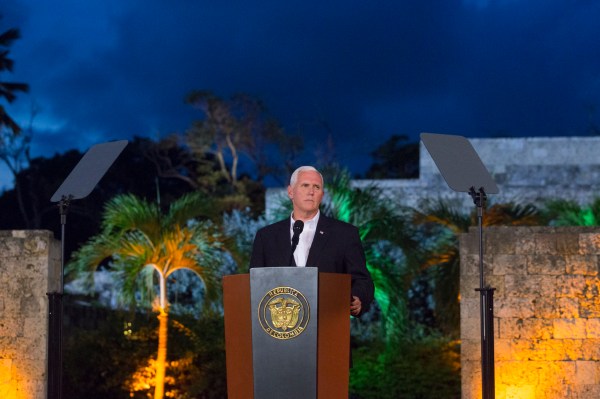
U.S. Vice President Mike Pence

U.S. Vice President Mike Pence visited Colombia during his Latin American tour last summer. / White House / Flickr / Creative Commons

The Trump administration’s revival of a vision of U.S.-Latin America relations akin to the Monroe Doctrine is advancing with little pushback from the region.  Since former U.S. Secretary of State Rex Tillerson eight months ago proclaimed that the Monroe Doctrine is “as relevant today as it was the day it was written,” Washington has continued to revive it as a guiding principle that includes limiting the influence of other powers in the hemisphere as well as reserving for itself the right to intervene when it feels its interests are threatened.

  • Tillerson complained that China “is using economic statecraft to pull the region into its orbit” and that Russia’s “growing presence in the region is alarming as well, as it continues to sell arms and military equipment to unfriendly regimes who do not share or respect democratic values.” In August, U.S. Defense Secretary James Mattis renewed the attack on China’s investment of billions in Latin America, claiming that “there is more than one way to lose sovereignty. … It can be with countries that come offering presents and loans.”  Last week, U.S. Vice President Mike Pence repeated his government’s complaint that Latin America is among the regions where China is offering large infrastructure loans that are “opaque at best, and the benefits flow overwhelmingly to Beijing.”
  • Washington has also resorted to cavalier rhetoric regarding its perceived right to intervene in the internal affairs of Latin American countries to advance its interests. At the United Nations in late September, President Trump said, “Here in the Western Hemisphere, we are committed to maintain[ing] our independence from the encroachment of expansionist foreign powers.”  President Trump argued for regime change in Venezuela and repeated that “all options are on the table, [including] the strong ones.”  In the new NAFTA agreement, Washington demanded, and achieved Mexican and Canadian concurrence on, a clause stipulating that the United States could terminate the agreement with six months’ notice if either negotiated a free trade agreement with a “non-market economy” – that is, with China.

Latin American governments’ voices have been thus far muted – perhaps because they are getting used to downplaying Trump’s rhetoric – even though the revival of the Monroe Doctrine is already shaping actual policies.  A hundred years ago, Latin American international lawyers, diplomats, and intellectuals worked hard to transform the Monroe Doctrine from a unilateral doctrine into a multilateral policy able to shape first Pan-American and later Inter-American relations.  Those efforts led to the adoption of hemispheric instruments such as the OAS Charter in 1948 and the Inter-American Democratic Charter in 2001, gradually defining a mutually acceptable approach that strikes a balance between shared hemispheric values and the principle of non-intervention.  After the Cold War, references to the Monroe Doctrine disappeared from public discourse – except to disparage it as the Obama administration did – until the Trump administration revived it.

Today, the forums and organizations that Latin America has used during the last decade to articulate concerns and political responses to U.S. policies are not working.  OAS Secretary General Luis Almagro’s recent declarations that military action to solve the crisis in Venezuela cannot be ruled out, rather than offering a riposte, echoes Trump’s stance.  The Lima Group – which gathers together a group of OAS member states committed to the defense of democracy in Venezuela – pushed back against Almagro’s statements but, importantly, not against the U.S. administration’s policy.  More formal organizations such as UNASUR are not only muted, but actually paralyzed by the inability of its members to reach consensus and solve fundamental discrepancies. 

  • To resist and speak up when confronted with rhetoric and policies with such profound implications as a revitalized Monroe Doctrine is not a matter of politics and economics, but rather a necessary condition for friendly and respectful international relations and the sort of partnership that Latin Americans of all political stripes claim to want with the United States. To articulate such a response, Latin America urgently needs its leaders to think in “regional” and not only “national” terms – to nurture a genuine Inter-American community, not just bilateral relations with Washington.  The odds for such leadership to emerge at this moment do not appear high.  The possible election of a nationalist, xenophobic, and illiberal leader in Brazil may become a further challenge for collective action in the region.

October 12, 2018

* Stefano Palestini Céspedes is an Assistant Professor at the Institute of Political Science, Catholic University of Chile.

Trump on NAFTA: An Offer Canada Can’t Refuse?

By Malcolm Fairbrother*

Chrystia Freeland meets with Mexican President Enrique Peña Nieto

Canadian Foreign Minister Chrystia Freeland meets with Mexican President Enrique Peña Nieto in July 2018. / Presidencia de la República Mexicana / Flickr / Creative Commons

U.S. President Donald Trump’s threat last week to abrogate free trade with Canada while signing a new bilateral agreement with Mexico alone has led many to think that NAFTA – which will be 25 years old on January 1, 2019 – has no future.  But the likeliest outcome remains just a set of fairly modest changes to the agreement.  Much of Trump’s bluster on NAFTA does not reflect the facts in U.S.-Canada-Mexico trade, though Canadian officials will still have to take his threats seriously.  Canadian Foreign Minister Chrystia Freeland, whose government sat out the United States’ renegotiation of NAFTA with Mexico this summer, rushed to Washington after the bilateral accord was announced, launching new talks with U.S. counterparts.  While Trump has said he will make no concessions, Freeland has continued seeking common ground, and looks ready to compromise on at least some issues.

  • The best econometric studies suggest that North American free trade has had disappointingly modest benefits – nowhere near advocates’ earlier projections. But the transition costs of moving to a world without free trade would still be enormously costly for Canada.  The economic and political risk of the highly unlikely, but not completely inconceivable, scenario of losing NAFTA entirely are just too great for the Canadian government to bear.

Canada, which in past negotiations stood up for Mexico on some key issues, now finds itself in the ironic position of looking to Mexico for support.  The two countries are often in a position to benefit from working together, but Trump’s wrath has tempted each to throw the other under the bus – a classic prisoner’s dilemma.

  • In the last few weeks, Mexico decided to give the U.S. what it wanted: most importantly, protectionist rules of origin for autos and textiles, and some enhanced intellectual property rights. Mexico calculated that, compared to Trump’s threats not long ago to kill NAFTA in its entirety, these concessions were a modest price to pay to keep the agreement alive.  Also importantly, Mexican leaders appear to have avoided a national humiliation of epic proportions – putting an end to Trump’s dream of getting Mexico to pay for the wall he wants to build on the border.
  • Looking for a much-needed “win,” Trump has now made an offer he thinks Canada can’t refuse. His wish list covers things Canada specifically fought hard for in the original free trade talks back in the 1980s and 90s, including protections for Canada’s cultural industries and agricultural supply management programs, and what Canada’s trade minister said in 1992 were “the vitally important dispute settlement provisions” of Chapter 19.  Now, just as Canadian opponents of free trade forewarned in the 1980s, Canada’s economy has become so enmeshed with that of its much larger neighbor that the government cannot say no to the demands of an aggressive administration in Washington.

Yet the situation does not spell disaster for U.S.-Canada trade or for Canada itself.  Trump’s claims notwithstanding, the U.S. Congress has final say over U.S. trade policy, and most of its members (with business lobbyists whispering in their ears) recognize that severing the many economic ties built up between Canada and the United States over the last quarter-century would be unnecessarily disruptive and costly.  Freeland and her negotiators will know that Trump’s threat to kill free trade is not really credible.

  •  Even caving on all of Trump’s demands would not be catastrophic for Canada. Contrary to Trump’s zero-sum perspective on trade (like on everything else) as an international battleground, most of the important conflicts with respect to trade are actually within countries.  Canada’s supply management system favors the country’s producers at the expense of consumers, for example, just as do strict rules of origin for U.S. textiles manufacturers.  So while the transition costs of dismantling free trade in North America would be substantial, the impacts of the changes Trump is proposing would be tolerable to all three countries – even if some make no sense (the sunset clause); are just giveaways to specific industries (stricter patents for pharmaceuticals); or favor some industries at the expense of others (U.S. lumber producers and U.S. home builders, respectively, as regards the possible elimination of Chapter 19).  For Canada’s government, the heaviest costs of compromise will be political: Justin Trudeau’s Liberal government will have to choose which bitter pill to swallow, as any concessions will lead to angry recriminations from one domestic constituency or another.

September 7, 2018

* Malcolm Fairbrother is Professor of Sociology at Umeå University and a researcher at the Institute for Futures Studies, both in Sweden.  He is originally from Vancouver, and has been a visiting researcher at multiple institutions in all three countries of North America. He has also participated in the Center’s North America Research Initiative.

U.S.-Mexico: Trump’s Misguided Approach to NAFTA Renegotiation

By Robert A. Blecker*

Three people stand at podiums with flags behind them

Canadian Foreign Minister Chrystia Freeland, U.S. Trade Representative Robert Lighthizer, and Mexican Minister of Economy Ildefonso Guajardo (L to R) participate in the fourth round of NAFTA negotiations in Washington, DC in October 2017. / State Department / Flickr / Creative Commons

President Trump has characterized NAFTA as a “win” for Mexico and a “loss” for the United States; his administration is currently working on a renegotiated “deal” that would allegedly reduce the U.S. trade deficit and recapture lost manufacturing employment, but his nationalistic approach fails to recognize the fundamental causes of both U.S. and Mexican economic problems.  In fact, NAFTA was a huge success for President George H.W. Bush and his administration, as it achieved their fundamental goal of enabling U.S. corporations to make products in Mexico with low-cost labor – without fear of expropriation, regulation, or other loss of property rights – and export them to the United States duty-free.  The Mexican government went along because it thought NAFTA would bring in desperately needed foreign investment and provide a growth stimulus, while U.S. and Canadian workers rightly feared that they would lose jobs as a result.  While much discussion has focused on which country “won” or “lost” in NAFTA, that is the wrong way to evaluate a trade agreement.  The two key criteria for judging the accord are which sectors, groups, or interests won and lost in each country, and how it, in conjunction with other policies, has affected long-term growth, development, and inequality in each.

  • Under NAFTA, U.S.-Mexican trade in goods and services has grown exponentially, reaching $623 billion (with a U.S. deficit of $69 billion) last year. However, NAFTA (along with other causes and policies) has contributed to worsening inequality in both the United States and Mexico.  Less-skilled U.S. workers definitely lost, with wage losses up to 17 percent in local areas most exposed to NAFTA tariff reductions.  In Mexico, although consumer gains from trade liberalization were widespread, upper-income groups and the northern region benefited the most.  Real wages for Mexican manufacturing workers have stagnated since 1994.  Labor shares of national income have fallen in both countries since the late 1990s.
  • Domestic policies, exchange rates, financial crises, and the impact of China can make the impact of NAFTA difficult to identify, but effects in some sectors are clear. Mexico gained jobs in automobiles and parts, appliances, electrical and electronic equipment, and seasonal produce.  The United States gained in basic grains, soybeans, animal feed, and paper products.  Although about a half million jobs in automobiles and related industries have “moved” to Mexico, total U.S. job losses in manufacturing (5 million since 2000) have been much more affected by China and technology than by Mexico.  What Trump’s nationalistic rhetoric ignores is that U.S. companies capitalized on these dislocations to raise their profit margins and increase their bargaining leverage over workers and governments both within North America and globally.

Trump’s aggressive posture about NAFTA exploits political discontent with these sectoral effects and the overall worsening of inequality, but the U.S. Trade Representative (USTR)’s key demands in the renegotiation appear unlikely to remedy either problem.  USTR Lighthizer is focused on protection for the auto sector, by requiring higher U.S. content (or higher wages for Mexican auto workers), and on changes to dispute resolution procedures that would favor investment in the United States instead of in Mexico.  At best, these measures could bring back a small number of U.S. jobs; at worst, they could make some U.S. industries less competitive (if costs increase).

All of this debate in the United States ignores the fact that NAFTA has been a huge disappointment for Mexico.  Although export industries like automobiles have prospered, the gains to domestic sectors of the Mexican economy have been limited, resulting in sluggish growth (only 2.5 percent per year since 1994, far below the 7.6 percent achieved in East Asia) and leaving millions in poverty while millions more emigrated to the United States.  Of course, other policies and events (including Chinese competition) played into these outcomes, but NAFTA (and related liberalization policies) didn’t turn out to be the panacea for the Mexican economy that then-President Carlos Salinas promised in 1993.  Yet, in the short run the Mexican economy remains highly dependent on foreign investment and exports to the U.S. market, so Trump’s demands for a revised NAFTA and his threats to withdraw are undermining Mexico’s current economic prospects.  Instead of following Trump’s nationalistic approach, the three NAFTA members should focus on making all of North America into a more competitive region with rising living standards for workers in all three countries.  This would start with policies at home, such as public investment in infrastructure, education, and R&D, that could foster industrial growth, along with redistributive measures like higher minimum wages consistent with each country’s economic conditions.

May 11, 2018

* Robert A. Blecker is a Professor of Economics at American University.