By Ernesto Castañeda
American University
.png/:/rs=w:1280)
.png/:/rs=w:1280)
By Ernesto Castañeda
In recent weeks, the conservative majority in the U.S. Supreme Court has issued several rulings affecting the U.S. immigration system. One of these rulings states that people cannot seek asylum in the United States until they are physically inside U.S. territory. This has significant implications for people arriving—especially at the U.S.-Mexico border—who were requesting entry at the border wall or at ports of entry, turning themselves over to immigration agents to ask for admission with the stated goal of seeking asylum. Now, according to the Supreme Court, the U.S. government will view them as being in Mexico, and since they will largely be denied entry, they cannot apply for asylum while still outside U.S. territory. That is, the Court treated people waiting on the Mexican side of the border as not yet having entered the United States for asylum purposes. This is curious because in some cases the side of the border wall facing Mexico is already U.S. territory because clearly the U.S. cannot build on Mexican territory. Meaning that in many places, by reaching the wall, one is technically already on U.S. soil. Future suits may test this. However, given these new legal precedents, it appears the U.S. government would deny entry for the purpose of seeking asylum inside the country. This will affect many people, particularly those from Latin America and regions experiencing armed conflict or political turmoil.
Another ruling related to what is known as “metering”—essentially a slow, controlled trickle of people allowed into U.S. territory when there is congestion of asylum seekers at the border, or when large numbers of people wish to enter the United States. It is not the first time this border-processing policy, which limits how many asylum seekers are admitted or processed at a time, has been brought up. During the pandemic—and even earlier, under programs like “Remain in Mexico”—the U.S. government stated it would only accept, say, five hundred, two hundred, or two thousand people per day across the entire border. Consequently, even though many people sought asylum, they were not immediately admitted. The U.S. government claimed this was necessary to maintain order and manage logistics—handling the entry process in a way they could manage without people sleeping on the streets or needing more hostels for migrants or overcrowded immigration detention centers. Metering was an “emergency” policy that began under Obama, continued under Trump, was paused during most of Biden’s term, though it was brought back towards the end, and continued under the Trump administration. The Supreme Court has allowed the policy to proceed into the future by lifting the lower-court block.
The third topic is Temporary Protected Status (TPS), which allows legal residence in the United States to whole groups of people from particular countries due to events like earthquakes, hurricanes, civil conflict, or other crises—as seen in Honduras, Haiti, El Salvador, and other countries—where nationals could stay in the U.S. without fear of deportation. However, the Supreme Court has now ruled that, in the case of Haitians and Syrians, this status of temporary protection can be completely revoked despite motives and the decision-making process. But the Supreme Court conservative majority went further, arguing that TPS designation is a matter that falls under executive authority, specifically the president’s power to decide whom, how, when, and for how long TPS is granted. Therefore, the decision strengthens the executive’s ability to terminate TPS designations and may affect other TPS holders. So, although the ruling did not directly address cases involving, for example, Salvadorans, it grants the president greater power to revoke TPS at will without explanation, preventing even lower courts from blocking such decisions—something they had done in recent years.
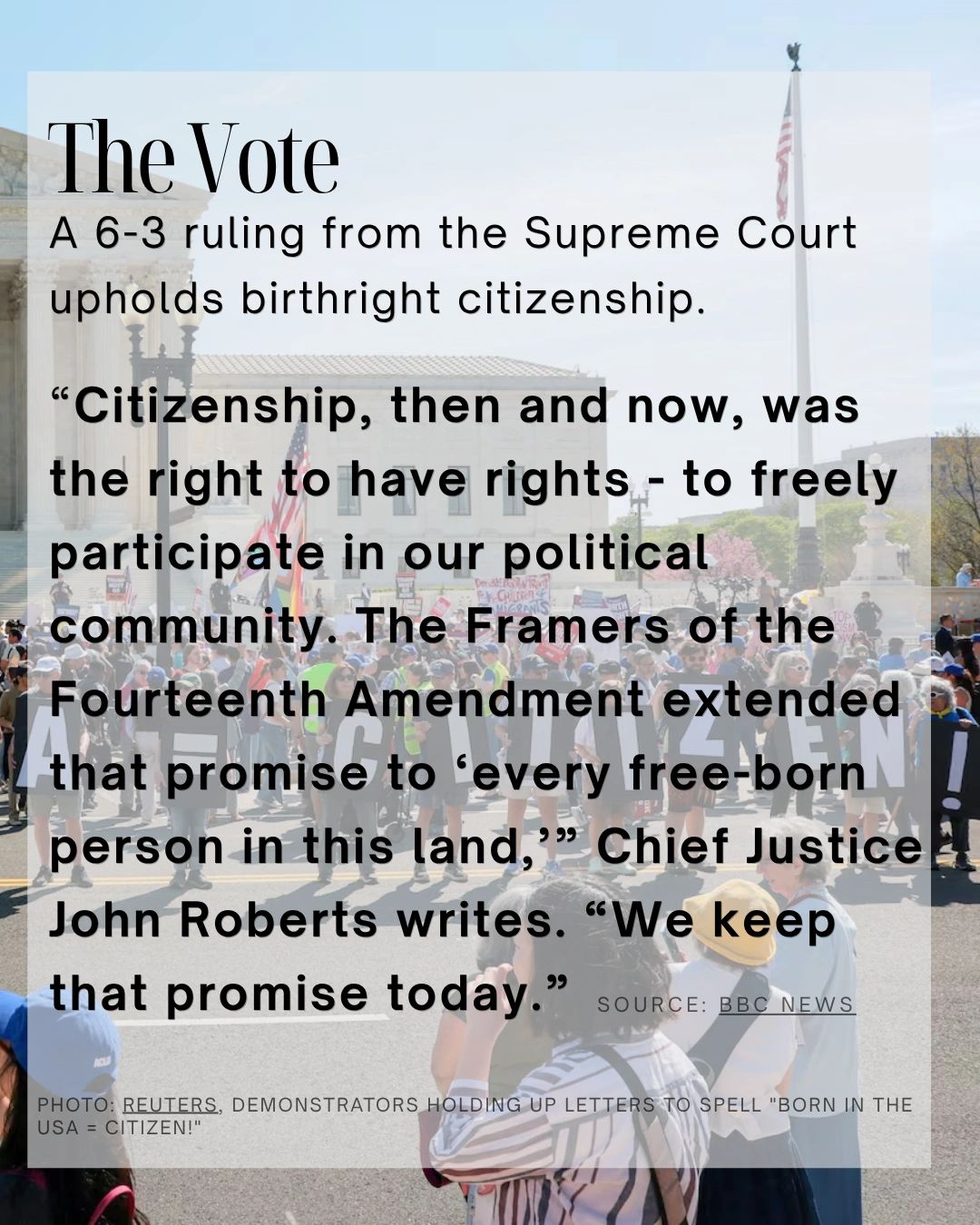
Altogether, these decisions have many implications that make it harder for people to enter the U.S. legally or to seek asylum, and make it difficult for those already inside the country to apply for asylum, given the lengthy, difficult process, made even worse by recent procedures implemented by the second Trump administration. Now, regarding people holding TPS, deportations will begin—starting with Haitians and Syrians—but the issue likely will not stop there. People with TPS have been in the U.S. for decades, working, paying taxes, contributing to the economy and the arts. They have children born in the U.S. who are U.S. citizens under the current practice of granting birthright citizenship; soon, the Court will rule on the future of birthright citizenship, which is so common in many countries in the Americas, which started as European colonies with an important proportion of the population born from parents and ancestors born elsewhere.
Ernesto Castañeda is a political, social, and cultural analyst. Edited by Esmeralda Alverde Duarte, Research Intern at the Immigration Lab