Haiti: Yet More Lost Opportunity

By Emma Fawcett*

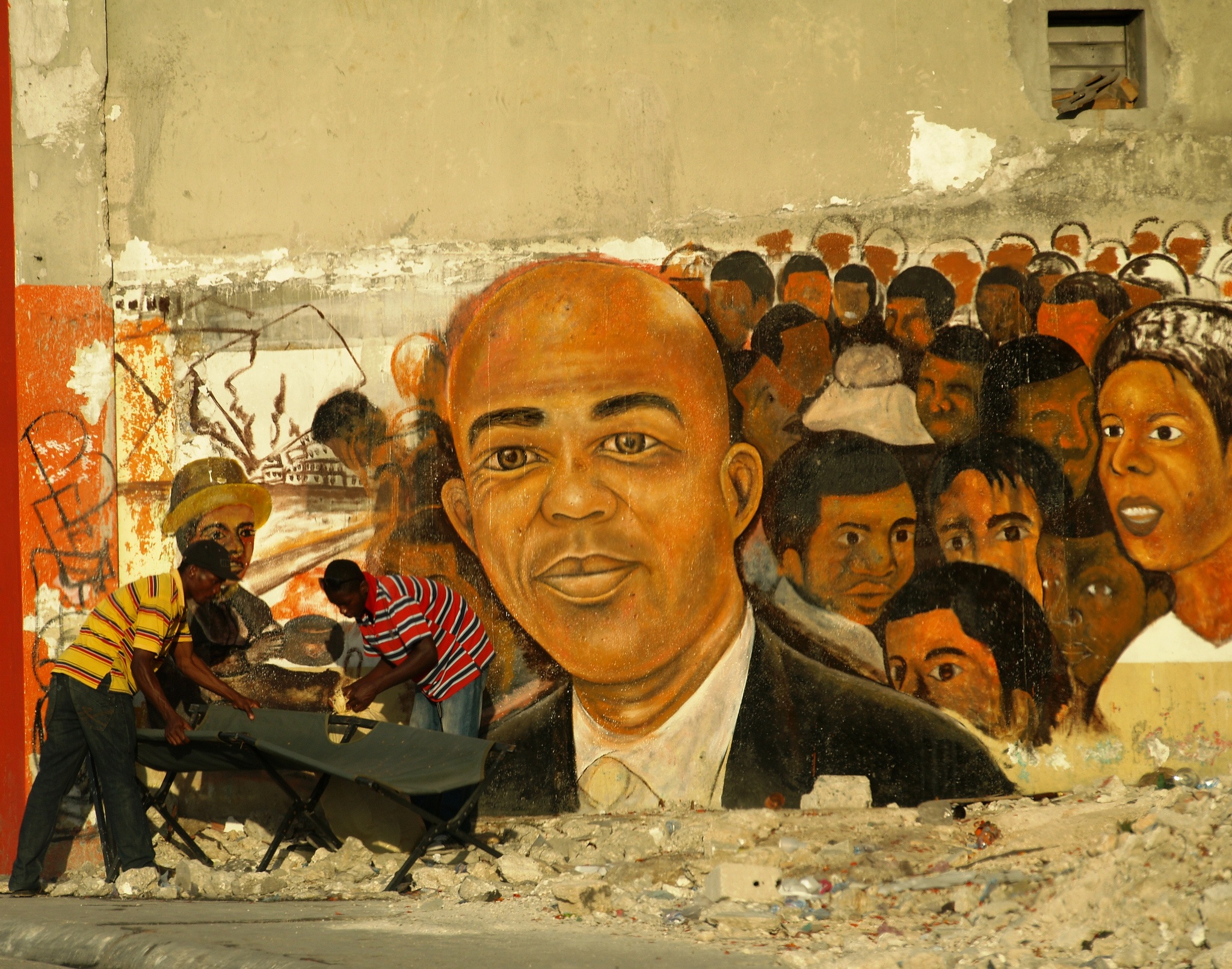
Photo Credit: Nacho Fradejas Garcia / Flickr / Creative Commons

Photo Credit: Nacho Fradejas Garcia / Flickr / Creative Commons

Six months into Haiti’s most recent political crisis, popular uncertainty and frustration are palpable – amid indications that even the Obama Administration may be tiring of corruption and mismanagement under President Martelly.  Officials in Washington in April expressed concerns over the abrupt release of gang leaders alleged to have ties to Martelly who had been held on kidnapping charges.  Recent U.S. Embassy tweets have focused on the importance of press freedom and free and fair elections.  Protests are a regular occurrence, and anti-government graffiti covers buildings throughout Port-au-Prince.  Martelly’s network of old friends – whom some long-time Haiti-watchers have called “nefarious characters” – has been politically useful to him, and various press reports indicate that criminal prosecutions against them for drug trafficking, kidnapping, and worse have mysteriously dropped off the books.  Criticism of his record on other issues is also strong.  A visit from Beyoncé on May 16 led the US Embassy to ask its Facebook followers: “Where should she go to see the progress in Haiti? Let us know!”  Social media users mocked, “What progress?” and derided the embassy for asking.  Washington politics, such as criticism of Bill and Hillary Clinton’s role in Haiti, is further casting a shadow on Martelly and his government.

The country has made partial progress towards holding its long overdue elections, but – if history and Martelly’s record are any guide – obstacles could easily arise.  A list of candidates has been approved, and dates have been set – August 9 for Parliamentary elections (all 118 seats in the Chamber of Deputies and 20 of the 30 seats in the Senate).   Presidential elections will take place on October 25, with a December 27 runoff if necessary.  But the process has not been without controversy: a quarter of the 2,039 who had registered to be candidates have been disqualified for various reasons.  (First Lady Sophia Martelly wanted to run for Senate but was not accepted because she is a U.S. citizen.)  As the government has not provided explanations in most instances, accusations that the exclusions were politically-motivated abound.

Martelly’s carefully calculated consolidation of power over the last four years has led many observers in Haiti to wonder whether he will actually make elections happen and leave office on schedule.  Many of them are perplexed by what they perceive as steadfast U.S. support for him.  Even in January, when an agreement on elections fell through once again and Martelly commenced to rule by decree, the State Department’s admonishment was widely seen as weak.  Rather than building bridges at home, Martelly has often appeared more externally focused – capitalizing on his ties to the Clintons, who along with the OAS helped him secure the contested presidency in the first place; declaring that Haiti is “open for business”; and holding his historic meeting earlier this month with French President Francois Hollande.  Indeed, the Hollande visit resulted in yet more protests in Port-au-Prince’s streets from those frustrated by France’s refusal to pay reparations for past abuses – such as the “independence debt” that France demanded, which consumed 80 percent of Haiti’s budget for 125 years (the equivalent of $17 billion dollars today).  Predictions about the elections and transition of power at the end of the year would be premature, but Martelly already seems to have squandered his chance to leave a legacy of progress, institution-building, and stability for the nascent Haitian democracy. 

June 1, 2015

*Emma Fawcett is a PhD candidate in International Relations at American University.  Her doctoral thesis focuses on the political economy of tourism and development in four Caribbean case studies: Haiti, Dominican Republic, Cuba, and the Mexican Caribbean.

The Venezuelan Opposition: Can the Center Hold?

By Michael M. McCarthy*

Leopoldo Lopez (R) being escorted by the National Guard after turning himself in on February 18, 2014.  Photo Credit: Juan Barreto via Globovisión / Flickr / Creative Commons

Leopoldo Lopez (R) being escorted by the National Guard after turning himself in on February 18, 2014. Photo Credit: Juan Barreto via Globovisión / Flickr / Creative Commons

The leaked video of jailed Venezuelan opposition leader Leopoldo López declaring a hunger strike and calling for a renewal of street demonstrations this Saturday threatens to reopen splits within the Venezuelan political opposition.  With Venezuela experiencing an economic crisis – the bolívar lost a quarter of its value on the black market last week and shortages of basic goods plague daily life – the opposition, a disparate group of 29 political parties organized under the Mesa de Unidad Democrática (MUD), seems poised to score a pivotal victory in this year’s legislative election.  But López’s call to protests could renew divisions between those supportive of last year’s La Salida street demonstrations and the moderate camp, led by Governor Henrique Capriles, eager to punish the government at the polls for its poor management of the economy.

  • On May 17 the MUD held open primaries for 37 candidacies, and turnout (8 percent of all registered voters) exceeded expectations, despite very little media attention being devoted to the races. Capriles’s First Justice (PJ) and López’s Popular Will (VP) parties won 13 and 10 candidacies with 19.7 percent and 18.2 percent of the votes, respectively.  Regionally-based parties Democratic Action, strong in rural areas, and A New Time, strong in western Zulia state, performed well, with other small parties winning the remaining candidacies. The results consolidated the negotiating leverage of the PJ and VP as the MUD began internal talks about selecting the remainder of its candidates by consensus and campaign tactics – whether to use a tarjeta única ticket or let individual parties be listed on the ballot on voting day.  (The National Election Council has yet to announce the date.)

The López video, first leaked on government media outlets before going viral on social media late last Saturday, was forceful.  It emerged after news broke that López’s cellmate, VP politician Daniel Ceballos – the former mayor of San Cristobal, an epicenter of the street demonstrations last year – would be transferred to a public jail for common criminals where security guarantees are considerably weaker.  In the video, López mentions the U.S. investigation into chavista National Assembly President Diosdado Cabello for alleged involvement in narco-trafficking; condemns the “permanent repression of our rights”; and demands “the liberation of all political prisoners,” the “halt to persecution, repression, and censorship,” and the setting of an official date for the legislative elections, with OAS and European Union observers.  On Monday, a leader of López’s party endorsed his call for a rally on Saturday, and Lopez’s wife and spokeswoman declared that Venezuela is entering “a new stage of struggle.”

The countrys situation is palpably worse than a year ago, when López went to jail, but opening a new front is not what most of the opposition had in mind.  Capriles and the MUD have issued statements of support since the video leaked, and the MUDs Executive Secretary Jesus Chuo” Torrealba posted a call for unity on Twitter.  Going to the elections divided is a loss, he said.  Going to the street divided is suicide.  Will we learn?  Unanswered, however, is the question of the oppositions ability to avoid becoming bogged down in a leadership struggle just as the campaign season kicks off.  Oppositionists had finally found a political middle ground based on prioritizing the elections and the narrative of ordinary Venezuelans facing daily hardships to find food and other basic necessities.  However legitimate the oppositions fury at the governments repression and mismanagement, the call to the streets risks changing that narrative and diminishing prospects of opposition unity going into the election season. 

May 27, 2015

* Michael McCarthy is a Research Fellow with the Center for Latin American and Latino Studies.

Honduras: Dare Anyone Criticize?

By Fulton Armstrong

Hernandez Honduras

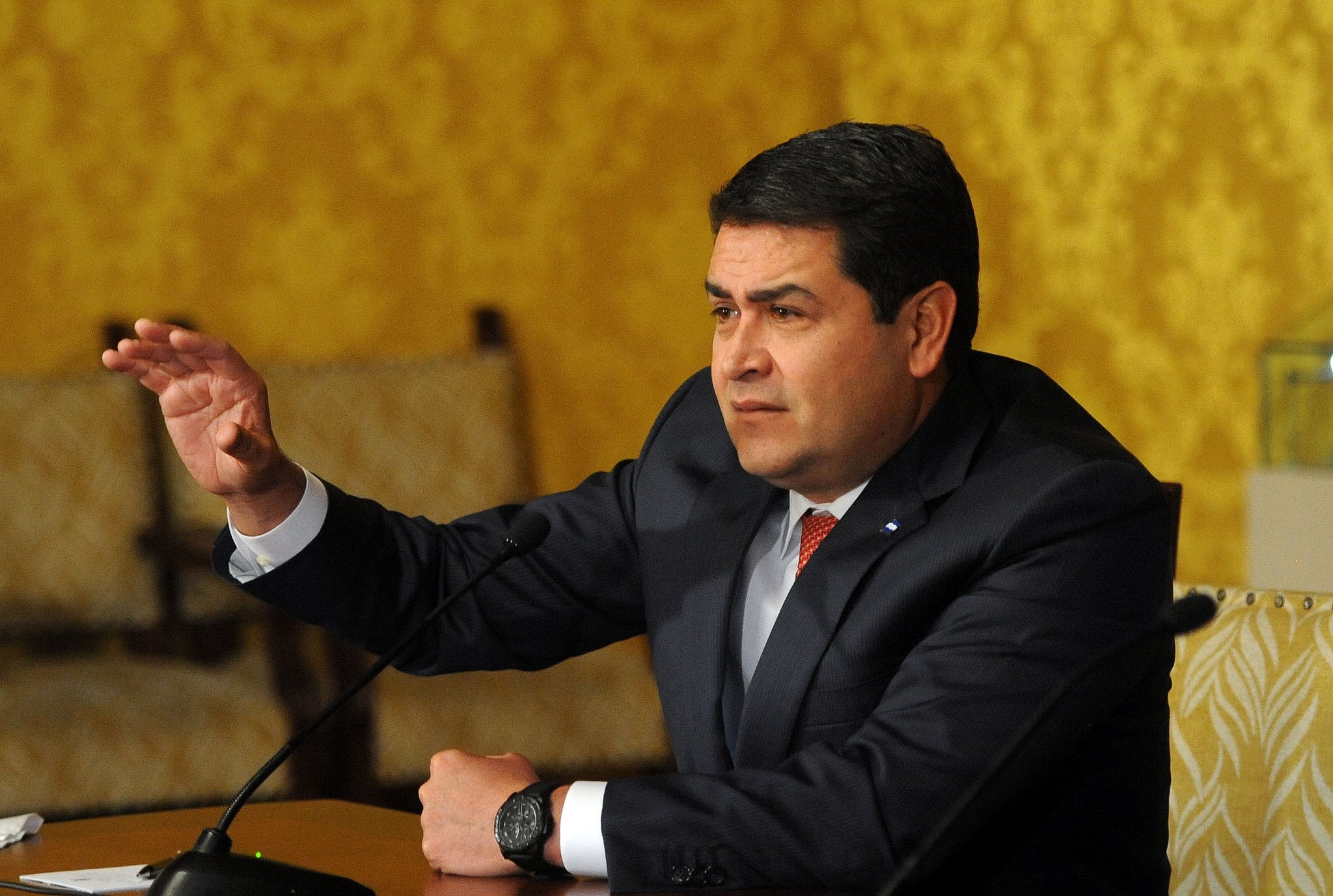
Honduran President Juan Orlando Hernandez. Photo Credit: Presidencia de la Republica del Ecuador / Flickr / Creative Commons

The decision last week by the Constitutional Chamber of the Honduran Supreme Court to legalize presidential reelection appears to have benefited a man – current President Juan Orlando Hernández – whose political fortunes got a shot in the arm from the 2009 coup that removed President Mel Zelaya for proposing a constitutional assembly to consider just such an action.  A Liberal Party magistrate said he wanted to recant his vote the next day, but the ruling party published the decision in the Gaceta Oficial before he could.  The Supreme Court, ruling in favor of petitions by former Nationalist President Rafael Callejas and several members of Hernández’s National Party, repealed two key articles of the Honduran Constitution, including one that says “the citizen who has served as the head of the executive power cannot be president or presidential candidate.”  Callejas immediately announced that he was resurrecting his Callejista movement, called MONARCA, which won him the presidency in 1990, and his campaign literature appeared in the streets of Tegucigalpa soon after.

The Court did not explicitly overturn Article 4 of the Constitution, which states that an “alternation in the exercise of the presidency of the republic is obligatory.”  That action reportedly will fall to the National Party-led Congress, but President Hernández is almost universally seen as the big winner from the Court decision, culminating his effort to continue as President.  After the coup that removed Zelaya from power, Hernández had a hand in congressional strategies to give a constitutional and legal framework – widely debunked – to Zelaya’s military ouster and later, while serving as president of the Honduran Congress and while campaigning for president, Hernández engineered the removal of four of the five justices of the constitutional chamber of the Supreme Court and replaced them with more sympathetic judges.  He subsequently had a role in selecting a replacement for the fifth, who became Attorney General – making for a court unanimously indebted to him.  (He was sworn in as national President in January 2014.)  Reacting to the court decision last week, Hernández noted that “reelection is something that is a general rule around the world … Prohibition of it is the exception … [and] Honduras has to make progress.”  His opponents have vowed to fight the repeal.  Leaders of the Partido de Libertad y Refundación (LIBRE) have accused the justices of “betrayal of the fatherland.”  One said the court “guaranteed the impunity” of the Hernández government, but the opposition’s legislative strategies have failed before.

Representing Central America’s most violent and most corrupt nation, President Hernández is seen in Washington as essential to success of U.S. policy in Central America and initiatives such as the “Alliance for Prosperity of the Northern Triangle.”  With a request for a billion dollars on its way to the U.S. Congress, the Obama administration can ill afford to point out Hernández’s hypocrisy for doing what he condemned former President Zelaya for trying to do in 2009.  Political inconveniences aside, the political cynicism and tensions that his and former President Callejas’s maneuvering will incite in violence-ravaged Honduras can hardly be seen as helpful to the goals of good governance and democratic consolidation that all profess.  When Nicaraguan President Daniel Ortega engineered a similar judgment by his Supreme Court in 2009, allowing him to run for an additional term, the State Department did not mince words about its “concern” for its implications.  Hernández, in contrast, was in Washington securing support for funding when his court announced its decision.  The U.S. Southern Command’s new task force of some 250 Marines is expected to arrive in Honduras and begin training of security forces involved in “fighting the drug traffickers.”

May 1, 2015

Bolivia’s Elections and Evo’s Surprising Political Malaise

By Robert Albro

Previous elections in La Paz. Photo credit: Pablo Andres Rivero / Flicker / CC BY-NC-ND

Previous elections in La Paz. Photo credit: Pablo Andres Rivero / Flicker / CC BY-NC-ND

Departmental and municipal elections in Bolivia last week dealt a significant setback to President Evo Morales’s party, the Movement Toward Socialism (MAS).  Benefiting from strong economic growth, broad-based support from among the country’s many social movements, and the absence of major controversy, last October Morales was elected to a third term as Bolivia’s president with an impressive 61 percent of the vote.  He is on track to be in office until 2020, making him the longest-serving leader in Bolivian history.  Last week, however, the party won just four of nine races for departmental governor and two of the races for mayor in Bolivia’s ten largest cities, reversing a trend of sustained MAS dominance since Evo’s election in 2006.  Most alarming for the MAS is that it lost across the board in the previous strongholds of La Paz and El Alto.  This unexpected outcome has touched off speculation that the MAS is running out of steam.

The MAS emerged as a national political force during the sustained social ferment of the early 2000s.  It reaped the benefits of widespread popular disenchantment with government as a movement for change and indigenous enfranchisement, and it built a successful coalition across ethnic, class, rural-urban, and to some extent, regional differences.  The MAS’s rise coincided with the collapse of the country’s established political parties.  As the only remaining national political movement, the MAS has since often identified its approach to governance as a bottom up, participatory, or popular plebiscite – a multiethnic and plurinational vision of local autonomy that it has successfully enshrined in the country’s constitution.  Addressing last week’s upset, Vice President Alvaro García Linera noted the MAS had done a poor job of cultivating new local leaders.  Evo suggested it was a “punishment vote” in response to recent corruption scandals involving MAS candidates.  Nor did Morales do his candidates any favors when he threatened not to work with opposition politicians in El Alto or La Paz if they were elected.

Despite this setback for the MAS, local opposition at the polls does not necessarily lead to national opposition.  The political opposition remains fragmented, and the MAS remains the country’s only truly national political party.  Even where it lost races for governor or mayor, in most cases the MAS enjoys a majority in the state legislatures or city councils.  However, several factors – corruption scandals, continued dependence on the extractive industries, and the party’s habit of co-opting right-wing non-masistas as candidates where it thinks they will win – point to the stubborn persistence of different national and local political realities.  When the MAS has run into problems in recent years, as with recent controversy over a plan to build a highway through the TIPNIS indigenous territory and national park, it is because it misread local political terrain, chose poor candidates, and ran afoul of regional or local autonomies.  The horizontal and plural coalition-building that has been the MAS’s hallmark can be a clunky local political instrument.  Last week highlighted that local electorates are less driven by social movement ferment, ideology, or historical change; are notably distrustful of MAS impositions from above; and are more interested in prosaic matters of good governance and candidates they know and trust. It was certainly not the beginning of the end of the MAS.  But if the national party continues to struggle in the face of diverse local political realities, it could signal for the MAS a gradual death by a thousand cuts.

April 9, 2015

Haiti: Another Crisis on the Anniversary of a Crisis

By Emma Fawcett*

Cinco anos depois do terremoto que devastou o Haiti / Agência Brasil Fotografias / Flickr / CC BY-NC 2.0

Cinco anos depois do terremoto que devastou o Haiti / Agência Brasil Fotografias / Flickr / CC BY-NC 2.0

Haiti recently marked the five-year anniversary of the devastating 2010 earthquake and missed yet another deadline for reaching an agreement on the country’s long-overdue elections.  On January 12, the parliament was effectively dissolved as the terms of all but 10 senators expired.  Without quorum or a new electoral law, President Martelly now rules by decree.  Many in the opposition, whose protests in the last several months forced the resignation of Prime Minister Lamothe, now also seek Martelly’s resignation.  Martelly has asked protesters to be patient, but some claim the electoral impasse is part of the president’s larger strategy for consolidating his power.  The U.S. Embassy in Haiti has expressed commitment to continue working with him and “whatever legitimate Haitian government institutions remain,” and hopes that Martelly will use his “powers responsibly to organize inclusive, credible and transparent elections.”  U.S. Vice President Joe Biden spoke with Martelly by phone, reiterating support for his administration and acknowledging his “efforts to work with the Haitian parliament and political parties to resolve outstanding issues.”  On Sunday, the UN Security Council concluded its three-day visit by urging politicians to work together to ensure elections can proceed, and refrained from commenting on whether the planned cuts to UN peacekeeping forces would take place in June.

Although there is continued handwringing over how $13.5 billion pledged in earthquake relief has been spent, there are some signs of economic growth.  Capacity in the apparel and hospitality sectors has increased dramatically, priming the pump for further private-sector development, but the results to date are weak.  Caracol Industrial Park (in the northeast) and the Lafito Industrial Free Zone (outside Port-au-Prince) are moving forward, though Caracol has thus far generated just 5,000 of the 65,000 jobs it was expected to create.  Minister of Tourism Stephanie Villedrouin has pushed tourism hard to attract foreign direct investment (FDI).  Tourism was a natural outgrowth of earthquake recovery: hotels rooms were urgently needed first for relief workers, now for engineers and businesspeople, and eventually (Haitians hope) for tourists.  Pétionville, located in the hills above Port-au-Prince and home to much of the country’s elite, has received a remarkable facelift.  It now boasts several renovated or newly-constructed international class hotels, though guests remain elusive.  Some of the tent cities have been cleared.  In Jalousie, one of the slums above Pétionville, concrete homes were painted in bright tropical shades, designed to evoke the work of Haitian artist Préfète Duffau.  (Critics of the project pointed out the neighborhood has more pressing needs than cans of paint, and wryly noted that while Port-au-Prince’s hillsides are covered in slums, only those overlooking Pétionville’s wealthiest residents received cosmetic treatment.)

Despite the political uncertainties and stalled reconstruction efforts, there is a sense among Haitian and international private-sector actors that moving forward is “now or never.”  Many point to Martelly’s unprecedented focus on attracting FDI and willingness to create incentive frameworks.  In field interviews, investors in Haiti and neighboring countries speak of hope that the country’s natural, cultural, and historical resources will make it a viable destination – as well as hope that U.S. and other foreign backing continues to expand the apparel and tourism sectors.  There are enormous challenges ahead, to be sure, compounded by the political crisis and potential for instability.  The government-led strategic planning process has been described as “opaque” and “accelerated” without much room for consultation with either the private sector or local communities.  Carnival Cruise Lines’ plans to build a new port on Ǐle de la Tortue have become mired in land tenure issues.  And inclusive growth – strategically targeted and yet expansive enough to lift Haitians out of poverty – will be hard to come by without improved institutional capacity, made all the more difficult by the events of the last three weeks. 

January 29, 2015

* Emma Fawcett is a doctoral candidate in International Relations at American University.

U.S. Elections: Latino Vote Not Decisive

By Eric Hershberg and Fulton Armstrong

Rob Boudon / Flickr / CC BY-NC 2.0

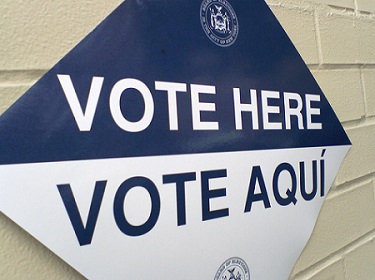
Rob Boudon / Flickr / CC BY-NC 2.0

Preliminary estimates indicate that Latino voter participation and support for Democratic Party candidates on Tuesday were similar to the 2010 mid-terms – but not enough to overcome the Republicans’ gains across the broader population.  Before Tuesday, Latino observers were excited that 1.2 million Latinos had registered to vote since the last mid-term elections (2010) and, with an estimated 66,000 American Latinos turning 18 each day, they would have some new clout.  Latino Decisions, the leading polling organization focused on Latinos, found that two-thirds of Latino voters in Texas supported Democrats in House races on Tuesday, and 74 percent in Georgia supported Democrats.  Their broader impact as a bloc, moreover, is hard to assess because most of the competitive races for the U.S. Senate and House of Representatives were not in states with concentrated Hispanic populations.  Gerrymandering also blunted their impact on House races, and new voter identification laws appear to have discouraged participation as well.  The Dallas Morning News reported last weekend that Texas state officials estimated that the laws would render more than 600,000 registered black and Latino voters unable to cast ballots (without breaking out the size of each group).

Latino Decisions had warned before the elections that enthusiasm for Democratic candidates was 11 percent lower than it was during the general elections two years ago.  Many Latinos were angry that President Obama backed off his plan to use executive authority to begin immigration reform, while at the same time, ironically, they were frustrated that the Democrats saw them as a one-issue constituency and did not include them on other issues.  Indeed, Voto Latino, a voting rights organization, and others have been warning that Latinos care as much or more about the economy, health care, and women’s rights but feel ignored.  (The polls show that Latinos feel even more shut out by the Republicans.)  The great pool of young voting-age Latinos has been “hardest to reach,” according to Voto Latino, because they are busy and turned off by the stereotyping.  The Democrats also seem to have communicated priorities poorly.  Colorado Senator Mark Udall played up his support for comprehensive immigration reform, but Latino Decisions says only 46 percent of Latino voters there knew it.  On the other hand, Nevada Governor-elect Brian Sandoval – a Republican – attracted Latino voters with a platform emphasizing Medicaid expansion, English-learning education initiatives, while downplaying his party’s rhetoric on immigration.

The margin of Republican victory was wide enough that even high Latino turnout wouldn’t have flipped the outcome in places like Colorado, North Carolina, and Georgia.  Tuesday’s results notwithstanding, however, polls by Latino Decisions and other research indicate that the Latino voice at the polls will grow and, when mobilized, be potentially decisive.  Despite strains with the Democrats, it’s hard to see Latinos jumping to the Republican Party unless it significantly shifts policies on immigration, social programs, voter-ID laws, and the economy.  It would be unfair to blame President Obama alone for the lack of a Latino surge this year, but his decision to back off on immigration clearly hurt his party badly.  He wanted to take heat off vulnerable Democratic senators but helped neither the candidates nor his party’s ability to mobilize Latinos.  Latino Decision’s data on low enthusiasm and dismay about the delay of executive action mean that if the administration doesn’t take real action soon – and work to build Latinos’ enthusiasm over the course of the next two years – it will diminish prospects for the Democrats to have a big Latino edge in the presidential race in 2016.  With a Republican-controlled Senate, Obama faces the same dilemma as before – to risk the Senate’s wrath by taking executive action on immigration or continue to alienate a key constituency – but the answer should be clearer in view of Tuesday’s results. 

November 7, 2014

Uruguay: Another Center-Left Victory

By Aaron Bell

Frente Amplio Uruguay / Flickr / CC BY-NC 2.0

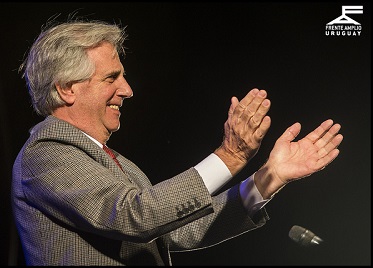
Frente Amplio Uruguay / Flickr / CC BY-NC 2.0

The Frente Amplio (FA) emerged from Sunday’s general elections in Uruguay looking stronger than observers had forecast – and signaling Latin Americans’ confidence in the center-left.  Despite a rough campaign season, which included polls showing the FA’s support stuck in the low 40s, and public sniping between the party’s leaders – candidate Tabaré Vázquez and current president José Mujica – just days before the election, the FA gained last-minute momentum in the polls and won 47.9 percent of the vote.  As expected, Vázquez received less than the outright majority needed to avoid a second round of voting on November 30 against the candidate of the Partido Nacional (PN), Luis Lacalle Pou, who won 31 percent of the vote.  But the FA preserved its majority in the lower chamber of parliament, and it can have the edge in the senate if Vázquez wins in November, as his vice president, Raúl Séndic, would hold the deciding vote.  The Partido Colorado (PC) candidate, Pedro Bordaberry, won only 12.9 percent of the vote and placed third in every department.

The elections revolved around Vázquez and Lacalle Pou’s leadership identity and policies; neither candidate argued for substantial structural changes.  In exit interviews, those who voted for the FA credited it with positive changes in its decade at the helm.  The 41-year-old Lacalle Pou has run as a youthful leadership alternative to the 74-year-old former president Vázquez, and he promised fresh ideas for taking on crime and education, considered leading concerns for Uruguayan voters.  While exit interviews suggest that this message appealed to his party’s voters, it did not translate into substantial youth support.  Polling by Factum prior to the election showed that 51 percent of voters aged 18-37 preferred the FA.  Public security has been the leading concern for Uruguayan voters, and both traditional center-right parties, the PN and PC, supported a referendum (also held on Sunday) that would have lowered the age of criminal responsibility for major crimes from 18 to 16.  But long-term polling trends have shown a decrease in the number of Uruguayans prioritizing security from its peak last year, and indeed the referendum failed with 47 percent of the vote; almost the entirety of undecided voters ultimately chose to oppose it.

The FA now has momentum and is well positioned to win the second round and enjoy the support of a parliamentary majority.  A likely PN-PC voting bloc in the second round once held a slight lead over the FA but now appears likely to fall short because of tensions between them.  The PC’s underwhelming performance at the polls has been compounded by Bordaberry’s decision on Sunday night to support Lacalle Pou without consulting PC officials, and his offensive off-the-cuff verbal attack on the Vázquez camp during a conversation with a PN official that same night, for which he has since apologized.  The left-leaning Partido Independiente, which came in fourth place with 3.1 percent of the vote, will make a decision on which candidate to support this week; their votes alone would be enough to push the FA over the top.  As a result, barring a major turn of events, it appears as though the incumbent pink tide will prevail in Uruguay – with implications, perhaps, beyond.  Indeed, a second-round FA victory will be the sixth this year for a left-leaning party, following the pattern set by Chile, Costa Rica, El Salvador, Bolivia, and Brazil.  While the citizenry may be impatient with the pace of progress in Latin America following nearly a decade of left-leaning governance, voters seem to be eschewing the right and maintaining the modestly but consistently leftward tilt that has characterized the region’s politics for much of the 21st century.

October 30, 2014


Brazil: Implications of Dilma’s Victory

By Eric Hershberg and Matthew Taylor

Sala de Imprensa / Flickr /  CC BY-NC 2.0

Sala de Imprensa / Flickr / CC BY-NC 2.0

President Dilma Rousseff’s reelection – by a tight 3.28 percent of the vote – sets the stage for a period of challenges and political uncertainty.  The Social Democratic Party (PSDB) candidate, former governor Aécio Neves, was truly a formidable contender, and Dilma and the Worker Party (PT) showed new weaknesses.  The battle was marked by a strong desire for change – even Dilma’s campaign slogan was “Governo Novo, Ideias Novas” (New Government, New Ideas) – and the big question now is what sort of change will come from the PT’s fourth consecutive turn in office.

  • Dilma lost overwhelmingly in the Worker Party’s (PT) old stomping grounds of the southeast (by 2-1 margins), but picked up support in Neves’s state of Minas Gerais and thoroughly dominated the northeast (by 3-1 margins in many places), including Pernambuco, which had gone to Marina Silva in the first round.
  • The lower middle class, known widely as Classe C, ultimately appears to have thrown its lot to Dilma – apparently driven by the PT’s relentless message that only it could be trusted to protect their interests and social programs like the Bolsa Família.
  • The PT emerges from the battle bloody and bruised. The Rousseff campaign’s systematic deconstruction of Marina Silva in the first round buys the resentment of a solid fifth of the electorate.  Former president Luiz Inácio Lula da Silva was an uneven participant in the campaign, inexplicably absent at critical moments and losing his cool at others.
  • The PT won 19 of 27 governorships, and Dilma’s alliance did well in the Chamber of Deputies and Senate, but the opposition is likely to be far more assertive, as the combined issues of the economy, public services and corruption proved during the campaign to be useful wedges to drive between the middle class and the PT. A newly combative and forceful Aécio will be the clear leader of the opposition.

Dilma faces formidable challenges.  The economy was moribund for almost all of her first term, and fairly urgent work is needed to cope with a deteriorating current account, the weak fiscal results, resurgent inflation, and declining personal credit, especially among the politically influential Classe C.  Management of public services – theoretically manager Dilma’s strong suit – needs attention, and she actually has little hope of driving meaningful change singlehandedly.  The corruption story, moreover, is an immediate threat.  If the testimony of foreign exchange dealer Alberto Yousseff, who was given whistleblower protection in exchange for testifying to the police, is to be believed, this is an enormous scandal that may shake the administration to its core.  In light of this political scenario, it is perhaps not surprising that Dilma’s victory speech focused on building consensus, suggesting she would push political reform via plebiscite, promising anti-corruption reforms, and suggesting, after largely downplaying the issue on the campaign trail, that inflation and fiscal balance will be key priorities during her second term.  Whether she can actually accomplish these goals on her own timetable is a big question.

October 27, 2014

Bolivia: Evo Wins Again

By Fulton Armstrong

Photo credit: Eneas / Foter / CC BY

Photo credit: Eneas / Foter / CC BY

President Evo Morales’s landslide election to a third term – fueled by a combination of moderate policies and fiery leftist rhetoric – portends continued stability in the near term, with still no indication of how his party will continue its project after him.  Although official results have yet to be announced, and some preliminary data show Evo garnering around 54 percent of the vote, exit poll estimates gave Evo a massive lead of 60 to 25 percent over the next closest candidate, a wealthy cement magnate named Samuel Doria Medina.  Regardless, the enormous margin separating Evo from his competitors precludes a runoff race.  Doria, who also ran against Evo in 2005 and 2009, claimed that OAS praise for the elections before the polls closed was “not normal,” but he is not disputing the results and has conceded defeat.  Congratulations to Evo poured in first from his left-leaning allies – Presidents Maduro (Venezuela), Mujica (Uruguay), Fernández de Kirchner (Argentina), and Sánchez Cerén (El Salvador) – but other voices soon followed.  The victory set Evo on track to be the longest-serving president in Bolivian history since national founder Andrés de Santa Cruz lost power in 1839.  His party, the Movement Toward Socialism (MAS), is also reported to have expanded its control of the Chamber of Deputies and the Senate, although vote tallies are not final.

Evo has achieved things his domestic and foreign detractors said were impossible.  While his rhetoric has been stridently leftist and anti-U.S. – he even dedicated his “anti-imperialist triumph” to Hugo Chávez and Fidel Castro – his policies have been decidedly pragmatic and disciplined, and the results have curried favor for him among foes.  His economic czar has emphasized Bolivia’s commitment to “have socialist policies with macroeconomic equilibrium … applying economic science.”  The economy grew 6.8 percent last year and is on course to grow another 5 percent this year.  Foreign reserves have skyrocketed; Bolivia’s are proportionately the largest in the world.  Poverty has declined; one in five Bolivians now lives in extreme poverty, as compared to one in three eight years ago.  IMF and World Bank officials, whose policies Evo largely rejected, have grudgingly conceded he has managed the economy well.  Some of his projects, such as a teleférico cable car system linking La Paz with the sprawling city of El Alto, have garnered praise for their economic and political vision.  He even won in the province of Santa Cruz, a cradle of anti-Evo conspiracy several years ago.  In foreign policy, he has good ties across the continent, but strains with Washington continue.  The two countries have been without ambassadors in each other’s capital since 2008, and talks to resolve differences over the activities of DEA and USAID failed and led to their expulsion from Bolivia.

Sixty-plus percent in a clean election for a third term – rare if your initials aren’t FDR – signals that Evo, like Roosevelt, is a transformative figure.  No matter how brilliantly Evo has led the country, however, the big gap between his MAS party and the opposition suggests political imbalances that could threaten progress over time if he doesn’t move to spread out the power.  Evo has given the MAS power to implement his agenda, but he has not given space to rising potential successors.  He has said he will “respect the Constitution” regarding a now-disallowed fourth term, but it would take great discipline not to encourage his two-thirds majority in the Senate to go ahead with an amendment allowing him yet another term.  It would be naïve, moreover, to dismiss out of hand the opposition’s allegations of corruption by Evo’s government, but his ability to grow his base above the poor and well into the middle class suggests that, for now, the fraud and abuse do not appear to be very debilitating … yet.  Washington, for its part, seems content with a relationship lacking substance rather than joining the rest of the hemisphere in cooperating with Bolivia where it can.

Other AULABLOG posts on this and related topics:  ALBA Governments and Presidential Succession; Lessons from the MAS; and Will Bolivia’s Half Moon Rise Again?

October 14, 2014

Elections in Brazil: The Force of the Latin American Left

By Eric Hershberg and Luciano Melo

Aécio Neves – Senador & World Economic Forum / Foter / CC BY-NC-SA

Aécio Neves – Senador & World Economic Forum / Foter / CC BY-NC-SA

The first round of Brazil’s presidential election has set the stage for a runoff playing primarily to class differences.  By the eve of the election, polls hinted at the real possibility that the center-right candidate Aécio Neves of the Brazilian Social Democratic Party (PSDB) would edge out the other principal opposition contender, former Minister of the Environment Marina Silva.  Silva enjoyed a spike in the polls after she replaced the late Eduardo Campos, who perished in a plane accident in August, as the Brazilian Social Party (PSB) candidate.  Sunday’s results confirmed Silva’s decline, as she captured only 21.3 percent of the votes compared to 33.5 percent for the PSDB and 41.6% for incumbent President Dilma Roussef of the Worker’s Party (PT).  The PT used its potent propaganda machine to portray Silva as a potentially dangerous candidate – an indecisive leader who could not be trusted to sustain popular social programs such as the Bolsa Familia conditional cash transfer program, which has helped lift millions of Brazilians out of poverty.  Also, Aécio and Rousseff built their images upon two iconic ex-Presidents – the former on Fernando Henrique Cardoso (FHC) – seen by the middle and upper classes as the leader who managed to defeat hyperinflation and putting Brazil on track for economic growth – and the latter on Lula, Rousseff’s mentor, who is idolized among the most disadvantaged parts of Brazilian society as the President who helped the poor become less poor.

To win the runoff on October 26, Aécio needs at least 70 percent of Silva’s votes – she has only hinted at supporting him – while Rousseff would succeed with only half of that.  It is clear that Dilma and the PT will double down on their negative advertisements, now aiming at Aécio rather than Marina.  The PT’s barrage over the airwaves will highlight the risks of abandoning the course set out by Lula and followed by Rousseff.  Voters will be told that the opposition may underfund cash transfers, privatize the state oil company Petrobrás or treat it as a profit-making enterprise rather than as a development bank, thus increasing unemployment as occurred during the Cardoso years.  And the PT will no doubt remind voters of its consistent efforts to boost minimum wages and chip away at the vast inequalities that had long characterized Brazil.  Surely they will portray Neves as an elitist out of touch with the majority that has benefited from the PT’s redistributionist agenda.  Aécio and the PSDB, by contrast, will highlight the worrisome slowdown in growth under Rousseff, the failure to significantly improve public services – it was frustration over health, education and, particularly, urban transportation that drove the social protests that began in mid-2013 – and the over-regulated and over-taxed economy.  Most of all, Neves’ campaign will harp on the persistent scandals that have bedeviled the PT over the past decade and that have helped to fuel popular disdain for politicians.

The election results in Brazil are likely to become increasingly polarized in terms of class.  Dilma appears poised to prevail in the poorest states of North and Northeast, where Bolsa Familia and other cash transfer programs, subsidies, wage increases and Lula’s image are compelling.  In turn, Aécio should come out ahead in the richer states such as São Paulo, which offer the largest pool of voters and where highly educated and middle- and upper-income Brazilians are concentrated.  We make divergent predictions: Hershberg anticipates a PT victory, since for all the speculation about the travails of the Latin American left, it has built very substantial foundations of support in societies that credit the left with finally making some advances to tackle Latin America’s yawning inequalities.  Warnings that Aécio represents a return to elite rule will resonate among the PT’s electoral base, and the PT’s success will be nourished by its powerful organizational capabilities.  Melo, by contrast, anticipates a PSDB triumph.  In this scenario, the corruption, disappointing growth rates over the past two years as the commodity boom has slowed, and widespread frustration about the quality of public services will generate an anti-incumbent dynamic that will bring to an end a dozen years of PT rule.

October 10, 2014