Building Walls, Closing the Border: Not the Answer

By Ernesto Castañeda with Maura Fennelly*

U.S. Border Patrol stands watch during border fence reinforcement / U.S. Customs and Border Protection / https://www.flickr.com/photos/cbpphotos/44997385775/in/photostream/

U.S. Border Patrol stands watch during border fence reinforcement / U.S. Customs and Border Protection / https://www.flickr.com/photos/cbpphotos/44997385775/in/photostream/

Trump is widely thought to have originated the call for a wall to keep out migrants, but animosity toward Latin Americans has deep roots in U.S. history and political discourse – and the tough task of reversing it is long overdue. Presidents Bill Clinton and George W. Bush criminalized migration and secured funds to build fences and militarize the border. President Obama also oversaw the deportation of over 2 million migrants, some of whom ended up in camps on military bases.

Immigration remains one of the most debated issues, and immigration policies have a profound impact on families and communities with foreign-born members. Many long-time residents and some politicians see immigration as a cultural threat and are opposed to it. In Building Walls: Excluding Latin People in the United States, we trace the building of symbolic and physical walls between white Americans and Latin people. Boundary formation occurs at three levels:

  • Categorical thinking. The modern nation-state rests on the assumption that exclusion is necessary to protect the welfare of citizens. Migrants can be viewed as a threat to the autonomy of the nation. Immigrants can be “naturalized” and offered full citizen rights, but this assumes that they must change to fit in. One of the main narratives driving strict border surveillance is that migrants will negatively affect the economy, despite research continuing to show that long-term employment rates of American citizens’ are not harmed by immigration. Low-skilled wages are barely affected by immigrants entering the American workforce.
  • Anti-immigrant speech. Minority populations, including immigrants, have been subject to an increase in hate crimes since the 2016 election. White Nationalist groups use social media and the public sphere to disseminate anti-immigrant views. Members of a splinter militia group – the Minutemen American Defense – killed nine-year-old Brisenia Flores and her father in 2009 (and were convicted in 2011). The Minutemen, while declining in membership, have inspired the creation of smaller border patrol groups.
  • Immigration as an experience. Despite some political leaders’ claims of insecurity at the border, U.S. cities right next to Mexico are safe. Research shows that most border-area residents enjoy being next to Mexico. Across the nation, moreover, a vast majority – about 75 percent – believe that immigration is good for the United States. Nonetheless, Latin American migrants still struggle to find a home and a sense of belonging. In interviews, we find that many experience “social invisibility” – a feeling of existing in significant numbers while being unrecognized as full members. Interviews with undocumented migrants we conducted in El Paso reveal that over 75 percent reported that employers, landlords, and neighbors threatened to use their undocumented status against them. These experiences affect migrants’ well-being and mental health.

While the United States maintains durable inequalities between white Americans, Latin people, and other marginalized groups, the historical and social forces shaping our immigration narrative can be changed so that we empathize with, and no longer demonize, people who are looking for a home. Trump’s efforts to expand existing walls and build new ones are central to his strategy. He led the longest government shutdown in U.S. history and declared a national emergency because Congress would not fund it as he wished. However, his threats to close the border, impose tariffs, and other drastic actions show ignorance of the major impact these actions would have on the United States’ access to inexpensive agricultural, industrial, and technological products from Mexico. A border closure would not be sustainable beyond a few days. While polls show that 41 percent of people in the United States support the construction of Trump’s border wall, a majority of Americans know that more walls would not work.

  • The United States does not need a border wall with Mexico. The misleading and inaccurate claims made by politicians about Latin immigrants only further divide the nation – and obscure the positive contribution of Latin Americans, their experiences, identities, and cultures.

July 2, 2019

*  Ernesto Castañeda teaches sociology at American University and is the author of Building Walls: Excluding Latin People in the United States. Maura Fennelly is a graduate from American University and works with a housing assistance organization in Chicago.

Mexico: Has AMLO Compromised on Human Dignity?

By Alexandra Délano*

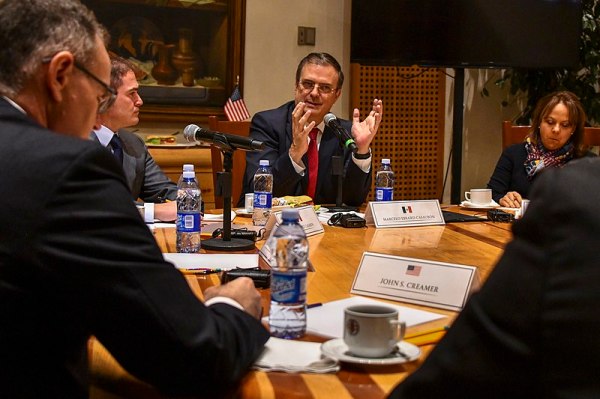
Mexican Foreign Secretary Marcelo Ebrard speaks during a meeting in 2018, during which U.S. Secretary Mike Pompeo was present

Mexican Foreign Secretary- designate Marcelo Ebrard participates in a bilateral meeting with U.S. Secretary of State Michael R. Pompeo in Mexico City on October 19, 2018. State Department photo/ Wikimedia Commons

Mexico has always negotiated with the United States from a position of weakness – it depends on its northern neighbor economically and politically more than the other way around – but the recent negotiations, compromising its commitment to human dignity in exchange for avoiding tariffs, may be among the worst outcomes. Tariffs on Mexican products would surely be costly for Washington, as business leaders and Republican legislators have stated recently, but the much greater economic threat is to Mexico. As a result, Mexico has consistently sought to keep the issue of migration separate from trade and other priorities – a delinking that both countries have accepted for the sake of advancing economic integration.

  • Trump has destabilized that tacit agreement by asserting that maintaining the status quo in commercial relations will depend on new steps by Mexico to support expansion of barriers on its northern border, to better control its southern border, and to stop the flow of migrants from Central America. In addition to imposing the tariffs, Trump threatened to abandon the newly negotiated North American Trade Agreement (“USMCA”) and even to close the U.S.-Mexico border.
  • President Andrés Manuel López Obrador (AMLO) has opted for a strategy of minimizing confrontation with Trump. This has implied concessions such as accepting the return of persons awaiting asylum hearings in U.S. courts. Even though this policy, called the Migrant Protection Protocols (or Quédate en México), is not in an official agreement, and even though it does not go to the extreme of establishing Mexico as a “safe third country” – which would obligate migrants to claim asylum in Mexico instead of having the option of continuing their journey to the United States – it is an attempt to appease Trump and maintain the fragile balance in the relationship.
  • AMLO has taken other steps to placate Trump. For example, Mexico and the UN’s Economic Commission for Latin America and the Caribbean (ECLAC or CEPAL) recently announced a development plan for Central America that, although limited in scope and without apparent funding, is an important step towards addressing root causes of migration in the region.

AMLO’s government negotiated to increase its control of the southern border and to continue to host asylum-seekers awaiting a court hearing in the United States. It did so in the absence of an integrated migration strategy, and without a commitment to invest resources, at a time when the budget of the Mexican Commission for Refugee Assistance (COMAR) was just cut 20 percent. The Instituto Nacional de Migración (INM) is also ill-positioned to assume a greater role without addressing its need for the resources and measures necessary to root out corruption and reduce its over-reliance on detention and deportation. Officials from these organizations were not even included in the negotiations – further reflecting the lack of vision and interagency coordination on the migration challenges. Not surprisingly, the INM Commissioner resigned days after the agreement was announced.

  • Mexico’s policies also appear to neglect the need to strengthen multilateral mechanisms to compensate for its weakness in the face of U.S. pressure. Mexico has traditionally been one of the most active promoters of multilateral agreements on cooperation on migration issues, including the Global Compact on Migration approved last year, but it appears unable to build on these accomplishments to either counterbalance Trump’s pressures or guide an internal policy on what to do. It has also failed to build support among G20 allies, including Canada – its second most important trading partner and a player in the extractive activities implicated in driving emigration and internal displacement in Central America and Mexico.

Mexico’s migration policy at this point is very far from the ideals laid out by López Obrador. His primary concern has been to pursue the impossible goal of containing Trump without harming other interests. Above nationalist posturing – claims that Mexico will never negotiate away its dignity – is the need to protect the dignity of persons. A migration policy that prioritizes migration control and that is based on the mood swings of the United States’ government does not meet this basic criterion. It leaves Mexico in the same weak, isolated position from which it cannot negotiate agreements on labor mobility, humanitarian protection, and economic development. Mexico seems to have made a strategic error in response to Trump’s most recent tantrum – one likely to reoccur under even more challenging conditions as the 2020 election nears.

June 25, 2019

* Alexandra Délano is chair of the Global Studies Department at the New School in New York City. This article is adapted from her essay in El País on June 5, Lo que está en juego en las negociaciones con Estados Unidos: la dignidad humana.

U.S.-Mexico: Tariffs, Threats, and Trade Agreements

By Ken Shadlen*

Cargo ships

Cargo ships off shore of Galveston Island, TX / Jocelyn Augustino / Creative Commons / https://commons.wikimedia.org/wiki/File:FEMA_-_38860_-_Cargo_ships_off_shore_of_Galveston_Island,_TX.jpg

The United States’ threat last week to apply tariffs on imports from Mexico, unless Mexico revamped its approach to Central American migrants passing through the country, underscores the power asymmetries in the global economy – and undermines the credibility of U.S. trade agreements elsewhere. President Trump threatened to abrogate U.S. commitments under NAFTA (and the WTO) unless Mexico introduced measures in an area that is not addressed by NAFTA. While the tariffs won’t be applied, at least not now, and there is debate about just how much Mexico changed its migration policies as a result of Washington’s maneuver, the linkage between trade and “non-trade” issues such as immigration, especially within preferential trade agreements such as NAFTA, have deep implications for the political economy of international trade.

  • Many critics of Trump’s threats claim that immigration policy and trade policy are distinct, and that it makes no sense for the administration to link the two. But this misses the point: what is and is not “trade” is determined politically. Since the 1980s, the United States has conditioned market access on the introduction and enforcement of a wide range of “trade-related” policies, including investment, intellectual property, government procurement practices, and so on. Market size confers to the importing country the power to define what constitutes “trade,” and the definition of “trade” thus has changed according to Washington’s preferences. In that sense, Trump’s linkage maneuver is not at all new.
  • On the one hand, NAFTA is the outcome of massive linkage of this sort, as Mexico was required to introduce extensive changes to policies and practices in a range of trade-related policy areas in order to qualify for the agreement. On the other hand, NAFTA was meant to protect against further “ad hoc linkage,” with new conditions attached at the whim of the United States.
  • Prior to NAFTA, Mexico’s exports largely entered the U.S. market under the Generalized System of Preferences (GSP), which offers preferential market access to exports from developing countries under a wide range of conditions. But GSP preferences can be withdrawn unilaterally, and, as the importing country, the United States changed GSP preferences in response to its changing sentiments. Beneficiary countries always ran the risk of having the U.S. Congress and Executive attach additional conditions to the program, like ornaments on a Christmas tree.
  • NAFTA and other NAFTA-like trade agreements that have followed promised to deliver substantially more predictability and stability than the GSP.

Recent events question these premises. In 2017-18, Trump warned that Washington would withdraw entirely from NAFTA unless it was renegotiated on terms more to his liking. Last week’s threat to remove preferential market access unless Mexico changed its immigration policies and practices is precisely the sort of behavior that NAFTA was meant to protect against. The agreement supposedly replaced the unstable preferences of GSP, which were always vulnerable to the whims of U.S. politicians, with a new set of preferences that were clearly defined, had fixed conditions, and were less prone to being unilaterally withdrawn. But evidently it didn’t.

Washington’s actions are similar to if the Mexican government announced it would stop enforcing copyrights and patents of U.S. firms, unless the United States were to substantially increase science and technology assistance to help upgrade the stock of biologists, chemists, and engineers in Mexico. The reaction to such an announcement would be ridicule, and Washington would claim NAFTA (and the WTO) binds Mexico to protect intellectual property. The United States would assert, moreover, that its science and technology assistance is not covered by NAFTA; Mexico’s threat would elicit no change of behavior on the part of the US. 

  • Beyond NAFTA per se, these events make one wonder why any country would sign a trade agreement with the United States. After all, if countries already have preferential market access under the GSP, then one of the main benefits of reciprocal trade agreements is to lock-in and stabilize those preferences – even with the need to make substantial concessions on “trade-related” policy areas. If, in reality, only half of the bargain is locked in, if the benefits can be made to disappear at the whim of the U.S. President, then for many trading partners the benefits of such agreements will be unlikely to compensate for the costs.

June 11, 2019

*Ken Shadlen is Professor of Development Studies and Head of Department in the Department of International Development at the London School of Economics and Political Science.

U.S.-Cuba: You Can’t Get There from Here

By William M. LeoGrande

ventas en cuba

Small Business in Cuba / Alberto Yoan Arego Pulido / https://www.flickr.com/photos/albertoyoan/8775169259

U.S. President Donald Trump’s new economic sanctions against Cuba, imposed earlier this week, include limits on travel and family remittances aimed at crippling the Cuban economy and causing regime collapse, but the biggest losers are the small entrepreneurs, intellectuals, and artists who have been agents of change on the island. Senior administration officials, foremost among them National Security Adviser John Bolton, have been explicit that the goal is to rid the hemisphere of “socialism,” starting with the government of Venezuela and proceeding to Cuba and Nicaragua. Bolton previewed the new sanctions in Miami on April 17  – the anniversary of the failed Bay of Pigs invasion. Now we know the details.

  • Remittances, which were unlimited under President Barack Obama, will be limited to $1,000 per recipient household every quarter – enough to supplement a family’s meager state salary, but not enough to start and sustain a business. The new limits will hit Cuba’s nascent private sector hardest because funds from the United States were the start-up capital for many small businesses, and their supply chains reach back through Miami.
  • Trump has eliminated the people-to-people category of educational travel, which Bolton denounced as “veiled tourism.” This category covered educational tours not involving academic credit – tours run by organizations like National Geographic, the National Trust for Historic Preservation, and the Smithsonian. Authorized originally by President Bill Clinton in the 1990s, people-to-people travel was eliminated by President George W. Bush in 2003, in response to complaints from conservative Cuban-Americans in South Florida. President Obama restored it in 2011. Trump, like Bush, appears to be pandering to the Cuban American Republican base in Miami in the run-up to the next presidential election. Last year, 638,000 U.S. residents who were not Cuban Americans traveled to Cuba – at least two-thirds if not more under a people-to-people license, mostly on cruises, which Trump also banned. These new travel restrictions will cost Cuba upwards of $300 million dollars annually in lost revenue.

Cuba’s private sector will suffer disproportionately from these measures. In addition to losing start-up capital and access to supplies, these businesses will lose their principal client base. U.S. travelers arriving by air are more likely stay in Airbnb rentals and eat at private restaurants than the Canadians and Europeans who come on tourist vacation packages and stay at the big hotels on the beach. Trump’s first restriction on people-to-people travel in 2017, banning individuals from designing their own people-to-people trips, caused a 44 percent slump in private B&B occupancy. The new restrictions will wipe out many of them.

  • U.S. business and people will take a hit too. In 2017, Engage Cuba, a coalition of business groups favoring trade, released an analysis concluding that U.S. visitors to Cuba generated $1.65 billion in revenue annually for U.S. businesses and accounted for more than 12,000 U.S. jobs in the hospitality sector, most of which would be lost if Trump cut off travel. Most importantly, the new restrictions deprive most U.S. citizens of their constitutional right to travel, a right affirmed by the Supreme Court in 1958 in Kent v Dulles. The Court said the right should be limited only in cases of dire threats to national security.

As usual, tougher economic sanctions will make life tougher for ordinary Cubans, but sanctions won’t bring down the Cuban government, which has survived the U.S. embargo for half a century. Economic hardship and U.S. hostility will heighten Cuban leaders’ sense of being besieged, making them less likely to reform the economy or allow any expansion of free expression. Economic, professional, educational, and cultural ties between people in the United States and their counterparts in Cuba will be harder to sustain, impoverishing both. Cuba’s private entrepreneurs, who could be an engine for economic transformation and who Trump claims to support, will suffer from the loss of business from American travelers. U.S. travel companies will lose access to one of the biggest and fastest-growing tourism markets in the Caribbean. But maybe, just maybe, this latest assault on the liberties of Americans by the Trump administration will motivate Congress to finally pass a “Freedom to Travel” bill, assuring that no president can take away the constitutional right to travel just because he thinks it will help him win re-election.  

June 6, 2019

* William M. LeoGrande is Professor of Government at American University.

Venezuela: Inching Toward Negotiations?

By Fulton Armstrong

A group of Venezuelans protest against International Contact Group for Venezuela. The Venezuelan flag is held in the background as a protester holding a young child looks on.

Community of Venezuelans protest against International Contact Group for Venezuela / https://www.shutterstock.com/image-photo/montevideo-uruguay-february-8-2019-community-1307825104?src=qNES6S7x3QlbnYg-a1h2wg-1-0 / Shutterstock

As Venezuelan National Assembly President Juan Guaidó reiterates his welcome to U.S. military intervention, his international supporters – rejecting a military solution – are moving toward promoting a negotiated settlement that would include President Maduro or, in one scenario, a chavista he designates. Guaidó publicly stated this past weekend that he has directed his representative in Washington to meet with the U.S. Southern Command, whose top officer recently said “we’re on the balls of our feet and ready to go,” to discuss “cooperation.” Although the 50-plus countries that recognized Guaidó’s claim as “interim president” in January have not abandoned him, press reports indicate that they are increasingly looking at alternatives to his strategy of instigating the Venezuelan military to overthrow Maduro and, failing that, asking Washington to do so.

  • The failure of Guaidó’s attempted coup in Operación Libertad, on April 30 – after other stalled initiatives over humanitarian aid at the Tienditas Bridge in February and numerous street mobilizations – has dispirited foreign supporters who joined Guaidó’s cause almost four months ago with the expectation that he would replace Maduro within days. Leaders in Latin America and the European Union have repeatedly expressed concerns about senior U.S. officials’ assertion that “all options,” including military action, are under consideration. (Secretary of State Pompeo last week repeated that the United States “will do what’s required.”)

These shifts give momentum to diplomatic initiatives to start and monitor a negotiated internal settlement. Advocates of negotiations, such as Spanish Foreign Minister Josep Borrell, who last week said the United States was acting “like cowboys,” have begun to push harder.

  • On May 3, the “Lima Group,” including 12 Latin American countries and Canada, called for the first time for broader consultations on initiatives undertaken by the International Contact Group (the ICG, consisting of eight EU countries plus Uruguay, Costa Rica, and Ecuador) and, over the objections of Guaidó’s representative at their meeting, called for dialogue with Cuba to explore ways of ending the crisis. The ICG, meeting on May 7 with the important participation of the Vatican and Lima Group hardliner Chile, agreed to send a “high-level political delegation” to Caracas to discuss “concrete options” with both sides. Soon after, Canadian Prime Minister Justin Trudeau called his Cuban counterpart, President Miguel Díaz-Canel, to urge Havana’s help. (Cuba’s position remains that it would gladly participate if Maduro requested it.)
  • Federica Mogherini, the EU’s chief of foreign affairs, has kept up criticism of Maduro, condemning the arrest last week of National Assembly Vice President Zambrano, but press reports indicate that she’s maneuvering the 28-nation community away from absolute support for Guaidó and toward an inclusive negotiation process that produces a “political solution and early elections.” She has softened her previous demand of Maduro’s departure as a precondition.

The United States still firmly rejects any negotiated settlement, steadfastly repeating that Maduro and the “occupation forces” – Cuba and Russia – must leave Venezuela immediately. But, even if starting a negotiation does not ensure a good settlement, most of the international community is reaching the conclusion that sanctions, such as those that are worsening humanitarian conditions in the country by the day, are increasingly unlikely to produce the desired regime change and stable outcome. Anyone watching Venezuela over the years knows that both the opposition and Maduro (the latter more frequently) have thrown wrenches into past negotiations in belief that they would win a war of attrition. Advocates of a return to negotiations are under no illusion that talks this time will be easy. The U.S. sanctions will soon begin to bite harder, but Guaidó’s stumbles have convinced many that humanitarian suffering does not translate into regime change – and they may even think that now is time to begin using the leverage of sanctions and at least try to get a process going. There are few guarantees in world affairs, of course, but pragmatists seem to be betting that the probability of rescuing Venezuela from an even deeper abyss is greater with negotiations than with more sanctions and rhetoric about military attack.

May 13, 2019

U.S.-Central America: Suspending Aid Won’t Help

By Joseph Wiltberger*

Honduran President Juan Orlando Hernández, U.S. Vice President Joe Biden, Guatemalan President Jimmy Morales, and El Salvador President Salvador Sánchez Cerén during a Northern Triangle meeting on January 14, 2016

Honduran President Juan Orlando Hernández, U.S. Vice President Joe Biden, Guatemalan President Jimmy Morales, and El Salvador President Salvador Sánchez Cerén during a Northern Triangle meeting on January 14, 2016 / https://commons.wikimedia.org/wiki/File:Reuni%C3%B3n_Tri%C3%A1ngulo_Norte_con_Vicepresidente_Biden2.jpg / Creative Commons

President Trump’s recent announcement to cut off U.S. aid to Guatemala, Honduras, and El Salvador – intended to pressure those governments to stop migrant caravans headed for the U.S.-Mexico border – would suspend and divert an estimated $700 million dollars in funds directed mainly to regional security and economic programs with mixed impacts on migration. A comprehensive impact evaluation of recent U.S. aid to the region has not yet been conducted, so the consequences of this move are open to debate. While some of the aid may help those vulnerable to migration, other allocations to the three countries may be counterproductive to slowing migration.

The three countries have received around $2 billion in aid since 2015, when former U.S. Vice President Joe Biden initially committed Washington’s contribution to the Alliance for Prosperity Plan (A4P) in response to a surge in the migration of Central American families and unaccompanied minors. The A4P, a document drawn up by the Inter-American Development Bank and the three nations’ governments, has guided most of the U.S.’s strategic aid allocations to the region. The U.S. Congress allocated about $750 million in assistance in fiscal year 2016, $655 million in 2017, and $450 million in 2018. About a third of those funds have been aimed at improving citizen security through support for police, the judicial sector, and violence prevention programs. Roughly another third has been geared toward promoting economic development, and the remainder has been split mainly between anti-corruption efforts and support for military personnel through training and arms to fight drug trafficking and human smuggling.

  • NGOs working with communities susceptible to migration complain that the A4P was drafted by Central American leaders without their input, and that its framework – also reflected in U.S. aid priorities – favors elite business and political interests. It gives tax incentives to foreign investors and, opponents say, makes way for resource extraction, maquilas, and other transnational industries dependent on cheap labor and known to contribute to displacement. It directs hundreds of millions of dollars in aid to military and police forces notorious for human rights violations that are rarely prosecuted, a problem that human rights advocates warn endangers citizens and can force more migration.
  • Some of the programs aligned with the A4P, however, grasp the underlying causes of migration from these nations and show how aid can help if properly channeled. They aim to combat corruption and reduce violent crime by improving judicial systems and government transparency, and with community-based violence prevention programs. Many projects – such as initiatives to create economic, extracurricular, and educational opportunities for at-risk youth, and grassroots endeavors such as cooperatives of women and small farmers – are led by local organizations with a long-standing track record of effective local work on the ground in marginalized areas. One of the more rigorous impact evaluations to date found that USAID-funded community-based gang violence prevention programs were effective.

President Trump’s announcement to cut aid did not reflect an assessment of its effectiveness but instead appears to be a political maneuver to counter domestic political opponents who support aid and to punish the governments he believes have “set up” migrant caravans and should do more to stop them. Ending assistance doesn’t help. U.S. aid to Central America should be focused on proven ways to improve security and economic conditions and to combat corruption and guard against human rights violations – problems that drive the region’s emigration today. Cutting off aid will not stop caravans and runs contradictory to the A4P’s stated goal of addressing the root causes of migration. It is counterproductive to the current administration’s interests. Aid strategies would benefit from setting U.S. political and business interests aside to instead focus more on measures that effectively fight corruption, protect human rights, and provide support for trusted organizations proven to be effectively creating opportunities and safer communities for those most vulnerable to migration.

April 29, 2019

* Joseph Wiltberger is a cultural anthropologist. He holds appointments as Assistant Professor of Central American Studies at California State University, Northridge and as Visiting Scholar at the Center for Comparative Immigration Studies at the University of California, San Diego.

Cuba: U.S. Sanctions Underscore the Need for Meaningful Reform

By Ricardo Torres*

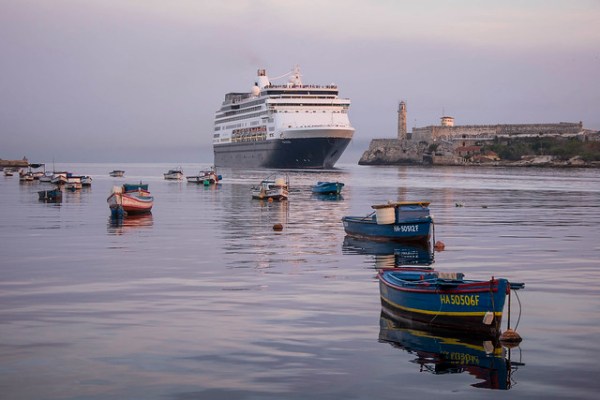
Cruise ship at Havana Harbor in April 2018/ kuhnmi/ Flickr/ Creative Commons

Washington’s new measures to tighten the embargo will hurt the Cuban people, especially the private sector, but Havana has little choice but to double-down on reform and make its economy more efficient and independent. Holding Cuba responsible for Venezuela’s resistance to U.S. regime-change policies in that country, and for alleged “acoustic” incidents harming U.S. diplomats in Havana, U.S. Secretary of State Mike Pompeo and National Security Advisor John Bolton last week announced steps that, taken together, amount to almost full reversal of the engagement that former Presidents Barack Obama and Raúl Castro announced four and a half years ago, in December 2014.

  • Among key measures is full enforcement of Title III of the Helms-Burton law of 1996 – ending waivers that three predecessor administrations had invoked – and allowing even Cuban-Americans who were not U.S. citizens at the time to sue companies involved in business dealings (“trafficking”) involving properties nationalized by the Cuban government since 1959. The U.S. officials have also pledged regulations clamping down on remittances to Cuba (which had already been regulated to ensure that senior government officials did not receive them); prohibiting dollar transactions through third-party financial institutions; and stopping “non-family” travel to the island. Details will not be known until the regulations are published, a process that usually takes several months.

The U.S. actions come at a delicate moment for the Cuban economy, will certainly worsen the country’s balance-of-payments situation by increasing the cost of international transactions, and will directly affect key sectors that depend on tourism and remittances.

  • Among the hardest hit will be Cubans engaged in private businesses, who depend on remittances for investment and foreign visitors as customers. At the end of 2018, a little more than 1.4 million formal jobs were in the non-state sector, including the self-employed (cuentapropistas), members of cooperatives, and private farmers – almost equal to the 1.6 million in state enterprises. Many others work in the informal sector to supplement their incomes.
  • The perceived increased risk posed by the U.S. measures will also cause foreign companies to postpone or cancel entirely plans to invest in Cuba.

Trump Administration efforts last year to reverse Obama-era policies, coupled with other challenges – including the weakening of the Venezuelan economy and the shift of a previously key partner like Brazil – are taking their toll on the Cuban economy. In addition, an accumulation of important internal problems has made the country vulnerable. Austerity measures announced as early as in summer 2016, including a reduction in imports and energy rationing in the public sector, have already hurt. Even in the context of a good international environment and improving ties with the United States, the Cuban economy grew slowly over the past decade. The ups and downs in policies dealing with the private sector, agriculture, and in the derailed process of reform in the dominant state sector – as well as setbacks in efforts to attract foreign investment – underscore the economy’s deep structural flaws and damage caused by deficient responses and successive delays.

In these changing times, appeals to “Resist!” are no longer enough. Aggravated by the U.S. measures, the expected worsening of the economic situation will disproportionately affect the most vulnerable of the Cuban people. The external problems could be the argument that the Cuban government needs to push aside obstacles to domestic economic reform. The country has immense internal potential but has been held hostage to the ideological purism that many profess.

  • The government of President Díaz-Canel has already announced new measures to stimulate the development of state enterprises, cooperatives, and the private sector itself. Foreign dependence has proven to be disastrous for Cuba. No foreign power is going to come to resolve the flaws of the Cuban model. Broadening and deepening reform, liberating the domestic productive powers, seems to be the only possible way forward in addition to rethinking international alliances and embracing markets more broadly.

April 23, 2019

*Ricardo Torres is a professor at the Centro de Estudios de la Economía Cubana at the University of Havana and a former CLALS Research Fellow.

Venezuela: Washington Trying to Tighten the Noose

By Eric Hershberg

Two side by side images of Venezuela's territory comparing the electrical grid on March 7 and March 12, after six days of blackout

Satellite images of Venezuela. Left image taken on March 7, 2019; right image taken on March 12, 2019 during a blackout / Wikimedia Commons / Creative Commons

As Venezuelan President Nicolás Maduro completes 11 weeks in office since Washington and dozens of other countries recognized National Assembly President Juan Guaidó as “interim president,” the Trump Administration is ratcheting up the pressure. U.S. officials’ rhetoric and actions against both Venezuela and Cuba, which the State Department says is “propping up the former [Maduro] regime,” are escalating. A “senior official” told reporters last Friday that new sanctions would “tighten the noose of financial strangulation of Maduro and his cronies,” while U.S. Vice President Pence, speaking in Houston, reiterated that “all options are on the table.” Pence further focused U.S. regime-change policy on Cuba, citing Guaidó’s wife as the source of evidence that “the only way [Maduro] clings to power is with the help he receives from Communist Cuba.” Pence also said six U.S. businessmen arrested on corruption charges last year “are being held hostage by the Maduro regime,” suggesting another pretext for aggressive action.

  • Last Friday, the U.S. Treasury Department designated 34 vessels owned by PDVSA and two owned by non-Venezuelan companies for sanctions. Treasury Secretary Steven Mnuchin said the move was to block Venezuelan oil exports and cut off supplies to Cuba under the two countries’ “oil-for-repression schemes.”.
  • Press reports on Venezuela’s oil shipments have varied, but Thomson Reuters specialists have reported that Venezuelan oil shipments, after a 40 percent drop in February, remained basically steady in March despite the crisis and electricity disruptions at oil facilities. PDVSA was shipping almost 1 million barrels a day in March, with the bulk going to India, China, and Russia. Reuters calculated that some 65,000 barrels a day went to Cuba.

Electricity blackouts and resulting water shortages have continued for three weeks. While conceivably the result of serious neglect of infrastructural maintenance by Maduro’s Administration, the outages have all the markings of covert sabotage operations. Venezuela has suffered from short power outages many times in recent years, but the latest blackouts have been by far the most extensive, longest, and most damaging. U.S. officials have denied any U.S. role, direct or indirect, in the blackouts. On March 8, Special Representative Elliott Abrams said, “So the United States did not cause those [electricity] problems, the international community did not; the regime caused those problems.”

The U.S. sanctions and related operations are having an impact, but Washington’s initial estimations of Maduro’s strength and the timeline for his collapse were not realistic. Meanwhile, denials of involvement in the blackouts are hard to take at face value. The phrase “all options” surely includes covert action. Turning out the lights is a common disruption tactic, and extraordinary neglect in system maintenance makes the power grid a particularly tempting target in Venezuela. Sabotage and disinformation operations have long been core components of American covert operations in the hemisphere. They were essential tools in successful efforts to depose Guatemalan President Arbenz in 1954 and Chilean President Allende in 1973. The CIA has also formed armed groups, such as the Bay of Pigs force in 1961 and the Nicaraguan Contras in the 1980s (where CIA also mined Corinto harbor). These historical precedents may provide some indications of next steps in the administration’s campaign to bring about regime change in Caracas.

April 11, 2019

South America: Can it Navigate the Changes Ahead?

By Leslie Elliott Armijo*

Latin america

Latin America / Google Images / Creative Commons

Venezuela is the latest example of how Latin America, especially South America, has missed an opportunity to demonstrate the sort of hemispheric leadership it has long striven for – and instead has ceded that role to the United States and even Russia and China.  Although the United States, and the rest of the hemisphere more generally, have been slow to realize it, economic drivers are making the world more multipolar.  In a recent article by two colleagues and myself, we analyze international financial statistics covering 180 countries from 1995 to 2013 that reveal the slow relative decline of the United States as the reigning financial hegemon.  U.S. influence, although still formidable by some margin, is eroding.

  • The Trump Administration’s activities in the larger world are also undermining Washington’s influence. Policies in the WTO and other trade actions writ large – such as withdrawing from the Trans-Pacific Partnership (TPP) and threatening and implementing trade sanctions with little apparent logic – have brushed even allies back. Positions on the Paris climate accord, at the United Nations, and in the President’s relations with North Korean leader Kim Jung Un and Russian President Vladimir Putin have left many around the world increasingly reluctant to follow the U.S. lead.

In this increasingly multipolar world, Latin America, especially South America, is going to find itself not so much freed of U.S. influence – as intellectuals in the region have often stated their wishes – as exposed to new pressures.  The change will be manifest mostly in the economic arena.  New research by McKinsey Global Institute suggests that global value chains are ever more concentrated within multinational corporation networks, which tie major markets (essentially the United States, Western Europe, China, and Japan) to geographically contiguous countries.  This is arguably good for closer neighbors, such as Central America and the Caribbean in our hemisphere, but potentially harmful to those left out – including Sub-Saharan Africa, possibly the Mideast, and South America.

South America has diversified its trade – generally a good thing – among the United States, EU, and East Asia, with the latter having become the major trading partner for a number of countries. Chile and others have been pushing hard to build the Pacific Alliance, as well as to institutionalize the alliance’s relationship with Mercosur. This strategy will be put to the test if, as early trends indicate, the world regionalizes and South America comes under great pressure to refocus on its relations with the United States. To protect and advance their interests in the future, South American countries probably will try to find the right balance between embracing and rejecting the declining yet still dominant hegemon to the north and, as in the case of Venezuela, developing their own strategic vision, forging unity among themselves, and putting some muscle behind an agenda that prepares them for the future.

March 18, 2019

* Leslie Elliott Armijo is an associate professor at the School for International Studies, Simon Fraser University, Vancouver. She is the co-author, with Daniel C. Tirone (Louisiana State University) and Hyoung-kyu Chey (National Graduate Institute for Policy Studies, Tokyo), of The Monetary and Financial Powers of States: Theory, Dataset, and Observations on the Trajectory of American Dominance.

Venezuela: A Test of U.S. Hegemony in Latin America

By Eric Hershberg

Lima Group members standing at a podium

Lima Group members in Torre Tagle in Perú / Flickr / Creative Commons

The showdown in Venezuela reflects an extraordinary attempt by the United States government to resurrect hegemonic power in Latin America.  From the mid-19th century to the dawn of the 21st, it was common for Washington to directly overthrow Latin American governments or to bolster clients seeking transitions to dictatorship or democracy.  But recent years had witnessed a clear decline in U.S. hegemony.  As Latin America appeared to have escaped Washington’s imperial reach, many of us were persuaded of the finality of the Obama administration’s recognition that the era of the Monroe Doctrine had ended.  We were dismissive, perhaps excessively, of the assertion of Trump administration officials and advisors that the infamous Doctrine could somehow be revived.

Yet the dynamics of the Venezuelan confrontation result from an unprecedented, Washington-forged hemispheric coalition – of the genuinely willing – trying to force a regime transition.  Traditionally, Washington conducted such interventions on its own, opposed by most of Latin America.  Yet today not only the 12 members of the Lima Group but also Canada and several EU governments are on board with the administration’s boldly assertive intervention in Venezuela’s political crisis.  Russia’s and China’s support for incumbent President Nicolás Maduro underscores that what is at stake is the enduring relevance of the Monroe Doctrine, which almost two hundred years ago unilaterally established an American veto over extra-regional engagement with nominally sovereign countries “in its own backyard.”

For champions of the Trump administration’s policy, asserting hegemony – after the Obama administration had declared it “dead” – is an end in itself.  Rejecting the Monroe Doctrine did not provoke a crescendo of acceptance from much of the foreign policy establishment in Washington, and abandoning that stance has been a core aspiration of right-wing foreign policy networks that have taken over the Executive Branch.  Countless statements over the years by the presumed architect of the present intervention – de facto Secretary of State for Latin America Senator Marco Rubio – reflect how an enduring hatred for the Cuban Revolution, and movements inspired by it such as Chavismo and the ALBA alliance, fuels antagonism toward intra- or extra-regional engagement that call into question U.S. authority.  Russian and Chinese interest in sustaining Chavismo thus reinforce Washington’s determination to eradicate it.

  • Venezuela today is an ideal target for a US-sponsored intervention to bring about regime change and reassert American hegemony in Latin America. The dictatorship is increasingly vicious, and Maduro’s claim to legitimacy is entirely fraudulent.  Moreover, Maduro’s government has so wrecked the economy that desperate millions are fleeing the country, creating an urgent humanitarian crisis that overwhelms neighboring countries already unable to provide for the basic needs of their own populations, making them more amenable to an interventionist exit.
  • Venezuela’s opposition has been long hindered by incompetence and racked by competing personal ambitions. With its most assertive leaders imprisoned, under house arrest, or in exile, it has proven incapable on its own of bringing about Maduro’s removal, either peacefully through his rigged institutions or through uprisings in the streets.  Absent an internal path toward regime transition, conditions were ripe for Washington to coax regional partners to back a daring strategy of intervention.  To have any prospects for success, the venture required that the domestic opposition finally unify – or at least acquiesce in –the anointment as Interim President of Juan Guaidó, a young political unknown whose ties with right-wing patrons are not as well known.  That unification, presumably, was made possible by recognition that only with external support could internal resistance succeed, and only with a unified or quiescent opposition would the international partners take the aggressive stance that they did.

Just as the opening to Cuba was the signature achievement of the Obama administration with regard to Latin America, the effort to overthrow the Venezuelan government appears destined to be the signature act of the Trump administration.  The support of almost all of Latin America for it will have consequences far beyond the fate of the incompetent dictator clinging to power in Caracas.  If their gambit succeeds, Senator Rubio and National Security Advisor John Bolton could move on next to Nicaragua and then perhaps to the king’s crown in Havana. 

  • Those tempted to attribute this to abhorrence of violators of democratic norms would do well to consider the administration’s supportive stance toward increasingly authoritarian regimes in Honduras and Guatemala. Those cases, and the recognition that much of the opposition leadership wants to restore Venezuela to “what it used to be” (i.e., before Chavez tried with considerable popular support to forever end what Venezuela used to be), underscore the ideological drivers of U.S. policy today.  While Washington may have embarked on a course that can finally extricate Venezuela from Chavista misrule, the history of American influence over the region does not bode well for what a return to U.S. hegemony in Latin America could bring.  Surely that point is not lost on leaders of countries such as Mexico and Uruguay.  If the coming weeks bring a continuing stalemate between the Venezuelan regime and opposition, perhaps their good offices could catalyze a negotiated path to free elections and to a resulting regime that would not be Made in USA.


January 31, 2019