

Report | October 16, 2026
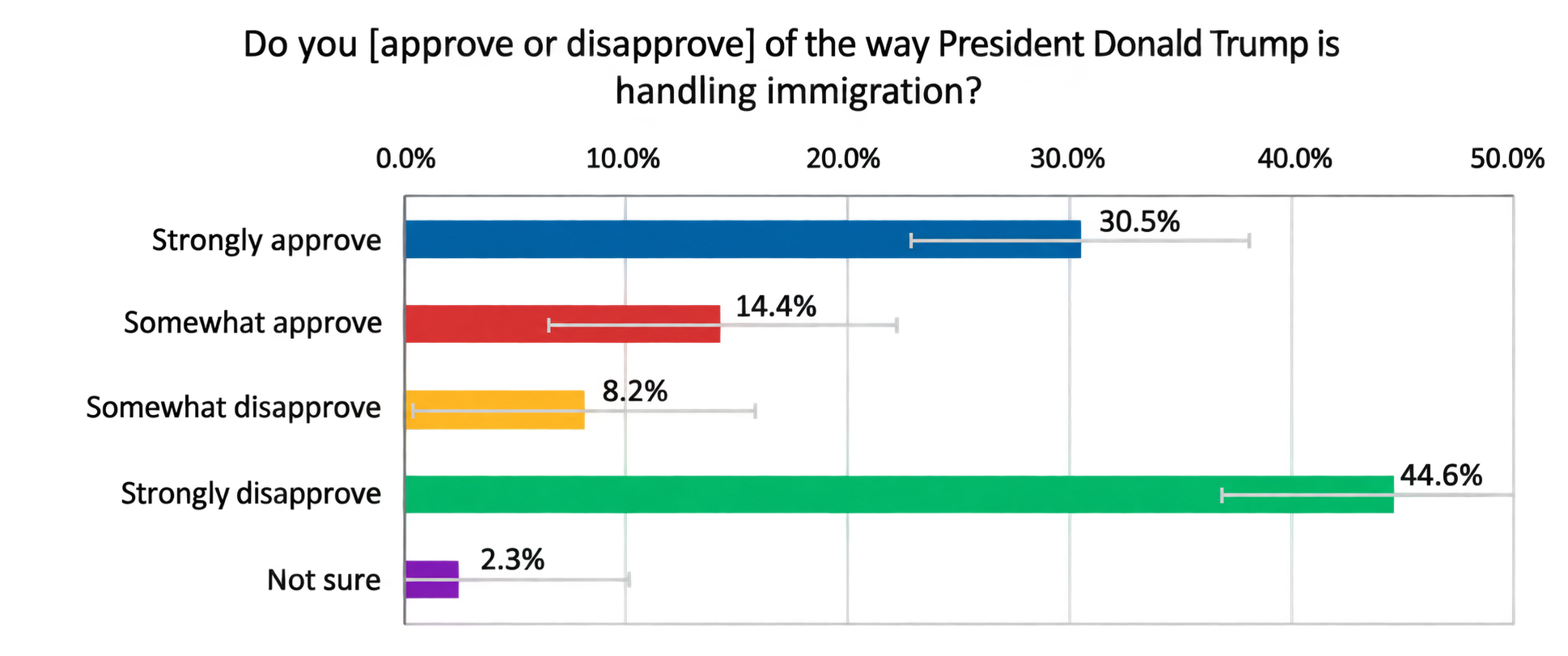
Asked whether they approve or disapprove of the way President Donald Trump is handling immigration, 52.8% disapprove and 44.9% approve, most interestingly many more strongly disapprove (44.6%) than those who strongly approve (30.5%). This comes from a poll of 5,000 English-speaking registered voters conducted between September 9 and September 25, 2026, by the polling organization YouGov on behalf of the Center for Latin American and Latino Studies at American University. It gathered views on a variety of immigration policy-related topics. The margin of error is: +/-1.5%. The pool of participants was structured to be demographically representative of likely voters. White Americans, those living in the South, highly educated Americans, and people aged 65 and over are slightly overrepresented. Because the survey was only conducted in English among registered voters, most of whom voted in the last two presidential elections and midterms, the views of Spanish-only speakers, permanent residents, and non-citizens are not included. The results presented here are, therefore, conservative estimates.
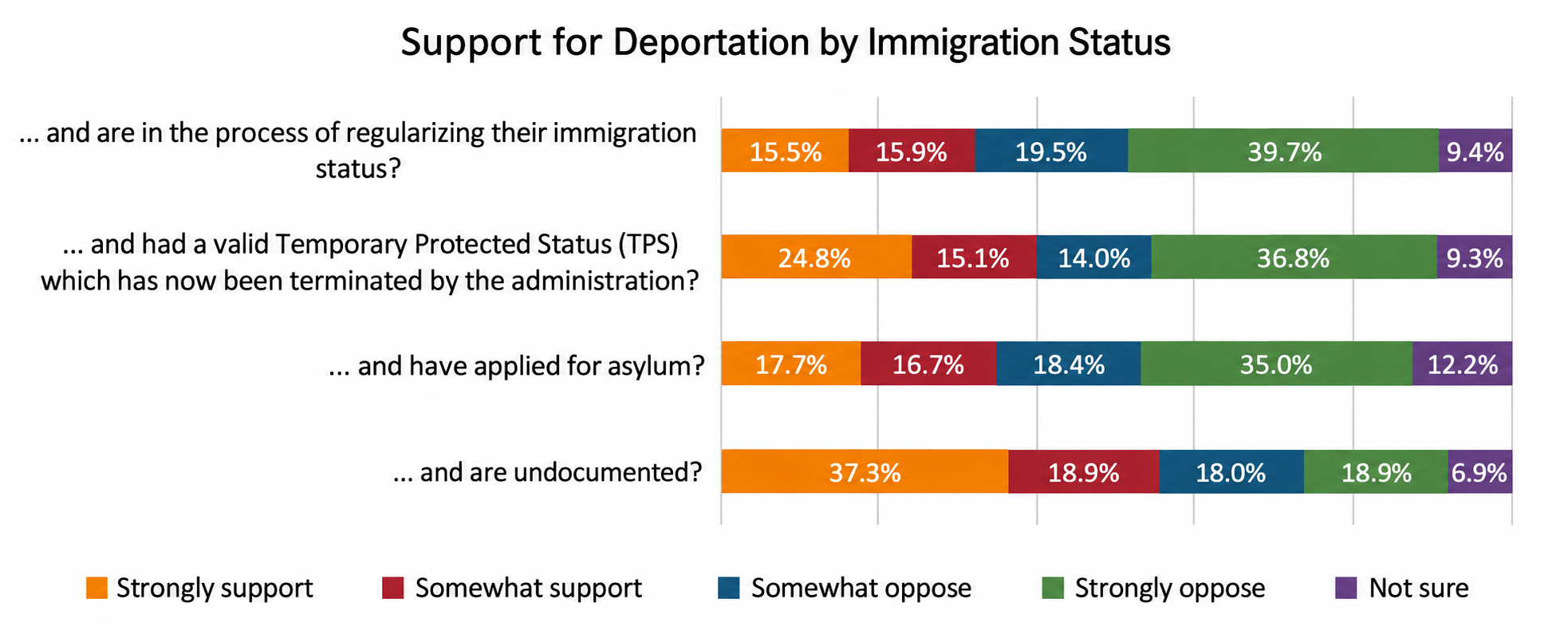
Respondents also differently support the government deporting people in different migration statuses: 37.3% strongly support deporting individuals who are undocumented, 24.8% strongly support people with Temporary Protected Status until recently, while 50.5% somewhat or strongly oppose; 17.7% strongly support while 53.4 oppose deporting those who have applied for asylum; and 59.2% oppose, and 9.4% are unsure, while only 15.5% strongly support deporting those who are in the process of regularizing their immigration status (e.g., renewing visa, applying for immigration relief, a green card, or citizenship).
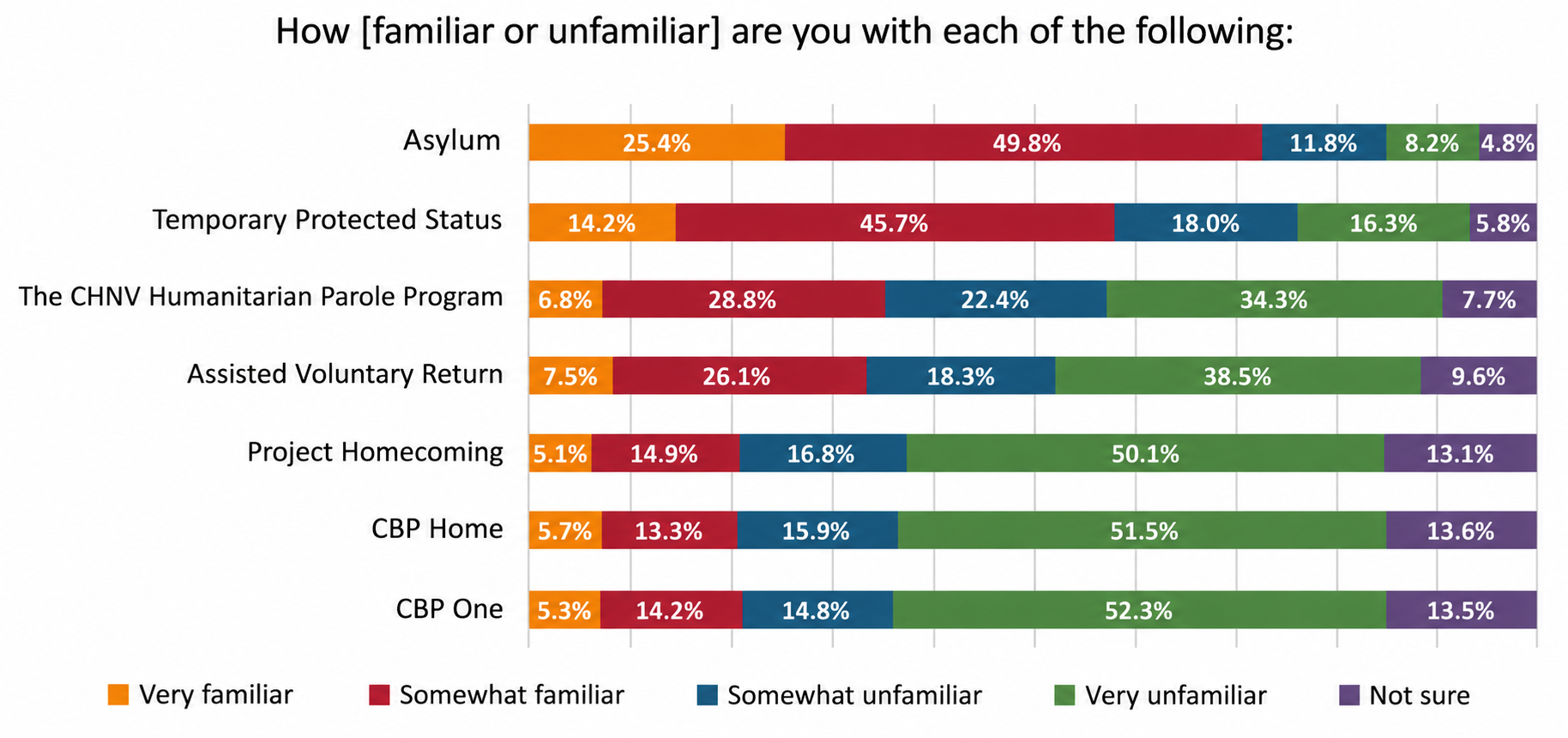
Respondents report varying levels of familiarity with U.S. immigration programs and policies. Asylum (75.2%) and Temporary Protected Status (TPS) (59.9%) were the most familiar programs among respondents. While only 6.8% were familiar with the Cuba, Haiti, Nicaragua, and Venezuela (CHNV) Humanitarian Parole Program, implemented by the Biden Administration, which allowed eligible individuals from these countries to temporarily enter legally if they had a sponsor in the United States. Awareness is also particularly limited for more recent immigration initiatives, with more than half of respondents reporting being very unfamiliar with Project Homecoming and the CBP Home and CBP One smartphone applications.
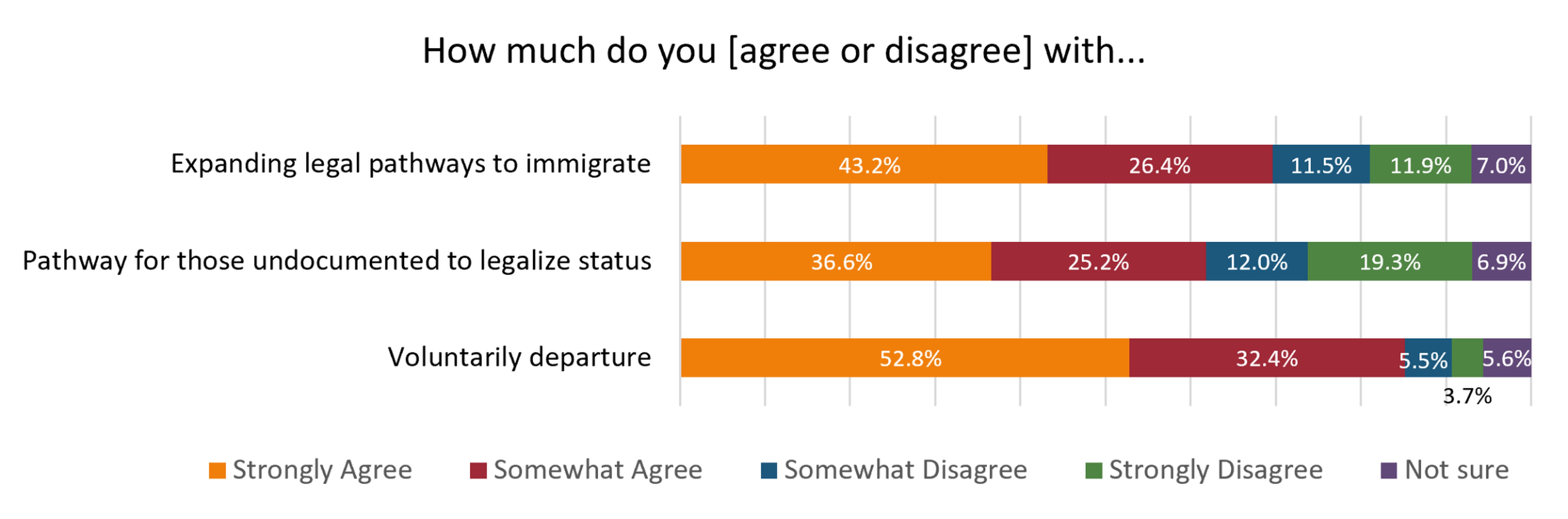
Contrary to online discourse, a large majority of respondents support more humane immigration policies, expanded legal immigration pathways, and opportunities for undocumented immigrants to legalize their status. More than eight in ten respondents (85.2%) agree that allowing individuals to leave voluntarily is more humane than deporting them in restraints, with 52.8% strongly agreeing. Similarly, 69.6% supported expanding legal pathways for immigration, while 61.8% support providing undocumented immigrants with a pathway to legal status.
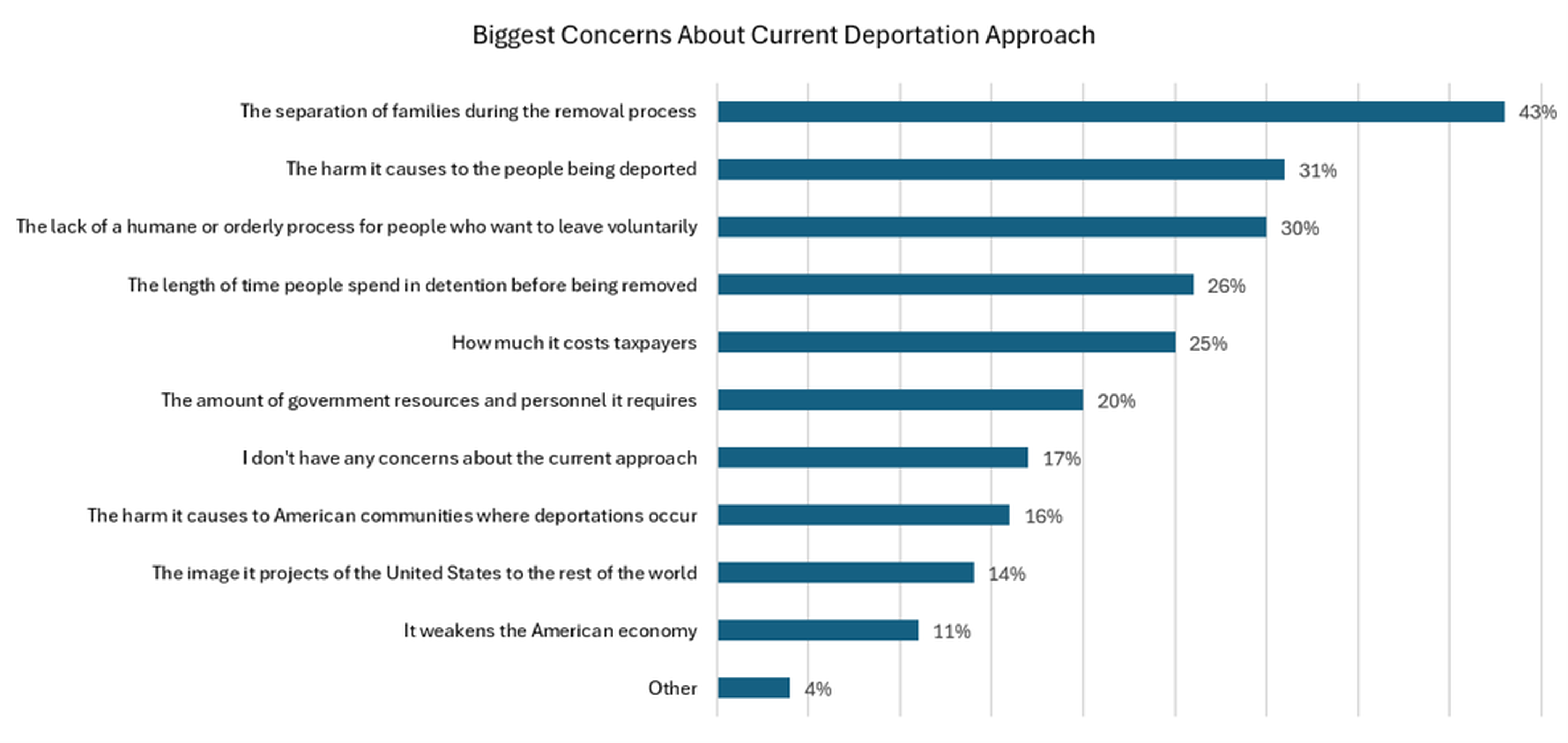
Most people are against mass deportation by force and they share many concerns. The most frequently cite concern is the separation of families during the removal process (43%), followed by the harm caused to individuals being deported (31%), and the lack of a humane or orderly removal process (30%). Other concerns include prolonged immigration detention (26%), costs to taxpayers (25%), and the use of government resources and personnel (20%). Fewer respondents cite the impact on American communities (16%), the country’s international image (14%), or the economy (11%). Only 17% report having no concerns about the current approach to deportation.
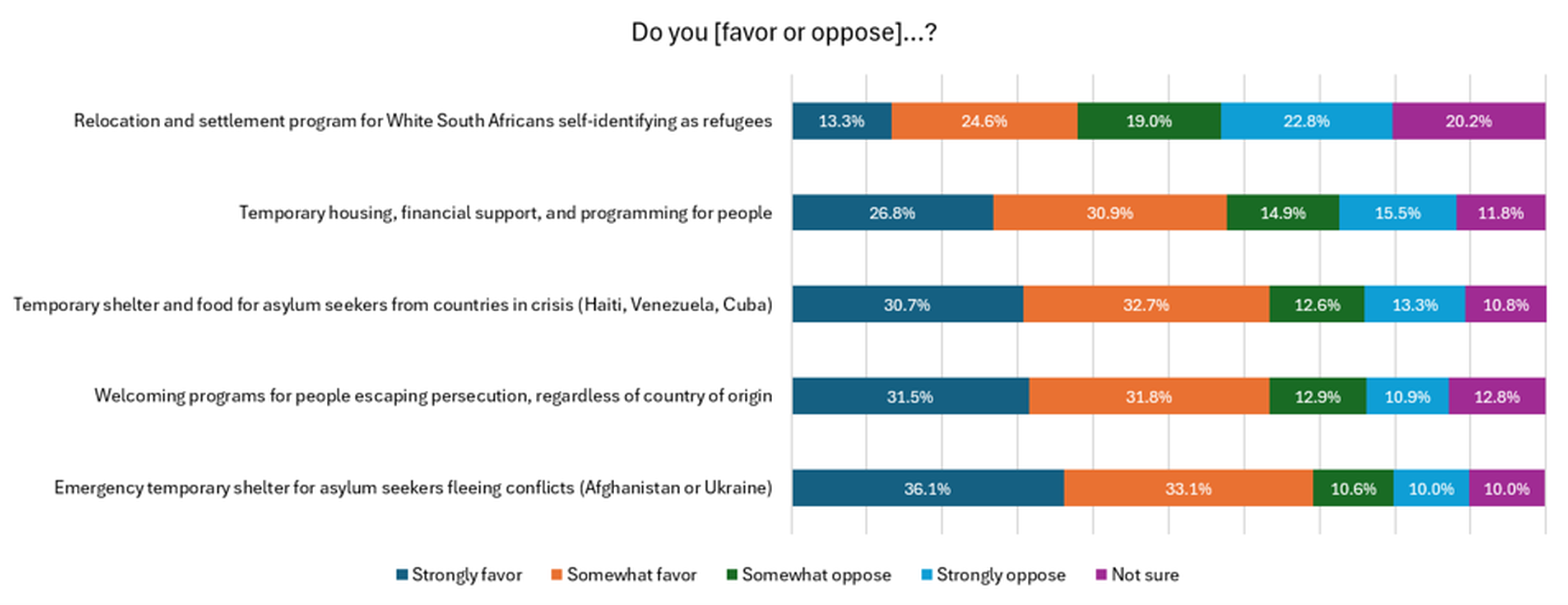
A majority of respondents support providing humanitarian assistance to individuals seeking asylum in the United States, however support varied depending on the populations and types of assistance described. Support was highest for providing emergency temporary shelter to individuals fleeing violent conflicts in countries such as Afghanistan and Ukraine, with 69.2% in favor (36.1% strongly favoring and 33.1% somewhat favoring), compared to 20.6% opposed. Similarly, 63.3% supported welcoming programs for individuals and families escaping persecution, regardless of their country of origin, while 63.4% favored temporary shelter and food assistance for asylum seekers from countries experiencing crises, such as Haiti, Venezuela, and Cuba.
Support for proposals involving more extensive assistance to people regardless of country of origin is also popular, with 57.7% favoring temporary housing, financial support, and programming, compared to 30.4% opposed. The lowest level of support is for the current practice of helping white South Africans who self-identify as refugees relocate and settle in the United States. Only 37.9% support this policy, while 41.8% oppose it, and 20.2% are unsure.
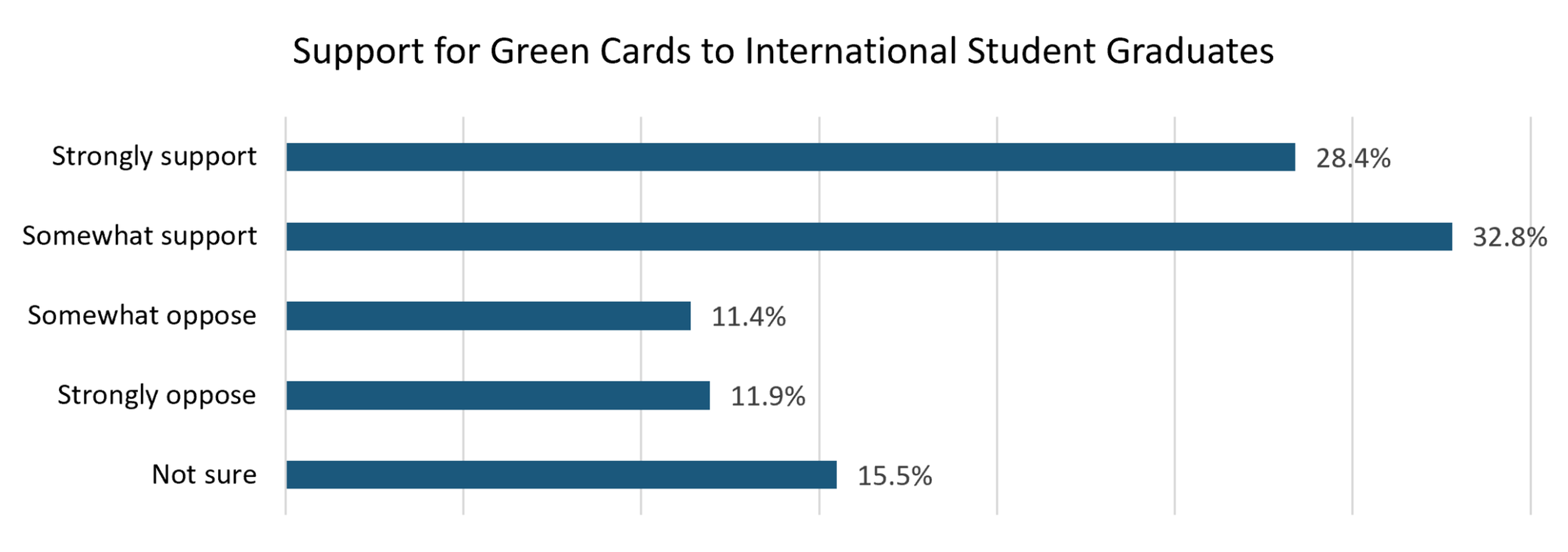
A majority of respondents support providing Green Cards to international students who graduate from U.S. universities, a proposal discussed by both major presidential candidates during the 2024 election. Overall, 61.2% express support for the policy, including 33.3% who strongly support it. These findings indicate broad support among respondents for creating pathways to permanent residency for international graduates of U.S. institutions.
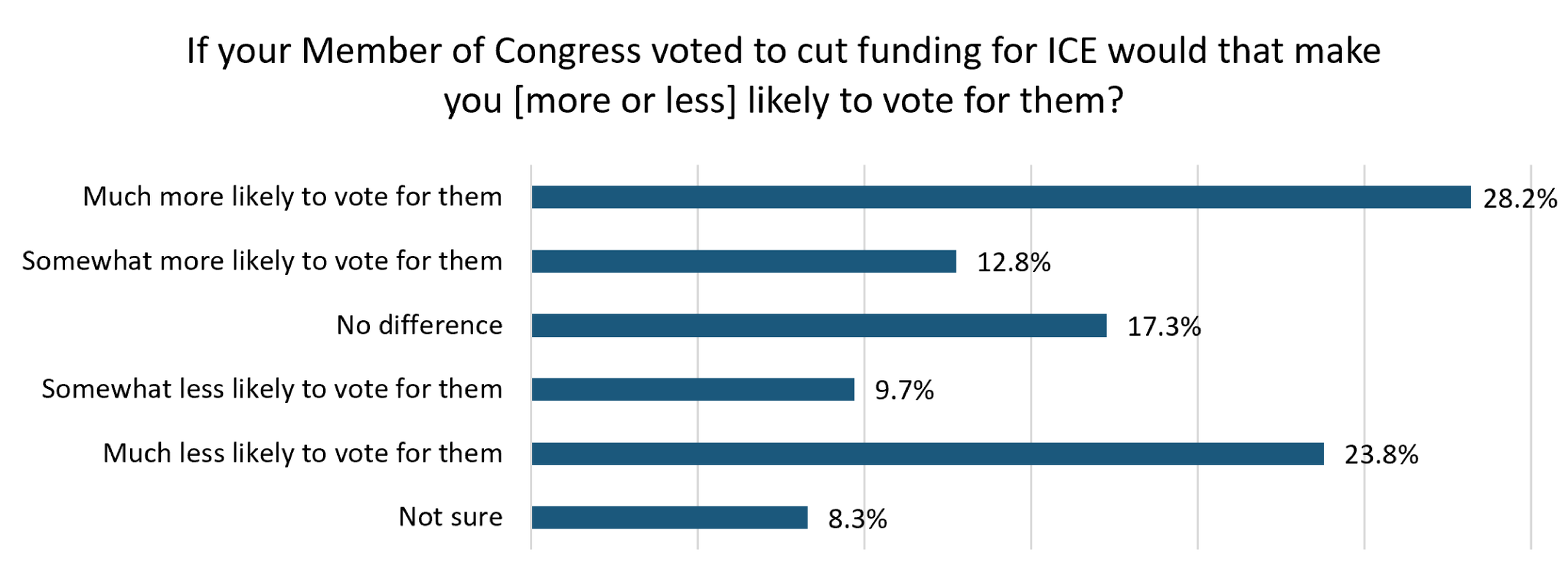
Respondents are more likely to support a member of Congress who voted to reduce funding for Immigration and Customs Enforcement (ICE) than one who opposed such cuts. Overall, 41% report that a vote to cut ICE funding would make them more likely to vote for their representative, compared with 33.5% who say it would make them less likely. This represents a 7.5-percentage-point difference in reported voting intentions. Younger people tend to be more likely to support Congresspeople cutting funding for forced deportations. Only 43% of those who identity as republicans, and 47% of those who support Trump are much less likely to vote for a member of Congress who cuts ICE funding.
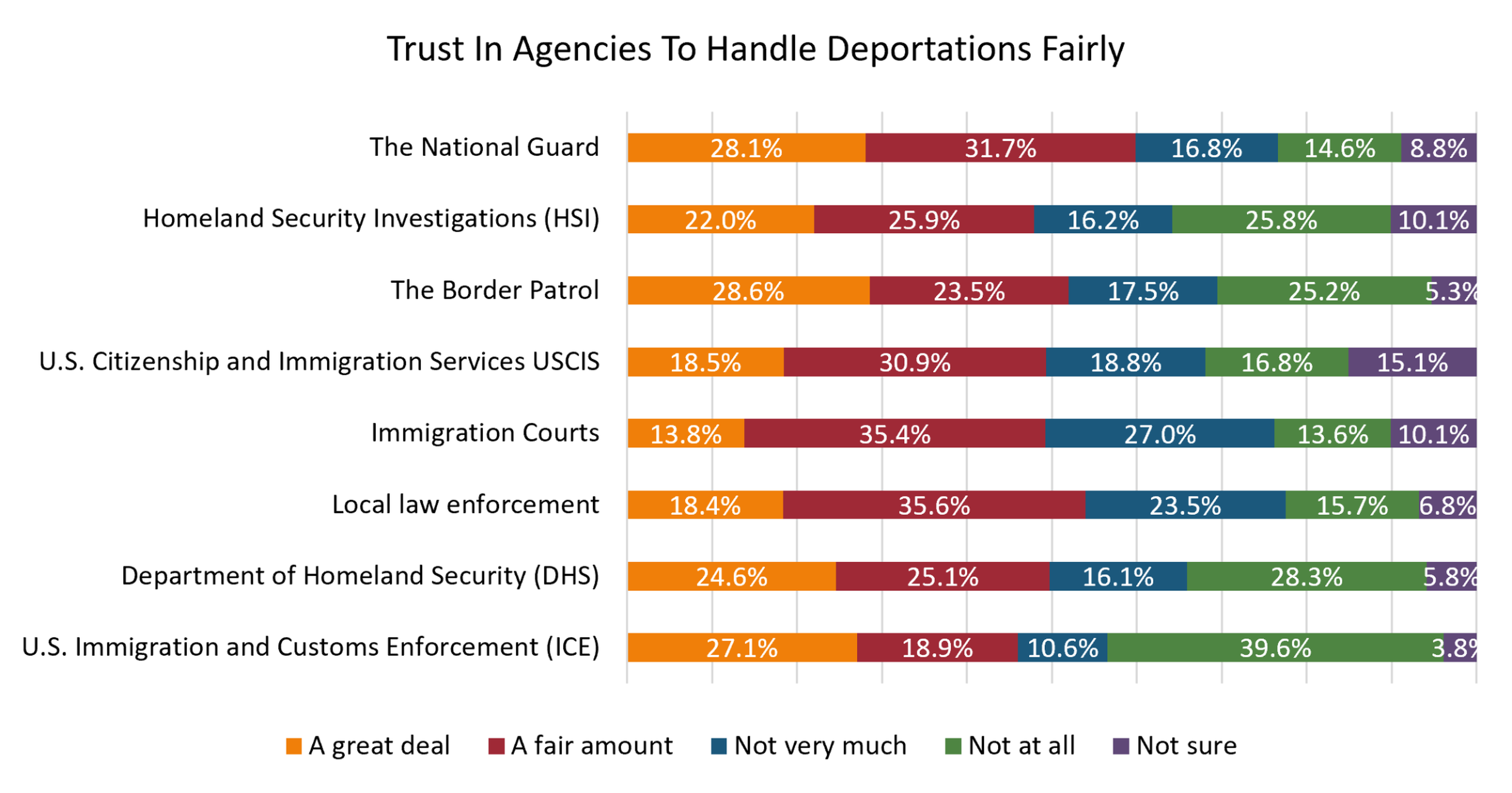
Although the National Guard has not traditionally been responsible for immigration enforcement, some units have assisted federal immigration authorities, including Border Patrol, ICE, and HSI agents, during the second Trump administration. Despite this limited non-traditional role, 60% of respondents express trust in the National Guard to handle deportations fairly. In contrast, respondents ae more skeptical of Immigration and Customs Enforcement (ICE), with 50% reporting that they do not trust ICE to carry out deportations fairly. These findings highlight notable public distrust of federal immigration enforcement agencies.
Respondents overwhelmingly support Democrats and Republicans working on creating pathways toward citizenship, reducing family separations, expanding asylum protections, and even making deportation more humane and following due process. Voters want both parties to work together to improve the immigration system.
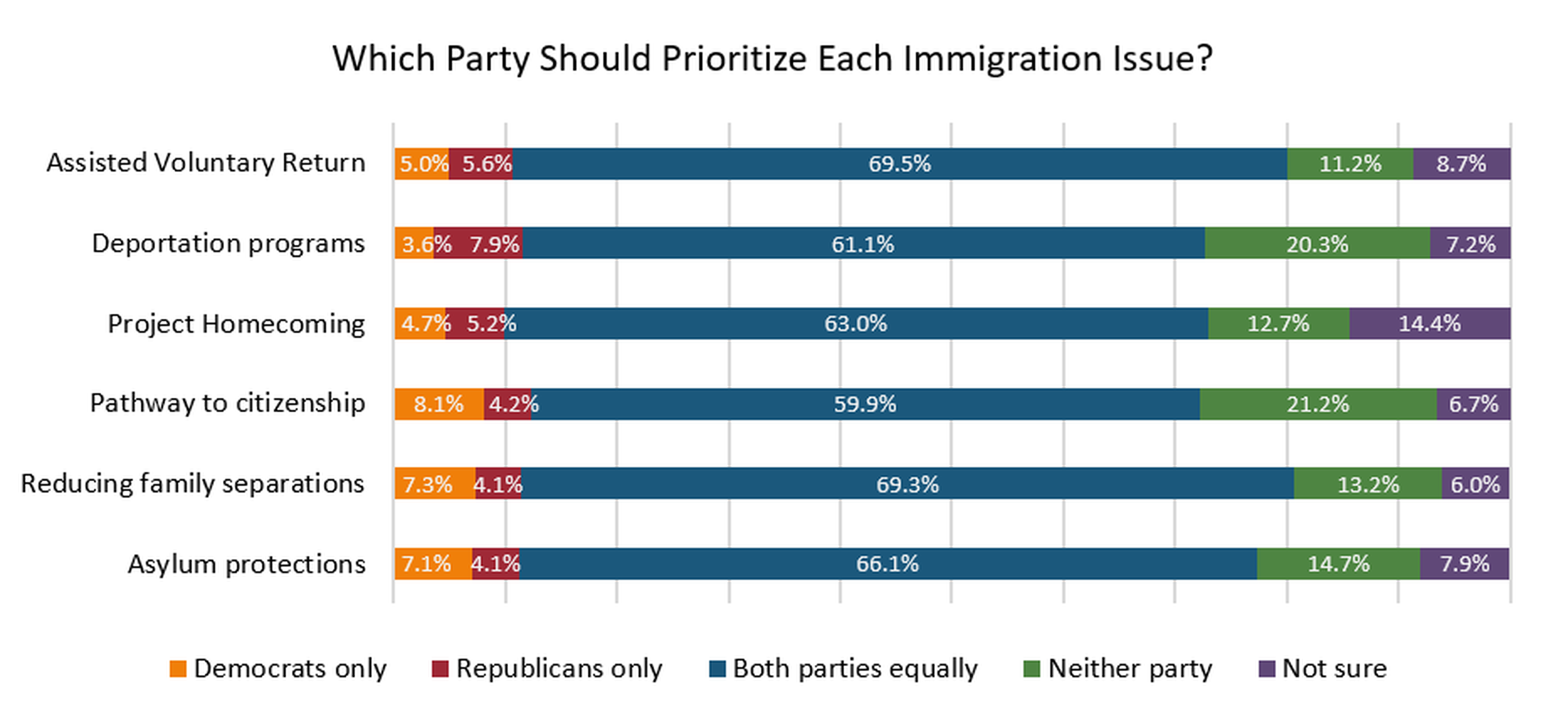
Overall, the findings reveal a notable contrast between political rhetoric that often frames immigration as a threat or challenge and public attitudes that reflect greater sympathy toward immigrants and openness to bipartisan immigration reform.
This survey is based on 5,000 interviews of registered voters conducted by YouGov online. The sample was weighted according to gender, age, race/ethnicity, education, and U.S. Census region based on voter registration lists, the U.S. Census American Community Survey, and the U.S. Census Current Population Survey, as well as 2020 Presidential vote and approximate 2024 Presidential vote based on available results, and party identification estimates based on Pew Research Center’s National Public Opinion Reference Survey. Respondents were selected from YouGov to be representative of registered voters. The weights range from 0.22 to 5.4 with a mean of 1 and a standard deviation of 0.43. The margin of error (a 95% confidence interval) for a sample percentage p based upon the subsetted sample is approximately 1.5. It does not reflect potential selection bias in panel participation in the survey.
Read more from the report: https://www.american.edu/centers/latin-american-latino-studies/yougov-survey.cfm
More information about the CLALS: https://www.american.edu/centers/latin-american-latino-studies/index.cfm
For media inquiries contact clals@american.edu or olmos@american.edu


