
The Complex Mexico-U.S. Relationship: Claudia Sheinbaum’s Responses to Donald Trump’s Bullying
By Tomás Milton Muñoz Bravo
Professor of Political and Social Sciences and Researcher at the Center for International Relations of the Universidad Nacional Autónoma de México
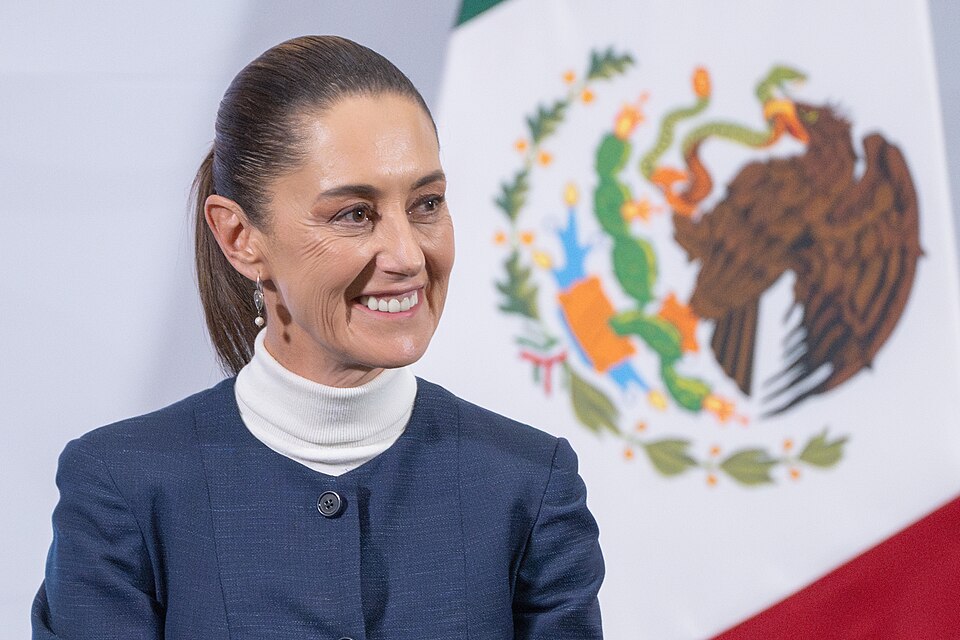
Following the entry into force of the North American Free Trade Agreement (NAFTA) in 1994, relations between Mexico and the United States centered primarily on three major issues—trade, security, and migration—and institutional channels were established to address each issue separately. However, everything changed in January 2017 when Donald Trump took office; as an outsider, he damaged established relationships, complicated the bilateral agenda, and used coercion as a primary tactic in his dealings with former presidents Enrique Peña Nieto and Andrés Manuel López Obrador.
Joe Biden’s presidency (January 2021–January 2025) largely marked a return to traditional bilateral relations with Mexico. With few exceptions—such as the July 2024 arrest of drug trafficker Ismael “El Mayo” Zambada in Sinaloa and his subsequent transfer to Texas, an operation involving U.S. agents and conducted without consultation with Mexican authorities—both governments regularly used institutional channels to address shared issues and challenges. Yet, Trump’s return to the presidency on January 20, 2025, once again upended the bilateral agenda. Claudia Sheinbaum Pardo—Mexico’s first female president, who had been in office for just over three months— had to contend with Trump’s return and his aggressive political style.
Beginning with the 2024 election campaign and continuing throughout his second term, Trump has once again set his sights on Mexico. As he did during his first administration, he conflates issues, distorts reality, uses threats to gain political leverage, and places additional demands on the Mexican president—most notably, that politicians accused of collusion with organized crime be handed over to the United States.
Through media, political, and economic pressure, “Trump 2.0” has ensured that the Sheinbaum administration continues to act as an extension of the U.S. border—preventing migrants from passing through Mexican territory and accepting migrants, asylum seekers, and refugees from other countries who have been expelled by the United States. He has also secured commitments to allocate additional security resources to combat criminal groups, shut down fentanyl-producing laboratories, increase drug seizures, and expel members of organized crime groups from Mexico without extradition proceedings to hand them over to U.S. authorities.
On trade, pressure from the United States has forced the Sheinbaum administration to limit its relations and exchanges with China and operate under constant uncertainty concerning the imposition of new tariffs and the hostile attitude of U.S. negotiators during the ongoing review of the United States-Mexico-Canada Agreement (USMCA).
Against this backdrop, Trump has employed a “praise and punishment” strategy in his dealings with the Mexican leader. Within a single day, he might describe her as a “good person,” a “great woman,” and “beautiful,” with a “great voice,” only to question her capabilities minutes later and claim that she is “terrified” of drug cartels, thereby demanding that she accept the presence of U.S. armed forces on Mexican soil to combat criminal groups.
The bilateral relationship has historically been complex, but it has become even more fraught due to Trump’s attitudes, slights, and systematic bullying —from renaming the Gulf of Mexico the “Gulf of America” and ignorantly and maliciously claiming that Mexico exports nothing but tamales and tomatoes to the U.S. to posting AI-generated memes that disparage Mexico and its migrants or depict the entire continent draped in the U.S. flag. More than a year and a half after Trump’s return to office, it is possible to make an initial assessment of the hostile policies and actions that Washington has directed at the Sheinbaum administration in the areas of migration, politics, trade, and security.
On migration, Trump has achieved his goal: Mexico has become yet another containment barrier for migrants and asylum seekers. In addition to a reduction of more than 90 percent in unauthorized crossings through Mexican territory into the United States, the Sheinbaum administration has agreed—without asking for anything in return—that Mexico will once again serve as a de facto “safe third country,” where migrants become stranded, unable to enter the United States yet lacking the means to fully integrate into Mexican society. These migrants are joined by deportees—both Mexican nationals and nationals of other countries—who arrive in Mexico after being expelled from the United States.
Turning to Trump’s political attacks on Mexico, it is important to emphasize that they have indeed tarnished the image of the Mexican president’s political project. She has repeatedly refused to hand over members of the ruling MORENA party sought by the United States in connection with their alleged ties to organized crime groups. To date, the most prominent politicians whose arrest and extradition to the United States the State Department has requested are Rubén Rocha Moya—the governor of the northern state of Sinaloa (currently on leave)—and Enrique Inzunza Cázarez, a senator representing the same state.
In Mexico, ties between politicians and organized crime have plagued the country since the mid-20th century. However, these ties solidified during the administration of Andrés Manuel López Obrador—founder of MORENA—creating a legacy that the current Mexican leader must confront. Yet, in an effort to avoid weakening her party or fracturing the alliance that backed her presidential bid, she has chosen to downplay these connections and refrain from taking decisive legal action.
Various polls continue to show MORENA as the party with the highest voter support ahead of the 2027 elections—which will include contests for 17 governorships and seats in the federal Chamber of Deputies. Nevertheless, the protection the Mexican executive branch has extended to MORENA politicians—as well as to at least two of former President López Obrador’s sons, who have been implicated in corruption schemes and alliances with criminal gangs through media reports and formal accusations—has become a weapon for the Trump administration,[1] which has toyed with the idea of intervening on Mexican soil to combat drug trafficking groups, which the current U.S. administration has designated as terrorist organizations.
On trade, despite threats, insults, and pressure from Washington, Mexico has solidified its position as the United States’s top trading partner, with the trade balance increasingly favoring Mexico. In July 2026 alone, Mexico recorded a $26.31 billion trade surplus with the United States.
Finally, regarding U.S. pressure on security matters, Trump can claim victory, as the Mexican government has intensified its fight against major drug cartels—leading to increased seizures of drugs and weapons, more arrests of criminals, and the dismantling of fentanyl laboratories. Yet, insecurity remains rampant in Mexico; drug trafficking groups multiply like a many-headed hydra, continuing to terrorize the population, while the United States offers no reciprocity—even as it is the world’s leading consumer of narcotics. The equation remains unchanged: Mexico bears the brunt of the death and violence, while the United States provides the market for consumption and recreation in a losing war on drugs—a conflict addressed through a military and security approach rather than one grounded in public health and prevention.
[1] U.S. Vice President J. D. Vance has stated that his administration reserves the right to attack Mexican cartels within that Latin American country’s territory. The last time this occurred was on June 17, 2026.


