Peru’s Frente Amplio: The Emergence of a Post-Extractivist Left

By Carlos Monge*

OperacionesYanacocha

An abandoned gold mining project in the Cajamarca region, Peru / Wikimedia / Creative Commons

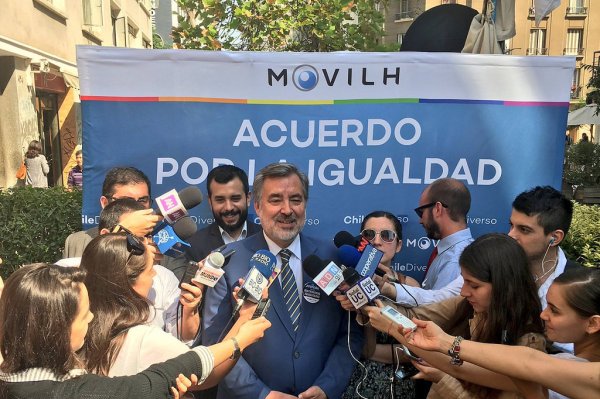
The surprising emergence of the Frente Amplio (FA), a coalition of political parties, social organizations and independent activists, in Peru’s recent presidential and congressional elections signals the first significant support for the Peruvian Left since the collapse of the Izquierda Unida in the 1980s.  The Left was not able to present its own alternatives in the ‘90s, the early 2000s, and again in 2011.  In October 2015 barely 13 percent of Peruvians knew about FA’s internal election to select presidential candidates.  Veronika Mendoza had the support of only 1 percent of intending voters, and over 60 percent of Peruvians did not even know who she was.  Nevertheless, FA ended up receiving 18.74 percent of the vote in the first electoral round, coming in third and only a couple of points behind Pedro Pablo Kuczynski (PPK), who secured 21.05 percent and ended up defeating the Fuerza Popular’s candidate, Keiko Fujimori, to become President for the 2016-2021 period.

FA’s “post-extractivist” program has been key.  Breaking away from the nationalist redistributive programs of leftists in Venezuela, Ecuador, Bolivia, Brazil, and Argentina, FA espouses economic diversification and tax reform rather than more mineral or hydrocarbon exports to sustain economic growth and public incomes.  FA also emphasizes the need to protect the environment and renewable natural resources for future generations and to recognize indigenous rights to territories, autonomy, direct political representation and effective consultations.

  • These are not only electoral campaign ideas. Indeed, FA local activists and national leaders have maintained staunch opposition to emblematic mining projects such as the Conga project in the northern Cajamarca region and the Tía María project in southern Arequipa.  In the same way, FA is denouncing that the new government is trying to lower air quality environmental standards to ease foreign investments in mineral smelters and has harshly criticized the new Minister of Production for abandoning the National Plan for Productive Diversification launched by the outgoing Ollanta Humala administration.
  • Frente Amplio is grounded in social movements that have long confronted extractivist projects. Veronika Mendoza left President Humala’s Nationalist Party in 2012 in a dispute over his repressive response to socio-environmental protests around mining projects in the highlands of her native Cusco.  Tierra y Libertad, FA’s largest party, has its roots in the Cajamarca rondas campesinas resistance against the Conga project.  Another factor is that the end of the commodities “super cycle” has moved extractive rents off center stage.  Even in Venezuela the official discourse is now moving in the direction of economic diversification.

Frente Amplio is not alone in Latin America in attempting to build a post–extractivist platform, but it seems to be the region’s most successful.  Similar policies were at the heart of the presidential campaign of Alberto Acosta and a coalition of social and indigenous organizations in Ecuador.  And in El Salvador, the Farabundo Martí government is also keeping extractivist temptations at bay.  But Acosta did not manage to get significant support or to build a stable political alternative, and El Salvador is not a major commodity exporter.  The importance of the FA experience is that it happens in a significant mineral and gas producer, that it has had immediate electoral success, and that it can become a permanent political player in Peruvian democracy.  FA and PPK will probably agree on issues such as the fight against corruption, crime, and violence against women, but they will certainly disagree over macroeconomic and sector policies, such as taxes.  Also, FA has denounced PPK for his call to lower air pollution standards and for his authorization to large fishing factories to operate up to 5 km off the coast, leaving very little for artisanal, small scale, internal market-oriented fishing activities.  Where this ends up is anybody’s guess, but this is certainly a process worth keeping an eye on.

August 29, 2016

*Carlos Monge is Latin America regional director at the Natural Resource Governance Institute in Lima.

Tim Kaine: Boon for Latin America Policy?

By Tom Long*

Tim Kaine

Photo Credit: Disney | ABC Television Group / Flickr / Creative Commons

U.S. Presidential candidate Hillary Clinton’s vice-presidential nominee, Virginia Senator Tim Kaine, may help her politically in the November election, and his potential influence on U.S. policy toward Latin America could be extremely important over the long haul.  Though Kaine’s Latin American experience likely was a secondary consideration in his selection, it is consistent with the role of the office of the vice president that has emerged during the Obama Administration as a center for serious policy initiatives in the Americas.

  • Kaine spent nine months in El Progreso, Honduras, as a young man working at a high school founded by Jesuit missionaries; he learned Spanish there and frequently mentions the period as formative. His approach to the region and immigration seems anchored in a focus on human dignity and belies an understanding of the difficult circumstances many there face.  El Progreso is close to San Pedro Sula, which has been a center of the country’s staggering violence and emigration.  In the Richmond Times-Dispatch, Kaine wrote that when unaccompanied minors arrived to the U.S. border in unprecedented numbers, “I felt as if I knew them.”
  • As a member of the Senate Foreign Relations Committee, Kaine has developed a rare policy focus on Honduras. He has pressed the U.S. and Honduran governments on issues of human rights in the wake of the 2009 coup.  In 2013, Kaine urged Secretary of State John Kerry for stronger U.S. support for elections.  Just two weeks ago, he called on Honduran President Hernández for greater effort on justice in the killing of environmental activist Berta Cáceres.
  • Kaine has placed immigration policy at the confluence of foreign and domestic policy. He has pressed President Obama to halt “deportation raids targeting families and unaccompanied minors who have fled the rampant violence in Central America’s Northern Triangle.”
  • Kaine’s political rhetoric often reflects his Jesuit background, and his Catholicism-inspired references to social justice – and his warm welcome for Pope Francis – are likely to earn him an empathetic ear among many throughout Latin America.

Vice-presidential leadership for the Americas offers an important opportunity – and one that Tim Kaine, if elected, is likely to use wisely.  He has complained that Washington usually pays attention to Latin America only in moments of crisis, and has argued the region should get similar priority as China, Russia, or the Middle East.  He would build on efforts initiated by Vice President Joe Biden, who has chaired a “High Level Economic Dialogue” with Mexico and pushed for the $750 million “Alliance for Prosperity” in Central America.  Kaine would be an asset in relationships that often fuse international and domestic policy, slicing across the domains of myriad departments and agencies.  While Kaine’s personal interest and positive relationships don’t guarantee policy successes on migration, drug policy, citizen security, and development assistance as vice president, his language skills and reputation for treating colleagues with respect all but guarantee a warm reception from leaders of countries long aggrieved by U.S. highhandedness. 

August 2, 2016

*Tom Long is a Lecturer in International Relations at the University of Reading (UK) and an Affiliated Professor at the Centro de Investigación y Docencia Económicas in Mexico City.  He is the author of Latin America Confronts the United States: Asymmetry and Influence, published last year by Cambridge University Press.

Latin America Sees Little That’s “Great” about U.S. Caudillo

By Aaron T. Bell*

Trump Latin America

Photo Credit: Maialisa/Pixabay/Public Domain (modified) and NASA/Wikimedia Commons/Public Domain

Donald Trump’s presumptive nomination as the Republican Party’s candidate for president is raising fears among Latin Americans that the United States could close the door on them, while also provoking self-reflection about the region’s own potential to produce a Donald of its own.  Mexico has borne the brunt of Mr. Trump’s hostility for “beating us economically” and “sending people that have a lot of problems.”  He has proposed imposing steep tariffs on Mexico, restricting its access to visas, and forcing it to pay for a border wall.  Gustavo Madero, former president of the Partido Acción Nacional, denounced him as a “venom-spitting psychopath,” while members of Mexico’s Partido de la Revolución Democrática organized a social media campaign – #MXcontraTrump – to rebut Mr. Trump’s attacks.  Mexican President Peña Nieto has pledged to stay out of U.S. electoral politics and work with whomever is elected, but he rejected any notion that Mexico would pay for a wall and compared Mr. Trump’s rhetoric to Adolf Hitler and Benito Mussolini’s.  In addition to initiating a public relations campaign to promote the positive effects of U.S.-Mexican relations, Peña Nieto replaced his ambassador to the United States, who was criticized for soft-pedaling Mr. Trump’s comments, with Carlos Sada, an experienced diplomat with a reputation for toughness.

Other nations have joined in the criticism while looking inward as well:

  • Latin American critics have compared Trump’s populism to that of Venezuelan Presidents Hugo Chávez and Nicolás Maduro, and former Argentine President Cristina Fernández de Kirchner. In Colombia, a member of the Partido Verde described former President Álvaro Uribe’s call for civil resistance to peace negotiations with the FARC as a “Donald Trump-like proposal.”  In Lucia, Prime Minister Kenny Anthony accused opposition leader Allen Chastenet of “fast becoming the Donald Trump of St. Lucian politics” for resorting to the “politics of hate and divisiveness.”
  • While worrying what might happen if immigrants to the United States are forced to return home, the editorial page of Guatemala’s La Hora has raised the issue of the long-term wisdom of relying on remittances. Meanwhile Argentina’s Nueva Sociedad used attention to Trump’s immigrant comments to analyze restrictive immigration policies within Latin America.
  • Some political observers see Mr. Trump’s rise as a warning of the danger of divisive politics. In Colombia’s El Tiempo, Carlos Caballero Argáez wrote that polarization and anti-government discourse in Washington paved the way for a “strong man” like Trump, and cautioned that something similar could happen in Colombia.  In El Salvador, Carlos G. Romero in La Prensa Gráfica attributed Trump’s success to his ability to connect with the working class, and warned that his country’s own parties risk facing a Trump lest they make similar connections.

Much of Latin America’s take on Trump mirrors that of opponents in the United States: they recognize that his support reflects the frustration of those who feel cut out from the benefits of globalization and ignored by political elites of all stripes; they reject his anti-immigrant and misogynistic comments; and they fear that someone with seemingly little depth on global politics may soon be the face of a global superpower.  While the region hasn’t exactly surged in its appreciation for President Obama’s leadership over the past seven years, Trump’s popularity reminds them that many Americans have less appealing values and principles, which could result in policies harmful to the region.  Latin Americans know of what they speak.  One need not look too far into the past to see the catastrophic effects of simplistic, nationalistic, strong-man policies on the people of Latin America.

 June 21, 2016

* Aaron Bell is an adjunct professor in History and American Studies at American University.

Correction 2016.06.22: Gustavo Madero is the former president of Mexico’s PAN, currently headed by Ricardo Anaya.

Political Upheaval in South America

By Eric Hershberg

MarchaVenezuela

Thousands of protesters in Maracaibo, Venezuela. Photo Credit: Google Images / Creative Commons

2016 is proving to be this century’s most complicated year to date for South American political systems, and the coming months will be critical to assessing how well the region’s democracies can govern amid declining economic conditions and spiraling corruption scandals.  Brazil and Venezuela – two very different systems with very different problems – are suffering the most visible crises.

  • In Venezuela, where the Bolivarian project has descended into an incompetent Putinism in the tropics, is collapsing under the weight of monumental mismanagement of the economy. Many of the ills of the Venezuelan petrostate predate Chavismo, but during a collapse in oil prices President Maduro has doubled-down on profligate economic policies introduced by Hugo Chávez, bringing the country to catastrophe made worse by increasingly draconian repression of loyal and disloyal opposition alike.
  • President Dilma Rousseff’s mismanagement of coalitions in a presidential system predicated on coalition-building has opened the way to political and economic implosion in Brazil.  Contrary to the fervent assertions of important segments of the Workers Party (PT), her impeachment does not precisely constitute a coup, but it may indeed amount to an ill-advised bending of institutional mechanisms by cynical legislators and aggressive judges, egged on by rightist sectors whose commitment to democracy is in fact dubious.  Dilma didn’t invent the corruption and footloose budgetary practices that have been her undoing, but her fall does respond to overwhelming popular rejection of her performance.  Interim President Temer’s appointment of an entirely white male cabinet that includes representatives of some of the country’s most retrograde interests suggests abandonment of many of the most laudable achievements of more than a decade under PT rule – and more backlash as well.

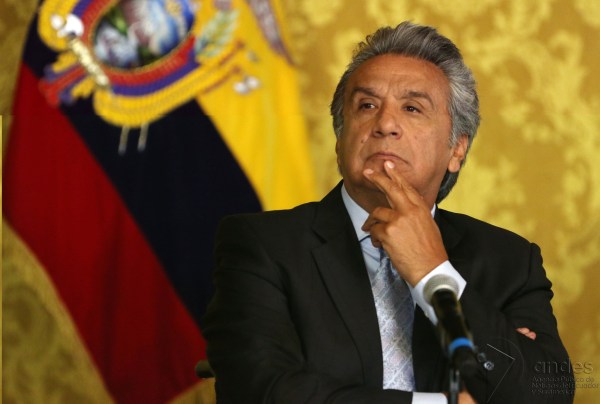
Other institutional crises may be on the horizon.  Ecuadoran President Rafael Correa pursued a high-risk strategy of debt-driven expansion of the state, which is not sustainable amid economic contraction.  Argentine President Mauricio Macri’s honeymoon may prove short-lived.  Much-needed economic reforms are likely to provoke even greater inflation and have already stoked resistance from the Peronist opposition.  Macri enjoys some unprecedented assets – for the first time non-Peronists also control the city and province of Buenos Aires– but Argentine public opinion overwhelmingly favors statist economic policies that he aims to dismantle, and no non-Peronist elected president has completed his term in office since the rise of Peronism as a political force.  Chilean President Michelle Bachelet, wounded by a drop in mineral export revenues and comparatively minor corruption allegations involving her daughter-in-law, reshuffled her cabinet earlier this month but continues to tank in the polls.  Latinobarómetro reports that 70 percent of Chileans believe their political system doesn’t work.

It’s not hard to envision other relatively stable South American democracies facing hard times ahead.  The June 5 presidential runoff in Peru could leave the country deeply polarized, especially if Keiko Fujimori, heiress to the country’s darkest episode in recent history, wins.  It is not a foregone conclusion that Colombian President Juan Manuel Santos, who has staked his second term on a long-awaited and much-needed peace accord, will secure its ratification, risking lameduck status for the remainder of his administration.  If the presidents elsewhere appear to be weathering the storm, democratic governance nonetheless faces important challenges.  It would be rash to predict that democracy will fail the test – and that such failure will give rise to a new era of authoritarian rule – but it’s clear that the region will witness widespread instability during the coming years.

May 26, 2016

Cuba: Raúl Clarifies the Lack of Clarity on Future

By Fulton Armstrong

raul pcc congress

Photo Credit: Alexandre Seltz and Sarumo74 (modified) / Google Images / Creative Commons

The report that Cuban President Raúl Castro delivered to the 7th Party Congress last weekend walked a tightrope between pressing harder for change – embracing the importance of the small, emerging private sector – and reassuring party conservatives that the basic tenets of the revolution will not be touched.  He reiterated his commitment to step down in 2018 and promote younger cadre, but he left unclear what he proposes the Cuban system look like in the future.  He defended his decision to normalize relations with the United States, but used Washington’s continuation of the embargo and “democracy promotion” and immigration policies as a rationale for not letting down the Party’s guard.  Among key points:

On Conceptualización.  Castro said this Congress was basically to give “confirmation and continuity” to policies set five years ago to update Cuba’s economic and social model,  but it kicks off a process of consensus-building around a conceptualización, which he said “outlines the theoretical bases and essential characteristics of the economic and social model that we aim for as result of the updating process.”  Private property is a major topic, and Raúl sought to reassure the party that respect for it does not mean – “in the slightest bit” – a return to capitalism.

On reforms approved previously.  The road has been difficult, he said, held back by “an obsolete mentality that gives rise to an attitude of inertia and an absence of confidence in the future.”  He referred to the foot-draggers as “having feelings of nostalgia for other, less-complicated moments in the revolutionary process,” such as when the USSR and socialist camp existed.  But he insisted that the reforms have continued advancing at a steady pace – “without hurry but without pause.”

On upcoming reforms.  Castro talked more about what will not happen rather than any new vision.  He firmly ruled out “shock therapies,” and he said that “neoliberal formulas” to privatize state assets and health, education, and social security services “will never be applied in Cuban socialism.”  Economic policies can in no case break with the “ideals of equality and justice of the revolution.”  But he confirmed that one of the potentially most disruptive reforms – unifying currencies and exchange rates – must be done as soon as possible to resolve and many distortions.  On foreign investment, he called on the party “to leave behind archaic prejudices about foreign investment and to continue to advance resolutely in preparing, designing, and establishing new businesses.”

On Cuba’s economic model.  Castro acknowledged “the introduction of the rules of supply and demand” and claimed they didn’t contradict the principle of planning, citing the examples of China and Vietnam.  “Recognizing [the role of] the market in the functioning of our socialist economy,” Castro said, does not imply that the party, government, and mass organizations stand by and watch abuses occur.

On private and state enterprises.  He said the “non-state sector” – which includes “medium, small, and micro-enterprises” – is providing very important goods and services, and expressed hope for its success.  This sector will continue to grow, he said, “within well-defined limits and [will] constitute a complementary element of the country’s economic framework.”  Castro also called for greater reform efforts to strengthen the role of – and, simultaneously, the autonomy of – state companies, telling managers to overcome “the habit of waiting for instructions from above.”    He noted that the creation of cooperatives outside agriculture “continues in its experimental phase,” with some achievements and shortfalls.

On U.S. policies and intentions.  Castro criticized Washington’s efforts to drive political change in Cuba, which he called “a perverse strategy of political-ideological subversion against the very essence of the revolution and Cuban culture, history, and values.”  He said, “We are neither naive nor ignorant of the desires of powerful external forces that are betting on what they call the ‘empowerment’ of non-state forms of management as a way of generating agents of change in hopes of ending the revolution and socialism in Cuba by other means.” Castro said that U.S. officials recognize the failure of past policy toward Cuba but “do not hide that the goals remain the same and only the means are being modified.”

Rhetoric about forever rejecting capitalism (and multi-party democracy) is standard, especially for a Party event meant to assuage anxieties of conservative factions reluctant to give up their familiar, if failed, models.  The re-election of 85-year-old Vice President Machado Ventura is another sop to the aging right as the country inches each day to its biologically imposed transition, as Fidel Castro made explicit in his closing remarks.  The pace of change in Washington is also slow in some areas, particularly the embargo and the Administration’s “democracy promotion” strategies,  but pro-normalization voices cannot be faulted for lamenting that Cuba could more effectively influence U.S. policy through simple regulatory measures encouraging business deals that will give momentum to embargo-lifting initiatives in the U.S. Congress.  All politics is local, however, and both governments seem content holding off on changing their paradigms for now.

April 21, 2016

Spain: Too Distracted to Play in Latin America?

By An Observer*

Rajoy Latin America

Photo Credit: La Moncloa Gobierno de España and Heraldry (Modified) / Flickr & Wikimedia / Creative Commons

Spain’s political crisis and problems facing the European Union have undermined Madrid’s ability to pursue interests in Latin America at a time of new opportunities.  Amidst countless months of lameduck government and the failure of either the Partido Popular (PP) or the Partido Socialista (PSOE) to form a government, the country is also tied in knots over corruption scandals, including some touching a Cabinet member and the royal family, and Cataluña’s persistent challenges to central authority.  Even before the current mess, Prime Minister Rajoy had shown only modest interest in Latin America, and King Felipe hadn’t yet demonstrated the mettle of his father, who once famously told Venezuelan President Chávez to shut up at an Ibero-American Summit.  Adding to Spain’s distractions are a series of EU challenges, ranging from refugee crises to terrorism and the Mediterranean countries’ debt overhang.  Spanish elites, who remain committed to the EU vision, are seized with concerns about Brexit, the UK’s flirtation with withdrawal, and perplexed by the absence of a renewed integration project.

Madrid’s declining role coincides with changes in Latin America that would normally grab its attention.  President Obama and Raúl Castro’s historic normalization of diplomatic relations has opened the door to at least one major U.S. hotel firm signing contracts to refurbish and manage several Cuban hotels – an industry in which Spain previously had extraordinary advantages.  Having played “good cop” with Cuba for many years, compared to Washington’s “bad cop,” Madrid’s future role on the island is at most uncertain.  The election of market-friendly President Macri in Argentina, where the previous government nationalized a Spanish energy company and adopted other policies causing bilateral estrangement, also represents an opportunity for Spain.  The near-completion of peace talks between the Colombian government and guerrillas should be the crowning jewel of a foreign policy in which Spain made a strong political investment early on, but Madrid has receded to the role of bit player.  At a time that Latin Americans continue to espouse support for CELAC and other regional organizations that exclude Spain (and the United States), Spain-sponsored Cumbres Iberoamericanas since 1991 have – even more than the U.S.-sponsored Summit of the Americas – lacked dynamism and produced little as the beacon of the Spanish transition was dying down

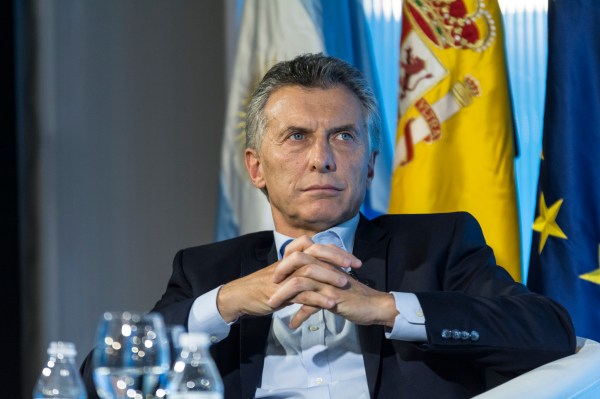
By turning inward, Spain risks losing what remains of its special cachet as Latin America’s link to Europe and as a country that made a successful transition to democracy with inclusion, human rights, vibrant media, and increasing transparency.  Its political capital in the region is running low, and budgetary constraints have diminished its aid budgets (from 0.5 percent of GDP to 0.13 percent).  But opportunities remain.  Big Spanish companies – Telefónica, Banco Santander, BBVA, Repsol, and others – and numerous mid-sized firms have shown interest in Latin America.  Cuba’s reluctance to embrace U.S. ties too tightly and too fast gives Spain important space to play a role if it wants.  Moreover, Spain’s diplomatic skills, critical for Central America’s peace processes and elsewhere, could still be a positive force in that subregion.   If it weren’t for former Spanish Prime Ministers’ contradictory roles in Venezuela, where U.S. baggage undermines Washington’s approach to political, economic, and security problems, Spain could be active there too.  But the Prime Minister and his cabinet have not given the Foreign Ministry the green light to get more deeply involved.  It’s not too late for Spain to turn things around and get back into the game in Latin America.  For that to happen Spain needs more consistent governance.

April 18, 2016

* The writer is long-time non-academic observer of Spanish foreign policy in Latin America.

Structural Reforms in Chile: Moving Forward in Midst of Political Crisis

By Claudia Heiss*

Bachelet Chile

Photo Credit: Chile Ayuda a Chile / Flickr / Creative Commons

Chilean President Michelle Bachelet has done well pushing her reform agenda despite a series of scandals regarding the illegal financing of political campaigns and abuse of power by her daughter-in-law.  Bachelet started with 58 percent support and the highest electoral margin of victory since Chile’s return to democracy in 1990.  Her New Majority coalition incorporated the Communist Party and replaced the Concertación, the center-left coalition defeated in 2010 at the end of her first period, and after 20 years in power.  Bachelet’s current program reflected a left-turn and an intention to correct perceived flaws of a transition criticized for assuming too many features of the model imposed by the dictatorship.  The program included a tax plan to finance education reform introducing free university in a commoditized market of superior education.  This project was the offspring of massive student protests in 2011.  Another proposal was to replace the dictatorship-era 1980 Constitution through an “institutional, democratic, and participatory” process.

The scandals have hurt Bachelet’s popularity – she ended her first term in 2010 with 80 percent support and is now at historical lows below 30 percent – undermined the legitimacy of the political parties and Congress, and prompted a surge of social mobilizations.  (Slower economic growth, owing to the low price of copper, has contributed to the government’s unpopularity.)  But the President has scored some big wins.  In addition to the tax and education reforms she sought, the government has achieved important advances in the direction of its political program:

  • In 2015, a proportional system replaced the Binomial electoral system, which severely distorted popular will in the election of representatives and granted veto power in Congress to the political heirs of the dictatorship.
  • The campaign finance scandals led to the recent approval of a “Probity Agenda,” including higher transparency, forbidding corporate donations to political campaigns, and establishing a new law to regulate political parties.
  • A bill to make the main regional authority, the Intendente, elective rather than appointed by the President – a major step toward decentralization – has passed the Senate.
  • The decriminalization of therapeutic abortion, currently punished in only five countries, was approved by the Chamber of Deputies.
  • Congress is in the final steps of approving a labor reform meant to increase the negotiating power of workers towards their employers.
  • A complex constitutional reform process was launched last year, and this month the government selected 216 “facilitators” to assist the process and initiated a series of local meetings to discuss constitutional principles, rights, duties, and institutions. The process, the first of its kind ever in Chile, will lead to a presidential proposal to be presented to Congress.

The road ahead will not be easy for President Bachelet and her allies.  The political climate is pessimistic, and China’s economic troubles suggest the commodity bubble is over – to the detriment of the Chilean economy.  While rejected by conservatives, the changes appear as insufficient to those who want more radical reforms.  The labor bill has been criticized by union leaders as not allowing enough collective bargaining, and the proposal for constitutional change falls short of a binding participatory process like a Constituent Assembly or a referendum would be.  Bachelet, however, has deftly channeled anger about the scandals into the constructive reforms of the Probity Agenda, and she changed the perception of what is achievable in Chile in terms of progressive political and social transformations.  While public opinion is currently harsh with the government and with political elites, her second term, which ends in 2018, could in the long run consolidate her legacy as an effective reformer even in the face of adversity.

April 14, 2016

*Claudia Heiss is Assistant Professor at Universidad de Chile’s Instituto de Asuntos Públicos and researcher at the Centre for Social Conflict and Cohesion Studies, COES.

Brazil: Daring to Look at Succession Scenarios

By Silvio Levcovitz*

Lava Jato

Photo Credits: Instituto Liberal (Brasil) and Brasil 247 / Google Images / Labeled for noncommercial reuse

Brazil’s snowballing scandals are generating a high level of uncertainty regarding the country’s political future.  “Operation Car Wash”—a two-year investigation by a task force of the Federal Police and the Federal Prosecutors—has already led to the conviction and 20-year imprisonment of several senior officials from Petrobras and prominent construction companies, and others are likely to follow.  In Brazil, congressmen, cabinet ministers, and the President can be criminally charged only by the Supreme Court, through a long, difficult process called “privileged forum.”  On March 17, former President Lula, under investigation for allegedly receiving two properties as a bribe from construction companies, was designated a Minister of State in President Dilma Rousseff’s administration, an appointment that would have afforded him that protection.  The judge pursuing him released a recording of a call from Dilma offering him immunity as well as Lula’s calls on family and other private matters.  Many in the Brazilian legal community have disapproved of the judge’s disclosure of the calls as disrespecting the rule of law and the right to privacy, but the damage to Dilma and Lula was done.

Calls for the President’s impeachment are surging—and she repeatedly rejects the pressure to resign.  On Sunday, March 13, a half-million people protested in São Paulo, and the press estimates that another 1-2 million demonstrated elsewhere around the country.  (Demonstrations supporting Dilma have attracted 100,000 citizens in São Paulo.)  The PMDB, party of Vice-President Michel Temer and President of the House Eduardo Cunha, is officially quitting the government this week, and other minor parties appear likely to do the same, definitely cracking the presidential support.  The impeachment process in Brazil has two steps.  In the House, two-thirds of its 513 members (342 votes) are required for “admission” or approval, in which case the Senate can decide by majority vote to take up the charges, resulting in the President being suspended for up to 180 days.  Conviction requires the votes of two thirds of the 81 senators.  Although press reports indicate the mood is for the impeachment, the government is offering positions and funds individually to Congressmen and in hopes of achieving a low turnout to stop the process in the House.

Predicting the outcome of such a volatile situation is inherently risky, but discussion of post-Dilma scenarios is growing increasingly common.  Should she step down or be removed from office, Vice-President Michel Temer would be her constitutional successor.  Like Dilma, however, Temer is being charged by the Superior Electoral Court on suspicion of illegal campaign financing and, if convicted, would not be allowed to take office.  The next two in line to succeed her—President of the House Eduardo Cunha and President of the Senate Renan Calheiros—have been snagged by Operation Car Wash and face charges by the Supreme Court, suggesting that they too could be disqualified.  (The Federal Attorney General has already asked the Supreme Court to issue a preventive order to remove Cunha because of evidence that he has received US$5 million in secret Swiss bank accounts, without any justification.)  That leaves Supreme Court President Ricardo Lewandowski as a possible successor for a maximum period of 90 days, at which point elections would be called.  As Brazil faces crisis after crisis, the press have taken to commenting that the country’s fast-paced, dramatic events make the American series House of Cards look slow and boring. 

March 30, 2016

* Silvio Levcovitz is a CLALS Fellow and political science PhD candidate at the Universidade Estadual de Campinas, São Paulo.  He has been a public lawyer in Brazil and is researching criminal cases of corruption and civil claims of administrative misconduct from 1991 to 2014.

Honduras: President Hernández’s Mission

By Fulton Armstrong

Hernandez honduras 2

Photo credit: Public domain

Honduran President Juan Orlando Hernández, who last month passed the half-way point in his four-year term, has scored some important political gains, with uncertain implications for his country.

  • The Obama Administration has embraced him as a partner in the “Alliance for Prosperity,” to which it has committed $750 million year to “build a safer and more prosperous future for [Northern Triangle] citizens.” It represents a doubling of U.S. assistance.
  • In a decision Hernández said he “would respect,” last April the Honduran Constitutional Court – key members of which the Congress elected under circumstances of questionable legality when he was Congress President – allowed him and other former presidents to run for reelection. The Chairman of the Congressional budget committee last week said there “should be no doubt” that the party is committed to Hernández serving a second term.
  • He successfully parried efforts to create a copy in Honduras of the International Commission against Impunity in Guatemala (CICIG), the UN-sponsored body with extensive powers in that country. The final terms of reference of the OAS-sponsored “Mission to Support the Fight against Corruption and Impunity in Honduras” (MACCIH) aren’t as loose as he had proposed, but many of its key definitions, personnel, and funding remain highly uncertain.  OAS Secretary General Almagro’s public blessing of it was a public relations coup.
  • The Honduran Congress’s approval last week of a new 15-member Supreme Court took numerous rounds of voting – presidents traditionally get the slate approved in one vote – but his party did well enough. Allegations of bribery arose immediately.  Praising the new court, he said last Friday that he would soon launch a national dialogue on additional Constitutional reforms and on “revising the social contract of Honduras” and building “a new Honduras.”

Hernández is not without critics in Tegucigalpa and Washington – even if their attacks have not thwarted him.  Opponents claim that his desire to overturn Constitutional prohibitions on a second term was more blatant than that of former President Mel Zelaya, whose removal by the military in 2009 Hernández supported claiming that Zelaya violated the prohibition.   Hernández has admitted that his party received funds embezzled from the national Social Security agency.  The Indignados, a grassroots opposition, doesn’t have the lobbying resources that the government has, but they have mobilized massive peaceful demonstrations, and veteran Honduras watchers praise their idealism, discipline, and maturity beyond their youthfulness.

Hondurans and foreign governments often favor leaders whose appearance of power promises stability, rather than favor processes and values – such as transparency and inclusiveness – that promise more effective democratic institutions.  Hernández was elected with barely 35 percent of the vote, but his growing power, coinciding with the weakening of legislative and judicial institutions, has concentrated power on the executive.  The country arguably faces one of the most complex situations in its history, on the cusp of either difficult change, such as reducing shocking levels of impunity, or a deepening of the current crisis.  The economic and political elites who control the nation have driven it into a rut from which “more of the same” does not appear a viable way out.  Hernández won praise from the international financial community by pushing through fiscal adjustments, yet these measures increased inequality in a country where half the population lives on less than $4 a day.  Preliminary data show that austerity has brought about an increase in unemployment and underemployment, which already affected roughly half of the labor force.  A U.S. and Mexican crackdown on Central American migration has reduced one of the only options that young Hondurans fleeing poverty, violence, and impunity thought they had.  While many Hondurans may wind up accepting a President’s reelection to a non-consecutive term, Hernández’s big push for a consecutive one and his talk of a “new social contract” understandably fuels skepticism if not angst.

February 16, 2016

Brazil: Not-so-Happy New Year

By Matthew Taylor*

Brazil Basta

Photo Credit: Antonio Thomás Koenigkam Oliveira / Flickr / Creative Commons

A vicious combination of corruption scandal and economic malaise suggests a troubled new year awaits Brazil.  Economists estimate gross domestic product has contracted 3 percent this year and will decline a similar amount in 2016, while inflation and weak government finances hamper efforts to stimulate growth.  Two of three big rating agencies have cut Brazilian debt from investment grade to junk. Unemployment has risen from under 7 percent a year ago to nearly 10 percent, with forecasts of 12 percent on the horizon.  Efforts to reform fiscal policy are getting nowhere, and the champion of fiscal reform, Finance Minister Joaquim Levy, has just resigned.  The bonanza launched by the 2003-2010 presidency of Lula da Silva – seemingly setting Brazil on a unique path of state capitalist development – is long over.

The country’s interconnected scandals cast shadows on many of the leading players on the national stage, including President Dilma Rousseff.

  • Petrobras, the crown jewel of Brazil’s state capitalist model, is at the center of allegedly massive corruption schemes. Rousseff, who was chair of the Petrobras board at the time of the alleged wrongdoing, has claimed absolute ignorance.  But the charges implicate Brazil’s leading political and business elites, many of whom have been jailed in recent months.
  • A feud between Dilma and the president of the Chamber of Deputies, Eduardo Cunha, reached a new low this month after Cunha’s approval of impeachment proceedings against her. (His own ethics problems continue to fester.)  The charge against Dilma is not of personal corruption but rather that Rousseff flouted budget laws by using public banks to cover up unauthorized debt issuance and off-books spending.  Rousseff supporters have argued that the impeachment charges represent the worst of golpismo, or coup-mongering, and a constitutional overreach that threatens to undermine democracy.

For Brazil, 2016 will be dramatic and unpredictable – as the country weathers the most dangerous political crisis since the impeachment and resignation of President Fernando Collor in 1992.  Dilma’s opponents will have difficulty convincing two-thirds of the Chamber and Senate to oust her, but the crisis is already creating significant fissures in the democratic system.  The parties have been turned upside down.  Even if Dilma survives in office, she faces nearly impossible odds in restoring the credibility of her administration and party, the Partido dos Trabalhadores, or PT.  There are early indications that the PT will face a bloodletting in the 2016 municipal elections, and former President Lula, the party’s once-ironclad standard-bearer, has the highest rejection rate (55 percent) of any potential candidate in the 2018 presidential contest.  The PMDB, Dilma’s coalition partner, is threatening to break with the government, but is internally divided. The opposition PSDB is facing scandals, protests, and troubles of its own in the states it governs.  The newfound proactivity of prosecutors and judges is making democratic checks and balances work as never before – and is largely welcomed by Brazilians – but Brazil’s old party system may not be able to keep pace.  Rumblings for a rethinking of the political system will grow louder in the new year, as the crisis deepens.

December 21, 2015

*Matthew M. Taylor is associate professor at the School of International Service at American University.