Anti-Immigrant Campaigns

Anti-Immigration Rhetoric: Winning Campaign Strategy or Coin Toss?

By Joseph Fournier and Ernesto Castaneda

October 10, 2024

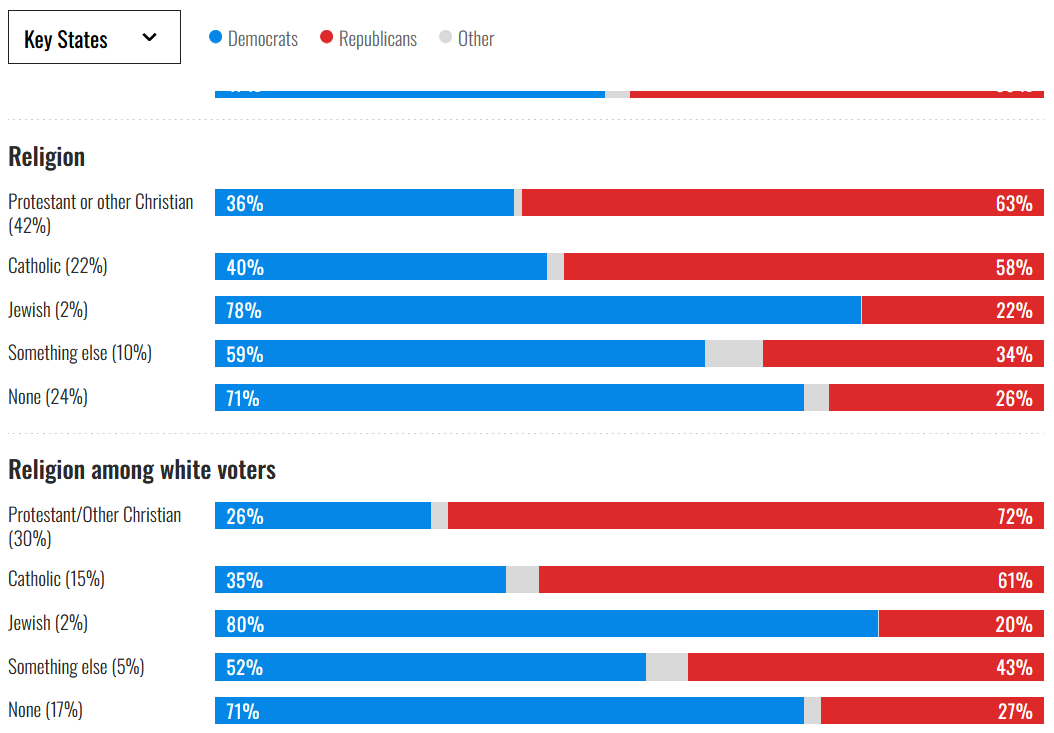
With the U.S. presidential election drawing nearer, many Kamala Harris supporters fear a perceived weakness on the border “crisis” may cost her the election to Donald J. Trump. Trump has championed himself as the figurehead for tough border policy. Restricting immigration has been associated with Trump. An NBC poll showed that 89% of people who identify as conservative point to the situation at the U.S.-Mexico border as a major factor in their vote for president, while only 25% of those who identify as liberal do so, and 52% among moderates. Therefore, we are not witnessing an anti-immigrant turn in public opinion but a further polarization by political ideology.

Crosstab from CBS, YouGov poll page 23.

Trump has been capitalizing on this perceived base of support by making even more extreme comments regarding the issue, most recently employing race pseudo-science in claiming that recent migrants possess “bad genes.”

In the past, Harris and the Democrats have painted themselves in clear opposition to his cruel immigration policies, such as family separation. When on the campaign trail in 2019, Harris’s rhetoric focused on pathways to citizenship and the plight of migrants. This strategy worked as Biden and Harris defeated Trump in 2020.

There was a slight rightward shift from Harris and the DNC on immigration. This was probably in reaction to an increase in the visibility of border crossings after the pandemic.  Trump has framed these increases as a “border crisis.”

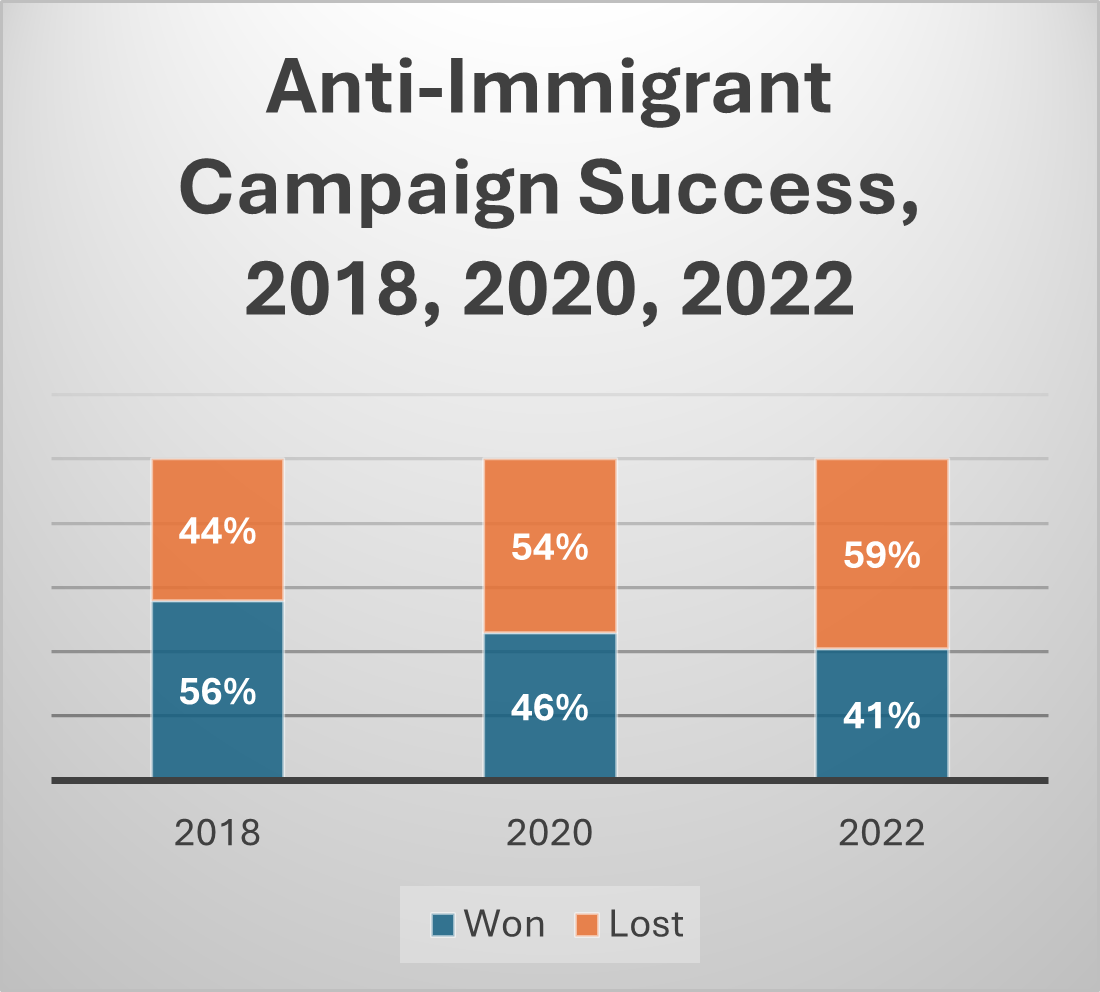
But do Democrats need to get harsher on immigration if they want to win? Data shown in Figure 1 demonstrates a phenomenon that may surprise political strategists on both sides of the aisle. Research from The Immigration Lab analyzing congressional and gubernatorial elections in 2018, 2020, and 2022 has shown that these anti-immigrant campaign victories have decreased by about 15%. This data was pulled from online campaign material from every election result with a 10% margin between the two major candidates.

Successes of anti-immigrant campaigns in competitive elections, 2018-2022 by the authors.

In 2018, businessman and former state senator Brian Kemp ran for governor in Georgia. His campaign epitomized the culture wars that the GOP included as part of their messaging strategy. Kemp styled himself as a “politically incorrect conservative” and filmed himself touting chainsaws and shotguns in service of this persona. He ended one of his ads by showcasing him in his truck, threatening to “round up criminal illegals myself.” On November 8, 2018, Kemp defeated his opponent in the closest Georgia gubernatorial race since 1966.

In 2022, Kemp ran for re-election against the same opponent. With essentially the same election conditions, Kemp’s strategy radically changed. His new primary TV ad, titled “Stronger Georgia,” listed a myriad of his accomplishments as governor. Many of his themes continued from his 2018 ads, including his support of decreased government regulation. Nonetheless, a notable point missing from his 2022 ad, however, was immigration. Kemp made no mention of the issue, making only a brief note of him “fighting human trafficking.” In softening his tone on migration, Kemp nearly tripled his margin of victory in 2022 in comparison to 2018.

Even while encounters at the border today are as low as during the pandemic when Title 42 was in effect closing the border to asylum-seekers, many think that long lines of people asking for asylum at the U.S.-Mexico border is a political liability for the Biden-Harris administration. However, when Americans in these competitive elections have shown up to the polls in the last six years, running an anti-immigrant campaign has demonstrated itself to be well short of the secure victory strategy that many seem to think it is.

Joseph Fournier is a Research Assistant at the Immigration Lab and a senior at American University.

Ernesto Castañeda is the Director of the Immigration Lab and the Center for Latin American Studies.

Uncertainty: Migrant Self-classification of Immigration Statuses

By Mackenzie Hoekstra

October 3, 2024

Starting in 2022, the Immigration Lab at American University began interviewing recent migrant and refugee arrivals to the DMV. So far, we have interviewed 181 from a variety of origins. The interviews aim to understand the experiences of refugees and migrants before, during, and after their entrance into the United States. Interviewers asked participants to reflect on their immigration journey and classify their immigration status. Self-perception, specifically individual understanding of immigration status, varied depending on the respondents’ country of origin, with particular uncertainty for migrants coming from South and Central America. Out of the fifty-nine respondents who were asked to classify their immigration status, eight were uncertain, seven of these were from El Salvador and one from Venezuela.

This broad range of understanding can be partly attributed to the higher clarity in legal definitions for refugee status and recipients of asylum or humanitarian parole versus migrants who have come without papers or who are in the middle of requesting asylum or other humanitarian relief. Refugees and asylum seekers qualify for legal residence based on proving a “well-founded fear of persecution for reasons of race, religion, nationality, political opinion or membership in a particular social group” (UNHCR). Refugees are vetted, approved, and brought to the U.S. through international refugee organizations and the U.S. government. They receive specific resettlement services and benefits through sponsoring resettlement agencies in the U.S. under the program known as Reception and Placement. These services are usually limited to the first 90 days after arrival and include necessities such as securing and setting up housing and rent assistance. Other services are provided by case managers, such as cash assistance, cultural orientations, school enrollment, benefit application assistance, employment support, and aid in navigating medical and legal services in their new communities. The goal of these services is for refugees to be economically self-sufficient as soon as possible. The number of refugees allowed in the U.S. is capped each year by the president and Congress. The current admissions cap for FY 2024 is 125,000 and 100,000 were resettled.

Asylum seekers must also prove they meet the conditions set by UNHCR but apply for asylum upon their arrival to the United States. They can apply affirmatively either at the point of entry or within a year of arriving in the U.S., or defensively once they receive notice of removal proceedings. Once granted asylum, they are known as asylees and gain access to government benefits and services similar to refugees like cash assistance and medical assistance, but do not have the same level of support as refugees do through case management. The are no numerical caps on how many asylum seekers can be granted that status but rather are decided on an individual case through immigration courts. This process can be lengthy and has a very significant backlog. According to TRAC, 1,101,819 asylum applicants currently have a pending case with U.S. immigration courts. This number translates into an average wait time of 1,424 days, a wait of almost four years for their case to be heard and decided.

For individuals who do not qualify for legal permanent residency as refugees or asylees, the definitions and processes become more complicated. Unlike for refugees and asylum seekers, there is no legal definition of a ‘migrant.’ A variety of programs/statuses exist for migrants including, but not limited to Humanitarian Parole (HP), Temporary Protected Status (TPS), work permits/visas, student visas, and green card applications, all of which have strict eligibility requirements and timelines.

Social services and benefits available to asylum seekers and migrants are limited. According to the National Immigration Forum, federal benefits such as the Supplemental Nutrition Assistance Program (SNAP), Temporary Assistance for Needy Families (TANF), Supplemental Security Income (SSI), and Medicare are not available for these immigrants. These benefits are only available to immigrants who have been granted asylum or become lawful permanent residents (LPR) and lived in the U.S. for a minimum of 5 years. Some states offer limited cash, food, and healthcare assistance, however, most of the services available are provided by local nonprofits which face similar barriers to resources and visibility. Accordingly, research shows that immigrants use less government services than the U.S.-born.

In addition to limited social benefits, legal status designations are complex to navigate, often requiring legal guidance and representation to get one’s status adjusted and obtain permanent residency. The interviews conducted by the Immigration Lab highlight this confusion and uncertainty and the need for better and more accessible resources and legal guidance for migrants.

Among respondents who did not classify themselves with a concrete immigration status in the interviews, two main groups emerged, those with some form of legal guidance and those without. Respondents without any form of legal guidance were quick to classify themselves originally as undocumented or express complete uncertainty as to their status. When prompted further during the interviews, many respondents clarified that they were uncertain about their status, not undocumented.

In other cases, individuals thought they may be out of status but in reality, they were pending a decision by migrant courts. In one instance, a respondent from a woman from Colombia stated, “Let’s say right now I don’t have status. I don’t have documentation. I am undocumented.” However, further discussion revealed that she had been processed and released by U.S. immigration and had been allowed to stay in the U.S. on legal grounds, which she did not fully understand. This response highlights how a self-classification as “undocumented” is used as a way to express initial uncertainty. While this response pattern emerged in a few cases, one example of complete uncertainty came from a Honduran male respondent. When we asked about his immigration status, he responded “What can you call it?” The interviewer then went on to explain different avenues of immigration: asylum, visa, and entry without inspection. In response, the man once again affirmed that “I don’t know…” The man explained that he was interested in getting a work permit but had no avenues through whichto obtain one. This shows that they do not know how the U.S. immigration system works, much less how to navigate it.

For those who expressed having legal guidance or representation, a theme of classifying as “in-process” was common. These respondents understood that there was a process that they were going through to get documentation but could not specifically articulate what that process was. For example, when asked to identify her immigration status, one El Salvadorian female explained that she and her family had found a lawyer to represent them. But never articulated what legal avenue was lawyer pursuing. Similarly, an El Salvadorian male expressed confusion over his next court date, not knowing when or what the court appearance was for.

In a working paper written by the American University’s Center for Latin American and Latino Studies on Newcomer Central American Immigrants’ Access to Legal Services, researchers found that less than half of Central American immigrants have access to legal services because low-income and pro bono services are hard to find. Additionally, this affordable representation often only takes on limited cases, specifically focusing on the cases that are more likely to be won in court. This has resulted in more legal referrals to private firms, and despite these firms providing high-quality services, they are very expensive. Immigrants may be tempted to work with notary generals confusing them with notarios, who in Latin America are highly influential lawyers. This creates a higher degree of fraud risk. Therefore, these Central American immigrants either avoid, don’t have access to, or cannot afford legal services. This means that they must rely on their knowledge or the knowledge of family and friends. In the context of the complex and process-oriented immigration legal system, this information is often not enough and may lead to them losing their immigration case to remain in the U.S.

The analysis of these interviews uncovered the important reality that migrants are often uncertain about their immigration status in the U.S., even when they have access to legal representation or guidance. Volunteers, legal offices that do pro-bono immigration work, and non-profits that have this as their mission are overburdened by caseloads and don’t receive enough funding and donations to expand. People come to the United States for a variety of reasons and often must take timely action to secure their legal statuses. It is crucial that theyhave access to resources that can help guide and support them through the various processes available to them, both legal and non-legal. It is not enough to ensure basic access to these resources; efforts must be made to make information about immigration statuses accessible and understandable for migrants.

Mackenzie Hoekstra is a senior majoring in Sociology at American University and a member of the Immigration Lab.

Edited by Dr. Ernesto Castañeda, CLALS, and Immigration Lab Director.

Are Digital Nomads Bringing Security to Tepito?

By Sofia Guerra

Creative Commons Licenses

Abstract:

Mexico City has seen a rise in digital nomads, individuals who work remotely while exploring low-cost international destinations. Sofia Guerra, along with a colleague, conducted fieldwork during the summer of 2024 to study this phenomenon. One finding showcased a significant increase in tourism in Tepito, one of Mexico City’s most dangerous neighborhoods. There has been an attempt to rebrand it as ‘Reforma Norte’ to mitigate its notorious reputation. Despite these efforts, Tepito residents report little to no improvement in the safety of the area, which remains heavily associated with crime and gang activity. Digital nomads generally avoid living in Tepito, visiting only its markets with local guides during the day.

Mexico City has experienced a notable increase in the number of digital nomads from around the globe. Digital nomads are individuals who can work remotely, using their flexibility to explore and reside in different countries. This lifestyle allows them to earn a living while working away from their home base. Typically, they choose destinations with a lower cost of living compared to their hometowns, which results in them earning in one currency and spending in another. This constructs economic growth by attracting investment in the area but raises local prices.

I have been studying this social phenomenon through research conducted with my colleague Montse Hernandez by interviewing locals and digital nomads to gather data. One theme that impressed us the most was that, due to gentrification, Tepito—a neighborhood known as one of the six most dangerous barrios in Mexico—is now becoming an intriguing destination for digital nomads. One of our participants even claimed that tourism led to increased security in the area. 

Being born and raised in Mexico City and always hearing about the crime surrounding Tepito, made this theme catch my attention and I decided to explore it further. Kristýna Omastová, conducted research to understand Tepito’s transformation from the 1960s to the present day. She describes how Tepito, initially known for its informal commerce, evolved into a major drug distribution hub in the heart of Mexico City. With the rise of the informal economy and growing demand for illegal goods, Tepito solidified its reputation as a place where illicit products were easily accessible. Tepito became a key center for drug distribution, and violence peaked and fell under gang control. To this day, remains a hub for drug trafficking operations, dominated by gangs like “La Unión Tepito,” which control not only the drug trade, but also other illegal activities such as extortion, kidnapping, and theft. 

So, why has Tepito become a target for digital nomads? The real estate company Grupo UBK launched a new remarketing campaign for the area, driven by the rising demand for apartments in Mexico City. Tepito is being promoted as an affordable investment opportunity, making the rent prices in the area rise. A rebranding effort has emerged, and it involves renaming it ‘Reforma Norte’ to mitigate its reputation for insecurity. It’s important to note that the buildings are not located in the heart of Tepito, but rather on the outside of the neighborhood. Some locals don’t even know that the area is now being called Reforma Norte and believe that the promotion of Reform Norte will not change or affect the prices of the heart of Tepito, although they have seen an increase in foreign-born visitors in some of the busiest market areas. This showcases that the marketing strategy has digital nomads as their target, therefore causing an increase in tourists in that area.

Although there has been an increase in foreign-born visitors in Tepito, the area is still known for delinquency, drug trafficking, and informal commerce. Digital nomads are mostly living in safer neighborhoods such as Condesa, Roma, Polanco, and Juárez. In Tepito, tourists often visit for the day and go to the markets in the heart of the barrio, usually accompanied by a tour guide or locals who know the area. This suggests that the rebranding strategy by the real estate company has led them to believe that Tepito is becoming safer, although locals from Tepito themselves do not perceive any significant changes in the Barrio Bravo safety.

Sofia Guerra is a sociology graduate student at American University. She is a research assistant at the Immigration Lab and Center of Latin American and Latino Studies at American University. She has conducted research on migration, gender studies, and the bilateral relationship between Mexico and the United States. She has an interest in policy-making, migration studies, criminology, and academia. She currently working on her research regarding migration and interpersonal violence.

Anti-Immigration Rhetoric is an Electoral Vulnerability: Evidence from the 2022 Midterm Elections

By Ernesto Castañeda, Joseph Fournier, and Mary Capone

October 1, 2024

Graph elaborated by the authors with data collected from CNN Politics’ Midterm Election Results.

The above graph represents the proportional success of candidates who used anti-immigration sentiment in their campaigns for the 2022 midterm elections. Results data was taken from CNN Politics. Anti-immigration rhetoric was found in campaign material through Meta Ad Library, X (formerly Twitter), debate responses, campaign website archives, YouTube ad searches, and general Google searches. We focused on competitive elections defined as having electoral results within a 10% margin between candidates. Candidates in these competitive elections who used ani-immigrant sentiment were no more likely to win the election than those who did not; in fact, more candidates who campaigned on anti-immigration lost than won in 2022. This data provides evidence that not being anti-immigration is not a hindering campaign decision. It may be quite the opposite.

Immigration often emerges as a prominent talking point among candidates in presidential, congressional, and gubernatorial elections. Former President Donald Trump frequently employs anti-immigration rhetoric and continues to campaign under similar sentiments about the allegedly dangerous porosity of the southern U.S. border. In the presidential debate in June of 2024 against President Joe Biden, Trump mentioned immigration in 42% of the 38 times he spoke while Biden mentioned immigration 13% of the time.  In the subsequent debate against Vice President Kamala Harris, out of 38 times when Trump spoke for more than two sentences, he incorporated immigration 10 times (26% of the time). In comparison, Harris did so 4 out of 27 times (15% of the time).

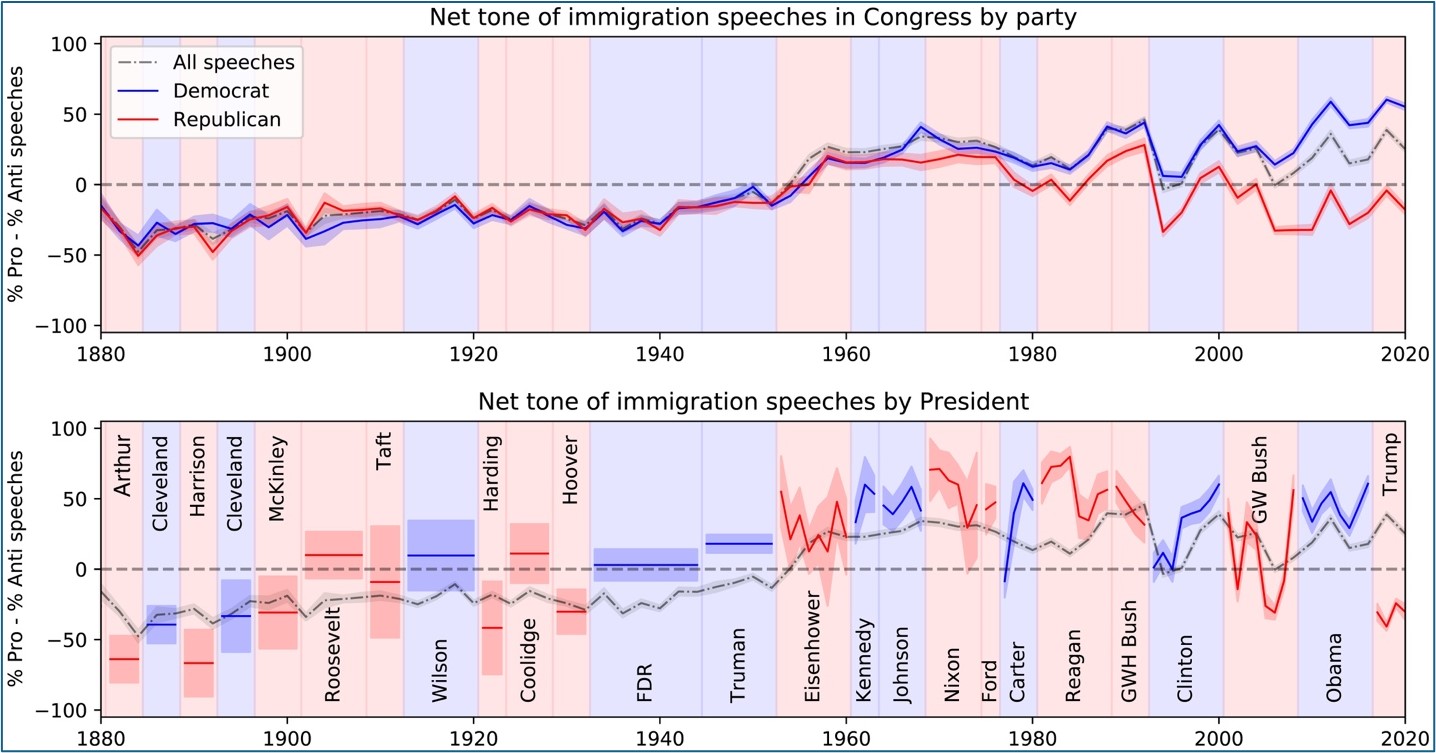
Anti-immigration rhetoric has become practically synonymous with the Republican Party as these candidates often use immigrants as scapegoats for shortcomings in national security, economics, and crime control. While several Democratic candidates support anti-immigration policies as well, it is less commonly a key aspect of their campaigns. The graphic below indicates the overall tone of immigration speeches in Congress and the president by party from the late nineteenth century until 2020. While the data excludes 2022, it encapsulates the general trends of immigration sentiments over time.

Source: Card et al., 2022 published by the Proceedings of the National Academy of Sciences.

The top of the graph shows that trends in the rhetoric of Republican and Democratic congressional representatives were negative before the 1950s and became positive in both parties in the late 1950s and through the 1960s and 1970s. The divergence in sentiments is clearest in the early 1980s and beyond, with the greatest points of divergence occurring between 2000 and 2020. Card et al. acknowledge that the divergence also represents other trends in the polarization of other issues. However, they find that immigration polarization predated the rise in generic political polarization observed in Gentzkow et al. by more than a decade.

The lower part of the graph shows the variation in presidential sentiments through positive and negative language employed to discuss immigration. The anti-immigrant rhetoric of President Trump has been unseen since the presidency of Herbert Hoover. Overall, the graph represents the rise in anti-immigration rhetoric in congressional and presidential speeches by Republicans in recent years as it has become more of a political talking point.

Discourse gathered from the campaign sites and social media accounts of Republican candidates who ran in competitive elections in 2022 with anti-immigration campaigns includes several instances of strongly prejudiced statements. Republican Mark Robertson (Nevada District 1) sought to “turn off the illegal flow of people coming into our country… end chain-migration, visa lotteries and vacation-birth citizenship.” Ending “vacation-birth citizenship” implies a possible erasure of birthright citizenship. Anti-immigrant candidates describe policies like these in misleading ways to garner political support, despite understanding the implausibility of such a policy.

Many of these anti-immigrant candidates take further aim at immigrant children. Republican candidate for the Senate in Pennsylvania Mehmet Oz stated in an ad that, “The Biden administration’s failure on the border is so massive that they are flying illegal immigrants up to airports like this where illegal immigrants are being taken on buses. Now every state has become a border state.” The ad is filmed outside of Scranton-Wilkes-Barre Airport in Pennsylvania, an airport that has been instrumental in the facilitation of protecting unaccompanied migrant children. This airport and the role it plays in the migrant children protection apparatus made it a popular target for Pennsylvania Republicans in 2022. Jim Bognet (R), who ran for Congress in the district that includes the airport itself, ran an ad claiming “Joe Biden & Matt Cartwright still won’t STOP ghost flights of illegal immigrants into (Northeast Pennsylvania).” The reason for this secrecy is that these are minors whose identities are obscured to ensure their security. Many of these children come from vulnerable backgrounds, including a sixteen-year-old victim of sex trafficking seeking protection while awaiting possible testimony and an asylum claim. These children have become the target of a political stunt by the GOP in their attempt to create fear surrounding migration.

Numerous other candidates posit a link between undocumented immigration and drug cartels. Republican Congressman Bryan Steil, who won in Wisconsin District 1, claimed on his campaign website that “drug dealers (and) human traffickers” are crossing the border, framing it in such a way that implies the two are intertwined in their business dealings. Republican Congressman John James, who won reelection in 2022 for Michigan District 10, conducts a similar framing in a tweet highlighting “millions of illegal border crossings, millions of lethal doses of Chinese fentanyl.”

A more brazen example of such framing can be found in campaign material from Blake Masters’ failed bid for Arizona Senate, which shamelessly claims that “More than 225,000 illegal aliens pour into our country every month. And they bring enough fentanyl over each month to kill every American twice over.” In a recent conference on immigration at American University, Dr. Andrew Selee, head of the Migration Policy Institute, notes that these organizations are separate entities. Though they sometimes do collaborate, they are by no means the same and have independent organizational structures. This is a subtle yet important distinction that has been masked to criminalize migrants and conflate them with criminal enterprises such as drug cartels.

The criminalization of migrants was certainly not limited to linking them to cartels. Many candidates rely upon preconceived racist notions of immigrant populations (mostly Latinos) in making generalizations. Such candidates keep their statements on immigration vague, like Nevada Republican Senate hopeful Adam Laxalt: “[the] crisis at the border that has put communities across Nevada in danger…. [Laxalt] fought against dangerous sanctuary city policies and worked to help stop their spread.” The advantages yielded by anti-immigrant candidates in utilizing this sort of vagueness are twofold. The first is that it appeals to a voter base that has already constructed a negative bias toward immigrant populations, and it is this sort of rhetoric that energizes these voters. The second advantage of such vagueness is the removal of the burden of proof from Laxalt or other candidates. Because of this vagueness, the claim becomes difficult to disprove because the meaning can be fluid and easily manipulated at the whim of the candidate.

Similarly, a campaign ad from Republican gubernatorial candidate Kari Lake of Arizona claims to finish the southern border wall and reinstate the “Remain in Mexico” policy: “the best policy I’ve seen in my 27 years, it worked.” The “Remain in Mexico” policy, a Trump-era directive modified by President Biden, has been largely condemned by human rights groups. Multiple immigration advocates highlighted that the policy forced all migrants to wait on the Mexican side of the border, including those who are escaping persecution in Mexico, in unsafe and uncertified conditions while their asylum case were pending.

Overall, anti-immigration statements like those highlighted in the 2022 midterm election campaigns are prevalent across Republican candidates. Trends indicate a rise in such rhetoric in congressional and presidential speeches with a partisan divergence as Republican candidates are more likely to employ this as a strategy in campaigning. Nonetheless, there was limited success for anti-immigrant campaigns in the 2022 midterm elections. The data shows that anti-immigration rhetoric is not a guarantee for winning elections; in fact, it may be an electoral vulnerability as it does not lead to more success in competitive elections.

Ernesto Castañeda PhD, Director of the Immigration Lab and the Center for Latin American and Latino Studies, American University in Washington DC.

Joseph Fournier and Mary Capone are research assistants at the Immigration Lab and the Center for Latin American and Latino Studies at American University.

Sources

“2022 Midterms.” CNN Politics, Accessed September 17, 2024. https://www.cnn.com/election/2022.

Adam Laxalt for NV. “Issues | Adam Laxalt for Senate.” Accessed February 6, 2024. https://www.adamlaxalt.com/issues.

Card, D., Chang, S., Becker, C., Mendelsohn, J., Voigt, R., Boustan, L., Abramitzky, R., & Jurafsky, D. (2022). Computational analysis of 140 years of us political speeches reveals more positive but increasingly polarized framing of immigration. Proceedings of the National Academy of Sciences119(31). https://doi.org/10.1073/pnas.2120510119 

Castaneda, Ernesto. “First Presidential Debate Was Mainly about Immigration, Few Noticed”. AULA Blog Accessed September 25, 2024 https://aulablog.net/2024/07/19/first-presidential-debate-was-mainly-about-immigration-few-noted/.

“Frequently Asked Questions: ‘Remain in Mexico’ Policy.” Justice for Immigrants. Accessed October 2, 2024. https://justiceforimmigrants.org/wp-content/uploads/2019/02/Remain-in-Mexico_en.pdf.

Gentzkow, M., Shapiro, J. M., & Taddy, M. (2019). Measuring group differences in high dimensional choices: Method and application to congressional speech. Econometrica, 87(4), 1307–1340. https://doi.org/10.3982/ECTA16566

James, John. (JohnJamesMI). “Our border is plagued with chaos – millions of illegal border crossings, millions of lethal doses of Chinese fentanyl & incompetence from the White House. I’m glad to support the House GOP’s Commitment to America to fund border security & put an end to human & drug trafficking.” September 26, 2022. 3:10 PM. Tweet. https://x.com/JohnJamesMI/status/1574476402392457217.

Jordan, Miriam. “’Ghost Flights’? The Facts Behind Transporting Migrant Children”. New York Times. June 24, 2022. Accessed February 4, 2024. https://www.nytimes.com/2022/06/24/us/ghost-flights-migrant-children.html?login=google&auth=login-google#.

“Kari Lake January 2022 Ad.” Accessed February 6, 2024. https://www.facebook.com/ads/library/?active_status=all&ad_type=political_and_issue_ads&country=US&id=313372640712991&media_type=all.

“Remain in Mexico” Human Rights Watch. Accessed October 2, 2024. https://www.hrw.org/tag/remain-mexico

Robertson, Mark. “Mark’s Stances – Robertson for Congress.”Accessed February 11, 2024. https://web.archive.org/web/20221104220014/https://robertsonforcongress.com/stances/

Selee, Andrew. “Wilson Center Discussion on Immigration Policy”. September 23, 2024. C-SPAN, 58:43. https://www.c-span.org/video/?538598-1/wilson-center-discussion-immigration-policy.

Steil, Bryan. “The Issues: Bryan’s Vision for America – Securing Our Border”. Accessed September 26, 2024, https://web.archive.org/web/20221104220838/https://www.bryansteil.com/issues/.

“STOP ILLEGAL IMMIGRATION – Dr. Oz for Senate.” Accessed February 11, 2024. https://web.archive.org/web/20221028022107/https://doctoroz.com/issue/stop-illegal-immigration/.

Voter Concerns: The Economy or The Government’s Role in Shaping It?

By Ernesto Castañeda

September 27, 2024

On the morning of September 9, 2024, a Republican voter called into C-SPAN’s Washington Journal and said, “Democrats used to be all about the workers, but now it’s just socialism.” This short piece is respectfully directed to those who may share that sentiment. First, it’s important to note that, in principle, socialism is centered around workers, but it asks that workers own the companies they work at. Democrats are not socialists. Even the party’s most progressive figures, like Bernie Sanders and Alexandria Ocasio-Cortez (AOC), identify as Democratic Socialists and advocate for the U.S. to adopt some of the social safety nets seen in Northern European countries and fight monopolies and for workers’ rights to create a tempered capitalism. Now, let’s turn to the real concerns about the economy as we approach the upcoming elections.

The economy is doing well

The U.S. economy is objectively performing very well, largely due to the Biden-Harris administration’s adoption and successful implementation of policies championed by figures like Sanders, Warren, and AOC. Compared to other countries, the U.S. has recovered more quickly from the pandemic’s effects, which were driven by lockdowns, labor shortages, and disruptions to global supply chains—all of which contributed to inflation. These policies, alongside immigration, have supported healthy economic growth. Notably, inflation and interest rates are decreasing without the economy slipping into a recession—an almost ideal outcome often referred to as a “soft landing.”

Nonetheless, some citizens and commentators still insist that the economy is weak, and voters often mention “the economy” as their main concern.

A shift in expectations on the economy

Before the COVID-19 pandemic, it was already common for millions of Americans to live paycheck to paycheck and carry significant debt. The pandemic, however, reshaped Americans economic expectations in at least three important ways: 1) The imminent threat to life placed greater value on human life and people’s time; 2) It exposed our heavy dependence on foreign producers, global supply chains, and essential local workers; and 3) It led to a bipartisan recognition that the government can and should take action to address hunger, unemployment, public wellbeing, inequality and support the working and middle class, as well as small and large business and postpone evictions in times of collective suffering.

Let me elaborate on point three. The economic policies and incentives—such as support for businesses both large and small, direct checks to families, and the child tax credit—implemented in a bipartisan effort during the pandemic by both the Trump-Pence and Biden-Harris administrations significantly raised economic standards and cut child poverty in half. These policies also reflected what C. Wright Mills advocated in the 1960s: when unemployment is widespread, it should be viewed as a social issue rather than a matter of personal responsibility, worth, or morality. In contrast to the neoliberal focus on market fundamentalism, these pandemic-era measures revived Keynesian principles, emphasizing a return to full employment and expanding support for policies reminiscent of FDR’s New Deal—where the government plays a role in reducing inequality and supporting the working and middle class.

The real cause of frustration

One of Joe Biden’s boldest and most significant accomplishments may have been his repeated assertion that “trickle-down economics has never worked. It’s time to grow the economy from the bottom up and the middle out.” This is a change in the long-held belief in individualistic ideologies, such as the notion of “pulling yourself up by your bootstraps.” Stemming from this ideological shift, I believe much of the unease felt by the working and lower-middle class about “the economy” stems from frustration over the end of many pandemic-era cash transfers and stimulus checks, which were initiated by both the Trump and Biden administrations. These transfers and the forced savings due to the lockdowns allowed some families to pay credit card debt and even increase their savings, which for many are now depleted again.

Ironically, it was the Republican Party that blocked the extension of the child tax credit, a key measure backed by Democrats to support working families. Yet, many voters remain unaware of this. Meanwhile, tax-evading billionaires, including figures like Trump, exacerbate the economic challenges rather than providing solutions. A modest increase in taxes on billionaires would help fund essential programs like the child tax credit, and contrary to popular rhetoric, this is not socialism—it’s a practical approach to ensuring fair contributions from the wealthiest.

Outdated and Misguided Economic Narratives

Trump has attempted to link his scapegoating of immigrants to the current economic challenges, falsely claiming that immigrants are taking jobs from those most in need, particularly African Americans, Hispanics, and union workers. However, this argument does not hold up—unemployment rates are low, and wages are rising. As a result, most people are unlikely to be swayed by this rhetoric. Those who do buy into it likely already held anti-immigration views prior to the pandemic and/or are victims of structural changes stemming from Reaganomics.

By invoking fears that the U.S. could become “like Venezuela,” Trump taps into concerns among immigrants who lived Venezuela’s prosperity before Chavismo or those fleeing other authoritarian regimes. However, Republicans risk losing these voters by frequently portraying Venezuelan immigrants as criminals—members of the Tren de Aragua gang—or as individuals released from prisons and mental institutions by Maduro and sent to the U.S. This narrative echoes real historical events such as Cuba’s Marielitos or British prisoners sent to Australia as settlers, as well as xenophobic stereotypes and prejudices once directed at Irish, Italian, and Mexican immigrants. History, however, shows that the children of immigrants often experience rapid social mobility and thus contribute as much, if not more, to society than the children of native-born citizens.

Some attempt to alarm undecided voters by claiming that Harris is advocating for price controls. In reality, she is focused on preventing monopolies and negotiating better prices when the government buys in bulk, as demonstrated successfully with insulin. This pragmatic approach has broad support across Republicans, Democrats, and Independents. Harris and Walz are not pushing radical leftist ideas; rather, they are promoting a moderate populism that is not linked to exclusionary Christian nationalism.

“Opportunity economy”

In her speech at the Economic Club of Pittsburgh on September 25, 2024, Harris stated:

“The American economy is the most powerful force for innovation and wealth creation in human history. We just need to move past the failed policies that have proven not to work. And like generations before us, let us be inspired by what is possible. As president, I will be guided by my core values of fairness, dignity, and opportunity. I promise you I will take a pragmatic approach. I will engage in what Franklin Roosevelt called bold, persistent experimentation, because I believe we shouldn’t be constrained by ideology but instead pursue practical solutions to problems.”

With this statement, she invoked FDR’s legacy while offering a centrist, pragmatic vision for addressing the economic challenges facing Americans.

While some commentators argue that Harris and Walz haven’t provided enough details on their economic policy, they are actually offering a balanced approach that appeals to both corporations and small businesses. Their plan promotes U.S. manufacturing and nearshoring, aims to reduce the climate impact of production and consumption, and provides much-needed support to the low and middle class in regions hit hardest by deindustrialization. Trump talks much about caring about the working class but did little to benefit them structurally and long-term while in the White House. Policies like exempting tips and overtime from taxation fit within Harris’ framework, but Harris also advocates for more ambitious measures to really level the economic playing field a bit more. Harris calls this vision the ‘opportunity economy,’ a pragmatic approach to economic and industrial policy that many former Bernie and Trump supporters could, in principle, support.

Ernesto Castañeda PhD, Director of the Immigration Lab and the Center for Latin American and Latino Studies, American University in Washington DC.

Edited by Robert Albro, CLALS Associate Director of Research, and Edgar Aguilar, International Economics master’s student at American University.

This piece can be reproduced completely or partially with proper attribution to its author.


Immigration as the Current Main Driver of Economic Growth in the U.S.

By Ernesto Castañeda, Edgar Aguilar, and Natalie Turkington

A new report from CLALS and the Immigration Lab finds that recent immigrants are a key driver of economic growth in the United States.

The report presents an original calculation that finds that only in 2022:

  • Immigrants who sent money home contributed over $2.2 trillion dollars to the U.S. economy.
  • This contribution by migrant labor constitutes about 8% of the U.S. GDP.
  • Remittances represent just 4% of the total output generated by immigrants, even if they add up to $81.6 billion annually, disputing the narrative that immigrants drain the U.S. economy.


Immigrants who remit contribute around $2.2 trillion annually to the U.S. economy. Despite concerns that remittances drain U.S. dollars, they only represent 4% of immigrants’ total contributions. This estimate is based on credible sources indicating that 17.5% of immigrants’ income is sent as remittances and considering a combined yearly salary of approximately $466.5 billion.  Using data from the World Bank, the Association for Central Banks of Latin America, the U.S. Census Bureau, and the Bureau of Labor Statistics, however, this is just a good approximation to quantify some of the benefits of migration. Immigrants’ contributions to the economy are greater as not all send remittances through formal channels. Additionally, it overlooks the economic growth immigrants stimulate by spending their wages in the U.S., creating demand, and generating jobs. Not to say anything about the human, cultural, culinary, and creative contributions. Below are more details about this novel estimation and projections of future contributions by immigrants to the U.S. economy.

The Congressional Budget Office’s Demographic Outlook 2024-2054, which has gotten some deserved media attention, estimates that in 2034 the U.S. economic output will be $7 trillion larger due to new immigration. Tax revenues would also be higher and the deficit lower because of immigration all else equal.

The quote from the CBO Director’s press release is, “in our projections, the deficit is also smaller than it was last year because economic output is greater, partly as a result of more people working. The labor force in 2033 is larger by 5.2 million people, mostly because of higher net immigration. As a result of those changes in the labor force, we estimate that, from 2023 to 2034, GDP will be greater by about $7 trillion and revenues will be greater by about $1 trillion than they would have been otherwise.”

We estimate immigrants’ contribution to the U.S. economy between 2023 and 2034 will be greater. Using the same immigration estimates as the Congressional Budget Office’s (see graph below), we calculate new immigrants have the potential to elevate the U.S. economic output by a staggering $17 trillion just in 2034.

Net population growth is through immigration.

Source: Congressional Budget Office interactive graph here.

However, if the number of new immigrants and asylum seekers continues at the same pace as in estimated for 2024, 3.3 million per year (10,000 per day as happened in December of 2023), we calculate that the U.S. would enjoy an increased economic output of over $37 trillion just in 2034.

As the Economic Policy Institute writes, “The unemployment rate for U.S.-born workers averaged 3.6% in 2023, the lowest rate on record. Obviously, immigration is not causing high unemployment among U.S.-born workers.” They further write, “immigrants that make up 18.6% of the U.S. labor force are playing key roles in numerous industries and are employed in a mix of lower, middle, and higher-wage jobs. And as the Congressional Budget Office recently reported, immigration is contributing to strong economic growth—with future immigration forecasted to boost real gross domestic product by 2% over the next 10 years—as well as increasing government revenue. Immigrants are also complementing U.S.-born workers by contributing to overall population and workforce growth. The U.S. Census Bureau projects that if the U.S. were to have lower-than-expected immigration levels, the population would begin to decline in 20 years, and if there were suddenly zero immigration, the population would begin to decline next year, deeply harming economic growth.”

A Washington Post article states that around 50% of the growth in the labor market in 2023 was due to foreign-born workers. The same was the case in the 1990s.

In 2021, 45 million immigrants lived in the United States, accounting for 14% of the country’s population. Immigrants are integrated into American social, economic, cultural, and political life. The Immigrant Research Initiative calculates that “Immigrants account for 17 percent of the U.S. economic output (GDP), even higher than their share of the population. The United States has a $19.6 trillion economy according to the Bureau of Economic Analysis 2021 statistics, which means immigrants are conservatively responsible for $3.3 trillion of economic output.” This supports our calculation of around 2.2 trillion only from immigrants who send money abroad because many do not send remittances.

Estimates and projections vary, but what is clear is that there would be no economic growth without recent immigrant arrivals. If immigration (of all types) decreases in the following years, economic growth will most likely plummet, and inflation will rise. Furthermore, this does not only apply to the United States but to other countries as well.

You can find coverage of the report in Spanish here:

“Immigracion y Economia en EE.UU.” RTVE 24h.

“Los hispanos y el mercado laboral en EE. UU.” Y Esto No es Todo podcast on YouTube.

“Ernesto Castañeda y el mercado laboral en EE.UU.” RTVE audio.

Ernesto Castañeda is the Director of the Center for Latin American and Latino Studies and the Immigration Lab.

Edgar Aguilar and Natalie Turkington are research assistants at the Center for Latin American and Latino Studies.

Full report here.

Ecuador: The Formation of Gangs in Prison Systems

By Erica Criollo

January 17, 2024

Solidarity rally in Queens, New York by members of the Ecuadorian diaspora. Photo by Erica Criollo 

On January 7th, 2024, José Adolfo Macías Villamar, alias“Fito,” the leader of one of Ecuador’s most prominent gangs, was found missing from his luxury prison cell the day he was meant to be transferred to a maximum-security prison to be held in isolation.

While Macías began his 34-year sentence in 2011, he remained the leader of the criminal gang, Los Choneros, due to their longstanding influence over government officials and extensive illicit drug networks. Following his escape, the country descended into chaos resulting in President Daniel Noboa declaring that the country was under “armed internal conflict” to mitigate gang wars and the killings of police officers.

This presidential declaration has prompted questions as to how Ecuador could have experienced such a sudden upsurge in gang violence. Along with government corruption, the escalation can be traced to the gradual formation of gangs dominating prison systems over several years. 

 In 2003, Los Choneros, who are associated with Mexican and Colombian cartels, took control of the drug trafficking route in the province of Manabí, Ecuador, from where drug shipments were sent to Mexico, the United States, and several European countries. Transnational networks and external groups engaged in the illicit drug trade utilized Ecuador’s coasts, leveraging its access to major shipping routes and ports to transport illicit drugs across international borders. 

Furthermore, Ecuador’s adoption of the U.S. dollar, coupled with inadequate enforcement and prevalent corruption, has facilitated money laundering by drug traffickers through industries such as real estate, illegal mining, and the illicit timber trade. This impacted the way corruption played a role in the country’s efforts to combat such illicit activities. 

When Former President Rafael Correa took office in 2007, he gained public favor through his initiative to remove the United States from the Manta military base from which the U.S. has been controlling anti-drug efforts with targets against the Colombian illicit drug trade since 1999.

However, following the U.S. withdrawal from the Manta military base, the country witnessed a worsening of drug trafficking. Former President Correa failed to stop the activities of groups like Los Choneros and other Mexican cartels, allowing the unhindered transportation of drugs to and from Ecuador.

Before Macías, Los Choneros was led by Jorge Luis Zambrano, alias “Rasquiña,” who, while incarcerated, directed orders alongside arrested gang members. By 2010, the group had transitioned to operating within prison systems and communicating with members on the outside. This operational shift steered the group away from international drug trafficking, focusing instead on micro-trafficking, contract killings, extortion, and contraband activities.

Emerging factional gangs, including Los Choneros, Gorras, Lagartos, Latin Kings, and the Cubanos, have become more extensive and aggressive, leading to deadly conflicts in prisons. In 2019, a brutal fight claimed the lives of several inmate gang members at Penitenciaria del Litoral, and in 2021, a prison riot resulted in the deaths of 119 inmates in the same facility. These deviations of gangs were also a result of government initiative in dismantling gang groups through the transfer of leaders between prisons, but it only multiplied the presence of gang wars.

Following Zambrano’s death in 2020, Macías obtained leadership, triggering an uproar of chaos and gang violence across the country as gang leaders fought to dominate. Despite being in prison, Macías remained in control. For him, communication with members was not an obstacle, as several reports indicate Macías’ prison cell had plugs to charge his cell phone and an internet router. Macías was also open to sharing his lavish living space on social media, regularly throwing parties, and having access to weapons, appliances, liquor, jewelry, and ceramics.

Ecuador has experienced a long trajectory of government corruption which has led to an escalation in gang formation and violence in prison systems. With Macías’ most recent escape, the country has been submitted to crazed gang members responsible for several car bombings, kidnappings, and slayings of prison guards and innocent civilians. In response to President Daniel Noboa’s crackdown on gang members in prisons, gang leaders on the outside have resorted to hostage-taking, capturing military and prison guards. These captives are coerced into recording messages, pleading with President Noboa to halt military operations in prisons and cease the killing of gang members. The objective behind these threats is to secure the gangs’ dominance within prisons and ensure the unrestricted proliferation of gang members. 

In one such video shared on Facebook, a gang member asserts, “Just as you safeguard the right to life of Ecuadorian citizens, we too have the right to live…we are not afraid of your tactics.” In essence, Ecuador is confronted with a formidable coalition of gangs wielding enough power to subvert the law and pursue their objectives, fueled by their substantial numbers and collective readiness to act in unison to carry out attacks. 

Currently, President Noboa’s plan to overpower gang violence is to enforce stricter regulations in prisons. However, this raises concerns for Ecuadorian citizens alarmed by several online videos featuring hostages pleading with the government for compliance to spare their lives. As events unfold, President Noboa’s actions will require careful consideration to ensure that no more civilian lives are endangered and to respect the human rights of all people. 

*Erica Criollo is a Graduate Research Assistant of the Immigration Lab at American University. 

Creative Commons license. Free to republish without changing content for news and not-for-profit purposes. 

Blinken and Mayorkas visited Mexico to Discuss Migration

By Ernesto Castañeda

January 11, 2024

Republicans in Congress are denying funding to Ukraine and Israel over migration and border security, but the premises and assumptions used to discuss the issue fail to take the following elements into account.

It is hard to determine if numbers are really without precedent. There has been a change in that immigrants come and turn themselves in to try to come in with a legal immigration status, such as through asylum or the regularization programs available to Ukrainians, Afghans, Cubans, Haitians, Venezuelans, Nicaraguans, and other groups. In previous decades, many low-skilled workers knew there were no avenues to enter legally and would try to pass undetected and live undocumented in the United States. That is less common today for so-called low-skilled, recently arrived immigrants. So, an imaginary example would be to count people who once would mainly drive to New York City for the holidays and then compare them to a time when most people would arrive via plane. It would be easier to count the people arriving on planes, but that would not necessarily mean that there are more people arriving now by plane than the ones who arrived driving in the past. 

Historically, numbers are not comparable because, before Title 42, apprehensions were counted versus encounters afterward. Previously, most apprehensions would happen inside the U.S., while today, most people present themselves in groups and in a visible manner at ports of entry, along the physical border, or in front of the border wall. Another important difference is that in the past, undocumented workers relied on established family members and networks to get provisional housing and food and find a job. Many recent arrivals may not have close people in the United States and are actively asking for temporary housing and food from city governments. The U.S. does this for refugees and has done it in the past for Cubans and others escaping repressive regimes. Research and history show that these short-term expenses have been good investments, given that refugees and immigrants are more likely than U.S.-born individuals to work, start businesses, and be innovative leaders. Republicans in Congress have denied requests from the White House to provide funding to cities to cover some of these costs.

Some propose detention as deterrence, but prolonged detention in the United States is very expensive and mainly benefits the companies or workers providing and managing detention centers.

A misconception repeated in the media is that most people are immigrating illegally. That is technically incorrect because people are presenting themselves to immigration authorities. Many migrants are applying to legal programs, asking for asylum, or being placed in deportation proceedings.

The situation that we are seeing at the border and some of the solutions proposed indicate some important points that have been rarely discussed,

1) Border walls do not work. Smugglers can cut them, and people can walk around them or come in front of them on U.S. territory. 

2) People are turning themselves in, so contrary to what Trump said recently, authorities know where people are from and where they are going. They have notices to appear in immigration court, and they register an address in order to receive notices and updates if they want to continue with their asylum process and regularize their status. In the past, a great majority of people go to their migration court hearings.

3) CBP One appointments are too cumbersome to make, and there are not enough slots available, so people are showing themselves at ports of entry and between them.

4) The parole program for Haitians, Cubans, Venezuelans, and Nicaraguans is working to create a more rational and orderly process. Taking the program away —as Republicans in the Senate want—would make things worse. 

5) Putting more pressure on Mexico to deport more people and stop them from getting to the border is unsustainable. Mexico cannot manage the issue by itself unless it gets pressure and funding from the U.S. and international organizations, like Colombia does, to establish immigrant integration programs for immigrants who want to stay in Mexico, and it provides paths to citizenship for them. 

Thus, Blinken, Mayorkas, and their companions and team’s visit to Mexico is important. Mexico has been a willing partner, agreeing to take people from third countries under the Remain in Mexico and Title 42 programs, but those programs could only work temporarily. Mexico has also increased the number of deportations. However, deportation only works if people are unwilling to try multiple times. Increasing immigration surveillance, deterrence, and deportation does make arriving in the U.S. harder. It also makes it more expensive and thus attractive for organized crime to get involved in it as a business, thus getting more people to the border once they figure out the business model and logistics even with new policies in place. 

Mexican President Andrés Manuel López Obrador has asked for a regularization of U.S. relations with Cuba and Venezuela. There have been positive steps with Venezuela already. This could be a good opportunity to remove Cuba from the list of states sponsoring terrorism, which would reduce some of the emigration pressure in Cuba. 

Mexican authorities have disbanded many caravans and slowed the trek of thousands of migrants. Nevertheless, people who are escaping violence and persecution or have sold everything will try to get to the United States. 

Long-term ways to address the root causes of migration are to continue providing international aid and supporting democratic institutions. One has to keep in mind human rights. The Mexican Supreme Court of Justice has found that profiling people suspected to be migrants in buses to be unconstitutional. To engage the Mexican Army is not the solution either.

The silver lining is that despite the images we see in the news and seasonal peaks, it is not as if all the world is on the way to the U.S.-Mexico border. Most people want to stay home.

Congresswoman Delia C. Ramirez (IL-03)

Congresswoman Delia C. Ramirez (IL-03) presenting immigration policies the Congress could be working on instead.

In the January 10 hearing towards impeaching DHS Secretary Alejandro Mayorkas, Republicans repeated many myths, cliches, and anti-immigrant talking points but did not propose any sensible solutions. It was remarkable that Democrats in the committee saw the political nature of the exercise, and many offered actual solutions to improve the situation at the border and inside the United States in a way that makes the immigration and asylum processes more humane and above ground.

Ernesto Castañeda is the Director of the Center for Latino American and Latino Studies and the Immigration Lab at American University.

Creative Commons license. Free to republish without changing content for news and not-for-profit purposes.