Can Peru’s Democracy Recover?

By Cynthia McClintock*

Photographs from the early hours of the Generation Z protest in Peru, 2025
(Source: Wikimedia Commons)

Since 2021, democratic backsliding has been severe in Peru, and Peruvians are furious. Peru’s Congress is loathed. In 2025, the approval rating for Peru’s President, Dina Boluarte, fell below 3 percent and she became the most unpopular president on the planet. Finally, in October, Boluarte was impeached on the grounds of “permanent moral incapacity”; it was the fifth time since 2018 that a president had been impeached or had resigned upon imminent impeachment.  Per Peru’s constitution, Boluarte was succeeded by the Congress Speaker, José Jerí. Presidential and Congressional elections are scheduled for early 2026.

Why are Peruvians so angry? What does their anger mean for the 2026 elections (with the Congressional elections and the first round of the presidential elections scheduled for April 12 and a likely runoff on June 7)? Is it possible that the elections can lead to a democratic recovery?

Why are Peruvians So Angry?

The key reason is not “the economy stupid,” but an escalation of organized crime and the perception that Peru’s political leaders are part of the problem rather than part of the solution.

Between 2019 and 2024 the number of homicides doubled and the number of reported extortions jumped sixfold. Extortion is hurting huge swathes of lower-middle class Peruvians. Transport workers have been particularly vulnerable; so far in 2025, approximately 50 bus drivers have been killed for refusing to make extortion payments.

The reasons behind the crime escalation are various. Demand for cocaine remains high and, over the last decade, Peru’s coca cultivation has increased. As the price for gold jumped, so did illegal gold mining. Peru’s gangs are fragmented—and therefore hard to track—and they have developed nefarious new strategies such as using WhatsApp for extortion.

But, Peruvians believe, the reasons also include the government’s complicity. In part because illicit operators have provided campaign finance, in 2024 approximately half of Peru’s legislators were under criminal investigation; these same legislators have passed laws to impede investigations and prosecutions. Boluarte herself is under investigation for various crimes, including illicit enrichment. She sported a Rolex watch priced at $19,000, despite no evident financial means for such extravagance.

Further, from the start large percentages of Peruvians did not deem Boluarte a legitimate president. In 2021-2022, Boluarte was Vice President under President Pedro Castillo. Leading a far-left party in fraught elections during COVID, Castillo was an accidental, unprepared president. He was virulently opposed by the dominant right-wing forces in Congress, in particular Fuerza Popular, the party of Keiko Fujimori, the daughter of former authoritarian President Alberto Fujimori. As Vice President, Boluarte had said that, if Castillo were impeached, she too would resign, triggering new elections. However, in the event of Castillo’s December 2022 impeachment, Boluarte stayed on, despite massive protests and ubiquitous calls for new elections.

As President, Boluarte appeared indifferent to Peruvians’ concerns. Between December 2022 and February 2023, 49 civilian protesters were killed by the security forces. Boluarte’s response was support for an amnesty law. And, amid an October 2025 transport workers’ strike, Boluarte’s advice to Peruvians worried about crime was that they should not open text messages from unfamiliar people—placing blame for crimes on the victims.

What Does Peruvians’ Anger Mean for the 2026 Elections?

Peruvians’ anger spells difficulties for its incumbent parties and advantages for parties that can claim an “outsider” mantle. Fujimori’s Fuerza Popular is widely considered the dominant party in the Congress, and it will struggle against this perception. Its presidential candidate, Fujimori, is running for the fourth time and is likely to have worn out her welcome.

Not surprisingly, demands for an “iron fist” against crime are strong. The current presidential frontrunner is Renovación Popular’s Rafael López Aliaga (aka “Porky”), a Trump-like far-rightist who placed third in the 2021 election and was subsequently elected Lima’s mayor. López Aliaga promises a hardline strategy against organized crime, including implementing similar imprisonment policies to those of El Salvador’s Nayib Bukele. But Renovación Popular holds the fourth largest number of seats in Congress and it will be difficult for López Aliaga to claim an “outsider” mantle.

A candidate likely to claim an “outsider” mantle is Mario Vizcarra, running as a proxy for his brother, former President Martín Vizcarra. As President in 2018-2020, Vizcarra confronted the dominant parties in Peru’s Congress, building his popularity but ultimately catalyzing his impeachment. After a strong showing in Peru’s 2021 legislative elections, he was disqualified from holding elected office for ten years. Yet, Vizcarra’s government was far from without fault. There are other candidates, including the popular former clown, Carlos Álvarez, who could seize the “outsider” mantle.

Can Peru’s 2026 Elections Lead to Democratic Recovery?

The challenges to Peru’s elections are serious. In recent years Fuerza Popular and other illiberal parties in Peru’s Congress have allied to skew the electoral playing field in their favor.  Interim President Jerí is, of course, new to his position and his possible impact on the elections is unclear. (His first-month record was better than was first expected.)

As elsewhere in Latin America, Peru’s illiberal parties have strategized to achieve the disqualification of viable candidates. As indicated, this strategy is currently being used against Vizcarra; it could also be used against a rising new candidate.

Peru’s illiberal parties have calculated that a plethora of candidates is in their interest. Currently, 39 party lists are registered. Such a head-spinning number is problematic for journalists trying to cover the campaign and problematic for voters trying to identify their preferred candidate, especially because pre-election polls are more likely to be inaccurate. Yet, Peru’s Congress cancelled a provision for a preliminary round of voting, in which parties would have been required to secure 1.5 percent of the vote in order to qualify for the “first round.”

Still, there are grounds for optimism. The massive protests of recent years have shown that Peruvians want their political views heard. Peruvians recognize the importance of honest, capable leadership and want to find it.

*Cynthia McClintock is Professor of Political Science and International Affairs at George Washington University.

Bolivia Decisively Enters New If Unknown Political Territory

By Robert Albro, Associate Director, CLALS

Rodrigo Paz is sworn in as president of Bolivia, 2025
(Source: Wikimedia Commons)

Centrist Rodrigo Paz’s victory in October’s runoff election signals a dramatic change of direction for Bolivian politics. The era of dominance of the Movement Toward Socialism (MAS) party, led by ex-president Evo Morales, is definitively over. For only the second time since 2006 the MAS will not control the presidency. As a result of the recent election, it now has a mere two representatives in the legislature’s lower house, and no one in the upper house. Though it does not hold an outright majority, Paz’s Christian Democratic Party is now the single largest presence in both legislative chambers. How did Bolivia get here?

Twenty years ago, the leftist-populist MAS swept into power, as a new and energetic grassroots alternative to the elite-run traditional parties that had traded off governing Bolivia since the end of dictatorship in 1982, or one could even argue, since the 1952 Revolution. The MAS’s popularity sprung largely from the dynamism of Morales, himself, then a coca grower union leader adept at organizing and leading large-scale protests in opposition to prevailing Washington Consensus policies and government efforts to sell off Bolivia’s non-renewable resources to transnational corporate interests. The MAS styled itself a bottom-up social movement and not a party. Its participatory “lead by following” approach to governance appealed to a great majority of indigenous voters and working-class people of indigenous descent.

Morales and the MAS proved historically consequential in undertaking a contentious but innovative rewrite of the country’s Constitution, which went into force in 2009. It fully embraced Bolivia’s “plurinational” identity and incorporated an unprecedented variety of collective indigenous rights of consultation, to their traditional territories, and perhaps most controversially, of judicial autonomy. The Morales administration also used a large surplus from the country’s extractive boom to finance a wide range of new social safety net provisions that halved the number of people living in poverty, including cash transfers to families, a pension program, minimum wage increase, as well as public investments in schools, hospitals, and other infrastructure. Perhaps most importantly, his presidency raised the public visibility of Bolivia’s indigenous majority, no longer as second class citizens but as political protagonists of their own present and future.

Morales and the MAS were immensely popular. But then cracks began to appear. In 2011 a plan to build a controversial highway through a protected indigenous reserve brought the MAS government into direct conflict with the reserve’s residents, damaging its support among some indigenous groups. When the extractive boom ended around 2014, Bolivia’s economy slowed considerably, and the MAS fiscal policies that had lifted so many out of poverty became increasingly unsustainable. Part of the problem was Morales, who served two presidential terms and aspired to another, without any thought to a succession plan. Constitutionally limited to two terms, in 2016 he soundly lost a national referendum in a bid for a third and then ignored the result, further alienating many former supporters.

The upheaval around the contested 2019 election, which eventuated in Morales going into exile in Mexico and the persecution of MAS loyalists by a rightwing caretaker government, set the stage for the party’s eventual fall from grace. The 2020 election restored the MAS to power. But soon Morales and the new president, his ex-finance minister Luis Arce, were in a pitched battle for control over the party, a bitter and increasingly personal rivalry that fatally fragmented the MAS into opposed camps. Their protracted feud, which paralyzed congress, strayed into surreal territory, with accusations of a staged coup and mutual assassination attempts. The credibility of the MAS was so fundamentally damaged that the incumbent Arce, with his poll numbers plummeting, suspended his campaign. Morales, meanwhile, remains holed up in his coca grower redoubt to avoid criminal charges.

The MAS-led government’s political fragmentation, and its ineffectual response to Bolivia’s increasingly disastrous economy, have left the party deeply unpopular. The country is currently floundering amid its worst economic crisis in 40 years. Its natural gas production is half of what it was in 2014, with nothing to replace it. Bolivia has failed to develop its large reserves of lithium. Depleted currency reserves and a scarcity of US dollars have driven up inflation, creating severe shortages of fuel and basic goods. Over the past year, ordinary Bolivians have angrily expressed their discontent with the country’s economic collapse through repeated strikes and protest actions.

Emerging from this bleak political and economic state-of-affairs is the surprise election winner, Rodrigo Paz. Son of onetime leftist president Jaime Paz Zamora, former mayor of Tarija, and recently a senator, Paz’s campaign focused on restoring Bolivia’s economy, but gradually rather than by instituting sweeping fiscal austerity measures as his rival in the run-off proposed. Non-indigenous, pro-business, and ideology averse, Paz successfully positioned himself as a pragmatic reformer. He has delivered a strong anti-corruption message, pledged to restore relations with the US and bring back foreign investment. His populist call for a “capitalism for all” hopes to thread the needle by mixing decentralization, lower taxes, support for small businesses, and greater fiscal discipline, with continued spending on popular MAS-era social programs.

Paz’s critics argue that what he proposes is an impossible fiscal balancing act. Desperate and impatient Bolivians will expect immediate results. But it remains far from clear whether Paz will be able to overcome likely regional opposition to at least some of his policies. And if he does not stabilize the country’s dysfunctional economy quickly, Paz’s political honeymoon might be brief.

The Rise, Decline, and Crisis of Ecuador’s Indigenous Movement

By Dr. Pablo Andrade Andrade

October 17 Demonstrations (Manifestaciones del 17 de Octubre)
(Source: Wikimedia Commons)

Just six years ago, in 2019, the three major organizations of the Ecuadorian indigenous movement were on the rise. CONAIE (the Confederación de Nacionalidades Indígenas del Ecuador) led the charge against Lenin Moreno’s government. For eleven days their widespread demonstrations posed a serious threat to the government’s stability. The “Paro Nacional” (Nationwide Strike) not only facilitated CONAIE’s alliances with the other two indigenous organizations (FENOCIN, the Federación Nacional de Organizaciones Campesinas, Indígenas y Negras, and FEINE, the Federación Ecuatoriana de Indígenas Evangélicos) but also broadened its coalition with a diverse range of civil society organizations, marking a significant shift in Ecuadorian politics. The impact of the indigenous movement on Ecuadorian politics was profound, as Moreno´s government was seriously weakened. Two years later, in 2021, CONAIE’s political party, Pachakutik, won substantial representation in the National Assembly and placed third in the Presidential elections.

In 2022 CONAIE’s president, Leonidas Iza, led a successful national strike against Guillermo Lasso’s right-wing government. His leadership, bolstered by unity among indigenous communities and their allies, made it the most powerful leftist organization. Newfound solidarity among indigenous communities and stronger ties with student, feminist, and environmental movements, enhanced Iza’s national and international reputation. Less than a year later, President Lasso had to end his term and called for early general elections. However, at that moment Iza´s radical wing of CONAIE also attempted to impose its agenda over Pachakutik and the Amazonian federation CONFENIAE, which proved to be a high-cost strategy. The internal conflicts that followed led, in 2025, to the most serious electoral defeats that both organizations had suffered in decades.

The 2023 general elections were marred by prison massacres and political assassinations, including that of presidential candidate Fernando Villavicencio and the mayor of Manta, among numerous other government officials. Amid this unprecedented turmoil, a young center-right candidate, Daniel Noboa, emerged victorious as interim president. His win signaled yet another shift in Ecuador’s political landscape, with the country’s fragile democracy once again at the mercy of a personalist, plebiscitarian president.

The first warning sign of the current political turn to populist rule came with the 2025 regular election. The President’s party (Alianza Democrática Nacional, ADN) and the opposition party (Revolución Ciudadana, RC) totalled over 80 percent of National Assembly representatives. Noboa won his first five-year mandate. Pachakutik saw its representation shrink to five members, who the government rapidly coopted. Free from legislative checks, Noboa advanced his economic adjustment program. In addition, amid the ongoing public security crisis, Noboa expanded the military’s role in maintaining domestic order. Although assassinations have risen since 2023, militarization has strengthened Noboa’s control over organized violence, boosting political support for his government.

As part of its economic program, in September 2025, the Noboa administration raised diesel prices, a decision that in 2021 and 2022 sparked the wrath of CONAIE. But the leaders misjudged the lasting strength gained in 2021 and 2022, failing to account for damage from the 2023 and 2025 leadership races. As a result, they  rushed to emulate the apparent successes of the past. This time, however, CONAIE was at its lowest point. Unable to coordinate a nationwide strike, organizations in the northern province of Imbabura were left to their fate. The indigenous peoples of Cotacachi, Ilumán, Peguche, and Otavalo sustained demonstrations for a month. Still, they paid a high price in lost lives, injured people, and detainees due to systematic and brutal repression at the hands of the Armed Forces and the Police. This time, the government did not back down; the solidarity of  allied urban groups was, in this case, mostly symbolic and ineffective.

If CONAIE’s crisis should not be seen as the end of the indigenous movement, its significance cannot be overlooked. While grassroots mobilization once seemed effective, Noboa’s strong appeal and military support present new challenges. The aftermath of the national strike has called into question CONAIE’s representativeness and capacity to organize. An emboldened Noboa is now proposing a national plebiscite, in which he will likely be victorious, while Ecuador’s civil society appears weaker than ever. The challenges ahead are complex. The failed challenge to Noboa´s government could herald a new era of competitive authoritarianism, a scenario made even more likely by renewed international tolerance of hybrid forms of democracy. The lost battle left the indigenous organizations of Imbabura with wounds that could be challenging to heal, and racism lurks underneath the surface of Ecuador’s still young experiment with intercultural co-governance.

Pablo Andrade Andrade is Professor and Chair of the Germánico Salgado Lectures, Universidad Andina Simón Bolívar

*This post continues an ongoing series, as part of CLALS’s Ecuador Initiative, examining the country’s economic, governance, security, and societal challenges, made possible with generous support from Dr. Maria Donoso Clark, CAS/PhD ’91.

The First Freedom

The First Freedom: How We Lost Sight of Our Oldest Right—The Freedom of Movement

By Bashir Mobasher  

Image: David Peinado Romero / shutterstock.com

Today, when we speak of migration, we no longer picture the awe-inspiring journeys of Herodotus, Xuanzang, Marco Polo, Ibn Battuta, or James Cook, men who ventured across oceans and deserts, through empires and unknown lands without needing a permit to enter and sometimes even received an audience with curious royalties.[1] We forget that their stories represent countless others, unnamed, unrecorded. We overlook the migration of the earliest human, homo erectus and homo sapiens, those bold crossings over mountains and plains, rivers and seas, islands and continents, by people who knew no boundaries, only the pull of necessity, survival, and discovery. They exercised the most ancient human freedom: the freedom to migrate.

Now, when we hear the word migration, our minds leap not to the journey, but to borders, passports, patrols, visas. We ask whether someone’s movement is legal or illegal, allowed or forbidden. We debate thresholds and quotas, risks and threats. Rarely do we ask the more human question: Does a person have the right to move freely? Doesn’t a person have the right to seek safety, pursue happiness, or simply adventure elsewhere?

What once seemed instinctive is now seen as impermissible, unnatural, even immoral. But this distorted view of movement is astonishingly new. It is newer than carriages and clocks, than spectacles and telescopes. For most of human history, the idea that one needed permission to move would have been absurd. Questioning human migration was questioning human nature—it still is. For over 90% of our existence as hunter-gatherers, humans were entirely dependent on movement.

Even with the rise of agriculture and the building of cities, migration between spaces remained natural to individual and social life. Entire communities shifted with the seasons. Trade and travel routes like the Silk Road, the trans-Saharan highways were arteries of constant movement. Nomadic peoples endured. Even the settled recognized migration as a response to drought, war, or opportunity. One needed no reason, or any reason would suffice.

This right to move is older than nearly all others. It predates the right to property, that most revered right in American political mythology. Property only became relevant when humans began to fence off land. Even the American settlers who enshrined property rights had to first migrate across oceans and continents to claim the land often by force. The right to the ‘pursuit of happiness’, enshrined in the US Declaration of Independence (1776), presupposes freedom of movement. Before there was freedom of speech, freedom of religion, the right to vote, or the right to due process, there was the right to migrate. Kings and empires might silence your tongue, outlaw your prayers, chain your thoughts, but they rarely questioned your decision to migrate. To migrate was beyond question. Often, it was the only freedom you could use to protect other personal rights by going to a new place. As the most respected freedom, it was the guardian of all other rights and freedoms.

Ancient thinkers, and traditions revered it as a sacred endeavour. Herodotus wrote, “Human prosperity never abides long in one place.” Aristotle saw migration as part of the natural order, while Socrates found it preceded new polities and civilizations. Religious traditions elevated migration into a moral duty: Abraham’s journey across deserts, the Exodus of the Israelites, the disciples’ missions across lands and cultures, and the Prophet Muhammad’s Hijra from Mecca to Medina were not mere detours or escapes. They were profound tales of faith, survival, and liberation in these traditions. Similarly, the Buddha’s Great Renunciation, the exiles in the Ramayana and Mahabharata, and the Anishinaabe migration were considered sacred journeys in these traditions shaping both the self and the world.

And yet today, that great engine of human history has been stalled. The rise of modern nation-states, colonial cartographies, and rigid immigration regimes has replaced this freedom with control. The invention of passports, visa systems, and surveillance bureaucracies has shackled what was once humanity’s most basic instinct. A species that roamed the earth for millennia now finds itself trapped inside boxes, walled by citizenship papers, embassies, fences, and checkpoints.

Ironically, it was the very colonial powers who once championed expeditions, economic and political adventurism, and settlement expansion that later rebranded rather more peaceful and kinder versions as a threat. The same empires that moved freely across oceans and continents in search of resources and dominion turned around to criminalize movement when it came from the margins. They eagerly promoted a pantheon of liberal rights, including free speech, religion, property, and even humanitarian intervention, but withheld the most ancient and universal of them all: the freedom of movement.

When the Universal Declaration of Human Rights was adopted, freedom of movement was included but subtly severed from the act of migration. A quiet sleight of hand. The right to leave was affirmed; the right to enter was not. It was a masterstroke of legal illusion, a political magic trick from the Western sleeve that has since cast a spell over global consciousness. A disillusion so complete, we forgot that the right to move was indeed the right to migrate; and it was never theirs to define, give or take. It was ours all along.

They even manufactured some baseless rights like preemptive self-defence, preemptive strikes, trade liberalization, and economic embargo, but somehow framed the right to migrate as too unrealistic, too disruptive, too dangerous to recognize. Denying the right to free movement has never been merely a matter of security or order; it reflects much deeper structural concerns. Facilitating and even coercing the flow of capital and resources from the Global South while restricting the movement of people ensures that global inequality remains entrenched, locking entire populations into structural disadvantage. These deeply embedded, often racialized, immigration systems have historically privileged certain regions and populations over others.

This redefinition has traveled far beyond its Western origins. For example, it is not only the United States or Germany that now deport Afghans, the very people they once claimed to protect. So too does Pakistan, Iran, and Tajikistan, who call Afghans their ‘Muslim brethren’, their ‘cultural kin’, their ‘linguistic neighbours’. Yet all these words evaporate at the border. Solidarity collapses at the gate.
Today, we no longer speak of migration as a right. We speak of it as a problem. A crime, a disruption to be managed. The image of the migrant has shifted from that of a seeker or survivor to that of an invader. We no longer greet them with wonder. We do not ask about their journeys, their struggles, their dreams. We fear them. Our attention has shifted from people to policies, from humanity to geography. We have created a world where those most in need of movement are the most forbidden to move. People are trapped in war zones, failing economies, and ecological disasters, not because they cannot escape, but because they are not allowed to. The powerful still glide across borders with ease; the vulnerable are held hostage by the coordinates of their birth. Worse still, this system has seeded hatred and xenophobia, nationalism, and exploitation. It has enabled trafficking where safe passage is denied. It has weaponized difference and built moral hierarchies out of geography. Borders are no longer lines; they are Great Walls of China, dividing people, excluding them.

To forget this freedom is not only to forget our past; it is to endanger our future. In boxing humanity into artificial lines, we have betrayed the very idea of freedom. We have turned a natural preservation instinct, a birthright, into a crime. We have silenced the journey. And in doing so, we have not only lost sight of our first freedom; we have lost a piece of what it means to be human.
 

[1] The empires were, however, hesitant to let Ibn Battuta and Marco Polo leave because they needed their services, not because they had some random law about migrations.

Dr. Bashir Mobasher teaches at the American University (DC) Department of Sociology, New York University DC, and the American University of Afghanistan Departments of Political Science. Dr. Bashir is the current President of Afghanistan Law and Political Science Association (in Exile). He is an expert in comparative constitutional law, identity politics, and human rights. He has authored, reviewed, and supervised numerous research projects on constitutional law, electoral systems, and identity politics. His recent research projects are centered around decentralization, social justice, and orientalism. Bashir obtained his B.A. (2007) from the School of Law and Political Science at Kabul University and his LLM (2010) and PhD (2017) from the University of Washington School of Law.

Land, Lives, and Liberation

Land, Lives, and Liberation: Resisting Alligator Alcatraz in the Everglades 

By Blanca Martinez 

The controversial immigrant detention camp in the Everglades, Alligator Alcatraz, has been holding immigrant detainees for over a month. Since the camp’s inception, it has faced widespread opposition from various groups, including environmental advocates, immigrants’ rights activists, and the local Miccosukee Tribe. 

Image of a crocodile in a swamp. Retrieved from Pexels

Environmentalists 

The Everglades, a vast ecosystem of wetlands referred to as the “river of grass,” is the only location in the world where crocodiles and alligators live alongside each other. For the Trump administration, the presence of large predators is one of the benefits of building an immigrant detention center in the Everglades, as the administration claims that immigrants will be deterred from escaping detention in such harsh conditions. However, for environmental advocates, the detention center represents a severe threat to the local wildlife and ecosystem.  

The new detention center is situated within the Cypress National Park Reserve in Ochopee, Florida, adjacent to the Everglades National Park. Environmentalists have fought for the protection of the Everglades for decades, as there have been several attempts to disturb the ecosystem. The new detention center currently sits on a failed government project called the Everglades Jetport, which was once expected to be the largest airport in the world. In the late 60s, Boeing was in the process of developing the Boeing 2707, a supersonic commercial aircraft. In support of the project, Congress considered the funding of the Everglades Jetport, which would provide a vast and remote area for the Boeing 2707 to break the sound barrier without disturbing civilians. The airport was expected to be five times the size of JFK airport, with six runways and connections to high-speed rail.  

However, the plans to build the airport were interrupted after environmental conservationists wrote a report that outlined how the airport would destroy the ecosystem. Together, conservationists, activists, and hunters deterred Congress from funding the construction of the major airport in the Everglades. The unfinished Everglades Jetport was instead turned into the Dade-Collier Transition and Training Airport, which has a single runway occasionally used to train new pilots.  

Now, environmentalists are fighting an old battle to protect the Everglades from the environmental impacts of “Alligator Alcatraz,” another controversial government project. Along with protesting and expressing their opposition through the media, environmental advocates have taken legal action. On June 27th, 2025, two prominent non-profit conservationist organizations, Friends of the Everglades, Inc., and the Center for Biological Diversity, filed a lawsuit against the head of the Department of Homeland Security, Kristi Noem, on the grounds that the government did not conduct a proper assessment of the environmental impacts as required by the National Environmental Policy Act (NEPA), 42 U.S.C. In their brief, the plaintiff emphasizes the vulnerability of the Everglades ecosystem, highlighting several endangered species in the area, including the Florida panther, Florida bonneted bat, Everglade Snail kite, and wood stork. 

Immigrants’ Rights Movement  

Immigrants’ Rights advocates have been active in opposing the over-criminalization and unjust treatment of undocumented people in the United States. The new detention camp has particularly raised alarms for civil rights and immigrant rights organizations as detainees have reported inhumane conditions inside the camp, including worms in the food, mosquito infestations, and dysfunctional plumbing resulting in flooding and the spread of fecal matter. Furthermore, detainees are not receiving adequate medical treatment in the face of unsanitary living conditions.  

As Immigration lawyers are fighting to win freedom for their clients inside the detention center, they report a severe lack of due process offered to those inside the detention center. For example, an attorney from Dubrule & Nowel told Forbes that when her client was transferred there, she was unable to schedule contact or track her client’s condition. Many immigration attorneys have reported similar instances of injustice, resulting in a class-action lawsuit against the detention center. In their complaint, Attorneys from the American Civil Liberties Union and Americans for Immigrant Justice claim that “no protocols exist at this facility for providing standard means of confidential attorney-client communication, such as in-person attorney visitation and phone or video calls that are available at any other detention facility, jail, or prison.” 

Miccosukee Tribe 

Before the time of Columbus, the Miccosukee Tribe primarily lived in Northern Florida, Georgia, and Alabama, among the Appalachian Mountains extending south to the Florida Keys. However, European colonization pushed the Miccosukee Tribe to the southernmost tribal land known as the Everglades. The Tribe was forced to adapt to the swampland by living in small groups called “hammock style” camps across the Everglades. In 1962, the United States government recognized the Miccosukee Tribe of Indians of Florida as a sovereign nation with the right to self-governance. Today, the Miccosukee Tribe is a thriving community that owns and operates various businesses and public services, including the Miccosukee Casino and Resort and an independent police department.  

Having based their livelihood in the Everglades, the Miccosukee tribe claims that the recent construction and operation of Florida’s new Alligator Alcatraz infringe on the cherished land and culture of the Miccosukee Tribe. The detention center is located 900 feet from the Miccosukee “Panther Camp” village, where youth are brought to participate in traditional activities. In total, there are ten tribal villages within a three-mile radius of the camp. In an interview with ABC News, William Osceola says that Alligator Alcatraz is a reminder that, “We are not done trying to secure our future like we thought we were.”   

Since July 1, the members of the Miccosukee Tribe have joined environmentalists and immigration activists in demonstrations at the entrance of Alligator Alcatraz to express ecological, ethical, and economic concerns about the facility. On July 14, the Miccosukee Tribe asked to join as a plaintiff in the Friends of the Everglades, Inc. v. Noem lawsuit, stating that “it is our constitutional duty to conserve the Everglades, and ensure the health, welfare, and rights of our people.” 

The Miccosukee Tribe remains hopeful in the fight against Alligator Alcatraz and is calling for peace and open-mindedness during an interfaith prayer service outside the detention center. 

Beyond these three local groups’ active opposition, groups outside of Florida have also shown their opposition to the difficult conditions under which immigrants, who often have not been found guilty of any crime or even immigration violation, are held for long periods without access to legal counsel. 

__ 

Blanca Martinez is a Research Assistant at The Immigration Lab and Center for Latin American and Latino Studies at American University, and a rising senior in American University’s Politics, Policy, and Law program. 

Edited by Ernesto Castañeda, Director, and Katheryn Olmos, Research & Data Coordinator at the Center for Latin American and Latino Studies and the Immigration Lab.   

“I was extorted, not a gang member”

How the United States Classification of MS-13 as a Terrorist Organization Complicates Immigration for Salvadorans

By Edwin Santos

El Salvador has long struggled with the legacy of organized violence, most notoriously through gangs like Mara Salvatrucha (MS-13) and Barrio 18. Until recently, these gangs wielded near-total control over neighborhoods, operating extortion rackets that shaped the daily lives of ordinary Salvadorans. While recent efforts by President Nayib Bukele’s administration have dramatically curtailed gang activity, the effects of past criminal governance continue to haunt Salvadorans, especially those navigating the United States immigration system. The 2025 executive order issued under the Trump administration, classifying MS-13 as a terrorist organization, may have aimed to combat transnational crime, but it also intensified the exclusion of Salvadorans in and from the United States. This designation renders many Salvadorans inadmissible to the United States and ineligible to receive immigration benefits—not because they pose a threat, but because they were once forced to “pay rent” to survive.

Photograph of Federal Court by Carol M. Highsmith. Retrieved from Raw Pixel.

Before El Salvador’s recent crackdown, gang extortion was a widespread and normalized form of criminal taxation. For years, MS-13 and Barrio 18 demanded weekly or monthly payments from residents, street vendors, and business owners. Refusal to pay often led to harassment, violent retaliation, or even death. This practice was not a matter of choice—it was a matter of survival. Victims lived in a state of constant psychological distress, stripped of agency and decreasing trust in institutions.

Extensive journalistic investigations documented this grim reality. The 2020 VICE documentary Pay Up or Die: The Gangs Extorting a Nation featured firsthand accounts from Salvadorans who, to stay alive, had to close businesses, relocate, or pay gangs what they could. Similarly, Killers on a Shoestring: Inside the Gangs of El Salvador, a 2016 report by The New York Times, illustrated the staggering scale of gang influence, which, according to this article, once spanned 94 percent of El Salvador’s municipalities. These criminal groups extracted payments from nearly 70 percent of small businesses at their peak. For many Salvadorans, paying rent to a gang was not collaboration—it was a survival mechanism.

In January 2025, the Trump administration issued an executive order that allowed criminal organizations to be designated as Foreign Terrorist Organizations (FTOs) or Specially Designated Global Terrorists (SDGTs). A month later, the U.S. Department of State officially designated MS-13 as such. While this classification may have served political objectives and enhanced the United States government’s ability to prosecute gang leaders, it also marginalizes Salvadoran nationals who were once coerced into coming into contact with the gang. This classification now has serious repercussions for Salvadorans navigating the United States immigration system.

Creative Commons Licenses.

Under Section 1182 of the Immigration and Nationality Act (INA), individuals who have provided “material support” to terrorist organizations are considered inadmissible to the United States. This includes anyone who has paid money, offered food, or given shelter to a designated group. Crucially, the Board of Immigration Appeals (BIA) case, Matter of M-H-Z, 26 I&N Dec. 757, established that even when providing material support to a terrorist organization is done under duress, it still constitutes a bar to admissibility under the INA. Thus, Salvadorans who previously paid extortion fees to MS-13 to protect themselves and their families could still be barred from entering the United States. As such, a Salvadoran street vendor who once paid $10 a week to avoid being killed by MS-13 may be barred from entering the United States to visit a loved one on a tourist visa or to come to our border and seek asylum the “legal way”—even if they are fleeing the very violence the United States condemns.

This legal rigidity is not only unjust—it is blind to the realities that Salvadorans have endured and the lives they now wish to lead. The landscape in El Salvador changed significantly in the last few years due to mass incarcerations under the Bukele government’s state of exception. Today, many Salvadorans are not fleeing imminent violence, but wish to reunite with their loved ones who once fled the Civil War or gang violence that once terrorized the country. Many may seek to travel to the United States to participate in their loved ones’ most important moments: meeting a newborn grandchild, attending a sibling’s wedding, or celebrating a child’s graduation.

For Salvadorans in the United States with deep transnational ties to El Salvador—especially in cities like Los Angeles, Washington, D.C., and Houston—these visits are acts of love and family unity, not security risks. Yet the application of terrorism-related inadmissibility rules still casts a wide and indiscriminate net, making it nearly impossible for some to obtain even a tourist visa if they had any past contact with MS-13, regardless of context. Not to mention those who have legitimate persecution claims and are fleeing from violence. This legal structure contradicts both humanitarian principles and the reality of criminal governance in El Salvador. The majority of those who interacted with MS-13 did so under threat, not allegiance.

There is no doubt that MS-13 committed acts of brutality. Their transnational reach and harm are undeniable. However, the blanket classification of the organization as a terrorist entity, combined with a rigid application of immigration law, fails to account for the nuance of civilian life under criminal regimes. Salvadorans who were extorted by gangs are not terrorist sympathizers or supporters; they are victims. Continuing to penalize them under blanket statutes undermines the humanitarian values the United States claims to uphold.  This United States policy punishes those who suffer, treating survivors of violence as security threats rather than individuals in need of protection.

United States policymakers must revise the implementation of immigration statutes, such as Section 1182, to recognize the lived experiences of those under criminal control. Anything less is a failure to distinguish oppressors from the oppressed. This includes incorporating mandatory exemptions for individuals who acted under duress and updating the waiver process to be transparent, accessible, and timely. Additionally, it means recognizing that people migrate not only to flee but to connect—to love, to celebrate, to live. Salvadorans deserve the chance to do so without being condemned for surviving a past they never chose.

What Does It Mean to Provide Sanctuary? 

by Ernesto Castañeda, PhD. Director of CLALS and the Immigration Lab, American University

Photo Credits to Jeff Haynes/AFP/ Getty Images in “Churches have a long history of being safe havens — for immigrants and others.”

The term “sanctuary” dates back to late-imperial Rome and pre-16th century Western Europe, when temples, monasteries, and churches were places where victims, run-away serfs, and fugitive criminals were provided protection from local or remote government authorities. Religious houses would provide temporary protection to walkers who wanted to protect themselves from crooks or lords based on the Christian traditions of intercession between persecuted individuals and political authorities, and the ability of religious authorities to provide penance and to rehabilitate people through faith, prayer, and sometimes communal labor or what we would call now “community service.” Churches and hostels along pilgrimage routes welcomed strangers, who were protected due to their participation in religious rituals en route to shrines and sacred places. Think of today’s walking pilgrimages on the road to Santiago de Compostela in Spain and the hostels and inns along the way. Authorities would then recognize this practice. Emperor Constantine, “guaranteed sanctuary in Christian churches in 324 C.E.” (Rabben 2011: 55). Pope Leo I also wrote about sanctuary and gave Bishops the role of intercessors and advocates in favor of fugitives (Rabben 2011: 56).  

The early practice of providing sanctuary in Europe is similar to how churches, along with religious and activist networks, were used to construct the Underground Railroad in the United States during slavery. This secret network helped enslaved people escape the South to free states, Canada, or Mexico. Harriet Tubman, a key figure in this movement, was deeply motivated by her religious faith and played a crucial role in freeing others. Her mission to help free enslaved people would not have succeeded without the support of White allies, who were less likely to raise suspicion. 

Starting in the 1980s, a group of U.S.-based religious activists, State Department workers, journalists, and human rights activists helped people fleeing political persecution in El Salvador and Guatemala. These individuals were escaping U.S.-backed dictatorial regimes and sought safety in American cities like Los Angeles, San Francisco, and Washington, D.C. James Cobert, an activist Quaker, would call it a “pro bono coyote operation … the activists would help Salvadorans cross into the U.S., then hide people’s homes and in churches until it was safe to interior of the country” (Blitzer 2024:60). Soon after immigration agents dragged a Salvadoran teenager from a Lutheran Church in LA after an outcry by parishioners, the local INS Director produced an order, “in essence, saying the church is a sanctuary, but it is not established in law” (Blitzer 2024:69). This marked the birth of the modern sanctuary movement in the United States. Individuals acted because the U.S. government was unwilling to accept people from these countries as refugees, all while helping the regimes that caused their migration.  

These actions partly merged with a nascent immigrant rights movement in the U.S., paralleling movements in France, where undocumented immigrants sought protection from deportation by living inside churches in Paris and other cities. With media coverage, public support, and pressure, some of them were able to legalize their status after months of living in sanctuary.  

At some point, larger jurisdictions, including cities, started declaring themselves “sanctuary cities.” However, this is largely a symbolic self-declaration. There is no federal legal definition because there is no federal ‘sanctuary’ law that specifies what this entails or what protection it guarantees. The practical meaning happens on a case-by-case basis. Though generally, these cities are places where there is tolerance for foreign-born, minority, and undocumented populations. 

After the end of the Obama administration, authorities in major cities such as New York and Los Angeles began adopting policies more friendly to undocumented migrants. One of the most important policies and practices is the type of collaboration they have with federal immigration agencies. When the local police arrest a person, their immigration status may come up, and with it the question of whether to notify federal immigration authorities, such as ICE, automatically or only in cases involving major crimes. When ICE finds that an undocumented person has been arrested, they may ask local authorities to hold them so that ICE can pick them up. Under agreements following Section 287(g) of the Immigration and Nationality Act, many jurisdictions, particularly in Republican-led Southern states, actively cooperate with ICE to seek the prosecution of undocumented people through federal agencies. In these areas, local police and sheriffs can become deputized to work as immigration law enforcement agents. Most sanctuary cities do not automatically cooperate in this way; what matters is whether they prioritize prosecuting actual crimes or primarily focus on identifying individuals who are circumventing immigration law, which is part of civil law, not criminal law. 

The key issue is whether local police wait for federal immigration authorities to intervene and sometimes initiate deportation proceedings, or release individuals who have not committed a serious crime. This is where local discretion is crucial and where being in a sanctuary city or not can make a significant difference. 

Because each state or local authority has its own laws, policies, and practices, local police departments, even those within the same metropolitan area, may or may not collaborate with federal immigration agencies. 

While living in a sanctuary city may offer some protection, there is no guarantee that local or federal authorities will not verify immigration status. Most immigrants understand this reality, so they try to limit their activities to home and work as much as possible, keep a low profile, and are extra careful not to commit crimes or violate any laws. This is partly why crime rates are significantly lower for immigrants than for U.S.-born people. Many immigrants distrust the police, so they avoid standing out and may refrain from driving or leaving home unnecessarily. 

But the Trump administration, like other Republican administrations in the past, is seeking maximum possible coordination and collaboration. The number of 287(g) agreements has increased, and Florida is the state with the most of these agreements.  

Zoom in and see more details on the ILRC’s interactive map here

In the contemporary United States, there has not been a true ‘sanctuary’ city, where federal agencies like ICE cannot arrest and initiate deportation proceedings. It is not true that an undocumented person can simply arrive in a sanctuary city, request asylum, and be protected from deportation. 

ICE agents have the authority to conduct raids in factories, stores, restaurants, as well as in public places and private residences, with certain limitations. ICE can do so with or without court orders, and they often do not inform local authorities in sanctuary cities ahead of time. 

Nevertheless, Trump and other Republican politicians have verbally targeted sanctuary cities and accused them of “protecting” undocumented people. They also say that sanctuary means immigrants abusing social programs. In reality, this is rarely the case as immigrants use welfare programs at lower rates than other groups. They pay more taxes and receive retirement benefits than others, even after retirement, because they cannot access Social Security payments, despite having contributed to the system. Immigrants often don’t ask for tax returns for overpaid, and many do not access assistance programs that they have the right to, so as not to be seen as a public charge. 

The refusal of sanctuary cities to cooperate with federal immigration agencies does not render these cities more dangerous or unlawful. Nonetheless, the federal government has threatened to withhold resources from sanctuary cities. 

The White House is currently trying to favor state and local authorities that align with its immigration policies. Republican administrations, such as those of George W. Bush and Donald Trump, have attempted to incentivize local authorities with resources to perform federal tasks, including reviewing immigration status and signing 287(g) agreements. 

On his first day in office, President Trump signed a series of executive orders on immigration that permitted federal agents to search for undocumented people in churches, schools, and hospitals—places that were previously considered “sensitive” and that should be exempt from immigration enforcement and raids. Even a church stopped offering masses in Spanish in fear that Latino migrants would be targeted. 

“Border czar,” Tom Homan openly spoke of targeting Chicago because of its sanctuary policies. Chicago and the state of Illinois are both governed by Democrats. Mayor Brandon Johnson and Gov. JB Pritzker have defended their support for sanctuary city laws known as “Welcoming City” ordinances. Tom Homan, along with the Secretary of Homeland Security, Kristi Noem, occasionally accompany immigration enforcement agents in field operations—often for media coverage and to put pressure on local authorities to collaborate with federal authorities.  

Even with sanctuary status, there is not much a mayor can do to prevent ICE from conducting raids or apprehensions. In addition to Chicago, other cities that have recorded raids or operations by federal agents include Denver, Houston, San Antonio, Miami, and Atlanta, and increasingly around the country

A college campus that calls itself a sanctuary campus does not provide any legal protection from deportation to people within its community. The important thing is that administrators, faculty, and university members treat everyone with respect and good intentions. Undocumented people have the right to attend public schools and attend college as well as graduate and professional schools, but unless they are under DACA, they are not protected from deportation under current laws. Something that is long overdue for Congress to fix. 

Mass deportations happened during the Biden and Obama administrations, but there was less day-to-day media follow-up of these deportations. Now, there is much more attention from the public to what is happening and how it is being done. 

This is partly because of the central role that Trump has given to mass deportations in his political agenda. Along with Homans, Noem, and Stephen Miller, Trump wants to conduct deportations on a larger scale, at a faster rate, and more aggressively than ever before in the United States. While doing so, they are violating many rules, including immigration law procedures, due process, and other constitutional rights. 

Going back to the beginning of the tradition of sanctuary, if citizens want to protect undocumented members of their communities from deportation, asking their city, town, or campus to declare themselves a sanctuary is not enough. They must call for amnesty in the mid- and long-term, and in the short term, they would have to take matters into their own hands, as monks and priests have done in the past. They have to revive underground railroads and do what the families hiding Anne Frank and others did to protect them from Nazi roundups, as depicted in the powerful series “A Small Light.”   

Edited by Katheryn Olmos. This piece builds on a piece published in Spanish on BBC News World, 28 January 2025, based on an interview with Castañeda by Darío Brooks. 

You can republish for free if you keep it whole and include the author’s name, or quote a section, crediting the author.

Immigration Policies Harm Families’ Economic Wellbeing and Mental Health

by Ernesto Castañeda, PhD. Director of the Immigration Lab, American University

Policy brief presented at the Dirksen Senate Building on May 21, 2025.

It bears repeating that immigrants are an integral part of America’s past, present, and future. They are members of local communities. Immigrants are parents and grandparents of many U.S. citizens. Most have been here for years and are part of mixed-status families, where one or more members may be out of immigration status. Immigrants, including undocumented ones, are crucial to the U.S. economy. Most of what immigrants earn is spent on rent, groceries, services, and transportation.

In the current text of the “One Big, Beautiful Bill Act,” there is a provision to tax remittances by 3.5%. Remittances are the money that immigrants, with or without authorization, send to their families in their place of origin. Remittances are most likely to come from the wages that immigrants earn through their hard work, for which the great majority have already paid taxes. Beyond the issue of double taxation, a tax on remittances may not generate enough revenue to make it worthwhile to administer the program and enforce it. Many would simply avoid this taxation by sending the money through informal means or traveling themselves. Furthermore, taxing remittances would not be enough to change people’s decisions about immigrating or returning. Immigrants already pay between 6 and 3% of what they send in fees to (mostly U.S.-based) businesses such as Western Union that help facilitate these transfers.

Remittances are direct evidence of the many contributions that immigrants make to the U.S. economy. Remittances come from wages, and wages come from producing ideas, art, goods, and services. Thus, I calculate that in 2023, those who sent remittances contributed over 2.7 trillion, which is 10% of the U.S. GDP.  Therefore, remittances represent only 3.5% of all the wealth immigrant workers create in the U.S.

Economic contributions of immigrant workers who remitted in 2023. Source Castañeda 2025.

Most importantly, remittances come at the cost of long-term family separation. Many working-age adults come to the U.S. without documents to work and send money to their spouses and children back in their hometowns, who cannot come to the U.S. due to restrictive immigration laws and heavily patrolled borders. This produces decades-long family separation: parents working in the United States and their children living in developing countries. The mental health implications for minors left behind include feelings of abandonment, separation anxiety, and continued grief for an ambiguous loss.

Children grow with more financial resources but without cohabiting with their parents. Many stay behind under the care of grandparents. Still, once their caregivers pass, we may witness unaccompanied minors heading north, as we have seen since 2014, coming from El Salvador, Guatemala, and Honduras. As we document in our book “Reunited,” the reasons why youth migrated were violence, extortion, and recruitment by gangs, higher educational and economic goals, but primarily the desire and possibility of family reunification with their biological parents.

Beyond the separation experienced by “transnational families,” families divided by borders, we increasingly see cases of family units traveling together that are sometimes separated at the border, as well as settled mixed-status families who suffer from family separations due to deportations. The arrest and debasement of parents by authorities in front of children can create a sense of insecurity. Children feel parental separation as abandonment, resulting in reduced self-esteem and self-efficacy. When legal avenues for asylum and low-skilled workers are reduced, international migration becomes more expensive, dangerous, stigmatized, criminalized, and possibly traumatic. This reduces worker productivity and the emotional resources immigrants can deploy to raise the next generations of Americans.

Immigration is an investment in the form of human capital and economic resources. In 2023, the USA received over $7.2 billion in remittances, largely from immigrant family members. Immigrant-initiated family separations produce remittance flows, but they also produce negative health outcomes for the children of immigrants abroad. State-initiated family separations due to deportations weaken the economy by removing breadwinners and leaving U.S.-family members more vulnerable to economic and psychological stressors. Deportations impact international and U.S. families; they also impact foreign economies in the short term but weaken the U.S. economy in the short and longer terms by reducing the size of the workforce and the overall population. A sign of this is that for every working-age person deported to Mexico (who earns the minimum wage in both countries), Mexico loses around US$4,200 in remittances but could gain around $22,613 yearly in wealth by adding another much-needed worker. If the U.S. deports 5 million Mexican citizens and some of their adult U.S.-citizen or third-country family members, Mexico could gain US$113 billion, almost double the US$63 billion remitted to Mexico in 2023. This would also cause family reunifications and population growth in Mexico.

What can Congress do? Taxing remittances is counterproductive. Many immigrants could have faced significant trauma in their countries of origin, and on their way, and immigration law enforcement creates new stressors that exacerbate depression, anxiety, and PTSD. Amnesty programs and creating new pathways to citizenship to ease family reunification and immigrant integration would result in higher taxes, better security, and physical and mental health for all US residents.

Thanks to Tanya Golash-Boza and the staff of the University of California DC Center and the Scholar Strategy Network for co-organizing the policy briefing with CLALS.

Published May 23, 2025.

You can republish for free if you keep it whole and include the author’s name, or quote a section, crediting the author.

The U.S. Helped Destroy El Salvador—Now It’s Supporting Its Authoritarianism

By Valeria Chacon

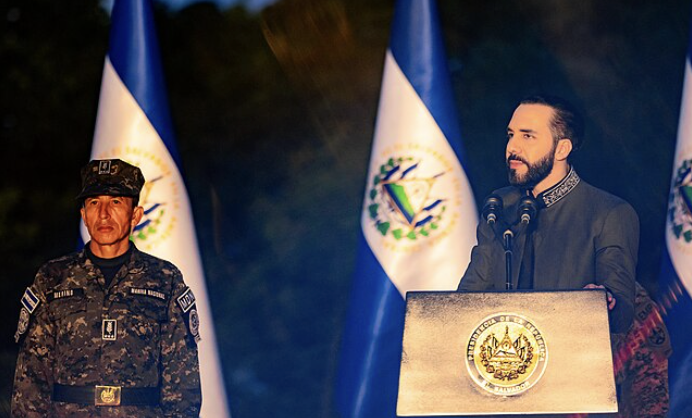
El Salvador’s President Nayib Bukele speaks during a press conference before casting his vote in a parliamentary election in San Salvador, on February 28, 2021 (REUTERS / Jose Cabezas)

El Salvador’s President Nayib Bukele speaks during a press conference before casting his vote in a parliamentary election in San Salvador, on February 28, 2021 (REUTERS / Jose Cabezas)

When President Ronald Regan distributed billions of dollars in economic and military aid to El Salvador during its civil war in the 1980s, it fueled the displacement of roughly one million Salvadorans and the slaughter of thousands. Years later, many Americans forgot this chapter in U.S. history, as American politicians smeared the image of this small Central American country.  Senator Marco Rubio once described El Salvador’s suffering as “the result of bad leaders, rampant crime and natural disasters.” However, many Salvadorans—myself included—have not forgotten.

President Nayib Bukele was reelected in February of last year and has been credited with transforming El Salvador from one of the most dangerous countries in the world into the safest—despite growing concerns regarding human rights violations. Now, the U.S. government and President Trump bear responsibility for the current crisis of criminalized migration, as evidenced by the agreement between the U.S. and El Salvador to imprison migrants from multiple countries in the mega-prison CECOT. This development echoes the violence the U.S. once supported during El Salvador’s civil war, as the country now becomes the face of U.S. immigration hell.

U.S. Involvement in the Civil War

Between 1980 and 1990, during the brutal 12-year Salvadoran civil war, the United States provided over $1 billion in military assistance to El Salvador—including approximately $996 million for military education and training. That training was later used to terrorize and kill Salvadoran civilians.

One female participant interviewed by The Immigration Lab, from El Gavilàn, El Salvador, describes the horrors she witnessed during the war:

“Sometimes the guerrilla would pass by and force us to give them food, and the armed forces would realize what had happened. The problem was that if they [the guerrillas] passed by and forced us to give them food, we had to. My two uncles were killed that way—because they came to us asking to give them food, and when the armed forces realized that, they kidnapped and murdered them.”

It was U.S.-trained Salvadoran military, such as the Atlacatl Battalion, that were responsible for the El Mozote Massacre—one of the worst massacres in Latin American history. On December 11, 1981, residents of El Mozote were rounded up to be killed, dismembered, and raped. Nearly half of the victims were under 10 years old.

But why would the US government support such horrific acts of mass murder? During the Cold War, the left-wing militia Farabundo Martí National Liberation Front (FMLN), was at war with the Atlacatl Battalion. The guerrillas, influenced by left-wing politics and Catholicism, were one of the country’s most prominent political forces. President Ronald Reagan’s fear that El Salvador’s authoritarian government might fall to communism led the U.S. to excuse and cover up atrocities in the service of anticommunism and defeating the guerrillas.

A mother from Ayutuxepeque told us her reason for migrating to the U.S. was her fear that the Salvadoran armed forces would target civilians for their political beliefs.

“The fear was overwhelming, just because you had an affinity towards a certain group. The armed forces would come and murder you. That’s why people mainly fled.”

Misinformation about the massacre and its aftermath spread, as the U.S.-trained Salvadoran military denied responsibility for the deaths of hundreds of civilians, claiming that the massacre was “totally false.” However, the Truth Commission for El Salvador issued a report documenting human rights violations from 1980 to 1991. It found that 85% of the cases reported to the Truth Commission involved state agents or death squads allied with Salvadoran armed forces.

Another female participant from La Union, El Salvador, described her immense fear of the Salvadoran armed forces:

“One had so much fear. There was no sense of security at all. Dead people would appear in alleyways. I couldn’t even sleep because I was scared they [armed forces] would knock on my door. I suffered a lot.”


Aftermath

Due to the civil war, more than a million Salvadorans were displaced, and half a million fled to the United States during the 1980s. However, just 2% of asylum applications filed by Salvadorans were approved, making it incredibly hard to legally stay and work in the U.S. This stemmed from U.S. aid to the Salvadoran government—extending protection would have contradicted its own foreign policy. However, in 1990, Congress created a program and legal immigration status called Temporary Protected Status (TPS), providing temporary permission to reside in the U.S., a work permit, and protection from deportation for foreign nationals of designated countries that are facing an ongoing armed conflict, environmental disaster, or extraordinary and temporary conditions.

The growing Salvadoran Population in Los Angeles during the early 1980s led to the formation of Mara Salvatrucha (MS-13), a Salvadoran street gang formed to navigate life in impoverished neighborhoods and defend its community members from other gangs. However, mass deportations of young Salvadorans involved with MS-13 led to the further destabilization of El Salvador, contributing to the gang’s expansion.

By 2005, Salvadoran authorities estimated the gang population at 40,000, with MS-13 having significant control of the country, and Salvadorans were living in fear, once again. The gang recruited older children and teenagers, many of whom were vulnerable targets as they lacked the means to survive in a country suffering from economic turmoil and educational limitations.

By 2015, El Salvador had become the most dangerous country in the world, with 103 murders per 100,000 residents—many linked to MS-13 or its rival, the 18th Street gang. The brutality of MS-13 is often characterized by not just killing but also by torturing, maiming, and dismembering victims. This gang funded itself through extortion, and in 2019, MS-13’s estimated revenue was $31.2 million.

Salvadorans saw a glimmer of hope in February 2019 when Nayib Bukele won the presidency, as he pledged to combat the gangs in El Salvador. He began addressing the country’s high crime rate by increasing police and military presence in gang-dominated areas to diminish their control, declared a state of emergency in prisons, and placed them on lockdown to prohibit visitors in order to block out communication with the outside world. By 2022, El Salvador’s homicide rate dropped to 7.8 per 100,000 residents—due in part to the imprisonment of more than 50,000 gang members.

It’s no surprise that President Nayib Bukele’s actions have caused him to be highly popular. You can even walk through parts of the Washington metropolitan area with Salvadoran populations, such as Columbia Heights or Hyattsville, and see merchandise with Bukele’s face. But with many discrepancies in detainees dying and rampant due process violations, it is clear that the improvement on El Salvador’s gang problem came at the expense of massive human rights violations.

El Salvador now surpasses the U.S. as having the world’s highest incarceration rate. In 2022, as many as 3,000 children have been arrested without any connection to criminal activity—many imprisoned solely based on their appearance or anonymous tips. These detainees are being sent to CECOT, which held Kilmar Armando Abrego Garcia, and holds many Venezuelan and Salvadorian immigrants sent by the United States government. But beyond its most notorious facility, El Salvador has 25 prisons across the country, where people have been vanished to and have not been heard of again.

Inmates dying under suspicious and unexplained circumstances being buried in mass graves, mirrors the events from the Civil War. Ramón Abraham Vargas Ávila died in Santa Ana on April 14 and Lorena Abigail Escobar Mejía died in Apanteos prison on April 18. The lack of coverage surrounding their deaths speaks volumes about the unimaginable things occurring inside Salvadoran prisons. Many of the detainees come from impoverished communities, highlighting policies rooted in eugenic ideologies aimed at eliminating the country’s poor through mass incarceration, gentrification, and the expedited naturalization of white tourists. President Bukele offers free visas under the guise of boosting the country’s economy, yet fails to address the needs of Salvadorans living in impoverished neighborhoods with limited access to employment or educational opportunities.

It is nauseating to see other Americans visit and revel in the beauty of the land I’ll never fully know because of the atrocities of the 1980s and the need for my family to flee. It pains me to hear elder Salvadorans fall victim to the propaganda and misinformation about what El Salvador has become. History has conditioned Salvadorans to favor strong, authoritarian leaders, and the country has never truly been given a chance to heal from the Civil war.

The U.S. has made a $15 million deal with El Salvador to imprison deportees. Some 278 men deported by the Trump administration to El Salvador have been accused of being members of the Venezuelan gang Tren de Agua or Salvadorans allegedly affiliated with MS-13—often on baseless connections such as simply having tattoos. The current U.S. administration sees El Salvador as nothing more than a remote place to detain people in what is essentially a concentration camp, where people sit without being found guilty or provided due process. What Bukele is doing to these kidnapped men is what he has been doing to Salvadorans for years—and only now is the Salvadoran diaspora beginning to wake up.

Valeria Chacon is a former research assistant and recent graduate of American University.

Migration policies of the current US administration

By Ernesto Castañeda

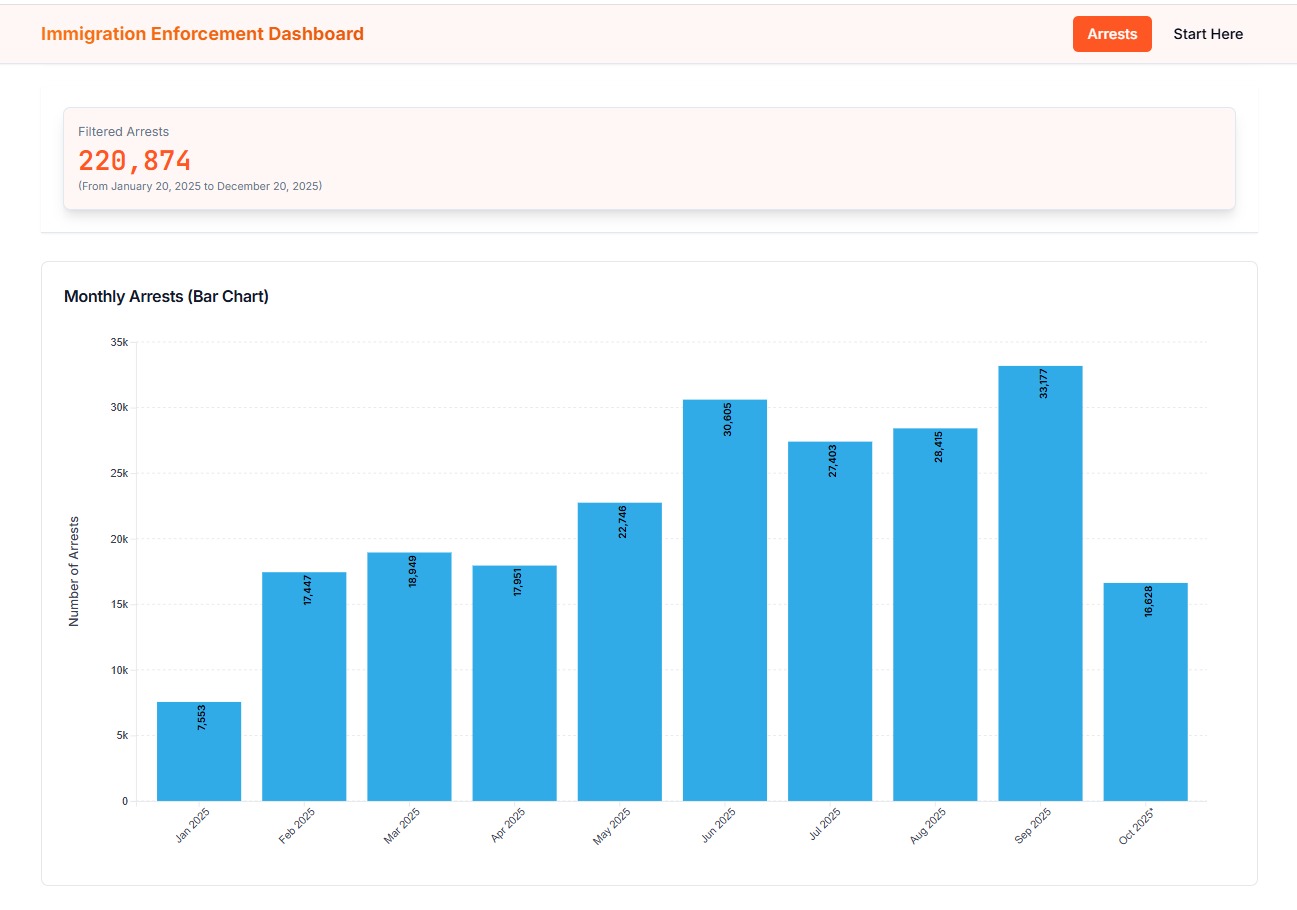
Although the xenophobic discourse has not changed much, Trump’s second administration has been much more aggressive in its goal of reducing the number of immigrants arriving at the U.S./Mexico border and within the United States. New executive orders eliminate some of the modest practical achievements of the Biden administration, put in place to handle the search for asylum, safety, and stability in a more orderly and humane way. The new administration is planning to end many of the humanitarian “paroles” and temporary protected status (TPS) for people from many countries, including Venezuela, Haiti, Cuba, Nicaragua, and other places in Latin America and the Caribbean, as well as Afghanistan and Ukraine. So, more than reducing the number of undocumented immigrants, Trump is creating hundreds of thousands of new undocumented immigrants in the interior of the country with his executive orders. An amnesty would do the reverse. Which reminds us that immigration status is the result of legislative decisions and that with the signing of an official law or document by the legislative and executive powers, this status can be changed for millions of people almost immediately.

Unfortunately, Trump is not interested in negotiating with Democrats for a comprehensive immigration reform that includes regularizations, as well as more border security measures and pathways to immigrate legally in the future. On the contrary, Trump’s second administration is in the process of hindering and making legal migration much harder, and foreigners’ ability to stay, more tenuous.

Trump is obsessed with carrying out mass deportations. So, Trump’s DHS is being much more aggressive not only by deporting newly arrived people at the border, where the numbers are very low due to changes made during the last months of the Biden administration, and because Mexico is preventing more foreigners from reaching the US border through internal enforcement and the US military being deployed at the border — but deporting people from large cities, especially democratic-majority ones. Against precedent, authorities have entered churches and universities a few times looking for people to deport. Faith helps many to lower their anxiety and the fear of being deported, but does not give them a foolproof sanctuary, not even in their churches.

Studying, having a visa, DACA, or even a Green Card, are no longer as much of a protection from deportation as before. It is false that Trump 2.0 focuses on deporting violent criminals; the vast majority of deportees have no criminal record. Many men have been deported, but also women and children. If closed borders and mass deportations continue, the U.S. will surely enter a recession because of a decrease in workers.

Another development is how much Trump is pressing other countries to stop the arrival of migrants and asylum petitioners to the US and to receive national deportees from other countries. Venezuela and Colombia are sending their own airplanes to transport them back. Mexico, El Salvador, Honduras, Costa Rica, Panama, Ecuador, among others, are collaborating with the Trump government to divert migratory flows. This opens opportunities for the cities and countries of the region that actively receive and allow people who have to flee their homes for major reasons to settle down and work legally. Local growth due to an immigration population bonus can easily exceed revenue from remittances in large economies (Mexico, Brazil, Colombia). The smallest countries, where remittances are a significant part of GDP, will have to make more adjustments and sacrifices to look for organic economic growth alternatives. In both cases, the returning human resources could compensate or even exceed the portion of their salaries (less than 20%) of what they earned and spent abroad. Comprehensive research and public education are required to dispel anecdotes that portray immigrants as a threat. Legislation like that in France or Germany could be passed to disincentivize opportunistic politicians from weaponizing immigration, increasing xenophobia, and anti-immigrant animus for short-term political gain. The richest countries in the world have over ten percent of their population born abroad. This is an opportunity for Latin America to do so in a way that increases opportunities for everyone.

Poverty, violence, and organized crime will continue to force some people to move internally and across borders, but migration will be increasingly within the same country or region and not so much to the United States or Europe. In the medium term, this exogenous shock can produce a more local, sustainable economic growth with less family separation across borders.

Ernesto Castañeda, Director, Center for Latin American and Latin Studies, and The Immigration Lab, American University, Washington, D.C.