Rodrigo Paz is sworn in as president of Bolivia, 2025 (Source: Wikimedia Commons)
Centrist Rodrigo Paz’s victory in October’s runoff election signals a dramatic change of direction for Bolivian politics. The era of dominance of the Movement Toward Socialism (MAS) party, led by ex-president Evo Morales, is definitively over. For only the second time since 2006 the MAS will not control the presidency. As a result of the recent election, it now has a mere two representatives in the legislature’s lower house, and no one in the upper house. Though it does not hold an outright majority, Paz’s Christian Democratic Party is now the single largest presence in both legislative chambers. How did Bolivia get here?
Twenty years ago, the leftist-populist MAS swept into power, as a new and energetic grassroots alternative to the elite-run traditional parties that had traded off governing Bolivia since the end of dictatorship in 1982, or one could even argue, since the 1952 Revolution. The MAS’s popularity sprung largely from the dynamism of Morales, himself, then a coca grower union leader adept at organizing and leading large-scale protests in opposition to prevailing Washington Consensus policies and government efforts to sell off Bolivia’s non-renewable resources to transnational corporate interests. The MAS styled itself a bottom-up social movement and not a party. Its participatory “lead by following” approach to governance appealed to a great majority of indigenous voters and working-class people of indigenous descent.
Morales and the MAS proved historically consequential in undertaking a contentious but innovative rewrite of the country’s Constitution, which went into force in 2009. It fully embraced Bolivia’s “plurinational” identity and incorporated an unprecedented variety of collective indigenous rights of consultation, to their traditional territories, and perhaps most controversially, of judicial autonomy. The Morales administration also used a large surplus from the country’s extractive boom to finance a wide range of new social safety net provisions that halved the number of people living in poverty, including cash transfers to families, a pension program, minimum wage increase, as well as public investments in schools, hospitals, and other infrastructure. Perhaps most importantly, his presidency raised the public visibility of Bolivia’s indigenous majority, no longer as second class citizens but as political protagonists of their own present and future.
Morales and the MAS were immensely popular. But then cracks began to appear. In 2011 a plan to build a controversial highway through a protected indigenous reserve brought the MAS government into direct conflict with the reserve’s residents, damaging its support among some indigenous groups. When the extractive boom ended around 2014, Bolivia’s economy slowed considerably, and the MAS fiscal policies that had lifted so many out of poverty became increasingly unsustainable. Part of the problem was Morales, who served two presidential terms and aspired to another, without any thought to a succession plan. Constitutionally limited to two terms, in 2016 he soundly lost a national referendum in a bid for a third and then ignored the result, further alienating many former supporters.
The upheaval around the contested 2019 election, which eventuated in Morales going into exile in Mexico and the persecution of MAS loyalists by a rightwing caretaker government, set the stage for the party’s eventual fall from grace. The 2020 election restored the MAS to power. But soon Morales and the new president, his ex-finance minister Luis Arce, were in a pitched battle for control over the party, a bitter and increasingly personal rivalry that fatally fragmented the MAS into opposed camps. Their protracted feud, which paralyzed congress, strayed into surreal territory, with accusations of a staged coup and mutual assassination attempts. The credibility of the MAS was so fundamentally damaged that the incumbent Arce, with his poll numbers plummeting, suspended his campaign. Morales, meanwhile, remains holed up in his coca grower redoubt to avoid criminal charges.
The MAS-led government’s political fragmentation, and its ineffectual response to Bolivia’s increasingly disastrous economy, have left the party deeply unpopular. The country is currently floundering amid its worst economic crisis in 40 years. Its natural gas production is half of what it was in 2014, with nothing to replace it. Bolivia has failed to develop its large reserves of lithium. Depleted currency reserves and a scarcity of US dollars have driven up inflation, creating severe shortages of fuel and basic goods. Over the past year, ordinary Bolivians have angrily expressed their discontent with the country’s economic collapse through repeated strikes and protest actions.
Emerging from this bleak political and economic state-of-affairs is the surprise election winner, Rodrigo Paz. Son of onetime leftist president Jaime Paz Zamora, former mayor of Tarija, and recently a senator, Paz’s campaign focused on restoring Bolivia’s economy, but gradually rather than by instituting sweeping fiscal austerity measures as his rival in the run-off proposed. Non-indigenous, pro-business, and ideology averse, Paz successfully positioned himself as a pragmatic reformer. He has delivered a strong anti-corruption message, pledged to restore relations with the US and bring back foreign investment. His populist call for a “capitalism for all” hopes to thread the needle by mixing decentralization, lower taxes, support for small businesses, and greater fiscal discipline, with continued spending on popular MAS-era social programs.
Paz’s critics argue that what he proposes is an impossible fiscal balancing act. Desperate and impatient Bolivians will expect immediate results. But it remains far from clear whether Paz will be able to overcome likely regional opposition to at least some of his policies. And if he does not stabilize the country’s dysfunctional economy quickly, Paz’s political honeymoon might be brief.
One surprising trend that emerged from the 2024 elections was New York City’s subtle shift to the right. Although the overall results of how each of the five boroughs that make up the city did not change, Trump gained 30% of the overall votes in the 2024 election as opposed to 19% in 2016. There were significant shifts in working-class neighborhoods in the Bronx and Queens. One reason for this may have been the high cost of living in New York and believing that Trump would bring prices down. Nonetheless, we must consider xenophobic messaging on both sides of the political aisle to get the full picture.
Since the initial arrival to of busses with immigrants and asylum seekers from Texas and Arizona to New York City, harmful rhetoric about them has had real-life implications. For instance, in late January 2024 reporting began surrounding an altercation which took place in Times Square between NYPD and a group of migrants. Former Police Commissioner Edward Caban responded to the incident with, “a wave of migrant crime has washed over our city.” Mayor Eric Adams described the incident as “an attack on the foundation of our symbol of safety.” Despite body cam footage released just a few days after the initial reporting, both the media and residents alike repeated the messaging purported by Eric Adams and the NYPD Residents sharing the Eric Adams administration’s belief that migrants’ presence is correlated to an increase in crime in the city is reflected in the results of May 2024 poll. Of the 974 eligible New York City voters surveyed, “over 70 percent blamed migrants in the city for the current crime rate, with 41 percent saying immigration is having a ‘significant’ impact and 31 percent saying a ‘fair amount’ of impact.”
New Yorker’s shift to the right is not limited to the presidential election. Another election result that may appear surprising to some is Republican Stephan Chan’s New York State Senate District 17 win, beating incumbent Iwen Chu. In 2020, New York State underwent a redistricting cycle, and Iwen Chu was the first representative of the newly formed district and served as representation for the growing Asian population in the area. Reporter Michael Lange described Chu’s loss as the solidification of “the Chinese Republican realignment in Southern Brooklyn.” On his campaign website, Stephan Chan emphasized being an immigrant from Hong Kong, a long time Bensonhurst resident, his law enforcement background, and his strong family ties. He also emphasizes his opposition of “wasteful spending of our tax dollars” juxtaposed to photo of himself at a protest opposing the building of a homeless shelter in Gravesend. Unsurprisingly, Chan’s opposition is not limited to homeless shelters. In a campaign ad, a supporter states, “he won’t hand out freebies to migrants while we pay the price.” This reflects not only Chan’s stance on spending on resources for migrants, but of some New Yorkers who often feel like New York City provides recently arrived migrants with services that long-time New Yorkers do not have access to.
On the national level, the growing anti-immigrant sentiment can be seen in how New York’s Congresspeople voted on the Lanken-Riley Act. This bill will allow the Department of Homeland security to detain undocumented immigrants who have been accused of burglary, theft, larceny or shoplifting. It also allows for states to sue the federal government for “decisions or alleged failures related to immigration enforcement.” Opponents of the bill are concerned about the erosion of due process for those accused of crimes and the lack of funding that is required to implement it. On January 23, 2025, the bill passed 263 to 156, with 6 out of 17 New York House members representing Downstate New York voting “Yea.” The bill was signed by President Trump on January 29, 2025.
These election results amongst other things have already caused great concern around the upcoming mayoral and gubernatorial races. Ironically, despite Adam’s law and order campaign, he is in legal trouble. Likewise, since fall 2024, New Yorkers have been left many questions. During a November 6, 2024, news conference, Eric Adams was asked about his administration’s plans to cooperate with Donald Trump’s mass deportation efforts. In reply, Adams stated “We cannot add to the anxiety and fear that people are experiencing.” The following week, Adams affirmed New York City’s sanctuary city status but stated that he believed that laws surrounding local law enforcement’s cooperation with Immigration and Customs Enforcement should be changed. Adams was also present as Trump’s inauguration and cancelled his attendance at various Martin Luther King Day celebrations to many New Yorker’s dismay. His reluctance to outright denounce Trump’s stance on immigration and recent ICE raids has caused uneasiness for immigrant advocacy groups within the city and causes further speculation that Adam’s refusal to publicly critique Trump is for his own personal gain. Democrats have long relied on New York City to keep New York State blue but shifts to the right in New York City may lead to the party losing its stronghold in the country.
Caryalyn Jean, Sociology Research and Practice MA (SORP) Student at American University
Donald Trump ha prometido deportar a millones de inmigrantes si es elegido para un segundo mandato, afirmando que, entre otras cosas, los trabajadores nacidos en el extranjero les quitan el trabajo a los locales. Su compañero de fórmula, JD Vance ha hecho eco de esas opiniones antiinmigrantes.
Los científicos sociales y los analistas tienden a estar de acuerdo en que la inmigración —tanto de personas documentadas como indocumentadas— estimula el crecimiento económico. Pero es casi imposible calcular directamente cuánto contribuyen los inmigrantes a la economía. Eso se debe a que no conocemos los ingresos de cada trabajador inmigrante en los Estados Unidos.
Sin embargo, tenemos una buena idea de cuánto envían a sus países de origen; más de 81 mil millones de dólares en 2022, según el Banco Mundial. Podemos utilizar esta cifra para calcular indirectamente el valor económico total que genera la mano de obra inmigrante en EE. UU.
Es probable que se subestimen las contribuciones económicas
Teniendo en cuenta eso, estimamos que los inmigrantes que enviaron remesas en 2022 tuvieron salarios netos de más de $466 mil millones. Luego, suponiendo que sus salarios netos representan alrededor del 21% del valor económico de lo que producen para las empresas donde trabajan, por ejemplo, en restaurantes y construcción, los inmigrantes agregaron un total de $2,2 billones a la economía estadounidense sólo en 2022.
Esto es aproximadamente el 8% del producto interno bruto de los Estados Unidos y cerca de todo el PIB de Canadá para 2022,la novena economía más grande del mundo.
Los Inmigrantes en Estados Unidos que mandan dinero al extranjero crean al menos $2 billones en actividad económica
Basado en cuanto dinero los inmigrantes en Estados Unidos envían al exterior en 2022, los académicos estimaron los ingresos y de allí, cuanta productividad generaron en la economía estadunidense. El estudio estimó que las contribuciones totales de los migrantes a la economía estadunidense exceden $2 billones (trillones en inglés) en 2022.
La inmigración fortalece a Estados Unidos
Más allá de su gran valor, esta cifra nos dice algo importante: los principales beneficiarios de la mano de obra inmigrante son la economía y la sociedad de Estados Unidos.
Los 81 mil millones de dólares que los inmigrantes enviaron a casa en 2022 son una pequeña fracción del valor total con el que contribuyen a la economía: 2.2 billones de dólares. La gran mayoría de los salarios y la productividad de los inmigrantes (el 96 %) se queda en Estados Unidos.
Es probable que las contribuciones económicas de los inmigrantes estadounidenses sean incluso más sustanciales de lo que calculamos.
Por un lado, la estimación del Banco Mundial sobre las remesas de inmigrantes es probablemente un recuento insuficiente, ya que muchos inmigrantes envían dinero al exterior con personas que viajan a sus países de origen.
En investigaciones previas, mis colegas y yo también hemos descubierto que algunos grupos de inmigrantes tienen menos probabilidades de enviar remesas que otros.
Uno de ellos son los profesionales de cuello blanco: inmigrantes con carreras en la banca, ciencia, tecnología y educación, por ejemplo. A diferencia de muchos inmigrantes indocumentados, los profesionales de cuello blanco generalmente tienen visas que les permiten traer a sus familias con ellos, por lo que no necesitan enviar dinero al extranjero para cubrir sus gastos domésticos. De igual forma, los inmigrantes que han estado trabajando en el país durante décadas y tienen más familiares en el país también tienden a enviar remesas con menos frecuencia. Ambos grupos tienen mayores ingresos y sus contribuciones no están incluidas en nuestra estimación de 2,2 billones de dólares.
Además, nuestras estimaciones no tienen en cuenta el crecimiento económico estimulado por los inmigrantes cuando gastan dinero en los EE. UU., creando demanda, generando empleos y empezando negocios que contratan inmigrantes y locales.
Por ejemplo, calculamos los aportes de los inmigrantes salvadoreños y solo sus hijos agregaron aproximadamente 223 mil millones de dólares a la economía de Estados Unidos en 2023. Eso es aproximadamente el 1% del PIB total del país.
Teniendo en cuenta que la economía de Estados Unidos creció alrededor de un 2% en 2022 y 2023, esa es una suma sustancial.
Las cifras qué presentamos son un recordatorio de que parte del éxito financiero de Estados Unidos depende de los inmigrantes y su trabajo.
Ernesto Castañeda es director del Centro de Estudios Latinoamericanos y Latinos y del Laboratorio sobre la Inmigración de American University.
Edgar Aguilar ayudo con la preparación, análisis y traducción.
You can republish and reprint this piece in full or in part as long as you credit the author and link to the original when possible.
A table full of vegetables including celery and carrots.
Addressing and combatting food insecurity requires a coordinated approach across all sectors, including nonprofit organizations, government agencies, and private corporations. Although these varying groups may approach the cause differently, there is a shared goal of increasing food security. This analysis was influenced by my experience working in a nonprofit addressing food insecurity as well as the United States Department of Agriculture (USDA) in the Food and Nutrition Service. My experiences gave me valuable insights into the stark differences between government and nonprofit organizations. in understanding, approaching, and solving food insecurity between government and nonprofit organizations.
The mission of the USDA Food and Nutrition Service is stated as, “To increase food security and reduce hunger in partnership with cooperating organizations by providing children and low-income people access to food, a healthy diet and nutrition education in a manner that supports American agriculture and inspires public confidence.” They administer 15 federal assistance programs including SNAP (Supplemental Nutrition Assistance Program), school meals, CACFP (Child and Adult Food Care Program), WIC (Supplemental Nutrition Assistance Program for Women, Infants, and Children), TANF (Temporary Assistance for Needy Families). My responsibilities included reviewing and editing resources that program administrators used to properly procure and serve food that aligns with the nutritional standards set by the agency. This opportunity allowed me to gain experience in the federal processes that go into the nutrition programs that serve and assist millions of Americans.
The nonprofit organization I worked with aimed their mission as, “Striving to eliminate hunger in the nation’s capital while enhancing the nutrition, health, financial stability, and overall well-being of low-income residents in the District.” Their main focuses are on D.C. resident participation in federal nutrition programs, improving public policies, and educating the public on the reality of hunger’s existence within the District. My responsibilities were increasing SNAP and WIC participation by creating relationships with residents and producing educational content. This role gave me first-hand experience with the communities directly affected by food insecurity and allowed me to see how the policy created by our government affects Americans every day.
The differences I noted between the two experiences varied, from how the meetings were conducted to how they defined activism. Within the USDA, meetings were highly structured, with a specific focus on compliance with federal regulations and guidelines. I found the weekly staff meetings to be lively, with a lot of small talk and team activities. On the contrary, the nonprofit team meetings were centered around community intervention with little to no small talk and few team connection activities. These differences were notable for me, as they showed the discrepant level of urgency in the line of work between the two sectors. This could be attributed to numerous factors, including different standards and regulations each organization is held to. Nevertheless, it shined light on the importance of nonprofit organizations supporting USDA policy.
Additionally, the difference in staffing retention and burnout between the two organizations was striking. Throughout my year at the nonprofit, I saw many team members resign from positions due to the stress and emotional toll that comes with aiding underserved communities. Furthermore, there were few to no employees who had been with the organization for over four years. In my year with the organization, I witnessed the reinstating of three different presidents and the resignation of two. Whereas in the USDA, most employees had high tenure, with some even reaching 20-25 years in the agency. This difference in retention is a common problem, in the nonprofit sector. With limited funding and resources, staff often are forced to take on responsibilities beyond their original job description, working long hours to meet deadlines, and to keep up with the needs of District residents. In the government, however, there are strict guidelines in place limiting hours worked by each employee and the duties they are permitted to perform, helping keep their retention rate high.
Beyond job loss from burnout, I also witnessed the nonprofit organization’s largest layoff period in its history. Essential positions such as communications and public relations coordinators, government affairs specialists, and others were released from the organization due to large budget cuts. Additionally, other employees were forced to take furlough days to keep their jobs afloat. In contrast, job stability within the government sector was a promising factor for prospective employees. The federal government, the largest employer in the United States, provides comprehensive benefits and job security.
Overall, both organizations play vital roles in supporting and combatting food insecurity nationwide. The government creates vital policies and budgets to support the “boots on the ground” and educational information that nonprofit organizations work tirelessly to implement. Through these experiences, I was able to see the varying factors that go into supporting our neighbors who experience food insecurity every day. Having worked at a nonprofit before the USDA allowed my work through the government to remain grounded in the experiences of those we are seeking to help. Therefore, policymakers and direct service providers should better collaborate in hopes of making these efforts more effective.
Lia Sullivan is an MA student in the Sociology and Research Program at American University.
You can republish and reprint this piece in full or in part as long as you credit the author and link to the original when possible.
Nearly half of American adults feel that immigration threatens national identity. This proportion has increased in recent years as anti-immigration sentiments have surged in politics and partisan divergence has deepened in rhetoric. The former Trump administration was highly influential in the anti-immigration movement, with much of Trump’s campaigns hinging on xenophobic policies like building a wall on the southern border and ending DACA. Such policies jeopardize the human rights of immigrants in the United States, who make up nearly 14% of the U.S. population. The Biden administration’s handling of immigration has also been criticized by 60% of Americans, indicating that the ongoing conflict over immigration is worsening.
Polls from PBS NewsHour, 2024.
Why is migration so controversial? Shouldn’t people be allowed to migrate safely?
The answer lies in white supremacy and ‘tax dollars.’
At a 1983 Conservative Party conference, former UK Prime Minister Margaret Thatcher famously said, “If the State wishes to spend more, it can do so only by borrowing your savings or by taxing you more. It is no good thinking that someone else will pay—that ‘someone else’ is you. There is no such thing as public money; there is only taxpayers’ money.” Like many politicians, Thatcher propagated the notion that government spending relies on taxpayers’ money, placing the burden of spending on individuals.
Similar sentiments are not uncommon in the United States. Former Republican governor of Wisconsin, Scott Walker, featured this tagline in his 2018 campaign targeting his opponent: “Tony Evers: Special treatment for illegals, higher taxes for you.” Donald Trump continues to campaign on anti-immigration policies to appeal to Americans who feel skeptical about their tax dollars going to immigrant welcoming programs. Trump’s campaign website highlights “20 Core Campaign Promises to Make America Great Again,” two of which focus on blocking immigration, including the first promise: “Seal the border and stop the migrant invasion.” These arguments are used to justify relatively small government investment in important services that benefit communities of color and immigrants by suggesting they would be an imposition on the ‘taxpayer.’
To understand the historical use of the term ‘tax dollars,’ Camille Walsh analyzed hundreds of letters defending racial segregation addressed to the Supreme Court in the years following the ruling in Brown v. Board of Education (1954). One-third of the letters consisted of some language about taxes, taxpayers, or having “paid” for public schools, implying the right to decide whether to keep them segregated. The American ‘taxpayer’ historically represents white individuals, and such language “obscured class divisions among whites and elevated those racialized groups presumed to have higher taxable income to a higher position in claiming citizenship rights.” White individuals like Aura Lee (1956), argued that “poor white taxpayers are entitled to enjoy some all-white places, if they so desire.”
As the term ‘taxpayer’ is historically associated with whiteness, it is used to justify the entitlement of resources concentrated in white communities. Meanwhile, the ‘nontaxpayer’ is meant to symbolize Black and Brown individuals who are perceived not to have “earned” their rights. While this argument is used to exclude people of color from resources, historian James Anderson finds that taxes from predominantly Black communities were at least as much during the time of the Brown ruling, and often higher than those of white neighborhoods. These taxes were often distributed by white school boards into all-white schools prior to Brown. This does not account for today’s common tax evasion of the nation’s wealthiest individuals and corporations. The Treasury Department estimates that there is a $160 billion gap between what the wealthiest 1% of the population should pay and what they actually pay.
Seventy years after the ruling in Brown v. Board of Education, politicians, citizens, and the media hold ‘taxpayer dollars’ to be sacred. Similar to the discussions surrounding racial integration in the mid-20th century, immigration represents a battle between the ‘taxpayer,’ or white American, and the ‘nontaxpayer,’ or immigrant. Just as white parents feared sending their children to integrated schools with “much lower standards and run-down facilities than the ones that [they] helped pay for,” many white Americans do not want immigrants to have access to vital resources and fear the use of their dollars on government spending.
Nevertheless, between sales taxes and property taxes, undocumented immigrants pay billions of dollars in taxes each year. Not only are immigrants taxpayers, but they pay taxes at higher rates than the richest Americans and get less in return. Taxpayer rhetoric is another weapon of othering by separating white U.S.-born individuals from Black and Brown immigrants, regardless of who pays their taxes.
Graph from the American Immigration Council (2016).
A quote from former Chair of the U.S. Federal Reserve Alan Greenspan counters concerns about government spending causing a deficit, stating: “There is nothing to prevent the government from creating as much money as it wants.” Similar to banks not lending out depositors’ money, government spending does not use tax dollars for spending. To illustrate this, the U.S. government spent trillions on wars post-9/11 and hundreds of billions to bail out banks in 2008, neither of which were framed as a tax dollar problem. Despite the framing of funding essential services as an attack on individual taxpayers, in reality, it falls within the bounds of federal government spending.
International law considers migration to be a universal right. Immigration control “is a relatively recent invention of states,” according to Vincent Chetail, a professor of international law. The U.S. has a duty to protect the rights of all people and not discriminate based on race, national origin, religion, or any other group category according to the 14th Amendment, and many international treaties it is a party to.
Research indicates that government investments in immigrants have a higher return over time. For example, more educated immigrants earn more and, therefore, pay more in taxes. Fiscal concerns are not based on reality, as immigrants are net contributors to the federal budget. ‘Tax dollars’ are simply a code for white dollars to instill fear and discrimination against vulnerable populations, despite taxation realities.
Mary Capone is a researcher at the Immigration Lab at American University.
You can republish and reprint this piece in full or in part as long as you credit the author and link to the original when possible.
Harris at the packed DC rally in the Ellipse on October 29.
My assessment is that Kamala Harris will win the election. It is not based on the polls or the betting markers, which are not helpful given their very tight margins. Instead, Harris’ big tent, misrepresentation of the primacy of the economy and immigration in surveys, and social trends lead me to believe that Harris will win.
First of all, following the voting trends from the 2016 and 2020 presidential elections, Trump will not win the popular vote. This matters, as it determines popularity and broad appeal nationwide. Trump has never been appealing to over half of the population as a politician. While Trump was a fresh figure in politics in 2016, and there were some shy voters (given his novel strident and racist anti-immigrant comments), in 2024, he is a well-known entity, and most of his ardent followers are loud about their support, and not shy to say so to pollsters, door knockers, or people calling to get out the vote. Even so, attendance at his rallies and Trump flags outside of houses have decreased from previous cycles. Trump obsesses over crowd sizes, which was one of the indicators of his appeal in 2016. However, the infamous Madison Square Garden Trump rally on October 27 had around 19,500 people in attendance compared to around 30,000 people for Kamala Harris in Houston, Texas, on October 25, and over 75,000 at her rally in Washington, DC, on October 29.
Trump counts on a core base of around 33% of the electorate that holds strong views against immigration, complains about the economy, and will support Trump no matter what. Some more traditional Republicans will also vote for him. Nonetheless, his main campaign strategic imperative was to appeal to moderates, independents, and White suburban women to expand his margin over 50%. His 2024 campaign has not done so; he has focused on animating and mobilizing his core base. Many of his comments and those of his surrogates and supporters have alienated moderates as well as some registered Republicans. He has been more focused on discrediting the electoral process, the media, and his opponents and critics than on appealing to all voters.
In contrast, Kamala Harris has been explicitly open to conservative-leaning independents and even former Republican officeholders, including, but not limited to, Liz Cheney. Many registered Republicans, college-educated men, and many women will vote for her. That should be enough to guarantee her victory. She has done so not by compromising her beliefs and Democratic priorities but by promising to uphold the Constitution and protect democracy.
It is true that an unintended effect of Trump’s hate speech has created a certain increase in support among some Black, Latino, and Asian voters, but that will not be enough to counter the fact that a majority of women across racial and ethnic groups will vote for Kamala Harris as will many men and registered Republicans and independents.
A weakness for Harris lies in the uncommitted voters because of the situation in the Middle East who may vote for Jil Stein or abstain in places like Philadelphia, Pittsburgh, Milwaukee, Detroit, Dearborn, and college campuses. Trump’s election would make things worse in the Middle East, so some will reluctantly vote for Harris and then get ready to continue with their protests and demands for a ceasefire.
The media across the board has obsessed with “immigration” and “the economy” being the main concerns of the electorate and that public opinion favors Trump to handle them. But first of all, objectively, the economy is strong, and asylum-seeking at the border today is at very low levels. Second, and most importantly for elections, when one looks at the polls that are used to make these claims, these are the main issues for less than half of the electorate, and they are the main issues for Republican respondents, who naturally favor Trump’s solutions on these areas. In other words, putting the bulk of the Republican agenda around closing the border is not enough to gain a majority of voters nationwide or even in most swing states. The urban legend about immigrants eating cats shows voters how exaggerated these warnings are. The common claims against immigrants are false, as my book —coming out today— Immigration Realities documents.
Many pundits, consultants, and advisors have been saying that “Harris is weak on the border.” Not only is that false, but my response has been that the immigration obsession will cost Trump the election. Mass deportations are not popular outside of MAGA circles, while a path to citizenship has large levels of support. The Madison Square Garden rally made it clear to many voters and agnostic observers that this was not about undocumented immigration but about creating a White Christian Ethnostate.
There are even some indications (like the exit polls in the Republican primaries in Ohio) that some Evangelicals and religious voters are tired of Trump supposedly representing their views and values. The majority will still vote for him, but less than in previous elections when he has been on the ballot. The same is true for rural and union members. Biden has been a strong pro-labor president. Tim Walz is more familiar with rural White voters than Vance is these days. The majority will vote Republican, but many will vote Democrat. Harris is endorsed by both Liz Cheney and Bernie Sanders. Her appeal and favorability are wide, and she could create an even wider base of support than Obama.
Democratic institutions, freedom of the press, and many other values and institutions are on the line. This is the first election where Trump is on the ballot after January 6, 2021, and the many trials against him. He will not lose all his supporters, but he will lose some.
Recent local and midterm elections have shown that the across-the-board restrictions on abortion and emergency care while pregnant are large motivators to drive women and men to the polls to repeal these propositions and to vote for Democrats. In 2016, most White women supported Trump and not Hilary Clinton. This may be different this time because of the end of Roe vs. Wade. This would be crucial because women are the majority of likely voters, and they were more active in early voting.
Established Latinos of Puerto Rican, Mexican, and South American origin in Pennsylvania, Nevada, Arizona, Georgia, and New York will make important contributions to the Democratic vote. I predict that many women and new citizens of immigrant origin and some who did not vote in previous elections because of age or lack of interest (thus often not in pollster models of likely voters) will turn out to vote for Harris.
All along, the expectations have been set very highly for Harris, and she has excelled at each challenge, including securing the nomination uncontested, choosing a strong VP candidate, leading the RNC, speaking at rallies, showing she can be Commander in Chief, bettering Trump at their debate, engaging with the media effectively, she can take questions from the media and answer them thoughtfully, to round it all out she can engage in retail politics with much enthusiasm and empathy.
Trump carries all the media attention and campaign resources from the RNC, and most Republicans down the ballot depend, to a large degree, on his appeal. This does not bode well for them. Furthermore, the Republican-led Congress has been one of the most ineffective in recent memory. Government shutdowns have been adverted, and there have been impactful and popular bipartisan accomplishments such as the Infrastructure Bill, the Inflation Reduction Act, the CHIPS Act, and support for Ukraine, but many Republican Congresspeople have voted against these achievements.
All these factors combined seem to indicate that Trump supporters will have a weaker showing than when he lost in 2020, even if we are not in the middle of a pandemic. Kamala Harris has benefited from a fresh, exciting, flawless campaign, drawing all the enthusiasm that had been lacking since Obama’s first presidential campaign.
To recap, the biggest errors in the 2024 election coverage have been the out-of-proportion focus on the economy and immigration as the biggest concerns of all voters when, indeed, these complaints are not fully based on reality and are mainly coming from Republican-leaning voters. Nobody likes inflation, but unemployment is low, and wage and economic growth rates are positive and steady, with a big improvement from 2020. Reproductive health and women’s rights will be more important in motivating people across party affiliations to vote for Harris and Democrats. While the polls are currently very tight, and there is noise that favors Trump (allowing him to repeat the big lie), ultimately, cold analyses of the electorate’s behavior and preferences tell us that Harris is on track to win the electoral college and with wider margins than the polls show.
Ernesto Castañeda, PhD is Director of the Center for Latin American and Latino Studies and the Immigration Lab and Professor at American University.
You can republish and reprint this piece in full or in part as long as you credit the author and link to the original when possible.
Political Piñatas: How Conservatives Use Latinos to Polarize U.S. Society
By Ernesto Castañeda
November 5, 2024
Many are surprised to learn that some Latinos vote Republican. A larger percentage of Latinos voted for Trump in 2020 than in 2016. A similar percentage or even more may vote for Trump in 2024. There are many reasons for this, which are often misunderstood by the wider public. I discuss some of them here.
Latinos represent the largest minority in the U.S. at over 65 million and have gained attention as political parties vie for the so-called “Latino vote” as elections are won by tighter margins. This is particularly the case in swing states with large Latino populations. How best to describe the landscape of Latino voters’ preferences remains a question of regular debate. On the one hand, Latinos are still frequently superficially treated as a relatively uniform voting bloc —even if more “up for grabs” today with polling data suggesting gradual shifts in party affiliation. As such, Latinos are often treated as a demographic that can tip the balance in favor of a party. Nonetheless, polls and pundits necessarily flatten the real views of Latinos. This has always been a diverse group. The birth of the term Hispanic aimed to bring together Mexicans, Puerto Ricans, and Cubans around common causes. Regional differences are key; for example, in the D.C.-metro region, Latinos are diverse and majority Salvadoran; in California and Texas, they are mainly of Mexican and Central American descent; in South Florida, they are a mixture of Cuban, Venezuelan, Colombian, Nicaraguan, among others.
Many recent immigrants from Latin America and the Caribbean come escaping failed states and so-called leftist regimes. Many migrants have been directly affected by inequality in their countries of origin. Democratic erosion throughout Latin America and the Caribbean makes it hard for opposition activists and critics of these regimes. Like Eastern Europeans behind the Iron Curtain and Cubans after Castro’s takeover, many recent immigrants see themselves as forced political exiles escaping from authoritarian states that robbed them of their wealth and freedoms. Therefore, in the U.S. they are more likely to identify with ideals of individual freedom and free enterprise.
Trump has also had a polarizing effect on Latinos. Republicans have sought to exploit a process well-documented by scholars: the creation of social boundaries. Trump’s discourse encourages distinctions between “good immigrants” and “good Latinos” in contrast to undocumented “criminals.” Those immigrants with visas and legal permits, higher education levels and family incomes, lighter skin, or who align better with the U.S. geopolitical preferences tend to be more successful than those who do not have immigration papers. This creates hierarchical differences within Latinos. Many U.S.-born and legal Latino immigrants try hard to distinguish themselves from individuals and groups framed as “illegal” and “criminal” to avoid the stigma assigned to those groups.
These social processes create durable inequalities not only between Latinos and non-Latinos but also among Latinos. In public discourse, Latinos are used as proxies and piñatas to polarize Americans further. In turn, some Latinos internalize feelings of inferiority or superiority and may loudly act upon them, adding to the process of polarization. Some Latinos organize against dehumanizing language and build networks of solidarity among Latinos and with other groups. However, a numerical minority such as the White Nationalists and antisemites Nick Fuentes or Enrique Tario, leader of the Proud Boys, are not passive receivers of stigmatizing attacks but become amplifiers of hate speech in exchange for group membership as part of a sometimes-xenophobic White majority. Some who have seen fellow Latinos excluded, targeted, and stigmatized may try to pass as White by attacking other Latinos, further polarizing the country in the process and weakening democratic institutions and minority rights. For these reasons, studying the effects of polarization on Latinos and the role that Latinos have in social polarization is of national importance.
Latinos can hardly be said to form a cohesive or predictable voting bloc. Latinos do not fit neatly into the racial categories that often orient public political debate, which can lead to simplifications of Latinos’ views. Latinos are relatively less partisan as a group. A Pew Research Center report indicates that less than half of Latinos acknowledge significant differences between political parties, with a large share agreeing that neither party effectively represents their interests. Immigration is motivated by economic success, so access to jobs and better pay are their priority. Most Latinos have papers, so immigration is not an immediate concern for most Latino individuals, but it is a theme full of an emotional load; the immigration struggles of family members are close to their hearts.
An influential narrative regarding political polarization is that the electorate has become increasingly stoked by racial tensions and grievances. In this account, race is an important source of polarization. Latinos’ views are diverse and sometimes distinct from those of other Americans and more often map with those of similar occupations and socio-economic status. The diversity within Latino communities impacts the overall political polarization dynamics in the U.S. Typical analyses of race/ethnicity as a variable in culture war-type political contests do not adequately account for the heterogeneity of Latinos as a group and for the range of variation of their political commitments. National origin, gender, religious affiliation, geographic location, educational attainment, class, media consumption, and generational experience, among others, are impactful factors in identity formation.
Latinos display greater cultural unity than political unity. Latinos are part of their local and larger national political ecosystems. Latinos, despite immigration status, have demonstrated notable unity mobilizing in response to racist anti-immigrant rhetoric from local, state, or national politicians. Research also shows that over time, anti-immigrant policies can contribute to the withdrawal of Latinos from the public sphere. But sometimes there is increased group cohesion among Latinos as a reaction to external group threats such as public hostility toward immigrants and the portrayal in the media of Latinos as likely to be Mexican, undocumented, and lesser than. A stronger identification as Latino resulting from previous political organizing does lead to higher levels of political participation. In other cases, as Latinos become business owners, upper middle class, and part of mainstream U.S. society, they may become more politically conservative and may try to distinguish themselves from newcomers. Other successful Latinos, who are less insecure about their status, mentor and open doors for others, volunteer, and become philanthropists.
Furthermore, some Latino subgroups are more susceptible to misinformation. The choice of media varies by immigration status and age. Older first-generation Latinos often opt for more traditional media sources such as radio and T.V., and more often in Spanish. Younger Latinos, often second- or third-generation, exhibit a wider range of media consumption, mainly in English and social media. These choices create different media echo chambers, differing attitudes about the meaning of “Latino,” and varying political values even within the same family.
Ernesto Castañeda, PhD is Director of the Center for Latin American and Latino Studies and the Immigration Lab and Professor at American University.
This piece is a revised and shortened version of an unfunded research proposal written for the Carnegie Fellows Program on Polarization in November of 2023.
You can republish and reprint this piece in full or in part as long as you credit the author and link to the original when possible.
Proyecto 2025 es una agenda de políticas públicas desarrollada por la Heritage Foundation, destinada a ser implementada durante los primeros 180 días del posible segundo mandato presidencial de Donald Trump, en caso de que gane las elecciones del 2024. Este manifiesto tiene 922 páginas y está dividido en cinco secciones, la primera de las cuales se titula “Tomar las riendas del Gobierno.” Si se pone en efecto, este plan tiene el potencial de transformar por completo la estructura del gobierno federal y cambiar el país en su totalidad.
Los Lazos con Trump
El 5 de julio, el expresidente Trump declaró: “No sé nada sobre el Proyecto 2025. No tengo idea de quién está detrás de esto” (Trump). Reiteró este sentimiento durante el debate presidencial del 10 de septiembre, afirmando que él no tiene “nada que ver con el Proyecto 2025” (NBC).
Sin embargo, tras bastidores, la situación parece bastante diferente. En una grabación filtrada por el Center for Climate Reporting, Russell Vought, exdirector de la Oficina de Administración y Presupuesto durante la administración de Trump, miembro del comité de plataforma del RNC y coautor del Proyecto 2025, reveló que Trump ha “bendecido” a la Heritage Foundation y que “[Trump] apoya mucho lo que hacemos.” Vought también indicó que “no le preocupa” que Trump se distancie públicamente de la iniciativa e indica que esto no debe tomarse en serio.” [Trump] ha estado en nuestra organización. Ha recaudado dinero para nuestra organización.”
Además, varios funcionarios de alto rango de la administración de Trump han sido clave para dar forma al Proyecto 2025. Entre estos contribuyentes se encuentran el ex-asesor de la Casa Blanca Peter Navarro, el ex secretario de Vivienda y Desarrollo Urbano Ben Carson, el ex jefe de personal de la Oficina de Administración de Personal (OPM por sus siglas en inglés) Paul Dans – ahora director del Proyecto 2025 – y Spencer Chretien, exasistente especial, que actualmente se desempeña como director asociado del Proyecto 2025.
¿Cuáles son sus implicaciones para la política de inmigración de los Estados Unidos?
El Proyecto 2025 tiene importantes implicaciones para la política de inmigración, entre ellas:
Finalización del Muro de Trump
“Asignación obligatoria para la infraestructura del sistema de muro fronterizo. Los fondos asignados se utilizarían para financiar la construcción de sistemas, tecnología y personal adicionales para el muro fronterizo en lugares estratégicos” (página 147).
Lo que dice: Se propone aumentar la financiación para ampliar el muro fronterizo entre los Estados Unidos y México, que aumentaría la vigilancia fronteriza y el contrato de más miembros de la patrulla fronteriza.
Impacto: La finalización del muro fronterizo puede llevar a que los migrantes decididos busquen métodos más peligrosos para cruzar la frontera, lo que resultaría en un aumento de abuso y violencia hacia los inmigrantes. Las expansiones del muro de Trump actualmente tienen 30 pies de altura y ya han resultado en un aumento de muertes y lesiones graves debido a caídas de migrantes (NIH). Solo en El Paso, en los siete meses posteriores al aumento de la altura del muro, la Patrulla Fronteriza y personal de salud han respondido a 229 lesiones por caídas del muro, incluyendo piernas rotas y lesiones cerebrales o de la columna vertebral (NBC).
Con la construcción de segmentos adicionales del muro, los inmigrantes indocumentados decididos a cruzar la frontera se enfrentarán a estos riesgos. Más segmentos del muro podrían empujar a aun más personas al desierto de Sonora, aumentando la mortalidad migrante (UCLA). La expansión del muro de Trump profundiza las tensiones que ya existen entre Los Estados Unidos, México y otros países latinoamericanos, ya que el muro se percibe como un símbolo de división en lugar de cooperación. En lugar de tener fronteras mortales, políticas de inmigración humanas y efectivas podrían proteger mejor los derechos humanos y fomentar relaciones internacionales positivas.
Aumento de la Militarización de la frontera
“Departamento de Defensa: Asistir de manera agresiva en la construcción del sistema de muro fronterizo en la frontera sur de Estados Unidos. Además, reconocer explícitamente y ajustar el personal y las prioridades para participar activamente en la defensa de las fronteras de Estados Unidos, incluyendo el uso de personal y equipamiento militar para prevenir cruces ilegales entre los puntos de entrada y canalizar todo el tráfico transfronterizo hacia los puntos de entrada legales” (páginas 166-167).
Lo que dice: ElProyecto 2025 pide un aumento de presencia militar en la frontera entre los Estados Unidos y México, que probablemente se utilizará para reforzar protocolos de inmigración.
Impacto: Habrá una mayor presencia militar en la frontera entre los Estados Unidos y México, con más autorizaciones directas al uso de fuerza militar, lo que podría llevar a encuentros más violentos con inmigrantes, independientemente de las circunstancias. Esto pone a los migrantes en un mayor riesgo de encuentros extremos y violentos con la patrulla fronteriza. Además, existe incertidumbre sobre cómo podrían cambiar los centros de detención en respuesta a estas medidas. La militarización de la frontera podría resultar en una mayor militarización de los centros de detención, lo que incrementaría la probabilidad de situaciones hostiles y abusivas para los migrantes en dichos centros.
Deportación Acelerada de Inmigrantes y Deportaciones Masivas
“Para maximizar el uso eficiente de sus recursos, ICE debe hacer pleno uso de las autoridades de Deportación Acelerada (Expedited Removal ER) existentes. La agencia ha limitado el uso de ER a extranjeros elegibles detenidos dentro de las 100 millas de la frontera. Este no es un requisito legal” (página 142).
“ICE debe ser identificadas como responsable de enforzar regulaciones civiles de inmigración, las que incluyen el arresto civil, la detención y la expulsión de infractores en cualquier lugar de los Estados Unidos, sin orden judicial cuando corresponda” (página 142).
Lo que dice: La política actual de ICE sobre la Deportación Acelerada (ER) que aplica en un radio de 100 millas de la frontera se ampliaría bajo el Proyecto 2025 para permitir que ICE detenga a presuntos migrantes indocumentados sin una orden judicial en cualquier parte del país.
Impacto: El proceso de ER ya es controversial, ya que permite a los oficiales de inmigración arrestar y deportar a inmigrantes indocumentados sin una orden o audiencia judicial. Además, “a diferencia de otras órdenes de expulsión, una orden de ER normalmente no puede ser apelada y conlleva una prohibición de cinco años para el reingreso en la mayoría de las circunstancias” (American Immigration Council). El proceso de ER es inconstitucional, ya que viola el derecho al debido proceso (due process) (Houston Law Review). Los oficiales de ICE podrían ser los que deciden el destino de los solicitantes de asilo, u otros inmigrantes con circunstancias especiales en lugar de un juez de inmigración, quien debería estar tomando la decisión. A medida que ICE y el control migratorio se vuelven más poderosos, se aumenta el temor sobre el impacto en las comunidades que ya son marginalizadas, donde una autoridad sin supervisión podría causar más daño y desigualdad.
Restaurar el Título 42
“Crear una autoridad similar a la del Título 42. Autoridad de Salud Pública que se ha utilizado durante la pandemia de COVID-19 para expulsar a extranjeros ilegales a través de la frontera inmediatamente cuando no se cumplen ciertas condiciones sanitarias, como la pérdida del control operativo de la frontera” (página 147).
Lo que dice: El Título 42 fue una política aplicada durante la pandemia de COVID-19 que restringió la inmigración para ayudar a prevenir la propagación de enfermedades infecciosas, específicamente COVID-19. El Proyecto 2025 exige que se restaure un proceso como el Título 42, pero no solo para circunstancias excepcionales de emergencias de salud pública. Más bien, se aplicaría a cualquier circunstancia en la que se considere necesaria la expulsión inmediata de los inmigrantes.
Impacto: Mientras el Título 42 estaba en vigor, el gobierno solicitó la expulsión inmediata de los inmigrantes y solicitantes de asilo que llegaban a la frontera sin una audiencia judicial, lo que violaba el derecho constitucional al debido proceso. La política menciona específicamente su aplicación en casos de “pérdida del control operacional de la frontera”, lo que podría interpretarse de manera amplia y utilizar siempre que las autoridades lo consideren necesario, independientemente de los hechos de cualquier caso individual. La vaguedad en torno a las circunstancias de la aplicación de dicha política podría terminar con la posibilidad de pedir el asilo en la frontera.
Eliminación de “Zonas Sensibles”
“Todos los memorandos de ICE que identifican ‘zonas sensibles’ donde el personal de ICE tiene prohibido operar, deben ser revocados. Confiar con el buen juicio de los oficiales en el campo para evitar situaciones inapropiadas” (página 142).
Lo que dice: El Proyecto 2025 establece claramente que quieren deshacerse de las “zonas sensibles” y las zonas libres de ICE.
Impacto: Las áreas protegidas existen para garantizar que miembros de la comunidad tengan acceso libre a servicios esenciales, como (y no limitados a) escuelas, instalaciones médicas, lugares de culto o estudio religiosos (CBP). A ICE no se le permite entrar a estas áreas sin el permiso adecuado, ni llevar a cabo típicas acciones policiales como arrestos, aprehensiones civiles, registros, inspecciones, incautaciones, entrega de documentos de acusación o citaciones, entrevistas y aplicación de control migratorio. La eliminación de las “zonas sensibles” permitirá que las autoridades saqueen estos lugares, que se consideran refugios seguros para los inmigrantes.
Aumento de Espacio en los Centros de Detención
“El Congreso debería ordenar y financiar espacio adicional en camas para los extranjeros detenidos. ICE debería recibir fondos para un aumento significante en los espacios de detención, elevando el número de camas disponibles a diario a 100,000” (página 143).
Lo que dice: El Proyecto 2025 tiene como objetivo por lo menos duplicar el número de migrantes posibles retenidos en centros de detención (hasta 100,000). En este momento, la cuota diaria de espacio para inmigrantes en detención enfrentados a la deportación es de 41,500 camas (Congreso).
Impacto: Al aumentar la capacidad de detención, el Proyecto 2025 busca expandir e institucionalizar la detención de inmigrantes indocumentados o solicitantes de asilo. Con una mayor capacidad, se podría decir que proteger la “seguridad nacional” es una justificación para poder perfilar a la gente por motivos raciales y detener a migrantes inocentes para poder llenar los centros de detención. Además, a medida que aumenta el número de migrantes en los centros de detención, también se aumenta el riesgo de sobre populación, servicios de salud inadecuados y acceso limitado a asesores legales. Esto también puede resultar en un proceso de detención más largo, donde las personas son encarceladas en centros por términos indefinidos. Estos centros de detención, muchos de los cuales anteriormente eran prisiones privadas (ACLU), aíslan a los inmigrantes indocumentados y los mantienen en condiciones inhumanas. Esta sección del Proyecto 2025 muestra que se planea un gran aumento en el número de personas detenidas en centros de detención que suelen ser inhumanos y además de posibles deportaciones.
Eliminar las Protecciones para los Menores No Acompañados
“El Congreso debe derogar la Sección 235 de la Ley de Reautorización de Protección de las Víctimas de la Trata William Wilberforce de 2008 (TVPRA), que proporciona numerosos beneficios de inmigración a los niños extranjeros no acompañados y solo ayuda a incentivar más padres a enviar a sus hijos a través de la frontera ilegalmente y sin acompañantes. Con demasiada frecuencia, estos niños se convierten en víctimas de la trata de personas, lo que significa que la TVPRA ha fracasado” (página 148).
Lo que dice: LaSección 235 de la Ley de Reautorización para la Protección de las Víctimas de la Trata William Wilberforce de 2008 (TVPRA)actualmente proporciona protección y asistencia a los menores no acompañados, niños que cruzan la frontera sin un padre o tutor, que corren el riesgo de ser víctimas de la trata de personas y son más vulnerables a la explotación. Su revocación eliminaría estas importantes salvaguardias para los menores no acompañados.
Impacto: Sin estas protecciones, los niños detenidos en la frontera ya no se beneficiarán de una ley de retorno seguro a su país de origen. Además, estos niños y jóvenes perderían el acceso a tener hogares seguros, servicios de atención médica, abogados y defensores legales, ajustes de estatus migratorio, protecciones de asilo y otros tipos de asistencias sociales que los protegen de la explotación, incluida la trata de personas. Además, la eliminación de las protecciones legales para los menores no acompañados dificultaría el proceso de investigación de las autoridades, para poder llevar acción legal contra esquemas de trata de personas. En lugar de quitar ayudas, el gobierno debería centrarse en crear un sistema que procese eficazmente a los niños, proteja derechos humanos y minimice los traumas adicionales para que los niños no acompañados se mantengan alejados de mayores peligros.
Eliminación de Visas para Sobrevivientes de Trata de Personas y Otros Delitos
“Eliminar las visas T y U. La victimización no debe ser una base para un beneficio de inmigración. Si un extranjero que fue víctima de tráfico o delito está cooperando activamente y de manera significante con las autoridades como testigo, la visa S ya está disponible y debe ser utilizada. A la espera de la eliminación de las visas T y U, La Secretaría debería restringir significativamente la elegibilidad para cada visa para poder prevenir el fraude” (página 141).
“También se ha puesto énfasis en la eliminación de las barreras legales a la inmigración, como el uso de beneficios públicos” (página 143).
Lo que dice: El Proyecto 2025 propone eliminar las visas actuales otorgadas a las víctimas de la trata de personas (visa T) y otros delitos graves (visa U) que asisten a las fuerzas del orden público a investigar y enjuiciar a quienes cometen tales delitos. Este documento argumenta que la victimización no es una forma legítima de calificarse para beneficios de inmigración, en cambio, se sostiene que este tipo de visas son una ruta fácil hacia el fraude.
Impacto: Las visas T y U existen para que las víctimas indocumentadas de crímenes en los EE. UU. no tengan miedo de denunciar por temor a la persecución y la deportación. La eliminación de estas visas aumentaría la probabilidad de que las personas indocumentadas ya vulnerables caigan victimas al mismo crimen, perpetuando un ciclo de violencia. El Proyecto 2025 propone utilizar la visa S que actualmente ya es disponible en lugar de las visas T y U. La visa S es una visa temporal que permite a los inmigrantes que hayan sido testigos de un delito residir en los EE. UU. mientras ayudan con investigaciones criminales o terroristas. Mientras que la visa S suena similar a las visas T y U, esta visa ignora las circunstancias de la victimización de los migrantes y no reconoce la protección de los derechos humanos. Las visas T y U también tienen como objetivo ayudar a las víctimas de esos delitos a reconstruir sus vidas, proporcionando acceso a atención médica, asistencia legal o cualquier otra atención dada la situación, mientras que la visa S no lo hace. Además, las visas T y U fomentan cooperación y confianza con las autoridades, mientras que las visas S son mucho más restrictivas y pueden aumentan la vulnerabilidad de las víctimas, ya que los perpetradores de los delitos saben que sus víctimas no tienen derecho a utilizar el sistema de justicia de forma “normal” como un ciudadano.
Dar prioridad a los inmigrantes “altamente calificados”
“El programa H-1B, del que se abusa a menudo, debería transformarse en un programa de élite a través del cual los empleadores compiten por traer solo a los mejores trabajadores extranjeros con los salarios más altos para no reducir las oportunidades estadounidenses” (página 145).
“Reforma H-1B. Transformar el programa en un mecanismo de élite exclusivamente para atraer a los ‘mejores y más brillantes’ con los salarios más altos y, al mismo tiempo, garantizar que los trabajadores estadounidenses no estén en desventaja por el programa” (página 150).
Lo que dice: El gobierno debería utilizar el programa H-1B para priorizar aún más a los inmigrantes altamente calificados. Las personas que ya no tienen méritos y disponibilidad distinguidos deprimen las oportunidades estadounidenses y no se les debe permitir emigrar.
Impacto: El programa H1-B permite que empresas estadounidenses contraten temporalmente a trabajadores de otros países para trabajar en “ocupaciones especializadas.” Para poder satisfacer los criterios de una ocupación especial, uno debe tener conocimiento especializado o experiencia en un campo particular y al menos una licenciatura o un equivalente (Departamento de Trabajo de EE. UU.). El programa H1-B se normalmente se utiliza para contratar profesionales en sectores de ingeniería, matemáticas, tecnología y ciencias médicas (American Immigration Council). El Proyecto 2025 pide que el programa H1-B se transforme en un “mecanismo de élite” que contrate a trabajadores inmigrantes altamente calificados con los salarios más altos y, al mismo tiempo, garantice que los trabajadores estadounidenses no estén en ninguna desventaja por el programa. Esto hecho puede llegar a ser engañoso, ya que hay estudios que muestran que los trabajadores H1-B no ganan menos que los trabajadores nacidos en los EE. UU. ni tampoco reducen sus salarios (American Immigration Council). Además, hay un límite anual a la cantidad de visas H1-B que se entregan. Con restricciones nuevas a las visas de trabajadores se podría reducir la cantidad y diversidad de talento, limitando las oportunidades para trabajadores calificados con potencial que aún no han demostrado niveles de éxito de élite. Además, una proporción grande de la economía de EE.UU. está compuesta por trabajadores que no se clasificarían como “altamente calificados,” tales como trabajadores agrícolas y en la construcción, pero que, sin embargo, son esenciales para el éxito de estas industrias. Centrarse solo en los inmigrantes “altamente calificados” puede tener consecuencias perjudiciales para las industrias que dependen de una amplia gama de trabajadores: incluidos los puestos de nivel medio y de nivel inicial, y provocar escasez de mano de obra, salarios más altos o precios más altos para los consumidores.
Reducir las Visas de Estudiante
“Priorizar la seguridad nacional en el Programa de Estudiantes y Visitantes de Intercambio (SEVP). ICE debería poner fin a su actual deferencia acogedora hacia las instituciones educativas y eliminar los riesgos de seguridad en el programa. Esto requiere trabajar con el Departamento de Estado para eliminar o reducir significativamente el número de visas emitidas a estudiantes extranjeros de naciones enemigas” (página 141).
Lo que dice: Debería haber restricciones más estrictas en las instituciones educativas que otorgan visados, incluida la disminución del número de visas de estudiante disponibles.
Impacto: El Programa de Estudiantes y Visitantes de Intercambio (SEVP) es un programa administrado por el Departamento de Seguridad Nacional (DHS) que proporciona visas para no inmigrantes para estudiantes y visitantes de intercambio de otros países que buscan una educación en los EE. UU. El Proyecto 2025 implica que el programa SEVP es muy laxo en la admisión de estudiantes extranjeros y que el proceso debe ser más estricto para reducir los riesgos de seguridad. Esta afirmación descarta el hecho de que el DHS utiliza un sistema seguro, llamado Sistema de Información de Estudiantes y Visitantes de Intercambio (SEVIS), que recopila información sobre estudiantes y visitantes elegibles para el programa SEVP para garantizar que se mantiene seguridad nacional. Además, el Proyecto 2025 propone disminuir significativamente el número de visas otorgadas a “naciones enemigas.” Esto podría alimentar tensiones geopolíticas con otros países y crear divisiones sociales y tensiones en los EE. UU., como el aumento de la xenofobia (aversión o prejuicio contra las personas de otros países), ya que solo los que provengan de países occidentales serían aceptados para estudiar en los EE. UU. Esto también podría crear una barrera innecesaria para la entrada a los EE. UU. de posibles estudiantes altamente calificados que pueden contribuir a la economía de los EE. UU.
Restricciones Estrictas de Asilo y Reducción de Refugiados Aceptados
“El estándar para un temor creíble de persecución debe elevarse y alinearse con el estándar para el asilo. También debe tener en cuenta específicamente las determinaciones de credibilidad que son un elemento clave de la solicitud de asilo” (página 148).
“El Congreso debería eliminar el motivo protegido por grupo social particular por ser vago y demasiado amplio o, en su defecto, proporcionar una definición clara con parámetros que, como mínimo, codifiquen la decisión en materia de A-B de que la violencia de pandillas y la violencia doméstica no son motivos para el asilo” (página 148).
Lo que dice: Estas dos declaraciones del Proyecto 2025 recomiendan restricciones más estrictas sobre quién es elegible para el estatus de asilo, incluido el aumento de los estándares para casos de temor creíble de ser víctimas a la persecución. El Proyecto 2025 agrega que ser parte de un grupo social específico o ser víctima de violencia de bandas o violencia doméstica no debería calificar a alguien para el asilo.
Impacto: Esta recomendación del Proyecto 2025 permitiría al gobierno rechazar y potencialmente poner en peligro la vida de los solicitantes de asilo que no cumplan con los estándares extremadamente altos para demostrar un temor creíble a la persecución (Human Rights First). Las Naciones Unidas publicaron un informe en 2021 en el que expresaban que implementar regulaciones extremas para los solicitantes de asilo es una violación de los derechos humanos (ONU). Los solicitantes de asilo que se enfrentaban a un temor creíble a la persecución bajo a los anteriores requisitos ahora necesitarían evidencia de estándares altos, que puede no estar disponible dependiendo de las circunstancias de la persona. Con restricciones a lo que significa ser un solicitante de asilo, las personas que puedan haber declarado un temor creíble de persecución pueden tener más problemas con las solicitudes de asilo, lo que lleva a largos procesos administrativos y violaciones de los derechos humanos. También dificultaría que una administración pueda otorgar asilo temporal a algunas categorías específicas de migrantes, en respuesta a desastres naturales, desplazamientos forzados y otras amenazas a gran escala para la vida y los medios de subsistencia.
No más Acción Diferida para los Llegados en la Infancia (DACA)
“Actualmente, aproximadamente entre 15 y el 20 por ciento de la carga de trabajo de CISOMB consiste en ayudar a los solicitantes de DACA a obtener y renovar sus beneficios, incluyendo la autorización de trabajo. Esta no es la función del Ombudsman. Además, el gobierno debería ser un árbitro neutral, no un defensor de los extranjeros ilegales” (página 166).
Lo que dice: El Proyecto 2025 afirma que la carga de trabajo de la Oficina del Defensor del Pueblo de los Servicios de Ciudadanía e Inmigración (CISOMB) está abrumada por ayudar a los solicitantes de Acción Diferida para los Llegados en la Infancia (DACA) a obtener y renovar beneficios. Además, este documento implica que el gobierno está actuando como defensor de los inmigrantes indocumentados al asistir a los solicitantes de DACA.
Impacto: La Acción Diferida para los Llegados en la Infancia (DACA) permite a las personas que fueron traídas a los EE. UU por sus padres antes de los 16 años, ser elegibles para trabajar, estudiar y servir en el ejército. Los beneficiarios de DACA tienen que renovar sus beneficios cada dos años para mantener la protección temporal contra la deportación. La mayoría de los beneficiarios de DACA han crecido como estadounidenses, han recibido educación estadounidense y son miembros de la comunidad. Muchos de ellos se enteran de que no son ciudadanos estadounidenses una vez que son adultos y atraviesan procesos como solicitudes de empleo y de universidad.
La Oficina del Defensor del Pueblo de los Servicios de Ciudadanía e Inmigración (CISOMB),sirve como enlace entre el público y los Servicios de Ciudadanía e Inmigración de los Estados Unidos (USCIS), para ayudar a los inmigrantes a abordar problemas e inquietudes con su experiencia con USCIS. CISCOMB es una oficina independiente en el Departamento de Seguridad Nacional (DHS) separada de USCIS que procesa las solicitudes de renovación de DACA. La afirmación hecha por el Proyecto 2025 con respecto a que CISOMB está agobiada con renovaciones de solicitudes de DACA es engañosa, ya que CISOMB no tiene ninguna autoridad para aprobar o denegar las solicitudes de renovación de DACA. No hay evidencia que informe el porcentaje de la carga de trabajo de CISOMB como se afirma en el Proyecto 2025. Además, esta sección del Proyecto 2025 enfatiza que el gobierno no debería proporcionar ningún servicio a los beneficiarios de DACA, porque promueve empatía hacia los inmigrantes indocumentados. Estos sentimientos dirigidos a ayudar a individuos que se vieron obligados a migrar de niños permiten más flexibilidad para seguir privando a inmigrantes indocumentados inocentes del derecho a la educación.
Restringir los recursos educativos para los estudiantes de DACA
“Departamento de Educación: Negar el acceso a préstamos a aquellos que no son ciudadanos estadounidenses o residentes permanentes legales, y negar el acceso a préstamos a estudiantes en escuelas que dan matrícula estatal a extranjeros ilegales” (página 167).
Lo que dice: El Proyecto 2025 pide que el Departamento de Educación niegue préstamos estudiantiles a cualquier persona que no sea ciudadana estadounidense o residente permanente. Este segmento del Proyecto 2025 también impacta a los estudiantes no inmigrantes al aconsejar al Departamento de Educación que niegue los préstamos estudiantiles a todos los estudiantes en las escuelas que permiten la matrícula estatal a los estudiantes inmigrantes indocumentados, como los estudiantes de DACA.
Impacto: Actualmente, los inmigrantes indocumentados tales como los estudiantes de DACA, no son elegibles para recibir ayuda financiera federal, excepto para los refugiados y algunos titulares de visas (FAFSA). Sin embargo, veinticinco estados de EE.UU. permiten que los estudiantes inmigrantes indocumentados, como los estudiantes de DACA, paguen matrícula estatal (fuente). Esto permitiría a los beneficiarios de DACA recibir una educación superior más accesible en sus estados de residencia, a pesar de no ser elegibles para préstamos federales. Este segmento del Proyecto 2025 también impactaría a los estudiantes no inmigrantes al aconsejar que el Departamento de Educación niegue los préstamos estudiantiles a todos los estudiantes que estudien en universidades que permitan pagar matrícula estatal a los estudiantes inmigrantes indocumentados, como los estudiantes de DACA. Esto puede entenderse como un esfuerzo para penalizar a las escuelas que permiten que los estudiantes de DACA paguen la matrícula estatal y, por lo tanto, limitar el acceso de los estudiantes de DACA a una educación universitaria.
Mandato E-Verify
“El Congreso también debería autorizar permanentemente E-Verify y hacerlo obligatorio” (página 149).
Lo que dice: El Proyecto 2025 hace un llamado al Congreso para expandir E-Verify, manteniendo una autorización permanente y mandato del sistema.
Impacto: E-Verify es un sistema utilizado voluntariamente por los empleadores, con algunos mandatos estatales y locales, que verifica la elegibilidad de los empleados para trabajar en los EE. UU. (USCIS). Sin embargo, E-Verify no es tan confiable como el Proyecto 2025 sugiere. E-Verify se basa en registros del Departamento de Seguridad Nacional (DHS) y de la Administración del Seguro Social (SSA), que no siempre están actualizados, lo que resulta en errores o lo que E-Verify llama “discrepancias“. Los errores en el sistema podrían resultar en identificaciones erróneas de personas, incluidos ciudadanos estadounidenses, como incapaces de trabajar en los EE. UU., lo que podría provocar una pérdida del empleo o retrasos en el trabajo hasta que se corrija el error.
Más Transparencia con Respecto a la Información Tributaria de Inmigrantes Indocumentados
“Departamento del Tesoro: Implementar todas las regulaciones necesarias tanto para igualar los impuestos entre los ciudadanos estadounidenses y los titulares de visas de trabajo como para proporcionar al DHS toda la información fiscal de los extranjeros ilegales lo más rápidamente posible” (página 167).
Lo que dice: El Departamento del Tesoro debe hacer que los ciudadanos estadounidenses y los inmigrantes con visas de trabajo paguen la misma cantidad de impuestos. Además, el Departamento del Tesoro debe proporcionar al Departamento de Seguridad Nacional toda la información fiscal de todos los inmigrantes indocumentados lo antes posible.
Impacto: Por lo general, las personas con visas de trabajo pagan la misma cantidad de impuestos sobre la renta que los ciudadanos estadounidenses, con algunas exenciones, como el pago de Seguro Social y Medicare (IRS). Este plan requiere que aquellos con visas de trabajo paguen impuestos por el Seguro Social y Medicare, lo que sería injusto ya que ellos solo viven en los EE. UU. temporalmente y no recibirán dichos beneficios.
Además, el Departamento del Tesoro retiene toda la información fiscal recopilada en los EE. UU., incluida la información fiscal de los inmigrantes indocumentados que pagan impuestos. Si DHS tiene toda la información de identificación, los agentes fronterizos pueden usar esta información confidencial para determinar quién es indocumentado y quién está documentado. Pueden usar esta información para ejecutar planes para llevar a cabo deportaciones masivas de inmigrantes indocumentados, incluso de aquellos que pagan impuestos. Sin embargo, en 2022, los inmigrantes indocumentados pagaron $96.7 mil millones en impuestos federales, estatales y locales (ITEP). Los inmigrantes indocumentados contribuyen significativamente a sus comunidades y al país en general. El presupuesto federal, que durante algún tiempo ha luchado con un déficit creciente (PGPF), no se beneficiaría de deportar a todos los inmigrantes indocumentados que trabajan y pagan impuestos en los EE.UU. Incluso amenazar con entregar toda la información fiscal al DHS desalentaría a los inmigrantes indocumentados de pagar impuestos. Esto también afectaría las finanzas del sistema de Seguro Social, que a menudo disfruta de un superávit para los inmigrantes indocumentados que contribuyen con pagos pero no reciben beneficios después de la jubilación.
Falta de Controles y Equilibrios en la Frontera
“El presidente busca una legislación para desmantelar el Departamento de Seguridad Nacional (DHS)” (página 133).
“La Oficina de Aduanas y Protección Fronteriza de los Estados Unidos (CBP, por sus siglas en inglés) se combinará con el Servicio de Inmigración y Control de Aduanas (ICE); Servicio de Ciudadanía e Inmigración de los Estados Unidos (USCIS); la Oficina de Reasentamiento de Refugiados (ORR) del Departamento de Salud y Servicios Humanos (HHS); y la Oficina Ejecutiva de Revisión de Inmigración (EOIR) y la Oficina de Litigios de Inmigración (OIL) del Departamento de Justicia (DOJ) en una agencia fronteriza y de inmigración independiente a nivel de Gabinete (más de 100,000 empleados, lo que lo convierte en el tercer departamento más grande medido por mano de obra)” (página 133).
Lo que dice: Las agencias de inmigración se consolidarán en una agencia centralizada que controlará toda la implementación y acción de la política de inmigración.
Impacto: El posible desmantelamiento del Departamento de Seguridad Nacional (DHS, por sus siglas en inglés) y la consolidación de las preocupaciones relacionadas con la inmigración bajo una sola agencia plantea preocupaciones sobre la disminución de la rendición de cuentas, la transparencia y las protecciones de los derechos civiles de los migrantes. Junto con una mayor militarización del régimen de inmigración de Estados Unidos, podría ser más fácil esconder los abusos de los derechos humanos debajo de la alfombra, lo que llevaría a una mayor represión de los migrantes.
Conclusiones Clave
Contrariamente a la creencia común, la inmigración es esencial para la economía de los Estados Unidos. Los inmigrantes fueron responsables del 50 por ciento del crecimiento del mercado laboral en 2022. Una disminución en la inmigración a los EE. UU. afectará notablemente a industrias importantes donde la mano de obra indocumentada suele ser esencial, como la agricultura, la construcción y el sector de servicios, lo que podría provocar escasez de mano de obra y mayores costos para los consumidores. Las deportaciones masivas de trabajadores esenciales disminuirían la fuerza laboral, lo que podría provocar inflación, escasez de alimentos y otros productos, y precios más altos de las necesidades básicas (Forbes). Si el Proyecto 2025 se ejecutara y aplicara durante un segundo mandato de Trump, las políticas de inmigración más estrictas podrían contribuir a una recesión económica (AULA).
Las recomendaciones de política de inmigración propuestas en el Proyecto 2025 tienen como objetivo crear un cambio significativo en la aplicación de la ley fronteriza que promueva un sistema de aplicación estricta sin ofrecer caminos a la legalización para aquellos que ingresaron al país indocumentados, con el único plan de deportación y detención masivas. Si una segunda administración de Trump adoptara las recomendaciones de política promovidas aquí, aumentaría las vulnerabilidades que enfrentan los inmigrantes, tanto documentados como indocumentados. En lugar de fomentar un sistema de inmigración humano y eficaz, el Proyecto 2025 se inclina hacia medidas punitivas que priorizan la aplicación de la ley sobre la compasión. Para concluir, el Proyecto 2025 transformaría fundamentalmente la estructura del gobierno federal de maneras profundamente perjudiciales para los migrantes de todo tipo, pero también para el florecimiento de la sociedad estadounidense en su conjunto.
Katheryn Olmos es Asistente de Investigación en el Centro de Estudios Latinoamericanos y Latinos y en el Laboratorio de Inmigración. Está en el programa de maestría en Sociología, Investigación y Práctica en American University.
Luc Thomas es pasante en el Centro de Estudios Latinoamericanos y Latinos y en el Laboratorio de Inmigración. Está completando su Licenciatura en Ciencias Políticas en American University.
Inés Hidalgo Wieckowicz es pasante en el Centro de Estudios Latinoamericanos y Latinos y en el Laboratorio de Inmigración. Es estudiante en la Escuela de Servicio Internacional en American University.
Ernesto Castañeda es Director del Laboratorio de Inmigración y del Centro de Estudios Latinoamericanos y Latinos en American University.
Robert Albro es Director Asociado de Investigación en el Centro de Estudios Latinoamericanos y Latinos.
Editado por Diana Garay, Coordinador del Programa, y Mackenzie Hoekstra, pasante, ambos en el Centro de Estudios Latinoamericanos y Latinos y en el Laboratorio de Inmigración.
Project 2025 – Mandate for Leadership: The Conservative Promiseis a government policy agenda developed by the right-wing think tank, the Heritage Foundation, intended for implementation within the first 180 days of Donald Trump’s potential second presidential term, should he win the 2024 election. This manifesto is 922 pages long and divided into five sections, the first of which is titled “Taking the Reins of the Government.” If enacted, this plan has the potential to fundamentally transform the structure of the federal government and reshape the country as a whole.
Trump’s Ties
On July 5th, former President Trump stated on his Facebook account, “I know nothing about Project 2025. I have no idea who is behind it.” (Trump). He reiterated this sentiment during the presidential debate on September 10, asserting that he has “nothing to do with Project 2025” (NBC).
However, behind the scenes, the situation appears quite different. In a leaked recording by the Centre for Climate Reporting, Russell Vought, former Director of the Office of Management and Budget during Trump’s administration, a member of the RNC’s platform committee, and a co-author of Project 2025, revealed that Trump has “blessed” the Heritage Foundation and that “[Trump] is very supportive of what we do.” Vought also indicated that he is “not worried” about Trump publicly distancing himself from the initiative and indicates that this should not be taken seriously. “[Trump’s] been at our organization. He’s raised money for our organization”.
Furthermore, several high-ranking officials from Trump’s administration have been instrumental in shaping Project 2025. Among these contributors are former White House adviser Peter Navarro, former Housing and Urban Development Secretary Ben Carson, former chief of staff at the Office of Personnel Management (OPM) Paul Dans – now the Project 2025 Director – and Spencer Chretien, a former Special Assistant, who currently serves as the Project 2025 Associate Director.
What are its implications for U.S. immigration policy?
Project 2025 has major implications for immigration policy, including:
Completion of Trump’s Wall
“Mandatory appropriation for border wall system infrastructure. The monies appropriated would be used to fund the construction of additional border wall systems, technology, and personnel in strategic locations in accordance with the Border Security Improvement Plan (BSIP).” (Page 147)
What it says: Project 2025 proposes increased funding for expanding the U.S.-Mexico border wall, increasing border surveillance, and hiring more border patrol.
Impact: The completion of the border wall may only push determined migrants to go after more dangerous border-crossing methods, leading to increased abuse and violence towards immigrants. Trump’s wall expansions currently stand 30 feet tall and have already resulted in a rise in deaths and serious injuries from migrants falling from the wall (NIH). In El Paso alone, within seven months of the increase in the height of the wall, Border Patrol and healthcare workers have responded to 229 injuries from border wall falls, including broken legs and brain or spinal injuries (NBC). With the construction of the additional wall segments, determined undocumented immigrants coming across the border will face these risks. More wall segments could push even more people to the Sonoran Desert, increasing migrant mortality (UCLA). Expanding Trump’s wall deepens tensions between the U.S., Mexico, and other Latin American countries, as the wall is perceived as a symbol of division rather than cooperation. Instead of deadly borders, humane and effective immigration policies could better protect human rights and foster positive international relations.
Increased Militarization of the Border
“Department of Defense: Assist in aggressively building the border wall system on America’s southern border. Additionally, explicitly acknowledge and adjust personnel and priorities to participate actively in the defense of America’s borders, including using military personnel and hardware to prevent illegal crossings between ports of entry and channel all cross-border traffic to legal ports of entry.” (Page 166-167)
What it says: Project 2025 calls for increased military presence at the U.S.-Mexico border that will likely be used to enforce immigration protocol.
Impact: There will be an increased military presence at the U.S.-Mexico border, with more direct authorization for the use of military force, potentially leading to more violent encounters with immigrants regardless of the circumstance. This places migrants at a higher risk for extreme and violent encounters with border patrol. Additionally, there is uncertainty about how detention centers may change in response to these measures. The militarization of the border could result in the further militarization of detention centers, which increases the likelihood of hostile and abusive situations for migrants in detention centers.
Expedited Removal of Immigrants & Mass Deportations
“To maximize the efficient use of its resources, ICE should make full use of existing Expedited Removal (ER) authorities. The agency has limited the use of ER to eligible aliens apprehended within 100 miles of the border. This is not a statutory requirement.” (Page 142)
“ICE Enforcement and Removal Operations (ERO) should be identified as being primarily responsible for enforcing civil immigration regulations, including the civil arrest, detention, and removal of immigration violators anywhere in the United States, without warrant where appropriate, subject only to the civil warrant requirements of the INA where appropriate.” (Page 142)
What it says: The current ICE policy of Expedited Removal (ER) within 100 miles of the border would be expanded under Project 2025 to allow ICE to apprehend suspected undocumented migrants without a warrant anywhere in the country.
Impact: The ER process is already controversial, as it allows immigration officers to arrest and deport undocumented immigrants without a warrant or a hearing. Additionally, “unlike other removal orders, an expedited removal order cannot normally be appealed and carries a five-year bar to reentry in most circumstances” (American Immigration Council). The ER process is unconstitutional since it violates the right to due process (HoustonLawReview). ICE officers would be able to decide the fate of asylum seekers and other immigrants with special circumstances, instead of an immigration judge, who should be making the decision. As ICE and immigration enforcement grow more powerful, there are growing fears about the impact on already marginalized communities, where this unchecked authority could result in widespread harm and inequality.
Bring Back Title 42
“Title 42 authority in Title 8. Create an authority akin to Title 42. Public Health authority that has been used during the COVID-19 pandemic to expel illegal aliens across the border immediately when certain nonhealth conditions are met, such as loss of operational control of the border.” (Page 147)
What it says: Title 42 was a policy enforced during the COVID-19 pandemic that restricted immigration to help prevent the spread of infectious diseases, specifically COVID-19. Project 2025 calls for the same process as Title 42, but not for exceptional circumstances of public health emergencies. Rather it would be applied to any circumstance where immediate removal of immigrants is deemed necessary.
Impact: While Title 42 was in effect, the government called for the immediate removal of immigrants and asylum seekers arriving at the border without a hearing, which violated the constitutional right to due process. The policy specifically mentions its application in cases of “loss of operational control of the border,” which could be interpreted broadly and used whenever authorities feel it is necessary, regardless of facts on the ground. The vagueness around the circumstances of enforcing such a policy could lead to the end of asylum at the border.
Removal of “Sensitive Zones”
“All ICE memoranda identifying “sensitive zones” where ICE personnel are prohibited from operating should be rescinded. Rely on the good judgment of officers in the field to avoidinappropriate situations.” (Page 142)
What it says: Project 2025 clearly states that they want to get rid of “sensitive zones” and ICE-free zones.
Impact: The protected areas exist to ensure access to essential services for community members, such as (but not limited to) schools, medical facilities, places of worship, or religious study (CBP). ICE is not allowed to enter these areas without proper permission, or to carry out typical enforcement actions such as arrests, civil apprehensions, searches, inspections, seizures, service of charging documents or subpoenas, interviews, and immigration enforcement surveillance. The removal of “sensitive zones” will allow raids in such places that immigrants consider safe havens from fear of deportation.
Increased Space in Detention Centers
“Congress should mandate and fund additional bed space for alien detainees. ICE should be funded for a significant increase in detention space, raising the daily available number of beds to 100,000.” (Page 143)
What it says: Project 2025 aims to more than double the number of migrants held in detention centers (up to 100,000). At this time, the daily bed space quota for immigrants in detention who are facing deportation is 41,500 (Congress).
Impact: By increasing detention capacity, Project 2025 seeks to further expand and institutionalize the detention of undocumented immigrants or asylum seekers. With increased capacity, enforcement practices may use “national security” as a justification to increasingly racially profile and detain innocent migrants to fill the detention centers. Furthermore, as the number of migrants in detention centers increases, so does the risk of overcrowding, inadequate health services, and limited access to legal advisors. This can also result in a longer detainment process, where people are incarcerated in these detention centers without any clear end. These detention centers, many of which were previously private prisons (ACLU), isolate undocumented immigrants and hold them in inhumane conditions. This section of policy reflects that Project 2025 plans to oversee a significant increase in the number of people detained in inhumane detention centers and then potentially deported.
Remove Protections for Unaccompanied Minors
“Congress should repeal Section 235 of the William Wilberforce Trafficking Victims Protection Reauthorization Act of 2008 (TVPRA), which provides numerous immigration benefits to unaccompanied alien children and only encourages more parents to send their children across the border illegally and unaccompanied. These children too often become trafficking victims, which means that the TVPRA has failed.” (Page 148)
Impact: Without these protections children detained at the border will no longer benefit from a policy of safe return to their home country. Furthermore, these children and youth would lose access to safe housing placements, healthcare services, legal attorneys and advocates, immigration status adjustments, asylum protections, and other types of social assistance that protects them from exploitation, including human trafficking. Furthermore, removing legal protections for unaccompanied minors would make it more difficult for authorities to investigate crimes or prosecute human trafficking schemes. The government should instead focus on creating a system that efficiently processes children, protects human rights, and minimizes further trauma so that unaccompanied children are kept out of further danger.
Removal of Visas for Survivors of Human Trafficking and Other Crimes
“Eliminate T and U visas. Victimization should not be a basis for an immigration benefit. If an alien who was a trafficking or crime victim is actively and significantly cooperating with law enforcement as a witness, the S visa is already available and should be used. Pending elimination of the T and U visas, the Secretary should significantly restrict eligibility for each visa to prevent fraud.” (Page 141)
“Emphasis also has been placed on removing legal barriers to immigration, such as the use of public benefits.” (Page 143)
What it says: Project 2025 proposes to remove current visas given to victims of human trafficking (T visa) and other serious crimes (U visa) who assist law enforcement in investigating and prosecuting those committing such crimes. This document argues that victimization is not a legitimate way to qualify for immigration benefits, instead maintaining that these types of visas are an easy route to fraud.
Impact: The T and U visas exist so that undocumented victims of crimes in the U.S. will not be afraid to report crimes due to fear of persecution and deportation. Eliminating these visas would increase the likelihood of reprisals against already vulnerable undocumented people, perpetuating a cycle of violence. Project 2025 proposes using the currently available S visa in place of the T and U visas. The S visa is a temporary visa that allows immigrants who have witnessed a crime to reside in the U.S. while assisting in criminal or terrorist investigations. While the S visa sounds similar to the T and U visas, this visa disregards the circumstances of the victimization of migrants and does not acknowledge the protection of human rights. The T and U visas additionally aim to assist victims who have had crimes committed against them in rebuilding their lives by providing access to healthcare, legal aid, or any other care in light of their situation, while the S visa does not. Additionally, T and U visas encourage cooperation and trust with law enforcement, while S visas are much more restrictive and potentially increase the vulnerability of victims since perpetrators of crimes know that their victims cannot prosecute their perpetrators through “normal” legal routes.
Prioritize “High-Skilled” Immigrants
“The oft-abused H-1B program should be transformed into an elite program through which employers are vying to bring in only the top foreign workers at the highest wages so as not to depress American opportunities.” (Page 145)
“H-1B reform. Transform the program into an elite mechanism exclusively to bring in the “best and brightest” at the highest wages while simultaneously ensuring that U.S. workers are not being disadvantaged by the program.” (Page 150)
What it says: The government should use the H-1B program to further prioritize high-skilled immigrants. People who already don’t have distinguished merit and availability depress American opportunities and should not be allowed to immigrate.
Impact: The H1-B program allows American companies to temporarily hire workers from other countries for “specialty occupations.” In order to meet the criteria for a specialty occupation, one must have specialized knowledge or expertise in a particular field and at least a bachelor’s degree or its equivalent (U.S. Department of Labor). The H1-B program is most commonly used for hiring professionals in engineering, mathematics, technology, and medical sciences (American Immigration Council). Project 2025 argues that the H1-B program be transformed into an “elite mechanism” that hires high-skilled immigrant workers at the highest wages while simultaneously ensuring that U.S. workers are not being disadvantaged by the program. This is misleading, as research shows that H1-B workers do not earn more than U.S.-born workers nor does it lower American wages (American Immigration Council). Additionally, there is an annual cap on how many H1-B visas are granted. Further restrictions on worker visas may actually reduce the overall talent pool and diversity, limiting opportunities for skilled workers who may not yet have demonstrated elite levels of success but possess high potential. Furthermore, a significant proportion of the US economy is powered by workers who might not be categorized as “high skilled,” such as agricultural and construction workers, but who are nevertheless essential to the success of these industries. Focusing on only “high-skilled” immigrants can lead to harmful consequences for industries that rely on a broad range of workers, including mid-skill and entry-level positions, and lead to labor shortages, higher wages, or higher costs for consumers.
Reduce Student Visas
“Prioritize national security in the Student and Exchange Visitor Program (SEVP). ICE should end its current cozy deference to educational institutions and remove security risks from the program. This requires working with the Department of State to eliminate or significantly reduce the number of visas issued to foreign students from enemy nations.” (Page 141)
What it says: There should be tighter restrictions on education institutions for allowing student visas, including decreasing the number of available student visas to protect national security.
What this means: The Student and Exchange Visitor Program (SEVP) is a program administered by the Department of Homeland Security (DHS) that provides temporary visas for nonimmigrant students and exchange visitors from other countries seeking an education in the U.S. Project 2025 implies that the SEVP program provides too much leniency in admitting foreign students and that the process should be tightened to reduce security risks. This claim dismisses the fact that the DHS uses a secure system, called the Student and Exchange Visitor Information System (SEVIS), which collects information about students and visitors eligible for the SEVP program to ensure national security. Additionally, Project 2025 proposes to significantly decrease the number of visas given to “enemy nations.” This could fuel geopolitical tensions with other countries, and create social divisions and tensions in the U.S., such as increasing xenophobia (dislike of or prejudice against people from other countries), as only those coming from Western countries would be accepted to study in the U.S. This could also create a needless barrier to the entrance into the U.S. of potential high-skilled students that are in a position to contribute to the U.S. economy.
Strict Asylum Restrictions & Reduction of Accepted Refugees
“The standard for a credible fear of persecution should be raised and aligned to the standard for asylum. It should also account specifically for credibility determinations that are a key element of the asylum claim.” (Page 148)
“Congress should eliminate the particular social group protected ground as vague and overbroad or, in the alternative, provide a clear definition with parameters that at a minimum codify the holding in Matter of A-B that gang violence and domestic violence are not grounds for asylum.” (Page 148)
What it says: These two statements from Project 2025 recommend stricter restrictions on who is eligible for asylum status, including raising the standards for cases of credible fear of persecution. Project 2025 adds that being part of a specific social group or a victim of gang violence or domestic violence should not qualify for asylum.
Impact: This recommendation from Project 2025 would allow the government to turn away and potentially endanger the lives of asylum seekers who do not meet the extremely high standards of proving a credible fear of persecution (Human Rights First). The United Nations released a report in 2021 expressing that extreme regulations on asylum seekers are a violation of human rights (UN). Asylum seekers who met a credible fear of persecution under previous qualifications would then require high standards of evidence, which may not be easily available depending on the individual’s circumstances. With the restriction of what it means to be an asylum seeker, people who may have claimed credible fear of persecution may have more trouble with asylum claims leading to long administrative processes and violations of human rights. It would also seem to make it harder for a given administration to grant temporary asylum to specific categories of migrants, in response to natural disasters, forced displacements, and other large-scale threats to life and livelihood.
No More Deferred Action for Childhood Arrivals (DACA)
“Currently, approximately 15 percent–20 percent of CISOMB’s workload consists of helping DACA applicants obtain and renew benefits, including work authorization. This is not the role of an ombudsman. In addition, the government should be a neutral adjudicator, not an advocate for illegal aliens.” (Page 166)
What it says: Project 2025 claims that the Office of the Citizenship and Immigration Services Ombudsman (CISOMB) workload is overwhelmed from assisting Deferred Action for Childhood Arrivals (DACA) applicants obtain and renew benefits. Additionally, this document implies that the government is acting as an advocate for undocumented immigrants by assisting DACA applicants.
Impact:Deferred Action for Childhood Arrivals (DACA) allows individuals who were brought to the U.S. by their parents before the age of 16, to be eligible to work, study, and serve in the army. DACA recipients must renew their benefits every two years to maintain temporary relief from deportation. The majority of DACA recipients have grown up as Americans, received American education, and are members of the community. Many of them only find out that they are not American citizens once they are adults and go through processes such as employment and university applications.
The Office of the Citizenship and Immigration Services Ombudsman (CISOMB) serves as a liaison between the public and U.S. Citizenship and Immigration Services (USCIS), to help immigrants address issues and concerns with their experience with USCIS. CISCOMB is an independent office in the Department of Homeland Security (DHS) separate from USCIS which processes DACA renewal applications. The claim made by Project 2025 regarding CISOMB being overwhelmed by DACA application renewals is misleading, since the CISOMB does not have any authority to approve or deny DACA renewal applications. There is no evidence to inform the percentage of CISOMB’s workload as stated in Project 2025. Furthermore, this section from Project 2025 emphasizes that the government should not be providing any services for DACA recipients because it promotes empathy for undocumented immigrants. These sentiments directed towards helping individuals who were forced to migrate as children allow for more leeway in further depriving innocent undocumented immigrants of the right to education.
Restrict Educational Resources for DACA Students
“Department of Education: Deny loan access to those who are not U.S. citizens or lawful permanent residents, and deny loan access to students at schools that provide in-state tuition to illegal aliens.” (Page 167)
What it says: Project 2025 calls for the Department of Education to deny student loans to anyone who is not a U.S. citizen or permanent resident. This segment from Project 2025 also impacts non-immigrant students by advising the Department of Education to deny student loans to all students in schools that allow in-state tuition to undocumented immigrant students, such as DACA students.
Impact: Currently, undocumented immigrants, such as DACA students, are not eligible for federal financial aid, except for refugees and some visa-holders (FAFSA). However, twenty-five U.S. states do allow undocumented immigrant students, such as DACA students, to pay in-state tuition (source). This would allow DACA recipients to receive a more accessible higher education in their states of residency, despite not being eligible for federal loans. This segment from Project 2025 also impacts non-immigrant students by advising the Department of Education to deny student loans to all students in schools that allow in-state tuition to undocumented immigrant students, such as DACA students. This can be understood as an effort to penalize schools that allow DACA students to pay in-state tuition and, ultimately, to limit DACA students from accessing a college education.
Mandate E-Verify
“Congress should also permanently authorize E-Verify and make it mandatory.” (Page 149)
What it says: Project 2025 calls upon Congress to expand E-Verify, by enforcing permanent authorization and mandate of the system.
Impact:E-Verify is a system voluntarily used by employers, with some state and local mandates, that verifies employees’ eligibility to work in the U.S. (USCIS). However, E-Verify is not as reliable as Project 2025 appears to suggest. E-Verify relies on records from the Department of Homeland Security (DHS) and the Social Security Administration (SSA), which are not always up to date, resulting in errors, or what E-Verify calls “mismatches.” Mistakes in the system could result in wrongfully identifying people, even American citizens, as unable to work in the U.S., which could lead to job loss or job delays until the error is corrected.
Greater Transparency Regarding Tax Information from Undocumented Immigrants
“Department of the Treasury:Implement all necessary regulations both to equalize taxes between American citizens and working visa holders and to provide DHS with all tax information of illegal aliens as expeditiously as possible.” (Page 167)
What it says: The Department of Treasury must make American citizens and immigrants with work visas pay the same amount of taxes. Additionally, the Department of Treasury must provide the Department of Homeland Security with all tax information of all undocumented immigrants as soon as possible.
Impact: Generally, people with work visas pay the same amount of income taxes as U.S. citizens, with some exemptions, such as paying Social Security and Medicare (IRS). This plan requires those with work visas to pay taxes for Social Security and Medicare, which is unfair since they are only living in the U.S. temporarily and will not receive such benefits.
Furthermore, the Department of Treasury withholds all tax information collected in the U.S., including tax information from tax-paying undocumented immigrants. If the DHS has all the identifying information, border enforcement agents may use this sensitive information to determine who is undocumented and documented. They may use this information to execute plans to conduct mass deportations of undocumented immigrants, even those who pay taxes. Additionally, in 2022, undocumented immigrants paid $96.7 billion in federal, state, and local taxes (ITEP). Undocumented immigrants significantly contribute to their communities and the country as a whole. The federal budget, which has for some time struggled with a growing deficit (PGPF), would not benefit from deporting all undocumented immigrants who work and pay taxes in the U.S. Even threatening to hand all tax information to the DHS would discourage undocumented immigrants from paying taxes. This would also impact the Social Security system finances, which often enjoys a surplus for undocumented immigrants who contribute with payments but do not receive benefits after retirement.
Lack of Checks and Balances at the Border
“The President pursue legislation to dismantle the Department of Homeland Security (DHS).” (page 133).
“U.S. Customs and Border Protection (CBP) be combined with Immigration and Customs Enforcement (ICE); U.S. Citizenship and Immigration Services (USCIS); the Department of Health and Human Services (HHS) Office of Refugee Resettlement (ORR); and the Department of Justice (DOJ) Executive Office for Immigration Review (EOIR) and Office of Immigration Litigation (OIL) into a standalone border and immigration agency at the Cabinet level (more than 100,000 employees, making it the third largest department measured by manpower)” (133)
What it says: Immigration agencies will be consolidated into one centralized agency that will control all immigration policy implementation and action.
Impact: The potential dismantling of the Department of Homeland Security and consolidation of immigration-related concerns under one agency raises concerns about decreases in accountability, transparency, and civil rights protections for migrants. Together with the further militarization of the U.S. immigration regime, it could become easier to sweep human rights abuses under the rug, leading to greater repression of migrants.
Key Takeaways
Contrary to common belief, immigration is essential to the U.S. economy. According to the Washington Post immigrants were responsible for 50% of the labor market’s growth in 2022. A decline in immigration to the U.S. will notably impact important industries where undocumented labor is frequently essential, like agriculture, construction, and the service sector, potentially leading to labor shortages and higher costs for consumers. Mass deportations of essential workers would decrease the labor force, which could lead to inflation, shortages of food and other products, and higher prices for basic necessities (Forbes). If Project 2025 were to be executed and enforced during a second Trump term, stricter immigration policies could contribute to an economic recession (AULA).
The proposed immigration policy recommendations in Project 2025 aim to create a significant shift in border enforcement that promotes a system of strict enforcement without offering paths to legalization for those who entered the country undocumented, with the only plan being mass deportation and detention. Were a second Trump administration to adopt the policy recommendations promoted here, it would heighten the vulnerabilities faced by immigrants, both documented and undocumented. Instead of fostering a humane and effective immigration system, Project 2025 leans toward punitive measures that could jeopardize nationwide benefits. To conclude, Project 2025 would fundamentally transform the structure of the federal government in ways both deeply detrimental to migrants of all sorts but also to the flourishing of U.S. society as a whole.
Katheryn Olmos is a Research Assistant at the Center for Latin American and Latino Studies and the Immigration Lab. She is in the master’s program in Sociology, Research, and Practice at American University.
Luc Thomas is an intern at the Center for Latin American and Latino Studies and the Immigration Lab. He is completing his Bachelor of Arts in Political Science at American University.
Ernesto Castañeda is Director of the Immigration Lab and the Center for Latin American and Latino Studies at American University.
Robert Albro is Associate Director for Research at the Center for Latin American and Latino Studies.
Edited by Diana Garay, Program Coordinator, and Mackenzie Hoekstra, intern, both at the Center for Latin American and Latino Studies and the Immigration Lab.
By Ernesto Castañeda, Joseph Fournier, and Mary Capone
October 1, 2024
Graph elaborated by the authors with data collected from CNN Politics’ Midterm Election Results.
The above graph represents the proportional success of candidates who used anti-immigration sentiment in their campaigns for the 2022 midterm elections. Results data was taken from CNN Politics. Anti-immigration rhetoric was found in campaign material through Meta Ad Library, X (formerly Twitter), debate responses, campaign website archives, YouTube ad searches, and general Google searches. We focused on competitive elections defined as having electoral results within a 10% margin between candidates. Candidates in these competitive elections who used ani-immigrant sentiment were no more likely to win the election than those who did not; in fact, more candidates who campaigned on anti-immigration lost than won in 2022. This data provides evidence that not being anti-immigration is not a hindering campaign decision. It may be quite the opposite.
Immigration often emerges as a prominent talking point among candidates in presidential, congressional, and gubernatorial elections. Former President Donald Trump frequently employs anti-immigration rhetoric and continues to campaign under similar sentiments about the allegedly dangerous porosity of the southern U.S. border. In the presidential debate in June of 2024 against President Joe Biden, Trump mentioned immigration in 42% of the 38 times he spoke while Biden mentioned immigration 13% of the time. In the subsequent debate against Vice President Kamala Harris, out of 38 times when Trump spoke for more than two sentences, he incorporated immigration 10 times (26% of the time). In comparison, Harris did so 4 out of 27 times (15% of the time).
Anti-immigration rhetoric has become practically synonymous with the Republican Party as these candidates often use immigrants as scapegoats for shortcomings in national security, economics, and crime control. While several Democratic candidates support anti-immigration policies as well, it is less commonly a key aspect of their campaigns. The graphic below indicates the overall tone of immigration speeches in Congress and the president by party from the late nineteenth century until 2020. While the data excludes 2022, it encapsulates the general trends of immigration sentiments over time.
Source: Card et al., 2022 published by the Proceedings of the National Academy of Sciences.
The top of the graph shows that trends in the rhetoric of Republican and Democratic congressional representatives were negative before the 1950s and became positive in both parties in the late 1950s and through the 1960s and 1970s. The divergence in sentiments is clearest in the early 1980s and beyond, with the greatest points of divergence occurring between 2000 and 2020. Card et al. acknowledge that the divergence also represents other trends in the polarization of other issues. However, they find that immigration polarization predated the rise in generic political polarization observed in Gentzkow et al. by more than a decade.
The lower part of the graph shows the variation in presidential sentiments through positive and negative language employed to discuss immigration. The anti-immigrant rhetoric of President Trump has been unseen since the presidency of Herbert Hoover. Overall, the graph represents the rise in anti-immigration rhetoric in congressional and presidential speeches by Republicans in recent years as it has become more of a political talking point.
Discourse gathered from the campaign sites and social media accounts of Republican candidates who ran in competitive elections in 2022 with anti-immigration campaigns includes several instances of strongly prejudiced statements. Republican Mark Robertson (Nevada District 1) sought to “turn off the illegal flow of people coming into our country… end chain-migration, visa lotteries and vacation-birth citizenship.” Ending “vacation-birth citizenship” implies a possible erasure of birthright citizenship. Anti-immigrant candidates describe policies like these in misleading ways to garner political support, despite understanding the implausibility of such a policy.
Numerous other candidates posit a link between undocumented immigration and drug cartels. Republican Congressman Bryan Steil, who won in Wisconsin District 1, claimed on his campaign website that “drug dealers (and) human traffickers” are crossing the border, framing it in such a way that implies the two are intertwined in their business dealings. Republican Congressman John James, who won reelection in 2022 for Michigan District 10, conducts a similar framing in a tweet highlighting “millions of illegal border crossings, millions of lethal doses of Chinese fentanyl.”
A more brazen example of such framing can be found in campaign material from Blake Masters’ failed bid for Arizona Senate, which shamelessly claims that “More than 225,000 illegal aliens pour into our country every month. And they bring enough fentanyl over each month to kill every American twice over.” In a recent conference on immigration at American University, Dr. Andrew Selee, head of the Migration Policy Institute, notes that these organizations are separate entities. Though they sometimes do collaborate, they are by no means the same and have independent organizational structures. This is a subtle yet important distinction that has been masked to criminalize migrants and conflate them with criminal enterprises such as drug cartels.
The criminalization of migrants was certainly not limited to linking them to cartels. Many candidates rely upon preconceived racist notions of immigrant populations (mostly Latinos) in making generalizations. Such candidates keep their statements on immigration vague, like Nevada Republican Senate hopeful Adam Laxalt: “[the] crisis at the border that has put communities across Nevada in danger…. [Laxalt] fought against dangerous sanctuary city policies and worked to help stop their spread.” The advantages yielded by anti-immigrant candidates in utilizing this sort of vagueness are twofold. The first is that it appeals to a voter base that has already constructed a negative bias toward immigrant populations, and it is this sort of rhetoric that energizes these voters. The second advantage of such vagueness is the removal of the burden of proof from Laxalt or other candidates. Because of this vagueness, the claim becomes difficult to disprove because the meaning can be fluid and easily manipulated at the whim of the candidate.
Overall, anti-immigration statements like those highlighted in the 2022 midterm election campaigns are prevalent across Republican candidates. Trends indicate a rise in such rhetoric in congressional and presidential speeches with a partisan divergence as Republican candidates are more likely to employ this as a strategy in campaigning. Nonetheless, there was limited success for anti-immigrant campaigns in the 2022 midterm elections. The data shows that anti-immigration rhetoric is not a guarantee for winning elections; in fact, it may be an electoral vulnerability as it does not lead to more success in competitive elections.
Ernesto Castañeda PhD, Director of the Immigration Lab and the Center for Latin American and Latino Studies, American University in Washington DC.
Joseph Fournier and Mary Capone are research assistants at the Immigration Lab and the Center for Latin American and Latino Studies at American University.
Card, D., Chang, S., Becker, C., Mendelsohn, J., Voigt, R., Boustan, L., Abramitzky, R., & Jurafsky, D. (2022). Computational analysis of 140 years of us political speeches reveals more positive but increasingly polarized framing of immigration. Proceedings of the National Academy of Sciences, 119(31). https://doi.org/10.1073/pnas.2120510119
Gentzkow, M., Shapiro, J. M., & Taddy, M. (2019). Measuring group differences in high dimensional choices: Method and application to congressional speech. Econometrica, 87(4), 1307–1340. https://doi.org/10.3982/ECTA16566
James, John. (JohnJamesMI). “Our border is plagued with chaos – millions of illegal border crossings, millions of lethal doses of Chinese fentanyl & incompetence from the White House. I’m glad to support the House GOP’s Commitment to America to fund border security & put an end to human & drug trafficking.” September 26, 2022. 3:10 PM. Tweet. https://x.com/JohnJamesMI/status/1574476402392457217.



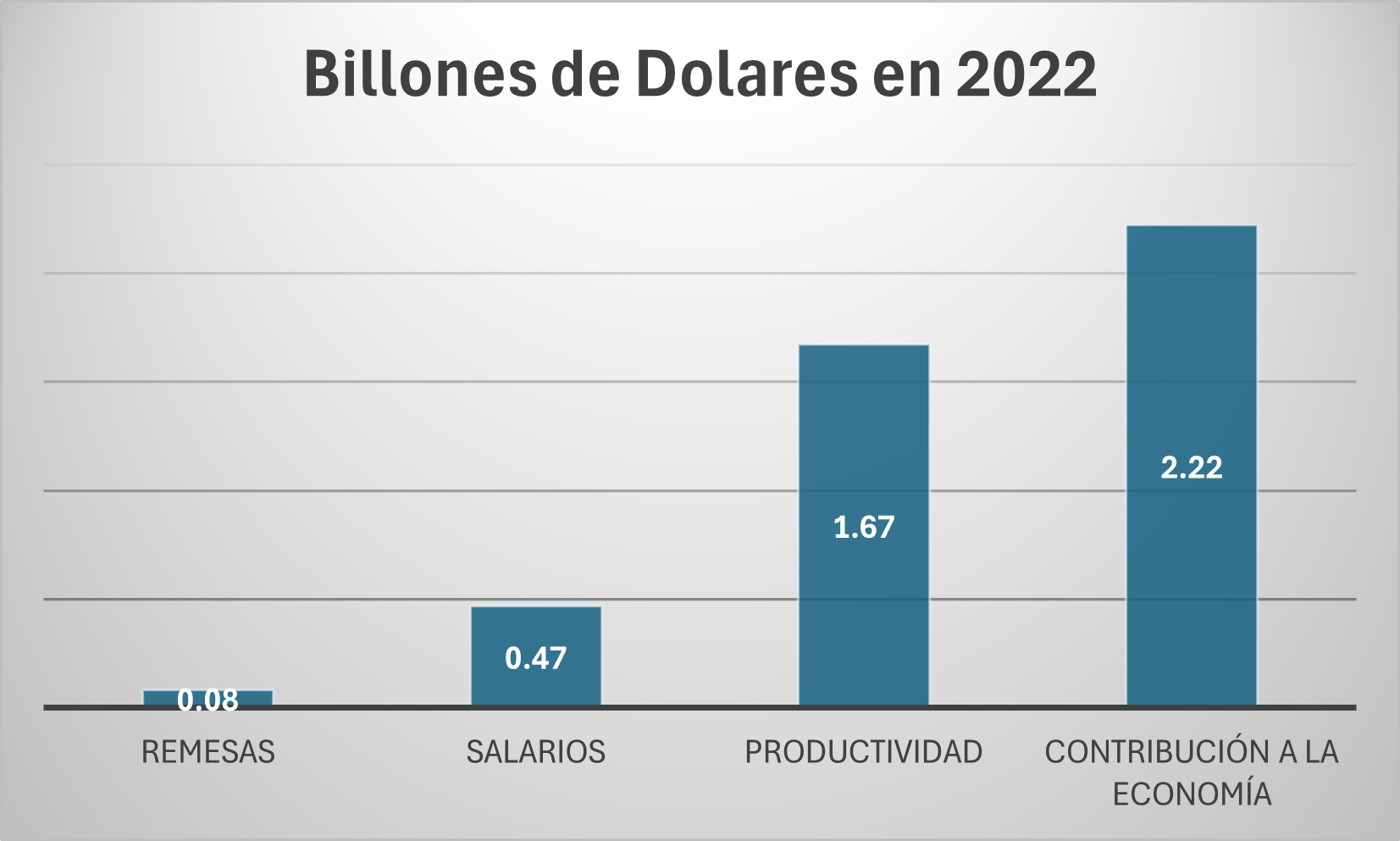




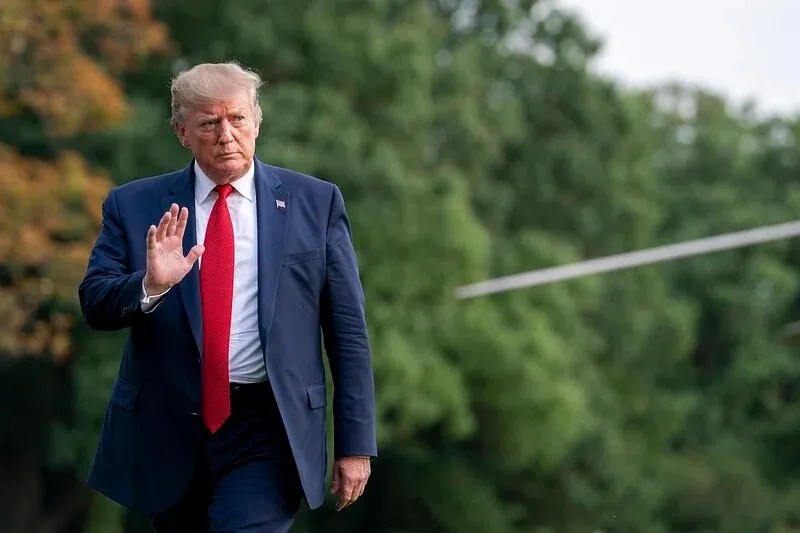

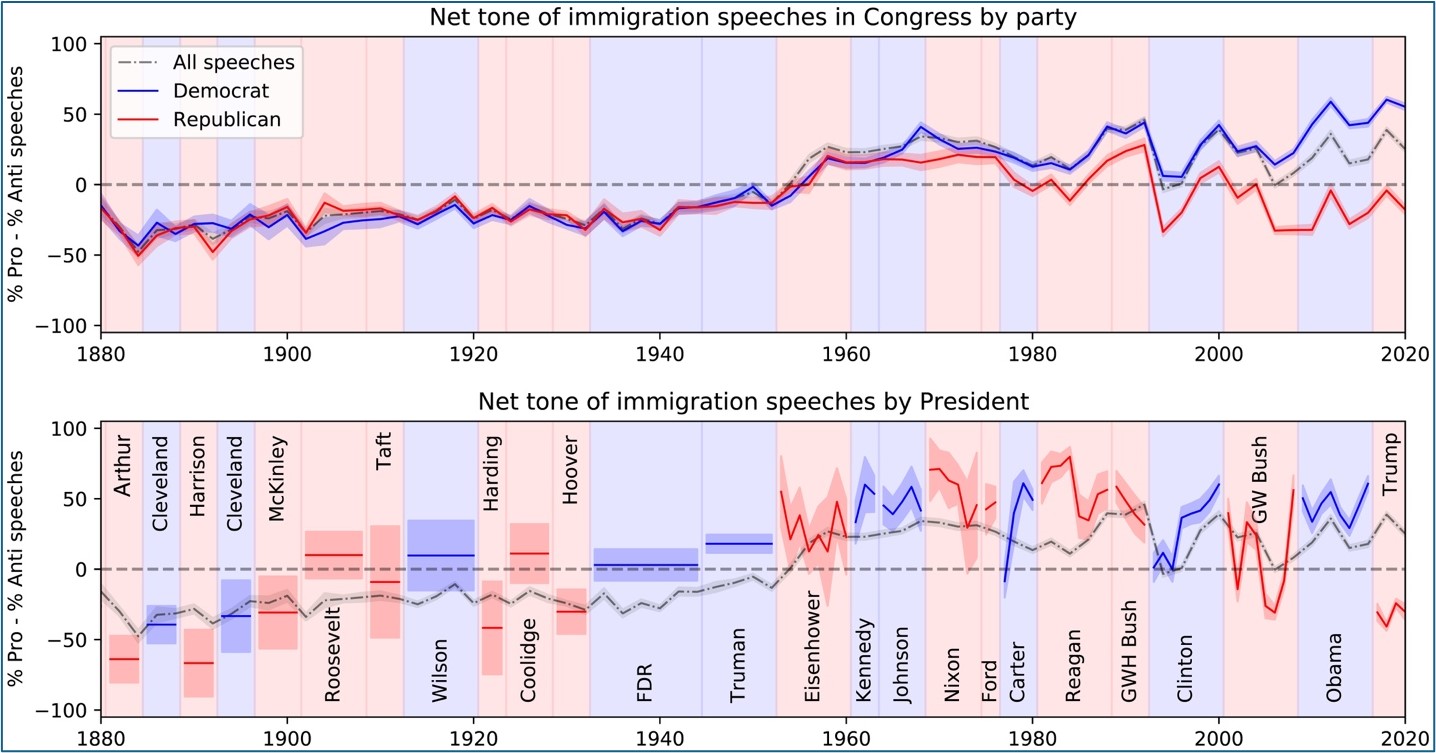


 AULA Blog
