Argentina: The (Un)Fulfilled Promises of an Election Year

By Ernesto Calvo*

ArgentineCongressCC

Palace of the Argentine National Congress / Andresumida / Wikimedia / Creative Commons

As the 2017 mid-term election approaches, both Argentine voters and party elites see a gloomy present and a bright future. With only seven months until the October 22 election, the economy still shows few signs of recovery. Patience is running thin in Congress, among governors, and with organized labor – but it seems to be never-ending among voters.

  • For over a year, surveys have shown that a majority of voters perceive their personal economic situation as dire. In survey parlance, each month voters perceive that they are worse off than in the previous month. Yet, to the surprise of specialists, a majority of voters also expect the economy to improve in the next month. Indeed, voters seem as willing to credit the current administration of President Mauricio Macri for its policy choices as they are unhappy with the economy.
  • The opposition is betting its future success on the dismal economic outlook: high inflation, stagnating wages, and lack of growth. The government expects voters’ optimism, the raw expectation of future growth, to carry the day. The increasing gap between current perceptions and future expectations has baffled specialists. The only possible result, many confide, is either a rude awakening for the administration or a real change in the pace of economic growth.

Both parties suffer from divisions. Former President Cristina Fernández’s Front for Victory still carries most support among Peronists, although many fear that a Senate victory by their leader in the Province of Buenos Aires will ensure a divided party in the election of 2019. Peronist dissident Sergio Massa is still running outside the party, and few anticipate any grand-coalition before 2019. The other traditional party, the UCR, remains on life support after a decade of mishaps, and is only a minor partner of President Macri’s party, Republican Proposal (PRO), in the government coalition. Meanwhile, the incumbent PRO has yet to decide their strategy to form Provincial alliances and nominate its candidates.

As the election nears, it is unclear whether voters will hold the government responsible for their current economic malaise or will still believe in PRO’s capacity to deliver a better economy. Voters have one leg in a bad economy and another leg in the promise of a better tomorrow. They are, in the words of the Herald Editor J.G. Bennet, “Like a stork by a frog pond, they are as yet undecided which to rest upon.” Eventually, one of the two legs will have to go up, for either the government or the opposition – but not both – to celebrate on Election Day. Regardless, the mid-term election may provide little information as to who the real winner is. With no presidential candidates on the ballot, no important gubernatorial races to publicize, and only one important Senator on the line (that of the Province of Buenos Aires), the signal will be unclear. If the government does extremely well, it may gather a third of the House vote, all provinces considered together. If the government performs badly, it may get a quarter of the House seats. As the election approaches, it would seem that the only measure of success or failure would be whether the government coalition, Cambiemos, wins first, second, or third place in races for the National Senators of the Province of Buenos Aires. More troubling yet, it is unlikely that the result of the election, whichever it may be, will clarify the choices faced by voters, the future of the Peronists, or the likelihood of a steady government coalition after 2017.

March 9, 2017

*Ernesto Calvo is a Professor and Associate Chair of the Department of Government and Politics at the University of Maryland.

A Return to Political Instability for Ecuador?

By John Polga-Hecimovich*
32304355215_da3acb2e32_k

Presidential candidate Guillermo Lasso (center, blue shirt) in Cuenca, Ecuador during a campaign rally last month. / Samurai Juan / Flickr / Creative Commons

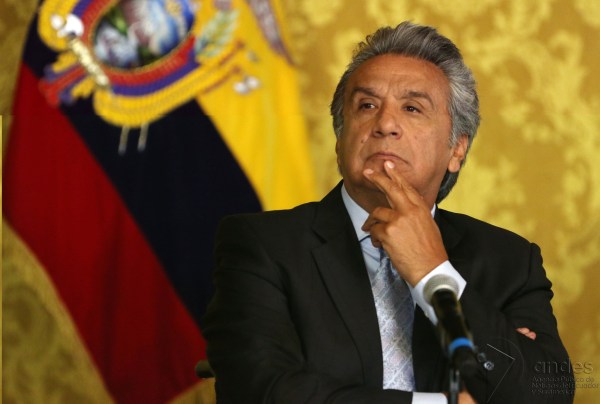
General elections on Sunday could mark the beginning of the end of an impressive period of stability in Ecuador. Ecuadorians will elect a new congress and a replacement for the powerful and populist Rafael Correa, the longest-serving chief executive in the country’s history. Although the president’s handpicked successor, ex-Vice President Lenín Moreno is leading public opinion polls with 32 percent of likely voters in a crowded eight-candidate field, the chances of him winning a first-round victory outright are slim. Public approval of Correa and his ruling Alianza PAIS (AP) has fallen over the past two years as economic growth has slowed, and the administration is embroiled in allegations of corruption, including those against Jorge Glas Espinel, incumbent vice-president and Moreno’s running mate. Given Ecuador’s two-round presidential system, in which candidates must win by 10 percent or gain 40 percent of the vote, Moreno probably will end up in a run-off election on April 2.

  • The other seven candidates are vying for the chance to face Moreno in the second round. Three of them poll between 8 and 21 percent, and the rest appear to have 4 percent or less of the vote. However, rejection of the entire field is high – nearly 12 percent of respondents say they will cast a null vote – and a whopping 35 percent maintain that they are undecided.

Moreno does not appear likely to win the runoff. The Economist Intelligence Unit predicts that voters will coalesce around an opposition candidate – most likely the CREO movement’s Guillermo Lasso, a conservative former economy minister and banker who ran a distant second to Correa in the 2013 presidential race – who would then defeat Moreno.

  • If Moreno and Glas win, they will likely continue Correa’s leftist “Citizens’ Revolution,” especially its improvements to social welfare and emphasis on science and technology, and maintain close ties with China, which has become a key partner in trade and infrastructure investment over the past decade. If the opposition wins, it will try to repeal some of Correa’s onerous taxes, reverse stringent regulation of the media, shrink the size of the state, and seek improved relations with the U.S.

Regardless of who wins, the fragmented support for the candidates and their parties bodes poorly for Ecuador’s political stability, especially in the context of fiscal constraints, a stagnant economy, and burden of recovery from last April’s 7.8-magnitude earthquake. The so-called muerte cruzada (mutual death) in Article 148 of the country’s 2008 Constitution, moreover, will loom larger under a divided government. This clause gives the president a political “nuclear option” to dissolve the National Assembly in the event of gridlock, triggering new legislative and presidential elections – while the incumbent president is allowed to rule by decree on urgent economic matters in the interim. Correa, who enjoyed majority or near-majority government throughout his unprecedented ten-year presidency, never invoked the muerte cruzada, but his successor will feel stronger temptation to dissolve the Assembly in order to govern unilaterally. Ecuadorians should brace for an end to the country’s unprecedented political stability – and for the specter of Correa, much like the possibility of muerte cruzada, to loom large over the new government’s economic and political decisions.

February 17, 2017

* John Polga-Hecimovich is an Assistant Professor of Political Science at the U.S. Naval Academy. The views expressed in this article are solely those of the author and do not represent the views of or endorsement by the Naval Academy, the Department of the Navy, the Department of Defense, or the U.S. government.

Chile: Between Stability and Uncertainty

By Eduardo Silva and Kenneth Roberts*

26995535235_cd01e86d60_k

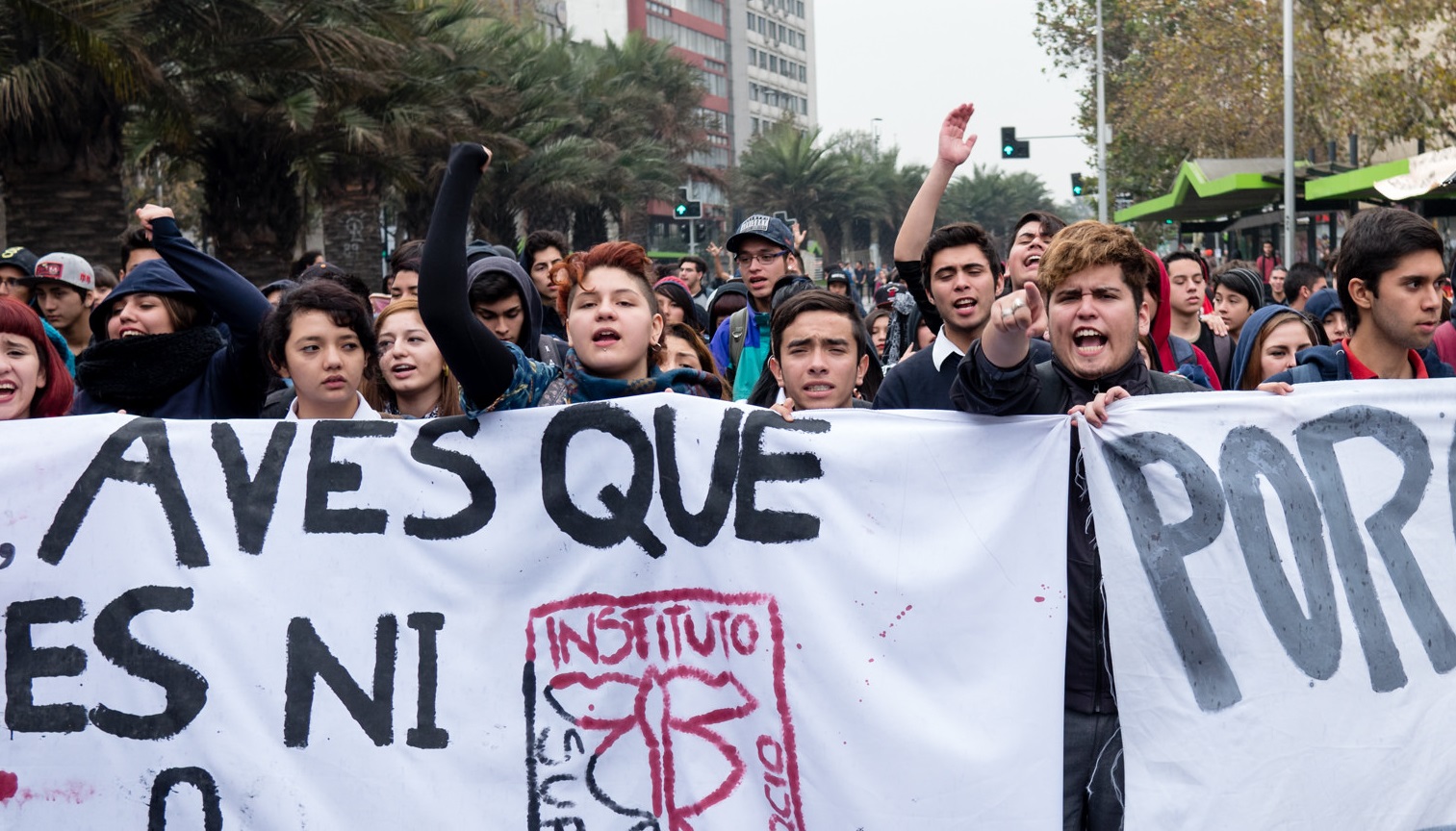
Students protest in Santiago, May 2016. A highly-mobilized Chilean civil society has beset Michelle Bachelet’s second term as president. / Francisco Osorio / Flickr / Creative Commons

With national elections looming at the end of 2017, President Michelle Bachelet’s startling reversal of fortune raises the question of whether the traditional parties’ failure to win broad popular support could give rise to an anti-establishment populist leader.  At the end of her first government in 2010, Bachelet was the most popular president in post-democratic transition Chile.  This go-around, high-profile corruption scandals involving party financing and real estate deals implicating her family (along with both governing and opposition parties) have cut into her support.  Irregularities in the electoral registry before the 2016 municipal elections, an ineffective response to devastating forest fires, concessions over major reforms, and a slowing economy have also hurt her approval ratings, which are hovering near 20 percent, the lowest of any president since 1990.  Her administration has been beset by protests over education reform, labor relations reform, and the private pension system that the military government established in the 1980s.  Tensions and violence flare up continuously over land rights in the south between Mapuche communities and extractive industries.  All of this is occurring in a context of marked secular decline in voter participation and political party identification.

The trend of volatile approval ratings and a mobilized civil society now spans three administrations – Bachelet, Sebastián Piñera (2010-2014), and Bachelet again – from 2006 to 2017.  Unlike in Brazil and Argentina, where “middle class” revolts demanding clean, efficient government and economic growth signified a rightward turn after prolonged center-left rule, most of the protests in Chile come from the left flank, rather than the right.  Moreover, the mainstream parties appear seriously detached from the most active groups in civil society and, as seen in declining levels of party identification, from the citizenry at large.  This raises questions about the future of Chile’s party system, whether its center-left and center-right coalitions can hold together, and the chances for outsider populists.

All things considered, Chile has been a case of exceptional partisan and electoral stability in Latin America since 1990.  The dominant parties and coalitions have won all the elections, without the rise of a major “outsider” populist or a major new “movement party.”  But the next elections may provide a sort of “in between” outcome.  Ex-President Piñera, who has independent tendencies on the right, and a center-left alternative, Alejandro Guillier, are the current frontrunners in presidential primaries scheduled for July.  Guillier is a type of insider, nominated by a small party in a large coalition, with outsider credentials who does not really belong to Chile’s traditional casta política.  At this early point, if Piñera and Guillier win their respective primaries, both would appear to have a shot at winning in November or in December’s runoff – with neither outcome representing a breakdown of the system, nor a widespread electoral protest against mainstream parties.  This suggests, for now, the continuation of a system that is on the surface highly stable in institutional terms, but in reality highly detached from society at large and in particular from youth and the more active, mobilized sectors of civil society.  Neither political coalition shows many signs of significant internal renovation, although Guillier represents at least some change in leadership of the Nueva Mayoría.  However, political systems have been known to limp along under these conditions in the absence of major economic meltdowns, and that may be the most likely outcome of the next electoral cycle in Chile.

February 13, 2017

*Eduardo Silva is Professor of Political Science at Tulane University, and Kenneth Roberts is Professor of Government at Cornell University.

Haiti’s Electoral Crisis Finally Concludes, for Now

By Emma Fawcett*

32009767260_e0738041c9_k

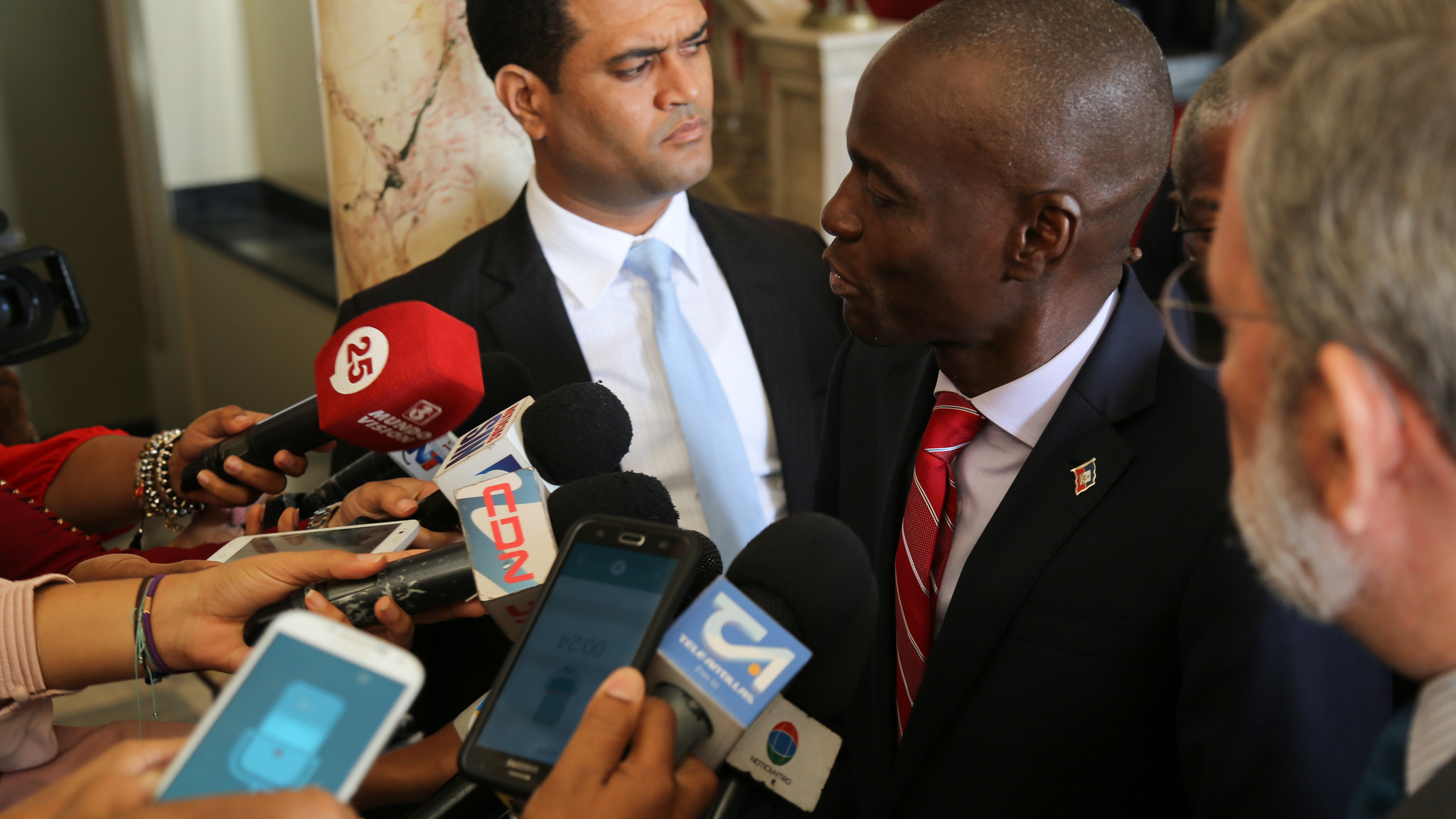
Newly inaugurated Haitian President Jovenel Moïse speaks with the Dominican press. / Karla Sepúlveda / Presidencia República Dominicana / Flickr / Creative Commons

Haitian President Jovenel Moïse, inaugurated this week following an 18-month electoral crisis, is likely to have a short honeymoon before the country’s multiple crises hit him hard.  While the transfer of power was long overdue – after a year of transitional rule by interim President Jocelerme Privert – questions remain about Moïse’s ability to govern.  He is a 48-year-old businessman with no political or governing experience.  The election delays suppressed voter turnout to a paltry 21 percent, so the 55 percent of votes that he won amounts to just 9.6 percent of registered voters.  Tensions remain high among the other 53 former presidential candidates.

  • Challenges to Moïse’s term in office have already emerged. While Haitian presidential terms are five years, some constitutional experts believe that Moïse lost a year due to the electoral crisis – that interim President Privert’s year in office counted – and therefore that he has only four years remaining.
  • Moïse already faces allegations of corruption. In a case he claims is politically motivated, he has been under investigation for money laundering since irregularities in his bank transfers were first discovered in 2013.  Four opposition senators last week requested additional information about the investigative judge’s findings, and another former presidential candidate has filed as a plaintiff in the case.  The judge’s order and the prosecutor’s intentions have not been made public, but the investigation has been expanded to include interviews of Moïse’s wife and several other associates.  Several senators boycotted the inauguration in protest.

Haitian economic and social problems remain severe.  The mandate for MINUSTAH, the UN peacekeeping mission that has been in place for the last 12 years, expires in mid-April.  Foreign assistance has continued to decline, although Hurricane Matthew caused $2.8 billion in damage last October and another 30,000 cases of cholera are expected this year.  Thousands of Haitians have fled the island, including about 5,000 currently awaiting entry on the US-Mexico border.  Inflation exceeds 14 percent a year, and growth for 2017 is expected to be -0.6 percent.  Even the budget for Moïse’s inauguration was slashed by 50 percent in light of austerity measures, although several foreign presidents and a U.S. delegation led by Omarosa Manigault, a former reality TV star and assistant to President Trump, attended.

Moïse faces tremendous challenges – without anything resembling a popular mandate.  If he is prosecuted, moreover, Haiti could be rapidly plunged back into political instability.  But  foreign media indicate that many Haitians hope that his business background as a banana exporter and auto parts dealer will help him revive the economy, especially the agricultural and textile sectors.  Moïse has indicated repeatedly that he hopes to preserve and expand Haiti’s preferential trade agreements with the United States: “President Trump and I are entrepreneurs, and all an entrepreneur wants is results, and therefore I hope we’ll put everything in place to make sure we deliver for our peoples.”  With the electoral uncertainty finally over, Moïse is slightly better positioned than his two most recent predecessors – transitional President Privert and embattled President Michel Martelly – to foster political stability, engage the diaspora, and encourage foreign direct investment.  But with so many competing priorities and the distraction of his money laundering case, it will be enormously difficult for the new president to serve “all Haitians” as his inaugural address promised.

February 9, 2017

 Emma Fawcett is an Adjunct Professorial Lecturer at American University.  Her doctoral thesis focused on the political economy of tourism and development in four Caribbean countries: Haiti, Dominican Republic, Cuba, and the Mexican Caribbean.

Intense Electoral Year in Latin America

By Carlos Malamud*

16792672892_a08a2fbd6d_k

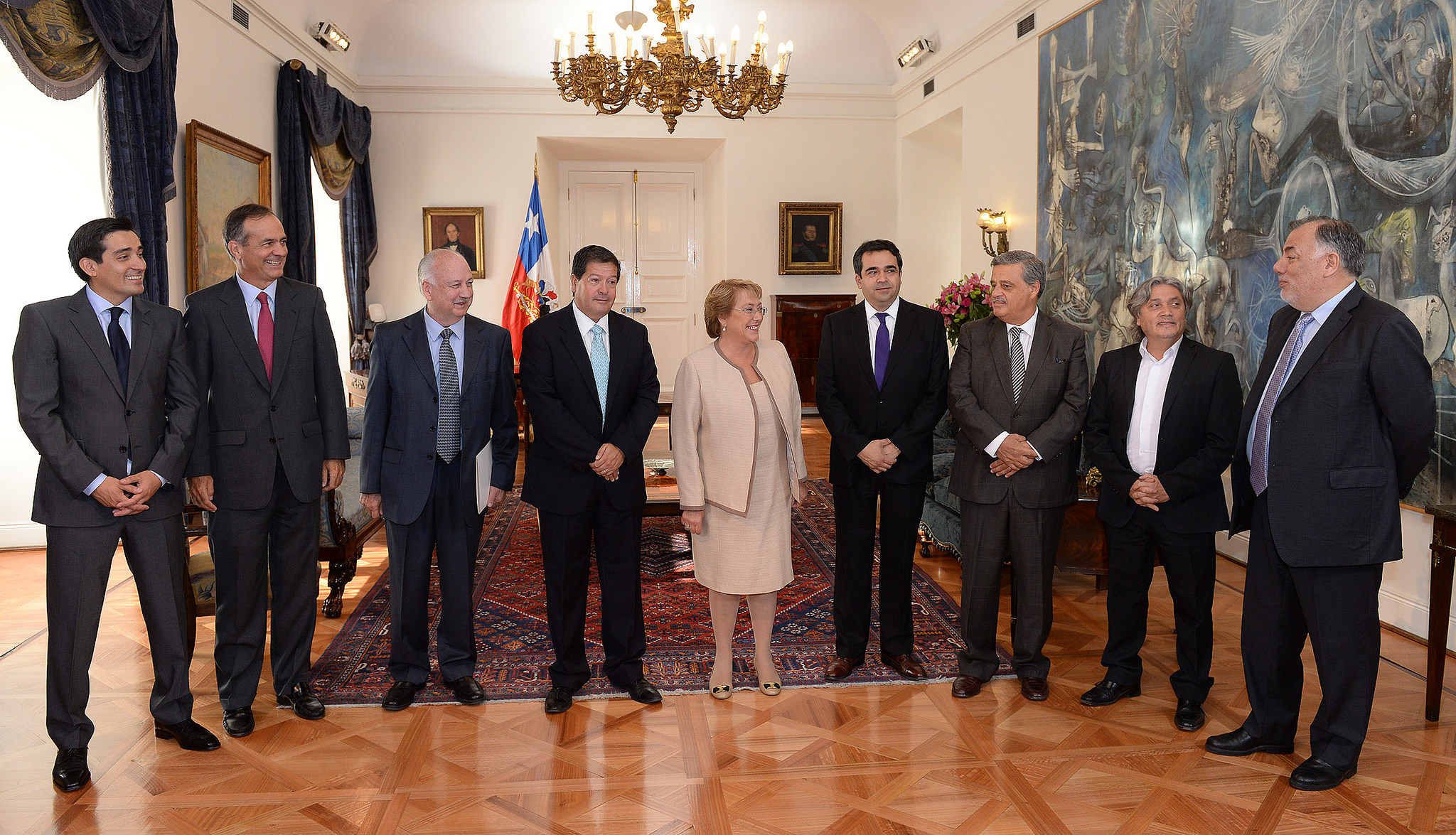
Chilean President Michelle Bachelet with the leaders of her coalition, Nueva Mayoría. The Chilean presidential election of 2017 will determine the legacy of the Nueva Mayoría. / Gobierno de Chile / Flickr / Creative Commons

The new year will be an intense one for Latin American elections.  Although perhaps not as important as those taking place in 2018, this year’s elections will have a significant impact on the countries holding them and, in some cases, the region as a whole.

  • In Ecuador’s presidential and legislative elections on February 19, the PAIS Alliance will run a slate of nominees for the first time without Rafael Correa heading its slate. The President said he’s stepping down for family reasons, but Ecuador’s economic problems, aggravated by the decline in oil prices, apparently convinced him to seal his legacy on a high note now rather than end his time in office in defeat.  The party’s presidential candidate, former Vice President Lenin Moreno, has a 10-point lead in polls over his closest competitor and has the advantage of facing an opposition divided among seven candidates, but his leadership remains uncertain.
  • In Mexico, the state governors of México, Nayarit, and Coahuila and mayor of Veracruz are up for election on June 4. The race in México state will measure the popular backing of the four parties in contention – PRI, PAN, PRD, and López Obrador’s new Movimiento Regeneración Nacional (Morena) – in the 2018 presidential election.  The older parties will begin to weed out the weaker pre-candidates.
  • Elections for half of the Argentine Congress and a third of its Senate in October will define the second half of President Mauricio Macri’s presidency. The government is confident that economic recovery will strengthen its election prospects.  A weak showing will strengthen the Peronista opposition and complicate Macri’s agenda.  The Peronistas are currently divided into three big factions – that of Sergio Massa; the “orthodox” wing headed by some provincial governors, and corruption-plagued Kircherismo grouping headed by former President Cristina Fernández.  Open, simultaneous, and obligatory primaries (known by the Spanish acronym PASO) in August will be an important test for all.
  • Chile will elect a successor to President Michelle Bachelet on November 19. Primaries in July will reveal whether the country’s two big coalitions – the center-left (including the President’s Nueva Mayoría) and the center-right – are holding, as well as the presidential candidates’ identity.  The names of former Presidents Sebastián Piñera and Ricardo Lagos are in the air, but it’s too early to know how things will play out in the environment of growing popular disaffection with politics and politicians.
  • Honduras will hold elections on November 26. Due to a Supreme Court decision permitting reelection, incumbent President Juan Orlando Hernández could face a challenge from ex-President Manuel “Mel” Zelaya, who was removed from office by the Army in June 2009, running as head of the Libertad y Refundación (Libre) Party.
  • Also in November, Bolivia will elect members of various high courts, including the Constitutional, Supreme, and Agro-Environmental Tribunals and the Magistracy Council. These elections will reveal the support President Evo Morales will have as he tries to reform the Constitution to allow himself to run for yet another term in office.

These elections in 2017 have a heavy national component but will shed light on the region’s future direction.  The success or failure of the populist projects in Ecuador and Honduras, or of President Bachelet’s Nueva Mayoría in Chile, will tell us where we are and, above all, help us discern where we’re headed.

January 17, 2017

*Carlos Malamud is Senior Analyst for Latin America at the Elcano Royal Institute, and Professor of Latin American History at the Universidad Nacional de Educación a Distancia (UNED), Madrid.  This article was originally published in Infolatam.

Michel Temer’s Shrinking Presidency

By Matthew Taylor*

18906523753_b18572805f_k

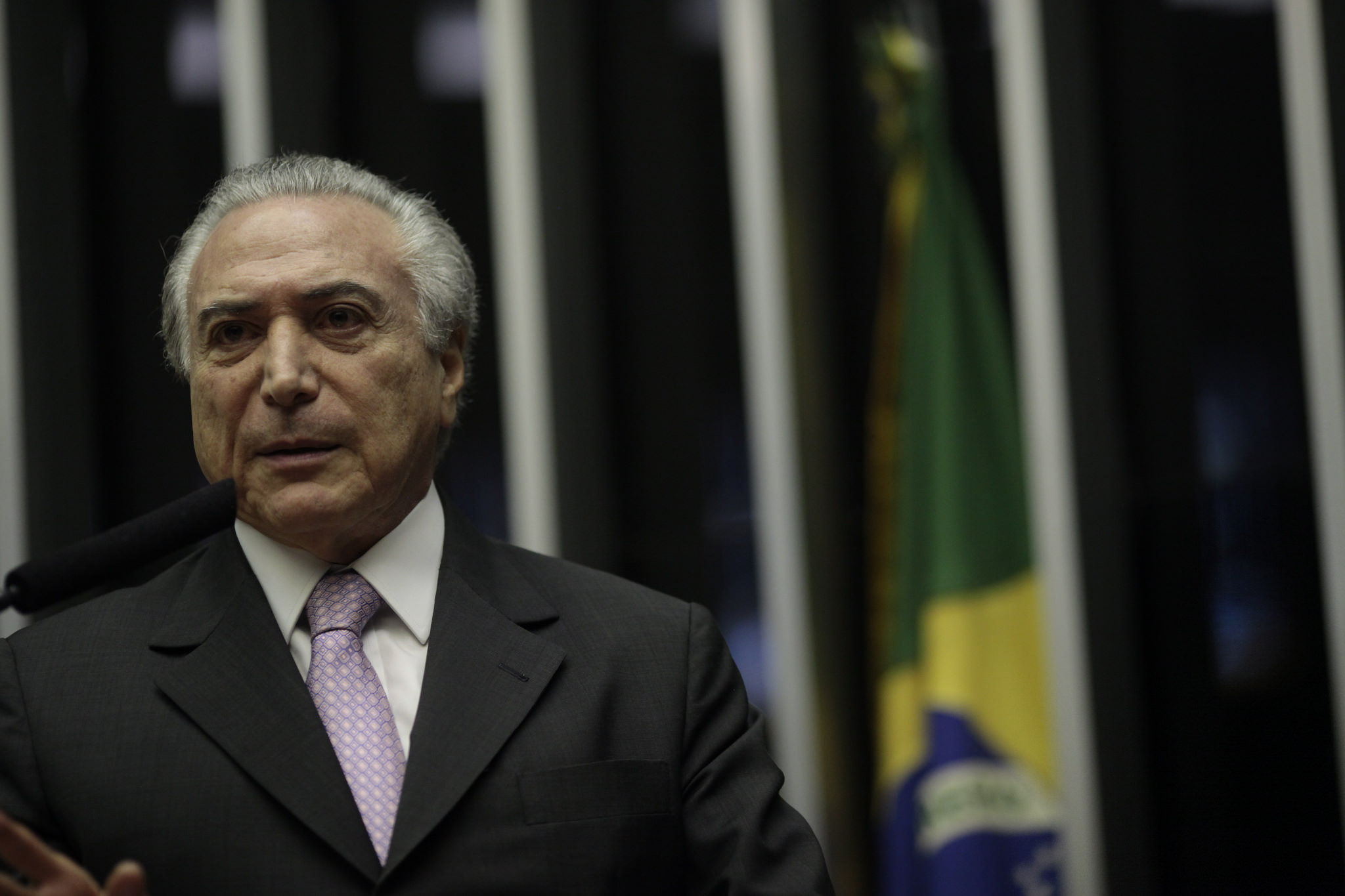
Brazilian President Michel Temer. / PMDB Nacional / Flickr / Creative Commons

Self-inflicted troubles are forcing Brazilian President Michel Temer into difficult choices between his party and an angry public.  When he became president three months ago, his game plan was simple and bold: undertake legislative reforms that would put the government’s accounts back on track, enhance investor confidence, stimulate an economic recovery, and possibly set the stage for a center-right presidential bid (if not by Temer himself, at least by a close ally) in the 2018 elections.  Allies in his Brazilian Democratic Movement Party (PMDB) would ensure that he had the backing of Congress to push through reforms that might not bring immediate returns, but nonetheless might improve investor confidence.  Sotto voce, many politicians also assumed that the PMDB would be well placed to slow the pace of the bloodletting occasioned by the massive Lava Jato investigation and stabilize the political system.

Last week, the public’s worst suspicions of the PMDB-led government were confirmed by a two-bit scandal that claimed Government Secretary Geddel Vieira Lima, who was putting pressure – with Temer’s help – on a historical registry office to authorize construction of a Salvador building in which he had purchased an apartment.  Temer sought to repair the damage by holding an unusual press conference Sunday in which he promised to veto a proposed congressional amnesty of illegal campaign contributions.  But Temer now faces another important ethical fork in the road: how to respond to Chamber of Deputies approval of anti-corruption legislation yesterday that – while originally intended to boost efforts to clean up government – neuters the reforms and prevents judicial “abuses,” a move widely seen as an effort to intimidate judges and prosecutors.  The bill now heads to the Senate, which seems unlikely to repair the damage and indeed, may further distort the bill in an effort to undermine Temer’s ability to resurrect the reforms through selective vetoes.  The reform package had been a poster child for the prosecutors spearheading the Lava Jato investigation, and it was pushed by a petition drive that gathered more than two million signatures.  Prosecutors have threatened to resign if Temer signs the severely mangled measure into law.

Despite Temer’s initial successes, the outlook for the remainder of his term remains grim.  The bad news is going to continue, causing the Congress and Temer even more sleepless nights.  A deal expected soon reportedly will require the Odebrecht construction firm to pay a record-breaking penalty for its corrupt practices (perhaps surpassing even the US$1.6 billion Siemens paid to U.S. and European authorities in 2008), and plea bargains by nearly 80 company executives might implicate as many as 200 federal politicians.  It threatens to paralyze legislators and further weaken the PMDB’s already decimated crew, undermining Temer’s ability to coordinate with Congress.  Economic forecasts now show economic growth of less than 1 percent in 2017 and, with 26 state governments facing budget crises, politically influential governors are begging for federal help.  A much-needed pension reform promised by Temer has not yet been made public, much less begun the tortuous amendment process in Congress.  Temer increasingly is being forced to choose between helping his allies and achieving reform, or satisfying a public fed up with politics as usual and baying for accountability and a political cleanup.  It will take all of Temer’s considerable political skills and knowledge of backroom Brasília to revise his game plan for these challenging times.

December 1, 2016

* Matthew Taylor is Associate Professor at the School of International Service at American University and Adjunct Senior Fellow for Latin America Studies at the Council on Foreign Relations.  This is adapted from this CFR blogpost.

Latin America: Wait-and-See Reaction to Trump – For Now

By Catie Prechtel and Carlos Díaz Barriga*

trump-effigy

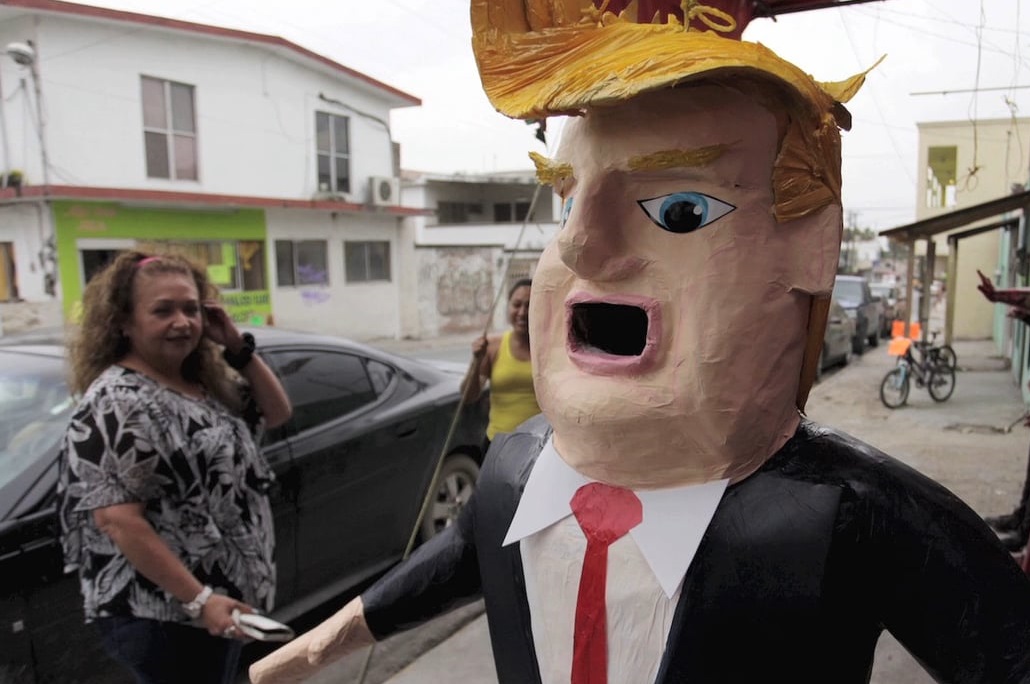
An effigy of Donald Trump in Mexico City. / Sequence News Media / Daniel Becerril / Wikimedia / Creative Commons

Most Latin American leaders publicly reacted with caution to Republican presidential candidate Donald Trump’s victory in last week’s U.S. elections, but reactions will sharpen quickly if Trump tries to make his campaign rhetoric about the region and Latino immigrants into policy.  Mexico and Central America showed clear anxiety over the implications for their economies and regional migration pressures.  Some South American presidents expressed mild enthusiasm and voiced hope for a positive relationship with the new administration, although Trump’s avowed opposition to the Trans-Pacific Partnership trade accord – under discussion at the APEC summit in Lima this week – has fueled concerns about the future of free trade.  Fear that the new U.S. President, who takes office on January 20, will deport millions of undocumented migrants from Mexico and Central America and force U.S. firms to shut factories in those countries has seized the media there.

  • Mexican newspapers headlines screamed “Be afraid!” and warned of a “Global shakedown.” Reports recited the many promises Trump had made against Mexico, including his proposal to build a border wall (and make Mexico pay for it); revising NAFTA and raising taxes on Mexican imports, putting conditions on remittances, and charging more for visas. The peso suffered three consecutive days of losses before recovering slightly following interviews by Trump and his team suggesting a softer stand on the wall and free trade.  President Peña Nieto phoned Trump with congratulations and agreed to meet soon to discuss bilateral issues, including presumably the wall.
  • Guatemala’s Prensa Libre reported businessmen are worried Trump’s rejection of free trade could have a direct impact on the economy and described the possible mass deportations as a “social bomb” for the country. In Nicaragua, newspapers speculated that Trump’s victory will give a boost to U.S. legislation, the Nicaragua Investment Conditionality Act (NICA), which calls for economic sanctions if President Daniel Ortega doesn’t take “effective steps” to hold free and fair elections.  In El Salvador, the main concern is the deep economic stresses of mass deportations of Salvadorans in the United States.  Honduras shares those concerns but apparently was more wrapped up in President Juan Orlando Hernández’s announcement confirming his intention to make a controversial bid for reelection.
  • Venezuelan President Nicolas Maduro, often given to bombastic rhetoric, has focused on working with Washington in the closing months of the Obama Administration. In a phone conversation with Secretary of State John Kerry, he stressed the need to establish an agenda with the next administration that favors bilateral relationships, but he specifically called on Obama to “leave office with a message of peace for Venezuela” and rescind a determination that Venezuela is a “threat to the United States.” Obama himself last April said the designation was exaggerated.
  • Media in Colombia speculated that Trump will be less committed to aid and support for finalizing and implementing a peace accord with the FARC. Argentina, Brazil, and Chile offered calm reactions to the news.  For Buenos Aires and Santiago, the biggest concern was potentially strained commercial relationships and free trade agreements with the United States, according to press reports.  Brazil offered little reaction to the news, but Trump’s win brought four consecutive days of losses for the real – weakening 7.6 percent since the election.

The political leaders’ cautious reactions conceal a broad and deep rejection for President-elect Trump’s values and intentions as he stated them during the campaign.  Former Mexican President Vicente Fox once again tweeted his disapproval for Trump, while José Mujica, former President of Uruguay, expressed dismay on Twitter, summing up the situation in one word: “Help!”  Press reports and anecdotal information indicate, moreover, that large segments of Latin American society have shown a widespread distaste for Trump’s win.  Their general wait-and-see attitude will end when and if Trump proves himself the unpredictable and reactionary he seemed on the campaign trail.  Latin American leaders have a lot of work ahead as they navigate a new relationship with the United States.

November 15, 2016

* Catie Prechtel and Carlos Díaz Barriga are CLALS Graduate Assistants.

The Cataclysm that the Latino Vote Couldn’t Stop

By Eric Hershberg

ft_16-11-09_exitpolls_race_ethnicity

Presidential candidate preference, by race or ethnicity / Pew Research Center

In unprecedented numbers, Latino voters flexed their muscles in the bitter and destructive U.S. presidential campaign, but that wasn’t enough to elect a competent but mistrusted centrist and block an erratic TV showman espousing policies anathema to their interests.  Former Secretary of State Hillary Clinton lost in the electoral college, which in the American system is what actually matters, but she won the popular vote by a slim margin – little consolation to Latinos.  Donald Trump and the forces that will accompany him into the Executive branch have pledged to begin efforts to deport millions of undocumented immigrants, build walls to keep Latin Americans out of the country, and reverse decades of policies meant to strengthen ties among the Americas.  The election highlighted deep cleavages in U.S. democracy:

  • An inclusive coalition of the well-educated, urban dwellers, youth, and racial and ethnic minorities lost to a bloc of angry white working-class, rural, and small-town voters rallied by a man whose behavior and rhetoric were called repugnant by leaders of even his own party. The outcome testifies to the degree to which vast segments of the American population feel ignored and denigrated by political and cultural elites and alienated by profound social changes that accelerated during the Obama administration, including shifts regarding such issues as gender and sexual identity and, particularly, racial diversity and empowerment.
  • The Trump-led “whitelash” has been largely rhetorical up to this point, but it will soon be manifested in public policies with life-changing consequences for immigrants, minority populations, and impoverished citizens. There’s a possibility that, once charged with running the country, the Trump faction will moderate on some issues, but it’s frightening to recall that no fewer than 37 percent of German voters mobilized behind an analogous cocktail of racial resentment and violent impulses in 1932.  In 2016, nearly half of the American electorate did just that, with profound implications for civil discourse, tolerance, and respect for sometimes marginalized sectors of the country’s population. If Trump’s exclusionary rhetoric becomes translated into concrete policies that diminish the country’s diversity, the U.S. will lose its status as among the most dynamic and creative places in the world.

The Latino vote was expected to be among the decisive factors that would sweep Clinton into the White House and swing the Senate back to Democratic control, albeit by the slimmest of margins.  But while it was influential, diminishing Trump’s margin of victory in reliable Republican strongholds such as Arizona and Texas, and enabling the Democrats to eke out victories in states such as Nevada, New Mexico, and Colorado, the Latino vote was insufficient to rescue Clinton’s fortunes in the pivotal states of Florida and North Carolina.  Whereas in 2012 Obama had an estimated 71-27 percent advantage among Latinos against his opponent, Clinton failed to match that total – exit polls indicate roughly a 65-29 percent split – even against a candidate explicitly targeting Latino interests.  Trump called for mass deportations of the country’s 10 million undocumented Latino residents and a rollback of the Obama administration’s efforts to provide safe haven and legal status for at least half of this vulnerable segment of American communities.  Whatever the reasons for their low participation, these communities now confront existential threats.

  • If Trump follows through on his promises, the impact will be manifested in numerous domains beyond immigration and related human rights that have profound implications for the welfare of U.S. Latinos, including the composition of the Supreme Court and its commitment to voting rights; protection against discrimination in employment, housing, and financial services; access to health care for 20 million people who for the first time gained coverage through the Affordable Care Act (“Obamacare”); opportunities for pre-school and tertiary education; and environmental regulations needed to protect public safety and health.

Political scientists and informed citizens must now revisit their assumptions about the impact that a growing Latino population may have on the outcome of presidential elections.  The gap separating the two parties in terms of Latino preferences is vast and increasingly consolidated, suggesting an enormous and enduring disadvantage for the Republicans.  But whether the Latino vote can become a decisive, rather than merely influential, component of the electorate is much less certain.  The anger among white voters – at least this time around – carried the day.  This “whitelash” may or may not be a transitory phenomenon, but the prospects for efforts to make the United States a force for good in the world, and to make government an agent for social and economic justice for all, will depend in large part on the future mobilization of the Latino community.  Arguably, the future of the United States – and by extension the world’s – hinges on the capacity of Latino voters to make America great again.

November 10, 2016

Haiti: Hurricane Matthew’s Devastating Impact

By Emma Fawcett*

Group of Haitians unpacking supplies

A citizen of Beaumont, Haiti unloads hurricane relief supplies from USAID on October 13, 2016. / U.S. Air Force / Photo by Tech. Sgt. Russ Scalf / Flickr / Creative Commons

Hurricane Matthew, which made landfall on Haiti’s southwestern claw on October 4, devastated citizens’ lives, homes, and businesses – and set back much more across the country.  Some 546 are reported dead, and 128 are still listed as missing.  According to World Bank estimates, the Category 4 hurricane caused nearly $2 billion in damages, including $600 million in the agricultural sector.  The hard-hit southern peninsula provides about one-third of Port-au-Prince’s food supply, and the losses of crops and fishing equipment have long-term implications for food security.  Ninety percent of the homes in the South and Grand’Anse regions were damaged or destroyed, and according to the Environment Ministry, the storm sped up deforestation and has destroyed more recently planted trees.  The relief efforts have been poorly coordinated by Haiti’s interim government, resulting in press reports of looted aid convoys and sporadic protests.

The storm has also set back almost every key initiative underway in Haiti.

  • Just two months after the United Nations finally acknowledged its role in bringing cholera to the country in 2010 (for which it subsequently proposed an aid package that includes restitution to victims), flooding and contaminated water have led to a dramatic increase in the number of cholera cases. An estimated 3,400 new cases have been reported in just the last four weeks.  With help from the World Health Organization, the Haitian Ministry of Health will begin administering 1 million doses of the oral cholera vaccine, but addressing cholera also necessitates serious improvements in access to safe water and sanitation.
  • Haiti’s elections, scheduled for October 9 and already a year overdue, were rescheduled once more due to the hurricane. They are now set for November 20, but foreign observers and candidates alike indicate that major obstacles remain.  More than 770 schools, which are typically used as polling stations, were destroyed by the storm, and roads throughout the south remain impassable.

Once again, it falls to the international community to lend Haiti a hand, but donors have been sluggish.  During a visit in mid-October, UN Secretary General Ban Ki-moon said that he was “disappointed by the response of the international community.”  Less than a third of the UN’s $120 million appeal for immediate hurricane relief has been raised – and the UN was already struggling to raise funds for its separate cholera fund.  Donor fatigue in the United States, where the government contributed several billion in tax dollars and more than half of citizens made private donations following the 2010 earthquake, has been deepened by widespread perceptions that money was wasted.  Poor coordination, wasteful spending by aid agencies, and political stagnation have meant that Haiti has little to show for the $9 billion in earthquake relief.  (The Red Cross, for example, spent $500 million on various projects, but, despite its stated focus on housing, famously built just six permanent homes.)  Canada’s anticipated assumption of leadership of MINUSTAH, the UN peacekeeping mission, from Brazil by the end of the year may help energize aid efforts.  Canada has a large Haitian diaspora population and Prime Minister Trudeau has signaled interest in taking a larger role in Haiti’s recovery, but Canada’s contributions to hurricane relief are still dwarfed by those of the United States.  Once again, Haiti lurches from one crisis to another – and it will continue to until aid and development efforts are better coordinated and the country achieves some measure of political stability.

October 31, 2016

Emma Fawcett recently completed a Ph.D. in International Relations at American University.  Her doctoral thesis focused on the political economy of tourism and development in four Caribbean countries: Haiti, Dominican Republic, Cuba, and the Mexican Caribbean.

U.S. Elections: Latino Voters Lost in the Noise?

By Fulton Armstrong and Eric Hershberg

pew-latinos-for-blog

The U.S. general election on November 8 could give Latino voters their biggest chance yet to flex their political muscles.  The Pew Research Center has released new projections showing that a record 27.3 million Latino voters – 4 million more than in 2012 and 12 percent of the U.S. total – are eligible to vote this year.  Millennials (born since 1981) now make up 44 percent of Latino eligible voters, and Pew Research says that first-time voters represent one-fifth of those who say they are “absolutely certain” to vote.  (Only 9 percent of those over 36 are “absolutely certain.”)  Pew is agnostic, however, on whether their turnout in November will set a record.  Latino non-participation rates are generally high:  their turnout rate was only 48 percent in 2012.  Indeed, analysts at the New York Times cautioned last month that comparisons between Clinton’s support among Latinos now and Obama’s in 2012 – which are similar – indicate that she can’t take them for granted.

Latinos’ political preferences – traditionally Democratic except in the Cuban-American community, which itself is trending towards the Democrats – appear poised for an unprecedented surge in favor of Democratic candidate Hillary Clinton next month.  The “Vote Predict” model of Latino Decisions shows Clinton stands to win 82 percent of the Latino vote, and her Republican counterpart, Donald Trump, 15 percent, with a 5.5 percent margin of error.  This 67-point gap breaks the previous record of a 51 percent split between President Bill Clinton and Senator Bob Dole in 1991, and the 71-to-27 difference between President Obama and Mitt Romney in 2012.  Press reports indicate that, despite unhappiness with aspects of the Obama Administration’s immigration policies which Clinton supported as Secretary of State, Latinos judge that Donald Trump’s policies of walls and expulsions call for active opposition.  Pew’s polls confirm that two-thirds of Millennial Latinos say their support for Clinton is more a vote against Donald Trump than for her.  The Republican Party’s own “autopsy” of its resounding 2012 electoral defeat underscored the importance of attracting Latino voters, who were dismayed by anti-immigrant and xenophobic stances they associated with the GOP.  In nominating Trump, the party fulfilled its strategists’ worst fears.

An overwhelming Latino majority for Clinton seems almost certain.  Political scientists increasingly predict that their rejection of the Republican brand may endure for generations to come, with profound implications for the viability of the Republican Party beyond the Congressional district and state levels.  Latinos may not get credit as the crucial swing vote in the presidential race, but they could be crucial in other contests.  The Latino vote could prove critical to the outcome of key Senate races in states such as Florida, North Carolina, and Arizona.  While the absolute number of Latino voters appears likely to rise, turnout in this unusual – even unsightly – presidential contest is one of the most unpredictable variables confounding polling experts, who see signs that many Americans’ faith in democracy and its processes is dropping, at least temporarily.  A survey reported in the Washington Post, for example, showed that fully 40 percent of 3,000 registered voters say they “have lost faith in American democracy,” while just 52 percent say they have not.  An astounding 28 percent said they probably would not accept the legitimacy of the outcome if their candidate loses.  These trends, along with Trump’s allegations that the election may be rigged, make the timing of the coming-of-age of Latino Millennials truly ironic in this extraordinary election year.  Many Latinos, or their parents or grandparents, left polarized, imperfect democracies and, after earning U.S. citizenship and the right to vote, find themselves in a polarized, imperfect democracy with deep historical roots but an uncertain near-term future.

October 20, 2016