Peru: The Shuffling Continues

By Eric Hershberg and Fulton Armstrong

Pedro Cateriano (l) and President Humala Ollanta. Photo Credit: Galería del Ministerio de Defensa de Perú

Pedro Cateriano (l) and President Humala Ollanta. Photo Credit: Galería del Ministerio de Defensa de Perú

President Humala Ollanta’s new prime minister – his seventh in less than four years – won a vote of confidence in Congress two weeks ago, but odds are that his government won’t be much more popular than those of his six predecessors.  Pedro Cateriano, who had served for three years as Humala’s Minister of Defense, was sworn in on April 2, after the Congress turned against Prime Minister Ana Jara over a spy scandal involving Chile.  (The Chileans, whose intelligence service allegedly recruited several Peruvian Marines in 2005-2012, ended the crisis last week after providing what the Peruvians said were “satisfactory explanations” and pledges to “cease old practices” that have been negative for bilateral relations.)  Fulfilling constitutional requirements, Cateriano and his cabinet presented their program to the Congress on April 28 for the vote of confidence, in which there were 73 votes in favor, 10 against, and 39 abstentions.  The government team reiterated a commitment to reduce inequality, remove obstacles to investment, and improve education, health care, and other social services.

Like Humala’s first four years in office, his remaining 14 months (he can’t run again) appear likely to feature a mix of successes and stubborn challenges.

  • Peru’s economy is doing better than most others in Latin America – 2.4 percent growth in 2014 and slightly more than 3 percent projected for this year – but a drop in Chinese demand for Peruvian copper has depressed prices 6.4 percent last year and more than 13 percent this. (Metals account for 60 percent of Peru’s export earnings.)  This has been a drag on growth and caused the trade deficit to rise to $2.5 billion in 2014 and even higher in 2015.  Humala has increased spending, and poverty reduction programs have lifted about a million Peruvians out of “extreme poverty” since he took office, while inflation remains low – about 3 percent a year.
  • Under Humala, Peru is also grappling with image problems abroad. His administration has strenuously rejected a decision by the Inter-American Commission on Human Rights to take up the cases of 64 persons tried for terrorism during previous governments – a process that threatens to disrupt delicate political balances in Peru.  Press freedom in Peru was also downgraded in Freedom House’s most recent report.  With a score of 47, the country is still ranked ahead of others in the region (Ecuador has 64; Bolivia 47; Honduras 68; and Venezuela 81), but it slipped three points because of “an increase in death threats and violence against journalists, ongoing impunity for past crimes, and a lack of political will to address the problem.”
  • The decline in metals earnings has fueled internal tensions as the government has attempted increasingly aggressive policies to open new areas to mining and accelerate mining projects in the pipeline. The mobilization of military troops last week to quell protests over a new $1.4 billion mining project in the south, which have already resulted in the death of three police and several civilians, poses a real problem.

Humala is by no means unique in suffering a contradiction between basically sound economic performance and chronic inability to sustain domestic political support.  His predecessors have suffered variations of the same malady, rooted in part in the country’s notorious lack of a functioning political party system.  But with seven different prime ministers, his government has looked particularly disorganized.  He has arguably been a competent manager but an ineffective leader – muddling through rather than executing a vision for a better future for Peru.  In the runup to winning his vote of confidence, Cateriano showed strong, consultative political skills in garnering the support of most former Peruvian Presidents, but overcoming the administration’s lame-duck status amidst growing conflict over metals extraction and the beginning of campaigning for the 2016 election will be a constant challenge.  And this government’s experience, like that of its predecessors, suggests that his successor will also face powerful headwinds in a persistently fragmented political landscape.

May 11, 2015

Puerto Rico: Debt and Budget Crisis

By Fulton Armstrong

Photo Credit: Erica Feliciano / Flickr / Creative Commons

Photo Credit: Erica Feliciano / Flickr / Creative Commons

Puerto Rico’s debt and budget crises – worsened by the legislature’s rejection last week of the governor’s proposed fiscal reforms – threatens to plunge the island into a deeper, longer-term depression and is already causing tensions with Washington.  The government and state-run corporations are $73 billion in debt, with little prospect of paying it off.  The Puerto Rican Electric Power Authority (PREPA) alone owes investors, mostly based on Wall Street, about $9 billion.  Last year, the government restructured about $19 billion of PREPA, the water company, and the highway administration’s debt – giving itself barely a year’s breathing room.  The inability to make good has caused internal political tensions and thrust the government into the danger of defaulting, which would shut off access to much-needed credit for potentially years to come.  Hedge funds and others have been buying Puerto Rican paper at deeply discounted rates.

No solution seems possible to make good on such monstrous debt.  Governor García Padilla last year took steps to rein in spending and dramatically reduce the deficit – from $2.2 billion to $200 million a year.  Government personnel have declined by 16,000 positions without disruptive layoffs.  But such measures have barely made a dent in the $73 billion in outstanding liability.  García Padilla has been reluctant to fight PREPA over its inefficient management structure, force it to shift away from expensive hydrocarbons (which account for 98 of electricity production), and adopt renewable energy sources.  The legislature last week killed the centerpiece of his budget reform – a 16 percent value-added tax – and further complicated efforts to persuade lenders that the debt will be paid.  A broader economic slowdown over the past decade, with even tourism registering declines, has been a key factor.  The Governor’s biggest hope at this time seems to be legislation in Washington, introduced by Puerto Rico’s non-voting member in the U.S. House of Representatives, that would allow the corporations to declare Chapter 9 bankruptcy – which Puerto Rico (unlike the 50 states) is forbidden to do under current federal law.

The economic crisis is triggering a political crisis on the island and potentially in relations with Washington.  As Argentina’s failure to make good on its debts has demonstrated, U.S. hedge funds have extraordinary clout and will use it to block anything that lets Puerto Rico off the hook, reducing the chances that Representative Pedro Pierluisi’s bill will pass to practically nil.  The United States may press the island harder to reform its inefficient corporations, but it will ultimately have no option but to watch the crisis deepen.  The situation will give greater urgency to another referendum on Puerto Rico’s status, which the Governor said will take place in 2016, with two contradictory trends at play.  While many Puerto Ricans undoubtedly resent aspects of Washington’s attitudes toward the island, polls show no change in single-digit support for independence.  Most Boricuas, if nothing else, value their U.S. citizenship and the ability to move stateside if conditions on the island get much worse.  Even if the debt crisis frays relations with Washington, inertia argues for no redefinition of the relationship.  There is little indication that Washington will clarify the island’s status unless Puerto Ricans become a factor in Florida during the 2016 presidential campaign.

May 7, 2015

Why Is Madrid Not in the Game in Latin America?

By Fulton Armstrong

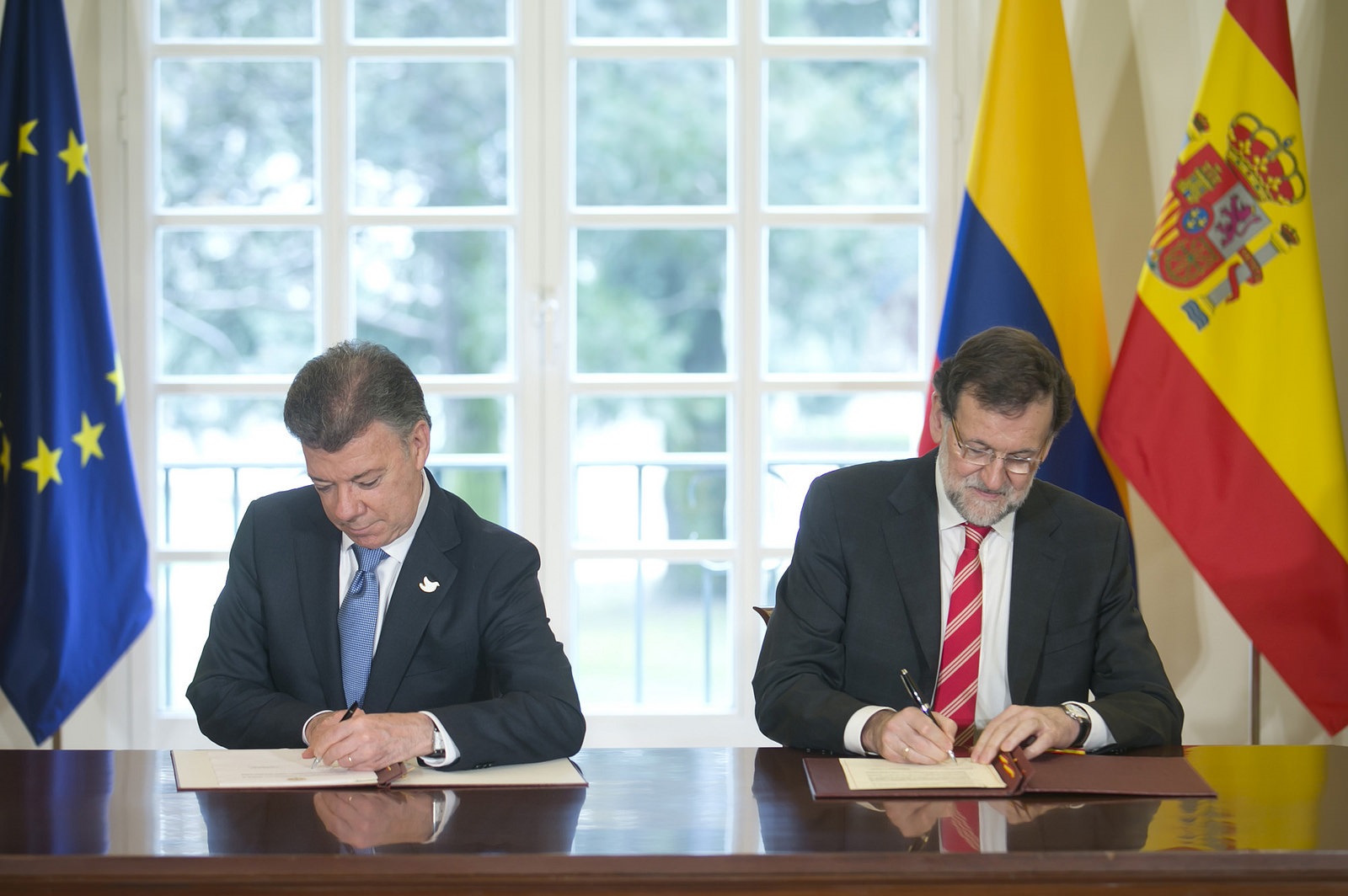
Pres. Mariano Rajoy (Spain) y  Juan Manuel Santos (Colombia), signing an agreement at the Palacio de La Moncloa. Photo Credit: La Moncloa Gobierno de España / Flickr / Creative Commons

Pres. Mariano Rajoy (Spain) y Juan Manuel Santos (Colombia), signing an agreement at the Palacio de La Moncloa. Photo Credit: La Moncloa Gobierno de España / Flickr / Creative Commons

Spain’s media, government ministries and academic specialists watch what they call Iberoamérica closely, but President Rajoy and other political leaders have adopted a lower policy profile in the region than in the past – and they appear unlikely to raise it soon.  Local observers stress that Spain’s interests in the region – preserving historic leadership and influence and building commercial relations – remain the same.  The Foreign Ministry’s website emphasizes the goal of achieving “relations based on equality and balance with all of the countries” in Latin America and to be the European Union’s “key agent” in relations with the region.  Spain also puts great stock in the annual Iberoamerican Summits, even though attendance can fall short of what it hopes for, such as in Veracruz, Mexico, last December.  Madrid rolled out the red carpet for Colombian President Juan Manuel Santos in February, during which both countries’ leaders spoke of their unstinting friendship and backing.  Spanish investment in Latin America has rebounded from the setbacks of the 2008 crisis and the bad odor left by Argentina’s nationalization of Repsol’s shares in the YPF oil corporation in 2012.  Trade has never been the mainstay of the bilateral relationship, but it too has been steady, according to local experts.

Neither of Spain’s two leading parties, however, has shown much interest in making relations as “special” as they like to say.  The frisson of excitement from President Obama’s decision to restore diplomatic relations with Cuba – arguably a validation of longstanding Spanish policy that engagement is better – did not last long.  Observers in Madrid say the government is neither concerned about new U.S. competition on the island, such as in the hotel industry, nor excited that Spanish companies will win big when U.S. tourists flood in.  After former President Zapatero met with Cuban President Raúl Castro late last month, current Foreign Minister García-Margallo accused him of “extraordinary disloyalty and … inappropriateness,” apparently for violating several Spanish protocols for former heads of government.  But Margallo’s pique was consistent with the Partido Popular’s longstanding chilliness toward Cuba (particularly under former President Aznar) and almost certain was aggravated by the fact that Raúl had stood him up for a meeting in Havana in November.  The two parties use similar rhetoric to condemn Venezuelan President Maduro’s increasingly abusive policies, but neither has provided creative leadership in finding solutions to the country’s impasse.  Former President Felipe González, of the Socialist Party (PSOE), has agreed to join the legal defense team of jailed oppositionists but apparently not counseled them on broader strategies.

Transient issues, such as frustration that investments might be nationalized, and widespread perceptions that Venezuela and other problem cases in Latin America are intractable probably lie at the heart of Spain’s preference to stay on the sidelines.  The shift probably also reflects Spanish leaders’ focus on internal priorities – an economy still reeling from the 2008 crisis and youth unemployment so high (over 40 percent in some regions) that there’s fear of a “lost generation.”  In important ways, Spain’s posture toward the region parallels Washington’s – showing fatigue or doubt at a crucial juncture in Latin America’s search for political and economic models as well as effective trading alliances.  Even though Latin American rhetoric tends to reject outside models for democratic transition and institution-building – including Spain’s – Madrid’s historical experience gives it potential advantages in dealing with the region’s political challenges.  Spain and the United States approach in Latin America are quite different – Washington tends to rely on programs to strengthen regime opponents as agents of change – but their strategic objectives in Latin America are complementary.  It would make sense for the two to team up in the region, cooperate in diplomatic strategies, and provide the sort of respectful partnership that many Latin Americans seem to yearn for.

March 31, 2015

Honduras: Charter Cities Lurch Forward

By Fulton Armstrong

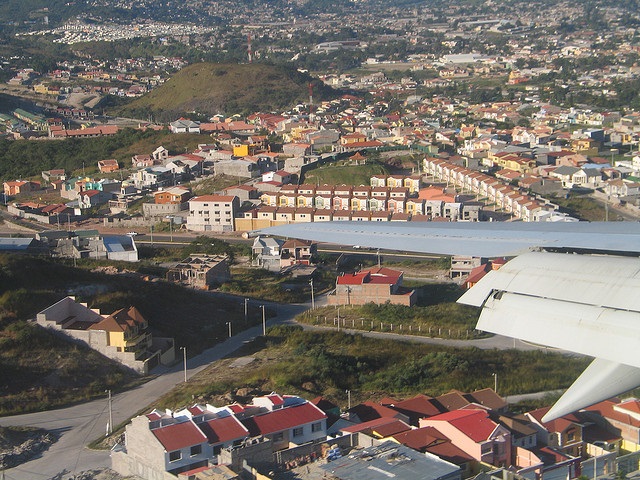
Choluteca, Honduras Photo Credit: Jonathan D. / Flickr / Creative Commons

Choluteca, Honduras Photo Credit: Jonathan D. / Flickr / Creative Commons

The Honduran government expects to get the green light this month from a Korean consulting firm for a master plan to hand governance of several small communities over to private investors to develop them, but concerns about the plan run deep and appear unlikely to fade.  Called ZEDEs – the Spanish acronym for “Employment and Economic Development Zones,” the specially designated areas are also called by their proponents charter cities, model cities, and startup cities.  The first tranche of towns facing conversion are in the southern Honduran departments of Valle and Choluteca, with a new port built on the Gulf of Fonseca.  The government says that the affected communities will remain an “inalienable part of the Honduran state,” but amendments to the Constitution, laws, and regulations permit their governing body – which is unelected – to establish “policies and regulations” and their own police and other public services.  Called the “Committee for the Adoption of Best Practices,” the board is dominated by representatives of Honduran millionaires and an even greater number of non-Hondurans of predominantly libertarian ideology.  Among them are American anti-tax crusader Grover Norquist; former President Reagan’s son Michael; and Michael Strong, chief executive of Radical Social Entrepreneurs.  The ZEDEs’ guiding principle is to liberate communities from government taxation, oversight, and corruption in order to attract investment and stimulate prosperity.

The ZEDEs initiative has been plagued by opposition since its inception, however.  Numerous reports underscore that the affected communities were never consulted, and demands for a referendum have repeatedly been rebuffed.  Honduran implementation of the model has been rejected by the U.S. economist who proposed it, Paul Romer (formerly of Stanford University; currently at New York University).  He withdrew because of the lack of Honduran transparency, including secret deals with interested U.S. parties.  The Honduran Supreme Court initially voted 4-to-1 against a Constitutional amendment allowing creation of ZEDEs in 2012, but the Congress impeached the four dissenters and replaced them with supporters who voted unanimously in favor.  There are numerous reports of intimidation of local civil society leaders, who deem them credible in view of clashes between wealthy businessmen and campesinos in other areas resulting in hundreds of deaths in recent years.

Honduras has a desperate need for economic growth – two-thirds of the population lives below the poverty line – and its model of national governance, riddled with corruption and non-transparency, is indeed in crisis.  But there’s no evidence that fighting one form of corruption with another non-transparent system will help anyone but the big investors.  Indeed, Honduras has ranked among the most violent countries in the world for several years, with the term “failed state” looming darkly over it – making it perhaps the worst place to experiment with provocative new models of governance without popular consultation or support.  Critics seem to have a good case: real reform and economic stimulus would focus on cleaning up the government and holding accountable the elites that have brought the country to ruin and now are trying to impose this model on their fellow citizens, rather than usurping the affected communities’ sovereignty.

March 19, 2015

Nicaragua’s “Great Canal” Draws Opposition

By Fulton Armstrong

9036608152_a199acb183_z

Protestors opposing the Chinese-Nicaraguan canal confront police / Jorge Mejía Peralta / Flickr / Creative Commons

Although questions continue to swirl around whether the Chinese-Nicaraguan canal – which its main investor called the “most important [project] in the history of humanity” – will be built or not, its opponents are taking it all very seriously.  A CID-Gallup poll in January showed that 41 percent of Nicaraguans interviewed strongly support the project, while another 21 percent and 17 percent back it somewhat and a little, respectively.  But another poll by the same firm suggested ambivalence:  asked if they supported the National Assembly vote giving the Chinese firm leading the project, HKND, a concession for the 278-km right of way for up to 100 years, some 39 percent of respondents said no.  Some political voices are growing more sharply opposed as well.  The powerful business group COSEP, for example, has gone from agnosticism about the project to a position of open disapproval.

Groups concerned about the project’s impact on the environment and rural residents have already held protests involving up to several thousand participants, and – despite the government’s promise that the canal will bring prosperity throughout the country – organizing efforts appear unlikely to fade.  Skepticism about HKND and the government’s commitment to protecting the environment, fueled by their off-the-cuff dismissal of concerns, is so deep that even a balanced comprehensive impact study by the British Environmental Resources Management, due next month, may fail to calm nerves.  Environmentalists cite studies warning that dredging Lake Nicaragua from its current depth of nine meters to the 27 meters necessary for cargo ships will stir up many layers of toxic materials, with catastrophic consequences for marine life and surrounding agricultural areas.  Other groups are rallying behind the 29,000 residents who are to be evicted from properties along the canal route.  Demonstrations have turned violent, with protestors injured by tear gas and rubber bullets.  Graffiti and banners demanding “fuera chinos” are common.

In the hemisphere’s second poorest country, the promise of growth spurred by the $40-50 billion project is still a powerful card in the government’s hand.  Many skeptics still wonder, however, if the whole scheme is a ruse to fleece the Chinese investors, who’ll bring in a couple billion dollars before realizing that the project will get bogged down in Nicaraguan political quicksand.  But opposition to the canal goes far beyond the usual Managua political game of fighting over corruption dollars and obstructing each other’s priorities.  President Ortega’s endorsement of the canal contradicts his own statements years ago that he wouldn’t compromise the lake’s eco-system “for all the gold in the world.”  According to The Guardian newspaper, the dredging will move enough silt to bury the entire island of Manhattan up to the 21st floor of the Empire State Building – which no one is prepared to deny will have serious environmental implications.  China’s Three Gorges Dam, completed five years ago, displaced 1.2 million inhabitants – proportionally twice as many Nicaraguans displaced by the canal – but Nicaragua’s ability to resettle them, give them jobs, and suppress their dissent is small compared to China’s.  The project may not be the greatest in the history of mankind as HKND claims, but it may provoke a crisis as great as any in Nicaragua.  For starters, if COSEP’s opposition persists, it threatens to unravel the modus vivendi under which Daniel Ortega has stayed in power, and could portend much deeper tensions.

March 5, 2015

Click here to see our previous article about the canal.

Panama: A Central American Singapore?

By Tom Long*

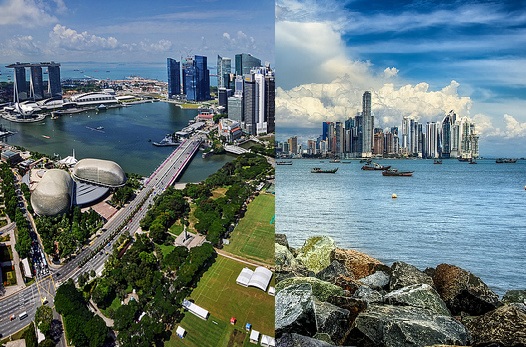
Singapore (left) and Panama City (right) / William Cho and Jim Nix / Flickr / Creative Commons

Singapore (left) and Panama City (right) / William Cho and Jim Nix / Flickr / Creative Commons

As a transportation hub, logistics center, and regional financial player, Panama has long been painted by investment bankers and Panamanian politicians as a potential “Singapore of Latin America,” but that vision still seems a way off.  In some respects, Panama’s story has been quite impressive.  For a decade, it has boasted GDP growth far beyond the regional average, even surpassing 10 percent in some recent years.  Unlike many of its neighbors, its dollar-based economy relies on services, not exports of commodities or low-value-added light manufacturing.  Since the 1989-1990 U.S. invasion to unseat General Manuel Noriega, the total size of the Panamanian economy has quadrupled in constant dollars.  It is also different from Singapore in important ways.  Singapore’s approach to planning and public housing might be helpful in Panama City, which has suffered traffic, environmental degradation, and inadequate housing for the poor as a consequence of poorly planned growth.

In other important ways, however, the Panama-Singapore comparison is less apt.

  • Singapore is a city, with nearly two million more people than Panama has spread across 100 times the landmass. Urban-rural divides are wide in Panama, with poor delivery of health and education services outside the cities, exacerbating inequality.  A Singapore-style strategy in Panama would leave the countryside behind – and indigenous and Afro-Caribbean populations would benefit much less.
  • Differences between the two countries in governance – for better and worse – are profound. The Panamanian people are much freer under the country’s democracy than they would be under a single-party-dominated system like Singapore’s.  In other ways, though, Panama’s governance leaves much to be desired.  Corruption is a massive problem, and watchdog groups highlight weakness in the rule of law, judicial independence, and press freedom.  Projects to expand the Panama Canal and build a capital city subway are over budget and behind schedule, and have suffered from strikes, contract disputes, and questionable bidding practices.  While it may seem easy to blame the corruption on former President Martinelli, who faces criminal charges, the problem has much deeper roots.
  • The two countries have very different policies toward education. Singapore invested, and continues to invest, heavily in world-class universities.  Panama lacks these, weakening its ability to compete globally in industries where innovation is key.  While Panama’s primary education has improved, its research and development lags.
  • A final difference is where the countries find themselves in their political and economic evolution. Singapore became independent 50 years ago, but it has been only a quarter century since Panama ended its kleptocratic, military rule.  It has been just 15 since the United States officially turned control of the canal over to Panamanian authorities.  The roots of its problems cannot be easily or quickly extirpated.

Panama’s boosters often use the comparison to highlight the areas in which Panama excels – economic growth, unique geography, and infrastructure crucial to global shipping and air transit.  The comparison might be more helpful in highlighting areas where Panama needs to improve.  These include dedicating resources to higher education and R&D, addressing inequality, rooting out corruption, and enhancing political and bureaucratic accountability.  Singaporean scholar Alan Chong argues that Singapore’s attempt to present itself as a model, global city is in part a foreign policy strategy of “virtual enlargement.”  The city-state’s wealth, reputation, and active role in international organizations allow it to “punch above its weight” in Southeast Asia and beyond.  Some chapters of Panama’s recent economic story might be the envy of neighbors with their own canal dreams, but the country will need to focus on governance and accountability if even its logistics-hub strategy is in fact going to deliver shared welfare at home and enhanced influence abroad – let alone become a Latin American equivalent of an Asian Tiger.

March 2, 2015

* Dr. Long is a visiting professor in International Relations at the Centro de Investigación y Docencia Económicas in Mexico City.  He is the author of Latin America Confronts the United States: Asymmetry and Influence, which is forthcoming with Cambridge University Press.

Bracing for Economic Pain in Brazil and Beyond

By Kevin P. Gallagher*

Brazilian Real

Mark Hillary / Flickr / Creative Commons

Brazilian President Dilma Rousseff’s warning to U.S. Fed Chairman Ben Bernanke in 2012 – that his monetary-easing policies were creating a harmful tsunami of financial flows to emerging markets – was spot-on.  U.S. growth and interest rates have been appreciating currencies, causing asset bubbles, and exporting financial instability to the developing world.  Brazil and other emerging-market countries may soon be facing capital flight and exchange rate depreciation that could lead to financial instability and weak growth for years to come.  From 2009 to 2013 countries like Brazil, South Korea, Chile, Colombia, Indonesia and Taiwan all had wide interest rate differentials with the U.S. and experienced massive surges of capital flows.  The differential between Brazil and the U.S. was more than 10 percentage points for a while.  According to the latest estimates by the Bank for International Settlements (BIS), emerging markets now hold a staggering $2.6 trillion in international debt securities and $3.1 trillion in cross-border loans – the majority in dollars.

Now the tides are turning.  Many emerging market growth forecasts are continually being revised downward.  China’s economy is undergoing a structural transformation that necessitates slower growth and less reliance on primary commodities.  The prices of oil and other major commodities are stabilizing or declining.  As growth and interest rates pick up in the United States, the dollar gains strength – and emerging market currencies fall.  Brazil’s real hit a 10-year low last week, down to 2.87 to the dollar, amid continuing predictions of zero growth for the country this year.

The traditional tools for weathering the storm may not be available or enough for developing economies.  Floating exchange rates and the resulting depreciation can cause the debt burden on firms and fiscal budgets can bloat overnight, especially in a lower growth environment.  Increasing competitiveness would have helped boost exports, but an IMF study shows that Latin America failed to use one of the biggest commodity windfalls in its history to invest, hindering competitiveness to ride out the tsunami in short-term inflows.  Local bond markets help, but most debt is indeed in dollars, and most local debt is held by foreigners who are always the first to dump such debt.  Interest rate hikes can also be dangerous; they don’t reverse flight and can choke off what little growth there is to be had in a downturn.  Depleting foreign exchange reserves doesn’t always work; increasing debt could bring financial instability but threaten prospects for growth and employment.  Having no good options, emerging-market and developing countries may need to resort to regulating the outflow of capital alongside these other measures.  Such moves have traditionally been shunned by international institutions and capital markets, and new U.S. trade agreements such as the Trans-Pacific Partnership have stripped out balance-of-payment exceptions that allow nations to regulate capital.  But new research in cutting edge of economics by the IMF and others now justifies such measures to prevent or mitigate a full-blown crisis.  If we have learned anything from the global financial crisis since 2008, it is that nations need as many tools at their disposal to prevent and mitigate financial instability.  Instability anywhere can lead to instability everywhere, so we need all tools and hands on deck.

February 19, 2015

* Kevin P. Gallagher is an associate professor of global development policy at Boston University’s Pardee School for Global Studies, where he co-directs the Global Economic Governance Initiative.  His new book is Ruling Capital: Emerging Markets and the Reregulation of Cross-Border Finance.

Haiti: Another Crisis on the Anniversary of a Crisis

By Emma Fawcett*

Cinco anos depois do terremoto que devastou o Haiti / Agência Brasil Fotografias / Flickr / CC BY-NC 2.0

Cinco anos depois do terremoto que devastou o Haiti / Agência Brasil Fotografias / Flickr / CC BY-NC 2.0

Haiti recently marked the five-year anniversary of the devastating 2010 earthquake and missed yet another deadline for reaching an agreement on the country’s long-overdue elections.  On January 12, the parliament was effectively dissolved as the terms of all but 10 senators expired.  Without quorum or a new electoral law, President Martelly now rules by decree.  Many in the opposition, whose protests in the last several months forced the resignation of Prime Minister Lamothe, now also seek Martelly’s resignation.  Martelly has asked protesters to be patient, but some claim the electoral impasse is part of the president’s larger strategy for consolidating his power.  The U.S. Embassy in Haiti has expressed commitment to continue working with him and “whatever legitimate Haitian government institutions remain,” and hopes that Martelly will use his “powers responsibly to organize inclusive, credible and transparent elections.”  U.S. Vice President Joe Biden spoke with Martelly by phone, reiterating support for his administration and acknowledging his “efforts to work with the Haitian parliament and political parties to resolve outstanding issues.”  On Sunday, the UN Security Council concluded its three-day visit by urging politicians to work together to ensure elections can proceed, and refrained from commenting on whether the planned cuts to UN peacekeeping forces would take place in June.

Although there is continued handwringing over how $13.5 billion pledged in earthquake relief has been spent, there are some signs of economic growth.  Capacity in the apparel and hospitality sectors has increased dramatically, priming the pump for further private-sector development, but the results to date are weak.  Caracol Industrial Park (in the northeast) and the Lafito Industrial Free Zone (outside Port-au-Prince) are moving forward, though Caracol has thus far generated just 5,000 of the 65,000 jobs it was expected to create.  Minister of Tourism Stephanie Villedrouin has pushed tourism hard to attract foreign direct investment (FDI).  Tourism was a natural outgrowth of earthquake recovery: hotels rooms were urgently needed first for relief workers, now for engineers and businesspeople, and eventually (Haitians hope) for tourists.  Pétionville, located in the hills above Port-au-Prince and home to much of the country’s elite, has received a remarkable facelift.  It now boasts several renovated or newly-constructed international class hotels, though guests remain elusive.  Some of the tent cities have been cleared.  In Jalousie, one of the slums above Pétionville, concrete homes were painted in bright tropical shades, designed to evoke the work of Haitian artist Préfète Duffau.  (Critics of the project pointed out the neighborhood has more pressing needs than cans of paint, and wryly noted that while Port-au-Prince’s hillsides are covered in slums, only those overlooking Pétionville’s wealthiest residents received cosmetic treatment.)

Despite the political uncertainties and stalled reconstruction efforts, there is a sense among Haitian and international private-sector actors that moving forward is “now or never.”  Many point to Martelly’s unprecedented focus on attracting FDI and willingness to create incentive frameworks.  In field interviews, investors in Haiti and neighboring countries speak of hope that the country’s natural, cultural, and historical resources will make it a viable destination – as well as hope that U.S. and other foreign backing continues to expand the apparel and tourism sectors.  There are enormous challenges ahead, to be sure, compounded by the political crisis and potential for instability.  The government-led strategic planning process has been described as “opaque” and “accelerated” without much room for consultation with either the private sector or local communities.  Carnival Cruise Lines’ plans to build a new port on Ǐle de la Tortue have become mired in land tenure issues.  And inclusive growth – strategically targeted and yet expansive enough to lift Haitians out of poverty – will be hard to come by without improved institutional capacity, made all the more difficult by the events of the last three weeks. 

January 29, 2015

* Emma Fawcett is a doctoral candidate in International Relations at American University.

Cuba Welcomes “Normalization,” But Only on its Own Terms

By Eric Hershberg

Photo Courtesy of Philip Brenner

Photo Courtesy of Philip Brenner

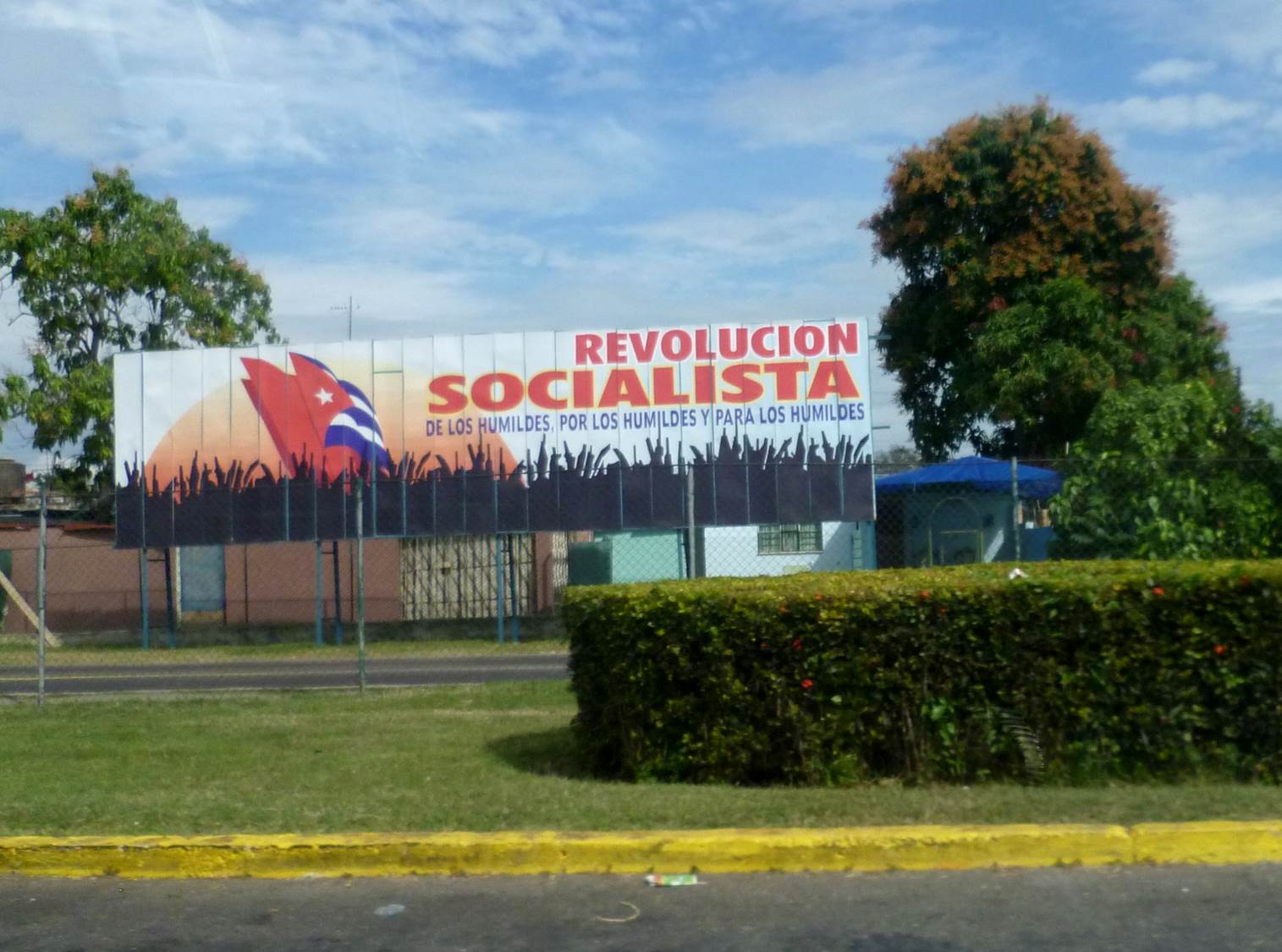
Cuban President Raúl Castro is undoubtedly as serious about normalizing diplomatic ties as President Barack Obama is, but the island’s government arguably faces more pressing challenges than working out the details of a rapprochement with Washington.  Commentators have observed that after the initial euphoria following the December 17 announcement, officials now speak of a long road ahead.  Full normalization, while welcome, is not the foremost concern of Cuban policymakers.  The paramount objective of Cuban authorities is the survival of the revolution and the one-party state that it engendered.  Top diplomats reiterated on January 23, after the first round of talks in Havana, that there will be no concessions to continued American insistence on changes in Cuba’s domestic political arrangements.

Economic revitalization is imperative.  Despite the reforms introduced by Castro, the Cuban economy remains woefully unproductive, incapable of meeting the needs of its citizenry or generating the foreign exchange that any small island developing state requires to import goods that it cannot produce domestically.  Growth rates are anemic, reaching only 1.3 percent in 2014, and independent projections call into question last month’s official announcements predicting 4 percent expansion during 2015.  Agriculture remains stagnant despite reforms aimed at putting fallow lands to productive use, so imports of food account for $2 billion in the extremely tight state budget put forth for 2015.  The severe shortage of cash, moreover, impedes public investment in Cuba’s crumbling infrastructure, which hinders autonomous producers from securing vital inputs for their businesses or distributing what they produce.  Ideally, foreign investment would supply resources where domestic sources cannot, but for the most part this is not happening either.  A 2013 foreign investment law has to date yielded little fresh capital:  European and other investors with experience on the island explain privately that the conditions for conducting business are such that they are reluctant to commit good money after bad.  The new changes in U.S. regulations may produce some increase in investment flows – primarily in the form of remittances from Cuban Americans to families and friends – and thus continue to provide some economic oxygen, but the likely scale of these flows should not be overestimated.  Washington’s new regulations seem likely to continue blocking investments that could increase the Cuban state’s ability to develop the infrastructure necessary to promote economic growth.

Because the intertwined goals of state security and economic revitalization are paramount, Havana’s engagement with the United States will be conditioned on its compatibility with those objectives.  Critics of the American opening who lambast Barack Obama for acceding to a deal with minimal Cuban concessions are right that Havana did not abandon its position that its political system is non-negotiable.  If by joining the rest of the western hemisphere in acknowledging the Cuban state Washington embarks on a path that will fuel economic activity in Cuba, the two countries will proceed, however gradually, away from confrontation.  The trajectory of U.S. relations with China and Vietnam in recent decades offers an instructive precedent for how this can be achieved and be mutually beneficial.  But if the Americans perceive greater engagement with Cuba as a tool for regime change, or strive to limit financial flows exclusively to private actors, their Cuban counterparts naturally will limit the scope of interaction.  A new round of State Department solicitations for bids to conduct democracy promotion activities in Cuba, like the U.S. negotiators’ insistence last week on getting a photo-op with dissidents before heading back to Washington, suggest that this message has yet to be absorbed by American officials.

January 26, 2015

The Impact of Falling Oil Prices on the Western Hemisphere

By Thomas Andrew O’Keefe*

L.C. Nøttaasen / Flickr / CC BY-NC 2.0

L.C. Nøttaasen / Flickr / CC BY-NC 2.0

The sharp drop in the benchmark Brent crude price of oil from just under US$115 per barrel in June 2014 to its current perch around US$50 has important ramifications for the Western Hemisphere.  For Venezuela, which earns some 95 percent of its foreign exchange from petroleum exports, it is a potential disaster.  Underlying political tensions will be exacerbated if there is no money to continue funding social welfare programs or heavily subsidizing gasoline.  It probably also spells the end of PetroCaribe’s generous repayment holidays and what are in essence below-market interest loans for Caribbean and Central American nations.  Sharply lower oil prices also put at risk major energy projects such as the development of Brazil’s pre-salt reserves, which require a minimum price of $50 to $55 to be economically viable.  Equally tenuous are Argentine efforts to regain energy self-sufficiency by exploiting its vast shale oil and gas reserves and Mexican plans to attract foreign investors to participate in deep-water oil exploration and drilling.  The minimum price for a barrel of oil below which new investment projects in Canada’s oil sands are no longer attractive is around $65.  Shale oil producers in the United States are also being squeezed by low petroleum prices.

On the other hand, net energy importers such as Chile, Paraguay and Uruguay benefit from sharply lower oil prices.  Although being weaned off  PetroCaribe will be painful for the Caribbean and Central America in the short term, they will be able to seek oil at the lower prices elsewhere.  The pressure on the Obama administration to lift the ban on U.S. crude oil exports, in response to a glut of domestic shale oil production, could also redound in favor of the Caribbean and Central America by lowering international oil prices further through increased global supply.  Already, 2015 began with U.S. companies authorized to export an ultralight crude called condensate.

In hopes of rallying OPEC to stabilize oil prices, Venezuelan President Maduro last weekend rushed off to lobby Saudi Arabia, which just two months ago refused to decrease production in order to raise prices, but oil industry sources say there’s little chance of a policy change.  Meanwhile, the environment may turn out to be among the biggest beneficiaries of lower oil prices.  Less investment in shale oil production reduces the risk of leaks of methane, a potent greenhouse gas, as well as decreases flaring.  Similarly, slowing down oil sands production in Alberta and Saskatchewan means that the very high levels of greenhouse gas emissions associated with extracting crude oil from bitumen (not to mention the negative impact on water resources) is diminished.  Although lower fossil fuel prices traditionally have undermined incentives to move to greater reliance on renewable and non-traditional energy resources, this may no longer be true.  For one thing many governments around the world are now embarked on ambitious efforts to reduce carbon emissions by, among other things, raising the costs associated with petroleum usage through cap and trade regimes that force companies to buy government-issued pollution permits.  Still others have enacted outright carbon taxes on utilities and large factories per metric ton of carbon dioxide emissions.  In addition, the heavy initial capital investment that was previously associated with things like wind, solar and geothermal power are falling.  For example, a combination of technological advances and Chinese overproduction have resulted in much lower prices for solar panels so that the cost of generation from a large photovoltaic solar plant is now almost 80 percent less than five years ago.  Geothermal energy may be the renewable that most benefits as drilling rigs idled by lower oil prices are now available at a lower cost for geothermal projects.  

*Thomas Andrew O’Keefe is President of San Francisco-based Mercosur Consulting Group, Ltd. and teaches at the Villanova University School of Law.

January 13, 2015