Brazil: Not-so-Happy New Year

By Matthew Taylor*

Brazil Basta

Photo Credit: Antonio Thomás Koenigkam Oliveira / Flickr / Creative Commons

A vicious combination of corruption scandal and economic malaise suggests a troubled new year awaits Brazil.  Economists estimate gross domestic product has contracted 3 percent this year and will decline a similar amount in 2016, while inflation and weak government finances hamper efforts to stimulate growth.  Two of three big rating agencies have cut Brazilian debt from investment grade to junk. Unemployment has risen from under 7 percent a year ago to nearly 10 percent, with forecasts of 12 percent on the horizon.  Efforts to reform fiscal policy are getting nowhere, and the champion of fiscal reform, Finance Minister Joaquim Levy, has just resigned.  The bonanza launched by the 2003-2010 presidency of Lula da Silva – seemingly setting Brazil on a unique path of state capitalist development – is long over.

The country’s interconnected scandals cast shadows on many of the leading players on the national stage, including President Dilma Rousseff.

  • Petrobras, the crown jewel of Brazil’s state capitalist model, is at the center of allegedly massive corruption schemes. Rousseff, who was chair of the Petrobras board at the time of the alleged wrongdoing, has claimed absolute ignorance.  But the charges implicate Brazil’s leading political and business elites, many of whom have been jailed in recent months.
  • A feud between Dilma and the president of the Chamber of Deputies, Eduardo Cunha, reached a new low this month after Cunha’s approval of impeachment proceedings against her. (His own ethics problems continue to fester.)  The charge against Dilma is not of personal corruption but rather that Rousseff flouted budget laws by using public banks to cover up unauthorized debt issuance and off-books spending.  Rousseff supporters have argued that the impeachment charges represent the worst of golpismo, or coup-mongering, and a constitutional overreach that threatens to undermine democracy.

For Brazil, 2016 will be dramatic and unpredictable – as the country weathers the most dangerous political crisis since the impeachment and resignation of President Fernando Collor in 1992.  Dilma’s opponents will have difficulty convincing two-thirds of the Chamber and Senate to oust her, but the crisis is already creating significant fissures in the democratic system.  The parties have been turned upside down.  Even if Dilma survives in office, she faces nearly impossible odds in restoring the credibility of her administration and party, the Partido dos Trabalhadores, or PT.  There are early indications that the PT will face a bloodletting in the 2016 municipal elections, and former President Lula, the party’s once-ironclad standard-bearer, has the highest rejection rate (55 percent) of any potential candidate in the 2018 presidential contest.  The PMDB, Dilma’s coalition partner, is threatening to break with the government, but is internally divided. The opposition PSDB is facing scandals, protests, and troubles of its own in the states it governs.  The newfound proactivity of prosecutors and judges is making democratic checks and balances work as never before – and is largely welcomed by Brazilians – but Brazil’s old party system may not be able to keep pace.  Rumblings for a rethinking of the political system will grow louder in the new year, as the crisis deepens.

December 21, 2015

*Matthew M. Taylor is associate professor at the School of International Service at American University.

Cuba: Limited Opportunity Drives Migration

By Ricardo Torres*

Embed from Getty Images


A generation of young Cubans is eager to leave the island because they feel that recent reforms have opened scant opportunities for them, and they see a much brighter economic future for themselves in the United States or Latin America. Cuba has made vast investments over the years in education, generating a population with high levels of human capital and technological potential, but job opportunities – in the declining state sector, in the 200 or so occupations now authorized for cuentapropismo, and in the slowly opening cooperative sector – hold little promise for Cubans under 30. Although statistics on the socioeconomic background of migrants are lacking, a strong body of anecdotal information indicates that this generation, with aspirations of a career that matches their intellectual and technical capabilities, is concluding that there is little for them in Cuba. For a number of reasons, the conditions necessary to start a new business – such as financing and markets – are simply not there.

Mainstream technologies that are now common in modern societies are lacking in Cuba, hindering it from unleashing the potential of its human capital. Inconsistent and excessively controlled access to computer technology and the internet is also discouraging youths to have hope. Free education, healthcare, and a low crime rate set Cuba apart from most other countries in the region producing large numbers of migrants, but those same factors have created expectations among youths that they should have fulfilling, better-paying jobs – which simply are not abundant. Moreover, people under 35 have fewer emotional or historical attachments to the Revolution. They did not experience the purported “Golden Age” of the 1980s, and the “revolutionary and socialist” Cuba they know is one of only economic hardship.

For migrants elsewhere in the region – driven by endemic poverty, violence, and weak, corrupt institutions – young Cubans’ reasons for leaving the island may appear exaggerated. Cubans’ education, health, and relative security, however, do not discount their profound desire, engendered in part by the Communist Party’s own unfulfilled rhetoric about a better life, to seek better fortunes outside their country. They have been trained for knowledge-based economy, but Cuba’s current development model relegates them to low value-added occupations that cannot generate the rewards to which they aspire (or the prosperity that the society needs and in principle could achieve). U.S.-Cuba normalization, particularly if the two governments allow capital and goods to flow freely, and accelerated reforms in Cuba hold some promise of reducing migration pressures from the island in the future, but persuading Cubans that building a better life on the island rather than emigrating elsewhere will take time and vision.

December 17, 2015

*Ricardo Torres, a CLALS Research Fellow, is Professor of Economics and Cuban economy at the University of Havana, and is affiliated with the UH’s Center for the Study of the Cuban Economy.

Venezuelan Elections: Economic Crisis Turns Up the Heat on Chavismo

By Michael M. McCarthy*

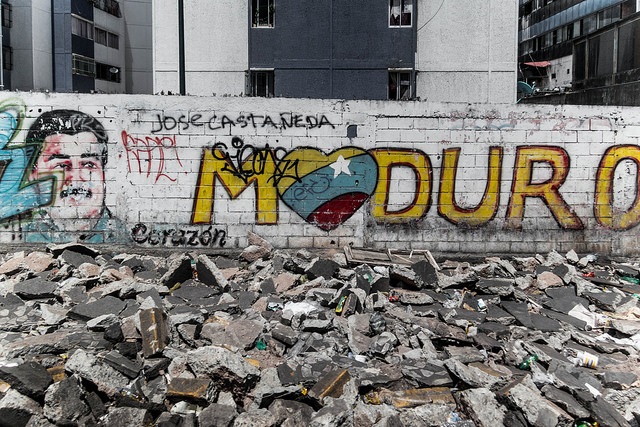
A faded legacy. Photo Credit: Julio César Mesa / Flickr / Creative Commons

A faded legacy for Chavismo? Photo Credit: Julio César Mesa / Flickr / Creative Commons

Twenty-four long months since their country’s last national election, Venezuelans head back to the polls to elect a new National Assembly on December 6 in a tense political climate – with no promise that the government will respect the opposition’s near-certain victory.  All 167 seats in the unicameral body will be up for grabs in a race polarized between Chavismo’s pro government coalition and the Mesa de Unidad Democrática opposition coalition.  Thanks largely to a rapidly deteriorating economy, the government’s approval rating decreased from 50 percent in 2013 to 20 percent in September, according to the national Venebarómetro poll.  A range of polls in September indicated the MUD is poised to win either a simple or “qualified” (60 percent) majority.  Observers generally agree that the main measure of success for Chavismo is preventing the MUD from obtaining a two-thirds majority, and that blocking a qualified majority would be a major triumph.

For ordinary Venezuelans the campaign is overshadowed by the massive economic crisis.  Skyrocketing inflation, severe shortages of basic goods and services, and reduced social assistance programs are contributing to tensions on the street, where the campaign is not as present as in years past.  Nevertheless, heavy turnout is still expected – 66 percent of eligible voters participated in the last National Assembly elections in 2010, and pollsters report a strong intention to vote.

  • The MUD has shaped its campaign around leveraging the vote as a mechanism for punishing economic mismanagement and restoring some institutional balance to a political system that barely reflects opposition voices at the national level. Skepticism of the National Electoral Board, which rejected the MUD’s request for international electoral observation by the OAS, EU or UN, has increased.  Slashes to budgetary support for opposition governors and mayors, while the government channels funds to unelected parallel state and municipal authorities, make supporters wonder whether a victory will be fully respected.
  • The government refreshed its slate of candidates by promoting generational and gender diversity, but stalwarts, including current National Assembly leader Diosdado Cabello, remain prominent. The party is distributing last-minute pork to mobilize voters, and it’s working the system’s rural bias – each department is automatically allocated three deputies – where strong government presence gives it a strategic advantage.  Strikingly, the Chávez legacy has become a liability for President Maduro because the former President was much more charismatic and economic conditions were considerably better during his tenure.

The Maduro administration seems to have run out of diversionary moves after exaggerated external threats from Colombia and Guyana faded.  It is also on the defensive after the Rousseff administration, Maduro’s most powerful diplomatic partner, expressed unhappiness about Caracas’s opposition to its choice of a Brazilian political heavyweight to lead UNASUR’s “electoral accompaniment mission.”  The President has also been set on back on his heels by intensified international criticism of the trial and conviction of opposition leader Leopoldo López, who, according to a state attorney who worked the case, was sent to jail for 14 years on fraudulent charges.  Regardless of the outcome on December 6, the direction of the country is highly uncertain.  Maduro has said he’ll accept the results “whatever they are,” but he has also said “we have to win, by whatever means possible” (como sea and cualquier manera), and that if the opposition wins “I will not hand over the revolution” but rather “proceed to govern with the people in a civic-military union.”  In the next couple weeks, the government may still try to throw the opposition off course, but the MUD does not seem interested in renewing street protests – more violence is unlikely to advance its objectives. Neither do its leaders seem confident that a renewal of talks on rebuilding democratic institutions will help.

November 9, 2015

* Michael McCarthy is a Research Fellow with the Center for Latin American and Latino Studies.

Cuba’s Limited Absorptive Capacity Will Slow Normalization*

By Fulton Armstrong

Photo Credit: PBS NewsHour / Flickr / Creative Commons

Photo Credit: PBS NewsHour / Flickr / Creative Commons

As the U.S. embargo – the main obstacle to expanding U.S.-Cuban economic ties – is relaxed by presidential regulatory action and eventually lifted by Congress, limits on Cuba’s own willingness and ability to conduct trade, absorb investment, utilize information technology, and even accommodate tourists risk putting a brake on the normalization of economic relations.  Five decades of embargo and failed socialist models have rendered key sectors in Cuba ill-equipped to take advantage of the surge in U.S. business interest in the island.  In some areas, the political will to open up and reform is crucial.  These problems do not translate into a rejection of normalization but rather into a slower timeline than many on and off the island would hope for.

The advantages of economic engagement are well known.  Foreign investment will help provide the $8.7 billion Cuba wants for its “Portfolio of Foreign Investment Opportunities” – some 246 projects in energy, tourism, agriculture, and industry.  Havana also wants growth rates to rise to 4-5 percent per year (from an estimated 1.5 percent in 2014), fueled by at least $2 billion in annual foreign investment.  Trade, investment, and tourism are all potentially powerful engines for growth and employment in Cuba.  Private farmers have long out-produced their state competitors and many cooperatives, making them ideal for engagement under current U.S. regulations if the Cuban government facilitates it.  The small private sector, currently employing over a million people, could – with a more supportive infrastructure – provide many more vital goods, services, and employment that the Cuban government years ago admitted it could not provide.  Sectors utilizing Cuba’s specialized and skilled human capital, such as biotechnology, could also benefit quickly and generously from the new U.S. relationship.

Cuba has a lot going for it – such as its deep reserve of potential human capital – but it is also is held back by a variety of problems, many of which are prolonged by political caution.

  • Cuba is updating laws governing investments, property, and labor – a new foreign investment law in March 2014 and related regulations are steps in the new direction – but the multi-year, incremental process has been too slow to keep ahead of burgeoning opportunities. Regulations on how foreign firms select, pay and release Cuban employees are also antiquated.  Paperwork for approving foreign direct investment remains formidable and must pass through multiple levels.  The country lacks the basic institutions necessary to license import and export transactions for beneficiaries outside government ministries.  Much of the bureaucracy – chronically underpaid and, during periods of party dominance, neglected – has yet to grow into a new, more professional role.
  • Unifying Cuba’s two national currencies is absolutely essential but, despite the government’s repeated declarations of intent, it has still not been done. The existence of a different, lower exchange rate for state enterprises creates distortions that will worsen as demand for imports rises.  The financial system, moreover, is too over-burdened, secretive, and lacking in agility, and continued blocks to Cuba’s access to IMF, World Bank, and Inter-American Development Bank (IDB) funds deny it important breathing room to reform.
  • Cuba lacks an information and communications technology (ICT) framework capable of harnessing and nurturing its human capital and driving growth and efficiency – which will retard progress in a number of priority areas.
  • De-industrialization over the past 25 years has further reduced Cuba’s absorptive capacity. Many key sectors – including textiles, clothing, metals, machinery, transportation equipment, and more – have contracted between 50 and 100 percent.  Much of the infrastructure is dilapidated.  The transportation sector is in dire need of repair and modernization; and the construction industry is inefficient and poorly resourced.

Cuba’s challenges in taking advantage of new opportunities are not insurmountable – with political will and time.  The pace of reform and corresponding expansion of Cuba’s absorptive capacity may be maddeningly slow for many Cubans and Americans alike.  But insofar as the U.S.-Cuba normalization process is irreversible, so too is the conviction in Cuba on the need to “update” the system through reform in order to take advantage of the opportunities it brings.  Cuban national pride and the Communist Party’s fear of losing control could very well be assuaged as the island experiences the benefits of engagement.  Foreigners, especially the United States, who push too hard, too fast, and too haughtily could fail and even delay this aspect of normalization, just as Cubans who move too passively, too slowly, and too skeptically could stymie the process as well.

October 27, 2015

*This blog post is excerpted from the third in a series of policy briefs from the CLALS Cuba Initiative, supported by the Christopher Reynolds Foundation.  Read the full brief here.

Mexico’s Petroleum Sector: Not Yet Out of the Woods

By Thomas Andrew O’Keefe*

Photo Credits: Ian Burt and Alex / Flickr / Creative Commons

Photo Credits: Ian Burt and Alex / Flickr / Creative Commons

The September 30 awarding of three contracts on five oil production blocks that the Mexican government opened for bidding has raised hopes that the Peña Nieto administration’s efforts to reform the country’s energy sector are back on track, but many challenges remain.  In contrast, an auction of leases on 14 blocks in July was a huge disappointment as contracts could only be issued for two of them.  The auctions are part of Mexico’s effort to reverse years of declining petroleum output by permitting private sector and foreign participation in an industry monopolized for decades by the state oil company, PEMEX.  Foreign and private sector firms are now allowed to enter into both profit- as well as production-sharing agreements with PEMEX and thereby retain a percentage of the gains on the oil they extract.  In some cases, outright concessions – termed “licenses” so as not to run afoul of the Mexican Constitution – are permitted.

A careful examination of the successful bids last month, however, leaves doubts as to whether the auction marks a change of fortune.  To entice a better response, the Mexican entity responsible for the auctions, the National Hydrocarbons Commission (CNH), relaxed many rules in a way that may be difficult to repeat and can be challenged politically.  Noticeably absent from the list of winning bidders are the major multinational oil giants.

  • The Italian state oil company, ENI International, won the block that attracted the most bids, while an Argentine-led consortium headed by Pan American Energy won a second block. They are well-known players in several South American countries – Argentina, Bolivia, Ecuador, and Venezuela – where the rules of the game are constantly changing and lack of transparency is a major issue.  The third block had only one bidder, a consortium made up of the U.S.-based Fieldwood Energy and Mexican Petrobal (whose director is PEMEX’s former director of exploration and production, Carlos Morales Gil).
  • The blocks awarded on September 30 are for already discovered shallow water fields, meaning lower geological risks for private operators. In order to make the auction attractive, the CNH lowered the fees required to bid and added the right to explore for new oil as well as pumping oil from existing reserves.

Mexican President Enrique Peña Nieto came to office in 2012 with an ambitious reform plan to revitalize the Mexican economy by focusing on structural reforms, including education, finance, telecommunication, transportation infrastructure, and energy.  While there have been noticeable changes in all five areas, the results have not yet led to significant improvements in Mexico’s economic performance.  The optimistic reform scenarios of three years ago are further clouded by corruption scandals – including one touching the President, his wife, and a finance minister who had houses built by prominent contractors who had won lucrative government contracts – the lack of progress investigating the Iguala Massacre (involving 43 students who disappeared), and high levels of citizen insecurity.  The real test for the Mexican energy reform – and the credibility of President Peña Nieto’s reform policies – will come next year when offshore deep water blocks in the Gulf of Mexico and extra-heavy oil fields are put up for auction.

October 19, 2015

* Thomas Andrew O’Keefe is President of San Francisco-based Mercosur Consulting Group, Ltd.

Honduras: No Solution in Sight

Photo Credit: OAS / Flickr / Creative Commons

Photo Credit: OAS / Flickr / Creative Commons

CLALS and the Inter-American Dialogue this week hosted a conversation on the crisis in Honduras with experts Hugo Noé Pino, of the Instituto Centroamericano de Estudios Fiscales, and Carlos Ponce, of Freedom House, and about a dozen of some 80 participants spoke up.  The following are key analytical points that were broadly accepted during the 90-minute session.

Honduras is experiencing a multi-faceted crisis – economic, political, judicial, and security– that has grown steadily worse since the 2009 coup and shows no sign of abating.

  • Economic growth (1.5 percent per capita) is too low to alleviate the country’s severe employment problem (affecting half of the working-age population) and poverty (62 percent). Recent polls indicate that some 63 percent of all Hondurans would leave the country if they could.

Violence, corruption scandals, and the steady weakening of institutions dim prospects for a turnaround.

  • The over-concentration of power in the Executive, the remilitarization of law-enforcement and other security services, and the politicization of the judiciary have undermined what democratic foundation Honduras had built since the last military government stepped down in 1980. The economic and political elites, as well as the media they control, have further stifled political discourse.
  • The Sala Constitucional of the Supreme Court and the National Electoral Tribunal have been stacked to tightly control preparations for elections scheduled for November 2017, apparently with the intention of ensuring the reelection of President Juan Orlando Hernández.

The Honduran political class lacks the will to root out corruption, and is united in resisting developing the capacity and programs to do so.

  • The embezzlement of more than $300 million from the Social Security Institute – funneling part of these funds to the ruling National Party and a variety of fronts – led to the flight of the investigating fiscal (who left the country because of death threats to himself and his family) but little else. Indeed, the most significant law-enforcement actions, such as the indictment of members of the Rosenthal family on money-laundering charges, have come from the United States. Some 80 percent of crimes in Honduras go uninvestigated and unpunished; some reports put the figure as high as 96-98 percent.
  • A Comisión Internacional Contra la Impunidad en Honduras (CICIH), adapted from the successful CICIG model in Guatemala, would be a healthy way of addressing ongoing impunity while building investigative and prosecutorial institutions. The economic and political elites solidly oppose it.  Even if Honduras accepted a CICIH, alone it probably would not be a silver bullet.
  • The OAS’s planned “Mission to Support the Fight Against Corruption and Impunity in Honduras” (MACCIH) – announced in late September jointly with Honduran President Juan Orlando Hernandez – shows little promise of success. Its mandate will be to diagnose problems and write reports, not take action or facilitate a serious, inclusive national dialogue.

Opposition to the current Honduran government is strong and growing, but it has not yet institutionalized.

  • Peaceful marches organized by the Indignados and other organizations have mobilized tens of thousands of citizens outraged by government corruption and its inability to provide even basic citizen security. Among the masses have been an unprecedented number of middle-class and upper-middle-class persons – not seen during previous crises.
  • Opposition groups are still struggling, however, to coalesce into a viable, institutionalized political force. Sustaining effective leadership and overcoming pressure from the government and Honduras’s two traditional parties are difficult challenges for them.

There are no magic or quick solutions to the crisis.

  • Any solution would have many moving parts, including recognition by elites that their own assets are threatened by the deepening chaos. The government will have to be held accountable for corruption.  The judiciary will have to be strengthened and made independent.  The military will have to return to the barracks.  The media will have to be professionalized.  Civil society will have to be empowered.
  • The U.S.-sponsored “Alliance for Prosperity” is unlikely to help Honduras – and could make things worse if it doesn’t challenge the status quo. Honduran observers believe that the $250-plus million dollars from the program should focus on deep change – the product of a broad national dialogue – and should be conditioned on deep reforms, rather than working with just the sitting government, which has shown no willingness to reform.
  • U.S. cooperation in counternarcotics and other security operations might in some cases expose partnered services to U.S. respect for human rights and democratic institutions, but the resources transferred in the process also serve to strengthen them and make them more independent of civilian authority.

October 15, 2015

* Correction: The first sentence of the article originally stated “CLALS and the Inter-American Dialogue this week hosted a conversation on the crisis in Honduras with experts Hugo Noé Pino, of the Instituto Centroamericano de Estudios Fiscales, and Carlos Ponce, of Freedom House, and a dozen speakers from among over 80 participants.” It was edited to clarify that “about a dozen of some 80 participants spoke up.”

A Post-Correa Ecuador?

By Catherine Conaghan*

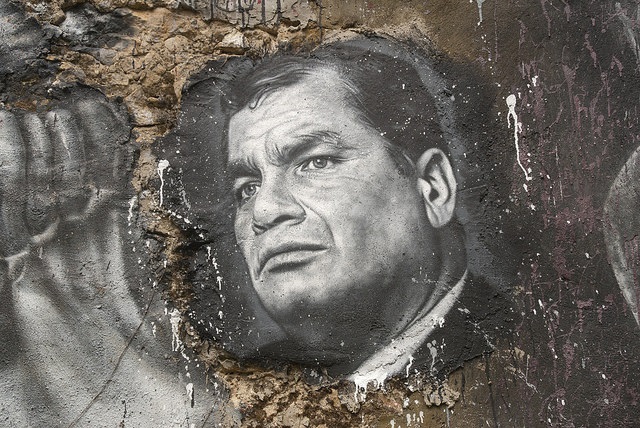
Photo Credit: Thierry Ehrmann / Flickr / Creative Commons

Photo Credit: Thierry Ehrmann / Flickr / Creative Commons

What seemed like a certainty less than a year ago – Ecuadorian President Rafael Correa as a shoo-in for reelection in 2017 – now has given way to competing scenarios as the country’s economic crisis deepens.  The game-changer has been the collapse in revenues from Ecuador’s principal export: petroleum.  With prices for Ecuadorian crude hovering 50 percent below their 2014 average, Correa has had little choice but to slash the abundant government spending that has been the hallmark of his presidency.  Ecuador’s use of the U.S. dollar greatly handicaps its capacity to adjust.  Further aggravating the recession is the economic downturn of Ecuador’s principal external lender, China.  Over $2 billion have been cut from the 2015 budget, and plans to shrink the size of the public bureaucracy are now under way.  His decision in April to suspend the central government’s obligatory payments to the national social security system stoked anxiety about the fund’s future, and an announcement in June of plans to hike taxes on inheritance and real estate transactions sparked street demonstrations around the country.  Indigenous and labor organizations mobilized in mid-August to protest these and other aspects of Correa’s style of governing.  An estimated crowd of 100,000 people marched in Quito.  Scores of protestors were detained and face charges related to the August mobilizations.

The months ahead will not be easy for a president accustomed to buoyant budgets and strong polls.  As one of Latin America’s left-turn leaders, he pushed a state-centric economic model under which poverty declined and the middle class grew.  His approval ratings since he took office in 2007 consistently scored among the highest of any Latin American president.  (They dipped below 50 percent – as low as 42 percent – for the first time in 2015.)  While Correa waxes and wanes on whether he really will pursue reelection, his party is pushing to amend the Constitution through legislation – without a referendum supported by over 80 percent of the public – to allow him a third term.  The opposition strenuously opposes the move.  The National Assembly appears headed toward a final vote on the matter in December.

From now until December, the reelection maneuvering and two possible outcomes will dominate conversations.  Under one scenario, Correa and Alianza País will push ahead with the amendment, ignoring negative public reaction and repressing protests if necessary, and Correa will decide on his candidacy depending on his view of the economy and the state of the opposition.  In a second and perhaps less likely scenario, Correa and his party may just abandon the reelection plan, concluding that the political costs are just too high.  This would set off power struggles within Alianza País over who would head the ticket.  Among the prospective frontrunners are former Vice President Lenín Moreno, current Vice President Jorge Glas, Production Minister (and former Ambassador to the United States) Nathalie Cely, and former Industry Minister-turned-critic Ramiro González.  In the process, Correa will be looking to anoint someone loyal and capable of governing the country until he can return as a candidate in 2021.  Under both of these scenarios, Ecuador is bracing for a volatile year ahead.  Natural disasters – a possible volcanic eruption of Mount Cotopaxi and El Niño – could also fuel uncertainty, giving Correa a chance to shine and rally, or to fail and deepen doubts about his leadership.  After eight years of relative political stability and economic good times, Ecuadorians are pondering whether a post-Correa era could be at hand and what it would mean.

September 8, 2015

* Catherine Conaghan is the Sir Edward Peacock Professor of Latin American Politics at Canada’s Queen’s University and a former CLALS Research Fellow.

Dilma – and Brazil – in Crisis

By Eric Hershberg

Photo Credit: Ministério da Ciência, Tecnologia e Inovação / Flickr / Creative Commons

Photo Credit: Ministério da Ciência, Tecnologia e Inovação / Flickr / Creative Commons

Brazil’s corruption scandals and deepening recession have raised doubts about not only the viability of President Dilma Rouseff’s government, but also about the national renaissance and global role that Brazilians have long strived for and seemed only recently to have achieved.  The commodity boom of the past decade propelled Brazil to become the world’s sixth largest economy and make major inroads against its historically obscene levels of poverty and inequality.  Often working in tandem, Brazil’s leading public and private enterprises, assisted by the generous state development bank, prospered immensely and fueled growth in Brazil itself and elsewhere in Latin America, building infrastructure from Ecuador to Cuba.  Four Partido dos Trabalhadores (PT) presidential victories in a row (two each for President Lula da Silva and for Dilma) appeared to validate a development strategy built upon government alliances with ambitious large firms and generous cash-transfer programs for needy segments of the population, which became reliable sources of electoral support.  Brazil, the country that skeptics considered unlikely to ever fulfill its aspiration of becoming more than “the country of the future,” seemed to have turned a historic corner – until it all came crashing down.

With the commodity boom now over, the economy is contracting at an annual rate of more than 2 percent, and a Central Bank survey released last week forecast that the recession will continue into 2016.  The past decade’s extraordinary gains in formal sector employment and wage rates are being rapidly eroded.  The dire macro-economic situation forced Dilma to shift course earlier this year, when to the dismay of her PT base, she appointed pro-austerity economist Joaquim Levy as Finance Minister.  His mandate – to tackle fiscal deficits – required dealing with the end of the commodity-driven cycle of growth and problems with the state capitalist model pursued by the PT since 2004.  Levy’s strategy will take time to bear fruit, probably through most of Dilma’s term, and will be painful.

But the President’s biggest challenges stem from the vast corruption scandals that have devastated her credibility and the reputation of the enormous companies that were the protagonists of Brazil’s latest miracle.  Although Dilma has not been charged with any wrongdoing, the scandalous actions at state oil firm Petrobras, which at its height accounted for as much as 10 percent of Brazil’s GDP, were in full flourish when she was Lula’s Energy Minister and nominally in charge.  Prosecutors have filed evidence of bribery and kickback schemes that bilked billions of dollars from the company’s coffers, and officials in both the PT and allied parties have been charged with serious crimes.  Dilma’s popularity ratings are now in single digits, with little prospect of improvement.  Street protests calling for her impeachment are more focused than those that tormented her in 2013 and 2014, when popular discontent focused less on corruption than on the poor quality of transportation, education, health care, and other public services at a time when the government was making huge investments to prepare for the 2014 World Cup and the 2016 Olympic games.

Further damaging revelations are likely as investigations continue, and they will affect an ever-wider array of political actors and major economic enterprises.  Many of the president’s political foes support either impeachment or resignation, while others are inclined to let her government wither in place.  The key alternative parties – the PSDB of former President Cardoso and the PMDB (the latter rumored to be closer than ever to breaking its tenuous alliance with the President) – are not aligned in a way that establishes a clear path to push Dilma out.  The most optimistic scenario for the President entails remaining, terribly wounded, in office, but this could change if, as many observers believe, the Auditing Court (TCU) determines that Dilma has misused public funds, or if the TSE should press forward with investigations of illegal financing of Dilma’s campaign.  

If two or three years ago it seemed plausible that history would credit the PT for having transformed Brazil into a high-quality democracy with improved social inclusion, today that appears to have been a pipe dream.  Beyond the immediate factor of Dilma’s ineffectual leadership, there are broader, systemic reasons for this tragedy.  Brazil’s fractured party system and the coalition-building it requires engenders corruption-fueled legislative bargaining, as evidenced by the Mensalão scandal.  Brazilian state capitalism has blurred lines between state economic policies and corporate beneficiaries, further fueling a culture of corruption evident by the fact that roughly 40 percent of members of Congress are under investigation, according to the New York Times.  Regardless of whether Dilma survives in office, the current moment has drawn Brazilians’ attention to the deep political and economic roots of their current situation, and dashed their hopes of soon becoming “O País do Futuro.” 

August 24, 2015 

Remittances and Sustainable Community Development in Latin America

By Aaron T. Bell and Eric Hershberg

Photo Credit: Futureatlas.com / Flickr / Creative Commons

Photo Credit: Futureatlas.com / Flickr / Creative Commons

Remittances to Latin America hit a record high in 2014 at $65.3 billion, according to the Multilateral Investment Fund of the Inter-American Development Bank, but their impact on development would be much greater with better coordination between sending  and recipient communities.  Mexico receives over one third of those funds, but remittances represent a significant component of GDP for many countries across the region.  The bulk comes from the United States, where 54 million Hispanics include 19 million first-generation immigrants, according to 2013 U.S. census figures.  In several Central American and Caribbean countries, funds sent home by migrants represent the largest single source of foreign exchange.

  • Remittances alleviate poverty by contributing to household income, helping to satisfy basic consumption needs, and sometimes enabling savings and investments in education.
  • Groups of migrants from particular communities sometimes pool resources through hometown associations to support shared objectives back home. A paved road or a new soccer field affects quality of life in tangible ways, and émigré financing of local political campaigns can determine the results of elections for mayors and other officials.
  • But remittances seldom promote local economic development initiatives that will generate sustainable incomes and opportunities for wide segments of the population – missing opportunities to address the causes of migration in the first place.

Some governments, development agencies, and philanthropies look to remittances as a potential mechanism for ensuring that Latin American citizens enjoy living conditions that afford them the “right not to migrate” from home communities.  Last month the Inter-American Foundation (IAF) and the Center for Latin American & Latino Studies (CLALS) convened a workshop to explore the challenges and opportunities for linking diaspora organizations in the United States, their communities of origin in Latin America and the Caribbean, and potential philanthropic partners to advance community development in the region through the effective deployment of remittancesParticipants identified several challenges.

  • Cooperation between immigrant-led diaspora organizations and their sending communities and governments is not a given.
  • Despite some research into hometown associations – created in the United States by migrants to connect with their communities of origin – we have relatively limited knowledge about how they function and the conditions that enable them to support community development.
  • Effective transnational cooperation requires broad multi-sectoral partnerships aligning immigrant-led groups, sending community organizations, and possibly governments and international funding institutions.

Despite information gaps and practical obstacles, there are successes to celebrate, such as the Salvadoran Fundación para la Educación Social, Económico y Cultural, with which the IAF has partnered.  Technical training on how to handle incoming funds and face-to-face meetings between participants and supporters in the United States and El Salvador have promoted transparency and trust.  Participants in the CLALS/IAF workshop offered several potential avenues for community organizations and philanthropic foundations to build enduring institutional connections.  It was agreed that further research should be conducted on hometown associations and other forms of diaspora organization to better understand how they function, how they relate to their affiliated sending communities, and how they can be catalysts to promote local development.  Policy-based research institutions in Latin America should be brought into the conversation, as should mainstream Latino organizations in the United States.  And immigrant associations and their counterparts in Latin America should not have to grapple with complex development challenges alone.  Indeed, U.S.-based community organizations and philanthropies could play a valuable role in catalyzing cooperation aimed at promoting development by making the case for public policies and transnational collaborative efforts that support “the right not to migrate.” Such development-supporting initiatives could, at least in theory, gain resonance across political groupings in the United States, appealing both to those interested in fostering global development and those concerned about immigration.

August 4, 2015

The Venezuelan Opposition: Can the Center Hold?

By Michael M. McCarthy*

Leopoldo Lopez (R) being escorted by the National Guard after turning himself in on February 18, 2014.  Photo Credit: Juan Barreto via Globovisión / Flickr / Creative Commons

Leopoldo Lopez (R) being escorted by the National Guard after turning himself in on February 18, 2014. Photo Credit: Juan Barreto via Globovisión / Flickr / Creative Commons

The leaked video of jailed Venezuelan opposition leader Leopoldo López declaring a hunger strike and calling for a renewal of street demonstrations this Saturday threatens to reopen splits within the Venezuelan political opposition.  With Venezuela experiencing an economic crisis – the bolívar lost a quarter of its value on the black market last week and shortages of basic goods plague daily life – the opposition, a disparate group of 29 political parties organized under the Mesa de Unidad Democrática (MUD), seems poised to score a pivotal victory in this year’s legislative election.  But López’s call to protests could renew divisions between those supportive of last year’s La Salida street demonstrations and the moderate camp, led by Governor Henrique Capriles, eager to punish the government at the polls for its poor management of the economy.

  • On May 17 the MUD held open primaries for 37 candidacies, and turnout (8 percent of all registered voters) exceeded expectations, despite very little media attention being devoted to the races. Capriles’s First Justice (PJ) and López’s Popular Will (VP) parties won 13 and 10 candidacies with 19.7 percent and 18.2 percent of the votes, respectively.  Regionally-based parties Democratic Action, strong in rural areas, and A New Time, strong in western Zulia state, performed well, with other small parties winning the remaining candidacies. The results consolidated the negotiating leverage of the PJ and VP as the MUD began internal talks about selecting the remainder of its candidates by consensus and campaign tactics – whether to use a tarjeta única ticket or let individual parties be listed on the ballot on voting day.  (The National Election Council has yet to announce the date.)

The López video, first leaked on government media outlets before going viral on social media late last Saturday, was forceful.  It emerged after news broke that López’s cellmate, VP politician Daniel Ceballos – the former mayor of San Cristobal, an epicenter of the street demonstrations last year – would be transferred to a public jail for common criminals where security guarantees are considerably weaker.  In the video, López mentions the U.S. investigation into chavista National Assembly President Diosdado Cabello for alleged involvement in narco-trafficking; condemns the “permanent repression of our rights”; and demands “the liberation of all political prisoners,” the “halt to persecution, repression, and censorship,” and the setting of an official date for the legislative elections, with OAS and European Union observers.  On Monday, a leader of López’s party endorsed his call for a rally on Saturday, and Lopez’s wife and spokeswoman declared that Venezuela is entering “a new stage of struggle.”

The countrys situation is palpably worse than a year ago, when López went to jail, but opening a new front is not what most of the opposition had in mind.  Capriles and the MUD have issued statements of support since the video leaked, and the MUDs Executive Secretary Jesus Chuo” Torrealba posted a call for unity on Twitter.  Going to the elections divided is a loss, he said.  Going to the street divided is suicide.  Will we learn?  Unanswered, however, is the question of the oppositions ability to avoid becoming bogged down in a leadership struggle just as the campaign season kicks off.  Oppositionists had finally found a political middle ground based on prioritizing the elections and the narrative of ordinary Venezuelans facing daily hardships to find food and other basic necessities.  However legitimate the oppositions fury at the governments repression and mismanagement, the call to the streets risks changing that narrative and diminishing prospects of opposition unity going into the election season. 

May 27, 2015

* Michael McCarthy is a Research Fellow with the Center for Latin American and Latino Studies.