Panama: A Central American Singapore?

By Tom Long*

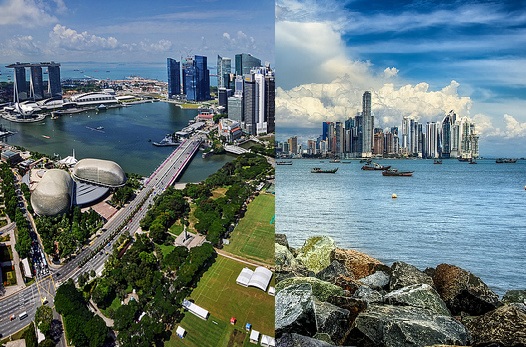
Singapore (left) and Panama City (right) / William Cho and Jim Nix / Flickr / Creative Commons

Singapore (left) and Panama City (right) / William Cho and Jim Nix / Flickr / Creative Commons

As a transportation hub, logistics center, and regional financial player, Panama has long been painted by investment bankers and Panamanian politicians as a potential “Singapore of Latin America,” but that vision still seems a way off.  In some respects, Panama’s story has been quite impressive.  For a decade, it has boasted GDP growth far beyond the regional average, even surpassing 10 percent in some recent years.  Unlike many of its neighbors, its dollar-based economy relies on services, not exports of commodities or low-value-added light manufacturing.  Since the 1989-1990 U.S. invasion to unseat General Manuel Noriega, the total size of the Panamanian economy has quadrupled in constant dollars.  It is also different from Singapore in important ways.  Singapore’s approach to planning and public housing might be helpful in Panama City, which has suffered traffic, environmental degradation, and inadequate housing for the poor as a consequence of poorly planned growth.

In other important ways, however, the Panama-Singapore comparison is less apt.

  • Singapore is a city, with nearly two million more people than Panama has spread across 100 times the landmass. Urban-rural divides are wide in Panama, with poor delivery of health and education services outside the cities, exacerbating inequality.  A Singapore-style strategy in Panama would leave the countryside behind – and indigenous and Afro-Caribbean populations would benefit much less.
  • Differences between the two countries in governance – for better and worse – are profound. The Panamanian people are much freer under the country’s democracy than they would be under a single-party-dominated system like Singapore’s.  In other ways, though, Panama’s governance leaves much to be desired.  Corruption is a massive problem, and watchdog groups highlight weakness in the rule of law, judicial independence, and press freedom.  Projects to expand the Panama Canal and build a capital city subway are over budget and behind schedule, and have suffered from strikes, contract disputes, and questionable bidding practices.  While it may seem easy to blame the corruption on former President Martinelli, who faces criminal charges, the problem has much deeper roots.
  • The two countries have very different policies toward education. Singapore invested, and continues to invest, heavily in world-class universities.  Panama lacks these, weakening its ability to compete globally in industries where innovation is key.  While Panama’s primary education has improved, its research and development lags.
  • A final difference is where the countries find themselves in their political and economic evolution. Singapore became independent 50 years ago, but it has been only a quarter century since Panama ended its kleptocratic, military rule.  It has been just 15 since the United States officially turned control of the canal over to Panamanian authorities.  The roots of its problems cannot be easily or quickly extirpated.

Panama’s boosters often use the comparison to highlight the areas in which Panama excels – economic growth, unique geography, and infrastructure crucial to global shipping and air transit.  The comparison might be more helpful in highlighting areas where Panama needs to improve.  These include dedicating resources to higher education and R&D, addressing inequality, rooting out corruption, and enhancing political and bureaucratic accountability.  Singaporean scholar Alan Chong argues that Singapore’s attempt to present itself as a model, global city is in part a foreign policy strategy of “virtual enlargement.”  The city-state’s wealth, reputation, and active role in international organizations allow it to “punch above its weight” in Southeast Asia and beyond.  Some chapters of Panama’s recent economic story might be the envy of neighbors with their own canal dreams, but the country will need to focus on governance and accountability if even its logistics-hub strategy is in fact going to deliver shared welfare at home and enhanced influence abroad – let alone become a Latin American equivalent of an Asian Tiger.

March 2, 2015

* Dr. Long is a visiting professor in International Relations at the Centro de Investigación y Docencia Económicas in Mexico City.  He is the author of Latin America Confronts the United States: Asymmetry and Influence, which is forthcoming with Cambridge University Press.

Bracing for Economic Pain in Brazil and Beyond

By Kevin P. Gallagher*

Brazilian Real

Mark Hillary / Flickr / Creative Commons

Brazilian President Dilma Rousseff’s warning to U.S. Fed Chairman Ben Bernanke in 2012 – that his monetary-easing policies were creating a harmful tsunami of financial flows to emerging markets – was spot-on.  U.S. growth and interest rates have been appreciating currencies, causing asset bubbles, and exporting financial instability to the developing world.  Brazil and other emerging-market countries may soon be facing capital flight and exchange rate depreciation that could lead to financial instability and weak growth for years to come.  From 2009 to 2013 countries like Brazil, South Korea, Chile, Colombia, Indonesia and Taiwan all had wide interest rate differentials with the U.S. and experienced massive surges of capital flows.  The differential between Brazil and the U.S. was more than 10 percentage points for a while.  According to the latest estimates by the Bank for International Settlements (BIS), emerging markets now hold a staggering $2.6 trillion in international debt securities and $3.1 trillion in cross-border loans – the majority in dollars.

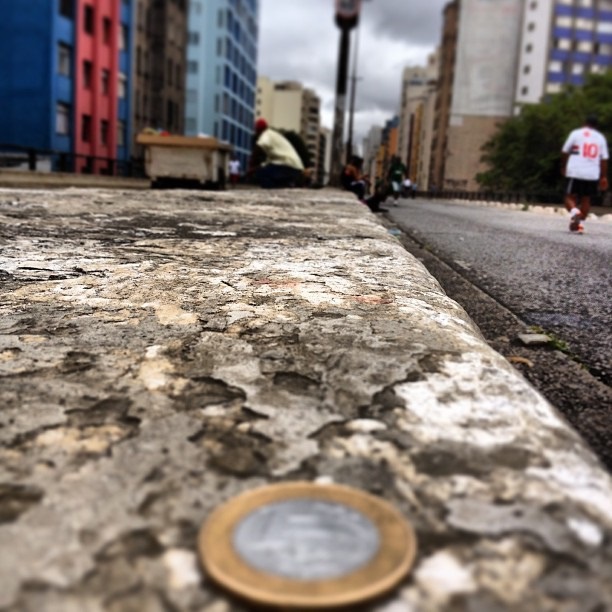
Now the tides are turning.  Many emerging market growth forecasts are continually being revised downward.  China’s economy is undergoing a structural transformation that necessitates slower growth and less reliance on primary commodities.  The prices of oil and other major commodities are stabilizing or declining.  As growth and interest rates pick up in the United States, the dollar gains strength – and emerging market currencies fall.  Brazil’s real hit a 10-year low last week, down to 2.87 to the dollar, amid continuing predictions of zero growth for the country this year.

The traditional tools for weathering the storm may not be available or enough for developing economies.  Floating exchange rates and the resulting depreciation can cause the debt burden on firms and fiscal budgets can bloat overnight, especially in a lower growth environment.  Increasing competitiveness would have helped boost exports, but an IMF study shows that Latin America failed to use one of the biggest commodity windfalls in its history to invest, hindering competitiveness to ride out the tsunami in short-term inflows.  Local bond markets help, but most debt is indeed in dollars, and most local debt is held by foreigners who are always the first to dump such debt.  Interest rate hikes can also be dangerous; they don’t reverse flight and can choke off what little growth there is to be had in a downturn.  Depleting foreign exchange reserves doesn’t always work; increasing debt could bring financial instability but threaten prospects for growth and employment.  Having no good options, emerging-market and developing countries may need to resort to regulating the outflow of capital alongside these other measures.  Such moves have traditionally been shunned by international institutions and capital markets, and new U.S. trade agreements such as the Trans-Pacific Partnership have stripped out balance-of-payment exceptions that allow nations to regulate capital.  But new research in cutting edge of economics by the IMF and others now justifies such measures to prevent or mitigate a full-blown crisis.  If we have learned anything from the global financial crisis since 2008, it is that nations need as many tools at their disposal to prevent and mitigate financial instability.  Instability anywhere can lead to instability everywhere, so we need all tools and hands on deck.

February 19, 2015

* Kevin P. Gallagher is an associate professor of global development policy at Boston University’s Pardee School for Global Studies, where he co-directs the Global Economic Governance Initiative.  His new book is Ruling Capital: Emerging Markets and the Reregulation of Cross-Border Finance.

Haiti: Another Crisis on the Anniversary of a Crisis

By Emma Fawcett*

Cinco anos depois do terremoto que devastou o Haiti / Agência Brasil Fotografias / Flickr / CC BY-NC 2.0

Cinco anos depois do terremoto que devastou o Haiti / Agência Brasil Fotografias / Flickr / CC BY-NC 2.0

Haiti recently marked the five-year anniversary of the devastating 2010 earthquake and missed yet another deadline for reaching an agreement on the country’s long-overdue elections.  On January 12, the parliament was effectively dissolved as the terms of all but 10 senators expired.  Without quorum or a new electoral law, President Martelly now rules by decree.  Many in the opposition, whose protests in the last several months forced the resignation of Prime Minister Lamothe, now also seek Martelly’s resignation.  Martelly has asked protesters to be patient, but some claim the electoral impasse is part of the president’s larger strategy for consolidating his power.  The U.S. Embassy in Haiti has expressed commitment to continue working with him and “whatever legitimate Haitian government institutions remain,” and hopes that Martelly will use his “powers responsibly to organize inclusive, credible and transparent elections.”  U.S. Vice President Joe Biden spoke with Martelly by phone, reiterating support for his administration and acknowledging his “efforts to work with the Haitian parliament and political parties to resolve outstanding issues.”  On Sunday, the UN Security Council concluded its three-day visit by urging politicians to work together to ensure elections can proceed, and refrained from commenting on whether the planned cuts to UN peacekeeping forces would take place in June.

Although there is continued handwringing over how $13.5 billion pledged in earthquake relief has been spent, there are some signs of economic growth.  Capacity in the apparel and hospitality sectors has increased dramatically, priming the pump for further private-sector development, but the results to date are weak.  Caracol Industrial Park (in the northeast) and the Lafito Industrial Free Zone (outside Port-au-Prince) are moving forward, though Caracol has thus far generated just 5,000 of the 65,000 jobs it was expected to create.  Minister of Tourism Stephanie Villedrouin has pushed tourism hard to attract foreign direct investment (FDI).  Tourism was a natural outgrowth of earthquake recovery: hotels rooms were urgently needed first for relief workers, now for engineers and businesspeople, and eventually (Haitians hope) for tourists.  Pétionville, located in the hills above Port-au-Prince and home to much of the country’s elite, has received a remarkable facelift.  It now boasts several renovated or newly-constructed international class hotels, though guests remain elusive.  Some of the tent cities have been cleared.  In Jalousie, one of the slums above Pétionville, concrete homes were painted in bright tropical shades, designed to evoke the work of Haitian artist Préfète Duffau.  (Critics of the project pointed out the neighborhood has more pressing needs than cans of paint, and wryly noted that while Port-au-Prince’s hillsides are covered in slums, only those overlooking Pétionville’s wealthiest residents received cosmetic treatment.)

Despite the political uncertainties and stalled reconstruction efforts, there is a sense among Haitian and international private-sector actors that moving forward is “now or never.”  Many point to Martelly’s unprecedented focus on attracting FDI and willingness to create incentive frameworks.  In field interviews, investors in Haiti and neighboring countries speak of hope that the country’s natural, cultural, and historical resources will make it a viable destination – as well as hope that U.S. and other foreign backing continues to expand the apparel and tourism sectors.  There are enormous challenges ahead, to be sure, compounded by the political crisis and potential for instability.  The government-led strategic planning process has been described as “opaque” and “accelerated” without much room for consultation with either the private sector or local communities.  Carnival Cruise Lines’ plans to build a new port on Ǐle de la Tortue have become mired in land tenure issues.  And inclusive growth – strategically targeted and yet expansive enough to lift Haitians out of poverty – will be hard to come by without improved institutional capacity, made all the more difficult by the events of the last three weeks. 

January 29, 2015

* Emma Fawcett is a doctoral candidate in International Relations at American University.

Cuba Welcomes “Normalization,” But Only on its Own Terms

By Eric Hershberg

Photo Courtesy of Philip Brenner

Photo Courtesy of Philip Brenner

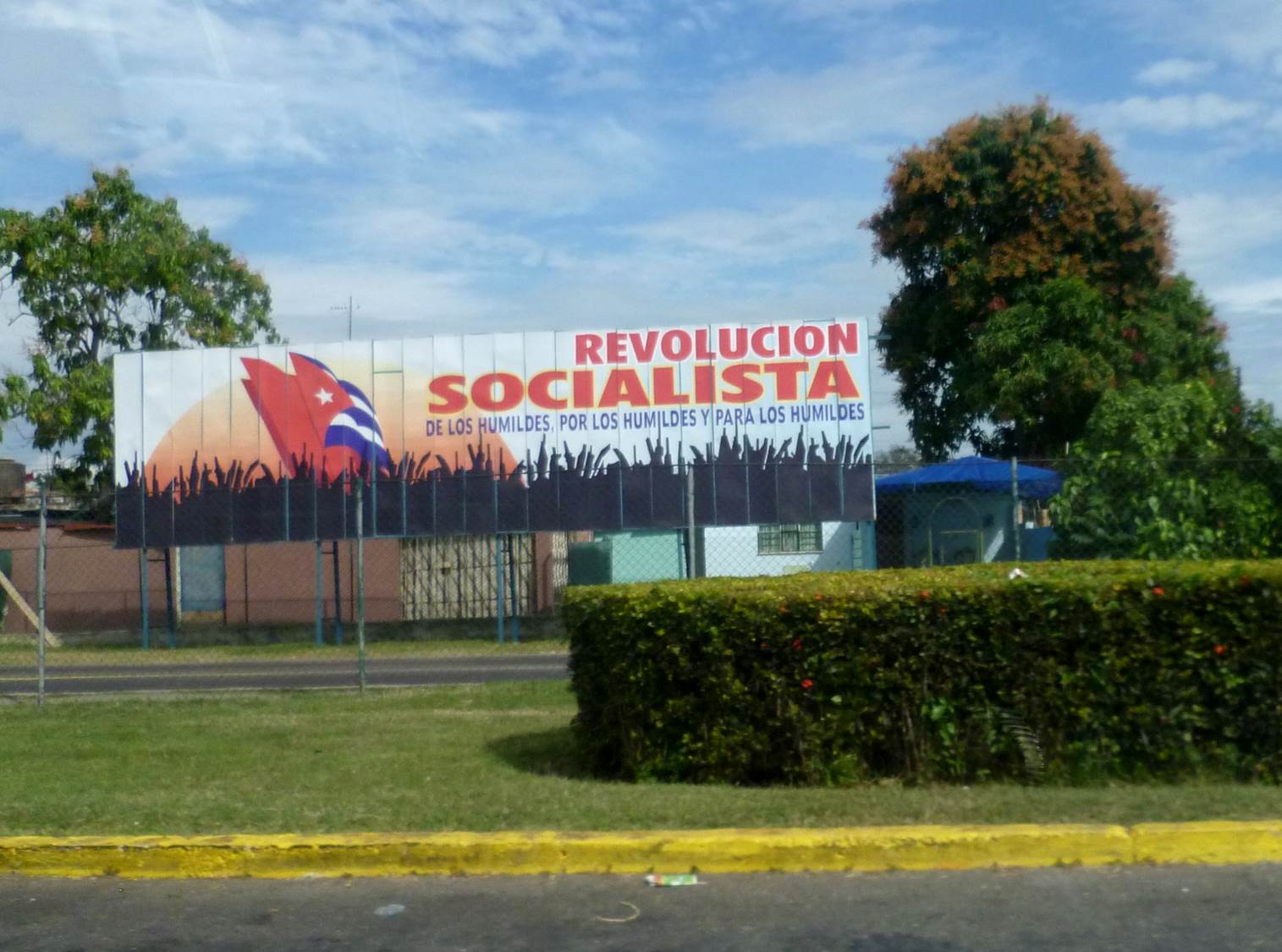
Cuban President Raúl Castro is undoubtedly as serious about normalizing diplomatic ties as President Barack Obama is, but the island’s government arguably faces more pressing challenges than working out the details of a rapprochement with Washington.  Commentators have observed that after the initial euphoria following the December 17 announcement, officials now speak of a long road ahead.  Full normalization, while welcome, is not the foremost concern of Cuban policymakers.  The paramount objective of Cuban authorities is the survival of the revolution and the one-party state that it engendered.  Top diplomats reiterated on January 23, after the first round of talks in Havana, that there will be no concessions to continued American insistence on changes in Cuba’s domestic political arrangements.

Economic revitalization is imperative.  Despite the reforms introduced by Castro, the Cuban economy remains woefully unproductive, incapable of meeting the needs of its citizenry or generating the foreign exchange that any small island developing state requires to import goods that it cannot produce domestically.  Growth rates are anemic, reaching only 1.3 percent in 2014, and independent projections call into question last month’s official announcements predicting 4 percent expansion during 2015.  Agriculture remains stagnant despite reforms aimed at putting fallow lands to productive use, so imports of food account for $2 billion in the extremely tight state budget put forth for 2015.  The severe shortage of cash, moreover, impedes public investment in Cuba’s crumbling infrastructure, which hinders autonomous producers from securing vital inputs for their businesses or distributing what they produce.  Ideally, foreign investment would supply resources where domestic sources cannot, but for the most part this is not happening either.  A 2013 foreign investment law has to date yielded little fresh capital:  European and other investors with experience on the island explain privately that the conditions for conducting business are such that they are reluctant to commit good money after bad.  The new changes in U.S. regulations may produce some increase in investment flows – primarily in the form of remittances from Cuban Americans to families and friends – and thus continue to provide some economic oxygen, but the likely scale of these flows should not be overestimated.  Washington’s new regulations seem likely to continue blocking investments that could increase the Cuban state’s ability to develop the infrastructure necessary to promote economic growth.

Because the intertwined goals of state security and economic revitalization are paramount, Havana’s engagement with the United States will be conditioned on its compatibility with those objectives.  Critics of the American opening who lambast Barack Obama for acceding to a deal with minimal Cuban concessions are right that Havana did not abandon its position that its political system is non-negotiable.  If by joining the rest of the western hemisphere in acknowledging the Cuban state Washington embarks on a path that will fuel economic activity in Cuba, the two countries will proceed, however gradually, away from confrontation.  The trajectory of U.S. relations with China and Vietnam in recent decades offers an instructive precedent for how this can be achieved and be mutually beneficial.  But if the Americans perceive greater engagement with Cuba as a tool for regime change, or strive to limit financial flows exclusively to private actors, their Cuban counterparts naturally will limit the scope of interaction.  A new round of State Department solicitations for bids to conduct democracy promotion activities in Cuba, like the U.S. negotiators’ insistence last week on getting a photo-op with dissidents before heading back to Washington, suggest that this message has yet to be absorbed by American officials.

January 26, 2015

The Impact of Falling Oil Prices on the Western Hemisphere

By Thomas Andrew O’Keefe*

L.C. Nøttaasen / Flickr / CC BY-NC 2.0

L.C. Nøttaasen / Flickr / CC BY-NC 2.0

The sharp drop in the benchmark Brent crude price of oil from just under US$115 per barrel in June 2014 to its current perch around US$50 has important ramifications for the Western Hemisphere.  For Venezuela, which earns some 95 percent of its foreign exchange from petroleum exports, it is a potential disaster.  Underlying political tensions will be exacerbated if there is no money to continue funding social welfare programs or heavily subsidizing gasoline.  It probably also spells the end of PetroCaribe’s generous repayment holidays and what are in essence below-market interest loans for Caribbean and Central American nations.  Sharply lower oil prices also put at risk major energy projects such as the development of Brazil’s pre-salt reserves, which require a minimum price of $50 to $55 to be economically viable.  Equally tenuous are Argentine efforts to regain energy self-sufficiency by exploiting its vast shale oil and gas reserves and Mexican plans to attract foreign investors to participate in deep-water oil exploration and drilling.  The minimum price for a barrel of oil below which new investment projects in Canada’s oil sands are no longer attractive is around $65.  Shale oil producers in the United States are also being squeezed by low petroleum prices.

On the other hand, net energy importers such as Chile, Paraguay and Uruguay benefit from sharply lower oil prices.  Although being weaned off  PetroCaribe will be painful for the Caribbean and Central America in the short term, they will be able to seek oil at the lower prices elsewhere.  The pressure on the Obama administration to lift the ban on U.S. crude oil exports, in response to a glut of domestic shale oil production, could also redound in favor of the Caribbean and Central America by lowering international oil prices further through increased global supply.  Already, 2015 began with U.S. companies authorized to export an ultralight crude called condensate.

In hopes of rallying OPEC to stabilize oil prices, Venezuelan President Maduro last weekend rushed off to lobby Saudi Arabia, which just two months ago refused to decrease production in order to raise prices, but oil industry sources say there’s little chance of a policy change.  Meanwhile, the environment may turn out to be among the biggest beneficiaries of lower oil prices.  Less investment in shale oil production reduces the risk of leaks of methane, a potent greenhouse gas, as well as decreases flaring.  Similarly, slowing down oil sands production in Alberta and Saskatchewan means that the very high levels of greenhouse gas emissions associated with extracting crude oil from bitumen (not to mention the negative impact on water resources) is diminished.  Although lower fossil fuel prices traditionally have undermined incentives to move to greater reliance on renewable and non-traditional energy resources, this may no longer be true.  For one thing many governments around the world are now embarked on ambitious efforts to reduce carbon emissions by, among other things, raising the costs associated with petroleum usage through cap and trade regimes that force companies to buy government-issued pollution permits.  Still others have enacted outright carbon taxes on utilities and large factories per metric ton of carbon dioxide emissions.  In addition, the heavy initial capital investment that was previously associated with things like wind, solar and geothermal power are falling.  For example, a combination of technological advances and Chinese overproduction have resulted in much lower prices for solar panels so that the cost of generation from a large photovoltaic solar plant is now almost 80 percent less than five years ago.  Geothermal energy may be the renewable that most benefits as drilling rigs idled by lower oil prices are now available at a lower cost for geothermal projects.  

*Thomas Andrew O’Keefe is President of San Francisco-based Mercosur Consulting Group, Ltd. and teaches at the Villanova University School of Law.

January 13, 2015

Cuba: Can Official Labor Meet the Needs of Private Workers?

By Geoff Thale*

Alberto Yoan Arego Pulido / Flickr / CC BY-NC 2.0

Alberto Yoan Arego Pulido / Flickr / CC BY-NC 2.0

As Cuba embraces a new but still undefined economic model, it’s unclear whether or how the country’s old labor laws and regulatory systems will be adapted to accommodate the interests of employees in the growing private and cooperative sectors, or in the newly autonomous state enterprises.  The trade union structure cannot play the social role it played in the past with the emergence of businesses owned by both individuals and cooperatives, a growing role for foreign investment, and increasingly decentralized state enterprises.  During a recent trip to Cuba, our research team met with representatives and staff from a range of officially recognized trade unions.  We met with the national labor federation – the Central de Trabajadores de Cuba (CTC) – and with national and local officials from some member unions, including the national president of the health care workers’ union; local trade union officials in the hotel and restaurant workers union in the tourist sector in Old Havana; and local officials representing self-employed and small-business owners who have joined the union for retail and commercial workers.  A Labor Code approved by the National Assembly in December 2013 changed some aspects of the legal framework for labor relations.  It continued to privilege the CTC as the sole labor federation, while also taking some steps to recognize the new issues that confront workers in the emerging sectors of the economy.  It established a maximum number of hours of work (44) for private-sector employees, required the self-employed or small-business owners to pay into a social security fund and ensure social protections – health care, pensions, etc. – for employees.  And it guaranteed private-sector employees seven days paid vacation per year (though less than the one month given to state-sector workers).

Our interviews, however, turned up more questions than answers.  Newly autonomous state enterprises have greater latitude in setting wages, incentives and working conditions, but it remains unclear how these decentralized enterprises will handle labor relations issues, and what kind of negotiations might take place on compliance with regulations on workplace safety and protection, wage requirements and employment opportunities.  Indeed, it is unclear how the current worker organizations will represent workers in these decentralized enterprises.  The growth of the private sector presents another challenge.  The CTC has sought to organize the self-employed into the unions in the industries in which they are functioning – the food service and restaurant union, the retail and commercial sector union, and so on – but it is unclear how the union will represent the interests of both owners of independent small businesses – cuentapropistas – and the 15 percent of “self-employed” who are actually employees in those enterprises.  Similar queries are popping up in the cooperative sector and in enterprises run as joint ventures with foreign corporations or as wholly foreign-owned companies.

Cuba’s new labor policies are clearly a work in progress, but they signal recognition that there is an emerging stratum of non-state sector employees – and that they need social protections.  It also reflects a balancing act between ensuring stable employment and benefiting from the flexibility that private sector employment models provide.  The new Labor Code requires, for example, that employers sign year-long contracts with employees while guaranteeing them access to health care, parental leave and other benefits during that period.  New challenges will emerge, especially in terms of the structures that represent the interests of these groups and advocate for them.  But for now, there appears to be progress in establishing a system of social protections for the self-employed and for their employees under the new labor code.  Concerns about the burden of compliance appear likely to be muted for at least the near term because, as it was clear to us during our visit, the self-employed and their employees are earning substantially higher incomes than are workers in the state sector.

*Geoff Thale, program director at the Washington Office on Latin America (WOLA), in October led the research team’s fifth visit to Cuba examining the impact of economic change on workers.

December 9, 2014

Mexico: Missing Demographic Opportunity

By Yazmín A. García Trejo

Javier Armas / Flickr / CC BY-NC 2.0

Javier Armas / Flickr / CC BY-NC 2.0

Mexico appears to be squandering a historic opportunity to take advantage of the “demographic bonus” represented by its surge in working-age citizens.  The Mexican government estimates that about 32 percent of the Mexican population today is between the ages of 12 and 29 years.  During this demographic bonus, a disproportionate percentage of the population enters the workforce—compared to those who are retired or nearing retirement—and drives economic growth.  Workers passing through this demographic window of opportunity are supposed to generate wealth that will help support a soon-to-be-aging population.  These opportunities don’t come around twice: age profiles in developing countries change quickly, and societies need to make the most of those few years during which the economically active population far surpasses that of the economically dependent.  The portrayal of Mexico as a young country in the media and the adoption of labor reforms in 2012 brought an initial optimism about its ability to take advantage of this bonus, but the current state of affairs casts a shadow over the potential of its young population.  According to a new report from the Organization for Economic Cooperation and Development (OECD), Education at a Glance 2014 Report, 22 percent of people between 15 and 29 years old in Mexico are neither employed nor in education or training.  These “ni-ni’s” represent a demographic bust because of a lack of jobs.

The lack of employment also influences young Mexicans’ attitudes toward education.  According to the OECD, even high educational attainment is not a guarantee of employment in Mexico.  A 2012 report by the McKinsey Center for Government found that only half of educated young people in Mexico believe that their post-secondary education has improved their job prospects.  According to a National Survey of High School Dropouts in 2012, moreover, many young men leave high school to contribute to their households’ finances, and young women quit to take on family responsibilities related to marriage and pregnancy.  Once out of school, they have no option but to participate in low productivity niches of the informal economy—severely reducing the benefits that their entry into the labor market could bring to the national economy.

The fate of young people has profound implications for Mexico’s economic future.  Without a comprehensive plan to expand employment opportunities and access to higher education that enables youth to flourish and lead Mexico into a new stage of development, Mexico will find itself a generation from now with the demographic profile of a developed country—with an aging population producing less but needing more care—but with a middle-income level of wealth.  Budgets will be stretched, and social tensions could be great.  Many of the most capable young people will leave the country for better opportunities.  Young Mexicans appreciate what’s at stake and are using the tools at their disposal to make their voices heard. Lately, student movements have attracted international attention using social media, but it’s far from clear whether the Mexican government and political, economic, and social elites are listening and have the vision necessary to avoid a crisis.

November 4, 2014

Bolivia: Evo Wins Again

By Fulton Armstrong

Photo credit: Eneas / Foter / CC BY

Photo credit: Eneas / Foter / CC BY

President Evo Morales’s landslide election to a third term – fueled by a combination of moderate policies and fiery leftist rhetoric – portends continued stability in the near term, with still no indication of how his party will continue its project after him.  Although official results have yet to be announced, and some preliminary data show Evo garnering around 54 percent of the vote, exit poll estimates gave Evo a massive lead of 60 to 25 percent over the next closest candidate, a wealthy cement magnate named Samuel Doria Medina.  Regardless, the enormous margin separating Evo from his competitors precludes a runoff race.  Doria, who also ran against Evo in 2005 and 2009, claimed that OAS praise for the elections before the polls closed was “not normal,” but he is not disputing the results and has conceded defeat.  Congratulations to Evo poured in first from his left-leaning allies – Presidents Maduro (Venezuela), Mujica (Uruguay), Fernández de Kirchner (Argentina), and Sánchez Cerén (El Salvador) – but other voices soon followed.  The victory set Evo on track to be the longest-serving president in Bolivian history since national founder Andrés de Santa Cruz lost power in 1839.  His party, the Movement Toward Socialism (MAS), is also reported to have expanded its control of the Chamber of Deputies and the Senate, although vote tallies are not final.

Evo has achieved things his domestic and foreign detractors said were impossible.  While his rhetoric has been stridently leftist and anti-U.S. – he even dedicated his “anti-imperialist triumph” to Hugo Chávez and Fidel Castro – his policies have been decidedly pragmatic and disciplined, and the results have curried favor for him among foes.  His economic czar has emphasized Bolivia’s commitment to “have socialist policies with macroeconomic equilibrium … applying economic science.”  The economy grew 6.8 percent last year and is on course to grow another 5 percent this year.  Foreign reserves have skyrocketed; Bolivia’s are proportionately the largest in the world.  Poverty has declined; one in five Bolivians now lives in extreme poverty, as compared to one in three eight years ago.  IMF and World Bank officials, whose policies Evo largely rejected, have grudgingly conceded he has managed the economy well.  Some of his projects, such as a teleférico cable car system linking La Paz with the sprawling city of El Alto, have garnered praise for their economic and political vision.  He even won in the province of Santa Cruz, a cradle of anti-Evo conspiracy several years ago.  In foreign policy, he has good ties across the continent, but strains with Washington continue.  The two countries have been without ambassadors in each other’s capital since 2008, and talks to resolve differences over the activities of DEA and USAID failed and led to their expulsion from Bolivia.

Sixty-plus percent in a clean election for a third term – rare if your initials aren’t FDR – signals that Evo, like Roosevelt, is a transformative figure.  No matter how brilliantly Evo has led the country, however, the big gap between his MAS party and the opposition suggests political imbalances that could threaten progress over time if he doesn’t move to spread out the power.  Evo has given the MAS power to implement his agenda, but he has not given space to rising potential successors.  He has said he will “respect the Constitution” regarding a now-disallowed fourth term, but it would take great discipline not to encourage his two-thirds majority in the Senate to go ahead with an amendment allowing him yet another term.  It would be naïve, moreover, to dismiss out of hand the opposition’s allegations of corruption by Evo’s government, but his ability to grow his base above the poor and well into the middle class suggests that, for now, the fraud and abuse do not appear to be very debilitating … yet.  Washington, for its part, seems content with a relationship lacking substance rather than joining the rest of the hemisphere in cooperating with Bolivia where it can.

Other AULABLOG posts on this and related topics:  ALBA Governments and Presidential Succession; Lessons from the MAS; and Will Bolivia’s Half Moon Rise Again?

October 14, 2014

Elections in Brazil: The Force of the Latin American Left

By Eric Hershberg and Luciano Melo

Aécio Neves – Senador & World Economic Forum / Foter / CC BY-NC-SA

Aécio Neves – Senador & World Economic Forum / Foter / CC BY-NC-SA

The first round of Brazil’s presidential election has set the stage for a runoff playing primarily to class differences.  By the eve of the election, polls hinted at the real possibility that the center-right candidate Aécio Neves of the Brazilian Social Democratic Party (PSDB) would edge out the other principal opposition contender, former Minister of the Environment Marina Silva.  Silva enjoyed a spike in the polls after she replaced the late Eduardo Campos, who perished in a plane accident in August, as the Brazilian Social Party (PSB) candidate.  Sunday’s results confirmed Silva’s decline, as she captured only 21.3 percent of the votes compared to 33.5 percent for the PSDB and 41.6% for incumbent President Dilma Roussef of the Worker’s Party (PT).  The PT used its potent propaganda machine to portray Silva as a potentially dangerous candidate – an indecisive leader who could not be trusted to sustain popular social programs such as the Bolsa Familia conditional cash transfer program, which has helped lift millions of Brazilians out of poverty.  Also, Aécio and Rousseff built their images upon two iconic ex-Presidents – the former on Fernando Henrique Cardoso (FHC) – seen by the middle and upper classes as the leader who managed to defeat hyperinflation and putting Brazil on track for economic growth – and the latter on Lula, Rousseff’s mentor, who is idolized among the most disadvantaged parts of Brazilian society as the President who helped the poor become less poor.

To win the runoff on October 26, Aécio needs at least 70 percent of Silva’s votes – she has only hinted at supporting him – while Rousseff would succeed with only half of that.  It is clear that Dilma and the PT will double down on their negative advertisements, now aiming at Aécio rather than Marina.  The PT’s barrage over the airwaves will highlight the risks of abandoning the course set out by Lula and followed by Rousseff.  Voters will be told that the opposition may underfund cash transfers, privatize the state oil company Petrobrás or treat it as a profit-making enterprise rather than as a development bank, thus increasing unemployment as occurred during the Cardoso years.  And the PT will no doubt remind voters of its consistent efforts to boost minimum wages and chip away at the vast inequalities that had long characterized Brazil.  Surely they will portray Neves as an elitist out of touch with the majority that has benefited from the PT’s redistributionist agenda.  Aécio and the PSDB, by contrast, will highlight the worrisome slowdown in growth under Rousseff, the failure to significantly improve public services – it was frustration over health, education and, particularly, urban transportation that drove the social protests that began in mid-2013 – and the over-regulated and over-taxed economy.  Most of all, Neves’ campaign will harp on the persistent scandals that have bedeviled the PT over the past decade and that have helped to fuel popular disdain for politicians.

The election results in Brazil are likely to become increasingly polarized in terms of class.  Dilma appears poised to prevail in the poorest states of North and Northeast, where Bolsa Familia and other cash transfer programs, subsidies, wage increases and Lula’s image are compelling.  In turn, Aécio should come out ahead in the richer states such as São Paulo, which offer the largest pool of voters and where highly educated and middle- and upper-income Brazilians are concentrated.  We make divergent predictions: Hershberg anticipates a PT victory, since for all the speculation about the travails of the Latin American left, it has built very substantial foundations of support in societies that credit the left with finally making some advances to tackle Latin America’s yawning inequalities.  Warnings that Aécio represents a return to elite rule will resonate among the PT’s electoral base, and the PT’s success will be nourished by its powerful organizational capabilities.  Melo, by contrast, anticipates a PSDB triumph.  In this scenario, the corruption, disappointing growth rates over the past two years as the commodity boom has slowed, and widespread frustration about the quality of public services will generate an anti-incumbent dynamic that will bring to an end a dozen years of PT rule.

October 10, 2014

Argentine Debt and the U.S. Dollar

By Leslie Elliott Armijo

Images Money / Flickr / Creative Commons Attribution-NonCommercial-ShareAlike 2.0 Generic (CC BY-NC-SA 2.0)

Multiple economic and political challenges have called into question the future status of the U.S. dollar as the world’s dominant reserve currency, but backlash from Argentina’s recent spat with the United States over defaulted bonds appears to be fueling interest in reforms that may have beneficial implications.  According to the IMF, some 61 percent of the world’s known foreign exchange reserves held by central banks around the world remain in low-yielding dollar-denominated assets, mainly U.S. Treasury bonds.  The United Nations Conference on Trade and Development (UNCTAD), China, and heavyweights in the Global South, including Brazil, are calling for international trade agreements that would give emerging economies “policy space” – allowing national governments to impose capital controls, fund exports, subsidize local industry, and keep financial services national.  Private U.S. banks, however, claim that continued U.S. dominance of world capital markets – a crucial pillar of continued reserve currency status – requires ever more open trade in financial services.  The BRICS complain about the U.S. government’s “exorbitant privilege” as the reserve currency country, with some of the sharpest complaints coming from joint statements by Brazil, Russia, India, China and South Africa. Chinese officials, though, worried about their own large dollar investments and ambivalent about the implications of renminbi internationalization, more than once have pulled the group toward a softer tone.

Argentina’s ongoing sovereign debt negotiations provide a different window onto the dollar’s reserve currency status.  Like most countries, Argentina has held a large chunk of its government’s savings in the U.S. and hired private U.S. financial institutions as its international bankers.  Today it is trying to extricate itself from U.S. markets and do its saving and financial intermediation elsewhere. Iran and Russia are doing the same, but Argentina has no foreign policy quarrel with the Obama Administration – and is not subject to U.S. financial sanctions over nuclear or military adventurism.  Buenos Aires is among those who chafe at U.S. power through the dollar, but it is primarily motivated by the U.S. Supreme Court’s decision in July to let stand a lower court judgment in favor of investors holding bonds from Argentina’s $82 billion sovereign debt default in December 2001.  Although 92 percent of the original bondholders accepted the Argentine government’s restructured (lower value) bonds in 2005 and 2010, New York Federal District Court Judge Thomas P. Griesa ruled that Argentina’s failure to settle with the holdouts means that any U.S. financial institutions, or their international affiliates, that intermediate funds enabling Argentina to stay current on payments to the majority will themselves be in contempt of court.  This has sent Argentina into “technical default.” Argentina is suing the U.S. in the International Court of Justice (whose jurisdiction the U.S. refuses to recognize) and in the court of global public opinion – pushing, for example, a recent proposal for global financial reform before the U.N. General Assembly. It has also welcomed an $11 billion currency swap agreement with China, and Chinese state banks have since pledged $6.8 billion in new infrastructure loans.  Some observers speculate that the very first loan of the New Development Bank, newly organized by the BRICS countries, could go to Argentina.

The Argentine bond case harms the perceived fairness and credibility of U.S. financial markets and, by extension, the strength of the U.S. dollar because the recent legal judgments seem capricious to many.  Senior figures at the IMF have long supported the routine inclusion in all international sovereign bond issues of a so-called “collective action clause,” which would make any restructuring accepted by two-thirds of bondholders binding on all.  The European Union already has ruled that sovereign bonds issued within the EU, including many for troubled Eastern or Southern European governments, must contain such clauses.  Moreover, the International Capital Markets Association, representing more than 400 of the world’s largest private investment institutions, has just issued a position paper endorsing obligatory collective action clauses, placing it on the same side of this issue as non-governmental organizations advocating financial architecture reform such as the New Rules for Global Finance and the Jubilee Debt Campaign.  This would give taxpayers in emerging economies – the ultimate backstop of the creditworthiness of their governments – the same bankruptcy rights as firms and households.  It is not in the interest of Latin American and other emerging economies for U.S. currency and financial dominance to end anytime soon – a tripolar reserve currency system based on the dollar, euro, and reniminbi does not yet appear able to sustain the worldwide growth and prosperity of recent decades and may in fact entail significant risks – but fairer rules for sovereign financing would benefit everyone.

* Leslie Elliott Armijo is a Visiting Scholar at Portland State University and a Research Fellow at CLALS.  She has just published The Financial Statecraft of Emerging Powers: Shield and Sword in Asia and Latin America (London: Palgrave, 2014).

September 23, 2014