2017: Happy New Year in Latin America?

By Eric Hershberg and Fulton Armstrong

posse_de_michel_temer_3

Brazilian President Michel Temer surrounded by members of his party in mid-2016. His government will continue to face questions of legitimacy in 2017. / Valter Campanato / Agência Brasil / Wikimedia / Creative Commons

The year 2016 laid down a series of challenges for Latin America in the new year – not the least of which will be adapting to a radically different administration in Washington.  Last year saw some important achievements, including an elusive peace agreement in Colombia ending the region’s oldest insurgency.  Several countries shifted politically, eroding the “pink tide” that affected much of the region over the past decade or so, but the durability and legitimacy of the ensuing administrations will hinge on their capacity to achieve policy successes that improve the well-being of the citizenry.  The legitimacy of Brazil’s change of government remains highly contested.  Except in Venezuela, where President Maduro clung to power by an ever-fraying thread, the left-leaning ALBA countries remained largely stable, but the hollowing out of democratic institutions in those settings is a cause for legitimate concern.  Across Latin America and the Caribbean, internal challenges, uncertainties in the world economy, and potentially large shifts in U.S. policy make straight-line predictions for 2017 risky.

  • Latin America’s two largest countries are in a tailspin. The full impact of Brazil’s political and economic crises has yet to be fully felt in and outside the country.  President Dilma’s impeachment and continuing revelations of corruption among the new ruling party and its allies have left the continent’s biggest country badly damaged, with profound implications that extend well beyond its borders.  Mexican President Peña Nieto saw his authority steadily diminish throughout the course of the past year, unable to deal with (and by some accounts complicit in) the most fundamental issues of violence, such as the disappearance of 43 students in 2014.  The reform agenda he promised has fizzled, and looking ahead he faces a long period as a lame duck – elections are not scheduled until mid-2018.
  • The “Northern Triangle” of Central America lurches from crisis to crisis. As violence and crime tears his country apart, Honduran President Hernández has devoted his energies to legalizing his efforts to gain a second term as president.  Guatemala’s successful experiment channeling international expertise into strengthening its judicial system’s ability to investigate and prosecute corrupt officials is threatened by a weakening of political resolve to make it work, as elites push back while civil society has lost the momentum that enabled it to bring down the government of President Pérez Molina in 2015.  El Salvador, which has witnessed modest strides forward in dealing with its profound corruption problems, remains wracked with violence, plagued by economic stagnation, and bereft of decisive leadership.
  • Venezuela stands alone in the depth of its regime-threatening crisis, from which the path back to stability and prosperity is neither apparent nor likely. The election of right-leaning governments in Argentina (in late 2015) and Peru (in mid-2016) – with Presidents Macri and Kuczynski – has given rise to expectations of reforms and prosperity, but it’s unclear whether their policies will deliver the sort of change people sought.  Bolivian President Morales, Ecuadoran President Correa, and Nicaraguan President Ortega have satisfied some important popular needs, but they have arrayed the levers of power to thwart opposition challenges and weakened democratic institutional mechanisms.
  • As Cuban President Raúl Castro begins his final year in office next month, the credibility of his government and his successors – who still remain largely in the shadows – will depend in part on whether the party’s hesitant, partial economic reforms manage to overcome persistent stagnation and dissuade the country’s most promising professionals from leaving the island. Haiti’s President-elect Jovenel Moise will take office on February 7 after winning a convincing 55 percent of the vote, but there’s no indication he will be any different from his ineffective predecessors.

However voluble the region’s internal challenges – and how uncertain external demand for Latin American commodities and the interest rates applied to Latin American debt – the policies of incoming U.S. President Donald Trump introduce the greatest unknown variables into any scenarios for 2017.  In the last couple years, President Obama began fulfilling his promise at the 2009 Summit of the Americas in Trinidad and Tobago to “be there as a friend and partner” and seek “engagement … that is based on mutual respect and equality.”  His opening to Cuba was an eloquent expression of the U.S. disposition to update its policies toward the whole region, even while it was not always reflected in its approach to political dynamics in specific Latin American countries.

 Trump’s rhetoric, in contrast, has already undermined efforts to rebuild the image of the United States and convince Latin Americans of the sincerity of Washington’s desire for partnership.  His rejection of the Trans-Pacific Partnership – more categorical than losing candidate Hillary Clinton’s cautious words of skepticism about the accord – has already closed one possible path toward deepened ties with some of the region’s leading, market-oriented economies.  His threat to deport millions of undocumented migrants back to Mexico and Central America, where there is undoubtedly no capacity to handle a large number of returnees, has struck fear in the hearts of vulnerable communities and governments.  The region has survived previous periods of U.S. neglect and aggression in the past, and its strengthened ties with Asia and Europe will help cushion any impacts of shifts in U.S. engagement.  But the now-threatened vision of cooperation has arguably helped drive change of benefit to all.  Insofar as Washington changes gears and Latin Americans throw up their hands in dismay, the region will be thrust into the dilemma of trying to adjust yet again or to set off on its own course as ALBA and others have long espoused.

 January 4, 2017

Cuba: Preparing for President Trump

By Fulton Armstrong

15859186069_103bf8055c_b

Photo credit: Day Donaldson / Flickr / Creative Commons

Cubans are already calibrating their expectations for relations with the United States under President Trump – hoping the normalization process does not unravel but preparing for a return to a sanctions-based policy from Washington.  Conversations in Havana reveal deep concern that the President-elect’s tweets and statements about Cuba, Mexico, and Latinos in the United States will translate into efforts to slow, stop, or reverse normalization.  The past two years of dialogue have focused on mutual interests, without ignoring remaining differences between capitals but not allowing them to blot out hopes of mutually beneficial cooperation.  Cuba will interpret a return to bombastic rhetoric, exaggerated conditions to reach a “deal,” and the pressure tactics of the pre-Obama era as a sign of U.S. willingness to put bullying a small neighbor eager for improved ties ahead of its own national interests.

Cubans present the stiff upper lip in conversations and, not surprisingly, defiantly note that they’ve already survived decades of U.S. pressure, but their disappointment is palpable.

  • Most concerned are entrepreneurs in Cuba’s small but growing private sector, who depend on investment from U.S.-based relatives and friends. More than 100 Cuban private businessmen wrote a letter to Trump last week urging restraint.
  • Nationalism has precluded Cubans from saying that normalization would be a major driver of their long-promised economic reforms, but few deny that improving ties with the United States would eventually present Havana important opportunities. U.S. retrenchment will remove important incentives for the government to move ahead with its reform strategy.
  • Rumors about tensions between Cuban proponents of normalization and conservative opponents may have some merit, but Cubans across the spectrum will close ranks if Trump gets aggressive.

Cuba’s reactions to Trump’s election, including President Raúl Castro’s congratulatory message to him, so far suggest that it will hold its tongue and resist being provoked.  A U.S. return to full-bore Cold War tactics would not pose an existential threat to Cuba, even considering the country’s difficulties dealing with unrelated problems such as the crisis in Venezuela.  Popular reactions to the passing of Fidel Castro last month are being construed as evidence of residual political legitimacy for the government and support for it to deliver on promised improvements.  Moreover, Cuba’s progress in normalization; its effective contribution to the Colombia peace accord; its new political dialogue and cooperation agreement with the European Union; and the recent Havana visit of Japanese Prime Minister Abe have boosted the country’s international image – and blame for collapse of normalization will surely fall solely upon the United States.  However difficult it will be for the proud people of Cuba to resist rising to whatever bait the Trump Administration throws its way, showing forbearance in the bilateral relationship and moving “without hurry but without pause,” as Raúl Castro said, with its national reform plan would protect the investment that Cuba has already made in normalization.

December 19, 2016

Does Trade Incentivize Educational Achievement?

By Raymundo Miguel Campos Vázquez, Luis-Felipe López-Calva, and Nora Lustig*

Female student walking by building

A student walks around Preparatoria Vasconcelos Tecate. / Gabriel Flores Romero / Flickr / Creative Commons

Mexico’s experience with free trade has challenged one of the tenets of faith economists know well from reading early in their careers David Ricardo’s Principles of Political Economy and Taxation: that “the pursuit of individual advantage is admirably connected with the universal good of the whole” and that “[trade] distributes labor most effectively and most economically.”  Under this principle, “wine shall be made in France and Portugal; corn shall be grown in America and Poland; and hardware and other goods shall be manufactured in England.”  Mexico reminds us that while these benefits exist in the abstract, there are trade-offs to be faced—that there are, potentially, social and individual costs induced by trade liberalization.

In a recently published paper entitled “Endogenous Skill Acquisition and Export Manufacturing in Mexico,” MIT economics professor David Atkin shows the ways in which individual people experience trade and how it affects their decision-making – sometimes in ways that may not necessarily be socially desirable.  It analyzes a time period (1986-2000) during which Mexico underwent major economic transformations, including a rapid process of trade liberalization after 1989 and the introduction of the North American Free Trade Agreement (NAFTA) in 1994.  Analyzing data for more than 2,300 municipalities in the country, the paper tells us that young Mexicans at the time faced a very basic decision: to stay in school and continue studying or to drop out and look for a job (among the many being created in the export-oriented manufacturing sector), most of which did not require more than a high school education.  Atkin found that, on average, for every 25 new jobs created in the manufacturing sector, one student would drop out after 9th grade.  (The World Development Report 2008 on Agriculture for Development had raised the question about “missing” individuals in this age group, but in relation to migration.)

  • While trade brought positive effects including a higher demand for low skilled workers and an eventual increase in their wages – consistent with David Ricardo’s basic notion – Atkin concluded that in Mexico it had the socially undesirable effect of preventing, or slowing down, the accumulation of human capital. The reduction in human capital investment is a trade-off which can have negative effects on the economy as a whole.
  • Factors other than free trade might explain this effect. First, young students may drop out if the returns to schooling are not high enough to compensate for the additional investment.  Second, a lack of access to credit and insurance for relatively poorer households might make it impossible for aspiring students to finance their investment and obtain higher returns by continuing to tertiary education or to cope with shocks and avoid abandoning school.  Finally, the result could be driven by a lack of availability of information about actual returns to investment in education, which could lead to myopic decision-making.

The movement of capital toward locations with lower labor costs is an expected, and intended, result of an agreement such as NAFTA, pursuing higher export competitiveness at the regional level.  David Ricardo would have said that TVs and automobiles shall be made in Mexico, while software shall be made in Silicon Valley.  What completes the story, however, is that because of distortions like the ones mentioned above – low educational quality, under-developed credit markets, or weak information that skews decision-making – free trade might lead to socially undesirable consequences.  And it did in the case of Mexico, as Atkin convincingly shows in his paper.  It seems that when Ricardo gets to the tropics, the world gets more complex.

November 7, 2016

* Raymundo Miguel Campos Vázquez teaches at the Centro de Estudios Económicos at el Colegio de México, and is currently conducting research at the University of California, Berkeley.  Luis-Felipe López-Calva is Lead Economist and Co-Director of the World Development Report 2017 on Governance and the Law.  Nora Lustig is Professor of Latin American Economics at Tulane University.

Challenging Assumptions about Supercycles in Peru and Latin America

By Claudia Viale and Carlos Monge*

spcc_gp22eco_ilo_-_toquepala

A Southern Copper Corporation train heading towards the Peruvian mines of Toquepala and Cuajone. / David Gubler / Wikimedia Commons / Creative Commons

The commodity-fueled “supercycle” that has propelled Latin American economies for the past decade and a half is ending, but careful analysis of other ongoing cycles will help countries cushion the blow.  ECLAC economist Jean Acquatella has identified four significant global cycles in which Latin America has actively participated as a raw materials exporter through the 20th and 21st centuries: U.S. industrialization; post-war European reconstruction and Japan’s industrialization; the post-1973 OPEC-driven oil boom; and, most recently, urbanization and industrialization in Asia, especially China.  During this fourth cycle – considered a supercycle because of sustained record levels of commodity prices and demand – resource-rich countries in Latin America experienced high growth rates, fiscal abundance, and a decrease in poverty rates as well as an increase in social conflict over the extraction of natural resources.  Slower Chinese growth has since reduced global demand and prices for the region’s minerals and energy, but the impact has been less severe than at the end of previous cycles.

  • José de Echave, of CooperAcción, has emphasized the need to differentiate the recent supercycle from what he terms the “extractive boom,” which started in the early 1990s as a result of the privatization of state mining and hydrocarbons assets and pro-market legislative reforms. His analysis indicates that the extractive boom will outlast the supercycle as long as large-scale projects mature and pro-investment policies continue in place.

The concessions, investments, production and fiscal rent during the past decade and a half in Peru and other countries indeed point to other cycles, some of which have enduring momentum.  Peru has experienced a “concessions cycle” for exploration activities; “investment cycles” as a result of privatization of state assets in the ‘90s and as a result of successful explorations and increased demand and prices starting in 2002; “productive and export cycles” as a result of investments; and a “fiscal cycle” of abundant public revenue.  Several cycles will obviously decline, but the country’s pro-investment policies remain in effect.  The new government of President Pedro Pablo Kuczynski is deepening policies started under former President Humala: reducing corporate income taxes, making environment compliance less onerous, and curtailing the oversight capacities of the Ministry of the Environment.  Investments made in the last five to ten years are, in many cases, only now beginning production.  Thus, as contradictory as it might sound, Peru is poised to double its copper production in the next five years.

The complex differences between “extractive booms” and “supercycles” have deep political implications.  The end of a supercycle could mean a substantial reduction in social conflict between local populations and extractive enterprises and government, but the current “race to the bottom” driven by pro-investment policies could fuel new tensions.  The Las Bambas project in the South Andean region of Apurimac, Peru, illustrates the point.  New legal procedures adopted in 2014 easing approval of environmental impact assessments (EIA) have allowed the Ministry of Energy and Mines to approve substantial changes in the project’s design and EIA without informing the local population and authorities, generating a violent local social reaction.  Available data shows analogous phenomena underway in Bolivia, Colombia, and Ecuador.  The implications will vary for each country, of course, but careful analysis is needed if state policies and civil society activism are to be on solid ground.

October 11, 2016

Claudia Viale and Carlos Monge are Program Associate and Latin America Director at the Natural Resource Governance Institute in Lima.


Cuba: Time to Move Ahead with Reforms

By Ricardo Torres*

cuba-economy

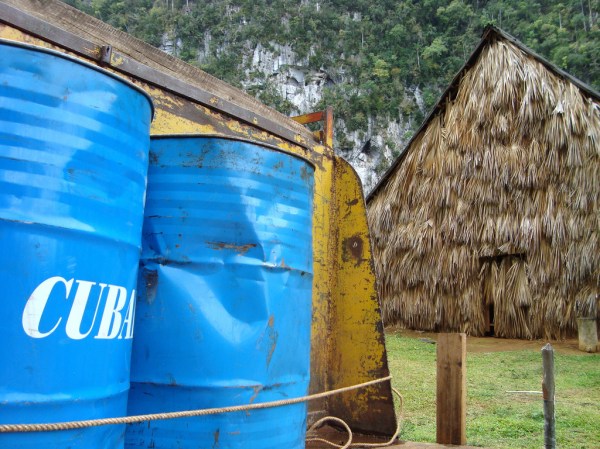
Oil drums and a tobacco curing hut near Viñales, Cuba / Adams Jones / Flickr / Creative Commons

The economic challenges that Cuba currently faces probably do not signal the beginning of a new Período Especial – the profound crisis Cuba experienced in the 1990s – but they are a painful reminder of the country’s chronic structural problem: the inability to generate enough hard currency to develop the economy and the failure of efforts to overcome that obstacle so far.  The immediate predicament was caused by a combination of internal and external factors, including the Venezuelan crisis and the low prices for certain Cuban exports.  (Ironically, oil byproducts from a refinery in Cienfuegos, which Cuba jointly owns with Venezuela’s PDVSA, have become a leading export.)  Venezuela is affecting income from services that Cuba sells there (in particular that of medical doctors) as well as a drop in the supply of oil products, which has covered about a half of Cuba’s needs.  This has placed extreme stress on Cuba’s external finances and forced a significant economic adjustment.  The government has imposed restrictions on energy consumption and a reduction in imports and investments – with important recessionary effects on an economy that desperately needs growth.  The energy rationing has fueled fears that the country could repeat the deep shortages of the early 1990s and again experience one of the most powerful symbols of that period: blackouts.

The situation is serious, but a crisis on the scale of the Special Period does not appear to be on the horizon.  Cuba today has a more diversified economy and produces a significant portion of its own energy, and the majority of the population has other sources of income to cushion themselves during bad times.  Most creditors and suppliers have shown confidence in their ability to move ahead.  In July, important contracts were announced for French companies to expand and operate Havana’s airport, which has been overwhelmed by the increase of international visitors (one of the few bright spots in the economy this year) in tandem with the improvement in relations with the United States.  Early this month, Cuban officials made presentations to firms from around the world on the government’s timely interest in renewable energy.  They emphasized the great opportunities that exist, not just current problems.

Once again, a close partner’s difficulties have put Cuba in a bind – too many times in too short a period.  Moreover, these problems arise at a politically sensitive moment.  Cubans are discussing the new model and development strategy through 2030, and – while Cubans are expecting results after six years of reform – President Raúl Castro has little time remaining in office.  The current complications can further delay essential monetary and exchange reforms.  Cuba needs to fix its foreign trade to supply oxygen for dynamic activities, such as its booming private sector.  Its development potential can’t rely just on its mystique as la Perla del Caribe.  Today’s challenges are an opportunity to remove the obstacles to changes that already have been announced, such as by accelerating the heretofore slow and ineffective implementation of agreed policies on foreign investment.  Some multilateral financial institutions can help, but Havana’s recent agreement with the Corporación Andina de Fomento (CAF), while a positive signal, is not enough.  The short-term answer is clear:  Only a combination of structural measures can guarantee that this latest economic crunch will be the last.

September 12, 2016

*Ricardo Torres is a professor at the Centro de Estudios de la Economía Cubana at the University of Havana and a former CLALS Research Fellow.

Colombia: Peace by Pieces

By Angelika Rettberg*

colombiapaz

Photo Credit: Government of Venezuela / Public Domain.

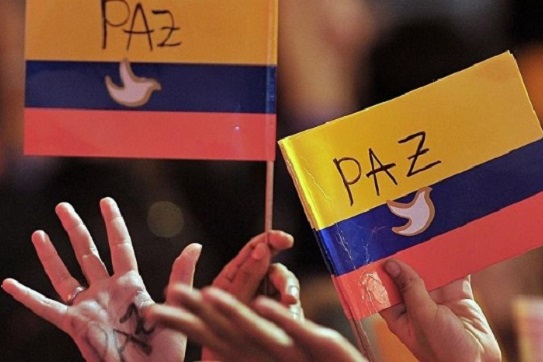
Despite challenges ahead, the Colombian state’s confrontation with one of the longest active revolutionary groups in the Western Hemisphere appears likely to reach closure by December.  As Colombian writer Héctor Abad has said, the peace agreement preliminary signed on August 24 is long, imprecise, often ambiguous, and tedious – certainly not a piece of entertaining literature – but it is the most eagerly awaited, downloaded, shared, and controversial official document in recent Colombian history.  The signatures of Colombian President Santos and FARC leader “Timochenko” are still pending, as is the result of a national plebiscite, to be held on October 2.

  • Humberto de la Calle, the government’s chief negotiator, defined the agreement as the “best possible” – a lukewarm description that fits well a process that has been rather anti-climactic. President Santos, who started the peace process and staked his reelection (which he barely won) on it two years ago, was more emotional and said, “Today, August 24th, we can say that hope has become reality.”
  • The agreement has already made permanent a cease-fire between the two sides. FARC fighters have begun to gather in the areas in which they will hand in their weapons and await the initiation of transitional justice proceedings.

Even if “yes” wins in the upcoming plebiscite – as surveys now predict – this peace by pieces presents challenges.  The accord has accomplished more than any Colombian process before and, by many normative international and academic standards, has been better designed and more professionally negotiated than any other Colombian accord.  It does not seem, however, to awaken most Colombians’ enthusiasm.  A generalized apathy or, in many cases, open disapproval of the negotiations can be linked to the absence of a sense of conflict-related crisis, especially in urban areas, where there has been a steady decline in battle-related casualties for years.  In addition, as the World Bank and international media have reported, Colombia’s economic performance has been steadily improving.  No longer the Andean problem case, Colombia is now a preferred destination for international investment in Latin America.  The “paradox of plenty, Colombian style” – success in promoting security and investment amid conflict resulting – has ended up eroding support of peace negotiations.

International support for several peace-building tasks will not translate into enormous amounts of desperately needed resources.  FARC demobilization, victims’ reparations, and addressing the needs of the most conflict-affected regions of the country will carry a big price tag for years to come.  Most economic and political resources for implementing the agreements will need to be raised domestically, and local authorities and communities will be increasingly reluctant to prioritize the needs of conflict-related social groups.  In addition, much needed fiscal reform will further affect political support for the government.  A core group of economic elites have backed negotiations unconditionally and have been well represented at the table.  However, the costs and vagaries of the implementation process will strain the support of peace´s crucial allies.  In this context, it will be difficult for any leading candidate to fully endorse the agreements in the upcoming presidential election of 2018.  Considering these limitations, not only the peace agreement, but also the resulting change, may only be “the best possible.”

September 7, 2016

* Angelika Rettberg is Associate Professor in the Political Science Department, Universidad de los Andes, in Bogotá.

Can Latin America Escape the Middle-Income Trap?

By Rick Doner and Ben Ross Schneider*

challenges logo (revised)2

Photo Credit: Inter-American Development Bank / CLALS / Edited 

Most literature on the “middle-income trap,” widely understood as a core obstacle to sustained development in Latin America, focuses solely on economic dynamics and understates the importance and challenges of political coalition-building.  That literature, largely generated by economists in academe and international financial institutions, argues convincingly that in Latin America, as well as Southeast Asia, once countries achieve some degree of success in economic development, they get stuck.  They are unable to compete with low-cost producers in traditional sectors – initial development success brings higher wages and other costs – while they also have failed to gain the capacity to compete with developed economies in frontier industries, where technological capabilities and productivity levels are far higher.  These analysts stress that Argentina, Brazil, Chile and Mexico – or for that matter Indonesia, Malaysia and Thailand – need to build on their achievements over the past half century in order to make the leap into the ranks of the world’s most prosperous nations.  They highlight the trap’s proximate origins in productivity slowdowns and recommend policy solutions that focus on improving human capital through investment in education and vocational training.  But identifying problems and potential solutions does not explain why leaders fail to adopt the solutions.  In other words, it’s not clear from existing writings why the trap is actually a trap.

The literature does not acknowledge that fundamental political obstacles, especially lack of effective demand and pressure for these solutions, are at the heart of the problem.  As is evident from the history of failed programs to improve education and R&D, political will to invest in such public goods is in short supply.  Politicians are rarely willing to forgo the short-term political benefits of satisfying entrenched interest groups for the long-term developmental benefits of creating institutions capable of helping the broader citizenry to upgrade its capacity for technology absorption.  A core reason for this lack of political will is the weakness of the societal constituencies that might demand the necessary policies and effective institutions.  Our research indicates that relations among key societal actors in middle-income countries are less amenable to building the consensus that economists advocate. In a recent article, we argue that the same conditions that facilitated or accompanied movement to middle-income status – such as foreign investment, low-skilled and low-paid work, inequality, and informality – have generated political cleavages that impede upgrading policies and the construction of institutions necessary to implement them.  This fragmentation is why the trap is a trap. Three lines of fragmentation are key:

  • Big business is divided between foreign and domestic firms. The former can undertake productivity-improving measures in-house and/or at their home headquarters, whereas local firms tend to focus in non-tradeable services and commodities whose demand for better training and R&D is lower than in manufacturing.
  • Labor is fractured between formal and large, growing informal sectors. Enjoying longer job tenure and on-the-job training for specific skills, formal workers have little interest in broader skills development.  Informal workers, on the other hand, constantly shift jobs and would prefer investments in vocational institutions offering general training.
  • These societies remain overall less equal and, as is now well known, inequality undermines the will and capacity to provide broad public goods such as quality universal education and support for technology development.

 Pro-growth coalitions of various types have been key to productivity improvements in now-high income East Asian countries, such as Korea and Taiwan.  The fact that these countries had stronger (and more autocratic) governments does not preclude developing or building on such coalitions in countries with messier political systems and weaker bureaucracies.  First, leaders can build on sectoral pockets of high productivity, such as aquaculture in Chile, wine in Argentina (and rubber in Malaysia).  Second, international and regional institutions can help supplement demands for skills by supporting programs that focus on technical and vocational institutions that actually meet and are linked to employers’ needs.  Third, organizations such as the ILO can promote business associations that represent the local firms for whom collective technical training and R&D are especially important.

August 22, 2016

* Rick Doner and Ben Ross Schneider teach political science at Emory University and MIT, respectively.

Can Latin America Achieve Fiscally Sustainable and Egalitarian Social Citizenship?

By Fernando Filgueira*

Uncertain Future

Photo Credit: Jan Tik / Flickr / Creative Commons

Latin America is undergoing a profound transformation of its social policies and of the very concept of social citizenship, but the outcome of this process is far from certain.  Electoral democracy, urbanization, increased educational attainment, and increased exposure to new and broader consumption patterns have destroyed the political foundations for conservative modernization.  The turn of the century has witnessed advances in social outcomes and public policies that for the first time provide a true window of opportunity for achieving more productive and egalitarian societies.

  • Decreasing poverty, lower income inequality, improved and expanded employment, and access to transfers and services to popular sectors were made possible by five critical factors: booming prices for Latin American commodities fueled economic growth and employment; stable prices – a positive legacy of the Washington Consensus era – meant that wages and transfers were not undermined by inflation; increased state fiscal capacity and commitment to social policy enabled a doubling in 15 years of real social per-capita expenditure; a demographic dividend, when combined (the young and the elderly) dependency ratios are lowest as a percentage of the population; and improved education access, completion, and credentials, which facilitated enhanced opportunity and increased productivity.

Yet these five advantages will lose steam in the next couple of decades.  Growth will wither as the commodity boom ends and expansionary monetary policy is limited.  Most Latin American economies are facing increased inflationary pressures. Existing tax structures and in some cases productivity levels will not permit social expenditure to increase at the rate of the last 15 years.  The easy phase of the demographic transition (when dependency rates are going down) is or will be over in most countries towards 2025.  Some countries in the region will face the European dilemma of an aging population, but they will do so with a lower GDP per-capita, weaker fiscal capacities of states, and a significantly more unequal income distribution.  While the soft targets of expanded education – primary school and expansion of lower middle school – have been achieved, the tough ones remain: extended coverage in early childhood, completion of high school, quality improvement, and true reduction of inequality of outcome in learning.

  • Five fault lines in Latin American social regimes make these problems a major threat to the sustainability of both social and economic development. A) Women’s incorporation into the labor market remains low (50 percent) and is highly stratified.  B) The absence of a robust state-led care system for early childhood and the persistence of a patriarchal distribution of care burdens undermines a route to development that is both more efficient and egalitarian.  C) Stark contrasts between insiders and outsiders in informal and formal labor markets and access to social protection and cash transfer  systems contribute to an expansionary monetary and fiscal policy that mainly benefits insiders unwilling to be taxed for redistributional public and collective goods and insurance. D) The region’s middle class and new emergent class, moreover, are not willing to increase taxation, since they do not perceive the quality of public goods and collective social services as adequate. And E) the pattern of fertility shows some of the worst patterns in social terms, including that most biological reproduction is left to the poor: Latin American governments do not equalize opportunity early on and through the educational system – which in the most unequal region of the world with diminishing but non-convergent fertility rates – leads to a productivity failure since underinvesting in the poor is underinvesting in the frontier of productivity enhancement.

These challenges will condition the possibility of a new social citizenship and a social investment model based on robust public goods, expansion of merit goods, and universality of entitlements.  It is not enough that elites are no longer able to control the political and economic game through status enclosure and authoritarianism.  In order to craft truly universal social policies conducive to providing inclusion for all, societies must confront narrow corporatism and restricted targeting – and the political economy they sustain.  Contributory models based on formal wages and targeted social policies based on need will not disappear, but they have to take a back seat to a model of basic universalism where access to quality public and collective goods is truly universal, and entitlements in transfers and services are not dependent on need or labor formality.  There have been important advances, such as a marked increase in non-contributory systems of cash transfers in terms of pensions and child-family transfers, but the commodity boom and the rise of the emergent and middle classes that drove them are not permanent.  A coalition that is willing to forgo private spending power in order to enhance quality of life through collective services is needed.  Such a coalition is made conceivable by these political, economic, and social epochal changes, but it is by no means guaranteed.  If reforms do not make it a reality, the promise will be shattered, and the pendulum between failed populism, with state-led “Robin Hood” incorporation attempts, and a technocratic closure of democracy and state bashing, will remain the central and tragic dynamic of the region.**

July 18, 2016

*Fernando Filgueira is a Senior Resarcher at the Centro de Información y Estudios del Uruguay (CIESU) and Collaborating Researcher the Economic Commission for Latin America and the Caribbean.  He is a member of the International Panel for Social Progress led by Amartya Sen.

**Read the full version of this essay, which is based on research done for the Economic Commission for Latin America and the Caribbean (ECLAC) and for EUROsociAL on social policy, labor dynamics, and demographic change.

Brazil: Sacrificing Anti-Poverty Success?

By Hayley Jones*

Bolsa Familia

Photo Credit: Senado Federal / Flickr / Creative Commons

Brazil’s flagship antipoverty program, the Bolsa Família, faces an uncertain future as the government of Interim President Michel Temer confronts adverse economic and political circumstances.  The program, which provides direct cash benefits to poor households on the condition that children fulfill education and health-related targets, was an important factor in Brazil’s progress on poverty and inequality since the early 2000s – between 2001 and 2013 the poverty headcount ratio declined from 24.7 percent to 8.9 percent, and the Gini coefficient declined from 59.3 to 52.9.  The Bolsa Família (formerly called Bolsa Escola) was a pioneer in the use of cash transfers in social policy in the 1990s.  The idea is enticingly simple: the cash allows families to meet immediate needs, while the education and health conditions ensure poor children are better equipped to lift themselves out of poverty in the long run.  Under Presidents Lula and Dilma, the Partido dos Trabalhadores (PT) put the policy at the heart of its platform, and reaped advantages at the polls with the expansion of coverage and benefits.  The program now reaches about one-quarter of the population.

The social gains made in part thanks to the Bolsa Família may now be at risk.  Brazil has been hit hard by the collapse of commodity and oil prices over the last two years and is currently experiencing what is predicted to be the country’s worst recession since the 1930s.  GDP fell by roughly 4 percent in 2015 and is expected to do the same in 2016.  The deep political crisis gripping the country since earlier this year further threatens the program.  Temer, his party (PMDB), and Finance Minister Henrique Meirelles have stressed the need to cut spending to reduce the deficit.  While many areas of social spending, such as pensions and education, are protected in the budget under the 1988 Constitution,  the Bolsa Família is not.  With the large political constituency benefitting from the program, there is likely little appetite in the interim government to ax the program altogether.  In fact, at the end of June Temer announced a 12.5 percent increase to the Bolsa Família – more than the 9 percent promised by Dilma – to compensate for inflation.  But he also emphasized that benefits should be temporary and that there is a need to focus on exit doors from the program.  Social Development Minister, Osmar Terra, has suggested that the program could be made more efficient and costs cut by 10 percent.

Temer may not be entirely wrong to highlight the need for exit strategies, but they should be exit strategies from poverty rather than from the Bolsa Família itself.  There is so far little evidence that it has done much to change the life trajectories of poor young people that would allow them to move out of poverty. The emphasis on increased school enrollment and attendance as transformative obscures much deeper problems, including poor school progression and completion rates in low-quality schools, a lack of educational infrastructure and resources, poorly trained teachers, and outdated curricula, among others.  If Temer is serious about moving beneficiaries out of poverty and the program, priority will have to be given to correcting regressive spending in public education (which prioritizes higher over basic education); better aligning curricula with labor market demand; and addressing the poor job opportunities for low- and semi-skilled workers. Economic realities and the rhetoric on efficiency and exit strategies do not bode well for such changes.  Under Temer, the Bolsa Família seems likely be limited to a policy tool for risk insurance and meeting basic needs rather than a platform for extending the social gains of the last decade.

July 12, 2016

*Hayley Jones is a DPhil (PhD) Candidate in the Department of International Development at the University of Oxford, United Kingdom.  Her thesis examines long-term poverty reduction in the Bolsa Família program.

How Sustainable are Latin America’s Advances on Poverty and Inequality?

By Eric Hershberg

Brazil Contrasts

“Projeto Contrastes.” Photo Credit: Gabriela Sakamoto / Flickr / Creative Commons

The significant decline in poverty rates and income inequality in Latin America over the past two decades – driven by a combination of sustained economic growth and intelligently designed social policies – may slow or even be reversed as economic conditions deteriorate across much of the region.  Poverty had begun to drop in most countries even before the commodity boom accelerated growth rates in South America beginning around 2003.  The “Washington Consensus” policies of the 1990s impacted wage income and employment negatively, but other factors diminished their impact on poverty.  By overcoming profound macro-economic instability, which among other things produced hyperinflation that devastated disadvantaged sectors of the population, the economic adjustments of that period were not entirely regressive.  Moreover, a concurrent shift toward targeted social programs – which redirected subsidies away from less vulnerable segments of the population in order to protect the poorest of the poor.  By 2002, the number of people living on less than $1.90 a day had declined 4.6 per cent from where it had been at the beginning of the 1990s, according to the World Bank, while the number living on less than $3.10 stayed flat and actually rose (from 135.6 million to 138.1 million).  Performance varied across countries.  By 2012, after a strong decade of growth and a wave of progressive governments, the progress was much more impressive, with poverty dropping to 33.7 million ($1.90/day) and 72.2 million ($3.10/day).

Inequality declined also – a different challenge in the region that Kelly Hoffman and Miguel Centeno aptly labeled the “lopsided continent.”  Measured by GINI coefficients, income inequality in Latin America, which exceeded that of any other world region at the beginning of the century, grew less pronounced under governments of various ideological proclivities.  A substantial body of research shows that this was a product of two factors.

  • Investments in primary and secondary education, which accelerated during the neo-liberal years, meant lower wage premiums for those with more than basic skills: near universal attendance in secondary school reduced the significance of gaps between workers who had secondary education and those who had little schooling.
  • Innovative social policies – particularly conditional cash transfers – meant that the lower rungs of the income ladder received meaningful transfers from the state, enabling them to narrow the income gaps vis-à-vis less disadvantaged sectors. Less frequently acknowledged was the positive impact of reforms on minimum wage policies and the creation or expansion of non-contributory pensions, both of which were pushed aggressively by several governments associated with the “Left Turns.”  Non-contributory pensions were especially important since the most vulnerable of Latin American aged populations, having spent their working years toiling in the informal sector, had previously lacked any sort of retirement pension.  (Read further analysis of pension reform.)

The region’s slowdown in economic growth and the pressure on public finance brought about by the end of the commodity boom – and the infusion of cash into state coffers that it afforded – raise questions about the sustainability of these advances.  The benefits of investments in education will endure for some time.  Even if education budgets decline, the costs in terms of lower educational achievement would take years to become evident, and it is not at all certain that the funding will decline.  However, the social programs are much more vulnerable, as are the ambitious efforts to increase minimum wages and labor protections more broadly.  Should the economic contraction underway in some countries and on the horizon in others generate an increase in informality, the labor market achievements of recent years could be quickly eroded.   This would impact inequality, and it might soon exacerbate poverty as well.

June 3, 2016