Haiti Needs to Lay New Tracks

By Jake Johnston

Research Associate, Center for Economic and Policy Research

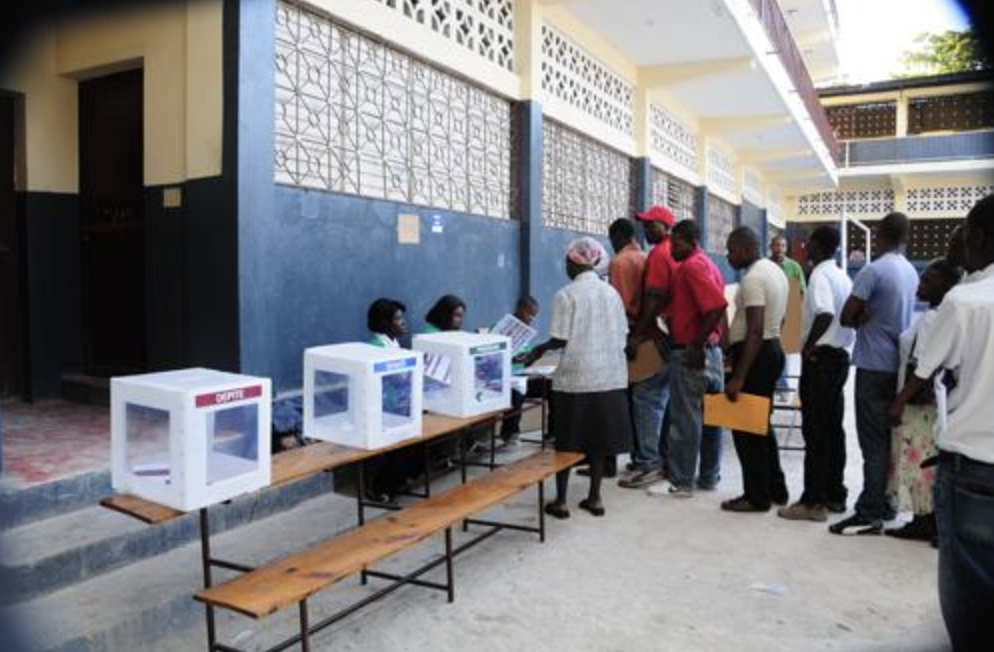
It’s been nearly a decade since Haitians last went to the polls to elect a president. Even then, barely one in five participated. In a country with a majority of the population under 25 years of age, this means that, for most Haitians, voting for one’s leaders is a privilege never before experienced.

Haiti’s transition, precipitated by the assassination of Jovenel Moïse in July 2021, is ongoing. For the better part of four years, progress toward elections has remained elusive. But that all appeared to change this fall.

“The Haitians need to come to an election and elect a president,” the US Charge d’Affaires, Henry Wooster said in September. Security and other challenges must not be a “red herring for taking action,” he continued. Speaking directly to Haiti’s de facto authorities, he warned: “In other words, you can’t stay in those jobs for life.”

The reaction, in a country where the political class remains more responsive to Washington than the population in Haiti, was swift. Two months later, a new electoral law has been established and a vote scheduled for next August. But does this present Haitians with a path out of the multiple, overlaid crises affecting the country? More than half the country is facing food insecurity, the economy is about to wrap up its seventh consecutive year of negative growth, and insecurity continues to dominate daily life.

In 2023, when asked if they had trust in the electoral process, fewer than one in four Haitians responded yes. It is hard to imagine that number is higher today. Though few would be sorry to see the much-loathed leaders atop the transition fall, a vote is not a path out of the current crisis.

The quick response to Wooster’s threats was not so much about elections. It was about a date much closer on the horizon: February 7, 2026. That is when the mandate of the nine-member presidential council — which was put in place with a strong push from the Biden administration, CARICOM, UN, and the OAS 18 months ago — formally ends. For months, debate has raged over what should come next. The political class is auditioning, not with the ten-plus million citizens of Haiti, but with the foreign diplomats and multilateral entities they see as key to their own survival.

And if there was any doubt about who would ultimately decide, it was put to rest in mid-November. Amid an effort from some on the transitional presidential council to, once again, replace the prime minister, the US embassy stepped into the fight.

“If you and your family value your relationship with the United States, I urge you in the strongest terms to desist from initiatives to oust the PM and to instead publish the electoral decree … This is not the time to test U.S. resolve,” Wooster texted Fritz Jean, one of the councilors. Days later, Jean’s US visa was revoked and the State Department publicly accused him, without providing evidence, of supporting armed gangs. The effort to replace the PM was stopped — at least for now. The next week, the electoral decree was published.

The “plan” is coming into focus, and it is a familiar one: stability at all costs, no matter how rotten the foundation. To enforce this notion of stability and allow for elections, the US has been quick to assure that more security support is on the way.

In September, the UN Security Council approved a Gang Suppression Force (GSF). Authorized for up to 5,500 soldiers, it is currently little more than a rebranding of the Kenyan-led Multinational Support Mission (MSS) that the UN authorized in 2024. No new troops have arrived and, while this new mission will have some level of UN support, operationalizing any of it is expected to take the better part of a year. 

The main difference then, for the 1,000 or so mostly Kenyan police on the ground in Haiti is that the rules of engagement have changed. The GSF, as its name suggests, is intended to be more “muscular,” by which its architects mean lethal. The newly drafted Concept of Operations outlines a mission with a simple goal: kill the bandits.

But while few have taken note, that has been the de facto authorities’ strategy for some time. So far this year, police forces have been responsible for well over half of the 4,500-plus killings in Haiti. Hundreds of civilians have been caught in the crossfire as police battle armed groups that exert influence over much of Port-au-Prince and have traumatized a nation. Drone attacks, led by a secretive police unit operating with Blackwater CEO Erik Prince’s private mercenaries, are also racking up civilian casualties and drawing growing condemnation.

The outspoken leaders of Haiti’s armed groups, however, only seem to continue to accumulate more power, political influence, and heavy weaponry. While some areas of the capital have seen tension ease, violence in the provinces is expanding by the day. Armed groups still control all the major arteries of the nation. More people are displaced today than at the height of the post-earthquake recovery.

The US has expressed its goal in Haiti as saving the state from imminent collapse, thereby avoiding mass migration or the further entrenchment of transnational criminal organizations. But while precious oxygen is consumed by raging debates over electoral timelines, transitional governance structures, and how quickly foreign soldiers can arrive, nobody has stopped to ask a basic question: is the current state worth saving?

The root of the tension that has paralyzed the country for much of the last decade is not a fight between violent gangs and the state. Simplistic narratives of good versus evil miss the mark. Rather, it is a fight over putting the train back on the tracks to save a rump state in the name of stability or to lay new tracks to create the foundations for a more representative state to rise from the ashes. It is not elections nor a foreign military force that will resolve this fundamental tension. In fact, history shows those two responses are more likely to consolidate the status quo.

The Haitian people need an opportunity to vote freely. They need to feel safe and secure in their communities. But what is missing is a plan to bring it all together, to begin restoring faith in a state that long ago lost the trust of the population; a plan to achieve peace, which is not just the absence of violence, but the presence of opportunity. What is missing is a vision that can inspire the population and bring the nation together around a common path forward.

A peace process can fill that gap. Such an endeavor does not mean legitimizing armed actors, condoning violence, or accepting impunity; rather, what it should mean is treating the situation holistically while centering the population and in particular victims of both state and non-state violence. A foreign military force and low-turnout elections are tracks Haiti has been down many times before. A peace process offers a chance at laying new ones. But first, what Haiti needs are political leaders responsive to the needs of the people and not simply to foreign embassies.

The Multiple Dimensions of the US-Brazil Relations Crisis

By Lívia Peres Milani

Public Policy and International Relations Institute (IPPRI-Unesp)

National Institute of Science and Technology for the Studies of the United States (INCT-INEU)

President Donald Trump meets with Brazilian President Luís Inácio Lula da Silva during the ASEAN Summit at the Kuala Lumpur Convention Center. (Source: Wikimedia Commons)

On November 11th, the US announced a withdraw of the additional 40% tariffs it had imposed on many goods of Brazilian origin, including coffee, fruit, and beef. The tariffs, initially imposed on July 30th, are one among multiple dimensions of the current bilateral crisis. Besides commerce, the crisis also has a political dimension, initiated by the recent US decision to invoke the Magnitsky Act – an instrument ostensibly used to sanction corruption and human rights violations – against Alexandre de Moraes, one of the Brazilian Justices responsible for the conviction  of ex-president Jair Bolsonaro over his attempted  coup d’état. While the recent White House decision does not necessarily represent an end of the crisis, it represents a pause of sorts, and so, a timely moment to assess the relationship.  

The imposition of tariffs  

The White House’s initial imposition of tariffs may at first glance make little sense, since it appears to disregard its economic interests. The US enjoys a trade surplus with Brazil, and there is not sufficient production in the US of many of the tariffed products to meet national demand. That is the case for coffee, fruit, and a variety of industrial supplies. However, to understand the source of the crisis, it is necessary to consider its non-commercial dimensions. These include i) the transnational articulation of far-right movements, ii) Big Tech’s economic interests, and iii) US geostrategic considerations.  

Brazilian and US far-right currents are deeply connected. Eduardo Bolsonaro, son of the former president, has worked to promote the Brazilian radical right abroad. During his father’s trial, he took a leave from Congress to launch a pressure campaign in the US against the Brazilian Supreme Court (STF) and the Lula government. With cooperation from sympathetic US leaders, he lobbied against the Lula administration, claiming that the trial was a “witch hunt,” his father was the victim of political persecution, and asking that the US government impose penalties on the Brazilian authorities responsible. This effort complicated Brazil’s relation with Foggy Bottom and the White House. Much of the language used by the White House to justify the new round of tariffs reflected this lobbying effort. 

Another factor that explains US policy toward Brazil are the interests of Big Tech companies. Brazil’s Supreme Federal Court took up a case relating to the responsibilities of social media platforms for user-posted content, ruling that social media platforms should be civilly liable if they failed to remove undemocratic, discriminatory, or crime-inciting content. In response, the US Computer and Communication Industry Association (CCIA) welcomed the imposition of sanctions against Moraes. They argued that the ruling in Brazil violated “free expression,” a strategy often used by Big Tech actors, in conjunction with far-right political leaders, to oppose the regulation of social media in Brazil and elsewhere.  

Finally, larger geostrategic considerations are also in play. The current US administration seeks to reassert US regional and global hegemony. Brazil, for its part, wants to promote its Global South leadership, framed as part of a “multipolar world order.” Promoting the BRICS forum is an important component of Brazil’s approach. The new tariffs were announced a few days after the BRICS summit in Rio de Janeiro, with the US president also threatening to impose tariffs on other countries that associate themselves with the BRICS+ group. This timing illustrates US opposition to the BRICS and pressure on Brazil to align with Western countries instead of its Global South partners. 

Tariffs backfire and the future of US-Brazil relations 

However, the Trump administration’s aggressive strategy against Brazil has not led to the expected results. Brazil’s government managed to control the domestic narrative, framing US tariffs as an attack on Brazilian sovereignty, a strategy supported by public opinion, as polls show. The US approach also became an incentive for Brazil to shore up its relations with Global South leaders. Following the tariffs, Lula reached out to the presidents of China and India to discuss the expansion of trade relations. The tariffs also proved unpopular in the US, and harmful for the White House, since they drove up the cost of coffee and other products. 

These several factors explain Trump’s subsequent decision to change direction. He opened a dialogue with Brazil, first announced at the UN General Assembly, and then confirmed his goodwill in a bilateral meeting in Malaysia. High-level negotiations, and the unpopular inflationary trend in the US, led to the recent removal of tariffs from many Brazilian products. It also signals an end to this most recent period of bilateral crisis. 

Nevertheless, there might still be consequences over the middle and long term. US sanctions communicate to the Brazilian government that, while a global power, the US is not a trustworthy partner, even when it comes to such non-strategic, everyday issues as the export of coffee and fruit. At the same time recent events have helped to cement the transnational partnerships of far-right leaders while also serving to illustrate how these relationships are impacting US government decision-making.  

On the other hand, the recent US decision to alleviate the tariffs is a signal for both partners that the US-Brazil bilateral relationship is an important one. Even if this relationship is imbalanced, given the US’s economy and global influence, the recent tariff episode illustrates that the US cannot simply dictate policy to Brazil, and that the two countries’ economic interdependence can function as a structural constraint upon the political will of far-right political actors.   

Takeaways from the North American Leaders Summit and Biden’s Visit to Canada

Editorial

By Ernesto Castañeda*

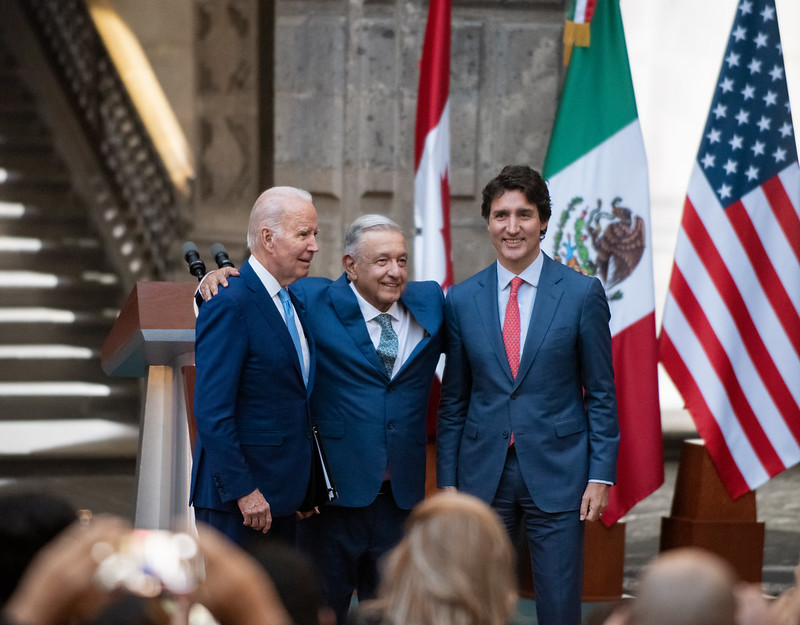
North American leaders, Andrés Manuel López Obrador, Justin Trudeau and Joe Biden, met in Mexico for the 10th North American Leaders’ Summit /Eneas De Troya /Flickr/ Creative Commons License

President Joe Biden conducted his first trip to Mexico in the context of the North American Leaders’ Summit on January 10, 2023. These summits started with George W. Bush in 2005 and did not take place at all while Trump was President. The 2021 and 2023 meetings signal a return to thinking of and valuing the North American region as such. The discussions were best when they decoupled local political considerations, common challenges, and regional opportunities. Three points toward integration are described here.

  1. President Joe Biden, Canadian Prime Minister Justin Trudeau, and Mexican President Andrés Manuel López Obrador (AMLO) discussed the advantages of further integrating supply chains within the region. Labor costs in China have gone up, and the pandemic showed that relying on long-distance shipping can delay things during crises, epidemics, and international disputes. There was a push for nearshoring, meaning having an increasing proportion of essential and high-value products manufactured in Canada, Mexico, and Central America rather than Asia. Concrete efforts were mentioned to increase manufacturing in the region within the context of the regional trade agreement USMCA, which includes regulations, respects local preferences, and supports specific sectors and products. Thus, during the summit, Biden and Trudeau were able to look past Mexican President Andrés Manuel López Obrador’s protection of PEMEX, Mexico’s oil company, and specific controversies about car manufacturing. Furthermore, Biden, Trudeau, and López Obrador discussed the desire for further integration beyond trade. The Mexican President mentioned in his closing speech that Mexico will be represented in planned regional integration meetings by Foreign Minister Marcelo Ebrard, Finance Minister of Mexico Rogelio Ramírez de la O, Secretary of Economy Raquel Buenrostro Sánchez, and independent businessman who represents the business community, Alfonso Romo Garza. During the meetings, Prime Minister Trudeau was accompanied by his wife, Sophie Gregoire Trudeau, Minister of Foreign Affairs Melanie Joly, Minister of International Trade Mary Ng, and the Minister of Public Safety Marco Mendicino. President Biden was accompanied by the First Lady Dr. Jill Biden, Secretary of State Anthony Blinken, National Security Advisor Jake Sullivan, U.S. Ambassador to Mexico Ken Salazar, U.S. Ambassador to Canada David Cohen, Secretary of Homeland Security Alejandro Mayorkas, Special Presidential Advisor for the Americas Chris Dodd, Secretary of Commerce Gina Raimondo, and National Security Council Senior Director for the Western Hemisphere Juan Gonzalez. The size and high profile of the entourage show the seriousness of these talks and the intentions to communicate further and coordinate around shared challenges and regional integration.
  2. The three leaders emphasized that migration is a regional process requiring a regional approach. Biden and Trudeau recognized their history and reality as countries of immigration. Canada emphasized its desire to welcome new people to keep growing its population and economy. Biden recognized the history of the United States as a country built largely by immigrants. The Mexican President missed an opportunity to acknowledge that in the last hundred years, a substantial number of people moved to Mexico from places like Spain, Chile, Argentina, Cuba, Lebanon, Guatemala, and the United States. There were mentions about the need for Mexico to become the place where some of the people from the hemisphere should receive asylum and be allowed to settle legally long-term. The three heads of government also stressed a safe, humane, and legal entry for migrants through more legal pathways and shared responsibility as advocated for in the Los Angeles Declaration. Additionally, Biden announced the monthly legal entry of 30,000 migrants from Cuba, Nicaragua, Haiti, and Venezuela with appropriate sponsors, background checks, and airplane flights. Generally, they recognized that the people who emigrate do it as an option of last resort. They expressed the humanitarian need to help create ways to migrate more safely than is currently possible for many.
  3. Prime Minister Trudeau and Presidents López Obrador and Biden committed to collaborating on climate change and promoting racial equity, diversity, and inclusion, including collaborating with marginalized populations to fight violence against Native women and girls and expand the protection of LGBTQI+ people. Regarding climate change, the three nations promised to reduce methane emissions by 15% by the end of 2030, develop a plan to cut food loss and waste in half by 2030, and create trilateral infrastructure for EV chargers. The three leaders also spoke about their support for democratic practice and condemned the events on January 8 in Brazil. Biden and Trudeau spoke about how a feature and strength of their democracies is their diversity. Overall, most of the meetings were about strengthening ties and facing shared challenges pragmatically and collectively. The demeanor was friendly, forward-looking, and about partnership. As Justin Trudeau said, “We are stronger together.”

Where are we two and a half months later, when Biden visited Canada?

Biden spoke about the interconnectedness of the U.S. and Canadian economies, sports leagues, and people. Saying that “the U.S. and Canada share one heart.” Both spoke about green jobs and more regional manufacturing with unionized jobs.

Nevertheless, the attention was focused on asylum seekers. President Biden referred to the Los Angeles Declaration and the importance of helping migrants as a region. Canada announced the orderly welcoming of 15,000 immigrants from the Western Hemisphere. However, the discussion about the official announcement underlines “irregular migration” while mainly talking about people seeking prompt and secure asylum. Cable media commentary often referred to an agreement to address “illegal arrivals” to Canada by people asking for asylum. Nonetheless, asking for asylum is a right that people have under U.S., Canadian, and international law. The issue is that some have arrived away from official ports of entry and then approached authorities to announce themselves and exercise their right to ask for asylum proactively. Under the new agreement, Canada can send migrants back to the United States if they have not applied for asylum in-country first and vice versa. This agreement further weakens the right to asylum in North America and criminalizes those seeking it. The often-mentioned record numbers are probably inaccurate regarding legal and undocumented migrants as a proportion of the population. Still, an increasing number of asylum seekers from Ukraine, Afghanistan, Haiti, Cuba, and the Americas are arriving at land borders. The announcement of this agreement with so much fanfare constitutes a narrowing of asylum avenues and conceding to the Canadian opposition’s framing of immigrants and asylum seekers as “burdens.” It contradicts the speeches of Biden and Trudeau at the North American Leaders Summit in Mexico City on January 10 and Biden’s speech at the Canadian parliament, which recognized the many contributions immigrants make and have made to both countries.

President Biden noted the continued interest of the U.S. and Canada in supporting democracy in the Western Hemisphere.

In the meantime, the Mexican President did not appreciate messages of alarm from the north about the proposed changes to the independent Mexican electoral agency (INE) and other signs of de-democratization. In turn, AMLO spoke about the possible criminal charges against Trump being politically motivated. He also wrongly stated that Mexico is safer than the U.S. after the killing and disappearances of U.S. citizens and legal permanent residents in Mexico.

Therefore, a few months after the North American Leaders Summit, we see how some leaders are more concerned with national politics, popularity polls, and elections than working with other countries to face common problems. At the same time, working meetings about regional cooperation also serve as a reminder that despite nationalistic and isolationist presidents (like Trump was), civil servants continue working with their counterparts to make sure that regional trade, tourism, migration, consular relations, and educational and cultural exchanges continue.

March 28, 2023

*Ernesto Castañeda is the Director of the Center for Latin American and Latino Studies, Immigration Lab, and the MA in Sociology Research & Practice.

Fact-checking and editing by Karen Perez-Torres. Copy-editing by Mackenzie Cox.

CC BY-ND: This license allows reusers to copy and distribute the material in any medium or format in unadapted form only, and only so long as attribution is given to the creator. The license allows for commercial use by news sites. 

Colombia: Will New Drug Policies Damage U.S. Ties?

By Pedro Arenas*

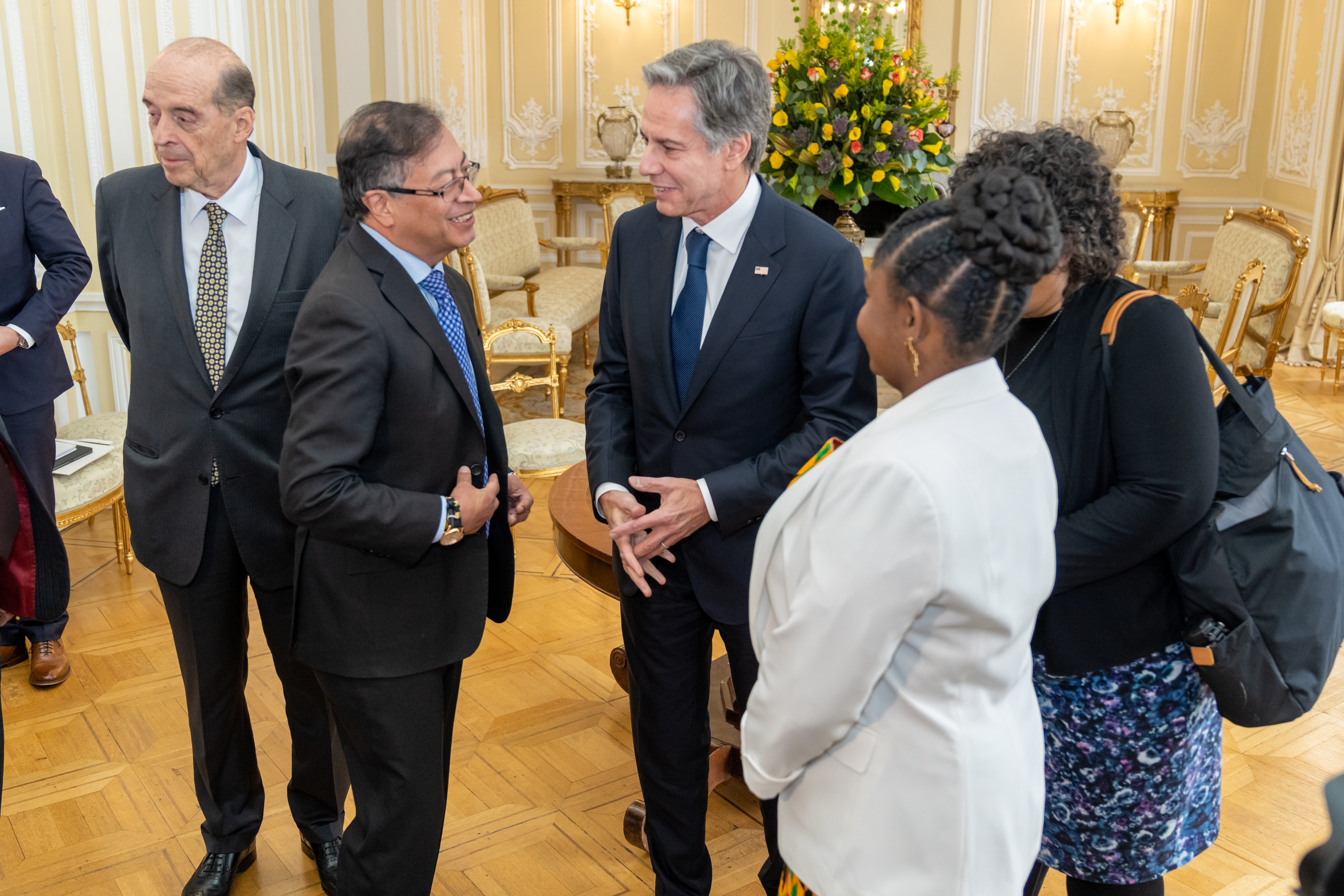
Colombian President Gustavo Petro and Vice President Francia Márquez meeting with United States Secretary of State Antony Blinken / U.S. Department of State / Flickr / Creative Commons License

Colombian President Gustavo Petro’s push for a major overhaul of the “war on drugs” is likely to cause tensions with Washington, but both sides appear to be proceeding with caution. Like its predecessors, the Biden Administration is reluctant to acknowledge the failure of the old tactics, but the burden will be on Petro to make the case that new approaches will work better.

  • Colombia has agreed with the United States on drug policies since the 1970s, with a focus on the Colombian Police and, later, the National Army. In 1996, the U.S. State Department said that the Fuerzas Armadas Revolucionarias de Colombia (FARC) were directly engaged in narco-trafficking, which opened the door for deeper cooperation. With “Plan Colombia” in the 2000s, Bogotá made the war on drugs a central element of its counterinsurgency – and Washington became deeply involved despite the implications for human rights in affected regions.
  • The two countries put aerial eradication of coca crops and extradition of traffickers at the center of the relationship, even though the initiatives did not significantly reduce the production or flows of the narcotic into the United States. The cartels fragmented and grew more violent as they fought for control of the trade.

President Petro’s proposed reform is not the first challenge to the decades-old approach. A peace agreement between President Juan Manuel Santos and the FARC in 2016 challenged the nature and depth of cooperation. The accord included commitments in four areas: incentivizing coca growers to change crops (through agrarian reform and secure access to markets); stopping the traffic (through interdiction); eliminating money-laundering; and getting transit and consumer countries to do more to reduce demand. The goal was to reduce the trade and demand more than to criminalize the production of raw material.

  • Little progress was made before President Iván Duque (2018-2022) put the emphasis back onto classic supply reduction. (The Constitutional Court would not allow the resumption of aerial spraying for environmental and health reasons, but ground-based operations increased.) The United States continued to demand increased eradication of coca, while continuing to reinforce police and military bases and cooperating in narco arrests.
  • Petro argues that peace in Colombia should start with the reform of these policies. (Colombia has suffered a conflict with 9 million victims.) He has proposed a permanent end to aerial spraying and an emphasis on crop substitution in coca-producing communities; expanded interdiction in the air, at sea, and on rivers; and greater efforts to bring all illegal armed groups, including narco-traffickers, into the national judicial system with assurances that they will not be extradited if they cooperate, compensate victims, and do not repeat their crimes.

Six Colombian think tanks (including the one I cofounded) have given the President recommendations on how to implement his priorities. The recommendations stress the need for internal Colombian reforms, most of which can be made without the permission of the United States. Important ones include ending the excessive use of criminal law in non-violent drug cases; suspending the use of force against communities in coca-producing areas; implementing the Peace Accord (including promised investments to fund alternative crops); permitting a regulated cannabis market; and opening markets of food products, with appropriate protection for users, derived from coca leaf.

Despite his progressive international discourse on the need to end the war on drugs, Petro’s opponents say that his proposals would make Colombia a narco-state, and peasant organizations are concerned that land eradication by the military and police forces will continue. The State Department’s top drug official initially said publicly that he saw “a problem” in Petro’s proposals, but Secretary of State Blinken at a press conference with Petro on Monday said he “strongly supports the holistic approach that President Petro’s administration is taking,” and that the two administrations are “largely in sync” on drugs policy. They did not publicly address the thorny issue of extradition.

  • Washington will probably have difficulty making deep changes to policy, particularly as U.S. mid-term elections approach. In addition to competing perspectives on how to deal with crime, there are political sectors, bureaucracies, and powerful business interests that have benefited greatly from the past policy emphasis on criminalizing peasant production of coca leaf – even if the results have been questionable. Their justification is that the drug problem “would be worse if we didn’t do it.”
  • Petro surely knows he will have to be creative and patient with Washington. For instance, recently the Colombian Police chief received two U.S. helicopters, the first of 12, for protecting the forests in Colombia, suggesting the new President will seek common ground with the United States. He wants to avoid provoking Washington to use its anachronistic “decertification” process to punish him for showing insufficient commitment.

The six think tanks believe that Petro can thread the needle in the U.S. relationship and that, if implemented correctly, the reforms of drug policies will bring Colombia in line with international norms, including the protection of human rights, and win broad international support. A frank conversation among Latin America, Africa, Oceania, and Europe within the OAS or UN would benefit all.

* Pedro Arenas is cofounder of Corporación Viso Mutop, a Bogotá-based organization that facilities dialogue on sensitive issues among diverse social, political, and institutional actors.

Argentina: Is China Nostalgic for the Macri Era?

by Patricio Giusto*

Argentine President Alberto Fernández and Chinese President Xi Jinping at the Great Hall of the People in Beijing, China / Casa Rosada / Wikimedia Commons / Creative Commons license

Argentina’s return to Peronism with the victory of President Alberto Fernández and Cristina Kirchner in 2019 has not led to a rapprochement between Argentina and China as widely predicted. After the first half of the Fernández’s presidency, relations with China are riddled with unfulfilled promises, political and bureaucratic obstacles, detrimental economic measures, and other challenges. To some extent, paradoxically, Beijing might be missing center-right President Mauricio Macri’s times (2015-2019).

Fernández and other key figures of the Argentinean government frequently refer to the country’s “deep friendship” and “strategic relationship” with China. Under Fernández, Argentina has just joined the Belt and Road Initiative (BRI) and, according to the official line, bilateral links are very strong. Of China’s top priorities for the relationship, however, almost nothing has been accomplished with Fernández. Fierce political struggles within the Fernández coalition have contributed to an erratic foreign policy that lacks of a comprehensive strategy on China. Mounting U.S. pressure on certain critical issues has also been a factor.

  • When Fernández traveled to Beijing to sign the BRI agreement three months ago, the two governments announced more than $13 billion in infrastructure investments, but they have released no details on projects or their financing.

The energy sector has been particularly messy for China with Fernández in charge.

  • An $8 billion nuclear power project with Hualong One technology has stalled as Argentina tries to renegotiate the financial conditions during a severe economic crisis – and faces tough diplomatic pressure from Washington to abandon the project. The Santa Cruz hydroelectric dams, the largest Chinese investment project in Argentina, have suffered constant economic restraints and union strikes for two years. An Argentinian financial default has provoked the total interruption of Chinese finance. PowerChina filed an official complaint about handling of its bid to build a Chihuidos hydroelectric dam in Neuquén province. The Belgrano II thermal power plant project with China’s CNTIC – financed by the U.S. EXIM Bank – has mysteriously never started. The oil company Sinopec, weary of economic volatility and strikes, sold its assets in Argentina in early 2020, affecting its operations.

The Argentinian government has slowed other forms of cooperation, apparently for security reasons, as well.

  • Buenos Aires announced, for example, that it alone would fund the Antarctic Logistics Pole project in Tierra del Fuego province that it had discussed with China. It has not acted on the long-awaited purchase of Chinese J-17 fighter jets and wheeled armored vehicles because of financial constraints and U.S. pressure, according to Ministry of Defense sources.
  • On another flagship project, management the Paraná-Paraguay waterway, the country’s most strategic fluvial corridor, Fernández decided to nationalize part of the operation and determined that only a Belgian company was a qualified partner.
  • In the agricultural sector, Fernández has also dismissed a Chinese investment project estimated to be worth $3.7 billion to develop the pork industry through the installation of mega-factories in different parts of the country.

Some Fernández policies have hurt Argentina’s interests directly as well. He suspended beef exports to China last year – supposedly to curb domestic inflation – but inflation continued to rise while Argentina lost hundreds of millions of dollars from exports and hurt Chinese buyers’ confidence. The country’s bilateral trade deficit with China reached a record $7.3 billion in 2021, after having decreased to $2 billion a year in Macri’s times.

The repeated friendly rhetoric and gestures between Argentinian and Chinese counterparts do not conceal the fact that the relationship under Fernández has been full of obstacles and frustrations for Beijing. President Macri’s international approach was openly pro-West and he had clear ideological differences with China, but there is no doubt that relations then were much more fluent and fruitful for both Argentina and China.

  • The second half of Alberto Fernández’s term is likely to be similarly plagued, with the critical issues blocking progress unlikely to be resolved. Argentina’s economic situation will almost certainly continue to worsen, depriving it of resources to hold up its side of any deal with China. U.S. pressure will continue being a key factor, aimed at restricting cooperation with China in critical issues for Washington’s agenda, such as telecommunications and defense. On the other hand, the two countries’ desire to find ways to cooperate will remain strong no matter who wins the Argentinian presidency in 2023, and China – if patient enough with the ups and downs of the relationship – will continue to be an irreplaceable partner for Argentina.

June 1, 2022

* Patricio Giusto is executive director of the Sino-Argentinian Observatory, an advisor to the Argentinian National Senate, and a visiting professor at Zhejiang University. He is also a researcher and associate professor at Pontifical Catholic University of Argentina.

U.S.-Guatemala: What does Washington Really Want?

by Ricardo Barrientos*

Guatemalan President Alejandro Giammattei and Attorney General Consuelo Porras / Government of Guatemala / Flickr / Creative Commons license

Central America’s ongoing political, economic, migration, and narcotics-trafficking crises would normally allow a potential ally like Guatemalan President Alejandro Giammattei to wriggle his way into Washington’s good graces, but his repeated efforts to thwart scrutiny of his and his allies’ corruption have been so blatant that the United States can no longer keep turning a blind eye.

  • Daniel Ortega’s Nicaragua is now clearly authoritarian – elected fraudulently, arresting opponents, and openly supporting Russia’s invasion of Ukraine. In El Salvador, Nayib Bukele is increasingly aggressive in his anti-democratic and authoritarian actions, and explicitly defiant of the United States. Honduran Juan Orlando Hernández is in jail, but Xiomara Castro faces the monumental task of rebuilding the state – in the face of doubts, if not opposition, from many in Washington concerned about her supposed leftist views. All this comes against a backdrop of surging migration, massive drug-trafficking, and a hemisphere-wide “great powers competition” with China and some Russian advances in the region. Until recently, Guatemala could have put itself forward as a partner that, while regional problems festered, could – even if not as a friend – help the U.S. pursue its interests.

Nevertheless, Guatemala is now far from the ideal U.S. partner in Central America. In an explicitly defiant action, Giammattei reappointed Consuelo Porras as Attorney General in spite of the U.S. State Department’s inclusion of her on the so-called Engel List, because of her involvement in significant corruption. She has been blocking investigations of corrupt acts and allowed impunity by several individuals, including Giammattei himself. 

  • Giammattei has been unable to give Washington even the minimum image as a credible and reliable ally as his two most recent corrupt predecessors managed to do. Weak from the start, his presidency has been wracked by mismanagement of the pandemic, persistent scandals, and anti-democratic actions. Lacking the popularity levels of Bukele or even Ortega, he has had to purchase political support from tainted sponsors including former military officers accused of committing crimes against humanity and genocide during the civil war; businesspeople accused of tax fraud or illicit electoral campaign financing; and corrupt officials – in return for promises that he preserve the impunity mechanisms that have so effectively protected them in the past. (Neo-Pentecostal groups are also an important part of his base.) For Giammattei, keeping control of the Attorney General’s office was paramount to fulfill that promise.
  • Under Giammattei, moreover, the government is failing in areas of direct interest to Washington, particularly addressing the “root causes” of the migration that ranks high on the U.S. agenda. Men widely suspected of collaborating with the drug cartels occupy high-ranking positions in Congress and government, making Guatemala a highway for drugs heading north. Cartel allies stand to increase their power in elections scheduled for June 2023.

Washington’s frustration with Giammattei is understandable, even though inconsistencies and favoritism in its own Central America policies have contributed to the estrangement. Guatemala’s democracy appears to be in its death throes – full of desperate people eager to risk their lives at the hands of a human-trafficking coyotes. While it remains high season for corruption, the government gives scant attention to public health (with the lowest vaccination rate and highest child malnutrition rate in Central America), and education. For many Guatemalans, the only hope of finding a better life is trying to reach the United States or cooperate with the burgeoning drug cartels.

  • Washington’s pressure on Giammattei (or any Guatemalan president) is long overdue, but it’s unclear whether it is driven by U.S. hubris at his failure to dump a corrupt Attorney General, or whether it represents a strategic shift toward a policy based on democratic values, wisdom, and prudence. Whatever the reason, the Biden Administration doesn’t seem to have learned the lessons of the failed Alliance for Prosperity that he strongly supported as Obama’s Vice President, appealing to Central American leaders to clean up their acts. A passive, laissez faire stand on Guatemala is not the proper way to address complex issues like the cartels, corruption, poverty, violence, and the other “root causes” of migration that Vice President Kamala Harris pledged to combat.
  • The day after Giammattei announced that he would not attend the Summit of the Americas in Los Angeles next month, Washington sent his formal invitation – adding to the confusion about U.S. intentions toward him. Many Guatemalans wonder if the Biden Administration puts issues like migration and drug trafficking before democracy and combatting impunity.

May 25, 2022

Ricardo Barrientos is a senior economist at the Central American Institute for Fiscal Studies (ICEFI).

U.S.-Cuba: Putting the “Sonic Attacks” Myth behind Us?

by Fulton Armstrong and Philip Brenner*

The U.S. Embassy in Havana, Cuba / Ajay Suresh / Wikimedia Commons / Creative Commons license

The Biden Administration’s recent announcement that it is resuming “limited” consular functions at the U.S. Embassy in Havana suggests that it’s prepared to put the “sonic attacks” meme – President Donald Trump’s stated rationale for closing the Consulate in 2017 – behind it, but Washington still appears unlikely to restart the normalization process. U.S. and Cuban officials met last month for the first time in four years to discuss implementation of a migration accord signed in 1995. Orderly migration is only one among several interests the United States could advance if it were willing to resume discussions with Cuba. But the Biden administration has placed electoral politics ahead of U.S. interests and appears unlikely to do more.

  • A State Department official told reporters that consular officers will process applications from only the Cuban parents of U.S. citizens, and that persons in all other non-emergency categories will still have to go to Guyana or another third country to apply. A few of the vice-consuls reportedly will fill previously permanent slots, but others will be assigned to the Embassy on a temporary basis.
  • When it ceased consular services in 2017, the State Department unilaterally abrogated a bilateral agreement, which enjoyed bipartisan support for two and a half decades, to process visas in a manner that would keep migration legal and safe. Renewing limited services, officials cited the surge in “irregular Cuban migrants” to the United States “via land and maritime routes.” Cubans are the second largest group arriving on the Southwest border – 16,531 in February alone, according to U.S. Customs and Border Protection. The U.S. Coast Guard has interdicted more than 1,000 Cubans in the Florida Strait since October.

The State Department has not publicly reconciled its consular decision with its repeated allegations of a Cuban role in, or at least failure to prevent, the “sonic attacks” that the Trump Administration cited, after months of inaction, as reason for reducing the Embassy. Now referred to as “Havana Syndrome” and “unexplained health incidents” by the Biden Administration, those allegations have never been substantiated.

  • Various reports have seriously challenged the official claims, but the U.S. Government has continued efforts to find scientists who will corroborate them. As early as November 2018, scientists of the prestigious JASON advisory group concluded that the reported sounds “most likely” were caused by Caribbean short-tailed crickets; it found they were “highly unlikely” from ultrasound or microwave equipment as alleged. A half-dozen investigations later, CIA officials last January said that all but two dozen of the 1,000 reported cases could be explained by environmental conditions, undiagnosed medical conditions, or stress rather than a global campaign by a foreign power. (Director of National Intelligence Avril Haines and CIA Director William Burns soon came forward to stress that “while we have reached some significant interim findings, we are not done.”)

The “sonic attacks” in Havana initially took place in late 2016, but the Trump Administration did not mention them in announcing its first round of measures in June 2017 to slow and eventually reverse President Obama’s normalization policies – perhaps because it too didn’t take the allegations seriously. Public complaints by self-identified victims in August 2017 found a receptive audience on Capitol Hill, however, and legislators pressed the Trump Administration to use it as pretext to reduce the U.S. Embassy in Havana (and to force Cuba to cut back its Embassy staff in Washington). The Biden Administration embraced the same rationale three and a half years later, despite overwhelming evidence that the blame on Cuba was misplaced, with literally hundreds of victims from around the world (even in Washington, DC) coming forward with similar claims of unexplained head injuries. The Biden Administration seems now to seek a quiet way back to addressing a migration crisis for which it, like the Trump Administration, has been complicit.

  • The Administration seems to think its policies will help it win hearts and minds in Florida, but its failure to provide leadership on issues like “sonic attacks” is further narrowing its political space. Now it faces challenges not only from the usual characters in Congress who oppose normalization, but also moderates such as Democratic Senators Jeanne Shaheen (New Hampshire) and Mark Warner (Virginia), who cosponsored the “HAVANA Act.” In addition to permanently linking the issue to Havana, the legislation, which Biden signed into law last October, has contributed to a surge in alleged cases of anomalous symptoms by offering compensation to “victims.”
  • Neither does the Administration seem concerned about the implications of its Cuba policies for U.S. interests throughout Latin America – one of the main drivers of President Obama’s pivot on the island in 2014. Mexican President Andrés Manuel López Obrador’s statement this week that he will not attend the Summit of the Americas that Biden is hosting in Los Angeles next month if Cuba is not invited is a blow. Similarly, Ambassador Ronald Sanders of Antigua & Barbuda, widely seen as “dean” of the Caribbean diplomatic corps, declared that Biden’s continued embrace of Trump policies on Cuba and Venezuela “has continued to haunt US‑Caribbean relations.”

May 13, 2022

* Fulton Armstrong directs AULABLOG. Philip Brenner is Emeritus Professor of International Relations and History at American University. His latest books are Cuba Libre: A 500-Year Quest for Independence and Cuba at the Crossroads.

Latin America: Is There a Constructive Side to U.S. Policy?

By Fulton Armstrong

President Joe Biden, National Security Adviser Jake Sullivan and NSC Senior Director for the Western Hemisphere Juan Gonzalez gathered at the President's desk in the Oval Office.
President Joe Biden, joined by National Security Adviser Jake Sullivan and NSC Senior Director for the Western Hemisphere Juan Gonzalez, talks on the phone with Jeff Zients on Wednesday, April 21, 2021, in the Oval Office of the White House / Adam Schultz / The White House / Flickr / Creative Commons License.

While many of the Biden Administration’s policies in Latin America – particularly toward Cuba, Venezuela, and China’s activities – remain largely the same as during the Trump era, some of its actions and statements suggest more nuanced approaches on other regional issues. 

  • National Security Council senior director for the Western Hemisphere, Juan Gonzalez, has been the point person for maintaining the hard line on Venezuela and Cuba. In early March, he met in Caracas with President Nicolás Maduro, who later said, “we’ve agreed to work on an agenda going forward,” but the Administration vehemently denied this and has continued to maintain that opposition leader Juan Guaidó is President of Venezuela. In Cuba, according to various sources, Gonzalez last year vetoed a promised plan for reversing a Trump halt to the flow of remittances to the island. He recently stated that new U.S. sanctions against Russia were also intended “by design” to put pressure on Cuba, Venezuela, and Nicaragua.

At Congressional hearings in February and March, other senior officials have laid out various Administration priorities.

  • Commander of the U.S. Southern Command, General Laura Richardson, testified that the hemisphere is “under assault from a host of cross-cutting, transboundary challenges that directly threaten our own homeland.” In addition to helping the region with COVID-19 and the “climate crisis,” she said U.S. policy is to counter China’s “relentless march” to expand its influence in the region and its “challenges [to] U.S. influence.” She also pledged to combat transnational criminal organizations, which “operate nearly uncontested and blaze a trail of corruption and violence that create conditions that allow the PRC and Russia to exploit, threaten citizen security, and undermine public confidence in government institutions.” She said her command is “putting integrated deterrence into action.” 
  • In testimony in February, Assistant Secretary of State for the Western Hemisphere, Brian Nichols, praised President Biden’s recent “Summit for Democracy” and acknowledged that “too many ordinary citizens have seen their governments fail to meet their aspirations for a better future.” He also said the Administration’s “Build Back Better World” initiative, including investments that respond to partners’ infrastructure needs, will counter China’s “Belt and Road Initiative” and “will help demonstrate that democracies can deliver for their people.” His counterpart in the Bureau of International Narcotics and Law Enforcement Affairs, Todd Robinson, stressed rule of law programs under the “Root Causes Strategy,” although he noted that “in some cases,” governments lack the political will to tackle the corruption that is a root cause of their nation’s problems.
  • USAID Assistant Administrator responsible for Latin America, Marcela Escobari, testified that her priority is mitigating the harm caused by COVID-19 and climate change. While criticizing the state of democracy and human rights in “extreme cases” like Venezuela, Cuba, and Nicaragua, she expressed concern about “democratic backsliding” elsewhere, noting that “even in more established democracies, authoritarian tendencies have emerged.” 

The Administration has not articulated how some of its steps diverge from the aggressive and transactional approaches that characterized the Trump Administration’s engagement with the region. The White House pressed the International Monetary Fund (IMF) hard to reach an accommodation with Argentina, whose government Trump kept at arm’s length, and helped it avoid default on its 2018 stand-by loan. Vice President Harris has given strong support to Honduran President Xiomara Castro since her inauguration in January – and probably contributed to Washington’s decision to request the extradition on drug charges of her predecessor, Trump ally Juan Orlando Hernández. In their Congressional testimony, current officials have repeatedly made nuanced remarks about the perceptions and reality of homegrown challenges in Latin America. Their emphasis on corruption and lack of will to address those scourges suggests awareness that not all is well, even in those countries that Washington embraces as democracies. After a slow initial response, the Administration has been generous in providing support for vaccine availability and for the capacity of public health systems to effectively respond to the COVID‑19 pandemic.

  • These factors suggest that while tired regime-change policies on Cuba and Venezuela and “integrated deterrence” against China and drug cartels may remain central to Washington’s approach to hemispheric affairs, there is awareness as well of how deeper cooperation with the region could simultaneously promote both U.S. and Latin American interests. The upcoming Summit of the Americas in Los Angeles may be the Administration’s best chance to seek meaningful common ground around the imperative of strengthening democratic governance, a challenge which Washington’s leadership now perceives as one that it shares with virtually all of its Latin American counterparts. 

March 31, 2022

How Is the Crisis in Ukraine Like the Cuban Missile Crisis?

By William M. LeoGrande*

President John F. Kennedy and Soviet General Secretary Nikita Khrushchev/ U.S. Department of State & Kennedy Presidential Library/ Flickr/ Creative Commons License

When Russian Deputy Foreign Minister Sergei Ryabkov warned that the standoff between Moscow and Washington over Ukraine could trigger a crisis akin to the Cuban Missile Crisis, he wasn’t just referring to the danger of nuclear war, narrowly averted. He was also reminding Washington that Russia is not the only great power jealous of its sphere of influence. Russia has its “near abroad,” and the United States has its “own backyard” as defined in the 1823 Monroe Doctrine warning European powers to stay on their own side of the Atlantic. 

Sixty years ago this October, the Soviet Union projected its military power into the Western Hemisphere by placing missiles with nuclear warheads in Cuba. Soviet Premier Nikita Khrushchev’s principal purpose, we know now, was to protect Cuba from another U.S. invasion. (The Bay of Pigs invasion had failed the year before, and Washington had plans for an encore using U.S. troops.) 

To President John F. Kennedy, this intrusion into the U.S. sphere of influence was intolerable, not just because it posed a military threat, but because a U.S. failure to defend its own neighborhood would throw Washington’s credibility into doubt. To Kennedy, it was worth risking thermonuclear war to repel the Soviet incursion. Had Khrushchev not backed down, agreeing to withdraw the missiles, the United States was ready to launch a full-scale invasion of Cuba.

To this day, the United States has not accepted the idea that a hostile government allied with a rival superpower should be allowed to exist just 90 miles off the coast of Florida. This year marks not only the 60th anniversary of the Missile Crisis, but also the 60th anniversary of the U.S. economic embargo against Cuba designed to overthrow the Cuban government and replace it with one more to Washington’s liking. As Donald Trump’s national security adviser, John Bolton, candidly proclaimed, “The Monroe Doctrine is alive and well.” 

The Biden administration, however, appears not to recognize its own great power conceits. “We can’t go back to a world of spheres of influence,” Secretary of State Antony Blinken told CNN, chastising Russia for its attempts to exert influence over former Soviet states. “We’re not going back to that.” He apparently had not read the U.S. Southern Command’s annual Posture Statements for the past decade, each of which defines the growing influence of Russia, China, and Iran as one of the principal threats the United States faces in the Western Hemisphere. The 2021 version elevates these interlopers to a collective proper noun: External State Actors (ESAs) – external to the U.S. sphere of influence.

When Russian diplomat Sergei Ryabkov suggested that Russia might enhance its military posture in Cuba and Venezuela in response to the U.S. build-up in Eastern Europe, the U.S. warning was unequivocal. Any Russian attempt to deploy missiles in Latin America would be an “aggressive action,” declared United Nations Ambassador Linda Thomas-Greenfield, and would be met with a “strong response.”  “If Russia were to move in that direction,” said National Security Adviser Jake Sullivan, “we would deal with it decisively.” 

Biden’s officials seem not to grasp the irony of defending a U.S. sphere of influence while condemning Russia’s claims to its own. Not much has changed in the 60 years since the Missile Crisis, when Soviet missiles in Cuba were, by definition, “offensive” weapons, whereas U.S. missiles in Turkey were merely “defensive.”

If President Joe Biden is serious about replacing spheres of influence with what Secretary Blinken called a “rules based international order” in which small states can decide their own future free of great power coercion, Biden can start in his own backyard. Washington’s policy of regime change toward Cuba, based on economic coercion and subversion – a policy Biden inherited from Donald Trump and continues unchanged – has not worked for more than 60 years. Replacing it with a policy of engagement and coexistence would set a good example for President Putin in his near abroad.

February 1, 2022

* William M. LeoGrande is Professor of Government at American University and co-author with Peter Kornbluh of Back Channel to Cuba: The Hidden History of Negotiations between Washington and Havana (University of North Carolina Press, 2015).

China-Latin America: Literature Shows Varying Perspectives on Beijing’s Intentions

By Andrés Serbin*

Communicating Influence: China’s Messaging in Latin America and the Caribbean project page logo

By frequently casting China-Latin America relations as a “triangular relationship” between China, the United States, and Latin America, much of the academic literature generates a series of misunderstandings. Studies in both the English-speaking community and in China generally portray Latin America and the Caribbean (LAC) as a relatively homogeneous and unified area – ignoring regional fragmentation and diversity – in a triangular relationship with the two superpowers. But Latin American analysts are increasingly focused on the widely varying nature of countries’ bilateral and subregional ties with each.

  • Latin American analysts generally produce theoretically more complex, politically diverse, and ultimately contradictory approaches to the relationships. Whereas the theoretical disciplines of international relations (IR) and international political economy (IPE) are ubiquitous in the English-speaking community, recent debates and critiques in Latin America reveal accelerated development of their own theoretical and conceptual approaches.

The two sets of analyses overlap in several important areas, such as China’s primary interest in securing resources and in investing its booming wealth in the region, but they yield different interpretations of its strategic objectives. Most views center around China promoting a version of globalization based on its geostrategic objectives, generating an increasingly tense dispute between the United States, as the traditional hegemonic power, and the rising PRC. This competition occurs mainly in the commercial and technological arenas, but it has military and cultural elements as well.

  • The Western epistemic community, to some extent reflecting the demands and expectations of the political milieu in which they work, frequently regards the Chinese presence in Latin America as a threat to U.S. interests and the autonomy of LAC countries. In this dynamic, China’s objectives go beyond economics and into spaces from which the United States has withdrawn. Latin America, despite its peripheral situation, is immersed in and eventually subordinated to a broader and more global geostrategic dispute, even if (as most analysts believe) China is not trying to impose its political system and development model on the region. 
  • Others tend to view China’s modernization and transformation, its remarkable need for commodities, and its ability to finance large acquisitions and projects as having important bilateral effects for the region. China has incorporated countries into its “Belt and Road Initiative” (BRI) infrastructure megaproject. Recently, it has undertaken an aggressive “health diplomacy” project during the COVID‑19 pandemic. 

The Latin American perspective is independent of efforts by LAC-based and Chinese analysts to foster joint research and interaction in the past 25 years; Chinese input into LAC analysis is growing but still limited. 

  • The most prolific LAC authors maintain fluid links with U.S. and European academic counterparts, but their work draws on theoretical frameworks that are rooted in approaches developed in the region. This includes a wealth of economic analysis and statistical data developed by individual scholars, research centers, and networks (such as Red‑ALC China), and institutions such as the UN-sponsored Economic Commission for Latin America and the Caribbean (ECLAC). Many aspects of China’s policies, such as their impact on labor, environment, regional industrialization, and increasing LAC indebtedness to China (the “debt trap”) have been criticized, but its “soft power” has expanded significantly and benefited many in LAC.

This significant body of research and publications about China’s activities in LAC reflects three predominant disciplinary and theoretical approaches in addition to analysts’ own perceptions of their national interests.

  • The focus of international relations neorealism on China’s potentially destabilizing effects in the region and its relations with the United States gives short shrift to other important actors in the region and world. It also stimulates an inaccurate vision of Latin America as a monolithic, unitary actor and deep down expresses a subtle neocolonialism and “neocolonialist paradigm.” 
  • The emphasis of the international political economy approach is on China’s intentions as predominantly linked to its development – and not as a threat to the United States. Most argue that Latin America must develop its relationship with China and maintain its links with the United States simultaneously, without getting involved in a confrontation between them. 
  • But LAC is showing a third, hybrid approach mixing IPE and geopolitical analysis to contextualize China’s influence. It has shown that some “benign” impacts have also generated new dependency and center-periphery relations that can be characterized as a “dependency with Chinese characteristics.”

The debate between these differing interpretations –viewing dynamics as either bilateral or triangular – will continue to mold U.S., Chinese, and LAC countries’ policies as China pursues its global projection strategy.

January 21, 2022

* Andrés Serbin is an international analyst and president of the Regional Coordinator of Economic and Social Research (CRIES), a network of more than 70 research centers, think tanks, NGOs, and other organizations focused on Latin America and the Caribbean. This article is adapted from his recent CLALS Working Paper, Latin America-China Relations: A Review of Recent Literature (2010-2020)