Mass Deportations Could Create a US Recession

By Ernesto Castañeda

Interview by Diana Castrillon with Ernesto Castañeda published in Stornia August 13, 2024. Edited and expanded by Castañeda. Original in Spanish. Translated by Castañeda.

Diana Castrillon: “Irregular immigration is one of the most important issues in the presidential campaigns of the candidates, Republican Donald Trump and Democrat Kamala Harris. On the one hand, the Biden administration, of which Vice President Harris is part, restricted the number of asylum seekers entering the country, and on the other hand, Republicans are promising the “largest mass deportation program in US history” if they win the White House this fall.

Anti-immigrant sentiment in the United States is on the rise, with more than half (55%) of Americans this year saying they would like to see a decrease in immigration, a first since 2001. This is partly due to the belief that immigrants, particularly undocumented immigrants, are a burden on government resources and contribute nothing to the economy.

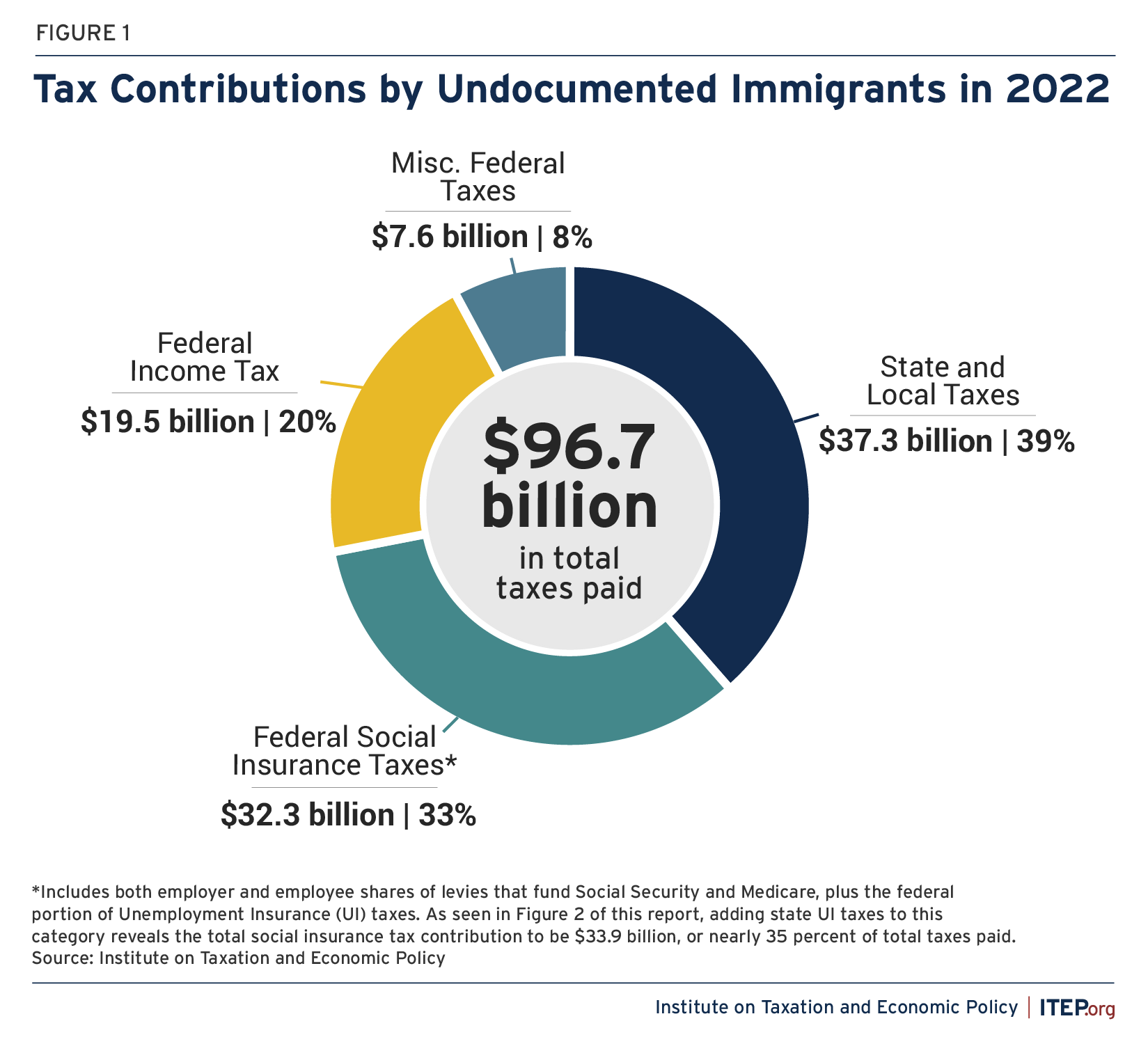
However, a new study from the Institute on Taxation and Economic Policy shows that the opposite is true. According to the report, undocumented immigrants contributed nearly $100 billion in taxes during 2022, while being unable to access many of the programs their tax dollars funded. Of that nearly $100 billion, $60 billion went to the federal government. For every million undocumented immigrants, federal services receive an additional $8.9 billion in tax revenue. More than a third of the taxes paid by these immigrants go to programs they cannot access, such as Social Security ($25.7 billion), Medicare ($6.4 billion), and unemployment insurance ($1.8 billion).

In addition, undocumented immigrants often pay higher tax rates than American citizens: in 40 of the 50 U.S. states, illegal immigrants pay higher state and local tax rates than the 1% of households with the highest incomes. In addition, they cannot receive many tax credits and often do not realize that they can claim refunds or prefer not to. “In total, the federal tax contribution of undocumented immigrants amounted to $59.4 billion in 2022, while the state and local tax contribution stood at $37.3 billion,” the authors of the study wrote. “These figures make it clear that decisions on immigration policy have substantial implications for public revenues at all levels of government,” the report says.

In an interview with Stornia, Ernesto Castañeda PhD, Director of the Immigration Lab and the Center for Latin American and Latino Studies at American University in Washington DC, said that immigrants are necessary and essential for the economic growth of the United States.

Diana Castrillon: How does an undocumented immigrant pay taxes, if as their name suggests, they are irregular migrants?

Ernesto Castañeda: Undocumented immigrants pay taxes every time they buy something; there is a sales tax, and the percentage depends on each locality. If they buy houses, they also pay taxes, or if they rent, there is a percentage that must be paid in taxes to the local and federal governments. Undocumented people who work in formal companies, which are many, can have a temporary identification to pay taxes (ITIN), which works in a similar way to a Social Security number, so they pay payroll taxes like any other person working in the United States. There are some undocumented people who use false or incorrect identification documents, but someone lends them one, and so they pay into the Social Security and retirement and health programs. However, since the number is false or does not belong to them, they do not have access to those benefits when they retire. So, not only do they pay for these services, but many immigrants do not ask for these benefits. Therefore, they have a net or even greater contribution than the citizens who pay, but then they withdraw those benefits such as social security after retirement. It is a gain that the federal government and the Treasury openly accept that happens.

So, are undocumented immigrants paying more taxes than American citizens themselves?

Yes—the rate of many undocumented people who pay taxes is higher than the rates paid by the richest people in the country. Of course, their incomes are different, but the rate is sometimes higher or very similar to that of citizens. Citizens fill out their tax returns and often ask for tax returns and reimbursements, for example, they get a credit for having children, but many undocumented taxpayers do not make these claims because they do not want to be denied citizenship in the future for having asked for aid. Nor do they ask for support programs for their children, who are already citizens and have the right to those services, out of fear. We have documented that, indeed, immigrants use fewer social services than U.S.-born citizens (Castañeda and Cione, 2024).

It seems that undocumented immigrants are between a rock and a hard place now with the electoral campaign on both the Republican and Democratic sides. Is there concern in the community?

Some politicians use undocumented immigrants as scapegoats. On the one hand, Trump makes this threat of mass deportations, but it is unlikely that he will do it. He had promised that before, and when he was president, he did not deport as many people. That doesn’t mean that people aren’t scared now, and if he wins, he’s going to create real terror among the people who already live in fear of themselves or their family members being found. That’s a reality that undocumented immigrants have been living with for many years.

As for asylum, in fact, many people are fleeing Cuba, Venezuela, Nicaragua, and Haiti, many with proof of persecution, and now the government has changed how it processes these asylum cases. The border is closed to many of these asylum requests as it was during the pandemic, so we’re seeing fewer people let in through the wall in between ports of entry. The Biden-Harris administration thinks that this can help them electorally so that Republicans don’t criticize them about the border supposedly being open or about undocumented individuals or those seeking asylum temporarily receiving food and housing in some cities. At some point, they will have to reopen the border to asylum seekers because national and international law calls to receive people who are asking for asylum. Some will be accepted, others will not after processing their applications.

Trump would need a lot of money and policing. He would have to create a totalitarian state to be able to deport all the people who are here. Many of these people have been here for more than 10 years. Their children are citizens. They work, and they contribute. So, deporting in massive numbers or stopping receiving immigrants and asylum seekers is a great attack on the United States and the economy could contract. Massive deportations from the interior could create a recession because, as we indicated, migrants pay billions in taxes. However, taxes are a small percentage of what people earn, and most of what immigrants earn is spent in the cities where they live. With the work they do, they generate economic growth, services, and entertainment.

A few days ago, JD Vance, Donald Trump’s vice-presidential candidate, justified the mass deportation plan and said that undocumented immigrants are stealing jobs from American citizens. Is there a line of Americans waiting for immigrants to be deported to take their jobs?

It doesn’t work like that. Trump and Vance are wrong about immigrants taking jobs from citizens or African Americans. It’s an easy stereotype to sell. Some voters may have had an experience where it seemed that could be the case. However, if we look at the economy in general, immigration generates new jobs. In Florida, the strictest anti-immigrant law in the country is in effect. In fact, many undocumented immigrants have left the state, and today, there is not enough labor for construction, services such as hotels, or even to pick oranges. So, the businesses that needed that labor to generate wealth now do not have their business functioning 100%. Middle-sized farm owners have had to close because they lack the labor, and some small businesses have had to limit their service hours. If there is no construction, there is no housing, and there is more inflation for existing housing. Immigrants arrive and need a place to live, someone to cut their hair, and someone to sell them food, so they generate work and income for merchants. Immigrants start more service businesses, as well as large companies, than those born in the United States. We also know that in general, immigrants employ more people than business owners who are from the country.

It is not like there is an economic pie that is shared by the number of people who are here plus those who arrive. Indeed, the more people arrive, the bigger the pie becomes, so there will be more pie for everyone to share. It is not unfair competition, and that is seen in the unemployment rates. Under the Biden-Harris administration, we have a historically low unemployment rate for African Americans and for Latinos. There are very few citizens of European origin who are unemployed because some immigrants are taking their jobs. They usually do not find work because they do not have enough education to take a job or, on the contrary, because they have too much education and there is no high-income job that they can take. Or because they refuse to move to look for work. Unemployment rates are low and what business owners complain about is that they do not have enough staff in organizations to expand their businesses. This also affects citizens looking for services and having to wait longer in restaurants because there are not enough waiters or cooks.

What is the answer to immigration management, more temporary employment visas, legalizing undocumented immigrants, or building more walls on the border?

The solution to long-term cases of irregular immigration is to increase temporary employment visas so that people can migrate legally. There are programs such as the H2A and H2B visas, which are examples of visas that work very well. People come, work, and return to their country because they have already earned income in dollars and want to be with their families. The problem is that there are limits, there are quotas for these visas, they are for certain types of jobs, and there is more demand for these temporary workers than the law allows. Congress has to pass legislation to increase the number of these visas. Thus, the House of Representatives and the Senate, along with enough members from both parties, have to agree. Many Republicans refuse to reform immigration because they want to use it for electoral purposes rather than solve the issue.

For the people who are already here, the solution is to legalize them. By giving papers or work permits to those who are here, many would earn more money, have more confidence to invest, and pay more taxes. This would be an injection into the American economy, and they could bring their relatives legally and expand the worker base a little more. That is something that neither Trump nor Vance understands, and they would never do it. Unlike President Ronald Reagan, who did sign a law like that, although reluctantly. It is not something that Kamala Harris or Tim Walz have wanted to talk about much in the campaign either because people use it as a very simple attack, but they have a political history of supporting these types of measures.

And with this legalization of undocumented immigrants in the United States, do Latin American countries win or lose?

Remittances represent only 4% of the wealth that immigrants generate in the United States, and a migrant who is more established sends remittances less often. Remittances help support families in economic need, but they represent long family separations until the migrant ends up returning or tries to bring the entire family. So, it is short-term help, but it puts families that are divided in emotional difficulty. In any country that loses migrants, from farmers to scientists, from teachers to doctors —like Cuba which loses a couple of million professional migrants every year for the last couple of years— and increasingly weakens its economy. The same is true of the Venezuelan economy, which, among other things, has been weakened by emigration.

Remittances are short-term aid, but the real economic growth happens where the migrants live, in this case, the United States.

According to the study by the Institute for Fiscal and Economic Policy, work authorization would be beneficial for everyone since granting undocumented immigrants a work authorization would result in an increase in their tax contributions from $40 billion to $137 billion per year since the work authorization would increase salaries.

Ernesto Castañeda PhD, Director of the Immigration Lab and the Center for Latin American and Latino Studies, American University in Washington DC.

This piece can be reproduced completely or partially with proper attribution to its author.

The Spanish version of this text is available at the following link: https://aulablog.net/2024/08/26/deportaciones-masivas-podrian-crear-una-recesion-en-ee-uu/

Venezuela: Authoritarian Election Aftermath

By Michael McCarthy

Photo credit to Matias Delacroix /AP

In the wake of a sham Presidential election event, Venezuela’s complex crisis appears to be deepening. Marked by electoral authorities’ apocryphal claims of a government victory, Maduro’s iron-fisted post-election crackdown against the opposition, and thus far unsuccessful efforts at international mediation from Brazil, Colombia, and Mexico, the ongoing electoral episode has placed the government and opposition in an increasingly bitter conflict.

Stuck in between stands the population, a large portion of which may migrate unless hope for political change can be revitalized. The region should brace itself for a new movement of Venezuelans abroad.   

The opposition coalition continues to press its case. The opposition is led by María Corina Machado, the winner of open primaries who was forced to endorse Edmundo González Urrutia after the government-controlled courts banned her candidacy. Their election witnesses documented a landslide victory — 67% to 31% for González Urrutia. Due to both the total lack of transparency by the electoral authorities (disaggregated precinct-level data has still not been published though that was the norm in previous Maduro-era elections) and the validity of election witness tally sheets consolidated by the González Urrutia campaign, opposition claims have resonated widely. The Biden administration and multiple Latin American governments recognized González Urrutia as the winner of the election, while even historical Left-wing allies of the chavista political movement, such as former President of Argentina Cristina Fernández de Kirchner, cast serious doubts on Maduro´s claim to victory.

Privately, numerous pro-government voices have admitted they cannot attest to the credibility of the official results, which state that Maduro won with 51% of the vote, a telling admission that no independent checks on executive power grabs exist. However, despite Maduro´s most acute crisis of legitimacy yet, no highly influential ruling party official or strategic international ally (Bolivia, China, Cuba, Russia) has publicly aired such concerns. Maduro seems more influenced by the hard line elements in his government and, amid his intransigence toward calls for releasing credible electoral data, his government seems headed for greater international isolation. Meanwhile, the opposition — though strengthened by its impressive organizational effort to retrieve over 80% of the tally sheets from voting centers — is struggling to capitalize on its status as the electoral majority.

The Biden administration is losing patience with the situation. Following a period of pre-election diplomatic engagement with Maduro, Washington is strongly considering the imposition of new individual sanctions against government authorities involved in engineering the fraudulent election results and responsible for recent human rights violations. According to Venezuelan human rights groups, Maduro’s security forces have arbitrarily detained over 1,500 persons since the July 28 vote, including activists and leaders from the different opposition coalition partners, as well as one hundred and thirty adolescents. Over 20 demonstrators died amid state repression against post-election protests held to contest the official results.

As this dark post-election period continues to unfold, Maduro not only has a corrupt and ideologically conditioned army but also time on his side. The regime´s cohesion, while lower than in previous moments of chavismo´s 25 years of rule, appears to be sufficiently strong for Maduro to hold power until the new presidential period begins in January 2025. Maduro holding power does not guarantee Venezuela’s stability. Rather, the electoral crisis is likely to translate into weaker than previously forecast economic growth (4% according to Spring 2024 projections by the IMF), a scenario that could, in turn prompt Maduro to panic and forsake the more pragmatic economic policies he’s been pursuing to contain inflation. Indeed, Maduro has never articulated an overarching vision to unify the movement the way Chávez did. While his ongoing use of coercion and repression has helped him secure loyalties among ruling party power brokers, those tools cannot fix the underlying problem of internal political fragmentations, some of which grew more salient during the multi-billion corruption scandal that resulted in Maduro jailing his oil czar Tareck El-Aissami, among others.

Thus, while the return to democracy in Venezuela still seems far off, it is also true that Maduro´s leadership has never been under as much pressure as it is today. His ability to deliver economic gains from the oil sector is likely to decline, with historical investors such as China likely to take a wait-and-see approach and Maduro´s ambition to join the BRICs+ and obtain New Development Bank financing likely to go unfulfilled. If the economy spirals downward, then Maduro will face tougher questions from his own coalition’s strategic players in the military. In this respect, Maduro’s blatant rigging of the vote count opens a new, highly uncertain chapter in chavismo’s already stressful history of losing popular legitimacy.

Over sixty years ago, a previous Venezuelan dictator, Marco Pérez Jíménez, lost power months after holding a fraudulent plebiscite on his rule. A general uprising catalyzed a coup against Pérez Jiménez, which in turn yielded a caretaker transition government that later paved the way for restoring democratic rule. History may not repeat itself, but if one is searching for reasons to believe Maduro has not consolidated power for good, Venezuela’s past has plenty to offer.

Michael McCarthy is President of Caracas Wire, and Adjunct Professor of International Affairs at George Washington University

Edited by Ernesto Castaneda, Director of the Center for Latin America and Latino Studies

This piece can be reproduced completely or partially with proper attribution to its author.

Brazil: Lula Trying to Exert Civilian Control over Security Forces

By Luiza Duarte*

Property damage in the National Congress Building in Brasilia caused by pro-Bolsonaro insurrectionists on January 8, 2023 / Agência Senado / Wikimedia Commons / Creative Commons License

The attack on the Three Powers Plaza in Brasilia on January 8 exposed a civil-military crisis that threatens to hinder President “Lula” da Silva’s efforts to put Brazilian democracy back on track and pursue the agenda for which he was elected. The direct participation of current and former members of the military, the military police, and their family members in the invasion of the country’s Congress, Presidential Palace, and Supreme Court is evidence that the relationship of the new government with the security forces is at the center of its struggle to protect Latin America’s largest democracy.

  • The security forces not only failed to block a coup attempt about which threats were made repeatedly; they protected pro-coup demonstrators for weeks in front of military installations in different states. They also chose not to publicly condemn the unprecedented anti-democratic riots, nor to dismiss baseless claims of electoral fraud. Videos show military police dismantling a barrier in Congress, facilitating the invasion. Evidence suggests that some had been collaborating with the attackers. A recent survey shows that four in 10 public security agents see the January 8 rioters’ demands as “legitimate.”
  • The politicization of the security forces deepened under former President Jair Bolsonaro, when the number of military personnel in civilian leadership positions in the Federal Administration more than doubled – reaching the highest figure since re-democratization in the late 1980s. A retired captain himself, Bolsonaro had a general as his vice president and had 10 state ministers from the uniformed armed forces. His reelection bid in October mobilized support in the defense sector.
  • Before the second round of elections, retired General Maynard Santa Rosa, Bolsonaro’s Secretary for Strategic Affairs for nine months, told the press that police forces may be insufficient to contain possible conflicts in the event of a Bolsonaro defeat. Rather than discourage protests, he suggested that the armed forces could establish order through a Law and Order Guarantee (GLO) decree.

Security threats and signs of security forces’ dissatisfaction with the election results mounted during the transition period to the point that Lula moved to change the military command even before his inauguration. Radical Bolsonaro supporters burned eight vehicles in the capital one day after Lula’s victory was confirmed by the Electoral Court in mid-December. One week before his swearing-in on New Year’s Day, police arrested a suspect in a failed bomb attack – a man who had camped out with other radicals in front of the Brazilian Army’s general headquarters and planned to force a declaration of “state of siege” that would pave the way for a coup.

  • The need to reduce the number of non-civilians in the government was recognized by the new administration before January 8, but the coup attempt made it urgent to move quickly. In the aftermath of the attacks, Lula sacked the country’s Army chief, Júlio Cesar de Arruda (in the position for less than one month); changed the command of Federal Police in 18 states; and dismissed 26 commanders of the Federal Highway Police. The latter was involved in widespread allegations of illegal roadblocks on election day, raising fears of voter suppression in pro-Lula regions.
  • The day after the January 8 attack, the Federal District governor was suspended for 90 days. One week after, Brazilian police searched the residence of Anderson Torres, Bolsonaro’s Justice Minister and in charge of Brasilia’s public security at the time, and found a draft decree to overturn the election results. Torres was arrested on suspicion of “omission” and “connivance.” In all, Lula so far has removed more than 140 troops assigned to different bodies linked to the Presidency, including some in charge of his security, for which the Federal Police is now responsible.

The political capital garnered by the new government after January 8 opens a window of opportunity for long-needed reform to address the military’s institutional hold on power. Less than two months into his presidency, Lula has announced changes in the Brazilian public security structure, including the restructuring of the Institutional Security Office (GSI) to remove the Brazilian Intelligence Agency (BIN) from military control. At the same time, the new administration is defending the creation of a permanent National Guard to replace the federal district military police in the protection of federal institutions in the capital. The new force would also act in indigenous lands and border areas and support state security, as the National Force currently does.

  • The security forces grew once again into a non-legitimate political actor, reversing progress made over the past 37 years. Brazil now has a fragile combination of political will and conditions to press for accountability and civilian control over the armed services.

*Luiza Duarte is a Research Fellow at the Center for Latin American and Latino Studies (CLALS) and at the Wilson Center, Brazil Institute. Duarte holds a PhD in Political Science from Sorbonne Nouvelle University’s Institute of Latin American Studies.

Chile: Dim Prospects for New Constitutional Assembly Soon

By Carlos Cruz Infante and Miguel Zlosilo*

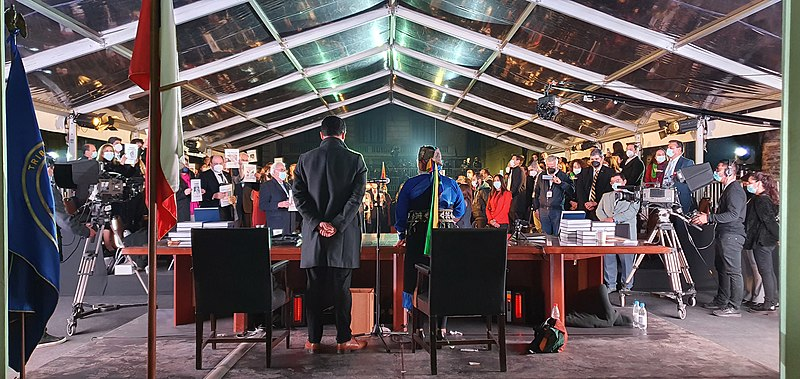
The Constitutional Convention, shown here during a moment of silence at its inauguration, started amid optimism that a new Constitution would help heal the country’s deep splits / Wikimedia Commons / Creative Commons License

Chile does not appear likely to restart efforts to write a new Constitution soon. The failure of the first draft – rejected by 62 percent of Chilean voters – has significantly weakened political leaders’ ability and resolve to try a second draft. Pollsters predicted that Rechazo (rejection) would win on September 4, and the result would fit within the left-right pendular swings of Chilean votes, but the devastating 16‑point advantage surprised all major observers.

Popular support for Constitutional reform has dissipated, even though many of the underlying issues that sparked the upheavals in 2019 and drove 78 percent of Chileans to vote for the Constituyente process remain formidable. Popular frustration with the political class and unhappiness with the first draft has bred apathy and probably disgust. 

  • The warning signs were clear before the referendum on September 4 rejected the draft. Its architects squandered their opportunity to craft a magna carta that transcended political agendas and instead they loaded the draft up with agenda items that would have best been resolved through normal political processes. Constituyente leaders’ efforts to expand people’s rights without a broader national debate turned out to be counterproductive – alienating even some crucial center-left players – and the lack of fiscal responsibility for some proposals gave right-leaning forces an issue with which to rally opposition. On top of that, investors feared that several regulatory changes would impact economic growth and unemployment.

Since the rejection, the nation’s political leaders have remained too wrapped up in their political agendas to develop a vision that could unify them and win popular support.

  • The center-left argues that a second (and successful attempt) is necessary to institutionalize Chile’s legacy since the end of the dictatorship in the 1990. Its narrative, however, is plagued with unrealistic expectations for them to provide leadership because they missed important opportunities to do so in the early 2000s.
  • President Gabriel Boric’s Frente Amplio and the left-leaning factions aligned with his government have so far failed to develop a political project. They admitted that a new Constitution is essential to their planned policies but did not inspire support. Boric has reached out to the center-left and, after the referendum failure, made a leader of the Partido por la Democracia (PPD), Carolina Tohá Morales, Minister of the Interior. But polls, including Plaza Pública by Cadem and Activa Research, indicate that Boric’s approval rating is steadily diminishing, and his disapproval is rising. Critics say that he has been overly focused on Chile’s international image, not the political crisis caused by the Constituyente’s failure, but his recent moves on pension reform may help on that.
  • The center-right, which led the Rechazo efforts against the draft, has not yet shown a compelling need for a new Constitution and simply does not see the citizens’ urgency to push for one. Indeed, center-right leaders are enjoying the failures of the left and center-left during and since the Constituyente. The hard right has never wanted to abandon the Pinochet-era Constitution that was to be replaced.

A centrist coalition comprising some elements of the center-left and center-right has expressed conditional interest in getting a second try off the ground, but fear of “convention disaster 2.0” has stymied any progress. The centrists have separately indicated that they would support another convention if the two hard factions (left and right) accepted conditions that, they say, would pave the way forward. Regarding the substance of a new assembly, they want it built on social issues that already enjoy support – not a long wish list of one political sector or other. They also want constitutional and policy experts to be incorporated into the process as referees and observers empowered to rein in ideologues and partisans on both sides.  Neither the left nor right has so far accepted the conditions.

No clear way to get the constitutional redraft back on track has emerged yet, but the problems that led to popular demands for one have not gone away and could put a fire under the political class. The Amarillos por Chile, a broad-based group of moderates with experience and expertise (at first non-partisan but now its own party), have offered ideas for breaking the impasse – even though, like the political centrists, they so far have not figured out how to hold a successful second convention will help. Moreover, they do not have any elected congress member for political influence. They are former politicians and current business leaders who first emerged during the Constituyente, calling for moderation and rejection of sweeping changes that they called “refoundational.” Their backgrounds and relative lack of political agendas may give them the steady hand Chile needs to launch a second try. Until popular demands for change force the political parties to get serious, however, the Amarillos and other supporters of a new, better modulated Constituyente are in a waiting game.

*Carlos Cruz Infante is a sociologist and has served in several senior strategic planning positions in the Chilean government. Miguel Zlosilo is a sociologist and former chief of research of the Secretary of Communications in the second Sebastián Piñera government (2018-21).

U.S. Immigration Debate Skewed by Bad Statistics

By Ernesto Castañeda*

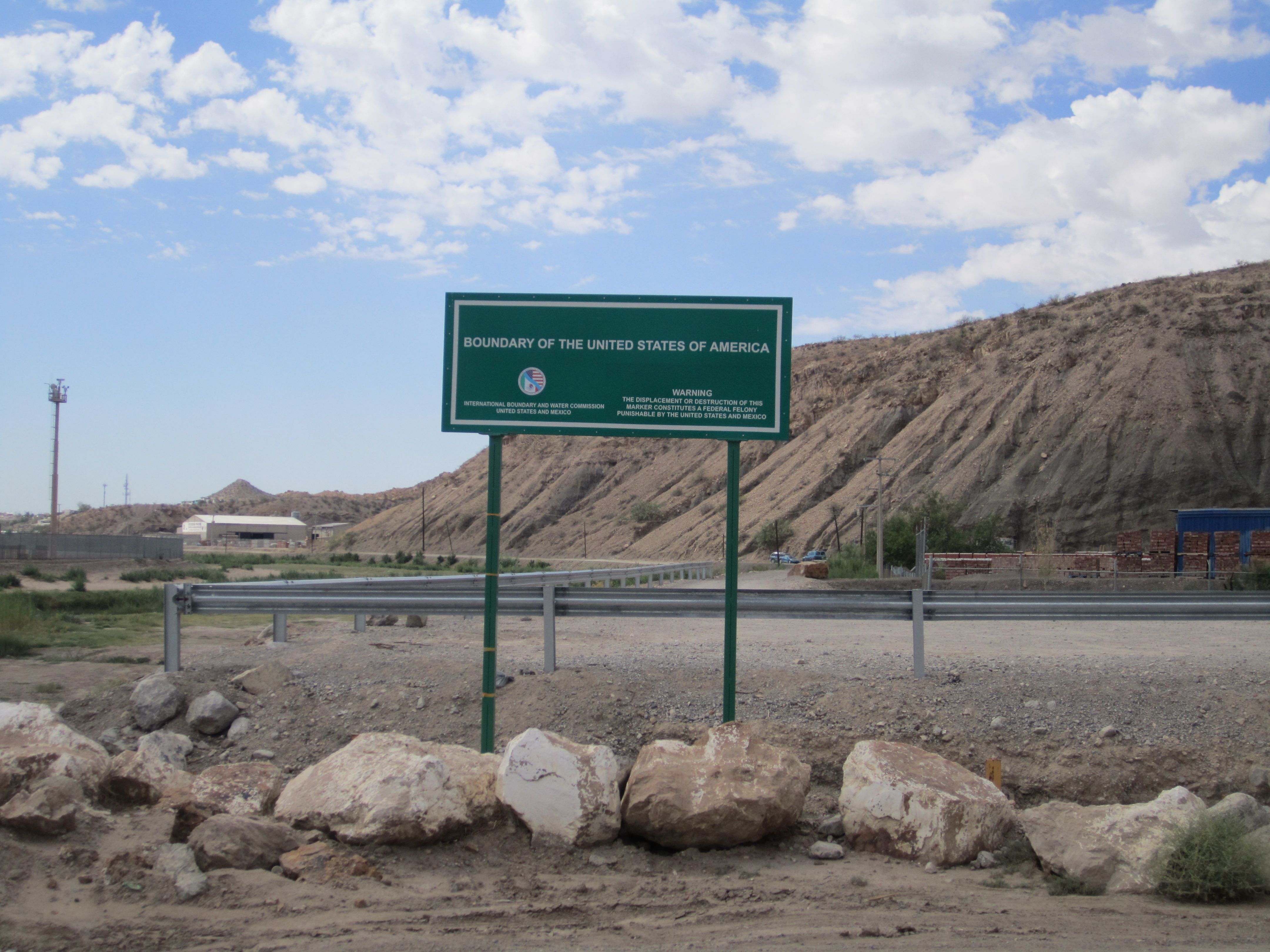
Sign demarcating US and Mexico territory on the southern US border in El Paso, Texas / Ernesto Castañeda / Creative Commons License

Immigration figures have long driven heated political debate in U.S. politics – even worse in recent years – but the data often exaggerate the problem because the responsible government agencies are double-counting and media reports are analyzing the numbers incorrectly. Opponents of President Joe Biden claim that over 2 million undocumented immigrants have entered the United States each year since he became President. The numbers reported by relevant agencies should not drive headlines or be interpreted as stock tickers about whether immigration is up and down, but the data become political footballs serving generally anti-immigration political interests.

Border encounters involving people without immigration papers are just a small subset of all immigrants, emigrants, visitors, and border crossing commercial and tourist activity – almost 300 million over the past 12 months. Analysis of the numbers about border crossers reported by the U.S. Department of Homeland Security requires clarification of what it considers “encounters.”

  • Because many people enter multiple times, the figures also reflect double-counting of many of the same individuals – sometimes more than five times each. Those of certain nationalities can be quickly removed and returned to Mexico for various reasons without adequate recording of their names and other details, making it impossible to know how many people are counted multiple times. Even those repatriated after a judge determines they do not qualify for asylum, humanitarian parole, or other special visa often try again and count as another “encounter.”
  • “Encounters” do not equal unique individuals but rather interactions between asylum-seekers or migrants and DHS personnel anywhere along the border. The U.S. Government reports, for example, that 1 million-1.3 million migrants were removed from the United States under Title 42 provisions intended to protect U.S. health in the context of the COVID pandemic – almost half of the total reported “encounters.” So “encounters” do not equal individuals entering the U.S. either.
  • The numbers include individuals whom the United States normally welcomes, including 140,000 unaccompanied minors looking to reunite with family members in the country, and over 20,000 Ukrainians. Russians and Afghans are in a similar situation. Cubans no longer are fast-tracked for permanent residency under the Cuban Adjustment Act, but the U.S. government cannot deport them because neither Mexico nor Cuba will take them back. Hundreds of thousands of Venezuelans, Haitians, and others are fleeing situations that most U.S. observers consider intolerable.
  • Comparing year-on-year figures is also deceptive. During 2020, the acceptance of asylum-seekers came almost to a halt. The pandemic, Title 42, and the “Remain in Mexico” program (under which individuals who pass a “credible fear” screening are forced to stay in Mexico while awaiting a hearing) created a backlog and bottleneck for the normal mobility that had occurred in previous years. Shifts in DHS accounting between years have also exaggerated the impression of a surge.

Other observers have confirmed migration specialists’ concerns about the over-counting. Syracuse University’s Transactional Records Access Clearinghouse (TRAC), which monitors the staffing, spending, and enforcement activities of the federal government, reported in September that detention data released by Immigration and Customs Enforcement (ICE) “is, once again, riddled with errors.” TRAC found “egregious” mistakes in several data categories that led the agency to seriously misrepresent conditions in its public statements.

While the U.S. government’s bad information makes precise calculations of migrant flows impossible, what is sure is that the total number of distinct individuals entering the United States without documentation is much less than 2 million a year. More credible estimates are that –after accounting for thousands of deportations – probably less than half a million people have been allowed in.

  • Among them, some were granted asylum – a right under U.S. and international law. Many others are welcome refugees and asylum-seekers like those from Ukraine and Afghanistan. Many others are waiting their turn in immigration court. Therefore, most of those included in this estimated half-million are in the United States legally, and the government knows who they are and where they live. By definition, they are not “illegal” or hiding. Allegations by a Texas senator and others that “4.2 million illegal immigrants have streamed across the border” since Biden took office are simply not true.

* Ernesto Castañeda teaches in the Department of Sociology in the College of Arts and Sciences.

Ecuador: Weak Government Faces Growing Challenges

By Pablo Andrade Andrade*

Ecuadorians rallying during the paro nacional / Wikimedia Commons / Creative Commons License

Ecuadorian President Guillermo Lasso has tried to overcome the economic mess and political divisions he inherited from predecessors with neoliberal policies that, along with other missteps, have fueled growing opposition to him and undermined his agenda during the final two years of his term. Even if, unlike most of his predecessors in the past 30 years, he serves out his term, his record will be marred by policies that had failed when first attempted in the 1980s. According to Perfiles de Opinión, a respected poll, 66 percent of the population say that Lasso’s performance is either “bad” or “very bad,” and only 2.06 percent evaluate his government as “very good.” 

  • Lasso’s immediate predecessors – Rafael Correa and Lenín Moreno – left a country shaken by corruption, debt, a bungled strategy for dealing with COVID, and paralyzed public health and education services. He did not have a working majority in the National Assembly, and his CREO Movement failed to win control of key municipal and provincial governments. 
  • From the beginning, Lasso’s approach to the economic crisis was orthodox, borrowing heavily from the neoliberal fixes attempted in Ecuador in the 1980-90s. Although his administration managed to tap into the relative openness of the IMF and other IFIs, and successfully negotiated its massive debt with China, the Ministry of Economy and Finance adopted a tight budget, cutting state investments. Recovery from the pandemic slowed. Public employment – staple of the middle class – shrank, and inflation rose. 

Opposition to Lasso’s policies started weak but has grown steadily. The Confederación de Nacionalidades Indígenas (CONAIE), which had flexed its muscles during the Moreno government, was slow to mobilize at first, creating a situation that looked very much like the early wave of neoliberal politics in the 1980s, when a center-right government was able to bypass legislative opposition and weak civil society organizations. Last June, however, a new coalition of the three major rural organizations – CONAIE, Federación de Indígenas Evangélicos (FEINE), and Confederación Nacional de Organizaciones Indígenas y Negras (FENOCIN) – held a national strike (paro nacional) that effectively paralyzed the country for 18 days.  

  • The government backpedaled on its decisions to keep domestic fuel prices at international levels; to maintain low state expenditures for health and education; and to deny indigenous organizations a significant role in decision-making. Lasso reshuffled his cabinet, replacing a half dozen ministers. He opened negotiations with the rural organizations on a range of issues – spanning economic matters (i.e., fuel and food staples prices) and political ones (i.e., the designation of a new Secretario de Pueblos y Nacionalidades to replace the founding secretary Luis Pachala, who resigned in the wake of the national strike).  
  • Although the negotiations relieved some of the stress on the government, the core issues remain highly contentious, and so far, no agreement has emerged. Indigenous leaders say they are not happy with the process, and the few things agreed upon remain provisional. The Catholic Church tried to mediate but failed to progress beyond peripheral issues. In what looks like a desperate move, the government initiated a referendum process that most observers believe is intended to wrestle back the initiative on its own terms. 

The road ahead for the Lasso government is a difficult one – having essentially lame-duck status in the face of steadily mounting woes and opposition. His opponents are as strong and angry now as in June. Despite an improved fiscal stance, the government does not have the will or the capacity to expand public expenditures, so economic growth seems likely to continue at a snail’s pace, and employment will stay depressed in both urban and rural areas. The government’s unwillingness to adopt price controls will continue to fuel popular grievances. 

  • The leadership of CONAIE and others have already threatened a new nationwide mobilization and declared their opposition to the referendum initiative. Whatever support the executive was able to extract from the legislature has faded. Additionally, local government elections in 2023 are stimulating the parties to concentrate their efforts on their political fortunes.  
  • The Ecuadorian military, which played a major role in the abrupt departures of several Presidents over the past three decades, has so far avoided joining the partisan factionalism and appears united in the view that Lasso should stay. The President’s health may be as reliable an indicator as any of his fate. He recently traveled to Houston for treatment of melanoma, specifically a lesion in his right eyelid. In Quito’s churning rumor mill, convincing the population that he has been fully cured is nearly impossible. His efforts to assert his credibility as President will continue to be similarly challenged. 

* Pablo Andrade Andrade is the Germánico Salgado Chair on Andean Integration and Professor at the Department of Global and Social Studies, Universidad Andina Simón Bolívar, Sede Ecuador. He works on comparative political economy and Latin American politics. 

Chile: Constitutional Process Has Settled Little

By Carlos Cruz Infante and Miguel Zlosilo*

Demonstrators in Santiago, Chile call for a new constitution / www.jpereira.net / Creative Commons license

The Chilean Constitutional Convention handed its proposed draft to President Gabriel Boric on July 4 – in preparation for the “exit” referendum on September 4 that will approve or reject country’s new magna carta – but it hasn’t achieved the national unity, social cohesion, or popular support envisioned when 78 percent of Chileans voted for the convention in 2020.

Historical center-left leaders are publicly supporting the nay option, and opinion polls show support is declining.

  • Former President Eduardo Frei Ruiz-Talge (1994-2000), a Christian Democrat who played a key role after the Pinochet dictatorship, has urged rejection because he sees “insurmountable disagreements with contents [of the draft] that compromise peace, democracy and the prosperity of our country.” He said the proposed reduction in presidential power and creation of an omnipotent new Senate could lead to dangerous populism. Former President Ricardo Lagos (2000-06) has not rejected the draft, but he has pulled back from his expected endorsement of it – a blow to the Boric government strategy for approval.
  • Leading opponents of the Pinochet-era Constitution, including former senior government officials, have criticized the proposed replacement, writing that “the electoral system is distorted with reserved seats, which reminds us of the institutional [appointed] senators of Pinochet’s Constitution.” Like Frei, they believe that the proposed system would incite conflict rather than cooperation.
  • The eight most reliable polls in the country show likely yay votes for the draft are dropping – from around 50 percent in February to about 35 percent this month. Nay votes rose from a third to roughly 50 percent in the same period. Activa Research has found that 62 percent reject the draft, while 38 percent approve of it. The 30 percent who were “undecided” last month has dropped to 20 percent, with most now rejecting the draft.

Five major factors – not all of which are the Constitutional Convention’s fault – appear to be driving this shift.

  • The Convention majority rejected pleas for greater fiscal responsibility as it wrote in a series of expensive new entitlements and nationalizations. Sponsors’ reactions to the criticism also alienated voters by saying “you stand with us, or you stand with Pinochet’s dictatorship.”
  • Favoritism and strident ideological positions undermined consensus. Most of almost 80 percent of Chileans who voted for the constitutional process in 2020 believed the new Constitution would be, for good, a “casa de todos” in terms of the social contract. The tense and confrontational debate during the process and its outcomes establishing group rights rather than universal policies let them down. 
  • Economic uncertainty since the social upheaval of 2019 – aggravated by the COVID‑19 pandemic and war in Ukraine – has undermined popular support as well. Inflation has risen steadily, and the Chilean peso has plunged to a historical low.
  • People feel insecure. The government’s performance in managing crime, drug trafficking, and the armed conflict in the south of the country against Mapuche extremist factions has not been satisfactory. Boric’s emphasis on a negotiated settlement has failed and may have worsened the problem.
  • Approval for Boric, sworn in less than five months ago amid great expectations, dropped to 34 percent this month, the lowest of his mandate. Poor communications have pushed the First Lady (who serves as head of Sociocultural Coordination) and Minister of Interior Izkia Sichesto to have the lowest approval ratings of the cabinet. Although Boric has repeatedly denied that his administration backs the yay option, his General Secretary of the Presidency affirmed earlier this year that Boric’s program requires the new Constitution to be approved.

No matter how the plebiscite on September 4 turns out, the Constitutional process now appears far from ending – and threats to political stability seem likely. If Chileans approve the draft, both sides will seek significant changes. If they reject it, changing the 1980 Constitution will still be essential to avoid tumult in the streets like rocked the country in 2019. Boric recently suggested starting a new Constitutional process from scratch, fueling further uncertainty.

  • While frustrations appear likely to grow and the chance of instability is not negligible, the Constitutional Convention process has shown that – so far – Chilean institutions have been able to maintain Rule of Law. Compared to Venezuela (1999), Bolivia (2006), and Ecuador (2007-08), Chile has followed an open and relatively stable track. But if the plebiscite does not deliver a clear, workable verdict in September, the country will again be at a crossroads – either build on what it’s accomplished since 2019 or try to start anew.

July 27, 2022

*Carlos Cruz Infante is a sociologist and has served in several senior strategic planning positions in the Chilean government. Miguel Zlosilo is a sociologist and former chief of research of the Secretary of Communications in the second Sebastián Piñera government (2018-21). This updates their recent AULABLOG articles (here and here) on the topic.

U.S.-Guatemala: What does Washington Really Want?

by Ricardo Barrientos*

Guatemalan President Alejandro Giammattei and Attorney General Consuelo Porras / Government of Guatemala / Flickr / Creative Commons license

Central America’s ongoing political, economic, migration, and narcotics-trafficking crises would normally allow a potential ally like Guatemalan President Alejandro Giammattei to wriggle his way into Washington’s good graces, but his repeated efforts to thwart scrutiny of his and his allies’ corruption have been so blatant that the United States can no longer keep turning a blind eye.

  • Daniel Ortega’s Nicaragua is now clearly authoritarian – elected fraudulently, arresting opponents, and openly supporting Russia’s invasion of Ukraine. In El Salvador, Nayib Bukele is increasingly aggressive in his anti-democratic and authoritarian actions, and explicitly defiant of the United States. Honduran Juan Orlando Hernández is in jail, but Xiomara Castro faces the monumental task of rebuilding the state – in the face of doubts, if not opposition, from many in Washington concerned about her supposed leftist views. All this comes against a backdrop of surging migration, massive drug-trafficking, and a hemisphere-wide “great powers competition” with China and some Russian advances in the region. Until recently, Guatemala could have put itself forward as a partner that, while regional problems festered, could – even if not as a friend – help the U.S. pursue its interests.

Nevertheless, Guatemala is now far from the ideal U.S. partner in Central America. In an explicitly defiant action, Giammattei reappointed Consuelo Porras as Attorney General in spite of the U.S. State Department’s inclusion of her on the so-called Engel List, because of her involvement in significant corruption. She has been blocking investigations of corrupt acts and allowed impunity by several individuals, including Giammattei himself. 

  • Giammattei has been unable to give Washington even the minimum image as a credible and reliable ally as his two most recent corrupt predecessors managed to do. Weak from the start, his presidency has been wracked by mismanagement of the pandemic, persistent scandals, and anti-democratic actions. Lacking the popularity levels of Bukele or even Ortega, he has had to purchase political support from tainted sponsors including former military officers accused of committing crimes against humanity and genocide during the civil war; businesspeople accused of tax fraud or illicit electoral campaign financing; and corrupt officials – in return for promises that he preserve the impunity mechanisms that have so effectively protected them in the past. (Neo-Pentecostal groups are also an important part of his base.) For Giammattei, keeping control of the Attorney General’s office was paramount to fulfill that promise.
  • Under Giammattei, moreover, the government is failing in areas of direct interest to Washington, particularly addressing the “root causes” of the migration that ranks high on the U.S. agenda. Men widely suspected of collaborating with the drug cartels occupy high-ranking positions in Congress and government, making Guatemala a highway for drugs heading north. Cartel allies stand to increase their power in elections scheduled for June 2023.

Washington’s frustration with Giammattei is understandable, even though inconsistencies and favoritism in its own Central America policies have contributed to the estrangement. Guatemala’s democracy appears to be in its death throes – full of desperate people eager to risk their lives at the hands of a human-trafficking coyotes. While it remains high season for corruption, the government gives scant attention to public health (with the lowest vaccination rate and highest child malnutrition rate in Central America), and education. For many Guatemalans, the only hope of finding a better life is trying to reach the United States or cooperate with the burgeoning drug cartels.

  • Washington’s pressure on Giammattei (or any Guatemalan president) is long overdue, but it’s unclear whether it is driven by U.S. hubris at his failure to dump a corrupt Attorney General, or whether it represents a strategic shift toward a policy based on democratic values, wisdom, and prudence. Whatever the reason, the Biden Administration doesn’t seem to have learned the lessons of the failed Alliance for Prosperity that he strongly supported as Obama’s Vice President, appealing to Central American leaders to clean up their acts. A passive, laissez faire stand on Guatemala is not the proper way to address complex issues like the cartels, corruption, poverty, violence, and the other “root causes” of migration that Vice President Kamala Harris pledged to combat.
  • The day after Giammattei announced that he would not attend the Summit of the Americas in Los Angeles next month, Washington sent his formal invitation – adding to the confusion about U.S. intentions toward him. Many Guatemalans wonder if the Biden Administration puts issues like migration and drug trafficking before democracy and combatting impunity.

May 25, 2022

Ricardo Barrientos is a senior economist at the Central American Institute for Fiscal Studies (ICEFI).

Peru: Castillo Surviving Against All Odds – So Far

By Cynthia McClintock*

Demonstrators clash with police officers during a protest against Peru’s President Pedro Castillo after he had issued a curfew mandate / Angela Ponce / Sunday Times / Creative Commons License

Peruvian President Pedro Castillo has prevailed in two impeachment votes, but new impeachment threats are almost certain – and the President may continue to prevail but is unlikely to consolidate his administration. Castillo and the Congress have been at loggerheads since Castillo’s inauguration in July 2021. The reasons for the severe impeachment threat are manifold.

  • From the start, many Peruvians hoped for a “do-over” of the 2021 elections. In a field of 18 presidential candidates, Castillo won only 19 percent of the first-round vote, and many observers speculated that he would have lost the runoff to any of the other candidates except the actual runner-up, Keiko Fujimori, whose organized base was much smaller than in previous years due to corruption revelations. In the Congressional vote, Castillo’s party tallied only a tad less than one-third of the seats, with the rest split evenly between hard-right parties and non-programmatic, “centrist” parties.
  • While impeachment requires a two-thirds Congressional vote, the grounds for impeachment – in particular, “moral incapacity” – are vague. Since 2000, three Peruvian presidents have left office upon impeachment or imminent impeachment.

Castillo has steadily lost popular support; his approval rating has fallen to about 25 percent. Skyrocketing prices for food and fuel have taken a toll. Last week, a strike led by truckers paralyzed much of Peru’s highlands. This week’s massive protests are another sure indicator. Although the government continues to claim leftist credentials, it has not spearheaded significant new initiatives for social justice.

  • A large number of Castillo’s cabinet ministers have been unqualified. For example, a recent health minister, Hernán Condori, promoted “micro-cluster” water as a remedy for COVID‑19 without scientific evidence; the Peruvian Medical Federation repeatedly asked for his resignation – and he was finally ousted. Castillo’s first set of hapless appointments was widely attributed to his inexperience, but when he appointed his fourth cabinet last month, it appeared that he prioritizes loyalty, not competence.
  • Evidence of government corruption is considerable. Against Peru’s rules, Castillo holds irregular meetings with VIPs outside the Presidential Palace. As part of an expected plea bargain in late March, lobbyist and one-time friend Karelim López gave prosecutors information supporting charges against Castillo’s former chief aide (Bruno Pacheco) and two of Castillo’s nephews for illegal gains from state contracts in the Transport and Communications Ministry.

The President has survived through wily tactics and through legislators’ self-interest.

  • A key figure in Castillo’s party is its founder, Vladimir Cerrón, who recruited him to be the party’s 2021 candidate. Cerrón has been dubbed “El Otro Vladi,” in reference to Vladimiro Montesinos, the spymaster behind the crimes of former President Alberto Fujimori. Through promises of projects in their home areas or government positions, the government has co-opted numerous legislators. The perceptions of government guile are such that, after Peru’s Constitutional Tribunal last month pardoned Fujimori’s corruption and human rights charges, a prevalent rumor was that the government had made a backroom deal with pro-Fujimori leaders for their Congressional votes.
  • For the most part, the government has retained the votes of Peru’s “modern left” – legislators concerned not only about poverty but also gender rights, indigenous rights, and climate change, and committed to democracy – who hold about 5 percent of Congressional seats. At the start, dismayed by the hard-right’s hasty calls for Castillo’s impeachment and assuming that he would appoint a broad-based cabinet, the modern left supported the President. Now they are worried about the President – and also about whether or not their fate is linked to the government’s.
  • Peru’s Congress is as unpopular as Castillo. In particular, the Speaker of the Congress (next in line for succession to the presidency after the Vice-President), María del Carmen Alva of Acción Popular, is unpopular; she is perceived as arrogant and rude. In opinion polls, 80 percent of Peruvians say that, if Castillo is impeached, they want new elections not only for President but also for Congress. However, Peruvian law does not allow re-election of legislators, meaning that all the current legislators would lose their jobs and would fight the move.

While Castillo seems likely to continue to stumble and face challenges, there is some chance that Peru’s political impasse can be broken and a semblance of stable, effective governance restored. One possibility is that, at the end of Alva’s term in July, she is succeeded by a more capable and palatable Congress Speaker, and Castillo could be replaced without a popular demand for new Congressional elections. In its second search for a successor to an impeached president in November 2020, the Congress identified Francisco Sagasti, who was excellent. A second possibility, proposed by Sagasti himself, is a citizens’ initiative for a Constitutional reform that would shorten the terms of the President and the Congress – an initiative that would require only a simple majority in a Congressional vote.

  • Peru’s 2021 elections were held despite a devastating pandemic that obstructed campaigns and opinion polls. Last week’s ferocious protests in Huancayo – hometown of Presidential mentor Cerrón – and this week’s in Lima indicate that Peruvians are frustrated and angry as the war in Ukraine drives up fuel costs and Castillo’s agenda stalls. New elections may be the only way ahead.

April 7, 2022

* Cynthia McClintock is Professor of Political Science and International Affairs at George Washington University.

Latin America: Is There a Constructive Side to U.S. Policy?

By Fulton Armstrong

President Joe Biden, National Security Adviser Jake Sullivan and NSC Senior Director for the Western Hemisphere Juan Gonzalez gathered at the President's desk in the Oval Office.
President Joe Biden, joined by National Security Adviser Jake Sullivan and NSC Senior Director for the Western Hemisphere Juan Gonzalez, talks on the phone with Jeff Zients on Wednesday, April 21, 2021, in the Oval Office of the White House / Adam Schultz / The White House / Flickr / Creative Commons License.

While many of the Biden Administration’s policies in Latin America – particularly toward Cuba, Venezuela, and China’s activities – remain largely the same as during the Trump era, some of its actions and statements suggest more nuanced approaches on other regional issues. 

  • National Security Council senior director for the Western Hemisphere, Juan Gonzalez, has been the point person for maintaining the hard line on Venezuela and Cuba. In early March, he met in Caracas with President Nicolás Maduro, who later said, “we’ve agreed to work on an agenda going forward,” but the Administration vehemently denied this and has continued to maintain that opposition leader Juan Guaidó is President of Venezuela. In Cuba, according to various sources, Gonzalez last year vetoed a promised plan for reversing a Trump halt to the flow of remittances to the island. He recently stated that new U.S. sanctions against Russia were also intended “by design” to put pressure on Cuba, Venezuela, and Nicaragua.

At Congressional hearings in February and March, other senior officials have laid out various Administration priorities.

  • Commander of the U.S. Southern Command, General Laura Richardson, testified that the hemisphere is “under assault from a host of cross-cutting, transboundary challenges that directly threaten our own homeland.” In addition to helping the region with COVID-19 and the “climate crisis,” she said U.S. policy is to counter China’s “relentless march” to expand its influence in the region and its “challenges [to] U.S. influence.” She also pledged to combat transnational criminal organizations, which “operate nearly uncontested and blaze a trail of corruption and violence that create conditions that allow the PRC and Russia to exploit, threaten citizen security, and undermine public confidence in government institutions.” She said her command is “putting integrated deterrence into action.” 
  • In testimony in February, Assistant Secretary of State for the Western Hemisphere, Brian Nichols, praised President Biden’s recent “Summit for Democracy” and acknowledged that “too many ordinary citizens have seen their governments fail to meet their aspirations for a better future.” He also said the Administration’s “Build Back Better World” initiative, including investments that respond to partners’ infrastructure needs, will counter China’s “Belt and Road Initiative” and “will help demonstrate that democracies can deliver for their people.” His counterpart in the Bureau of International Narcotics and Law Enforcement Affairs, Todd Robinson, stressed rule of law programs under the “Root Causes Strategy,” although he noted that “in some cases,” governments lack the political will to tackle the corruption that is a root cause of their nation’s problems.
  • USAID Assistant Administrator responsible for Latin America, Marcela Escobari, testified that her priority is mitigating the harm caused by COVID-19 and climate change. While criticizing the state of democracy and human rights in “extreme cases” like Venezuela, Cuba, and Nicaragua, she expressed concern about “democratic backsliding” elsewhere, noting that “even in more established democracies, authoritarian tendencies have emerged.” 

The Administration has not articulated how some of its steps diverge from the aggressive and transactional approaches that characterized the Trump Administration’s engagement with the region. The White House pressed the International Monetary Fund (IMF) hard to reach an accommodation with Argentina, whose government Trump kept at arm’s length, and helped it avoid default on its 2018 stand-by loan. Vice President Harris has given strong support to Honduran President Xiomara Castro since her inauguration in January – and probably contributed to Washington’s decision to request the extradition on drug charges of her predecessor, Trump ally Juan Orlando Hernández. In their Congressional testimony, current officials have repeatedly made nuanced remarks about the perceptions and reality of homegrown challenges in Latin America. Their emphasis on corruption and lack of will to address those scourges suggests awareness that not all is well, even in those countries that Washington embraces as democracies. After a slow initial response, the Administration has been generous in providing support for vaccine availability and for the capacity of public health systems to effectively respond to the COVID‑19 pandemic.

  • These factors suggest that while tired regime-change policies on Cuba and Venezuela and “integrated deterrence” against China and drug cartels may remain central to Washington’s approach to hemispheric affairs, there is awareness as well of how deeper cooperation with the region could simultaneously promote both U.S. and Latin American interests. The upcoming Summit of the Americas in Los Angeles may be the Administration’s best chance to seek meaningful common ground around the imperative of strengthening democratic governance, a challenge which Washington’s leadership now perceives as one that it shares with virtually all of its Latin American counterparts. 

March 31, 2022