Anti-Immigrant Campaigns

Anti-Immigration Rhetoric: Winning Campaign Strategy or Coin Toss?

By Joseph Fournier and Ernesto Castaneda

October 10, 2024

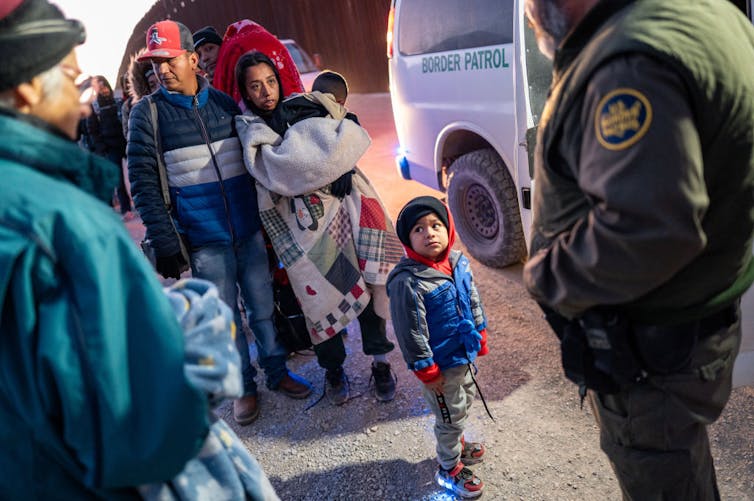
With the U.S. presidential election drawing nearer, many Kamala Harris supporters fear a perceived weakness on the border “crisis” may cost her the election to Donald J. Trump. Trump has championed himself as the figurehead for tough border policy. Restricting immigration has been associated with Trump. An NBC poll showed that 89% of people who identify as conservative point to the situation at the U.S.-Mexico border as a major factor in their vote for president, while only 25% of those who identify as liberal do so, and 52% among moderates. Therefore, we are not witnessing an anti-immigrant turn in public opinion but a further polarization by political ideology.

Crosstab from CBS, YouGov poll page 23.

Trump has been capitalizing on this perceived base of support by making even more extreme comments regarding the issue, most recently employing race pseudo-science in claiming that recent migrants possess “bad genes.”

In the past, Harris and the Democrats have painted themselves in clear opposition to his cruel immigration policies, such as family separation. When on the campaign trail in 2019, Harris’s rhetoric focused on pathways to citizenship and the plight of migrants. This strategy worked as Biden and Harris defeated Trump in 2020.

There was a slight rightward shift from Harris and the DNC on immigration. This was probably in reaction to an increase in the visibility of border crossings after the pandemic.  Trump has framed these increases as a “border crisis.”

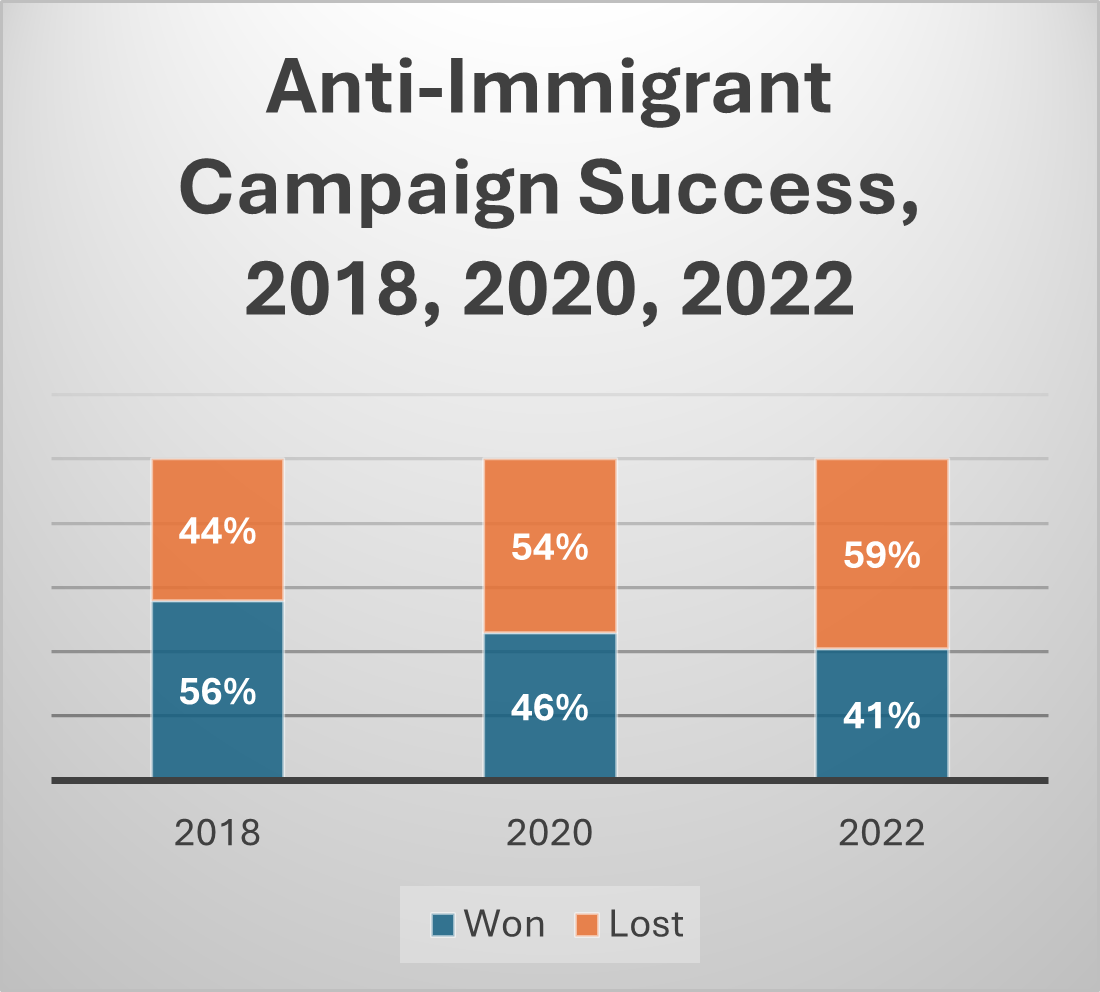
But do Democrats need to get harsher on immigration if they want to win? Data shown in Figure 1 demonstrates a phenomenon that may surprise political strategists on both sides of the aisle. Research from The Immigration Lab analyzing congressional and gubernatorial elections in 2018, 2020, and 2022 has shown that these anti-immigrant campaign victories have decreased by about 15%. This data was pulled from online campaign material from every election result with a 10% margin between the two major candidates.

Successes of anti-immigrant campaigns in competitive elections, 2018-2022 by the authors.

In 2018, businessman and former state senator Brian Kemp ran for governor in Georgia. His campaign epitomized the culture wars that the GOP included as part of their messaging strategy. Kemp styled himself as a “politically incorrect conservative” and filmed himself touting chainsaws and shotguns in service of this persona. He ended one of his ads by showcasing him in his truck, threatening to “round up criminal illegals myself.” On November 8, 2018, Kemp defeated his opponent in the closest Georgia gubernatorial race since 1966.

In 2022, Kemp ran for re-election against the same opponent. With essentially the same election conditions, Kemp’s strategy radically changed. His new primary TV ad, titled “Stronger Georgia,” listed a myriad of his accomplishments as governor. Many of his themes continued from his 2018 ads, including his support of decreased government regulation. Nonetheless, a notable point missing from his 2022 ad, however, was immigration. Kemp made no mention of the issue, making only a brief note of him “fighting human trafficking.” In softening his tone on migration, Kemp nearly tripled his margin of victory in 2022 in comparison to 2018.

Even while encounters at the border today are as low as during the pandemic when Title 42 was in effect closing the border to asylum-seekers, many think that long lines of people asking for asylum at the U.S.-Mexico border is a political liability for the Biden-Harris administration. However, when Americans in these competitive elections have shown up to the polls in the last six years, running an anti-immigrant campaign has demonstrated itself to be well short of the secure victory strategy that many seem to think it is.

Joseph Fournier is a Research Assistant at the Immigration Lab and a senior at American University.

Ernesto Castañeda is the Director of the Immigration Lab and the Center for Latin American Studies.

Uncertainty: Migrant Self-classification of Immigration Statuses

By Mackenzie Hoekstra

October 3, 2024

Starting in 2022, the Immigration Lab at American University began interviewing recent migrant and refugee arrivals to the DMV. So far, we have interviewed 181 from a variety of origins. The interviews aim to understand the experiences of refugees and migrants before, during, and after their entrance into the United States. Interviewers asked participants to reflect on their immigration journey and classify their immigration status. Self-perception, specifically individual understanding of immigration status, varied depending on the respondents’ country of origin, with particular uncertainty for migrants coming from South and Central America. Out of the fifty-nine respondents who were asked to classify their immigration status, eight were uncertain, seven of these were from El Salvador and one from Venezuela.

This broad range of understanding can be partly attributed to the higher clarity in legal definitions for refugee status and recipients of asylum or humanitarian parole versus migrants who have come without papers or who are in the middle of requesting asylum or other humanitarian relief. Refugees and asylum seekers qualify for legal residence based on proving a “well-founded fear of persecution for reasons of race, religion, nationality, political opinion or membership in a particular social group” (UNHCR). Refugees are vetted, approved, and brought to the U.S. through international refugee organizations and the U.S. government. They receive specific resettlement services and benefits through sponsoring resettlement agencies in the U.S. under the program known as Reception and Placement. These services are usually limited to the first 90 days after arrival and include necessities such as securing and setting up housing and rent assistance. Other services are provided by case managers, such as cash assistance, cultural orientations, school enrollment, benefit application assistance, employment support, and aid in navigating medical and legal services in their new communities. The goal of these services is for refugees to be economically self-sufficient as soon as possible. The number of refugees allowed in the U.S. is capped each year by the president and Congress. The current admissions cap for FY 2024 is 125,000 and 100,000 were resettled.

Asylum seekers must also prove they meet the conditions set by UNHCR but apply for asylum upon their arrival to the United States. They can apply affirmatively either at the point of entry or within a year of arriving in the U.S., or defensively once they receive notice of removal proceedings. Once granted asylum, they are known as asylees and gain access to government benefits and services similar to refugees like cash assistance and medical assistance, but do not have the same level of support as refugees do through case management. The are no numerical caps on how many asylum seekers can be granted that status but rather are decided on an individual case through immigration courts. This process can be lengthy and has a very significant backlog. According to TRAC, 1,101,819 asylum applicants currently have a pending case with U.S. immigration courts. This number translates into an average wait time of 1,424 days, a wait of almost four years for their case to be heard and decided.

For individuals who do not qualify for legal permanent residency as refugees or asylees, the definitions and processes become more complicated. Unlike for refugees and asylum seekers, there is no legal definition of a ‘migrant.’ A variety of programs/statuses exist for migrants including, but not limited to Humanitarian Parole (HP), Temporary Protected Status (TPS), work permits/visas, student visas, and green card applications, all of which have strict eligibility requirements and timelines.

Social services and benefits available to asylum seekers and migrants are limited. According to the National Immigration Forum, federal benefits such as the Supplemental Nutrition Assistance Program (SNAP), Temporary Assistance for Needy Families (TANF), Supplemental Security Income (SSI), and Medicare are not available for these immigrants. These benefits are only available to immigrants who have been granted asylum or become lawful permanent residents (LPR) and lived in the U.S. for a minimum of 5 years. Some states offer limited cash, food, and healthcare assistance, however, most of the services available are provided by local nonprofits which face similar barriers to resources and visibility. Accordingly, research shows that immigrants use less government services than the U.S.-born.

In addition to limited social benefits, legal status designations are complex to navigate, often requiring legal guidance and representation to get one’s status adjusted and obtain permanent residency. The interviews conducted by the Immigration Lab highlight this confusion and uncertainty and the need for better and more accessible resources and legal guidance for migrants.

Among respondents who did not classify themselves with a concrete immigration status in the interviews, two main groups emerged, those with some form of legal guidance and those without. Respondents without any form of legal guidance were quick to classify themselves originally as undocumented or express complete uncertainty as to their status. When prompted further during the interviews, many respondents clarified that they were uncertain about their status, not undocumented.

In other cases, individuals thought they may be out of status but in reality, they were pending a decision by migrant courts. In one instance, a respondent from a woman from Colombia stated, “Let’s say right now I don’t have status. I don’t have documentation. I am undocumented.” However, further discussion revealed that she had been processed and released by U.S. immigration and had been allowed to stay in the U.S. on legal grounds, which she did not fully understand. This response highlights how a self-classification as “undocumented” is used as a way to express initial uncertainty. While this response pattern emerged in a few cases, one example of complete uncertainty came from a Honduran male respondent. When we asked about his immigration status, he responded “What can you call it?” The interviewer then went on to explain different avenues of immigration: asylum, visa, and entry without inspection. In response, the man once again affirmed that “I don’t know…” The man explained that he was interested in getting a work permit but had no avenues through whichto obtain one. This shows that they do not know how the U.S. immigration system works, much less how to navigate it.

For those who expressed having legal guidance or representation, a theme of classifying as “in-process” was common. These respondents understood that there was a process that they were going through to get documentation but could not specifically articulate what that process was. For example, when asked to identify her immigration status, one El Salvadorian female explained that she and her family had found a lawyer to represent them. But never articulated what legal avenue was lawyer pursuing. Similarly, an El Salvadorian male expressed confusion over his next court date, not knowing when or what the court appearance was for.

In a working paper written by the American University’s Center for Latin American and Latino Studies on Newcomer Central American Immigrants’ Access to Legal Services, researchers found that less than half of Central American immigrants have access to legal services because low-income and pro bono services are hard to find. Additionally, this affordable representation often only takes on limited cases, specifically focusing on the cases that are more likely to be won in court. This has resulted in more legal referrals to private firms, and despite these firms providing high-quality services, they are very expensive. Immigrants may be tempted to work with notary generals confusing them with notarios, who in Latin America are highly influential lawyers. This creates a higher degree of fraud risk. Therefore, these Central American immigrants either avoid, don’t have access to, or cannot afford legal services. This means that they must rely on their knowledge or the knowledge of family and friends. In the context of the complex and process-oriented immigration legal system, this information is often not enough and may lead to them losing their immigration case to remain in the U.S.

The analysis of these interviews uncovered the important reality that migrants are often uncertain about their immigration status in the U.S., even when they have access to legal representation or guidance. Volunteers, legal offices that do pro-bono immigration work, and non-profits that have this as their mission are overburdened by caseloads and don’t receive enough funding and donations to expand. People come to the United States for a variety of reasons and often must take timely action to secure their legal statuses. It is crucial that theyhave access to resources that can help guide and support them through the various processes available to them, both legal and non-legal. It is not enough to ensure basic access to these resources; efforts must be made to make information about immigration statuses accessible and understandable for migrants.

Mackenzie Hoekstra is a senior majoring in Sociology at American University and a member of the Immigration Lab.

Edited by Dr. Ernesto Castañeda, CLALS, and Immigration Lab Director.

Colombia: LGBTQ+ Youth Faces Discrimination, Bullying, and Institutional Harassment 

by Juliana Martínez* 

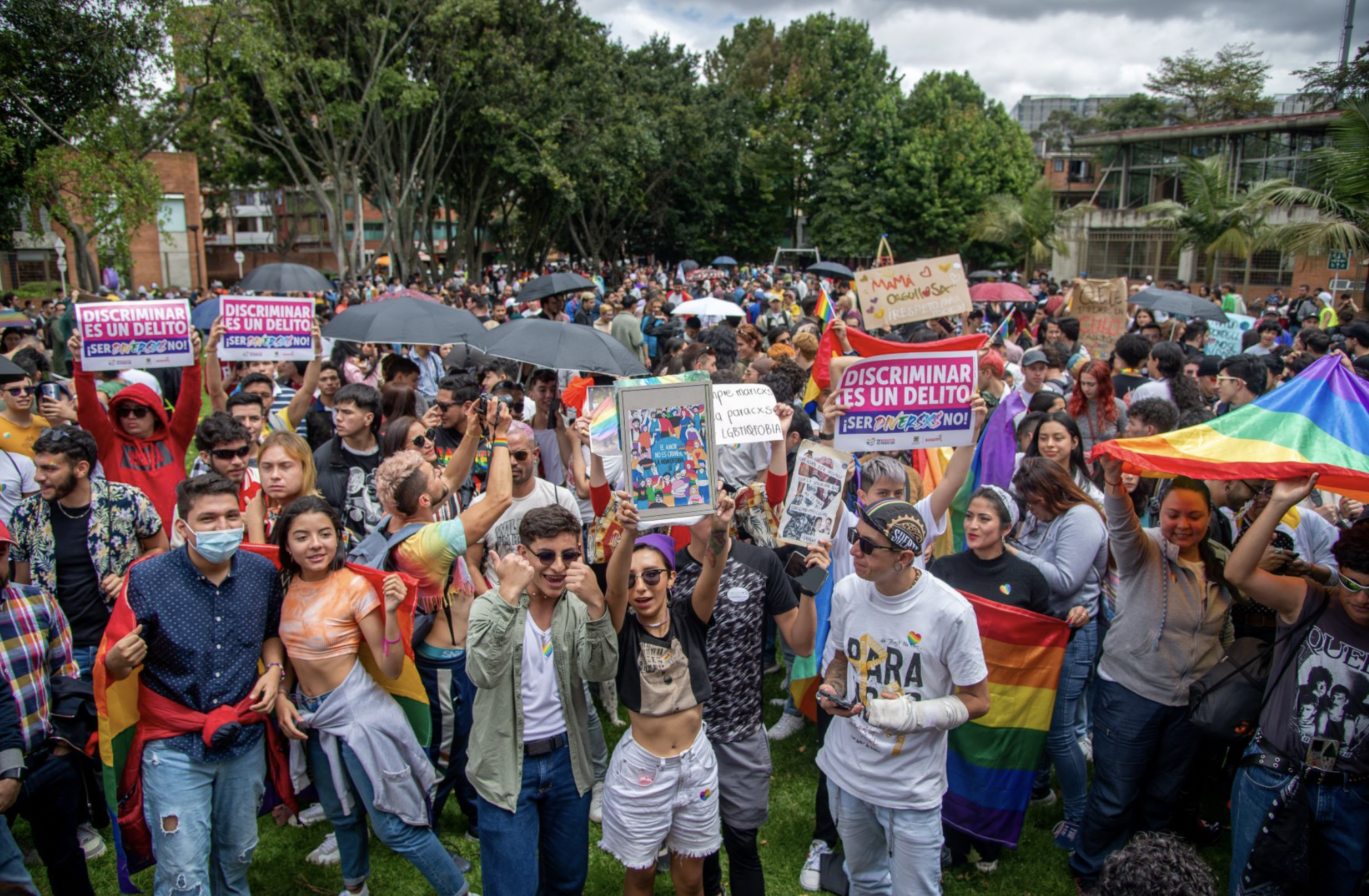
Group of demonstrators in Colombia for LGBTQ+ rights / Erick Morales / Sentiido / Creative Commons License

Despite significant progress in laws advancing their rights, Colombia’s LGBTQ+ youths face systemic hostility and receive little support from the institutions that are supposed to help them, leading to higher mental health issues and reduced academic achievement. Surveys by the Colombian Sentiido Foundation – receiving 1,555 and 3,246 responses from LGBTQ+ youth in August-September 2021 – provide a comprehensive picture of their lives, experiences, needs, and support networks. 

Despite the most progressive legal protections in Latin America, the public record and various comprehensive studies show that LGBTQ+ people in Colombia continue to experience widespread discrimination and violence – including bullying, verbal harassment, mean rumors, and physical assault – that make them feel unsafe. Ninety-eight LGBTQ+ people were murdered in Colombia in 202021. 

  • Colombia’s highest judicial body, the Constitutional Court, has established strong precedents that explicitly protect sexual orientation and gender identity from discrimination. Gay couples can get married and enjoy the rights of straight couples. While the country does not have a comprehensive gender identity law, trans people can change their name and sex marker on all official documents freely. The Court has shown a strong anti-discrimination stance with a series of rulings protecting students as well. 
  • Despite this, LGBTQ+ youth suffers on many levels. Sentiido’s surveys confirmed that young LGBTQ+ Colombians experience harassment, bias, and discrimination in school and other aspects of their lives. Ironically, the Sentiido study found that, rather than being the solution, adults are often part of the problem – failing LGBTQ+ youths in school, home, and even churches. Teachers, parents, and other adults in positions of responsibility often press youths into therapies and treatments to make them conform to traditional models rather than prosper as they are. Eighty-seven percent of LGBTQ+ youths have heard homophobic or transphobic comments from family members, and almost one in five reports having been physically punished by parents for their sexual orientation or gender identity. 

Regarding school climate, more than half report they feel unsafe in school and were cyber-bullied at home, causing more than a third of them to miss at least one day of class a month. More than 90 percent hear homophobic remarks at school, and 75 percent report being verbally harassed based on sexual orientation, gender, gender expression, and race or ethnicity. Thirty percent have been physically harassed (e.g., shoved or pushed). Some 87 percent feel deliberately excluded by other students. 

  • Most students (65.5 percent) reported hearing homophobic remarks from school staff. Teachers’ and administrators’ unwillingness to create a safe environment, such as by discouraging peer meanness, create an impression of condoning the abuse. Almost 15 percent of youths taking the survey reported facing disciplinary processes for being LGBTQ+ despite laws explicitly prohibiting it. 
  • When students reported incidents, moreover, staff usually did not help. Less than a fifth reported that school personnel intervened most of the time or always. (Peers were much more reliable in assisting.) As a result, almost seven in 10 students never reported incidents to staff. 

Youths facing such challenges without reliable support networks, affirming resources, and safe spaces endure stresses that negatively impact their mental health and academic achievement – consequences that are visible in rates of attempted suicide and school absences. These data, however, can help responsible people make institutions more responsive. Almost 70 percent of LGBTQ+ youth think things will be better in the future, apparently because they see the obvious solutions that adults can adopt. 

  • The same questionnaires that paint vivid pictures of the problem also show the way ahead to improvements, starting with adherence to the law. The surveys show that youths who receive positive info about LGBTQ+ people, history, and events – although a minority – have the best outcomes in terms of mental health, a feeling of belonging, and school attendance. Schools with explicitly inclusive policies have more successful staff intervention when problems arise.  
  • Online materials and activities can help as sources of information, but they’re not a substitute for person-to-person interaction. The unsupervised way in which youths navigate online spaces can put them at risk or confuse them. The Sentiido surveys show that inclusion, acceptance, and personal contact are the elements, denied to most LGBTQ+ youths today, that will most help all Colombian youth, including LGBTQ+ youth, thrive. 

*Juliana Martínez  is the Research Director of Sentiido and an Associate Professor at the Department of World Languages and Literatures at American University. Her recent book, Haunting Without Ghosts, Spectral Realism in Colombian Film, Literature and Art, is the winner of the William M. LeoGrande Award for the best scholarly book or article on Latin American or Latino Studies published by a member of the American University community in 2020–2021. 

Latin America: Empowering Young Women to Overcome Violence, Poverty, and Discrimination

By Fulton Armstrong*

Study participants take part in group discussion in Cali, Colombia / Universidad del Valle / FLACSO-Costa Rica / Creative Commons license

In addition to documenting the often-overwhelming challenges facing young women in Latin America, the Vidas Sitiadas (Besieged Lives) project coordinated by the Facultad Latinoamericana de Ciencias Sociales (FLACSO) of Costa Rica analyzed promising approaches for empowering women to improve their lives. The solutions are not one-size-fits-all, but they address similar underlying drivers – gender inequality, systemic violence, and the chronic lack of social inclusion and economic opportunities – in Argentina, Colombia, El Salvador, Uruguay, and Costa Rica.

  • Governments have largely failed to address young women’s rights to political and economic inclusion, to protection from community violence, and to progress in reducing and ending gender-based violence. Many of the women feel like prisoners in social and cultural constructs that ignore their needs, undermine their sense of self-worth, and deprive them of the skills and self-confidence necessary to build a better life. Women who want to improve their lot in life often can’t afford the necessary education, and are held back by being from stigmatized neighborhoods, lack of basic social services and transportation, and limited access to employment.

The challenges have deep roots and defy quick fixes, but the Vidas Sitiadas studies revealed that projects addressing their underlying causes can enable progress in individuals’ lives, especially when government steps up in coordination with private companies and NGOs. The programs examined have been in place for several years, so their long-term impact is difficult to gauge, but participants’ feedback shows they are based on sound analysis and point to practical, sustainable solutions.

  • The Girasoles (“Sunflowers”) programs designed and implemented by the Paniamor Foundation in Costa Rica emphasize close collaboration among civil society and government at the national and municipal level. Located in a municipality of San José, the initiative is supported by the Ministry of Justice and Peace, the semi-autonomous National Institute for Learning (INA), and the “Civic Centers for Peace” of the area. Girasoles works with young women to overcome their sense of vulnerability through developing skills, rethinking identities, and rebuilding relationships.
  • The Primer Trabajo (“First Job”) initiative by the Arbusta Company, which specializes in information technology, and Santiago-based Espacio Público demonstrated that getting a first job is a woman’s best means to increase social and economic inclusion in Buenos Aires, Montevideo, and Medellín. In addition to providing on-the-job training, the company empowers women through personal development classes in areas such as listening and speaking skills, problem-solving, and dealing with violent situations. The experience has enabled some women to change homes, drop old relationships and make new ones, and feel agency over their lives for the first time.
  • The Club de Niñas (“Girls’ Club”) by Glasswing International in El Salvador has demonstrated the value of women creating social bonds while in detention facilities and after their release. The program focuses on the roots of problems that contributed to their involvement in criminal activities – poverty, exclusion, gender discrimination, and lack of opportunity. It improves young women’s ability to protect themselves from gender-specific threats and provides opportunities to replace old friendships and reduce economic dependencies that contributed to their past troubles. Interviews show the program increases their self-confidence to make and carry out decisions.
  • The Jardines Maternales (Nursery Schools), run by the Buenos Aires Municipalidad de Avellaneda, have demonstrated the value of childcare to young women who are employed, receiving assistance, or otherwise engaged in positive social interaction, according to a report by FLACSO Argentina. The program enables young women to work and develop important social capital, which also positions their children for greater stability and progress.
  • An Economic Opportunities study, carried out by the Universidad del Valle (Colombia) with young women who live in high-violence neighborhoods in Cali validated two important recommendations to support women striving to liberate themselves from the traps of inequality and exclusion. Based on in-depth interviews, the study called on governments to guarantee higher education – to build skills and enable social contacts – for women who finish secondary education and to provide early-childhood care so they can work full-time.

The problems of young women are the problems of all of society – economic, security, political, cultural – and long-term solutions therefore need the support of broad swaths of society. The Vidas Sitiadas project shows that equipping girls and young women with tools to navigate unequal and struggling economies, systemic violence, and suffocating gender roles is important – and feasible. It has provided the proof of concept and identified some concrete steps forward that alleviate the suffering and fear of at least some young women. That incremental progress is important, but macro solutions reducing or eliminating the many obstacles women face will take political will and time.

  • Government collaboration in some of the projects has already been key, and that success could provide the foundation for persuading political, economic, and security elites to broaden and deepen it. Increasing social inclusion and reducing violence in society and in the home will benefit everyone. Long-term progress will require serious reflection into deeply entrenched aspects of each country’s attitudes and practices toward women, but Vidas Sitiadas has shown that concerted action can make a difference.

This is the final of three AULABLOG articles on the Vidas Sitiadas project. The first two discussed the impact of the COVID‑19 pandemic on women and programs for women under detention. For additional information about the project, undertaken by FLACSO-Costa Rica and its partners with support from the International Development Research Centre (IDRC) of Canada, please consult the Vidas Sitiadas website.

September 12, 2022

*Fulton Armstrong is a Research Fellow at CLALS and Director of the AULABLOG.

Argentina: Joining the BRICS?

By Andrés Serbin*

Japan’s Prime Minister Fumio Kishida, Canada’s Prime Minister Justin Trudeau, U.S. President Joe Biden, Germany’s Chancellor Olaf Scholz, former British Prime Minister Boris Johnson, France’s President Emmanuel Macron, and Italy’s Prime Minister Mario Draghi pose for a G7 leaders’ photograph during a NATO summit at the alliance’s headquarters in Brussels on March 24, 2022 / Michael Kappaler / Flickr / Creative Commons license

The BRICS countries’ efforts to expand the group’s influence in the Global South is giving momentum to Argentina’s bid for membership, but the timeline and outcome of the admission process is far from certain. During a virtual summit hosted by Beijing in June, the BRICS – Brazil, Russia, India, China, and South Africa – continued efforts to revitalize the group and follow up on expansion proposals initially agreed to in 2017.

  • Conceived as an alternative to the G7 when launched in 2009, the BRICS represent 42 percent of the planet’s population, 24 percent of world GDP, and more than 16 percent of global growth, according to 2019 World Bank estimates. Each member plays a significantly different role in international affairs, but the group is moving in a unified fashion to position themselves as a decisive factor in the global governance architecture and as a voice of the “Global South” that advocates an economic and political alternative for emerging economies. Brazilian analyst Oliver Stuenkel notes that the five “share a profound skepticism of the U.S. international liberal order and perceived danger that unipolarity represents to their interests.”
  • The June summit reviewed initiatives to increase economic cooperation and development, promote multilateralism and world peace, and create a vaccine research and development center. As a reaction to Western economic sanctions, Russia proposed the development of a “de-dollarized” financial space for trade between the group’s economies – a proposal already introduced in the discussions of the Shanghai Cooperation Organization, the main Eurasian cooperation institution. The group also took up China’s 2017 proposal for a “BRICS Plus” – expansion to incorporate new members of the Global South, including Argentina.

The Argentina proposal faces obstacles within the BRICS even though Russia, China, and India (whose foreign minister visited Buenos Aires last week) support it and Celso Amorim, former and likely future foreign minister if Brazilian President Lula da Silva is reelected, has said Brazil will support as well.

  • Political and geopolitical challenges within the group include differences in how members relate to the international liberal order. Ties to the West vary from Russia’s more belligerent position to China’s more cautious one and India’s ambiguity. There are marked differences in their foreign policies that potential new members could aggravate.
  • Members also have different viewpoints on whether to incorporate regional integration blocs such MERCOSUR, whose own heterogeneities, tensions, and conflicts can hinder the expansion process and bloc effectiveness. At a MERCOSUR Summit in July, key leaders’ absences and a divisive debate about the signing of an FTA between Uruguay and China revealed differences. While Paraguay keeps diplomatic relations with Taiwan, the other three full members of the group have close diplomatic and economic ties with the PRC.

Argentina’s application has also given rise to divided views and opinions in the country itself. Despite the fact that all sectors of the ruling coalition can be considered “Peronists,” the current government has pursued an erratic and at times contradictory foreign policy, including conflicting positions regarding international relations, alignments, and alliances. Argentine sinologists disagree on the feasibility of membership, and many more Argentines object because it would hurt relations with the United States, Europe, and the IMF, which has recently helped the country avoid defaulting on $44 billion the Fund previously loaned it. A simultaneous application by Iran – some of whose government officials Argentine justice blames for several terrorist acts in Argentina, including the bombing of Israel’s Embassy and the Jewish local organization AMIA – doesn’t help to build consensus on the issue.

Notwithstanding the divergent opinions in Argentina and among the BRICS, interest on both sides has been persistent and shows signs of growing – even if not necessarily resulting in admission in the near future. Argentina’s interest in pursuing a relationship with the BRICS has continued through governments of different political persuasions since 2014. The need to maintain good relations with traditional partners is key, and the agreement with the IMF presents another reason for caution. It is not clear if Argentina’s incorporation could complicate its geopolitical position without yielding tangible benefits.

  • For the BRICS, the shared interest – a desire to curtail U.S. and Western influence and create a counterweight to it – helps them overcome their differences and seems unlikely to change soon, but obstacles to the evolution of the global transition they seek will also remain in the short term. However, in the context of the current debate in Latin America, BRICS expansion fits the increasing regional aspiration to promote active non-alignment amid an increasingly turbulent international order.

September 7, 2022

*Andrés Serbin is an international analyst and president of the Regional Coordinator of Economic and Social Research (CRIES), a regional think tank and network focused on Latin America and the Caribbean. He is also co-chair of the Asia and the Americas section of the Latin American Studies Association (LASA) and author of Guerra y transición global (War and Global Transition), recently published.

El Salvador: Young Women and Mothers Lack Opportunities after Incarceration

By Carina Cione*

Volunteers from Glasswing International and the U.S. Embassy paint a local library / U.S. Embassy in El Salvador / Flickr / Creative Commons license

Incarcerated young women in El Salvador face immense obstacles to creating new lives for themselves after release from detention, but programs to empower them offer a glimmer of hope. Interviews conducted as part of the CLALS-FLACSO Vidas Sitiadas (Besieged Lives) project have documented the challenges facing young Salvadoran women and provide strong evidence that others throughout Latin America face similar situations.

  • The stigma of a criminal past compounds the systemic exclusion young Salvadoran women often face before arrest just for being from high-crime neighborhoods. Previous offenders who lack support face dismal job prospects. The Vidas Sitiadas reports, which also examined conditions in four other countries, indicate that access to the formal job market is extremely limited; employers turn down job applicants with criminal records. Becoming a student can be just as difficult since universities have the right to refuse admission based on criminal histories. The period of “re-entry” is stressful and lonely as women strive to re-build healthy relationships, establish and maintain financial independence, secure healthcare, and recover from their potentially traumatic incarceration experiences.
  • The problem has surged over the last two decades, as rates of imprisonment in Latin America have risen dramatically, with mass incarceration increasingly impacting women. In El Salvador, since President Nayib Bukele launched a crackdown on gangs in 2019, the number of inmates has since skyrocketed (50,000 just since late March), according to UN experts, human rights agencies, and press reports. The government provides free tattoo removal services for former gang members seeking to break ties with their past, but attention to reintegration programs and post-release services to equip previous offenders with coping skills has been negligible. 

Nonetheless, Vidas Sitiadas and other studies have identified programs for released prisoners that, while still in relatively early phases, appear promising. Two examples in El Salvador:

  • Glasswing International runs the Club de Niñas, in collaboration with prison authorities in San Salvador, for young women in detention facilities or those who are recently released who want to overcome sociocultural barriers to independence. The three-year-old program teaches strategies for surviving traditional gender roles and expectations, healing trauma in a safe space, and breaking out of the conditions and mindsets that led them to criminality. Researchers working with Glasswing found that all of the women serving criminal sentences had suffered repeated episodes of violence beginning in childhood – neglect, abuse, sexual violence, exposure to community violence, parental alcohol abuse, and parental fighting. Many had fled their dangerous home environments at a young age and joined gangs, which provided them with basic necessities, a steady income, and protection – but also subjected them to physical and psychological abuse. The Club encourages them to feel a frisson of optimism for the first time in their young adulthood.
  • Yo Cambio, a four-year-old program run at various Salvadoran prisons, teaches craftsmanship skills to hundreds of inmates that they can use to secure a job upon release. It builds “peaceful co-living” in prison and offers free tattoo removal services for former gang members seeking to break ties with their past. To join the initiative, the inmates have to demonstrate that they practice “positive mindsets” and exhibit wanting to change before joining. 

Programs like these can point to preliminary indicators of success in at least some facilities. Young women interviewed by Vidas Sitiadas valued the safe place that Club de Niñas gave them for honest conversation and building stronger senses of community and self-worth. They underwent skills training to strengthen their likelihood of securing employment post-release, which in turn also helps secure their safety from past abusers. The interviews also show that participants are embarking on a process of developing new prosocial identities, reflecting a desire to engage in positive relationships, and trying to break with past attitudes of rebellion. Mothers promised to try to be better for their children.

Adjustment back into society for previously imprisoned people is anything but simple. The UN General Assembly in 2010 approved a resolution on the treatment of women who are in prison and have been released – called “The Bangkok Rules” – that specifies that they must be provided comprehensive re-entry support by social welfare services, local organizations, and probation authorities. Adherence to such guidelines has not been the norm in El Salvador. The systemic barriers to former prisoners becoming successful members of society remain.

  • Efforts like those identified by Vidas Sitiadas are premised on the hope that progress is possible even if locally and incrementally, but society-level outcomes will change only after broader obstacles to successful reintegration, such as geographic exclusion, are resolved. Studies show that, when re-entering into unchanged social and economic conditions, most previous offenders resort to familiar criminal behavior and fall back into dangerous social circles to meet their basic needs. They also lack accessible mental healthcare to help them grapple with trauma experienced before and during incarceration. But, while programs like Club de Niñas and Yo Cambio alone can’t solve such deep-rooted problems for everyone, they improve individual lives and are proof of concept that, if embraced by political leaders, could have a broader impact. 

August 25, 2022

*Carina Cione is Program Coordinator at the Center for Latin American and Latino Studies. For additional information about the project undertaken by FLACSO-Costa Rica and its partners, please consult the Vidas Sitiadas website.

Cuba: Is the Economic Crisis Prompting Meaningful Reform?

By Ricardo Torres*

Cuban flag jigsaw puzzle / Yasiel Scull / Pexels / Creative Commons license

The economic measures that the Cuban government recently announced may help on the margins with the country’s deepening economic crisis, but they are short-term fixes with potential downsides and, yet again, fall far short of the comprehensive reforms needed for significant growth. 

  • The country’s economic troubles are alarming. While inflation officially clocked in at 77 percent in 2021, the GDP price index – a broader measure of price dynamics – suggests an increase of 500 percent, which is more consistent with partial data from informal retail vendors and anecdotal evidence. [The preceding sentence was updated on August 11 to reflect new information.] Skyrocketing prices coincide with shortages of practically all goods and services; long lines to buy basic goods; and rapidly expanding blackouts. After a brief rise in May, the Cuban Peso continues to depreciate. 
  • Small but growing numbers of public protests and sustained, strident criticism on social media indicate a notable drop in popular confidence that the authorities can deal with this crisis. As it has expanded electricity rationing, the government has warned that it does not have a short-term solution. The devastation at the Matanzas Supertanker Base will surely be another setback to energy supply shortages and the broader economy. The health system lacks essential medications and supplies, and officials have acknowledged that they lack resources to deal with an infestation of mosquitos responsible for the rapid spread of dengue. 

To respond to some of the more important economic problems, the government announced a series of measures during the National Assembly sessions in late July. Most of the steps are aspirational rather than concrete changes in economic policy, and are aimed at the short-term crisis. The government is reopening a formal market where people can sell hard currency (although they cannot yet buy it); moving to adopt new regulations to open up foreign investment in private companies; and – if the statements are to be believed – probably will implement a program to reduce the fiscal deficit. 

  • Details are lacking, but some aspects of the measures could actually worsen the crisis. The announcement that the exchange market will start with only the state as purchaser of hard currency, offering a rate similar to that in the informal markets, entails significant risks. To stabilize a market, transactions have to go both ways, or else people will continue to buy currency at higher prices on the street – fueling its depreciation. The use of the hard currency market to finance the economy reflects the decline in productive capacity on the island, and the purchase of dollars without increasing the supply in Pesos is frankly inflationary. The most impoverished sectors will not receive relief from this step.
  • With regard to foreign investment, the dominant tendency has been to try to reproduce for private companies an operating framework similar to that of state enterprises. If the Cuban state hopes to give potential investors confidence by using, for example, investment mechanisms like its own, with unclear policies for approving projects, or with extended delays for approval of investments, it will be repeating the same errors as in the past. 

Even if robustly implemented, the measures are at best focusing on the symptoms of the economic crisis, while the short- and long-term real causes remain unaddressed. The ongoing recessive cycle is taking place in the middle of an international situation that is adverse for small countries dependent on imported energy and food, such as Cuba. The island is particularly vulnerable to a context featuring dramatic effects of the pandemic, the Venezuelan crisis, the war in Ukraine, and continued U.S. sanctions. But neither is the government showing resolve to fix the systemic problems rooted in the Cuban economic model itself. 

  • Recycling measures implemented in the 1990s, such as the hard-currency market, will have limited effectiveness. Cuba’s economy operates against a backdrop of structural problems that Cuban leaders have dodged for decades because of the social and political costs of a serious adjustment, ideological dogmatism in economic policy, and for many years the existence of external allies that could “pay the bill” of inefficiencies of the system. 
  • The government perceives that the United States and some groups in the country will take advantage of any change that transforms the distribution of power. That logic is understandable, as is Cuban leaders’ preference for stability over radical reform. They remember well the lessons of uncontrolled perestroika. But they must find a middle-ground between micro-measures of little strategic value and potentially destabilizing change. They can tone down their ideological statements and media wars, and surround themselves with a competent economic policy team to draw up a roadmap for long-term reform. Compared to clinging to empty promises of reform, that approach would potentially help them find some allies and recover the confidence of its citizens and, no less important, recover social peace. Without a strategic plan, as various Communist Party resolutions have warned over the years, the problems will multiply over time, as they have since 1990.

August 9, 2022

*Ricardo Torres is a CLALS Research Fellow.

Latin America: Violence Against Young Women Worsened During COVID-19

By Carina Cione*

Young women gathering together in Cali, Colombia / Universidad del Valle / Creative Commons license

A research and practice-oriented initiative coordinated by la Facultad Latinoamericana de Ciencias Sociales (FLACSO) of Costa Rica has confirmed that the harmful impact of systemic violence and marginalization on the lives of vulnerable women in Latin American cities has worsened during the COVID-19 pandemic. The Vidas Sitiadas (Besieged Lives) project corroborated widespread anecdotes about the depth of the vulnerability of young women and mothers to gender-based violence, intimidation, and discrimination – in both public and private spaces – in the region. Women are targeted by gangs in their communities, and by masculine family members or partners behind closed doors in their homes. Often merely because of the neighborhoods in which they live, they suffer from systemic exclusion – shunned by society and excluded from much of their countries’ economic, social, and political lives.

  • The Vidas Sitiadas project found that the COVID-19 pandemic has exacerbated these problems. State-imposed quarantine measures confined families to close living quarters, and the burdens on mothers and sisters to keep the home running and to care for the ill multiplied. Loss of family income brought stress and conflict more deeply into homes, worsening already-unstable family dynamics.
  • The pandemic also reduced women’s economic independence. In 2020 and 2021, opportunities to earn money on the formal and informal market evaporated. Neighborhoods are less safe, and traveling through gang-controlled areas in Latin America poses increasing dangers for young women. Of 21 young mothers interviewed by FLACSO-Argentina, only 10 had remained employed during the first years of the pandemic. Most had low incomes and were unable to work remotely, which led them to financially depend upon others to make ends meet. That dependence on male family members, partners, and exes led to greater manipulation and exploitation than before 2020.

Through hundreds of interviews and survey responses, project researchers documented that violence, more than any other underlying factor, is what causes the sensation of living a vida sitiada – a life under siege. Across all five country reports, the majority of young women reported being witnesses or victims of abuse in the home as children, which they said had a “very radical impact” on their daily lives. Many were cared for by mothers or grandmothers who were abused and then, in turn, engaged in physical or psychological abuse of them. A large portion of participants’ fathers were absent. Sexual abuse was common, and some women had even witnessed gang-related homicides of family members.

  • Robbery and sexual violence, including harassment, aggressive touching, and rape, in public spaces are frequent phenomena for women. These crimes often force them to avoid certain parts of their own neighborhoods, to forgo essential travel outside the home, and to severely curtail social contact, thus hindering their ability to develop support networks. The Vidas Sitiadas studies reveal even tougher circumstances during COVID-19. In a survey by Universidad del Valle, half of low-income young women said that their communities in Cali, Colombia, have become more violent since 2020. They avoid spending time outside of their homes, especially in the early morning hours, but 15-20 percent still feel “very unsafe” on the street in the afternoons and early evenings. This limits their ability to cultivate personal connections and impedes their financial independence.
  • Traveling to work is also a risk. Espacio Público, a think tank, and Arbusta, an information technology company in Santiago, Chile, found that 30 percent of young women who commuted in the first years of the pandemic had experienced intimidation or abuse on their way to work. A third of these women face travel times of 60-90 minutes each way – a long time, especially in a vehicle in which passengers do not feel safe. Women who cannot reach their jobs safely either decide to quit or learn a trade they can master in the safety of their homes.

In addition to death, disease, and economic challenges, the COVID-19 pandemic has slowed and even reversed progress some Latin American societies had been making, if haltingly, toward updating gender roles and reducing stigmas pertaining to women’s place in society. In some sectors, it has contributed to the re-normalization of violence in the daily lives of women and girls by making many neighborhoods less safe and putting extraordinary stress on families. Women’s exclusion has deepened as COVID-19 has erased their access to jobs and the stigma of being from dangerous neighborhoods further reduces their prospects.

  • The Vidas Sitiadas project, coordinated by La Facultad Latinoamericana de Ciencias Sociales (FLACSO) in Costa Rica with funding from the International Development Research Centre (IDRC) of Canada, examines several efforts launched in recent years to begin addressing the underlying systemic causes of the challenges facing young women in these societies. They focus on giving them a chance to get a job, to learn work and personal skills, and to build the personal confidence to improve their lot. Advocates face the usual obstacles to calls for resources to address the big problems, including systemic economic inequity, the epidemic of social violence, and the residual culture of gender discrimination. But the Vidas Sitiadas initiatives have demonstrated that at least modest steps can be made to help women overcome the violent and manipulative environments in which they live.

August 4, 2022

*Carina Cione is Program Coordinator at the Center for Latin American & Latino Studies. For additional information about the project undertaken by FLACSO-Costa Rica and its partners, please consult the Vidas Sitiadas website.

Argentina: From Bad to Worse?

By Arturo C. Porzecanski*

Argentina’s new Economy Minister, Silvina Batakis / Government of Argentina / Creative Commons license

Argentina’s mismanagement of fiscal, monetary, and exchange-rate policies – and its business-unfriendly, interventionist policies destructive of investor confidence – have delivered an increasingly unpopular mix of economic stagnation and accelerating inflation. While the government most likely will muddle through until the next national elections in October 2023, there is a non-negligible risk that remaining public confidence could collapse and lead to uncontrolled inflation, deepening recession, social unrest, and even the resignation of President Alberto Fernández.

  • By early 2021, the Argentine economy had already recovered from the 15 percent drop in real GDP caused by the pandemic in the second quarter of 2020. That was a relatively easy feat because the economy was already in a recession; real GDP in the first quarter of 2020 stood 11 percent below that in the fourth quarter of 2017. So far this year, the pace of economic activity has remained below that 2017 peak, and it has started to drop some more, with the latest consensus forecast projecting GDP declines in the second and third quarters, followed by stagnation in the fourth trimester.
  • Inflation has accelerated from a yearly average pace of under 50 percent in 2020 and 2021 to an annualized rate of 85 percent in the first half of this year. This month’s inflation rate may well have three digits once annualized. To slow down inflation, the government has resorted to price controls on staples sold by supermarkets; import and capital controls to prevent the currency from devaluing faster; export quotas on beef, corn, and wheat to keep domestic supplies higher and prices lower; and hefty subsidies to state-owned and private companies that supply electricity, gasoline, natural gas, mass transit, and water and sewer services to consumers. As a result, the headline inflation rate is underestimated by at least 10 percentage points, while the subsidies are keeping the fiscal deficit about 4 percent of GDP wider than otherwise.

By now Argentina wasn’t supposed to be in such lamentable economic shape. Barely four months ago, the government and the International Monetary Fund (IMF) completed negotiations on a $44 billion loan under an Extended Fund Facility (EFF). The country was granted an up-front disbursement of almost $10 billion, plus $4 billion more in late June.

  • The IMF program has three main targets for this year. The first is a modestly narrower fiscal deficit – 2.5 percent of GDP rather than last year’s 3 percent (measured excluding interest payments on the public debt). The second calls for a nearly $6 billion accumulation of central bank net international reserves, which would take the year-end total to over $8 billion. And the third requires a reduction in central bank financing of the government’s budget deficit, to the equivalent of 1 percent of GDP from 3.7 percent in 2021.
  • The program’s rather modest fiscal and monetary objectives are based on optimistic assumptions, however, and its structural reforms fall way short of what is required to spark confidence and a sustainable economic recovery. Populist economic measures – advocated mainly by the Peronist faction led by Vice President Cristina Kirchner – have greatly harmed the country’s business and investment climate.
  • It is an open secret in Argentina that the main purpose of the IMF loan is really to help the government avoid defaulting on the $44 billion the Fund previously loaned (in 2018-19) to President Mauricio Macri’s administration. That loan is scheduled for repayment in full between September 2021 and mid-2024, and the present government had made it plain to the IMF that it had no means to do so absent a reprofiling or a quid pro quo. Therefore, in Argentina, the new IMF loan is widely understood to be a fig leaf over what is an indirect debt rescheduling on an installment plan – and it is characterized as a debt refinancing by the government itself.

Even the mild conditionality attached to the new IMF loan has already proven difficult to meet and has claimed its first significant victim –Economy Minister and Fernández ally Martín Guzmán resigned on July 2. His replacement is Silvina Batakis, a heterodox Peronist economist handpicked by Cristina Kirchner.

  • All indications are that the government missed the IMF targets for end-June, especially once discounting any window dressing, and that, failing to take restrictive fiscal and monetary measures soon, it will miss the goals for the full year. Argentina’s financial markets have been reacting badly. The stock market index has been trailing far behind inflation; the government’s dollar-denominated bonds have plunged to distressed levels, mostly below 25 cents on the dollar; and the Argentine peso, whose value is set artificially by the central bank under a rationing system, trades in parallel (but legal) and black markets at less than half its official value.
  • Social and political tensions are on the rise, largely because wages and pensions are incapable of keeping up with inflation. On July 9, Independence Day celebrations were marred by nationwide protests against the government, though at least they were peaceful. On July 13, farmers staged a one-day strike to complain against punishing taxes, damaging currency controls, and a scarcity of diesel fuel that has hit them during the harvest season. New Economy Minister Batakis will need to walk a fine line between introducing unpopular corrective measures to break the inflation spiral – restrictive fiscal and monetary policies, in particular – and pleasing political masters who seem to be persuaded that a muddling-through scenario of tightening controls and ignoring market realities is still viable. A miscalculation could lead to triple-digit inflation, widespread social unrest, and the early exit of President Alberto Fernández.

July 14, 2022

*Dr. Arturo C. Porzecanski is Research Fellow at American University’s Center for Latin American and Latino Studies, and Global Fellow at the Woodrow Wilson International Center for Scholars.

Latin America: Lessons Learned from Abortion Rights Struggle

by Brenda Werth and Katherine Zien*

A protestor tying green scarves to a fence at a pro-abortion demonstration in Argentina / Fotomovimiento / Flickr / Creative Commons license

With the U.S. Supreme Court apparently poised to strike down Roe v. Wade, U.S. supporters of women’s reproductive rights could learn from the strategies of their Latin American counterparts, who have made important advances even if they still feel they must struggle for implementation. The decision will put the United States out of step with global progress being made in sexual and reproductive rights, according to the Secretary General of Amnesty International. In the last 25 years, around 50 countries have increased legal access to abortion. Latin America, a traditionally Catholic region, has been at the forefront of decriminalizing and legalizing abortion rights.

  • In 2012, Uruguay legalized abortion of fetuses up to 12 weeks. In January 2020, Argentina became the largest Latin American nation to legalize abortion, allowing pregnancies to be terminated up to 14 weeks. Mexico followed suit and decriminalized abortion in September 2021, and in February 2022, Colombia decriminalized abortion up to 24 weeks. Chile, if its new Constitution is approved, will be the first country in the world to make abortion a constitutional right. While abortion rights are more limited in 10 countries in Latin America and the Caribbean, these represent major strides forward.

The progress in Latin America comes on the heels of a revolution in gender and sexuality rights across the region catalyzed by feminist mobilization against gender violence and femicide in movements and street protests such as NiUnaMenos (Argentina), Un Violador en tu camino (Chile), and NiUnaMás (México). Abortion rights – framed as crucial to protecting reproductive health – were integrated into a preexisting human rights framework. Feminist groups have argued that the prohibition of access to legal and safe abortion is an act of gender violence.

  • The path toward legalization is clearest in Argentina, where a human rights culture created initially by groups like Madres de Plaza de Mayo during the last dictatorship (1976-83) led to feminist movements such as NiUnaMenos and the Marea verde (Green Tide), symbolized by the green handkerchiefs donned by supporters of the Campaign for Legal, Safe and Free Abortion. The Campaign also used inclusive language to expand the definition of those entitled to abortion rights to include anyone capable of gestation, including gender non-conforming individuals. The struggle has also been intergenerational (Barbara Sutton, “Intergenerational Encounters”). Sometimes referred to as the “revolución de las hijas” or “las pibitas,” a young generation including high schoolers took to the streets and transformed public spaces and social perceptions of abortion rights in Argentina.
  • Abortion rights in Argentina thus intersected with progressive legislation on gender and sexuality rights. In 2020, President Alberto Fernández, who described abortion as “a matter of public health” during his campaign, introduced the bill in Congress legalizing abortion. His predecessor, conservative President Mauricio Macri (2015‑2019), had allowed the bill to be debated in Congress, and before him, left-wing President Cristina Fernández de Kirchner (2007‑2015) supported progressive legislation on sexual and gender rights even though she refused to support abortion reform because of personal views.

The “doble militancia” (Debora Lopreite, “The Long Road”) – the popular mobilizations and political coalition-building pushing for reproductive rights as issues of human rights, public health, and social justice – contributed to Argentina’s landmark law. Activists continue to be vigilant, however, as abortion access has been hindered by opponents and the high percentage of doctors, particularly in the northwest provinces, who declare themselves “conscientious objectors.”

  • Argentina’s path has been very different from that of the United States. The right to abortion in the United States was nested within the umbrella of privacy rights and became a federal policy via the judiciary rather than the legislature. U.S. activists have not strategically framed it as a human right firmly in the context of public health and social justice. To achieve lasting change, they could shift discourse away from abortion as a single issue, an anti-religious position, or an abstract philosophical debate, and situate it firmly in the context of public health and social justice. Grassroots social mobilization across generations, strategic coalition-building, and transversal relationships between activists and policymakers don’t guarantee irreversible change, but they are more reliable drivers of change than the shifting political winds affecting Supreme Court justices.

June 9, 2022

* Brenda Werth is an Associate Professor of Latin American Studies and Spanish at American University. Katherine Zien is an Associate Professor of Drama and Theater at McGill University