Understanding Deportation for Children, Teens, and Their Parents

By Ernesto Castañeda

If you are a young student in the United States and you are worried that you, a classmate, or a loved one could be deported by ICE agents, as you have seen on social media, TV, or in your neighborhood, this short text is for you.

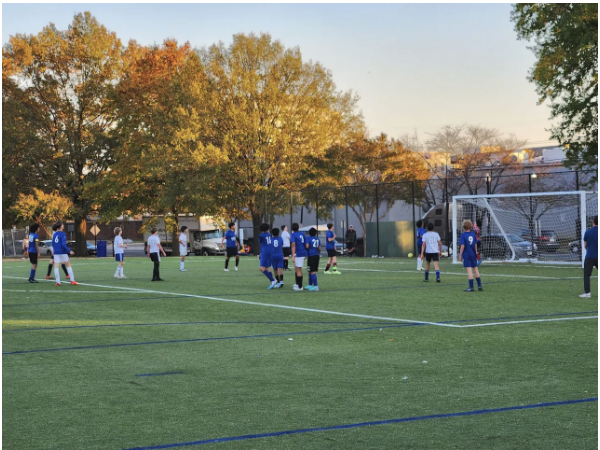
School dance. Photo by Ernesto Castañeda.

Why are people in pseudo-military clothes and vests with the initials ICE, HSI, CBP,* and others patrolling the streets and aggressively arresting people in public? It all starts with the popular but dangerous idea that a country must have closed borders, allowing only invited people to pass through. This makes sense for private houses, schools, and other large private institutions, but cities and countries do not work like that. Think about it most people born in the United States can move in their cities, towns, as well as to other cities or towns in the 50 states without having to ask permission from any political authority. They can even move to Guam, the Virgin Islands, or Puerto Rico.

*ICE [Immigration and Customs Enforcement], HSI [Homeland Security Investigations], CBP [U.S. Customs and Border Protection, agency that houses the Border Patrol which has now also being mobilized to both coast and Chicago] are all immigration enforcement agencies within the Department of Homeland Security (DHS). Under the current administration other federal and local agencies have also been assigned to help carry out raids and aid in deportation efforts.

People in Any Country Are Not All the Same  

Another dangerous myth is that all the people in a country must share a language, culture, and even look the same, as if related by blood. But countries are not big extended families, so this is a fable. But many adults believe this was true in the past and want it to happen soon in the places where they live. As you know, not everyone is the same. Even within the same family, a student club, or sports team, people have differences that make them who they are.

People in some large cities complain about a few people around them speaking a different language in the streets or having a different religion. This is not new; some people have always done so in any booming city. 

Even While Most People Stay Put Most of the Time, Mobility is Normal 

Many people go to other countries to travel, study, work, or visit family members and friends. Most people get visas, which are permits from a country’s government to visit or move in with permission. People from the United States and Europe rarely need visas to visit other countries, but it is not the same the other way around. People from most of Africa, Asia, and Latin America need vetted visas to visit Europe, the United Kingdom, the United States, Canada, or Australia. 

In some exceptional cases, people have to leave the countries where they were born because of war or persecution because of their religion, ethnicity, or political views. It may be hard for them to get immigration visas after that. Other countries are supposed to provide refuge, a safe place to stay for groups facing persecution. But many countries’ governments like to look the other way or play hot potato with people.

Work Abroad is Often More Available than Working Papers 

Other people may have informal verbal (spoken) job offers from restaurants, farms, and small businesses in the United States, but they cannot get visas because the people in charge of approving visas in U.S. consulates abroad think those people would stay in the country, and they think they do not have the savings and education to make them “desirable” to come to the United States. These are not necessarily the views of the people approving visas, but the informal instructions they are told to follow by their bosses.  

Nonetheless, some people from towns with a long history of long-distance migration from point A to B have the contacts, paths, and know-how to go to other countries without the U.S. government’s permission. This is what people refer to as “illegal immigration.” 

Remember, we should not use the term illegal to name a person, because a living human being cannot be “illegal,” but people can commit acts that go against the law, in this case, entering another country without getting their passport inspected and stamped. 

“No Human Being is Illegal.”  Elie Wiesel

People without a legal immigration status, who we can call undocumented, are not automatically bad people. They are just caught in a hard and vulnerable situation. Some adults say they should respect the law of a country and “get in line,” but for many of them there is no line to wait in. And for some of the people with close family members legally in the U.S., the wait in line to reunite can be ten years of longer. Therefore, some people live for over a decade away from their parents or minor children. As we recount in the book, Reunited: Family Separation and Central American Youth Migration.

Middle schoolers playing soccer. Photo by Ernesto Castañeda.

For most of U.S. history, lawyers have not labeled this a crime but more a “civil” infraction, something like a minor driving infraction, such as driving without insurance, or watching a movie without paying a ticket. But in those examples, people are getting something without paying or putting others at potential financial risk. Immigrants come to the U.S. to work, to pay for all of their expenses, those of their family members, and to send money to loved ones who stayed in the places they came from. Preventing people from moving to a country, and more appropriately to a particular city or neighborhood, even if they can pay for their housing, is like public parks or libraries not allowing only certain people in. 

The problem with the label of “illegal” (rude name-calling) is that it conjures or brings together the idea of coming as a family without a visa, along with generalizations and stereotypes that only people who are poor and of different races are “illegal.” That “illegals” are inferior, potentially dangerous criminals, a threat to the homogeneity (looking or being similar) of a country. These all false.

In recent U.S. history, the label of “illegality” has been applied to people from Mexico and Central America with limited English and/or African and indigenous features working in sectors such as agriculture, construction, contracting, food preparation, etc. There are business owners who are undocumented as well as people from Canada and Europe, but it is easier for them “to pass.” 

Immigrants who commit violent crimes are not immune (protected) from being stopped by police and imprisoned. But for many decades, people in the news have said that people without papers are dangerous and taking things from U.S. citizens. Many adults have come to believe this after hearing it so many times. 

Some politicians run for office sometimes with as little as promising to “get rid of” all the undocumented people in a country. This has been the case of President Trump, and he has acted on this words. His team has set ambitious goals to find people without valid visas or immigration permits and to remove them from the country, which is what we call deportations. He and his team campaigned on closing the border to new arrivals, deporting people with criminal convictions, and with the signs and slogans of mass deportation

How do you carry out mass deportations quickly in a country with over 350 million people, where less than 3% of the population is undocumented? 

Unlike a classroom, there is no list of everyone living in the U.S. that includes everyone’s immigration status. So, this federal administration is trying to reach its goal is by deporting under any pretext some people who are renewing visas, trying to get papers to stay longer, become citizens, or get protection from deportation because they fear for their safety if they were sent back to dangerous places. 

Another shortcut by ICE is to go to places where many stereotypical potentially undocumented immigrants gather and stop and ask for papers from people based only on their physical appearance, job, and accent. (Lawyers call this racial profiling).

Communities with many Latinos are specially afraid about deportations hitting close to home. Over 68,000 people are in immigration detention centers at the end, so of them will be let go after proving they are citizens or have valid permits. Many others will eventually be deported without their family members. 

Because of this, families with undocumented members are afraid of spending time in public and may always fear it may be their last day together. So, it is important to be patient and supportive of people who could be in that situation. It is understandable if your classmates or even friends do not want to talk about this. Their parents may have told them not to share their immigration status or that of their parents, afraid that it could be used against them. Many live with the continuous fear that an enemy could call la migra (ICE) on them. The have lived with this fear sometimes for decades.

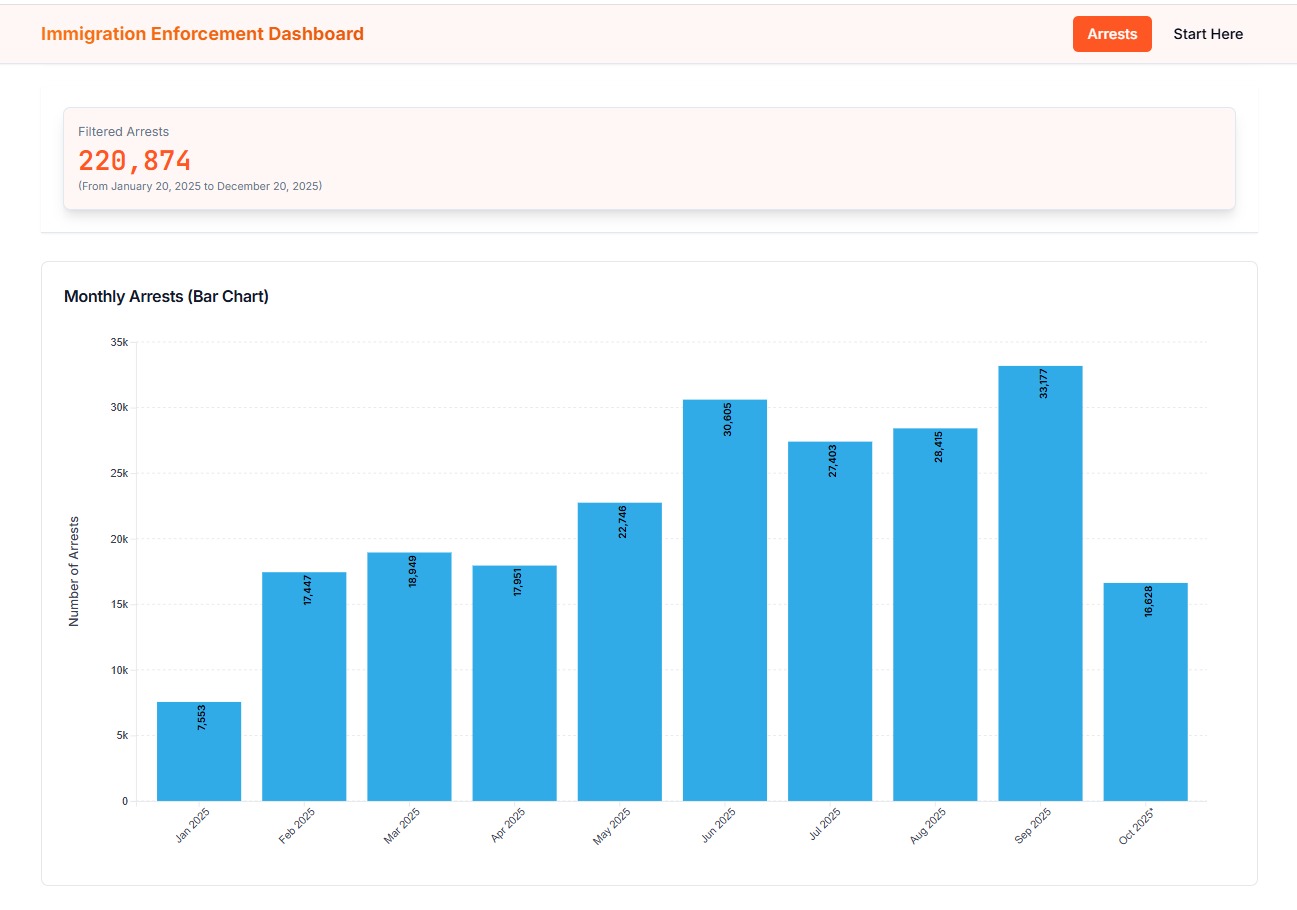
ICE Arrests from Immigration Enforcement Dashboard

People who are undocumented have to try to act perfectly

Afraid about her only daughter being caught by surprise, an interviewee we talked to confidentially, recounts that she told her 13-year-old daughter this year that she was “illegal,” and that she should be careful not to skip class, misbehave, or even think about experimenting with illegal drugs, alcohol, or marijuana because this could cause her deportation and that of her mother and maybe other family members too. 

She had never before realized she was undocumented; she thought she was like anyone else in her class, and she is and so she is at risk of deportation. She cannot help but be worried, but how worried should her best friends be? Well, there were around 11 million individuals who were undocumented when Trump became president again on January 20, 2025. Because of changes to immigration laws, procedures, and programs, there may be 14 million people out of status a the end of 2026. 

In 2025, the Trump admin, with its aggressive policing, raiding, and detaining, forcibly deported between 200k and 600k people. Self-deportation is a luxury that many immigrants do not have. The official estimates for this are not credible. 

So, let’s do some simple math for the probability of being forcible deported by DHS by dividing the maximum estimate for 2025 deportation by a medium-high estimate for the number of undocumented: 600,000/14,000,000=.04 or 4%. This is the probability that an undocumented person is deported each year that these mass deportation goals continue along with large federal agent deployments and police collaboration in some localities [287(g) agreements]. The probability of being detained while attending an immigration court appointment is also low. So, while it is possible this may happen to you, your mom, or your friend, most immigrants won’t be deported. Clearly, the likelihood varies by location. In some places, other certain groups are targeted, like Somalis in the Twin Cities recently. But detaining people and deporting them in this way is very expensive, damaging for the U.S. economy and society, and currently very unpopular. Over 60% percent of U.S. adults oppose these policies. Tell the people you know in this situation not to despair or give up.

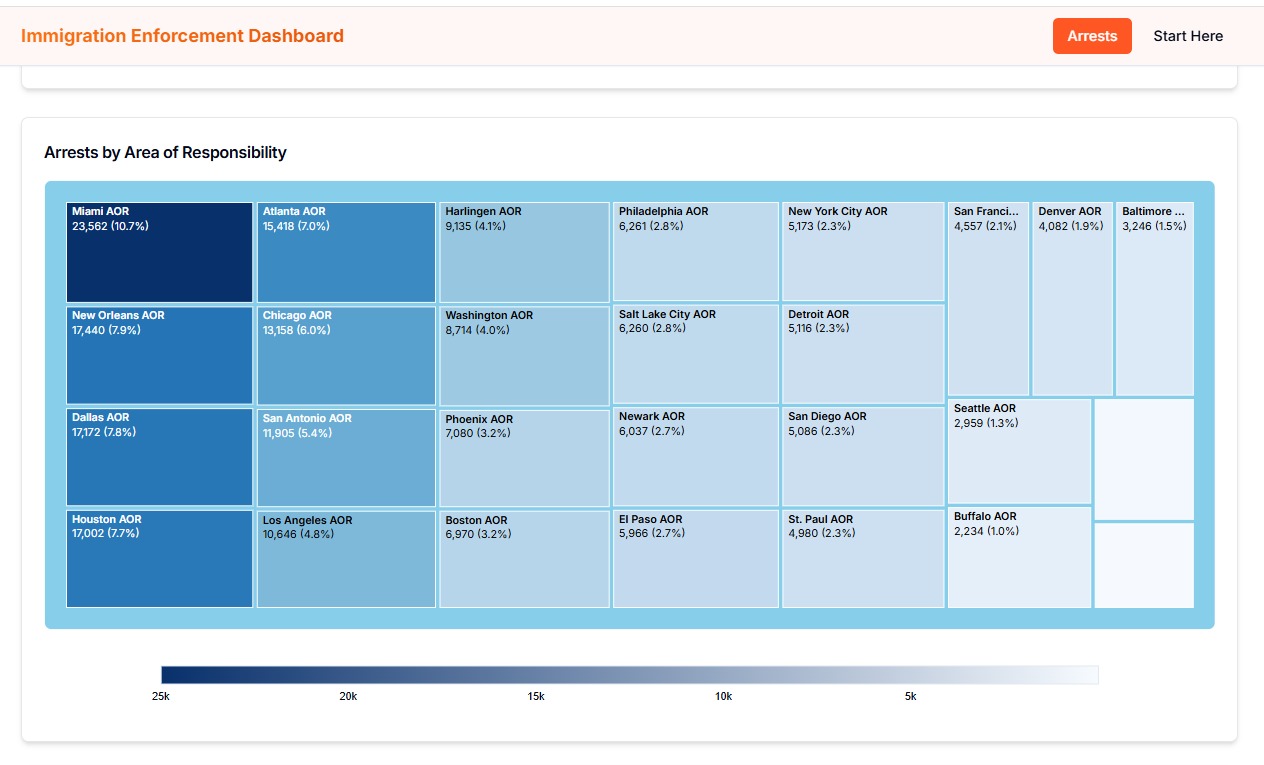
Deportation by City. Immigration Enforcement Dashboard

Despite sad cases about children receiving cancer treatment, nurses and care worker women being deported, the numbers show that, because of profiling, most of the people deported are working-age men from Mexico, Guatemala, and Honduras. Over 70% of them have no criminal record whatsoever, and only a very small percentage have a violent crime conviction. Meaning most people are innocent hard workers, fathers, sons, but they have been deported because they look like the stereotype. There are good and bad people everywhere. This may remind you of why some teachers and adults may tell you the importance of not generalizing, not falling for common stereotypes and prejudices, and of getting to know people from all backgrounds and with origins in all parts of the world. Learning how to put yourself in their shoes is the best way to understand them, comfort them, and protect them, in the future, by changing the way we aim to deal with undocumented immigration, not by mass deportations or having people afraid of deportation, but by giving them a way to become documented through new laws voted in Congress. Your care and your voice matter.

Ernesto Castañeda is a Professor at American University, where he leads the Immigration Lab and the Center for Latin American and Latino Studies. He has been studying immigration scientifically for over 20 years and has written many books on the subject, among them “Reunited: Family Separation and Central American Youth Migration” and “Immigration Realities: Challenging Common Misperceptions.”

Can Peru’s Democracy Recover?

By Cynthia McClintock*

Photographs from the early hours of the Generation Z protest in Peru, 2025
(Source: Wikimedia Commons)

Since 2021, democratic backsliding has been severe in Peru, and Peruvians are furious. Peru’s Congress is loathed. In 2025, the approval rating for Peru’s President, Dina Boluarte, fell below 3 percent and she became the most unpopular president on the planet. Finally, in October, Boluarte was impeached on the grounds of “permanent moral incapacity”; it was the fifth time since 2018 that a president had been impeached or had resigned upon imminent impeachment.  Per Peru’s constitution, Boluarte was succeeded by the Congress Speaker, José Jerí. Presidential and Congressional elections are scheduled for early 2026.

Why are Peruvians so angry? What does their anger mean for the 2026 elections (with the Congressional elections and the first round of the presidential elections scheduled for April 12 and a likely runoff on June 7)? Is it possible that the elections can lead to a democratic recovery?

Why are Peruvians So Angry?

The key reason is not “the economy stupid,” but an escalation of organized crime and the perception that Peru’s political leaders are part of the problem rather than part of the solution.

Between 2019 and 2024 the number of homicides doubled and the number of reported extortions jumped sixfold. Extortion is hurting huge swathes of lower-middle class Peruvians. Transport workers have been particularly vulnerable; so far in 2025, approximately 50 bus drivers have been killed for refusing to make extortion payments.

The reasons behind the crime escalation are various. Demand for cocaine remains high and, over the last decade, Peru’s coca cultivation has increased. As the price for gold jumped, so did illegal gold mining. Peru’s gangs are fragmented—and therefore hard to track—and they have developed nefarious new strategies such as using WhatsApp for extortion.

But, Peruvians believe, the reasons also include the government’s complicity. In part because illicit operators have provided campaign finance, in 2024 approximately half of Peru’s legislators were under criminal investigation; these same legislators have passed laws to impede investigations and prosecutions. Boluarte herself is under investigation for various crimes, including illicit enrichment. She sported a Rolex watch priced at $19,000, despite no evident financial means for such extravagance.

Further, from the start large percentages of Peruvians did not deem Boluarte a legitimate president. In 2021-2022, Boluarte was Vice President under President Pedro Castillo. Leading a far-left party in fraught elections during COVID, Castillo was an accidental, unprepared president. He was virulently opposed by the dominant right-wing forces in Congress, in particular Fuerza Popular, the party of Keiko Fujimori, the daughter of former authoritarian President Alberto Fujimori. As Vice President, Boluarte had said that, if Castillo were impeached, she too would resign, triggering new elections. However, in the event of Castillo’s December 2022 impeachment, Boluarte stayed on, despite massive protests and ubiquitous calls for new elections.

As President, Boluarte appeared indifferent to Peruvians’ concerns. Between December 2022 and February 2023, 49 civilian protesters were killed by the security forces. Boluarte’s response was support for an amnesty law. And, amid an October 2025 transport workers’ strike, Boluarte’s advice to Peruvians worried about crime was that they should not open text messages from unfamiliar people—placing blame for crimes on the victims.

What Does Peruvians’ Anger Mean for the 2026 Elections?

Peruvians’ anger spells difficulties for its incumbent parties and advantages for parties that can claim an “outsider” mantle. Fujimori’s Fuerza Popular is widely considered the dominant party in the Congress, and it will struggle against this perception. Its presidential candidate, Fujimori, is running for the fourth time and is likely to have worn out her welcome.

Not surprisingly, demands for an “iron fist” against crime are strong. The current presidential frontrunner is Renovación Popular’s Rafael López Aliaga (aka “Porky”), a Trump-like far-rightist who placed third in the 2021 election and was subsequently elected Lima’s mayor. López Aliaga promises a hardline strategy against organized crime, including implementing similar imprisonment policies to those of El Salvador’s Nayib Bukele. But Renovación Popular holds the fourth largest number of seats in Congress and it will be difficult for López Aliaga to claim an “outsider” mantle.

A candidate likely to claim an “outsider” mantle is Mario Vizcarra, running as a proxy for his brother, former President Martín Vizcarra. As President in 2018-2020, Vizcarra confronted the dominant parties in Peru’s Congress, building his popularity but ultimately catalyzing his impeachment. After a strong showing in Peru’s 2021 legislative elections, he was disqualified from holding elected office for ten years. Yet, Vizcarra’s government was far from without fault. There are other candidates, including the popular former clown, Carlos Álvarez, who could seize the “outsider” mantle.

Can Peru’s 2026 Elections Lead to Democratic Recovery?

The challenges to Peru’s elections are serious. In recent years Fuerza Popular and other illiberal parties in Peru’s Congress have allied to skew the electoral playing field in their favor.  Interim President Jerí is, of course, new to his position and his possible impact on the elections is unclear. (His first-month record was better than was first expected.)

As elsewhere in Latin America, Peru’s illiberal parties have strategized to achieve the disqualification of viable candidates. As indicated, this strategy is currently being used against Vizcarra; it could also be used against a rising new candidate.

Peru’s illiberal parties have calculated that a plethora of candidates is in their interest. Currently, 39 party lists are registered. Such a head-spinning number is problematic for journalists trying to cover the campaign and problematic for voters trying to identify their preferred candidate, especially because pre-election polls are more likely to be inaccurate. Yet, Peru’s Congress cancelled a provision for a preliminary round of voting, in which parties would have been required to secure 1.5 percent of the vote in order to qualify for the “first round.”

Still, there are grounds for optimism. The massive protests of recent years have shown that Peruvians want their political views heard. Peruvians recognize the importance of honest, capable leadership and want to find it.

*Cynthia McClintock is Professor of Political Science and International Affairs at George Washington University.

Bolivia Decisively Enters New If Unknown Political Territory

By Robert Albro, Associate Director, CLALS

Rodrigo Paz is sworn in as president of Bolivia, 2025
(Source: Wikimedia Commons)

Centrist Rodrigo Paz’s victory in October’s runoff election signals a dramatic change of direction for Bolivian politics. The era of dominance of the Movement Toward Socialism (MAS) party, led by ex-president Evo Morales, is definitively over. For only the second time since 2006 the MAS will not control the presidency. As a result of the recent election, it now has a mere two representatives in the legislature’s lower house, and no one in the upper house. Though it does not hold an outright majority, Paz’s Christian Democratic Party is now the single largest presence in both legislative chambers. How did Bolivia get here?

Twenty years ago, the leftist-populist MAS swept into power, as a new and energetic grassroots alternative to the elite-run traditional parties that had traded off governing Bolivia since the end of dictatorship in 1982, or one could even argue, since the 1952 Revolution. The MAS’s popularity sprung largely from the dynamism of Morales, himself, then a coca grower union leader adept at organizing and leading large-scale protests in opposition to prevailing Washington Consensus policies and government efforts to sell off Bolivia’s non-renewable resources to transnational corporate interests. The MAS styled itself a bottom-up social movement and not a party. Its participatory “lead by following” approach to governance appealed to a great majority of indigenous voters and working-class people of indigenous descent.

Morales and the MAS proved historically consequential in undertaking a contentious but innovative rewrite of the country’s Constitution, which went into force in 2009. It fully embraced Bolivia’s “plurinational” identity and incorporated an unprecedented variety of collective indigenous rights of consultation, to their traditional territories, and perhaps most controversially, of judicial autonomy. The Morales administration also used a large surplus from the country’s extractive boom to finance a wide range of new social safety net provisions that halved the number of people living in poverty, including cash transfers to families, a pension program, minimum wage increase, as well as public investments in schools, hospitals, and other infrastructure. Perhaps most importantly, his presidency raised the public visibility of Bolivia’s indigenous majority, no longer as second class citizens but as political protagonists of their own present and future.

Morales and the MAS were immensely popular. But then cracks began to appear. In 2011 a plan to build a controversial highway through a protected indigenous reserve brought the MAS government into direct conflict with the reserve’s residents, damaging its support among some indigenous groups. When the extractive boom ended around 2014, Bolivia’s economy slowed considerably, and the MAS fiscal policies that had lifted so many out of poverty became increasingly unsustainable. Part of the problem was Morales, who served two presidential terms and aspired to another, without any thought to a succession plan. Constitutionally limited to two terms, in 2016 he soundly lost a national referendum in a bid for a third and then ignored the result, further alienating many former supporters.

The upheaval around the contested 2019 election, which eventuated in Morales going into exile in Mexico and the persecution of MAS loyalists by a rightwing caretaker government, set the stage for the party’s eventual fall from grace. The 2020 election restored the MAS to power. But soon Morales and the new president, his ex-finance minister Luis Arce, were in a pitched battle for control over the party, a bitter and increasingly personal rivalry that fatally fragmented the MAS into opposed camps. Their protracted feud, which paralyzed congress, strayed into surreal territory, with accusations of a staged coup and mutual assassination attempts. The credibility of the MAS was so fundamentally damaged that the incumbent Arce, with his poll numbers plummeting, suspended his campaign. Morales, meanwhile, remains holed up in his coca grower redoubt to avoid criminal charges.

The MAS-led government’s political fragmentation, and its ineffectual response to Bolivia’s increasingly disastrous economy, have left the party deeply unpopular. The country is currently floundering amid its worst economic crisis in 40 years. Its natural gas production is half of what it was in 2014, with nothing to replace it. Bolivia has failed to develop its large reserves of lithium. Depleted currency reserves and a scarcity of US dollars have driven up inflation, creating severe shortages of fuel and basic goods. Over the past year, ordinary Bolivians have angrily expressed their discontent with the country’s economic collapse through repeated strikes and protest actions.

Emerging from this bleak political and economic state-of-affairs is the surprise election winner, Rodrigo Paz. Son of onetime leftist president Jaime Paz Zamora, former mayor of Tarija, and recently a senator, Paz’s campaign focused on restoring Bolivia’s economy, but gradually rather than by instituting sweeping fiscal austerity measures as his rival in the run-off proposed. Non-indigenous, pro-business, and ideology averse, Paz successfully positioned himself as a pragmatic reformer. He has delivered a strong anti-corruption message, pledged to restore relations with the US and bring back foreign investment. His populist call for a “capitalism for all” hopes to thread the needle by mixing decentralization, lower taxes, support for small businesses, and greater fiscal discipline, with continued spending on popular MAS-era social programs.

Paz’s critics argue that what he proposes is an impossible fiscal balancing act. Desperate and impatient Bolivians will expect immediate results. But it remains far from clear whether Paz will be able to overcome likely regional opposition to at least some of his policies. And if he does not stabilize the country’s dysfunctional economy quickly, Paz’s political honeymoon might be brief.

The Rise, Decline, and Crisis of Ecuador’s Indigenous Movement

By Dr. Pablo Andrade Andrade

October 17 Demonstrations (Manifestaciones del 17 de Octubre)
(Source: Wikimedia Commons)

Just six years ago, in 2019, the three major organizations of the Ecuadorian indigenous movement were on the rise. CONAIE (the Confederación de Nacionalidades Indígenas del Ecuador) led the charge against Lenin Moreno’s government. For eleven days their widespread demonstrations posed a serious threat to the government’s stability. The “Paro Nacional” (Nationwide Strike) not only facilitated CONAIE’s alliances with the other two indigenous organizations (FENOCIN, the Federación Nacional de Organizaciones Campesinas, Indígenas y Negras, and FEINE, the Federación Ecuatoriana de Indígenas Evangélicos) but also broadened its coalition with a diverse range of civil society organizations, marking a significant shift in Ecuadorian politics. The impact of the indigenous movement on Ecuadorian politics was profound, as Moreno´s government was seriously weakened. Two years later, in 2021, CONAIE’s political party, Pachakutik, won substantial representation in the National Assembly and placed third in the Presidential elections.

In 2022 CONAIE’s president, Leonidas Iza, led a successful national strike against Guillermo Lasso’s right-wing government. His leadership, bolstered by unity among indigenous communities and their allies, made it the most powerful leftist organization. Newfound solidarity among indigenous communities and stronger ties with student, feminist, and environmental movements, enhanced Iza’s national and international reputation. Less than a year later, President Lasso had to end his term and called for early general elections. However, at that moment Iza´s radical wing of CONAIE also attempted to impose its agenda over Pachakutik and the Amazonian federation CONFENIAE, which proved to be a high-cost strategy. The internal conflicts that followed led, in 2025, to the most serious electoral defeats that both organizations had suffered in decades.

The 2023 general elections were marred by prison massacres and political assassinations, including that of presidential candidate Fernando Villavicencio and the mayor of Manta, among numerous other government officials. Amid this unprecedented turmoil, a young center-right candidate, Daniel Noboa, emerged victorious as interim president. His win signaled yet another shift in Ecuador’s political landscape, with the country’s fragile democracy once again at the mercy of a personalist, plebiscitarian president.

The first warning sign of the current political turn to populist rule came with the 2025 regular election. The President’s party (Alianza Democrática Nacional, ADN) and the opposition party (Revolución Ciudadana, RC) totalled over 80 percent of National Assembly representatives. Noboa won his first five-year mandate. Pachakutik saw its representation shrink to five members, who the government rapidly coopted. Free from legislative checks, Noboa advanced his economic adjustment program. In addition, amid the ongoing public security crisis, Noboa expanded the military’s role in maintaining domestic order. Although assassinations have risen since 2023, militarization has strengthened Noboa’s control over organized violence, boosting political support for his government.

As part of its economic program, in September 2025, the Noboa administration raised diesel prices, a decision that in 2021 and 2022 sparked the wrath of CONAIE. But the leaders misjudged the lasting strength gained in 2021 and 2022, failing to account for damage from the 2023 and 2025 leadership races. As a result, they  rushed to emulate the apparent successes of the past. This time, however, CONAIE was at its lowest point. Unable to coordinate a nationwide strike, organizations in the northern province of Imbabura were left to their fate. The indigenous peoples of Cotacachi, Ilumán, Peguche, and Otavalo sustained demonstrations for a month. Still, they paid a high price in lost lives, injured people, and detainees due to systematic and brutal repression at the hands of the Armed Forces and the Police. This time, the government did not back down; the solidarity of  allied urban groups was, in this case, mostly symbolic and ineffective.

If CONAIE’s crisis should not be seen as the end of the indigenous movement, its significance cannot be overlooked. While grassroots mobilization once seemed effective, Noboa’s strong appeal and military support present new challenges. The aftermath of the national strike has called into question CONAIE’s representativeness and capacity to organize. An emboldened Noboa is now proposing a national plebiscite, in which he will likely be victorious, while Ecuador’s civil society appears weaker than ever. The challenges ahead are complex. The failed challenge to Noboa´s government could herald a new era of competitive authoritarianism, a scenario made even more likely by renewed international tolerance of hybrid forms of democracy. The lost battle left the indigenous organizations of Imbabura with wounds that could be challenging to heal, and racism lurks underneath the surface of Ecuador’s still young experiment with intercultural co-governance.

Pablo Andrade Andrade is Professor and Chair of the Germánico Salgado Lectures, Universidad Andina Simón Bolívar

*This post continues an ongoing series, as part of CLALS’s Ecuador Initiative, examining the country’s economic, governance, security, and societal challenges, made possible with generous support from Dr. Maria Donoso Clark, CAS/PhD ’91.

Migrante vs. inmigrante: 10 términos de la política migratoria de Estados Unidos que debes conocer

Photo cerdits to Brandon Bell/Getty Images

ORLANDO, Florida.- La política migratoria en Estados Unidos se encuentra en el foco de la atención tras las recientes órdenes ejecutivas firmadas por el presidente Donald Trump en los primeros días de su mandato. Entre las medidas, se encuentran restricciones temporales para refugiados, la limitación de solicitudes de asilo en la frontera y la polémica orden para negar certificados de nacimiento a hijos de padres sin estatus migratorio regular.

Estos movimientos han generado demandas en 18 estados, argumentando que violan el derecho de ciudadanía por nacimiento, protegido por la 14.ª Enmienda de la Constitución.

1. Migrante

Un migrante es cualquier persona que se traslada lejos de su lugar de origen, ya sea dentro de su país o al extranjero. Algunos se ven forzados a moverse por violencia o desastres naturales, mientras que otros migran por razones económicas o familiares. Este término incluye tanto a quienes cruzan fronteras de manera documentada como no documentada.

2. Inmigrante

El inmigrante es un migrante que se establece en un país diferente al de su nacimiento. En Estados Unidos, los inmigrantes pueden tener diferentes estatus legales, desde la residencia permanente (Green Card) hasta visas temporales, como las de trabajo (H-1B) o estudio (F-1). También hay visas humanitarias, como la T para víctimas de tráfico humano y la U para víctimas de crímenes graves.

3. Inmigrante indocumentado o irregular

Este término engloba a personas que ingresan o permanecen en un país sin autorización legal. Algunos llegaron con visas que vencieron, mientras que otros cruzaron sin documentos. En Estados Unidos muchos indocumentados trabajan y pagan impuestos, aunque no reciben beneficios de seguridad social.

4. Solicitante de asilo

Es alguien que pide protección al llegar a un puerto de entrada o dentro del país, alegando peligro en su nación de origen por persecución política, religiosa, étnica o de otro tipo. El proceso puede tomar años y requiere pruebas contundentes.

5. Refugiado

Un refugiado solicita protección desde el extranjero antes de ingresar a Estados Unidos, generalmente escapando de conflictos armados o persecución. Una vez en el país, pueden trabajar legalmente y, al cabo de un año, solicitar la residencia permanente.

6. Niños no acompañados

Se refiere a menores que cruzan la frontera sin un tutor legal. Según las leyes estadounidenses, pueden permanecer en el país y buscar estatus legal, generalmente bajo el cuidado de familiares ya residentes.

7. Separación familiar

Esta práctica polémica, intensificada durante el primer mandato de Trump, consiste en separar a padres migrantes de sus hijos al cruzar la frontera. Aunque la administración Biden intentó reunificar familias, cientos de niños aún están separados de sus padres.

8. Detención migratoria

Es la detención de inmigrantes en centros similares a cárceles, gestionados por el gobierno o empresas privadas, mientras esperan audiencias o deportaciones. Estas condiciones han sido criticadas por su dureza, incluyendo el uso de “hieleras” con temperaturas extremadamente bajas.

9. Coyote

Es el término utilizado para describir a los guías que, a cambio de dinero, ayudan a migrantes a cruzar fronteras de manera clandestina. Esta actividad se ha vuelto más costosa y peligrosa debido al endurecimiento de las políticas fronterizas.

10. Jugadores clave del gobierno

La política migratoria en EE. UU. involucra varias agencias: el Departamento de Seguridad Nacional (DHS), la Patrulla Fronteriza (CBP), Inmigración y Control de Aduanas (ICE) y el Departamento de Salud y Servicios Humanos (HHS), que asiste a menores no acompañados.
Entender estos términos humaniza a las personas detrás de las estadísticas. En tiempos de políticas migratorias restrictivas, la empatía y el conocimiento son herramientas esenciales para abordar este tema con sensibilidad.

Con información de AP.

Credit to Univision for translation

Original Post

https://theconversation.com/what-is-a-migrant-what-is-ice-10-terms-to-help-you-understand-the-debate-over-immigration-247317

Ernesto Castañeda is the Director of the Immigration Lab and the Center for Latin American and Latino Studies and a Professor at American University. 

Daniel Jenks is a Doctoral Student at the University of Pennsylvania,

What is a migrant? What is ICE? 10 terms to help you understand

By Ernesto Castañeda, Daniel Jenks

President Donald Trump aims to upend the immigration system in the United States in his first few days in office. On Jan. 20, 2025, Trump signed various executive orders that temporarily prevent refugees from coming to the U.S. and block immigrants from applying for asylum at a U.S. border, among other measures.

Another executive order calls on federal agencies to not issue passports, birth certificates or Social Security numbers to babies born in the U.S. to parents not in the country legally, or with temporary permission. Eighteen states sued on Jan. 21 to block this executive order that challenges birthright citizenship, which is guaranteed by the 14th Amendment to the U.S. Constitution.

We are scholars of immigration who closely follow public discussions about immigration policy, trends and terminology. Understanding the many different immigration terms – some technical, some not – can help people better understand immigration news. While not an exhaustive list, here are 10 important terms to know:

1. Migrant

A migrant is a person who moves from their place of birth to another location relatively far away. There are different words used to describe migrants and their particular circumstances. Internally displaced people, for example, means people who are forced to move within their own country because of violence, natural disasters and other reasons.

International migrants move from one country to another, sometimes without the legal authorization to enter or stay in another country. There are also seasonal or circular migrants, who often move back and forth between different places.

Between 30% and 60% of all migrants eventually return to their birth countries.

There is not much difference in why people decide to migrate within their own country or internationally, with or without the legal permission to do so. But it is easier for people from certain countries to move than from others.

2. Immigrants

The terms immigrants and migrants are often used interchangeably. Migration indicates movement in general. Immigration is the word used to describe the process of a non-citizen settling in another country. Immigrants have a wide range of legal statuses.

An immigrant in the U.S. might have a green card or a permanent resident card – a legal authorization that gives the person the legal right to stay and work in the U.S. and to apply for citizenship after a few years.

An immigrant with a T visa is a foreigner who is allowed to stay in the U.S. for up to four years because they are victims of human or sex trafficking. Similarly, an immigrant with a U visa is the victim of serious crimes and can stay in the U.S. for up to four years, and then apply for a Green Card.

An immigrant with a H-1B visa is someone working for a U.S. company within the U.S.

Many international students in higher education have an F-1 visa. They must return to their country of birth soon after they graduate, unless they are sponsored by a U.S. employer, enroll in another educational program, or marry a U.S. citizen. The stay can be extended for one or two years, depending on the field of study.

Mexican migrants prepare to turn themselves in to U.S. Customs and Border Patrol officers after crossing the border into Ruby, Ariz., on Jan. 5, 2025. Brandon Bell/Getty Images
Photo cerdits to Brandon Bell/Getty Images

3. Undocumented Immigrants, Unauthorized Immigrants and Illegal Immigrants

These three charged political terms refer to the same situation: migrants who enter or remain in the country without the proper legal paperwork. People in this category also include those who come to the U.S. with a visa and overstay its permitted duration.

Some of these immigrants work for cash that is not taxed. Most work with fake Social Security numbers, pay taxes and contribute to Social Security funds without receiving money after retirement.

Immigrants without legal authorization to be in the U.S. spent more than US$254 billion in 2022.

4. Asylum Seekers

An asylum seeker is a person who arrives at a U.S. port of entry – via an airport or a border crossing – and asks for protection because they fear returning to their home country. An immigrant living in the U.S. for up to one year can also apply for asylum.

Asylum seekers can legally stay temporarily in the U.S. while they wait to bring their case to an immigration judge. The process typically takes years.

Someone is eligible for asylum if they can show proof of persecution because of their political affiliation, religion, ethnic group, minority status, or belonging to a targeted group. Many others feel they need to leave their countries because of threats of violence or abusive relationships, among other dangerous circumstances.

A judge will eventually decide whether a person’s fear is with merit and can stay in the country.

Ukrainian immigrants attend a job fair in New York City in February 2023. Angela Weiss/AFP via Getty Images
Photo cerdits to Angela Weiss/AFP via Getty Images

5. Refugees

Refugees are similar to asylum seekers, but they apply to resettle in the U.S. while they remain abroad. Refugees are often escaping conflict.

The Biden administration had a cap of admitting up to 125,000 refugees a year.

Refugees can legally work in the U.S. as soon as they arrive and can apply for a green card one year later. Research shows that refugees become self-sufficient soon after they settle in the country and are net-positive for the country’s economy through the federal taxes they pay.

6. Unaccompanied Children

This is a U.S. government classification for migrant children who enter the U.S. without a parent or guardian, and without proper documentation or the legal status to be in the country. Because they are minors, they are allowed to enter the country and apply for the right to stay. Most often, they have relatives already in the country, who assume the role of financial and legal sponsors.

7. Family Separation

This refers to a government policy of separating detained migrant parents or guardians from the children they are responsible for an traveling with as a family unit. The first Trump administration separated families arriving at the border as part of an attempt to reduce immigration.

At least 4,000 children were separated from their parents during the first Trump administration. The Biden administration tried to reunite these families, but as of May 2024, over 1,400 children separated during Trump’s first term still were not reunited with their families.

Legal migration systems that lack avenues for immigrants who work in manual labor to move with their families, and deportations, both also create family separations.

8. Immigration Detention

Immigration detention refers to the U.S. government apprehending immigrants who are in the U.S. without authorization and holding them in centers that are run similar to prisons. Some of these centers are run by the government, and others are outsourced to private companies.

When a U.S. Customs and Border Protection official apprehends an immigrant, they are often first brought to a building where they are placed in what many call a hielera, which means icebox or freezer in Spanish. This refers to cells, cages or rooms where the government keeps immigrants at very low temperatures with foil blankets and without warm clothing.

Immigrants might then be quickly deported or otherwise released in the country while they await a court date for an asylum case. Other immigrants who are awaiting deportation or a court date will be placed in an immigration detention center. Some must post bond to be released while awaiting trial.

9. Coyote

A coyote is the Spanish word for a guide who is paid by migrants and asylum seekers to take them to their destination, undetected by law enforcement. Coyotes used to be trusted by the migrants they were helping cross into the country. As the U.S. has tried to make it harder to enter illegally, the business of taking people to and across the U.S.-Mexico border unseen has become more expensive and dangerous.

10. The Alphabet Soup of Government Players

The Department of Homeland Security, or DHS, is a law enforcement agency created after 9/11. It includes a number of agencies that focus on immigration.

These include U.S. Customs and Border Protection, or CBP, an agency that is in charge of collecting import duties, passport and document controls at airports, ports, and official points of entry along the border.

The Border Patrol is a federal law enforcing agency under CBP in charge of patrolling and securing U.S. borders and ports.

Immigration and Customs Enforcement, or ICE, is a branch of DHS that works within the U.S., within its borders, focusing on detaining and deporting immigrants.

The Department of Health and Human Services, or HHS, takes care of unaccompanied minors after they enter the country.

Ernesto Castañeda is the Director of the Immigration Lab and the Center for Latin American and Latino Studies and Professor at American University. 

Daniel Jenks is a Doctoral Student at the University of Pennsylvania,

This piece can be reproduced completely or partially with proper attribution to its author.

Bolsonaro’s Long Shadow and Brazil’s Ongoing Democratic Crisis

by Fernando Medici, Mackenzie Presbyterian University

Photo Credit to Amauri Nehn/NurPhoto via AP

Few people outside of Brazil are likely aware that this South American country endured its own version of a Capitol attack. On January 8th, 2023 — two years after the infamous U.S. incident — a mob of supporters of former president Bolsonaro stormed government buildings, including Congress and the Supreme Court. This brazen assault on democratic institutions highlights the dangerous influence of right-wing radicalization and rampant social mediatized fake news, which continue to undermine the nation’s fragile democracy by amplifying a hate campaign against Brazil’s Supreme Court, and pleas for military intervention, while  celebrating the insurrection that ended with Bolsonaro’s followers storming the Supreme Court Building.

Like its American counterpart, the unrest was fueled by unsubstantiated claims of election fraud following Bolsonaro’s defeat at the polls. However, what set Brazil’s crisis apart was the additional troubling involvement and support of several high-profile military figures.

Subsequently many of the insurgents were indicted, but until recently little had been done regarding the still unknown leadership of the movement.

That changed this past November as former President Jair Bolsonaro and 36 others were indicted by Brazil’s Federal Police for crimes including an attempted coup d’état, violent abolition of the democratic rule of law, and involvement in an alleged attempt on the lives of President Lula, Vice-President Geraldo Alckmin, and Supreme Court Minister Alexandre de Moraes.

Of course, despite the political weight of these charges, an indictment is not equivalent to a conviction and does not automatically lead to a trial. It only provides evidence for the Prosecutor General’s Office to decide whether to proceed with the case or not. This is not the first time Bolsonaro has been indicted. He was previously implicated in investigations for fraudulent vaccine records and for trying to conceal Saudi Jewelry he was gifted as president, which, according to Brazilian Law, belongs to the government. Both criminal proceedings are currently underway, and Bolsonaro is prohibited from leaving the country.

Regarding the coup d’état-related indictments, after an extensive investigation, the Brazilian Federal Police concluded that the alleged coup attempt was supposed take place in late 2022, after Bolsonaro’s election defeat and led by prominent military figures, including General and formal State-Secretary Mario Fernandes and General Braga Netto, Bolsonaro’s vice president candidate in the most recent election. According to the investigators, Bolsonaro was aware of and supported the coup efforts.

This case underscores the frail state of Brazilian Democracy after years of political radicalization and the unchecked spread of rampant fake news. In large part the proliferation of fake news has been fueled by Bolsonaro’s “Hate Cabinet”, a group led Bolsonaro’s sons Flávio and Eduardo and responsible for managing far-right social networks, the spread of misinformation, and promotion of hate campaigns against Bolsonaro’s political adversaries.  

Now, Brazilians await conclusion of the legal process. Expectations are that at the soonest a possible legal action could be filed next year, since the General Prosecutor’s Office will need months to go through the evidence.

Uncertainty surrounding the legal process and the timeline for potential action reflect the broader challenges facing Brazilian institutions and democracy. While the indictments represent a significant step toward accountability, the slow pace of the justice system underscores deeper institutional challenges, exacerbating political polarization and social mistrust. It also feeds narratives of persecution and bias, particularly among Bolsonaro’s far-right supporters, who often portray the judiciary as politically motivated. The credibility of the Brazilian Supreme Court, already eroded by its controversial role in the Lava Jato operation and its perceived partisanship during past political crises, now faces renewed scrutiny. In a country already deeply divided along ideological lines, its lack of perceived impartiality risks intensifying public skepticism, further destabilizing Brazil’s fragile democratic institutions.

It is not a surprise that Bolsonaro supporters have dismissed the allegations against him as political persecution and remain entrenched in their views, further deepening political rifts in Brazilian society. When large segments of the population operate under different understandings of reality, it becomes nearly impossible to foster the trust needed for a healthy democracy.

This scenario places Brazil’s democratic institutions under considerable strain. The 2023 storming of Congress and the Supreme Court demonstrated the vulnerability of these institutions when confronted with coordinated antidemocratic efforts. Now, with claims of military involvement, the alleged coup raises serious questions about how long Brazilian democracy can continue to withstand such blows.

The problem is made worse by Bolsonaro’s hate campaign against the Supreme Court, which has eroded trust in the institution, guaranteeing that any legal decision against him will be seen by a large subset of Brazilians as corrupt and politically motivated.

If Brazilian democracy is to survive, it will require more than just the prosecution of a few individuals, even if they are high-profile. A broader effort to rebuild trust in democratic institutions and to reduce the spread of misinformation will also be necessary. Without addressing the root causes of radicalization and polarization, Brazilian Democracy will continue to be vulnerable, whether to attacks by Bolsonaro’s followers or other political groups.

This piece can be reproduced completely or partially with proper attribution to its author.

The Taxing Debate

The Taxing Debate on Migration in the U.S.

By Mary Capone

November 19, 2024

Nearly half of American adults feel that immigration threatens national identity. This proportion has increased in recent years as anti-immigration sentiments have surged in politics and partisan divergence has deepened in rhetoric. The former Trump administration was highly influential in the anti-immigration movement, with much of Trump’s campaigns hinging on xenophobic policies like building a wall on the southern border and ending DACA. Such policies jeopardize the human rights of immigrants in the United States, who make up nearly 14% of the U.S. population. The Biden administration’s handling of immigration has also been criticized by 60% of Americans, indicating that the ongoing conflict over immigration is worsening.

Polls from PBS NewsHour, 2024.

 Why is migration so controversial? Shouldn’t people be allowed to migrate safely?

The answer lies in white supremacy and ‘tax dollars.’

At a 1983 Conservative Party conference, former UK Prime Minister Margaret Thatcher famously said, “If the State wishes to spend more, it can do so only by borrowing your savings or by taxing you more. It is no good thinking that someone else will pay—that ‘someone else’ is you. There is no such thing as public money; there is only taxpayers’ money.” Like many politicians, Thatcher propagated the notion that government spending relies on taxpayers’ money, placing the burden of spending on individuals.

Similar sentiments are not uncommon in the United States. Former Republican governor of Wisconsin, Scott Walker, featured this tagline in his 2018 campaign targeting his opponent: “Tony Evers: Special treatment for illegals, higher taxes for you.” Donald Trump continues to campaign on anti-immigration policies to appeal to Americans who feel skeptical about their tax dollars going to immigrant welcoming programs. Trump’s campaign website highlights “20 Core Campaign Promises to Make America Great Again,” two of which focus on blocking immigration, including the first promise: “Seal the border and stop the migrant invasion.” These arguments are used to justify relatively small government investment in important services that benefit communities of color and immigrants by suggesting they would be an imposition on the ‘taxpayer.’

To understand the historical use of the term ‘tax dollars,’ Camille Walsh analyzed hundreds of letters defending racial segregation addressed to the Supreme Court in the years following the ruling in Brown v. Board of Education (1954). One-third of the letters consisted of some language about taxes, taxpayers, or having “paid” for public schools, implying the right to decide whether to keep them segregated. The American ‘taxpayer’ historically represents white individuals, and such language “obscured class divisions among whites and elevated those racialized groups presumed to have higher taxable income to a higher position in claiming citizenship rights.” White individuals like Aura Lee (1956), argued that “poor white taxpayers are entitled to enjoy some all-white places, if they so desire.”

As the term ‘taxpayer’ is historically associated with whiteness, it is used to justify the entitlement of resources concentrated in white communities. Meanwhile, the ‘nontaxpayer’ is meant to symbolize Black and Brown individuals who are perceived not to have “earned” their rights. While this argument is used to exclude people of color from resources, historian James Anderson finds that taxes from predominantly Black communities were at least as much during the time of the Brown ruling, and often higher than those of white neighborhoods. These taxes were often distributed by white school boards into all-white schools prior to Brown. This does not account for today’s common tax evasion of the nation’s wealthiest individuals and corporations. The Treasury Department estimates that there is a $160 billion gap between what the wealthiest 1% of the population should pay and what they actually pay.

Seventy years after the ruling in Brown v. Board of Education, politicians, citizens, and the media hold ‘taxpayer dollars’ to be sacred. Similar to the discussions surrounding racial integration in the mid-20th century, immigration represents a battle between the ‘taxpayer,’ or white American, and the ‘nontaxpayer,’ or immigrant. Just as white parents feared sending their children to integrated schools with “much lower standards and run-down facilities than the ones that [they] helped pay for,” many white Americans do not want immigrants to have access to vital resources and fear the use of their dollars on government spending.

Nevertheless, between sales taxes and property taxes, undocumented immigrants pay billions of dollars in taxes each year. Not only are immigrants taxpayers, but they pay taxes at higher rates than the richest Americans and get less in return. Taxpayer rhetoric is another weapon of othering by separating white U.S.-born individuals from Black and Brown immigrants, regardless of who pays their taxes.

Graph from the American Immigration Council (2016).

A quote from former Chair of the U.S. Federal Reserve Alan Greenspan counters concerns about government spending causing a deficit, stating: “There is nothing to prevent the government from creating as much money as it wants.” Similar to banks not lending out depositors’ money, government spending does not use tax dollars for spending. To illustrate this, the U.S. government spent trillions on wars post-9/11 and hundreds of billions to bail out banks in 2008, neither of which were framed as a tax dollar problem. Despite the framing of funding essential services as an attack on individual taxpayers, in reality, it falls within the bounds of federal government spending.

International law considers migration to be a universal right. Immigration control “is a relatively recent invention of states,” according to Vincent Chetail, a professor of international law. The U.S. has a duty to protect the rights of all people and not discriminate based on race, national origin, religion, or any other group category according to the 14th Amendment, and many international treaties it is a party to.

Research indicates that government investments in immigrants have a higher return over time. For example, more educated immigrants earn more and, therefore, pay more in taxes. Fiscal concerns are not based on reality, as immigrants are net contributors to the federal budget. ‘Tax dollars’ are simply a code for white dollars to instill fear and discrimination against vulnerable populations, despite taxation realities.

Mary Capone is a researcher at the Immigration Lab at American University.  

You can republish and reprint this piece in full or in part as long as you credit the author and link to the original when possible.

Kamala Will Win

This Is Why Kamala Harris Will Win

By Ernesto Castañeda

November 5, 2024

Harris at the packed DC rally in the Ellipse on October 29.

Harris at the packed DC rally in the Ellipse on October 29.

My assessment is that Kamala Harris will win the election. It is not based on the polls or the betting markers, which are not helpful given their very tight margins. Instead, Harris’ big tent, misrepresentation of the primacy of the economy and immigration in surveys, and social trends lead me to believe that Harris will win.

First of all, following the voting trends from the 2016 and 2020 presidential elections, Trump will not win the popular vote. This matters, as it determines popularity and broad appeal nationwide. Trump has never been appealing to over half of the population as a politician. While Trump was a fresh figure in politics in 2016, and there were some shy voters (given his novel strident and racist anti-immigrant comments), in 2024, he is a well-known entity, and most of his ardent followers are loud about their support, and not shy to say so to pollsters, door knockers, or people calling to get out the vote. Even so, attendance at his rallies and Trump flags outside of houses have decreased from previous cycles. Trump obsesses over crowd sizes, which was one of the indicators of his appeal in 2016. However, the infamous Madison Square Garden Trump rally on October 27 had around 19,500 people in attendance compared to around 30,000 people for Kamala Harris in Houston, Texas, on October 25, and over 75,000 at her rally in Washington, DC, on October 29.

Trump counts on a core base of around 33% of the electorate that holds strong views against immigration, complains about the economy, and will support Trump no matter what. Some more traditional Republicans will also vote for him. Nonetheless, his main campaign strategic imperative was to appeal to moderates, independents, and White suburban women to expand his margin over 50%. His 2024 campaign has not done so; he has focused on animating and mobilizing his core base. Many of his comments and those of his surrogates and supporters have alienated moderates as well as some registered Republicans. He has been more focused on discrediting the electoral process, the media, and his opponents and critics than on appealing to all voters.

In contrast, Kamala Harris has been explicitly open to conservative-leaning independents and even former Republican officeholders, including, but not limited to, Liz Cheney. Many registered Republicans, college-educated men, and many women will vote for her. That should be enough to guarantee her victory. She has done so not by compromising her beliefs and Democratic priorities but by promising to uphold the Constitution and protect democracy.

It is true that an unintended effect of Trump’s hate speech has created a certain increase in support among some Black, Latino, and Asian voters, but that will not be enough to counter the fact that a majority of women across racial and ethnic groups will vote for Kamala Harris as will many men and registered Republicans and independents.

A weakness for Harris lies in the uncommitted voters because of the situation in the Middle East who may vote for Jil Stein or abstain in places like Philadelphia, Pittsburgh, Milwaukee, Detroit, Dearborn, and college campuses. Trump’s election would make things worse in the Middle East, so some will reluctantly vote for Harris and then get ready to continue with their protests and demands for a ceasefire.

The media across the board has obsessed with “immigration” and “the economy” being the main concerns of the electorate and that public opinion favors Trump to handle them. But first of all, objectively, the economy is strong, and asylum-seeking at the border today is at very low levels. Second, and most importantly for elections, when one looks at the polls that are used to make these claims, these are the main issues for less than half of the electorate, and they are the main issues for Republican respondents, who naturally favor Trump’s solutions on these areas. In other words, putting the bulk of the Republican agenda around closing the border is not enough to gain a majority of voters nationwide or even in most swing states. The urban legend about immigrants eating cats shows voters how exaggerated these warnings are. The common claims against immigrants are false, as my book —coming out today— Immigration Realities documents.

Many pundits, consultants, and advisors have been saying that “Harris is weak on the border.” Not only is that false, but my response has been that the immigration obsession will cost Trump the election. Mass deportations are not popular outside of MAGA circles, while a path to citizenship has large levels of support. The Madison Square Garden rally made it clear to many voters and agnostic observers that this was not about undocumented immigration but about creating a White Christian Ethnostate.

There are even some indications (like the exit polls in the Republican primaries in Ohio) that some Evangelicals and religious voters are tired of Trump supposedly representing their views and values. The majority will still vote for him, but less than in previous elections when he has been on the ballot. The same is true for rural and union members. Biden has been a strong pro-labor president. Tim Walz is more familiar with rural White voters than Vance is these days. The majority will vote Republican, but many will vote Democrat. Harris is endorsed by both Liz Cheney and Bernie Sanders. Her appeal and favorability are wide, and she could create an even wider base of support than Obama.

Democratic institutions, freedom of the press, and many other values and institutions are on the line. This is the first election where Trump is on the ballot after January 6, 2021, and the many trials against him. He will not lose all his supporters, but he will lose some.

Recent local and midterm elections have shown that the across-the-board restrictions on abortion and emergency care while pregnant are large motivators to drive women and men to the polls to repeal these propositions and to vote for Democrats. In 2016, most White women supported Trump and not Hilary Clinton. This may be different this time because of the end of Roe vs. Wade. This would be crucial because women are the majority of likely voters, and they were more active in early voting.

Established Latinos of Puerto Rican, Mexican, and South American origin in Pennsylvania, Nevada, Arizona, Georgia, and New York will make important contributions to the Democratic vote. I predict that many women and new citizens of immigrant origin and some who did not vote in previous elections because of age or lack of interest (thus often not in pollster models of likely voters) will turn out to vote for Harris.

All along, the expectations have been set very highly for Harris, and she has excelled at each challenge, including securing the nomination uncontested, choosing a strong VP candidate,  leading the RNC, speaking at rallies, showing she can be Commander in Chief, bettering Trump at their debate, engaging with the media effectively, she can take questions from the media and answer them thoughtfully, to round it all out she can engage in retail politics with much enthusiasm and empathy.

Trump carries all the media attention and campaign resources from the RNC, and most Republicans down the ballot depend, to a large degree, on his appeal. This does not bode well for them. Furthermore, the Republican-led Congress has been one of the most ineffective in recent memory. Government shutdowns have been adverted, and there have been impactful and popular bipartisan accomplishments such as the Infrastructure Bill, the Inflation Reduction Act, the CHIPS Act, and support for Ukraine, but many Republican Congresspeople have voted against these achievements.

All these factors combined seem to indicate that Trump supporters will have a weaker showing than when he lost in 2020, even if we are not in the middle of a pandemic. Kamala Harris has benefited from a fresh, exciting, flawless campaign, drawing all the enthusiasm that had been lacking since Obama’s first presidential campaign.

To recap, the biggest errors in the 2024 election coverage have been the out-of-proportion focus on the economy and immigration as the biggest concerns of all voters when, indeed, these complaints are not fully based on reality and are mainly coming from Republican-leaning voters. Nobody likes inflation, but unemployment is low, and wage and economic growth rates are positive and steady, with a big improvement from 2020. Reproductive health and women’s rights will be more important in motivating people across party affiliations to vote for Harris and Democrats. While the polls are currently very tight, and there is noise that favors Trump (allowing him to repeat the big lie), ultimately, cold analyses of the electorate’s behavior and preferences tell us that Harris is on track to win the electoral college and with wider margins than the polls show.

Ernesto Castañeda, PhD is Director of the Center for Latin American and Latino Studies and the Immigration Lab and Professor at American University.

You can republish and reprint this piece in full or in part as long as you credit the author and link to the original when possible.

Political Piñatas

Political Piñatas: How Conservatives Use Latinos to Polarize U.S. Society

By Ernesto Castañeda

November 5, 2024

Many are surprised to learn that some Latinos vote Republican. A larger percentage of Latinos voted for Trump in 2020 than in 2016. A similar percentage or even more may vote for Trump in 2024. There are many reasons for this, which are often misunderstood by the wider public. I discuss some of them here.

Latinos represent the largest minority in the U.S. at over 65 million and have gained attention as political parties vie for the so-called “Latino vote” as elections are won by tighter margins. This is particularly the case in swing states with large Latino populations. How best to describe the landscape of Latino voters’ preferences remains a question of regular debate. On the one hand, Latinos are still frequently superficially treated as a relatively uniform voting bloc —even if more “up for grabs” today with polling data suggesting gradual shifts in party affiliation. As such, Latinos are often treated as a demographic that can tip the balance in favor of a party. Nonetheless, polls and pundits necessarily flatten the real views of Latinos. This has always been a diverse group. The birth of the term Hispanic aimed to bring together Mexicans, Puerto Ricans, and Cubans around common causes. Regional differences are key; for example, in the D.C.-metro region, Latinos are diverse and majority Salvadoran; in California and Texas, they are mainly of Mexican and Central American descent; in South Florida, they are a mixture of Cuban, Venezuelan, Colombian, Nicaraguan, among others.

Many recent immigrants from Latin America and the Caribbean come escaping failed states and so-called leftist regimes. Many migrants have been directly affected by inequality in their countries of origin. Democratic erosion throughout Latin America and the Caribbean makes it hard for opposition activists and critics of these regimes. Like Eastern Europeans behind the Iron Curtain and Cubans after Castro’s takeover, many recent immigrants see themselves as forced political exiles escaping from authoritarian states that robbed them of their wealth and freedoms. Therefore, in the U.S. they are more likely to identify with ideals of individual freedom and free enterprise.

Trump has also had a polarizing effect on Latinos. Republicans have sought to exploit a process well-documented by scholars: the creation of social boundaries. Trump’s discourse encourages distinctions between “good immigrants” and “good Latinos” in contrast to undocumented “criminals.” Those immigrants with visas and legal permits, higher education levels and family incomes, lighter skin, or who align better with the U.S. geopolitical preferences tend to be more successful than those who do not have immigration papers. This creates hierarchical differences within Latinos. Many U.S.-born and legal Latino immigrants try hard to distinguish themselves from individuals and groups framed as “illegal” and “criminal” to avoid the stigma assigned to those groups.

These social processes create durable inequalities not only between Latinos and non-Latinos but also among Latinos. In public discourse, Latinos are used as proxies and piñatas to polarize Americans further. In turn, some Latinos internalize feelings of inferiority or superiority and may loudly act upon them, adding to the process of polarization. Some Latinos organize against dehumanizing language and build networks of solidarity among Latinos and with other groups. However, a numerical minority such as the White Nationalists and antisemites Nick Fuentes or Enrique Tario, leader of the Proud Boys, are not passive receivers of stigmatizing attacks but become amplifiers of hate speech in exchange for group membership as part of a sometimes-xenophobic White majority. Some who have seen fellow Latinos excluded, targeted, and stigmatized may try to pass as White by attacking other Latinos, further polarizing the country in the process and weakening democratic institutions and minority rights. For these reasons, studying the effects of polarization on Latinos and the role that Latinos have in social polarization is of national importance. 

Latinos can hardly be said to form a cohesive or predictable voting bloc. Latinos do not fit neatly into the racial categories that often orient public political debate, which can lead to simplifications of Latinos’ views. Latinos are relatively less partisan as a group. A Pew Research Center report indicates that less than half of Latinos acknowledge significant differences between political parties, with a large share agreeing that neither party effectively represents their interests. Immigration is motivated by economic success, so access to jobs and better pay are their priority. Most Latinos have papers, so immigration is not an immediate concern for most Latino individuals, but it is a theme full of an emotional load; the immigration struggles of family members are close to their hearts.

An influential narrative regarding political polarization is that the electorate has become increasingly stoked by racial tensions and grievances. In this account, race is an important source of polarization. Latinos’ views are diverse and sometimes distinct from those of other Americans and more often map with those of similar occupations and socio-economic status. The diversity within Latino communities impacts the overall political polarization dynamics in the U.S. Typical analyses of race/ethnicity as a variable in culture war-type political contests do not adequately account for the heterogeneity of Latinos as a group and for the range of variation of their political commitments. National origin, gender, religious affiliation, geographic location, educational attainment, class, media consumption, and generational experience, among others, are impactful factors in identity formation.

Latinos display greater cultural unity than political unity. Latinos are part of their local and larger national political ecosystems. Latinos, despite immigration status, have demonstrated notable unity mobilizing in response to racist anti-immigrant rhetoric from local, state, or national politicians. Research also shows that over time, anti-immigrant policies can contribute to the withdrawal of Latinos from the public sphere. But sometimes there is increased group cohesion among Latinos as a reaction to external group threats such as public hostility toward immigrants and the portrayal in the media of  Latinos as likely to be Mexican, undocumented, and lesser than. A stronger identification as Latino resulting from previous political organizing does lead to higher levels of political participation. In other cases, as Latinos become business owners, upper middle class, and part of mainstream U.S. society, they may become more politically conservative and may try to distinguish themselves from newcomers. Other successful Latinos, who are less insecure about their status, mentor and open doors for others, volunteer, and become philanthropists.

Furthermore, some Latino subgroups are more susceptible to misinformation. The choice of media varies by immigration status and age. Older first-generation Latinos often opt for more traditional media sources such as radio and T.V., and more often in Spanish. Younger Latinos, often second- or third-generation, exhibit a wider range of media consumption, mainly in English and social media. These choices create different media echo chambers, differing attitudes about the meaning of “Latino,” and varying political values even within the same family.

Ernesto Castañeda, PhD is Director of the Center for Latin American and Latino Studies and the Immigration Lab and Professor at American University.

This piece is a revised and shortened version of an unfunded research proposal written for the Carnegie Fellows Program on Polarization in November of 2023.

You can republish and reprint this piece in full or in part as long as you credit the author and link to the original when possible.