U.S.-Cuba: Must “Democracy Promotion” Obstruct Normalization?*

By Fulton Armstrong

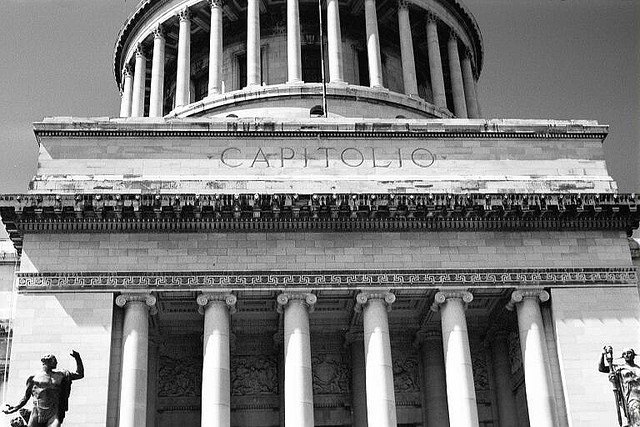
Photo Credit: Martin Burns / Flickr / Creative Commons

Photo Credit: Martin Burns / Flickr / Creative Commons

“Democracy promotion” has been one of the most contentious aspects of U.S. policy toward Cuba – and one of the most counterproductive – but it doesn’t have to be either.  The concept of democracy promotion is ingrained in U.S. policy culture, and the bureaucracies and programs they’ve been charged with conducting over the years are as bullet-proof as any in Washington.  Democracy promotion in different forms has been a main element of U.S. policy toward Cuba for decades. In the 1980s and early 1990s, the U.S. Interests Section conducted an array of outreach programs, engaging with Cuban academics, journalists, and officials – people tolerant if not deeply supportive of the Cuban government – as well as human rights activists and others “outside the system.”  These activities informed and nurtured the aspirations of Cubans in and outside the system who were eager to find Cuban solutions to their country’s mounting problems.  The Helms-Burton Act of 1996 moved democracy promotion into a more aggressive mode, explicitly linking it to regime change.  President Clinton spent token amounts on initiatives related to Cuba’s future transition, but the Bush Administration launched an expansion that has since cost U.S. taxpayers more than $250 million.  The arrest, conviction, and five-year imprisonment of USAID sub-contractor Alan Gross shed light on one such operation.  He smuggled sophisticated communication equipment onto the island to set up secret networks.  Associated Press investigative reporter Desmond Butler uncovered other programs involving communications and political operations against the Cuban government.

The investment has yielded some operational successes, but the impact toward promoting democracy has been negligible and, in important ways, counterproductive.  The program has delivered food, medicines, and other support to the families of imprisoned dissidents (many of whom have been released since Presidents Obama and Castro announced reestablishment of relations last December), but more provocative operations have arguably led only to arrests.  The amateurish clandestine tradecraft of the contractors and program activists, moreover, made it easy for Cuban counterintelligence to penetrate and manipulate their ranks.  The “private libraries” that U.S. taxpayers have paid for do not exist, and communications systems involving expensive satellite gear and satellite access fees have been compromised.  The secretive modus operandi of the operations has given credibility to draconian Cuban government measures, like Law 88 for “Protection of Cuba’s National Independence and Economy,” imposing prison terms for certain contact with foreigners “aimed at subverting the internal order of the nation and destroying its political, economic, and social system.”  Authentic people-to-people exchanges have been tainted as Cubans in the government and on the street are wary that any contact could be part of Washington’s regime-change efforts.

The democracy promotion ideology and bureaucracy seem unstoppable, but Presidents Obama and Castro can take the edge off this irritant with a little effort and flexibility, and even make it mutually beneficial.  The State Department and USAID have pledged to continue the Cuba democracy promotion programs and are asking Congress for $20 million to fund them again this year, but the President’s statement that “it is time for us to try something new” suggests acknowledgment that they need not be so ineffective and counterproductive.  For starters, the Administration could stop citing Helms-Burton authorities, which are explicitly for regime change, and establish criteria for operations in Cuba similar to those in other countries with whom the U.S. has diplomatic relations and is trying to improve bilateral ties.  It could restore and expand what worked in the past, such as the distribution of books and clippings; support for exchange visits; promotion of academic and cultural events; and other non-political activities that include people with government affiliation.  Perhaps most importantly, to decontaminate the programs, the organizations that have already spent millions trying to drive regime change should step aside and let a new generation – based on real people-to-people interests – try something different with the funds.  Both Presidents can trust their citizens to develop the historic roadmap that will define the relationship into the future.  Both the United States and Cuba stand to benefit.

September 25, 2015

*This article is excerpted from the second in a series of policy briefs from the CLALS Cuba Initiative, supported by the Christopher Reynolds Foundation. To read the full brief, please click here.

Puerto Ricans in Florida: Swing Constituency in a Swing State

By Fulton Armstrong and Eric Hershberg

Embed from Getty Images

A surge in the number of Puerto Ricans moving to Florida suggests a major shift in the impact of Latino issues in next year’s U.S. elections. As the island’s economic crisis deepens and severe austerity looms large, thousands of Puerto Ricans are arriving in Florida monthly, according to estimates, with the single biggest destination being Central Florida. The director of the Puerto Rican Federal Affairs Administration office in Central Florida has estimated a 15 to 20 percent increase in the number of new arrivals in recent months. The director of Hispanic Research at the Pew Research Center has called it “the biggest movement of people out of Puerto Rico since the great migration of the 1950s.” Anecdotal accounts follow trends first identified in the 2010 census and a 2013 Pew Research Center indicating an uptick in island-born Puerto Ricans arriving in the mainland. Puerto Ricans in Florida now number almost one million – only 200,000 short of the number of the state’s Cuban-Americans. The three counties around Orlando – seen by pundits as essential to any statewide or national campaign – were home to about 271,000 Puerto Ricans (representing about 14 percent of the total population of those three counties) in 2013, according to U.S. Census Bureau estimates. Many of the new residents are white-collar workers, in contrast to those in the last major wave of arrivals who came to work at Disney World in the 1980s.

Because Puerto Ricans residing on the island are citizens but do not have the right to vote in presidential elections, an influx of hundreds of thousands onto the mainland introduces a substantial expansion of the 2016 electorate, which could be of particular relevance in the hotly contested election in Florida. Although polls show that Puerto Ricans tend to vote Democratic, their support for the party’s candidate at the presidential level is not a foregone conclusion. The director of the Center for Puerto Rican Studies at Hunter College of the City University of New York has said that among the new arrivals “there is a large number of independents … and party affiliations mean less to them” than among mainland-born Puerto Ricans. Of the six members of the Florida State Legislature of Puerto Rican descent, three are Democrats and three Republican. (Orlando-area State Senator Darren Soto – born in New Jersey but strongly identifying with the island of his father’s birth – is running as a Democrat.) Democratic strategists privately claim confidence that the new diaspora will be in their column. They note deep dissatisfaction among on-island Puerto Ricans and the new arrivals toward the Republicans’ opposition to legislation that would allow the island the right to declare Chapter 9 bankruptcy, as well as polls showing significant support for Hillary Clinton. The Orlando Sentinel reported recently that Democrats had taken the lead in voter registration in Osceola County and won control of the County Commission. A deputy director for strategic initiatives at the Republican National Committee, however, told the Washington Post that she sees the Puerto Rican vote in Florida as “up for grabs.”

A decade and a half after the trauma of the Bush-Gore presidential vote in 2000, neither U.S. party dares to take Florida’s 29 electoral votes for granted. The Pew Research Center estimates that some 800,000 Latinos are turning 18 each year –about 2,200 per day – nationwide, making them the biggest source of new voters in each election cycle. It’s hard to see, however, what the Republican Party is doing to win the hearts and minds of Puerto Rican voters in Florida and elsewhere. As American citizens, Puerto Ricans do not have a direct stake in U.S. immigration reform – an issue that galvanizes other Latino constituencies – but the tone and policy prescriptions of that debate may well influence their perceptions of the two parties. The claims and counterclaims of optimistic partisan operatives aside, some Republican candidates’ rhetoric about immigration, Latin America, and U.S. Hispanics in general – including Donald Trump’s colorful admonition of Jeb Bush for speaking Spanish in public – has got to alienate many Puerto Ricans. Perhaps, as AULABLOG previously stated, one or two of the Republicans are likely strike a moderate-sounding approach to immigration in the coming months. Indeed, former Florida Governor Jeb Bush yesterday endorsed immigration reform, including a path to citizenship for “DREAM Act” children, and said, “We don’t need to build a wall. We don’t need to deport every person that’s in this country.” But particularly if the eventual GOP nominee proves reluctant to call for federal legislative or financial assistance for a bankrupt Puerto Rico, the party may face an uphill struggle trying to appeal to Florida Puerto Ricans – a rapidly growing swing constituency in a crucial swing state.

September 22, 2015

U.S. Government Abuse of Apprehended Migrants

By Michael S. Danielson*

Photo Credits: Larry Hanelin, Kino  Border Initiative, 2015.  All Rights Reserved.

Photo Credits: Larry Hanelin, Kino Border Initiative, 2015. All Rights Reserved.

The U.S. Customs and Border Protection (CBP) is not fulfilling its obligation to protect the civil and human rights of migrants apprehended, detained and deported back to Mexico.  A study released this week entitled “Our Values on the Line: Migrant Abuse and Family Separation at the Border” (full text) found that more than one-third of deported migrants experienced some type of abuse or mistreatment at the hands of U.S. immigration authorities.  The abuses included theft, physical abuse, verbal abuse, and inhumane detention conditions.  In violation of U.S. Department of Homeland Security (DHS) policy, these conditions include but are not limited to being held for over 12 hours in facilities without beds, overcrowding, excessively low temperatures, lack of adequate food, and denial of medical treatment.  Commissioned by the Jesuit Conference of Canada and the United States and the Kino Border Initiative (KBI), the report details the results of an in-depth survey of 358 Mexican migrants deported from the United States to the border city of Nogales, Mexico, from July 2014 to March 2015 – and corroborated by short-form surveys of 7,507 other migrants in the same area.

  • Since 2005 CBP has sought to deter Mexican migrants from attempting to enter the U.S. through a policy of “enforcement with consequences.” Formally launched in 2011 as the “Consequence Delivery System,” this package consists of measures against individual migrants that are so harsh as to be obviously intended to cause hardship and suffering.  In so doing, Border Patrol has abrogated its previous commitment, undertaken in 2004, to use its authorities to preserve family unity and ensure humane treatment of apprehended migrants.  Making things worse, Border Patrol agents often incorrectly enter names into computer databases, deny access to phone calls, and deny access to the individual’s consulate.
  • Two out of three migrants surveyed who crossed into the U.S. with immediate family members and apprehended together by the Border Patrol were separated from each other and deported to different ports of entry days, weeks, or months apart.
  • Twenty-eight percent of migrants surveyed were deported at night – to Nogales and other destinations with high levels of violence – making them particularly vulnerable to abuse by criminals and corrupt police and other public officials. One of every seven women was placed in this vulnerable position.
  • Migrants alleging abuse were unlikely to file a formal complaint. Less than one out of every 12 deported migrants in the survey claiming some type of abuse filed a complaint with U.S. immigration authorities.  Reasons for not filing a complaint include being unaware of the right to do so, fear of retaliation, and a belief that it would not make any difference.
  • The abuses were not carried out by “a few bad apples,” but rather reflected policies across Border Patrol and poor oversight of their implementation. The patterns of abuses are too extensive to argue otherwise.

Punitive border enforcement punishes people whose suffering in their home countries had already grown unbearable, and there is no evidence that these policies deter unauthorized immigration.  In fact, a recent report of the DHS Inspector General found that the CBP has failed to accurately measure the deterrent effect and the cost-effectiveness of the core policies of the Consequence Delivery System.  Evidence is much stronger of the negative and unintended consequences of these policies, both for migrants and border security.  In personal communication presented in the report, CBP’s former Assistant Commissioner of Internal Affairs James Tomsheck attests that an attempt to enhance the enforcement capacity of the agency through a hiring surge of some 12,000 new agents in just over two years was marred by a predictable deterioration of the vetting process and a sharp and consistent decline in “the quality and suitability of the Border Patrol applicant pool.”  This new report points to several key areas for reform to help limit abuse by Border Patrol agents, including stronger independent and internal oversight mechanisms to tackle misconduct and abuse; an accessible and accountable complaint process; an overhaul of CBP training; equipping CBP agents with body-worn cameras; and improving CBP short-term detention conditions.  The study also recommends that deportations to Mexican border towns occur only during daylight hours and that DHS, responsible for CBP, put in place a process to identify family relationships and preserve family unity upon deportation.  Such measures would begin to address the most pressing problems faced by migrants and their families – without triggering a spike in migrant traffic.

September 17, 2015

*Michael S. Danielson, a CLALS Research Fellow, was the principal researcher and drafter of the report.

Is a “CICIH” the answer to Honduras’ Crisis?

By Fulton Armstrong and Eric Hershberg

Photo Credit: US Embassy Guatemala / Flickr / Creative Commons

Photo Credit: US Embassy Guatemala / Flickr / Creative Commons

The success of the Comisión Internacional Contra la Impunidad en Guatemala (CICIG) in driving anti-corruption efforts there – culminating in the resignation of President Pérez Molina – has stoked debate in neighboring Honduras on the wisdom of creating a “CICIH” with the same mission to root out the rot that permeates state institutions and perpetuates the misery of the citizenry.  President Juan Orlando Hernandez has stated categorically that no such entity is needed in Honduras given advances in the country’s own institutions and his own putative commitment to good governance.  Some civil society organizations are at least implicitly concurring by taking part in accountability initiatives involving collaboration with the government.  Other voices from civil society are objecting vociferously, however.  Most notable among them are the indignados, a largely youth-based movement that insists that the President himself and virtually the entire institutional system in Honduras is so rotten that only an international body can be trusted to root out endemic corruption.  The argument rages on, with the indignados staging regular demonstrations and the government – occupied simultaneously with promoting its credibility at home and abroad and maneuvering to secure authorization for presidential re-election – holding fast to its opposition to any such international role.  The debate will continue for the foreseeable future.  We sketch below our understanding of the competing arguments.

Arguments in favor of a CICIH:

By nearly all accounts, corruption has rendered the public and private sectors chronically ineffective – from the President (who admitted that millions from Social Security made it into his campaign coffers and who engaged in nepotism), through the government ministries and even the judicial bureaucracies (where political pressure, intimidation, and bribery are rampant), and companies large and small (for whom payoffs are merely an added budget item).  The country has topped the charts in non-war homicides, including targeted killings, and other violence for several years, further discouraging investigations and prosecutions.  The flood of narcotics and cash through Honduras has thrown fuel onto the flames.  Only an independent, UN-endorsed entity like a CICIH – with its unique ability to train, protect, and motivate judicial personnel, issue indictments, and put powerful people in jail, and shame local government into taking action – can help the country climb out of this deep hole, this argument goes.

Arguments against:

Steven Dudley of InSight Crime notes that the call for a CICIH comes at a time that the Attorney General’s office is showing some signs of life.  Its anti-corruption efforts have led to the indictment and arrest of the former head of the Social Security Institute on charges of embezzlement and illegally financing political parties (although some charges were dropped).  Combating crime, cheaper homemade solutions are showing results in Honduras in terms of training and cases resolved.  Organizations like the Asociación para una Sociedad más Justa (ASJ) are doing groundbreaking work to keep homicide levels down in some of the worst neighborhoods at a fraction of the cost of a CICIH.  Expense is another important factor.  In Guatemala the CICIG costs between $12 million and $15 million annually, which even that country, far wealthier than Honduras, cannot afford.  CICIG has provided valuable assistance and training to Guatemala’s Attorney General’s Office, but its foreign investigators, who move around in armored vehicles with armed bodyguards, leech massive resources that might otherwise go to fortify local prosecutors’ offices.  Moreover, according to this argument, the investigators don’t need foreign prosecutors to tell them what they’re doing wrong.

Skeptics further contend that international donors and pro-reform Hondurans arguably will not get the quick fix and public relations victory they want from a CICIH.  It took over a decade for CICIG to set up in Guatemala and nearly eight years to get the right mix of cases.  Its greatest strategic goal – fortifying Guatemala’s justice system – remains a work in progress.  The Guatemalan Attorney General’s Office has not yet executed a complicated, forensic investigation leading to a high-level prosecution.  Honduras’s greater reliance on foreign assistance, according to this argument, suggests a CICIH would actually enable its dependency, rather than break it.

The weakness and rot within Honduran institutions and the venality of national leadership strongly suggest that neither approach – a foreign-backed entity like CICIH or a home-grown solution – could quickly reverse the tsunami of corruption and violence that the isthmus’s poorest country has been experiencing since the 2009 coup.  Ideally, the best of Honduras’s own efforts could be buttressed by a Honduran version of the CICIG model, but the knack of the country’s leaders for overwhelming even the best of intentions, as they did the “Truth Commission” charged with determining accountability for the coup and rights abuses carried out in its aftermath, argues for extreme caution in forming expectations.  The debate therefore may boil down to the moral argument of whether the international community, witnessing Honduras’s descent into utter lawlessness and destitution, can stand idly by or should at least offer its help in what form it can, such as a CICIH.  Even if a CICIH is not a panacea, it at least would send a powerful message to Honduran elites that the world is watching.

September 15, 2015

A Post-Correa Ecuador?

By Catherine Conaghan*

Photo Credit: Thierry Ehrmann / Flickr / Creative Commons

Photo Credit: Thierry Ehrmann / Flickr / Creative Commons

What seemed like a certainty less than a year ago – Ecuadorian President Rafael Correa as a shoo-in for reelection in 2017 – now has given way to competing scenarios as the country’s economic crisis deepens.  The game-changer has been the collapse in revenues from Ecuador’s principal export: petroleum.  With prices for Ecuadorian crude hovering 50 percent below their 2014 average, Correa has had little choice but to slash the abundant government spending that has been the hallmark of his presidency.  Ecuador’s use of the U.S. dollar greatly handicaps its capacity to adjust.  Further aggravating the recession is the economic downturn of Ecuador’s principal external lender, China.  Over $2 billion have been cut from the 2015 budget, and plans to shrink the size of the public bureaucracy are now under way.  His decision in April to suspend the central government’s obligatory payments to the national social security system stoked anxiety about the fund’s future, and an announcement in June of plans to hike taxes on inheritance and real estate transactions sparked street demonstrations around the country.  Indigenous and labor organizations mobilized in mid-August to protest these and other aspects of Correa’s style of governing.  An estimated crowd of 100,000 people marched in Quito.  Scores of protestors were detained and face charges related to the August mobilizations.

The months ahead will not be easy for a president accustomed to buoyant budgets and strong polls.  As one of Latin America’s left-turn leaders, he pushed a state-centric economic model under which poverty declined and the middle class grew.  His approval ratings since he took office in 2007 consistently scored among the highest of any Latin American president.  (They dipped below 50 percent – as low as 42 percent – for the first time in 2015.)  While Correa waxes and wanes on whether he really will pursue reelection, his party is pushing to amend the Constitution through legislation – without a referendum supported by over 80 percent of the public – to allow him a third term.  The opposition strenuously opposes the move.  The National Assembly appears headed toward a final vote on the matter in December.

From now until December, the reelection maneuvering and two possible outcomes will dominate conversations.  Under one scenario, Correa and Alianza País will push ahead with the amendment, ignoring negative public reaction and repressing protests if necessary, and Correa will decide on his candidacy depending on his view of the economy and the state of the opposition.  In a second and perhaps less likely scenario, Correa and his party may just abandon the reelection plan, concluding that the political costs are just too high.  This would set off power struggles within Alianza País over who would head the ticket.  Among the prospective frontrunners are former Vice President Lenín Moreno, current Vice President Jorge Glas, Production Minister (and former Ambassador to the United States) Nathalie Cely, and former Industry Minister-turned-critic Ramiro González.  In the process, Correa will be looking to anoint someone loyal and capable of governing the country until he can return as a candidate in 2021.  Under both of these scenarios, Ecuador is bracing for a volatile year ahead.  Natural disasters – a possible volcanic eruption of Mount Cotopaxi and El Niño – could also fuel uncertainty, giving Correa a chance to shine and rally, or to fail and deepen doubts about his leadership.  After eight years of relative political stability and economic good times, Ecuadorians are pondering whether a post-Correa era could be at hand and what it would mean.

September 8, 2015

* Catherine Conaghan is the Sir Edward Peacock Professor of Latin American Politics at Canada’s Queen’s University and a former CLALS Research Fellow.

Guatemala’s Crisis is Not Over

By Eric Hershberg*

Guatemala City, August 2015. Photo Courtesy of Eric Hershberg.

Guatemala City, August 2015. Photo Courtesy of Eric Hershberg.

With President Otto Pérez Molina’s resignation early this morning, Guatemala lurches into a new phase in its long-running political crisis, with little prospect that this weekend’s elections will resolve much.  The investigations into the Pérez Molina administration’s corruption, the national assembly’s unanimous vote to suspend his immunity, and the peaceful surge in popular protests demanding that he step down all suggest progress in the country’s efforts to build a functioning democracy.  The UN-sponsored Comisión Internacional Contra la Impunidad en Guatemala (CICIG) fulfilled its mandate, and its example and training were arguably important factors in the ability of judicial officials in Pérez Molina’s own government to support the processes that led to his downfall.  (Click here for an AULABLOG assessment of CICIG in May.)  The Congressional vote to strip him of immunity was unanimous, including even his most loyal supporters, who until then had rejected popular clamoring for the president’s ouster.  By the end of last week societal disgust with the political elite had reached the point that even the most recalcitrant of incumbents realized that their own survival required ditching the president.  The comptroller’s office called on him to resign “to avoid greater social unrest that could have unpredictable consequences” – a sentiment echoed by powerful business groups and the Catholic Bishops Council.

The Guatemalan Constitution and laws lay out the next steps.  The Congress has accepted the resignation, clearing the way for Vice President Alejandro Maldonado – who replaced Vice President Roxana Baldetti after she was jailed in connection with the same corruption scandal – to take office.  The first round of Presidential elections, with 15 candidates in the running, will proceed as scheduled this Sunday, despite calls from some civil society organizations to delay the balloting on grounds that the campaign regulations reflect the influence and interests of criminal elements.  In all likelihood, a runoff round will be necessary six weeks later (October 25).  The convulsions of recent months and deep distrust in government suggest that tensions will be high between now and then, but there’s no indication yet that civil unrest could threaten the electoral process, and military intervention appears to be a thing of the past.  There is every reason to expect that a new President will be inaugurated on January 14.

The elections are unlikely, however, to lead Guatemala into an era of less corruption and greater accountability, or to install leadership willing or able to spearhead economic and social policies to enable the majority of the population to live with dignity.  The slogans on the banners of the tens of thousands of protestors in Guatemala City’s central square lacked any message beyond a rejection of the status quo.  “Throw them all out” and “I have no president”are potent rallying cries but do not address the core challenges of a country where the elite pay no taxes, half of all children are malnourished and tens of thousands of young people desperately seek better lives anywhere other than Guatemala.  

The reputations of the leading candidates and their failure to articulate coherent governing platforms give little room for optimism.  Leading in the polls is a wealthy businessman, Manuel Baldizón, whose running mate is already being investigated for corruption and whose own closet is widely understood to contain plenty of skeletons.  Protestors have already singled out Baldizón as unacceptable, taunting him with chants of “it’s your turn next.”  In second place is a comedian named Jimmy Morales, who enjoys the support of the economic elites and media but has advanced no policy platform whatsoever.  Former first lady Sandra Torres appears to be running third.  She divorced President Álvaro Colom in 2011 to circumvent a court ruling that, as First Lady, she couldn’t run for office.  (The Constitutional Court put a final stop to her campaign a month before elections that year.) 

Electoral victory by any of these candidates would leave Guatemala with weak leadership at a time that most government institutions desperately need revitalization.  Corruption is too deep-rooted for CICIG and its few allies in government to face down alone, and these candidates won’t use the presidency to carry out the needed purge.  The organized criminal groups that traffic drugs and persons through the country and permeate governing institutions stand to grow only stronger, and the misery that plagues a population deprived of education, health care and jobs will continue unabated.  U.S. Vice President Joe Biden’s billion-dollar aid package for Guatemala, Honduras and El Salvador, already in trouble in Washington, may have nowhere good to go.

September 3, 2015

*Eric Hershberg, director of the Center for Latin American & Latino Studies at American University, witnessed the protests in Guatemala City last week.

Maduro Cites Security to Suspend Rights on the Border

By Michael M. McCarthy*

Photo Credit: Globovisión / Flickr / Creative Commons

Photo Credit: Globovisión / Flickr / Creative Commons

The Maduro government’s closure of a key border crossing into Colombia and declaration of a state of emergency in nearby towns mark not only a low in relations with Colombia but also in efforts to manipulate the playing field ahead of legislative elections slated for December 6.  President Maduro blamed Colombian “paramilitaries” for an August 19 firefight in which three Venezuelan soldiers were wounded.  He announced the deployment in the area of the “Operations for the Liberation and Protection of the People” (OLP), which are heavily armed military and police units specially created to force out alleged paramilitaries, and security forces swept through the area forcibly deporting more than a thousand undocumented Colombians.  Last week, the pro-government coalition of the Venezuelan National Assembly called for expanding the emergency measures to two other important border states.  The two countries’ foreign ministers met on August 26 for what Colombian Minister Holguin called a “positive, frank and realistic” exchange, but there was no agreement to reopen the border.

Maduro’s objectives seem to go far beyond stemming border violence.  Two reputable polls put his popularity in the lower 20s and project the opposition as likely to win a Congressional majority in the December 6 legislative elections.  His Chavista political movement is bleeding supporters amid a mounting economic crisis. Skyrocketing inflation and acute shortages of basic goods and services have created daily hardships for the popular sectors that once served as Chavismo’s base.  The opposition coalition Mesa de Unidad Democrática called the state of emergency a diversionary tactic – “to cause a situation of intense conflict and internal confusion” – and claimed that the maneuvering shows Maduro fears the election and may suspend it.  The state of emergency in Táchira, which is a renewable in 60 days, restricts the right to public assembly and gives Maduro powers to seize assets and limit the sale of basic goods and services.  The value of the annual illegal border trade is estimated to have grown to roughly $5 billion.  The order may become a mechanism for intensifying government controls over industry, which Maduro regularly accuses of waging war against the government.

Maduro’s political objectives in declaring the state of exception are obvious – to reset the political agenda in line with a government narrative of external threats.  This security rationale appears greatly exaggerated, suggesting he’s more interested in scapegoating Colombia for the sorry state of affairs in Táchira than in sparking a diversionary armed conflict.  He also recently escalated an historic border dispute on his eastern flank with Guyana after Exxon discovered oil in Guyanese territory claimed by Venezuela.  So far, Maduro’s actions have not seemed to threaten the soft truce between Washington and Caracas, which has led to a toning down of mutual recriminations.  Over the weekend, the U.S. State Department issued a mild statement that noted “continuing concern about the situation along the border between Venezuela and Colombia,” although Washington did take him to task for the deportations.  The real implications of the emergency decree are internal to Venezuela. Maduro’s state of emergency not only raises human rights concerns in the affected territories; it suggests the specter that the government will resort to increasingly desperate measures to maintain control as its credibility, like the economy, collapses.

August 31, 2015

* Michael McCarthy is a Research Fellow with the Center for Latin American and Latino Studies.

Dilma – and Brazil – in Crisis

By Eric Hershberg

Photo Credit: Ministério da Ciência, Tecnologia e Inovação / Flickr / Creative Commons

Photo Credit: Ministério da Ciência, Tecnologia e Inovação / Flickr / Creative Commons

Brazil’s corruption scandals and deepening recession have raised doubts about not only the viability of President Dilma Rouseff’s government, but also about the national renaissance and global role that Brazilians have long strived for and seemed only recently to have achieved.  The commodity boom of the past decade propelled Brazil to become the world’s sixth largest economy and make major inroads against its historically obscene levels of poverty and inequality.  Often working in tandem, Brazil’s leading public and private enterprises, assisted by the generous state development bank, prospered immensely and fueled growth in Brazil itself and elsewhere in Latin America, building infrastructure from Ecuador to Cuba.  Four Partido dos Trabalhadores (PT) presidential victories in a row (two each for President Lula da Silva and for Dilma) appeared to validate a development strategy built upon government alliances with ambitious large firms and generous cash-transfer programs for needy segments of the population, which became reliable sources of electoral support.  Brazil, the country that skeptics considered unlikely to ever fulfill its aspiration of becoming more than “the country of the future,” seemed to have turned a historic corner – until it all came crashing down.

With the commodity boom now over, the economy is contracting at an annual rate of more than 2 percent, and a Central Bank survey released last week forecast that the recession will continue into 2016.  The past decade’s extraordinary gains in formal sector employment and wage rates are being rapidly eroded.  The dire macro-economic situation forced Dilma to shift course earlier this year, when to the dismay of her PT base, she appointed pro-austerity economist Joaquim Levy as Finance Minister.  His mandate – to tackle fiscal deficits – required dealing with the end of the commodity-driven cycle of growth and problems with the state capitalist model pursued by the PT since 2004.  Levy’s strategy will take time to bear fruit, probably through most of Dilma’s term, and will be painful.

But the President’s biggest challenges stem from the vast corruption scandals that have devastated her credibility and the reputation of the enormous companies that were the protagonists of Brazil’s latest miracle.  Although Dilma has not been charged with any wrongdoing, the scandalous actions at state oil firm Petrobras, which at its height accounted for as much as 10 percent of Brazil’s GDP, were in full flourish when she was Lula’s Energy Minister and nominally in charge.  Prosecutors have filed evidence of bribery and kickback schemes that bilked billions of dollars from the company’s coffers, and officials in both the PT and allied parties have been charged with serious crimes.  Dilma’s popularity ratings are now in single digits, with little prospect of improvement.  Street protests calling for her impeachment are more focused than those that tormented her in 2013 and 2014, when popular discontent focused less on corruption than on the poor quality of transportation, education, health care, and other public services at a time when the government was making huge investments to prepare for the 2014 World Cup and the 2016 Olympic games.

Further damaging revelations are likely as investigations continue, and they will affect an ever-wider array of political actors and major economic enterprises.  Many of the president’s political foes support either impeachment or resignation, while others are inclined to let her government wither in place.  The key alternative parties – the PSDB of former President Cardoso and the PMDB (the latter rumored to be closer than ever to breaking its tenuous alliance with the President) – are not aligned in a way that establishes a clear path to push Dilma out.  The most optimistic scenario for the President entails remaining, terribly wounded, in office, but this could change if, as many observers believe, the Auditing Court (TCU) determines that Dilma has misused public funds, or if the TSE should press forward with investigations of illegal financing of Dilma’s campaign.  

If two or three years ago it seemed plausible that history would credit the PT for having transformed Brazil into a high-quality democracy with improved social inclusion, today that appears to have been a pipe dream.  Beyond the immediate factor of Dilma’s ineffectual leadership, there are broader, systemic reasons for this tragedy.  Brazil’s fractured party system and the coalition-building it requires engenders corruption-fueled legislative bargaining, as evidenced by the Mensalão scandal.  Brazilian state capitalism has blurred lines between state economic policies and corporate beneficiaries, further fueling a culture of corruption evident by the fact that roughly 40 percent of members of Congress are under investigation, according to the New York Times.  Regardless of whether Dilma survives in office, the current moment has drawn Brazilians’ attention to the deep political and economic roots of their current situation, and dashed their hopes of soon becoming “O País do Futuro.” 

August 24, 2015 

Can the Republicans Close Their Gap with Latinos?

By Eric Hershberg and Robert Albro

Photo credits: Iprimages, Michael Vadon, Gage Skidmore / Flickr / Creative Commons

Photo credits: Iprimages, Michael Vadon, Gage Skidmore / Flickr / Creative Commons

Remarks about immigration made by flamboyant New York billionaire and aspiring presidential candidate Donald Trump have embarrassed many Republicans – and angered many Latinos – but also opened the way for several of his competitors to appear more moderate on the issue.  Echoing comments he made in a televised debate on 6 August, Trump on Sunday issued a policy paper claiming, “For many years, Mexico’s leaders have been … using illegal immigration to export the crime and poverty in their own country (as well as in other Latin American countries).”  He demands that Mexico pay for an impenetrable wall along the border and that Washington deport many migrants, beef up border patrols and narrow opportunities for legal immigration.  Although Trump has often claimed he could win the Latino vote, a poll by Huffington Post/YouGov in June found that 82 percent of Latinos don’t take Trump seriously as a candidate, and subsequent surveys indicate that his rhetoric has damaged the Republicans’ image among them.  (Other polls indicate that Democrats’ immigration proposals, in contrast, have the support of some 60 percent of Latinos.)  The views of the country’s fastest-growing demographic group are significant when considering their prominence in “swing” states such as Florida (24 percent of the population and 14.6 of registered voters), Colorado (21 and 14.2), Nevada (27 and 16) and Virginia (8 and 5).

Most of the 15 other major Republican candidates have tried to ignore Trump’s remarks and the immigration issue overall.  Texas Senator Ted Cruz said he “salutes” Trump and, eschewing “Republican-on-Republican violence,” refused to criticize his views.  But two others – former Florida governor Jeb Bush and Ohio governor John Kasich – have staked out somewhat more moderate positions.

  • Bush stresses the need for more aggressive border enforcement and a crackdown on undocumented residents of “sanctuary cities,” but he also called for an immigration policy that included “documented status” – but not citizenship – for an unspecified number of them. Having a Mexican-born wife and mixed-race children also sets him apart.
  • Kasich last week noted that undocumented migrants are “people who are contributing significantly” to the United States. He said, “A lot of these people who are here are some of the hardest-working, God-fearing, family-oriented people you can ever meet,” and he said he favors a pathway to legal status for people already in the country, adding that such provisions could be part of an immigration reform package.
  • Florida Senator Marco Rubio, who was ostracized by his Republican colleagues in 2013 for proposing reforms along the same lines, has appeared reluctant to criticize Trump, Bush or Kasich – making him possibly the biggest loser on the issue for now.

The elections are still 14 months off, and electoral dynamics change.  Latinos don’t figure in the Republican primaries, and it’s too early to speculate how their voices will play until next year – at which point Donald Trump probably will be seeking celebrity through other endeavors.  Republican strategists have already said that their candidates won’t try hard to court Latinos – and risk alienating the roughly 20 percent of their base in swing states who hold hard-core anti-immigration positions.  Nonetheless, Bush and Kasich’s rhetoric, while still vague on actual policies, may give the party a chance to claim to Latinos that not all Republicans are out to get them.  No Republican on the front line today appears likely to attract majority support among Latinos, but a moderate-sounding approach to immigration could take the rough edges off the party’s image, reduce Latino opposition to it and diminish the issue as a Democratic Party advantage.

August 18, 2015

The Untold Story of Manuel Contreras and the CIA

By John Dinges*

The man who designed and executed the massive human rights crimes of Chile’s military regime died last week.  Manuel Contreras remained a general in Chile’s Army even during the last 20 years in prison, with accumulated sentences of more than 500 years imposed by Chilean courts.  In the United States, his murky relationship with the CIA and masterminding of a shocking terrorist attack in Washington, dominate perceptions of his record.  Contreras, a nondescript, somewhat pudgy man who never tired of boasting about the effectiveness of his anti-subversive campaign, created a security police apparatus, DINA, independent of Chile’s military hierarchy.  He reported only to General Augusto Pinochet, with whom he met early each morning.  DINA was responsible for about half of the 3,200 killed by the Chilean military, and virtually all of the cases of desaparecidos – people detained, tortured and killed in secret interrogation centers, whose bodies were then disposed of in secret graves or dumped into the sea.

Chile was not the most brutal military dictatorship – more than 10,000 Argentines and 200,000 Guatemalans died during that era – but Contreras and Pinochet became the international face of Latin American state terrorism of the 1970s, for various reasons, including their intimate relationship with the United States and in particular with the U.S. Central Intelligence Agency.  It is not quite true that the CIA organized the military overthrow in 1973 of socialist president Salvador Allende, but the U.S. embrace of the violent coup was enough to create the widely accepted narrative that the United States brought Pinochet to power and made him a creature of its anti-communist foreign policy, whose global architect was Henry Kissinger.  In addition to ruthlessly persecuting political opponents in Chile, DINA carried out a spectacular act of international terrorism in the heart of Washington, D.C. – the 1976 car bomb assassination of Allende’s former foreign minister Orlando Letelier, in a blast that also killed an American woman, Ronni Moffitt, and wounded her husband Michael.

Some were quick to see the hand of the CIA in that horrendous crime, a charge that is repeated even today among some writers in Latin America.  But these writers may not be aware that Contreras actually promoted the idea of CIA involvement in Chile as a way to mask DINA’s crimes.  Here, briefly, is what Contreras did to point the finger at the CIA:

  • Contreras was the first to reveal, in an interview, that the CIA had sent intelligence trainers to Chile to help in the formation of DINA, a fact belatedly confirmed by the CIA to a Congressional investigation.
  • As his chief international assassin, Contreras hired Michael Townley, a U.S. citizen who had tried to join the CIA as a clandestine agent – a fact unquestionably known to Contreras and now well established in U.S. declassified documents.
  • Contreras developed a close operational relationship with the CIA, agreeing to provide intelligence in exchange for payment.  He is known to have traveled to the United States to consult with top CIA officials at least five times, including with CIA deputy director Vernon Walters in August 1975 – after which he went on to Caracas to lay out his plans for an international assassination alliance, Operation Condor.  Whether Contreras briefed Walters on the assassination plans is buried in CIA secrecy.
  • Contreras used Operation Condor to obtain false documents for Townley and another DINA agent to use in the first phase of the Letelier assassination.  With the plot under way, in July 1976, he visited Walters again.  Whatever the nature of those conversations (the declassified record is vague), Contreras was again associating himself with the CIA in relation to the impending murder.

When charged with killing Letelier, Contreras pulled out this defense: that the CIA had infiltrated DINA to commit crimes for its own purposes, that Michael Townley was really taking his orders from the CIA, and that the CIA, not DINA, killed Letelier in Washington. That version of events is false, according to my investigations.  Nonetheless, the charge of CIA involvement in Operation Condor and Letelier’s murder has become a kind of dogma, both on the right and the left.  It can be found in the writings of some U.S. academics and is extremely common in narratives of the period in Latin America.  Although there is no direct evidence for the charge, the history of CIA intervention, complicity in human rights violations and defense of military dictatorships is enough to convince many people that it must be true.  Few of those who believe it are aware they are making common cause with General Contreras, perhaps the most emblematic human rights criminal in Latin America.

August 12, 2015

*John Dinges teaches journalism at Columbia University.  He sorts out the documented, fact-based truth about the U.S. role in “The Condor Years: How Pinochet and his Allies Brought Terrorism to Three Continents” (The New Press 2004).