Mayor Adams, Don’t Sell Out New York City’s Economy

By Marshall Plane, Ernesto Castañeda

Photo credits to Flickr

Days after federal corruption charges against him were dropped, Mayor Eric Adams appears poised to open New York City to President Trump’s mass deportation agenda in what Manhattan’s federal attorney described as a “quid pro quo”. Mr. Adams’ posturing has hinted at this for some time: the mayor has framed the recent influx of asylum-seeking migrants as an economic burden that “will destroy New York City.” “The long-term consequences have yet to materialize of what this crisis will do to our cities,” he told Tucker Carlson on January 22nd.

After crunching the numbers, we agree with Mr. Adams: New York City is just beginning to reap the benefits of this influx of hardworking people. We conservatively estimate that, if their earnings and employment rates are similar to the current undocumented population, the 316,000 asylum seekers who have come here since 2022 will contribute $8.62 billion annually to the city’s economy, a figure greater than the GDP of forty countries. Much of this economic activity will flow to public coffers: the asylum seeker population is projected to pay $942 million more in taxes than they receive in benefits each year. If ICE is allowed to wreak havoc on New York City, all these benefits will be lost.

This is not particularly surprising. Previous waves of immigrants have similarly fled desperate situations, arrived with limited resources, faced nativist backlash, and still become vital contributors to the city’s economy and culture. There’s no reason to believe today’s newcomers should be any different. With New York’s US-born population declining and demand for workers growing fastest in the industries most reliant on immigrant labor, they are arriving at an opportune time.

It’s true that New York City has spent substantial amounts on services for asylum seekers: a combined $5.2 billion in fiscal years 2023 and 2024, with another $4.5 billion budgeted for FY2025. These costs doubtless been have been inflated by Adams’ “emergency” decision to suspend background checks and competitive bidding requirements for contractors providing such services. The Comptroller’s investigation found several egregious examples of overpayment. One contractor received $117/hour for security guards and $201/hour for off-site managers. Despite this waste, spending on asylum seekers made up just 4.2% of the FY2025 budget.

Most importantly, these costs are not the product of an “open border.” Immigrants have been coming to New York City via the border for decades. In fact, the city’s undocumented population was 611,000 in 2012 and fell to 412,000 by 2022. Nor is the scale of the current influx unusual in recent times–during the 1990s, the city’s foreign-born population grew at a higher annual rate than it has during the 2020s.

Instead, the recent difficulty housing asylum seekers is a unique case created by a perfect storm of policies: a political stunt that brought people to cities where they lacked connections; an artificial housing shortage; an already-struggling, poorly run shelter system unequipped to house new arrivals; a lack of legal immigration pathways; and outdated laws that prevent asylum seekers from working.

Each wave of immigration to New York City has been beneficial to both the immigrants themselves and their adopted city. The only difference today is that arcane policies have forced both sides to make major upfront investments before they begin to enjoy those mutual benefits.

Before claiming asylum, people must physically come to the US. For nearly all the asylum seekers we spoke with as part of our ongoing study, this involved taking on substantial debt to finance a deadly, months-long overland journey. This debt can be a major obstacle as people try to establish themselves in New York.

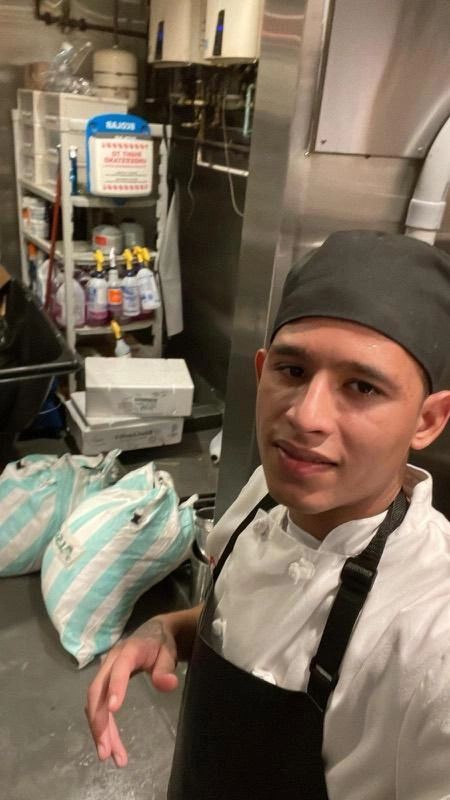
In 2023, John borrowed nearly $30,000 to bring his family of five from Ecuador to the US border. A mechanic by trade, he quickly found work repairing e-bikes at a workshop in Queens, earning $1,200 a week. Yet over half of each paycheck goes to repaying his creditors back home (who have threatened to kill his parents should he miss a payment), leaving him unable to afford rent and trapping his family in the shelter system. He says he’ll have paid off enough debt to move to an apartment in New Jersey in three months.

Lacking a sponsor in the US, crossing the border was John’s only way to come here. Leave aside, for a moment, your beliefs about whether doing so was morally correct. The fact is, he’s here and contributing to our economy. Had he been able to come directly from Quito to New York, his spending power would be going to New York businesses instead of human smugglers.

Another problem: after applying for asylum, people must wait 180 days before receiving a work permit. Unless they have connections to support them, this effectively forces people to live off the state for six months. In practice, our conversations have made clear, it’s often much longer. In 2023, New York City began limiting stays in any one shelter to 60 days, forcing people to shuffle between different facilities. Many migrants are not informed that failing to report this change of address to USCIS within 10 days is a misdemeanor and can delay or derail their ability to get documents.

The experience of Carlos, who we spoke to outside a Manhattan shelter, exemplifies the bureaucratic absurdities that hold migrants back. Bused to NYC in late 2023 as part of Operation Lone Star, he immediately applied for asylum, citing political persecution in Venezuela. While waiting for his work permit, he has bounced between different shelters and worked temporary construction and moving gigs. He says his lack of documentation allowed these employers to exploit him, frequently not paying him in full.

Carlos told us a relative in Oklahoma has found him a job in trucking, his original profession. “The moment my papers arrive, I’m going to Oklahoma,” he says. “They’re waiting on me.” He was supposed to get his work permit months ago but had to restart the process when his address changed. He was most recently told his papers should arrive in 90 days.

The absurdity is infuriating. Due to decades-old laws, people itching to work linger in shelters against their wishes and at great financial cost, while crucial jobs across the country remain unfilled. The Independent Budget Office estimates the cost of missed work authorizations for asylum seekers at up to $1 billion in 2024 alone.

Even so, with US-born workers rapidly aging, rising immigration has done much to ease post-pandemic labor shortages, helping reduce inflation while maintaining economic growth. And asylum seekers are quietly integrating into the city’s economy. Of the 225,000 migrants who have passed through the shelter system, over 170,000 (77%) have moved out, and the number remaining in city care continues to dwindle.

Many interviewees, having recently gotten their work permits and found jobs after a long ordeal, expressed excitement to begin living independently and working towards the various dreams that kept them going through sweltering jungles and deserts. As asylum seekers increasingly fill the jobs that keep New York’s service-based economy moving, the investments made by both sides finally appear to be paying off. For deportations to derail asylum seekers’ budding lives as New Yorkers would be a human tragedy and an economic catastrophe

Marshall Plane is a Research Assistant at The Immigration Lab.

Ernesto Castañeda is the Director of the Immigration Lab and the Center for Latin American and Latino Studies and a Professor at American University.

Innocence Suspended: From Seeking Security to the Guantanamo Concentration Camp

Luis Alberto Castillo Rivera graduating from high school in Venezuela (Photo courtesy of his family; Source: Migrant Insider)

Luis Alberto Castillo Rivera graduating from high school in Venezuela (Photo courtesy of his family; Source: Migrant Insider)

The story of Luis Alberto Castillo Rivera, a Venezuelan asylum seeker, has gone viral on TikTok and gained media coverage. Castillo is a man without any criminal history or gang affiliation who entered the United States through a legal pathway. In 2024, this Venezuelan asylum seeker flew to Mexico and awaited his court date. Once he received his appointment date on the CBPOne app on January 19th, 2025, he presented himself at the U.S.-Mexico border in El Paso, where he was processed by immigration authorities and held in detention for no given reason. At the ICE detention center in El Paso, authorities started to question his tattoos, specifically one he had of Michael Jordan. Authorities claimed his Jordan tattoo was affiliated with the Venezuelan gang Tren De Aragua. Many of the tattoos identified by a law enforcement list as used by Tren de Aragua, including stars, roses, tigers, and jaguars, are common among Americans. These so-called identifiers may just be a flimsy pretense for criminalizing the average, non-criminal migrant.

Castillo in a photo released by the Department of Homeland Security of the first flight of migrants preparing to takeoff for Guantanamo Bay, Feb. 4, 2025. DHS

Castillo in a photo released by the Department of Homeland Security of the first flight of migrants preparing to takeoff for Guantanamo Bay, Feb. 4, 2025. DHS

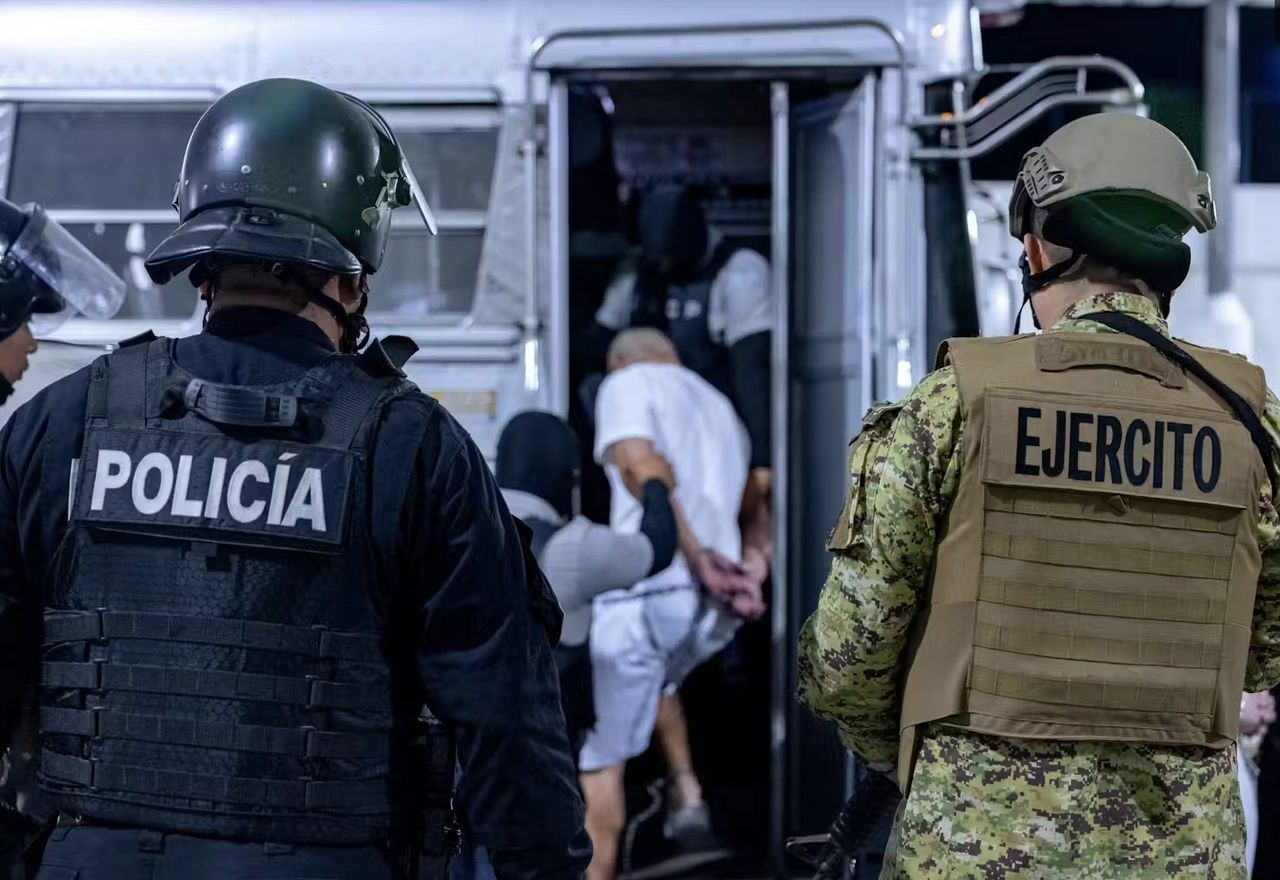
On February 3rd, Castillo told his family that he would be deported to Venezuela, even without a hearing. The next day, he lost contact with his family and was sent to Guantanamo Bay, Cuba on February 4th. President Trump stated he is sending those who have committed crimes in the U.S. to Guantanamo Bay, but Castillo had no criminal history nor gang affiliation and never even had the chance to freely step foot in the U.S.

Castillo’s family was not notified that he would be held at the “longest-running war prison.” His family members only found out about this after seeing pictures online of migrants arriving in Guantanamo Bay. When his family searched for him on the US Immigration and Customs Enforcement website, it appeared he was still in the processing center in El Paso, Texas. Attorneys are calling Guantanamo Bay a “legal black hole,” a place where typical legal protections do not exist for some of the detainees. Some are being held without due process indefinitely without trial or conviction, including thousands of Haitian refugees in the 1990s and almost 800 Muslim men, including minors, over the past two decades. Some of these prisoners have endured incredible physical and psychological abuse and torture in this extralegal space.

Now, the first group sent to Guantanamo Bay, including low-risk migrants and migrants with no criminal record, such as Castillo, were detained in the “counterterrorism suspect” part of the prison – rather than the Migrant Operations Center used in the past to process migrants. The conditions these individuals are facing at this maximum-security prison are inhumane, including mold, undrinkable water, and a lack of adequate medical care. Guantanamo Bay does not even meet the minimum safety standards for detention facilities as set by the U.S. government. Furthermore, the detainees at Guantanamo Bay are subject to permanent physical and psychological trauma.

A less-known but recent story close to home is one where five migrants in North Florida went into a gas station to grab breakfast on the way to their construction job on January 27th and were detained by ICE. Four of them remain detained in Florida. One of them, a Mexican man name Jose Angel Juarez, was sent to Guantanamo Bay; the rumors go that he would be held there for two years. He has no criminal record beyond being caught multiple times crossing the border. He is simply a worker who has been entering and leaving the U.S. every year to work and go home. The idea that Guantanamo Bay was ever for the “worst of the worst” is an illusion. These are just two among many cases of immigrants being detained, held, deported, or sent indefinitely to Guantanamo Bay without due process after being profiled racially or for having tattoos. 


Katheryn Olmos is a Research Assistant at the Center for Latin American and Latino Studies and a graduate student at the Sociology Research and Practice program at American University.

Edited by Ernesto Castañeda, Director, and Emma Wyler, intern at the Center for Latin American and Latino Studies and the Immigration Lab.

New York City’s Shift To The Right

By Caryalyn Jean

One surprising trend that emerged from the 2024 elections was New York City’s subtle shift to the right. Although the overall results of how each of the five boroughs that make up the city did not change, Trump gained 30% of the overall votes in the 2024 election as opposed to 19% in 2016. There were significant shifts in working-class neighborhoods in the Bronx and Queens. One reason for this may have been the high cost of living in New York and believing that Trump would bring prices down. Nonetheless, we must consider xenophobic messaging on both sides of the political aisle to get the full picture.

Since the initial arrival to of busses with immigrants and asylum seekers from Texas and Arizona to New York City, harmful rhetoric about them has had real-life implications. For instance, in late January 2024 reporting began surrounding an altercation which took place in Times Square between NYPD and a group of migrants. Former Police Commissioner Edward Caban responded to the incident with, “a wave of migrant crime has washed over our city.”  Mayor Eric Adams described the incident as “an attack on the foundation of our symbol of safety.” Despite body cam footage released just a few days after the initial reporting, both the media and residents alike repeated the messaging purported by Eric Adams and the NYPD Residents sharing the Eric Adams administration’s belief that migrants’ presence is correlated to an increase in crime in the city is reflected in the results of May 2024 poll. Of the 974 eligible New York City voters surveyed, “over 70 percent blamed migrants in the city for the current crime rate, with 41 percent saying immigration is having a ‘significant’ impact and 31 percent saying a ‘fair amount’ of impact.” 

New Yorker’s shift to the right is not limited to the presidential election. Another election result that may appear surprising to some is Republican Stephan Chan’s New York State Senate District 17 win, beating incumbent Iwen Chu. In 2020, New York State underwent a redistricting cycle, and Iwen Chu was the first representative of the newly formed district and served as representation for the growing Asian population in the area. Reporter Michael Lange described Chu’s loss as the solidification of “the Chinese Republican realignment in Southern Brooklyn.” On his campaign website, Stephan Chan emphasized being an immigrant from Hong Kong, a long time Bensonhurst resident, his law enforcement background, and his strong family ties. He also emphasizes his opposition of “wasteful spending of our tax dollars” juxtaposed to photo of himself at a protest opposing the building of a homeless shelter in Gravesend. Unsurprisingly, Chan’s opposition is not limited to homeless shelters. In a campaign ad, a supporter states, “he won’t hand out freebies to migrants while we pay the price.” This reflects not only Chan’s stance on spending on resources for migrants, but of some New Yorkers who often feel like New York City provides recently arrived migrants with services that long-time New Yorkers do not have access to.

On the national level, the growing anti-immigrant sentiment can be seen in how New York’s Congresspeople voted on the Lanken-Riley Act. This bill will allow the Department of Homeland security to detain undocumented immigrants who have been accused of burglary, theft, larceny or shoplifting. It also allows for states to sue the federal government for “decisions or alleged failures related to immigration enforcement.” Opponents of the bill are concerned about the erosion of due process for those accused of crimes and the lack of funding that is required to implement it. On January 23, 2025, the bill passed 263 to 156, with 6 out of 17 New York House members representing Downstate New York voting “Yea.” The bill was signed by President Trump on January 29, 2025. 

These election results amongst other things have already caused great concern around the upcoming mayoral and gubernatorial races. Ironically, despite Adam’s law and order campaign, he is in legal trouble. Likewise, since fall 2024, New Yorkers have been left many questions. During a November 6, 2024, news conference, Eric Adams was asked about his administration’s plans to cooperate with Donald Trump’s mass deportation efforts. In reply, Adams stated “We cannot add to the anxiety and fear that people are experiencing.”  The following week, Adams affirmed New York City’s sanctuary city status but stated that he believed that laws surrounding local law enforcement’s cooperation with Immigration and Customs Enforcement should be changed. Adams was also present as Trump’s inauguration and cancelled his attendance at various Martin Luther King Day celebrations to many New Yorker’s dismay. His reluctance to outright denounce Trump’s stance on immigration and recent ICE raids has caused uneasiness for immigrant advocacy groups within the city and causes further speculation that Adam’s refusal to publicly critique Trump is for his own personal gain. Democrats have long relied on New York City to keep New York State blue but shifts to the right in New York City may lead to the party losing its stronghold in the country.

Caryalyn Jean, Sociology Research and Practice MA (SORP) Student at American University

Migrante vs. inmigrante: 10 términos de la política migratoria de Estados Unidos que debes conocer

Photo cerdits to Brandon Bell/Getty Images

ORLANDO, Florida.- La política migratoria en Estados Unidos se encuentra en el foco de la atención tras las recientes órdenes ejecutivas firmadas por el presidente Donald Trump en los primeros días de su mandato. Entre las medidas, se encuentran restricciones temporales para refugiados, la limitación de solicitudes de asilo en la frontera y la polémica orden para negar certificados de nacimiento a hijos de padres sin estatus migratorio regular.

Estos movimientos han generado demandas en 18 estados, argumentando que violan el derecho de ciudadanía por nacimiento, protegido por la 14.ª Enmienda de la Constitución.

1. Migrante

Un migrante es cualquier persona que se traslada lejos de su lugar de origen, ya sea dentro de su país o al extranjero. Algunos se ven forzados a moverse por violencia o desastres naturales, mientras que otros migran por razones económicas o familiares. Este término incluye tanto a quienes cruzan fronteras de manera documentada como no documentada.

2. Inmigrante

El inmigrante es un migrante que se establece en un país diferente al de su nacimiento. En Estados Unidos, los inmigrantes pueden tener diferentes estatus legales, desde la residencia permanente (Green Card) hasta visas temporales, como las de trabajo (H-1B) o estudio (F-1). También hay visas humanitarias, como la T para víctimas de tráfico humano y la U para víctimas de crímenes graves.

3. Inmigrante indocumentado o irregular

Este término engloba a personas que ingresan o permanecen en un país sin autorización legal. Algunos llegaron con visas que vencieron, mientras que otros cruzaron sin documentos. En Estados Unidos muchos indocumentados trabajan y pagan impuestos, aunque no reciben beneficios de seguridad social.

4. Solicitante de asilo

Es alguien que pide protección al llegar a un puerto de entrada o dentro del país, alegando peligro en su nación de origen por persecución política, religiosa, étnica o de otro tipo. El proceso puede tomar años y requiere pruebas contundentes.

5. Refugiado

Un refugiado solicita protección desde el extranjero antes de ingresar a Estados Unidos, generalmente escapando de conflictos armados o persecución. Una vez en el país, pueden trabajar legalmente y, al cabo de un año, solicitar la residencia permanente.

6. Niños no acompañados

Se refiere a menores que cruzan la frontera sin un tutor legal. Según las leyes estadounidenses, pueden permanecer en el país y buscar estatus legal, generalmente bajo el cuidado de familiares ya residentes.

7. Separación familiar

Esta práctica polémica, intensificada durante el primer mandato de Trump, consiste en separar a padres migrantes de sus hijos al cruzar la frontera. Aunque la administración Biden intentó reunificar familias, cientos de niños aún están separados de sus padres.

8. Detención migratoria

Es la detención de inmigrantes en centros similares a cárceles, gestionados por el gobierno o empresas privadas, mientras esperan audiencias o deportaciones. Estas condiciones han sido criticadas por su dureza, incluyendo el uso de “hieleras” con temperaturas extremadamente bajas.

9. Coyote

Es el término utilizado para describir a los guías que, a cambio de dinero, ayudan a migrantes a cruzar fronteras de manera clandestina. Esta actividad se ha vuelto más costosa y peligrosa debido al endurecimiento de las políticas fronterizas.

10. Jugadores clave del gobierno

La política migratoria en EE. UU. involucra varias agencias: el Departamento de Seguridad Nacional (DHS), la Patrulla Fronteriza (CBP), Inmigración y Control de Aduanas (ICE) y el Departamento de Salud y Servicios Humanos (HHS), que asiste a menores no acompañados.
Entender estos términos humaniza a las personas detrás de las estadísticas. En tiempos de políticas migratorias restrictivas, la empatía y el conocimiento son herramientas esenciales para abordar este tema con sensibilidad.

Con información de AP.

Credit to Univision for translation

Original Post

https://theconversation.com/what-is-a-migrant-what-is-ice-10-terms-to-help-you-understand-the-debate-over-immigration-247317

Ernesto Castañeda is the Director of the Immigration Lab and the Center for Latin American and Latino Studies and a Professor at American University. 

Daniel Jenks is a Doctoral Student at the University of Pennsylvania,

What is a migrant? What is ICE? 10 terms to help you understand

By Ernesto Castañeda, Daniel Jenks

President Donald Trump aims to upend the immigration system in the United States in his first few days in office. On Jan. 20, 2025, Trump signed various executive orders that temporarily prevent refugees from coming to the U.S. and block immigrants from applying for asylum at a U.S. border, among other measures.

Another executive order calls on federal agencies to not issue passports, birth certificates or Social Security numbers to babies born in the U.S. to parents not in the country legally, or with temporary permission. Eighteen states sued on Jan. 21 to block this executive order that challenges birthright citizenship, which is guaranteed by the 14th Amendment to the U.S. Constitution.

We are scholars of immigration who closely follow public discussions about immigration policy, trends and terminology. Understanding the many different immigration terms – some technical, some not – can help people better understand immigration news. While not an exhaustive list, here are 10 important terms to know:

1. Migrant

A migrant is a person who moves from their place of birth to another location relatively far away. There are different words used to describe migrants and their particular circumstances. Internally displaced people, for example, means people who are forced to move within their own country because of violence, natural disasters and other reasons.

International migrants move from one country to another, sometimes without the legal authorization to enter or stay in another country. There are also seasonal or circular migrants, who often move back and forth between different places.

Between 30% and 60% of all migrants eventually return to their birth countries.

There is not much difference in why people decide to migrate within their own country or internationally, with or without the legal permission to do so. But it is easier for people from certain countries to move than from others.

2. Immigrants

The terms immigrants and migrants are often used interchangeably. Migration indicates movement in general. Immigration is the word used to describe the process of a non-citizen settling in another country. Immigrants have a wide range of legal statuses.

An immigrant in the U.S. might have a green card or a permanent resident card – a legal authorization that gives the person the legal right to stay and work in the U.S. and to apply for citizenship after a few years.

An immigrant with a T visa is a foreigner who is allowed to stay in the U.S. for up to four years because they are victims of human or sex trafficking. Similarly, an immigrant with a U visa is the victim of serious crimes and can stay in the U.S. for up to four years, and then apply for a Green Card.

An immigrant with a H-1B visa is someone working for a U.S. company within the U.S.

Many international students in higher education have an F-1 visa. They must return to their country of birth soon after they graduate, unless they are sponsored by a U.S. employer, enroll in another educational program, or marry a U.S. citizen. The stay can be extended for one or two years, depending on the field of study.

Mexican migrants prepare to turn themselves in to U.S. Customs and Border Patrol officers after crossing the border into Ruby, Ariz., on Jan. 5, 2025. Brandon Bell/Getty Images
Photo cerdits to Brandon Bell/Getty Images

3. Undocumented Immigrants, Unauthorized Immigrants and Illegal Immigrants

These three charged political terms refer to the same situation: migrants who enter or remain in the country without the proper legal paperwork. People in this category also include those who come to the U.S. with a visa and overstay its permitted duration.

Some of these immigrants work for cash that is not taxed. Most work with fake Social Security numbers, pay taxes and contribute to Social Security funds without receiving money after retirement.

Immigrants without legal authorization to be in the U.S. spent more than US$254 billion in 2022.

4. Asylum Seekers

An asylum seeker is a person who arrives at a U.S. port of entry – via an airport or a border crossing – and asks for protection because they fear returning to their home country. An immigrant living in the U.S. for up to one year can also apply for asylum.

Asylum seekers can legally stay temporarily in the U.S. while they wait to bring their case to an immigration judge. The process typically takes years.

Someone is eligible for asylum if they can show proof of persecution because of their political affiliation, religion, ethnic group, minority status, or belonging to a targeted group. Many others feel they need to leave their countries because of threats of violence or abusive relationships, among other dangerous circumstances.

A judge will eventually decide whether a person’s fear is with merit and can stay in the country.

Ukrainian immigrants attend a job fair in New York City in February 2023. Angela Weiss/AFP via Getty Images
Photo cerdits to Angela Weiss/AFP via Getty Images

5. Refugees

Refugees are similar to asylum seekers, but they apply to resettle in the U.S. while they remain abroad. Refugees are often escaping conflict.

The Biden administration had a cap of admitting up to 125,000 refugees a year.

Refugees can legally work in the U.S. as soon as they arrive and can apply for a green card one year later. Research shows that refugees become self-sufficient soon after they settle in the country and are net-positive for the country’s economy through the federal taxes they pay.

6. Unaccompanied Children

This is a U.S. government classification for migrant children who enter the U.S. without a parent or guardian, and without proper documentation or the legal status to be in the country. Because they are minors, they are allowed to enter the country and apply for the right to stay. Most often, they have relatives already in the country, who assume the role of financial and legal sponsors.

7. Family Separation

This refers to a government policy of separating detained migrant parents or guardians from the children they are responsible for an traveling with as a family unit. The first Trump administration separated families arriving at the border as part of an attempt to reduce immigration.

At least 4,000 children were separated from their parents during the first Trump administration. The Biden administration tried to reunite these families, but as of May 2024, over 1,400 children separated during Trump’s first term still were not reunited with their families.

Legal migration systems that lack avenues for immigrants who work in manual labor to move with their families, and deportations, both also create family separations.

8. Immigration Detention

Immigration detention refers to the U.S. government apprehending immigrants who are in the U.S. without authorization and holding them in centers that are run similar to prisons. Some of these centers are run by the government, and others are outsourced to private companies.

When a U.S. Customs and Border Protection official apprehends an immigrant, they are often first brought to a building where they are placed in what many call a hielera, which means icebox or freezer in Spanish. This refers to cells, cages or rooms where the government keeps immigrants at very low temperatures with foil blankets and without warm clothing.

Immigrants might then be quickly deported or otherwise released in the country while they await a court date for an asylum case. Other immigrants who are awaiting deportation or a court date will be placed in an immigration detention center. Some must post bond to be released while awaiting trial.

9. Coyote

A coyote is the Spanish word for a guide who is paid by migrants and asylum seekers to take them to their destination, undetected by law enforcement. Coyotes used to be trusted by the migrants they were helping cross into the country. As the U.S. has tried to make it harder to enter illegally, the business of taking people to and across the U.S.-Mexico border unseen has become more expensive and dangerous.

10. The Alphabet Soup of Government Players

The Department of Homeland Security, or DHS, is a law enforcement agency created after 9/11. It includes a number of agencies that focus on immigration.

These include U.S. Customs and Border Protection, or CBP, an agency that is in charge of collecting import duties, passport and document controls at airports, ports, and official points of entry along the border.

The Border Patrol is a federal law enforcing agency under CBP in charge of patrolling and securing U.S. borders and ports.

Immigration and Customs Enforcement, or ICE, is a branch of DHS that works within the U.S., within its borders, focusing on detaining and deporting immigrants.

The Department of Health and Human Services, or HHS, takes care of unaccompanied minors after they enter the country.

Ernesto Castañeda is the Director of the Immigration Lab and the Center for Latin American and Latino Studies and Professor at American University. 

Daniel Jenks is a Doctoral Student at the University of Pennsylvania,

This piece can be reproduced completely or partially with proper attribution to its author.

Bolsonaro’s Long Shadow and Brazil’s Ongoing Democratic Crisis

by Fernando Medici, Mackenzie Presbyterian University

Photo Credit to Amauri Nehn/NurPhoto via AP

Few people outside of Brazil are likely aware that this South American country endured its own version of a Capitol attack. On January 8th, 2023 — two years after the infamous U.S. incident — a mob of supporters of former president Bolsonaro stormed government buildings, including Congress and the Supreme Court. This brazen assault on democratic institutions highlights the dangerous influence of right-wing radicalization and rampant social mediatized fake news, which continue to undermine the nation’s fragile democracy by amplifying a hate campaign against Brazil’s Supreme Court, and pleas for military intervention, while  celebrating the insurrection that ended with Bolsonaro’s followers storming the Supreme Court Building.

Like its American counterpart, the unrest was fueled by unsubstantiated claims of election fraud following Bolsonaro’s defeat at the polls. However, what set Brazil’s crisis apart was the additional troubling involvement and support of several high-profile military figures.

Subsequently many of the insurgents were indicted, but until recently little had been done regarding the still unknown leadership of the movement.

That changed this past November as former President Jair Bolsonaro and 36 others were indicted by Brazil’s Federal Police for crimes including an attempted coup d’état, violent abolition of the democratic rule of law, and involvement in an alleged attempt on the lives of President Lula, Vice-President Geraldo Alckmin, and Supreme Court Minister Alexandre de Moraes.

Of course, despite the political weight of these charges, an indictment is not equivalent to a conviction and does not automatically lead to a trial. It only provides evidence for the Prosecutor General’s Office to decide whether to proceed with the case or not. This is not the first time Bolsonaro has been indicted. He was previously implicated in investigations for fraudulent vaccine records and for trying to conceal Saudi Jewelry he was gifted as president, which, according to Brazilian Law, belongs to the government. Both criminal proceedings are currently underway, and Bolsonaro is prohibited from leaving the country.

Regarding the coup d’état-related indictments, after an extensive investigation, the Brazilian Federal Police concluded that the alleged coup attempt was supposed take place in late 2022, after Bolsonaro’s election defeat and led by prominent military figures, including General and formal State-Secretary Mario Fernandes and General Braga Netto, Bolsonaro’s vice president candidate in the most recent election. According to the investigators, Bolsonaro was aware of and supported the coup efforts.

This case underscores the frail state of Brazilian Democracy after years of political radicalization and the unchecked spread of rampant fake news. In large part the proliferation of fake news has been fueled by Bolsonaro’s “Hate Cabinet”, a group led Bolsonaro’s sons Flávio and Eduardo and responsible for managing far-right social networks, the spread of misinformation, and promotion of hate campaigns against Bolsonaro’s political adversaries.  

Now, Brazilians await conclusion of the legal process. Expectations are that at the soonest a possible legal action could be filed next year, since the General Prosecutor’s Office will need months to go through the evidence.

Uncertainty surrounding the legal process and the timeline for potential action reflect the broader challenges facing Brazilian institutions and democracy. While the indictments represent a significant step toward accountability, the slow pace of the justice system underscores deeper institutional challenges, exacerbating political polarization and social mistrust. It also feeds narratives of persecution and bias, particularly among Bolsonaro’s far-right supporters, who often portray the judiciary as politically motivated. The credibility of the Brazilian Supreme Court, already eroded by its controversial role in the Lava Jato operation and its perceived partisanship during past political crises, now faces renewed scrutiny. In a country already deeply divided along ideological lines, its lack of perceived impartiality risks intensifying public skepticism, further destabilizing Brazil’s fragile democratic institutions.

It is not a surprise that Bolsonaro supporters have dismissed the allegations against him as political persecution and remain entrenched in their views, further deepening political rifts in Brazilian society. When large segments of the population operate under different understandings of reality, it becomes nearly impossible to foster the trust needed for a healthy democracy.

This scenario places Brazil’s democratic institutions under considerable strain. The 2023 storming of Congress and the Supreme Court demonstrated the vulnerability of these institutions when confronted with coordinated antidemocratic efforts. Now, with claims of military involvement, the alleged coup raises serious questions about how long Brazilian democracy can continue to withstand such blows.

The problem is made worse by Bolsonaro’s hate campaign against the Supreme Court, which has eroded trust in the institution, guaranteeing that any legal decision against him will be seen by a large subset of Brazilians as corrupt and politically motivated.

If Brazilian democracy is to survive, it will require more than just the prosecution of a few individuals, even if they are high-profile. A broader effort to rebuild trust in democratic institutions and to reduce the spread of misinformation will also be necessary. Without addressing the root causes of radicalization and polarization, Brazilian Democracy will continue to be vulnerable, whether to attacks by Bolsonaro’s followers or other political groups.

This piece can be reproduced completely or partially with proper attribution to its author.

Immigrants are not a Threat

Neither Walls nor Deportations Can Stop Mobility and the Search for Asylum and Shelter 

by Ernesto Castañeda

Question by Patricia Caro: Your book with Carina Cione, “Immigration Realities,”contradicts many of the ideas circulating about immigrants. Did you feel like it was time to write a book like this?

Answer by Ernesto Castañeda: Yes, the lies about migration have been going on for many years, but Trump placed immigration as the number one issue of his campaign, and he has spread many falsehoods. The public has many misunderstandings about who immigrants are, why they come, and what are the real economic, social, and cultural effects of immigration.

Q. What do you think is the stereotype about immigrants that has caused the most damage?

A. That immigrants are a threat. In many countries, people think that immigrants are taking jobs and houses from the locals. When moving to a new place, it is true that they need a job, but they also pay rent and thus generate more economic wealth. Also, as they are new, they are more likely to create innovations, start businesses, and generate more jobs for locals hiring them directly or through the goods and services they need. But that is something that is not visible to everyone, it is not immediate, and people find it very hard to imagine something they don’t see. However, research and the data clearly show that immigrants and refugees are net contributions in terms of fiscal taxes, economic output, as well as social, intellectual, culinary, and cultural contributions.

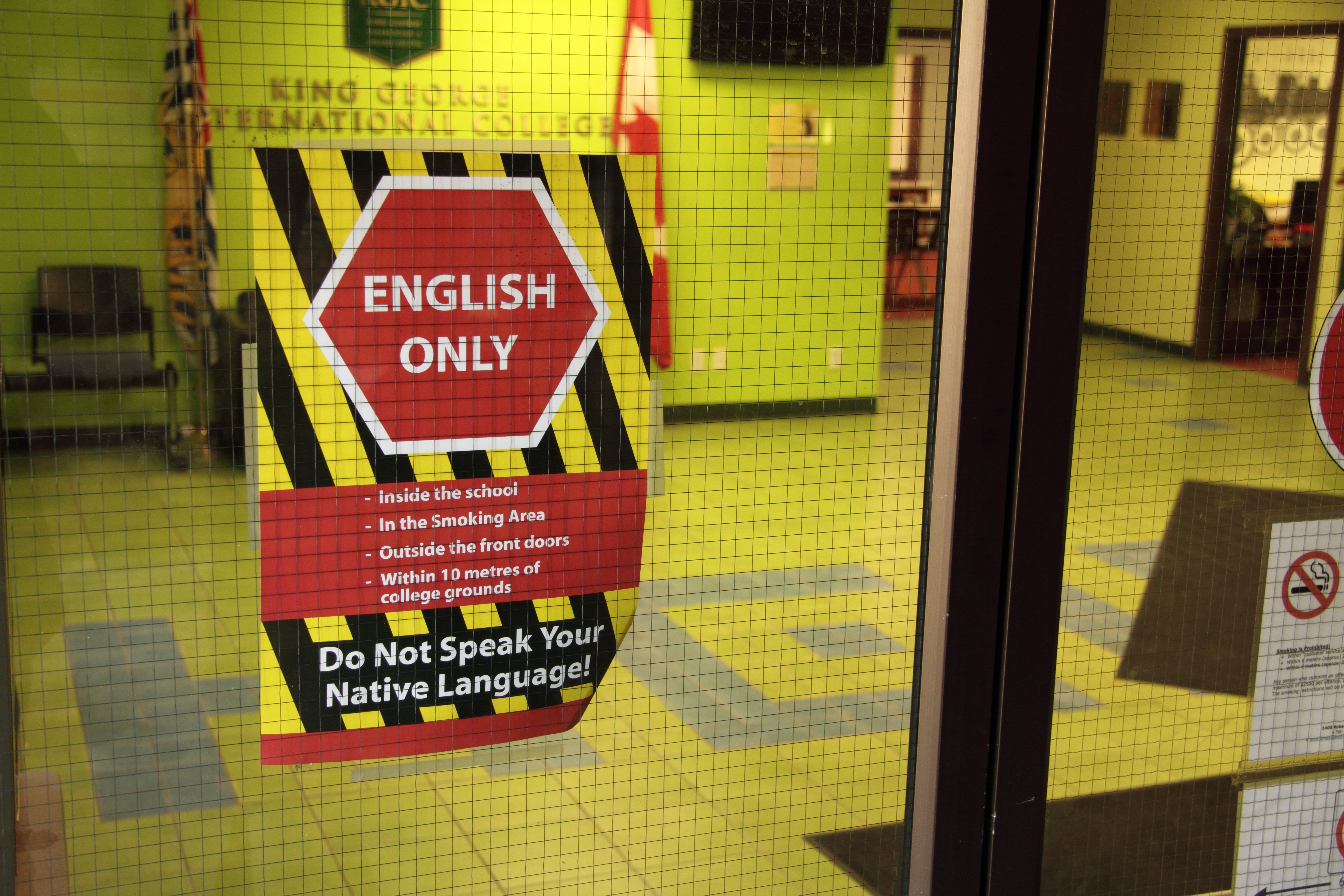
The other dangerous myth is that immigrants are a cultural threat. That, if they hear you speaking Spanish, it is because you may not speak English. But many people are bilingual. American culture can be respected and understood very well without immigrants having to forget their own culture. Teachers and administrators in public schools worry when newcomers who do not speak Spanish arrive, but young immigrants pick up English relatively quickly. So do their parents, if they have the time to learn or access to programs to help them do so. History and social science research show clearly that the children and grandchildren of immigrants are culturally indistinguishable from the locals’ descendants. We see this itself with Donald Trump. His paternal grandfather was an immigrant born in Germany, his mom was an immigrant born in Scotland and a native Gaelic speaker, and now DJT thinks he’s the most American of all.

Q. In your book, “Immigration Realities,” you argue that the border area is one of the safest places. It is surprising because the authorities denounce the insecurity of the area.

A. Yes, I was surprised, too. Northern Mexico has become dangerous in the last two decades. Many people think that the border region —on the U.S. side— is dangerous because of the immigrants who arrive, but as we did research for years for this chapter, we found that for an American citizen, especially middle-class white men, it is one of the safest places in the country. However, if you are a newly arrived immigrant, woman, LGBTQ, undocumented, of Indigenous origin, or someone who does not speak Spanish, you may indeed lose your life in the area. For an average citizen, being in El Paso, San Diego, Arizona, or any city, town, or border state, is very safe, and official data shows that crime rates are among the lowest in the United States. The immigrant who arrives at the border wall, asks for asylum, surrenders to the authorities. Those who have escaped the violence of their countries or come looking for work and try to pass through the desert without being arrested or found may indeed die trying. Nonetheless, there are no cases of someone who has committed a terrorist act within the United States who has crossed undocumented across the border with Mexico. The main concern is political violence among citizens and domestic terrorism.

Q. Is there a migration crisis or not?

A. No, no, no. The focus must be on crises abroad. There are crises in Haiti and Venezuela. An invasion of Ukraine, and a civil war ending in Syria. There are wars and tragedies in those and other countries. The displacement of Ukrainian women and children to save their own lives is a humanitarian problem but the main issue is the continued bombing of cities. Conflict-related displacement is not a permanent state. E.g., now with the fall of Assad, we are seeing that many Syrians immediately are returning home. More will do so if things get stabilized there. If Russia ended the war tomorrow, Ukrainians would look forward to returning if their houses were still standing or if they could afford to rebuild. So, it is not a migration crisis first and foremost; it is an armed conflict, it is a genocide, a civil war, a famine, or climate change, that makes people move. Some say people go to other countries because they are rich, but another way of seeing it is that rich countries are rich because they have relatively a lot of migration.

Japan and China are in relative economic decline because of population decline and too little immigration. Japan does not find a way to attract international people, because it has no tradition nor a good record of receiving immigrants. America has been very successful in turning into American people coming from around the world, something that Trump wants to change. Nevertheless, these trends and traditions are difficult to do away with. But if successful, it would be a real decline for the American economy. It is a wish of MAGA people, but if it comes true, it is not going to make America Great Again, it is going to create some of the weakest America in history.

This interview is an edited and extended translation of the interview with Patricia Caro for El País U.S. Spanish edition published here on January 1, 2025.

You can purchase the book here.

Understanding Refugee Resettlement

By Mackenzie Hoekstra

January 19, 2025

In 2023, around 43.4 million people globally were recognized as refugees; of that 43.4 million, only about 60,000 were admitted to be resettled in the United States (UNHCR; OHSS). The number of refugees admitted for resettlement is determined by the cap established by the current president and Congress. This cap has fluctuated largely over the past eight years, with the lowest annual ceiling and number of admitted refugees set by former President Trump in 2017 at 50,000. During his final year in office, 2020, he lowered the cap to 18,000 and the number of refugees admitted fell to 11,000. These admittances were much lower than after, including tighter vetting and restrictions following 9/11.

Migration Policy Institute

What exactly defines someone as a refugee? Does it mean they are coming to the United States entirely of their own choice? Will they impose a significant financial burden on U.S. taxpayers? Are they a danger to the safety of U.S. citizens? These are all fair considerations, and while no system is perfect, the refugee vetting and resettlement process in the United States is very secure, safe, and economically beneficial. However, it is becoming increasingly limited, leading to many individuals being denied the opportunity to obtain refuge in the U.S.

Do refugees decide to come to the U.S. of their own autonomous choice?

No, refugees are considered to be forcibly displaced peoples, meaning that their choice to leave is a matter of personal safety, of life and death. To apply for refugee status, a person must have fled and remain outside their home country. To be eligible for refugee status, they must be able to prove a well-founded fear of persecution based on “race, religion, nationality, political opinion or membership in a particular social group” and be unable or unwilling to return to their home country (UNHCR). This initial qualification is decided by the United Nations High Commissioner for Refugees (UNHCR), which then refers the case to a resettlement country (such as the U.S.).

Before traveling to the U.S., refugees must undergo a lengthy vetting process that can take up to 36 months and will continue upon arrival in the U.S. This vetting process includes background checks, security clearances, in-person interviews, and medical clearances run by the Department of Homeland Security (DHS) and United States Citizenship and Immigration Services (USCIS). If the refugee application is rejected during the interview process, it cannot be appealed. If it is accepted, it is only on a conditional basis and is dependent on further medical and security checks. Refugees will also receive a cultural orientation about what to expect upon their arrival in the United States. Finally, the refugee’s case will be designated to a particular refugee resettlement agency and location in the U.S. (there are only 10 approved agencies as of December 2024). Once the refugees arrive, they will receive care from their refugee resettlement agency for 90 days. The resettlement process for refugees in the U.S. is complex and rigorous, but it also serves as a vital lifeline for those fleeing life-threatening circumstances in search of safety and protection.

Do refugees cost U.S. taxpayers lots of money?

No, while refugees who have been in the U.S. less than five years have a median income of about $30,000, that median increases to $70,000 after twenty years. Additionally, studies have shown that refugees end up contributing more than they receive in benefits, paying up to twice as much in the long run. In 2019 alone, the 2.4 million refugees in the United States earned $93.6 billion in income through their contributions to American enterprises and organizations, paid $25 billion in taxes, and were left with $68.6 billion of disposable income, some of which will be spent or invested in U.S. businesses.

Graph created by Mackenzie Hoekstra, Immigration Lab, with data from the American Immigration Council

You may be wondering, if refugees are making so much money, does that mean they are taking jobs from U.S.-born citizens? The answer is no. Research shows that refugees fill three important gaps within the U.S. labor market: entrepreneurship, the service industry, and slightly rejuvenating an overall aging U.S.-born population. In 2019, 19% of refugees in the U.S. were entrepreneurs compared to only 9% of U.S.-born citizens and generated business income of $5.1 billion. Refugees also participate in the workforce at a rate of over 80%, a rate of almost 20% more than the overall national average (at around 60%), and are two times more likely than U.S.-born citizens to work in the service industry. The population of the United States is aging, and it is predicted that over 20% of people in the United States will be 65 or older in 15 years, compared to only 16% in 2016. Furthermore, almost 80% of the current refugee population is of working age compared to only 60% of the U.S.-born population. In conclusion, refugees contribute significantly to the U.S. economy and help address critical labor market needs, making them valuable assets.

Are refugees a danger to the safety of U.S. citizens?

Research demonstrates that the growing presence of refugees and immigrants in U.S. cities does not lead to increased crime rates; in fact, it often correlates with stability or reductions in crime. Studies spanning from 1980 to 2022 reveal a clear pattern: areas that welcome diverse populations experience steady or declining rates of both property and violent crimes.

Lowered crime rates for refugees come in conjunction with successful integration into a local community and job market. Refugees undergo thorough vetting processes, which makes it unlikely for individuals with a predisposition to criminal behavior to receive approval. Furthermore, as refugees are assigned to resettlement agencies, they receive support to help them integrate into their communities and the local job market. These agencies work closely with refugees and can address any inappropriate behaviors at the start of the resettlement process. The evidence clearly indicates that embracing refugees enriches communities and makes them safer.

Possible Impacts of a Second Trump Term on Refugee Resettlement

As you can see, refugee resettlement is a system with many benefits; however, its future is uncertain. Refugee resettlement organizations rely on government funding to resettle and support refugees during their 90-day resettlement period. During the first Trump administration, the cap for refugees allowed was significantly reduced, and subsequently, funding decreased. Despite the proven success of refugee resettlement, Donald Trump has promised to target the system once again under a second term. He may once again push to allow states the right to refuse refugee resettlement, putting an undue burden on certain areas of the country and creating further barriers to integration. Finally, Trump may also target private sponsorship for refugees which allows communities to privately sponsor, fundraise for, and resettle refugees, leading to better integration, economic participation, and a lesser cost for the government and U.S. taxpayers.

A Series of Travel Bans (AKA Muslim Bans)

Like during his first term, he may implement travel bans, further spreading the harmful and misinformed narrative that refugees from Muslim-majority countries have ties with terrorism. At the beginning of 2017, Trump signed an executive order, Protecting the Nation from Foreign Terrorist Entry into the United States, which banned entry to the United States for 90 days for citizens of seven Muslim-majority countries–Iraq, Syria, Iran, Libya, Somalia, Sudan, and Yemen–and prohibited entry for refugees from Sudan indefinitely. Six weeks later, he signed another executive order that removed Iraq from the list and halted all refugee admissions for 120 days. Later in 2017, Trump signed a third executive order, which included travel restrictions for two additional countries, Chad and North Korea, as well as stricter vetting procedures. Although many of Trump’s critics dubbed these travel bans as Muslim bans, many of his supporters as well as the Department of Homeland Security, were insistent that these bans were solely focused on addressing and preventing terrorism threats. But the fact is that these bans greatly and unduly affected immigrants and refugees from Muslim-majority countries.

Source: The Washington Post

The implementation of such bans unjustly put numerous refugees from these countries at risk and tore families apart. It also contributed to a rise in hate crimes targeting Muslim communities in the United States. Additionally, this ban was implemented under the guise of addressing ethnic and religious terrorism threats in the United States. However, the number of arrests for suspected terrorist plots and acts of terrorism in the U.S. has been very small. In fact, threats of domestic terrorism from far-right extremists occur at a higher rate (40% more) than Islamic terrorist events. This policy was ineffective, and it caused great psychological and physical harm to Muslim communities in the U.S. due to increased Islamophobia and hate crimes.

Opting Out of Resettlement

During Trump’s first term, he signed an executive order requiring local refugee resettlement agencies in the U.S. to obtain written permission from their local and state governments to continue resettling refugees. This order would also have allowed state governors to opt their entire state out of refugee resettlement. Although a federal judge blocked this order, Trump has continued to advocate for lower immigration levels and increased local control over resettlement.

Implementing a policy like this in his second term could alienate refugees and place an undue short-term burden on areas willing to accept them. Additionally, opting out of refugee resettlement could have significant negative economic impacts on the longer-term for areas missing out. Before the executive order was blocked, Texas Governor Greg Abbott had opted out of refugee resettlement, a choice that could have cost the state around $17 million. Implementing such restrictive policies could undermine the humanitarian goals of refugee resettlement and hinder economic growth in states with communities that are willing to embrace diversity and support vulnerable populations.

New American Economy Research Fund

The United States has long provided refuge to those fleeing persecution, violence, and life-threatening circumstances. Refugee resettlement has great humanitarian importance and provides a safe, secure, and economically beneficial system that strengthens communities and the workforce. However, this important system faces significant threats. During his first term, Trump’s policies drastically reduced the number of refugees allowed in the United States, perpetuated negative stereotypes, and attacked resettlement infrastructure. The second Trump term could once again target this system through travel bans and restrictions on local resettlement–actions that would harm refugees, the U.S. economy, local communities, and international reputation.

Rather than working to tear down a system that saves lives and benefits our country, there must be a shift in focus on protecting, expanding, and strengthening it. Refugees enrich a society through economic contributions, filling labor shortage gaps, and expanding cultural diversity, all while undergoing one of the most secure and rigorous vetting processes in the world. The United States should move away from narratives driven by fear and misinformation and instead endorse policies that promote the overall well-being of refugees, benefiting the nation’s prosperity as a whole.

Mackenzie Hoekstra is a senior in Sociology student at American University.

Edited by Ernesto Castañeda and Mary Capone

Es Tiempo de Mujeres en México

Por Dra. Nayana Guerrero, Azucena Enríquez, Paola Baltazar, Luisa Barajas, Cecilia Pineda, Jimena Sandoval y Victoria Rivera

16 de diciembre de 2024

La Doctora Claudia Sheinbaum Pardo rompió el techo de cristal en México. A 71 años de haber obtenido el derecho a votar y ser reconocidas como ciudadanas, hoy las mujeres de México pueden permitirse aspirar a ser presidentas. Ya no existen más los imposibles en las metas de las nuevas y viejas generaciones, se demuestra con la Presidenta Claudia Sheinbaum que si se puede y se podrá para muchas mujeres más. A continuación, se presenta el impacto de tener una mujer a la cabeza del país en México, el largo camino del derecho al voto de las mexicanas y la importancia de la utilización del lenguaje incluyente y no sexista.

Barbie dijo, “Sé lo que quieras ser,” y hoy ya podemos ser presidentas. Las niñas ya no solo pueden jugar a ser presidentas también pueden serlo. Tener una mujer presidenta es una motivación e inspiración para las niñas y jóvenes. Antes ocupar un puesto de liderazgo político era cosa de hombres; hoy, en México, es una realidad que cualquier mujer puede ser líder y tener un alto cargo en el gobierno del país. Es inspirador que una mujer ocupe un puesto de liderazgo político porque mujeres empoderadas, empoderan mujeres.

Sin embargo, no ha sido un recorrido sencillo ni corto. Tuvieron que pasar 71 años para romper el techo de cristal, una metáfora que designa un tope para la realización de la mujer en la vida pública y profesional, generado por los estereotipos de género.

El derecho al voto para la mujer no fue un derecho concedido, es parte de una lucha que duró años y que empezó a exigirse a inicios del siglo XX. El sufragio femenino en México fue impulsado por múltiples mujeres entre las que destacan Elvia Carrillo Puerto, Hermila Galindo, Margarita Robles de Mendoza, María Ríos Cárdenas y Esther Chapa.

Margarita Robles de Mendoza y Elvia Carrillo Puerto, son reconocidas como unas de las primeras sufragistas mexicanas exigiendo los derechos políticos de las mujeres, siendo esta última una de las primeras mujeres electas.

María Ríos Cárdenas, Esther Chapa, y Hermila Galindo exigen el derecho al voto a través de mítines políticos, huelgas de hambre y manifestaciones. Marcando un momento clave en la lucha por el sufragio femenino, Hermila Galindo solicitó por primera vez al congreso constituyente el voto femenino en 1917.

No fue hasta mitad del siglo XX, el 17 de octubre de 1953 que las mujeres lograron el derecho a votar y a ser votadas. Sin embargo, en México sólo 8 mujeres han sido candidatas a la presidencia. En 1982, Rosario Ibarra de Piedra se postuló como la primera candidata a la presidencia de México. Pero no fue sino hasta 2024 que como lo indicó la presidenta Claudia Sheinbaum en su discurso de toma de protesta “por primera vez no en 200 años, sino en 500 años no había habido una mujer presidenta de México.” Ha sido una lucha larga y con altibajos en la que Sheinbaum dijo ¡No llego sola, llegamos todas las mujeres de México!

Por primera vez en la historia de México se utiliza la palabra presidenta. Si existe la palabra reina para referirse a la máxima soberana de una monarquía, ¿por qué no feminizar presidenta cuando se trata de una república?

En el “video del acertijo” la periodista Inma Gil Rosendo habla sobre la parcialidad implícita que se define como un prejuicio inconsciente que puede dar lugar a una falta de neutralidad. Estos estereotipos subconscientes relacionan conceptos y rango de poder con categorías de personas. Por ejemple, cuando pensamos en quién puede liderar un país frecuentemente pensamos en un hombre.

La Presidenta de México indicó en su discurso de toma de protesta la importancia del lenguaje incluyente no sexista. Constantemente en sus intervenciones la Dra. Sheinbaum subraya la necesidad de visibilizar la presencia de las mujeres en las diferentes profesiones, cargos y oficios.

La carencia histórica de términos femeninos referidos a cargos y oficios se vincula con la lucha de la historia de las mujeres en abrirse caminos en espacios mayormente masculinizados.

El lenguaje incluyente y no sexista hace referencia a toda forma de expresión sin discriminación. El lenguaje inclusivo busca promover una cultura de igualdad y reconocimiento de los derechos de las mujeres.

Lo que no se nombra no existe. La forma de expresión ha sido mayormente androcéntrica. El androcentrismo expresa una visión del mundo donde el hombre es el referente por default, el modelo a seguir. Históricamente los espacios de toma de decisiones han sido ocupados mayormente por hombres, pero esto está cambiando.

La presidenta Claudia Sheinbaum ha dicho que es “tiempo de mujeres” lo que representa romper los estereotipos y las barreras que enfrentan las mujeres en varias esferas de la vida, es una oportunidad contra la violencia de género, pero sobre todo el momento de alcanzar la igualdad sustantiva.

Dra. Nayana María Guerrero Ramírez es profesora titular de la asignatura empresarial “liderazgo de las mujeres en las organizaciones para el desarrollo sostenible” que se imparte en la Facultad de Contaduría y Administración de la Universidad Nacional Autónoma de México, es antigua académica global en American University y forma parte del comité directivo de la Red UNAM DC.

Azucena Enríquez García es profesora adjunta de la asignatura empresarial.

Paola Baltazar Vargas, Luisa Maria Barajas Torres, Cecilia Pineda Vargas Frida, Jimena Sandoval Vázquez y Victoria Rivera Mejia son alumnas de la asignatura empresarial.

Este texto es parte del trabajo final de la asignatura “liderazgo de las mujeres en las organizaciones para el desarrollo sostenible” que se imparte en la Facultad de Contaduría y Administración de la Universidad Nacional Autónoma de México.

Immigration Realities

Book Review

by Blogger Ben from ACEMAXX Analytics

It seems that the modern world is drowning in crises.

Imperialism, decolonization, violence, natural disasters, instability, and poverty have been uprooting people around the world for thousands of years.

Migration is part of human history. But “Migration” is a highly politicized theme.

Refugees are people who are facing problems and do not fundamentally pose a problem themselves.

A serious, systemic problem related to expulsion is the legacy of imperialism and current neo-colonial relations.

Ernesto Castañeda and Carina Cione: Immigration Realities – Challenging Common Misperceptions, Columbia University Press, Nov 2024.

According to the UNHCR, the real crisis is that a few countries have “a disproportionate responsibility for taking newcomers,” and not there is a relatively disproportionate number of arrivals:

Politicians and journalists speak of “immigrant and refugee crises,” but the authors explain why “we see it as a political crisis, not a crisis of migration.”

The constant production of refugee crises influences the public’s political and social views about migration.

“Migration cannot be “solved” because it is a timeless and constantly fluctuating phenomenon.”

It is an open secret that the strong opinions that people often have are based on idiosyncratic personal experiences, prejudiced views, and false assumptions spread by politicians and mainstream media.

However, the average citizen often does not have all the facts at hand to look at the topic of migration from an objective yet sensitive perspective – and cannot do so.

The authors attach great importance to summarizing academic literature to help promote public understanding of today’s international migration.

The recent book summarizes relevant research results on common myths for readers who are not familiar with contemporary migration or border studies.

In other words, the authors present the relevant scientific research, which is often closed behind paywalls, research specialization, and subject-specific jargon so that most readers find it awkward and difficult to understand. This book is clearly aimed at the general public.

Each chapter revolves around a certain misunderstanding and can be read as an independent work or together with the others. The individual chapters contain relevant and up-to-date knowledge about the realities of migration, which is presented in such a way that it is also appealing and accessible to non-professionals.

Ernesto Castañeda and Carina Cione distinguish how some rhetoric accuses, patronizes, and criminalizes refugees, which, in connection with xenophobia, stereotypes, and fear-mongering, support the myth of a crisis.

A refugee is defined as someone who has left his home country and cannot return because he has a reasonable fear of violence and/or persecution due to his identity or political conviction.

The word has two meanings: a “legal meaning” that describes a person entitled to asylum under international law, and a “colloquial meaning” that describes a person who has fled their homeland. The criteria for international recognition as a refugee are strict, and other displaced people can be wrongly referred to as refugees.Neo-colonialism under the auspices of neoliberal capitalism, for example, contributed to the fact that entire regions in Africa, Asia, and Latin America, which were first described as “the third world” and then now the “Global South,” because they were oppressed in the past and the present, and not simply because of their low national income or the degree of integration into international trade.

Every “refugee crisis” is a socially constructed term that distracts from the real problem: the high-income and imperialist countries do not take responsibility for their violent actions because they benefit from the equally violent postcolonial world order.

The current neo-colonial conditions are undoubtedly part of the neoliberal driven dismantling of the welfare state, which leads to a lack of state programs for the public and the acceptance of tax cuts for the rich.

Globalization and migration are presented as two sides of the same coin, but in reality, they are very different phenomena – economic globalization and migration are not causal since migration tendencies do not necessarily agree with trade trends: periods of expanding international trade do not always correlate with migration waves or vice versa.

The authors also clarify usual terms such as “integration, assimilation, and acculturation.” Yours truly, for example, has so far preferred the term “acclimatization” to “assimilation” and “integration.”

According to Ernesto Castañeda and Carina Cione, comprehensive integration is a social integration; it does not mean cultural assimilation to the morals of the dominant group, but rather presupposes certain negotiations, reciprocal communication, and mutual influence.

Integration is often mistakenly equated with assimilation and acculturation. However, these are different concepts.

Acculturation refers to the process of getting to know the culture of the new place of residence and the achievement of a fluid cultural language. Immigrants can acculturate while maintaining many of their native traditions and culture.

In the spirit of Ernesto Castañeda’s previous work, social integration means equality and equal opportunities while maintaining cultural differences.

Assimilation is based on intolerance towards identities that deviate from the dominant and often Eurocentric culture.

Migration is an inherent human phenomenon that is subject to changes that are influenced by local and national political, economic, and social conditions. Data relating to the overall world population does not allow the conclusion that globalization is driving migration forward.

Research refutes widespread misconceptions about immigration. In fact, only 3.5% of the world’s population live in a country other than the one in which they were born.

Worldwide, the percentage of people who change residences due to war, political or religious persecution, poverty, or lack of opportunity is not as high as ever before and is not unmanageable for host countries.

Migration is a geographical and social relocation process. Subjective affiliation also depends on the objective conditions, including the absorption capacity of the new environment and the attitude of the locals towards immigrant groups.

In the US, for example, there is still no national integration program specifically designed to support immigrant integration. Migrants are expected to go through this process alone.

In sum, “Immigration Realities” is an indispensable masterpiece of intellectual honesty.

Immigration Realities – Challenging Common Misperceptions, by Ernesto Castañeda and Carina Cione – Columbia University Press, Nov 2024.

Originally published in German in ACEMAXX-ANALYTICS’s Newsletter!