The question in the title would seem to have no logical basis were it not for the fact that President Donald Trump, Secretary of State Marco Rubio and Secretary of War Pete Hegseth have all accused the president of the South American nation, Gustavo Petro, of being “a drug trafficking leader” and “sponsor of narco-terrorists,” and the U.S. has cancelled his visa and put him on the sanctions list of the Treasury’s Office of Foreign Assets Control (OFAC).
At the same time the Trump administration implemented operation “Southern Spear,” deploying U.S. naval and air forces in the Caribbean and directing attacks, with missiles, against vessels accused of transporting cocaine in the Caribbean and Pacific. As of this writing, 23 boats have been destroyed and 87 persons killed. Official sources indicate that at least one of these attacks occurred in Colombian waters.
Initially, Washington justified these actions in terms of the need to “protect our homeland from drugs that kill our people.” But the U.S. has subsequently begun referencing “antiterrorist actions,” accompanied by assertions of operations along the Colombian-Venezuelan border involving armed groups such as the FARC dissident groups,[1] the ELN,[2] and Hezbollah.
Clearly this military deployment by the U.S., and attacks, are disproportionate, leading to civilian deaths that could be declared war crimes, because they violate international humanitarian law. In addition, the cocaine allegedly destroyed represents a fraction of the volume of drugs transported on ships that cross the Pacific Ocean, not the Caribbean. Furthermore, as has been explained by U.S. intelligence agencies, neither Colombia nor Venezuela produces or traffics in fentanyl, the cause of most drug deaths in the U.S. According to the Centers for Disease Control and Prevention, in 2023, 107,500 Americans died from overdoses, 74,700 from fentanyl, and 29,000 from cocaine. In 2024, deaths totaled 70,596, with fentanyl the main cause of death from overdoses.
Drug policy in Colombia changed since leftist Gustavo Petro became president in 2022; his administration decided to attack the clandestine laboratories, seize the cocaine already processed (especially at sea), extradite large-scale drug-traffickers and go after their wealth. Petro’s is a very different policy from that of previous administrations, which focused their efforts on attacking those who grow the coca leaf, considered the weakest link in the chain.
The result is that the current administration has seized 2,700 tons of cocaine, destroyed approximately 15,000 laboratories, and extradited 400 drug traffickers to the U.S. In contrast to these figures, the volume of coca leaf grown has expanded during the same period. According to the UN’s Integrated System for Monitoring Illicit Crops, Colombia today has 255,000 hectares of coca and produces approximately 2,664 tons of cocaine that is exported illegally to the U.S., Europe, and Asia.
The government of Colombia has undertaken a policy of the voluntary eradication of coca crops, substituting legal agricultural alternatives in place of coca, while supporting peasant farmers with agricultural land – a policy that has shown positive results, even though its effects are slower in coming.
It is clear that the government of Colombia is engaged in combatting drug-trafficking, the president has been firm in fighting the drug mafias, and the arguments brandished by Washington show a profound lack of knowledge of what drug-trafficking has meant for this Andean country.
President Petro has proposed a policy of cooperation to Trump to combat the cultivation of coca leaf, production and commercialization of cocaine, as has been done with prior governments over the course of the long strategic relationship between the two countries. There has been no response and some have begun to wonder whether drug-trafficking isn’t just a pretext for the Trump administration to intervene politically in Latin America, encouraged by sectors of the far right in Florida, as has now happened in Venezuela.
The paradox is that the problem of cocaine cannot be resolved by militarizing the Caribbean, invading countries and killing civilians on the high seas but instead by adopting a harm reduction policy that works to better understand the harms to both producers and consumers, to prevent continued drug consumption, and provide effective and publicly available treatment options for those who continue to be trapped in the world of drugs. In this way the current figure of 5.3 million habitual users of cocaine in the U.S. would decline.
While the United Nations takes steps to improve upon failed models of the past, and is forming an independent commission to evaluate the “war on drugs” of the last 50 years, the U.S. is backsliding toward militaristic policies that, while they might serve any number of purposes, will not overcome the trafficking and consumption of cocaine.
[1] Factions of the Revolutionary Armed Forces of Colombia, or FARC, some of which did not go along with the 2016 peace deal between the Government of Colombia and FARC, and others that demobilized in 2016 and then took up weapons anew.
[2] ELN: National Liberation Army, which has fought the government continuously since 1964.
This piece was authored by Jorge Rojas Rodríguez, translated by Charlie Roberts, and edited by Robert Albro, CLALS Associate Director.
Research Professor, School of Government and Economics, Panamerican University, Mexico
Nayib Bukele on Salvadoran Independence Day in 2024. (Source: Wikimedia)
On December 17, 2025, a local court released lawyer Alejandro Henríquez and pastor José Ángel Pérez. Seven months earlier, the two activists had been arbitrarily detained under El Salvador’s state of emergency and charged with public disorder and aggressive resistance. The arrests occurred when Henríquez and Pérez were attending a peaceful rally of the El Bosque cooperative outside President Nayib Bukele’s private residence. The El Bosque cooperative is a farming community that had obtained its lands because of agrarian reforms in the 1980s and was now making a last-ditch effort to prevent the eviction of more than 300 families from their plots. In a bittersweet turn of events, Henríquez and Pérez pled guilty to regain their freedom after an abbreviated judicial process. Each received a suspended three-year prison sentence that essentially prohibits them from participating in protests during this time. The verdict criminalizes social movement activity and is a reminder that the state of emergency has become a tool to silence critical voices.
Generalized citizen discontent with the country’s traditional parties and his own anti-establishment campaign had propelled Bukele to the presidency of El Salvador in 2019. Since then, he has quickly established an electoral authoritarian regime that retains a democratic façade but sees him wield executive control over other branches of government. His party, Nuevas Ideas, obtained a legislative supermajority in both the 2021 and 2024 elections. Bukele capitalized on these wins to neutralize all checks and balances on his power and to engineer his successful run for an unconstitutional second mandate in 2024. A secret pact with the country’s street gangs helped mobilize voters and contributed to Bukele’s early triumphs at the ballot box. In late March 2022, the breakdown of this agreement prompted gang members to kill 87 people in three days. By then, Bukele no longer needed the gangs to consolidate his rule.
Following this latest escalation in violence, he asked the Legislative Assembly to declare a state of emergency to crack down on these groups. The measure, which suspends certain constitutional rights and allows extended pretrial detention, dismantled the gangs as the country knew them and sharply cut the number of registered homicides. While the administration appears to be manipulating crime statistics, its perceived results made the state of emergency widely popular with Salvadorans and helped Bukele’s re-election in 2024. Far from being of a temporary nature, the measure has come to fulfill an essential function in the regime’s propaganda and repression. Some 90,000 people have thus far been detained, including human rights defenders and political opponents. Often apprehended on the spurious charge of illicit association, individuals find themselves mired in a justice system that does not ensure a fair trial. Civil society groups have extensively documented the systematic human rights violations committed under the state of emergency. The abuses are particularly egregious in the prisons where, by December 2025, they had occasioned at least 473 deaths.
The weaponization of the state of emergency follows the progressive closure of El Salvador’s civic space. Bukele’s regime has severely restricted access to public information, making it difficult for reporters and transparency activists to obtain data about government policies, contracts, spending, and statistics. If anything, this opacity has increased under the state of emergency. Since he came to power, Bukele has denied independent journalists access to press briefings and subjected them to systematic campaigns of stigmatization and delegitimization. Efforts aimed at undermining critical media workers range from online harassment and defamation to surveillance and abusive legal tactics such as Strategic Lawsuits Against Public Participation or SLAPPs, initiated to exhaust targets financially and emotionally.
At El Faro, an award-winning investigative outlet, journalists received physical threats and Pegasus spyware attacks. Advertisers were harassed, and the newspaper faced spurious money laundering accusations and frivolous audits. Jorge Beltrán is a veteran reporter who had been covering organized crime and gangs for El Diario de Hoy, one of El Salvador’s oldest mainstream newspapers. In 2022 Beltrán was targeted with a $10 million SLAPP after an exposé about Israeli cyber espionage firms in Mexico. A relative of the director of El Salvador’s state intelligence agency was mentioned in the piece and subsequently sued both the newspaper and Beltrán for moral damage. While the court rejected the compensation claim, it required El Diario de Hoy to publish an apology and withdraw the article. Beltrán himself went into exile in June 2025 because of a reasonable fear of being arrested on fabricated criminal charges.
For Salvadoran civil society, however, it was the arbitrary detention of Ruth López that constituted a watershed moment. As lead anti-corruption investigator for Cristosal, a prominent human rights NGO, López had worked on cases of government corruption and irregularities in public contracts involving Bukele’s relatives. Her arrest in May 2025 on spurious grounds of illicit enrichment had a chilling effect. Since 2020, at least 130 journalists and human rights defenders have gone into exile, though most of them left El Salvador in the aftermath of López’s capture to avoid meeting a similar fate. In addition to individual departures, NGOs and independent media organizations also felt compelled to exit the country. El Faro had already moved its legal office to Costa Rica in 2023, whereas Focos and the Journalists’ Association of El Salvador (APES) did so two years later. As government repression increased throughout 2025, El Faro and Cristosal moved all of their staff abroad for their own safety. The decision to reduce the organizations’ in-country presence, while understandable, will pose new challenges to documenting abuses of power, defending its victims, and holding officials accountable.
Bukele’s regime found an additional mechanism to quash dissent with the Foreign Agents’ Law passed in May 2025. The legislation requires non-profits to register with the interior ministry and pay a 30 percent tax on all foreign funding they receive. The decree gives the administration broad powers to monitor, sanction, and dissolve organizations that fail to register or that engage in political activities that threaten the stability of the country. In response, some NGOs voluntarily decided to close, many others try to keep operating with a low profile. The Jesuit Central American University, long a vocal advocate for the poor and oppressed, is known in El Salvador for its research, public opinion surveys, and human rights reports. Its leadership, however, must now hope to avoid a repeat of what happened in Nicaragua where the Ortega regime seized the school’s property and assets in 2023. In El Salvador, meanwhile, proposed reforms to the rules governing communal associations suggest a government intent upon hindering community organizing. For anyone working in NGOs, media, and academia, self-censorship becomes a survival strategy. As journalist Raymundo Riva Palacio remarked, regarding the erosion of press freedom in his native Mexico, self-censorship is the most effective form of censorship, because it leaves no trace, creates no scandal, and normalizes silence.
Self-imposed exile and self-censorship are turning El Salvador into what the Inter-American Commission on Human Rights has called a “zone of silence.” The term is typically associated with areas where violence against journalists leaves entire communities misinformed, as has happened in Mexico. A similar trend is occurring in El Salvador since the Bukele administration is deploying “technologies of censorship” to inhibit public scrutiny and criticism. The resultant information vacuum is filled by the official narrative, extensively promoted through government-controlled television channels, newspapers, and social media accounts. Influencers and pro-Bukele trolls do their part to spread regime propaganda and attack human rights defenders, journalists, and opposition politicians. Since citizens primarily rely on television and social media to access information, Salvadorans are likely relatively unaware of major government decisions and their impacts on people’s lives.
Exiles may have escaped state terror at home. Some stay out of the public eye to keep their relatives in El Salvador out of harm’s way. Others continue their professional work as best as they can, but they have started to be impacted by Bukele’s methods of transnational repression. The United Nations Human Rights Office defines transnational repression as acts that a state or its proxy commits to deter or punish advocacy directed towards it from abroad. It can take various forms, including digital attacks, reprisals against in-country relatives, the arbitrary refusal of consular services, harassment through INTERPOL red notices, and physical violence. Ingrid Escobar directs Socorro Jurídico Humanitario, a legal aid organization that assists victims of the state of emergency, and has repeatedly been subjected to online defamation campaigns. Ivania Cruz and Rudy Joya of the human rights organization UNIDEHC were targeted with INTERPOL red notices but managed to have these lifted.
Given the Bukele regime’s persistent attempts to intimidate journalists and activists, it is vital that these groups create international pressure to denounce abuses and demand respect for human rights. It is equally important that exiles find spaces for collective solidarity and resistance. Their ability to continue their work is key, more so since parts of the international community are either reluctant to criticize the democratically elected Bukele or perceive his security “model” as effective. APES documents and reports abuses against journalists and offers media workers safety guides and legal assistance. In Mexico City, Casa Centroamérica has become a home for Central Americans fleeing political and legal persecution. The NGO can provide recent arrivals with temporary shelter, is building an archive of national publications, and researches the causes of exile.
Realistically, the state of emergency only stands a chance of being dismantled if El Salvador returns to democracy. Many citizens choose not to report abuses or speak out against Bukele’s regime for fear of being arbitrarily detained. Constitutional reforms passed in July 2025 extend the presidential term to six years, permit indefinite re-election, abolish the runoff election, and brought the next presidential election forward to 2027. Bukele can comfortably perpetuate himself in power if abstention levels are high and the political opposition fails to present a compelling alternative to his vision of the country. During Bukele’s time in government, economic growth has been weak, and poverty has increased as soaring debt and corruption have depleted state resources. A fiscal adjustment insisted upon by the International Monetary Fund requiring a smaller public sector has already led to massive job losses in areas such as health and education. These cuts will affect the quality of public services and likely fuel social discontent. The country’s economic woes, which Bukele will be unable to resolve as quickly as the security situation, may ultimately help bring about the demise of his regime.
If you are a young student in the United States and you are worried that you, a classmate, or a loved one could be deported by ICE agents, as you have seen on social media, TV, or in your neighborhood, this short text is for you.
School dance. Photo by Ernesto Castañeda.
Why are people in pseudo-military clothes and vests with the initials ICE, HSI, CBP,* and others patrolling the streets and aggressively arresting people in public?It all starts with the popular but dangerous idea that a country must have closed borders, allowing only invited people to pass through. This makes sense for private houses, schools, and other large private institutions, but cities and countries do not work like that. Think about it most people born in the United States can move in their cities, towns, as well as to other cities or towns in the 50 states without having to ask permission from any political authority. They can even move to Guam, the Virgin Islands, or Puerto Rico.
*ICE [Immigration and Customs Enforcement], HSI [Homeland Security Investigations], CBP [U.S. Customs and Border Protection, agency that houses the Border Patrol which has now also being mobilized to both coast and Chicago] are all immigration enforcement agencies within the Department of Homeland Security (DHS). Under the current administration other federal and local agencies have also been assigned to help carry out raids and aid in deportation efforts.
People in Any Country Are Not All the Same
Another dangerous myth is that all the people in a country must share a language, culture, and even look the same, as if related by blood. But countries are not big extended families, so this is a fable. But many adults believe this was true in the past and want it to happen soon in the places where they live. As you know, not everyone is the same. Even within the same family, a student club, or sports team, people have differences that make them who they are.
People in some large cities complain about a few people around them speaking a different language in the streets or having a different religion. This is not new; some people have always done so in any booming city.
Even While Most People Stay Put Most of the Time, Mobility is Normal
Many people go to other countries to travel, study, work, or visit family members and friends. Most people get visas, which are permits from a country’s government to visit or move in with permission. People from the United States and Europe rarely need visas to visit other countries, but it is not the same the other way around. People from most of Africa, Asia, and Latin America need vetted visas to visit Europe, the United Kingdom, the United States, Canada, or Australia.
In some exceptional cases, people have to leave the countries where they were born because of war or persecution because of their religion, ethnicity, or political views. It may be hard for them to get immigration visas after that. Other countries are supposed to provide refuge, a safe place to stay for groups facing persecution. But many countries’ governments like to look the other way or play hot potato with people.
Work Abroad is Often More Available than Working Papers
Other people may have informal verbal (spoken) job offers from restaurants, farms, and small businesses in the United States, but they cannot get visas because the people in charge of approving visas in U.S. consulates abroad think those people would stay in the country, and they think they do not have the savings and education to make them “desirable” to come to the United States. These are not necessarily the views of the people approving visas, but the informal instructions they are told to follow by their bosses.
Nonetheless, some people from towns with a long history of long-distance migration from point A to B have the contacts, paths, and know-how to go to other countries without the U.S. government’s permission. This is what people refer to as “illegal immigration.”
Remember, we should not use the term illegal to name a person, because a living human being cannot be “illegal,” but people can commit acts that go against the law, in this case, entering another country without getting their passport inspected and stamped.
“No Human Being is Illegal.” Elie Wiesel
People without a legal immigration status, who we can call undocumented, are not automatically bad people. They are just caught in a hard and vulnerable situation. Some adults say they should respect the law of a country and “get in line,” but for many of them there is no line to wait in. And for some of the people with close family members legally in the U.S., the wait in line to reunite can be ten years of longer. Therefore, some people live for over a decade away from their parents or minor children. As we recount in the book, Reunited: Family Separation and Central American Youth Migration.
Middle schoolers playing soccer. Photo by Ernesto Castañeda.
For most of U.S. history, lawyers have not labeled this a crime but more a “civil” infraction, something like a minor driving infraction, such as driving without insurance, or watching a movie without paying a ticket. But in those examples, people are getting something without paying or putting others at potential financial risk. Immigrants come to the U.S. to work, to pay for all of their expenses, those of their family members, and to send money to loved ones who stayed in the places they came from. Preventing people from moving to a country, and more appropriately to a particular city or neighborhood, even if they can pay for their housing, is like public parks or libraries not allowing only certain people in.
The problem with the label of “illegal” (rude name-calling) is that it conjures or brings together the idea of coming as a family without a visa, along with generalizations and stereotypes that only people who are poor and of different races are “illegal.” That “illegals” are inferior, potentially dangerous criminals, a threat to the homogeneity (looking or being similar) of a country. These all false.
In recent U.S. history, the label of “illegality” has been applied to people from Mexico and Central America with limited English and/or African and indigenous features working in sectors such as agriculture, construction, contracting, food preparation, etc. There are business owners who are undocumented as well as people from Canada and Europe, but it is easier for them “to pass.”
Immigrants who commit violent crimes are not immune (protected) from being stopped by police and imprisoned. But for many decades, people in the news have said that people without papers are dangerous and taking things from U.S. citizens. Many adults have come to believe this after hearing it so many times.
Some politicians run for office sometimes with as little as promising to “get rid of” all the undocumented people in a country. This has been the case of President Trump, and he has acted on this words. His team has set ambitious goals to find people without valid visas or immigration permits and to remove them from the country, which is what we call deportations. He and his team campaigned on closing the border to new arrivals, deporting people with criminal convictions, and with the signs and slogans of mass deportation.
How do you carry out mass deportations quickly in a country with over 350 million people, where less than 3% of the population is undocumented?
Unlike a classroom, there is no list of everyone living in the U.S. that includes everyone’s immigration status. So, this federal administration is trying to reach its goal is by deporting under any pretext some people who are renewing visas, trying to get papers to stay longer, become citizens, or get protection from deportation because they fear for their safety if they were sent back to dangerous places.
Another shortcut by ICE is to go to places where many stereotypical potentially undocumented immigrants gather and stop and ask for papers from people based only on their physical appearance, job, and accent. (Lawyers call this racial profiling).
Communities with many Latinos are specially afraid about deportations hitting close to home. Over 68,000 people are in immigration detention centers at the end, so of them will be let go after proving they are citizens or have valid permits. Many others will eventually be deported without their family members.
Because of this, families with undocumented members are afraid of spending time in public and may always fear it may be their last day together. So, it is important to be patient and supportive of people who could be in that situation. It is understandable if your classmates or even friends do not want to talk about this. Their parents may have told them not to share their immigration status or that of their parents, afraid that it could be used against them. Many live with the continuous fear that an enemy could call la migra (ICE) on them. The have lived with this fear sometimes for decades.
ICE Arrests from Immigration Enforcement Dashboard
People who are undocumented have to try to act perfectly
Afraid about her only daughter being caught by surprise, an interviewee we talked to confidentially, recounts that she told her 13-year-old daughter this year that she was “illegal,” and that she should be careful not to skip class, misbehave, or even think about experimenting with illegal drugs, alcohol, or marijuana because this could cause her deportation and that of her mother and maybe other family members too.
She had never before realized she was undocumented; she thought she was like anyone else in her class, and she is and so she is at risk of deportation. She cannot help but be worried, but how worried should her best friends be? Well, there were around 11 million individuals who were undocumented when Trump became president again on January 20, 2025. Because of changes to immigration laws, procedures, and programs, there may be 14 million people out of status a the end of 2026.
In 2025, the Trump admin, with its aggressive policing, raiding, and detaining, forcibly deported between 200k and 600k people. Self-deportation is a luxury that many immigrants do not have. The official estimates for this are not credible.
So, let’s do some simple math for the probability of being forcible deported by DHS by dividing the maximum estimate for 2025 deportation by a medium-high estimate for the number of undocumented: 600,000/14,000,000=.04 or 4%. This is the probability that an undocumented person is deported each year that these mass deportation goals continue along with large federal agent deployments and police collaboration in some localities [287(g) agreements]. The probability of being detained while attending an immigration court appointment is also low. So, while it is possible this may happen to you, your mom, or your friend, most immigrants won’t be deported. Clearly, the likelihood varies by location. In some places, other certain groups are targeted, like Somalis in the Twin Cities recently. But detaining people and deporting them in this way is very expensive, damaging for the U.S. economy and society, and currently very unpopular. Over 60% percent of U.S. adults oppose these policies. Tell the people you know in this situation not to despair or give up.
Deportation by City. Immigration Enforcement Dashboard
Despite sad cases about children receiving cancer treatment, nurses and care worker women being deported, the numbers show that, because of profiling, most of the people deported are working-age men from Mexico, Guatemala, and Honduras. Over 70% of them have no criminal record whatsoever, and only a very small percentage have a violent crime conviction. Meaning most people are innocent hard workers, fathers, sons, but they have been deported because they look like the stereotype. There are good and bad people everywhere. This may remind you of why some teachers and adults may tell you the importance of not generalizing, not falling for common stereotypes and prejudices, and of getting to know people from all backgrounds and with origins in all parts of the world. Learning how to put yourself in their shoes is the best way to understand them, comfort them, and protect them, in the future, by changing the way we aim to deal with undocumented immigration, not by mass deportations or having people afraid of deportation, but by giving them a way to become documented through new laws voted in Congress. Your care and your voice matter.
Regarding the question of what is happening between the United States and Venezuela, the answer is that this is a partially unintended, unanticipated international focus at the end of the first year of Trump’s second term. While the governments of the U.S. and Venezuela have not been close for a while, this path opened up as other areas of intervention, such as the Russia-Ukraine war, got stuck at a standstill.
The potential intervention in Venezuela is not a popular option. There is little support among experts about its merits. Likewise, Venezuelans are not eager to go to war.
This was not a priority for Trump in the past. But three key members of his cabinet and White House staff have zeroed in on Venezuela in the last few months.
As an article in the Washington Post on December 18, 2025, explains convincingly by drawing from inside sources and visible actions, Steven Miller, Deputy Chief of Staff and Homeland Security Advisor, and the main engine behind the aggressive anti-immigrant agenda, wanted to conduct military attacks in Mexico as another way to curb immigration, his long obsession. But as undocumented and asylum-seeker arrivals at the border have approached zero —in part thanks to Mexico’s role—, Miller looked further south.
Trump campaigned in the 2018 midterms and the 2020 elections, bashing MS-13 and Salvadoran immigration. But this time around, he found an ally in Salvadoran President Bukele. Other Central American governments have also collaborated, so he zoomed in on Venezuela through Tren de Aragua (TdA) as an excuse to expedite deportations. Tren de Aragua-related deportations to CECOT in El Salvador became a fiasco and highly unpopular, not to say unlawful. So, the administration moved to declaring the so-called Cartel de los Soles as a terrorist organization with Venezuelan President Nicolas Maduro as its supposed head. After targeting small boats off the shores of Latin America and the Caribbean, then the excuse became fighting drug trafficking and then to old claims on permits to exploit Venezuelan oil by Exxon-Mobil and other oil companies, without discarding the ideas of regime change as the support for Machado grew internationally, and as the Chief of Staff, Susie Wiles, told Chris Whipple to get rid of Maduro, to put pressure on Venezuela until Maduro would give up or “call uncle.”
On the other hand, Marco Rubio—both National Security Advisor and the Secretary of State, which in other countries would be called Secretary of Foreign Affairs—has long had an obsession with the regime in Cuba, which he sees as related to Venezuela. This is partly because of the financial and oil support that Venezuela gave to Cuba for many years, which, although it continues—it seems that the first oil tanker that was seized was going from Venezuela to Cuba—though the Venezuela support is no longer the support it once was, and it’s not enough to help the Cuban regime, which is in deep economic trouble. Officials in Cuba see this as a move with them ultimately in mind.
Marco Rubio is especially interested in attacking the Cuban and Venezuelan regimes, and there is nobody left in the White House to contradict him, not Susie Wiles, as John Kelly would have done in the first Trump administration, to stop such a bad idea.
According to the Washington Post article mentioned before, Secretary of Defense Pete Hegseth was happy to jump into the frenzy to protect his job following Signalgate. He was eager to prove himself, show “leadership,” and get more attention in the spotlight and ingratiate himself with Miller. So, he found the idea of bombing the small boats appealing, and he would probably like to lead a small incursion into Venezuela.
The objective is not truly drug trafficking. Most of the cocaine that reaches the United States doesn’t come from Venezuela. There are a few shipments that pass through Venezuela and then to the Caribbean; these drug shipments were going to other islands in the region, and perhaps some of that cocaine would eventually reach Europe, but very little reaches the United States. The Coast Guard has been in charge of seizing these vessels for many years, and the DEA could be conducting more formal investigations, so this idea of the drugs as the rationale to threaten Venezuela is not believable. The American people don’t believe it, and this new pseudo-label of “narco-terrorists” isn’t logically convincing either legally or at the logical or expert levels. Indeed, it seems that the administration is already giving up on that; also, with the pardon for the president of Honduras, the drug angle is less convincing. The contradiction remains, and they are rightly not going to attack Mexico or Colombia over the drug issue in the near future.
Things changed a bit with Maria Corina Machado’s visit to Oslo to receive the Nobel Peace Prize regarding democracy in Venezuela and regime change. And lately, there have been a few statements from Trump about the interests of U.S. oil companies in Venezuela. The U.S. oil lobby has been a key factor in Trump’s re-election. So, another goal is for U.S. oil companies to regain access to Venezuela, although there is already an American company doing business there: Chevron. So, this is not something of a priority. All this to say, there is no master strategy behind it.
It is partly a personal animosity between Trump and Maduro, evident in public declarations and supposed ideological differences, but the two governments have also had occasions when they handled structured negotiations very well. There have been instances of negotiations resulting in detained individuals returning from Venezuela to the United States, deportations with permission of Venezuelans from the United States, and then from El Salvador. So, it’s not that there has been a terrible personal relationship between Trump and Maduro or their intermediaries.
Marco Rubio’s obsession is the main driver. He has made recent public statements presenting new arguments and rationales, but they have seemed improvised and unconvincing. Even an overt, public declaration of a return to the Monroe Doctrine is not enough to justify this; it is mainly good news for Russia and China.
To justify an attack on Venezuela and the boats around the coasts, members of the Trump administration have claimed that they wanted to combat terrorism, foreign enemies in the American war on terror, to accelerate deportations, but they still haven’t been able to win that mediatic battle or the legal or logical argument, but they have not done so not even in the local or federal courts. Although the Supreme Court hasn’t stopped them either.
Steven Miller is mainly interested in the idea of a war with Venezuela or with someone else, as a pretext to push through certain laws, such as the Alien Enemies Act and the Insurrection Act, both of which require the U.S. to be at war to be invoked. But this is not even necessary to continue with the mass deportations as they have been. They are deporting many people. Detaining people, they are practically at war with immigrant-based communities, though they are violating human rights and constitutional protections within the country. A declaration of war would not change that reality or make it any more appealing to citizens.
It is very clear that the majority of the American public opinion, even part of the MAGA base, is against the U.S. getting directly involved in any new war. They would be against an invasion or bombing of Venezuela, whether prolonged or even for a short period. It would be more difficult to stop something like an Iran-type one-targeted bombing situation, but removing Maduro probably wouldn’t be as quick or simple.
So, the American people are quite against an intervention in Venezuela. Furthermore, as we see with the debates surrounding the small fishing boats, critics, including legislators in the Senate and House, Democrats and Republicans, see these bombings of ships off the Latin American coasts as extralegal. They are putting a lot of pressure on the Pentagon to release the videos showing the killing of two survivors, and to either stop this type of operation, to explain what is happening, and if the intention is to engage in war, then, to make the case to Congress of why the U.S. needs to wage a war, on what basis, and with what objective.
All indicates it would not be something Congress would easily approve. Trying to get the Republicans in Congress to do that could cost some of them their seats in 2026. So, it’s a war, a strategy without rhyme or reason, hence the clear disorder. Venezuela is very worried about Trump’s pronouncements, but their aimlessness is nothing new. So, no one knows what’s going to happen, not even the Pentagon, which has deployed elements that are not sufficient for sustained ground intervention, though they are spending a lot of money bringing the ships there.
They thought military mobilization would be enough to intimidate Maduro, but it obviously hasn’t been. The Nobel Prize hype around Machado has already passed, and it hasn’t changed anything on the ground. The Venezuelan diaspora is asking for military intervention, but that is not enough. Understandably, from their point of view and personal experiences, they are asking Trump to do something. Those who are more established, have money, and have been here for a while, are still upset they were forced to leave. But the more recent Venezuelan migrants who came here seeking asylum after the pandemic are being denied asylum, their work permits revoked, and deported. So that is also a contradiction about Venezuela supposedly being a narco-state. So, the whole armed intimidation of Venezuela is bullying to the extreme, but it is incoherent as foreign policy.
The majority in the United States are against this war in Venezuela and the attacks on the small boats, oil tankers, and the possibility of bombings or military action. Contrary to what some in the White House bubble seem to believe, a war with Venezuela would not be enough to distract from the economic and political situation in the U.S. It would not totally change the narrative, help speed deportations to what would become a war zone, and the attempts to further concentrate power on the executive could be more directly opposed by the legislative branch which is the one supposed to declare and fund wars. The oil tanker confiscations and chases are just the latest in a series of policies in which the administration’s words, threats, and actions are not enough to scare Maduro or convince the public of the righteousness of these actions.
Ernesto Castañeda is the Director of the Center for Latin American and Latino Studies at American University, Washington, D.C. The opinions expressed are his alone.
Research Associate, Center for Economic and Policy Research
It’s been nearly a decade since Haitians last went to the polls to elect a president. Even then, barely one in five participated. In a country with a majority of the population under 25 years of age, this means that, for most Haitians, voting for one’s leaders is a privilege never before experienced.
Haiti’s transition, precipitated by the assassination of Jovenel Moïse in July 2021, is ongoing. For the better part of four years, progress toward elections has remained elusive. But that all appeared to change this fall.
“The Haitians need to come to an election and elect a president,” the US Charge d’Affaires, Henry Wooster said in September. Security and other challenges must not be a “red herring for taking action,” he continued. Speaking directly to Haiti’s de facto authorities, he warned: “In other words, you can’t stay in those jobs for life.”
The reaction, in a country where the political class remains more responsive to Washington than the population in Haiti, was swift. Two months later, a new electoral law has been established and a vote scheduled for next August. But does this present Haitians with a path out of the multiple, overlaid crises affecting the country? More than half the country is facing food insecurity, the economy is about to wrap up its seventh consecutive year of negative growth, and insecurity continues to dominate daily life.
In 2023, when asked if they had trust in the electoral process, fewer than one in four Haitians responded yes. It is hard to imagine that number is higher today. Though few would be sorry to see the much-loathed leaders atop the transition fall, a vote is not a path out of the current crisis.
The quick response to Wooster’s threats was not so much about elections. It was about a date much closer on the horizon: February 7, 2026. That is when the mandate of the nine-member presidential council — which was put in place with a strong push from the Biden administration, CARICOM, UN, and the OAS 18 months ago — formally ends. For months, debate has raged over what should come next. The political class is auditioning, not with the ten-plus million citizens of Haiti, but with the foreign diplomats and multilateral entities they see as key to their own survival.
And if there was any doubt about who would ultimately decide, it was put to rest in mid-November. Amid an effort from some on the transitional presidential council to, once again, replace the prime minister, the US embassy stepped into the fight.
“If you and your family value your relationship with the United States, I urge you in the strongest terms to desist from initiatives to oust the PM and to instead publish the electoral decree … This is not the time to test U.S. resolve,” Wooster texted Fritz Jean, one of the councilors. Days later, Jean’s US visa was revoked and the State Department publicly accused him, without providing evidence, of supporting armed gangs. The effort to replace the PM was stopped — at least for now. The next week, the electoral decree was published.
The “plan” is coming into focus, and it is a familiar one: stability at all costs, no matter how rotten the foundation. To enforce this notion of stability and allow for elections, the US has been quick to assure that more security support is on the way.
In September, the UN Security Council approved a Gang Suppression Force (GSF). Authorized for up to 5,500 soldiers, it is currently little more than a rebranding of the Kenyan-led Multinational Support Mission (MSS) that the UN authorized in 2024. No new troops have arrived and, while this new mission will have some level of UN support, operationalizing any of it is expected to take the better part of a year.
The main difference then, for the 1,000 or so mostly Kenyan police on the ground in Haiti is that the rules of engagement have changed. The GSF, as its name suggests, is intended to be more “muscular,” by which its architects mean lethal. The newly drafted Concept of Operations outlines a mission with a simple goal: kill the bandits.
But while few have taken note, that has been the de facto authorities’ strategy for some time. So far this year, police forces have been responsible for well over half of the 4,500-plus killings in Haiti. Hundreds of civilians have been caught in the crossfire as police battle armed groups that exert influence over much of Port-au-Prince and have traumatized a nation. Drone attacks, led by a secretive police unit operating with Blackwater CEO Erik Prince’s private mercenaries, are also racking up civilian casualties and drawing growing condemnation.
The outspoken leaders of Haiti’s armed groups, however, only seem to continue to accumulate more power, political influence, and heavy weaponry. While some areas of the capital have seen tension ease, violence in the provinces is expanding by the day. Armed groups still control all the major arteries of the nation. More people are displaced today than at the height of the post-earthquake recovery.
The US has expressed its goal in Haiti as saving the state from imminent collapse, thereby avoiding mass migration or the further entrenchment of transnational criminal organizations. But while precious oxygen is consumed by raging debates over electoral timelines, transitional governance structures, and how quickly foreign soldiers can arrive, nobody has stopped to ask a basic question: is the current state worth saving?
The root of the tension that has paralyzed the country for much of the last decade is not a fight between violent gangs and the state. Simplistic narratives of good versus evil miss the mark. Rather, it is a fight over putting the train back on the tracks to save a rump state in the name of stability or to lay new tracks to create the foundations for a more representative state to rise from the ashes. It is not elections nor a foreign military force that will resolve this fundamental tension. In fact, history shows those two responses are more likely to consolidate the status quo.
The Haitian people need an opportunity to vote freely. They need to feel safe and secure in their communities. But what is missing is a plan to bring it all together, to begin restoring faith in a state that long ago lost the trust of the population; a plan to achieve peace, which is not just the absence of violence, but the presence of opportunity. What is missing is a vision that can inspire the population and bring the nation together around a common path forward.
A peace process can fill that gap. Such an endeavor does not mean legitimizing armed actors, condoning violence, or accepting impunity; rather, what it should mean is treating the situation holistically while centering the population and in particular victims of both state and non-state violence. A foreign military force and low-turnout elections are tracks Haiti has been down many times before. A peace process offers a chance at laying new ones. But first, what Haiti needs are political leaders responsive to the needs of the people and not simply to foreign embassies.
Public Policy and International Relations Institute (IPPRI-Unesp)
National Institute of Science and Technology for the Studies of the United States (INCT-INEU)
President Donald Trump meets with Brazilian President Luís Inácio Lula da Silva during the ASEAN Summit at the Kuala Lumpur Convention Center. (Source: Wikimedia Commons)
The White House’s initial imposition of tariffs may at first glance make little sense, since it appears to disregard its economic interests. The US enjoys a trade surplus with Brazil, and there is not sufficient production in the US of many of the tariffed products to meet national demand. That is the case for coffee, fruit, and a variety of industrial supplies. However, to understand the source of the crisis, it is necessary to consider its non-commercial dimensions. These include i) the transnational articulation of far-right movements, ii) Big Tech’s economic interests, and iii) US geostrategic considerations.
Brazilian and US far-right currents are deeply connected. Eduardo Bolsonaro, son of the former president, has worked to promote the Brazilian radical right abroad. During his father’s trial, he took a leave from Congress to launch a pressure campaign in the US against the Brazilian Supreme Court (STF) and the Lula government. With cooperation from sympathetic US leaders, he lobbied against the Lula administration, claiming that the trial was a “witch hunt,” his father was the victim of political persecution, and asking that the US government impose penalties on the Brazilian authorities responsible. This effort complicated Brazil’s relation with Foggy Bottom and the White House. Much of the language used by the White House to justify the new round of tariffs reflected this lobbying effort.
Another factor that explains US policy toward Brazil are the interests of Big Tech companies. Brazil’s Supreme Federal Court took up a case relating to the responsibilities of social media platforms for user-posted content, ruling that social media platforms should be civilly liable if they failed to remove undemocratic, discriminatory, or crime-inciting content. In response, the US Computer and Communication Industry Association (CCIA) welcomed the imposition of sanctions against Moraes. They argued that the ruling in Brazil violated “free expression,” a strategy often used by Big Tech actors, in conjunction with far-right political leaders, to oppose the regulation of social media in Brazil and elsewhere.
Finally, larger geostrategic considerations are also in play. The current US administration seeks to reassert US regional and global hegemony. Brazil, for its part, wants to promote its Global South leadership, framed as part of a “multipolar world order.” Promoting the BRICS forum is an important component of Brazil’s approach. The new tariffs were announced a few days after the BRICS summit in Rio de Janeiro, with the US president also threatening to impose tariffs on other countries that associate themselves with the BRICS+ group. This timing illustrates US opposition to the BRICS and pressure on Brazil to align with Western countries instead of its Global South partners.
Tariffs backfire and the future of US-Brazil relations
However, the Trump administration’s aggressive strategy against Brazil has not led to the expected results. Brazil’s government managed to control the domestic narrative, framing US tariffs as an attack on Brazilian sovereignty, a strategy supported by public opinion, as polls show. The US approach also became an incentive for Brazil to shore up its relations with Global South leaders. Following the tariffs, Lula reached out to the presidents of China and India to discuss the expansion of trade relations. The tariffs also proved unpopular in the US, and harmful for the White House, since they drove up the cost of coffee and other products.
These several factors explain Trump’s subsequent decision to change direction. He opened a dialogue with Brazil, first announced at the UN General Assembly, and then confirmed his goodwill in a bilateral meeting in Malaysia. High-level negotiations, and the unpopular inflationary trend in the US, led to the recent removal of tariffs from many Brazilian products. It also signals an end to this most recent period of bilateral crisis.
Nevertheless, there might still be consequences over the middle and long term. US sanctions communicate to the Brazilian government that, while a global power, the US is not a trustworthy partner, even when it comes to such non-strategic, everyday issues as the export of coffee and fruit. At the same time recent events have helped to cement the transnational partnerships of far-right leaders while also serving to illustrate how these relationships are impacting US government decision-making.
On the other hand, the recent US decision to alleviate the tariffs is a signal for both partners that the US-Brazil bilateral relationship is an important one. Even if this relationship is imbalanced, given the US’s economy and global influence, the recent tariff episode illustrates that the US cannot simply dictate policy to Brazil, and that the two countries’ economic interdependence can function as a structural constraint upon the political will of far-right political actors.
Source: Encuesta de Ipsos para Axios/Noticias Telemundo
A recent Telemundo survey reveals increasing pessimism from Latinos in the United States regarding their sense of belonging. Telemundo, in collaboration with Axios and Ipsos, surveyed a nationally representative sample of over 1,100 U.S. Latino adults from October 21 to 27, 2025. Conducted in both English and Spanish, the survey asked a variety of questions about their views on the American Dream, their sense of belonging in the US, and their optimism about the future of the country. Only 44% of respondents described the American Dream as achievable in 2025, a decrease from 61% in 2023. Similarly, 40% of 2025 respondents affirmed that the US makes them feel like they belong, and only 36% felt optimistic about the future of the US. This compares to 57% and 52%, respectively, in 2022. This survey provides an insight into the feelings of Latinos as they navigate the uncertainty of the current American political landscape.
The survey also asked respondents about their anxieties related to being Latino/Hispanic in the United States. Compared with 39% in June 2022, 53% of respondents in 2025 reported feeling worried about themselves or a loved one being attacked because of their ethnicity. Two out of three (2/3) Latinos who identify as Republicans say it is a good time to be a Latino in the United States, while only one in ten (1/10) Latino Democrats agree. Seventy-one percent (71%) of those aged between 18 and 29 and 57% of those who are 50 and older, said it is a bad time to be Latino.
Most respondents indicate that the Democratic Party, as compared to the Republican Party, better represents Latinos, cares more about them, and is better on economic and immigration policy. Additionally, most respondents agreed that the Republican Party takes Latino Americans for granted (39%) as compared to the Democratic Party (22%). Interestingly, more respondents describe the Republican Party as a good option for public safety compared to the Democratic Party, even in the face of increased fear and anxiety over being attacked for being Latino.
What do experts say?
Dr. Ernesto Castañeda, Director of the Center for Latin American and Latino Studies at American University, discussed this survey on Telemundo. As he states, the data from this poll are unsurprising given the very strong anti-immigrant rhetoric that Donald Trump and the Republican Party campaigned with and continue to use. Rather than focusing on people with violent criminal records, ICE raids and subsequent deportation, often without due process, have detained and deported people with all types of immigration statuses, and thus increased fear among Latinos. Castañeda points to comments by Justice Cavanagh and decisions by the conservative majority in the Supreme Court that made detaining someone based on their appearance and manner of speaking permissible, further blurring the lines between individuals with papers and those who are undocumented. In light of these violent mass deportations and detentions happening in public places, following stereotypes and racial profiling, it is no wonder that many Latinos report a decreased feeling of belonging in the United States.
Regarding the impacts of these recent events, Dr. Castañeda explains that the feasibility of immigrants achieving the American Dream is decreasing. While people still arrive in the United States with high hopes that “they can come and work hard, send remittances, enjoy a better life, and that their children can go to university, in the United States right now, we see high underemployment rates, and many people are afraid to go to work because of mass raids. We are seeing inflation. It is harder to pay for health insurance, housing, and to save.” In this way, the American Dream is stalled. Since the end of the pandemic, the U.S. had seen a rapid and strong economic recovery, which Dr. Castañeda attributes largely “to the people arriving, especially from Latin America, seeking asylum—Venezuelans, Cubans, Haitians, Nicaraguans, and others—which increased the US population by 1%, which was very significant.” With the border closing under the current administration and deportations by the dozens of thousands, businesses are unable to grow at the same rate. Dr. Castañeda underlines: “If there’s less migration, it doesn’t mean there will be more jobs for locals. It means there will be less work for everyone, and more people will lose their jobs because the demand for goods and services decreases, businesses cannot hire and grow, and therefore they stop hiring and start firing workers.”
Additionally, research shows that immigrants are much more likely to start businesses and hire more workers than businesses started by native-born citizens. Therefore, the lack of immigration has a negative impact on the overall economic growth of the United States. As Dr. Castañeda describes, “the fact that Latinos aren’t going to work here means there are fewer nannies. There are fewer construction workers, fewer lawyers, fewer nurses… it also makes many Latinos afraid. They don’t go to the markets, they don’t go to the malls, they are spending less, which has an impact, and many immigrants, seeing that there’s no American Dream anymore, aren’t going to bring their families or many of them are thinking about returning to their country.”
The decreased sense of belonging by the Latino/Hispanic community has affected numerous outlets that embrace these cultures. Some events honoring Hispanic Heritage Month were canceled. This hurt artists, folk dancers, and musicians, as well as the larger public, who did not have the opportunity to engage with these rich cultural traditions. “Latin restaurants are struggling,” Dr. Castañeda says. “Hundreds are closing because they can’t hire enough people; workers are afraid to go to work because food is so expensive. So, it’s no longer a profitable business for them. The decline of the Latino food business also means fewer dining options, fewer cultural spaces, and fewer opportunities for communities to enjoy Latino cuisine. This is a loss for the United States as a whole.”
Hope and Resilience in the Face of Uncertainty
How should the Latino community respond to the ever-changing political landscape in the United States? Dr. Castañeda urges people to “stay calm and continue with their daily lives. We often do this for our children and grandchildren, who, I truly believe, will have a good future. This storm is temporary. This will pass.” Importantly, he points out that nearly 80% of Americans view immigration positively. Mass raids are not popular, and vulnerable communities are witnessing peaceful protests carried out by citizens who are physically placing their bodies between immigration agents and migrants who are in the process of being detained. The November 2025 elections indicate that a majority of Americans reject the current administration’s extreme policies on immigration and the mismanagement of the economy. The anti-immigrant sentiment is driven primarily by the federal government under Donald Trump, not the American people. With a hopeful outlook, Dr. Castañeda says, “I think that once this nightmare is over, there will be a greater sense of belonging, so we have to have patience, have faith in your fellow citizens, and I do truly believe that this will pass and the future will be better for U.S.-born Latinos and those immigrants who are able to stay. There will be concrete actions that will tell Latinos that they belong because this is their home.”
Anjini K. Patel is a Sociology Research & Practice MA candidate at American University (AU) and works as a graduate research assistant at the AU Inequality, Social Justice, & Health Lab. Her research interests include immigration, criminal legal system & housing justice, and artivism & community building.
Migration is often a difficult process for those who leave their home country, both physically and emotionally. Whether their migration was motivated by finances, safety, or better career and educational opportunities elsewhere, leaving is not easy. The dangerous conditions of the journey and the uncertainty of what lies ahead deter many and can be overwhelming for those who proceed. For some migrants, religious belief gives them courage and strength to push forward, despite the stressful and hazardous obstacles they may encounter.
Many migrants and asylum seekers attribute their safety and the safety of others in their group to prayer and “God’s blessing” despite the dangerous conditions they faced on their journey to the United States. Especially for those who emigrate from Central and South America, the journey may require travel through multiple countries, often on foot or by car, and obstacles such as rough terrain, gangs, and hostile immigration agents. In some cases, migrants’ faith protects them from the emotional toll of potential danger. As one migrant from Venezuela states, when asked if he felt like he was in danger during his journey north, “No, we weren’t afraid. I mean, we knew we were going with God.” His faith kept him going during the long journey.
Migrants who encountered dangerous obstacles also attribute their successful journey to God. For Arturo, from Venezuela, the journey was incredibly dangerous. He crossed a 60-mile stretch of dense rainforest, known as the Darién Gap, with strangers, enduring hunger and exhaustion. Armed groups are known to extort migrants at gunpoint in this remote area, and those unable to pay sometimes never return. “We saw other people being kidnapped… thank God they didn’t catch us,” he recounted, describing the terror of running through the forest with a child in his arms and the relief of making it through. Eduardo, from El Salvador, recounts being shot at by immigration authorities at one point in his journey and how many members of his group survived due to their prayers; “Thank God, praying to God and the Virgin Mary, we hid [from] them … God already performed the miracle.” For one Honduran immigrant, Alma, her migration journey was shaped largely by religion. While she was born in Honduras, she was brought to El Salvador as a teen to attend a high school run by Catholic missionaries. Her religion, education, and physical location have long been intertwined. Although she has needed to move a lot and now must adjust to living in yet another new country, she says, “things happen for a reason. I always say, sometimes you feel lost, but God is showing you something… You gotta, you know, go forward.” She attributes her prayers and God’s plan to where she is in life, especially her education and career. For many immigrants, even though their faith and belief in God did not shield them from life-threatening conditions and the challenges of immigrating, their faith fueled their courage, guiding them along the way.
Houses of worship often play an integral part in assisting migrants, especially in the first few months after arrival, by providing a space for community building and cultural events. They also become sources of mutual aid. For instance, this can be seen in local Mosques and Ukrainian churches, where Afghan and Ukrainian refugees, respectively, utilize resources. For example, Oleg, from Ukraine, reports a lack of restaurants that serve Ukrainian food in the region he settled in. Despite this lack of places to go out and eat Ukrainian food, he says that “usually, [he] can get something from the church.” Although he is able to make Ukrainian food at home, the local Ukrainian church is Oleg’s only option for connecting with the wider Ukrainian community over a meal. Another example is Latif, a refugee from Afghanistan, who also utilized resources from local churches and mosques. In his efforts to further his education in the United States, he learned that a local mosque “had some funds to help some refugees get an education.” He used these funds to enroll in an IT certificate program, which helped him find a job that aligned with his career goals.
In addition to getting material resources from local religious groups and congregations, many migrants also rely on faith in God’s plan to get through the difficult transition and settling process. Once in the United States, religious migrants use their belief system as motivation to create a new life in their new community. They are able to leverage their belief systems for community engagement and to establish a sense of belonging. Many migrants also report celebrating religious holidays in local congregations and communities with similar cultural backgrounds or with other immigrants from their home country. Faith helps to form the lens in which people see the world through. As one Mexican woman states, “I practice my faith, […] I’m Catholic, so I ground myself a lot in just the human dignity coming from something beyond me.” Arturo, an immigrant from Venezuela embodies this mindset well, as his faith has helped him in adjusting to his new life and feeling a sense of belonging. As he states, “We are all equal as the children of God, we are all equal.” His belief system has given him an optimistic attitude about his new home and how he has been received.
Although it is taking him time to learn English, Arturo also thanks God for his ability to pick up enough English to get by in his work as a delivery driver and for his work permit allowing him to make money to send home: “Right now at this moment thank God at least I have the work permit, I have my partner and I am about to find a way to get my papers together.” He implies that process of finalizing his immigration papers will involve lots of time, money, and effort, but is hopeful and thankful to God for where he is and that he at least has a work permit. Similarly, Silvia, who immigrated from El Salvador in her 20s, implies that God’s work helped her in finding a job when she first arrived in the United States, saying “It was almost not difficult for me, thank God, because a lady gave me a job who had a business selling pupusas.” Arturo and Silvia both thank God for where they are in life now and have trust in their religious beliefs to carry them where they need to be.
For many people who undertake the process of immigration to the United States, their faith and religious beliefs are as essential to their journey and adaptation as it is to every other aspect of their life. Religion plays an important role in maintaining hope and resilience throughout the danger and uncertainty of both the journey and the destination. Once arrived, religious communities, positive outlooks, and faith in a bright future help immigrants settle and feel like they belong in their new home country.
Tabby Ford is a Research Assistant at The Immigration Lab and a Sociology Research & Practice MA Candidate at American University
Edited by Quinn Pierson, Sociology Research and Practice MA Candidate at American University, Ernesto Castañeda, Director, and Chris Belden, Research Assistant at the Center for Latin American and Latino Studies and the Immigration Lab.
Photographs from the early hours of the Generation Z protest in Peru, 2025 (Source: Wikimedia Commons)
Since 2021, democratic backsliding has been severe in Peru, and Peruvians are furious. Peru’s Congress is loathed. In 2025, the approval rating for Peru’s President, Dina Boluarte, fell below 3 percent and she became the most unpopular president on the planet. Finally, in October, Boluarte was impeached on the grounds of “permanent moral incapacity”; it was the fifth time since 2018 that a president had been impeached or had resigned upon imminent impeachment. Per Peru’s constitution, Boluarte was succeeded by the Congress Speaker, José Jerí. Presidential and Congressional elections are scheduled for early 2026.
Why are Peruvians so angry? What does their anger mean for the 2026 elections (with the Congressional elections and the first round of the presidential elections scheduled for April 12 and a likely runoff on June 7)? Is it possible that the elections can lead to a democratic recovery?
Why are Peruvians So Angry?
The key reason is not “the economy stupid,” but an escalation of organized crime and the perception that Peru’s political leaders are part of the problem rather than part of the solution.
Between 2019 and 2024 the number of homicides doubled and the number of reported extortions jumped sixfold. Extortion is hurting huge swathes of lower-middle class Peruvians. Transport workers have been particularly vulnerable; so far in 2025, approximately 50 bus drivers have been killed for refusing to make extortion payments.
The reasons behind the crime escalation are various. Demand for cocaine remains high and, over the last decade, Peru’s coca cultivation has increased. As the price for gold jumped, so did illegal gold mining. Peru’s gangs are fragmented—and therefore hard to track—and they have developed nefarious new strategies such as using WhatsApp for extortion.
But, Peruvians believe, the reasons also include the government’s complicity. In part because illicit operators have provided campaign finance, in 2024 approximately half of Peru’s legislators were under criminal investigation; these same legislators have passed laws to impede investigations and prosecutions. Boluarte herself is under investigation for various crimes, including illicit enrichment. She sported a Rolex watch priced at $19,000, despite no evident financial means for such extravagance.
Further, from the start large percentages of Peruvians did not deem Boluarte a legitimate president. In 2021-2022, Boluarte was Vice President under President Pedro Castillo. Leading a far-left party in fraught elections during COVID, Castillo was an accidental, unprepared president. He was virulently opposed by the dominant right-wing forces in Congress, in particular Fuerza Popular, the party of Keiko Fujimori, the daughter of former authoritarian President Alberto Fujimori. As Vice President, Boluarte had said that, if Castillo were impeached, she too would resign, triggering new elections. However, in the event of Castillo’s December 2022 impeachment, Boluarte stayed on, despite massive protests and ubiquitous calls for new elections.
As President, Boluarte appeared indifferent to Peruvians’ concerns. Between December 2022 and February 2023, 49 civilian protesters were killed by the security forces. Boluarte’s response was support for an amnesty law. And, amid an October 2025 transport workers’ strike, Boluarte’s advice to Peruvians worried about crime was that they should not open text messages from unfamiliar people—placing blame for crimes on the victims.
What Does Peruvians’ Anger Mean for the 2026 Elections?
Peruvians’ anger spells difficulties for its incumbent parties and advantages for parties that can claim an “outsider” mantle. Fujimori’s Fuerza Popular is widely considered the dominant party in the Congress, and it will struggle against this perception. Its presidential candidate, Fujimori, is running for the fourth time and is likely to have worn out her welcome.
Not surprisingly, demands for an “iron fist” against crime are strong. The current presidential frontrunner is Renovación Popular’s Rafael López Aliaga (aka “Porky”), a Trump-like far-rightist who placed third in the 2021 election and was subsequently elected Lima’s mayor. López Aliaga promises a hardline strategy against organized crime, including implementing similar imprisonment policies to those of El Salvador’s Nayib Bukele. But Renovación Popular holds the fourth largest number of seats in Congress and it will be difficult for López Aliaga to claim an “outsider” mantle.
A candidate likely to claim an “outsider” mantle is Mario Vizcarra, running as a proxy for his brother, former President Martín Vizcarra. As President in 2018-2020, Vizcarra confronted the dominant parties in Peru’s Congress, building his popularity but ultimately catalyzing his impeachment. After a strong showing in Peru’s 2021 legislative elections, he was disqualified from holding elected office for ten years. Yet, Vizcarra’s government was far from without fault. There are other candidates, including the popular former clown, Carlos Álvarez, who could seize the “outsider” mantle.
Can Peru’s 2026 Elections Lead to Democratic Recovery?
The challenges to Peru’s elections are serious. In recent years Fuerza Popular and other illiberal parties in Peru’s Congress have allied to skew the electoral playing field in their favor. Interim President Jerí is, of course, new to his position and his possible impact on the elections is unclear. (His first-month record was better than was first expected.)
As elsewhere in Latin America, Peru’s illiberal parties have strategized to achieve the disqualification of viable candidates. As indicated, this strategy is currently being used against Vizcarra; it could also be used against a rising new candidate.
Peru’s illiberal parties have calculated that a plethora of candidates is in their interest. Currently, 39 party lists are registered. Such a head-spinning number is problematic for journalists trying to cover the campaign and problematic for voters trying to identify their preferred candidate, especially because pre-election polls are more likely to be inaccurate. Yet, Peru’s Congress cancelled a provision for a preliminary round of voting, in which parties would have been required to secure 1.5 percent of the vote in order to qualify for the “first round.”
Still, there are grounds for optimism. The massive protests of recent years have shown that Peruvians want their political views heard. Peruvians recognize the importance of honest, capable leadership and want to find it.
*Cynthia McClintock is Professor of Political Science and International Affairs at George Washington University.
Rodrigo Paz is sworn in as president of Bolivia, 2025 (Source: Wikimedia Commons)
Centrist Rodrigo Paz’s victory in October’s runoff election signals a dramatic change of direction for Bolivian politics. The era of dominance of the Movement Toward Socialism (MAS) party, led by ex-president Evo Morales, is definitively over. For only the second time since 2006 the MAS will not control the presidency. As a result of the recent election, it now has a mere two representatives in the legislature’s lower house, and no one in the upper house. Though it does not hold an outright majority, Paz’s Christian Democratic Party is now the single largest presence in both legislative chambers. How did Bolivia get here?
Twenty years ago, the leftist-populist MAS swept into power, as a new and energetic grassroots alternative to the elite-run traditional parties that had traded off governing Bolivia since the end of dictatorship in 1982, or one could even argue, since the 1952 Revolution. The MAS’s popularity sprung largely from the dynamism of Morales, himself, then a coca grower union leader adept at organizing and leading large-scale protests in opposition to prevailing Washington Consensus policies and government efforts to sell off Bolivia’s non-renewable resources to transnational corporate interests. The MAS styled itself a bottom-up social movement and not a party. Its participatory “lead by following” approach to governance appealed to a great majority of indigenous voters and working-class people of indigenous descent.
Morales and the MAS proved historically consequential in undertaking a contentious but innovative rewrite of the country’s Constitution, which went into force in 2009. It fully embraced Bolivia’s “plurinational” identity and incorporated an unprecedented variety of collective indigenous rights of consultation, to their traditional territories, and perhaps most controversially, of judicial autonomy. The Morales administration also used a large surplus from the country’s extractive boom to finance a wide range of new social safety net provisions that halved the number of people living in poverty, including cash transfers to families, a pension program, minimum wage increase, as well as public investments in schools, hospitals, and other infrastructure. Perhaps most importantly, his presidency raised the public visibility of Bolivia’s indigenous majority, no longer as second class citizens but as political protagonists of their own present and future.
Morales and the MAS were immensely popular. But then cracks began to appear. In 2011 a plan to build a controversial highway through a protected indigenous reserve brought the MAS government into direct conflict with the reserve’s residents, damaging its support among some indigenous groups. When the extractive boom ended around 2014, Bolivia’s economy slowed considerably, and the MAS fiscal policies that had lifted so many out of poverty became increasingly unsustainable. Part of the problem was Morales, who served two presidential terms and aspired to another, without any thought to a succession plan. Constitutionally limited to two terms, in 2016 he soundly lost a national referendum in a bid for a third and then ignored the result, further alienating many former supporters.
The upheaval around the contested 2019 election, which eventuated in Morales going into exile in Mexico and the persecution of MAS loyalists by a rightwing caretaker government, set the stage for the party’s eventual fall from grace. The 2020 election restored the MAS to power. But soon Morales and the new president, his ex-finance minister Luis Arce, were in a pitched battle for control over the party, a bitter and increasingly personal rivalry that fatally fragmented the MAS into opposed camps. Their protracted feud, which paralyzed congress, strayed into surreal territory, with accusations of a staged coup and mutual assassination attempts. The credibility of the MAS was so fundamentally damaged that the incumbent Arce, with his poll numbers plummeting, suspended his campaign. Morales, meanwhile, remains holed up in his coca grower redoubt to avoid criminal charges.
The MAS-led government’s political fragmentation, and its ineffectual response to Bolivia’s increasingly disastrous economy, have left the party deeply unpopular. The country is currently floundering amid its worst economic crisis in 40 years. Its natural gas production is half of what it was in 2014, with nothing to replace it. Bolivia has failed to develop its large reserves of lithium. Depleted currency reserves and a scarcity of US dollars have driven up inflation, creating severe shortages of fuel and basic goods. Over the past year, ordinary Bolivians have angrily expressed their discontent with the country’s economic collapse through repeated strikes and protest actions.
Emerging from this bleak political and economic state-of-affairs is the surprise election winner, Rodrigo Paz. Son of onetime leftist president Jaime Paz Zamora, former mayor of Tarija, and recently a senator, Paz’s campaign focused on restoring Bolivia’s economy, but gradually rather than by instituting sweeping fiscal austerity measures as his rival in the run-off proposed. Non-indigenous, pro-business, and ideology averse, Paz successfully positioned himself as a pragmatic reformer. He has delivered a strong anti-corruption message, pledged to restore relations with the US and bring back foreign investment. His populist call for a “capitalism for all” hopes to thread the needle by mixing decentralization, lower taxes, support for small businesses, and greater fiscal discipline, with continued spending on popular MAS-era social programs.
Paz’s critics argue that what he proposes is an impossible fiscal balancing act. Desperate and impatient Bolivians will expect immediate results. But it remains far from clear whether Paz will be able to overcome likely regional opposition to at least some of his policies. And if he does not stabilize the country’s dysfunctional economy quickly, Paz’s political honeymoon might be brief.

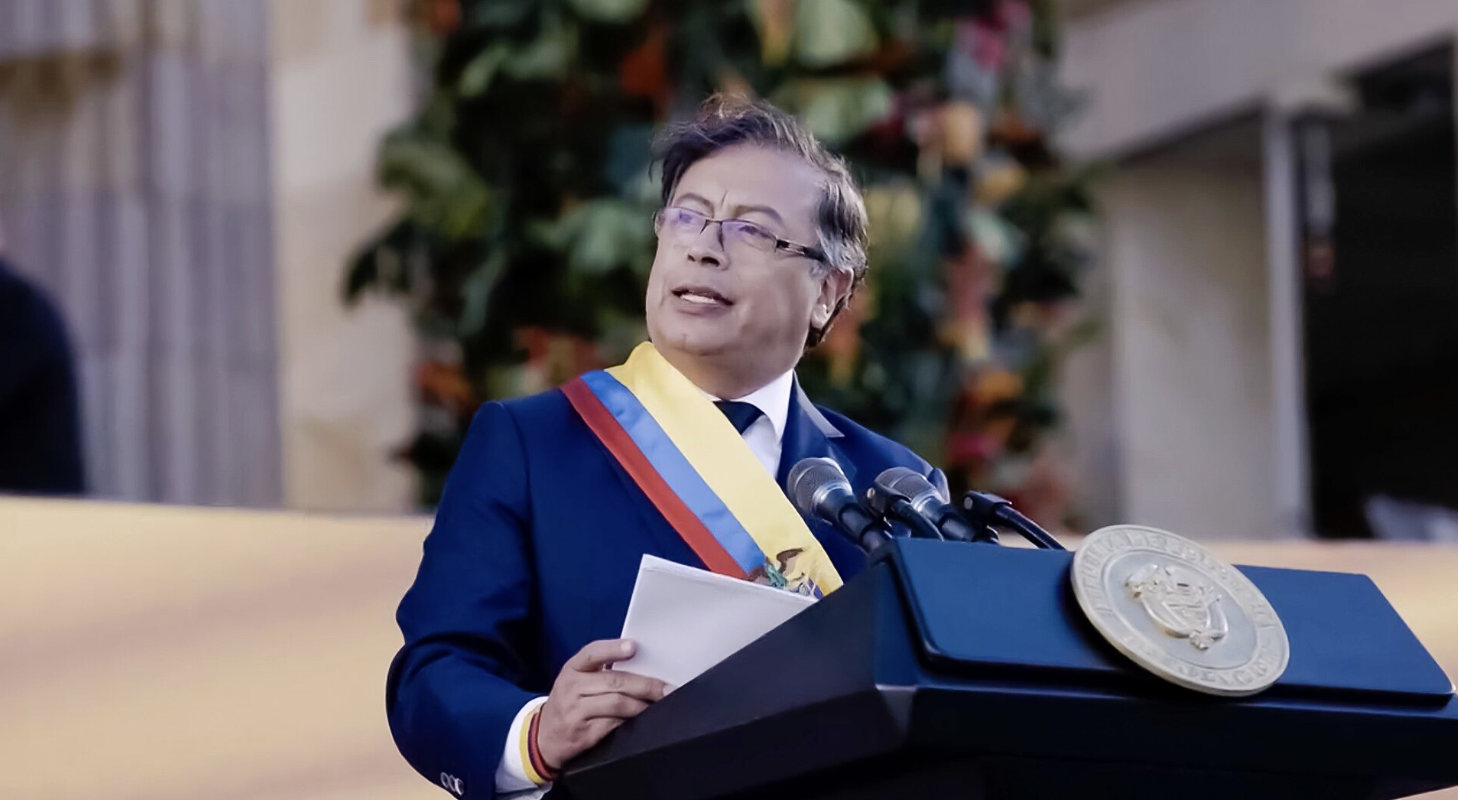
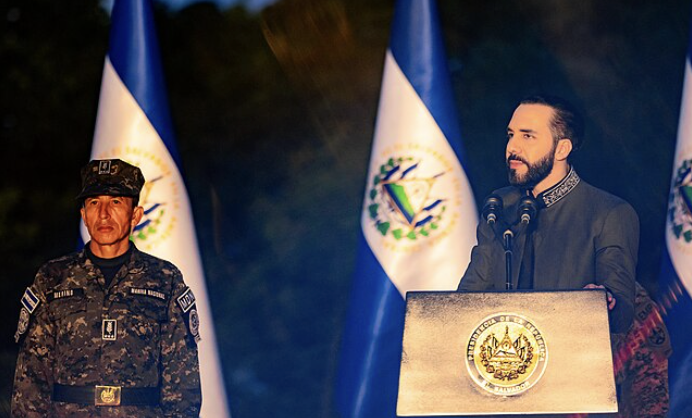

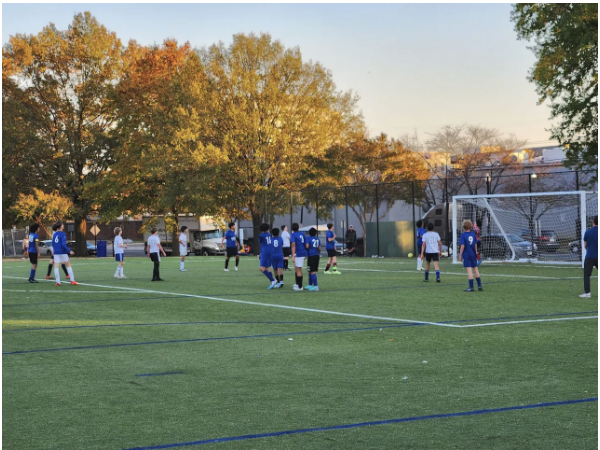
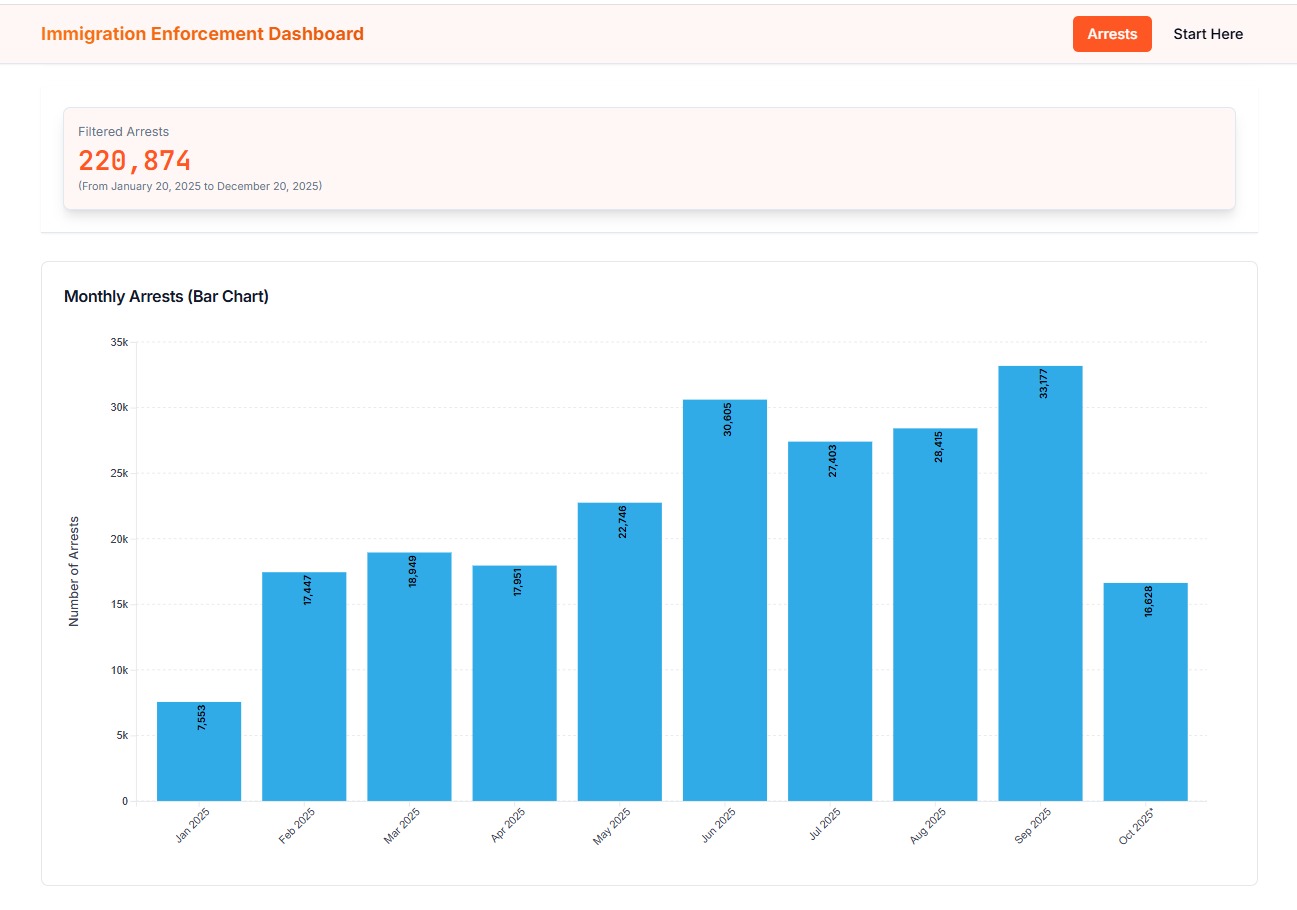
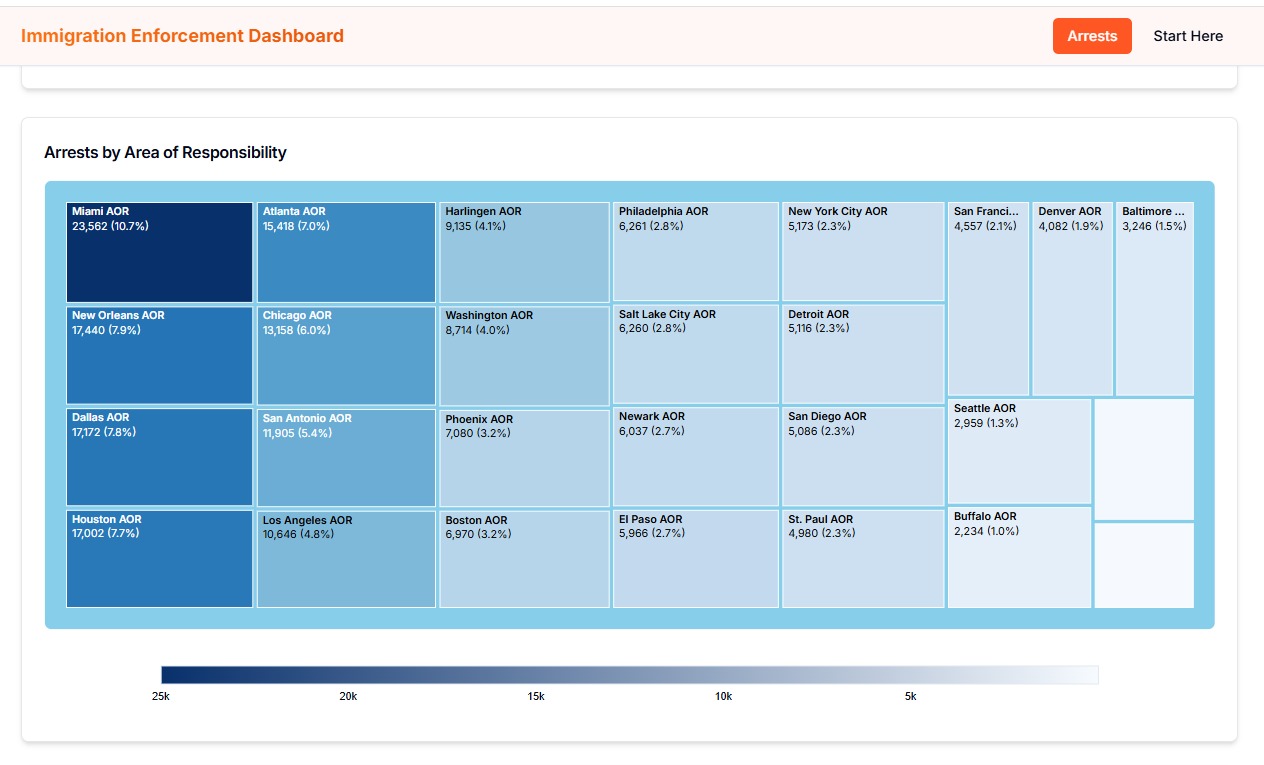
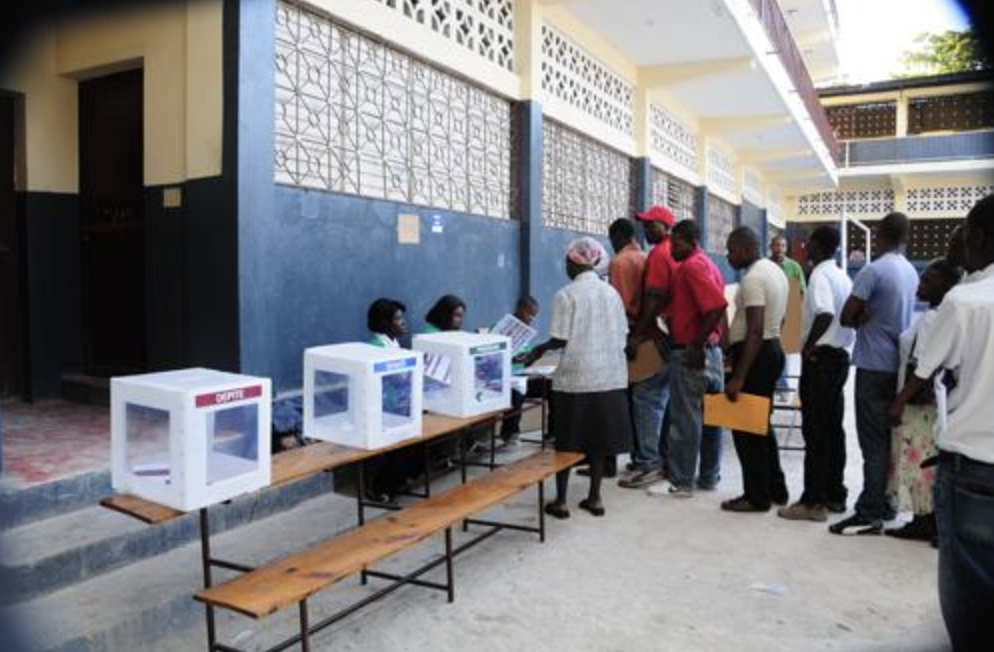





 AULA Blog

).jpg)
.jpg)

