New Wave of Salvadoran Immigrants in the DMV

By Hanseul Cho, Washington College of Law ’23

Based on data from the Immigration Lab’s Immigration to the DMV (DC, Maryland, and Virginia) project, there is a new wave of immigration from El Salvador, even though people from this country have sought refuge in the U.S. for decades. Despite being better educated, many Salvadoran immigrants work in lower-income, service-oriented jobs due to credential recognition issues and language barriers. Addressing integration challenges through inclusive policies for immigrants is crucial for harnessing their full potential and strengthening society.

El Salvador is similar in size to New Jersey and has a population like Tennessee. Although a relatively small country, Salvadorans are the biggest immigrant group in Washington, DC. Seventeen percent of the population in DC is immigrants, 11% of which are from El Salvador. 

Individuals from El Salvador ranked fourth in the number of refugeeslocated in the United States, and a significant number concentrated in the DMV. Although Los Angeles has the biggest Salvadoran migrant population, DC has the second largest group. Although when combined with Maryland and Virginia, the DMV has the largest Salvadoran population in the U.S.

Salvadorans rank fifth among the largest immigrant populations in the United States, behind China, India, Mexico, and the Philippines. 

Why did they choose to migrate? El Salvador experienced right-wing military regimes seizing power through rigged elections in the 1950s. The failure of land reform and political turmoil led to a civil war from 1979 to 1992, causing a 21.5% drop in GDP.

The United States justified its intervention in the Salvadorean civil war as preventing a left-wing party from taking power within the context of the Cold War. The conflict led to many refugees moving to the United States. A few of them formed gangs in Los Angeles, who were incarcerated and later deported, leading to the emergence of gangs in El Salvador, including MS-13. These gangs focused on territorial control and their violence caused some targeted people to look for safety in the United States.

Among the immigrants interviewed in the Immigration to the DMV project, 95% answered that El Salvador’s violence, climate, and economic difficulties influenced their decision to immigrate to the U.S. Our interviewees cite a bad economic situation, a serious lack of security, and corruption as the reasons they left.

Female immigrants make up a significant portion of the sample in this interview. The data indicates an increasing trend of more female migrants, which aligns with previous research. Some of the factors contributing to this include the demand for care and domestic work in the U.S. and an increased probability for women to pursue higher in the United States. A young woman who came to Washington, D.C. in 2022 mentioned that she migrated for a better chance at self-development, to study college, and to become a nurse. 

Even though the female participants in this study faced danger, including receiving contraceptive injections to avoid pregnancies during the arduous journey and threats of sexual violence, they desperately wanted to find long-term security and a chance to study.

New Generation of Salvadoran Immigrants

We interviewed Salvadoran immigrants who arrived in the U.S. fleeing the aftermath of the civil war, which they saw as a truly traumatic event. Political violence contributed to political corruption, economic failure, and widespread violence. Interviewers coming later also came looking for safety and economic opportunity.

People who arrived after 2019 are relatively proficient in English and more educated. Interviewees are from a country where only 33% of the population graduated from middle school, but 80% of the interviewees from this generation graduated middle school, and 60% graduated high school or with their GED. All of them had a better education than their parents. They had much better education and skills than their parents, but still, even though they are minors and part-timers, most still tend to work in lower-income jobs in the service sector. What causes this tendency? 

Two main challenges face this group: language barriers and lack of recognition of relevant training and job experience. These factors hinder their integration into the U.S. job market and society.

One of the main challenges that Salvadoran immigrants face is credential recognition. The skills and experiences they obtain in their home country may need to be properly evaluated or acknowledged in the United States. This includes the requirement for a GED, a U.S. high school diploma, or a U.S.-specific certificate. This can prevent immigrants from utilizing their previous experience and instead require them to start from scratch.

A 24-year-old Salvadoran man who lives in DC has been certified in forklift management in El Salvador. Another former electric technician also mentioned a similar experience. Still, those certifications needed to be recognized in the U.S., and ultimately, their professional experience was dismissed. So, in this case, the electrician became a cook even though electricians and forklift drivers are in high demand and are well-paying jobs.

This experience can lead to immigrants’ struggle with “imposter syndrome,” which negatively affects their self-image and makes it harder to derive self-esteem from their work. Furthermore, it can be argued that language barriers are a significant obstacle for immigrants to fully participate in the labor market.

The pandemic’s profound economic repercussions severely impacted El Salvador, exacerbating the country’s preexisting high crime rates. Interestingly, statistical data indicates that language barriers among Salvadoran immigrants do not immediately result in income disparities. Their incomes are quite similar when comparing Spanish-speaking immigrants who arrived recently with English-speaking immigrants who arrived in 2010 (Median is $30,000 for English speakers versus $35,000 for Spanish speakers, and the average is $36,430 versus $37,000). Most interviewees noted that their ability to speak only Spanish did not pose a significant challenge in assimilating into society. Spanish speakers might even have an advantage when seeking certain jobs.

However, English-speaking individuals tend to have a wider range of job opportunities, which can influence their assimilation and long-term settlement. While Spanish-speaking immigrants typically work in service-oriented roles, English speakers often have access to a broader spectrum of employment options, including management positions and roles in non-governmental organizations. Language proficiency plays a crucial role in the employment opportunities available to immigrants, affecting their ability to assimilate and succeed long-term.

Although immigrants from El Salvador could get jobs with the help of friends and relatives, there is a risk that the occupation will be limited to the service industry only. A Salvadoran woman in her 20s who wants to be a Spanish teacher faced challenges getting information about how to become one due to language barriers. 

In the DMV area, organizations like Northern Virginia Family Service, Maryland Multicultural Youth Centers, and DC Central Kitchen’s Culinary Job Training Program are available in multiple languages for immigrants. However, these services are decentralized and challenging for immigrants to access due to lack of time and transportation, creating barriers to utilization. In the data analyzed, almost none of the participants reported being part of a community organization, but most of them stated they were interested in learning opportunities and cultural activities.

It would be helpful to create a centralized portal that provides professional skills enhancement and digital-based social networking, integrating Salvadoran cultural influences.

It is important to acknowledge that immigrants, specifically Salvadorans, contribute to diverse cultural environments and enrich communities economically and socially. Addressing their integration challenges through inclusive policies and accessible support systems is crucial for developing a united and strong society.

Biden’s executive order to protect immigrant spouses of citizens from deportation will benefit their families and communities

by Jane Lilly López, Kristina Fullerton Rico*

President Joe Biden prepares to board Air Force One in California on June 16, 2024. Mandel Ngan/AFP via Getty Images/ Creative Commons License

Rodrigo Salazar is a man who entered the U.S. without a visa and has been living in the country without legal status ever since. Because of this, Rodrigo, who asked that we not use his or his wife’s real names in order to protect their identity, cannot advance from low-paying jobs at restaurants and car washes. 

His wife, Carmela, is a U.S. citizen, but she is also facing career limitations. Carmela doesn’t feel safe moving to a place where she could get a higher-paying job. She worries that Rodrigo’s lack of legal status would be more obvious in a city with a smaller Latino population, which would put him at risk for arrest and deportation.

The entire Salazar family, including their two children, live with the constant fear of family separation if Rodrigo is deported.

Immigrants like Rodrigo, who are living in the U.S. without legal status but are married to U.S. citizens, will now have protectionfrom deportation, President Joe Biden announced on June 18, 2024. In order to qualify, they must have arrived 10 or more years ago and be married to a U.S. citizen. Those who meet these criteria will be able to get work permits and can get on the pathway to citizenship while working and living in the U.S. legally. 

The Biden administration estimates that about 500,000 immigrant spouses of citizens will be protected from deportation with this policy change. The policy will also apply to approximately 50,000 U.S. citizens’ stepchildren who are living in the U.S. without legal immigration status.

We are migration scholars who study mixed-citizenship marriages – meaning some family members are citizens or have the legal right to stay in the U.S., while others do not – and the consequences of being undocumented. Our research shows that when one family member lacks legal immigration status in the U.S., the family as a whole assumes an undocumented status. 

When one family member cannot safely travel, work or access health careall family members suffer. The opposite is also true. When a family member is able to shift from living without legal status in the U.S. to getting legal status, the lives of the entire family improve.

A shift in immigration policy in the 1990s

Generally, having an immediate family member who is a U.S. citizen gives a foreign citizen the chance to live legally in the U.S. with permanent residency and a pathway to citizenship. 

For most of the 20th century, all spouses of U.S. citizens who met the legal standards for qualified marital relationships were able to become citizens through a relatively straightforward process, but that changed in 1996

A 1996 law called the Illegal Immigration Reform and Immigrant Responsibility Act imposed harsh penalties for people living in the U.S. without legal immigration status. One of the penalties is a 10-year “bar to re-entry” for anyone who has lived without a visa in the U.S. for one year or more. This ban goes into effect as soon as that individual leaves U.S. territory.

Technicalities create a divide

A consequence of this 1996 law was that getting a green card, which is an identity document that gives someone legal permanent residency in the country, became dependent on whether an immigrant entered – and remained in – the U.S. with or without a visa. 

This change in the law produced a stark inequality in U.S. citizens’ ability to legally sponsor their immigrant spouses for permanent residency.

If an immigrant spouse of a U.S. citizen has overstayed a visa, this person can apply for legal immigration status – through their spouse – from within the U.S. In these cases, the spouse does not have to leave U.S. territory and is not subject to the 10-year ban. 

In contrast, if a U.S. citizen’s spouse entered the U.S. without a visa or other legal permission, they must leave the country for the final step in their legal immigration application process. But when they leave the country, their 10-year ban automatically goes into effect. 

This means that although every U.S. citizen’s spouse, including those lacking legal immigration status, technically qualifies for legal permanent residency, some of them will have to spend a decade or more outside the country before they can actually get a green card.

As a result, over the past few decades, millions of immigrants who were living in the U.S. without legal permission but were married to U.S. citizens have not gotten legal immigration status

While the 10-year bar applies only to immigrants without legal status, in practice it also profoundly affects their citizen spouses, too

In these cases, citizens married to immigrants without legal permission to be in the U.S. have two difficult options. They can resign themselves to a life of fear and limitations in the U.S., including the ever-present threat of their spouse’s deportation, or they can give up living in the U.S. altogether for a decade or more.

A new U.S. citizen, originally from Mexico, poses with his family after a naturalization ceremony in November 2023 in Long Beach, Calif. Biden’s new policy will make it easier for undocumented immigrants with citizen spouses to become citizens. Mario Tama/Getty Images

The impacts of Biden’s immigration policy changes

The Biden administration has connected this new executive action on families to its recent announcement that it will heighten restrictions for seeking asylum, which scholars have called a ban on asylum.

The administration said in a press release that it both wants to “secure the border” and expand “lawful pathways to keep families together.” 

Under this new policy, immigrant spouses who entered the country without a visa before June 17, 2014, will be allowed to “parole in place,” which is similar to a policy that benefitsmilitary veterans’ immigrant spouses who lack legal immigration status in the U.S. Parole in place means that these immigrants will have authorization to work and increased protection from deportation. 

Parole in place will also allow immigrant spouses of U.S. citizens to have their immigration applications processed within the U.S., whether they arrived with or without a visa. This means they will no longer need to leave the country for 10 years or more if they entered the U.S. without a visa.

Having the legal right to work in the U.S. will allow these immigrant spouses to find jobs that better match their education and skills. Some estimates suggest that this could increase an immigrant’s wages anywhere from 14% to 40% more than what they currently earn

The executive action will also yield economic benefits for the communities where mixed-citizenship families live.

Economic analyses measuring the impact of expanding work authorization and access to citizenship predict that this will create new jobs, boost incomes across communities, increase local and federal tax revenues and encourage ongoing economic growth.

As scholars of migration, we believe that this executive action is an important step toward guaranteeing that U.S. citizens who marry immigrants do not end up experiencing negative consequences because their spouses cannot legally live, work or vote in the U.S. It will also prevent the de facto deportation of U.S. citizens alongside their noncitizen spouses.

In essence, this policy change benefits American families and protects the rights of U.S. citizens to marry the person they love, keep their families together and even live in their own country. Beyond helping families, this change will have far-reaching economic benefits for the communities – and country – where they live.

Copyleft Creative Commons. Reproduction with full attribution is possible by news media and for not-for profit and educational purposes. Minor modifications, such as not including the “About the Study” section, are permitted. 

*Jane Lilly López is an Assistant Professor of Sociology, Brigham Young University. Jane Lilly López’s research on mixed-citizenship couples has received funding from the National Science Foundation, UC MEXUS, and the Center for US-Mexican Studies.

*Kristina Fullerton Rico is a Research Fellow, Center for Racial Justice, Ford School of Public Policy, University of Michigan. Kristina Fullerton Rico’s research on the impact of long-term undocumented immigration status has received funding from the Russell Sage Foundation and Sociologists for Women in Society. 

This is reproduced from The Conversation with the authors’ permission.

https://theconversation.com/how-bidens-executive-order-to-protect-immigrant-spouses-of-citizens-from-deportation-will-benefit-their-families-and-communities-231651

We Must Ensure Access to Health Care for Immigrants

by Rodrigo Stein, MSc.*

This graph summarizes the Census Bureau’s American Community Survey data, capturing the percentage of uninsured adult Latinos in the Washington, D.C. Metropolitan Area. By Rodrigo Stein / Creative Commons License

Gaps in access to public health insurance like Medicaid and other subsidized programs, coupled with restrictions in private job-based health coverage, create significant barriers for immigrants in obtaining essential healthcare services. The disparate treatment of immigration statuses leads to a fragmented health coverage system, resulting in many immigrants, including those lawfully present, foregoing necessary medical care. This contributes to poorer health outcomes, reduced life expectancy, and increased morbidity rates among immigrant populations in the Washington, D.C. metropolitan area.1

Immigration Status Impacts Health

The Washington, D.C. metropolitan area is home to over 900,000 Latinos, 53% of whom are foreign-born.A significant portion of this immigrant population hails from Central American countries such as El Salvador, Honduras, and Guatemala. Numerous studies highlight how immigration and immigration status impact health outcomes through various material and psychological mechanisms.3,4  These include heightened fear and stress, unequal access to resources, experiences of prejudice and violence, and disparities in accessing safe employment and quality housing.2,3 Despite the implementation of the Affordable Care Act (ACA), individuals with Central American heritage are still less likely to have health insurance compared to non-Latino Whites.4

Over 32,000 Temporary Protected Status (TPS) holders who have sought protection in the United States due to conflict or natural disasters in their home countries reside primarily in the Washington, D.C. metropolitan area.5 TPS holders (the majority, Salvadoran nationals) qualify for ACA subsidies and plans but not Medicaid.6 Medicaid, the primary public health program for low-income working-age adults, is limited to citizens and “qualified non-citizens,” a category that requires both legal status and (in most cases) completion of a five-year waiting period to be eligible for public assistance programs.7

These provisions combine to make thousands of immigrants ineligible for public health services and financial assistance for purchasing insurance, forcing them to choose between purchasing expensive private market insurance at cost, going without health insurance, or relying on the emergency room as their main source of care. (See Table 1).

 Table 1 Eligibility for Federally Funded Health Care Coverage Based on Immigration Status

Eligibility for Federally Funded Coverage Based on Immigration Status
Immigration StatusMarketplace EligibleMedicaid/CHIP Eligible
Lawfully Present and Eligible for Federally Funded Coverage
Valid non-immigrant visa holders (e.g. students, worker visas)X
Humanitarian statuses or circumstances (including Temporary Protected Status, Special Juvenile Status, asylum applicants, Convention Against Torture, victims of trafficking)X
Legal status conferred by other laws (temporary resident status, Legal Immigration Family Equity Act, Family Unity individuals)X
Qualified non-citizens • Lawful Permanent Residents [(LPR)/Green Card Holder)]*
• Paroled into the U.S. for at least one year* 
• Battered non-citizens, spouses, children, or parents* • People fleeing persecution (e.g., asylees, refugees) 
• Granted withholding of deportation 
• Cuban/Haitian entrants • Certain Amerasian immigrants 
• Members of a federally recognized Indian tribe or American Indian born in Canada 
• Veterans or active duty military and their family members 
• Victims of trafficking and their family members 
• Citizens of the Marshall Islands, Micronesia, and Palau who are living in one of the U.S. states or territories [“Compact of Free Association (COFA) migrants”]
• Granted Iraqi or Afghan special immigrant status 
• Children receiving foster care or adoption assistance 
• Conditional entry granted before 1980
Ineligible for Federally Funded Coverage
Undocumented immigrants:Individuals who entered the country without authorizationIndividuals who entered the country lawfully and stayed after their visa or status expiredXX
DACA: Temporary status allowing individuals who came to the country as children to remain in the U.S.XX
Deferred Action for Parents of Americans and Lawful PermanentResidents (DAPA): Temporary status allowing parents of citizens or LPRs to remain in the countryXX
*Subject to the five-year bar (i.e. requirement to reside in the U.S. for five years or more before becoming eligible for Medicaid/CHIP). Note that there is no five-year bar for accessing subsidized Marketplace coverage.

Health Risks & Social Determinants of Health 

In addition to access barriers, immigrants experience a lack of social support and the absence of culturally and linguistically competent services. This means that many Latino immigrants, even those with access to quality care, forego seeking medical care until they face an emergency. Language barriers contribute to increased rates of misdiagnoses, weaker health literacy skills, and reduced access to acute and preventive care.8

This issue is compounded by the fact that many Latino immigrants are employed in occupations that offer limited access to employer-sponsored health coverage and often have comparatively lower incomes.9 As a result, these individuals face barriers to accessing care when trying to afford employer-sponsored coverage, when available, or when navigating the individual health insurance market. Given these barriers, what policy alternatives exist to ensure thousands of Latino immigrant residents in our region are not excluded from health care? 

Current Options: Federally Qualified Health Centers

Because of their limited access to health care, Latino immigrants often seek services at community health centers (CHCs) where they can access care without insurance (over 35% of CHC patients in the U.S. are Latino).10 Federally Qualified Health Centers (FQHCs) are CHCs that meet stringent federal requirements and receive funding via the Health Resources and Services Administration (HRSA) to provide primary health care services to all people regardless of their ability to pay or documentation status through a sliding fee scale.11

FQHC’s like La Clínica Del Pueblo (La Clínica), play a significant role in reducing racial and ethnic health disparities. The success of these centers in narrowing these gaps is attributed to the wide range of services they offer, culturally competent care, and strong relationships built with underserved communities.12  Since all direct service staff are bilingual, and most are first-generation Latino immigrants, La Clínica provides much-needed culturally and linguistically appropriate health care to a large yet excluded population in the Washington, D.C. metro area.

However, despite their effectiveness in producing high-quality healthcare outcomes, FQHCs are limited in size, scope, and resources. Because these centers vary in size, depth, and jurisdiction, addressing the cost of care for those who are ineligible for federally funded health programs is paramount—without them, FQHCs bear the burden of uncompensated care for a population with significant health needs.

Potential Policy Solutions

As of March 2024, the District of Columbia and six states—California, Colorado, Illinois, New York, Oregon, and Washington—have expanded fully state-funded coverage to some income-eligible adults regardless of immigration status.13 These legislative or administrative actions rely on establishing state Medicaid/CHIP equivalent or comparable programs, and creating state premium or cost-sharing subsidies to enable individuals to purchase marketplace coverage.9 In addition to these six states, Maryland will allow income-eligible individuals to purchase marketplace coverage regardless of immigration status through a Section 1332 waiver.

Maryland’s Access to Care Act

On May 16, Maryland Governor Wes Moore signed the Access to Care Act into law. Sponsored by Delegate Bonnie Cullison and Senator Antonio Hayes, the law removes immigration status as an eligibility requirement for purchasing a health plan through the Maryland Health Benefit Exchange (MHBE). In doing so, Maryland allows the remaining 6% of uninsured Maryland residents to purchase insurance. Immigrants make up a substantial number of that uninsured population; they are 15% of Maryland’s population overall, and the state’s Montgomery and Prince George’s counties have the highest concentrations of the Latino population in Maryland, with 21% in each jurisdiction. Soon, they will not only have the choice to buy a healthcare plan in the state but also receive care in a culturally and linguistically competent manner.  

Stepping Toward Equity

By expanding eligibility for public health programs and supporting community health centers, we can ensure that all residents, regardless of immigration status, have access to essential healthcare services. Legislative actions like the Maryland Access to Care Act represent significant steps towards achieving health equity for immigrant populations.

[1] Martinez O, Wu E, Sandfort T, Dodge B, Carballo-Dieguez A, Pinto R, Rhodes SD, Moya E, Chavez-Baray S. Evaluating the impact of immigration policies on health status among undocumented immigrants: a systematic review. J Immigr Minor Health. 2015 Jun;17(3):947-70. doi: 10.1007/s10903-013-9968-4. Erratum in: J Immigr Minor Health. 2016 Feb;18(1):288. Rhodes SD [corrected to Rhodes SD]. PMID: 24375382; PMCID: PMC4074451.

[2] Migration Policy Institute. Central American Immigrants in the United States. Migrationpolicy.org. Published May 2023. Accessed February 18, 2024. https://www.migrationpolicy.org/article/central-american-immigrants-united-states

[3] Yamanis T, Morrissey T, Bochey L, Cañas N, Sol C. “Hay que seguir en la lucha”: An FQHC’s Community Health Action Approach to Promoting Latinx Immigrants’ Individual and Community Resilience. Behavioral Medicine. 2020;46(3-4):303-316. doi:10.1080/08964289.2020.1738320

[4] Bucay-Harari L, Page KR, Krawczyk N, Robles YP, Castillo-Salgado C. Mental Health Needs of an Emerging Latino Community. The journal of behavioral health services & research. 2020;47(3):388-398. doi:10.1007/s11414-020-09688-3 

[5] National Immigration Forum. Temporary Protected Status (TPS): Overview and Current Issues. Accessed February, 2, 2024. Available from: https://immigrationforum.org/article/fact-sheet-temporary-protected-status/#:~:text=The%20largest%20populations%20of%20TPS,York%20(23%2C168)%20metropolitan%20areas

[6] HealthCare.gov. Immigration status & the Marketplace. Accessed May 16, 2024. Available at: https://www.healthcare.gov/immigrants/immigration-status/

[7] Supporting Health Equity and Affordable Health Coverage for Immigrant Populations: State-Funded Affordable Coverage Programs for Immigrants. Shvs.org. https://www.shvs.org/wp-content/uploads/2021/10/State-Funded-Affordable-Coverage-Programs-for-Immigrants.pdf. Published 2021. Accessed April 3, 2024.

[8] Nelson B, Tu L and Sanford F. To Advance Health Equity For Patients With Limited English Proficiency, Go Beyond Interpreter Services. Health Affairs (Millwood). October 23, 2023. https://www.healthaffairs.org/content/forefront/advance-health-equity-patients-limited-english-proficiency-go-beyond-interpreter

[9] American Immigration Council. District of Columbia Immigration Data. American Immigration Council. https://map.americanimmigrationcouncil.org/locations/district-of-columbia/. Published 2023. Accessed February 8, 2024.

[10] Ortega AN, Rodriguez HP, Vargas Bustamante A. Policy dilemmas in Latino health care and implementation of the Affordable Care Act. Annu Rev Public Health. 2015;36:525-544. doi:10.1146/annurev-publhealth-031914-122421

[11] Federally Qualified Health Centers. Official web site of the U.S. Health Resources & Services Administration. https://www.hrsa.gov/opa/eligibility-and-registration/health-centers/fqhc/index.html. Published 2022. Accessed April 10, 2022.

[12] Yamanis T, Morrissey T, Bochey L, Cañas N, Sol C. “Hay que seguir en la lucha”: An FQHC’s Community Health Action Approach to Promoting Latinx Immigrants’ Individual and Community Resilience. Behavioral Medicine. 2020;46(3-4):303-316. doi:10.1080/08964289.2020.1738320

[13] Kaiser Family Foundation. State Health Coverage for Immigrants and Implications for Health Coverage and Care. Kaiser Family Foundation website. Published October 1, 2021. Accessed May 16, 2024. Available at: https://www.kff.org/racial-equity-and-health-policy/issue-brief/state-health-coverage-for-immigrants-and-implications-for-health-coverage-and-care/

Copyleft Creative Commons. Reproduction with full attribution is possible by news media and for not-for profit and educational purposes. Minor modifications, such as not including the “About the Study” section, are permitted. 

*Rodrigo Stein is a resourceful public health professional with experience in program management, design and evaluation, advocacy, and strategic planning.

The Legacy of U.S. Immigration Policy Towards Cuba

by William M. LeoGrande*

Cuban Privilege by Susan Eckstein / Creative Commons License

Susan Eckstein’s recent book, Cuban Privilege: The Making of Immigrant Inequality in America, is a deep dive into how the U.S. government structured its immigration policy to the advantage of Cuban migrants as part of its Cold War policy to destabilize Fidel Castro’s revolutionary government. The book caused quite a stir among some Cuban Americans, who were insulted that someone pointed out policies that helped make the Cuban American community a success story.  

Cuban Privilege was not Eckstein’s first book on Cuban diaspora. She has written extensively on the threads that connect Cubans abroad with their family still on the island. Her book The Immigrant Divide: How Cuban Americans Changed the U.S. and Their Homeland was one of the first in-depth studies of how the Cuban American community began reconnecting to the island in the 1980s and 1990s, building bridges based mainly on family ties.

In the 1960s and 1970s, both the Cuban and U.S. governments erected a “sugar cane curtain” that made it almost impossible for families to stay connected across the Florida Strait. Travel was prohibited, direct mail service was unavailable, and connecting by phone was nearly impossible and prohibitively expensive. 

But in the 1980s, travel opened up, and remittances began to flow. Ever since the Special Period, Cuba’s economic crisis in the 1990s, Cuban American remittances have made an essential contribution to the livelihood of millions of Cuban families—a stark reality demonstrated by the humanitarian crisis on the island that resulted when Donald Trump and the COVID-19 pandemic cut remittance flows by some two-thirds. 

Cuban Privilege reverses the lens to look not at Cuban immigrants but at the U.S. immigration policies that brought them here. It is the definitive account of how Washington, motivated by the Cold War, gave Cuban immigrants privileged access to the United States and unprecedented support once they got here. Key elements of that privilege remain in place today, exacerbating the current migration crisis—foremost among them the Cuban Adjustment Act, which allows Cubans living in the United States for a year to apply for permanent residence, regardless of their form of entry.  

Most of the time, academics toil in relative obscurity, writing for one another in hopes of contributing new knowledge to their chosen field. On occasion, they write for a broader audience, hoping that their expertise might have some positive impact on public policy. And most of the time, when they speak truth to power, power isn’t listening. Rarely do academic contributions to the public debate attract much attention or make much difference.

Susan Eckstein’s Cuban Privilege is a cautionary tale of what can happen when the public does take notice. Presenting her book in Miami, Eckstein endured 30 minutes of hate, denounced as an agent of Castroism, because she had the nerve to state the obvious — Cuban immigrants to the United States have enjoyed enormous privileges that no other immigrant group has enjoyed. To say that is not an attack on Cuban Americans; it’s a simple truth. 

Ironically, the policy of privileged immigration for Cubans, which was intended to weaken and embarrass the Cuban government, has instead weakened and embarrassed the U.S. government producing a series of migration “crises” or more correctly punctuated increases (Camarioca in 1965, Mariel in 1980, the rafters crisis in 1994, and the post-Covid increase in emigration that is ongoing today), and distorting U.S. domestic politics by creating one of the most powerful domestic foreign policy lobbies in history—Cuban Americans in south Florida.

For 30 years, successive presidents —with the sole exception of Barack Obama— have been afraid to stand up to the Miami lobby on U.S. policy toward Cuba. As President George H. W. Bush’s National Security Adviser Brent Scowcroft put it, “Cuba is not a foreign policy question. Cuba is a domestic issue.” The result is a policy of regime change that, in 65 years, has done nothing to advance the cause of democracy or human rights in Cuba, but has lowered the living standard of the Cuban people and alienated Washington from allies in Latin America.

Before the Trump administration, Cuban American attitudes were gradually evolving toward moderation and support of engagement. President Obama won more Cuban American votes in Florida than any Democrat before him. And a majority—albeit a narrow one—supported his normalization policy.

But Trump’s return to a policy aimed at overthrowing the Cuban government re-energized the most recalcitrant Cuban American right. Recently both attitudes and voting behavior in the community seem to have swung sharply to the right, the result of a new wave of immigrants, a toxic social media environment, and disinformation spread by some of Miami’s Spanish language media.

As a result, Democrats have gone back to being afraid of Cuba—not the island, but the issue. Despite his campaign promise to return, for the most part, to Obama’s policy of engagement, President Biden has kept in place most of Donald Trump’s draconian economic sanctions aimed at strangling the Cuban economy.

            The final irony is that Florida does not actually matter very often in presidential elections. Conventional political wisdom casts it as a critical swing state. But in the sixteen presidential elections since 1960, Florida has determined the outcome in Electoral College only twice: in 2000, when Cuban Americans gave George W. Bush a 537-vote margin over Al Gore because the Clinton administration returned six-year-old Elián González to his father in Cuba; and in 2004 when Bush narrowly beat John Kerry.

            Kerry lost Florida by such a wide margin that he would have lost the state even if he had won the Cuban vote. So Cuban Americans in Florida have only cost the Democrats the White House once: in the unforgettable election of 2000. Ever since, Democrats have suffered from electoral post-traumatic stress disorder over the issue of Cuba, and it appears that 2024 will be no different. That is the legacy of the immigration policies that Susan Eckstein so expertly chronicles in Cuban Privilege.

Copyleft Creative Commons. Reproduction with full attribution is possible by news media and for not-for profit and educational purposes. Minor modifications, such as not including the “About the Study” section, are permitted. 

*William M LeoGrande is a CLALS faculty affiliate and Professor of Government at American University in Washington, DC, and co-author with Peter Kornbluh of Back Channel to Cuba: The Hidden History of Negotiations between Washington and Havana(University of North Carolina Press, 2015).

Surviving the Criminalization of Migration

by Ernesto Castañeda, Makenna Lindsay, and Natalie Turkington*

Survivor of Ciudad Juarez Migrant Detention Center Fire / Creative Commons License

On March 27, 2023, a fire at a migrant detention center in Ciudad Juarez, Mexico killed 40 migrants and injured 29 more. One of those injured was Justen (pseudonym), a man in his late 20s from El Salvador who lost six of his friends in the fire. Dr. Ernesto Castañeda, Director of the Immigration Lab and the Center for Latin American and Latino Studies (CLALS) sat down with Justen last year to discuss the horrors experienced inside of the center and what happened after. The following testimony reveals the cruelty inside the Ciudad Juarez detention center fire as well as the treatment victims encountered by both U.S. and Mexican officials after the fact. 

Justen mentioned how difficult it was to transit through Mexico. He crossed into Chiapas in a pickup truck under a tarp. Later in Northern Mexico, he was stopped and questioned. He claimed he was from Chihuahua, Mexico but the authorities decided that given his answers, he was not Mexican, and he was taken to an immigration detention center. At the center, people had different rights and access to necessities such as mattresses and water bottles—only if they had money to pay for them. After some of the immigrants complained that they had no water to drink, the officials would reply that it was not up to them to support them and that it was their fault “por andar migrando” for migrating. Some of the people detained got angry, put the mattresses together, and said “if you do not open the doors or give us water, we will burn them.” An agent said, “Que les vaya bien”— “farewell,” as he saw them light the place on fire and left without opening the door.  

When the fire broke out, Justen felt his skin getting too hot, the smoke made it hard to breathe. He ran to the bathrooms to try to get away from the flames and found dozens of people, all crammed together–there was no running water. He and others screamed “Please let us out! “We do not want to die!” However, migration officials did not open the door. Justen recalls that, “the immigration officials did not at any moment try to open the door or call other authorities or ambulances.” Trapped in the bathroom, Justen lost consciousness, thinking he would die being burnt alive.

He later heard people crediting a passing firefighter who saw the smoke, called the fire department, and ran towards the building. Firefighters stopped the fire before everyone died inside. Justen’s burnt but breathing body was brought to Mexico City where he underwent treatment and a hospital stay of over two weeks and was incubated for much of that time. Immediately following his discharge, he had multiple interactions with agents of the Mexican government to arrange lodging for the remainder of his recovery. “When I saw migración [migrant agents] there, I said, ‘Why, why are our aggressors looking out for us?’’ Even in his injured state, Justen recognized the paradox that although migration officials played a major role in his near-fatal condition, they also “helped” him to recover. Ironically, they also helped bring his mother from El Salvador for humanitarian reasons.  

This is not the only striking paradox illuminated by the fire. The fire, namely smoke inhalation and dehydration caused immense damage to Justen’s lungs and kidneys. The doctor told him that 90% organ function would be considered great given the extent of the organ damage; he would likely never recover full function and health. “…I have to keep living and be more cautious of my lungs, airways, and kidneys… if I ever get too dehydrated because this could jeopardize my life.” Indeed, he would often cough while we spoke. 

The sequelae are not only related to his physical health but also to his mental health. In the interview Justen shared that to this day he still hears the cries of people trapped screaming, ‘We don’t want to die! We don’t want to die!’, and his own screams: ‘I don’t want to die! I don’t want to die!’ Six of his travel companions died in the fire. He also expressed the mistreatment and further neglect he endured from the Executive Commission of Attention for Victims (CEAV), and the chronic health problems he must deal with because of the tragedy. 

Following the fire, Justen was allowed to apply for asylum in the United States. Given his condition, Justen was asked about his health care and public services access in the United States. He specifically notes the conditional nature of his asylee status he understood that “…it was a condition of the government that we were in good health and all that and not to be a public charge.” He will not apply to receive disability income and will depend on remittances from his wife in DC and a job the mom can find in Texas.

The acute irony of the situation is that the United States government played a pivotal role in the development of his condition by asking Mexico to more forcefully enforce its immigration policies and to dissuade Central American and other immigrants from reaching the U.S./Mexico border, and yet it granted him asylum as a survivor of a tragedy abroad. Nonetheless, in establishing such a condition, the U.S. evades its responsibility to not only protect migrants but to protect and honor the rights of asylees.  

As discussed in the book “Reunited: Family Separation and Central American Youth Migration,” Justen was on his way to the U.S. in part to reunite with his wife and family who are living in the Washington, DC area. Justen’s wife escaped violence from El Salvador and moved to Nicaragua, but then the situation got unstable in Nicaragua and she came to DC. Justen and his mother were relocated by non-profits to a city in Texas under humanitarian parole and applied asylum, but his wife is undocumented and cannot apply for asylum simultaneously because she was not traveling with him and she was not at the fire. Justen is not in condition to work yet, though his wife has a job in DC and therefore, they still live apart despite both being in the United States. Such family separations show how immigration laws tend to work at the individual level, putting family unity and well-being in a secondary place.  

Violence against immigrants, like that in the Ciudad Juarez fire is a direct result of immigrant restrictionism and the externalization of borders that we see in North America and Europe. There is a need for the public to pay closer attention to the realities experienced by migrants, asylees, and refugees. Unjust treatment which goes unnoticed points to the lack of care taken to uphold the human rights of those on the move.   

For more see: 

Délano Alonso, Alexandra. “Before and After the Juárez Fire.” CLALS Working Paper, no. 45 (2023). https://www.american.edu/centers/latin-american-latino-studies/upload/ssrn-id4655183.pdf 

Brashear, Madeline and Diaz, Sarah and American University, CLALS, No Right to Life: Lives Lost and the Legalized Violence That Shaped a Humanitarian Crisis in the Arizona Borderlands (November 15, 2023). Available at SSRN: https://ssrn.com/abstract=4634297 

Book Review: Migration and Mortality: Social Death, Dispossession, and Survival in the Americas https://www.academia.edu/108876335/Book_Review_Migration_and_Mortality_Social_Death_Dispossession_and_Survival_in_the_Americas 

Guerra, Sofia. Invisible Deaths. https://aulablog.net/2024/03/07/invisible-deaths/  

Copyleft Creative Commons. Reproduction with full attribution is possible by news media and for not-for profit and educational purposes. Minor modifications, such as not including the “About the Study” section, are permitted. 

*Ernesto Castaneda is the Director of the Center for Latin American and Latino Studies, and the Immigration Lab. He conducted the interviews and helped write the blog. Makenna Lindsay, Coordinator of the Immigration Lab, and Natalie Turkington, a Research Assistant with the Center for Latin American and Latino Studies at American University, transcribed and translated the interview, and drafted and edited this blog. 

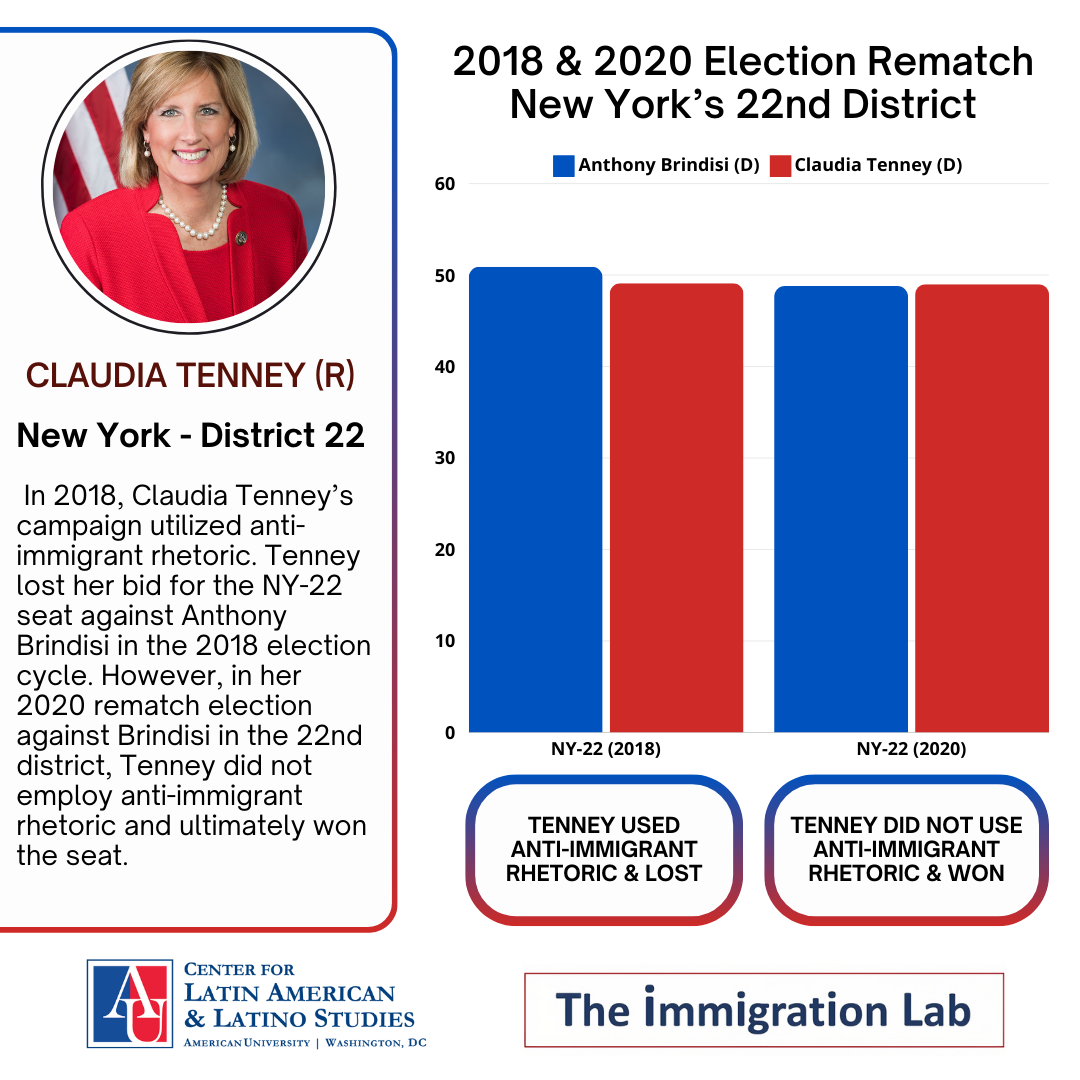
Failure of Anti-Immigrant U.S. Political Campaigns 2018-2023

by Reilly Phelan, Ernesto Castañeda & Joseph Fournier*

Overview of dataset from 2018, 2020, 2022 election cycles for competitive races / Creative Commons License

Contrary to the common assumption, anti-immigrant rhetoric does not ensure electoral success. In an upcoming report from the Immigration Lab and the Center for Latin American and Latino Studies, we prove the moral and electoral failure of using anti-immigrant sentiment in campaign platforms. Our data demonstrates the falsity of the notion that being weak on immigration control is an electoral vulnerability.

In an extensive analysis of campaign material and election outcomes from the 2018, 2020, 2022, and 2023 gubernatorial and congressional elections, we found various candidates who employed anti-immigrant rhetoric and lost their elections. We defined anti-immigrant rhetoric as overarching narratives of border securitization and the criminalization of immigrants.

· In the 2018 election cycle, twenty candidates in competitive elections employed anti-immigrant rhetoric—and lost.

· In the 2020 election cycle, the utilization of such rhetoric relaxed broadly, and Republican candidates benefitted. Ten candidates fit our criterion. 

· In the 2022 election cycle, twelve candidates lost in competitive elections after employing anti-immigrant rhetoric throughout their campaign. 

· In the 2023 special elections, the degree to which immigration was mentioned declined. The defeat of Daniel Cameron (R) by incumbent Andy Beshear (D) in the Kentucky gubernatorial race met the criterion of our prior analyses.

While anti-immigrant sentiment is not exclusive to the Republican party, we found that the presence of such rhetoric in campaigns was overwhelmingly among Republican candidates. For the 2020 election cycle, we conducted an analysis of elections where seats flipped from Democrat-held to Republican-held. Ultimately, nearly half of the Democrat-to-Republican flipped seat candidates did not utilize anti-immigrant sentiment in the campaign material of their successful campaigns. 

In assessing the 2018 and 2020 election cycles, anti-immigrant campaign rhetoric relaxed during the 2020 cycle compared to the 2018 cycle (not to say anything about 2016). Kris Kobach’s losing 2018 Kansas Gubernatorial campaign exemplifies the failures of a campaign largely platformed on anti-immigrant sentiment. Kobach’s campaign hinged upon his pointed immigration rhetoric and ultimately failed to bring Kobach election victory. “Anti-immigration hard-liner[s]” like Kris Kobach largely declined in competitive 2020 elections. That is not to say that anti-immigrant campaign rhetoric disappeared; rather, fewer candidates premised their campaigns fully upon such narratives.

Candidates who ran in 2018 with anti-immigrant campaign rhetoric and chose to run again in 2020 had an observable decrease in the use of anti-immigrant sentiment in the candidate’s campaign platforms. For candidates like Matt Rosendale, Claudia Tenney, and Young Kim, this shift in campaign rhetoric led them to success in their rematch attempts during the 2020 election cycle. 

Coupled with our analysis of election outcomes of anti-immigrant candidates, we provide below an assessment of narrative trends: 

Several candidates mainly used anti-immigrant rhetoric to signal support for and connection to former President Trump. Strong stances against immigration, particularly during the 2018 and 2020 election cycles, became a means to show supposed shared values and allegiance with Trump. By applying “Build the Wall” narratives and framing border security as imperative, candidates premised their campaigns on Trumpist values more broadly. For example, in Greg Gianforte’s winning bid for the Montana Governorship in 2020, Gianforte promised to “stand with President Trump to crack down on illegal immigration.” Interestingly, Donald Trump’s 2020 presidential campaign aligns with our findings— his extensive use of anti-immigrant campaign rhetoric during his 2020 bid for reelection was not enough to lead him to electoral success. 

In 2022, however, references to the border wall largely de-emphasized the securitization project’s explicit link to Trump. While calls to “finish the wall” were present in multiple candidates’ campaign platforms, candidates offered a similar amount of attention to the re-establishment of anti-immigrant policies, including the “Remain in Mexico” program. Arizona Gubernatorial candidate Kari Lake regarded the policy as “the best [immigration] policy I’ve seen.” 

Through further assessment of the rhetoric employed by candidates within our 2022 and 2023 set, we see candidates shift their anti-immigrant campaign rhetoric away from targeting migrants themselves and instead targeting Democratic leadership, whom they label as in support of so-called “open borders.” Candidates such as Kari Lake take this concept a step further, arguing that Democrat leadership has a vested interest in the continuation of undocumented immigration as a means of “solidifying a permanent political majority.” These claims on the campaign trail are dangerous and alarmingly similar to the racist theory of “the Great Replacement”— propagating the idea that elites are purposefully encouraging migration to render America more diverse.

The 2022 elections also demonstrated a rise in claims that immigration is no longer confined to states along the U.S.–Mexico border. As efforts spearheaded by Texas Governor Greg Abbott bring “busloads” of immigrants to cities farther north of the border, the framing of immigration as an issue of concern has shifted both on the campaign trail and beyond. For example, a candidate for Pennsylvania Senate Mehmet Oz stated, “Now every state has become a border state.” With the U.S. increasingly externalizing its border by instituting border outposts, historical conceptions of borders and their significance are shifting across the U.S. Thus, the way immigration is discussed during elections is shifting.

As the U.S. gears up for the 2024 election cycle, the moral and electoral failure of anti-immigrant campaign rhetoric must be taken into account. Plain and simple, anti-immigrant rhetoric does not create electoral victories. In assessing both election outcomes and narrative trends, we see how a more humane, measured, and pragmatic view of immigrants can indeed be the morally and politically right thing to do. 

* Reilly Phelan is a research assistant at the Immigration Lab and the Center for Latin American and Latino Studies. She has previously worked with the International Rescue Committee and Arizona Legal Women and Youth Services. She will be graduating May 2024 with a degree in International Relations. 

*Ernesto Castañeda is Director of the Immigration Lab and the Center for Latin American and Latino Studies at American University. 

*Joseph Fournier is a research assistant at the Immigration Lab and the Center for Latin American and Latino Studies at American University.

Reproduction with full attribution is possible by news media and for not-for-profit and educational purposes. Minor modifications, such as not including the “About the Study” section, are permitted.

Immigration as the Current Main Driver of Economic Growth in the U.S.

By Ernesto Castañeda, Edgar Aguilar, and Natalie Turkington

A new report from CLALS and the Immigration Lab finds that recent immigrants are a key driver of economic growth in the United States.

The report presents an original calculation that finds that only in 2022:

  • Immigrants who sent money home contributed over $2.2 trillion dollars to the U.S. economy.
  • This contribution by migrant labor constitutes about 8% of the U.S. GDP.
  • Remittances represent just 4% of the total output generated by immigrants, even if they add up to $81.6 billion annually, disputing the narrative that immigrants drain the U.S. economy.


Immigrants who remit contribute around $2.2 trillion annually to the U.S. economy. Despite concerns that remittances drain U.S. dollars, they only represent 4% of immigrants’ total contributions. This estimate is based on credible sources indicating that 17.5% of immigrants’ income is sent as remittances and considering a combined yearly salary of approximately $466.5 billion.  Using data from the World Bank, the Association for Central Banks of Latin America, the U.S. Census Bureau, and the Bureau of Labor Statistics, however, this is just a good approximation to quantify some of the benefits of migration. Immigrants’ contributions to the economy are greater as not all send remittances through formal channels. Additionally, it overlooks the economic growth immigrants stimulate by spending their wages in the U.S., creating demand, and generating jobs. Not to say anything about the human, cultural, culinary, and creative contributions. Below are more details about this novel estimation and projections of future contributions by immigrants to the U.S. economy.

The Congressional Budget Office’s Demographic Outlook 2024-2054, which has gotten some deserved media attention, estimates that in 2034 the U.S. economic output will be $7 trillion larger due to new immigration. Tax revenues would also be higher and the deficit lower because of immigration all else equal.

The quote from the CBO Director’s press release is, “in our projections, the deficit is also smaller than it was last year because economic output is greater, partly as a result of more people working. The labor force in 2033 is larger by 5.2 million people, mostly because of higher net immigration. As a result of those changes in the labor force, we estimate that, from 2023 to 2034, GDP will be greater by about $7 trillion and revenues will be greater by about $1 trillion than they would have been otherwise.”

We estimate immigrants’ contribution to the U.S. economy between 2023 and 2034 will be greater. Using the same immigration estimates as the Congressional Budget Office’s (see graph below), we calculate new immigrants have the potential to elevate the U.S. economic output by a staggering $17 trillion just in 2034.

Net population growth is through immigration.

Source: Congressional Budget Office interactive graph here.

However, if the number of new immigrants and asylum seekers continues at the same pace as in estimated for 2024, 3.3 million per year (10,000 per day as happened in December of 2023), we calculate that the U.S. would enjoy an increased economic output of over $37 trillion just in 2034.

As the Economic Policy Institute writes, “The unemployment rate for U.S.-born workers averaged 3.6% in 2023, the lowest rate on record. Obviously, immigration is not causing high unemployment among U.S.-born workers.” They further write, “immigrants that make up 18.6% of the U.S. labor force are playing key roles in numerous industries and are employed in a mix of lower, middle, and higher-wage jobs. And as the Congressional Budget Office recently reported, immigration is contributing to strong economic growth—with future immigration forecasted to boost real gross domestic product by 2% over the next 10 years—as well as increasing government revenue. Immigrants are also complementing U.S.-born workers by contributing to overall population and workforce growth. The U.S. Census Bureau projects that if the U.S. were to have lower-than-expected immigration levels, the population would begin to decline in 20 years, and if there were suddenly zero immigration, the population would begin to decline next year, deeply harming economic growth.”

A Washington Post article states that around 50% of the growth in the labor market in 2023 was due to foreign-born workers. The same was the case in the 1990s.

In 2021, 45 million immigrants lived in the United States, accounting for 14% of the country’s population. Immigrants are integrated into American social, economic, cultural, and political life. The Immigrant Research Initiative calculates that “Immigrants account for 17 percent of the U.S. economic output (GDP), even higher than their share of the population. The United States has a $19.6 trillion economy according to the Bureau of Economic Analysis 2021 statistics, which means immigrants are conservatively responsible for $3.3 trillion of economic output.” This supports our calculation of around 2.2 trillion only from immigrants who send money abroad because many do not send remittances.

Estimates and projections vary, but what is clear is that there would be no economic growth without recent immigrant arrivals. If immigration (of all types) decreases in the following years, economic growth will most likely plummet, and inflation will rise. Furthermore, this does not only apply to the United States but to other countries as well.

You can find coverage of the report in Spanish here:

“Immigracion y Economia en EE.UU.” RTVE 24h.

“Los hispanos y el mercado laboral en EE. UU.” Y Esto No es Todo podcast on YouTube.

“Ernesto Castañeda y el mercado laboral en EE.UU.” RTVE audio.

Ernesto Castañeda is the Director of the Center for Latin American and Latino Studies and the Immigration Lab.

Edgar Aguilar and Natalie Turkington are research assistants at the Center for Latin American and Latino Studies.

Full report here.

Vanishing Homelands

Climate Change Threatens Indigenous Communities in Panama and Mexico

Gardi Sugdub, Panama photo by Lee Bosher

Forest fire photo by Bertknot.

March 7, 2024

By Valeria Chacon

Climate change is adversely contributing to humanitarian emergencies such as heatwaves, wildfires, floods, tropical storms, and hurricanes. Unfortunately, these crises are only increasing in frequency and magnitude. For example, Indigenous communities in Panama and Mexico find themselves displaced from their ancestral lands as climate change intensifies.

Gardi Sugdub is an island situated off the coast of Panama, home to over 1,453 Guna people. It is vulnerable to rising sea levels. Life on this tiny, crowded island becomes increasingly challenging as residents experience frequent floods and storms, impacting crucial aspects of their everyday living such as housing, water, health, and education. Naila, who lives on Gardi Subdug,  describes the deteriorating conditions of her school due to flooding. The walls of her school display extensive water damage, with noticeable cracks and crumbling. These relentless challenges have forced the people of Gardi Sugdub to leave behind their ancestral homeland and onto mainland Panama.

With the support of NGOs and after many years of community-led advocacy, in 2017 the Panamanian government made the decision to construct new homes for the Gardi Sugdub community in mainland Panama. There’s just one problem: the people of Gardi Sugdub have yet to receive the keys to their new homes. As of now, no one has moved into the new relocation site. The construction timeline has been delayed three times, with the original completion date set for September 25, 2023, and then pushed back to February 29, 2023. The latest update posted on March 3, 2024, states that the construction is in its final stages, but there is doubt regarding when the new relocation site will be complete.

Much like the people of Gardi Sugdub, the indigenous people of Oaxaca, Mexico are grappling with the devastating effects of climate change as wildfires engulf acres of their ancestral land. The wildfire, which started burning on February 26, 2024, quickly spread throughout the region. Despite early warnings, the government’s response was slow, exacerbating the crisis. Emergency assistance was only dispatched after casualties were reported, two days after the initial notice. The fire has tragically claimed the lives of five individuals so far, with many more displaced.

Hindered by dry conditions and limited water resources, efforts to contain the fire remain challenging. It is reported that in 2024 alone, Oaxaca has witnessed 35 forest fires, impacting over 1,500 acres of ancestral land. Adding to the devastation, Mexican officials announced on March 4, 2024, that areas affected by the wildfires pose a risk for flash floods.

The fires in Oaxaca and floods in Gardi Sugdub reiterate the urgent need for action to address the impacts of climate change on indigenous communities. These communities will continue to face immense challenges that will leave them vulnerable and displaced if their governments continue to turn a blind eye and do not provide adequate support. Governments, NGOs, and communities need to work together to implement proactive measures to address climate change issues by planning the relocation of communities facing serious environmental degradation and prioritizing the safety and well-being of indigenous peoples.

Valeria Chacon is a Research Assistant at the Immigration Lab and studying Justice Law and Criminology at American University

Invisible Deaths

The U.S. and Mexico’s Federal Strategic Plans against Migration and their Relation to Invisible Deaths

by Sofia Guerra*

March 8, 2024

A monument at the Tijuana-San Diego border for those who have died attempting to cross. Each coffin represents a year and the number of dead.
A monument at the Tijuana-San Diego border for those who have died attempting to cross. Each coffin represents a year and the number of dead. (Photo credit: © Tomas Castelazo, www.tomascastelazo.com / Wikimedia Commons / CC BY-SA 3.0)

The U.S. and Mexico have strategies to control migration that dehumanize migrants and sometimes lead to their deaths becoming invisible. The U.S. border infrastructure forces migrants to be exposed to extreme natural environments causing deaths while crossing. Some paths to the U.S. are controlled by criminal organizations making them experience violence. The lack of transparency, visibility, and care create invisible deaths.

The U.S./Mexico border has become a dangerous path for immigrants when crossing, creating thousands of deaths. An invisible death is when people die while migrating, later to be found without any form of identification and no information about who the person is and why they passed away.  Jason De Leon conducted a deep dive into invisible deaths within the U.S./Mexico border. He argues that the existing border infrastructure is the result of a federal strategic plan to deter migration that facilitates death but hides its strategy by redirecting blame to migrants.

The U.S. federal strategy pushes migrants into physically demanding natural environments like deserts, rivers, and extreme temperatures. This endangers the migrant’s lives and risks the possibility of death while crossing. USA’s federal strategy also involves developing infrastructure such as walls, militarization, ground sensors, checkpoints, and other measures to impede migrants’ passing.  These strategies cause migrants to face isolation and physiological strain,  making the migration process more challenging and leading to higher mortality rates.

Like the U.S., Mexico has an infrastructure of checkpoints and militarized immigration stations, but with increased anti-immigrant policies criminal organizations further interfere in the movement of people across “their” territories. Corruption has allowed the growth of criminal activities, affecting the safety of migrants passing through. Thus, Mexico has also developed a quiet strategic federal plan against migrants that consists of extreme violence. Mexican trials to get to the US have become a site of intense violence, exploitation, and profit-making among gang members. They encounter abuse, rape, kidnapping, dismemberment, and death. Their migrant journey is used to make a profit and form part of the strategic corruption in the criminal world. This makes the Mexican drug war members control some of the routes that immigrants take within Mexico, making migrant smuggling blend into criminal activity. Migrants’ lives are at risk when encountering the criminal world while crossing; those who die due to criminal activities are likely to have an invisible death. This is due to the lack of transparency that organized crime has with its victims. 

Although the USA and Mexico have different federal strategic plans to dissuade land migration, it becomes evident that their strategies do not favor life but instead create a systematic weapon against migrants. In the USA, migration is seen as a dangerous crisis, while in Mexico, migration is seen as an opportunity for profit. Migrants are dehumanized, and therefore, their lives are not protected, increasing the invisibility of their death.

Copyright Creative Commons. Reproduction with full attribution is possible by news media and for not-for-profit and educational purposes. Minor modifications, such as not including the “About the Study” section, are permitted. 

* Sofia Guerra is a sociology graduate student at American University. She is a research assistant at the Immigration Lab and Center of Latin American Studies at AU. She has conducted research on migration, gender studies, and the bilateral relationship between Mexico and the United States. She also has an interest in policy-making and expanding her research expertise. 

1.5- and Second-Generation Female Immigrant Experiences

by Marcela Ventura*

February 23, 2024

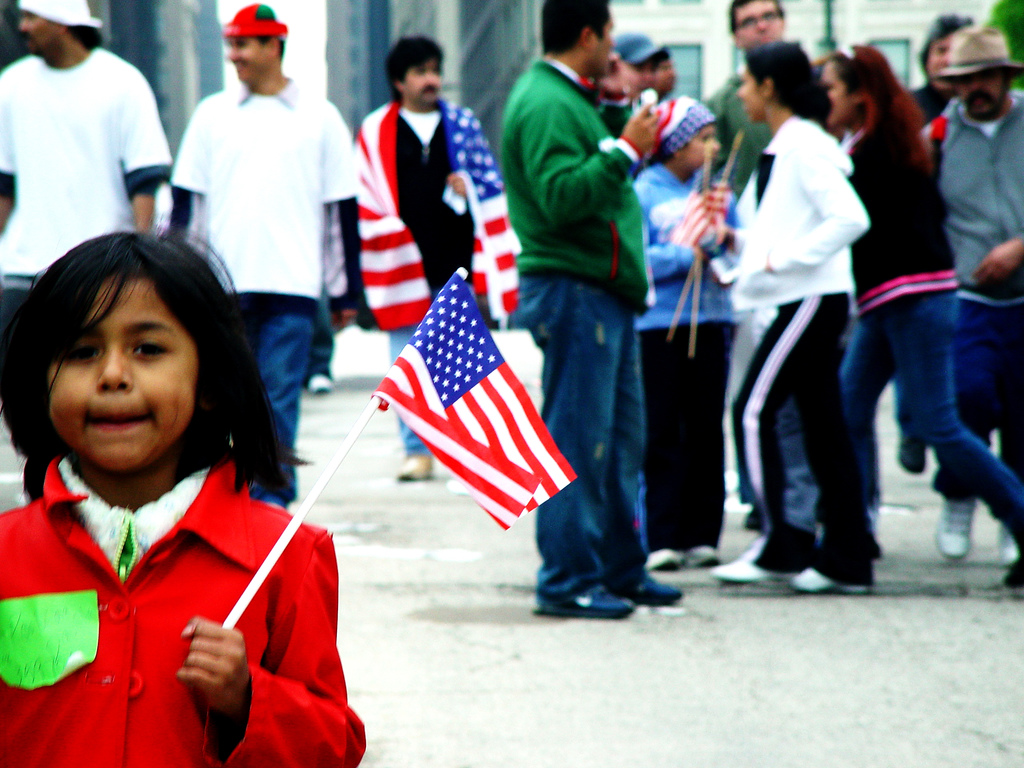
A young girl holds an American flag during a stand for immigrants’ rights in Chicago, May 1, 2006. Photo credit: Joseph Voves. CC GPA Photo Archive/ Creative Commons License

From its presence at Thanksgiving dinners and presidential debates, immigration is a recurrent topic of debate in the U.S. and around the world. Unfortunately, people often fail to see the full impact immigration can have. One aspect of immigration that is rarely discussed is the effect immigration has on immigrants and their families. Growing up in a diverse environment, I saw the lack of support immigrants and their children encounter in the United States. Just imagine arriving in a new country with little idea of how anything works, often being unable to ask for help due to a language barrier. 

While researching this topic, I realized that many first-generation immigrants (those born abroad) end up relying on their young children for support. Published works that shed light on the experiences of 1.5- or 2nd-generation immigrants tend to focus on the male experiences or the experiences of specific ethnic groups. Similarly, many papers researched the correlation between acculturation stress and criminal or negative behavior within immigrant groups.

To bridge this gap in research, I conducted interviews with 1.5- and 2nd-generation female immigrants to learn more about their experiences. I wanted to see if they faced acculturation stress, usually associated with first-generation immigrants. Many of the participants shared similar experiences surrounding immigration regardless of their ethnic background. Feelings of not belonging and high family responsibilities were constant among participants. 

A participant who immigrated as a child—1.5 generation—from Central America stated:

“I am held responsible for my parents because I am the English speaker, I am the translator, I am the one […] that saves them whenever they face certain scenarios that they can’t get themselves out of.”

Similarly, a participant who was born in the U.S.—2nd-generation—of South American descent, stated:

“I feel like it’s always a pressure when they tell you that you have to speak for them […] or do things for them like make appointments or go with them to help translate […] it’s going to keep happening […] sometimes it is a lot.”

The sense of responsibility that participants felt towards their parents affected the choices they made later in life. 1.5- and 2nd-generation female immigrants considered financial stability of high importance, seeing it as a means to honor the sacrifices their parents made during their immigration journey. A participant who immigrated as a child from the Caribbean stated:

“I also had to be able to provide […] get to a place where I have financial stability […] sometimes that means sacrificing what you really want to do.” 

Throughout the interview, this participant consistently mentioned how her parents never supported or approved of her creative endeavors, forcing her to let go of such passions. 

When comparing the experiences of 1.5- and 2nd-generation female immigrants to those of first-generation female immigrants, similarities were found. First-generation immigrants’ stress on the importance of financial stability coincided with that of 1.5- and 2nd-generation immigrants.  However, there were key differences among those similarities. Unlike 1.5 or 2nd generation immigrants, first-generation immigrants aimed for financial stability to achieve personal goals. First-generation female immigrants were not attempting to make their family members happy or proud; instead, they were attempting to achieve self-satisfaction. For example, a first-generation female Afghan immigrant stated:

“If I wanted to have a good career I should get out and go to the Western countries because in Afghanistan […] it was tough on women.”

These similarities and differences did not come as a surprise but as a reassurance that while immigration affects first-generation, 1.5- and 2nd-generation immigrants in unique ways, there is consistency in their experiences. Knowing this, I wonder what we can do to support our immigrant community better. There is an unfair reality in the United States, where there are generations unable to achieve their dreams knowing they will always have to look out for their parents. As a result, many participants mentioned the importance of mental health and the positive effects therapy had or could have had on them. Participants stated that they would have benefitted from mental health services as they dealt with the responsibilities placed upon them by their parents. Among the interviewees, we found some cases of first-generation immigrants who were able to receive mental health support. Nonetheless, young children of migrants often did not have the vocabulary to ask for access to mental health professionals. Parents may also be reluctant to bring their children to therapy because this could wrongly imply their failure as parents. 

A plethora of questions appear as we look deeper into the experiences of 1.5- and 2nd-generation female immigrants. Would providing counseling at school help these children navigate the burden of responsibility? Is there a way to assist first-generation parents so that the responsibility does not so fall heavily on their children? Can we aid the advancement of the United States by helping both first-, 1.5-, and 2nd-generation immigrants, are we also? Given these questions, it is important to continue research on the impact of immigration-related stress on the children of immigrants.

Copyright Creative Commons. Reproduction with full attribution is possible by news media and for not-for-profit and educational purposes. Minor modifications, such as not including the “About the Study” section, are permitted. 

* Marcela Ventura came to the United States at age 11 from Peru. She is an active of the Immigration Lab at American University, where she is also taking graduate classes.