Food Insecurity among Latinx Populations in Washington D.C.
by Lia Sullivan*
U.S. Department of Agriculture Deputy Under Secretary for Food, Nutrition, and Consumer Services Stacy Dean and U.S. Health and Human Services Assistant Secretary for Health Admiral Rachel Levine pack food boxes with volunteers from Howard University at the Capital Area Food Bank in Washington, D.C. on Friday, October 27, 2023. The Capital Area Food Bank leads efforts to provide equitable access to food and opportunity to people struggling with hunger and food insecurity. Each year through donations and the help of volunteers, CAFB sources and distributes the food for more than 50 million meals. (USDA photo by Tom Witham)
In Washington, D.C., a culturally diverse and celebrated city, a less-discussed reality exists for minority populations. Food insecurity is at the forefront of issues for many minority communities in D.C. It is imperative to understand the unique needs and cultural characteristics of a group to ensure food insecurity issues are addressed efficiently.
Many supplemental government assistance programs created during the COVID-19 pandemic were shut down with little warning to benefit recipients. Because of this, there was a surge in food insecurity in the district, especially amongst Hispanic and other minority populations. The economic fallout of the pandemic extended beyond food assistance programs, with the loss of full-time jobs and work hours shortened.
The USDA defines food insecurity as “a lack of consistent access to enough food for an active, healthy lifestyle.” Extensive research by the Capital Area Food Bank revealed that 32% of metropolitan area residents experienced food insecurity between 2022 and 2023, with 27% identifying as Hispanic. These statistics compare to only 18% of food insecure residents identifying as White. Numerous factors contribute to this disparity, including cultural and language barriers and lack of access to cultural foods.
Programs such as the Supplemental Nutrition Assistance Program (SNAP) and WIC (Women, Infants & Children) exist to alleviate grocery costs for low-income families by providing monthly stipends for certain grocery items. However, these programs often exclude traditional foods and staples. Broadening the benefits for SNAP and WIC would allow for already acculturating Latinx community members to keep a piece of their home within them.
Community organizations and city-wide initiatives play a large role in battling food insecurity for all populations. Organizations such as D.C. Hunger Solutions, Martha’s Table, DCGreens, and more exist to combat the effects of food insecurity through educational programs, outreach events, and expanding food access. However, these programs and educational materials are often offered solely in English, excluding many affected populations. Offering Spanish and other non-English options for programs, hotlines, and flyers is imperative to assisting minorities.
To effectively address and combat food insecurity, policy changes are needed to ensure equal access to food for all. In 2020, the USDA reported that 3,600 of 3,700 WIC-eligible Hispanic/Latino reporting DC residents were enrolled in the program. This data shows how integral the program is for food-insecure Hispanic groups. On January 3rd, 2024, Mayor Muriel Bowser announced plans to expand SNAP benefits for D.C. residents, passing the Give Snap a Raise Amendment Act. This $40 million expansion will allow recipients to receive an extra 10% of monthly benefits from February 17th through the end of September 2024.
Access to plentiful and nutritious food is a fundamental human right, and approaching it requires a multifaceted approach. Washington’s residents, including minority populations, should not have to worry where their next meal will be coming from. Through involvement from community members, culturally aware programs, and effective policy, we can make significant progress in ensuring everyone has access to the food they need to learn, grow, and thrive.
*Lia Sullivan is a student in the Sociology, Research, and Practice MA program at American University in Washington, DC. She works for a non-profit working on food insecurity issues.
Solidarity rally in Queens, New York by members of the Ecuadorian diaspora. Photo by Erica Criollo
On January 7th, 2024, José Adolfo Macías Villamar, alias“Fito,” the leader of one of Ecuador’s most prominent gangs, was found missing from his luxury prison cell the day he was meant to be transferred to a maximum-security prison to be held in isolation.
While Macías began his 34-year sentence in 2011, he remained the leader of the criminal gang, Los Choneros, due to their longstanding influence over government officials and extensive illicit drug networks. Following his escape, the country descended into chaos resulting in President Daniel Noboa declaring that the country was under “armed internal conflict” to mitigate gang wars and the killings of police officers.
This presidential declaration has prompted questions as to how Ecuador could have experienced such a sudden upsurge in gang violence. Along with government corruption, the escalation can be traced to the gradual formation of gangs dominating prison systems over several years.
In 2003, Los Choneros, who are associated with Mexican and Colombian cartels, took control of the drug trafficking route in the province of Manabí, Ecuador, from where drug shipments were sent to Mexico, the United States, and several European countries. Transnational networks and external groups engaged in the illicit drug trade utilized Ecuador’s coasts, leveraging its access to major shipping routes and ports to transport illicit drugs across international borders.
Furthermore, Ecuador’s adoption of the U.S. dollar, coupled with inadequate enforcement and prevalent corruption, has facilitated money laundering by drug traffickers through industries such as real estate, illegal mining, and the illicit timber trade. This impacted the way corruption played a role in the country’s efforts to combat such illicit activities.
When Former President Rafael Correa took office in 2007, he gained public favor through his initiative to remove the United States from the Manta military base from which the U.S. has been controlling anti-drug efforts with targets against the Colombian illicit drug trade since 1999.
However, following the U.S. withdrawal from the Manta military base, the country witnessed a worsening of drug trafficking. Former President Correa failed to stop the activities of groups like Los Choneros and other Mexican cartels, allowing the unhindered transportation of drugs to and from Ecuador.
Before Macías, Los Choneros was led by Jorge Luis Zambrano, alias “Rasquiña,” who, while incarcerated, directed orders alongside arrested gang members. By 2010, the group had transitioned to operating within prison systems and communicating with members on the outside. This operational shift steered the group away from international drug trafficking, focusing instead on micro-trafficking, contract killings, extortion, and contraband activities.
Emerging factional gangs, including Los Choneros, Gorras, Lagartos, Latin Kings, and the Cubanos, have become more extensive and aggressive, leading to deadly conflicts in prisons. In 2019, a brutal fight claimed the lives of several inmate gang members at Penitenciaria del Litoral, and in 2021, a prison riot resulted in the deaths of 119 inmates in the same facility. These deviations of gangs were also a result of government initiative in dismantling gang groups through the transfer of leaders between prisons, but it only multiplied the presence of gang wars.
Following Zambrano’s death in 2020, Macías obtained leadership, triggering an uproar of chaos and gang violence across the country as gang leaders fought to dominate. Despite being in prison, Macías remained in control. For him, communication with members was not an obstacle, as several reports indicate Macías’ prison cell had plugs to charge his cell phone and an internet router. Macías was also open to sharing his lavish living space on social media, regularly throwing parties, and having access to weapons, appliances, liquor, jewelry, and ceramics.
Ecuador has experienced a long trajectory of government corruption which has led to an escalation in gang formation and violence in prison systems. With Macías’ most recent escape, the country has been submitted to crazed gang members responsible for several car bombings, kidnappings, and slayings of prison guards and innocent civilians. In response to President Daniel Noboa’s crackdown on gang members in prisons, gang leaders on the outside have resorted to hostage-taking, capturing military and prison guards. These captives are coerced into recording messages, pleading with President Noboa to halt military operations in prisons and cease the killing of gang members. The objective behind these threats is to secure the gangs’ dominance within prisons and ensure the unrestricted proliferation of gang members.
In one such video shared on Facebook, a gang member asserts, “Just as you safeguard the right to life of Ecuadorian citizens, we too have the right to live…we are not afraid of your tactics.” In essence, Ecuador is confronted with a formidable coalition of gangs wielding enough power to subvert the law and pursue their objectives, fueled by their substantial numbers and collective readiness to act in unison to carry out attacks.
Currently, President Noboa’s plan to overpower gang violence is to enforce stricter regulations in prisons. However, this raises concerns for Ecuadorian citizens alarmed by several online videos featuring hostages pleading with the government for compliance to spare their lives. As events unfold, President Noboa’s actions will require careful consideration to ensure that no more civilian lives are endangered and to respect the human rights of all people.
*Erica Criollo is a Graduate Research Assistant of the Immigration Lab at American University.
Creative Commons license. Free to republish without changing content for news and not-for-profit purposes.
Republicans in Congress are denying funding to Ukraine and Israel over migration and border security, but the premises and assumptions used to discuss the issue fail to take the following elements into account.
It is hard to determine if numbers are really without precedent. There has been a change in that immigrants come and turn themselves in to try to come in with a legal immigration status, such as through asylum or the regularization programs available to Ukrainians, Afghans, Cubans, Haitians, Venezuelans, Nicaraguans, and other groups. In previous decades, many low-skilled workers knew there were no avenues to enter legally and would try to pass undetected and live undocumented in the United States. That is less common today for so-called low-skilled, recently arrived immigrants. So, an imaginary example would be to count people who once would mainly drive to New York City for the holidays and then compare them to a time when most people would arrive via plane. It would be easier to count the people arriving on planes, but that would not necessarily mean that there are more people arriving now by plane than the ones who arrived driving in the past.
Historically, numbers are not comparable because, before Title 42, apprehensions were counted versus encounters afterward. Previously, most apprehensions would happen inside the U.S., while today, most people present themselves in groups and in a visible manner at ports of entry, along the physical border, or in front of the border wall. Another important difference is that in the past, undocumented workers relied on established family members and networks to get provisional housing and food and find a job. Many recent arrivals may not have close people in the United States and are actively asking for temporary housing and food from city governments. The U.S. does this for refugees and has done it in the past for Cubans and others escaping repressive regimes. Research and history show that these short-term expenses have been good investments, given that refugees and immigrants are more likely than U.S.-born individuals to work, start businesses, and be innovative leaders. Republicans in Congress have denied requests from the White House to provide funding to cities to cover some of these costs.
Some propose detention as deterrence, but prolonged detention in the United States is very expensive and mainly benefits the companies or workers providing and managing detention centers.
A misconception repeated in the media is that most people are immigrating illegally. That is technically incorrect because people are presenting themselves to immigration authorities. Many migrants are applying to legal programs, asking for asylum, or being placed in deportation proceedings.
The situation that we are seeing at the border and some of the solutions proposed indicate some important points that have been rarely discussed,
1) Border walls do not work. Smugglers can cut them, and people can walk around them or come in front of them on U.S. territory.
2) People are turning themselves in, so contrary to what Trump said recently, authorities know where people are from and where they are going. They have notices to appear in immigration court, and they register an address in order to receive notices and updates if they want to continue with their asylum process and regularize their status. In the past, a great majority of people go to their migration court hearings.
3) CBP One appointments are too cumbersome to make, and there are not enough slots available, so people are showing themselves at ports of entry and between them.
4) The parole program for Haitians, Cubans, Venezuelans, and Nicaraguans is working to create a more rational and orderly process. Taking the program away —as Republicans in the Senate want—would make things worse.
5) Putting more pressure on Mexico to deport more people and stop them from getting to the border is unsustainable. Mexico cannot manage the issue by itself unless it gets pressure and funding from the U.S. and international organizations, like Colombia does, to establish immigrant integration programs for immigrants who want to stay in Mexico, and it provides paths to citizenship for them.
Thus, Blinken, Mayorkas, and their companions and team’s visit to Mexico is important. Mexico has been a willing partner, agreeing to take people from third countries under the Remain in Mexico and Title 42 programs, but those programs could only work temporarily. Mexico has also increased the number of deportations. However, deportation only works if people are unwilling to try multiple times. Increasing immigration surveillance, deterrence, and deportation does make arriving in the U.S. harder. It also makes it more expensive and thus attractive for organized crime to get involved in it as a business, thus getting more people to the border once they figure out the business model and logistics even with new policies in place.
Mexican President Andrés Manuel López Obrador has asked for a regularization of U.S. relations with Cuba and Venezuela. There have been positive steps with Venezuela already. This could be a good opportunity to remove Cuba from the list of states sponsoring terrorism, which would reduce some of the emigration pressure in Cuba.
Mexican authorities have disbanded many caravans and slowed the trek of thousands of migrants. Nevertheless, people who are escaping violence and persecution or have sold everything will try to get to the United States.
Long-term ways to address the root causes of migration are to continue providing international aid and supporting democratic institutions. One has to keep in mind human rights. The Mexican Supreme Court of Justice has found that profiling people suspected to be migrants in buses to be unconstitutional. To engage the Mexican Army is not the solution either.
The silver lining is that despite the images we see in the news and seasonal peaks, it is not as if all the world is on the way to the U.S.-Mexico border. Most people want to stay home.
Congresswoman Delia C. Ramirez (IL-03) presenting immigration policies the Congress could be working on instead.
In the January 10 hearing towards impeaching DHS Secretary Alejandro Mayorkas, Republicans repeated many myths, cliches, and anti-immigrant talking points but did not propose any sensible solutions. It was remarkable that Democrats in the committee saw the political nature of the exercise, and many offered actual solutions to improve the situation at the border and inside the United States in a way that makes the immigration and asylum processes more humane and above ground.
Ernesto Castañeda is the Director of the Center for Latino American and Latino Studies and the Immigration Lab at American University.
Creative Commons license. Free to republish without changing content for news and not-for-profit purposes.
by Lily Tierney and Ernesto Castañeda* edited by Makenna Lindsay November 29, 2023
Driven Out: Global Response to the Plight of Forcibly Displaced People at Wilson Center . / Creative Commons License
On Wednesday, November 15, 2023, the Refugee and Forced Displacement Initiative (RAFDI) at the Wilson Center in Washington D.C. hosted a roundtable discussion on forced migration. The panel of experts analyzed the effectiveness of the current refugee systems to address the predicaments refugees around the world face, and the underlying causes and drivers of forced displacement. James Hollifield, professor and director of the Tower Center for Public Policy and International Affairs at SMU introduced the program. Rina Agarwala, Professor of Sociology at Johns Hopkins University, moderated the conversation.
David Scott FitzGerald, co-chair for the Center for Comparative Immigration Studies and Professor of Sociology at UCSD, emphasized the limitations of silos within the academic bodies of knowledge that tend to think separately about migration, refugees, and conflict. FitzGerald recommends a systems approach that would look at all forms of migration and forced displacement within the same system and at the path dependencies and feedback loops that armed interventions and previous migration have on future population moves.
Pieter Bevelander, director of Studies of Migration, Diversity, and Welfare at Malmö University, offered a European perspective to the discussion. Bevelander spoke of a new migration and asylum pact within the European Union (EU) that will hopefully be finalized next year. This pact will create new asylum and migration management regulations that will streamline procedures, create mandatory solidarity in the relocation process, and increase financial contribution to countries with many refugees. EU member states that do not wish to sign on have the option of paying 20,000 pounds per person due to solidarity reasons, however, this is still being negotiated. Bevelander also noted that the attitude towards Ukrainian refugees is more widely accepted than refugees from the “outside,” implying that refugees from non-western countries are less likely to be embraced by the EU governments.
Gerasimos Tsourapas, professor of International Relations at the University of Glasgow, works on the politics of migrants and refugees in the Middle East and the Global South. Tsourapas claims that an overlooked aspect of these discussions is how labor migration and forced migration flows are much more common in the Global South than in the Global North. Those who are forced to migrate are more likely to go from one part of the Global South to another than migrate from the Global South to the Global North. Tsourpas mentioned that it is critical to understand this point to decolonize the conversation of forced migration. He distinguishes two paradoxes: states that hosts most refugees are in the Global South and are not responsible for creating the refugee crisis because of the unwillingness of wealthy countries in the Global North, who often are the cause of the refugee crisis, Global North to accept refugees. The second paradox lies in the fact that most of the refugee-hosting states in the Global South are struggling financially and open their borders to the detriment of their economy and for the betterment of their diplomacy, most refugees are in the Global South.
Kamal Sadiq, director at the Center for Global Peace and Conflict Studies at the University of California, Irvine, shared a shocking fact: confirmed that while “a majority of the signatories to the 1951 refugee convention are located in the Global North, the fact remains that the overwhelming majority of the worlds refugees are located in states in the Global South, many of whom are not signatories to the refugee convention.” Sadiq states that the refugee regime is broken for several reasons: the first is policy uncertainty. Funding is limited, and short-term funds provide short-term services. Another flaw that Sadiq pointed out is that the refugee regime does not cooperate with non-state actors. This is highly problematic for internally displaced people living within corrupt domestic law and governance. The final weak spot of the refugee regime is documentation. Displaced persons need documentation to access formal work and services but getting documentation needed can be arduous. As a result, displaced persons have multiple documents and are uncertain as to which are legitimate. It is incredibly difficult to adjudicate between real and fake documentation because of how ubiquitous the identification paperwork has become for displaced persons. In a context where states deny documents, a market for false documents appears.
The discussion closed out with a Q&A session where all speakers agreed on the issue of working in silos, the necessity for each state to host refugees, and the need for equitable responsibility in financing the cost of welcoming large numbers of newcomers. While some panelists and many in the media often mention that welcoming immigrants, asylum seekers, and refugees entails large expenditures in terms of providing initial housing and food, we argue that this is one of the few ways that states can engage in creating economic development in the middle and long-term.
The panelists discussed the importance of differentiating refugees from economic migrants. Our view is that refugees should continue to have special protections and rights because of persecution from the state for political reasons or for belonging to a targeted social group or category. But analytically speaking, scholars should not reify these legal distinctions as they are not the most useful in terms of subjective integration, feelings of belonging, and public sentiment. Xenophobes in the streets do not care if one is a refugee, a documented, or an undocumented migrant when there is a climate of exclusion or racial profiling by the police.
Considering population growth, we are not necessarily seeing record numbers of either economic migrants, refugees, or asylum seekers. We must normalize international migration and protection. Less than 4% of the world’s population lives in a country different from the one they were born in. The countries with the largest number of foreign-born people are among the wealthiest nations. People may move to rich countries because they have more job opportunities, but in doing so, they also make those countries even richer. Supporting newcomers is a good investment.
by Andréia Fressatti Cardoso and Ernesto Castañeda*
November 15, 2023
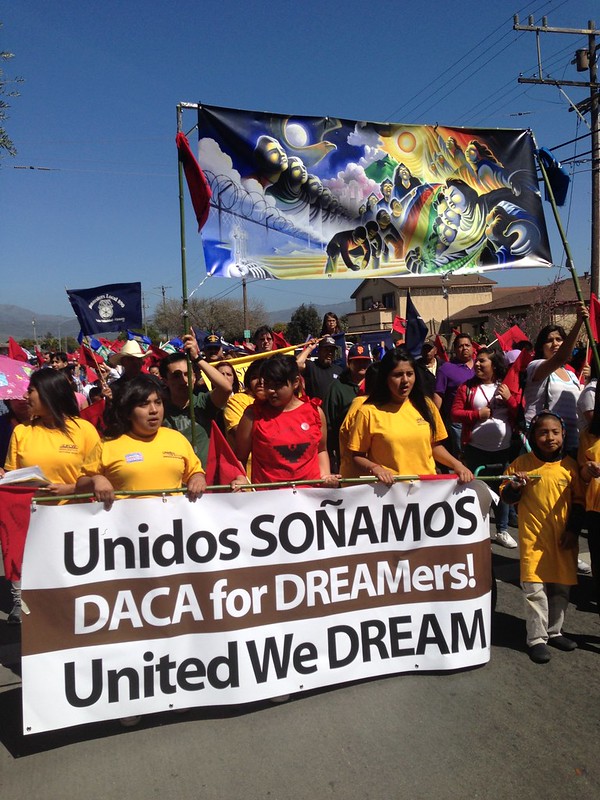
Protestors marching in an event to protect DACA / Steve Rhodes / Flickr / Creative Commons License
Once again, the future of DACA is in question. On September 13, 2023, Judge Andrew Hanen from the Southern District of Texas declared the Deferred Action for Childhood Arrivals (DACA) program to be illegal in the case, Texas v. United States (2021). He addressed two items in his decision, the 2012 DACA Memorandum and the 2022 Final Rule. Andréia Fressatti Cardoso has been conducting interviews with DACA recipients, organizers, and some attorneys as part of an on-going research, and we dive in on their views on the impacts of this and previous court decisions on the program. All names used here are pseudonyms, protecting the anonymity of the interviews in this research.
Since 2018, the Department of Homeland Security cannot process any new DACA applications. The DACA protection for individuals who applied before then has been kept in a legal and political limbo for quite some time, and as the future of DACA seems more uncertain, the age restrictions and the impossibility of processing new applications has gradually diminished the number of beneficiaries of the policy. It is estimated that around 579,000 people benefit from DACA now – a much smaller number than the 800 thousand people estimated to have benefitted from DACA at its peak, which in turn is less that the people how could have potentially benefited from it but decided not to apply due to fear of future deportation.
The September 13 decision is part of an effort to end DACA. An attempt to end the program in 2017 by the Trump administration was unsuccessful due to the lack of observance of due procedure to do so according to a Supreme Court’s 2020 decision. The strategy of conservative opponents then shifted towards forcing DACA to gradually die out by not allowing new applications to be accepted. This strategy has created a new group of subjects in the struggle for immigrant rights, which are the DACA-eligible, those who could have DACA if the courts had not continuously forced the program to pause for new applicants.
Also, the language used when discussing immigration is of paramount importance, as it draws the borders of belonging and membership. It is noteworthy that the September 13 decision insists on calling people who immigrate “illegal aliens,” even sparing a long footnote to defend such terminology. More than being offensive, the “illegal alien” reifies an us and them, an Other (the alien, the foreigner) whose belonging, and membership is not recognized due to the lack of authorization to cross a border, their undocumentedness. Such dehumanizing language has been part of the vocabulary of people who want to keep the U.S. white when referring to undocumented immigrants in the United States.
DACA was never meant as a permanent solution, but as a temporary fix for people who immigrated to the U.S. when minors. Nonetheless, the lack of legislative action for the many years that the program has been in place turned the DACA into a buoy for many migrants. But, as pointed out in an interview with Maria*, a DACA recipient in her late-twenties, “DACA was a Band-Aid to Obama not being able to pass actual immigration reform.” The on-going legal battle over DACA has reinforced the limbo into which young migrants have been pushed to: a status that is neither of undocumented nor of belonging, an uncertain in-between.
One of the consequences of such a legal battle is on the impacted people’s mental health, as fear and stigma come back as defining factors in their lives, similarly to what happened when the Trump administration tried to rescind DACA, as pointed by Ana*, a DACA recipient at her mid-twenties: “and when Trump came and had an opportunity to strike DACA down, it felt very scary. I felt like I was losing hope, and I was like, I was going to lose a lot, like, everything that I’ve done for myself.” And, for those who could not apply for DACA before, Judge Hanen’s decision is even more disheartening, as pointed out by Rosa*, who meets all the criteria for DACA but cannot apply: “it’s horrible because, like, you have this hope, that there’s going to be something good coming out of it, but then it just gets worse and worse. So, honestly, that makes me not even want to hope for it anymore.”
When talking to people who are beneficiaries of DACA, words such as “tiring,” “stressful,” and “uncertain” are not uncommon, especially from those who are or were activists: The two-year time frame of the program was already a factor to limit long-term planning, but the limbo to which they have been pushed reactivates a “survival mode” in which much of the undocumented population in the United States lives.
The uncertainty that people live under is clear. It is hard to fathom for people who are not in this situation; but other situations might convey similar feelings, such as when one remembers the uncertainty felt in the middle of the pandemic when people wondered when vaccines would become available, when schools would open, and when the pandemic would subside. DACA recipients have been living with this uncertainty for 11 years plus the years before the program existed. Jose*, a 28-year-old DACA recipient, explained the feeling:
“And so, all of these maneuvers are very much like, ‘OK, I have this platform not for long, so what can I get out of it?’ And that to me seems like it’s playing the short game, playing as if there is not going to be longevity for DACA. And there hasn’t. And I think that ever since 2017, right, like, the majority of my existence under DACA has been now under the assumption that DACA is going to end at some point, or that DACA is under danger.”
DACA still survives but it is unclear for how long. The conservative members of the Supreme Court could unilaterally kill DACA, despite the popularity of the program and how favorably Americans of all political perceptions see Dreamers. It is hard to think of an alternative to such a scenario. Both DACA recipients and organizers have been assessing what other alternatives they have, while keeping up with the news and decisions on the program and hoping for the best.
*All names used here are pseudonyms, protecting the anonymity of the interviews in this research.
* Andréia Fresssatti Cardoso, Research Fellow at the Center for Latin American and Latino Studies at American University, and PhD candidate in Political Science at the University of São Paulo, Brazil. Her project, “Rights Subjectivity in Immigrant Struggles for Rights in the United States: The Struggle for DACA,” has a grant from the São Paulo State Research Foundation (FAPESP, process n. 2022/04176-5). The opinions, hypotheses, conclusions, and recommendations expressed in this material are the full responsibility of the author and do not represent FAPESP’s views.
*Ernesto Castañeda, PhD is the Director of the Center for Latin American and Latino Studies, the Immigration Lab, and the MA Program in Sociology, Research, and Practice. He is also a member of the Im/migrant Well-being Scholar Collaborative.
In 2022 American University’s Immigration Lab began conducting interviews in the DMV (D.C., Maryland, and Virginia) area to better understand the experience of migrants and refugees. All migrants and refugees have vastly different experiences due to their place of origin, economic status, and or racial identity. However, there are common threads within these experiences.
Many participants found employment outside of their educational training because there were more opportunities to earn a higher income elsewhere. This does not deviate from what many people must do to support themselves, but the reasoning differed. A Colombian woman shared that she went into sales rather than film, her field of study, because she knows that one day she will have to support her mother and siblings. Many noted remittances as the reason why they had to seek a higher-paying job and depart from their original discipline.
On the other hand, some participants were unable to use their degrees to seek employment because they were obtained outside of the United States. This circumstance almost always resulted in that individual having to accept a lower-paying job and having to learn a new set of skills. Participants who have yet to work toward higher education tend to pursue employment in the informal labor market, which is defined as work that is not taxed or recorded by the government.
Many participants in the study reported that they do not have the opportunity to use their first language in the workplace. When there is opportunity to speak their native language, interviewees disclosed feeling uncomfortable. A Salvadoran woman in her late twenties mentioned that she chose not to work in a regionally specific office where Spanish was spoken due to feeling, “pigeonhole(d) into doing this role.”
Almost all participants who have yet to achieve a higher education plan to return to school at some point. Time and money are the most frequently cited hinderances of achieving this goal. Many migrants feel that they are overqualified for the profession they are in but are stuck until they can obtain a degree from an accredited institution in the United States. However, many find themselves in a catch 22: it is almost impossible to dedicate oneself to work, school and family full time. As an Afghan male in his mid-twenties noted, “Life is all about work.”
The main earning priorities indicated by participants were rent, bills, and family. This is strikingly different to the financial goals of U.S. citizens recorded from 2020 to 2021, which revealed the main priorities as increasing emergency savings and paying down debt. The primary financial concerns among immigrants and refugees are dealt with day to day. Many immigrants and refugees do not have the luxury to pay off debt or accrue savings when they are worried about whether their income will cover basic living needs, bills, and sending remittances to their family in a country that may be in a state of unrest.
A Colombian woman in her mid-twenties expressed that discrimination has grown to be an expected part of the workplace experience, and she has had to file complaints with Human Resources to create a paper trail. This should not be part of the workplace environment, and she should not have to keep a paper trail in case of something more severe than verbal discrimination. Attaining a U.S. education and being a member of the workforce is challenging, but those challenges are escalated for immigrants and refugees traveling to the DMV region due to racial, social, and economic divisions.
* Lily Tierney- student in the School of Communications ’24 at American University.
Creative Commons. Reproduction with full attribution is possible by news media and for not-for profit and educational purposes.
A graph depicting the total number of new Afghan cases and percent of new Afghan cases out of all nationalities throughout the years. / Creative Commons License
The number of Afghan immigrants facing deportation in immigration court spiked in fiscal year 2023 to a total so far of 5,434 up from just 610 in FY 2022. The growing numbers of Afghans in immigration court mirrors the overall upward trend in new deportation cases which grew from about 820,000 in FY 2022 to 1.27 million in FY 2023 based on data through the end of August that was analyzed and published by the Transactional Records Access Clearinghouse (TRAC) at Syracuse University. However, whereas the number of deportation cases for all nationalities grew 1.5 times over the previous year, the number of Afghan nationals in immigration court grew nearly 9 times the previous year. Afghan nationals still make up only a small percentage of all new deportation cases at less than one percent, but even this small fraction grew from negligible to almost half a percent in 2023. See Figure 1.
This remarkable growth comes at a time when many Afghan refugees living in the United States are uncertain about their future. Many Afghans arrived in the United States in the past few years, both before and after the U.S. military withdraw from Afghanistan. The Biden administration created a humanitarian pathway into the United States for these refugees under Operation Allies Welcome (OAW) and granted many Afghans Temporary Protected Status (TPS) that typically safeguards them from deportation. Among those Afghan migrants that lack permanent status, immigrants with pending deportation cases represent people who are most vulnerable to deportation. Without permanent legal status, Afghan refugees could remain at higher risk of deportation if they lose temporary status or if they commit certain crimes that make them deportable. Most Afghans remain without permanent immigration status or a clear pathway to citizenship.
Understanding the characteristics of Afghan, and other migrants facing deportation is important for the Immigration Lab and the Center for Latin American and Latino Studies (CLALS) at American University, which has an ongoing research project that examines the demographics, experiences, and challenges of recently-arrived refugees now living in the Washington, D.C. metropolitan area. This report examines the 5,434 Afghan deportation cases filed in court in the first 11 months of FY 2023 to inform the public, policy makers, and researchers about the growth of Afghans facing deportation.
About Deportation Cases in Immigration Court
The U.S. immigration court system is responsible for adjudicating cases brought against migrants by the Department of Homeland Security (DHS). Deportation (aka removal) hearings begin when an immigration enforcement agency files a document known as a Notice to Appear (NTA) with the court, placing an immigrant in removal proceedings. Once an NTA is filed, immigrants are required to attend a series of hearings with an immigration judge, including routine status hearings and individual hearings for immigrants who are requesting asylum. A case typically concludes with an immigration judge issuing a deportation order or granting the immigrant permission to remain in the United States on a temporary or permanent basis. In some cases, the government may also elect to close a case before it reaches a final decision to prioritize limited agency resources. Due to the complexity of U.S. immigration law and variations in judicial disposition, obtaining a positive outcome often depends not only on the quality of an immigrants’ case but also on the ability of the immigrant to obtain legal representation, be assigned to a favorable judge, and access additional social services that enables them to follow through on the various demands that the immigration system places on them. Given the political conditions in Afghanistan, it is expected that many Afghan migrants who are in immigration court would be eligible to apply for asylum as a form of relief.
Immigration Court Location
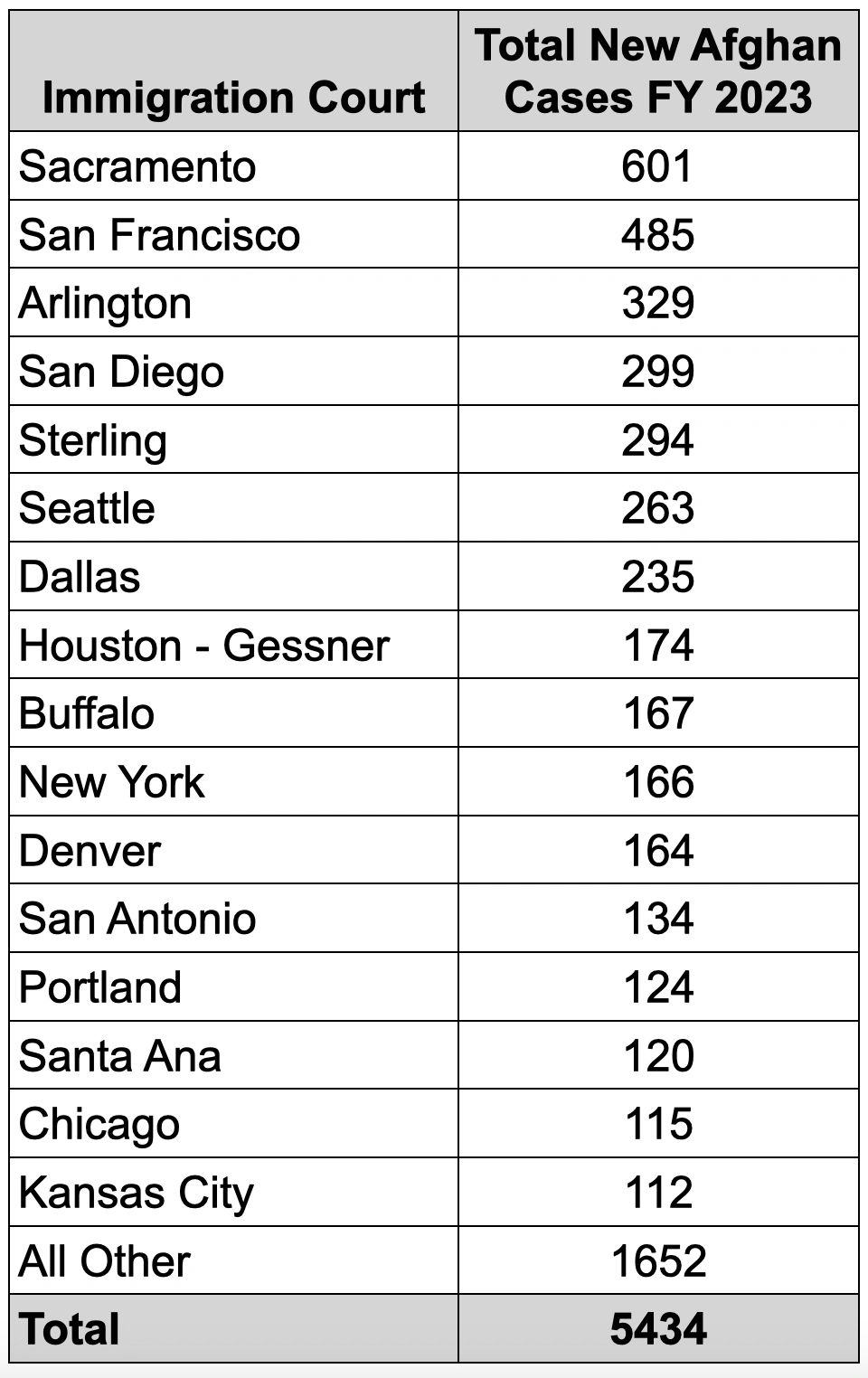
Understanding which immigration courts Afghans facing deportation are assigned to helps illuminate where legal services are needed and what kinds of favorable or unfavorable judges these potential asylum seekers may face. The 5,434 new Afghans in court this fiscal year were assigned to a variety of courts, with no one court dominating over another. The Sacramento immigration court saw the largest number, with 601 new Afghan cases filed this year. This was followed in second place by San Francisco with 485 and San Diego (in fourth place) with 299 cases. The immigration court in Arlington, Virginia, came in third with 329, but the California courts combined indicate that the largest numbers of Afghans facing deportation are in California. The table below shows the total number of Afghan migrants facing deportation in courts with at least 100 Afghan cases.
Gender, Language, and Age
Of Afghans facing deportation whose gender was recorded in the immigration court’s data, 69.6 percent are listed as male while 30.4 percent are listed female. Nearly a quarter (25.4 percent or 1,267) of all new Afghan cases in court this year where age was recorded were children under the age of 18. Another 16.6 percent were young adults between the ages of 18 and 24, while the largest group (38.3 percent or 1,911) were between ages 25 and 34. Under 20 percent (19.6 percent) were 35 years old and up.
The largest group of Afghans—38 percent—spoke what the court classifies as “Farsi – Afgani – Dari”, while a sizeable percentage—27 percent—are listed as speaking English with Pushtu coming in third at 21 percent. All other languages were less represented, but included Arabic (283), Farsi-Iranian-Persian (169), Spanish (93), Dargwa (67), Russian (35), and Turkish (25).
Legal Representation
Representation is a crucial factor for immigrants seeking a favorable outcome allowing them to stay in the United States instead of being deported. Most new Afghan deportation cases filed in 2023 are not represented by an attorney. Just 1,227 of these new cases, or 22.6 percent of the total, have representation while the majority of 4,207, or 77.4 percent of the total, have no attorneys. It is not unusual for more recently filed cases to show lower rates of legal representation, since it requires time to find an immigration attorney, and requires additional time for the attorney to file their attorney paperwork with the court. These rates of representation are in fact higher than the national rates for new cases. Out of all new cases from 2023, just 12.6 percent have attorneys by the end of August 2023 while 87.4 percent do not. In this regard, Afghan nationals are faring better in court (22.6 percent compared to just 12.6 percent).
Asylum
Given the country conditions in Afghanistan, Afghans in court are likely to be eligible for asylum, a humanitarian form of relief that prevents a person from being deported to a country where they are likely to face persecution. Nonetheless, only 137 asylum cases involving Afghan nationals have been decided by judges so far this fiscal year. Of those, just 22 in total (16 percent) were denied while the rest were approved for either asylum or another form of relief. This is much lower than the 51 percent denial rate among all nationalities in FY 2023, which means that asylum could be an option for Afghan immigrant courts. However, barriers to applying for asylum in the first place—such as having access to legal representation and having sufficient time to prepare a strong case—may limit the availability of this option. include finding an attorney,
Conclusion
While most of the U.S. public is sympathetic to Afghan arrivals, many were warned that their legal status in the U.S. was temporary, liminal, and would lead many to live in limbo. Thus, we are already starting to see Afghans in the U.S. facing deportation. Is the government truly prepared to deport people to Afghanistan under Taliban control? What do we owe the translators, contractors, and soldiers that partnered with the U.S. and ally governments for years? Will the U.S. government’s delays in providing a permanent pathway to legal status and citizenship lead to even more Afghans ending up in immigration court? It is important that the public is not only informed about the policies and programs affecting Afghan refugees but is also informed about the use of limited government resources to deport Afghans to potentially dangerous living conditions.
Copyleft Creative Commons. Reproduction with full attribution is possible by news media and for not-for profit and educational purposes. Minor modifications, such as not including the “About the Study” section, are permitted.
* Austin Kocher is a Research Assistant Professor with the Transactional Records Access Clearinghouse (TRAC) at Syracuse University and a Research Fellow at the Immigration Lab and the Center for Latin American and Latino Studies at American University.
In the Immigration Lab’s project on recently arrived immigrants to the United States and the Washington Metropolitan Area, we find that Afghans have unique medical and healthcare needs.
Among the 22 Afghans in our research study, more than half of the participants (68%) had medical insurance through Medicaid while another 23% had medical insurance through other providers. These findings speak to the effectiveness of Operation Allies Welcome in providing healthcare services to Afghan arrivals.
On access to Medicaid, Noor, a 34-year-old male, shared: “The good thing is that they’re providing Medicaid, or medical assistance to those families that are coming from Afghanistan with a specific legal status, like for special immigrant visa holders there is that medical assistance, and through that, you can access medical services.”
While Afghan migrants’ access to Medicaid indicates the benefits of OAW, many participants communicated some issues with the efficiency of Medicaid. Rahman, 44 years old, shared his experience with a delay in Medicaid care that ultimately negatively impacted his family:
“The problem was when we came here for the first three months we had no Medicaid, I think…the problem was with the agency. They had lots of clients, so we had to wait for more than three months to receive Medicaid. A couple of times my kids were sick and not feeling well. It was not a good experience. But it was not because of [immigration] status. It was because of the process, it took a longer time, it took about three months, which is not common, I think. But anyhow, we had to wait, and our kids suffered because of that.”
Some participants emphasized that while they had access to Medicaid, their coverage did not support all of their medical expenses. It is possible that people are not being adequately informed about what their insurance will cover in the United States upon arrival, especially because health insurance is less common in Afghanistan:
“The hospital sent me a bill up to $1200. I showed my Medicaid—why should I pay from my pocket, you know? There are these kinds of problems we have…they say Medicaid is not covering this [so] I can’t afford it at this time,” Hamza, male, 34-years-old.
Other participants who did not relay their insurance provider or who have an unknown insurance provider also described difficulty paying for medical services that were not covered. Farjaad, age 25, described unanticipated expenses when visiting an ophthalmologist whose services were not covered by health insurance. Upon finding out that his appointment would not be covered by insurance, he canceled it and opted for eye drops. Farjaad’s experience reflects the issue of unaffordable health care in the United States despite having access to government insurance.
There is an underwhelming number of responses in the data that speak to the health problems of Afghan migrants and refugees that they are aware of or are receiving treatment for. Most participants reported that they either do not have any health problems or are unaware of any health problems they may have. There was one affirmative response for each of the following health problems: 1) High Cholesterol, depression, anxiety, 2) Asthma, anemia, 3) TB, 4) Diabetes, PTSD, ulcer, 5) Anxiety, PTSD, Thyroid, and 6) High blood pressure, high cholesterol, hypertension.
However, some participants indicated that they had health problems in Afghanistan. Participants mentioned having conditions such as diabetes, hemorrhoids, heart problems, and kidney stones, to name a few.
The findings were also limited in identifying disability. Most interviewees reported that they either do not have a disability or are unaware of any disability they may have. Only one participant reported having an undiagnosed disability but did not specify which. Nonetheless, qualitative data from the research reveals that though disabilities may not be diagnosed, participants are aware that they have one. For example, one interviewee noted they have lower back pain and fibromyalgia, which they believe are indications of an undiagnosed disability.
Only 23% of respondents answered the question, “When was the last time you went to the dentist?”, three individuals in the affirmative responding in 2022 and two in 2023. The survey asks two reproductive health care questions, both of which were only answered by three [male] participants. In the first reproductive health question participants responded that they have never received reproductive health care, and two out of three responded that they have not been adequately informed about reproductive health care services in the United States. The final respondent affirmed that they have been informed about reproductive health care. However, the data indicates that there is a general lack of awareness surrounding reproductive health care and how to access it in the United States.
It is important to note that income level does not appear to have a significant impact on qualifying for Medicaid. Most participants who are insured by Medicaid disclosed their income level, ranging from a yearly salary of $80,000-100,000 to less than $30,000. In comparison to their lives in Afghanistan, where health insurance is not as common, the data demonstrates that Afghan arrivals are able to securely access federally funded medical coverage in the United States.
Overall, health is certainly considered to be a priority for Afghans settling in the United States, though total medical coverage seems to be a rare occasion. Many Afghans do use Medicaid but convey their dissatisfaction with the process of receiving care upon arrival. This data points to discrepancies in the efficacy of the Operation Allies Welcome program.
Some consistent qualitative patterns in the responses to the health care questions are 1) participants being unaware of the extent to which Medicaid/other insurance providers cover their medical expenses, 2) lack of reproductive health care knowledge, and 3) preliminary health problems in Afghanistan that are rarely being assessed in the U.S.
About the Study
This report is part of a larger research project titled Recent-Arrivals to the DMV from Conflict Affected Areas. The project relies on a mixed-methods research project conducted by faculty and students from the Immigration Lab and the Center for Latin American and Latino Studies (CLALS) at American University. Researchers solicited information about migrants’ identities and experiences using a survey form that collected quantitative data and asked open-ended follow-up questions to collect narrative-rich qualitative data. This project was supported by the Mellon Foundation through the College of Arts and Sciences and the Faculty-Student Scholarly Collaboration Grant from the Office of the Deputy Provost and Dean of Faculty at American University. The larger team includes Ernesto Castañeda, Bashir Mobasher, Tazreena Sajjad, Mubbashir Rizvi, Lauren Carruth, Daniel Jenks, Makenna Lindsay, Diana Flores Garay, Sofia Guerra, Joseph Fournier, Montse Hernandez, and over 30 students working at the Immigration Lab. We aim to interview more Afghans and compare them to other immigrant and asylum-seeking groups.
* Makenna Lindsay is Program Coordinator at American University’s Immigration Lab and Master’s Candidate in American University’s Sociology Research and Practice program.
Reproduction with full attribution is possible by news media and for not-for-profit and educational purposes. Minor modifications, such as not including the “About the Study” section, are permitted.
by Austin Kocher, Bashir Mobasher, Sofía Guerra, Makenna Lindsay, Diana Garay Flores, and Ernesto Castañeda*
A graph depicting the inter-generational educational achievement of Afghan interviewees and their parents / Creative Commons License
Although tens of thousands of Afghans were brought to the United States before and after the U.S. military withdrawal from Afghanistan, many remain in legal limbo, and some are still struggling to resettle in this country. We still know little about the lives of Afghans in the United States, even two years after the military final withdrawal.
Washington, D.C. is an area with one of the largest Afghan communities in the country. In order to fill in the gap in knowledge about recently arrived Afghans in the United States, researchers at the Immigration Lab and the Center for Latin American and Latino Studies at American University interviewed Afghan immigrants through the D.C.-Maryland-Virginia (DMV) region and beyond about their experiences. We use pseudonyms rather than names to keep confidentiality.
This first report from the project presents the preliminary results of interviews with 21 Afghans to discuss their educational and work experiences in Afghanistan and after arriving in the United States. Most Afghan migrants in our study had a high educational attainment. Most of our interviewees—87% of the total—had at least a bachelor’s degree, while nearly half (10) also had a master’s degree.
Our interviewees often situated their own educational attainment relative to their parents’ educational attainment as a way to demonstrate the value of intergenerational progress and social mobility. One 32-year-old male refugee, Abdul, who, like his father, had completed a master’s degree, described the impacts of years of war on Afghanistan and child-rearing duties as placing limits on his mother’s education. His mother completed the equivalent of high school but could not pursue additional education “because Afghanistan has struggled with four wars,” and she had to “take care of five to six children.” At the time of the interview, Abdul was working in the food service industry, which he reported enjoying, although he also aspired to join the army and pursue further education once his immigration status is resolved.
Most participants reported higher educational attainment than their parents, either by studying abroad or in Afghanistan. The above image shows the educational attainment of interviewees and their parents. Only the 12 participants where full data was available are shown in the graph; the remaining nine included only partial data.
Despite high educational attainment, many of our research participants worked jobs that did not appear to capture their full employment potential. Three participants were unemployed. Two worked in the gig economy as Uber or DoorDash drivers, while others worked part-time or in customer service shifts. Nearly all expressed an interest in pursuing higher education and more competitive careers in government service, journalism, or business. Others reported more stable professional positions, including security guards, senior project coordinators, customer service specialists, and human resources.
Even if they aspired to have more competitive jobs later in life, many of the Afghans we spoke with described their determination to work jobs that were available to them as a function of their ongoing responsibility to their families both in the United States and in Afghanistan. As with many other immigrants, the Afghans we spoke with felt a responsibility to provide for their family as they settled into the DMV and often reported sending money to support family members who could not leave as they had been able to.
A 35-year-old male refugee, Sayed, described the responsibility he and many other Afghans felt towards their families still in Afghanistan. Sayed had only been in the United States since 2021 and, like many of the people we interviewed, had received his education abroad rather than in Afghanistan. He completed his master’s degree in India and hoped to pursue a Ph.D. However, his current situation demanded more practical considerations. When asked about his work schedule, he described “working hard” with lots of “overtime that only left him just one day free each week. When asked if he felt he was working hard enough, he replied, “No, it is not enough. But we are in a tough position right now. We have problems. You know, the situation in Afghanistan is not normal. We have to be hard working; we have to help our families in Afghanistan. I am working here to support my family, my friends, and my colleagues in Afghanistan.”
Similarly, Ahmad arrived in the United States in 2021 and settled immediately in the D.C. area. When asked if he sent remittances to Afghanistan, he said, “Yeah, sure. Why not? The situation is still terrible. No jobs, no work, no money. So, I have to support my family, my mom, even my brothers. They need healthcare, they need food, they need a lot of things. But there is none. So, I have to support my family.” Ahmad went on to describe the responsibility he felt for family members in the United States as well as abroad. “And I have to provide financial support right here in America, as well as to my sons, my daughter, my wife, and my mom.” Ahmad works as a customer support specialist and as an interpreter for a furniture company.
Although educational attainment is typically thought of as a resource for immigrants who are joining the U.S. labor market, educational and work-related background may also be in the list of factors that forced immigrants to leave their country in the first place. A 32-year-old Afghan woman, Zahra, represented an important segment of our interviewees who had parents with relatively high education.Zahra’s mother possessed a master’s degree in criminology, and her father possessed a bachelor’s degree, while Zahra had completed a master’s degree in the United States. Under the Taliban regime, highly-educated women are seen with distrust and may be targeted.
Although from Afghanistan, Zahra reported spending much of her early childhood in Pakistan. Interestingly, the U.S. military operation in Afghanistan prompted her family to return to the country. “After the U.S. captured Kabul,” she said, “we thought it was our time to go back to Kabul.” Her family’s education and careers shaped how they experienced Afghanistan before and after the withdrawal.
“My mom was a governmental official, and I used to work with the U.S. embassy, and my brother was also working with the U.S. embassy. So when the Taliban captured the city, the first thing that came to my mind was that they would harm my family… During the evacuation, the U.S. government was trying to evacuate all of those people who were working with the U.S. government and their allies.”
She went on to describe how their jobs working with the United States government exacerbated their risks once the U.S. military left.
“We have been threatened. The night before coming to the Kabul airport, the Taliban came to our house. They were asking for my mother, and that was very scary. My mother has like the governmental vehicle and some laptops and stuff, but they actually came just to see if my mother was still in Kabul. But they just made an excuse that they were here to ask for the car, documents, and stuff. Then they also asked about us, about me and my brother.”
Zahra’s story illustrates the ways in which the educational attainment and careers of Afghan individuals create cycles of opportunity and precarity. In Zahra’s case, her family’s education created opportunities for work with the U.S. government, which then contributed to their vulnerability after the military withdrawal and may now help her resettle in the United States and join the labor market here. In a future report we will explore further whether their education fits the jobs they obtain in the U.S.
About the Study
This report is part of a larger research project titled Immigration to the DMV. The project relies on a mixed-methods research project conducted by faculty and students from the Immigration Lab and the Center for Latin American and Latino Studies (CLALS) at American University. Researchers solicited information about migrants’ identities and experiences using a survey form that collected quantitative data and asked open-ended follow-up questions to collect narrative-rich qualitative data. This project was supported by the Mellon Foundation through the College of Arts and Sciences and the Faculty-Student Scholarly Collaboration Grant from the Office of the Deputy Provost and Dean of Faculty at American University. The larger team includes Tazreena Sajjad, Mubbashir Rizvi, Lauren Carruth, Daniel Jenks, Joseph Fournier, Montse Hernandez, and over 30 students working at the Immigration Lab. We aim to interview more Afghans and compare them to other immigrant and asylum-seeking groups.
Reproduction with full attribution is possible with modifications such as not including the “About the Study” section are permitted for non-for profit purposes by newsmedia and education purposes.
This joint effort by El Colegio de México in Mexico City, Universidad de Los Andes in Bogotá, and Universidad Torcuato Di Tella in Buenos Aires, supported by the Ford Foundation, deserves to be celebrated. The report is the result of a series of meetings and scholarly works meant to contribute to the agenda coming from the Summit of the Americas by including the perspective of academia and civil society. Its main message is the need to strengthen multilateralism and Inter-American cooperation.
The weakening of intergovernmental dialogue, coordination, and action that we witness today goes hand in hand with the weakening of democracies at home. Democratic backsliding and the increase in authoritarianism in the world signal bad times for deliberative and participatory democracies at the national and international levels.
The report pays attention to the needs not just of intergovernmental politics, but also stresses the role of academia and civil society by incorporating experts from different backgrounds. It proposes an Inter-American strategic agenda: a roadmap for collective international action around three priority areas of inequality, migration, and climate change. I would like to focus on the first.
According to the World Inequality Report 2022, the richest 10% of the region’s population owns 75% of wealth, whereas the poorest 50% barely owns 2%. Inequality worsened with the pandemic. The share of the wealth captured by Latin American multimillionaires increased by 14% between 2019 and 2021.
Inequality in Latin America and the Caribbean is rooted in a historical legacy and economic models based on the extraction and export of commodities, and an institutional structure that perpetuates it. This is what Roberto Gargarella (2010) calls “the legal foundations of inequality.” Political struggles between radicals, liberals, and conservatives in the early days of the new republics, he argues, ended up constitutionalizing an exclusionary political structure.
Unlike poverty, inequality is a disputed topic in public policy. This report makes the case for addressing it as a specific challenge to building cohesive societies capable of dealing with their needs and protecting political pluralism. The study shows that the economic and social gap increased after the COVID-19 pandemic, creating a worrisome social regression that feeds political discontent. “Regionally, the social agenda is a top priority,”—states the report—”Policies agreed at an inter-State and transnational level are needed to reduce entrenched socioeconomic inequalities, eradicate poverty, expand rights for everyone, and provide universal access to basic services.” The discussion of this topic ends with concrete recommendations:
Empowering sectors of the population that have been left behind. This includes narrowing the gap between formal and substantive equality and building more democratic and participatory institutions.
Promoting fiscal reform which is necessary for building an inclusive welfare state and improving wealth redistribution.
Reducing gaps between more dynamic and poorer regions.
Establishing a minimum basic income and more universally accessible public assets, including innovative connections between public, private, social, and community associations.
Gender equality policies, including caregiving, political representation (electoral gender parity), and measures to eradicate violence against women.
Improve multilateral cooperation programs.
Interdependence: Democracy and Equality
This work is based on decades of social research analyzing the tension between inequality and democracy. Inequality is inseparable from the current crisis of political representation and the failure of political parties to effectively channel social diversity. In Latin America, economic development built on inequality has been coupled with a constitutional structure that preserves the power of economic minorities (Gargarella 2021). Understanding and addressing inequality requires considering the conditions for both economic and political exclusion. Democracy, which is a promise of political equality, becomes meaningless in the face of wealth inequality and the absence of mechanisms to alleviate the material struggles of citizens.
Exclusion in the social and political spheres have recently triggered massive protests, as seen in Brazil (2015), Venezuela (2017), Nicaragua (2018), Ecuador and Chile (2019), Colombia, Paraguay, and Cuba (2021), Bolivia (2019, 2020), and Peru (2020 and 2022). In a recent work, Roberto Gargarella (2022) advocates for what he calls a “conversation among equals,” which leads to broadening popular participation and creating more inclusive deliberation to overcome this distrust in politics. In a similar vein, María Victoria Murillo (2021) argues that citizens with unsatisfied demands look for a democracy that listens, pays attention, and seats them at the table where decisions are made. For Murillo, this demand for democratic legitimacy is more important than the limits on public policy inherited from the previous military, which made scholars of transitions to democracy fearful of military regression (see also Garretón 2023).
While this diagnostic seems correct, I believe the legacies of dictatorship are deep and permeate current politics in ways that need further attention. The increased worldwide tolerance of and even support for authoritarianism should not be studied without reference to Latin America’s recent political history. To make the return to democracy possible, elites often negotiated impunity for state crimes, accepted military-imposed limitations over the political process, and suffered significant constraints on the authority of the incoming governments (Loveman and Davies 1997). After transitions, many democracies were weakened by severe restrictions on political participation and inclusion as well as on public contestation of political decisions. Restrictions on mass media, political opposition, the right to organize, labor unions, and the exercise of civil rights and liberties remained.
Institutional Barriers to Change
It is true that deep institutional change took place in most countries (notable exceptions are Panama and Chile). The constitution-making in Latin America after transitions to democracy shows a tendency towards the expansion of social and political rights, but as Gargarella (2013) argues, the concentration of power in the executive remained. In recent years, political crises in Latin America have often been constitutional crises: ones that combine redistributive struggles with disagreement about which the basic political rules should be.
An important legacy of military dictatorships was the supposedly “apolitical” nature of their institutional arrangements: ones that, while claiming to be above party and ideological disputes, severely restricted the political scope of action of new democracies (Loveman and Davies 1997). This fed into the institutional crisis of highly unequal societies unable to build effective and legitimate mediating capacities. Attempts to overcome these difficulties have included new constitutions guaranteeing social rights, granting new group rights to indigenous peoples, and creating participatory and deliberative mechanisms. Unfortunately, the latter have often increased the capacity for unilateral decision-making by power holders rather than empowering citizens or civil society (Heiss 2022).
Victoria Murillo (2021) argues that this difficult coexistence between democracy and inequality has been exacerbated by the recent explosion of discontent in the context of economic and health crises, creating unstable political equilibria. Legitimacy is necessary to sustain democracy, but it must be associated with a hope for greater social well-being—a combination of inclusion and responsiveness.
The Chilean Example
This September 11 of 2023, was the 50th anniversary of the military coup that ultimately ended the life of Salvador Allende, a democratic leftist that sought to reduce inequality and include the people as a political subject in an unprecedented way. The anniversary finds the country more divided than a decade ago. Chile has a prosperous economy when compared to other countries in the region, but at the same time, the country is among the most unequal. Its economic model of a “subsidiary state” that gives primacy to the private provision of public needs has been protected from change by institutional authoritarian legacies. A dysfunctional political system, described as “uprooted but stable” (Luna and Altman 2011), has resulted in the inability to adequately channel social demands.
The rejection of institutions and political parties led to a search for “independents” in 2022 and for “experts” in 2023 to try to recompose political legitimacy. However, as Cristina Lafont (2020) has argued, there are no shortcuts to participatory deliberative democracy. Inequality is a fertile ground for left and right populists to capitalize on this discontent. It is sad that on the 50th anniversary of the coup in Chile, we see the appeal of right-wing authoritarianism threatening to come back.
International cooperation reflects the will of governments, dominated by their local priorities. Thus, we should not expect miracles from a forum like the Summit of the Americas. However, the recommendations for “(Co)building a strategic agenda for the Americas” contained in this report are an important contribution to building an international public discourse that works for increased democratization and against the pernicious trend created by economic and political inequality.
* Claudia Heiss is Head of Political Science at Universidad de Chile and Research Fellow at American University’s Center for Latin American & Latino Studies.
Gargarella, Roberto (2010). The Legal Foundations of Inequality. Cambridge University Press.
Gargarella, Roberto (2013). Latin American Constitutionalism, 1810–2010: The Engine Room of the Constitution. Oxford University Press.
Gargarella, Roberto (2022). The Law as a Conversation Among Equals. Cambridge University Press.
Garretón, Manuel Antonio. (2003). Incomplete Democracy. University of North Carolina Press.
Heiss, Claudia (2022). “What Can a Constitution Do? Seeking to Deepen Democracy through Constitution-Making in Latin America“. LASA Forum 53:3, 10-15
Loveman, Brian, and Thomas M. Davies Jr., eds. (1997). The Politics of Antipolitics: The Military in Latin America. Wilmington, DE: Scholarly Resources.
Lafont, Cristina (2020). Democracy without Shortcuts. A Participatory Conception of Deliberative Democracy. Oxford University Press.
Luna, Juna Pablo and David Altman (2011). “Uprooted but Stable: Chilean Parties and the Concept of Party System Institutionalization”. Latin American Politics and Society, 53(2), 1-28.
Murillo, Ma. Victoria (2021). “Protestas, descontento y democracia en América Latina”. Nueva Sociedad 294, 4-13.




 Creative Commons. Reproduction with full attribution is possible by news media and for not-for profit and educational purposes.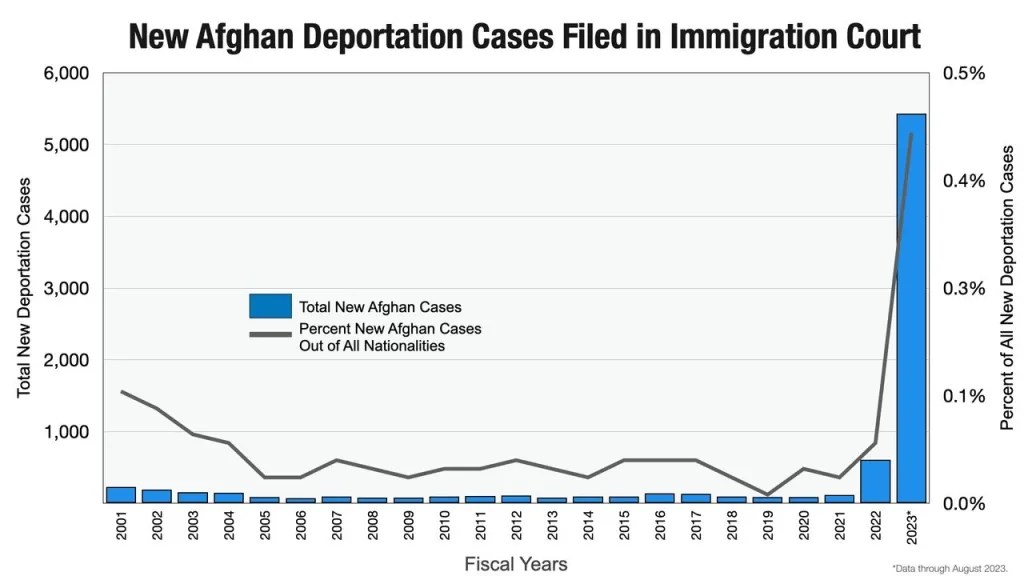


 AULA Blog