President Donald Trump’s executive orders surrounding immigration have sparked fear amongst marginalized groups and controversy amid those who hold America’s policy process dear. On January 20, 2025, Trump signed the Protecting the Meaning and Value of American Citizenship order which proposes the end to birthright citizenship. Although several judges have blocked the order and several other lawsuits have been filed, this specific executive order has caused concerns surrounding the integrity of the Constitution.
One major issue with Trump’s birthright citizenship order is his interpretation of the 14th Amendment. While he recognizes that the 14th amendment was originally intended to extend citizenship to formally enslaved African Americans during Reconstruction, his argument misinterprets the phrase “subject to the jurisdiction of the United States.” In this order, a mother’s and father’s immigration status at the time of birth determines if a federal department or agency can grant or recognized documents recognizing the United States citizenship of their child. However, there is no recent legal precedent supporting the use of a parent’s citizenship status to determine if a person born within the United States is a proper interpretation of the Amendment or any immigration law. Although Trump acknowledges the historical context in which the 14th Amendment was written, his interpretation would not be applicable to historical context Trump is supposedly intending to preserve. Ironically, Trump’s call for a stricter interpretation of the 14th Amendment calls into question how case law has broadened our understanding of how we view citizenship, even for corporations, which the law considers “artificial people” [see Santa Clara Co. v. Southern Pac. Railroad, 188 U.S. 394 (1886);Citizens United v. Federal Election Com’n, 588 U.S. 310 (2010)].
As a result of this Executive Order and many other policies which have led to the recent increase in ICE activity around the nation. President Nayib Bukele of El Salvador proposed a deal with the Trump Administration to allow for the United States to transport both deportees and imprisoned U.S. citizens to El Salvador for a fee. Despite some praise of El Salvador’s President Nayib Bukele’s “tough on crime” approach, this deal raises concerns about the conditions of these prisons. Since 2020, organizations such as Human Rights Watch and Amnesty International have reported on the lack of due process, deaths under custody, and living conditions that are below international standards. Although American immigration law would allow El Salvador to accept deportees in an instance in which a deportee returning to their country of origin is “impracticable, inadvisable, or impossible,” those factors are not the basis of President’s Bukele’s offer. Likewise, the deportation of American citizens in unconstitutional and violates the rights of incarcerated people. Nonetheless, on April 8, 2025, Press Secretary Karoline Leavitt affirmed that President Trump discussed the possibility and legality of deporting American citizens deemed “violent repeat offenders.”
The offer to accept American prisoners further cements the controversial slave status placed upon incarcerated people in the United States and El Salvador. The 13th Amendment abolishes slavery except for punishment for a crime within the United States and territories within its control. This manifests as the use of prison labor in both the public and private sector in exchange for pennies an hour. Similarly, Salvadoran prisoners make use of prison labor through their Cero Ocio program where prisoners were used to renovate schools, hospitals, and police headquarters under the guise of rehabilitation of prisons. Through this deal, El Salvador is on pace to economically benefit from accepting deportees and American prisoners in exchange for a fee as well as potentially increasing their prison labor force in a system reminiscent of slavery.
The relationship between the Trump Administration and El Salvador has already manifested into negative consequences for deportees and documented immigrants. Despite a U.S. District Judge ordering a temporary halt of the deportation of alleged Venezuelan gang members under the Alien Enemies Act, the flight continued anyway. This decision to disregard the order was a move cosigned by President Bukele on his official X account. Furthermore, Kilmar Abrego Garcia, a permanent resident living in Maryland was deported to El Salvador due to an “administrative error” and his return is being delayed due to pending litigation.
Trump’s birthright Executive Order and El Salvador’s proposal should be cause for concern for everyone regardless of immigration or citizenship status. These actions serve as a reminder of the Trump administration’s total disregard for the law and that solidarity is necessary for preserving human rights. Marking undocumented people and incarcerated citizens as undesirable leads us to overlook the harm being done and what is to come if we do not speak out against it.
Caryalyn Jean is a Research Assistant at The Immigration Lab at American University
After speaking on TV about the flights arriving from the U.S. to El Salvador on March 15, 2025, I was contacted by family members of Julio Zambrano, asking if I had any idea where he could be. He has a wife and two young daughters. His sister also lives in the United States. They report the facts to be that Julio Enrique Zambrano Pérez, born in June 2000, was detained on January 29, 2025, during his check-in appointment at the ICE office in North Carolina. His family was let go, but he was not.
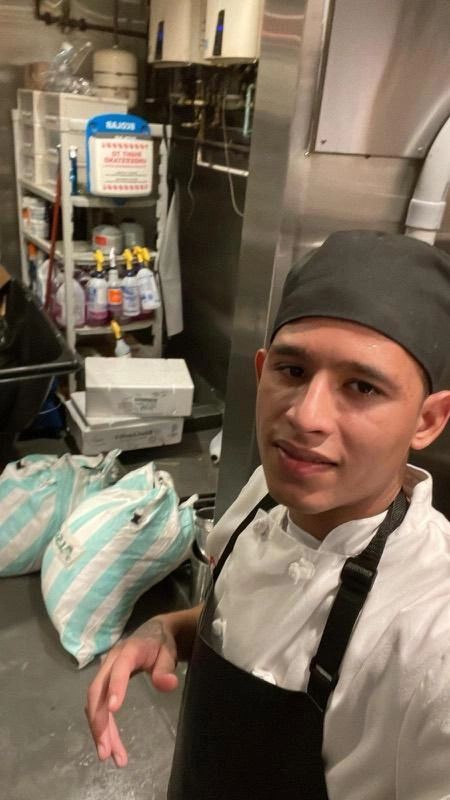
Julio Zambrano working in a kitchen in North Carolina
They separated him from his pregnant wife and young daughter and held him in detention because of a tattoo on his hand with his name and a generic crown —He got the tattoo when he was only 15. Hours later, the ICE agent told his wife that they suspected he was a member of the Tren de Aragua gang. He was born in Maracay, State of Aragua, Venezuela. Clearly, not all people born in the state of Aragua are members of this gang. His wife, sister, mom, and people from Davidson, North Carolina, affirm that he is not a member of the Tren de Aragua, nor has he committed any crimes. He is in the United States with authorization and has a work permit.
ICE transported him from the ICE office in North Carolina to the Stewart Detention Center in Georgia. He had his first court appearance on February 26 when he was denied being released on bail. His second daughter was born while he was under ICE detention. His next immigration court appointment was set for March 26, 2025. Friends, neighbors, and people from the daughter’s school wrote letters about him being a good, upstanding person working in the U.S. with a work permit so he could present them at the hearing. But now, it will be unlikely to take place — and not because Julio would skip or refuse to attend the hearing.
He called his family on Saturday, March 15, 2025, at 8 am, letting them know that he had heard they would remove him from the country by plane that day. For six days, we could not find him in the detention databases anymore. Agents at the place where he was last detained in Texas said he was no longer in the United States but would not give more details. There are no records of him being in Venezuela, so his family suspected he was one of those sent to the CECOT high-security prison in El Salvador, or if not to Honduras, in a similar though less covered arrangement. But the family did not know for sure. That is why it is appropriate to talk about state-led disappearance, the violation of due process inside the United States, and the offshoring of people previously living in the U.S. with a weak claim of gang-belonging —turned into potential terrorists— not proven in court.
Even if people are not in U.S. territory anymore, the government that expelled them has to be held responsible for their well-being abroad and for being deprived of their freedom extra-legally and even being subject to forced labor and other vexations.
On late Thursday, March 20, Julio Zambrano Perez appeared on the list of people deported to El Salvador, including non-Salvadorians, shared then for the first time with the public and family members.
Julio Enrique Zambrano Pérez and his wife Luz left Venezuela in 2018 because of the tough social, political, and economic conditions. They moved to Piura, Peru, where the community gave them some land, but they were targeted as Venezuelans and then extorted for monthly payments, which they could barely pay. Julio worked in construction full-time and as a barber on the side for extra income. Their first daughter was born in Peru, but they were targeted by organized crime, and because of security reasons, they moved to Chile in 2023. Julio would drive and make deliveries, but he would be assaulted often, so after 8 months, they decided to head north. Julio Enrique Zambrano Pérez entered the United States with permission from Matamoros on November 30, 2023, along with his wife and daughter. They applied for asylum and were given alien numbers and work permits. He worked in a hotel and then in a restaurant, preparing food and as a dishwasher in Cornelius, North Carolina. The boss attests to this and shows no disciplinary or conduct issues or hints of gang belonging. Julio has no criminal record in Venezuela, Peru, Chile, or the United States. ICE or DHS never told him otherwise. Nonetheless, he is being treated and punished as if he were a dangerous criminal in the CECOT in El Salvador.
USCIS Application Support Center, retrieved from wikimedia
A memorandum was issued on February 14 by U.S. Citizen and Immigration Services (USCIS) acting Director Andrew Davidson that has effectively paused all pending immigration applications filed by migrants already living in the United States. The USCIS cited fraud and security concerns as the reasons for the halt, and the application freeze will remain in place indefinitely as government officials investigate and identify potential fraud cases
Thousands of Migrants Left in Limbo
Changes announced by the Trump administration directly impact a number of migrants, including from Latin America and the Caribbean as well as Ukraine, who have received legal entry and stay in the United States from categorical parole programs established under the Biden administration. Among them includes beneficiaries under Uniting for Ukraine, created in 2022 to provide Ukrainian citizens fleeing from Russia’s invasion legal entry to the United States. Applicants under the Cuba, Haiti, Nicaragua, Venezuela (CHNV) Parole Program are also affected. Initiated in 2023, this humanitarian parole program allowed nationals from these countries to seek stability and refuge in the U.S. In the first six months of the program, nearly 160,000 Cubans, Haitians, Nicaraguans, and Venezuelans arrived lawfully under this legal process. The latest data from USCIS shows that in December 2024, right before Trump’s inauguration, 27,340 migrants arrived in the United States with parole grants.
Applicants under the Family Reunification Parole (FRP) Program will also be affected. This program was made to reunite eligible individuals from El Salvador, Guatemala, Honduras, Colombia, and Haiti with family in the United as they wait for a family-based green card. It was created, in part, to discourage migrants from making dangerous crossings at the southern border by instead offering a legal migration pathway.
Lastly, those who have pending applications for Temporary Protective Status (TPS) from certain countries, including Haiti, Ukraine, and Venezuela, will also be impacted. The TPS program allows individuals to seek protection in the United States from ongoing armed conflict, environmental disasters, or extraordinary conditions. A TPS designation can be granted in 6, 12, or 18 months increments and recipients will need to re-register to keep their protection. However, Venezuelan and Ukrainian beneficiaries have had their protections extended until October 2025, while Haitian beneficiaries are covered through February 2026. As of March of 2024, there were 863,800 people living in the U.S. with TPS.
Legal Pathways Shut Down, Deportation Risks Rise
The programs previously mentioned provide work permits, travel authorization, protection from deportation, and legal migration channels to individuals from designated countries seeking a better life away from persecution and poverty or to reunite with family members in the U.S. However, under this policy shift, officials will no longer process any pending applications for these programs. Effectively, impeding applicants’ ability to transition to another legal status and making them vulnerable to deportation from the country.
In just his first month in office, President Trump has deported 37,660 people, and this number is expected to rise in the coming months due to the halts on the programs above that leave those already in the U.S. without legal status. It is evident that while Trump aggressively targets undocumented immigrants, he also has little regard for those who arrive under excruciating circumstances through legal migration processes.
Valeria Chaconis a research assistant with the Center for Latin American and Latino Studies at American University in Washington, DC
The United States is where migrants come for that golden opportunity. To live a better life. To work, to be safe, to get an education. But once one leaves “La Jaula de Oro,” (“The Golden Cage”) they can’t return. All they have might be a green or red card, or maybe no card at all.
The U.S. has a visa program for temporary workers in “specialty occupations” called the H1-B visas. During Trump’s first term, he claimed the H1-B visa program was “very, very, bad for workers” and Suspended the H1-B visa program in 2020. Trump has switched his stance on H1-B visas, claiming “it’s a great program.” After Elon Musk showed his support for H-1B visas, nothing has happened to support H-1B Visas meaning we might still see the reform that was outlined in Project 2025 to make the program ‘better.’
Other types of visa programs might be affected within the next couple of months, student visas, and visas for survivors of human trafficking and other crimes. Another program that is getting attacked is Deferred Action for Childhood Arrivals (DACA). All visas get a card and DACA gets a work permit card. Just another card to keep ahold of.
A migrant factory worker from Chicago said, “I have been waiting for my daughter to turn 21 so I can get my green card.” This working migrant applied to the Diversity Immigrant Visa Program (DV) 15 years ago and is still waiting for a Green Card. The DV program is a lottery. In 2023, the DV program had nearly 9.6 million qualified entries and only 50 thousand recipients.
The cost of green cards is already so high, that the filing cost for a family-based green card is approximately 3 thousand dollars for an applicant applying from within the United States. Other categories of green cards may have different costs depending on which one the person is aiming for, not including legal service fees. For DACA it costs $555 to renew online. The most expenses being EB-5 visas, which are for foreign investors that has made investments within the United States around one million dollars and created 10 permanent full-time jobs. For these pathways are not accessible to everyone due to the cost. While some immigrants may not have green cards, visas, or DACA, one thing that they might have are Red Cards ━which can make a difference in whether a person stays in the U.S. or gets deported. Red Cards were made back in 2007 by the Immigrant Legal Resource Center. Red cards are used to protect undocumented immigrants from U.S. Immigration and Customs Enforcement (ICE) or U.S. Customs and Border Protection (CBP). They can come in 19 different languages, including Ukrainian, Spanish, Chinese, Arabic, and Tagalog.
Photo of the front and back of a Red Card by Anthony Sandoval
Trump’s “Border Czar,” Tom Homan stated, “For instance, Chicago—very well-educated, they’ve been educated on how to defy ICE, how to hide from ICE.”
On February 25th, President Trump talked about a new type of pathway to citizenship, he calls it a Gold Card. For years, many groups have been asking for an improved way for citizenship or an easier way to come into the United States. The answer was simple: a card that’s worth five million dollars. Ask your friends and family to help cover the cost. It’s that simple… but few people have that type of money. This new card is for investors. The gold card would just replace the EB-5 program.
We don’t need this. Not a 5 million dollar pathway that very few people can pay for. We need another way for citizenship, another way to come into the United States, a faster program that allows people to get green cards and not wait for years. We must remember these people are not “aliens;” they are people. One action that can help is supporting the Dream & Promise Act of 2025 that offers some DACA recipients, immigrant youth, Temporary Protected Status holders, and Deferred Enforced Departure holders a pathway to citizenship.
Anthony Sandoval is a research assistant with the Center for Latin American and Latino Studies and the Immigration Lab at American University in Washington, DC.
Edited by Katheryn Olmos, Ana Gaston, and Ernesto Castañeda,
Image of Welcome to Florida: The Sunshine State sign retrieved from Flikr
The atmosphere is so thick in Florida, you could cut it with a knife. Immigrants feel like they cannot catch a breath. As one immigrant told me, “every day there is something new.” Imagine having to check a map of zones to avoid every time you want to go outside, commuting further away from home to shop for groceries, having to refrain from speaking your native language in public, or avoiding going out to get coffee with a friend to lower the risk of encountering ICE raids or deportation. Living in constant fear, paranoia, and mistrust is no way to live.
State patrols will sit along highways to spot white working vans. In one case, a construction worker was pulled over in his working white van one evening at the end of January because his headlights were “too opaque.” The police officer asked him, “How long have you been in the U.S.?” to which the worker replied, “Over 20 years.” Then the officer gives him a ticket for driving without a license and tells him to go on with his day.
Shortly after the incident, Florida Governor Ron Desantis announced that he would enforce Section 287(g) of the Illegal Immigration Reform and Immigrant Responsibility Act of 1996. Therefore, the Florida Highway Safety and Motor Vehicles (FLHSMV) will join forces with the U.S. Immigration and Customs Enforcement (ICE). Through this partnership, ICE authorizes the Florida Highway Patrol to arrest and detain undocumented immigrants. State troopers will now ask individuals about their immigration status on day-to-day traffic stops. Additionally, state troopers are authorized to detain those suspected to be undocumented, regardless of their actual immigration status. This would completely dismiss the notion of “innocent until proven guilty,” leading to racial profiling of Latino drivers and causing fear among Florida residents. Florida residents have seen an increase in law enforcement. Latinos are more frequently reporting seeing people they know stopped and detained by law enforcement. It feels that this policy is only targeting the brown and immigrant community in Florida.
As Florida faces various problems, including the housing crisis, high home and auto insurance premiums, environmental crisis, and idle hurricane impacts, Desantis believes the so-called “immigration crisis” is the biggest issue at hand. On February 13, Desantis signed the “toughest immigration law in the country.” With this legislation, Desantis will allocate $298 million for detaining and deporting immigrants and increase the penalty for crimes committed by immigrants, including requiring the death penalty for undocumented immigrants who commit capital crimes. Additionally, Desantis is creating a new crime of entering the state of Florida as an undocumented person on top of the already existing federal crime of entering the U.S. through an irregular pathway.
There has been an increase in people moving in from out-of-state, including former residents of New York, California, and New Jersey. Many of them are moving to a state where their out-of-state wages for remote work or social security payments get them further, and the politics better align with their conservative beliefs. The changing demographics and anti-immigrant politics in Florida have also been creating a hostile environment for immigrant Floridians.
While Florida is experiencing an increase in residents from out of state, there is also an increase in immigrant residents moving to safer places out of state. Fleeing persecution is a recurring theme for immigrants; they often find themselves in a state of movement and fear while hoping to one day achieve the American Dream. Those who have lived in Florida for many years, even decades, face significant challenges when it comes to leaving their homes. Many immigrants who have established homes, businesses, children, and pets would prefer to remain in Florida. Immigrants who have built lives in Florida or lack the financial resources to leave are modifying their social and economic behaviors out of fear of deportation.
Florida is already witnessing the impact of migrants no longer participating in their social and economic atmosphere. Businesses that rely on Latino consumers are feeling this impact. Restaurants and other franchises that tend to be busy on weekend nights are empty. Rosy, a frequenter of Jacksonville, Florida’s Latino nightlife, says local Latino bar and club events are practically empty. She states that Latino clubs that always had long wait times to enter now have no lines.
Construction work is down due to high interest rates, weather conditions, and labor shortages. Despite Desantis’ push for mass deportations to solve the housing crisis in Florida, we need immigrants to solve the housing crisis in Florida. On February 20, 6 Mexican workers were detained at a gas station on Southside Blvd. in Jacksonville, Florida. Every day more and more innocent Latinos are detained by ICE. Instilling fear against our most vulnerable yet essential members of the community is not the solution to any of the state’s problems
Katheryn Olmos is a Research Assistant at the Center for Latin American and Latino Studies and a graduate student at the Sociology Research and Practice program at American University.
Edited byErnesto Castañeda, Director, and Emma Wyler, Wilfredo Flores, intern at the Center for Latin American and Latino Studies and the Immigration Lab.
Luis Alberto Castillo Rivera graduating from high school in Venezuela (Photo courtesy of his family; Source: Migrant Insider)
The story of Luis Alberto Castillo Rivera, a Venezuelan asylum seeker, has gone viral on TikTok and gained media coverage. Castillo is a man without any criminal history or gang affiliation who entered the United States through a legal pathway. In 2024, this Venezuelan asylum seeker flew to Mexico and awaited his court date. Once he received his appointment date on the CBPOne app on January 19th, 2025, he presented himself at the U.S.-Mexico border in El Paso, where he was processed by immigration authorities and held in detention for no given reason. At the ICE detention center in El Paso, authorities started to question his tattoos, specifically one he had of Michael Jordan. Authorities claimed his Jordan tattoo was affiliated with the Venezuelan gang Tren De Aragua. Many of the tattoos identified by a law enforcement list as used by Tren de Aragua, including stars, roses, tigers, and jaguars, are common among Americans. These so-called identifiers may just be a flimsy pretense for criminalizing the average, non-criminal migrant.
Castillo in a photo released by the Department of Homeland Security of the first flight of migrants preparing to takeoff for Guantanamo Bay, Feb. 4, 2025. DHS
On February 3rd, Castillo told his family that he would be deported to Venezuela, even without a hearing. The next day, he lost contact with his family and was sent to Guantanamo Bay, Cuba on February 4th. President Trump stated he is sending those who have committed crimes in the U.S. to Guantanamo Bay, but Castillo had no criminal history nor gang affiliation and never even had the chance to freely step foot in the U.S.
Castillo’s family was not notified that he would be held at the “longest-running war prison.” His family members only found out about this after seeing pictures online of migrants arriving in Guantanamo Bay. When his family searched for him on the US Immigration and Customs Enforcement website, it appeared he was still in the processing center in El Paso, Texas. Attorneys are calling Guantanamo Bay a “legal black hole,” a place where typical legal protections do not exist for some of the detainees. Some are being held without due process indefinitely without trial or conviction, including thousands of Haitian refugees in the 1990s and almost 800 Muslim men, including minors, over the past two decades. Some of these prisoners have endured incredible physical and psychological abuse and torture in this extralegal space.
Now, the first group sent to Guantanamo Bay, including low-risk migrants and migrants with no criminal record, such as Castillo, were detained in the “counterterrorism suspect” part of the prison – rather than the Migrant Operations Center used in the past to process migrants. The conditions these individuals are facing at this maximum-security prison are inhumane, including mold, undrinkable water, and a lack of adequate medical care. Guantanamo Bay does not even meet the minimum safety standards for detention facilities as set by the U.S. government. Furthermore, the detainees at Guantanamo Bay are subject to permanent physical and psychological trauma.
A less-known but recent story close to home is one where five migrants in North Florida went into a gas station to grab breakfast on the way to their construction job on January 27th and were detained by ICE. Four of them remain detained in Florida. One of them, a Mexican man name Jose Angel Juarez, was sent to Guantanamo Bay; the rumors go that he would be held there for two years. He has no criminal record beyond being caught multiple times crossing the border. He is simply a worker who has been entering and leaving the U.S. every year to work and go home. The idea that Guantanamo Bay was ever for the “worst of the worst” is an illusion. These are just two among many cases of immigrants being detained, held, deported, or sent indefinitely to Guantanamo Bay without due process after being profiled racially or for having tattoos.
Katheryn Olmos is a Research Assistant at the Center for Latin American and Latino Studies and a graduate student at the Sociology Research and Practice program at American University.
Edited by Ernesto Castañeda, Director, and Emma Wyler, intern at the Center for Latin American and Latino Studies and the Immigration Lab.
One surprising trend that emerged from the 2024 elections was New York City’s subtle shift to the right. Although the overall results of how each of the five boroughs that make up the city did not change, Trump gained 30% of the overall votes in the 2024 election as opposed to 19% in 2016. There were significant shifts in working-class neighborhoods in the Bronx and Queens. One reason for this may have been the high cost of living in New York and believing that Trump would bring prices down. Nonetheless, we must consider xenophobic messaging on both sides of the political aisle to get the full picture.
Since the initial arrival to of busses with immigrants and asylum seekers from Texas and Arizona to New York City, harmful rhetoric about them has had real-life implications. For instance, in late January 2024 reporting began surrounding an altercation which took place in Times Square between NYPD and a group of migrants. Former Police Commissioner Edward Caban responded to the incident with, “a wave of migrant crime has washed over our city.” Mayor Eric Adams described the incident as “an attack on the foundation of our symbol of safety.” Despite body cam footage released just a few days after the initial reporting, both the media and residents alike repeated the messaging purported by Eric Adams and the NYPD Residents sharing the Eric Adams administration’s belief that migrants’ presence is correlated to an increase in crime in the city is reflected in the results of May 2024 poll. Of the 974 eligible New York City voters surveyed, “over 70 percent blamed migrants in the city for the current crime rate, with 41 percent saying immigration is having a ‘significant’ impact and 31 percent saying a ‘fair amount’ of impact.”
New Yorker’s shift to the right is not limited to the presidential election. Another election result that may appear surprising to some is Republican Stephan Chan’s New York State Senate District 17 win, beating incumbent Iwen Chu. In 2020, New York State underwent a redistricting cycle, and Iwen Chu was the first representative of the newly formed district and served as representation for the growing Asian population in the area. Reporter Michael Lange described Chu’s loss as the solidification of “the Chinese Republican realignment in Southern Brooklyn.” On his campaign website, Stephan Chan emphasized being an immigrant from Hong Kong, a long time Bensonhurst resident, his law enforcement background, and his strong family ties. He also emphasizes his opposition of “wasteful spending of our tax dollars” juxtaposed to photo of himself at a protest opposing the building of a homeless shelter in Gravesend. Unsurprisingly, Chan’s opposition is not limited to homeless shelters. In a campaign ad, a supporter states, “he won’t hand out freebies to migrants while we pay the price.” This reflects not only Chan’s stance on spending on resources for migrants, but of some New Yorkers who often feel like New York City provides recently arrived migrants with services that long-time New Yorkers do not have access to.
On the national level, the growing anti-immigrant sentiment can be seen in how New York’s Congresspeople voted on the Lanken-Riley Act. This bill will allow the Department of Homeland security to detain undocumented immigrants who have been accused of burglary, theft, larceny or shoplifting. It also allows for states to sue the federal government for “decisions or alleged failures related to immigration enforcement.” Opponents of the bill are concerned about the erosion of due process for those accused of crimes and the lack of funding that is required to implement it. On January 23, 2025, the bill passed 263 to 156, with 6 out of 17 New York House members representing Downstate New York voting “Yea.” The bill was signed by President Trump on January 29, 2025.
These election results amongst other things have already caused great concern around the upcoming mayoral and gubernatorial races. Ironically, despite Adam’s law and order campaign, he is in legal trouble. Likewise, since fall 2024, New Yorkers have been left many questions. During a November 6, 2024, news conference, Eric Adams was asked about his administration’s plans to cooperate with Donald Trump’s mass deportation efforts. In reply, Adams stated “We cannot add to the anxiety and fear that people are experiencing.” The following week, Adams affirmed New York City’s sanctuary city status but stated that he believed that laws surrounding local law enforcement’s cooperation with Immigration and Customs Enforcement should be changed. Adams was also present as Trump’s inauguration and cancelled his attendance at various Martin Luther King Day celebrations to many New Yorker’s dismay. His reluctance to outright denounce Trump’s stance on immigration and recent ICE raids has caused uneasiness for immigrant advocacy groups within the city and causes further speculation that Adam’s refusal to publicly critique Trump is for his own personal gain. Democrats have long relied on New York City to keep New York State blue but shifts to the right in New York City may lead to the party losing its stronghold in the country.
Caryalyn Jean, Sociology Research and Practice MA (SORP) Student at American University
In 2023, around 43.4 million people globally were recognized as refugees; of that 43.4 million, only about 60,000 were admitted to be resettled in the United States (UNHCR; OHSS). The number of refugees admitted for resettlement is determined by the cap established by the current president and Congress. This cap has fluctuated largely over the past eight years, with the lowest annual ceiling and number of admitted refugees set by former President Trump in 2017 at 50,000. During his final year in office, 2020, he lowered the cap to 18,000 and the number of refugees admitted fell to 11,000. These admittances were much lower than after, including tighter vetting and restrictions following 9/11.
What exactly defines someone as a refugee? Does it mean they are coming to the United States entirely of their own choice? Will they impose a significant financial burden on U.S. taxpayers? Are they a danger to the safety of U.S. citizens? These are all fair considerations, and while no system is perfect, the refugee vetting and resettlement process in the United States is very secure, safe, and economically beneficial. However, it is becoming increasingly limited, leading to many individuals being denied the opportunity to obtain refuge in the U.S.
Do refugees decide to come to the U.S. of their own autonomous choice?
No, refugees are considered to be forcibly displaced peoples, meaning that their choice to leave is a matter of personal safety, of life and death. To apply for refugee status, a person must have fled and remain outside their home country. To be eligible for refugee status, they must be able to prove a well-founded fear of persecution based on “race, religion, nationality, political opinion or membership in a particular social group” and be unable or unwilling to return to their home country (UNHCR). This initial qualification is decided by the United Nations High Commissioner for Refugees (UNHCR), which then refers the case to a resettlement country (such as the U.S.).
Before traveling to the U.S., refugees must undergo a lengthy vetting process that can take up to 36 months and will continue upon arrival in the U.S. This vetting process includes background checks, security clearances, in-person interviews, and medical clearances run by the Department of Homeland Security (DHS) and United States Citizenship and Immigration Services (USCIS). If the refugee application is rejected during the interview process, it cannot be appealed. If it is accepted, it is only on a conditional basis and is dependent on further medical and security checks. Refugees will also receive a cultural orientation about what to expect upon their arrival in the United States. Finally, the refugee’s case will be designated to a particular refugee resettlement agency and location in the U.S. (there are only 10 approved agencies as of December 2024). Once the refugees arrive, they will receive care from their refugee resettlement agency for 90 days. The resettlement process for refugees in the U.S. is complex and rigorous, but it also serves as a vital lifeline for those fleeing life-threatening circumstances in search of safety and protection.
Do refugees cost U.S. taxpayers lots of money?
No, while refugees who have been in the U.S. less than five years have a median income of about $30,000, that median increases to $70,000 after twenty years. Additionally, studies have shown that refugees end up contributing more than they receive in benefits, paying up to twice as much in the long run. In 2019 alone, the 2.4 million refugees in the United States earned $93.6 billion in income through their contributions to American enterprises and organizations, paid $25 billion in taxes, and were left with $68.6 billion of disposable income, some of which will be spent or invested in U.S. businesses.
You may be wondering, if refugees are making so much money, does that mean they are taking jobs from U.S.-born citizens? The answer is no. Research shows that refugees fill three important gaps within the U.S. labor market: entrepreneurship, the service industry, and slightly rejuvenating an overall aging U.S.-born population. In 2019, 19% of refugees in the U.S. were entrepreneurs compared to only 9% of U.S.-born citizens and generated business income of $5.1 billion. Refugees also participate in the workforce at a rate of over 80%, a rate of almost 20% more than the overall national average (at around 60%), and are two times more likely than U.S.-born citizens to work in the service industry. The population of the United States is aging, and it is predicted that over 20% of people in the United States will be 65 or older in 15 years, compared to only 16% in 2016. Furthermore, almost 80% of the current refugee population is of working age compared to only 60% of the U.S.-born population. In conclusion, refugees contribute significantly to the U.S. economy and help address critical labor market needs, making them valuable assets.
Are refugees a danger to the safety of U.S. citizens?
Research demonstrates that the growing presence of refugees and immigrants in U.S. cities does not lead to increased crime rates; in fact, it often correlates with stability or reductions in crime. Studies spanning from 1980 to 2022 reveal a clear pattern: areas that welcome diverse populations experience steady or declining rates of both property and violent crimes.
Lowered crime rates for refugees come in conjunction with successful integration into a local community and job market. Refugees undergo thorough vetting processes, which makes it unlikely for individuals with a predisposition to criminal behavior to receive approval. Furthermore, as refugees are assigned to resettlement agencies, they receive support to help them integrate into their communities and the local job market. These agencies work closely with refugees and can address any inappropriate behaviors at the start of the resettlement process. The evidence clearly indicates that embracing refugees enriches communities and makes them safer.
Possible Impacts of a Second Trump Term on Refugee Resettlement
As you can see, refugee resettlement is a system with many benefits; however, its future is uncertain. Refugee resettlement organizations rely on government funding to resettle and support refugees during their 90-day resettlement period. During the first Trump administration, the cap for refugees allowed was significantly reduced, and subsequently, funding decreased. Despite the proven success of refugee resettlement, Donald Trump has promised to target the system once again under a second term. He may once again push to allow states the right to refuse refugee resettlement, putting an undue burden on certain areas of the country and creating further barriers to integration. Finally, Trump may also target private sponsorship for refugees which allows communities to privately sponsor, fundraise for, and resettle refugees, leading to better integration, economic participation, and a lesser cost for the government and U.S. taxpayers.
A Series of Travel Bans (AKA Muslim Bans)
Like during his first term, he may implement travel bans, further spreading the harmful and misinformed narrative that refugees from Muslim-majority countries have ties with terrorism. At the beginning of 2017, Trump signed an executive order, Protecting the Nation from Foreign Terrorist Entry into the United States, which banned entry to the United States for 90 days for citizens of seven Muslim-majority countries–Iraq, Syria, Iran, Libya, Somalia, Sudan, and Yemen–and prohibited entry for refugees from Sudan indefinitely. Six weeks later, he signed another executive order that removed Iraq from the list and halted all refugee admissions for 120 days. Later in 2017, Trump signed a third executive order, which included travel restrictions for two additional countries, Chad and North Korea, as well as stricter vetting procedures. Although many of Trump’s critics dubbed these travel bans as Muslim bans, many of his supporters as well as the Department of Homeland Security, were insistent that these bans were solely focused on addressing and preventing terrorism threats. But the fact is that these bans greatly and unduly affected immigrants and refugees from Muslim-majority countries.
The implementation of such bans unjustly put numerous refugees from these countries at risk and tore families apart. It also contributed to a rise in hate crimes targeting Muslim communities in the United States. Additionally, this ban was implemented under the guise of addressing ethnic and religious terrorism threats in the United States. However, the number of arrests for suspected terrorist plots and acts of terrorism in the U.S. has been very small. In fact, threats of domestic terrorism from far-right extremists occur at a higher rate (40% more) than Islamic terrorist events. This policy was ineffective, and it caused great psychological and physical harm to Muslim communities in the U.S. due to increased Islamophobia and hate crimes.
Opting Out of Resettlement
During Trump’s first term, he signed an executive order requiring local refugee resettlement agencies in the U.S. to obtain written permission from their local and state governments to continue resettling refugees. This order would also have allowed state governors to opt their entire state out of refugee resettlement. Although a federal judge blocked this order, Trump has continued to advocate for lower immigration levels and increased local control over resettlement.
Implementing a policy like this in his second term could alienate refugees and place an undue short-term burden on areas willing to accept them. Additionally, opting out of refugee resettlement could have significant negative economic impacts on the longer-term for areas missing out. Before the executive order was blocked, Texas Governor Greg Abbott had opted out of refugee resettlement, a choice that could have cost the state around $17 million. Implementing such restrictive policies could undermine the humanitarian goals of refugee resettlement and hinder economic growth in states with communities that are willing to embrace diversity and support vulnerable populations.
The United States has long provided refuge to those fleeing persecution, violence, and life-threatening circumstances. Refugee resettlement has great humanitarian importance and provides a safe, secure, and economically beneficial system that strengthens communities and the workforce. However, this important system faces significant threats. During his first term, Trump’s policies drastically reduced the number of refugees allowed in the United States, perpetuated negative stereotypes, and attacked resettlement infrastructure. The second Trump term could once again target this system through travel bans and restrictions on local resettlement–actions that would harm refugees, the U.S. economy, local communities, and international reputation.
Rather than working to tear down a system that saves lives and benefits our country, there must be a shift in focus on protecting, expanding, and strengthening it. Refugees enrich a society through economic contributions, filling labor shortage gaps, and expanding cultural diversity, all while undergoing one of the most secure and rigorous vetting processes in the world. The United States should move away from narratives driven by fear and misinformation and instead endorse policies that promote the overall well-being of refugees, benefiting the nation’s prosperity as a whole.
Mackenzie Hoekstra is a senior in Sociology student at American University.
Nearly half of American adults feel that immigration threatens national identity. This proportion has increased in recent years as anti-immigration sentiments have surged in politics and partisan divergence has deepened in rhetoric. The former Trump administration was highly influential in the anti-immigration movement, with much of Trump’s campaigns hinging on xenophobic policies like building a wall on the southern border and ending DACA. Such policies jeopardize the human rights of immigrants in the United States, who make up nearly 14% of the U.S. population. The Biden administration’s handling of immigration has also been criticized by 60% of Americans, indicating that the ongoing conflict over immigration is worsening.
Polls from PBS NewsHour, 2024.
Why is migration so controversial? Shouldn’t people be allowed to migrate safely?
The answer lies in white supremacy and ‘tax dollars.’
At a 1983 Conservative Party conference, former UK Prime Minister Margaret Thatcher famously said, “If the State wishes to spend more, it can do so only by borrowing your savings or by taxing you more. It is no good thinking that someone else will pay—that ‘someone else’ is you. There is no such thing as public money; there is only taxpayers’ money.” Like many politicians, Thatcher propagated the notion that government spending relies on taxpayers’ money, placing the burden of spending on individuals.
Similar sentiments are not uncommon in the United States. Former Republican governor of Wisconsin, Scott Walker, featured this tagline in his 2018 campaign targeting his opponent: “Tony Evers: Special treatment for illegals, higher taxes for you.” Donald Trump continues to campaign on anti-immigration policies to appeal to Americans who feel skeptical about their tax dollars going to immigrant welcoming programs. Trump’s campaign website highlights “20 Core Campaign Promises to Make America Great Again,” two of which focus on blocking immigration, including the first promise: “Seal the border and stop the migrant invasion.” These arguments are used to justify relatively small government investment in important services that benefit communities of color and immigrants by suggesting they would be an imposition on the ‘taxpayer.’
To understand the historical use of the term ‘tax dollars,’ Camille Walsh analyzed hundreds of letters defending racial segregation addressed to the Supreme Court in the years following the ruling in Brown v. Board of Education (1954). One-third of the letters consisted of some language about taxes, taxpayers, or having “paid” for public schools, implying the right to decide whether to keep them segregated. The American ‘taxpayer’ historically represents white individuals, and such language “obscured class divisions among whites and elevated those racialized groups presumed to have higher taxable income to a higher position in claiming citizenship rights.” White individuals like Aura Lee (1956), argued that “poor white taxpayers are entitled to enjoy some all-white places, if they so desire.”
As the term ‘taxpayer’ is historically associated with whiteness, it is used to justify the entitlement of resources concentrated in white communities. Meanwhile, the ‘nontaxpayer’ is meant to symbolize Black and Brown individuals who are perceived not to have “earned” their rights. While this argument is used to exclude people of color from resources, historian James Anderson finds that taxes from predominantly Black communities were at least as much during the time of the Brown ruling, and often higher than those of white neighborhoods. These taxes were often distributed by white school boards into all-white schools prior to Brown. This does not account for today’s common tax evasion of the nation’s wealthiest individuals and corporations. The Treasury Department estimates that there is a $160 billion gap between what the wealthiest 1% of the population should pay and what they actually pay.
Seventy years after the ruling in Brown v. Board of Education, politicians, citizens, and the media hold ‘taxpayer dollars’ to be sacred. Similar to the discussions surrounding racial integration in the mid-20th century, immigration represents a battle between the ‘taxpayer,’ or white American, and the ‘nontaxpayer,’ or immigrant. Just as white parents feared sending their children to integrated schools with “much lower standards and run-down facilities than the ones that [they] helped pay for,” many white Americans do not want immigrants to have access to vital resources and fear the use of their dollars on government spending.
Nevertheless, between sales taxes and property taxes, undocumented immigrants pay billions of dollars in taxes each year. Not only are immigrants taxpayers, but they pay taxes at higher rates than the richest Americans and get less in return. Taxpayer rhetoric is another weapon of othering by separating white U.S.-born individuals from Black and Brown immigrants, regardless of who pays their taxes.
Graph from the American Immigration Council (2016).
A quote from former Chair of the U.S. Federal Reserve Alan Greenspan counters concerns about government spending causing a deficit, stating: “There is nothing to prevent the government from creating as much money as it wants.” Similar to banks not lending out depositors’ money, government spending does not use tax dollars for spending. To illustrate this, the U.S. government spent trillions on wars post-9/11 and hundreds of billions to bail out banks in 2008, neither of which were framed as a tax dollar problem. Despite the framing of funding essential services as an attack on individual taxpayers, in reality, it falls within the bounds of federal government spending.
International law considers migration to be a universal right. Immigration control “is a relatively recent invention of states,” according to Vincent Chetail, a professor of international law. The U.S. has a duty to protect the rights of all people and not discriminate based on race, national origin, religion, or any other group category according to the 14th Amendment, and many international treaties it is a party to.
Research indicates that government investments in immigrants have a higher return over time. For example, more educated immigrants earn more and, therefore, pay more in taxes. Fiscal concerns are not based on reality, as immigrants are net contributors to the federal budget. ‘Tax dollars’ are simply a code for white dollars to instill fear and discrimination against vulnerable populations, despite taxation realities.
Mary Capone is a researcher at the Immigration Lab at American University.
You can republish and reprint this piece in full or in part as long as you credit the author and link to the original when possible.
Harris at the packed DC rally in the Ellipse on October 29.
My assessment is that Kamala Harris will win the election. It is not based on the polls or the betting markers, which are not helpful given their very tight margins. Instead, Harris’ big tent, misrepresentation of the primacy of the economy and immigration in surveys, and social trends lead me to believe that Harris will win.
First of all, following the voting trends from the 2016 and 2020 presidential elections, Trump will not win the popular vote. This matters, as it determines popularity and broad appeal nationwide. Trump has never been appealing to over half of the population as a politician. While Trump was a fresh figure in politics in 2016, and there were some shy voters (given his novel strident and racist anti-immigrant comments), in 2024, he is a well-known entity, and most of his ardent followers are loud about their support, and not shy to say so to pollsters, door knockers, or people calling to get out the vote. Even so, attendance at his rallies and Trump flags outside of houses have decreased from previous cycles. Trump obsesses over crowd sizes, which was one of the indicators of his appeal in 2016. However, the infamous Madison Square Garden Trump rally on October 27 had around 19,500 people in attendance compared to around 30,000 people for Kamala Harris in Houston, Texas, on October 25, and over 75,000 at her rally in Washington, DC, on October 29.
Trump counts on a core base of around 33% of the electorate that holds strong views against immigration, complains about the economy, and will support Trump no matter what. Some more traditional Republicans will also vote for him. Nonetheless, his main campaign strategic imperative was to appeal to moderates, independents, and White suburban women to expand his margin over 50%. His 2024 campaign has not done so; he has focused on animating and mobilizing his core base. Many of his comments and those of his surrogates and supporters have alienated moderates as well as some registered Republicans. He has been more focused on discrediting the electoral process, the media, and his opponents and critics than on appealing to all voters.
In contrast, Kamala Harris has been explicitly open to conservative-leaning independents and even former Republican officeholders, including, but not limited to, Liz Cheney. Many registered Republicans, college-educated men, and many women will vote for her. That should be enough to guarantee her victory. She has done so not by compromising her beliefs and Democratic priorities but by promising to uphold the Constitution and protect democracy.
It is true that an unintended effect of Trump’s hate speech has created a certain increase in support among some Black, Latino, and Asian voters, but that will not be enough to counter the fact that a majority of women across racial and ethnic groups will vote for Kamala Harris as will many men and registered Republicans and independents.
A weakness for Harris lies in the uncommitted voters because of the situation in the Middle East who may vote for Jil Stein or abstain in places like Philadelphia, Pittsburgh, Milwaukee, Detroit, Dearborn, and college campuses. Trump’s election would make things worse in the Middle East, so some will reluctantly vote for Harris and then get ready to continue with their protests and demands for a ceasefire.
The media across the board has obsessed with “immigration” and “the economy” being the main concerns of the electorate and that public opinion favors Trump to handle them. But first of all, objectively, the economy is strong, and asylum-seeking at the border today is at very low levels. Second, and most importantly for elections, when one looks at the polls that are used to make these claims, these are the main issues for less than half of the electorate, and they are the main issues for Republican respondents, who naturally favor Trump’s solutions on these areas. In other words, putting the bulk of the Republican agenda around closing the border is not enough to gain a majority of voters nationwide or even in most swing states. The urban legend about immigrants eating cats shows voters how exaggerated these warnings are. The common claims against immigrants are false, as my book —coming out today— Immigration Realities documents.
Many pundits, consultants, and advisors have been saying that “Harris is weak on the border.” Not only is that false, but my response has been that the immigration obsession will cost Trump the election. Mass deportations are not popular outside of MAGA circles, while a path to citizenship has large levels of support. The Madison Square Garden rally made it clear to many voters and agnostic observers that this was not about undocumented immigration but about creating a White Christian Ethnostate.
There are even some indications (like the exit polls in the Republican primaries in Ohio) that some Evangelicals and religious voters are tired of Trump supposedly representing their views and values. The majority will still vote for him, but less than in previous elections when he has been on the ballot. The same is true for rural and union members. Biden has been a strong pro-labor president. Tim Walz is more familiar with rural White voters than Vance is these days. The majority will vote Republican, but many will vote Democrat. Harris is endorsed by both Liz Cheney and Bernie Sanders. Her appeal and favorability are wide, and she could create an even wider base of support than Obama.
Democratic institutions, freedom of the press, and many other values and institutions are on the line. This is the first election where Trump is on the ballot after January 6, 2021, and the many trials against him. He will not lose all his supporters, but he will lose some.
Recent local and midterm elections have shown that the across-the-board restrictions on abortion and emergency care while pregnant are large motivators to drive women and men to the polls to repeal these propositions and to vote for Democrats. In 2016, most White women supported Trump and not Hilary Clinton. This may be different this time because of the end of Roe vs. Wade. This would be crucial because women are the majority of likely voters, and they were more active in early voting.
Established Latinos of Puerto Rican, Mexican, and South American origin in Pennsylvania, Nevada, Arizona, Georgia, and New York will make important contributions to the Democratic vote. I predict that many women and new citizens of immigrant origin and some who did not vote in previous elections because of age or lack of interest (thus often not in pollster models of likely voters) will turn out to vote for Harris.
All along, the expectations have been set very highly for Harris, and she has excelled at each challenge, including securing the nomination uncontested, choosing a strong VP candidate, leading the RNC, speaking at rallies, showing she can be Commander in Chief, bettering Trump at their debate, engaging with the media effectively, she can take questions from the media and answer them thoughtfully, to round it all out she can engage in retail politics with much enthusiasm and empathy.
Trump carries all the media attention and campaign resources from the RNC, and most Republicans down the ballot depend, to a large degree, on his appeal. This does not bode well for them. Furthermore, the Republican-led Congress has been one of the most ineffective in recent memory. Government shutdowns have been adverted, and there have been impactful and popular bipartisan accomplishments such as the Infrastructure Bill, the Inflation Reduction Act, the CHIPS Act, and support for Ukraine, but many Republican Congresspeople have voted against these achievements.
All these factors combined seem to indicate that Trump supporters will have a weaker showing than when he lost in 2020, even if we are not in the middle of a pandemic. Kamala Harris has benefited from a fresh, exciting, flawless campaign, drawing all the enthusiasm that had been lacking since Obama’s first presidential campaign.
To recap, the biggest errors in the 2024 election coverage have been the out-of-proportion focus on the economy and immigration as the biggest concerns of all voters when, indeed, these complaints are not fully based on reality and are mainly coming from Republican-leaning voters. Nobody likes inflation, but unemployment is low, and wage and economic growth rates are positive and steady, with a big improvement from 2020. Reproductive health and women’s rights will be more important in motivating people across party affiliations to vote for Harris and Democrats. While the polls are currently very tight, and there is noise that favors Trump (allowing him to repeat the big lie), ultimately, cold analyses of the electorate’s behavior and preferences tell us that Harris is on track to win the electoral college and with wider margins than the polls show.
Ernesto Castañeda, PhD is Director of the Center for Latin American and Latino Studies and the Immigration Lab and Professor at American University.
You can republish and reprint this piece in full or in part as long as you credit the author and link to the original when possible.







 AULA Blog
