What Will Trump Do About NAFTA?

By Malcolm Fairbrother*
trump-nafta

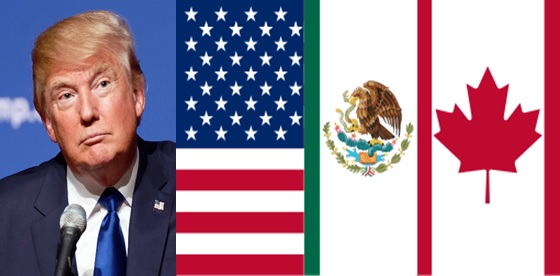
U.S. President-elect Donald Trump and the flag of the North American Free Trade Agreement (NAFTA). / Flickr and Wikimedia / Creative Commons / Modified

Despite his campaign rhetoric repeatedly attacking the North American Free Trade Agreement, U.S. President-elect Donald Trump probably won’t touch it, except in superficial ways.  He has called NAFTA the “worst trade deal ever,” and promised to pull the U.S. out unless Mexico and Canada agree to renegotiate it.  Last week, he suggested renegotiation of NAFTA will include provisions for Mexico to repay the U.S. government for the wall he wants to build along the border.

Dismantling or even significantly rewriting the accord is unlikely for a couple reasons:

  • First, the billionaires, chief executives, and friends he is choosing for his cabinet are hardly people inclined to dismantle an agreement whose contents largely reflect what American business wanted from the U.S.-Mexico relationship when NAFTA was being negotiated in the early 1990s. Corporate preferences weighed heavily against any big deviation from the status quo after the last political transition in Washington, in 2008.  Barack Obama too said that “NAFTA was a mistake,” though his criticisms were a little different.  He railed against lobbyists’ disproportionate influence over trade policy, and promised big changes to international trade agreements, including better protections for workers and the environment.  Even so, he didn’t touch NAFTA, and the Transatlantic Trade and Investment Partnership (TTIP) and the Trans-Pacific Partnership (TPP) he negotiated included – like NAFTA – shady provisions for investor-state dispute settlement.
  • It would be near-impossible, or least massively expensive, to get what Trump seems to want most: a big drop in imports from Mexico. In his eyes this would make NAFTA a better deal for America, though of course serious economists disagree.  Realistically, reopening the agreement would be very messy, and if he tried to throw up massive new trade barriers business leaders would strongly object.  NAFTA could include some additional measures to make it easier for goods and/or people to get around among the NAFTA countries, but that’s not what Trump has promised.

His economic nationalism makes the Republican Party establishment squirm, but it’s clear it also helped Trump win several Midwestern states, tipping the electoral college in his favor.  Insofar as agreements like NAFTA entrench rules friendly to business, and generate market efficiencies and economies whose benefits accumulate in the hands of the few, voter hostility is no mystery.  But economics is only part of the reason.  The bigger issue is what the backlash against globalization – embodied also by Brexit and the rise of neo-nationalist parties in Europe – means more broadly.  The average Democratic voter has a lower income than the average Republican voter, but Democrats are more supportive of trade agreements because they are more internationalist, more open to other cultures, younger, more educated, and more urban.  Throughout his presidency, Trump will therefore be squeezed between his working class rhetoric – appealing to the distrustful – and his business class milieu.  He is an extreme case of the politicians’ mercantilist thinking on trade, wherein exports are good and imports are bad, and “trade deals” like NAFTA are somehow like deals in the business world, where it’s possible to out-negotiate someone.  The reality is that this thinking – which flies in the face of basic economics – doesn’t point to any clear course of action.  This is why Trump won’t actually do much about NAFTA.

January 10, 2017

* Malcolm Fairbrother is social science researcher and teacher/mentor in the School of Geographical Sciences at the University of Bristol (UK).  This article is adapted from a recent blog post for the American Sociological Association.

China, Latin America, and the New Globalization

By Andrés Serbin*

31128355276_da6ad8d3a0_k

Chinese President Xi Jinping received a medal of honor from the Peruvian Congress during his tour of South America last month, which included the Asian-Pacific Economic Cooperation summit in Lima. / Ministerio de Relaciones Exteriores, Peru / Flickr / Creative Commons

In Latin America and elsewhere, the world is undergoing tectonic movements that indicate the birth of a new world order with new rules of play.  For much of the past decade, dynamism in world commerce and finance has been shifting from the Atlantic basin to the Pacific.  While the international economy has shown fragility and the developed economies – particularly the European Union and the United States – have shown slow growth since the crisis of 2008, China and the emerging economies of the Asian-Pacific region have experienced sustained growth.  China, now the second biggest economy in the world, has been the driver of that growth and, according to most projections, is poised to overtake the United States as the biggest.  After several centuries in which power has been concentrated in the West, the emergence of new powers in a multi-polar world will naturally bring about changes in the norms and rules governing the international agenda.

In Latin America and other regions, there is growing awareness of this process – with China and its own version of globalization at its center.  The region has witnessed the paralysis of the Transatlantic Trade and Investment Partnership (TTIP) between the EU and the United States as well as U.S. President-elect Donald Trump’s declaration that he will withdraw the United States from the Trans-Pacific Partnership (TPP) as part of a broader anti-globalization policy.  Trump’s announcement drew two different reactions from participants from TPP country leaders at the Asian-Pacific Economic Cooperation summit in Lima late last month.  One was the express decision to proceed with TPP even without the United States, and the other was a clear receptivity to Chinese President Xi Jinping’s invitation that they join regional economic groups that he is pushing – the Regional Comprehensive Economic Partnership (RCEP) and the Free Trade Area of the Asia-Pacific (FTAAP).

  • Both agreements explicitly exclude the United States and abandon norms customarily pushed in free trade by the West. They emphasize reducing tariffs and give no consideration to labor and environmental regulations and non-tariff measures.
  • They complement China’s “one belt, one road” initiative, a modern-day revitalization of the Silk Road creating trade links between China’s western regions with Russia, Central Asia, and eventually to Europe, developing land and maritime routes along the way. The Shanghai Cooperation Organization (SCO) – an economic and security pact linking China, Russia, four Central Asian nations, and now welcoming India and Pakistan – is explicitly linked to RCEP.

Washington’s pending rejection of TPP eliminates a central part of President Obama’s “pivot” strategy to counter China’s rapidly expanding influence in Southeast Asia and the South China Sea, but it also has implications for Latin America and the Caribbean as China moves in rapidly to fill the void left by U.S. withdrawal.  While President-elect Trump has pledged to “renegotiate” NAFTA – which he called “probably the worst trade deal ever agreed to in the history of the world” – China last month presented to Latin America a detailed document proposing a new era in relations with “comprehensive cooperation” in all areas and reaffirming a “strategic association” with the region.  In sharp contrast with the new U.S. President’s views of Latin America, Beijing calls Latin America and the Caribbean “a land full of vitality and hope,” praises the region’s “major role in safeguarding world peace and development,” and calls it “a rising force in the global landscape.”  While some analysts suggest that globalization is slowing if not ending, these developments more strongly indicate that it is rather taking on a new form within a new world order that clashes with the visions and values of the West.  We appear to be transitioning into a world that is genuinely multi-polar with globalization under new rules.

December 13, 2016

* Andrés Serbin is the president of the Coordinadora Regional de Investigaciones Económicas y Sociales (CRIES), a Latin American think tank.  This article is adapted from an essay in Perfil, based in Buenos Aires.

What does “Canada is back” mean in the Americas?

By Stephen Baranyi*

27950219435_acf41153d5_h

Mexican President Enrique Peña Nieto and Canadian Prime Minister Justin Trudeau during the “Tres Amigos Summit” in Ottawa, June 2016. / Presidencia de la República Mexicana / Flickr / Creative Commons

Canadian Prime Minster Justin Trudeau and his cabinet ministers’ statements following their election in October 2015 that “Canada is back” reflect a global strategy that is likely to give a boost to Canada-Latin America relations.  Canada never “left” the Americas during the decade of Conservative governments led by Prime Minister Harper, but the new administration is patching up its predecessors’ mixed record.  Building on the Americas Strategy launched in 2007, Ottawa signed new bilateral free trade agreements with Colombia, Peru and others; broadened its engagement in regional security affairs; and greatly increased its whole-of-government engagement in Haiti.  Canada played a major role at the Summit of the Americas in Panama (April 2015) and hosted the Pan American Games (July 2015).  Yet the revelation of Canada’s espionage in Brazil, visa restrictions on Mexicans, the poor reputation of some Canadian mining firms in the region, and its inability to reach a trade agreement with the Caribbean Community fed a growing desencanto in Canada’s relations with the region.

Through mandate letters issued to ministers in late 2015, the Trudeau government made clear that the Americas would remain an important priority, despite renewed emphasis on Asia and Africa, and that inclusive growth, the responsible governance of Canadian extractive activities abroad, and women’s and indigenous peoples’ rights would get emphasis in the region.  In June, Canada hosted the “Tres Amigos Summit” with NAFTA partners United States and Mexico.  Ottawa also announced that by December, Mexican citizens would no longer need visas to enter Canada, removing a big irritant in Canada-Mexico relations.  The government reaffirmed its partnership with Colombia by indicating its desire to make bilateral free trade more inclusive and announcing projects to support the implementation of peace accords.

  • Ottawa has opportunities for deeper involvement in these countries. In Mexico, Canadian interests will be served through a better balance between pursuing economic opportunities in sectors like petroleum and supporting Mexicans struggling to strengthen rule of law in a system compromised by corruption.  Colombia also requires a sophisticated whole-of-Canada engagement strategy, particularly since the failure of its referendum on the peace accords on Sunday.  Ottawa has signaled interest in continuing to support the rule of law and broader development in Haiti, but Trudeau’s ability to justify large expenditures there will depend on the completion of legitimate elections by February 2017.

Ottawa’s appointment of a new Ambassador to the Organization of American States (OAS) and commitment to revitalizing it as “the premier multilateral organization of the Americas” points to broader engagement on a regional level.  The Trudeau administration could join the Latin American and Caribbean trend on drug policy by decriminalizing the sale of marijuana at home and supporting reforms to OAS and UN counterdrug programs.  Assisting the implementation of the UN Small Arms Treaty, which Ottawa is poised to ratify, could also contribute to rule of law and security in the Americas.  Canada will also find many partners (from Chile to Costa Rica) to promote gender equality.  With regard to First Nations, Ottawa may be tempted to focus on funding new aid projects; yet Canada’s credibility will remain suspect until it ratifies the American Convention on Human Rights and ensures that all Canadian mining firms respect the rights of indigenous communities to free and prior informed consent in large-scale extractive activities.  The Trudeau government will probably monitor the multi-dimensional crisis in Venezuela, the situation in Brazil, and other challenges in the region – over which it probably lacks the leverage to make a significant difference but can lend moral authority to solutions.  Given its clear commitment to a global, rather than regional, strategy, the current administration is wise to carefully select entry points on which its thematic priorities align with opportunities in particular countries.

October 5, 2016

* Stephen Baranyi is an Associate Professor at the University of Ottawa’s School of International Development and Global Studies.  He also chairs the Latin America and Caribbean Group (LACG) of the Canadian International Council.  The author acknowledges his LACG colleagues’ input into this blog, while taking responsibility for its limitations.

Mexico: Environmental Initiatives Likely to Stir Things Up

By Daniela Stevens*

mexico-environment

Mexico City’s Reforma axis under a blanket of smog / Lars Plougmann / Flickr / Creative Commons

Mexico has made a big push on climate issues over the past month that could have far-reaching consequences internally and in the hemisphere.  On August 16, it announced a pilot Emission Trading System (ETS), also known as “cap-and-trade,” that will begin a simulation in November and officially initiate trading carbon permits in 2018.  Two weeks later, at the second Climate Summit of the Americas (CSA), the Mexican federal government signed a joint declaration with the Canadian provinces of Ontario and Québec to advance “cooperation activities on carbon markets.”  Mexico’s motives are not immediately clear.  For a middle-income nation, with annual growth (around 2 percent) compromised by the crash in oil prices, an ETS represents a potentially significant economic burden.  Mexican officials have not explained, moreover, how they might link their cap-and-trade to the Canadian provinces’ systems and to the Western Climate Initiative (WCI), North America’s largest carbon market and the second largest in the world.

The moves may be driven by increasing Mexican belief that more assertive, market-oriented approaches are necessary to meet its international commitments.

  • Mexico is dependent on fossil fuels for over a third of its total energy production, wreaking havoc with the country’s air quality. Over the last few months, Mexico City decreed several “environmental contingencies,” situations of abnormally high concentrations of ozone in the atmosphere.
  • Moreover, Mexico may be seeking the advantage that increased regional cooperation represents. Its international commitments on emission reductions are very ambitious, and a linkage to its North American partners lends itself almost as a natural solution to help in the advancement of its pledges.  Mexico could export sectoral offsets that American and Canadian partners need – contributing to Mexican revenues and to market stability.  Mexico would also benefit from the resulting transfer of information expertise, technology, training, and methodologies.
  • An important first step for the Mexican authorities would be to commit the resources to establish the robust institutional mechanisms and capacities to launch, monitor, enforce and sustain a system as intricate as a national ETS, and only after that, lend itself as a reliable partner in an internationally linked market.

The details of the pilot ETS have not been publicized, and the agreement with Québec and Ontario does not establish commitments beyond “identifying opportunities for linking systems as much as possible.”  Mexican companies already voluntarily buy and sell carbon bonds on a small national market – a system complemented by a carbon tax in place since 2013 – but an enforced and internationally linked market would highlight the disparities among the North American nations – and represent a challenge to Mexico.  Unlike its partners, Mexico is still an industrializing nation, with a thriving motor vehicle industry, and industrializing nations have traditionally been reluctant to pricing emissions.  Industrialized countries are the highest historical emitters and reached that status of development by polluting without paying the price.  Although the need to prioritize economic growth does not exempt Mexico from fulfilling its commitments as the eleventh highest global emitter, it does signal that besides opportunities, Mexico faces challenges with trading partners at different stages of development.  The Climate Summit of the Americas showed, however, that regional fora and of subnational partnerships can further environmental commitments beyond the global and national summits.  The CSA signaled an opportunity for the region to develop North American or, more ambitiously, hemispheric solutions to climate change.

September 15, 2016

* Daniela Stevens is a PhD candidate in the American University School of Public Affairs.  Her research focuses on national and subnational policies that put a price on carbon emissions.

UNASUR and the Venezuelan Hot Potato

By Andrés Serbin and Andrei Serbin Pont*

Ernesto Samper UNASUR

Photo Credit: Carlos Rodríguez/ANDES/Flickr/Creative Commons

The Venezuelan crisis, which the hemisphere has turned to UNASUR to resolve, could break the South American organization and overshadow its past successes in regional mediation.  UNASUR was created in 2008, amid the proliferation of regional organizations such as ALBA that excluded the United States and Canada, as an inter-governmental mechanism to promote regional autonomy, conflict prevention and resolution, and the coordination of public policies, particularly regarding social issues, security, infrastructure, and energy.  It has been driven by individual presidents’ leadership and managed by high-ranking officials and, despite rhetoric to the contrary, has not shown deep commitment to greater civil society participation.  Among its important successes have been defusing internal conflicts in Bolivia and Ecuador, as well helping reduce tensions between Ecuador and Colombia, and between Colombia and Venezuela.  In years past, the group’s effectiveness raised questions about the OAS’s comparative ability to deal with regional conflicts.

In recent years, however, UNASUR has suffered decline.  As the commodities boom ended, regional economies were hit hard, and internal political factors started to change the political map, undermining leftist governments and enabling the election of center-right governments less committed to the UNASUR vision.  This coincided with the profound decline of Venezuela as it fell into the abyss of hyperinflation, debt, scarcity, criminality, and debilitating political instability.  The Venezuelan opposition’s achievement of a parliamentary majority last December, after 17 years of Chavista hegemony, brought no relief as the government reacted with an all-out effort to block it.  UNASUR, which first sought to foster a dialogue between the government and the opposition in 2013, has repeatedly failed to broker a solution.  In May 2016 the organization turned to three former heads of state – Spanish Prime Minister José Luis Rodríguez Zapatero, Dominican Lionel Fernández, and Panamanian Martín Torrijos – to attempt mediation again, to no avail so far.  The government continues to resist change, and the opposition, in addition to remaining firm in its demands of a recall vote to remove Maduro and the unconditional release of political prisoners, has shown persistent mistrust of UNASUR and its representatives, whom they perceive as allies of the government. Such suspicions may not be unfounded, considering Zapatero’s objections regarding the participation of some relevant opposition leaders in the dialogue process.

For the first time in its almost 10 years of existence, UNASUR faces potential failure in its attempt to solve a strategically important political crisis in the region.  To hold off an initiative by OAS Secretary General Almagro to enforce the Inter-American Democratic Charter against Venezuela, the OAS Assembly called on UNASUR and the former presidents to renew mediation efforts yet again last month, but neither Maduro nor the opposition has budged from their fundamental positions.  The situation is, again, stalled.  Indeed, in the context of declarations, extraordinary sessions, initiatives and trips, the commitment to end the crisis in Venezuela still appears quite limited among OAS members, including UNASUR.  Governments supporting dialogue seem most eager to avoid risking valuable political capital both in the domestic and the international spheres.  Neither UNASUR nor the OAS is prepared to handle the Venezuelan hot potato, and both stand to lose credibility for this failure.  But UNASUR’s general lack of leadership and direction in recent years suggests that failure in this crisis, with implications beyond Venezuela’s borders, would be potentially fatal to the organization.  UNASUR, with previous achievements in social, political and regional matters, must now prove that it is still a viable regional mechanism, able to deal collectively with the political turbulence of a changing regional landscape.

July 6, 2016

* Andrés Serbin and Andrei Serbin Pont are members of the analysis team of the Coordinadora Regional de Investigaciones Económicas y Sociales (CRIES), a Latin-American think tank.

Almagro’s Freshman Year: Bold Actions or Unnecessary Risk?

By Maria Carrasquillo*

Luisito

Photo Credit: Juan Manuel Herrera (OAS)/Flickr/Creative Commons

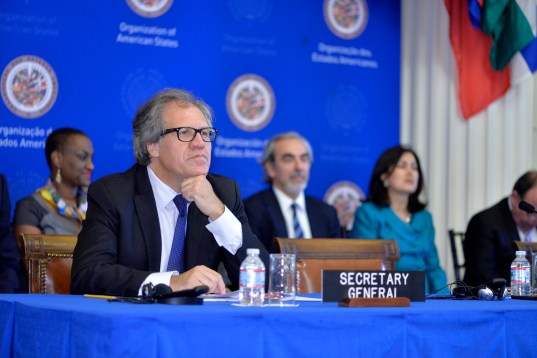
Secretary General Luis Almagro’s quest to revitalize the Organization of American States (OAS) seems premised on being an “activist” Secretary General in what could be a make-or-break gambit to assert the organization’s hemispheric leadership.  Only 13 months in office, Almagro has taken an approach that is a clear departure from the low-key, consensus-building ways of former Secretary General José Miguel Insulza.  In his 2015 inaugural address, Almagro laid out his plans for the rejuvenation of the OAS, including internal changes to “adapt it to the realities of the 21st century” and “insert [it] into a world different from the one in which it was developed and has grown and operated.”  Almagro underscored the need for the OAS to promote transparent and inclusive elections throughout Latin America and, in regard to democratic governance, “lend a hand to countries that are going through moments of tension and conflict.”

Almagro has taken a number of positions that confirm his desire to redefine the OAS’s role in the region.

  • In 2015, Almagro took the lead in developing a plan to fight corruption in Honduras, resulting in the formation of the Support Mission Against Corruption and Impunity (MACCIH) – a watered-down version of the successful UN-backed CICIG in Guatemala. The jury is still out on whether MACCIH will have a serious impact, but Almagro has staked his reputation on its credibility.
  • He has claimed that the impeachment of Brazilian President Dilma Rousseff lacked sufficient justification and that accusations against her were politically driven. Almagro also called for anticorruption investigations under Operação Lava Jato to continue as essential for the rule of law.
  • Prior to the Peruvian elections, Almagro warned that the disqualification of two candidates reflected unequal application of the law and raised concerns that the contests would be “semi-democratic.” Following a meeting with disqualified frontrunner Julio Gómez, Almagro called for the reinstatement of both candidates’ right to participate in the elections.
  • Perhaps Almagro’s most controversial action has been his attempt to invoke the OAS Democratic Charter against the government of Venezuela, without a finding by the Permanent Council, as required under Article 20 of the Charter, that the situation there amounts to “an unconstitutional alteration of a constitutional regime.” The Permanent Council implicitly rejected his appeal by urging more dialogue between the OAS and Venezuela.  Almagro then sent a strongly worded letter to Venezuelan President Nicolas Maduro accusing him of lying and “betraying his people,” and calling for the release of political prisoners, restoration of legitimate powers to the National Assembly, and a referendum to recall Maduro in 2016. (The Permanent Council is set to discuss the situation in Venezuela again on June 21.)

Almagro has taken on some very difficult issues, and explanations for his motivations are varied but not mutually exclusive.  Some observers perceive a personal embrace of OAS principles, others detect a desire to avoid the sort of U.S. criticism that plagued Insulza and constrained U.S. support and funding, and still others speculate about his future political ambitions as a reformist on the non-radical left of Latin America.  The democratic principles he is defending are clearly enshrined in OAS documents, but his activism has so far not reversed adverse situations: Rousseff was impeached, the Peruvian candidates were forced to sit out the election, and Maduro has yet to soften.  Being an “activist” Secretary General in the case of Venezuela entails great risks; his predecessors were criticized both for getting too directly involved in the country’s internal affairs and for remaining passive in the face of growing authoritarianism in Caracas.  It seems, moreover, as though Almagro has often acted alone, and the tone of his letter to Maduro was uniquely strident.  A great deal is on the line for the OAS.  If Almagro’s activism works, it will enhance the organization’s leadership on a range of issues confronting the hemisphere, but it may also put the OAS in the middle of future conflicts in which failure would bring a loss of institutional credibility. 

June 16, 2016

* Maria Carrasquillo is a recent graduate of the M.A. Program in American University’s School of International Service and a research assistant at the Center for Latin American and Latino Studies.

Increasing the Benefits of Trade Agreements

By Antoni Estevadeordal and Joaquim Tres*

Trade 1993-2016

Source: IDB (Full-sized images at bottom of page)

Latin American and Caribbean countries were major players in global trade liberalization in the 1990s but have since been held back by complex rules, infrastructural obstacles, and the poor flow of information.  The successful conclusion in 1994 of the Uruguay Round of multilateral trade negotiations and the establishment of the World Trade Organization (WTO) fueled growth and optimism in the region, but the slow progress of the Doha Round drove the region into the silent tide of regional trade agreements (RTAs), which now govern about half of world trade.  Latin American and Caribbean countries have concluded some 70 RTAs – a far cry from the handful of sub-regional customs unions and free trade areas in place in 1994.  As a result, tariffs applied by Latin American countries have dropped from an average of 40 percent to 10 percent during this period.

Despite these policy advances, Latin America and the Caribbean’s participation in international trade is still limited.  Whereas the region and the developing nations of Asia had a similar share of world trade in 1962 (around 6 percent), Latin America’s global trade share has remained relatively unchanged – and that of Developing Asia has grown to nearly three times its previous size.  Latin America registers lower levels of intra-regional trade – 18 percent – compared to 37% in Developing Asia and 61% in the European Union.  Our research indicates that Latin America and the Caribbean could close this gap through a series of measures:

  • Harmonizing the different rules of origin in the RTAs and the wide array of sanitary, phytosanitary, and technical standards that qualify market access.
  • Improving infrastructure and reducing inefficiencies at border crossings to reduce transportation and logistics costs, which amount to three times more than existing tariffs.
  • Harnessing the power of information and communications technology to reduce costs through one-stop shops and process automatization, such as the trade single windows being introduced in several countries in the region. The cost of information about consumer preferences, market demand, and foreign regulations is the first barrier that potential exporters face.
  • Simplifying and reducing administrative burdens through expedited and secure customs and other trade facilitation measures. Some experts estimate that, worldwide, some 75 percent of delays are due to inefficient processes (compared to 25 percent due to inadequate infrastructure).

The main lesson for Latin America and the Caribbean is that trade agreements are a necessary – but not sufficient – condition to achieve economic development potential.  Increasing companies’ participation in international value chains is key to unleashing trade as an engine for economic growth and poverty reduction.  Trade-driven growth in the region, much of it from South American commodities, enabled a reduction of poverty from 22 percent in 2002 to 12 percent by creating new employment opportunities and the fiscal capacity to fund poverty reduction initiatives such as conditional cash transfers (Mexico’s Programa Oportunidades, for example).  By our calculation, trade facilitation measures such as customs and border simplifications can increase Latin American and Caribbean exports by as much as 15 percent, translating into a 5 percent increase in export-supported jobs that pay almost 20 percent more than jobs at non-exporting firms.  It is within policymakers’ grasp to create the enabling environment for firms to export, especially for the small and medium-sized enterprises that may represent the next generation of exporters.

May 9, 2016

*Antoni Estevadeordal and Joaquim Tres are, respectively, the manager and principal specialist of the Integration and Trade Sector of the Inter-American Development Bank.  Click here to access the IDB’s new course on trade agreements, and here and here for related studies.

Trade 1993-2016 v2

Source: IDB

Latin America (Overall) Embraces Paris Climate Accord

By Fulton Armstrong

cop21 paris accord 2015

Heads of delegations at the 2015 United Nations Climate Change Conference in Paris. Photo Credit: Presidencia de la República Mexicana / Flickr / Creative Commons

Latin American support for the landmark climate agreement signed at the United Nations last week may not have been enthusiastic during the negotiations, but all but Nicaragua seem eager for early ratification and implementation of measures to mitigate the harm of global warming.  A record-breaking 175 countries signed the accord in one day, including a number from Latin America, committing them to take concrete steps to keep the increase in global temperatures from rising 2 degrees Celsius (or, ideally, 1.5 degrees) over preindustrial levels.  To take effect, at least 55 countries producing 55 percent of global emissions must ratify the agreement.  Fifteen small island nations, including several in the Caribbean, already presented their ratification papers last Friday.  China and the United States, the two greatest emitters of greenhouse gasses, have said they’ll ratify this year – as have France and other EU countries.

The region’s leaders have made significant contributions to the accord over the years.  Mexico and Peru, which were hosts of crucial international conclaves leading up to it, have given it a Latin American imprint, and others supported the final round of talks in Paris last December.  Brazilian President Dilma Rousseff’s reference in her speech to her political troubles back home overshadowed Brazil’s leadership, including its commitment to reduce its greenhouse gas emissions by 43 percent of 2005 levels by 2030.  In the past, ALBA countries complained loudly that the wealthy, developed nations, which produce the vast majority of climate-harming gasses, should shoulder the burden of reducing them and should compensate poorer countries for harm that environmental measures cause them.  All but Nicaragua, however, have submitted national plans (called an Intended Nationally Determined Contribution, INDC) required for full participation in international efforts under the Paris Accord.  Nicaraguan Representative Paul Oquist told the media that “voluntary responsibilities is a path to failure” and that wealthy countries should compensate Nicaragua for the $2 billion cost the measures would entail.

Latin America has clear incentives to support the accord.  Various scientific studies underscore the impact of global warming on the region, with potentially dire consequences.  The World Bank and Intergovernmental Panel on Climate Change have reported that failure to act would cause further extreme weather threatening agriculture; rapid melting of Andean glaciers that provide much-needed fresh water; erosion of coastal areas; catastrophic damage to Caribbean coral reefs; and dieback of Amazon forests.  ALBA demands for compensation may be overstated but contain a grain of truth – they aren’t prodigious producers of greenhouse gasses – and skepticism that the big guys will meet their targets isn’t entirely unwarranted.  President Obama has repeatedly demonstrated his personal commitment to addressing the problem, but obstacles posed by the U.S. Senate (which must ratify the agreement), Supreme Court (which in February stalled implementation of his Clean Power Plan), and politicians seeking the Republican Presidential nomination (who have sworn opposition to deals like the Paris Accord) have all but shut down U.S. movement toward ratification.  The ALBA outliers, on the other hand, have made their complaints heard and appear likely to join the rest of Latin America and the Caribbean in pushing for ratification and quick implementation – and probably will soon renew the push for even tougher measures by industrialized nations.

April 25, 2016

Brazil: Crises Hindering Foreign Policy

Dilma 2016

Photo Credit: Marcelo Camargo / Agência Brasil / Flickr / Creative Commons

by Tullo Vigevani*

The pace of Brazil’s rise in international affairs since 2000 is likely to be slowed by the multiple crises facing President Dilma Rousseff’s government and the private sector, but Brasilia will strive as best it can to maintain its global and regional priorities.  Political tensions are soaring amid corruption indictments and severe economic contraction – the nearly 4 percent decline in GDP in 2015 is expected to be repeated this year, with increasingly negative social consequences.  The government faces growing criticism that extends beyond the principal opposition parties: its own party base and supportive labor unions and social movements criticizing Rousseff’s administration.  The corruption investigations have spread far beyond the national oil company, Petrobras, and into corporate networks across economic sectors, exacerbating a climate of growing anxiety.  Major media are railing against the President and her predecessor, Luiz Inacio Lula da Silva, whose detention for questioning by a judge last week deepens the crisis and further dims the already faint prospects for a restoration of stability in 2016.

These developments have created an element of paralysis in foreign policy.  Foreign minister Mauro Vieira, like his two immediate predecessors – Luis Alberto Figueiredo (2013-2015) and Antonio Patriota (2011-2013) – has been unable to sustain the “active and proud” policy of Lula-era Foreign Minister Celso Amorim (2003-2010).  After basking not long ago in the fruits of its assertive foreign policies – including selection as host of the 2016 Olympics – Brazil’s government now is dealing with matters such as the Zika virus and microcephaly taking front stage.  Rousseff on one hand is barraged by criticism of a lack of macroeconomic rigor and the failure to better integrate Brazil’s economy into global production chains, and on the other she is criticized for slow investments and development policies.  Her ambition to promote South American trade and economic integration is being undermined by the recessionary pressures confronting Brazil and neighboring economies buffeted by the end of the commodities boom.

  • MERCOSUR remains a priority for the administration. Criticism by liberal economists will mount, however, that Mercosur, as a customs union, discourages potential agreements with developed economies, particularly the United States, thus exacerbating Brazil’s de-industrialization.  There is evidence that Mercosur helps companies that produce high value-added goods: whereas in 2014 manufacturing accounted for 77 percent of Brazilian exports within Mercosur, it accounted for only 4 percent of exports to China.  (The figures for the European Union and the U.S. were 37 and 55 percent, respectively).  Progress on trade agreements with the United States and other developed countries appears unlikely, but agreements on trade promotion seem likely.
  • Cooperation with UNASUR will remain a priority as well, but plans that rely on Brazil’s ability to provide resources face new political and economic restraints. The Ministries of Finance and Planning and the Central Bank reportedly are going to rein in contributions of the Brazilian Development Bank (BNDES), and funding for the South American Council of Infrastructure and Planning (COSIPLAN).  Initiatives such as the South American Defense Council will continue.  Clearly, state enterprises such as Petrobras and private-sector conglomerates will face limits on their foreign activities, reducing Brazil’s influence in the region.

The relationship between domestic and international affairs is inescapable, and Brazil is no exception.  But even as the domestic political and economic conditions deteriorate for a period, the country will not turn inward or abandon its interest in the international arena, particularly with China and the BRICS.  However rough the road ahead, President Rousseff’s government appears likely to remain steadfast in its approach to regional diplomatic and political organizations – including the Community of Latin American and Caribbean States (CELAC) and the OAS – even though resources will be tight.  It will remain active, within its diminished capacity, in an array of multilateral settings ranging from UN peacekeeping operations and the FAO, to the G-20, WTO and IMF.  Moreover, senior officials in Brasilia, including in the Foreign Ministry, appear committed to stronger bilateral ties with core partners, particularly the United States, and continued Brazilian support for democratic stability throughout Latin America, including in resolution of the Venezuelan crisis.  Even though resources and performance may suffer, a robust role in the hemisphere appears likely to remain a pillar of Brazil’s foreign policy.  The idea of Brazil’s autonomy in the international arena has deep roots, and whatever the domestic criticism leveled against the Rousseff administration, these will be matters of interpretation rather than a fundamental questioning of Brazil’s greater insertion into global processes and of political and economic interdependence.

March 7, 2016

*Tullo Vigevani is Professor of Political Science and International Relations at the State University of São Paulo (UNESP) and a researcher at the Center for Studies on Contemporary Culture (Cedec) and the Brazilian National Institute of Science and Technology for Studies on the United States (INCT-INEU), in São Paulo.

Ignoring MERCOSUR and UNASUR at Your Peril

By Thomas Andrew O’Keefe*

Mercosur map

Participating countries in MERCOSUR. Image Credit: Immanuel Giel (modified) / Wikimedia / Creative Commons

Pundits who dismiss MERCOSUR and the Union of South American Nations (UNASUR) as failed attempts at Latin American economic integration should look again.  MERCOSUR has presided over an explosion in intra-regional trade among its four original member states (Argentina, Brazil, Paraguay, and Uruguay) from just over US$ 5 billion at its launch in 1991 to US$ 43 billion by 2014.  UNASUR, for its part, is credited with thwarting a coup attempt against Evo Morales in 2008 and putting a damper on continental arms races.

  • MERCOSUR and UNASUR member countries have taken additional important steps toward convergence since 2014, when MERCOSUR’s highest governing body adopted “CMC Decision 32,” which allows initiatives pursued by either collective to be binding on both if they arise from a set of goals and objectives common to both. The document reaffirms the UNASUR founding treaty stipulation that “South American integration shall be achieved through an innovative process that includes all of the achievements and advances by the processes of MERCOSUR and CAN [Andean Community].”  Chile has spearheaded this effort as a means of reducing duplication of efforts, and is also attempting to bridge ideological differences between the Pacific Alliance (Chile, Colombia, Mexico, and Peru) and MERCOSUR to further build Latin American unity.

Given the relentless negative assessment of both integration projects, multinational pharmaceutical companies were caught off guard when MERCOSUR and UNASUR forced them late last year to make substantial price cuts for public-sector purchases of Darunavir, an antiretroviral to combat HIV-AIDS, as well as Sofosbuvir, used with other medications to treat Hepatitis C.  Both drugs are on the World Health Organization’s List of Essential Medicines.  As a result of CMC Decision 32/14, the Ministers of Health of all the South American nations met in Montevideo on September 11, 2015, and launched a joint MERCOSUR/UNASUR committee to negotiate with multinational pharmaceutical companies on the prices for bulk purchases of certain high-priced drugs.  The committee, made up of representatives from each government’s agency responsible for purchasing medicines, won major price cuts last November – a steep reduction for Darunavir from Hetero Labs as well as lower prices with Gilead for Sofosbuvir.  The new costs were premised on the lowest amount charged to any one of the member governments, and enabled Chile’s Ministry of Health to pay 90 percent less than what it previously paid for Darunavir.  The South American governments as a whole are expected to save US$ 20 million in 2016 on purchases of this anti-retroviral.  A proposed 14 percent reduction in the cost of the combination Sofosbuvir-Ledispaver drug for Hepatitis C – if accepted by the MERCOSUR/UNASUR committee – would enable further savings.

The South American governments have their eyes set on several additional high-priced medications, with a particular focus on drugs used to treat cancer.  In order to aid the committee’s work, UNASUR is creating a data bank of the prices charged by the multinationals for specified medicines purchased by the public health sector in each member state.  The fact that the purchases are made jointly through the Pan American Health Organization’s already existing Strategic Fund opens the possibility that countries in Central America and the Caribbean can benefit as well.  It also means that all these countries can access the Fund’s capital account and do not need to have the cash in hand to acquire medications required to address public health emergencies.  MERCOSUR and UNASUR – often dismissed as ineffective – are demonstrating that integration produces tangible results.

February 11, 2016

* Thomas Andrew O’Keefe is President of San Francisco-based Mercosur Consulting Group, Ltd. and is former chair of Western Hemisphere Area Studies at the U.S. State Department’s Foreign Service Institute (2011-15).

Correction: Due to an editing error, an earlier version of this post mistakenly stated that “a 14 percent reduction in the cost of its combination Sofosbuvir-Ledispaver drug for Hepatitis C will enable Chile’s Ministry of Health to pay 90 percent less than what it previously paid for Darunavir.”  The outcomes of the cost negotiations for the two medications are unconnected.