What does the New Year hold for Latin America?

We’ve invited AULABLOG’s contributors to share with us a prediction or two for the new year in their areas of expertise.  Here are their predictions.

Photo credit: titoalfredo / Foter.com / CC BY-NC-SA

Photo credit: titoalfredo / Foter.com / CC BY-NC-SA

U.S.-Latin America relations will deteriorate further as there will be little movement in Washington on immigration reform, the pace of deportations, narcotics policy, weapons flows, or relations with Cuba.  Steady progress toward consolidating the Trans-Pacific Partnership (TPP), however, will catalyze a shared economic agenda with market-oriented governments in Chile, Mexico, Peru and possibly Colombia, depending on how election-year politics affects that country’s trade stance.

– Eric Hershberg

The energy sector will be at the core of the economic and political crises many countries in the Americas will confront in 2014.  Argentina kicked off the New Year with massive blackouts and riots.  Bolivia, the PetroCaribe nations, and potentially even poster child Chile are next.

– Thomas Andrew O’Keefe

Unprecedented success of Mexico’s Peña Nieto passing structural reforms requiring constitutional amendments that eluded three previous administrations spanning 18 years, are encouraging for the country’s prospects of faster growth.  Key for 2014: quality and expediency of secondary implementing legislation and effectiveness in execution of the reforms.

– Manuel Suarez-Mier

Mexico may be leading the way, at least in the short term, with exciting energy sector reforms, which if fully executed, could help bring Mexico’s oil industry into the 21st Century, even if this means discarding, at least partly, some of the rhetorical nationalism which made Mexico’s inefficient and romanticized parastatal oil company – Petróleos Mexicanos (PEMEX) – a symbol of Mexican national pride.  Let’s see if some of the proceeds from the reforms and resulting production boosts can fortify ideals of the Mexican Revolution by generating more social programs to diminish inequality, and getting rid of the bloat and corruption at PEMEX.

– Todd Eisenstadt

Brazil is without a doubt “the country of soccer,” as Brazilians like to say.  If Brazil wins the world cup in June, Dilma will also have an easy win in the presidential elections.  But if it loses, Dilma will have to deal with new protests and accusations of big spending to build soccer fields rather than improving education and health.

– Luciano Melo

Brazilian foreign policy is unlikely to undergo deep changes, although emphasis could shift in some areas.  Brazil will insist on multilateral solutions – accepting, for example, the invitation to participate at a “five-plus-one” meeting on Syria.  The WTO Doha Round will remain a priority.  Foreign policy does not appear likely to be a core issue in the October general elections.  If economic difficulties do not grow, Brazil will continue to upgrade its international role.

– Tullo Vigevani

In U.S.-Cuba relations, expect agreements on Coast Guard search and rescue, direct postal service, oil spill prevention, and – maybe – counternarcotics.  Warming relations could set the stage for releasing Alan Gross (and others?) in exchange for the remaining Cuban Five (soon to be three).  But normalizing relations is not in the cards until Washington exchanges its regime change policy for one of real coexistence.  A handshake does not make for a détente.

– William M. LeoGrande

A decline in the flow of Venezuelan resources to Cuba will impact the island’s economy, but the blow will be cushioned by continued expansion of Brazilian investment and trade and deepened economic ties with countries outside the Americas.

– Eric Hershberg

In a non-election year in Venezuela, President Maduro will begin to incrementally increase the cost of gasoline at the pump, currently the world’s lowest, and devalue the currency – but neither will solve deep economic troubles.  Dialogue with the opposition, a new trend, will endure but experience fits and starts.  The country will not experience a social explosion, and new faces will join Capriles to round out a more diverse opposition leadership.  Barring a crisis requiring cooperation, tensions with the United States will remain high but commerce will be unaffected.

– Michael McCarthy

Colombia’s negotiations with the FARC won’t be resolved by the May 2014 elections, which President Santos will win easily – most likely in the first round.  There will be more interesting things going on in the legislative races.  Former President Uribe will win a seat in the Senate.  Other candidates in his party will win as well – probably not as many as he would like but enough for him to continue being a big headache for the Santos administration.  Colombia’s economy will continue to improve, and the national football team will put up a good fight in the World Cup.

– Elyssa Pachico

Awareness of violence against women will keep increasing.  Unfortunately, the criminalization of abortion or, in other words, forcing pregnancy on women, will still be treated by many policy makers and judges as an issue unrelated to gender violence.

– Macarena Saez

In the North American partnership, NAFTA’s anniversary offers a chance to reflect on the trilateral relationship – leaving behind the campaign rhetoric and looking forward. The leaders will hold a long-delayed summit and offer some small, but positive, measures on education and infrastructure. North America will be at the center of global trade negotiations.

– Tom Long

The debate over immigration reform in Washington will take on the component parts of the Senate’s comprehensive bill. Both parties could pat themselves on the back heading into the mid-term elections by working out a deal, most likely trading enhanced security measures for a more reasonable but still-imposing pathway to citizenship.

– Aaron Bell

The new government in Honduras will try to deepen neoliberal policies, but new political parties, such as LIBRE and PAC, will make the new Congress more deliberative. Low economic growth and deterioration in social conditions will present challenges to governability.

– Hugo Noé Pino

In the northern tier of Central America, despite new incoming presidents in El Salvador and Honduras, impunity and corruption will remain unaddressed.  Guatemala’s timid reform will be the tiny window of hope in the region.  The United States will still appear clueless about the region’s growing governance crisis.

– Héctor Silva

Increased tension will continue in the Dominican Republic in the aftermath of the Constitutional Tribunal’s decision to retroactively strip Dominicans of Haitian descent of citizenship.  The implementation of the ruling in 2014 through repatriation will be met with international pressure for the Dominican government to reverse the ruling.

— Maribel Vásquez

In counternarcotics policy, eyes will turn to Uruguay to see how the experiment with marijuana plays out. Unfortunately, it is too small an experiment to tell us anything. Instead, the focus will become the growing problem of drug consumption in the region.

– Steven Dudley

Eyeing a late-year general election and possible third term, Bolivian President Evo Morales will be in campaign mode throughout 2014.  With no real challengers, Morales will win, but not in a landslide, as he fights with dissenting indigenous groups and trade unionists, a more divisive congress, the U.S., and Brazil.

– Robert Albro

In Ecuador, with stable economic numbers throughout 2014, President Rafael Correa will be on the offensive with his “citizen revolution,” looking to solidify his political movement in local elections, continuing his war on the press, while promoting big new investments in hydroelectric power.

– Robert Albro

Determined to expand Peru’s investment in extractive industries and maintain strong economic growth, President Ollanta Humalla will apply new pressure on opponents of proposed concessions, leading to fits and starts of violent conflict throughout 2014, with the president mostly getting his way.

– Robert Albro
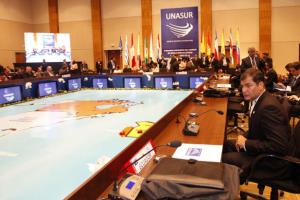
UNASUR Looking for Leadership and Direction

By Andrés Serbin

unasur meetingThe seventh UNASUR head of state summit, held in Suriname in August, failed to give the organization the shot in the arm that it needed to continue developing as an effective voice for South America. Despite grandiloquent declarations that it was a “historic event” for the region, the summit was in danger of being overshadowed by several incidents. The son of Suriname´s President and summit host, Desi Bouterse, (who himself has a checkered past) was detained in Panama the day before the summit and extradited to the United States, where he faced drug- and arms-trafficking charges.  (The son was subsequently charged with “attempting to support a terrorist organization” as well.)  Moreover, four of the 12 UNASUR heads of state didn´t attend the Summit, and bilateral tensions between some of the participants got the meeting off to a rough start:  Bolivia was irritated that Brazil gave asylum to a senator accused of corruption; Uruguay’s decision to expand a paper plant on the Paraná River peeved Argentina; Chile and Argentina were in a row regarding the Chilean airline LAN’s use of facilities in Buenos Aires; Chile and Peru continue a battle in the Hague about a territorial dispute; and Paraguay was still in limbo after being suspended from UNASUR (and MERCOSUR) after President Lugo’s removal last year by the Congress.

Even as the dust settled, however, UNASUR was unable to take on the most important task of the summit – appointing a new Secretary General for the organization.  Despite their contrasting styles – sometimes complementary and sometimes in open competition – Presidents Chávez and Lula de Silva had driven the creation and consolidation of UNASUR after the end of the FTAA project during the Mar del Plata Summit of the Americas in 2005, but that strong leadership is not there anymore.  Their absence laid bare the weak political will of most other South American leaders to consolidate the organization and to build a strong institutional basis for its development.  No one, except perhaps former (and controversial) Paraguayan President Lugo has expressed interest in the job of Secretary General.  It was no surprise, moreover, that the Summit was not able to advance other crucial decisions, such as the creation of the long expected Banco del Sur. A resolution condemning U.S. initiatives regarding Syria was one of the few relevant and consensual results of the Summit.

UNASUR started out as a political endeavor based on regional, instead of national, interests, and much of its earlier momentum was driven by rejection of earlier “neoliberal” attempts at regional integration and of the role of the United States in the region. Members’ new focus is clearly state-centric and political, as regional market and trade issues have been superseded by a new agenda focusing on infrastructure and communications development, energy and security agreements, global financial impact and environmental concerns. The absence of new leadership to move forward a regional agenda poses a series of challenges to this process.   In the meantime, other processes continue.  Paradoxically, some of the member countries are deeply involved in the creation of a new initiative – the Pacific Alliance (Alianza del Pacífico), clearly oriented towards free trade.

Revitalization of the OAS: More Than an Act of Congress

By Carlos Portales*

OAS logoU.S. Congressional passage in late September of the “Organization of American States Revitalization and Reform Act of 2013” could either help revitalize the troubled body or contribute to its irrelevance. By directing the U.S. Secretary of State to develop and drive OAS reform options, the bill seeks to give much higher priority in the OAS and Summit of the Americas to promoting and consolidating democracy in the hemisphere – “with due respect for the principle of nonintervention” – while recognizing that “key OAS strengths” are also in strengthening peace and security, assisting and monitoring elections, and fostering economic growth. Reducing “mandates” – ongoing programs that tend to get institutionalized – is another priority. The new law also requires Secretary Kerry to devise a strategy for a new fee structure in which no member state would pay more than 50 percent of OAS’s assessed yearly fees. (The U.S. Library of Congress reports that the United States, the organization’s largest donor, contributed an estimated $67.5 million in fiscal year 2012 – nearly 43 percent of the total 2012 budget.)

The reforms parallel ideas presented by OAS Secretary General Insulza in his “Strategic Vision of the OAS” on December 2011 (updated in March 2013) striving for concentration on four main pillars: democracy and conflict resolution; human rights; development (in association with the Inter-American Development Bank); and security (mainly against drugs and organized crime). He also advocated limiting a single state contribution to 49 percent without reducing the OAS’s total budget. The Secretary General embraced similar reforms when the legislation was first introduced by then-Senator Kerry in the previous Congress.

Agreement that the OAS needs reform is nearly universal, but any strategic transformation will have to take into account important developments among the Latin American international organizations. The OAS handily accommodated the creation of subregional organizations such as SICA and CARICOM in the past.  But new bodies – such as UNASUR, CELAC and ALBA – have posed new challenges to the organization’s relevance and effectiveness. Differences among the organizations have emerged over trade, democracy (different value attributed to the independence of powers and to press freedom, as well as of handling of crises in Venezuela, Honduras, and Paraguay), security (withdrawal of five countries from the Inter-American Treaty of Reciprocal Assistance), the strategy against drugs, and relations with the United States.  The organizations have also created new arenas for leaders to meet, at times taxing governments’ ability to keep up. From 1990 to 2012 there have been 272 Latin American regional and subregional summits, including eight Summits of the Americas.  When Secretary Kerry delivers his plan, it will be difficult for him to strike a balance between bringing the OAS more in line with Washington priorities, as laid out in the legislation, and seeking a bigger tent that addresses some of the concerns that gave rise to the plethora of competing organizations.

*Carlos Portales is the Director of the Program on International Organizations, Law and Diplomacy at WCL, American University. He was Ambassador of Chile to the OAS between 1997 to 2000.”

ALBA’s Future: Continuity or Break Down?

By Marcela Torres

ALBA Emblem | public domain

ALBA Emblem | public domain

The death of Hugo Chávez last March and the increasingly severe economic dislocations inside Venezuela have raised serious questions about the sustainability of the Bolivarian Alliance for the Peoples of the Americas (or ALBA).  Born out of an agreement between the Venezuelan and Cuban governments in 2004, the alliance was intended as a response to the U.S. goal of a Free Trade Area of the Americas (FTAA), as well as a vehicle for Chávez to project his Bolivarian vision for Latin American solidarity around a socialist project.  The regional bloc won its first symbolic battle at the Fourth Summit of the Americas in 2005, where Argentina, Brazil, Uruguay, and Paraguay definitively halted negotiations led by U.S. allies to create a single hemispheric free trade area (excluding Cuba, of course).  Over time, ALBA and its oil-based extension, Petrocaribe, have had a significant impact on economies in the region, providing crucial underpinning for presidents who signed on to Chávez’s vision for ideological or pragmatic reasons.  Among the greatest beneficiaries have been the Castro government in Cuba and the Ortega government in Nicaragua, which have received petroleum in exchange for food, in the case of Nicaragua, and doctors and teachers, in the case of Cuba. Ecuador and Bolivia, along with several states in the greater Caribbean, have also become key players in the ALBA network.

Venezuela’s leadership of ALBA, frequently described as “petro diplomacy,” has repeatedly come under fire from the country’s political opposition and from government critics in other ALBA-friendly nations.  The critiques in Venezuela rarely acknowledge the degree to which petro diplomacy has been a recurring feature of that country’s foreign policy, most notably during the governments of Carlos Andrés Pérez in the 1970s and 1980s.  Critics inside Venezuela and beyond frequently accused Chávez of building dependent clientelistic networks with countries desperate for energy resources. However, ALBA activities have transcended ideological divides, a fact demonstrated by Misión Milagro in Colombia, where Cuban doctors indirectly supported by Venezuela provide medical services in conflict zones.  If Chavez’s oil and charisma initially defined ALBA’s possibilities, the alliance has also fostered economic ties and investments among member countries, independent from Venezuela.

Though the election of Nicolás Maduro as Chávez’s successor might appear to guarantee political continuity, lacking Chávez’s charisma, Maduro might not be able to continue Chávez’s level of oil-fueled investment in ALBA.  Public spending in Venezuela continues to increase dramatically, with the fiscal deficit at 9-12 percent, inflation exceeding 40 percent, and the scarcity of dollars contributing to shortages of basic consumer goods.  To sustain its financial backing for ALBA, Maduro will have to stabilize the economy at home lest he lose the  popular legitimacy — no simple challenge.  Following the Twelfth Presidential Summit of ALBA in July, the presidents of Ecuador, Bolivia and Nicaragua joined Maduro in reaffirming their shared commitment to a socialist project in the region and a desire to maintain the international exchanges initiated by Chávez, suggesting that the alliance will not disappear at least in rhetoric in the medium term.  It is possible, however, that Maduro’s leadership will be challenged.  After the airplane in which Bolivian President Evo Morales was traveling was not allowed to land in France and Portugal this summer,  he proposed creating an ALBA army and convening another anti-imperialist summit.  Recently re-elected Rafael Correa of Ecuador has also hinted he might want to lead ALBA.  Without Venezuelan oil and sweeteners like Petrocaribe, it’s hard to see how ALBA will amount to more than a platform for personalistic agendas.


Snowden’s Revelations Rile Latin America

"Snowden Day in Brasilia, Brazil" Photo credit: midianinja / Foter / CC BY-NC-SA

“Snowden Day in Brasilia, Brazil” Photo credit: midianinja / Foter / CC BY-NC-SA

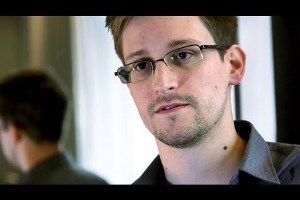
Allegations by former U.S. intelligence officer Edward Snowden about U.S. operations in Latin America have stirred further recriminations toward Washington.  According to press reports, Snowden revealed that U.S. agencies monitored internet traffic, especially in Colombia (with a special focus on the FARC guerrillas), Venezuela, Brazil and Mexico.  The National Security Agency (NSA) allegedly spied on military procurement and the oil industry in Venezuela, as well as the energy sector and political affairs in Mexico.  The Huffington Post reported that almost every Latin American country was targeted to one degree or other.

Regional reaction has been strong:

  • O Globo (Brazil) columnists, claiming that Brazil was the most spied upon country in Latin America, called the surveillance a genuine invasion of privacy that undermines both Brazilian authorities and citizens.  Former President Cardoso said, “If such activities existed, if they were done, as with all espionage, it was outside the law.”  The Senate has already “invited” Cabinet ministers to testify – and they have pledged to investigate.  (It also invited U.S. Ambassador Tom Shannon, but he is under no obligation to appear before the Brazilian Congress.)
  • El Espectador (Colombia) said the U.S. spying was an attack on Colombian sovereignty.  It quoted various senators as saying that “one does not spy on one’s friends and even less when they’ve been political allies in big decisions between states” and demanding that the government limit such activities.  Foreign Minister Holguín sent a delegation to Washington to seek explanations.
  • Mexican President Peña Nieto called the U.S. spying “totally unacceptable,” and the opposition PRD has accused the government of being “too soft” in its response to the alleged espionage.
  • The ALBA countries have been strident.  Venezuelan President Maduro has demanded “answers and explanations, [and] more than explanations, apologies.”  Ecuadoran President Correa said “we will put up with no more abuses, arbitrariness, disrespect for human rights.”

The extent of U.S. intelligence operations will not be known for decades.  It took experts 30 years, for example, to pry loose information about the CIA’s role in the coup that brought Chilean strongman Pinochet to power.  But the tensions such allegations create do not fade rapidly.  Even accounting for hyperbole in political rhetoric, these protestations cannot be helpful to U.S. short-term efforts to win Latin American help in capturing Snowden, nor in long-term efforts to revive the Obama Administration’s stated goal of building “partnership” in the region.  Continued threats – thinly veiled – from unnamed senior U.S. officials also run counter to that goal of building partnership and the related objective of minimizing fallout from accusations of spying.

The Snowden Case: Provocations and Intimidation

By Fulton T. Armstrong

Edward Snowden / Photo credit: zennie62 / Foter / CC BY-ND

Edward Snowden / Photo credit: zennie62 / Foter / CC BY-ND

The rhetoric and diplomatic jostling surrounding the flight of American whistleblower (or, depending on perspective, criminal leaker) Edward Snowden have once again thrust to the fore Latin America and U.S. policy toward the region.  Some Latin American presidents have seemed to go out of their way to prick U.S. sensitivities, and Washington seems to have gone out of its way to stomp on Latin American sensitivities.  Both sides have been happy to live up to the caricatures of themselves held by the other, but both sides’ interests have been harmed in the process.

The drama started, of course, while Snowden was in hiding in Hong Kong, and it has dragged on as he’s resided in a transit lounge of the Moscow airport.  U.S. media, which in the past have published stories casting Cuba, Venezuela, Ecuador, and others as eager to poke the U.S. in the eye, ran pieces – shifting attention to Latin America – and away from China and Russia’s even bigger slap in Washington’s face in refusing to hand the leaker over.  Reporters believed their own rumors and piled into an Aeroflot plane bound for Cuba.  Washington rolled out the big guns, including Vice President Biden, to discourage the Latin Americans from offering Snowden any help – and seemed to have success.  Ecuador, which has protected Wikileaks boss Julian Assange from British, Swedish and U.S. pursuit, initially welcomed Snowden but, after a phone call from Washington, pointed out that an asylum petition could not be considered until he arrived in country.  The crisis between the U.S. and Latin America deepened, however, when several European countries – presumably responding to U.S. pressure and bad U.S. intelligence – closed their airspace to Bolivian President Morales, who someone, somewhere, suspected of flying Snowden out of Moscow on the president’s return home.  Latin American condemnation exploded.

Venezuelan President Maduro, stating that that he wanted “to protect this young man from the persecution unleashed by the world’s most powerful empire,” publicly offered Snowden asylum on Friday.  That move ended the slight progress Caracas and Washington had made toward rapprochement– evident since the OAS General Assembly in June – and bilateral relations will surely worsen.  But the Obama Administration’s relations with Latin America writ large don’t appear likely to fare much better.  Some leaders’ rhetoric may be over the top, but Washington’s language has been threatening, and its actions speak louder than its words.  An unidentified senior U.S. official told the New York Times that “there is not a country in the hemisphere whose government does not understand our position at this point,” adding that any aid for Mr. Snowden “would put relations in a very bad place for a long time to come.” Such statements leave one wondering whether we are approaching the point where this administration will cease proclaiming its commitment to a new era of US-Latin America relations characterized by partnership and respect among equals.  Transcripts of Mr. Biden’s calls will not be released, but rarely do countries reverse their positions publicly in the absence of either serious threats or generous inducements – and few clear-thinking Ecuadorans, tracking the Administration’s attitudes toward President Correa, see the latter as in the cards.  In pressuring its European allies to establish a no-fly zone to keep a head of state from returning home, Washington took an action that many Latin Americans – not without a grain of truth – believe it would never take against a region that it respected.  Repairing the damage of el asunto Snowden will be hard for both sides, but Washington has the bigger task ahead.


U.S. Credibility Takes Another Hit

By Fulton T. Armstrong

Photo credit: Chairman of the Joint Chiefs of Staff / Foter.com / CC BY

Photo credit: Chairman of the Joint Chiefs of Staff / Foter.com / CC BY

The domestic spying programs under the Bush and Obama Administrations further erode U.S. moral leadership in the hemisphere and probably beyond.  At crucial junctures since President Jimmy Carter made human rights a pillar of policy in Latin America, U.S. moral authority has been decisive in persuading regimes on the right and the left to open the way for pluralism and democracy.  Lecturing governments and militaries on the need to eschew torture, domestic spying, and other abuses, U.S. diplomats and politicians could have been charged with arrogance, but on these specific aspects of the U.S. government’s treatment of its own people, not serious hypocrisy. The U. S. had its racial and economic injustices, but trends were positive, and the country stood for the rule of law, skepticism of State Security officials’ penchant to use information for power, and a pretty solid respect for due process. Even before Carter, the Watergate scandal – and resulting resignation of the President and overhaul of the intelligence agencies – was a clarion signal that agencies created to monitor foreign affairs must keep their focus far off U.S. shores.

Latin American media have carried primarily factual stories revealing the “PRISM” program, which collects data from hundreds of millions of e-mails and other electronic communications each day and stores it for exploitation by targeters (now called “analysts”) on the lookout for alleged potential terrorists, based on secret profiling.  Some papers have reported that Director for National Intelligence Clapper lied to the U.S. Congress without batting an eyelash when asked directly if such activities were ongoing.  Coming after reports in recent years of the use of torture (and the impunity granted to the perpetrators), the so-called “extraordinary renditions” (and the cases in which kidnap victims were innocent), the use of “black prisons” (in which security services in new democracies were encouraged to circumvent their elected officials),drone attacks (even against U.S. citizens), and the continued detention of prisoners without trial at Guantanamo (giving human rights violations in Cuba a new meaning) have all been noted throughout Latin America.  PRISM may no longer be considered newsworthy.

The fact that British and American newspapers eventually brought the domestic spying programs to light may hearten some in Latin America, as evidence that an essential element of democracy – a probing press –shows signs of life despite reports of Justice Department harassment of the Associated Press and other media.  But sentient Latin Americans know the implications of PRISM – and what enterprising State Security “analysts” can do with years of data about even the most mundane aspects of potential targets’ lives.  The Obama Administration’s defense of PRISM as necessary to defend against supposed terrorists doesn’t sell well in a region that knows how information never sits unused.  The Bush Administration gave the Medal of Freedom to Colombian President Uribe, who deployed his secret intelligence agency to harass opponents and allowed his military to disappear thousands of youths.  The Obama Administration’s lectures to Venezuela, Nicaragua, Bolivia and Ecuador on the need to give more space to opponents – however warranted – ring sort of hollow when, in Latin Americans’ minds, it has nurtured its own Frankenstein state-security apparatus that lacks credible checks and balances.  Washington can argue that U.S. moral authority doesn’t matter, and that the “terrorist threat” it faces calls for extraordinary measures, but it will be a long time before an American statesman can wag his finger at a Latin American counterpart for doing the same thing.

U.S.-China: Competing over Central America and the Caribbean?

President Obama and President Chinchilla in Costa Rica | Photo by: The White House | Public domain

President Obama and President Chinchilla in Costa Rica | Photo by: The White House | Public domain

The recent visits to Central America, Mexico, and the Caribbean by Chinese President Xi Jinping and U.S. President Obama (and Vice President Biden to Trinidad and Tobago) suggest a handoff from Washington to Beijing of the role as the region’s sugar-daddy, but not a strategic shift in influence.  The presidents’ visits were similar in their innocuous itineraries.  Both got pompous welcomes; met with “real” citizens (Xi ate empanaditas de chiverre with a coffee farmer); and praised the bilateral relationships.  Both held sub-regional summits – Obama in San José and Xi in Port of Spain.  Both repackaged ongoing or recently negotiated projects as new “accords.”  Obama pledged another $150 million a year for funding the Central America Regional Security Initiative (CARSI), part of the strategy started under President Bush to counter the drug trade and related threats.  Xi got headlines in Costa Rica for providing more than $1.5 billion for refinery and road projects and to purchase replacement taxis and buses from Chinese manufacturers.  Significantly, China is also building Costa Rica’s new National Police Academy – the sort of project Washington used to thrive on.

President Chinchilla and President Xi Jinping | Photo credit: Presidencia de la República de Costa Rica / Foter.com / CC BY-NC-SA

President Chinchilla and President Xi Jinping | Photo credit: Presidencia de la República de Costa Rica / Foter.com / CC BY-NC-SA

Despite the similarities, the visits had different orientations and feel.  Xi’s principal task appeared to be to open his checkbook, while Obama’s main deliverable was a policy shift – the welcome word that Washington was pulling back from making its top regional priority the interdiction of narcotics produced in South America and transiting the isthmus on their way to consumers in the United States.  According to press reports, despite the continued CARSI funding, Obama had absorbed Costa Rican President Chinchilla’s complaint last year at a summit with Biden that it was unfair that Central Americans were dying in efforts to stop narcotics that Americans use.  The media tried to give the two presidents equal coverage, but the disparity became obvious.  The Chinese distributed copies of the China Daily (in English) even into the San José suburbs, whereas Obama didn’t need to do his own publicity.  Despite whiffs of resentment about airport and street closures, the papers covered all of Obama’s events with affectionate quotes from government and common folk alike – and showed people, including a kid dressed as Spider-Man, waving to his motorcade.  La Nación, on the other hand, reported that school children cheering a Chinese speaker couldn’t understand a word he was saying.

The goodies each president brought created little excitement – and no small amount of skepticism.  Important details about China’s offer to help repair the Costa Rican gasoline refinery remain unknown, and Chinese cars already have a bad reputation.  China’s handouts aren’t going to be turned down, of course, and Xi’s pledge to buy more Costa Rican coffee (now about 5 percent of what Japan buys) and to encourage Chinese tourists to travel to the country (now a micro-percentage of visitors) are welcome.  Obama’s CARSI funding looks like bureaucracy on autopilot.  Few Central Americans can cite concrete benefits from the seven-year-old Central American Free Trade Agreement (CAFTA) with the United States either, and the general impression – reinforced by Secretary Kerry’s recent reference to the region as the U.S. “backyard” – is that Washington is yielding the playing field to China.  But the natural ties and strategic mutual interests between Central America and the United States remain strong and give the United States, should it wish to fill it, ample space to play a positive role in the region’s future beyond programs on autopilot.

OAS Drug Report: Let’s Get Serious

The OAS Preparing their Report on the Drug Problem in the Americas | Photo credit: OEA - OAS | Foter.com | CC BY-NC-ND

The OAS Preparing their Report on the Drug Problem in the Americas | Photo credit: OEA – OAS | Foter.com | CC BY-NC-ND

The Organization of American States’ most recent report on the drug problem in the Americas – released last week in Bogotá – takes a fresh, analytical look at the issue and, by advocating discussion of new approaches, subtly signals the “war on drugs” so far has failed.  The report was mandated by hemispheric leaders last year at the Summit of the Americas in Cartagena, who “agreed on the need to analyze the results of the current policy in the Americas and to explore new approaches to strengthen this struggle and to become more effective.”  It takes an analytical approach toward drug-related problems in the hemisphere and includes a discussion of both the supply and demand factors of the drug trade.  (Click here to view the OAS documents.)

The report does not make bold policy recommendations.  It calls for greater attention to the public-health implications of the drug problem, but generally avoids advocating particular strategic solutions to the production, transportation and consumption of illegal narcotics, instead providing different scenarios for the evolution of the drug problem in the Americas.  It envisions the legalization of certain drugs, such as marijuana, in various countries, but makes clear that the OAS is not advocating legalization or decriminalization.  Instead, the report emphasizes the need for countries in the Western Hemisphere to work together to combat the drug problem and discuss new approaches.

The OAS’s unique status in the hemisphere – demands on its performance are high but support for its efforts  from key governments in the region is inconsistent – may not make it the best organization to take the lead on an issue as thorny as the “war on drugs.”  The increasingly clear consensus south of the Rio Grande is that the past couple decades of effort have been not been worth the cost in dollars and lost lives, and many Central Americans, in particular, believe the militarized approach has been disastrous.  Often criticized by U.S. politicians and bureaucrats, Secretary General Insulza was probably wise not to use the report to formalize the hemisphere’s rejection of Washington’s policies.  But moving the discussion to the analytical level – rather than parroting support for another Plan Colombia or Mérida Initiative – is a significant accomplishment in itself.  Rolling out the report in Bogotá, where talk of “new approaches” is also growing, probably helped strike the right balance between old and new.  In addition to platitudinous calls for regional cooperation, the OAS can demonstrate its leadership and relevance by channeling the criticism, the lessons learned, frustration with U.S. consumption, and regional governments’ prescriptions on the way ahead into a serious, constructive strategy for the hemisphere.  With this report, the OAS has indicated that it’s time to get serious about viable alternative solutions to this multi-faceted issue – and that clinging to old models and rejecting new ideas is no longer an acceptable response to calls for rethinking the “war on drugs.”

Chavismo Wins a Battle But the Tide May Have Turned

By Eric Hershberg

Inauguration of Nicolás Maduro | Photo credit: Presidencia de la República del Ecuador / Foter.com / CC BY-NC-SA

Inauguration of Nicolás Maduro | Photo credit: Presidencia de la República del Ecuador / Foter.com / CC BY-NC-SA

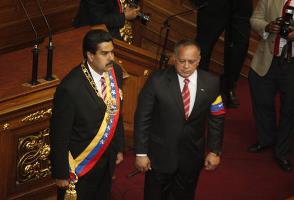
President Nicolás Maduro’s inauguration last Friday marked a new stage in the contest between chavistas and the Venezuelan opposition.  Maduro’s surprisingly weak showing at the polls – winning by a meager 1.8 percent margin despite the huge (and abused) advantages of incumbency – plus tensions within his party and his own rhetorical excesses, suggest that chavismo without Chávez confronts challenging odds.  Chávez attracted more votes alive than he could in death, as his hand-picked successor could not match his patron’s appeal at the ballot box.  Looking forward, Maduro and the Partido Unido Socialista de Venezuela (PSUV) will be judged on the basis of their performance.  The road ahead will not be easy for Maduro, as the government  confronts growing economic and security problems, and his ineffective campaign may energize potential competitors from within Chavismo.

Henrique Capriles’s strong showing in the election bodes well for the opposition.  However, athough Maduro’s blanket reference to them as “fascists” is absurd, their apparent eagerness to use the vote recount – reluctantly agreed to by the electoral council hours before Maduro’s inauguration – to remove him from office could breathe life into his allegation that the opposition consists of  golpistas obsessed with taking power.  Overreaching could be their undoing, as it has been in the past.

Latin American presidents, through a UNASUR statement of support and participation in the inauguration, have endorsed Maduro’s ascendance to the Presidency.  Their strong interest, for a variety of reasons, is in a balance between continuity and change in Venezuela. Although there are signs that both Chile and Colombia wavered momentarily, South American governments overall were united in their preference for a chavista government, as this would favor both  internal and regional stability.The United States, on the other hand, has appeared timid.  Maduro’s accusations of U.S. attacks on him and the presence of Iranian leader Ahmadinejad at the inauguration made it impossible for Washington to send a senior emissary to the swearing-in.  Yet the evident absence of the United States, even after the UNASUR endorsement, was petty.  Through statements calling for a recount of 100 percent of the votes both the State Department and the U.S. Ambassador to the United Nations came across as unable to outgrow a grudge match with Chávez or to grasp that the American position would isolate Washington once again from prevailing sentiment in South America.

There were two winners in the Venezuelan election:  Maduro, who is now the elected President, and Capriles, who managed to secure nearly half the votes in the face of overwhelming odds.  The latter comes out ahead in the long run, but only if he manages his cards wisely.  Washington, meanwhile, seems still not to understand two things:  First, after Bush v. Gore, it will be at least another generation until Americans can say anything about how to count votes.  It was legitimate and appropriate for the OAS to demand a recount, as its record in election monitoring is impeccable.  Secretary General Insulza achieved the core objective of the Organization and should be recognized for having done so.  For the American government to have taken the position that it did suggests an inability to understand the consequences of the 2000 election in Florida for its credibility in election-related issues in the region.  Second, democratic change in Latin America is typically an evolutionary process.  This may be less satisfying to some policymakers who would prefer to see a foe’s outright defeat, but it may be better, for Chavismo’s enemies in both Washington and Caracas, than having their favorite step in at this particular time of high tensions.  If Capriles and his coalition can brand themselves as democratic reformists rather than golpistas, they have a good chance of coming to power when Maduro’s six-year term is exhausted, or even before, and if they convey a message of responsible opposition, key South American governments might well approve of an alternation in power the next time around.