Venezuela: Authoritarian Election Aftermath

By Michael McCarthy

Photo credit to Matias Delacroix /AP

In the wake of a sham Presidential election event, Venezuela’s complex crisis appears to be deepening. Marked by electoral authorities’ apocryphal claims of a government victory, Maduro’s iron-fisted post-election crackdown against the opposition, and thus far unsuccessful efforts at international mediation from Brazil, Colombia, and Mexico, the ongoing electoral episode has placed the government and opposition in an increasingly bitter conflict.

Stuck in between stands the population, a large portion of which may migrate unless hope for political change can be revitalized. The region should brace itself for a new movement of Venezuelans abroad.   

The opposition coalition continues to press its case. The opposition is led by María Corina Machado, the winner of open primaries who was forced to endorse Edmundo González Urrutia after the government-controlled courts banned her candidacy. Their election witnesses documented a landslide victory — 67% to 31% for González Urrutia. Due to both the total lack of transparency by the electoral authorities (disaggregated precinct-level data has still not been published though that was the norm in previous Maduro-era elections) and the validity of election witness tally sheets consolidated by the González Urrutia campaign, opposition claims have resonated widely. The Biden administration and multiple Latin American governments recognized González Urrutia as the winner of the election, while even historical Left-wing allies of the chavista political movement, such as former President of Argentina Cristina Fernández de Kirchner, cast serious doubts on Maduro´s claim to victory.

Privately, numerous pro-government voices have admitted they cannot attest to the credibility of the official results, which state that Maduro won with 51% of the vote, a telling admission that no independent checks on executive power grabs exist. However, despite Maduro´s most acute crisis of legitimacy yet, no highly influential ruling party official or strategic international ally (Bolivia, China, Cuba, Russia) has publicly aired such concerns. Maduro seems more influenced by the hard line elements in his government and, amid his intransigence toward calls for releasing credible electoral data, his government seems headed for greater international isolation. Meanwhile, the opposition — though strengthened by its impressive organizational effort to retrieve over 80% of the tally sheets from voting centers — is struggling to capitalize on its status as the electoral majority.

The Biden administration is losing patience with the situation. Following a period of pre-election diplomatic engagement with Maduro, Washington is strongly considering the imposition of new individual sanctions against government authorities involved in engineering the fraudulent election results and responsible for recent human rights violations. According to Venezuelan human rights groups, Maduro’s security forces have arbitrarily detained over 1,500 persons since the July 28 vote, including activists and leaders from the different opposition coalition partners, as well as one hundred and thirty adolescents. Over 20 demonstrators died amid state repression against post-election protests held to contest the official results.

As this dark post-election period continues to unfold, Maduro not only has a corrupt and ideologically conditioned army but also time on his side. The regime´s cohesion, while lower than in previous moments of chavismo´s 25 years of rule, appears to be sufficiently strong for Maduro to hold power until the new presidential period begins in January 2025. Maduro holding power does not guarantee Venezuela’s stability. Rather, the electoral crisis is likely to translate into weaker than previously forecast economic growth (4% according to Spring 2024 projections by the IMF), a scenario that could, in turn prompt Maduro to panic and forsake the more pragmatic economic policies he’s been pursuing to contain inflation. Indeed, Maduro has never articulated an overarching vision to unify the movement the way Chávez did. While his ongoing use of coercion and repression has helped him secure loyalties among ruling party power brokers, those tools cannot fix the underlying problem of internal political fragmentations, some of which grew more salient during the multi-billion corruption scandal that resulted in Maduro jailing his oil czar Tareck El-Aissami, among others.

Thus, while the return to democracy in Venezuela still seems far off, it is also true that Maduro´s leadership has never been under as much pressure as it is today. His ability to deliver economic gains from the oil sector is likely to decline, with historical investors such as China likely to take a wait-and-see approach and Maduro´s ambition to join the BRICs+ and obtain New Development Bank financing likely to go unfulfilled. If the economy spirals downward, then Maduro will face tougher questions from his own coalition’s strategic players in the military. In this respect, Maduro’s blatant rigging of the vote count opens a new, highly uncertain chapter in chavismo’s already stressful history of losing popular legitimacy.

Over sixty years ago, a previous Venezuelan dictator, Marco Pérez Jíménez, lost power months after holding a fraudulent plebiscite on his rule. A general uprising catalyzed a coup against Pérez Jiménez, which in turn yielded a caretaker transition government that later paved the way for restoring democratic rule. History may not repeat itself, but if one is searching for reasons to believe Maduro has not consolidated power for good, Venezuela’s past has plenty to offer.

Michael McCarthy is President of Caracas Wire, and Adjunct Professor of International Affairs at George Washington University

Edited by Ernesto Castaneda, Director of the Center for Latin America and Latino Studies

This piece can be reproduced completely or partially with proper attribution to its author.

The Ongoing Saga of a Chinese Infrastructure Project in Ecuador

By Julie Radomski, American University

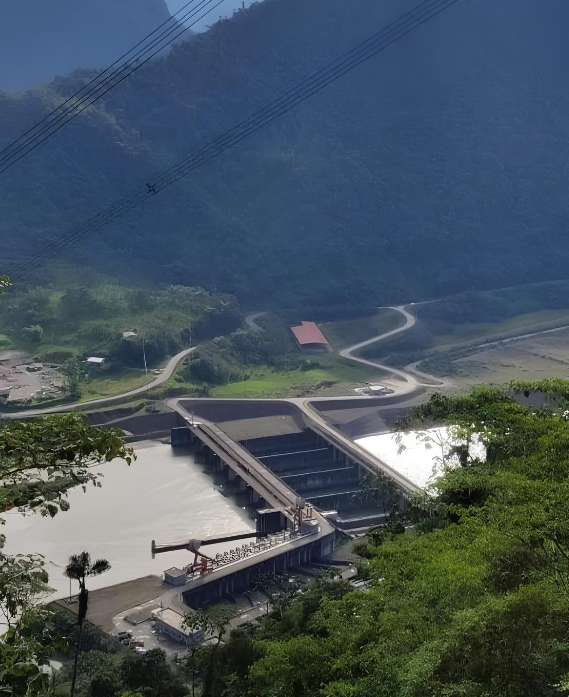
Photo credit to Julie Radomski

Ecuador’s Coca Codo Sinclair (CCS) hydroelectric plant has become an infamous symbol of the controversies associated with Chinese development finance in Latin America. As such, the project’s performance has outsized implications for China-Latin America relations. At the same time, CCS illustrates the inherent complexities of large infrastructure projects, where political, environmental, and technical issues can blur the lines between success and failure.

When it was inaugurated by Presidents Rafael Correa and Xi Jinping in 2016, CCS was celebrated as a triumph of South-South cooperation between Ecuador and China, and a contribution to sustainable green growth in Ecuador. Yet nearly eight years after this inauguration, the project has yet to be formally “received” by the Ecuadorian government from the contractor, Chinese state-owned enterprise Sinohydro. The reason for this prolonged state of limbo comes down primarily to fissures present in the powerhouse distributor pipes: despite repeated welding, they have yet to be fully repaired, and a durable fix may not be possible. In addition, the project’s sediment removal mechanisms have proven dysfunctional, leading to frequent pauses in the project’s operation over the past year. Separately, severe regressive erosion on the Coca River is advancing towards the dam and may trigger its collapse. The erosion advanced 1.2 kilometers upriver over the course of three days last month, and is currently located 6 kilometers from the dam.

For these reasons CCS is frequently cited by U.S. media and politicians as evidence of the threat posed by Chinese development cooperation, namely that it will saddle countries with debt, corruption, low-quality projects, and environmental damage. Meanwhile, the project’s protagonists point out that CCS produces 20-30% of Ecuador’s energy consumption on a daily basis, rendering it indispensable — hardly a white elephant. But closer examination of the details of this behemoth project makes clear that neither pro- nor anti-Chinese discourses on “China in Latin America” ring perfectly true.

Negotiations are reportedly underway between the Ecuadorian government and Sinohydro to conclude a deal in which Ecuador would sign over operation of CCS to Sinohydro in exchange for “liquidity.” Under such a deal, Sinohydro would be responsible for CCS’s repair, operations, and administration and would sell electricity back to the Ecuadorian grid. The concessioning of CCS to Sinohydro is just one of the many loose ends that could once again rewrite the story of this contentious megaproject. Beyond this hypothetical deal, the international arbitration case between the Ecuadorian state and Sinohydro has yet to reach a conclusion. The regressive erosion of the Coca River is anticipated to progress further upriver towards the diversion dam within the next five years. A corruption case initiated by the Attorney General’s office could result in the conviction of four Sinohydro representatives and a former Chinese Ambassador, as well as former Ecuadorian President Lenin Moreno. Some combination of these various developments will continue to make CCS headline news in Ecuador and abroad — and in so doing, they will rely upon prevailing narratives about China-Latin America relations.

CCS provides a vantage point for considering the longer-term effects of development cooperation between China and the region. Looking forward, while the outcomes of CCS are as of yet indeterminate, the project itself has had important implications both for Ecuadorians and for “China’s rise in Latin America” writ large. Chinese economic relations with Latin America have moved away from large state-to-state loans backed by the policy banks. This is due at least in part to the high reputational costs of scandals associated with projects like CCS. While the influence of Chinese actors on Latin American political economies has by no means waned, it now takes the form of Chinese companies’ direct investments or bidding on project contracts instead of by securing market access through granting large loans.

Nevertheless, even with the China-Latin America development relationship moving on from big infrastructure projects like CCS, the project’s politics still hold considerable weight. CCS demonstrates that infrastructure is enduring even as geopolitics can be fickle; its fate will continue to shape China-Latin America relations as a function of the still-ongoing natural and political processes enumerated above. Reductive pro- and anti-China discourses are only one part of the many factors shaping the outcomes of projects like CCS, including continuously evolving local ecologies and domestic political dynamics. In an age of great power competition and the “infrastructure state,” we must pay attention not only to the politics and capital that bring projects into being but also to how they evolve after they are ostensibly completed.

This piece can be reproduced completely or partially with proper attribution to its author.

New Wave of Salvadoran Immigrants in the DMV

By Hanseul Cho, Washington College of Law ’23

Based on data from the Immigration Lab’s Immigration to the DMV (DC, Maryland, and Virginia) project, there is a new wave of immigration from El Salvador, even though people from this country have sought refuge in the U.S. for decades. Despite being better educated, many Salvadoran immigrants work in lower-income, service-oriented jobs due to credential recognition issues and language barriers. Addressing integration challenges through inclusive policies for immigrants is crucial for harnessing their full potential and strengthening society.

El Salvador is similar in size to New Jersey and has a population like Tennessee. Although a relatively small country, Salvadorans are the biggest immigrant group in Washington, DC. Seventeen percent of the population in DC is immigrants, 11% of which are from El Salvador. 

Individuals from El Salvador ranked fourth in the number of refugeeslocated in the United States, and a significant number concentrated in the DMV. Although Los Angeles has the biggest Salvadoran migrant population, DC has the second largest group. Although when combined with Maryland and Virginia, the DMV has the largest Salvadoran population in the U.S.

Salvadorans rank fifth among the largest immigrant populations in the United States, behind China, India, Mexico, and the Philippines. 

Why did they choose to migrate? El Salvador experienced right-wing military regimes seizing power through rigged elections in the 1950s. The failure of land reform and political turmoil led to a civil war from 1979 to 1992, causing a 21.5% drop in GDP.

The United States justified its intervention in the Salvadorean civil war as preventing a left-wing party from taking power within the context of the Cold War. The conflict led to many refugees moving to the United States. A few of them formed gangs in Los Angeles, who were incarcerated and later deported, leading to the emergence of gangs in El Salvador, including MS-13. These gangs focused on territorial control and their violence caused some targeted people to look for safety in the United States.

Among the immigrants interviewed in the Immigration to the DMV project, 95% answered that El Salvador’s violence, climate, and economic difficulties influenced their decision to immigrate to the U.S. Our interviewees cite a bad economic situation, a serious lack of security, and corruption as the reasons they left.

Female immigrants make up a significant portion of the sample in this interview. The data indicates an increasing trend of more female migrants, which aligns with previous research. Some of the factors contributing to this include the demand for care and domestic work in the U.S. and an increased probability for women to pursue higher in the United States. A young woman who came to Washington, D.C. in 2022 mentioned that she migrated for a better chance at self-development, to study college, and to become a nurse. 

Even though the female participants in this study faced danger, including receiving contraceptive injections to avoid pregnancies during the arduous journey and threats of sexual violence, they desperately wanted to find long-term security and a chance to study.

New Generation of Salvadoran Immigrants

We interviewed Salvadoran immigrants who arrived in the U.S. fleeing the aftermath of the civil war, which they saw as a truly traumatic event. Political violence contributed to political corruption, economic failure, and widespread violence. Interviewers coming later also came looking for safety and economic opportunity.

People who arrived after 2019 are relatively proficient in English and more educated. Interviewees are from a country where only 33% of the population graduated from middle school, but 80% of the interviewees from this generation graduated middle school, and 60% graduated high school or with their GED. All of them had a better education than their parents. They had much better education and skills than their parents, but still, even though they are minors and part-timers, most still tend to work in lower-income jobs in the service sector. What causes this tendency? 

Two main challenges face this group: language barriers and lack of recognition of relevant training and job experience. These factors hinder their integration into the U.S. job market and society.

One of the main challenges that Salvadoran immigrants face is credential recognition. The skills and experiences they obtain in their home country may need to be properly evaluated or acknowledged in the United States. This includes the requirement for a GED, a U.S. high school diploma, or a U.S.-specific certificate. This can prevent immigrants from utilizing their previous experience and instead require them to start from scratch.

A 24-year-old Salvadoran man who lives in DC has been certified in forklift management in El Salvador. Another former electric technician also mentioned a similar experience. Still, those certifications needed to be recognized in the U.S., and ultimately, their professional experience was dismissed. So, in this case, the electrician became a cook even though electricians and forklift drivers are in high demand and are well-paying jobs.

This experience can lead to immigrants’ struggle with “imposter syndrome,” which negatively affects their self-image and makes it harder to derive self-esteem from their work. Furthermore, it can be argued that language barriers are a significant obstacle for immigrants to fully participate in the labor market.

The pandemic’s profound economic repercussions severely impacted El Salvador, exacerbating the country’s preexisting high crime rates. Interestingly, statistical data indicates that language barriers among Salvadoran immigrants do not immediately result in income disparities. Their incomes are quite similar when comparing Spanish-speaking immigrants who arrived recently with English-speaking immigrants who arrived in 2010 (Median is $30,000 for English speakers versus $35,000 for Spanish speakers, and the average is $36,430 versus $37,000). Most interviewees noted that their ability to speak only Spanish did not pose a significant challenge in assimilating into society. Spanish speakers might even have an advantage when seeking certain jobs.

However, English-speaking individuals tend to have a wider range of job opportunities, which can influence their assimilation and long-term settlement. While Spanish-speaking immigrants typically work in service-oriented roles, English speakers often have access to a broader spectrum of employment options, including management positions and roles in non-governmental organizations. Language proficiency plays a crucial role in the employment opportunities available to immigrants, affecting their ability to assimilate and succeed long-term.

Although immigrants from El Salvador could get jobs with the help of friends and relatives, there is a risk that the occupation will be limited to the service industry only. A Salvadoran woman in her 20s who wants to be a Spanish teacher faced challenges getting information about how to become one due to language barriers. 

In the DMV area, organizations like Northern Virginia Family Service, Maryland Multicultural Youth Centers, and DC Central Kitchen’s Culinary Job Training Program are available in multiple languages for immigrants. However, these services are decentralized and challenging for immigrants to access due to lack of time and transportation, creating barriers to utilization. In the data analyzed, almost none of the participants reported being part of a community organization, but most of them stated they were interested in learning opportunities and cultural activities.

It would be helpful to create a centralized portal that provides professional skills enhancement and digital-based social networking, integrating Salvadoran cultural influences.

It is important to acknowledge that immigrants, specifically Salvadorans, contribute to diverse cultural environments and enrich communities economically and socially. Addressing their integration challenges through inclusive policies and accessible support systems is crucial for developing a united and strong society.

Failure of Anti-Immigrant U.S. Political Campaigns 2018-2023

by Reilly Phelan, Ernesto Castañeda & Joseph Fournier*

Overview of dataset from 2018, 2020, 2022 election cycles for competitive races / Creative Commons License

Contrary to the common assumption, anti-immigrant rhetoric does not ensure electoral success. In an upcoming report from the Immigration Lab and the Center for Latin American and Latino Studies, we prove the moral and electoral failure of using anti-immigrant sentiment in campaign platforms. Our data demonstrates the falsity of the notion that being weak on immigration control is an electoral vulnerability.

In an extensive analysis of campaign material and election outcomes from the 2018, 2020, 2022, and 2023 gubernatorial and congressional elections, we found various candidates who employed anti-immigrant rhetoric and lost their elections. We defined anti-immigrant rhetoric as overarching narratives of border securitization and the criminalization of immigrants.

· In the 2018 election cycle, twenty candidates in competitive elections employed anti-immigrant rhetoric—and lost.

· In the 2020 election cycle, the utilization of such rhetoric relaxed broadly, and Republican candidates benefitted. Ten candidates fit our criterion. 

· In the 2022 election cycle, twelve candidates lost in competitive elections after employing anti-immigrant rhetoric throughout their campaign. 

· In the 2023 special elections, the degree to which immigration was mentioned declined. The defeat of Daniel Cameron (R) by incumbent Andy Beshear (D) in the Kentucky gubernatorial race met the criterion of our prior analyses.

While anti-immigrant sentiment is not exclusive to the Republican party, we found that the presence of such rhetoric in campaigns was overwhelmingly among Republican candidates. For the 2020 election cycle, we conducted an analysis of elections where seats flipped from Democrat-held to Republican-held. Ultimately, nearly half of the Democrat-to-Republican flipped seat candidates did not utilize anti-immigrant sentiment in the campaign material of their successful campaigns. 

In assessing the 2018 and 2020 election cycles, anti-immigrant campaign rhetoric relaxed during the 2020 cycle compared to the 2018 cycle (not to say anything about 2016). Kris Kobach’s losing 2018 Kansas Gubernatorial campaign exemplifies the failures of a campaign largely platformed on anti-immigrant sentiment. Kobach’s campaign hinged upon his pointed immigration rhetoric and ultimately failed to bring Kobach election victory. “Anti-immigration hard-liner[s]” like Kris Kobach largely declined in competitive 2020 elections. That is not to say that anti-immigrant campaign rhetoric disappeared; rather, fewer candidates premised their campaigns fully upon such narratives.

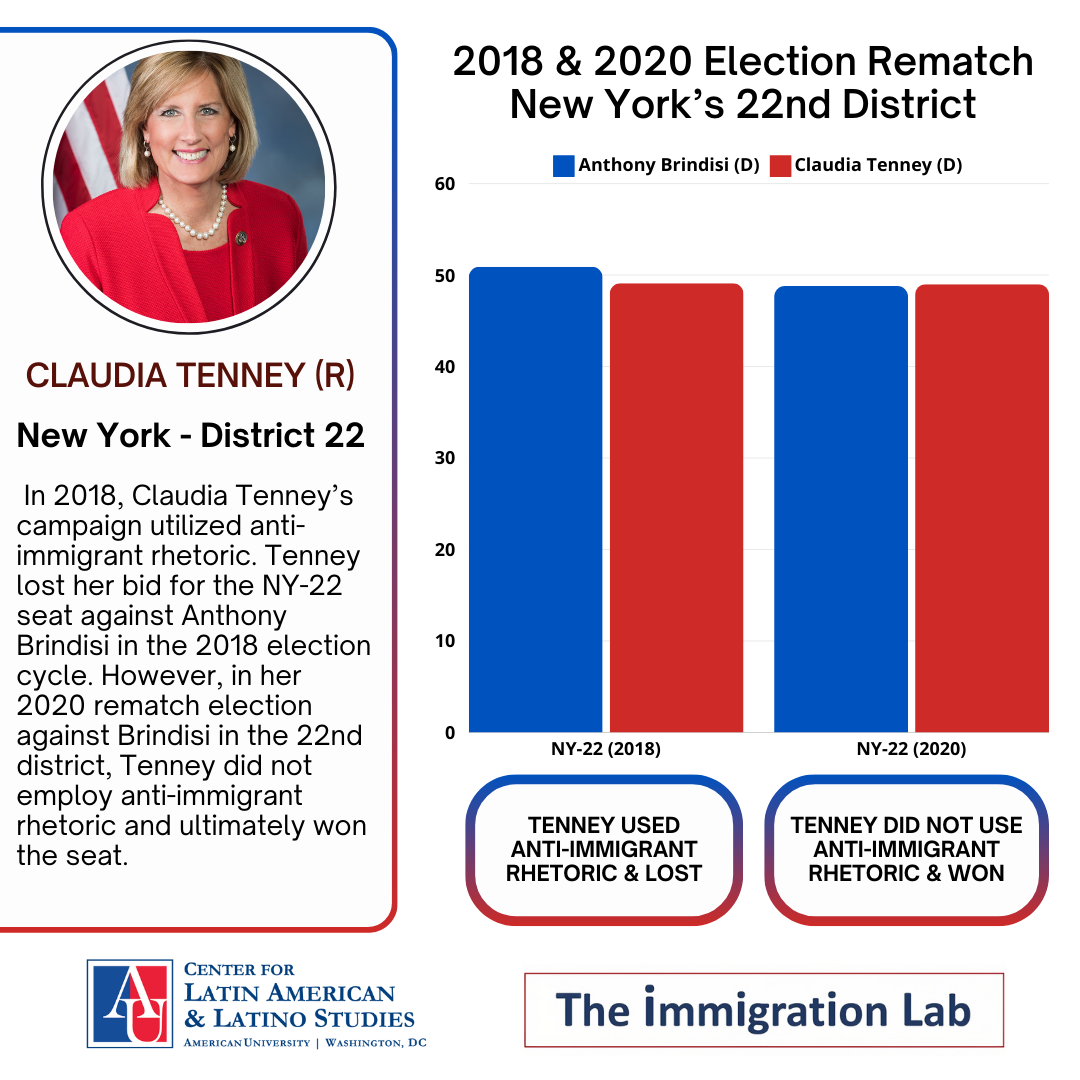
Candidates who ran in 2018 with anti-immigrant campaign rhetoric and chose to run again in 2020 had an observable decrease in the use of anti-immigrant sentiment in the candidate’s campaign platforms. For candidates like Matt Rosendale, Claudia Tenney, and Young Kim, this shift in campaign rhetoric led them to success in their rematch attempts during the 2020 election cycle. 

Coupled with our analysis of election outcomes of anti-immigrant candidates, we provide below an assessment of narrative trends: 

Several candidates mainly used anti-immigrant rhetoric to signal support for and connection to former President Trump. Strong stances against immigration, particularly during the 2018 and 2020 election cycles, became a means to show supposed shared values and allegiance with Trump. By applying “Build the Wall” narratives and framing border security as imperative, candidates premised their campaigns on Trumpist values more broadly. For example, in Greg Gianforte’s winning bid for the Montana Governorship in 2020, Gianforte promised to “stand with President Trump to crack down on illegal immigration.” Interestingly, Donald Trump’s 2020 presidential campaign aligns with our findings— his extensive use of anti-immigrant campaign rhetoric during his 2020 bid for reelection was not enough to lead him to electoral success. 

In 2022, however, references to the border wall largely de-emphasized the securitization project’s explicit link to Trump. While calls to “finish the wall” were present in multiple candidates’ campaign platforms, candidates offered a similar amount of attention to the re-establishment of anti-immigrant policies, including the “Remain in Mexico” program. Arizona Gubernatorial candidate Kari Lake regarded the policy as “the best [immigration] policy I’ve seen.” 

Through further assessment of the rhetoric employed by candidates within our 2022 and 2023 set, we see candidates shift their anti-immigrant campaign rhetoric away from targeting migrants themselves and instead targeting Democratic leadership, whom they label as in support of so-called “open borders.” Candidates such as Kari Lake take this concept a step further, arguing that Democrat leadership has a vested interest in the continuation of undocumented immigration as a means of “solidifying a permanent political majority.” These claims on the campaign trail are dangerous and alarmingly similar to the racist theory of “the Great Replacement”— propagating the idea that elites are purposefully encouraging migration to render America more diverse.

The 2022 elections also demonstrated a rise in claims that immigration is no longer confined to states along the U.S.–Mexico border. As efforts spearheaded by Texas Governor Greg Abbott bring “busloads” of immigrants to cities farther north of the border, the framing of immigration as an issue of concern has shifted both on the campaign trail and beyond. For example, a candidate for Pennsylvania Senate Mehmet Oz stated, “Now every state has become a border state.” With the U.S. increasingly externalizing its border by instituting border outposts, historical conceptions of borders and their significance are shifting across the U.S. Thus, the way immigration is discussed during elections is shifting.

As the U.S. gears up for the 2024 election cycle, the moral and electoral failure of anti-immigrant campaign rhetoric must be taken into account. Plain and simple, anti-immigrant rhetoric does not create electoral victories. In assessing both election outcomes and narrative trends, we see how a more humane, measured, and pragmatic view of immigrants can indeed be the morally and politically right thing to do. 

* Reilly Phelan is a research assistant at the Immigration Lab and the Center for Latin American and Latino Studies. She has previously worked with the International Rescue Committee and Arizona Legal Women and Youth Services. She will be graduating May 2024 with a degree in International Relations. 

*Ernesto Castañeda is Director of the Immigration Lab and the Center for Latin American and Latino Studies at American University. 

*Joseph Fournier is a research assistant at the Immigration Lab and the Center for Latin American and Latino Studies at American University.

Reproduction with full attribution is possible by news media and for not-for-profit and educational purposes. Minor modifications, such as not including the “About the Study” section, are permitted.

Immigration as the Current Main Driver of Economic Growth in the U.S.

By Ernesto Castañeda, Edgar Aguilar, and Natalie Turkington

A new report from CLALS and the Immigration Lab finds that recent immigrants are a key driver of economic growth in the United States.

The report presents an original calculation that finds that only in 2022:

  • Immigrants who sent money home contributed over $2.2 trillion dollars to the U.S. economy.
  • This contribution by migrant labor constitutes about 8% of the U.S. GDP.
  • Remittances represent just 4% of the total output generated by immigrants, even if they add up to $81.6 billion annually, disputing the narrative that immigrants drain the U.S. economy.


Immigrants who remit contribute around $2.2 trillion annually to the U.S. economy. Despite concerns that remittances drain U.S. dollars, they only represent 4% of immigrants’ total contributions. This estimate is based on credible sources indicating that 17.5% of immigrants’ income is sent as remittances and considering a combined yearly salary of approximately $466.5 billion.  Using data from the World Bank, the Association for Central Banks of Latin America, the U.S. Census Bureau, and the Bureau of Labor Statistics, however, this is just a good approximation to quantify some of the benefits of migration. Immigrants’ contributions to the economy are greater as not all send remittances through formal channels. Additionally, it overlooks the economic growth immigrants stimulate by spending their wages in the U.S., creating demand, and generating jobs. Not to say anything about the human, cultural, culinary, and creative contributions. Below are more details about this novel estimation and projections of future contributions by immigrants to the U.S. economy.

The Congressional Budget Office’s Demographic Outlook 2024-2054, which has gotten some deserved media attention, estimates that in 2034 the U.S. economic output will be $7 trillion larger due to new immigration. Tax revenues would also be higher and the deficit lower because of immigration all else equal.

The quote from the CBO Director’s press release is, “in our projections, the deficit is also smaller than it was last year because economic output is greater, partly as a result of more people working. The labor force in 2033 is larger by 5.2 million people, mostly because of higher net immigration. As a result of those changes in the labor force, we estimate that, from 2023 to 2034, GDP will be greater by about $7 trillion and revenues will be greater by about $1 trillion than they would have been otherwise.”

We estimate immigrants’ contribution to the U.S. economy between 2023 and 2034 will be greater. Using the same immigration estimates as the Congressional Budget Office’s (see graph below), we calculate new immigrants have the potential to elevate the U.S. economic output by a staggering $17 trillion just in 2034.

Net population growth is through immigration.

Source: Congressional Budget Office interactive graph here.

However, if the number of new immigrants and asylum seekers continues at the same pace as in estimated for 2024, 3.3 million per year (10,000 per day as happened in December of 2023), we calculate that the U.S. would enjoy an increased economic output of over $37 trillion just in 2034.

As the Economic Policy Institute writes, “The unemployment rate for U.S.-born workers averaged 3.6% in 2023, the lowest rate on record. Obviously, immigration is not causing high unemployment among U.S.-born workers.” They further write, “immigrants that make up 18.6% of the U.S. labor force are playing key roles in numerous industries and are employed in a mix of lower, middle, and higher-wage jobs. And as the Congressional Budget Office recently reported, immigration is contributing to strong economic growth—with future immigration forecasted to boost real gross domestic product by 2% over the next 10 years—as well as increasing government revenue. Immigrants are also complementing U.S.-born workers by contributing to overall population and workforce growth. The U.S. Census Bureau projects that if the U.S. were to have lower-than-expected immigration levels, the population would begin to decline in 20 years, and if there were suddenly zero immigration, the population would begin to decline next year, deeply harming economic growth.”

A Washington Post article states that around 50% of the growth in the labor market in 2023 was due to foreign-born workers. The same was the case in the 1990s.

In 2021, 45 million immigrants lived in the United States, accounting for 14% of the country’s population. Immigrants are integrated into American social, economic, cultural, and political life. The Immigrant Research Initiative calculates that “Immigrants account for 17 percent of the U.S. economic output (GDP), even higher than their share of the population. The United States has a $19.6 trillion economy according to the Bureau of Economic Analysis 2021 statistics, which means immigrants are conservatively responsible for $3.3 trillion of economic output.” This supports our calculation of around 2.2 trillion only from immigrants who send money abroad because many do not send remittances.

Estimates and projections vary, but what is clear is that there would be no economic growth without recent immigrant arrivals. If immigration (of all types) decreases in the following years, economic growth will most likely plummet, and inflation will rise. Furthermore, this does not only apply to the United States but to other countries as well.

You can find coverage of the report in Spanish here:

“Immigracion y Economia en EE.UU.” RTVE 24h.

“Los hispanos y el mercado laboral en EE. UU.” Y Esto No es Todo podcast on YouTube.

“Ernesto Castañeda y el mercado laboral en EE.UU.” RTVE audio.

Ernesto Castañeda is the Director of the Center for Latin American and Latino Studies and the Immigration Lab.

Edgar Aguilar and Natalie Turkington are research assistants at the Center for Latin American and Latino Studies.

Full report here.

Invisible Deaths

The U.S. and Mexico’s Federal Strategic Plans against Migration and their Relation to Invisible Deaths

by Sofia Guerra*

March 8, 2024

A monument at the Tijuana-San Diego border for those who have died attempting to cross. Each coffin represents a year and the number of dead.
A monument at the Tijuana-San Diego border for those who have died attempting to cross. Each coffin represents a year and the number of dead. (Photo credit: © Tomas Castelazo, www.tomascastelazo.com / Wikimedia Commons / CC BY-SA 3.0)

The U.S. and Mexico have strategies to control migration that dehumanize migrants and sometimes lead to their deaths becoming invisible. The U.S. border infrastructure forces migrants to be exposed to extreme natural environments causing deaths while crossing. Some paths to the U.S. are controlled by criminal organizations making them experience violence. The lack of transparency, visibility, and care create invisible deaths.

The U.S./Mexico border has become a dangerous path for immigrants when crossing, creating thousands of deaths. An invisible death is when people die while migrating, later to be found without any form of identification and no information about who the person is and why they passed away.  Jason De Leon conducted a deep dive into invisible deaths within the U.S./Mexico border. He argues that the existing border infrastructure is the result of a federal strategic plan to deter migration that facilitates death but hides its strategy by redirecting blame to migrants.

The U.S. federal strategy pushes migrants into physically demanding natural environments like deserts, rivers, and extreme temperatures. This endangers the migrant’s lives and risks the possibility of death while crossing. USA’s federal strategy also involves developing infrastructure such as walls, militarization, ground sensors, checkpoints, and other measures to impede migrants’ passing.  These strategies cause migrants to face isolation and physiological strain,  making the migration process more challenging and leading to higher mortality rates.

Like the U.S., Mexico has an infrastructure of checkpoints and militarized immigration stations, but with increased anti-immigrant policies criminal organizations further interfere in the movement of people across “their” territories. Corruption has allowed the growth of criminal activities, affecting the safety of migrants passing through. Thus, Mexico has also developed a quiet strategic federal plan against migrants that consists of extreme violence. Mexican trials to get to the US have become a site of intense violence, exploitation, and profit-making among gang members. They encounter abuse, rape, kidnapping, dismemberment, and death. Their migrant journey is used to make a profit and form part of the strategic corruption in the criminal world. This makes the Mexican drug war members control some of the routes that immigrants take within Mexico, making migrant smuggling blend into criminal activity. Migrants’ lives are at risk when encountering the criminal world while crossing; those who die due to criminal activities are likely to have an invisible death. This is due to the lack of transparency that organized crime has with its victims. 

Although the USA and Mexico have different federal strategic plans to dissuade land migration, it becomes evident that their strategies do not favor life but instead create a systematic weapon against migrants. In the USA, migration is seen as a dangerous crisis, while in Mexico, migration is seen as an opportunity for profit. Migrants are dehumanized, and therefore, their lives are not protected, increasing the invisibility of their death.

Copyright Creative Commons. Reproduction with full attribution is possible by news media and for not-for-profit and educational purposes. Minor modifications, such as not including the “About the Study” section, are permitted. 

* Sofia Guerra is a sociology graduate student at American University. She is a research assistant at the Immigration Lab and Center of Latin American Studies at AU. She has conducted research on migration, gender studies, and the bilateral relationship between Mexico and the United States. She also has an interest in policy-making and expanding her research expertise. 

From Coup Attempt to Inauguration: Guatemala’s Tumultuous Elections

by Edgar Aguilar*

February 21, 2024

“Dia nacional de la bandera de Guatemala.” Gobierno de Guatemala. Gobierno de Guatemala. CC. / Creative Commons License

Edie Cux, director of Acción Ciudadana, local chapter of Transparency International, spoke with CLALS’ researcher Edgar Aguilar about Guatemala’s recent presidential elections. Read a synthesis of the interview below.  

What were the defining issues in Guatemala’s recent elections? 

The main problem in the social imaginary here in Guatemala was the issue of the fight against corruption. This was key after years of exposed corruption in the government by Alejandro Giammattei. The other issue was security. 

How do presidential elections work in Guatemala? 

In Guatemala, there are two electoral rounds. The first round is in June and the second is in August. In the first round, there were 24 candidates. Many of the candidates had previously run for election. In the second round, there were 2 candidates, Sandra Torres and Bernardo Arévalo. 

Why was Mr. Arévalo making it to the final round a surprise?  

Sandra Torres, a perennial politician, was expected to make it to the second round. The surprise was Bernardo Arévalo. During the first round, Arévalo was initially in ninth place but then emerged as a surprise contender.  

How much support did Mr. Arévalo receive in the second round? 

In the second round, Bernardo Arévalo received 58% of the vote while Torres received 42%. That shows that people were really hoping for a change in the country. Arévalo was a new face and a left-wing or progressive candidate. Alternatively, Torres was a former first lady and had previously run for president twice.  

How did the uncertainty surrounding the inauguration of Mr. Arévalo begin? 

It started immediately after the first round when it was known that both Bernardo Arévalo and Sandra Torres were the favorites. From there, the attacks began against Arévalo’s Semilla party and the electoral authorities. Even the Prosecutor’s Office went after the people who participated in the polling stations and municipal, electoral, and departmental boards. This began a strategy of questioning the electoral results: going through a second review of the counts.  

Who started the questioning of the results?  

The Attorney General’s office initiated legal challenges that cast doubt on the election results. Judges joined in, further amplifying the uncertainty. Other groups used social media accounts, like X and TikTok, to spread narratives questioning the outcome. These unsuccessful efforts were part of a broader attempt by identified “coup plotters,” including influential groups such as congressmen. The goal here was to prevent Bernardo Arévalo from assuming power.  

The instrumentalization of both legal and social media channels was key to their strategy. They questioned Arévalo 

 but especially focused on the election results: the transmission of data and the electoral authority. At this point, the authorities of the Supreme Electoral Tribunal were practically in exile. They were stripped of the immunity that the law gives them.  

Were there actual irregularities in the process? 

These were the most observed elections in Guatemala, maybe ever. Actors like the European Union (EU) (with over 100 observers) and civil society organizations had mechanisms (like Mirador Electoral) to watch every step of the elections. After the elections, an Organization of American States (OAS) report confirmed clean results, corroborated by other countries and civil society.  

No international or national observer questioned the elections, except the Attorney General’s office. They illegally dug into things, opened bogus cases, demanded information from the electoral tribunal, and even took ballot boxes! Basically, they stole them, which I believe is illegal. This narrative only came from them. The OAS, with 29 votes, all countries, basically said the Attorney General was trying to mess with the results and backed the results.  

Why was there uncertainty until the day of the inauguration?  

Groups within Congress continued their efforts to obstruct Arévalo’s election until the inauguration day, delaying the swearing-in process by nine hours. 

Can you tell me what the day of the inauguration was like? 

Bernardo’s inauguration victory belongs to the people, especially the indigenous communities. Their 20-day strike, continued resistance, and unwavering presence on inauguration day, with mothers and children even sleeping in the Plaza de la Constitución, were crucial. Their sacrifice overflowed the central park, keeping spirits high even amidst delays. International observers, delegations from the OAS, Spain, the U.S., and key figures like Petro solidified the legitimacy of the process, forcing the “coup groups” to stand down. The transfer of power, thanks to the people’s energy, marked a dramatic shift in Guatemala’s political climate. 

What do Guatemalans expect now that President Arévalo has been inaugurated? 

At this moment, the panorama is changing a lot; there is already an expectation of how the new government is going to develop. There is a lot of hope, and everyone is waiting. Different civil society and especially indigenous peoples, we are all waiting to see what the new government is going to be like.  

What are the key takeaways from this turbulent process? 

Guatemala’s democratic institutions have been under attack since their beginning. The institutions have never been trusted. Indigenous people maintain alternative governance, economy, and justice structures. The state of Guatemala has not enjoyed the legitimacy that has been achieved in other states. Neither has it created the representativeness of a plurinational population. What happened in Guatemala is an example, globally, of what indigenous people have done to protect a democracy that does not even represent them.  

Currently, there are several democratic crises globally. Additionally, there are many examples of the instrumentalization of public institutions, especially the justice system, to attack democracy. Guatemala has brought to light how indigenous peoples propose sustainability not only environmentally but also for democracy and politics.  

Edition: Ernesto Castañeda 

Interview and writing: Edgar Aguilar 

Transcription and translation: Aleli Nava 

Copyright Creative Commons. Reproduction with full attribution is possible by news media and for not-for-profit and educational purposes. Minor modifications, such as not including the “About the Study” section, are permitted. 

Edgar Aguilar is an International Economics Master’s student at American University and a research assistant at the Center for Latin America and Latino Studies (CLALS). With four years of experience as a researcher and analyst, he specializes in migration, human security, energy, finance, and environmental policy. He is passionate about sustainable energy solutions that unlock prosperity in the Western Hemisphere.

X- @EdgarAAguilar

Where Is Cuba’s Economic Policy Going?

by Ricardo Torres*

A photo of Havana, Cuba taken in December 2023 / Ernesto Castañeda / Creative Commons License

In the concluding sessions of the National Assembly in December, the Cuban Prime Minister alluded to new economic policy initiatives aimed at “correcting distortions and boosting the economy.” Subsequently, he emphasized that these reforms should not be perceived as mere continuation of previous policies. His discourse encompassed several areas, including pricing and subsidies, the role of the private sector and small and medium-sized enterprises (SMEs), international trade and tariff regulations, investment, and the foreign exchange market, among others. In the first weeks of January, various representatives from the government elaborated on the price increases of essential goods, which has become a focal point of discussions due to the immediate impacts on people’s daily lives. This new wave of measures is being introduced against a unique context:

  • The Cuban economy’s inability to embark on a path to sustainable recovery after the economic downturn triggered by the COVID-19 pandemic is noteworthy. The year 2023 witnessed a contraction in the Gross Domestic Product (GDP), marking this period as the most severe crisis encountered by Cuba since the revolution in 1959, given its widespread economic, social, and political implications.
  • The ineffectiveness of previously implemented economic policies, including the so-called “Monetary Ordering,” is evident. The Cuban authorities persistently attribute these economic adversities to external factors, notably the sanctions imposed by the United States. There is little mention of the government’s obvious mistakes.  
  • The Biden administration’s limited opening towards Cuba has narrowed the window to implement substantial measures to mitigate the island’s economic challenges. 
  • The Cuban government has continued to search for support elsewhere. For example, Russia and China have provided some economic support, and Mexico has provided cheap oil, oxygen after the pandemic, and some food. But not one country can provide all the support that Cuba needs.

The measures announced thus far appear to have limited potential in contributing to the economic recovery. The fiscal strategy focuses more on revenue collection rather than containing expenditures, as indicated by the incomplete budget data for 2024 when the deficit is set to increase. 

  • Notably, the emphasis remains on preserving the extensive public sector, including state-owned enterprises, without introducing substantial structural reforms.
  • The marginalization, or at most, a cursory mention of other structural reforms aimed at stimulating domestic supply, is significant. The criticism of the private sector and the lack of initiatives to address external debt are particularly conspicuous. 
  • The potential impact of the price increase and these newly announced measures on the fiscal deficit remains ambiguous, especially given the scant details regarding their implications for the 2024 budget. Besides, these measures will likely exacerbate inflationary pressures in the short term.

In a rather dramatic turn, Cuban authorities announced the suspension of the price increases on January 31st, citing a cyberattack, and failed to commit to a new date. Furthermore, the government reshuffled the cabinet, including the sacking of the Economy Minister. 

The challenges of runaway inflation and elevated fiscal deficits should be viewed as symptoms rather than the root cause of the economic malaise. Historical evidence from the 1970s and 1980s has demonstrated that attempts to manipulate aggregate demand to counter stagflation are futile. Cuba’s economic stagnation, however, presents a unique case, having persisted for decades and intensified due to a series of adverse external shocks commencing around 2016 with the decline of Venezuela’s economy. Superficial adjustments to economic policies are unlikely to yield significant medium-term benefits. Instead, a concerted effort towards systemic change by both the government and international stakeholders is imperative. The existence of the political will and strategic insight, both within Cuba and internationally, to enact such comprehensive reforms to the ultimate benefit of the embattled Cuban people remains an open question.

Copyright Creative Commons. Reproduction with full attribution is possible by news media and for not-for profit and educational purposes. Minor modifications, such as not including the “About the Study” section, are permitted. 

Ricardo Torres is a Professor and Faculty Fellow in the Department of Economics, Research Fellow at American University’s Center for Latin American & Latino Studies, and Coordinator of the Red de Investigadores Cubanos (RedIC).

Ecuador: The Formation of Gangs in Prison Systems

By Erica Criollo

January 17, 2024

Solidarity rally in Queens, New York by members of the Ecuadorian diaspora. Photo by Erica Criollo 

On January 7th, 2024, José Adolfo Macías Villamar, alias“Fito,” the leader of one of Ecuador’s most prominent gangs, was found missing from his luxury prison cell the day he was meant to be transferred to a maximum-security prison to be held in isolation.

While Macías began his 34-year sentence in 2011, he remained the leader of the criminal gang, Los Choneros, due to their longstanding influence over government officials and extensive illicit drug networks. Following his escape, the country descended into chaos resulting in President Daniel Noboa declaring that the country was under “armed internal conflict” to mitigate gang wars and the killings of police officers.

This presidential declaration has prompted questions as to how Ecuador could have experienced such a sudden upsurge in gang violence. Along with government corruption, the escalation can be traced to the gradual formation of gangs dominating prison systems over several years. 

 In 2003, Los Choneros, who are associated with Mexican and Colombian cartels, took control of the drug trafficking route in the province of Manabí, Ecuador, from where drug shipments were sent to Mexico, the United States, and several European countries. Transnational networks and external groups engaged in the illicit drug trade utilized Ecuador’s coasts, leveraging its access to major shipping routes and ports to transport illicit drugs across international borders. 

Furthermore, Ecuador’s adoption of the U.S. dollar, coupled with inadequate enforcement and prevalent corruption, has facilitated money laundering by drug traffickers through industries such as real estate, illegal mining, and the illicit timber trade. This impacted the way corruption played a role in the country’s efforts to combat such illicit activities. 

When Former President Rafael Correa took office in 2007, he gained public favor through his initiative to remove the United States from the Manta military base from which the U.S. has been controlling anti-drug efforts with targets against the Colombian illicit drug trade since 1999.

However, following the U.S. withdrawal from the Manta military base, the country witnessed a worsening of drug trafficking. Former President Correa failed to stop the activities of groups like Los Choneros and other Mexican cartels, allowing the unhindered transportation of drugs to and from Ecuador.

Before Macías, Los Choneros was led by Jorge Luis Zambrano, alias “Rasquiña,” who, while incarcerated, directed orders alongside arrested gang members. By 2010, the group had transitioned to operating within prison systems and communicating with members on the outside. This operational shift steered the group away from international drug trafficking, focusing instead on micro-trafficking, contract killings, extortion, and contraband activities.

Emerging factional gangs, including Los Choneros, Gorras, Lagartos, Latin Kings, and the Cubanos, have become more extensive and aggressive, leading to deadly conflicts in prisons. In 2019, a brutal fight claimed the lives of several inmate gang members at Penitenciaria del Litoral, and in 2021, a prison riot resulted in the deaths of 119 inmates in the same facility. These deviations of gangs were also a result of government initiative in dismantling gang groups through the transfer of leaders between prisons, but it only multiplied the presence of gang wars.

Following Zambrano’s death in 2020, Macías obtained leadership, triggering an uproar of chaos and gang violence across the country as gang leaders fought to dominate. Despite being in prison, Macías remained in control. For him, communication with members was not an obstacle, as several reports indicate Macías’ prison cell had plugs to charge his cell phone and an internet router. Macías was also open to sharing his lavish living space on social media, regularly throwing parties, and having access to weapons, appliances, liquor, jewelry, and ceramics.

Ecuador has experienced a long trajectory of government corruption which has led to an escalation in gang formation and violence in prison systems. With Macías’ most recent escape, the country has been submitted to crazed gang members responsible for several car bombings, kidnappings, and slayings of prison guards and innocent civilians. In response to President Daniel Noboa’s crackdown on gang members in prisons, gang leaders on the outside have resorted to hostage-taking, capturing military and prison guards. These captives are coerced into recording messages, pleading with President Noboa to halt military operations in prisons and cease the killing of gang members. The objective behind these threats is to secure the gangs’ dominance within prisons and ensure the unrestricted proliferation of gang members. 

In one such video shared on Facebook, a gang member asserts, “Just as you safeguard the right to life of Ecuadorian citizens, we too have the right to live…we are not afraid of your tactics.” In essence, Ecuador is confronted with a formidable coalition of gangs wielding enough power to subvert the law and pursue their objectives, fueled by their substantial numbers and collective readiness to act in unison to carry out attacks. 

Currently, President Noboa’s plan to overpower gang violence is to enforce stricter regulations in prisons. However, this raises concerns for Ecuadorian citizens alarmed by several online videos featuring hostages pleading with the government for compliance to spare their lives. As events unfold, President Noboa’s actions will require careful consideration to ensure that no more civilian lives are endangered and to respect the human rights of all people. 

*Erica Criollo is a Graduate Research Assistant of the Immigration Lab at American University. 

Creative Commons license. Free to republish without changing content for news and not-for-profit purposes. 

Blinken and Mayorkas visited Mexico to Discuss Migration

By Ernesto Castañeda

January 11, 2024

Republicans in Congress are denying funding to Ukraine and Israel over migration and border security, but the premises and assumptions used to discuss the issue fail to take the following elements into account.

It is hard to determine if numbers are really without precedent. There has been a change in that immigrants come and turn themselves in to try to come in with a legal immigration status, such as through asylum or the regularization programs available to Ukrainians, Afghans, Cubans, Haitians, Venezuelans, Nicaraguans, and other groups. In previous decades, many low-skilled workers knew there were no avenues to enter legally and would try to pass undetected and live undocumented in the United States. That is less common today for so-called low-skilled, recently arrived immigrants. So, an imaginary example would be to count people who once would mainly drive to New York City for the holidays and then compare them to a time when most people would arrive via plane. It would be easier to count the people arriving on planes, but that would not necessarily mean that there are more people arriving now by plane than the ones who arrived driving in the past. 

Historically, numbers are not comparable because, before Title 42, apprehensions were counted versus encounters afterward. Previously, most apprehensions would happen inside the U.S., while today, most people present themselves in groups and in a visible manner at ports of entry, along the physical border, or in front of the border wall. Another important difference is that in the past, undocumented workers relied on established family members and networks to get provisional housing and food and find a job. Many recent arrivals may not have close people in the United States and are actively asking for temporary housing and food from city governments. The U.S. does this for refugees and has done it in the past for Cubans and others escaping repressive regimes. Research and history show that these short-term expenses have been good investments, given that refugees and immigrants are more likely than U.S.-born individuals to work, start businesses, and be innovative leaders. Republicans in Congress have denied requests from the White House to provide funding to cities to cover some of these costs.

Some propose detention as deterrence, but prolonged detention in the United States is very expensive and mainly benefits the companies or workers providing and managing detention centers.

A misconception repeated in the media is that most people are immigrating illegally. That is technically incorrect because people are presenting themselves to immigration authorities. Many migrants are applying to legal programs, asking for asylum, or being placed in deportation proceedings.

The situation that we are seeing at the border and some of the solutions proposed indicate some important points that have been rarely discussed,

1) Border walls do not work. Smugglers can cut them, and people can walk around them or come in front of them on U.S. territory. 

2) People are turning themselves in, so contrary to what Trump said recently, authorities know where people are from and where they are going. They have notices to appear in immigration court, and they register an address in order to receive notices and updates if they want to continue with their asylum process and regularize their status. In the past, a great majority of people go to their migration court hearings.

3) CBP One appointments are too cumbersome to make, and there are not enough slots available, so people are showing themselves at ports of entry and between them.

4) The parole program for Haitians, Cubans, Venezuelans, and Nicaraguans is working to create a more rational and orderly process. Taking the program away —as Republicans in the Senate want—would make things worse. 

5) Putting more pressure on Mexico to deport more people and stop them from getting to the border is unsustainable. Mexico cannot manage the issue by itself unless it gets pressure and funding from the U.S. and international organizations, like Colombia does, to establish immigrant integration programs for immigrants who want to stay in Mexico, and it provides paths to citizenship for them. 

Thus, Blinken, Mayorkas, and their companions and team’s visit to Mexico is important. Mexico has been a willing partner, agreeing to take people from third countries under the Remain in Mexico and Title 42 programs, but those programs could only work temporarily. Mexico has also increased the number of deportations. However, deportation only works if people are unwilling to try multiple times. Increasing immigration surveillance, deterrence, and deportation does make arriving in the U.S. harder. It also makes it more expensive and thus attractive for organized crime to get involved in it as a business, thus getting more people to the border once they figure out the business model and logistics even with new policies in place. 

Mexican President Andrés Manuel López Obrador has asked for a regularization of U.S. relations with Cuba and Venezuela. There have been positive steps with Venezuela already. This could be a good opportunity to remove Cuba from the list of states sponsoring terrorism, which would reduce some of the emigration pressure in Cuba. 

Mexican authorities have disbanded many caravans and slowed the trek of thousands of migrants. Nevertheless, people who are escaping violence and persecution or have sold everything will try to get to the United States. 

Long-term ways to address the root causes of migration are to continue providing international aid and supporting democratic institutions. One has to keep in mind human rights. The Mexican Supreme Court of Justice has found that profiling people suspected to be migrants in buses to be unconstitutional. To engage the Mexican Army is not the solution either.

The silver lining is that despite the images we see in the news and seasonal peaks, it is not as if all the world is on the way to the U.S.-Mexico border. Most people want to stay home.

Congresswoman Delia C. Ramirez (IL-03)

Congresswoman Delia C. Ramirez (IL-03) presenting immigration policies the Congress could be working on instead.

In the January 10 hearing towards impeaching DHS Secretary Alejandro Mayorkas, Republicans repeated many myths, cliches, and anti-immigrant talking points but did not propose any sensible solutions. It was remarkable that Democrats in the committee saw the political nature of the exercise, and many offered actual solutions to improve the situation at the border and inside the United States in a way that makes the immigration and asylum processes more humane and above ground.

Ernesto Castañeda is the Director of the Center for Latino American and Latino Studies and the Immigration Lab at American University.

Creative Commons license. Free to republish without changing content for news and not-for-profit purposes.