
A Mexican Indigenous Entrepreneur in New York

By Ernesto Castañeda

[see Spanish version below]

Book review and excerpt from. “Un nahual en el imperio: La lucha de un migrante por los derechos políticos de la diáspora [A nahual in the empire: The fight of a migrant for the political rights of the diaspora]” by Maurizio Guerrero. Ciudad de México: Grano de Sal. 2025.

This book, published by Grano de Sal Press, narrates the experience of migration to the United States through the biography of one migrant in particular, as well as his friends and colleagues. This group of Mixtecos was relatively among the first to arrive in New York to work hard and start businesses. The book combines life narratives with an analysis of the public policies and economic contexts of both countries. It demonstrates how the ingenuity and perseverance of migrants always overcome the agendas and plans of governments, which come and go. Meanwhile, immigrants continue in the struggle for survival, success, and rights. The numerous contributions by migrants continue to enrich both countries. Immigrant volunteers and organizations often do more than any politician to help immigrants in need raise their collective voice as civic and political actors. This book narrates the stories of Jaime Lucero, Casa Puebla, and Fuerza Migrante as a window into the experience of Mexican migration to New York. Through the interviews with Mr. Lucero, the book describes his wish to create a foundation for Mexican migrants to walk together in defending their rights in both the United States and Mexico.

Ernesto Castañeda, Director of the Center of Latin American and Latino Studies, American University, Washington, DC

Portions of the book are displayed here with permission. Translated by Ernesto Castañeda and Diana Rojas Hernandez.

“Jaime Lucero says that he emigrated from the town of Independencia, Puebla, at night, ‘so that no one would see me cry.’ That detail encapsulates the drama of the separation that migrant families go through, although it conceals the true tragedy of this exile” (p.83).

“At 9 years old, a goat herder in a family headed by a widow with seven children, he was sent to work in the capital so that he could send money home. At 18 years old, he shared that he crossed el [Rio Grande] even though he did not know how to swim. In the stormy waters of that migrant-devouring river, he had received “a sign”: someone helped him cross, preventing him from drowning, and since then, he understood that those people, Mexicans, Central Americans, and Caribbeans, were his people: the migrants.

Like the millions before and after him, Lucero arrived in New York to work in kitchens, washing dishes. He had worked at a restaurant for six years when the owners decided to discontinue using the truck they used to transport provisions because it broke down too often. Jaime took this as a message: he had to buy the truck, quit the restaurant, and work for himself.

Lucero founded a business that eventually generated millions of dollars in revenue and then became a community leader. In 1978, he established the first-ever organization for Mexican migrants in New York, Club Azteca, which would later become Casa Puebla, the foundation upon which he built his assistance services … [Fueza Migrante years later].

In large part due to the work of Fuerza Migrante, the Mexican Congress already had deputies and a senator representing the Mexican diaspora around the world. He devoted many things to the cause: money and the time to help people who, like him, had arrived in the empire without resources, defenseless. He expressed: “It is what I would have wanted to give to young Jaime Lucero.”

Community aid from the hands of one migrant to another, aspired to improve lives: those of people who crossed the border without papers and never escaped from the worst paid jobs, remaining merely helpers. His intentions were to change the concrete reality from which the vast majority of Mexican migrants never even dream of liberating themselves from: that, “We are not what you believe we are… We are not poor migrants,” he emphasized.

He mentioned the alcoholism that plagued those forced out by their circumstances: “All of the young people searching for their path are our children,” he said. “Those who sometimes fall into alcoholism, into drugs, they are our children too.” I understood it as his way of alluding to his brother Julio and cousin Ricardo, who managed, with great effort, to recover from their addiction to alcohol. It was also in reference to his cousins, El Chivo and Román, and other paisanos who were deported multiple times and continued to drink beer in the Mixteca Poblana because there was nothing much more to do in that impoverished area.

He referred to the migrants dragged from their childhood to face discrimination, exploitation, loneliness, and longing, who found solace in alcohol. To all those who had been left behind. Lucero stressed that “We have to put a price on that suffering.” All of that sacrifice, all those lives swallowed up by the insides of these two countries, should be converted into power to alter this cycle.

The Mexican state was not interested, he noted, in stopping migration because each person who emigrated increases remittance flows; And to the United States, those people were simply “illegal.”

[In a recent speech at Harvard University,] Lucero told the anecdote of the old broken-down truck, that clunker that was constantly breaking down. This version, however, was different from the one I had heard. In the version I had heard, various people had managed to pull the truck to the curb, another truck had been sent to deliver the fabric that Lucero had to ship, and a tow truck had taken the piece of junk to a mechanic. Lucero’s story is yearning, an illusion, a dream. In this dream, Jaime does not have to walk on that snowy highway to find a payphone to inform the warehouse that he will not be able to deliver the fabric. The people helping push the truck made it possible for him to shift into second gear and get the truck started. The same truck that others had discarded because they thought it was junk. In his dream, the truck finally roars to life and, despite everything, advances through the snow. “That truck is the community,” Lucero said (p. 281-3).

Maurizio Guerrero is a journalist and PhD student in the Sociology doctoral program at the CUNY Graduate Center.


Un nahual en el imperio: La lucha de un migrante por los derechos políticos de la diáspora

Maurizio Guerrero

Este libro publicado por Grano de Sal narra la experiencia de la migración a EE.UU. desde la biografía de un migrante en especial, así como sus amigos y colegas. Este grupo de Mixtecos fue relativamente de entre los primeros en llegar a Nueva York a trabajar duro y comenzar negocios. El libro combina narrativas de vida con análisis de las políticas públicas y contextos económicos en ambos países. Demuestra cómo la ingenuidad y perseverancia de los migrantes siempre sobrepasan las agendas y planes de los gobiernos, que van y vienen, mientras que las contribuciones de los migrantes siguen enriqueciendo ambos países, haciendo más que ningún político para ayudar a inmigrantes en situación de necesidad a alzar su voz colectiva como actores cívicos y políticos. Este libro narra las historias de Jaime Lucero, Casa Puebla y Fuerza Migrante como ventana a la experiencia de la migración mexicana a la zona de Nueva York. A través de la entrevistas con el Señor Lucero también se describe su deseo por crear las bases para que los migrantes mexicanos puedan caminar juntos para defender sus derechos en México y Estados Unidos.

Ernesto Castañeda, Director del Centro de Estudios Latinoamericanos y Latinos, American University, Washington, DC

Reproducimos aquí porciones del libro con permiso,

“Jaime Lucero cuenta que emigró del pueblo Independencia, Puebla de noche, ‘para que nadie me viera llorar.’ Ese detalle encapsula el drama de la separación de las familias migrantes, aunque oculta en buena medida la verdadera tragedia de ese exilio” (p.83).

“Pastor de cabras en una familia encabezada por una viuda con siete hijos, a los 9 años había sido mandado a trabajar a la capital a fin de que enviara dinero. A los 18 años, contó, había cruzado el Bravo aunque no sabía nadar. En las aguas procelosas de ese río devorador de migrantes, había tenido “una señal”: alguien lo ayudó a cruzar, impidiendo que se ahogara, y desde entonces comprendió que esas personas, mexicanos, centroamericanos y caribeños, eran su grupo: los migrantes.

Como millones de migrantes antes y después que él, Lucero arribó a Nueva York a trabajar en cocinas, lavando platos. Seis años había laborado en un restaurante cuando sus dueños decidieron deshacerse del camión en el que transportaban provisiones porque ya fallaba mucho. Jaime lo tomó como mensaje: debía comprar el camión, renunciar al restaurante y trabajar por su cuenta.

Lucero fundó una empresa que llegó a facturar millones de dólares y se convirtió en líder comunitario. En 1978 había fundado la primera organización para los migrantes mexicanos en Nueva York: el Club Azteca, que se convertiría en Casa Puebla, la base sobre la que había construido sus servicios de asistencia … [Fuerza Migrante años después].

En buena medida debido a las gestiones de Fuerza Migrante, el Congreso mexicano ya tenía diputados y una senadora que representaban a la diáspora mexicana en el mundo. Dedica muchas cosas a esa causa, dinero, el tiempo invertido para ayudar a las personas que, como él, habían llegado sin recursos, desvalidos, al imperio. Expresó: “Es lo que yo hubiera querido darle al joven Jaime Lucero.”

Esa ayuda comunitaria, de la mano de un migrante a otro migrante, aspiraba a mejorar destinos: los de aquellos que cruzan la frontera sin papeles y no escapan nunca de los empleos peor pagados, de ser simplemente ayudantes. Su intención era contribuir a cambiar una realidad concreta, de la que la vasta mayoría de los migrantes mexicanos jamás sueñan liberarse. “No somos lo que ustedes creen que somos”, destacó: “No somos pobres migrantes.”

Mencionó el alcoholismo que plagaba a aquellos expulsados por su entorno: “Todos los jóvenes que están buscando el camino son nuestros hijos —dijo—. Los que a veces caen por el alcoholismo, por las drogas, son nuestros hijos también.” Fue su modo, entendí, de aludir a su hermano Julio y a su primo Ricardo, que lograron con esfuerzo recuperarse de su adicción al alcohol, pero también a sus primos, el Chivo y Román, y a los otros paisanos varias veces deportados que seguían tomando cerveza en la Mixteca poblana porque no había nada más que hacer en esa zona empobrecida.

Se refería a los migrantes arrancados de su infancia para enfrentar discriminación, explotación, soledad, añoranza, que encuentran un consuelo en el alcohol. A todos los que se habían quedado atrás. “Tenemos que ponerle precio a ese sufrimiento”, expresó Lucero. Todo ese sacrificio, esas vidas deglutidas en las entrañas de los dos países, debía convertirse en poder para alterar ese ciclo.

Al Estado mexicano no le interesaba, señaló, detener la migración porque cada persona que emigra acrecentaba las remesas. Y para Estados Unidos, esas personas eran simplemente “ilegales”.

[En un discurso en un evento en una universidad americana] Lucero relató la anécdota del viejo camión descompuesto, ese armatoste que a cada rato fallaba. Su narración, sin embargo, fue diferente a la que yo había escuchado sobre cómo, entre varias personas, habían logrado orillar el vehículo a la cuneta, cómo otro camión había sido enviado para repartir las telas que debía entregar Lucero y cómo una grúa había remolcado el cacharro a un taller mecánico. Este desenlace es un anhelo, una ilusión, un sueño, y que en ese sueño Jaime no tiene que caminar en esa autopista nevada a fin de encontrar un teléfono público para informar a la bodega que no podrá entregar las telas. En su sueño, las personas que lo ayudan empujan para que él, metiendo segunda, logre prender el camión del que otros se habían deshecho porque creían que era una chatarra. En su sueño, el camión logra ponerse en marcha y, pese a todo, avanza bajo la nieve. “Ese camión es la comunidad,” dijo Lucero (pp. 381-383).

Maurizio Guerrero es periodista y estudiante de doctorado en el programa de sociología del CUNY Graduate Center.

Es Tiempo de Mujeres en México

Por Dra. Nayana Guerrero, Azucena Enríquez, Paola Baltazar, Luisa Barajas, Cecilia Pineda, Jimena Sandoval y Victoria Rivera

16 de diciembre de 2024

La Doctora Claudia Sheinbaum Pardo rompió el techo de cristal en México. A 71 años de haber obtenido el derecho a votar y ser reconocidas como ciudadanas, hoy las mujeres de México pueden permitirse aspirar a ser presidentas. Ya no existen más los imposibles en las metas de las nuevas y viejas generaciones, se demuestra con la Presidenta Claudia Sheinbaum que si se puede y se podrá para muchas mujeres más. A continuación, se presenta el impacto de tener una mujer a la cabeza del país en México, el largo camino del derecho al voto de las mexicanas y la importancia de la utilización del lenguaje incluyente y no sexista.

Barbie dijo, “Sé lo que quieras ser,” y hoy ya podemos ser presidentas. Las niñas ya no solo pueden jugar a ser presidentas también pueden serlo. Tener una mujer presidenta es una motivación e inspiración para las niñas y jóvenes. Antes ocupar un puesto de liderazgo político era cosa de hombres; hoy, en México, es una realidad que cualquier mujer puede ser líder y tener un alto cargo en el gobierno del país. Es inspirador que una mujer ocupe un puesto de liderazgo político porque mujeres empoderadas, empoderan mujeres.

Sin embargo, no ha sido un recorrido sencillo ni corto. Tuvieron que pasar 71 años para romper el techo de cristal, una metáfora que designa un tope para la realización de la mujer en la vida pública y profesional, generado por los estereotipos de género.

El derecho al voto para la mujer no fue un derecho concedido, es parte de una lucha que duró años y que empezó a exigirse a inicios del siglo XX. El sufragio femenino en México fue impulsado por múltiples mujeres entre las que destacan Elvia Carrillo Puerto, Hermila Galindo, Margarita Robles de Mendoza, María Ríos Cárdenas y Esther Chapa.

Margarita Robles de Mendoza y Elvia Carrillo Puerto, son reconocidas como unas de las primeras sufragistas mexicanas exigiendo los derechos políticos de las mujeres, siendo esta última una de las primeras mujeres electas.

María Ríos Cárdenas, Esther Chapa, y Hermila Galindo exigen el derecho al voto a través de mítines políticos, huelgas de hambre y manifestaciones. Marcando un momento clave en la lucha por el sufragio femenino, Hermila Galindo solicitó por primera vez al congreso constituyente el voto femenino en 1917.

No fue hasta mitad del siglo XX, el 17 de octubre de 1953 que las mujeres lograron el derecho a votar y a ser votadas. Sin embargo, en México sólo 8 mujeres han sido candidatas a la presidencia. En 1982, Rosario Ibarra de Piedra se postuló como la primera candidata a la presidencia de México. Pero no fue sino hasta 2024 que como lo indicó la presidenta Claudia Sheinbaum en su discurso de toma de protesta “por primera vez no en 200 años, sino en 500 años no había habido una mujer presidenta de México.” Ha sido una lucha larga y con altibajos en la que Sheinbaum dijo ¡No llego sola, llegamos todas las mujeres de México!

Por primera vez en la historia de México se utiliza la palabra presidenta. Si existe la palabra reina para referirse a la máxima soberana de una monarquía, ¿por qué no feminizar presidenta cuando se trata de una república?

En el “video del acertijo” la periodista Inma Gil Rosendo habla sobre la parcialidad implícita que se define como un prejuicio inconsciente que puede dar lugar a una falta de neutralidad. Estos estereotipos subconscientes relacionan conceptos y rango de poder con categorías de personas. Por ejemple, cuando pensamos en quién puede liderar un país frecuentemente pensamos en un hombre.

La Presidenta de México indicó en su discurso de toma de protesta la importancia del lenguaje incluyente no sexista. Constantemente en sus intervenciones la Dra. Sheinbaum subraya la necesidad de visibilizar la presencia de las mujeres en las diferentes profesiones, cargos y oficios.

La carencia histórica de términos femeninos referidos a cargos y oficios se vincula con la lucha de la historia de las mujeres en abrirse caminos en espacios mayormente masculinizados.

El lenguaje incluyente y no sexista hace referencia a toda forma de expresión sin discriminación. El lenguaje inclusivo busca promover una cultura de igualdad y reconocimiento de los derechos de las mujeres.

Lo que no se nombra no existe. La forma de expresión ha sido mayormente androcéntrica. El androcentrismo expresa una visión del mundo donde el hombre es el referente por default, el modelo a seguir. Históricamente los espacios de toma de decisiones han sido ocupados mayormente por hombres, pero esto está cambiando.

La presidenta Claudia Sheinbaum ha dicho que es “tiempo de mujeres” lo que representa romper los estereotipos y las barreras que enfrentan las mujeres en varias esferas de la vida, es una oportunidad contra la violencia de género, pero sobre todo el momento de alcanzar la igualdad sustantiva.

Dra. Nayana María Guerrero Ramírez es profesora titular de la asignatura empresarial “liderazgo de las mujeres en las organizaciones para el desarrollo sostenible” que se imparte en la Facultad de Contaduría y Administración de la Universidad Nacional Autónoma de México, es antigua académica global en American University y forma parte del comité directivo de la Red UNAM DC.

Azucena Enríquez García es profesora adjunta de la asignatura empresarial.

Paola Baltazar Vargas, Luisa Maria Barajas Torres, Cecilia Pineda Vargas Frida, Jimena Sandoval Vázquez y Victoria Rivera Mejia son alumnas de la asignatura empresarial.

Este texto es parte del trabajo final de la asignatura “liderazgo de las mujeres en las organizaciones para el desarrollo sostenible” que se imparte en la Facultad de Contaduría y Administración de la Universidad Nacional Autónoma de México.

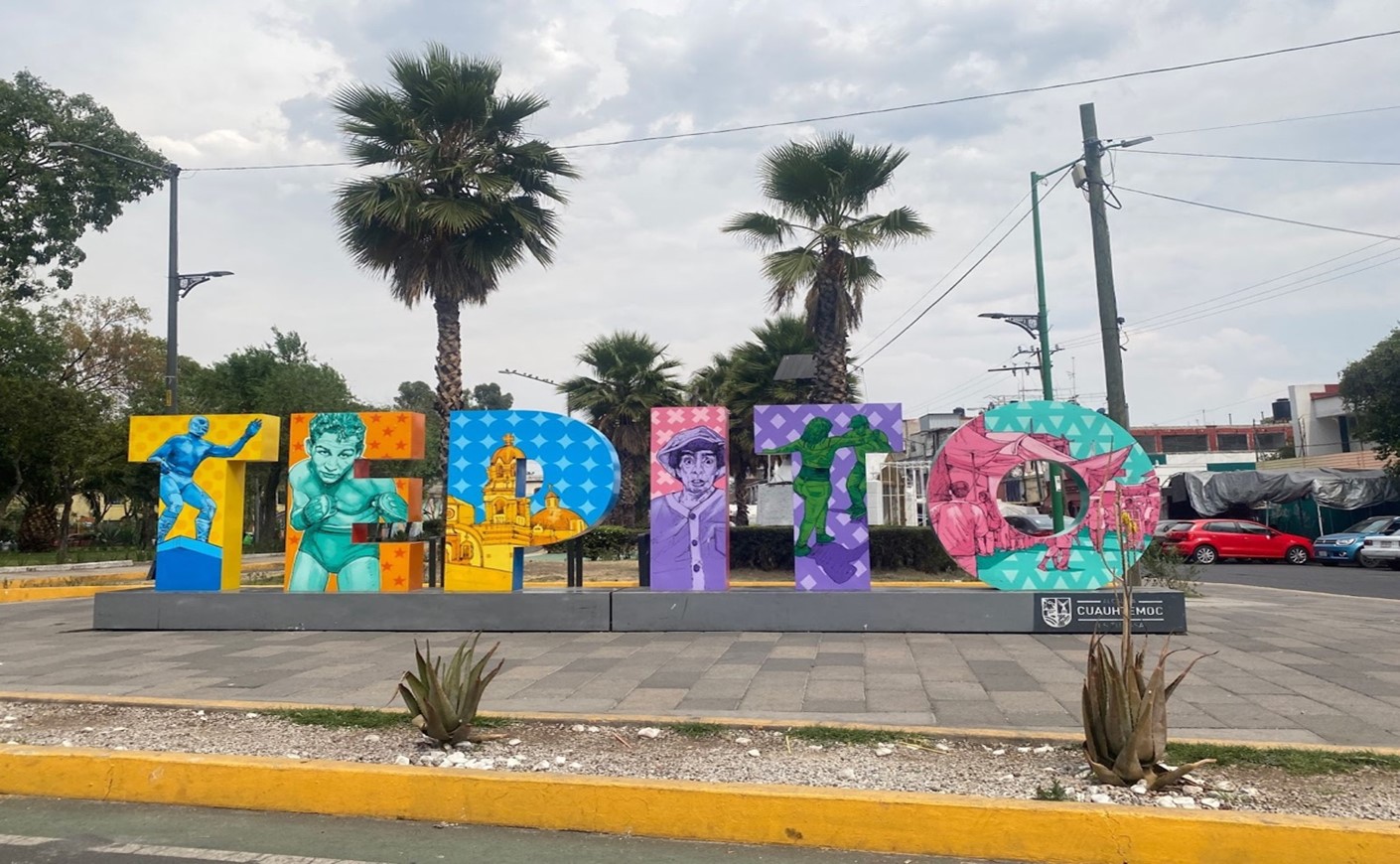
Are Digital Nomads Bringing Security to Tepito?

By Sofia Guerra

Creative Commons Licenses

Abstract:

Mexico City has seen a rise in digital nomads, individuals who work remotely while exploring low-cost international destinations. Sofia Guerra, along with a colleague, conducted fieldwork during the summer of 2024 to study this phenomenon. One finding showcased a significant increase in tourism in Tepito, one of Mexico City’s most dangerous neighborhoods. There has been an attempt to rebrand it as ‘Reforma Norte’ to mitigate its notorious reputation. Despite these efforts, Tepito residents report little to no improvement in the safety of the area, which remains heavily associated with crime and gang activity. Digital nomads generally avoid living in Tepito, visiting only its markets with local guides during the day.

Mexico City has experienced a notable increase in the number of digital nomads from around the globe. Digital nomads are individuals who can work remotely, using their flexibility to explore and reside in different countries. This lifestyle allows them to earn a living while working away from their home base. Typically, they choose destinations with a lower cost of living compared to their hometowns, which results in them earning in one currency and spending in another. This constructs economic growth by attracting investment in the area but raises local prices.

I have been studying this social phenomenon through research conducted with my colleague Montse Hernandez by interviewing locals and digital nomads to gather data. One theme that impressed us the most was that, due to gentrification, Tepito—a neighborhood known as one of the six most dangerous barrios in Mexico—is now becoming an intriguing destination for digital nomads. One of our participants even claimed that tourism led to increased security in the area. 

Being born and raised in Mexico City and always hearing about the crime surrounding Tepito, made this theme catch my attention and I decided to explore it further. Kristýna Omastová, conducted research to understand Tepito’s transformation from the 1960s to the present day. She describes how Tepito, initially known for its informal commerce, evolved into a major drug distribution hub in the heart of Mexico City. With the rise of the informal economy and growing demand for illegal goods, Tepito solidified its reputation as a place where illicit products were easily accessible. Tepito became a key center for drug distribution, and violence peaked and fell under gang control. To this day, remains a hub for drug trafficking operations, dominated by gangs like “La Unión Tepito,” which control not only the drug trade, but also other illegal activities such as extortion, kidnapping, and theft. 

So, why has Tepito become a target for digital nomads? The real estate company Grupo UBK launched a new remarketing campaign for the area, driven by the rising demand for apartments in Mexico City. Tepito is being promoted as an affordable investment opportunity, making the rent prices in the area rise. A rebranding effort has emerged, and it involves renaming it ‘Reforma Norte’ to mitigate its reputation for insecurity. It’s important to note that the buildings are not located in the heart of Tepito, but rather on the outside of the neighborhood. Some locals don’t even know that the area is now being called Reforma Norte and believe that the promotion of Reform Norte will not change or affect the prices of the heart of Tepito, although they have seen an increase in foreign-born visitors in some of the busiest market areas. This showcases that the marketing strategy has digital nomads as their target, therefore causing an increase in tourists in that area.

Although there has been an increase in foreign-born visitors in Tepito, the area is still known for delinquency, drug trafficking, and informal commerce. Digital nomads are mostly living in safer neighborhoods such as Condesa, Roma, Polanco, and Juárez. In Tepito, tourists often visit for the day and go to the markets in the heart of the barrio, usually accompanied by a tour guide or locals who know the area. This suggests that the rebranding strategy by the real estate company has led them to believe that Tepito is becoming safer, although locals from Tepito themselves do not perceive any significant changes in the Barrio Bravo safety.

Sofia Guerra is a sociology graduate student at American University. She is a research assistant at the Immigration Lab and Center of Latin American and Latino Studies at American University. She has conducted research on migration, gender studies, and the bilateral relationship between Mexico and the United States. She has an interest in policy-making, migration studies, criminology, and academia. She currently working on her research regarding migration and interpersonal violence.

Surviving the Criminalization of Migration

by Ernesto Castañeda, Makenna Lindsay, and Natalie Turkington*

Survivor of Ciudad Juarez Migrant Detention Center Fire / Creative Commons License

On March 27, 2023, a fire at a migrant detention center in Ciudad Juarez, Mexico killed 40 migrants and injured 29 more. One of those injured was Justen (pseudonym), a man in his late 20s from El Salvador who lost six of his friends in the fire. Dr. Ernesto Castañeda, Director of the Immigration Lab and the Center for Latin American and Latino Studies (CLALS) sat down with Justen last year to discuss the horrors experienced inside of the center and what happened after. The following testimony reveals the cruelty inside the Ciudad Juarez detention center fire as well as the treatment victims encountered by both U.S. and Mexican officials after the fact. 

Justen mentioned how difficult it was to transit through Mexico. He crossed into Chiapas in a pickup truck under a tarp. Later in Northern Mexico, he was stopped and questioned. He claimed he was from Chihuahua, Mexico but the authorities decided that given his answers, he was not Mexican, and he was taken to an immigration detention center. At the center, people had different rights and access to necessities such as mattresses and water bottles—only if they had money to pay for them. After some of the immigrants complained that they had no water to drink, the officials would reply that it was not up to them to support them and that it was their fault “por andar migrando” for migrating. Some of the people detained got angry, put the mattresses together, and said “if you do not open the doors or give us water, we will burn them.” An agent said, “Que les vaya bien”— “farewell,” as he saw them light the place on fire and left without opening the door.  

When the fire broke out, Justen felt his skin getting too hot, the smoke made it hard to breathe. He ran to the bathrooms to try to get away from the flames and found dozens of people, all crammed together–there was no running water. He and others screamed “Please let us out! “We do not want to die!” However, migration officials did not open the door. Justen recalls that, “the immigration officials did not at any moment try to open the door or call other authorities or ambulances.” Trapped in the bathroom, Justen lost consciousness, thinking he would die being burnt alive.

He later heard people crediting a passing firefighter who saw the smoke, called the fire department, and ran towards the building. Firefighters stopped the fire before everyone died inside. Justen’s burnt but breathing body was brought to Mexico City where he underwent treatment and a hospital stay of over two weeks and was incubated for much of that time. Immediately following his discharge, he had multiple interactions with agents of the Mexican government to arrange lodging for the remainder of his recovery. “When I saw migración [migrant agents] there, I said, ‘Why, why are our aggressors looking out for us?’’ Even in his injured state, Justen recognized the paradox that although migration officials played a major role in his near-fatal condition, they also “helped” him to recover. Ironically, they also helped bring his mother from El Salvador for humanitarian reasons.  

This is not the only striking paradox illuminated by the fire. The fire, namely smoke inhalation and dehydration caused immense damage to Justen’s lungs and kidneys. The doctor told him that 90% organ function would be considered great given the extent of the organ damage; he would likely never recover full function and health. “…I have to keep living and be more cautious of my lungs, airways, and kidneys… if I ever get too dehydrated because this could jeopardize my life.” Indeed, he would often cough while we spoke. 

The sequelae are not only related to his physical health but also to his mental health. In the interview Justen shared that to this day he still hears the cries of people trapped screaming, ‘We don’t want to die! We don’t want to die!’, and his own screams: ‘I don’t want to die! I don’t want to die!’ Six of his travel companions died in the fire. He also expressed the mistreatment and further neglect he endured from the Executive Commission of Attention for Victims (CEAV), and the chronic health problems he must deal with because of the tragedy. 

Following the fire, Justen was allowed to apply for asylum in the United States. Given his condition, Justen was asked about his health care and public services access in the United States. He specifically notes the conditional nature of his asylee status he understood that “…it was a condition of the government that we were in good health and all that and not to be a public charge.” He will not apply to receive disability income and will depend on remittances from his wife in DC and a job the mom can find in Texas.

The acute irony of the situation is that the United States government played a pivotal role in the development of his condition by asking Mexico to more forcefully enforce its immigration policies and to dissuade Central American and other immigrants from reaching the U.S./Mexico border, and yet it granted him asylum as a survivor of a tragedy abroad. Nonetheless, in establishing such a condition, the U.S. evades its responsibility to not only protect migrants but to protect and honor the rights of asylees.  

As discussed in the book “Reunited: Family Separation and Central American Youth Migration,” Justen was on his way to the U.S. in part to reunite with his wife and family who are living in the Washington, DC area. Justen’s wife escaped violence from El Salvador and moved to Nicaragua, but then the situation got unstable in Nicaragua and she came to DC. Justen and his mother were relocated by non-profits to a city in Texas under humanitarian parole and applied asylum, but his wife is undocumented and cannot apply for asylum simultaneously because she was not traveling with him and she was not at the fire. Justen is not in condition to work yet, though his wife has a job in DC and therefore, they still live apart despite both being in the United States. Such family separations show how immigration laws tend to work at the individual level, putting family unity and well-being in a secondary place.  

Violence against immigrants, like that in the Ciudad Juarez fire is a direct result of immigrant restrictionism and the externalization of borders that we see in North America and Europe. There is a need for the public to pay closer attention to the realities experienced by migrants, asylees, and refugees. Unjust treatment which goes unnoticed points to the lack of care taken to uphold the human rights of those on the move.   

For more see: 

Délano Alonso, Alexandra. “Before and After the Juárez Fire.” CLALS Working Paper, no. 45 (2023). https://www.american.edu/centers/latin-american-latino-studies/upload/ssrn-id4655183.pdf 

Brashear, Madeline and Diaz, Sarah and American University, CLALS, No Right to Life: Lives Lost and the Legalized Violence That Shaped a Humanitarian Crisis in the Arizona Borderlands (November 15, 2023). Available at SSRN: https://ssrn.com/abstract=4634297 

Book Review: Migration and Mortality: Social Death, Dispossession, and Survival in the Americas https://www.academia.edu/108876335/Book_Review_Migration_and_Mortality_Social_Death_Dispossession_and_Survival_in_the_Americas 

Guerra, Sofia. Invisible Deaths. https://aulablog.net/2024/03/07/invisible-deaths/  

Copyleft Creative Commons. Reproduction with full attribution is possible by news media and for not-for profit and educational purposes. Minor modifications, such as not including the “About the Study” section, are permitted. 

*Ernesto Castaneda is the Director of the Center for Latin American and Latino Studies, and the Immigration Lab. He conducted the interviews and helped write the blog. Makenna Lindsay, Coordinator of the Immigration Lab, and Natalie Turkington, a Research Assistant with the Center for Latin American and Latino Studies at American University, transcribed and translated the interview, and drafted and edited this blog. 

Blinken and Mayorkas visited Mexico to Discuss Migration

By Ernesto Castañeda

January 11, 2024

Republicans in Congress are denying funding to Ukraine and Israel over migration and border security, but the premises and assumptions used to discuss the issue fail to take the following elements into account.

It is hard to determine if numbers are really without precedent. There has been a change in that immigrants come and turn themselves in to try to come in with a legal immigration status, such as through asylum or the regularization programs available to Ukrainians, Afghans, Cubans, Haitians, Venezuelans, Nicaraguans, and other groups. In previous decades, many low-skilled workers knew there were no avenues to enter legally and would try to pass undetected and live undocumented in the United States. That is less common today for so-called low-skilled, recently arrived immigrants. So, an imaginary example would be to count people who once would mainly drive to New York City for the holidays and then compare them to a time when most people would arrive via plane. It would be easier to count the people arriving on planes, but that would not necessarily mean that there are more people arriving now by plane than the ones who arrived driving in the past. 

Historically, numbers are not comparable because, before Title 42, apprehensions were counted versus encounters afterward. Previously, most apprehensions would happen inside the U.S., while today, most people present themselves in groups and in a visible manner at ports of entry, along the physical border, or in front of the border wall. Another important difference is that in the past, undocumented workers relied on established family members and networks to get provisional housing and food and find a job. Many recent arrivals may not have close people in the United States and are actively asking for temporary housing and food from city governments. The U.S. does this for refugees and has done it in the past for Cubans and others escaping repressive regimes. Research and history show that these short-term expenses have been good investments, given that refugees and immigrants are more likely than U.S.-born individuals to work, start businesses, and be innovative leaders. Republicans in Congress have denied requests from the White House to provide funding to cities to cover some of these costs.

Some propose detention as deterrence, but prolonged detention in the United States is very expensive and mainly benefits the companies or workers providing and managing detention centers.

A misconception repeated in the media is that most people are immigrating illegally. That is technically incorrect because people are presenting themselves to immigration authorities. Many migrants are applying to legal programs, asking for asylum, or being placed in deportation proceedings.

The situation that we are seeing at the border and some of the solutions proposed indicate some important points that have been rarely discussed,

1) Border walls do not work. Smugglers can cut them, and people can walk around them or come in front of them on U.S. territory. 

2) People are turning themselves in, so contrary to what Trump said recently, authorities know where people are from and where they are going. They have notices to appear in immigration court, and they register an address in order to receive notices and updates if they want to continue with their asylum process and regularize their status. In the past, a great majority of people go to their migration court hearings.

3) CBP One appointments are too cumbersome to make, and there are not enough slots available, so people are showing themselves at ports of entry and between them.

4) The parole program for Haitians, Cubans, Venezuelans, and Nicaraguans is working to create a more rational and orderly process. Taking the program away —as Republicans in the Senate want—would make things worse. 

5) Putting more pressure on Mexico to deport more people and stop them from getting to the border is unsustainable. Mexico cannot manage the issue by itself unless it gets pressure and funding from the U.S. and international organizations, like Colombia does, to establish immigrant integration programs for immigrants who want to stay in Mexico, and it provides paths to citizenship for them. 

Thus, Blinken, Mayorkas, and their companions and team’s visit to Mexico is important. Mexico has been a willing partner, agreeing to take people from third countries under the Remain in Mexico and Title 42 programs, but those programs could only work temporarily. Mexico has also increased the number of deportations. However, deportation only works if people are unwilling to try multiple times. Increasing immigration surveillance, deterrence, and deportation does make arriving in the U.S. harder. It also makes it more expensive and thus attractive for organized crime to get involved in it as a business, thus getting more people to the border once they figure out the business model and logistics even with new policies in place. 

Mexican President Andrés Manuel López Obrador has asked for a regularization of U.S. relations with Cuba and Venezuela. There have been positive steps with Venezuela already. This could be a good opportunity to remove Cuba from the list of states sponsoring terrorism, which would reduce some of the emigration pressure in Cuba. 

Mexican authorities have disbanded many caravans and slowed the trek of thousands of migrants. Nevertheless, people who are escaping violence and persecution or have sold everything will try to get to the United States. 

Long-term ways to address the root causes of migration are to continue providing international aid and supporting democratic institutions. One has to keep in mind human rights. The Mexican Supreme Court of Justice has found that profiling people suspected to be migrants in buses to be unconstitutional. To engage the Mexican Army is not the solution either.

The silver lining is that despite the images we see in the news and seasonal peaks, it is not as if all the world is on the way to the U.S.-Mexico border. Most people want to stay home.

Congresswoman Delia C. Ramirez (IL-03)

Congresswoman Delia C. Ramirez (IL-03) presenting immigration policies the Congress could be working on instead.

In the January 10 hearing towards impeaching DHS Secretary Alejandro Mayorkas, Republicans repeated many myths, cliches, and anti-immigrant talking points but did not propose any sensible solutions. It was remarkable that Democrats in the committee saw the political nature of the exercise, and many offered actual solutions to improve the situation at the border and inside the United States in a way that makes the immigration and asylum processes more humane and above ground.

Ernesto Castañeda is the Director of the Center for Latino American and Latino Studies and the Immigration Lab at American University.

Creative Commons license. Free to republish without changing content for news and not-for-profit purposes.