Fleeing Collapse, Facing Barriers

Fleeing Collapse, Facing Barriers: The Venezuelan Crisis and U.S. Immigration Hurdles 

By Katheryn Olmos, Emma Wyler, & Isabella Serra

Photo of popular Venezuelan activist, Rafael Araujo, holding a sign that says, “Feb 12th 2014-2015 Impunity Persecution and Torture,” at a protest in Caracas, Venezuela on February 12, 2015. Image retrieved from Wikimedia Commons.

Severe Humanitarian Emergency in Venezuela

Just a few decades ago, Venezuela stood as a beacon of economic prosperity and oil wealth on the Caribbean coast of South America. However, the rise of authoritarian rule led to economic collapse, widespread corruption, and rampant inflation, creating a dangerous political climate that forced millions to flee their homes.

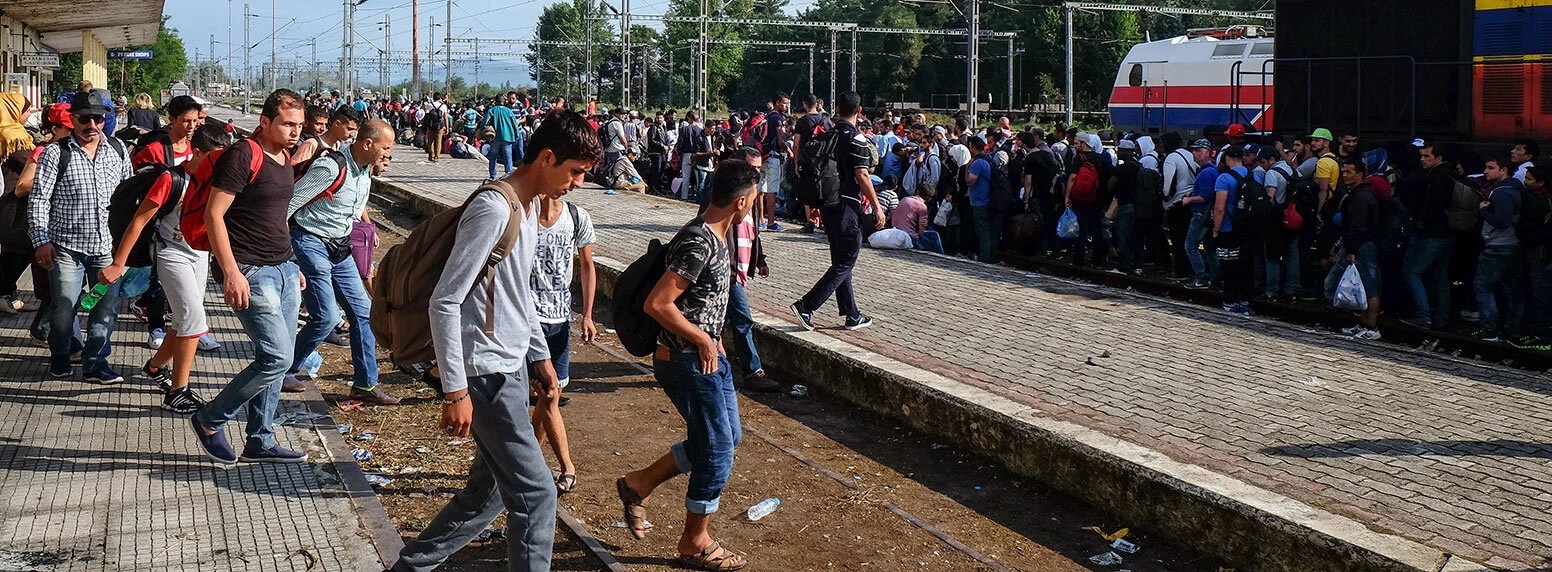
For many Venezuelans, including the 48 living in the Washington Metropolitan region (DMV) whom we interviewed, migrating to the U.S. was not their first choice when pursuing a more stable life. Previously, many Venezuelans migrated to and were displaced from places closer to home, from neighboring countries such as Venezuela, Colombia, Peru, Chile, and Brazil.

Venezuelan displacement is driven by a myriad of circumstances. Almost all of the Venezuelans we interviewed expressed that the economic situation in their home country, including hyperinflation, food scarcity, and inadequate wages, is not viable to sustain themselves or their families.

“No hay trabajo. [Cuando] hay trabajo y te quieren pagar, son 20 dólares semanales. Sí, y eso es muy poco dinero para los consumos de mi mamá, mis hijas. Nada más un bote de leche son 10 dólares. ¿Y me quedan 10 dólares para qué?”

“There’s no work. When there is work and they want to pay you, it’s 20 dollars a week. Yes, and that’s very little money for my mom and daughters’ basic needs. Just one gallon of milk costs 10 dollars. That leaves me 10 dollars for what?”

— Gabriel, Venezuelan Man, 28

When asked about corruption and impunity playing a role in the reason they migrated, the answer is almost always “yes.” Many of our participants experience corruption and political persecution from their government.

“Pues primero por la escasez de comida, y segundo, el barrio donde yo vivía era uno de los barrios más peligrosos de Venezuela… No tanto por parte de los que te roban sino más que todo por la policía. A la policía no importa si eres sano, si eres delincuente, igualito te extorsionaban, te sembraban drogas, de todo… nada más por el hecho de que uno perteneciera a La Cota 905 pensaban que ya uno estaba relacionado con [la pandilla]. Sí a todo el mundo que agarraron o sembraron le daban golpe, lo metieron preso, lo desaparecía… Te mataban y te ponían un arma, y ponían carajo de la banda de La Cota 905, cuando no es así. Entonces esa fue uno de los principales motivos porque me vine: La policía.”

“Well, first, because of the scarcity of food, and second, the neighborhood where I lived was one of the most dangerous neighborhoods in Venezuela…Not so much by people who rob you, but mostly by the police. It doesn’t matter to the police if you’re normal or if you’re a criminal; they still extorted you, planted drugs, everything. Just because you belonged to La Cota 905, they thought you were part of the gang. Everyone they grabbed or planted on was beaten, imprisoned, disappeared… They’d kill you and put a gun on you, and they’d say you were from La Cota 905 gang, when that’s not true. So that was one of the main reasons why I left: The police.”

— Andres, Venezuelan Man, 25

Humanitarian Protection Terminated

Given the unsafe conditions back home, many of the interviewees entered the United States under humanitarian parole, a common pathway to seek protection. The discriminatory attempt by the second Trump administration (now being blocked in federal court) to terminate humanitarian parole for Venezuelans, Cubans, Haitians, and Nicaraguans (CHNV) has upended the legal status for over half a million immigrants, and threatens to block all new applicants from these countries from receiving humanitarian protection. As of December 2024, 117,330 Venezuelan nationals had entered the U.S. under humanitarian parole. As Nicolas, a 29-year-old Venezuelan man, described:

“Entré con un permiso humanitario… A través de la aplicación [CBP One]. Ahorita no tengo los papeles, pero estoy en Estados Unidos gracias al permiso humanitario que ofrece Estados Unidos. Me lo aprobaron. … Cuando estaba en Chile, me aprobaron la entrada legal.”

“I came in with a humanitarian parole… Through the [CBP One] application. Right now, I don’t have the papers, but I’m in the United States because of the humanitarian parole that the United States offers. They approved me. … When I was in Chile, they approved me for legal entry.”

— Nicolas, Venezuelan Man, 29

In the appointment-making process for their asylum cases and legal processing, many interviewees used the CBP One app.

“Había hecho varios registros [en la aplicación CBP One] y todo eso, y no salía nada… Y trabajé hasta que me salió la cita… Estuve casi 12 meses, 11 meses [en México esperando la cita]… Entonces, de ahí, me dieron [la cita] para San Ysidro… Cuando por fin crucé, pues, solo la felicidad de estar aquí, todo fue, bueno, incluso mejor. Y de ahí llegué, compré [un boleto], tomé mi vuelo, y luego volé hasta aquí.”

“I had done several registrations [on the CBP One app] and all that, and nothing came up… And I worked until I got the appointment… I spent almost 12 months, 11 months [in Mexico waiting for the appointment]… So, from there, I got [the appointment] for San Ysidro… When I finally crossed, well, just the happiness of being here, everything was, well, even better. And from there, I arrived, bought [a ticket], I got my flight, and then I flew here.”

— Diego, Venezuelan Man, 19

The CBP One app, once a tool to schedule asylum appointments, was shut down by Trump and transformed “self-deportation” tool. This effectively weaponizes one of the only services for Venezuelans to legally process their asylum applications.

Venezuelans we spoke to often had experience with the Temporary Protected Status (TPS) program. TPS provides temporary protection and work permits to individuals who are unable to safely return to their home countries.

In February of 2025, President Trump announced his intentions to upend TPS for Venezuelans, stripping the 700,000 who would have been eligible for the program. While ending TPS for Venezuelans backpedals on basic humanitarian protection policy, our interviews shine a more nuanced light on the program’s existing limitations. TPS was too temporary to be a pathway.

“Ah sí, porque con el estatus temporal, o sea, lo dan solo por 18 meses. Y el asunto es que, para cuando lo recibes, ya casi se está acabando, así que nadie te va a dar un trabajo por un mes y luego te quedarás, ya sabes, sin los papeles legales.”

“Oh yeah, because with the temporary status, I mean they give it for only 18 months. And the scene is by the time you receive it. It’s almost already sparse, so I mean, nobody will go in to give you a job for a month, and then you will be, you know, without the legal paper.”

— Alejandra, Venezuelan Woman, 73

Despite its limitations, now that TPS is terminated, Venezuelans in the U.S. have lost their temporary work authorizations and currently risk deportation. The sensationalization of Venezuelan deportations by the Trump administration is an escalation of racial profiling experiences that interviewees previously reported.

Experiences in the U.S.

The hardships Venezuelans face do not end at the border. Our team looked deeper into the immigrant experiences of Venezuelans upon entering the U.S.

Many of our interviews uncovered further obstacles, including racial profiling, political persecution, labor exploitation, health implications, and detainment.

A commonality we discovered within our interviews is that people who seek refuge in the United States are criminalized based on their country of origin. Many Venezuelans interviewed experienced racial profiling committed by American police enforcement. The following interview, along with several others, reported job exploitation and unlivable wages. Racial profiling by police is a common thread among our interviews.

In our interviews with Venezuelans who had been detained in the United States, there were reports of close confinement and stress leading to health issues. On his experience being detained, a young man shared:

“Hubo un momento en que, prácticamente por tanto encierro, se me estaba cayendo el cabello del estrés y de tanto pensar. A veces quería pedir la deportación, y a veces me decía a mí mismo, ‘No estoy aquí, ya no estoy aquí’… Entonces aguanté, y cuando salí, me rapé la cabeza porque se me estaba cayendo el cabello.”

“There was a moment when, practically from so much confinement, my hair was falling out from the stress and the thinking. Sometimes I wanted to ask for deportation, and sometimes I said [to myself], I’m not here, I’m not already here… Then, I held on, and when I came out, I shaved my head because my hair was falling out.”

— Jose, Venezuelan Man, 23

U.S. Border Patrol agents process migrants at the Central Processing Center in McAllen, Texas, Sunday, June 17, 2018. Retrieved from picryl.

Key Takeaways

Venezuelans had to leave their worlds behind to escape the humanitarian crisis, just to face repeated struggles in an escalating authoritarian regime seizing power in the United States. Daniel, a 46-year-old Venezuelan man, described that throughout the difficult journey across the Americas, all he was doing was:

“Buscando una oportunidad de vida y una mejor calidad de vida, buscando una forma en la que me puedan dar una oportunidad o de tener mis documentos. Buscar un estatus.”

“Looking for an opportunity and a better quality of life, searching for a way in which they can give me the opportunity of having documents… a chance to have a status.”

— Daniel, Venezuelan Man, 46

ICE now weaponizes these discriminatory views of Venezuelans, painting them as gang members or terrorists. These are not unlike the claims with which the government in Venezuela used to persecute normal citizens back home.

The rampant political corruption, lack of transparency and due process, and smothering of dissent are escalating in the United States. This is a story Venezuelans know because they have already witnessed the fall of a functioning democracy to authoritarian excesses.

At the end of the day, a Venezuelan man responds to the question of whether he sees himself as an immigrant, saying:

“Yo le digo una cosa, todos somos iguales porque somos personas, somos seres humanos [a pesar de haber] nacido aquí y allá en diferentes ciudades. O sea, no quiere decir que seas tú más que el otro porque tengas más dinero. Todos vamos a morir, vamos a un solo hueco.”

“I’ll tell you what, we’re all the same because we’re people, we’re human beings [despite being]… born in different cities. In other words, just because you have more money doesn’t mean you’re more than everyone else. We’re all going to die; we’re going to the same hole.”

— Liam, Venezuelan Man, 29


Katheryn Olmos, Research and Data Coordinator at the Immigration Lab and graduate student in the Sociology Research and Practice program at American University.

Emma Wyler, Research Assistant at the Immigration Lab and undergraduate student at American University.

Isabella Serra, Research Assistant at the Immigration Lab and recent graduate of American University.

Edited by Jacqueline Aguirre De La O, Noah Green & Ernesto Castañeda

From Hope to Harm: Asylum Restrictions and Violence Facing Migrants in Mexico

By Veronica Gomez & Katheryn Olmos

Image of Mexican Flag with a cloudy sky in the background. Retrieved from Wikimedia Commons.

The current Trump administration has exacerbated the challenges faced by immigrants and asylum seekers. The administration signed Executive Order 14159, which effectively banned people from requesting asylum at the U.S.-Mexico border. This EO narrows legal pathways and exposes migrants and asylum seekers to potential violence and fear.

The Immigration Lab has conducted interviews with migrants and asylum seekers who have recently arrived in the Washington, D.C. metropolitan area. Our research has highlighted a series of commonalities in their experiences, both in their home country and on their migration journey.

Mexican Migration

From our interviews, we find that Mexicans migrate primarily for economic and safety reasons. Mexicans migrate to the U.S. in order to access economic mobility that they did not have access to in their home country, or to escape organized crime and the war on drug trafficking.

“Veracruz es muy violento ahora, ajá. Yo salí para rehacer una nueva vida, para hacer un futuro, para darle algo a mi hijo o mi familia, mi mamá y papá… Por esa es la razón de hacerle una casa a mi mamá, mi papá, porque vivíamos en una casa abandonada. Pobre cada que llovía, cada que nevaba, siempre el agua caía en la cama. Nos mojábamos y yo dije ‘algún día yo voy a hacer una casa’… Aunque sea de lunes a viernes o fin de semana, pero trabajar 5 días, lo que sea, [un trabajo] es lo más importante para mí.”


“Yes, Veracruz is very violent right now. I left to rebuild a new life to make a future, to give something to my son or my family, my mom, and dad…. Yes, that’s what I want. Make a house for my mom, my dad because we lived in an abandoned house. Every time it rained, every time it snowed, the water would always fall on our bed. We would get wet, and I said, ‘one day I will build a house’… Even if it is from Monday to Friday or the weekend, whatever. A job is the most important thing for me.

— Mateo, Mexican man, 39

Through our analysis, we were able to identify and describe the journey of people migrating through parts of Mexico on their way to the United States. For many individuals, migrating to the U.S. is not the first option. We have also analyzed interviews where Mexican people have gone through up to 7 different states in Mexico just trying to find employment before deciding their best chance at finding work is coming to the U.S.

A participant from Veracruz, Mexico, named Mateo, who is now living in New York City hoping to find a good job to give back to his family in Mexico, recounted one of his experiences:

“Yo crucé. Salí del DF, agarré un autobús, me vine para Chihuahua, salí para Sonora, cruce la Frontera y llegué a Tucson y de ahí seguí hasta Phoenix, Arizona.”


“I crossed. I left from Mexico City, I took a bus, I came to Chihuahua, it left for Sonora, I crossed the border, and I arrived in Tucson and from there I stayed traveling until Phoenix, Arizona.”

— Mateo, Mexican man 39

Map of Mateo’s Journey. Map retrieved from Google Maps, edited by Katheryn Olmos.

Mexico as a Place of Transit

Many of our participants across different nationalities mentioned Mexico as part of their migration journey, and they noted the dangers faced while traversing the country, even after migrating through the Darien Gap, where they encounter deadly terrain and the remnants of the diseased. Participants shared that that Mexico is the worst part of their journey.

“Porque la selva para nosotros fue– caminar, caminar, caminar. Nos veíamos, por lo menos por donde nosotros pasamos. No vimos ningún peligro de que nos hicieran daño ni de eso. Sino que fue caminar arriesgar la vida en cuanto a los ríos y eso nada más. Pero cuando llegamos a México eran ya las personas que nos querían hacer daño.”


“Because the jungle, for us, was just walking––walking, walking…it was more about risking our lives with the rivers and all that. But when we got to Mexico, that’s when there were people who wanted to harm us.”

— Alison, Venezuelan woman, 32

When travelling through Mexico, our participants encountered cartel activity, including trafficking and extortion. Sofia, a Venezuelan woman who migrated through Mexico, recalled the fear of being kidnapped or killed by organized crime members.

“Lo que pasa es que en México hay muchos–cómo le llaman, narcotraficantes? Algo así. Así que ellos se creen dueños de como que decir del pueblo, entonces si, si tú te arriesgabas o equis y cosas o ellos te agarraban, pues tú, este, te podrían matar, te podrían lastimar incluso cortar una parte del cuerpo, cosas así.”


“The thing is that in Mexico, there are many–what do they call it, drug traffickers? Something like that. They think they own the town, so if… they grabbed you, then you could be killed. They could even cut off a part of your body–things like that.”

— Sofia, Venezuelan woman, 32

These cartels serve as informal gatekeepers. When migrants are moving through Mexico, they will likely go through several checkpoints and encounters with cartel members who typically request a fee from migrants so that they can keep moving.

“Cuando yo estuve en México–no me acuerdo el pueblo–yo caminé mucho, 3 días por una vía de tren, porque nos bajaron los carteles y nos dejaron sin nada.”


“When I was in Mexico–not sure what town–I walked for three days on train tracks because the cartels made us get off and left us with nothing.”

— David, Colombian/Venezuelan Man, 28

If migrants refuse to pay the fee or have no money, they risk “disappearing” or being killed. Sometimes, gang members will rob and kidnap migrants and ask for an outstanding amount of money. Cartel members will ask for an outstanding sum of money.

“Como que en un desierto y [los pandilleros] nos agarraron y ellos nos decían que nos iban a matar. Que querían 3,000 dólares por cabeza.


“It was like a desert, and [the gang members] grabbed us and told us they were gonna kill us. They wanted 3,000 dollars per capita.”

— David, Colombian/Venezuelan Man, 28

Paying organized crime to make the journey to the U.S. border is part of the immigration process, though it is unclear what the relationship is between the cartel and government authorities. Diego, a young Venezuelan man, recalls meeting and paying a cartel member to accompany him to the port of entry where his CBP One appointment was scheduled.

“Tuve que llegar donde otra gente como un mismo cartel, que uno le pagaba una plata para que ellos te dejaban pasar tranquilo y todo. Les pagué y nos estuvieron los dos días que volamos dos días antes y de allí ellos mismos nos trajeron. Nos soltaron allí en el puerto y cuando ya pasé ya pues la felicidad de uno estar aquí ya todo fue, pues mejor.”


“I had to go to some other people, like from a cartel, and I paid them some money because they would let you pass through calmly and all that. I paid them, and they stayed with us during the two days after we flew in, and from there, they themselves brought us. They dropped us off there at the port, and when I crossed, well, the happiness of being here, everything just felt, well, better.”

— Diego, Venezuelan man, 20

Mexico as a Place of Allyship

During the Biden administration, Venezuelans would remain in Mexico for months, even years, before attaining an appointment on the CBP One app. Despite the dangers in Mexico, many of our participants were able to persevere with the help of Mexican citizens. Some good Samaritans in Mexico provided shelter, work, and food to migrants passing through.

No conocía a nadie, nada, o sea mi vida era el trabajo y pues no todos los mexicanos, pero hay unos que sí son muy, muy malos pues con uno… [Una señora] nos propuso, que sí, trabajáramos de las 7 [de la mañana] hasta las 10 de la noche y le dijimos, o sea, le dijimos que sí. Empezamos a vivir allí en casa de pues ella no nos cobraba que si la comida ni nada de eso, o sea, dormíamos allí.  Gracias a Dios nos hicimos muy amigos de ella, y del hijo, y de la hija también. Este y allí no, pues nos hicimos panas del hijo … ya estábamos allí, pues, bien diría yo. Y allí duramos, bueno, allí dure yo todo… ese tiempo. Y trabajé hasta que me salió la cita [de CBP One].”


I didn’t know anyone, nothing—My life was just work. And not all Mexicans, but there are some who are really, really mean to you… [A lady] offered us [a job] from 7 in the morning to 10 at night…we told her yes. We started living at her house, and she didn’t charge us for food or anything like that, I mean, we like, we slept there. Thank God we became really good friends with her, and with her son, and daughter too. And there, well, we became friends with the son… So yeah, we were doing pretty well, I’d say. And I stayed there, well, I stayed there that whole time. And I worked until I got my [CBP One] appointment.”

— Diego, Venezuelan man, 20

David, a Venezuelan man, recalls his time on La Bestia–also known as “The Train of Death”– where passengers are vulnerable to starvation, cold nights, extortion, kidnapping, injuries, and even death.

“Gracias a Dios, mira, nos montamos en esa bestia de al día y medio, teníamos hambre de todo y en ese camino como teníamos como un día y medio en esa bestia montado y pasamos por un pueblo que en el pueblo tiraban cosas a la gente.

Mira eso fue como que, Dios mío, si, yo estaba acostada [un carril] así me cae así, pero en la cara… me cayó fue una bolsa de jamón. Y al ratico tirado, otra de pan, y yo entre mi, ¿Será que estoy soñando o qué? Yo estaba en eso me entiendes. Y pero yo digo ‘Dios mío, señor, yo no puedo creer, ¿será?’

Y me paro yo alegre y… empiezo [a comer], yo me atraganté y ahí mismito que viene mi amigo con una garrafa de agua de 5 litros y [dice], ‘Hermano mira lo que agarré: el agua!’ Y yo, ‘Amigo mira lo que yo tengo aquí!’

Mira eso fue lo yo digo que eso fue uno de los momentos más difíciles de mi vida. Esa hambre y esa sed que yo tenía mira ahí se me quitó todo.”


“Thank God, look, we got on La Bestia, and after a day and a half, we were starving and everything. And on that journey, since we had been on La Bestia for about a day and a half, we passed through a town where people were throwing stuff at folks.

Look, it was like, my God, I had been lying down on [a boxcar], it hit me right in the face… What hit me was a bag of ham. And a little while later, they threw a bag of bread, and I was like, ‘Am I dreaming or what?’ That’s how I felt, you know? And I said, ‘My God, Lord, I can’t believe this—is this real?’

So, I stood up all happy and… I started eating, and I started choking from eating too fast. And right then, my friend shows up with a 5-liter water jug and says, ‘Brother, look what I got—water!’ And I said, ‘Friend, look what I’ve got here!’

Look, I tell you, that was one of the hardest moments of my life. That hunger and thirst I had—man, it all went away right there.”
— David, Colombian/Venezuelan man, 28

Image of people giving migrants bags with food, drinks, and resources for migrants travelling on La Bestia. Retrieved from Wikimedia Commons.

Mexican strangers, yet friends and allies, save lives with their generosity. However, in order to resolve the violence against those who reside in Mexico, the government must take action.

Key Takeaways

It is important in understanding that Mexican migrants are not all the same ––and that Mexican migration is complex. For many, migration is more than a destination, it’s more than Point A and Point B. It is important to understand Mexico as a place of internal displacement and international passage.

The border Texas shares with Mexico is one of the most populated in the country, where both Mexicans and Americans use entry points to go to work, travel, transport commerce, and more. Now, the U.S.-Mexico border faces daily difficulties with the current administration’s immigration policies. Border security and enforcement have largely increased – the image above displays military security from the Mexican Government, with Border Patrol Agents on the other side.

Image of the US-Mexico Southern Border (The Reynosa-McAllen border). Retrieved from CLALS/Veronica Gomez.

The “Remain in Mexico” Policy was implemented by the first Trump Administration, where the Department of Homeland Security requires asylum seekers migrating to the United States by land to wait in Mexico while their cases are pending. This not only puts Mexican border cities, such as Reynosa, in a difficult spot being responsible for them, but most importantly, it puts all immigrants at risk. CBP One partly improved the situation. Now, CBP One no longer works, it is harder for international migrants to arrive at the border, and it is almost impossible to enter by asking for asylum between ports of entry or at ports of entry without passports and visas. Some international immigrants will settle in Mexico, some in a third country, and others will go back to the places they left.

Katheryn Olmos is a Research Assistant at the Center for Latin American and Latino Studies and a graduate student at the Sociology Research and Practice program at American University. 

Veronica Gomez is a Research Assistant at the Immigration Lab and an undergraduate at American University.

Edited by Ernesto Castañeda, Director, and Noah Green, Joseph Fournier, intern at the Center for Latin American and Latino Studies and the Immigration Lab.

The Trump administration says Tren de Aragua is a terrorist group – but it’s really a transnational criminal organization. Here’s why the label matters.

By Ernesto Castañeda
Published: April 4, 2025 8:17am EDT

The U.S. State Department declared on Feb. 20, 2025, that the Venezuelan gang Tren de Aragua, as well as some Mexican drug cartels, are now considered foreign terrorist organizations.

Is the new label warranted?

Tren de Aragua is at the center of a controversial immigration case that the Supreme Court is going to consider.

The Trump administration is using the 1798 Alien Enemies Act to justify deporting more than 100 of the 238 Venezuelan and Salvadoran male immigrants it sent to a prison in El Salvador on March 15. The administration says that these immigrants are members of gangs such as Tren de Aragua and are foreign enemies, so they can be sent away with just an order from the White House.

The administration uses a checklist of items, including physical markers like tattoos, to determine these individuals’ association with Tren de Aragua. Although in reality, the Tren de Aragua gang members do not use any specific tattoos.

Family members and lawyers representing some of the Venezuelan immigrants say that they are not actually associated with the gang, and that some of them were living in the U.S. legally.

I am an expert on immigration, and I think it is important to understand why classifying Tren de Aragua as a foreign terrorist organization has sparked debate among observers.

One important reason is that Tren de Aragua is primarily a profit-driven group, not an ideological one – placing the organization more firmly in the transnational organized crime category rather than a political terrorist group.

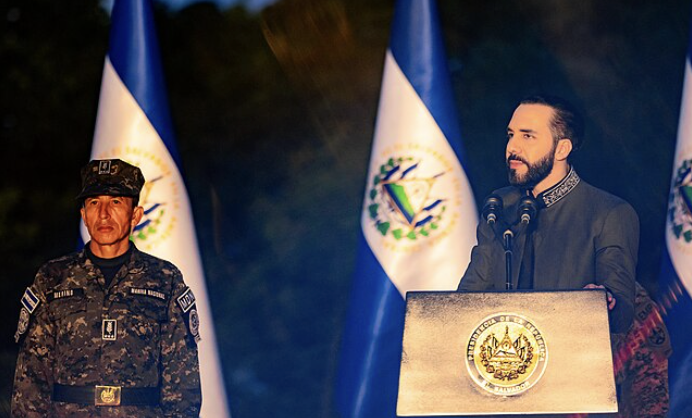
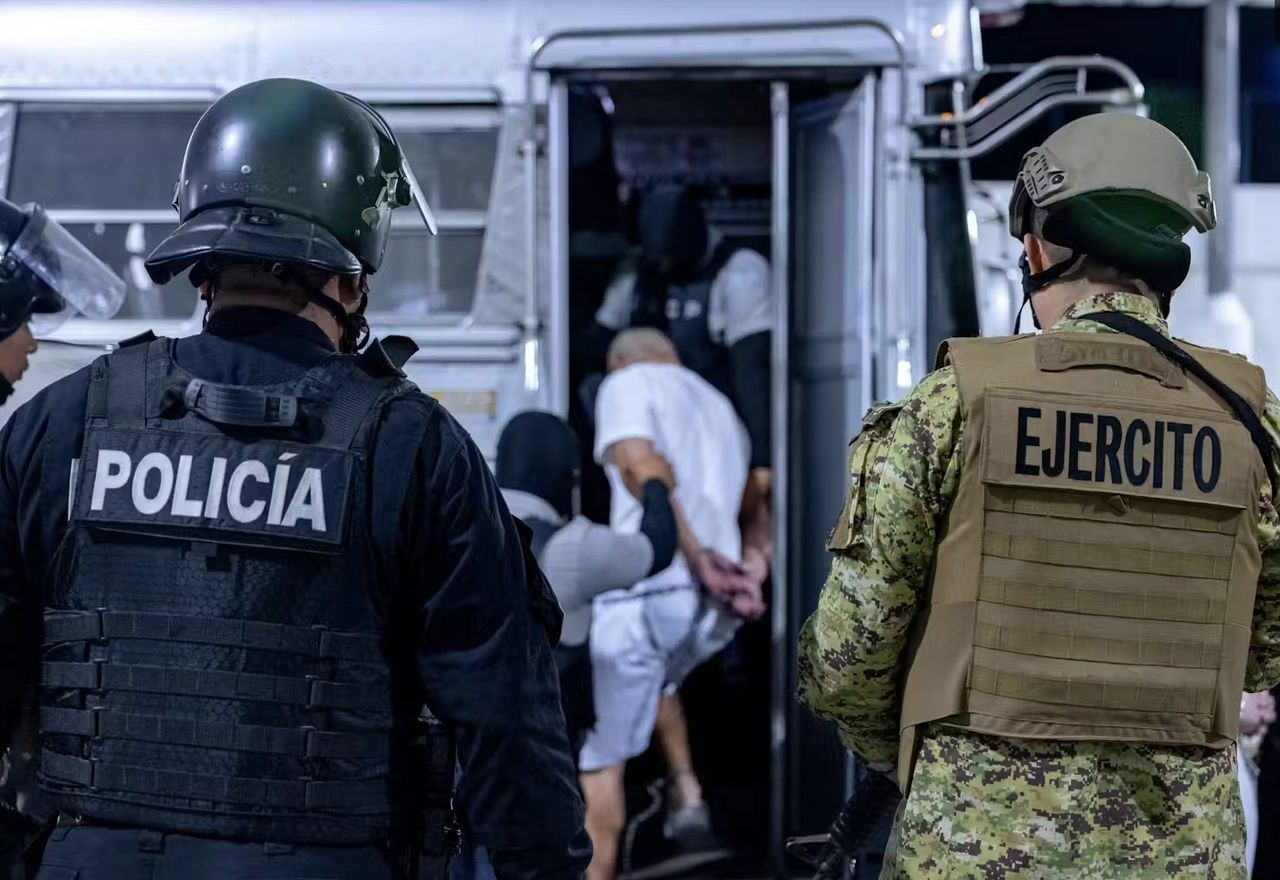
Venezuelan immigrants deported from the U.S. arrived in El Salvador in March 2025. El Salvador Press Presidency Office/Anadolu via Getty Images

Understanding Tren de Aragua

Tren de Aragua originated as a small prison gang in the early 2000s within Tocorón prison in Venezuela’s state of Aragua, located near the country’s capital, Caracas.

Over the past 25 years, Tren de Aragua has expanded rapidly across South and Central America, and evolved into a transnational criminal organization under the leadership of Hector Guerrero Flores. Also known as Niño Guerrero, Flores is a 41-year-old Venezuelan who first served time in Tocorón prison in 2010 for killing a police officer before he escaped for the first time in 2012. His current location is not known.

Flores is wanted by the U.S. and Colombia for various crimes related to expanding the group’s criminal network throughout South and Central America.

Today, an estimated 5,000 people are affiliated with Tren de Aragua, which is mainly focused on human trafficking and other crimes targeting migrants. The gang has also been linked to other criminal organizations in Latin America and is involved with extortion, kidnapping, money laundering and drug smuggling. The number of active members in the United States is in the low hundreds, and clearly the great majority of Venezuelans here are not members.

Homeland Security Secretary Kristi Noem arrives at the presidential palace in San Salvador, El Salvador, to discuss the deportation of Venezuelan immigrants to the country on March 26, 2025. Alex Brandon-Pool/Getty Images

Different end goals

Tren de Aragua has expanded in part because of its ability to exploit weak governance within the state of Aragua, and eventually across Venezuela, which faces political instability and a weak economy. An expansion beyond Venezuela has allowed the gang to connect with other transnational criminal networks.

Most accepted definitions of terrorism say it is a kind of violence, usually used against civilians, motivated by political and ideological beliefs and goals. Tren de Aragua does not fit that definition. It does not have a political ideology and therefore is not an actual terrorist organization.

The U.S. government considers a foreign terrorist organization a foreign group that engages in terrorist activity, or plans to do so, in a way that threatens the security of U.S. nationals or the country more broadly.

Tren de Aragua is among the eight groups that the State Department first classified as foreign terrorist organizations in the first few months of 2025 after Donald Trump’s inauguration. The other new groups put on the list primarily include Latin American drug trafficking organizations, like the Mexican Sinaloa cartel.

While transnational criminal organizations and foreign terrorist organizations both engage in violence and illicit activities, their end goals are different.

Foreign terrorist organizations such as al-Qaida and the Islamic State group seek political, religious or ideological change – or all three – as they try to use violence to reshape the political landscape of their regions.

Terrorist groups and transnational criminal organizations are not the same

Tren de Aragua, as well as other transnational criminal groups like MS-13 – which originated in Los Angeles but now operates throughout the Americas – and the Sinaloa cartel, carry out illegal, violent activities across borders in order to make money.

These groups do not have political or ideological motives beyond creating conditions to maximize their own profits. They do not aim to take political power in the U.S. or elsewhere, or try to remake society in their own image. That is beyond their purview and capabilities.

Properly distinguishing between terrorist organizations and transnational criminal organizations is crucial for devising effective policies and responses to their violence. Mislabeling these groups can lead to inappropriate responses such as putting aside civil liberties, due process and human rights.

Incorrectly classifying Tren de Aragua and other criminal groups as terrorist organizations could shift U.S. foreign policy and resources toward counterterrorism efforts and away from decreasing the power and violence exercised by organized crime and drug cartels in many parts of Latin America.

However, the way in which many Venezuelans and other immigrants have been deported from the country over the past few months without passing through immigration court seems to indicate that the main rationale for the talk about alien enemies and these terrorist designations is to aid in the goal of mass deportations, rather than to fight domestic or international terrorism.

If the U.S. truly wants to curb undocumented immigration and reduce drug and human trafficking, then I believe that it should ensure that its classification of these organizations is accurate and aligned with its actual objectives.

Melissa Vasquez, a graduate student at American University studying international affairs and the Northern Triangle in Central America, contributed to this piece.

Marginalizing Multilingualism: The Impact of Trump’s Order Establishing English as the Official Language of the United States

By Sophia Robinson

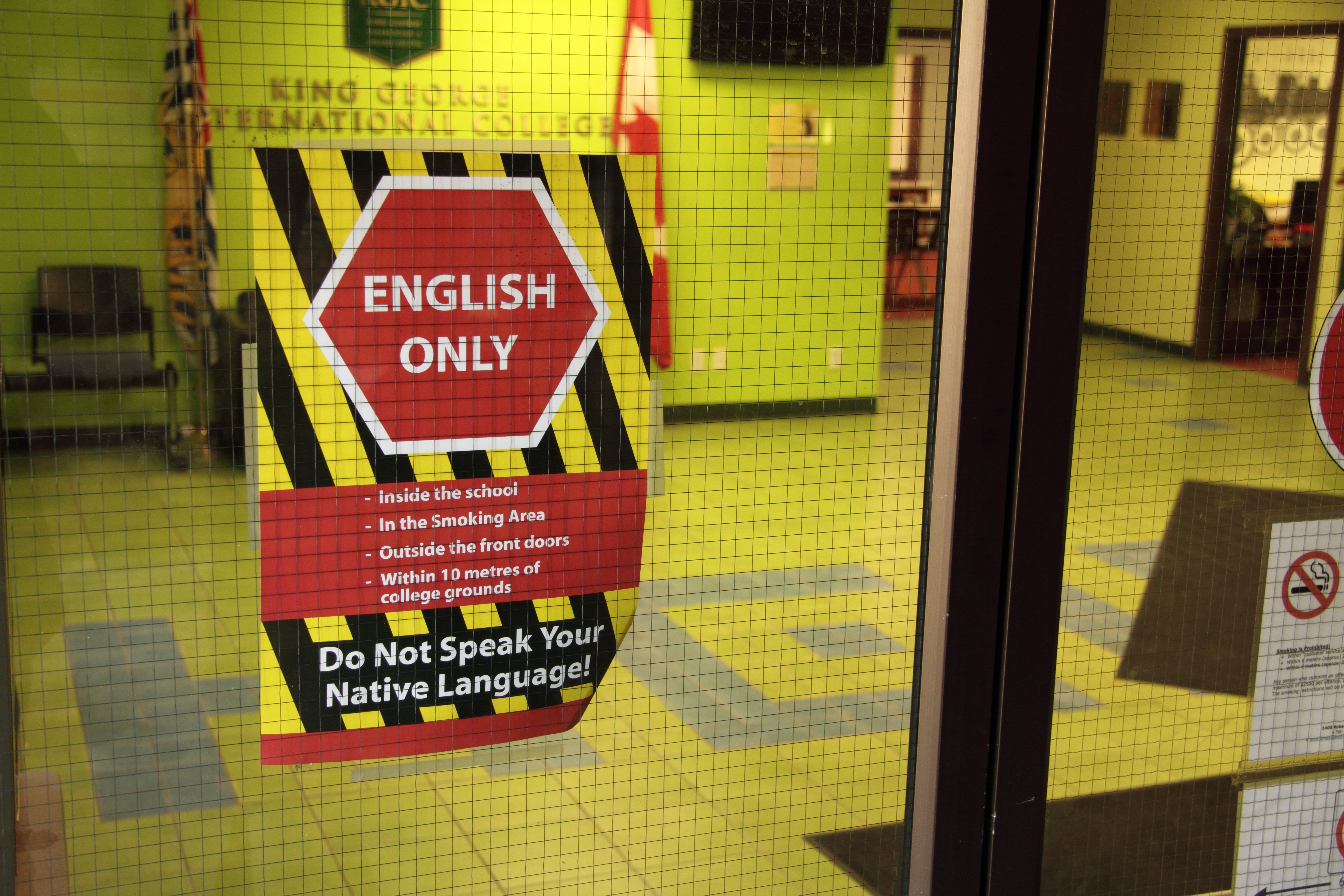
Stop sign “English Only”. Image from flicker

On March 1st, 2025, President Trump passed Executive Order 14224 making English the official language of the United States; this decision will undoubtedly have profound societal effects, further marginalizing migrant communities and diminishing multiculturalism in the U.S. By examining this order alongside a summary of “Immigrants Want to, and Do, Learn the Local Language,” Chapter Four of Immigration Realities: Challenging Common Misconceptions by Ernesto Castañeda and Carina Cione, it is possible to see how this action will affect the lives of millions across the U.S.

This Executive Order revokes President Clinton’s 2000 policy requiring language assistance for non-English speakers. Executive Order 13166 (“Improving Access to Services for Persons with Limited English Proficiency”) helped non-native speakers access essential services, including government documents, healthcare forms, and voting materials, and its absence could leave millions without access to these vital resources. The dynamics of language barriers are rooted in both historical and contemporary struggles faced by immigrants in the U.S, and Clinton’s 2000 policy was designed to ensure that non-English speakers could access government services without facing language-based discrimination. Trump’s order frames English as central to a cohesive American identity, which is inherently multifaceted and complex.

Supporters of this recent order argue that designating one language will improve the efficiency of government operations and promote national unity. However, this change can have serious consequences, especially for immigrant communities who rely on translated government materials for essential services. With over 68 million U.S. residents speaking a language other than English at home, Executive Order 14224 threatens to further marginalize a significant portion of the population both through limited required accessibility to government services and further reinforcement of misconceptions about migrants’ desire and ability to learn English.

As Castañeda and Cione’s book highlights, the challenges non-English speakers are far more complex than they appear. Many immigrants, especially those from Latin America, face significant social, economic, and legal barriers to learning English. Even with sufficient economic means, access to language education varies by region and available free time. Discrimination adds another layer of difficulty, with nearly half of Hispanic immigrants feeling judged for their English abilities. As a result of various obstacles, many are left isolated and unable to fully integrate into American society. A policy that systematically and socially upholds English as the only possible standard for success will only worsen these challenges.

Language assimilation is further complicated when considering the gendered challenges of language learning. Immigrant women, particularly in Latino communities, often face more difficulty learning English due to domestic pressures, cultural expectations, and fears of discrimination. This reinforces cycles of economic and social marginalization, as women are often left without the tools to access better opportunities. 

Language barriers can have serious consequences for mental and physical health, leading to stress, isolation, and even misdiagnosis in healthcare settings. It is vital to uphold and validate the multicultural realities of the U.S. in all spaces and having that upheld in government accessibility is a crucial part of inclusion. Lack of support for bilingualism and multicultural identity can lead second and third generation migrants to lose contact with their linguistic and cultural heritage, which has proven to be harmful to community health and well-being. The executive order’s reduction of language assistance programs will only worsen disparities and perpetuate negative perceptions of multilingualism in the U.S.

The implications of Executive Order 14224 are clear: it risks exacerbating the social and economic divides between English-speaking citizens and immigrants. While the goal of national unity is important, the needs of non-English speakers should not be overlooked. If the federal government reduces its support for language assistance, vulnerable immigrant populations will face even greater challenges in accessing essential services, deepening existing inequalities. Policymakers must consider the long-term impact of such decisions on social cohesion and the well-being of all citizens, regardless of language and background.

Sophia Robinson is a Research Assistant at the Center for Latin American & Latino Studies at American University 

Trump Halts Immigration Application for Migrants Welcomed under Biden Administration

By Valeria Chacon

March 4th 2025

USCIS Application Support Center, retrieved from wikimedia

A memorandum was issued on February 14 by  U.S. Citizen and Immigration Services (USCIS) acting Director Andrew Davidson that has effectively paused all pending immigration applications filed by migrants already living in the United States. The USCIS cited fraud and security concerns as the reasons for the halt, and the application freeze will remain in place indefinitely as government officials investigate and identify potential fraud cases

Thousands of Migrants Left in Limbo

Changes announced by the Trump administration directly impact a number of migrants, including from Latin America and the Caribbean as well as Ukraine, who have received legal entry and stay in the United States from categorical parole programs established under the Biden administration. Among them includes beneficiaries under Uniting for Ukraine, created in 2022 to provide Ukrainian citizens fleeing from Russia’s invasion legal entry to the United States. Applicants under the Cuba, Haiti, Nicaragua, Venezuela (CHNV) Parole Program are also affected. Initiated in 2023, this humanitarian parole program allowed nationals from these countries to seek stability and refuge in the U.S. In the first six months of the program, nearly 160,000 Cubans, Haitians, Nicaraguans, and Venezuelans arrived lawfully under this legal process. The latest data from USCIS shows that in December 2024, right before Trump’s inauguration, 27,340 migrants arrived in the United States with parole grants.

Applicants under the Family Reunification Parole (FRP) Program will also be affected. This program was made to reunite eligible individuals from El Salvador, Guatemala, Honduras, Colombia, and Haiti with family in the United as they wait for a family-based green card. It was created, in part, to discourage migrants from making dangerous crossings at the southern border by instead offering a legal migration pathway.

Lastly, those who have pending applications for Temporary Protective Status (TPS) from certain countries, including Haiti, Ukraine, and Venezuela, will also be impacted. The TPS program allows individuals to seek protection in the United States from ongoing armed conflict, environmental disasters, or extraordinary conditions. A TPS designation can be granted in 6, 12, or 18 months increments and recipients will need to re-register to keep their protection. However, Venezuelan and Ukrainian beneficiaries have had their protections extended until October 2025, while Haitian beneficiaries are covered through February 2026. As of March of 2024, there were 863,800 people living in the U.S. with TPS.

Legal Pathways Shut Down, Deportation Risks Rise

The programs previously mentioned provide work permits, travel authorization, protection from deportation, and legal migration channels to individuals from designated countries seeking a better life away from persecution and poverty or to reunite with family members in the U.S. However, under this policy shift, officials will no longer process any pending applications for these programs. Effectively, impeding applicants’ ability to transition to another legal status and making them vulnerable to deportation from the country.

In just his first month in office, President Trump has deported 37,660 people, and this number is expected to rise in the coming months due to the halts on the programs above that leave those already in the U.S. without legal status. It is evident that while Trump aggressively targets undocumented immigrants, he also has little regard for those who arrive under excruciating circumstances through legal migration processes.

Valeria Chacon is a research assistant with the Center for Latin American and Latino Studies at American University in Washington, DC

Edited by Katheryn Olmos, and Ernesto Castañeda

Green, Red, and Gold. I Need Only Blue to Play Uno

By Anthony Sandoval

March 3rd, 2025

The United States is where migrants come for that golden opportunity. To live a better life. To work, to be safe, to get an education. But once one leaves “La Jaula de Oro,” (“The Golden Cage”) they can’t return. All they have might be a green or red card, or maybe no card at all.

The U.S. has a visa program for temporary workers in “specialty occupations” called the H1-B visas. During Trump’s first term, he claimed the H1-B visa program was “very, very, bad for workers” and Suspended the H1-B visa program in 2020. Trump has switched his stance on H1-B visas, claiming “it’s a great program.” After Elon Musk showed his support for H-1B visas, nothing has happened to support  H-1B Visas meaning we might still see the reform that was outlined in Project 2025 to make the program ‘better.’

Other types of visa programs might be affected within the next couple of months, student visas, and visas for survivors of human trafficking and other crimes. Another program that is getting attacked is Deferred Action for Childhood Arrivals (DACA). All visas get a card and DACA gets a work permit card. Just another card to keep ahold of.

A migrant factory worker from Chicago said, “I have been waiting for my daughter to turn 21 so I can get my green card.” This working migrant applied to the Diversity Immigrant Visa Program (DV) 15 years ago and is still waiting for a Green Card. The DV program is a lottery. In 2023, the DV program had nearly 9.6 million qualified entries and only 50 thousand recipients.

The cost of green cards is already so high, that the filing cost for a family-based green card is approximately 3 thousand dollars for an applicant applying from within the United States. Other categories of green cards may have different costs depending on which one the person is aiming for, not including legal service fees. For DACA it costs $555 to renew online. The most expenses being EB-5 visas, which are for foreign investors that has made investments within the United States around one million dollars and created 10 permanent full-time jobs. For these pathways are not accessible to everyone due to the cost. While some immigrants may not have green cards, visas, or DACA, one thing that they might have are Red Cards ━which can make a difference in whether a person stays in the U.S. or gets deported. Red Cards were made back in 2007 by the Immigrant Legal Resource Center. Red cards are used to protect undocumented immigrants from U.S. Immigration and Customs Enforcement (ICE) or U.S. Customs and Border Protection (CBP). They can come in 19 different languages, including Ukrainian, Spanish, Chinese, Arabic, and Tagalog.

Trump’s “Border Czar,” Tom Homan stated, “For instance, Chicago—very well-educated, they’ve been educated on how to defy ICE, how to hide from ICE.”

On February 25th, President Trump talked about a new type of pathway to citizenship, he calls it a Gold Card. For years, many groups have been asking for an improved way for citizenship or an easier way to come into the United States. The answer was simple: a card that’s worth five million dollars. Ask your friends and family to help cover the cost. It’s that simple… but few people have that type of money. This new card is for investors. The gold card would just replace the EB-5 program.

We don’t need this. Not a 5 million dollar pathway that very few people can pay for. We need another way for citizenship, another way to come into the United States, a faster program that allows people to get green cards and not wait for years. We must remember these people are not “aliens;” they are people. One action that can help is supporting the Dream & Promise Act of 2025 that offers some DACA recipients, immigrant youth, Temporary Protected Status holders, and Deferred Enforced Departure holders a pathway to citizenship.

Anthony Sandoval is a research assistant with the Center for Latin American and Latino Studies and the Immigration Lab at American University in Washington, DC.

Edited by Katheryn Olmos, Ana Gaston, and Ernesto Castañeda,

(Not) Welcome to Florida: The Impact of Anti-Immigrant Policies

By Katheryn Olmos

Image of Welcome to Florida: The Sunshine State sign retrieved from Flikr

The atmosphere is so thick in Florida, you could cut it with a knife. Immigrants feel like they cannot catch a breath. As one immigrant told me, “every day there is something new.” Imagine having to check a map of zones to avoid every time you want to go outside, commuting further away from home to shop for groceries, having to refrain from speaking your native language in public, or avoiding going out to get coffee with a friend to lower the risk of encountering ICE raids or deportation. Living in constant fear, paranoia, and mistrust is no way to live.

State patrols will sit along highways to spot white working vans. In one case, a construction worker was pulled over in his working white van one evening at the end of January because his headlights were “too opaque.” The police officer asked him, “How long have you been in the U.S.?” to which the worker replied, “Over 20 years.” Then the officer gives him a ticket for driving without a license and tells him to go on with his day.

Shortly after the incident, Florida Governor Ron Desantis announced that he would enforce Section 287(g) of the Illegal Immigration Reform and Immigrant Responsibility Act of 1996. Therefore, the Florida Highway Safety and Motor Vehicles (FLHSMV) will join forces with the U.S. Immigration and Customs Enforcement (ICE). Through this partnership, ICE authorizes the Florida Highway Patrol to arrest and detain undocumented immigrants. State troopers will now ask individuals about their immigration status on day-to-day traffic stops. Additionally, state troopers are authorized to detain those suspected to be undocumented, regardless of their actual immigration status. This would completely dismiss the notion of “innocent until proven guilty,” leading to racial profiling of Latino drivers and causing fear among Florida residents. Florida residents have seen an increase in law enforcement. Latinos are more frequently reporting seeing people they know stopped and detained by law enforcement. It feels that this policy is only targeting the brown and immigrant community in Florida.

As Florida faces various problems, including the housing crisis, high home and auto insurance premiums, environmental crisis, and idle hurricane impacts, Desantis believes the so-called “immigration crisis” is the biggest issue at hand. On February 13, Desantis signed the “toughest immigration law in the country.” With this legislation, Desantis will allocate $298 million for detaining and deporting immigrants and increase the penalty for crimes committed by immigrants, including requiring the death penalty for undocumented immigrants who commit capital crimes. Additionally, Desantis is creating a new crime of entering the state of Florida as an undocumented person on top of the already existing federal crime of entering the U.S. through an irregular pathway.

There has been an increase in people moving in from out-of-state, including former residents of New York, California, and New Jersey. Many of them are moving to a state where their out-of-state wages for remote work or social security payments get them further, and the politics better align with their conservative beliefs. The changing demographics and anti-immigrant politics in Florida have also been creating a hostile environment for immigrant Floridians.

While Florida is experiencing an increase in residents from out of state, there is also an increase in immigrant residents moving to safer places out of state. Fleeing persecution is a recurring theme for immigrants; they often find themselves in a state of movement and fear while hoping to one day achieve the American Dream. Those who have lived in Florida for many years, even decades, face significant challenges when it comes to leaving their homes. Many immigrants who have established homes, businesses, children, and pets would prefer to remain in Florida. Immigrants who have built lives in Florida or lack the financial resources to leave are modifying their social and economic behaviors out of fear of deportation.

Florida is already witnessing the impact of migrants no longer participating in their social and economic atmosphere. Businesses that rely on Latino consumers are feeling this impact. Restaurants and other franchises that tend to be busy on weekend nights are empty. Rosy, a frequenter of Jacksonville, Florida’s Latino nightlife, says local Latino bar and club events are practically empty. She states that Latino clubs that always had long wait times to enter now have no lines.

Construction work is down due to high interest rates, weather conditions, and labor shortages. Despite Desantis’ push for mass deportations to solve the housing crisis in Florida, we need immigrants to solve the housing crisis in Florida. On February 20, 6 Mexican workers were detained at a gas station on Southside Blvd. in Jacksonville, Florida. Every day more and more innocent Latinos are detained by ICE. Instilling fear against our most vulnerable yet essential members of the community is not the solution to any of the state’s problems

Katheryn Olmos is a Research Assistant at the Center for Latin American and Latino Studies and a graduate student at the Sociology Research and Practice program at American University.

Edited by Ernesto Castañeda, Director, and Emma Wyler, Wilfredo Flores, intern at the Center for Latin American and Latino Studies and the Immigration Lab.

Mayor Adams, Don’t Sell Out New York City’s Economy

By Marshall Plane, Ernesto Castañeda

Photo credits to Flickr

Days after federal corruption charges against him were dropped, Mayor Eric Adams appears poised to open New York City to President Trump’s mass deportation agenda in what Manhattan’s federal attorney described as a “quid pro quo”. Mr. Adams’ posturing has hinted at this for some time: the mayor has framed the recent influx of asylum-seeking migrants as an economic burden that “will destroy New York City.” “The long-term consequences have yet to materialize of what this crisis will do to our cities,” he told Tucker Carlson on January 22nd.

After crunching the numbers, we agree with Mr. Adams: New York City is just beginning to reap the benefits of this influx of hardworking people. We conservatively estimate that, if their earnings and employment rates are similar to the current undocumented population, the 316,000 asylum seekers who have come here since 2022 will contribute $8.62 billion annually to the city’s economy, a figure greater than the GDP of forty countries. Much of this economic activity will flow to public coffers: the asylum seeker population is projected to pay $942 million more in taxes than they receive in benefits each year. If ICE is allowed to wreak havoc on New York City, all these benefits will be lost.

This is not particularly surprising. Previous waves of immigrants have similarly fled desperate situations, arrived with limited resources, faced nativist backlash, and still become vital contributors to the city’s economy and culture. There’s no reason to believe today’s newcomers should be any different. With New York’s US-born population declining and demand for workers growing fastest in the industries most reliant on immigrant labor, they are arriving at an opportune time.

It’s true that New York City has spent substantial amounts on services for asylum seekers: a combined $5.2 billion in fiscal years 2023 and 2024, with another $4.5 billion budgeted for FY2025. These costs doubtless been have been inflated by Adams’ “emergency” decision to suspend background checks and competitive bidding requirements for contractors providing such services. The Comptroller’s investigation found several egregious examples of overpayment. One contractor received $117/hour for security guards and $201/hour for off-site managers. Despite this waste, spending on asylum seekers made up just 4.2% of the FY2025 budget.

Most importantly, these costs are not the product of an “open border.” Immigrants have been coming to New York City via the border for decades. In fact, the city’s undocumented population was 611,000 in 2012 and fell to 412,000 by 2022. Nor is the scale of the current influx unusual in recent times–during the 1990s, the city’s foreign-born population grew at a higher annual rate than it has during the 2020s.

Instead, the recent difficulty housing asylum seekers is a unique case created by a perfect storm of policies: a political stunt that brought people to cities where they lacked connections; an artificial housing shortage; an already-struggling, poorly run shelter system unequipped to house new arrivals; a lack of legal immigration pathways; and outdated laws that prevent asylum seekers from working.

Each wave of immigration to New York City has been beneficial to both the immigrants themselves and their adopted city. The only difference today is that arcane policies have forced both sides to make major upfront investments before they begin to enjoy those mutual benefits.

Before claiming asylum, people must physically come to the US. For nearly all the asylum seekers we spoke with as part of our ongoing study, this involved taking on substantial debt to finance a deadly, months-long overland journey. This debt can be a major obstacle as people try to establish themselves in New York.

In 2023, John borrowed nearly $30,000 to bring his family of five from Ecuador to the US border. A mechanic by trade, he quickly found work repairing e-bikes at a workshop in Queens, earning $1,200 a week. Yet over half of each paycheck goes to repaying his creditors back home (who have threatened to kill his parents should he miss a payment), leaving him unable to afford rent and trapping his family in the shelter system. He says he’ll have paid off enough debt to move to an apartment in New Jersey in three months.

Lacking a sponsor in the US, crossing the border was John’s only way to come here. Leave aside, for a moment, your beliefs about whether doing so was morally correct. The fact is, he’s here and contributing to our economy. Had he been able to come directly from Quito to New York, his spending power would be going to New York businesses instead of human smugglers.

Another problem: after applying for asylum, people must wait 180 days before receiving a work permit. Unless they have connections to support them, this effectively forces people to live off the state for six months. In practice, our conversations have made clear, it’s often much longer. In 2023, New York City began limiting stays in any one shelter to 60 days, forcing people to shuffle between different facilities. Many migrants are not informed that failing to report this change of address to USCIS within 10 days is a misdemeanor and can delay or derail their ability to get documents.

The experience of Carlos, who we spoke to outside a Manhattan shelter, exemplifies the bureaucratic absurdities that hold migrants back. Bused to NYC in late 2023 as part of Operation Lone Star, he immediately applied for asylum, citing political persecution in Venezuela. While waiting for his work permit, he has bounced between different shelters and worked temporary construction and moving gigs. He says his lack of documentation allowed these employers to exploit him, frequently not paying him in full.

Carlos told us a relative in Oklahoma has found him a job in trucking, his original profession. “The moment my papers arrive, I’m going to Oklahoma,” he says. “They’re waiting on me.” He was supposed to get his work permit months ago but had to restart the process when his address changed. He was most recently told his papers should arrive in 90 days.

The absurdity is infuriating. Due to decades-old laws, people itching to work linger in shelters against their wishes and at great financial cost, while crucial jobs across the country remain unfilled. The Independent Budget Office estimates the cost of missed work authorizations for asylum seekers at up to $1 billion in 2024 alone.

Even so, with US-born workers rapidly aging, rising immigration has done much to ease post-pandemic labor shortages, helping reduce inflation while maintaining economic growth. And asylum seekers are quietly integrating into the city’s economy. Of the 225,000 migrants who have passed through the shelter system, over 170,000 (77%) have moved out, and the number remaining in city care continues to dwindle.

Many interviewees, having recently gotten their work permits and found jobs after a long ordeal, expressed excitement to begin living independently and working towards the various dreams that kept them going through sweltering jungles and deserts. As asylum seekers increasingly fill the jobs that keep New York’s service-based economy moving, the investments made by both sides finally appear to be paying off. For deportations to derail asylum seekers’ budding lives as New Yorkers would be a human tragedy and an economic catastrophe

Marshall Plane is a Research Assistant at The Immigration Lab.

Ernesto Castañeda is the Director of the Immigration Lab and the Center for Latin American and Latino Studies and a Professor at American University.

Innocence Suspended: From Seeking Security to the Guantanamo Concentration Camp

Luis Alberto Castillo Rivera graduating from high school in Venezuela (Photo courtesy of his family; Source: Migrant Insider)

Luis Alberto Castillo Rivera graduating from high school in Venezuela (Photo courtesy of his family; Source: Migrant Insider)

The story of Luis Alberto Castillo Rivera, a Venezuelan asylum seeker, has gone viral on TikTok and gained media coverage. Castillo is a man without any criminal history or gang affiliation who entered the United States through a legal pathway. In 2024, this Venezuelan asylum seeker flew to Mexico and awaited his court date. Once he received his appointment date on the CBPOne app on January 19th, 2025, he presented himself at the U.S.-Mexico border in El Paso, where he was processed by immigration authorities and held in detention for no given reason. At the ICE detention center in El Paso, authorities started to question his tattoos, specifically one he had of Michael Jordan. Authorities claimed his Jordan tattoo was affiliated with the Venezuelan gang Tren De Aragua. Many of the tattoos identified by a law enforcement list as used by Tren de Aragua, including stars, roses, tigers, and jaguars, are common among Americans. These so-called identifiers may just be a flimsy pretense for criminalizing the average, non-criminal migrant.

Castillo in a photo released by the Department of Homeland Security of the first flight of migrants preparing to takeoff for Guantanamo Bay, Feb. 4, 2025. DHS

Castillo in a photo released by the Department of Homeland Security of the first flight of migrants preparing to takeoff for Guantanamo Bay, Feb. 4, 2025. DHS

On February 3rd, Castillo told his family that he would be deported to Venezuela, even without a hearing. The next day, he lost contact with his family and was sent to Guantanamo Bay, Cuba on February 4th. President Trump stated he is sending those who have committed crimes in the U.S. to Guantanamo Bay, but Castillo had no criminal history nor gang affiliation and never even had the chance to freely step foot in the U.S.

Castillo’s family was not notified that he would be held at the “longest-running war prison.” His family members only found out about this after seeing pictures online of migrants arriving in Guantanamo Bay. When his family searched for him on the US Immigration and Customs Enforcement website, it appeared he was still in the processing center in El Paso, Texas. Attorneys are calling Guantanamo Bay a “legal black hole,” a place where typical legal protections do not exist for some of the detainees. Some are being held without due process indefinitely without trial or conviction, including thousands of Haitian refugees in the 1990s and almost 800 Muslim men, including minors, over the past two decades. Some of these prisoners have endured incredible physical and psychological abuse and torture in this extralegal space.

Now, the first group sent to Guantanamo Bay, including low-risk migrants and migrants with no criminal record, such as Castillo, were detained in the “counterterrorism suspect” part of the prison – rather than the Migrant Operations Center used in the past to process migrants. The conditions these individuals are facing at this maximum-security prison are inhumane, including mold, undrinkable water, and a lack of adequate medical care. Guantanamo Bay does not even meet the minimum safety standards for detention facilities as set by the U.S. government. Furthermore, the detainees at Guantanamo Bay are subject to permanent physical and psychological trauma.

A less-known but recent story close to home is one where five migrants in North Florida went into a gas station to grab breakfast on the way to their construction job on January 27th and were detained by ICE. Four of them remain detained in Florida. One of them, a Mexican man name Jose Angel Juarez, was sent to Guantanamo Bay; the rumors go that he would be held there for two years. He has no criminal record beyond being caught multiple times crossing the border. He is simply a worker who has been entering and leaving the U.S. every year to work and go home. The idea that Guantanamo Bay was ever for the “worst of the worst” is an illusion. These are just two among many cases of immigrants being detained, held, deported, or sent indefinitely to Guantanamo Bay without due process after being profiled racially or for having tattoos. 


Katheryn Olmos is a Research Assistant at the Center for Latin American and Latino Studies and a graduate student at the Sociology Research and Practice program at American University.

Edited by Ernesto Castañeda, Director, and Emma Wyler, intern at the Center for Latin American and Latino Studies and the Immigration Lab.

New York City’s Shift To The Right

By Caryalyn Jean

One surprising trend that emerged from the 2024 elections was New York City’s subtle shift to the right. Although the overall results of how each of the five boroughs that make up the city did not change, Trump gained 30% of the overall votes in the 2024 election as opposed to 19% in 2016. There were significant shifts in working-class neighborhoods in the Bronx and Queens. One reason for this may have been the high cost of living in New York and believing that Trump would bring prices down. Nonetheless, we must consider xenophobic messaging on both sides of the political aisle to get the full picture.

Since the initial arrival to of busses with immigrants and asylum seekers from Texas and Arizona to New York City, harmful rhetoric about them has had real-life implications. For instance, in late January 2024 reporting began surrounding an altercation which took place in Times Square between NYPD and a group of migrants. Former Police Commissioner Edward Caban responded to the incident with, “a wave of migrant crime has washed over our city.”  Mayor Eric Adams described the incident as “an attack on the foundation of our symbol of safety.” Despite body cam footage released just a few days after the initial reporting, both the media and residents alike repeated the messaging purported by Eric Adams and the NYPD Residents sharing the Eric Adams administration’s belief that migrants’ presence is correlated to an increase in crime in the city is reflected in the results of May 2024 poll. Of the 974 eligible New York City voters surveyed, “over 70 percent blamed migrants in the city for the current crime rate, with 41 percent saying immigration is having a ‘significant’ impact and 31 percent saying a ‘fair amount’ of impact.” 

New Yorker’s shift to the right is not limited to the presidential election. Another election result that may appear surprising to some is Republican Stephan Chan’s New York State Senate District 17 win, beating incumbent Iwen Chu. In 2020, New York State underwent a redistricting cycle, and Iwen Chu was the first representative of the newly formed district and served as representation for the growing Asian population in the area. Reporter Michael Lange described Chu’s loss as the solidification of “the Chinese Republican realignment in Southern Brooklyn.” On his campaign website, Stephan Chan emphasized being an immigrant from Hong Kong, a long time Bensonhurst resident, his law enforcement background, and his strong family ties. He also emphasizes his opposition of “wasteful spending of our tax dollars” juxtaposed to photo of himself at a protest opposing the building of a homeless shelter in Gravesend. Unsurprisingly, Chan’s opposition is not limited to homeless shelters. In a campaign ad, a supporter states, “he won’t hand out freebies to migrants while we pay the price.” This reflects not only Chan’s stance on spending on resources for migrants, but of some New Yorkers who often feel like New York City provides recently arrived migrants with services that long-time New Yorkers do not have access to.

On the national level, the growing anti-immigrant sentiment can be seen in how New York’s Congresspeople voted on the Lanken-Riley Act. This bill will allow the Department of Homeland security to detain undocumented immigrants who have been accused of burglary, theft, larceny or shoplifting. It also allows for states to sue the federal government for “decisions or alleged failures related to immigration enforcement.” Opponents of the bill are concerned about the erosion of due process for those accused of crimes and the lack of funding that is required to implement it. On January 23, 2025, the bill passed 263 to 156, with 6 out of 17 New York House members representing Downstate New York voting “Yea.” The bill was signed by President Trump on January 29, 2025. 

These election results amongst other things have already caused great concern around the upcoming mayoral and gubernatorial races. Ironically, despite Adam’s law and order campaign, he is in legal trouble. Likewise, since fall 2024, New Yorkers have been left many questions. During a November 6, 2024, news conference, Eric Adams was asked about his administration’s plans to cooperate with Donald Trump’s mass deportation efforts. In reply, Adams stated “We cannot add to the anxiety and fear that people are experiencing.”  The following week, Adams affirmed New York City’s sanctuary city status but stated that he believed that laws surrounding local law enforcement’s cooperation with Immigration and Customs Enforcement should be changed. Adams was also present as Trump’s inauguration and cancelled his attendance at various Martin Luther King Day celebrations to many New Yorker’s dismay. His reluctance to outright denounce Trump’s stance on immigration and recent ICE raids has caused uneasiness for immigrant advocacy groups within the city and causes further speculation that Adam’s refusal to publicly critique Trump is for his own personal gain. Democrats have long relied on New York City to keep New York State blue but shifts to the right in New York City may lead to the party losing its stronghold in the country.

Caryalyn Jean, Sociology Research and Practice MA (SORP) Student at American University