Haiti Needs to Lay New Tracks

By Jake Johnston

Research Associate, Center for Economic and Policy Research

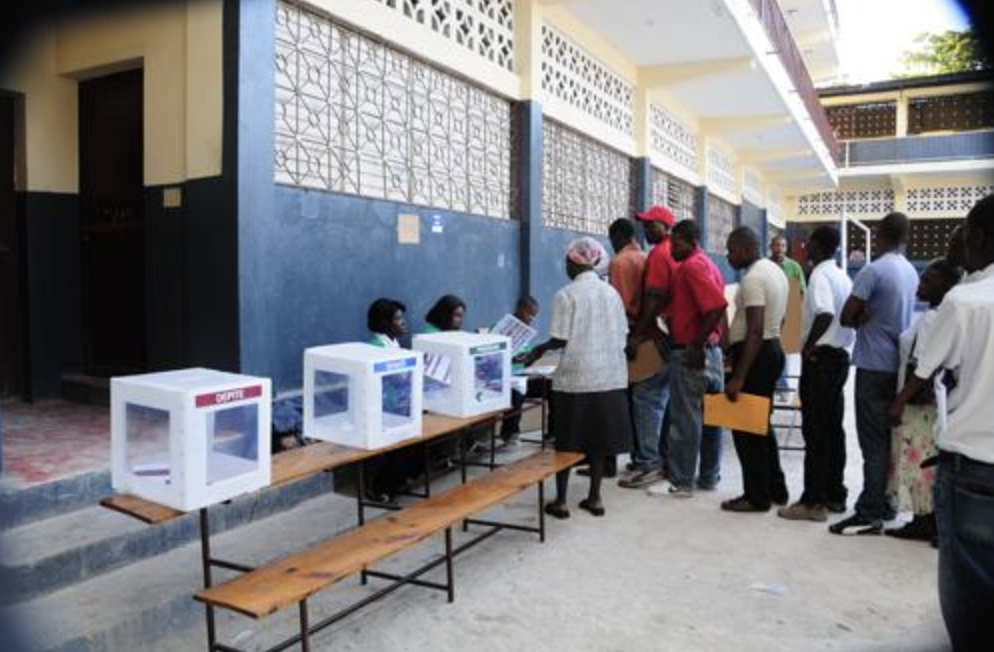
It’s been nearly a decade since Haitians last went to the polls to elect a president. Even then, barely one in five participated. In a country with a majority of the population under 25 years of age, this means that, for most Haitians, voting for one’s leaders is a privilege never before experienced.

Haiti’s transition, precipitated by the assassination of Jovenel Moïse in July 2021, is ongoing. For the better part of four years, progress toward elections has remained elusive. But that all appeared to change this fall.

“The Haitians need to come to an election and elect a president,” the US Charge d’Affaires, Henry Wooster said in September. Security and other challenges must not be a “red herring for taking action,” he continued. Speaking directly to Haiti’s de facto authorities, he warned: “In other words, you can’t stay in those jobs for life.”

The reaction, in a country where the political class remains more responsive to Washington than the population in Haiti, was swift. Two months later, a new electoral law has been established and a vote scheduled for next August. But does this present Haitians with a path out of the multiple, overlaid crises affecting the country? More than half the country is facing food insecurity, the economy is about to wrap up its seventh consecutive year of negative growth, and insecurity continues to dominate daily life.

In 2023, when asked if they had trust in the electoral process, fewer than one in four Haitians responded yes. It is hard to imagine that number is higher today. Though few would be sorry to see the much-loathed leaders atop the transition fall, a vote is not a path out of the current crisis.

The quick response to Wooster’s threats was not so much about elections. It was about a date much closer on the horizon: February 7, 2026. That is when the mandate of the nine-member presidential council — which was put in place with a strong push from the Biden administration, CARICOM, UN, and the OAS 18 months ago — formally ends. For months, debate has raged over what should come next. The political class is auditioning, not with the ten-plus million citizens of Haiti, but with the foreign diplomats and multilateral entities they see as key to their own survival.

And if there was any doubt about who would ultimately decide, it was put to rest in mid-November. Amid an effort from some on the transitional presidential council to, once again, replace the prime minister, the US embassy stepped into the fight.

“If you and your family value your relationship with the United States, I urge you in the strongest terms to desist from initiatives to oust the PM and to instead publish the electoral decree … This is not the time to test U.S. resolve,” Wooster texted Fritz Jean, one of the councilors. Days later, Jean’s US visa was revoked and the State Department publicly accused him, without providing evidence, of supporting armed gangs. The effort to replace the PM was stopped — at least for now. The next week, the electoral decree was published.

The “plan” is coming into focus, and it is a familiar one: stability at all costs, no matter how rotten the foundation. To enforce this notion of stability and allow for elections, the US has been quick to assure that more security support is on the way.

In September, the UN Security Council approved a Gang Suppression Force (GSF). Authorized for up to 5,500 soldiers, it is currently little more than a rebranding of the Kenyan-led Multinational Support Mission (MSS) that the UN authorized in 2024. No new troops have arrived and, while this new mission will have some level of UN support, operationalizing any of it is expected to take the better part of a year. 

The main difference then, for the 1,000 or so mostly Kenyan police on the ground in Haiti is that the rules of engagement have changed. The GSF, as its name suggests, is intended to be more “muscular,” by which its architects mean lethal. The newly drafted Concept of Operations outlines a mission with a simple goal: kill the bandits.

But while few have taken note, that has been the de facto authorities’ strategy for some time. So far this year, police forces have been responsible for well over half of the 4,500-plus killings in Haiti. Hundreds of civilians have been caught in the crossfire as police battle armed groups that exert influence over much of Port-au-Prince and have traumatized a nation. Drone attacks, led by a secretive police unit operating with Blackwater CEO Erik Prince’s private mercenaries, are also racking up civilian casualties and drawing growing condemnation.

The outspoken leaders of Haiti’s armed groups, however, only seem to continue to accumulate more power, political influence, and heavy weaponry. While some areas of the capital have seen tension ease, violence in the provinces is expanding by the day. Armed groups still control all the major arteries of the nation. More people are displaced today than at the height of the post-earthquake recovery.

The US has expressed its goal in Haiti as saving the state from imminent collapse, thereby avoiding mass migration or the further entrenchment of transnational criminal organizations. But while precious oxygen is consumed by raging debates over electoral timelines, transitional governance structures, and how quickly foreign soldiers can arrive, nobody has stopped to ask a basic question: is the current state worth saving?

The root of the tension that has paralyzed the country for much of the last decade is not a fight between violent gangs and the state. Simplistic narratives of good versus evil miss the mark. Rather, it is a fight over putting the train back on the tracks to save a rump state in the name of stability or to lay new tracks to create the foundations for a more representative state to rise from the ashes. It is not elections nor a foreign military force that will resolve this fundamental tension. In fact, history shows those two responses are more likely to consolidate the status quo.

The Haitian people need an opportunity to vote freely. They need to feel safe and secure in their communities. But what is missing is a plan to bring it all together, to begin restoring faith in a state that long ago lost the trust of the population; a plan to achieve peace, which is not just the absence of violence, but the presence of opportunity. What is missing is a vision that can inspire the population and bring the nation together around a common path forward.

A peace process can fill that gap. Such an endeavor does not mean legitimizing armed actors, condoning violence, or accepting impunity; rather, what it should mean is treating the situation holistically while centering the population and in particular victims of both state and non-state violence. A foreign military force and low-turnout elections are tracks Haiti has been down many times before. A peace process offers a chance at laying new ones. But first, what Haiti needs are political leaders responsive to the needs of the people and not simply to foreign embassies.

The Multiple Dimensions of the US-Brazil Relations Crisis

By Lívia Peres Milani

Public Policy and International Relations Institute (IPPRI-Unesp)

National Institute of Science and Technology for the Studies of the United States (INCT-INEU)

President Donald Trump meets with Brazilian President Luís Inácio Lula da Silva during the ASEAN Summit at the Kuala Lumpur Convention Center. (Source: Wikimedia Commons)

On November 11th, the US announced a withdraw of the additional 40% tariffs it had imposed on many goods of Brazilian origin, including coffee, fruit, and beef. The tariffs, initially imposed on July 30th, are one among multiple dimensions of the current bilateral crisis. Besides commerce, the crisis also has a political dimension, initiated by the recent US decision to invoke the Magnitsky Act – an instrument ostensibly used to sanction corruption and human rights violations – against Alexandre de Moraes, one of the Brazilian Justices responsible for the conviction  of ex-president Jair Bolsonaro over his attempted  coup d’état. While the recent White House decision does not necessarily represent an end of the crisis, it represents a pause of sorts, and so, a timely moment to assess the relationship.  

The imposition of tariffs  

The White House’s initial imposition of tariffs may at first glance make little sense, since it appears to disregard its economic interests. The US enjoys a trade surplus with Brazil, and there is not sufficient production in the US of many of the tariffed products to meet national demand. That is the case for coffee, fruit, and a variety of industrial supplies. However, to understand the source of the crisis, it is necessary to consider its non-commercial dimensions. These include i) the transnational articulation of far-right movements, ii) Big Tech’s economic interests, and iii) US geostrategic considerations.  

Brazilian and US far-right currents are deeply connected. Eduardo Bolsonaro, son of the former president, has worked to promote the Brazilian radical right abroad. During his father’s trial, he took a leave from Congress to launch a pressure campaign in the US against the Brazilian Supreme Court (STF) and the Lula government. With cooperation from sympathetic US leaders, he lobbied against the Lula administration, claiming that the trial was a “witch hunt,” his father was the victim of political persecution, and asking that the US government impose penalties on the Brazilian authorities responsible. This effort complicated Brazil’s relation with Foggy Bottom and the White House. Much of the language used by the White House to justify the new round of tariffs reflected this lobbying effort. 

Another factor that explains US policy toward Brazil are the interests of Big Tech companies. Brazil’s Supreme Federal Court took up a case relating to the responsibilities of social media platforms for user-posted content, ruling that social media platforms should be civilly liable if they failed to remove undemocratic, discriminatory, or crime-inciting content. In response, the US Computer and Communication Industry Association (CCIA) welcomed the imposition of sanctions against Moraes. They argued that the ruling in Brazil violated “free expression,” a strategy often used by Big Tech actors, in conjunction with far-right political leaders, to oppose the regulation of social media in Brazil and elsewhere.  

Finally, larger geostrategic considerations are also in play. The current US administration seeks to reassert US regional and global hegemony. Brazil, for its part, wants to promote its Global South leadership, framed as part of a “multipolar world order.” Promoting the BRICS forum is an important component of Brazil’s approach. The new tariffs were announced a few days after the BRICS summit in Rio de Janeiro, with the US president also threatening to impose tariffs on other countries that associate themselves with the BRICS+ group. This timing illustrates US opposition to the BRICS and pressure on Brazil to align with Western countries instead of its Global South partners. 

Tariffs backfire and the future of US-Brazil relations 

However, the Trump administration’s aggressive strategy against Brazil has not led to the expected results. Brazil’s government managed to control the domestic narrative, framing US tariffs as an attack on Brazilian sovereignty, a strategy supported by public opinion, as polls show. The US approach also became an incentive for Brazil to shore up its relations with Global South leaders. Following the tariffs, Lula reached out to the presidents of China and India to discuss the expansion of trade relations. The tariffs also proved unpopular in the US, and harmful for the White House, since they drove up the cost of coffee and other products. 

These several factors explain Trump’s subsequent decision to change direction. He opened a dialogue with Brazil, first announced at the UN General Assembly, and then confirmed his goodwill in a bilateral meeting in Malaysia. High-level negotiations, and the unpopular inflationary trend in the US, led to the recent removal of tariffs from many Brazilian products. It also signals an end to this most recent period of bilateral crisis. 

Nevertheless, there might still be consequences over the middle and long term. US sanctions communicate to the Brazilian government that, while a global power, the US is not a trustworthy partner, even when it comes to such non-strategic, everyday issues as the export of coffee and fruit. At the same time recent events have helped to cement the transnational partnerships of far-right leaders while also serving to illustrate how these relationships are impacting US government decision-making.  

On the other hand, the recent US decision to alleviate the tariffs is a signal for both partners that the US-Brazil bilateral relationship is an important one. Even if this relationship is imbalanced, given the US’s economy and global influence, the recent tariff episode illustrates that the US cannot simply dictate policy to Brazil, and that the two countries’ economic interdependence can function as a structural constraint upon the political will of far-right political actors.   

Can Peru’s Democracy Recover?

By Cynthia McClintock*

Photographs from the early hours of the Generation Z protest in Peru, 2025
(Source: Wikimedia Commons)

Since 2021, democratic backsliding has been severe in Peru, and Peruvians are furious. Peru’s Congress is loathed. In 2025, the approval rating for Peru’s President, Dina Boluarte, fell below 3 percent and she became the most unpopular president on the planet. Finally, in October, Boluarte was impeached on the grounds of “permanent moral incapacity”; it was the fifth time since 2018 that a president had been impeached or had resigned upon imminent impeachment.  Per Peru’s constitution, Boluarte was succeeded by the Congress Speaker, José Jerí. Presidential and Congressional elections are scheduled for early 2026.

Why are Peruvians so angry? What does their anger mean for the 2026 elections (with the Congressional elections and the first round of the presidential elections scheduled for April 12 and a likely runoff on June 7)? Is it possible that the elections can lead to a democratic recovery?

Why are Peruvians So Angry?

The key reason is not “the economy stupid,” but an escalation of organized crime and the perception that Peru’s political leaders are part of the problem rather than part of the solution.

Between 2019 and 2024 the number of homicides doubled and the number of reported extortions jumped sixfold. Extortion is hurting huge swathes of lower-middle class Peruvians. Transport workers have been particularly vulnerable; so far in 2025, approximately 50 bus drivers have been killed for refusing to make extortion payments.

The reasons behind the crime escalation are various. Demand for cocaine remains high and, over the last decade, Peru’s coca cultivation has increased. As the price for gold jumped, so did illegal gold mining. Peru’s gangs are fragmented—and therefore hard to track—and they have developed nefarious new strategies such as using WhatsApp for extortion.

But, Peruvians believe, the reasons also include the government’s complicity. In part because illicit operators have provided campaign finance, in 2024 approximately half of Peru’s legislators were under criminal investigation; these same legislators have passed laws to impede investigations and prosecutions. Boluarte herself is under investigation for various crimes, including illicit enrichment. She sported a Rolex watch priced at $19,000, despite no evident financial means for such extravagance.

Further, from the start large percentages of Peruvians did not deem Boluarte a legitimate president. In 2021-2022, Boluarte was Vice President under President Pedro Castillo. Leading a far-left party in fraught elections during COVID, Castillo was an accidental, unprepared president. He was virulently opposed by the dominant right-wing forces in Congress, in particular Fuerza Popular, the party of Keiko Fujimori, the daughter of former authoritarian President Alberto Fujimori. As Vice President, Boluarte had said that, if Castillo were impeached, she too would resign, triggering new elections. However, in the event of Castillo’s December 2022 impeachment, Boluarte stayed on, despite massive protests and ubiquitous calls for new elections.

As President, Boluarte appeared indifferent to Peruvians’ concerns. Between December 2022 and February 2023, 49 civilian protesters were killed by the security forces. Boluarte’s response was support for an amnesty law. And, amid an October 2025 transport workers’ strike, Boluarte’s advice to Peruvians worried about crime was that they should not open text messages from unfamiliar people—placing blame for crimes on the victims.

What Does Peruvians’ Anger Mean for the 2026 Elections?

Peruvians’ anger spells difficulties for its incumbent parties and advantages for parties that can claim an “outsider” mantle. Fujimori’s Fuerza Popular is widely considered the dominant party in the Congress, and it will struggle against this perception. Its presidential candidate, Fujimori, is running for the fourth time and is likely to have worn out her welcome.

Not surprisingly, demands for an “iron fist” against crime are strong. The current presidential frontrunner is Renovación Popular’s Rafael López Aliaga (aka “Porky”), a Trump-like far-rightist who placed third in the 2021 election and was subsequently elected Lima’s mayor. López Aliaga promises a hardline strategy against organized crime, including implementing similar imprisonment policies to those of El Salvador’s Nayib Bukele. But Renovación Popular holds the fourth largest number of seats in Congress and it will be difficult for López Aliaga to claim an “outsider” mantle.

A candidate likely to claim an “outsider” mantle is Mario Vizcarra, running as a proxy for his brother, former President Martín Vizcarra. As President in 2018-2020, Vizcarra confronted the dominant parties in Peru’s Congress, building his popularity but ultimately catalyzing his impeachment. After a strong showing in Peru’s 2021 legislative elections, he was disqualified from holding elected office for ten years. Yet, Vizcarra’s government was far from without fault. There are other candidates, including the popular former clown, Carlos Álvarez, who could seize the “outsider” mantle.

Can Peru’s 2026 Elections Lead to Democratic Recovery?

The challenges to Peru’s elections are serious. In recent years Fuerza Popular and other illiberal parties in Peru’s Congress have allied to skew the electoral playing field in their favor.  Interim President Jerí is, of course, new to his position and his possible impact on the elections is unclear. (His first-month record was better than was first expected.)

As elsewhere in Latin America, Peru’s illiberal parties have strategized to achieve the disqualification of viable candidates. As indicated, this strategy is currently being used against Vizcarra; it could also be used against a rising new candidate.

Peru’s illiberal parties have calculated that a plethora of candidates is in their interest. Currently, 39 party lists are registered. Such a head-spinning number is problematic for journalists trying to cover the campaign and problematic for voters trying to identify their preferred candidate, especially because pre-election polls are more likely to be inaccurate. Yet, Peru’s Congress cancelled a provision for a preliminary round of voting, in which parties would have been required to secure 1.5 percent of the vote in order to qualify for the “first round.”

Still, there are grounds for optimism. The massive protests of recent years have shown that Peruvians want their political views heard. Peruvians recognize the importance of honest, capable leadership and want to find it.

*Cynthia McClintock is Professor of Political Science and International Affairs at George Washington University.

Bolivia Decisively Enters New If Unknown Political Territory

By Robert Albro, Associate Director, CLALS

Rodrigo Paz is sworn in as president of Bolivia, 2025
(Source: Wikimedia Commons)

Centrist Rodrigo Paz’s victory in October’s runoff election signals a dramatic change of direction for Bolivian politics. The era of dominance of the Movement Toward Socialism (MAS) party, led by ex-president Evo Morales, is definitively over. For only the second time since 2006 the MAS will not control the presidency. As a result of the recent election, it now has a mere two representatives in the legislature’s lower house, and no one in the upper house. Though it does not hold an outright majority, Paz’s Christian Democratic Party is now the single largest presence in both legislative chambers. How did Bolivia get here?

Twenty years ago, the leftist-populist MAS swept into power, as a new and energetic grassroots alternative to the elite-run traditional parties that had traded off governing Bolivia since the end of dictatorship in 1982, or one could even argue, since the 1952 Revolution. The MAS’s popularity sprung largely from the dynamism of Morales, himself, then a coca grower union leader adept at organizing and leading large-scale protests in opposition to prevailing Washington Consensus policies and government efforts to sell off Bolivia’s non-renewable resources to transnational corporate interests. The MAS styled itself a bottom-up social movement and not a party. Its participatory “lead by following” approach to governance appealed to a great majority of indigenous voters and working-class people of indigenous descent.

Morales and the MAS proved historically consequential in undertaking a contentious but innovative rewrite of the country’s Constitution, which went into force in 2009. It fully embraced Bolivia’s “plurinational” identity and incorporated an unprecedented variety of collective indigenous rights of consultation, to their traditional territories, and perhaps most controversially, of judicial autonomy. The Morales administration also used a large surplus from the country’s extractive boom to finance a wide range of new social safety net provisions that halved the number of people living in poverty, including cash transfers to families, a pension program, minimum wage increase, as well as public investments in schools, hospitals, and other infrastructure. Perhaps most importantly, his presidency raised the public visibility of Bolivia’s indigenous majority, no longer as second class citizens but as political protagonists of their own present and future.

Morales and the MAS were immensely popular. But then cracks began to appear. In 2011 a plan to build a controversial highway through a protected indigenous reserve brought the MAS government into direct conflict with the reserve’s residents, damaging its support among some indigenous groups. When the extractive boom ended around 2014, Bolivia’s economy slowed considerably, and the MAS fiscal policies that had lifted so many out of poverty became increasingly unsustainable. Part of the problem was Morales, who served two presidential terms and aspired to another, without any thought to a succession plan. Constitutionally limited to two terms, in 2016 he soundly lost a national referendum in a bid for a third and then ignored the result, further alienating many former supporters.

The upheaval around the contested 2019 election, which eventuated in Morales going into exile in Mexico and the persecution of MAS loyalists by a rightwing caretaker government, set the stage for the party’s eventual fall from grace. The 2020 election restored the MAS to power. But soon Morales and the new president, his ex-finance minister Luis Arce, were in a pitched battle for control over the party, a bitter and increasingly personal rivalry that fatally fragmented the MAS into opposed camps. Their protracted feud, which paralyzed congress, strayed into surreal territory, with accusations of a staged coup and mutual assassination attempts. The credibility of the MAS was so fundamentally damaged that the incumbent Arce, with his poll numbers plummeting, suspended his campaign. Morales, meanwhile, remains holed up in his coca grower redoubt to avoid criminal charges.

The MAS-led government’s political fragmentation, and its ineffectual response to Bolivia’s increasingly disastrous economy, have left the party deeply unpopular. The country is currently floundering amid its worst economic crisis in 40 years. Its natural gas production is half of what it was in 2014, with nothing to replace it. Bolivia has failed to develop its large reserves of lithium. Depleted currency reserves and a scarcity of US dollars have driven up inflation, creating severe shortages of fuel and basic goods. Over the past year, ordinary Bolivians have angrily expressed their discontent with the country’s economic collapse through repeated strikes and protest actions.

Emerging from this bleak political and economic state-of-affairs is the surprise election winner, Rodrigo Paz. Son of onetime leftist president Jaime Paz Zamora, former mayor of Tarija, and recently a senator, Paz’s campaign focused on restoring Bolivia’s economy, but gradually rather than by instituting sweeping fiscal austerity measures as his rival in the run-off proposed. Non-indigenous, pro-business, and ideology averse, Paz successfully positioned himself as a pragmatic reformer. He has delivered a strong anti-corruption message, pledged to restore relations with the US and bring back foreign investment. His populist call for a “capitalism for all” hopes to thread the needle by mixing decentralization, lower taxes, support for small businesses, and greater fiscal discipline, with continued spending on popular MAS-era social programs.

Paz’s critics argue that what he proposes is an impossible fiscal balancing act. Desperate and impatient Bolivians will expect immediate results. But it remains far from clear whether Paz will be able to overcome likely regional opposition to at least some of his policies. And if he does not stabilize the country’s dysfunctional economy quickly, Paz’s political honeymoon might be brief.

New York City’s Shift To The Right

By Caryalyn Jean

One surprising trend that emerged from the 2024 elections was New York City’s subtle shift to the right. Although the overall results of how each of the five boroughs that make up the city did not change, Trump gained 30% of the overall votes in the 2024 election as opposed to 19% in 2016. There were significant shifts in working-class neighborhoods in the Bronx and Queens. One reason for this may have been the high cost of living in New York and believing that Trump would bring prices down. Nonetheless, we must consider xenophobic messaging on both sides of the political aisle to get the full picture.

Since the initial arrival to of busses with immigrants and asylum seekers from Texas and Arizona to New York City, harmful rhetoric about them has had real-life implications. For instance, in late January 2024 reporting began surrounding an altercation which took place in Times Square between NYPD and a group of migrants. Former Police Commissioner Edward Caban responded to the incident with, “a wave of migrant crime has washed over our city.”  Mayor Eric Adams described the incident as “an attack on the foundation of our symbol of safety.” Despite body cam footage released just a few days after the initial reporting, both the media and residents alike repeated the messaging purported by Eric Adams and the NYPD Residents sharing the Eric Adams administration’s belief that migrants’ presence is correlated to an increase in crime in the city is reflected in the results of May 2024 poll. Of the 974 eligible New York City voters surveyed, “over 70 percent blamed migrants in the city for the current crime rate, with 41 percent saying immigration is having a ‘significant’ impact and 31 percent saying a ‘fair amount’ of impact.” 

New Yorker’s shift to the right is not limited to the presidential election. Another election result that may appear surprising to some is Republican Stephan Chan’s New York State Senate District 17 win, beating incumbent Iwen Chu. In 2020, New York State underwent a redistricting cycle, and Iwen Chu was the first representative of the newly formed district and served as representation for the growing Asian population in the area. Reporter Michael Lange described Chu’s loss as the solidification of “the Chinese Republican realignment in Southern Brooklyn.” On his campaign website, Stephan Chan emphasized being an immigrant from Hong Kong, a long time Bensonhurst resident, his law enforcement background, and his strong family ties. He also emphasizes his opposition of “wasteful spending of our tax dollars” juxtaposed to photo of himself at a protest opposing the building of a homeless shelter in Gravesend. Unsurprisingly, Chan’s opposition is not limited to homeless shelters. In a campaign ad, a supporter states, “he won’t hand out freebies to migrants while we pay the price.” This reflects not only Chan’s stance on spending on resources for migrants, but of some New Yorkers who often feel like New York City provides recently arrived migrants with services that long-time New Yorkers do not have access to.

On the national level, the growing anti-immigrant sentiment can be seen in how New York’s Congresspeople voted on the Lanken-Riley Act. This bill will allow the Department of Homeland security to detain undocumented immigrants who have been accused of burglary, theft, larceny or shoplifting. It also allows for states to sue the federal government for “decisions or alleged failures related to immigration enforcement.” Opponents of the bill are concerned about the erosion of due process for those accused of crimes and the lack of funding that is required to implement it. On January 23, 2025, the bill passed 263 to 156, with 6 out of 17 New York House members representing Downstate New York voting “Yea.” The bill was signed by President Trump on January 29, 2025. 

These election results amongst other things have already caused great concern around the upcoming mayoral and gubernatorial races. Ironically, despite Adam’s law and order campaign, he is in legal trouble. Likewise, since fall 2024, New Yorkers have been left many questions. During a November 6, 2024, news conference, Eric Adams was asked about his administration’s plans to cooperate with Donald Trump’s mass deportation efforts. In reply, Adams stated “We cannot add to the anxiety and fear that people are experiencing.”  The following week, Adams affirmed New York City’s sanctuary city status but stated that he believed that laws surrounding local law enforcement’s cooperation with Immigration and Customs Enforcement should be changed. Adams was also present as Trump’s inauguration and cancelled his attendance at various Martin Luther King Day celebrations to many New Yorker’s dismay. His reluctance to outright denounce Trump’s stance on immigration and recent ICE raids has caused uneasiness for immigrant advocacy groups within the city and causes further speculation that Adam’s refusal to publicly critique Trump is for his own personal gain. Democrats have long relied on New York City to keep New York State blue but shifts to the right in New York City may lead to the party losing its stronghold in the country.

Caryalyn Jean, Sociology Research and Practice MA (SORP) Student at American University

Los Inmigrantes Impulsan la Economía de Estados Unidos. Aquí está la prueba.

Por Ernesto Castañeda

November 22, 2024

Donald Trump ha prometido deportar a millones de inmigrantes si es elegido para un segundo mandato, afirmando que, entre otras cosas, los trabajadores nacidos en el extranjero les quitan el trabajo a los locales. Su compañero de fórmula, JD Vance ha hecho eco de esas opiniones antiinmigrantes.

Sin embargo,  la mayoría de los expertos coinciden en que las deportaciones masivas dañan la economía de EE.UU. y que incluso pueden provocar una recesión.

Los científicos sociales y los analistas tienden a estar de acuerdo en que la inmigración —tanto de personas documentadas como indocumentadas— estimula el crecimiento económico. Pero es casi imposible calcular directamente cuánto contribuyen los inmigrantes a la economía. Eso se debe a que no conocemos los ingresos de cada trabajador inmigrante en los Estados Unidos.

Sin embargo, tenemos una buena idea de cuánto envían a sus países de origen; más de 81 mil millones de dólares en 2022, según el Banco Mundial. Podemos utilizar esta cifra para calcular indirectamente el valor económico total que genera la mano de obra inmigrante en EE. UU.

Es probable que se subestimen las contribuciones económicas

Llevé a cabo un estudio con investigadores del Centro de Estudios Latinoamericanos y Latinos y El Laboratorio de Inmigración en la American University para cuantificar cuánto contribuyen los inmigrantes a la economía de los EE. UU. en función de sus remesas o dinero enviado a casa.

Varios estudios indican que las remesas constituyen el 17,5% de los ingresos de los inmigrantes.

Teniendo en cuenta eso, estimamos que los inmigrantes que enviaron remesas en 2022 tuvieron salarios netos de más de $466 mil millones. Luego, suponiendo que sus salarios netos representan alrededor del 21% del valor económico de lo que producen para las empresas donde trabajan, por ejemplo, en restaurantes y construcción, los inmigrantes agregaron un total de $2,2 billones a la economía estadounidense sólo en 2022.

Esto es aproximadamente el 8% del producto interno bruto de los Estados Unidos y cerca de todo el PIB de Canadá para 2022,la novena economía más grande del mundo.

Los Inmigrantes en Estados Unidos que mandan dinero al extranjero crean al menos $2 billones en actividad económica

Basado en cuanto dinero los inmigrantes en Estados Unidos envían al exterior en 2022, los académicos estimaron los ingresos y de allí, cuanta productividad generaron en la economía estadunidense.  El estudio estimó que las contribuciones totales de los migrantes a la economía estadunidense exceden $2 billones (trillones en inglés) en 2022.

La inmigración fortalece a Estados Unidos

Más allá de su gran valor, esta cifra nos dice algo importante: los principales beneficiarios de la mano de obra inmigrante son la economía y la sociedad de Estados Unidos.

Los 81 mil millones de dólares que los inmigrantes enviaron a casa en 2022 son una pequeña fracción del valor total con el que contribuyen a la economía: 2.2 billones de dólares. La gran mayoría de los salarios y la productividad de los inmigrantes (el 96 %) se queda en Estados Unidos.

Las remesas desde los EE. UU. representan una fuente sustancial de ingresos para las personas que las reciben. Pero no representan un drenaje de dólares estadounidenses, como ha insinuado Trump cuando llamó a las remesas “asistencia social” para personas de otros países y sugirió imponerles impuestos para pagar la construcción de un muro fronterizo.

Es probable que las contribuciones económicas de los inmigrantes estadounidenses sean incluso más sustanciales de lo que calculamos.

Por un lado, la estimación del Banco Mundial sobre las remesas de inmigrantes es probablemente un recuento insuficiente, ya que muchos inmigrantes envían dinero al exterior con personas que viajan a sus países de origen.

En investigaciones previas, mis colegas y yo también hemos descubierto que algunos grupos de inmigrantes tienen menos probabilidades de enviar remesas que otros.

Uno de ellos son los profesionales de cuello blanco: inmigrantes con carreras en la banca, ciencia, tecnología y educación, por ejemplo. A diferencia de muchos inmigrantes indocumentados, los profesionales de cuello blanco generalmente tienen visas que les permiten traer a sus familias con ellos, por lo que no necesitan enviar dinero al extranjero para cubrir sus gastos domésticos. De igual forma, los inmigrantes que han estado trabajando en el país durante décadas y tienen más familiares en el país también tienden a enviar remesas con menos frecuencia. Ambos grupos tienen mayores ingresos y sus contribuciones no están incluidas en nuestra estimación de 2,2 billones de dólares.

Además, nuestras estimaciones no tienen en cuenta el crecimiento económico estimulado por los inmigrantes cuando gastan dinero en los EE. UU., creando demanda, generando empleos y empezando negocios que contratan inmigrantes y locales.

Por ejemplo, calculamos los aportes de los inmigrantes salvadoreños y solo sus hijos agregaron aproximadamente 223 mil millones de dólares a la economía de Estados Unidos en 2023. Eso es aproximadamente el 1% del PIB total del país.

Teniendo en cuenta que la economía de Estados Unidos creció alrededor de un 2% en 2022 y 2023, esa es una suma sustancial.

Las cifras qué presentamos son un recordatorio de que parte del éxito financiero de Estados Unidos depende de los inmigrantes y su trabajo.

Ernesto Castañeda es director del Centro de Estudios Latinoamericanos y Latinos y del Laboratorio sobre la Inmigración de American University.

Edgar Aguilar ayudo con la preparación, análisis y traducción.

You can republish and reprint this piece in full or in part as long as you credit the author and link to the original when possible.

Dual Perspective on Food Program Administration 

By Lia Sullivan

November 21, 2024

A table full of vegetables including celery and carrots.

Addressing and combatting food insecurity requires a coordinated approach across all sectors, including nonprofit organizations, government agencies, and private corporations. Although these varying groups may approach the cause differently, there is a shared goal of increasing food security. This analysis was influenced by my experience working in a nonprofit addressing food insecurity as well as the United States Department of Agriculture (USDA) in the Food and Nutrition Service. My experiences gave me valuable insights into the stark differences between government and nonprofit organizations. in understanding, approaching, and solving food insecurity between government and nonprofit organizations.  

The mission of the USDA Food and Nutrition Service is stated as, “To increase food security and reduce hunger in partnership with cooperating organizations by providing children and low-income people access to food, a healthy diet and nutrition education in a manner that supports American agriculture and inspires public confidence.”  They administer 15 federal assistance programs including SNAP (Supplemental Nutrition Assistance Program), school meals, CACFP (Child and Adult Food Care Program), WIC (Supplemental Nutrition Assistance Program for Women, Infants, and Children), TANF (Temporary Assistance for Needy Families). My responsibilities included reviewing and editing resources that program administrators used to properly procure and serve food that aligns with the nutritional standards set by the agency. This opportunity allowed me to gain experience in the federal processes that go into the nutrition programs that serve and assist millions of Americans.  

The nonprofit organization I worked with aimed their mission as, “Striving to eliminate hunger in the nation’s capital while enhancing the nutrition, health, financial stability, and overall well-being of low-income residents in the District.” Their main focuses are on D.C. resident participation in federal nutrition programs, improving public policies, and educating the public on the reality of hunger’s existence within the District. My responsibilities were increasing SNAP and WIC participation by creating relationships with residents and producing educational content. This role gave me first-hand experience with the communities directly affected by food insecurity and allowed me to see how the policy created by our government affects Americans every day.  

The differences I noted between the two experiences varied, from how the meetings were conducted to how they defined activism. Within the USDA, meetings were highly structured, with a specific focus on compliance with federal regulations and guidelines. I found the weekly staff meetings to be lively, with a lot of small talk and team activities. On the contrary, the nonprofit team meetings were centered around community intervention with little to no small talk and few team connection activities. These differences were notable for me, as they showed the discrepant level of urgency in the line of work between the two sectors.  This could be attributed to numerous factors, including different standards and regulations each organization is held to. Nevertheless, it shined light on the importance of nonprofit organizations supporting USDA policy.  

Additionally, the difference in staffing retention and burnout between the two organizations was striking. Throughout my year at the nonprofit, I saw many team members resign from positions due to the stress and emotional toll that comes with aiding underserved communities. Furthermore, there were few to no employees who had been with the organization for over four years.  In my year with the organization, I witnessed the reinstating of three different presidents and the resignation of two. Whereas in the USDA, most employees had high tenure, with some even reaching 20-25 years in the agency. This difference in retention is a common problem, in the nonprofit sector. With limited funding and resources, staff often are forced to take on responsibilities beyond their original job description, working long hours to meet deadlines, and to keep up with the needs of District residents. In the government, however, there are strict guidelines in place limiting hours worked by each employee and the duties they are permitted to perform, helping keep their retention rate high.  

 Beyond job loss from burnout, I also witnessed the nonprofit organization’s largest layoff period in its history. Essential positions such as communications and public relations coordinators, government affairs specialists, and others were released from the organization due to large budget cuts. Additionally, other employees were forced to take furlough days to keep their jobs afloat. In contrast, job stability within the government sector was a promising factor for prospective employees. The federal government, the largest employer in the United States, provides comprehensive benefits and job security. 

Overall, both organizations play vital roles in supporting and combatting food insecurity nationwide. The government creates vital policies and budgets to support the “boots on the ground” and educational information that nonprofit organizations work tirelessly to implement. Through these experiences, I was able to see the varying factors that go into supporting our neighbors who experience food insecurity every day.  Having worked at a nonprofit before the USDA allowed my work through the government to remain grounded in the experiences of those we are seeking to help. Therefore, policymakers and direct service providers should better collaborate in hopes of making these efforts more effective.  

Lia Sullivan is an MA student in the Sociology and Research Program at American University.

You can republish and reprint this piece in full or in part as long as you credit the author and link to the original when possible.

The Taxing Debate

The Taxing Debate on Migration in the U.S.

By Mary Capone

November 19, 2024

Nearly half of American adults feel that immigration threatens national identity. This proportion has increased in recent years as anti-immigration sentiments have surged in politics and partisan divergence has deepened in rhetoric. The former Trump administration was highly influential in the anti-immigration movement, with much of Trump’s campaigns hinging on xenophobic policies like building a wall on the southern border and ending DACA. Such policies jeopardize the human rights of immigrants in the United States, who make up nearly 14% of the U.S. population. The Biden administration’s handling of immigration has also been criticized by 60% of Americans, indicating that the ongoing conflict over immigration is worsening.

Polls from PBS NewsHour, 2024.

 Why is migration so controversial? Shouldn’t people be allowed to migrate safely?

The answer lies in white supremacy and ‘tax dollars.’

At a 1983 Conservative Party conference, former UK Prime Minister Margaret Thatcher famously said, “If the State wishes to spend more, it can do so only by borrowing your savings or by taxing you more. It is no good thinking that someone else will pay—that ‘someone else’ is you. There is no such thing as public money; there is only taxpayers’ money.” Like many politicians, Thatcher propagated the notion that government spending relies on taxpayers’ money, placing the burden of spending on individuals.

Similar sentiments are not uncommon in the United States. Former Republican governor of Wisconsin, Scott Walker, featured this tagline in his 2018 campaign targeting his opponent: “Tony Evers: Special treatment for illegals, higher taxes for you.” Donald Trump continues to campaign on anti-immigration policies to appeal to Americans who feel skeptical about their tax dollars going to immigrant welcoming programs. Trump’s campaign website highlights “20 Core Campaign Promises to Make America Great Again,” two of which focus on blocking immigration, including the first promise: “Seal the border and stop the migrant invasion.” These arguments are used to justify relatively small government investment in important services that benefit communities of color and immigrants by suggesting they would be an imposition on the ‘taxpayer.’

To understand the historical use of the term ‘tax dollars,’ Camille Walsh analyzed hundreds of letters defending racial segregation addressed to the Supreme Court in the years following the ruling in Brown v. Board of Education (1954). One-third of the letters consisted of some language about taxes, taxpayers, or having “paid” for public schools, implying the right to decide whether to keep them segregated. The American ‘taxpayer’ historically represents white individuals, and such language “obscured class divisions among whites and elevated those racialized groups presumed to have higher taxable income to a higher position in claiming citizenship rights.” White individuals like Aura Lee (1956), argued that “poor white taxpayers are entitled to enjoy some all-white places, if they so desire.”

As the term ‘taxpayer’ is historically associated with whiteness, it is used to justify the entitlement of resources concentrated in white communities. Meanwhile, the ‘nontaxpayer’ is meant to symbolize Black and Brown individuals who are perceived not to have “earned” their rights. While this argument is used to exclude people of color from resources, historian James Anderson finds that taxes from predominantly Black communities were at least as much during the time of the Brown ruling, and often higher than those of white neighborhoods. These taxes were often distributed by white school boards into all-white schools prior to Brown. This does not account for today’s common tax evasion of the nation’s wealthiest individuals and corporations. The Treasury Department estimates that there is a $160 billion gap between what the wealthiest 1% of the population should pay and what they actually pay.

Seventy years after the ruling in Brown v. Board of Education, politicians, citizens, and the media hold ‘taxpayer dollars’ to be sacred. Similar to the discussions surrounding racial integration in the mid-20th century, immigration represents a battle between the ‘taxpayer,’ or white American, and the ‘nontaxpayer,’ or immigrant. Just as white parents feared sending their children to integrated schools with “much lower standards and run-down facilities than the ones that [they] helped pay for,” many white Americans do not want immigrants to have access to vital resources and fear the use of their dollars on government spending.

Nevertheless, between sales taxes and property taxes, undocumented immigrants pay billions of dollars in taxes each year. Not only are immigrants taxpayers, but they pay taxes at higher rates than the richest Americans and get less in return. Taxpayer rhetoric is another weapon of othering by separating white U.S.-born individuals from Black and Brown immigrants, regardless of who pays their taxes.

Graph from the American Immigration Council (2016).

A quote from former Chair of the U.S. Federal Reserve Alan Greenspan counters concerns about government spending causing a deficit, stating: “There is nothing to prevent the government from creating as much money as it wants.” Similar to banks not lending out depositors’ money, government spending does not use tax dollars for spending. To illustrate this, the U.S. government spent trillions on wars post-9/11 and hundreds of billions to bail out banks in 2008, neither of which were framed as a tax dollar problem. Despite the framing of funding essential services as an attack on individual taxpayers, in reality, it falls within the bounds of federal government spending.

International law considers migration to be a universal right. Immigration control “is a relatively recent invention of states,” according to Vincent Chetail, a professor of international law. The U.S. has a duty to protect the rights of all people and not discriminate based on race, national origin, religion, or any other group category according to the 14th Amendment, and many international treaties it is a party to.

Research indicates that government investments in immigrants have a higher return over time. For example, more educated immigrants earn more and, therefore, pay more in taxes. Fiscal concerns are not based on reality, as immigrants are net contributors to the federal budget. ‘Tax dollars’ are simply a code for white dollars to instill fear and discrimination against vulnerable populations, despite taxation realities.

Mary Capone is a researcher at the Immigration Lab at American University.  

You can republish and reprint this piece in full or in part as long as you credit the author and link to the original when possible.

Kamala Will Win

This Is Why Kamala Harris Will Win

By Ernesto Castañeda

November 5, 2024

Harris at the packed DC rally in the Ellipse on October 29.

Harris at the packed DC rally in the Ellipse on October 29.

My assessment is that Kamala Harris will win the election. It is not based on the polls or the betting markers, which are not helpful given their very tight margins. Instead, Harris’ big tent, misrepresentation of the primacy of the economy and immigration in surveys, and social trends lead me to believe that Harris will win.

First of all, following the voting trends from the 2016 and 2020 presidential elections, Trump will not win the popular vote. This matters, as it determines popularity and broad appeal nationwide. Trump has never been appealing to over half of the population as a politician. While Trump was a fresh figure in politics in 2016, and there were some shy voters (given his novel strident and racist anti-immigrant comments), in 2024, he is a well-known entity, and most of his ardent followers are loud about their support, and not shy to say so to pollsters, door knockers, or people calling to get out the vote. Even so, attendance at his rallies and Trump flags outside of houses have decreased from previous cycles. Trump obsesses over crowd sizes, which was one of the indicators of his appeal in 2016. However, the infamous Madison Square Garden Trump rally on October 27 had around 19,500 people in attendance compared to around 30,000 people for Kamala Harris in Houston, Texas, on October 25, and over 75,000 at her rally in Washington, DC, on October 29.

Trump counts on a core base of around 33% of the electorate that holds strong views against immigration, complains about the economy, and will support Trump no matter what. Some more traditional Republicans will also vote for him. Nonetheless, his main campaign strategic imperative was to appeal to moderates, independents, and White suburban women to expand his margin over 50%. His 2024 campaign has not done so; he has focused on animating and mobilizing his core base. Many of his comments and those of his surrogates and supporters have alienated moderates as well as some registered Republicans. He has been more focused on discrediting the electoral process, the media, and his opponents and critics than on appealing to all voters.

In contrast, Kamala Harris has been explicitly open to conservative-leaning independents and even former Republican officeholders, including, but not limited to, Liz Cheney. Many registered Republicans, college-educated men, and many women will vote for her. That should be enough to guarantee her victory. She has done so not by compromising her beliefs and Democratic priorities but by promising to uphold the Constitution and protect democracy.

It is true that an unintended effect of Trump’s hate speech has created a certain increase in support among some Black, Latino, and Asian voters, but that will not be enough to counter the fact that a majority of women across racial and ethnic groups will vote for Kamala Harris as will many men and registered Republicans and independents.

A weakness for Harris lies in the uncommitted voters because of the situation in the Middle East who may vote for Jil Stein or abstain in places like Philadelphia, Pittsburgh, Milwaukee, Detroit, Dearborn, and college campuses. Trump’s election would make things worse in the Middle East, so some will reluctantly vote for Harris and then get ready to continue with their protests and demands for a ceasefire.

The media across the board has obsessed with “immigration” and “the economy” being the main concerns of the electorate and that public opinion favors Trump to handle them. But first of all, objectively, the economy is strong, and asylum-seeking at the border today is at very low levels. Second, and most importantly for elections, when one looks at the polls that are used to make these claims, these are the main issues for less than half of the electorate, and they are the main issues for Republican respondents, who naturally favor Trump’s solutions on these areas. In other words, putting the bulk of the Republican agenda around closing the border is not enough to gain a majority of voters nationwide or even in most swing states. The urban legend about immigrants eating cats shows voters how exaggerated these warnings are. The common claims against immigrants are false, as my book —coming out today— Immigration Realities documents.

Many pundits, consultants, and advisors have been saying that “Harris is weak on the border.” Not only is that false, but my response has been that the immigration obsession will cost Trump the election. Mass deportations are not popular outside of MAGA circles, while a path to citizenship has large levels of support. The Madison Square Garden rally made it clear to many voters and agnostic observers that this was not about undocumented immigration but about creating a White Christian Ethnostate.

There are even some indications (like the exit polls in the Republican primaries in Ohio) that some Evangelicals and religious voters are tired of Trump supposedly representing their views and values. The majority will still vote for him, but less than in previous elections when he has been on the ballot. The same is true for rural and union members. Biden has been a strong pro-labor president. Tim Walz is more familiar with rural White voters than Vance is these days. The majority will vote Republican, but many will vote Democrat. Harris is endorsed by both Liz Cheney and Bernie Sanders. Her appeal and favorability are wide, and she could create an even wider base of support than Obama.

Democratic institutions, freedom of the press, and many other values and institutions are on the line. This is the first election where Trump is on the ballot after January 6, 2021, and the many trials against him. He will not lose all his supporters, but he will lose some.

Recent local and midterm elections have shown that the across-the-board restrictions on abortion and emergency care while pregnant are large motivators to drive women and men to the polls to repeal these propositions and to vote for Democrats. In 2016, most White women supported Trump and not Hilary Clinton. This may be different this time because of the end of Roe vs. Wade. This would be crucial because women are the majority of likely voters, and they were more active in early voting.

Established Latinos of Puerto Rican, Mexican, and South American origin in Pennsylvania, Nevada, Arizona, Georgia, and New York will make important contributions to the Democratic vote. I predict that many women and new citizens of immigrant origin and some who did not vote in previous elections because of age or lack of interest (thus often not in pollster models of likely voters) will turn out to vote for Harris.

All along, the expectations have been set very highly for Harris, and she has excelled at each challenge, including securing the nomination uncontested, choosing a strong VP candidate,  leading the RNC, speaking at rallies, showing she can be Commander in Chief, bettering Trump at their debate, engaging with the media effectively, she can take questions from the media and answer them thoughtfully, to round it all out she can engage in retail politics with much enthusiasm and empathy.

Trump carries all the media attention and campaign resources from the RNC, and most Republicans down the ballot depend, to a large degree, on his appeal. This does not bode well for them. Furthermore, the Republican-led Congress has been one of the most ineffective in recent memory. Government shutdowns have been adverted, and there have been impactful and popular bipartisan accomplishments such as the Infrastructure Bill, the Inflation Reduction Act, the CHIPS Act, and support for Ukraine, but many Republican Congresspeople have voted against these achievements.

All these factors combined seem to indicate that Trump supporters will have a weaker showing than when he lost in 2020, even if we are not in the middle of a pandemic. Kamala Harris has benefited from a fresh, exciting, flawless campaign, drawing all the enthusiasm that had been lacking since Obama’s first presidential campaign.

To recap, the biggest errors in the 2024 election coverage have been the out-of-proportion focus on the economy and immigration as the biggest concerns of all voters when, indeed, these complaints are not fully based on reality and are mainly coming from Republican-leaning voters. Nobody likes inflation, but unemployment is low, and wage and economic growth rates are positive and steady, with a big improvement from 2020. Reproductive health and women’s rights will be more important in motivating people across party affiliations to vote for Harris and Democrats. While the polls are currently very tight, and there is noise that favors Trump (allowing him to repeat the big lie), ultimately, cold analyses of the electorate’s behavior and preferences tell us that Harris is on track to win the electoral college and with wider margins than the polls show.

Ernesto Castañeda, PhD is Director of the Center for Latin American and Latino Studies and the Immigration Lab and Professor at American University.

You can republish and reprint this piece in full or in part as long as you credit the author and link to the original when possible.

Political Piñatas

Political Piñatas: How Conservatives Use Latinos to Polarize U.S. Society

By Ernesto Castañeda

November 5, 2024

Many are surprised to learn that some Latinos vote Republican. A larger percentage of Latinos voted for Trump in 2020 than in 2016. A similar percentage or even more may vote for Trump in 2024. There are many reasons for this, which are often misunderstood by the wider public. I discuss some of them here.

Latinos represent the largest minority in the U.S. at over 65 million and have gained attention as political parties vie for the so-called “Latino vote” as elections are won by tighter margins. This is particularly the case in swing states with large Latino populations. How best to describe the landscape of Latino voters’ preferences remains a question of regular debate. On the one hand, Latinos are still frequently superficially treated as a relatively uniform voting bloc —even if more “up for grabs” today with polling data suggesting gradual shifts in party affiliation. As such, Latinos are often treated as a demographic that can tip the balance in favor of a party. Nonetheless, polls and pundits necessarily flatten the real views of Latinos. This has always been a diverse group. The birth of the term Hispanic aimed to bring together Mexicans, Puerto Ricans, and Cubans around common causes. Regional differences are key; for example, in the D.C.-metro region, Latinos are diverse and majority Salvadoran; in California and Texas, they are mainly of Mexican and Central American descent; in South Florida, they are a mixture of Cuban, Venezuelan, Colombian, Nicaraguan, among others.

Many recent immigrants from Latin America and the Caribbean come escaping failed states and so-called leftist regimes. Many migrants have been directly affected by inequality in their countries of origin. Democratic erosion throughout Latin America and the Caribbean makes it hard for opposition activists and critics of these regimes. Like Eastern Europeans behind the Iron Curtain and Cubans after Castro’s takeover, many recent immigrants see themselves as forced political exiles escaping from authoritarian states that robbed them of their wealth and freedoms. Therefore, in the U.S. they are more likely to identify with ideals of individual freedom and free enterprise.

Trump has also had a polarizing effect on Latinos. Republicans have sought to exploit a process well-documented by scholars: the creation of social boundaries. Trump’s discourse encourages distinctions between “good immigrants” and “good Latinos” in contrast to undocumented “criminals.” Those immigrants with visas and legal permits, higher education levels and family incomes, lighter skin, or who align better with the U.S. geopolitical preferences tend to be more successful than those who do not have immigration papers. This creates hierarchical differences within Latinos. Many U.S.-born and legal Latino immigrants try hard to distinguish themselves from individuals and groups framed as “illegal” and “criminal” to avoid the stigma assigned to those groups.

These social processes create durable inequalities not only between Latinos and non-Latinos but also among Latinos. In public discourse, Latinos are used as proxies and piñatas to polarize Americans further. In turn, some Latinos internalize feelings of inferiority or superiority and may loudly act upon them, adding to the process of polarization. Some Latinos organize against dehumanizing language and build networks of solidarity among Latinos and with other groups. However, a numerical minority such as the White Nationalists and antisemites Nick Fuentes or Enrique Tario, leader of the Proud Boys, are not passive receivers of stigmatizing attacks but become amplifiers of hate speech in exchange for group membership as part of a sometimes-xenophobic White majority. Some who have seen fellow Latinos excluded, targeted, and stigmatized may try to pass as White by attacking other Latinos, further polarizing the country in the process and weakening democratic institutions and minority rights. For these reasons, studying the effects of polarization on Latinos and the role that Latinos have in social polarization is of national importance. 

Latinos can hardly be said to form a cohesive or predictable voting bloc. Latinos do not fit neatly into the racial categories that often orient public political debate, which can lead to simplifications of Latinos’ views. Latinos are relatively less partisan as a group. A Pew Research Center report indicates that less than half of Latinos acknowledge significant differences between political parties, with a large share agreeing that neither party effectively represents their interests. Immigration is motivated by economic success, so access to jobs and better pay are their priority. Most Latinos have papers, so immigration is not an immediate concern for most Latino individuals, but it is a theme full of an emotional load; the immigration struggles of family members are close to their hearts.

An influential narrative regarding political polarization is that the electorate has become increasingly stoked by racial tensions and grievances. In this account, race is an important source of polarization. Latinos’ views are diverse and sometimes distinct from those of other Americans and more often map with those of similar occupations and socio-economic status. The diversity within Latino communities impacts the overall political polarization dynamics in the U.S. Typical analyses of race/ethnicity as a variable in culture war-type political contests do not adequately account for the heterogeneity of Latinos as a group and for the range of variation of their political commitments. National origin, gender, religious affiliation, geographic location, educational attainment, class, media consumption, and generational experience, among others, are impactful factors in identity formation.

Latinos display greater cultural unity than political unity. Latinos are part of their local and larger national political ecosystems. Latinos, despite immigration status, have demonstrated notable unity mobilizing in response to racist anti-immigrant rhetoric from local, state, or national politicians. Research also shows that over time, anti-immigrant policies can contribute to the withdrawal of Latinos from the public sphere. But sometimes there is increased group cohesion among Latinos as a reaction to external group threats such as public hostility toward immigrants and the portrayal in the media of  Latinos as likely to be Mexican, undocumented, and lesser than. A stronger identification as Latino resulting from previous political organizing does lead to higher levels of political participation. In other cases, as Latinos become business owners, upper middle class, and part of mainstream U.S. society, they may become more politically conservative and may try to distinguish themselves from newcomers. Other successful Latinos, who are less insecure about their status, mentor and open doors for others, volunteer, and become philanthropists.

Furthermore, some Latino subgroups are more susceptible to misinformation. The choice of media varies by immigration status and age. Older first-generation Latinos often opt for more traditional media sources such as radio and T.V., and more often in Spanish. Younger Latinos, often second- or third-generation, exhibit a wider range of media consumption, mainly in English and social media. These choices create different media echo chambers, differing attitudes about the meaning of “Latino,” and varying political values even within the same family.

Ernesto Castañeda, PhD is Director of the Center for Latin American and Latino Studies and the Immigration Lab and Professor at American University.

This piece is a revised and shortened version of an unfunded research proposal written for the Carnegie Fellows Program on Polarization in November of 2023.

You can republish and reprint this piece in full or in part as long as you credit the author and link to the original when possible.