Deportaciones Masivas Podrían Crear una Recesión en EE.UU

Ernesto Castañeda

Entrevista de Diana Castrillón a Ernesto Castañeda publicada por Stornia 13 de agosto de 2024 editada y expandida por Castañeda.

Diana Castrillón: “La inmigración irregular es uno de los temas más importantes de las campañas presidenciales de los candidatos, el republicano Donald Trump y la demócrata Kamala Harris. Por un lado, la administración de Biden-Harris restringió el número de solicitantes de asilo que pueden ingresar al país. Por otro lado, los republicanos están prometiendo el “mayor programa de deportación masiva en la historia de Estados Unidos” si es que ganan la Casa Blanca este otoño.

El sentimiento antiinmigrante en Estados Unidos está en aumento. Este año, el 55% de los estadounidenses dijeron que les gustaría ver una disminución de la inmigración, una novedad desde el 2001. Esto se debe en parte a la creencia que los inmigrantes, en particular los indocumentados, son una carga para los recursos del gobierno y no contribuyen en nada.

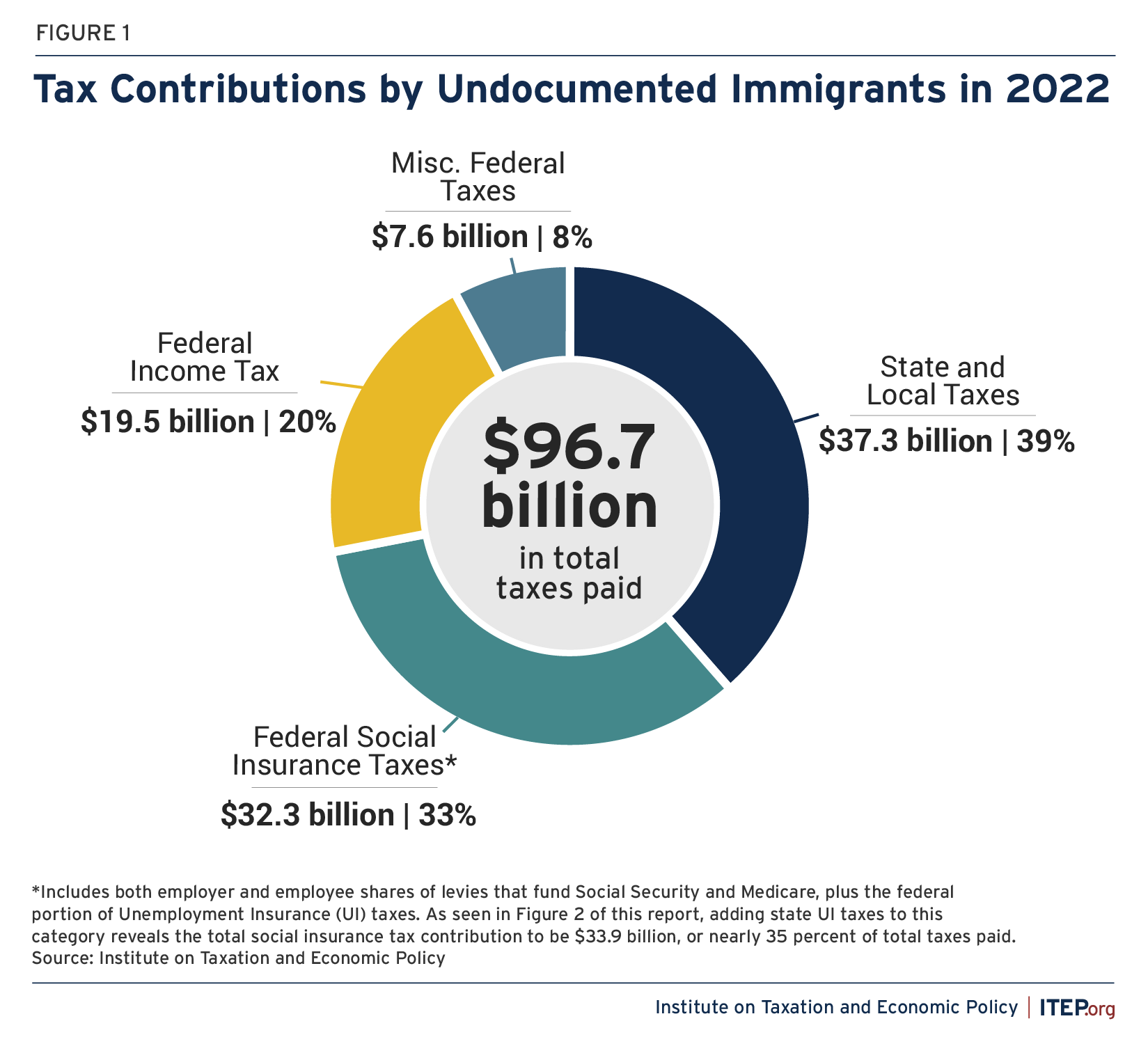
Sin embargo, un nuevo estudio del Instituto de Política Fiscal y Económica muestra que es todo lo contrario. Según el informe, los inmigrantes indocumentados contribuyeron con casi $100 mil millones de dólares en impuestos durante 2022 y a su vez, no pudieron acceder a muchos de los programas que financiaron sus dólares de impuestos.

De esos casi $100 mil millones, $60 mil millones se destinaron al gobierno federal. Por cada millón de inmigrantes indocumentados, los servicios federales reciben $8.900 millones de dólares adicionales en ingresos fiscales. Más de un tercio de los impuestos que pagan estos inmigrantes se destinan a programas a los que no pueden acceder, como la Seguridad Social ($25,700 millones de dólares), salud Medicare ($6,400 millones de dólares) y el seguro de desempleo ($1,800 millones de dólares).

Los indocumentados suelen pagar tasas impositivas más altas que los ciudadanos estadounidenses. En 40 de los 50 estados del país, los inmigrantes irregulares pagan tasas de impuestos estatales y locales más altos que el 1% de los hogares con mayores ingresos. Además, no pueden recibir muchos créditos fiscales. No se dan cuenta que pueden reclamar reembolsos y tampoco tienen acceso a ayuda fiscal.

“En total, la contribución fiscal federal de los inmigrantes indocumentados ascendió a $59,400 millones de dólares en 2022, mientras que la contribución fiscal estatal y local se situó en 37,300 millones de dólares”, escribieron los autores del estudio. “Estas cifras dejan claro que las decisiones sobre política migratoria tienen implicaciones sustanciales para los ingresos públicos en todos los niveles de gobierno”, menciona el informe.”

En entrevista con Stornia, Ernesto Castañeda PhD, Director del Laboratorio de la Inmigración y el Centro de Estudios Latino Americanos y Latinos de American University en Washington DC, aseguró que los inmigrantes son necesarios y esenciales para el crecimiento económico de Estados Unidos.

Diana Castrillón: ¿Cómo paga un inmigrante indocumentado impuestos, si como su nombre lo dice, son migrantes irregulares?

Ernesto Castañeda: Los indocumentados pagan impuestos cada vez que compran algo, está el impuesto a la compra, el porcentaje depende de cada localidad. Si compran casas, que lo pueden hacer, también pagan impuestos, si rentan o pagan renta, también hay un porcentaje que se debe pagar en impuestos al gobierno local y federal. La gente indocumentada que trabaja en compañías formales, que son muchos, pueden tener una identificación temporal para pagar impuestos (ITIN), que funciona de manera similar al número de Seguridad Social, entonces pagan impuestos a la nómina como cualquier otra persona trabajando en Estados Unidos. Hay gente que usa documentos de identidad falsos o que no les corresponden, pero alguien se los presta, y así pagan a las arcas de Seguro Social y programas de retiro y de salud, pero como el número es falso o no es de ellos, no tienen acceso a esos beneficios.

Entonces, no solo pagan a estos servicios, sino que muchos inmigrantes no piden ese apoyo. Por lo tanto, tienen una contribución mayor a los ciudadanos que pagan, pero quien luego si retiran esas ayudas. Es una ganancia que el Gobierno Federal y el Tesoro aceptan abiertamente que sucede.

¿Entonces los inmigrantes indocumentados están pagando más impuestos que los mismos ciudadanos americanos?

Si, la tasa de muchos indocumentados que pagan impuestos es más alta que las tasas que paga la gente más rica del país. Claro, los ingresos son diferentes pero la tasa es a veces mayor o muy similar, a la de los ciudadanos. Los ciudadanos llenan sus declaraciones de impuestos y muchas veces piden reembolsos, por ejemplo, por gastos de negocios o les dan un crédito por tener hijos, pero muchos de los indocumentados no hacen esos reclamos porque no quieren que más adelante se les niegue la ciudadanía por haber pedido ayudas o servicios. Por ese temor, tampoco piden programas de apoyo para sus hijos, que ya son ciudadanos y tienen derecho a esos servicios. Hemos comprobado en nuestras investigaciones en el Laboratorio de Inmigración que los inmigrantes usan menos servicios sociales que los nacionales (Castañeda y Cione, 2024).

Pareciera que los indocumentados están entre la espada y la pared ahora con la campaña electoral tanto por el lado de los republicanos como por el lado de los demócratas, ¿hay preocupación en la comunidad?

Algunos políticos usan a los inmigrantes indocumentados como chivos expiatorios en tiempos electorales. Por un lado, Trump hace esta amenaza de deportaciones masivas, pero es poco probable que lo haga, eso mismo lo había prometido anteriormente y cuando fue presidente no deportó a tanta gente. Eso no significa que la gente no tenga miedo ahora y si gana creará un terror real entre la población que ya de por sí vive con mucho miedo a que los encuentren como indocumentados a ellos o a alguien cercano.

En cuanto situaciones de asilo, en efecto, mucha gente está escapando de situaciones difíciles en Afganistán, Ucrania, Cuba, Venezuela, Haití o Nicaragua.  Muchos con pruebas de persecución, y ahora el gobierno ha cambiado cómo tramita buscar asilo.  La frontera está cerrada a muchas de esas peticiones de asilo como se hizo durante la pandemia. Por ende, estamos viendo menos cruces irregulares en la frontera. La administración Biden-Harris piensa que eso les puedes ayudar electoralmente para que los republicanos no les hagan la crítica de que la frontera está supuestamente abierta y los que indocumentados o quienes piden asilo están recibiendo comida y vivienda en algunas ciudades. Es un momento difícil, y no es sostenible. En algún momento van a tener que reabrir la frontera al asilo humanitario, porque a lo que llaman el derecho nacional e internacional es a recibir a la gente que está pidiendo asilo. Tras procesar sus aplicaciones, a unos los aceptarán a otros no.

Trump necesitaría mucho dinero y mucha policía, casi tendría que crear un estado totalitario para poder deportar a toda la gente que está aquí sin papeles migratorios en regla. Muchas de estas personas tienen más de 10 años aquí, tienen hijos ciudadanos, trabajan, contribuyen, por lo cual, deportar masivamente o dejar de recibir inmigrantes es un gran ataque a Estados Unidos. La economía se podría contraer. Se podría crear una recesión porque como mencionamos anteriormente, los migrantes pagan miles de millones en impuestos, pero los impuestos son un porcentaje pequeño de lo que la gente gana. La mayoría de los inmigrantes ganan, lo gastan en las ciudades donde viven, y con el trabajo que hacen generan crecimiento económico, servicios, entretenimiento y hacen que la economía crezca.

Hace algunos días JD Vance, la fórmula vicepresidencial de Donald Trump justificaba el plan de deportación masiva y decía que los indocumentados le están robando plazas de trabajo a los ciudadanos americanos. ¿Existe esa fila de estadounidenses esperando a que deporten inmigrantes para tomar sus puestos de trabajo?

Esto no funciona así. Trump y Vance están equivocados sobre que los inmigrantes les quitan trabajos a los afroamericanos o a otros ciudadanos. Es un estereotipo fácil de vender, algún votante pudo haber tenido una experiencia donde pareciera que pudo ser el caso, sin embargo, si vemos a la economía en general, la inmigración genera nuevos empleos.

En Florida, está en efecto la ley anti-inmigrante más estricta del país. De hecho, han salido muchos indocumentados del estado, y hoy no hay suficiente mano de obra para la construcción, para servicios como hoteles, para la agricultura en los cultivos de naranjas. Entonces los negocios que necesitaban esa mano de obra para generar riqueza ahora no pueden tener su negocio al 100%. Propietarios de granjas han tenido que cerrar porque les falta mano de obra para trabajar, algunos negocios pequeños han tenido que limitar sus horas de servicios. Si no hay construcción no hay viviendas, seguirá habiendo inflación por las viviendas existentes. Los inmigrantes llegan y necesitan un lugar donde vivir, quien les corte el pelo, quien les venda comida, entonces generan trabajo e ingreso para los comerciantes.

Los migrantes emprenden con más negocios (desde pequeños negocios hasta las grandes empresas) que los nacidos en Estados Unidos. También sabemos que los inmigrantes emplean más gente que los dueños de negocios del país. No es que haya un pastel que esté limitado y se lo reparta el número de gente que llega, entre más personas lleguen, incrementa el tamaño del pastel entonces hay más pastel para todos. No es una competencia desleal y eso se ve en las tasas de desempleo.

Ahora bajo la administración Biden-Harris tenemos una tasa de desempleo para afroamericanos históricamente baja, una tasa de desempleo de latinos muy baja y no hay muchos ciudadanos de origen europeo que están desempleados porque algún migrante esté tomando su trabajo, si noq que usualmente no encuentran trabajo porque no los estudios o capacitación suficiente para tomar un empleo bien pagado, o por el contrario, porque tienen demasiada educación y no hay un empleo con alto ingreso que les convenga tomar. O porque se rehúsan a mudarse dentro del país para buscar trabajo. Las tasas de desempleo son bajas en general y de lo que se quejan los empresarios es que no tienen suficiente personal para expandir sus negocios. Esto también afecta a los ciudadanos buscando servicios, teniendo que esperar más en restaurantes porque no hay suficientes meseros o cocineros.

¿Cuál es la respuesta para el manejo de inmigración, más visas temporales de empleos, legalizar a los indocumentados o hacer más muro en la frontera?

La solución a los casos de inmigración irregular a largo plazo es aumentar las visas temporales de empleo para que la gente venga de manera legal. Existen programas como la Visa H2A, H2B son ejemplos de visas que funciona muy bien, la gente viene, trabaja y se regresa a su país, porque ya ganaron ingresos en dólares pudieron ahorrar suficiente y ahora quieren estar con su familia.

El problema es que hay límites, hay cuotas para esas visas, son para cierto tipo de empleos, y hay más demanda de esa gente trabajadora temporal de lo que la que la ley permite. Para que aumenten los topes, los números de esas visas, el Congreso tiene que actuar. Tiene que actuar la Cámara de Representantes y el Senado, y tienen que estar de acuerdo los demócratas, de que es lo que harían, y un número suficiente de republicanos. Pero ellos se niegan a hacerlo, porque parece que no quieren solucionar el tema, solo lo quieren usar de manera electoral.

Para las personas que ya están aquí, la solución es legalizarlos. Al darle papeles o permisos laborales a quienes están aquí, de esa manera muchos ganarían más dinero, tendrían más confianza de invertir, pagarían más impuestos. Esto sería una inyección a la economía americana, y podrían traer a sus familiares de manera legal y expandir la base trabajadora un poco más.

Y eso es algo que ni Trump ni Vance entienden, nunca lo harán. A diferencia del presidente Ronald Reagan, quien sí firmó una ley como esa, aunque a regañadientes. Tampoco es algo sobre lo que han querido hablar mucho Kamala Harris ni Tim Walz en la campaña porque la gente lo usa como un ataque muy simple con ellos, pero los dos tienen un historial político de apoyar este tipo de medidas.

¿Y con esta legalización de indocumentados en Estados Unidos ganan países de América Latina o pierden?

Las remesas representan solo el 4% de lo que los inmigrantes generan en Estados Unidos. Un migrante que está más establecido o es profesional, manda remesas menos seguido, entonces son ayudas a familias en pobreza. Las remesas representan separaciones familiares por años hasta que el migrante termina regresando o trata de traer a la familia entera. Es una ayuda a corto plazo, pero pone a las familias que se dividen en dificultad emocional y cualquier país que pierde migrantes, desde agricultores hasta científicos, médicos, como en Cuba que ha perdido un par de millones de migrantes profesionales durante el último par de años debilita cada vez más su economía. También pasa en la economía venezolana, que ha sido debilitada entre otras muchas cosas por la emigración. Las remesas son ayudas de corto plazo, pero la verdadera ayuda económica se da en donde llegan los migrantes, en este caso Estados Unidos.

De acuerdo con el estudio de Instituto de Política Fiscal y Económica, la autorización de trabajo sería beneficiosa para todos, pues otorgar a los inmigrantes indocumentados una autorización de trabajo resultaría en un aumento de sus contribuciones fiscales de $40,000 millones de dólares a $137,000 millones de dólares por año, ya que la autorización de trabajo aumentaría los salarios.

Ernesto Castañeda PhD, Director del Laboratorio de Inmigración y el Centro de Estudios Latino Americanos y Latinos, American University en Washington DC.

This piece can be reproduced completely or partially with proper attribution to its author.

The English version of this text is available at the following link: https://aulablog.net/2024/08/26/mass-deportations-could-create-a-us-recession/

Mass Deportations Could Create a US Recession

By Ernesto Castañeda

Interview by Diana Castrillon with Ernesto Castañeda published in Stornia August 13, 2024. Edited and expanded by Castañeda. Original in Spanish. Translated by Castañeda.

Diana Castrillon: “Irregular immigration is one of the most important issues in the presidential campaigns of the candidates, Republican Donald Trump and Democrat Kamala Harris. On the one hand, the Biden administration, of which Vice President Harris is part, restricted the number of asylum seekers entering the country, and on the other hand, Republicans are promising the “largest mass deportation program in US history” if they win the White House this fall.

Anti-immigrant sentiment in the United States is on the rise, with more than half (55%) of Americans this year saying they would like to see a decrease in immigration, a first since 2001. This is partly due to the belief that immigrants, particularly undocumented immigrants, are a burden on government resources and contribute nothing to the economy.

However, a new study from the Institute on Taxation and Economic Policy shows that the opposite is true. According to the report, undocumented immigrants contributed nearly $100 billion in taxes during 2022, while being unable to access many of the programs their tax dollars funded. Of that nearly $100 billion, $60 billion went to the federal government. For every million undocumented immigrants, federal services receive an additional $8.9 billion in tax revenue. More than a third of the taxes paid by these immigrants go to programs they cannot access, such as Social Security ($25.7 billion), Medicare ($6.4 billion), and unemployment insurance ($1.8 billion).

In addition, undocumented immigrants often pay higher tax rates than American citizens: in 40 of the 50 U.S. states, illegal immigrants pay higher state and local tax rates than the 1% of households with the highest incomes. In addition, they cannot receive many tax credits and often do not realize that they can claim refunds or prefer not to. “In total, the federal tax contribution of undocumented immigrants amounted to $59.4 billion in 2022, while the state and local tax contribution stood at $37.3 billion,” the authors of the study wrote. “These figures make it clear that decisions on immigration policy have substantial implications for public revenues at all levels of government,” the report says.

In an interview with Stornia, Ernesto Castañeda PhD, Director of the Immigration Lab and the Center for Latin American and Latino Studies at American University in Washington DC, said that immigrants are necessary and essential for the economic growth of the United States.

Diana Castrillon: How does an undocumented immigrant pay taxes, if as their name suggests, they are irregular migrants?

Ernesto Castañeda: Undocumented immigrants pay taxes every time they buy something; there is a sales tax, and the percentage depends on each locality. If they buy houses, they also pay taxes, or if they rent, there is a percentage that must be paid in taxes to the local and federal governments. Undocumented people who work in formal companies, which are many, can have a temporary identification to pay taxes (ITIN), which works in a similar way to a Social Security number, so they pay payroll taxes like any other person working in the United States. There are some undocumented people who use false or incorrect identification documents, but someone lends them one, and so they pay into the Social Security and retirement and health programs. However, since the number is false or does not belong to them, they do not have access to those benefits when they retire. So, not only do they pay for these services, but many immigrants do not ask for these benefits. Therefore, they have a net or even greater contribution than the citizens who pay, but then they withdraw those benefits such as social security after retirement. It is a gain that the federal government and the Treasury openly accept that happens.

So, are undocumented immigrants paying more taxes than American citizens themselves?

Yes—the rate of many undocumented people who pay taxes is higher than the rates paid by the richest people in the country. Of course, their incomes are different, but the rate is sometimes higher or very similar to that of citizens. Citizens fill out their tax returns and often ask for tax returns and reimbursements, for example, they get a credit for having children, but many undocumented taxpayers do not make these claims because they do not want to be denied citizenship in the future for having asked for aid. Nor do they ask for support programs for their children, who are already citizens and have the right to those services, out of fear. We have documented that, indeed, immigrants use fewer social services than U.S.-born citizens (Castañeda and Cione, 2024).

It seems that undocumented immigrants are between a rock and a hard place now with the electoral campaign on both the Republican and Democratic sides. Is there concern in the community?

Some politicians use undocumented immigrants as scapegoats. On the one hand, Trump makes this threat of mass deportations, but it is unlikely that he will do it. He had promised that before, and when he was president, he did not deport as many people. That doesn’t mean that people aren’t scared now, and if he wins, he’s going to create real terror among the people who already live in fear of themselves or their family members being found. That’s a reality that undocumented immigrants have been living with for many years.

As for asylum, in fact, many people are fleeing Cuba, Venezuela, Nicaragua, and Haiti, many with proof of persecution, and now the government has changed how it processes these asylum cases. The border is closed to many of these asylum requests as it was during the pandemic, so we’re seeing fewer people let in through the wall in between ports of entry. The Biden-Harris administration thinks that this can help them electorally so that Republicans don’t criticize them about the border supposedly being open or about undocumented individuals or those seeking asylum temporarily receiving food and housing in some cities. At some point, they will have to reopen the border to asylum seekers because national and international law calls to receive people who are asking for asylum. Some will be accepted, others will not after processing their applications.

Trump would need a lot of money and policing. He would have to create a totalitarian state to be able to deport all the people who are here. Many of these people have been here for more than 10 years. Their children are citizens. They work, and they contribute. So, deporting in massive numbers or stopping receiving immigrants and asylum seekers is a great attack on the United States and the economy could contract. Massive deportations from the interior could create a recession because, as we indicated, migrants pay billions in taxes. However, taxes are a small percentage of what people earn, and most of what immigrants earn is spent in the cities where they live. With the work they do, they generate economic growth, services, and entertainment.

A few days ago, JD Vance, Donald Trump’s vice-presidential candidate, justified the mass deportation plan and said that undocumented immigrants are stealing jobs from American citizens. Is there a line of Americans waiting for immigrants to be deported to take their jobs?

It doesn’t work like that. Trump and Vance are wrong about immigrants taking jobs from citizens or African Americans. It’s an easy stereotype to sell. Some voters may have had an experience where it seemed that could be the case. However, if we look at the economy in general, immigration generates new jobs. In Florida, the strictest anti-immigrant law in the country is in effect. In fact, many undocumented immigrants have left the state, and today, there is not enough labor for construction, services such as hotels, or even to pick oranges. So, the businesses that needed that labor to generate wealth now do not have their business functioning 100%. Middle-sized farm owners have had to close because they lack the labor, and some small businesses have had to limit their service hours. If there is no construction, there is no housing, and there is more inflation for existing housing. Immigrants arrive and need a place to live, someone to cut their hair, and someone to sell them food, so they generate work and income for merchants. Immigrants start more service businesses, as well as large companies, than those born in the United States. We also know that in general, immigrants employ more people than business owners who are from the country.

It is not like there is an economic pie that is shared by the number of people who are here plus those who arrive. Indeed, the more people arrive, the bigger the pie becomes, so there will be more pie for everyone to share. It is not unfair competition, and that is seen in the unemployment rates. Under the Biden-Harris administration, we have a historically low unemployment rate for African Americans and for Latinos. There are very few citizens of European origin who are unemployed because some immigrants are taking their jobs. They usually do not find work because they do not have enough education to take a job or, on the contrary, because they have too much education and there is no high-income job that they can take. Or because they refuse to move to look for work. Unemployment rates are low and what business owners complain about is that they do not have enough staff in organizations to expand their businesses. This also affects citizens looking for services and having to wait longer in restaurants because there are not enough waiters or cooks.

What is the answer to immigration management, more temporary employment visas, legalizing undocumented immigrants, or building more walls on the border?

The solution to long-term cases of irregular immigration is to increase temporary employment visas so that people can migrate legally. There are programs such as the H2A and H2B visas, which are examples of visas that work very well. People come, work, and return to their country because they have already earned income in dollars and want to be with their families. The problem is that there are limits, there are quotas for these visas, they are for certain types of jobs, and there is more demand for these temporary workers than the law allows. Congress has to pass legislation to increase the number of these visas. Thus, the House of Representatives and the Senate, along with enough members from both parties, have to agree. Many Republicans refuse to reform immigration because they want to use it for electoral purposes rather than solve the issue.

For the people who are already here, the solution is to legalize them. By giving papers or work permits to those who are here, many would earn more money, have more confidence to invest, and pay more taxes. This would be an injection into the American economy, and they could bring their relatives legally and expand the worker base a little more. That is something that neither Trump nor Vance understands, and they would never do it. Unlike President Ronald Reagan, who did sign a law like that, although reluctantly. It is not something that Kamala Harris or Tim Walz have wanted to talk about much in the campaign either because people use it as a very simple attack, but they have a political history of supporting these types of measures.

And with this legalization of undocumented immigrants in the United States, do Latin American countries win or lose?

Remittances represent only 4% of the wealth that immigrants generate in the United States, and a migrant who is more established sends remittances less often. Remittances help support families in economic need, but they represent long family separations until the migrant ends up returning or tries to bring the entire family. So, it is short-term help, but it puts families that are divided in emotional difficulty. In any country that loses migrants, from farmers to scientists, from teachers to doctors —like Cuba which loses a couple of million professional migrants every year for the last couple of years— and increasingly weakens its economy. The same is true of the Venezuelan economy, which, among other things, has been weakened by emigration.

Remittances are short-term aid, but the real economic growth happens where the migrants live, in this case, the United States.

According to the study by the Institute for Fiscal and Economic Policy, work authorization would be beneficial for everyone since granting undocumented immigrants a work authorization would result in an increase in their tax contributions from $40 billion to $137 billion per year since the work authorization would increase salaries.

Ernesto Castañeda PhD, Director of the Immigration Lab and the Center for Latin American and Latino Studies, American University in Washington DC.

This piece can be reproduced completely or partially with proper attribution to its author.

The Spanish version of this text is available at the following link: https://aulablog.net/2024/08/26/deportaciones-masivas-podrian-crear-una-recesion-en-ee-uu/

Immigration as the Current Main Driver of Economic Growth in the U.S.

By Ernesto Castañeda, Edgar Aguilar, and Natalie Turkington

A new report from CLALS and the Immigration Lab finds that recent immigrants are a key driver of economic growth in the United States.

The report presents an original calculation that finds that only in 2022:

  • Immigrants who sent money home contributed over $2.2 trillion dollars to the U.S. economy.
  • This contribution by migrant labor constitutes about 8% of the U.S. GDP.
  • Remittances represent just 4% of the total output generated by immigrants, even if they add up to $81.6 billion annually, disputing the narrative that immigrants drain the U.S. economy.


Immigrants who remit contribute around $2.2 trillion annually to the U.S. economy. Despite concerns that remittances drain U.S. dollars, they only represent 4% of immigrants’ total contributions. This estimate is based on credible sources indicating that 17.5% of immigrants’ income is sent as remittances and considering a combined yearly salary of approximately $466.5 billion.  Using data from the World Bank, the Association for Central Banks of Latin America, the U.S. Census Bureau, and the Bureau of Labor Statistics, however, this is just a good approximation to quantify some of the benefits of migration. Immigrants’ contributions to the economy are greater as not all send remittances through formal channels. Additionally, it overlooks the economic growth immigrants stimulate by spending their wages in the U.S., creating demand, and generating jobs. Not to say anything about the human, cultural, culinary, and creative contributions. Below are more details about this novel estimation and projections of future contributions by immigrants to the U.S. economy.

The Congressional Budget Office’s Demographic Outlook 2024-2054, which has gotten some deserved media attention, estimates that in 2034 the U.S. economic output will be $7 trillion larger due to new immigration. Tax revenues would also be higher and the deficit lower because of immigration all else equal.

The quote from the CBO Director’s press release is, “in our projections, the deficit is also smaller than it was last year because economic output is greater, partly as a result of more people working. The labor force in 2033 is larger by 5.2 million people, mostly because of higher net immigration. As a result of those changes in the labor force, we estimate that, from 2023 to 2034, GDP will be greater by about $7 trillion and revenues will be greater by about $1 trillion than they would have been otherwise.”

We estimate immigrants’ contribution to the U.S. economy between 2023 and 2034 will be greater. Using the same immigration estimates as the Congressional Budget Office’s (see graph below), we calculate new immigrants have the potential to elevate the U.S. economic output by a staggering $17 trillion just in 2034.

Net population growth is through immigration.

Source: Congressional Budget Office interactive graph here.

However, if the number of new immigrants and asylum seekers continues at the same pace as in estimated for 2024, 3.3 million per year (10,000 per day as happened in December of 2023), we calculate that the U.S. would enjoy an increased economic output of over $37 trillion just in 2034.

As the Economic Policy Institute writes, “The unemployment rate for U.S.-born workers averaged 3.6% in 2023, the lowest rate on record. Obviously, immigration is not causing high unemployment among U.S.-born workers.” They further write, “immigrants that make up 18.6% of the U.S. labor force are playing key roles in numerous industries and are employed in a mix of lower, middle, and higher-wage jobs. And as the Congressional Budget Office recently reported, immigration is contributing to strong economic growth—with future immigration forecasted to boost real gross domestic product by 2% over the next 10 years—as well as increasing government revenue. Immigrants are also complementing U.S.-born workers by contributing to overall population and workforce growth. The U.S. Census Bureau projects that if the U.S. were to have lower-than-expected immigration levels, the population would begin to decline in 20 years, and if there were suddenly zero immigration, the population would begin to decline next year, deeply harming economic growth.”

A Washington Post article states that around 50% of the growth in the labor market in 2023 was due to foreign-born workers. The same was the case in the 1990s.

In 2021, 45 million immigrants lived in the United States, accounting for 14% of the country’s population. Immigrants are integrated into American social, economic, cultural, and political life. The Immigrant Research Initiative calculates that “Immigrants account for 17 percent of the U.S. economic output (GDP), even higher than their share of the population. The United States has a $19.6 trillion economy according to the Bureau of Economic Analysis 2021 statistics, which means immigrants are conservatively responsible for $3.3 trillion of economic output.” This supports our calculation of around 2.2 trillion only from immigrants who send money abroad because many do not send remittances.

Estimates and projections vary, but what is clear is that there would be no economic growth without recent immigrant arrivals. If immigration (of all types) decreases in the following years, economic growth will most likely plummet, and inflation will rise. Furthermore, this does not only apply to the United States but to other countries as well.

You can find coverage of the report in Spanish here:

“Immigracion y Economia en EE.UU.” RTVE 24h.

“Los hispanos y el mercado laboral en EE. UU.” Y Esto No es Todo podcast on YouTube.

“Ernesto Castañeda y el mercado laboral en EE.UU.” RTVE audio.

Ernesto Castañeda is the Director of the Center for Latin American and Latino Studies and the Immigration Lab.

Edgar Aguilar and Natalie Turkington are research assistants at the Center for Latin American and Latino Studies.

Full report here.

From Coup Attempt to Inauguration: Guatemala’s Tumultuous Elections

by Edgar Aguilar*

February 21, 2024

“Dia nacional de la bandera de Guatemala.” Gobierno de Guatemala. Gobierno de Guatemala. CC. / Creative Commons License

Edie Cux, director of Acción Ciudadana, local chapter of Transparency International, spoke with CLALS’ researcher Edgar Aguilar about Guatemala’s recent presidential elections. Read a synthesis of the interview below.  

What were the defining issues in Guatemala’s recent elections? 

The main problem in the social imaginary here in Guatemala was the issue of the fight against corruption. This was key after years of exposed corruption in the government by Alejandro Giammattei. The other issue was security. 

How do presidential elections work in Guatemala? 

In Guatemala, there are two electoral rounds. The first round is in June and the second is in August. In the first round, there were 24 candidates. Many of the candidates had previously run for election. In the second round, there were 2 candidates, Sandra Torres and Bernardo Arévalo. 

Why was Mr. Arévalo making it to the final round a surprise?  

Sandra Torres, a perennial politician, was expected to make it to the second round. The surprise was Bernardo Arévalo. During the first round, Arévalo was initially in ninth place but then emerged as a surprise contender.  

How much support did Mr. Arévalo receive in the second round? 

In the second round, Bernardo Arévalo received 58% of the vote while Torres received 42%. That shows that people were really hoping for a change in the country. Arévalo was a new face and a left-wing or progressive candidate. Alternatively, Torres was a former first lady and had previously run for president twice.  

How did the uncertainty surrounding the inauguration of Mr. Arévalo begin? 

It started immediately after the first round when it was known that both Bernardo Arévalo and Sandra Torres were the favorites. From there, the attacks began against Arévalo’s Semilla party and the electoral authorities. Even the Prosecutor’s Office went after the people who participated in the polling stations and municipal, electoral, and departmental boards. This began a strategy of questioning the electoral results: going through a second review of the counts.  

Who started the questioning of the results?  

The Attorney General’s office initiated legal challenges that cast doubt on the election results. Judges joined in, further amplifying the uncertainty. Other groups used social media accounts, like X and TikTok, to spread narratives questioning the outcome. These unsuccessful efforts were part of a broader attempt by identified “coup plotters,” including influential groups such as congressmen. The goal here was to prevent Bernardo Arévalo from assuming power.  

The instrumentalization of both legal and social media channels was key to their strategy. They questioned Arévalo 

 but especially focused on the election results: the transmission of data and the electoral authority. At this point, the authorities of the Supreme Electoral Tribunal were practically in exile. They were stripped of the immunity that the law gives them.  

Were there actual irregularities in the process? 

These were the most observed elections in Guatemala, maybe ever. Actors like the European Union (EU) (with over 100 observers) and civil society organizations had mechanisms (like Mirador Electoral) to watch every step of the elections. After the elections, an Organization of American States (OAS) report confirmed clean results, corroborated by other countries and civil society.  

No international or national observer questioned the elections, except the Attorney General’s office. They illegally dug into things, opened bogus cases, demanded information from the electoral tribunal, and even took ballot boxes! Basically, they stole them, which I believe is illegal. This narrative only came from them. The OAS, with 29 votes, all countries, basically said the Attorney General was trying to mess with the results and backed the results.  

Why was there uncertainty until the day of the inauguration?  

Groups within Congress continued their efforts to obstruct Arévalo’s election until the inauguration day, delaying the swearing-in process by nine hours. 

Can you tell me what the day of the inauguration was like? 

Bernardo’s inauguration victory belongs to the people, especially the indigenous communities. Their 20-day strike, continued resistance, and unwavering presence on inauguration day, with mothers and children even sleeping in the Plaza de la Constitución, were crucial. Their sacrifice overflowed the central park, keeping spirits high even amidst delays. International observers, delegations from the OAS, Spain, the U.S., and key figures like Petro solidified the legitimacy of the process, forcing the “coup groups” to stand down. The transfer of power, thanks to the people’s energy, marked a dramatic shift in Guatemala’s political climate. 

What do Guatemalans expect now that President Arévalo has been inaugurated? 

At this moment, the panorama is changing a lot; there is already an expectation of how the new government is going to develop. There is a lot of hope, and everyone is waiting. Different civil society and especially indigenous peoples, we are all waiting to see what the new government is going to be like.  

What are the key takeaways from this turbulent process? 

Guatemala’s democratic institutions have been under attack since their beginning. The institutions have never been trusted. Indigenous people maintain alternative governance, economy, and justice structures. The state of Guatemala has not enjoyed the legitimacy that has been achieved in other states. Neither has it created the representativeness of a plurinational population. What happened in Guatemala is an example, globally, of what indigenous people have done to protect a democracy that does not even represent them.  

Currently, there are several democratic crises globally. Additionally, there are many examples of the instrumentalization of public institutions, especially the justice system, to attack democracy. Guatemala has brought to light how indigenous peoples propose sustainability not only environmentally but also for democracy and politics.  

Edition: Ernesto Castañeda 

Interview and writing: Edgar Aguilar 

Transcription and translation: Aleli Nava 

Copyright Creative Commons. Reproduction with full attribution is possible by news media and for not-for-profit and educational purposes. Minor modifications, such as not including the “About the Study” section, are permitted. 

Edgar Aguilar is an International Economics Master’s student at American University and a research assistant at the Center for Latin America and Latino Studies (CLALS). With four years of experience as a researcher and analyst, he specializes in migration, human security, energy, finance, and environmental policy. He is passionate about sustainable energy solutions that unlock prosperity in the Western Hemisphere.

X- @EdgarAAguilar

Where Is Cuba’s Economic Policy Going?

by Ricardo Torres*

A photo of Havana, Cuba taken in December 2023 / Ernesto Castañeda / Creative Commons License

In the concluding sessions of the National Assembly in December, the Cuban Prime Minister alluded to new economic policy initiatives aimed at “correcting distortions and boosting the economy.” Subsequently, he emphasized that these reforms should not be perceived as mere continuation of previous policies. His discourse encompassed several areas, including pricing and subsidies, the role of the private sector and small and medium-sized enterprises (SMEs), international trade and tariff regulations, investment, and the foreign exchange market, among others. In the first weeks of January, various representatives from the government elaborated on the price increases of essential goods, which has become a focal point of discussions due to the immediate impacts on people’s daily lives. This new wave of measures is being introduced against a unique context:

  • The Cuban economy’s inability to embark on a path to sustainable recovery after the economic downturn triggered by the COVID-19 pandemic is noteworthy. The year 2023 witnessed a contraction in the Gross Domestic Product (GDP), marking this period as the most severe crisis encountered by Cuba since the revolution in 1959, given its widespread economic, social, and political implications.
  • The ineffectiveness of previously implemented economic policies, including the so-called “Monetary Ordering,” is evident. The Cuban authorities persistently attribute these economic adversities to external factors, notably the sanctions imposed by the United States. There is little mention of the government’s obvious mistakes.  
  • The Biden administration’s limited opening towards Cuba has narrowed the window to implement substantial measures to mitigate the island’s economic challenges. 
  • The Cuban government has continued to search for support elsewhere. For example, Russia and China have provided some economic support, and Mexico has provided cheap oil, oxygen after the pandemic, and some food. But not one country can provide all the support that Cuba needs.

The measures announced thus far appear to have limited potential in contributing to the economic recovery. The fiscal strategy focuses more on revenue collection rather than containing expenditures, as indicated by the incomplete budget data for 2024 when the deficit is set to increase. 

  • Notably, the emphasis remains on preserving the extensive public sector, including state-owned enterprises, without introducing substantial structural reforms.
  • The marginalization, or at most, a cursory mention of other structural reforms aimed at stimulating domestic supply, is significant. The criticism of the private sector and the lack of initiatives to address external debt are particularly conspicuous. 
  • The potential impact of the price increase and these newly announced measures on the fiscal deficit remains ambiguous, especially given the scant details regarding their implications for the 2024 budget. Besides, these measures will likely exacerbate inflationary pressures in the short term.

In a rather dramatic turn, Cuban authorities announced the suspension of the price increases on January 31st, citing a cyberattack, and failed to commit to a new date. Furthermore, the government reshuffled the cabinet, including the sacking of the Economy Minister. 

The challenges of runaway inflation and elevated fiscal deficits should be viewed as symptoms rather than the root cause of the economic malaise. Historical evidence from the 1970s and 1980s has demonstrated that attempts to manipulate aggregate demand to counter stagflation are futile. Cuba’s economic stagnation, however, presents a unique case, having persisted for decades and intensified due to a series of adverse external shocks commencing around 2016 with the decline of Venezuela’s economy. Superficial adjustments to economic policies are unlikely to yield significant medium-term benefits. Instead, a concerted effort towards systemic change by both the government and international stakeholders is imperative. The existence of the political will and strategic insight, both within Cuba and internationally, to enact such comprehensive reforms to the ultimate benefit of the embattled Cuban people remains an open question.

Copyright Creative Commons. Reproduction with full attribution is possible by news media and for not-for profit and educational purposes. Minor modifications, such as not including the “About the Study” section, are permitted. 

Ricardo Torres is a Professor and Faculty Fellow in the Department of Economics, Research Fellow at American University’s Center for Latin American & Latino Studies, and Coordinator of the Red de Investigadores Cubanos (RedIC).

Brazil: Military Looking out for Its Own Interests, Not Bolsonaro’s

By Matheus de Oliveira Pereira*

An Ordem e Progresso badge on a Brazilian soldier / Wikimedia Commons / Creative Commons License

Despite President Bolsonaro’s bluster about rejecting the results of Brazil’s national elections on October 2nd, the military does not appear likely to intervene on his behalf – preferring instead to use its power with whoever wins the election to avoid accountability, reduce civilian oversight, and protect its own institutional interests.  

Bolsonaro worked hard during his term to curry favor with the military, giving it significant policy positions and influence.  

  • Based on data from the government’s Tribunal de Contas de União, William Nozaki estimates that more than 6,000 active military personnel took government positions during Bolsonaro’s presidency, including six critical Ministers of State. An intelligence task force created by interim President Temer in 2018 is now dominated by the military. Another 8,540 benefit from public contracts. Retired officers figure prominently in public debate with the government’s endorsement. 
  • This level of participation also reflects the military’s support – at least implicit – for Bolsonaro’s political project. General Eduardo Pazzuelo, who was in charge of the government’s disastrous response to COVID-19, is running for Congress as a member of his party. In São Paulo, General Tarcísio de Freitas is running for governor as an ally as well. Bolsonaro, a retired officer himself, is seeking the presidency again with a general officer as his running mate. 
  • Some officers claim that they have been a moderating force on the President’s impulses. Like the party’s Centrão group, they say they’re pushing for a more “presidential,” less divisive style by the Executive. The divisions in the party, however, are mostly for image rather than reflective of real cleavages, as are the claims of military officers, who frequently embrace Bolsonaro’s conspiratorial allegations about electronic voting machines and other matters.  

Most officers believe it is crucial to keep feeding the narrative that the security forces have not compromised their non-partisan, non-political role. They are also undoubtedly aware that a coup to keep Bolsonaro in power would face significant international resistance, particularly in the Americas. Also, backing a coup led by Bolsonaro would further deepen their role in the government in a context of tough times, mainly in the economy. 

  • Disinterest in a Bolsonaro coup project does not mean that they welcome Lula da Silva’s return as President. He still faces significant resistance in the barracks. The Army Commander, claiming he is not involved in electoral matters, has avoided contact with emissaries of Lula’s campaign. Figures close to the former president, however, have repeatedly stated that they trust the Armed Forces to respect the outcome of the polls. 

The mere speculation that the military would support Bolsonaro’s claims of fraud so seriously and allow him to remain in power is compelling evidence of how damaged Brazilian democracy and military adherence to democratic principles are. Even if the high command does not support Bolsonaro’s schemes, it seems headed to a different, and perhaps more destructive, approach to using its power – bargaining with whoever wins in October by trading military promises of non-intervention in return for civilian promises to pull back from investigations into its behavior and from future oversight. The officers will probably demand a commitment that the new government would grant an amnesty for mismanagement and corruption during the Bolsonaro years, and would not take steps to restrain their autonomy in budgetary matters. 

  • Some members of Lula’s entourage appear aware of the dangers of this scenario and are reportedly looking for creative solutions to it, especially if Bolsonaro’s base mobilizes and causes serious instability, which Lula would need security forces’ help controlling. However much Lula would want to reject a deal with the military, he may be boxed in by a lack of political support for confrontation and his own conciliatory tendencies during the campaign.  
  • If Brazil repeats the mistake it made 37 years ago – when the main political forces did not face the country’s authoritarian past nor establish mechanisms to effectively limit the military’s political autonomy – the country will again be missing a crucial opportunity to impose civilian control over the military and build a better, more robust democracy. 

* Matheus de Oliveira Pereira is a professor of International Relations at the Pontifical Catholic University of São Paulo and at the University of Ribeirão Preto, and a researcher at the INCT-INEU and GEDES. He is a former CLALS fellow

Latin America: Empowering Young Women to Overcome Violence, Poverty, and Discrimination

By Fulton Armstrong*

Study participants take part in group discussion in Cali, Colombia / Universidad del Valle / FLACSO-Costa Rica / Creative Commons license

In addition to documenting the often-overwhelming challenges facing young women in Latin America, the Vidas Sitiadas (Besieged Lives) project coordinated by the Facultad Latinoamericana de Ciencias Sociales (FLACSO) of Costa Rica analyzed promising approaches for empowering women to improve their lives. The solutions are not one-size-fits-all, but they address similar underlying drivers – gender inequality, systemic violence, and the chronic lack of social inclusion and economic opportunities – in Argentina, Colombia, El Salvador, Uruguay, and Costa Rica.

  • Governments have largely failed to address young women’s rights to political and economic inclusion, to protection from community violence, and to progress in reducing and ending gender-based violence. Many of the women feel like prisoners in social and cultural constructs that ignore their needs, undermine their sense of self-worth, and deprive them of the skills and self-confidence necessary to build a better life. Women who want to improve their lot in life often can’t afford the necessary education, and are held back by being from stigmatized neighborhoods, lack of basic social services and transportation, and limited access to employment.

The challenges have deep roots and defy quick fixes, but the Vidas Sitiadas studies revealed that projects addressing their underlying causes can enable progress in individuals’ lives, especially when government steps up in coordination with private companies and NGOs. The programs examined have been in place for several years, so their long-term impact is difficult to gauge, but participants’ feedback shows they are based on sound analysis and point to practical, sustainable solutions.

  • The Girasoles (“Sunflowers”) programs designed and implemented by the Paniamor Foundation in Costa Rica emphasize close collaboration among civil society and government at the national and municipal level. Located in a municipality of San José, the initiative is supported by the Ministry of Justice and Peace, the semi-autonomous National Institute for Learning (INA), and the “Civic Centers for Peace” of the area. Girasoles works with young women to overcome their sense of vulnerability through developing skills, rethinking identities, and rebuilding relationships.
  • The Primer Trabajo (“First Job”) initiative by the Arbusta Company, which specializes in information technology, and Santiago-based Espacio Público demonstrated that getting a first job is a woman’s best means to increase social and economic inclusion in Buenos Aires, Montevideo, and Medellín. In addition to providing on-the-job training, the company empowers women through personal development classes in areas such as listening and speaking skills, problem-solving, and dealing with violent situations. The experience has enabled some women to change homes, drop old relationships and make new ones, and feel agency over their lives for the first time.
  • The Club de Niñas (“Girls’ Club”) by Glasswing International in El Salvador has demonstrated the value of women creating social bonds while in detention facilities and after their release. The program focuses on the roots of problems that contributed to their involvement in criminal activities – poverty, exclusion, gender discrimination, and lack of opportunity. It improves young women’s ability to protect themselves from gender-specific threats and provides opportunities to replace old friendships and reduce economic dependencies that contributed to their past troubles. Interviews show the program increases their self-confidence to make and carry out decisions.
  • The Jardines Maternales (Nursery Schools), run by the Buenos Aires Municipalidad de Avellaneda, have demonstrated the value of childcare to young women who are employed, receiving assistance, or otherwise engaged in positive social interaction, according to a report by FLACSO Argentina. The program enables young women to work and develop important social capital, which also positions their children for greater stability and progress.
  • An Economic Opportunities study, carried out by the Universidad del Valle (Colombia) with young women who live in high-violence neighborhoods in Cali validated two important recommendations to support women striving to liberate themselves from the traps of inequality and exclusion. Based on in-depth interviews, the study called on governments to guarantee higher education – to build skills and enable social contacts – for women who finish secondary education and to provide early-childhood care so they can work full-time.

The problems of young women are the problems of all of society – economic, security, political, cultural – and long-term solutions therefore need the support of broad swaths of society. The Vidas Sitiadas project shows that equipping girls and young women with tools to navigate unequal and struggling economies, systemic violence, and suffocating gender roles is important – and feasible. It has provided the proof of concept and identified some concrete steps forward that alleviate the suffering and fear of at least some young women. That incremental progress is important, but macro solutions reducing or eliminating the many obstacles women face will take political will and time.

  • Government collaboration in some of the projects has already been key, and that success could provide the foundation for persuading political, economic, and security elites to broaden and deepen it. Increasing social inclusion and reducing violence in society and in the home will benefit everyone. Long-term progress will require serious reflection into deeply entrenched aspects of each country’s attitudes and practices toward women, but Vidas Sitiadas has shown that concerted action can make a difference.

This is the final of three AULABLOG articles on the Vidas Sitiadas project. The first two discussed the impact of the COVID‑19 pandemic on women and programs for women under detention. For additional information about the project, undertaken by FLACSO-Costa Rica and its partners with support from the International Development Research Centre (IDRC) of Canada, please consult the Vidas Sitiadas website.

September 12, 2022

*Fulton Armstrong is a Research Fellow at CLALS and Director of the AULABLOG.

Cuba: Is the Economic Crisis Prompting Meaningful Reform?

By Ricardo Torres*

Cuban flag jigsaw puzzle / Yasiel Scull / Pexels / Creative Commons license

The economic measures that the Cuban government recently announced may help on the margins with the country’s deepening economic crisis, but they are short-term fixes with potential downsides and, yet again, fall far short of the comprehensive reforms needed for significant growth. 

  • The country’s economic troubles are alarming. While inflation officially clocked in at 77 percent in 2021, the GDP price index – a broader measure of price dynamics – suggests an increase of 500 percent, which is more consistent with partial data from informal retail vendors and anecdotal evidence. [The preceding sentence was updated on August 11 to reflect new information.] Skyrocketing prices coincide with shortages of practically all goods and services; long lines to buy basic goods; and rapidly expanding blackouts. After a brief rise in May, the Cuban Peso continues to depreciate. 
  • Small but growing numbers of public protests and sustained, strident criticism on social media indicate a notable drop in popular confidence that the authorities can deal with this crisis. As it has expanded electricity rationing, the government has warned that it does not have a short-term solution. The devastation at the Matanzas Supertanker Base will surely be another setback to energy supply shortages and the broader economy. The health system lacks essential medications and supplies, and officials have acknowledged that they lack resources to deal with an infestation of mosquitos responsible for the rapid spread of dengue. 

To respond to some of the more important economic problems, the government announced a series of measures during the National Assembly sessions in late July. Most of the steps are aspirational rather than concrete changes in economic policy, and are aimed at the short-term crisis. The government is reopening a formal market where people can sell hard currency (although they cannot yet buy it); moving to adopt new regulations to open up foreign investment in private companies; and – if the statements are to be believed – probably will implement a program to reduce the fiscal deficit. 

  • Details are lacking, but some aspects of the measures could actually worsen the crisis. The announcement that the exchange market will start with only the state as purchaser of hard currency, offering a rate similar to that in the informal markets, entails significant risks. To stabilize a market, transactions have to go both ways, or else people will continue to buy currency at higher prices on the street – fueling its depreciation. The use of the hard currency market to finance the economy reflects the decline in productive capacity on the island, and the purchase of dollars without increasing the supply in Pesos is frankly inflationary. The most impoverished sectors will not receive relief from this step.
  • With regard to foreign investment, the dominant tendency has been to try to reproduce for private companies an operating framework similar to that of state enterprises. If the Cuban state hopes to give potential investors confidence by using, for example, investment mechanisms like its own, with unclear policies for approving projects, or with extended delays for approval of investments, it will be repeating the same errors as in the past. 

Even if robustly implemented, the measures are at best focusing on the symptoms of the economic crisis, while the short- and long-term real causes remain unaddressed. The ongoing recessive cycle is taking place in the middle of an international situation that is adverse for small countries dependent on imported energy and food, such as Cuba. The island is particularly vulnerable to a context featuring dramatic effects of the pandemic, the Venezuelan crisis, the war in Ukraine, and continued U.S. sanctions. But neither is the government showing resolve to fix the systemic problems rooted in the Cuban economic model itself. 

  • Recycling measures implemented in the 1990s, such as the hard-currency market, will have limited effectiveness. Cuba’s economy operates against a backdrop of structural problems that Cuban leaders have dodged for decades because of the social and political costs of a serious adjustment, ideological dogmatism in economic policy, and for many years the existence of external allies that could “pay the bill” of inefficiencies of the system. 
  • The government perceives that the United States and some groups in the country will take advantage of any change that transforms the distribution of power. That logic is understandable, as is Cuban leaders’ preference for stability over radical reform. They remember well the lessons of uncontrolled perestroika. But they must find a middle-ground between micro-measures of little strategic value and potentially destabilizing change. They can tone down their ideological statements and media wars, and surround themselves with a competent economic policy team to draw up a roadmap for long-term reform. Compared to clinging to empty promises of reform, that approach would potentially help them find some allies and recover the confidence of its citizens and, no less important, recover social peace. Without a strategic plan, as various Communist Party resolutions have warned over the years, the problems will multiply over time, as they have since 1990.

August 9, 2022

*Ricardo Torres is a CLALS Research Fellow.

Latin America-Caribbean: Illicit Fishing is Environmental Security Challenge

By A.J. Manuzzi*

The Ecuadorian naval vessel, LAE Island San Cristobal / Defense Visual Information Distribution Service / Creative Commons license

Illegal, unreported, and unregulated (IUU) fishing and associated crimes are undermining coastal communities throughout Latin America and the Caribbean – hurting the economic wellbeing of licit fishers and reducing coastal and ocean biodiversity, fish stocks, and food security. The EU and the UN Food and Agriculture Organization (FAO) have made ending IUU fishing a priority because it contributes to overfishing, enables labor abuses, and violates international norms on sovereignty and biodiversity.

IUU fishing comprises a diverse slate of illicit acts, including foreign vessels fishing in another country’s sovereign waters without permission; disregard for international environmental laws; and inadequate catch reporting to state authorities. Illicit actors include large distant-water fleets (DWFs) backed by states like China, Taiwan, and Japan as well as individual locally based artisanal vessels with small crews. 

  • Latin America represents only 2.1 percent of global aquaculture production, but its losses to IUU fishing – losses that experts estimate to be $2.3 billion a year – make it the third-hardest hit continent. According to a 2020 study by the Fisheries Economics Research Unit and the Sea Around Us organization at the University of British Columbia, income losses are as high as $600 million, and tax revenue losses are as high as $300 million dollars, with the other $1.4 billion owing to the general redirection of catches from legitimate to the illicit seafood trade.
  • Costa Rica has seen by-kill of young fish from the use of illegal nets as well as incursions by illegal fishermen in its offshore national parks. Until recently, Ecuador faced a flotilla of as many as 340 Chinese vessels catching and storing marine life around the Galapagos Islands. In Jamaica, depleted seafood stocks have pushed local fishers into deeper waters, where there is a risk of collision with IUU fishers searching for diminishing sources of conch and lobster. In Suriname, IUU fishers have been known to steal the nets of domestic fishers.

IUU fishing often involves forced labor and other crimes, further harming coastal communities and billions of people worldwide whose economies and diets are tied to fish. By undercutting legal market prices, it threatens the livelihood of licit fishers who pay fair wages and don’t have the same technological advantages. 

  • Overfishing reduces supplies for local communities. The FAO estimates that total fish consumption in Latin America and the Caribbean will increase 33 percent by 2030 (more than any other region). Overfishing by IUU actors has already forced the Dominican Republic and Jamaica to increase imports of fish and seafood and impose new catch quotas that, when expanded in other countries, would likely affect the more than 3 million people in the region who work in fishing or aquaculture.
  • Related crimes are committed by artisanal fishers operating in coastal waters, where they illegally harvest seaweed, pursue endangered species, fish in the off-season, or engage in smuggling; domestic industrial fishers who misreport catches; and DWFs that use flags of convenience to trick authorities. 
  • IUU fishers threaten biodiversity because they are heavily skewed toward immediate predation, with little concern for the long-term economic impact and environmental costs. They also complicate states’ fishery sustainability efforts, making implementation of the UN Sustainable Development Goal to eliminate IUU fishing fall far behind. In addition, shark finning is prominent in Costa RicaEcuador, and Chile despite domestic and international laws against it. Nine of the 12 shark species found aboard a Chinese IUU freighter off Ecuador in 2017 were endangered. 

The regulatory frameworks for fighting IUU fishing are weak; enforcement tools are lacking; and most countries lack the resolve to address the problem. The current international framework includes a hodgepodge of international and national agreements and initiatives, without the active engagement of many of the world’s largest fishing nations. 

  • The cornerstone is the Agreement on Port State Measures (PSMA), which binds signatories to reduce illicit fishing by denying IUU fishing vessels access to port services and to lessen access of illicit catch to international markets. International bodies such as the FAO provide tools for tracking vessels, but regional fisheries management organizations (RFMOs) and advocacy groups like Oceana say that there is only limited sovereign commitment to the rules. Some of the most seriously affected countries are those with the fewest resources to combat the problem.

The combination of IUU fishing and related crimes, such as labor abuses and copy-cat practices by local fishers, pose threats to national economies, food security, and ultimately regional stability. What’s needed is obvious: enhanced monitoring, control, and surveillance capacity; updated legal instruments and increased judicial sanctions; and more resolute multilateral action on fishing subsidies and ocean protection. One question is whether the victims of IUU fishing themselves can muster the national and regional resolve to address the problem – sacrificing the short-term gain of permissiveness for the long-term goal of protecting strategic interests. Without that resolve, Latin America and the Caribbean will continue to be victimized by IUU fishing and the inequality, labor abuses, resource exploitation, and violations of national sovereignty it enables.

July 21, 2022

*A.J. Manuzzi is a Master’s student in International Affairs in the School of International Service. This article draws on research he performed as a Research Assistant for a CLALS project on Illegal, Unreported, and Unregulated (IUU) fishing in nine Latin American and Caribbean countries.

Argentina: From Bad to Worse?

By Arturo C. Porzecanski*

Argentina’s new Economy Minister, Silvina Batakis / Government of Argentina / Creative Commons license

Argentina’s mismanagement of fiscal, monetary, and exchange-rate policies – and its business-unfriendly, interventionist policies destructive of investor confidence – have delivered an increasingly unpopular mix of economic stagnation and accelerating inflation. While the government most likely will muddle through until the next national elections in October 2023, there is a non-negligible risk that remaining public confidence could collapse and lead to uncontrolled inflation, deepening recession, social unrest, and even the resignation of President Alberto Fernández.

  • By early 2021, the Argentine economy had already recovered from the 15 percent drop in real GDP caused by the pandemic in the second quarter of 2020. That was a relatively easy feat because the economy was already in a recession; real GDP in the first quarter of 2020 stood 11 percent below that in the fourth quarter of 2017. So far this year, the pace of economic activity has remained below that 2017 peak, and it has started to drop some more, with the latest consensus forecast projecting GDP declines in the second and third quarters, followed by stagnation in the fourth trimester.
  • Inflation has accelerated from a yearly average pace of under 50 percent in 2020 and 2021 to an annualized rate of 85 percent in the first half of this year. This month’s inflation rate may well have three digits once annualized. To slow down inflation, the government has resorted to price controls on staples sold by supermarkets; import and capital controls to prevent the currency from devaluing faster; export quotas on beef, corn, and wheat to keep domestic supplies higher and prices lower; and hefty subsidies to state-owned and private companies that supply electricity, gasoline, natural gas, mass transit, and water and sewer services to consumers. As a result, the headline inflation rate is underestimated by at least 10 percentage points, while the subsidies are keeping the fiscal deficit about 4 percent of GDP wider than otherwise.

By now Argentina wasn’t supposed to be in such lamentable economic shape. Barely four months ago, the government and the International Monetary Fund (IMF) completed negotiations on a $44 billion loan under an Extended Fund Facility (EFF). The country was granted an up-front disbursement of almost $10 billion, plus $4 billion more in late June.

  • The IMF program has three main targets for this year. The first is a modestly narrower fiscal deficit – 2.5 percent of GDP rather than last year’s 3 percent (measured excluding interest payments on the public debt). The second calls for a nearly $6 billion accumulation of central bank net international reserves, which would take the year-end total to over $8 billion. And the third requires a reduction in central bank financing of the government’s budget deficit, to the equivalent of 1 percent of GDP from 3.7 percent in 2021.
  • The program’s rather modest fiscal and monetary objectives are based on optimistic assumptions, however, and its structural reforms fall way short of what is required to spark confidence and a sustainable economic recovery. Populist economic measures – advocated mainly by the Peronist faction led by Vice President Cristina Kirchner – have greatly harmed the country’s business and investment climate.
  • It is an open secret in Argentina that the main purpose of the IMF loan is really to help the government avoid defaulting on the $44 billion the Fund previously loaned (in 2018-19) to President Mauricio Macri’s administration. That loan is scheduled for repayment in full between September 2021 and mid-2024, and the present government had made it plain to the IMF that it had no means to do so absent a reprofiling or a quid pro quo. Therefore, in Argentina, the new IMF loan is widely understood to be a fig leaf over what is an indirect debt rescheduling on an installment plan – and it is characterized as a debt refinancing by the government itself.

Even the mild conditionality attached to the new IMF loan has already proven difficult to meet and has claimed its first significant victim –Economy Minister and Fernández ally Martín Guzmán resigned on July 2. His replacement is Silvina Batakis, a heterodox Peronist economist handpicked by Cristina Kirchner.

  • All indications are that the government missed the IMF targets for end-June, especially once discounting any window dressing, and that, failing to take restrictive fiscal and monetary measures soon, it will miss the goals for the full year. Argentina’s financial markets have been reacting badly. The stock market index has been trailing far behind inflation; the government’s dollar-denominated bonds have plunged to distressed levels, mostly below 25 cents on the dollar; and the Argentine peso, whose value is set artificially by the central bank under a rationing system, trades in parallel (but legal) and black markets at less than half its official value.
  • Social and political tensions are on the rise, largely because wages and pensions are incapable of keeping up with inflation. On July 9, Independence Day celebrations were marred by nationwide protests against the government, though at least they were peaceful. On July 13, farmers staged a one-day strike to complain against punishing taxes, damaging currency controls, and a scarcity of diesel fuel that has hit them during the harvest season. New Economy Minister Batakis will need to walk a fine line between introducing unpopular corrective measures to break the inflation spiral – restrictive fiscal and monetary policies, in particular – and pleasing political masters who seem to be persuaded that a muddling-through scenario of tightening controls and ignoring market realities is still viable. A miscalculation could lead to triple-digit inflation, widespread social unrest, and the early exit of President Alberto Fernández.

July 14, 2022

*Dr. Arturo C. Porzecanski is Research Fellow at American University’s Center for Latin American and Latino Studies, and Global Fellow at the Woodrow Wilson International Center for Scholars.