Resources and the New Developmentalism

By Paul A. Haslam*

María del Carmen Ortiz / Flickr / Creative Commons Attribution-NonCommercial-ShareAlike 2.0 Generic (CC BY-NC-SA 2.0)

María del Carmen Ortiz / Flickr / Creative Commons Attribution-NonCommercial-ShareAlike 2.0 Generic (CC BY-NC-SA 2.0)

Resource nationalism is driving the most significant shift in Latin American development policies of the past decade.  It is rarely talked about yet is constituting a new developmental model that is being adopted by governments of diverse ideological inclinations.  It has involved reforming taxation regimes dating from the 1990s to extract more “rent” from natural-resource intensive industries; strengthening and extending state capacity; using rents to support social spending by the state, including anti-poverty programs; and – most importantly – linking resource abundance with industrial policy.  It is the basic framework of the post-neoliberal development model, and examples are many.  The splashier headlines in the past decade focus on various instances of nationalization, including the expropriation of YPF in Argentina (2012); Venezuela’s erratic nationalization program; and Bolivia’s dramatic military occupation of foreign-owned gas facilities in 2006 – all intended to achieve these goals.  Early this month, the provincial government of San Luis, Argentina, presented a project-law to create a new provincially owned mining company, San Luis Minera (SAPEM) – joining many fellow provinces that have created or breathed new life into state-owned enterprises (SOEs), particularly in the mining sector.

By and large, these enterprises exist to associate with multinationals, following the trail blazed by Argentina’s YMAD (in Catamarca) and Fomicruz (in Santa Cruz) during the dawn of Argentina’s mining boom in the late 1990s.  The SOEs typically offer the rights to prime potential lands claimed by the state, handle the administrative and regulatory requirements of the province, and in some cases, negotiate the social licence with nearby communities.  In exchange, they get a small net profits interest (typically around 8-10 percent), which results in rent for the province.  The multinational does everything else: raises the money; plans, builds and operates the mine, and sells the mineral.

These are not the rent-seeking policies typical of low-capacity governments.  The enduring principles of the liberal regime (such as low royalty rates) have pushed revenue-hungry governments to explore creative options such as these to capture rent from their mining sectors.  The new SOEs are also an institutional innovation that aims at leveraging natural resource wealth for economic development, as governments also expand resource-funded social spending.  One of the objectives of Morales’s “nationalization” of Bolivia’s oil and gas resources, for example, was to “revitalize” the state-owned YPFB (Yacimientos Petrolíferos Fiscales Bolivianos) as an engine of development.  Nor is this “resource nationalism” exclusively a project of the left: Chile increased royalty rates in a “Special Tax” on the mining sector in 2005, and Colombia and Peru have hiked taxation on mining as well.  Brazil has continued to use of SOEs like PETROBRAS.  It’s still an open question, however, how successfully the rents generated by this new model can be combined with industrialization or development strategies that deliver enduring benefits. 

*Dr. Haslam teaches at the School of International Development and Global Studies, University of Ottawa, Canada.

Drug Dealing in Costa Rica: A Perverse Path toward Social Inclusion

By Rodolfo Calderón Umaña*

Antonio / Flickr / Creative Commons Attribution-NonCommercial-ShareAlike 2.0 Generic (CC BY-NC-SA 2.0)

Antonio / Flickr / Creative Commons Attribution-NonCommercial-ShareAlike 2.0 Generic (CC BY-NC-SA 2.0)

Central America’s emergence as a principal transit route for illicit drugs from South America to the U.S. has given rise to local retail markets supplying users within the region.  A study of three Costa Rican communities – one in greater San José and two along the Caribbean coast – highlights several factors that determine the scale and consequences of these local markets.  Among the most important are the high levels of social exclusion experienced by households in these localities and residents’ motivation to become involved in the business because it offers resources (money, power and prestige) that cannot be achieved through the legitimate channels of education or quality employment.  Other factors include the proximity of the communities to drug trafficking routes and the extent of previously existing demand from local consumers.

One of the most significant characteristics of local drug markets in these communities, as elsewhere, is that they are socially and territorially bounded because trust is the key factor shaping relationships between suppliers, sellers and consumers.  Some local suppliers maintain direct ties to cartels, but they operate their businesses independently.  Youth are assigned the most vulnerable tasks and are thus disproportionately represented among those arrested and convicted of crimes.  Violence serves as the principal instrument for controlling and regulating the drug trade, and the result is that for youth in these settings violence becomes normalized as a routine form of behavior.  This spawns a generalized climate of fear and insecurity, and the typical response of community residents is to retreat from public space and to isolate themselves inside their homes.

These findings support calls for new responses to the drug trade at the community level.  Central American governments, encouraged to a significant degree by U.S. programs, have tended to emphasize repressing and “combatting” the scourge of drug trafficking, yet where this approach has been implemented – particularly in Central America’s Northern Triangle — social problems have only gotten worse.  In Costa Rica, it’s not too late to undertake a comprehensive strategic review of policies in this domain and to bolster programs to stabilize affected areas.  Particularly if designed and implemented from the bottom up, programs can identify and reach out to vulnerable residents before they are drawn into drug micro-markets as vendors, consumers, or both.  Vocational training programs matched to real employment opportunities are absolutely fundamental – to reduce residents’ social exclusion.  Our research findings indicate that enhancement of public spaces where community residents can congregate and initiatives focused on building trust between communities at risk and representatives of the state can also be highly productive.  Costa Rica is at a critical juncture: it can either sustain and expand the participatory policy frameworks that buttress community cohesion and resilience or run the risk of falling into the devastating spiral of delinquency and violence that has plagued its neighbors in the Northern Triangle.

*Dr. Calderón Umaña is a researcher at FLACSO-Costa Rica.  The study is being conducted by FLACSO-Costa Rica with funding from the International Development Research Centre.

Mexico and NAFTA: Lessons Learned?

By Robert A. Blecker*

Photo credit: Alex Rubystone / Foter / Creative Commons Attribution-NonCommercial-ShareAlike 2.0 Generic (CC BY-NC-SA 2.0)

Photo credit: Alex Rubystone / Foter / Creative Commons Attribution-NonCommercial-ShareAlike 2.0 Generic (CC BY-NC-SA 2.0)

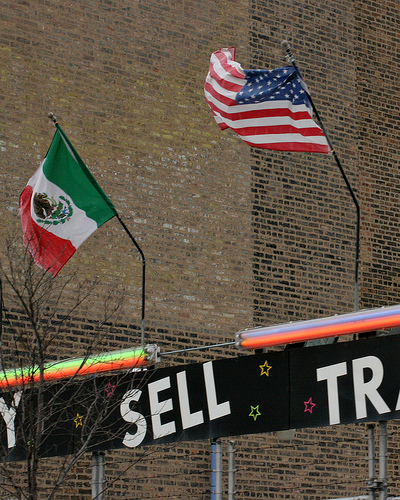
Twenty years after the North American Free Trade Agreement (NAFTA) went into effect, it is clear that the promises made by Mexican President Carlos Salinas and U.S. President Bill Clinton – that the accord would make Mexico “a first-world country” and halt the migration of Mexican workers to the United States – have not been fulfilled.  In Salinas’s famous words, Mexico would “export goods, not people.”  But the number of undocumented Mexican immigrants in the United States rose by a conservatively estimated 3 to 4 million during the first two decades of NAFTA, and millions more were apprehended at the border and deported.  The reasons why immigration flows accelerated post-NAFTA are not hard to discern.

  • NAFTA fostered integration of Mexican industries into global supply chains targeted at the U.S. market, accelerating Mexico’s transformation into a major exporter of manufactured goods.  Nearly one million manufacturing jobs were created there in the first seven years of NAFTA (1994-2000).  But this job growth was offset by similar job losses in agriculture, and manufacturing employment has fallen by about a half million since 2001.  The net increase in manufacturing employment from 1993 to 2013 was only about 400,000, less than half of the annual growth in the Mexican labor force.
  • Real hourly earnings in Mexican manufacturing were no higher in 2013 than in 1994, and Mexico’s per capita income has stagnated relative to that of the United States.  In 2012, typical Mexican manufacturing workers received only 16 percent as much per hour as their U.S. counterparts, down from 18 percent in 1994.  Even adjusted for the lower cost of living, workers without a college degree in Mexico still earn only about one-quarter to one-third of what they can earn by moving to the United States.

The benefits of NAFTA for Mexico have been attenuated by several factors.  First, Mexican export industries still largely follow the maquiladora model of doing assembly work using imported inputs, so their value-added is only a fraction of the gross value of their exports and they have few “backward linkages” to the domestic economy.  Second, the Mexican government has frequently allowed the peso to become overvalued, making Mexico less competitive and driving multinational firms to locate in other countries.  Third, the tremendous penetration of Chinese imports into all of North America (Canada, Mexico and U.S.), especially since China joined the World Trade Organization in 2001, has displaced significant amounts of actual or potential Mexican exports.  A revaluation of China’s currency, rising Chinese wages and increasing global transportation costs have recently led to some “reshoring” of manufacturing to Mexico, but employment in Mexican export industries has grown only modestly as a result.

The increased integration of North American industries through NAFTA has proved to be a mixed blessing for Mexico.  U.S. booms have helped Mexico grow, but only for temporary periods, and being dependent on the U.S. market has held Mexico back since the U.S. financial crisis of 2008-2009 and the ensuing “Great Recession” and sluggish recovery.  Of course, NAFTA is but one of Mexico’s constraints.  The country’s restrictive monetary and fiscal policies, frequent currency overvaluation, monopolization of key domestic markets and inadequate investments in physical and human capital have also held it back.  The Mexican economy still suffers from a profound dualism, in which only about one-fifth of all non-agricultural, private-sector workers are employed in large, highly productive firms, while the vast majority are employed in small- or medium-sized enterprises with low, stagnant or even falling productivity.  Mexico’s experience under NAFTA certainly argues against portrayals of international trade agreements, such as the proposed Trans-Pacific Partnership, as panaceas for the economic ills of Mexico or any other country.  Whatever one thinks of the “reform” agenda of President Enrique Peña Nieto – which is focused on areas such as energy, education, and telecommunications – these reforms are unlikely to help Mexico break out of its slow growth trap if the foundations of the country’s trade and macroeconomic policies remain untouched.

*Dr. Blecker is a professor of economics at American University.

July 19th Anniversary and the New Nicaragua

By Rose Spalding*

Photo credit: Globovisión / Foter / Creative Commons Attribution-NonCommercial 2.0 Generic (CC BY-NC 2.0)

Photo credit: Globovisión / Foter / Creative Commons Attribution-NonCommercial 2.0 Generic (CC BY-NC 2.0)

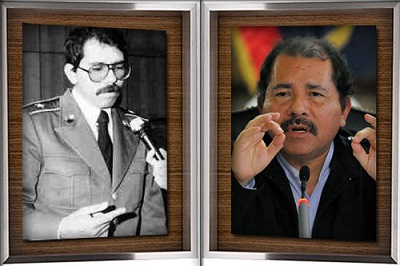
Daniel Ortega’s political rebirth has produced a remarkable partnership with the Nicaraguan business sector.  Thirty-five years ago, when he and the Nicaraguan revolutionaries ousted dictator Anastasio Somoza, a U.S. ally known for corruption and human rights abuses, they clashed with the business sector, the Catholic Church leadership, and a heterogeneous band of counterrevolutionaries armed and financed by the Reagan administration.  Ortega lost elections in 1990 but made a remarkable return to power in 2007, ushering in the “second phase of the Sandinista revolution.”  Unlike during his first term, he undertook to collaborate with COSEP, the Nicaraguan association of business chambers, and gave its members, perhaps more than any other group, regular access to high-level officials and a palpable voice in shaping legislation.  According to José Adán Aguerri, the current president of COSEP, 77 out of 81 of the Ortega government’s economic laws have been produced in dialogue with the business association.  These involve wide-ranging negotiations on minimum wage increases, tax reform, housing development, social security expansion, investment incentives, and other issues.

This partnership has contributed to economic growth and direct foreign investment.  The World Bank reports Nicaragua’s economic growth was 5 percent in 2012 and 4.6 percent in 2013, compared to 2.6 percent and 2.4 percent for the Latin American region as a whole.  According to CEPAL, foreign investment in Nicaragua reached $849 million in 2013, a level that was second only to the $968 million reported for 2011.  Nicaragua’s investment promotion agency, ProNicaragua, documents strong investment in tourism, agribusiness, textiles and outsourcing services.  The extractive sector is also growing rapidly.  Responding to strong commodity prices and a cordial reception in Nicaragua, Canadian gold mining company B2Gold recently announced a planned investment of $289 million to expand its operations in La Libertad.  Nicaraguan investors have developed new initiatives, including a major tourism project orchestrated by Carlos Pellas, the country’s richest man.  The relationship has benefited from the ALBA agreement Ortega signed with Venezuela President Hugo Chávez in 2007.  Venezuela assistance has totaled $3.4 billion in loans, donations and investments in the 2008-2013 period.  These funds regularized Nicaragua’s precarious energy supply and subsidized transportation, housing, microcredit and public sector wages, providing a general economic stimulus from which elites also benefitted.  Announcements of a projected $40 billion investment in an interoceanic canal reinforce the image of a new development era in Nicaragua.

The business-government relationship reflects mutual accommodation by Ortega and business leaders.  Nicaragua lost several decades of economic growth during the 1980s and the “contra” war, so upon his return to power Ortega put a premium on promoting growth, tread lightly on issues of tax reform, and eagerly pursued foreign investment.  He met repeatedly in closed sessions with business leaders and called for a “grand alliance” of government, business and workers to combat poverty, promote investment and create jobs.  A formal consultation mechanism brought together leaders from COSEP and the government, such as Bayardo Arce and Paul Oquist, for regular policy discussions.  Offering a stable economic environment and generous investment incentives, a non-conflictual labor force with the lowest wages in the region, a relatively low crime rate, and receptivity to business initiatives, Ortega won over business allies.  The business interests of current and former Sandinista leaders, some affiliated with COSEP, reinforced the collaboration and helped convince a new generation of business leaders to put aside traditional hostility and preoccupation with injuries of the revolutionary 80s.  They accepted the government’s legitimacy and bolstered its domestic and international credibility.  Enthusiastic about the growth of the Nicaraguan economy, economic elites also downplayed lingering questions about deficits in democratic institutionality and accountability.  But the heightened concentration of political power under Ortega and the weakness of other state institutions mean that economic rules are vulnerable to shifting political winds, and questions remain whether this development approach will resolve the problem of widespread poverty.  Even as the government-business relationship warms and the economy grows, these social and political concerns continue to bedevil the country.   

*Dr. Spalding is a professor of political science at DePaul University.

Nicaragua’s Canal: Great Leap (of Faith) Forward?

By CLALS Staff

Mike and Karen / Flickr / Creative Commons Attribution 2.0 Generic (CC BY 2.0)

Mike and Karen / Flickr / Creative Commons Attribution 2.0 Generic (CC BY 2.0)

The Nicaraguan government and a Chinese telecom tycoon took a big step on Monday toward the country’s long-held dream of having its own canal, but their prediction of supertanker traffic starting as soon as 2020 seems a bit far-fetched.  The project will cost $40 billion and, according to government officials, will create 50,000 jobs immediately, 1 million jobs over the life of the project, and will help lift another 400,000 people out of poverty.  President Daniel Ortega’s supporters claim the economy – currently projected to grow at 4.5 percent a year until 2020 without the project – will grow as much as 15 percent a year with it. The Chinese company, HKND, will enjoy a 100-year lease on the canal, with 1 percent of it reverting back to Nicaragua each year.  The proposed route for the canal is 278 kilometers long – about three times longer than the Panama Canal – and will be deep and wide enough to handle ships much larger than the “New Panamax” vessels.  Officials say the canal would “complement” the Panama waterway, which they say will be overcapacity even after its current expansion, and will save shippers some 800 miles on their way to the U.S. east coast.

Opposition from some politicians and environmentalists has been strong.  According to media reports, Nicaragua’s Supreme Council for Private Enterprise (COSEP) and other business organizations are generally positive but skeptical, with one leader calling Monday’s press conference “just an initial flow of information.”  Congressman Eliseo Núñez of the Independent Liberal Party (PLI), however, has been widely quoted as calling Monday’s announcement a “propaganda game” and blamed the media for generating “false hopes for the Nicaraguan people.”  Former Vice President Sergio Ramírez says that handing over national territory for development is a violation of the country’s sovereignty, and other critics claim the project violates 32 provisions of the Constitution.  Concerns about damage to Lake Nicaragua, an important source of fresh water that is already polluted, remain. Chinese investor Wang Jing told the press that avoiding environmentally sensitive areas was a major factor in determining the route, and he has promised that a full environmental impact study will be conducted before construction starts.  Opponents of the project doubt he will make the report public.

Ortega’s statement last year that a Nicaraguan canal “will bring wellbeing, prosperity, and happiness to the Nicaraguan people” may well be right – if the project gets off the ground and so many jobs are created.  However romantic that vision is, construction is still far from certain to begin this December, as claimed, or even within the next year or so.  Wang says that he has lined up “first-class investors,” but none has been identified yet.  In addition, criticism of his business record – opponents say his telecom company is poorly run – has hurt his credibility. And accusations that he’s a stalking horse for the Chinese government, which he says has had “no involvement,” will be difficult to dispel in view of Beijing’s other interests in the region and in shipping.  Equally troubling, as the ongoing expansion in Panama has shown, the shadow that corruption and inefficiency cast over any major project tempers optimism and argues against premature celebration.

Building State Capacity in Brazil

By Katherine Bersch, Sérgio Praça, and Matthew M. Taylor*

Photo Credit: Metrix X / Foter / Creative Commons Attribution-NonCommercial-NoDerivs 2.0 Generic (CC BY-NC-ND 2.0)

Photo Credit: Metrix X / Foter / Creative Commons Attribution-NonCommercial-NoDerivs 2.0 Generic (CC BY-NC-ND 2.0)

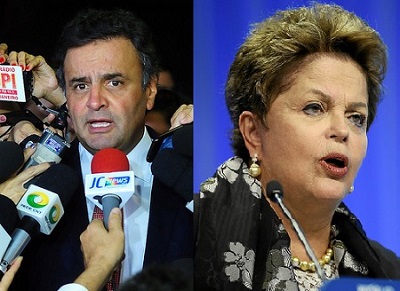
As the World Cup fades out and Brazilians turn their focus to the October elections, public debate will shift back to economic growth, social services, corruption, and – central to them all – the role of the state.  Is the federal government too big, inefficient and meddlesome, as the opposition argues, or does it need to be strengthened to play a leading role in Brazil’s state capitalist economy, as the incumbent Workers Party has sought?  In a recent paper (click here for draft), based on publicly available data of about 326,000 civil servants working within the 95 most important federal agencies in Brazil, we found a very diverse federal government, with agencies distributed widely on both capacity and autonomy.

Our findings empirically confirm a long literature that highlights the coexistence of so-called “islands of excellence,” with high capacity and high autonomy, alongside low-capacity, low-autonomy laggards.  “Islands of excellence” include Brazil’s Foreign Ministry (Itamaraty), the Central Bank, the Finance Ministry, the Justice Ministry, and the relatively young Comptroller General’s Office (CGU), created in 2001.  Laggards include almost all of the infrastructure agencies, as well as the Ministry of Sports, perhaps helping to explain the recent World Cup construction snafus.  Also interesting are the agencies with high capacity and low autonomy (such as the Federal Highway Police, which most state governors seek to empower and control within their own states), as well as agencies with low capacity and high autonomy, which few politicians seek to control (such as the Public Defenders Office).

We found solid evidence that agency corruption – one of the driving forces behind last year’s political angst and popular protests – is correlated with lower capacity and lower autonomy.  This finding could help frame debate in the upcoming campaigns and beyond: the keys to reducing corruption are to build agencies’ capacity and increase their autonomy from political partisans.  The debate over the role of the state has been ongoing since the return to democracy in the 1980s.  No matter who wins the October elections, the expansion of this data set and measurement effort will provide useful empirical data to more realistically evaluate the evolving performance of the Brazilian state, as well as to recognize the enormous differences and best practices within that state. 

*Katherine Bersch is a doctoral candidate at the University of Texas at Austin.  Sérgio Praça teaches Public Policy at the Federal University of the ABC in São Paulo.  Matthew Taylor, a regular contributor to AULABLOG, teaches at American University.

Argentina: Burying the hatchet?

By Arturo C. Porzecanski*

Photo credits: Finizio and Global Panorama / Foter / Creative Commons Attribution-NonCommercial-NoDerivs 2.0 Generic (CC BY-NC-ND 2.0)

Photo credits: Finizio and Global Panorama / Foter / Creative Commons Attribution-NonCommercial-NoDerivs 2.0 Generic (CC BY-NC-ND 2.0)

The administration of Cristina Fernández de Kirchner has shown a willingness to bury the proverbial hatchet and bring to a definitive end what was once the largest sovereign default in recorded history – nearly $100 billion in obligations to domestic and foreign bondholders and official foreign-aid and export-credit agencies, including the United States Export-Import Bank.  In late May, Argentina reached an agreement with its official creditors (gathered as the so-called Paris Club), committing to repay everything that had come due in full and in cash – nearly $10 billion in principal, past-due interest, and interest-on-interest – over the next five years, starting with a down-payment in July.  In recent days, President Kirchner has also signaled that she is ready to negotiate a payment plan with bondholders who are potentially owed even more than the Paris Club creditors.  The trigger for this conciliatory attitude is two U.S. Supreme Court decisions announced on June 16 which granted jilted creditors wide latitude in seeking redress from Argentina.  The first ordered the government in Buenos Aires to stop discriminating among its bondholders by paying most but not all of them; and the second mandated banks operating in the United States to disclose any and all assets owned by Argentina anywhere in the world, facilitating efforts to seize them by unpaid creditors.

Argentine governments since the closing and troubled days of 2001 have taken a notoriously hard line toward creditors ever since Acting President Adolfo Rodríguez Saá announced that he would be suspending payments on the public debt and dedicating all sums budgeted for that purpose to fund an emergency jobs program and increased social spending.  Cristina and her predecessor (and late husband), Néstor Kirchner, embraced a populist-cum-nationalist view of the world according to which the state must favor the interests of the majority of its population, particularly in terms of redistributing income from the “haves” to the “have nots.”  Pervasive state interventionism, confiscatory taxation, disrespect for private property rights, widespread controls (on prices, interest rates, foreign trade, and capital flows), and confrontational attitudes toward investors became the hallmark of economic policy in Argentina.  Despite a vigorous economic recovery starting in mid-2002, creditors never got a single payment from Argentina – and the government made only an arrogant take-it-or-leave-it proposition to private creditors by which they would turn in their bonds and receive new ones worth one third as much.  By late 2010, over 92 percent of the private creditors capitulated and went into the debt exchange.  According to a reputable comparative study of sovereign defaults in the Journal of International Money and Finance published in 2012, Argentina’s behavior towards its creditors displayed an exceptional degree of coerciveness.  While Argentine and European creditors had no luck pursuing their claims in their respective courts, most bondholders who had legal rights under New York State law succeeded in obtaining favorable judgments – and lately, in gaining enforcement rights as well.

Argentina has set such a bad example in terms of how to restructure the public debt that no other nation has dared to follow it since.  Given the recent advance in creditor rights courtesy of the U.S. Supreme Court, chances are that no other government will ever be motivated to copy Argentina’s rogue-debtor behavior – a very good outcome for the world at large.  Concerns that the decade-long judicial fight in the United States will slow down or impede future sovereign debt restructurings are greatly exaggerated.  Before reaching their decisions, the U.S. courts heard from many academic and non-academic experts, and from several governments (Brazil, France, Mexico and the United States), and the New York District Court of Appeals dismissed warnings of impending doom as “speculative, hyperbolic, and almost entirely of [Argentina’s] own making.”  Argentina engaged in uniquely egregious misconduct, violating the well-established norms of sovereign debt restructuring, refusing to negotiate with its creditors, ignoring court orders, and failing to honor its obligations subject to U.S. law despite the country’s unquestioned ability to pay.  The legal rights conferred to minority bondholders in the 1990s, which were actionable in this instance, have been superseded during the 2000s by the widespread inclusion of new “collective action” clauses, inspired by English law, preventing a small minority from blocking a debt restructuring supported by a large majority (at least 75 percent) of creditors.  These clauses have worked very well in recent years, including in the cases of Greece and Belize in 2012 and 2013, respectively.  Therefore, while the advancement of creditor rights brought about by the Argentina litigation will encourage governments to be more conciliatory towards their creditors, the evolution of market practices means that fewer than 8 percent of total creditors will never again be able to demand payment in full the next time that a government obtains the consent of everyone else.

*Dr. Porzecanski is Distinguished Economist in Residence at American University.

Brazil: Sustained Attention to Sustainable Development?

By Evan Berry*

Photo Credit: Rodrigo Soldon / Flickr / Creative Commons Attribution 2.0 Generic (CC BY 2.0)

Photo Credit: Rodrigo Soldon / Flickr / Creative Commons Attribution 2.0 Generic (CC BY 2.0)

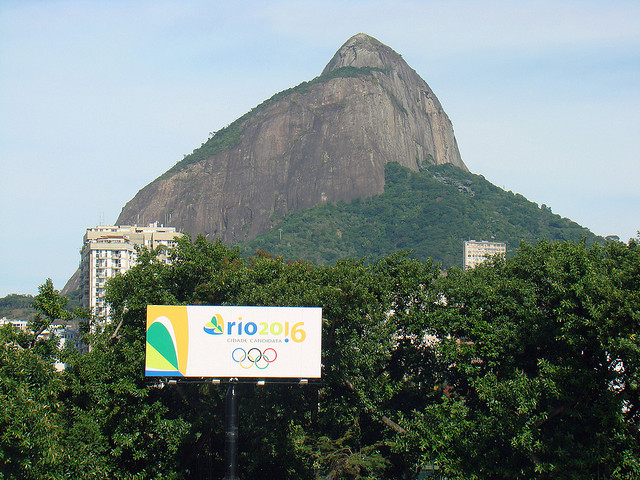
Media coverage of the approaching World Cup in Brazil has touched on the country’s contemporary ecological challenges, but they have glossed over their underlying causes.  Because of Brazil’s association with international sustainability accords, large international events – such as the “Rio+20” sustainable development conference two years ago and the 2016 Olympics – provide vehicles for global news media to focus on Brazil’s performance on environmental issues.  Among this flurry of journalistic coverage, two distinct narratives emerge.  In one, journalists look at sustainability with reference to economic modernization, suggesting that environmental problems are the outcomes of policy failures and ineffective governance.  Commentary in this vein calls for greater technocratic competency and a commitment to the development pathways of the global north.  In the other narrative, sustainability is set in the context of social justice and economic inequality.

These views lead to different responses.  The international bodies overseeing the upcoming sporting events – such as FIFA and the International Olympic Committee – demand that the Brazilian government do more to clean up beaches, improve transportation infrastructures, and purchase carbon offsets to compensate for the impact of new construction.  These prescriptions ignore, however, that environmentalism in the developed northern economies emerged from a distinctly middle- and upper-class preoccupation with aesthetically pleasing environments, such as wilderness, scenic landscapes, and exotic game.  Frustration with the pollution in southeastern Brazil’s Guanabara Bay, for instance, echoes the North American desire for well-managed spaces for outdoor recreation.  So too does the narrow focus on the plight of Brazilian armadillos, the vulnerable species chosen as the World Cup mascot.  This emphasis corresponds with a narrative that many Brazilian leaders would want to put forward – that the natural splendor of Rio de Janeiro in particular, and Brazil in general, can be secured by the kind of straightforward cleanup efforts that attended economic prosperity.  However, Brazil’s ecological woes cannot be solved by garbage scows, and endangered armadillos and the lack of clean recreational spaces are hardly Brazil’s most pressing obstacles to environmental sustainability.  Guanabara Bay is fetid because so many Cariocas, or Rio residents, lack access to basic sanitation.  Armadillos are threatened by deforestation that is as much a byproduct of global economic demand.

As elsewhere, environmental problems in Brazil are caused by myriad social, economic, and political factors.  Ameliorating the most visible impacts of these factors – protecting a charming creature or purifying noxious waters – addresses only symptoms.  International attention to sustainability issues in Brazil should be more mindful of social justice.  Brazil’s current political unrest centers on deeply shared public concerns about injustice, and addressing the problems giving rise to contemporary social movements will offer an important corrective to mainstream public discourse about sustainability.  International attention to the negative environmental impact of international sporting events, and accompanying investments in infrastructure, risks overlooking the unjust structural processes that complicate solutions to environmental problems.  Rather, the global popularity of sport provides an opportunity to deepen and expand international discourse about the human dimensions of ecology.

 *Evan Berry is an Assistant Professor in American University’s Department of Philosophy and Religion.

El Salvador’s Former Guerrilla – and New Commander in Chief

By Héctor Silva Ávalos

14169581511_3b3b43cb13_z

Salvadoran President Salvador Sanchez Ceren with Secretary of State John Kerry during his visit to Washington, D.C. [State Department photo/ Public Domain]

Twenty-two years after participating in the signing ceremony of the UN-brokered peace accord that ended El Salvador’s civil war, Salvador Sánchez Cerén, one of the FMLN’s top guerrilla commanders, was sworn-in as president last Sunday.  The political reforms mandated by the Chapultapec agreement launched the country onto a sometimes tumultuous path toward a new democratic landscape that, at least on paper, included the alternation of power: for 20 years the ARENA party, representing the hard-right, ruled the country; in 2009, moderate Mauricio Funes, a popular TV journalist, and the FMLN established an alliance that took them to the Presidential Palace.  Through the prism of Sánchez Cerén’s recent victory, Funes’s was a transitional government.  El Salvador now begins its first period under the rule of the former guerrilla party that fought an insurrectional war against the allies of Ronald Reagan´s Washington during the last years of the Cold War.

Sánchez Cerén and the FMLN’s challenges are many – a stagnant economy; a private sector not used to a political system that doesn’t respond resolutely to its economic interests; a dysfunctional fiscal system; and one of the worst security situations in the world – with 14 homicides a day, growing gangs, and a reign of impunity inherited from the war years and perpetuated by organized crime’s success infiltrating state and political institutions.

The new leadership will also have to deal with the interests of El Salvador’s most powerful neighbor and ally, the United States.  The Obama administration sent a third-level delegation to Sánchez Cerén’s inauguration, and Secretary of State John Kerry did receive him in Washington before that.  Among the first items on the bilateral agenda is El Salvador’s access to funds in a second compact with the Millennium Challenge Corporation (MCC), a $400 million program aimed at bringing fresh money to the underdeveloped and poor coastal areas.  The program is on hold because MCC is not satisfied with the country’s Anti-Money Laundering and Asset Law and because San Salvador has not yet caved to pressure from the U.S. Trade Representative to buy agricultural products – mainly seeds – within the CAFTA region, which would favor U.S. producers.  Washington’s reluctance to work with FMLN officers in law enforcement and security issues is another obstacle.

So far, Sánchez Cerén and his cabinet have tried to play the U.S. relationship smart.  But managing ties is not going to be a walk in the park.  Despite public winks and carefully worded statements, neither side really trusts the other.  But the bilateral connection is important to both.  Roughly one third of all Salvadorans live in the United States, and, in the last several decades, Washington has appreciated El Salvador’s importance in a region where it is losing influence.  The new government has sent a number of signals to Washington by visiting the State Department, engaging in most of the Treasury’s and USTR’s conditions on the MCC compact and launching an early dialogue with the international financial institutions.  But Sánchez Cerén has made it clear that he will also heed El Salvador’s natural allies, albeit for practical rather than ideological reasons.  Just this week, El Salvador requested formal acceptance to Petrocaribe, the Venezuelan economic and financial aid program.  Dealing with violence, insecurity and financial problems will require fresh resources that the government will welcome wherever their origin.  But it also seems possible that the new commander in chief´s patience with Washington’s style of diplomacy – such as pressure tactics to buy American agricultural goods – could be much shorter than that of his predecessors.  

Equal Pay Day in Latin America

By Yazmín A. García Trejo*
Embed from Getty Images
For Latin American women, “Equal Pay Day” – observed on April 8 in the United States – would be in mid-May.  The day symbolically marks the time of year that women’s earnings finally catch up to men’s earnings during the previous year.  In the United States women make, on average, 77 cents for every dollar that men do.  Women have made great advances in Latin America, but they still earn 36 percent less than men, according to the International Labor Organization (ILO).  In many countries of the region, the gender gap in education has closed; now women and men have similar levels of education, and the World Bank’s Gender at Work report indicates that women increased labor force participation by 35 percent between 1990 and 2012.  Nonetheless, women have to work an additional four and a half months to catch up with men’s earnings.  According to an AmericasBarometer survey in 2012, this inequality also occurs within families; 54 percent of working women earn less than their partners.

The debate around the pay gap points to individual and institutional factors as the main causes.  For various personal and social reasons, according to “New Century, Old Disparities,” a 2012 co-publication of the Inter-American Development Bank and the World Bank, women tend to gravitate toward occupations with lower pay ascribed to traditional gender roles such as education (teachers) and healthcare (nurses).  Women are also more likely to settle for lower salaries when hired, and work more in part-time jobs due to their dual responsibilities as providers and caretakers of children or elderly parents.  Institutionally, women still experience pay discrimination and have less access to managerial occupations.  Public policies on women in the workplace reinforce the dual role of working women in Latin America.  According to the 2013 Global Gender Gap Report, Latin American and Caribbean women get an average of 14 weeks of maternity leave, but men get paternity leave in only 9 of the 15 countries – and then only for an average of about one week.

The social and political implications of the wage gap are far-reaching.  Women with lower earnings not only are unable to create wealth as men in similar positions can; they cannot secure a retirement plan that provides them and their families security.  Lower wealth, moreover, translates into lower political participation. According to the 2012 AmericasBarometer survey, wealthier people are more likely to vote, are generally more knowledgeable about how government works, feel they understand national politics, tend to participate more on leadership roles at the community level, and are more actively involved in electoral campaigns.  A disadvantage on wealth and longer work hours undermine women’s ability to invest in learning about or participating in politics.  “Equal Pay Day” in Latin America in the next two weeks would mark not just women’s reduced financial clout but an obstacle to their broader contributions to society as well.  With pay inequality, we all lose.

*Yazmín A. García Trejo is a PhD candidate at the University of Connecticut’s Department of Political Science and a Research Fellow at CLALS.