Can Latin America Escape the Middle-Income Trap?

By Rick Doner and Ben Ross Schneider*

challenges logo (revised)2

Photo Credit: Inter-American Development Bank / CLALS / Edited 

Most literature on the “middle-income trap,” widely understood as a core obstacle to sustained development in Latin America, focuses solely on economic dynamics and understates the importance and challenges of political coalition-building.  That literature, largely generated by economists in academe and international financial institutions, argues convincingly that in Latin America, as well as Southeast Asia, once countries achieve some degree of success in economic development, they get stuck.  They are unable to compete with low-cost producers in traditional sectors – initial development success brings higher wages and other costs – while they also have failed to gain the capacity to compete with developed economies in frontier industries, where technological capabilities and productivity levels are far higher.  These analysts stress that Argentina, Brazil, Chile and Mexico – or for that matter Indonesia, Malaysia and Thailand – need to build on their achievements over the past half century in order to make the leap into the ranks of the world’s most prosperous nations.  They highlight the trap’s proximate origins in productivity slowdowns and recommend policy solutions that focus on improving human capital through investment in education and vocational training.  But identifying problems and potential solutions does not explain why leaders fail to adopt the solutions.  In other words, it’s not clear from existing writings why the trap is actually a trap.

The literature does not acknowledge that fundamental political obstacles, especially lack of effective demand and pressure for these solutions, are at the heart of the problem.  As is evident from the history of failed programs to improve education and R&D, political will to invest in such public goods is in short supply.  Politicians are rarely willing to forgo the short-term political benefits of satisfying entrenched interest groups for the long-term developmental benefits of creating institutions capable of helping the broader citizenry to upgrade its capacity for technology absorption.  A core reason for this lack of political will is the weakness of the societal constituencies that might demand the necessary policies and effective institutions.  Our research indicates that relations among key societal actors in middle-income countries are less amenable to building the consensus that economists advocate. In a recent article, we argue that the same conditions that facilitated or accompanied movement to middle-income status – such as foreign investment, low-skilled and low-paid work, inequality, and informality – have generated political cleavages that impede upgrading policies and the construction of institutions necessary to implement them.  This fragmentation is why the trap is a trap. Three lines of fragmentation are key:

  • Big business is divided between foreign and domestic firms. The former can undertake productivity-improving measures in-house and/or at their home headquarters, whereas local firms tend to focus in non-tradeable services and commodities whose demand for better training and R&D is lower than in manufacturing.
  • Labor is fractured between formal and large, growing informal sectors. Enjoying longer job tenure and on-the-job training for specific skills, formal workers have little interest in broader skills development.  Informal workers, on the other hand, constantly shift jobs and would prefer investments in vocational institutions offering general training.
  • These societies remain overall less equal and, as is now well known, inequality undermines the will and capacity to provide broad public goods such as quality universal education and support for technology development.

 Pro-growth coalitions of various types have been key to productivity improvements in now-high income East Asian countries, such as Korea and Taiwan.  The fact that these countries had stronger (and more autocratic) governments does not preclude developing or building on such coalitions in countries with messier political systems and weaker bureaucracies.  First, leaders can build on sectoral pockets of high productivity, such as aquaculture in Chile, wine in Argentina (and rubber in Malaysia).  Second, international and regional institutions can help supplement demands for skills by supporting programs that focus on technical and vocational institutions that actually meet and are linked to employers’ needs.  Third, organizations such as the ILO can promote business associations that represent the local firms for whom collective technical training and R&D are especially important.

August 22, 2016

* Rick Doner and Ben Ross Schneider teach political science at Emory University and MIT, respectively.

Can Latin America Achieve Fiscally Sustainable and Egalitarian Social Citizenship?

By Fernando Filgueira*

Uncertain Future

Photo Credit: Jan Tik / Flickr / Creative Commons

Latin America is undergoing a profound transformation of its social policies and of the very concept of social citizenship, but the outcome of this process is far from certain.  Electoral democracy, urbanization, increased educational attainment, and increased exposure to new and broader consumption patterns have destroyed the political foundations for conservative modernization.  The turn of the century has witnessed advances in social outcomes and public policies that for the first time provide a true window of opportunity for achieving more productive and egalitarian societies.

  • Decreasing poverty, lower income inequality, improved and expanded employment, and access to transfers and services to popular sectors were made possible by five critical factors: booming prices for Latin American commodities fueled economic growth and employment; stable prices – a positive legacy of the Washington Consensus era – meant that wages and transfers were not undermined by inflation; increased state fiscal capacity and commitment to social policy enabled a doubling in 15 years of real social per-capita expenditure; a demographic dividend, when combined (the young and the elderly) dependency ratios are lowest as a percentage of the population; and improved education access, completion, and credentials, which facilitated enhanced opportunity and increased productivity.

Yet these five advantages will lose steam in the next couple of decades.  Growth will wither as the commodity boom ends and expansionary monetary policy is limited.  Most Latin American economies are facing increased inflationary pressures. Existing tax structures and in some cases productivity levels will not permit social expenditure to increase at the rate of the last 15 years.  The easy phase of the demographic transition (when dependency rates are going down) is or will be over in most countries towards 2025.  Some countries in the region will face the European dilemma of an aging population, but they will do so with a lower GDP per-capita, weaker fiscal capacities of states, and a significantly more unequal income distribution.  While the soft targets of expanded education – primary school and expansion of lower middle school – have been achieved, the tough ones remain: extended coverage in early childhood, completion of high school, quality improvement, and true reduction of inequality of outcome in learning.

  • Five fault lines in Latin American social regimes make these problems a major threat to the sustainability of both social and economic development. A) Women’s incorporation into the labor market remains low (50 percent) and is highly stratified.  B) The absence of a robust state-led care system for early childhood and the persistence of a patriarchal distribution of care burdens undermines a route to development that is both more efficient and egalitarian.  C) Stark contrasts between insiders and outsiders in informal and formal labor markets and access to social protection and cash transfer  systems contribute to an expansionary monetary and fiscal policy that mainly benefits insiders unwilling to be taxed for redistributional public and collective goods and insurance. D) The region’s middle class and new emergent class, moreover, are not willing to increase taxation, since they do not perceive the quality of public goods and collective social services as adequate. And E) the pattern of fertility shows some of the worst patterns in social terms, including that most biological reproduction is left to the poor: Latin American governments do not equalize opportunity early on and through the educational system – which in the most unequal region of the world with diminishing but non-convergent fertility rates – leads to a productivity failure since underinvesting in the poor is underinvesting in the frontier of productivity enhancement.

These challenges will condition the possibility of a new social citizenship and a social investment model based on robust public goods, expansion of merit goods, and universality of entitlements.  It is not enough that elites are no longer able to control the political and economic game through status enclosure and authoritarianism.  In order to craft truly universal social policies conducive to providing inclusion for all, societies must confront narrow corporatism and restricted targeting – and the political economy they sustain.  Contributory models based on formal wages and targeted social policies based on need will not disappear, but they have to take a back seat to a model of basic universalism where access to quality public and collective goods is truly universal, and entitlements in transfers and services are not dependent on need or labor formality.  There have been important advances, such as a marked increase in non-contributory systems of cash transfers in terms of pensions and child-family transfers, but the commodity boom and the rise of the emergent and middle classes that drove them are not permanent.  A coalition that is willing to forgo private spending power in order to enhance quality of life through collective services is needed.  Such a coalition is made conceivable by these political, economic, and social epochal changes, but it is by no means guaranteed.  If reforms do not make it a reality, the promise will be shattered, and the pendulum between failed populism, with state-led “Robin Hood” incorporation attempts, and a technocratic closure of democracy and state bashing, will remain the central and tragic dynamic of the region.**

July 18, 2016

*Fernando Filgueira is a Senior Resarcher at the Centro de Información y Estudios del Uruguay (CIESU) and Collaborating Researcher the Economic Commission for Latin America and the Caribbean.  He is a member of the International Panel for Social Progress led by Amartya Sen.

**Read the full version of this essay, which is based on research done for the Economic Commission for Latin America and the Caribbean (ECLAC) and for EUROsociAL on social policy, labor dynamics, and demographic change.

Brazil: Sacrificing Anti-Poverty Success?

By Hayley Jones*

Bolsa Familia

Photo Credit: Senado Federal / Flickr / Creative Commons

Brazil’s flagship antipoverty program, the Bolsa Família, faces an uncertain future as the government of Interim President Michel Temer confronts adverse economic and political circumstances.  The program, which provides direct cash benefits to poor households on the condition that children fulfill education and health-related targets, was an important factor in Brazil’s progress on poverty and inequality since the early 2000s – between 2001 and 2013 the poverty headcount ratio declined from 24.7 percent to 8.9 percent, and the Gini coefficient declined from 59.3 to 52.9.  The Bolsa Família (formerly called Bolsa Escola) was a pioneer in the use of cash transfers in social policy in the 1990s.  The idea is enticingly simple: the cash allows families to meet immediate needs, while the education and health conditions ensure poor children are better equipped to lift themselves out of poverty in the long run.  Under Presidents Lula and Dilma, the Partido dos Trabalhadores (PT) put the policy at the heart of its platform, and reaped advantages at the polls with the expansion of coverage and benefits.  The program now reaches about one-quarter of the population.

The social gains made in part thanks to the Bolsa Família may now be at risk.  Brazil has been hit hard by the collapse of commodity and oil prices over the last two years and is currently experiencing what is predicted to be the country’s worst recession since the 1930s.  GDP fell by roughly 4 percent in 2015 and is expected to do the same in 2016.  The deep political crisis gripping the country since earlier this year further threatens the program.  Temer, his party (PMDB), and Finance Minister Henrique Meirelles have stressed the need to cut spending to reduce the deficit.  While many areas of social spending, such as pensions and education, are protected in the budget under the 1988 Constitution,  the Bolsa Família is not.  With the large political constituency benefitting from the program, there is likely little appetite in the interim government to ax the program altogether.  In fact, at the end of June Temer announced a 12.5 percent increase to the Bolsa Família – more than the 9 percent promised by Dilma – to compensate for inflation.  But he also emphasized that benefits should be temporary and that there is a need to focus on exit doors from the program.  Social Development Minister, Osmar Terra, has suggested that the program could be made more efficient and costs cut by 10 percent.

Temer may not be entirely wrong to highlight the need for exit strategies, but they should be exit strategies from poverty rather than from the Bolsa Família itself.  There is so far little evidence that it has done much to change the life trajectories of poor young people that would allow them to move out of poverty. The emphasis on increased school enrollment and attendance as transformative obscures much deeper problems, including poor school progression and completion rates in low-quality schools, a lack of educational infrastructure and resources, poorly trained teachers, and outdated curricula, among others.  If Temer is serious about moving beneficiaries out of poverty and the program, priority will have to be given to correcting regressive spending in public education (which prioritizes higher over basic education); better aligning curricula with labor market demand; and addressing the poor job opportunities for low- and semi-skilled workers. Economic realities and the rhetoric on efficiency and exit strategies do not bode well for such changes.  Under Temer, the Bolsa Família seems likely be limited to a policy tool for risk insurance and meeting basic needs rather than a platform for extending the social gains of the last decade.

July 12, 2016

*Hayley Jones is a DPhil (PhD) Candidate in the Department of International Development at the University of Oxford, United Kingdom.  Her thesis examines long-term poverty reduction in the Bolsa Família program.

How Sustainable are Latin America’s Advances on Poverty and Inequality?

By Eric Hershberg

Brazil Contrasts

“Projeto Contrastes.” Photo Credit: Gabriela Sakamoto / Flickr / Creative Commons

The significant decline in poverty rates and income inequality in Latin America over the past two decades – driven by a combination of sustained economic growth and intelligently designed social policies – may slow or even be reversed as economic conditions deteriorate across much of the region.  Poverty had begun to drop in most countries even before the commodity boom accelerated growth rates in South America beginning around 2003.  The “Washington Consensus” policies of the 1990s impacted wage income and employment negatively, but other factors diminished their impact on poverty.  By overcoming profound macro-economic instability, which among other things produced hyperinflation that devastated disadvantaged sectors of the population, the economic adjustments of that period were not entirely regressive.  Moreover, a concurrent shift toward targeted social programs – which redirected subsidies away from less vulnerable segments of the population in order to protect the poorest of the poor.  By 2002, the number of people living on less than $1.90 a day had declined 4.6 per cent from where it had been at the beginning of the 1990s, according to the World Bank, while the number living on less than $3.10 stayed flat and actually rose (from 135.6 million to 138.1 million).  Performance varied across countries.  By 2012, after a strong decade of growth and a wave of progressive governments, the progress was much more impressive, with poverty dropping to 33.7 million ($1.90/day) and 72.2 million ($3.10/day).

Inequality declined also – a different challenge in the region that Kelly Hoffman and Miguel Centeno aptly labeled the “lopsided continent.”  Measured by GINI coefficients, income inequality in Latin America, which exceeded that of any other world region at the beginning of the century, grew less pronounced under governments of various ideological proclivities.  A substantial body of research shows that this was a product of two factors.

  • Investments in primary and secondary education, which accelerated during the neo-liberal years, meant lower wage premiums for those with more than basic skills: near universal attendance in secondary school reduced the significance of gaps between workers who had secondary education and those who had little schooling.
  • Innovative social policies – particularly conditional cash transfers – meant that the lower rungs of the income ladder received meaningful transfers from the state, enabling them to narrow the income gaps vis-à-vis less disadvantaged sectors. Less frequently acknowledged was the positive impact of reforms on minimum wage policies and the creation or expansion of non-contributory pensions, both of which were pushed aggressively by several governments associated with the “Left Turns.”  Non-contributory pensions were especially important since the most vulnerable of Latin American aged populations, having spent their working years toiling in the informal sector, had previously lacked any sort of retirement pension.  (Read further analysis of pension reform.)

The region’s slowdown in economic growth and the pressure on public finance brought about by the end of the commodity boom – and the infusion of cash into state coffers that it afforded – raise questions about the sustainability of these advances.  The benefits of investments in education will endure for some time.  Even if education budgets decline, the costs in terms of lower educational achievement would take years to become evident, and it is not at all certain that the funding will decline.  However, the social programs are much more vulnerable, as are the ambitious efforts to increase minimum wages and labor protections more broadly.  Should the economic contraction underway in some countries and on the horizon in others generate an increase in informality, the labor market achievements of recent years could be quickly eroded.   This would impact inequality, and it might soon exacerbate poverty as well.

June 3, 2016

Political Upheaval in South America

By Eric Hershberg

MarchaVenezuela

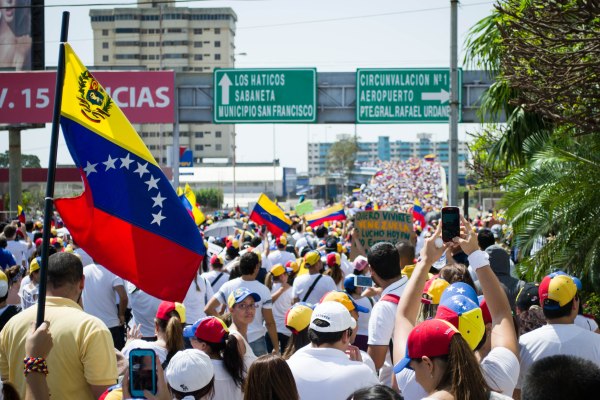
Thousands of protesters in Maracaibo, Venezuela. Photo Credit: Google Images / Creative Commons

2016 is proving to be this century’s most complicated year to date for South American political systems, and the coming months will be critical to assessing how well the region’s democracies can govern amid declining economic conditions and spiraling corruption scandals.  Brazil and Venezuela – two very different systems with very different problems – are suffering the most visible crises.

  • In Venezuela, where the Bolivarian project has descended into an incompetent Putinism in the tropics, is collapsing under the weight of monumental mismanagement of the economy. Many of the ills of the Venezuelan petrostate predate Chavismo, but during a collapse in oil prices President Maduro has doubled-down on profligate economic policies introduced by Hugo Chávez, bringing the country to catastrophe made worse by increasingly draconian repression of loyal and disloyal opposition alike.
  • President Dilma Rousseff’s mismanagement of coalitions in a presidential system predicated on coalition-building has opened the way to political and economic implosion in Brazil.  Contrary to the fervent assertions of important segments of the Workers Party (PT), her impeachment does not precisely constitute a coup, but it may indeed amount to an ill-advised bending of institutional mechanisms by cynical legislators and aggressive judges, egged on by rightist sectors whose commitment to democracy is in fact dubious.  Dilma didn’t invent the corruption and footloose budgetary practices that have been her undoing, but her fall does respond to overwhelming popular rejection of her performance.  Interim President Temer’s appointment of an entirely white male cabinet that includes representatives of some of the country’s most retrograde interests suggests abandonment of many of the most laudable achievements of more than a decade under PT rule – and more backlash as well.

Other institutional crises may be on the horizon.  Ecuadoran President Rafael Correa pursued a high-risk strategy of debt-driven expansion of the state, which is not sustainable amid economic contraction.  Argentine President Mauricio Macri’s honeymoon may prove short-lived.  Much-needed economic reforms are likely to provoke even greater inflation and have already stoked resistance from the Peronist opposition.  Macri enjoys some unprecedented assets – for the first time non-Peronists also control the city and province of Buenos Aires– but Argentine public opinion overwhelmingly favors statist economic policies that he aims to dismantle, and no non-Peronist elected president has completed his term in office since the rise of Peronism as a political force.  Chilean President Michelle Bachelet, wounded by a drop in mineral export revenues and comparatively minor corruption allegations involving her daughter-in-law, reshuffled her cabinet earlier this month but continues to tank in the polls.  Latinobarómetro reports that 70 percent of Chileans believe their political system doesn’t work.

It’s not hard to envision other relatively stable South American democracies facing hard times ahead.  The June 5 presidential runoff in Peru could leave the country deeply polarized, especially if Keiko Fujimori, heiress to the country’s darkest episode in recent history, wins.  It is not a foregone conclusion that Colombian President Juan Manuel Santos, who has staked his second term on a long-awaited and much-needed peace accord, will secure its ratification, risking lameduck status for the remainder of his administration.  If the presidents elsewhere appear to be weathering the storm, democratic governance nonetheless faces important challenges.  It would be rash to predict that democracy will fail the test – and that such failure will give rise to a new era of authoritarian rule – but it’s clear that the region will witness widespread instability during the coming years.

May 26, 2016

Increasing the Benefits of Trade Agreements

By Antoni Estevadeordal and Joaquim Tres*

Trade 1993-2016

Source: IDB (Full-sized images at bottom of page)

Latin American and Caribbean countries were major players in global trade liberalization in the 1990s but have since been held back by complex rules, infrastructural obstacles, and the poor flow of information.  The successful conclusion in 1994 of the Uruguay Round of multilateral trade negotiations and the establishment of the World Trade Organization (WTO) fueled growth and optimism in the region, but the slow progress of the Doha Round drove the region into the silent tide of regional trade agreements (RTAs), which now govern about half of world trade.  Latin American and Caribbean countries have concluded some 70 RTAs – a far cry from the handful of sub-regional customs unions and free trade areas in place in 1994.  As a result, tariffs applied by Latin American countries have dropped from an average of 40 percent to 10 percent during this period.

Despite these policy advances, Latin America and the Caribbean’s participation in international trade is still limited.  Whereas the region and the developing nations of Asia had a similar share of world trade in 1962 (around 6 percent), Latin America’s global trade share has remained relatively unchanged – and that of Developing Asia has grown to nearly three times its previous size.  Latin America registers lower levels of intra-regional trade – 18 percent – compared to 37% in Developing Asia and 61% in the European Union.  Our research indicates that Latin America and the Caribbean could close this gap through a series of measures:

  • Harmonizing the different rules of origin in the RTAs and the wide array of sanitary, phytosanitary, and technical standards that qualify market access.
  • Improving infrastructure and reducing inefficiencies at border crossings to reduce transportation and logistics costs, which amount to three times more than existing tariffs.
  • Harnessing the power of information and communications technology to reduce costs through one-stop shops and process automatization, such as the trade single windows being introduced in several countries in the region. The cost of information about consumer preferences, market demand, and foreign regulations is the first barrier that potential exporters face.
  • Simplifying and reducing administrative burdens through expedited and secure customs and other trade facilitation measures. Some experts estimate that, worldwide, some 75 percent of delays are due to inefficient processes (compared to 25 percent due to inadequate infrastructure).

The main lesson for Latin America and the Caribbean is that trade agreements are a necessary – but not sufficient – condition to achieve economic development potential.  Increasing companies’ participation in international value chains is key to unleashing trade as an engine for economic growth and poverty reduction.  Trade-driven growth in the region, much of it from South American commodities, enabled a reduction of poverty from 22 percent in 2002 to 12 percent by creating new employment opportunities and the fiscal capacity to fund poverty reduction initiatives such as conditional cash transfers (Mexico’s Programa Oportunidades, for example).  By our calculation, trade facilitation measures such as customs and border simplifications can increase Latin American and Caribbean exports by as much as 15 percent, translating into a 5 percent increase in export-supported jobs that pay almost 20 percent more than jobs at non-exporting firms.  It is within policymakers’ grasp to create the enabling environment for firms to export, especially for the small and medium-sized enterprises that may represent the next generation of exporters.

May 9, 2016

*Antoni Estevadeordal and Joaquim Tres are, respectively, the manager and principal specialist of the Integration and Trade Sector of the Inter-American Development Bank.  Click here to access the IDB’s new course on trade agreements, and here and here for related studies.

Trade 1993-2016 v2

Source: IDB

The Critical Role of Universities in Latin America’s Future

By Rodrigo Arocena*

Tec de Monterrey

University students in Monterrey, Mexico. Photo Credit: ·júbilo·haku· / Flickr / Creative Commons

As the latest commodity boom winds down, universities in Latin America can play a leading role in helping the region rebound from the resulting economic slowdown and build itself a more prosperous and equitable future.  The consequences of the boom for economic, political, and social conditions in the region are hotly (and rightly) contested.  But one inescapable conclusion is that inadequate attention was paid to raising societies’ knowledge and qualifications in the production of goods and services.  This matters greatly, because knowledge gaps and skill deficits lie at the heart of what underdevelopment means today.  If the focus in the decades following World War II was on addressing disparities in industrialization, one of the challenges now is over-specialization in productive activities with low added-value of knowledge and qualifications.  When such specialization persists, social and environmental problems are not manageable in the long term.  Differences concerning knowledge and higher education are also one of the main factors behind inequality, in both North and South.  In Latin America, traditionally considered the most unequal region in the world, inequality in recent years has been reduced in a handful of countries and so has poverty in almost all of them.  But such social progress may be jeopardized soon not only because of economic and political changes but also because of quite weak progress made expanding knowledge capabilities and applying them to collective problems.

Universities are at the heart of the solution.  In the knowledge-based and innovation-driven economies that emerged in the North during the last decades of the 20th century, universities obviously made a difference.  They were fundamental actors in the accelerated expansion of advanced education that is closely connected with that type of economy.  They generated new scientific and technological knowledge and often channeled its use into productive activities.  Even then, in the advanced economies of the North private sector firms perform a quite larger proportion of total research and development than universities.  Moreover, Northern universities are mainly oriented by market demand, meaning that actors who are already knowledge-strong obtain most of the benefits of what universities do, fostering what could be called knowledge-based inequality.  This is different from Latin America in several ways:

  • Public universities in Latin America are the main generators of new knowledge, which is why they should get priority when thinking about the future of the region’s development.
  • They are frequently well plugged into National Innovation Systems, the web of actors and institutions responsible for upgrading productivity through the generation and effective use of new knowledge.
  • They represent a continuation, although at a weakened level, of the tradition of the socially committed university forged by the Latin American University Reform Movement.

In any country of the world, knowledge democratization deserves high priority in every progressive agenda – and Latin American universities are, at least potentially, fundamental actors in this task.  Democratizing access and success in higher education, and thus trying to overcome an ancient social divide that stymies development, is key.  The task also means fostering research in all disciplines and applying it to collective problems, as has occurred with research and innovation oriented to social inclusion.  The Latin American ideal highlights merging the modern university’s two long-established missions – teaching and research – with a third one, called “extension,” which entails cooperation with external actors in knowledge generation, cultural creation, and problem-solving, with priority given to the situation of deprived sectors.  As motors for knowledge expansion, and thus for social inclusion, Latin American universities make an invaluable contribution to development and the deepening of democracy.

April 28, 2016

* Rodrigo Arocena served as Rector of the Universidad de la República, Uruguay, from 2006 to 2014.


Cuba: Raúl Clarifies the Lack of Clarity on Future

By Fulton Armstrong

raul pcc congress

Photo Credit: Alexandre Seltz and Sarumo74 (modified) / Google Images / Creative Commons

The report that Cuban President Raúl Castro delivered to the 7th Party Congress last weekend walked a tightrope between pressing harder for change – embracing the importance of the small, emerging private sector – and reassuring party conservatives that the basic tenets of the revolution will not be touched.  He reiterated his commitment to step down in 2018 and promote younger cadre, but he left unclear what he proposes the Cuban system look like in the future.  He defended his decision to normalize relations with the United States, but used Washington’s continuation of the embargo and “democracy promotion” and immigration policies as a rationale for not letting down the Party’s guard.  Among key points:

On Conceptualización.  Castro said this Congress was basically to give “confirmation and continuity” to policies set five years ago to update Cuba’s economic and social model,  but it kicks off a process of consensus-building around a conceptualización, which he said “outlines the theoretical bases and essential characteristics of the economic and social model that we aim for as result of the updating process.”  Private property is a major topic, and Raúl sought to reassure the party that respect for it does not mean – “in the slightest bit” – a return to capitalism.

On reforms approved previously.  The road has been difficult, he said, held back by “an obsolete mentality that gives rise to an attitude of inertia and an absence of confidence in the future.”  He referred to the foot-draggers as “having feelings of nostalgia for other, less-complicated moments in the revolutionary process,” such as when the USSR and socialist camp existed.  But he insisted that the reforms have continued advancing at a steady pace – “without hurry but without pause.”

On upcoming reforms.  Castro talked more about what will not happen rather than any new vision.  He firmly ruled out “shock therapies,” and he said that “neoliberal formulas” to privatize state assets and health, education, and social security services “will never be applied in Cuban socialism.”  Economic policies can in no case break with the “ideals of equality and justice of the revolution.”  But he confirmed that one of the potentially most disruptive reforms – unifying currencies and exchange rates – must be done as soon as possible to resolve and many distortions.  On foreign investment, he called on the party “to leave behind archaic prejudices about foreign investment and to continue to advance resolutely in preparing, designing, and establishing new businesses.”

On Cuba’s economic model.  Castro acknowledged “the introduction of the rules of supply and demand” and claimed they didn’t contradict the principle of planning, citing the examples of China and Vietnam.  “Recognizing [the role of] the market in the functioning of our socialist economy,” Castro said, does not imply that the party, government, and mass organizations stand by and watch abuses occur.

On private and state enterprises.  He said the “non-state sector” – which includes “medium, small, and micro-enterprises” – is providing very important goods and services, and expressed hope for its success.  This sector will continue to grow, he said, “within well-defined limits and [will] constitute a complementary element of the country’s economic framework.”  Castro also called for greater reform efforts to strengthen the role of – and, simultaneously, the autonomy of – state companies, telling managers to overcome “the habit of waiting for instructions from above.”    He noted that the creation of cooperatives outside agriculture “continues in its experimental phase,” with some achievements and shortfalls.

On U.S. policies and intentions.  Castro criticized Washington’s efforts to drive political change in Cuba, which he called “a perverse strategy of political-ideological subversion against the very essence of the revolution and Cuban culture, history, and values.”  He said, “We are neither naive nor ignorant of the desires of powerful external forces that are betting on what they call the ‘empowerment’ of non-state forms of management as a way of generating agents of change in hopes of ending the revolution and socialism in Cuba by other means.” Castro said that U.S. officials recognize the failure of past policy toward Cuba but “do not hide that the goals remain the same and only the means are being modified.”

Rhetoric about forever rejecting capitalism (and multi-party democracy) is standard, especially for a Party event meant to assuage anxieties of conservative factions reluctant to give up their familiar, if failed, models.  The re-election of 85-year-old Vice President Machado Ventura is another sop to the aging right as the country inches each day to its biologically imposed transition, as Fidel Castro made explicit in his closing remarks.  The pace of change in Washington is also slow in some areas, particularly the embargo and the Administration’s “democracy promotion” strategies,  but pro-normalization voices cannot be faulted for lamenting that Cuba could more effectively influence U.S. policy through simple regulatory measures encouraging business deals that will give momentum to embargo-lifting initiatives in the U.S. Congress.  All politics is local, however, and both governments seem content holding off on changing their paradigms for now.

April 21, 2016

Spain: Too Distracted to Play in Latin America?

By An Observer*

Rajoy Latin America

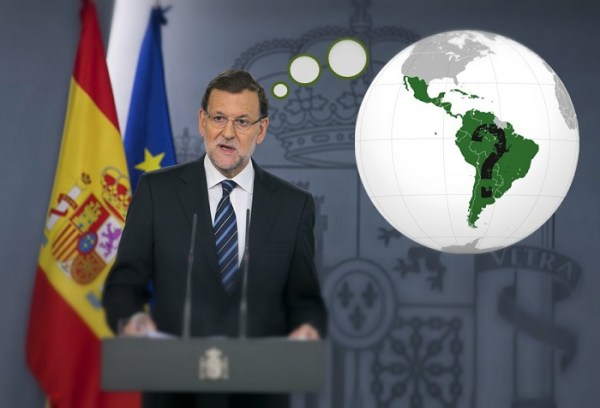
Photo Credit: La Moncloa Gobierno de España and Heraldry (Modified) / Flickr & Wikimedia / Creative Commons

Spain’s political crisis and problems facing the European Union have undermined Madrid’s ability to pursue interests in Latin America at a time of new opportunities.  Amidst countless months of lameduck government and the failure of either the Partido Popular (PP) or the Partido Socialista (PSOE) to form a government, the country is also tied in knots over corruption scandals, including some touching a Cabinet member and the royal family, and Cataluña’s persistent challenges to central authority.  Even before the current mess, Prime Minister Rajoy had shown only modest interest in Latin America, and King Felipe hadn’t yet demonstrated the mettle of his father, who once famously told Venezuelan President Chávez to shut up at an Ibero-American Summit.  Adding to Spain’s distractions are a series of EU challenges, ranging from refugee crises to terrorism and the Mediterranean countries’ debt overhang.  Spanish elites, who remain committed to the EU vision, are seized with concerns about Brexit, the UK’s flirtation with withdrawal, and perplexed by the absence of a renewed integration project.

Madrid’s declining role coincides with changes in Latin America that would normally grab its attention.  President Obama and Raúl Castro’s historic normalization of diplomatic relations has opened the door to at least one major U.S. hotel firm signing contracts to refurbish and manage several Cuban hotels – an industry in which Spain previously had extraordinary advantages.  Having played “good cop” with Cuba for many years, compared to Washington’s “bad cop,” Madrid’s future role on the island is at most uncertain.  The election of market-friendly President Macri in Argentina, where the previous government nationalized a Spanish energy company and adopted other policies causing bilateral estrangement, also represents an opportunity for Spain.  The near-completion of peace talks between the Colombian government and guerrillas should be the crowning jewel of a foreign policy in which Spain made a strong political investment early on, but Madrid has receded to the role of bit player.  At a time that Latin Americans continue to espouse support for CELAC and other regional organizations that exclude Spain (and the United States), Spain-sponsored Cumbres Iberoamericanas since 1991 have – even more than the U.S.-sponsored Summit of the Americas – lacked dynamism and produced little as the beacon of the Spanish transition was dying down

By turning inward, Spain risks losing what remains of its special cachet as Latin America’s link to Europe and as a country that made a successful transition to democracy with inclusion, human rights, vibrant media, and increasing transparency.  Its political capital in the region is running low, and budgetary constraints have diminished its aid budgets (from 0.5 percent of GDP to 0.13 percent).  But opportunities remain.  Big Spanish companies – Telefónica, Banco Santander, BBVA, Repsol, and others – and numerous mid-sized firms have shown interest in Latin America.  Cuba’s reluctance to embrace U.S. ties too tightly and too fast gives Spain important space to play a role if it wants.  Moreover, Spain’s diplomatic skills, critical for Central America’s peace processes and elsewhere, could still be a positive force in that subregion.   If it weren’t for former Spanish Prime Ministers’ contradictory roles in Venezuela, where U.S. baggage undermines Washington’s approach to political, economic, and security problems, Spain could be active there too.  But the Prime Minister and his cabinet have not given the Foreign Ministry the green light to get more deeply involved.  It’s not too late for Spain to turn things around and get back into the game in Latin America.  For that to happen Spain needs more consistent governance.

April 18, 2016

* The writer is long-time non-academic observer of Spanish foreign policy in Latin America.

How are the Americas Faring in an Era of Lower Oil Prices?

By Thomas Andrew O’Keefe*

Gas Station Guatemala

Photo Credit: Josué Goge / Flickr / Creative Commons

The sharp drop in global oil prices – caused by a combination of a slowing Chinese economy hurting commodities sales and efforts by Saudi Arabia to retain market share – has both downsides and advantages for Latin America and the Caribbean.  By keeping production levels steady, despite decreased demand, so that a barrel of crude remains below US$40, the Saudis’ hope is to put U.S. shale oil producers and Canadian tar sands producers out of business.  The drop in oil prices has had a varied impact elsewhere in the Americas:

  • The effect in Venezuela, already reeling from over a decade of economic mismanagement, has been catastrophic. The ripple effect is being felt in those Caribbean and Central American countries that grew to depend on PetroCaribe’s generous repayment terms for oil imports that allowed savings to be used for other needs.  In 2015, for example, this alternative funding mechanism in Belize was slashed in half from the previous year.  The threat of interest rate hikes on money that must eventually be repaid for oil imports also pushed the Dominican Republic and Jamaica to use funds raised on international capital markets to reduce their debt overhang with Venezuela.  (For those weening themselves off PetroCaribe dependency, however, the lower prices are a silver lining.)
  • Low oil prices have also knocked the wind out of Mexico’s heady plans to overhaul its petroleum sector by encouraging more domestic and foreign private-sector investment.
  • In South America, the decline has undermined Rafael Correa’s popularity in Ecuador because the government has been forced to implement austerity measures. The Colombian state petroleum company, Ecopetrol, will likely have to declare a loss for 2015, the first time since the public trading of its shares began nine years ago.  In Brazil, heavily indebted Petrobras has seen share prices plummet 90 percent since 2008, although that is as much the result of the company being at the center of a massive corruption scandal that has discredited the country’s political class.
  • On the other hand, lower petroleum prices have benefitted net energy importers such as Chile, Costa Rica, Paraguay, and Uruguay.

The one major oil producer in the Americas that has not cut back on production and new investment is Argentina – in part because consumers are subsidizing production and investment by the state petroleum firm YPF, which was renationalized in 2012 and now dominates domestic end sales of petroleum products.  Prices at the pump remain well above real market values.  While successive Argentine governments froze energy prices following the 2001-02 implosion of the Argentine economy, this time policy is keeping some energy prices high.  This encourages conservation and efficiency and spurs greater use of renewable alternatives, but it becomes unsustainable during a prolonged dip because it will, among other things, make the country’s manufacturers uncompetitive.  The Argentine example underscores that predictions of a pendulum shift in Latin America in favor of private-sector investment in the hydrocarbons sector over state oil production are still premature.

The lower prices do not appear likely to harm the region’s continuing substitution of natural gas for coal and oil as a transitional fossil fuel to greener sources of energy.  Natural gas prices remain at their lowest levels in over a decade, and the expansion of liquefied natural gas plants allows for easier transport of natural gas to markets around the world.  They are also unlikely to dent the global shift to greater reliance on renewable energy resources driven by the international consensus that climate change can no longer be ignored and something must be done to address it.  At the UN climate change talks in Paris last December, for example, countries agreed to keep temperature increases “well below” 2 degrees centigrade above pre-industrial levels and made a specific commitment “to pursue efforts” to achieve the much more ambitious target of limiting warming to no more than 1.5 degrees centigrade.  The year 2015 was the second consecutive year in which energy-related carbon emissions remained flat in spite of 3 percent economic growth in both years. 

March 24, 2016

*The author is the President of San Francisco-based Mercosur Consulting Group, Ltd.  He chaired the Western Hemisphere Area Studies program at the U.S. State Department’s Foreign Service Institute between July 2011 and November 2015.