Haiti Needs to Lay New Tracks

By Jake Johnston

Research Associate, Center for Economic and Policy Research

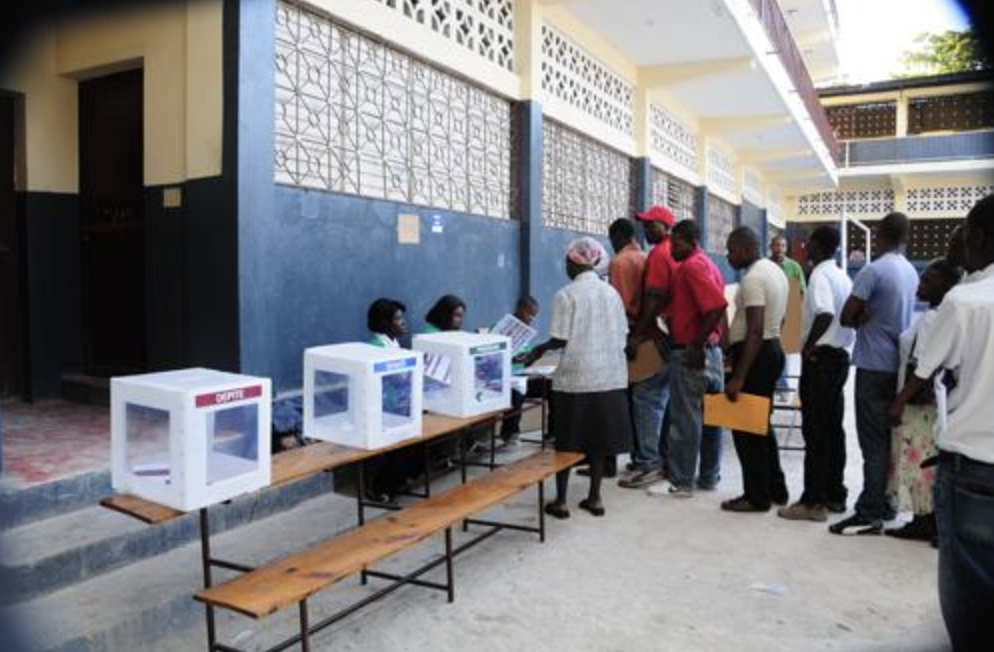
It’s been nearly a decade since Haitians last went to the polls to elect a president. Even then, barely one in five participated. In a country with a majority of the population under 25 years of age, this means that, for most Haitians, voting for one’s leaders is a privilege never before experienced.

Haiti’s transition, precipitated by the assassination of Jovenel Moïse in July 2021, is ongoing. For the better part of four years, progress toward elections has remained elusive. But that all appeared to change this fall.

“The Haitians need to come to an election and elect a president,” the US Charge d’Affaires, Henry Wooster said in September. Security and other challenges must not be a “red herring for taking action,” he continued. Speaking directly to Haiti’s de facto authorities, he warned: “In other words, you can’t stay in those jobs for life.”

The reaction, in a country where the political class remains more responsive to Washington than the population in Haiti, was swift. Two months later, a new electoral law has been established and a vote scheduled for next August. But does this present Haitians with a path out of the multiple, overlaid crises affecting the country? More than half the country is facing food insecurity, the economy is about to wrap up its seventh consecutive year of negative growth, and insecurity continues to dominate daily life.

In 2023, when asked if they had trust in the electoral process, fewer than one in four Haitians responded yes. It is hard to imagine that number is higher today. Though few would be sorry to see the much-loathed leaders atop the transition fall, a vote is not a path out of the current crisis.

The quick response to Wooster’s threats was not so much about elections. It was about a date much closer on the horizon: February 7, 2026. That is when the mandate of the nine-member presidential council — which was put in place with a strong push from the Biden administration, CARICOM, UN, and the OAS 18 months ago — formally ends. For months, debate has raged over what should come next. The political class is auditioning, not with the ten-plus million citizens of Haiti, but with the foreign diplomats and multilateral entities they see as key to their own survival.

And if there was any doubt about who would ultimately decide, it was put to rest in mid-November. Amid an effort from some on the transitional presidential council to, once again, replace the prime minister, the US embassy stepped into the fight.

“If you and your family value your relationship with the United States, I urge you in the strongest terms to desist from initiatives to oust the PM and to instead publish the electoral decree … This is not the time to test U.S. resolve,” Wooster texted Fritz Jean, one of the councilors. Days later, Jean’s US visa was revoked and the State Department publicly accused him, without providing evidence, of supporting armed gangs. The effort to replace the PM was stopped — at least for now. The next week, the electoral decree was published.

The “plan” is coming into focus, and it is a familiar one: stability at all costs, no matter how rotten the foundation. To enforce this notion of stability and allow for elections, the US has been quick to assure that more security support is on the way.

In September, the UN Security Council approved a Gang Suppression Force (GSF). Authorized for up to 5,500 soldiers, it is currently little more than a rebranding of the Kenyan-led Multinational Support Mission (MSS) that the UN authorized in 2024. No new troops have arrived and, while this new mission will have some level of UN support, operationalizing any of it is expected to take the better part of a year. 

The main difference then, for the 1,000 or so mostly Kenyan police on the ground in Haiti is that the rules of engagement have changed. The GSF, as its name suggests, is intended to be more “muscular,” by which its architects mean lethal. The newly drafted Concept of Operations outlines a mission with a simple goal: kill the bandits.

But while few have taken note, that has been the de facto authorities’ strategy for some time. So far this year, police forces have been responsible for well over half of the 4,500-plus killings in Haiti. Hundreds of civilians have been caught in the crossfire as police battle armed groups that exert influence over much of Port-au-Prince and have traumatized a nation. Drone attacks, led by a secretive police unit operating with Blackwater CEO Erik Prince’s private mercenaries, are also racking up civilian casualties and drawing growing condemnation.

The outspoken leaders of Haiti’s armed groups, however, only seem to continue to accumulate more power, political influence, and heavy weaponry. While some areas of the capital have seen tension ease, violence in the provinces is expanding by the day. Armed groups still control all the major arteries of the nation. More people are displaced today than at the height of the post-earthquake recovery.

The US has expressed its goal in Haiti as saving the state from imminent collapse, thereby avoiding mass migration or the further entrenchment of transnational criminal organizations. But while precious oxygen is consumed by raging debates over electoral timelines, transitional governance structures, and how quickly foreign soldiers can arrive, nobody has stopped to ask a basic question: is the current state worth saving?

The root of the tension that has paralyzed the country for much of the last decade is not a fight between violent gangs and the state. Simplistic narratives of good versus evil miss the mark. Rather, it is a fight over putting the train back on the tracks to save a rump state in the name of stability or to lay new tracks to create the foundations for a more representative state to rise from the ashes. It is not elections nor a foreign military force that will resolve this fundamental tension. In fact, history shows those two responses are more likely to consolidate the status quo.

The Haitian people need an opportunity to vote freely. They need to feel safe and secure in their communities. But what is missing is a plan to bring it all together, to begin restoring faith in a state that long ago lost the trust of the population; a plan to achieve peace, which is not just the absence of violence, but the presence of opportunity. What is missing is a vision that can inspire the population and bring the nation together around a common path forward.

A peace process can fill that gap. Such an endeavor does not mean legitimizing armed actors, condoning violence, or accepting impunity; rather, what it should mean is treating the situation holistically while centering the population and in particular victims of both state and non-state violence. A foreign military force and low-turnout elections are tracks Haiti has been down many times before. A peace process offers a chance at laying new ones. But first, what Haiti needs are political leaders responsive to the needs of the people and not simply to foreign embassies.

The Multiple Dimensions of the US-Brazil Relations Crisis

By Lívia Peres Milani

Public Policy and International Relations Institute (IPPRI-Unesp)

National Institute of Science and Technology for the Studies of the United States (INCT-INEU)

President Donald Trump meets with Brazilian President Luís Inácio Lula da Silva during the ASEAN Summit at the Kuala Lumpur Convention Center. (Source: Wikimedia Commons)

On November 11th, the US announced a withdraw of the additional 40% tariffs it had imposed on many goods of Brazilian origin, including coffee, fruit, and beef. The tariffs, initially imposed on July 30th, are one among multiple dimensions of the current bilateral crisis. Besides commerce, the crisis also has a political dimension, initiated by the recent US decision to invoke the Magnitsky Act – an instrument ostensibly used to sanction corruption and human rights violations – against Alexandre de Moraes, one of the Brazilian Justices responsible for the conviction  of ex-president Jair Bolsonaro over his attempted  coup d’état. While the recent White House decision does not necessarily represent an end of the crisis, it represents a pause of sorts, and so, a timely moment to assess the relationship.  

The imposition of tariffs  

The White House’s initial imposition of tariffs may at first glance make little sense, since it appears to disregard its economic interests. The US enjoys a trade surplus with Brazil, and there is not sufficient production in the US of many of the tariffed products to meet national demand. That is the case for coffee, fruit, and a variety of industrial supplies. However, to understand the source of the crisis, it is necessary to consider its non-commercial dimensions. These include i) the transnational articulation of far-right movements, ii) Big Tech’s economic interests, and iii) US geostrategic considerations.  

Brazilian and US far-right currents are deeply connected. Eduardo Bolsonaro, son of the former president, has worked to promote the Brazilian radical right abroad. During his father’s trial, he took a leave from Congress to launch a pressure campaign in the US against the Brazilian Supreme Court (STF) and the Lula government. With cooperation from sympathetic US leaders, he lobbied against the Lula administration, claiming that the trial was a “witch hunt,” his father was the victim of political persecution, and asking that the US government impose penalties on the Brazilian authorities responsible. This effort complicated Brazil’s relation with Foggy Bottom and the White House. Much of the language used by the White House to justify the new round of tariffs reflected this lobbying effort. 

Another factor that explains US policy toward Brazil are the interests of Big Tech companies. Brazil’s Supreme Federal Court took up a case relating to the responsibilities of social media platforms for user-posted content, ruling that social media platforms should be civilly liable if they failed to remove undemocratic, discriminatory, or crime-inciting content. In response, the US Computer and Communication Industry Association (CCIA) welcomed the imposition of sanctions against Moraes. They argued that the ruling in Brazil violated “free expression,” a strategy often used by Big Tech actors, in conjunction with far-right political leaders, to oppose the regulation of social media in Brazil and elsewhere.  

Finally, larger geostrategic considerations are also in play. The current US administration seeks to reassert US regional and global hegemony. Brazil, for its part, wants to promote its Global South leadership, framed as part of a “multipolar world order.” Promoting the BRICS forum is an important component of Brazil’s approach. The new tariffs were announced a few days after the BRICS summit in Rio de Janeiro, with the US president also threatening to impose tariffs on other countries that associate themselves with the BRICS+ group. This timing illustrates US opposition to the BRICS and pressure on Brazil to align with Western countries instead of its Global South partners. 

Tariffs backfire and the future of US-Brazil relations 

However, the Trump administration’s aggressive strategy against Brazil has not led to the expected results. Brazil’s government managed to control the domestic narrative, framing US tariffs as an attack on Brazilian sovereignty, a strategy supported by public opinion, as polls show. The US approach also became an incentive for Brazil to shore up its relations with Global South leaders. Following the tariffs, Lula reached out to the presidents of China and India to discuss the expansion of trade relations. The tariffs also proved unpopular in the US, and harmful for the White House, since they drove up the cost of coffee and other products. 

These several factors explain Trump’s subsequent decision to change direction. He opened a dialogue with Brazil, first announced at the UN General Assembly, and then confirmed his goodwill in a bilateral meeting in Malaysia. High-level negotiations, and the unpopular inflationary trend in the US, led to the recent removal of tariffs from many Brazilian products. It also signals an end to this most recent period of bilateral crisis. 

Nevertheless, there might still be consequences over the middle and long term. US sanctions communicate to the Brazilian government that, while a global power, the US is not a trustworthy partner, even when it comes to such non-strategic, everyday issues as the export of coffee and fruit. At the same time recent events have helped to cement the transnational partnerships of far-right leaders while also serving to illustrate how these relationships are impacting US government decision-making.  

On the other hand, the recent US decision to alleviate the tariffs is a signal for both partners that the US-Brazil bilateral relationship is an important one. Even if this relationship is imbalanced, given the US’s economy and global influence, the recent tariff episode illustrates that the US cannot simply dictate policy to Brazil, and that the two countries’ economic interdependence can function as a structural constraint upon the political will of far-right political actors.   

Can Peru’s Democracy Recover?

By Cynthia McClintock*

Photographs from the early hours of the Generation Z protest in Peru, 2025
(Source: Wikimedia Commons)

Since 2021, democratic backsliding has been severe in Peru, and Peruvians are furious. Peru’s Congress is loathed. In 2025, the approval rating for Peru’s President, Dina Boluarte, fell below 3 percent and she became the most unpopular president on the planet. Finally, in October, Boluarte was impeached on the grounds of “permanent moral incapacity”; it was the fifth time since 2018 that a president had been impeached or had resigned upon imminent impeachment.  Per Peru’s constitution, Boluarte was succeeded by the Congress Speaker, José Jerí. Presidential and Congressional elections are scheduled for early 2026.

Why are Peruvians so angry? What does their anger mean for the 2026 elections (with the Congressional elections and the first round of the presidential elections scheduled for April 12 and a likely runoff on June 7)? Is it possible that the elections can lead to a democratic recovery?

Why are Peruvians So Angry?

The key reason is not “the economy stupid,” but an escalation of organized crime and the perception that Peru’s political leaders are part of the problem rather than part of the solution.

Between 2019 and 2024 the number of homicides doubled and the number of reported extortions jumped sixfold. Extortion is hurting huge swathes of lower-middle class Peruvians. Transport workers have been particularly vulnerable; so far in 2025, approximately 50 bus drivers have been killed for refusing to make extortion payments.

The reasons behind the crime escalation are various. Demand for cocaine remains high and, over the last decade, Peru’s coca cultivation has increased. As the price for gold jumped, so did illegal gold mining. Peru’s gangs are fragmented—and therefore hard to track—and they have developed nefarious new strategies such as using WhatsApp for extortion.

But, Peruvians believe, the reasons also include the government’s complicity. In part because illicit operators have provided campaign finance, in 2024 approximately half of Peru’s legislators were under criminal investigation; these same legislators have passed laws to impede investigations and prosecutions. Boluarte herself is under investigation for various crimes, including illicit enrichment. She sported a Rolex watch priced at $19,000, despite no evident financial means for such extravagance.

Further, from the start large percentages of Peruvians did not deem Boluarte a legitimate president. In 2021-2022, Boluarte was Vice President under President Pedro Castillo. Leading a far-left party in fraught elections during COVID, Castillo was an accidental, unprepared president. He was virulently opposed by the dominant right-wing forces in Congress, in particular Fuerza Popular, the party of Keiko Fujimori, the daughter of former authoritarian President Alberto Fujimori. As Vice President, Boluarte had said that, if Castillo were impeached, she too would resign, triggering new elections. However, in the event of Castillo’s December 2022 impeachment, Boluarte stayed on, despite massive protests and ubiquitous calls for new elections.

As President, Boluarte appeared indifferent to Peruvians’ concerns. Between December 2022 and February 2023, 49 civilian protesters were killed by the security forces. Boluarte’s response was support for an amnesty law. And, amid an October 2025 transport workers’ strike, Boluarte’s advice to Peruvians worried about crime was that they should not open text messages from unfamiliar people—placing blame for crimes on the victims.

What Does Peruvians’ Anger Mean for the 2026 Elections?

Peruvians’ anger spells difficulties for its incumbent parties and advantages for parties that can claim an “outsider” mantle. Fujimori’s Fuerza Popular is widely considered the dominant party in the Congress, and it will struggle against this perception. Its presidential candidate, Fujimori, is running for the fourth time and is likely to have worn out her welcome.

Not surprisingly, demands for an “iron fist” against crime are strong. The current presidential frontrunner is Renovación Popular’s Rafael López Aliaga (aka “Porky”), a Trump-like far-rightist who placed third in the 2021 election and was subsequently elected Lima’s mayor. López Aliaga promises a hardline strategy against organized crime, including implementing similar imprisonment policies to those of El Salvador’s Nayib Bukele. But Renovación Popular holds the fourth largest number of seats in Congress and it will be difficult for López Aliaga to claim an “outsider” mantle.

A candidate likely to claim an “outsider” mantle is Mario Vizcarra, running as a proxy for his brother, former President Martín Vizcarra. As President in 2018-2020, Vizcarra confronted the dominant parties in Peru’s Congress, building his popularity but ultimately catalyzing his impeachment. After a strong showing in Peru’s 2021 legislative elections, he was disqualified from holding elected office for ten years. Yet, Vizcarra’s government was far from without fault. There are other candidates, including the popular former clown, Carlos Álvarez, who could seize the “outsider” mantle.

Can Peru’s 2026 Elections Lead to Democratic Recovery?

The challenges to Peru’s elections are serious. In recent years Fuerza Popular and other illiberal parties in Peru’s Congress have allied to skew the electoral playing field in their favor.  Interim President Jerí is, of course, new to his position and his possible impact on the elections is unclear. (His first-month record was better than was first expected.)

As elsewhere in Latin America, Peru’s illiberal parties have strategized to achieve the disqualification of viable candidates. As indicated, this strategy is currently being used against Vizcarra; it could also be used against a rising new candidate.

Peru’s illiberal parties have calculated that a plethora of candidates is in their interest. Currently, 39 party lists are registered. Such a head-spinning number is problematic for journalists trying to cover the campaign and problematic for voters trying to identify their preferred candidate, especially because pre-election polls are more likely to be inaccurate. Yet, Peru’s Congress cancelled a provision for a preliminary round of voting, in which parties would have been required to secure 1.5 percent of the vote in order to qualify for the “first round.”

Still, there are grounds for optimism. The massive protests of recent years have shown that Peruvians want their political views heard. Peruvians recognize the importance of honest, capable leadership and want to find it.

*Cynthia McClintock is Professor of Political Science and International Affairs at George Washington University.

Bolivia Decisively Enters New If Unknown Political Territory

By Robert Albro, Associate Director, CLALS

Rodrigo Paz is sworn in as president of Bolivia, 2025
(Source: Wikimedia Commons)

Centrist Rodrigo Paz’s victory in October’s runoff election signals a dramatic change of direction for Bolivian politics. The era of dominance of the Movement Toward Socialism (MAS) party, led by ex-president Evo Morales, is definitively over. For only the second time since 2006 the MAS will not control the presidency. As a result of the recent election, it now has a mere two representatives in the legislature’s lower house, and no one in the upper house. Though it does not hold an outright majority, Paz’s Christian Democratic Party is now the single largest presence in both legislative chambers. How did Bolivia get here?

Twenty years ago, the leftist-populist MAS swept into power, as a new and energetic grassroots alternative to the elite-run traditional parties that had traded off governing Bolivia since the end of dictatorship in 1982, or one could even argue, since the 1952 Revolution. The MAS’s popularity sprung largely from the dynamism of Morales, himself, then a coca grower union leader adept at organizing and leading large-scale protests in opposition to prevailing Washington Consensus policies and government efforts to sell off Bolivia’s non-renewable resources to transnational corporate interests. The MAS styled itself a bottom-up social movement and not a party. Its participatory “lead by following” approach to governance appealed to a great majority of indigenous voters and working-class people of indigenous descent.

Morales and the MAS proved historically consequential in undertaking a contentious but innovative rewrite of the country’s Constitution, which went into force in 2009. It fully embraced Bolivia’s “plurinational” identity and incorporated an unprecedented variety of collective indigenous rights of consultation, to their traditional territories, and perhaps most controversially, of judicial autonomy. The Morales administration also used a large surplus from the country’s extractive boom to finance a wide range of new social safety net provisions that halved the number of people living in poverty, including cash transfers to families, a pension program, minimum wage increase, as well as public investments in schools, hospitals, and other infrastructure. Perhaps most importantly, his presidency raised the public visibility of Bolivia’s indigenous majority, no longer as second class citizens but as political protagonists of their own present and future.

Morales and the MAS were immensely popular. But then cracks began to appear. In 2011 a plan to build a controversial highway through a protected indigenous reserve brought the MAS government into direct conflict with the reserve’s residents, damaging its support among some indigenous groups. When the extractive boom ended around 2014, Bolivia’s economy slowed considerably, and the MAS fiscal policies that had lifted so many out of poverty became increasingly unsustainable. Part of the problem was Morales, who served two presidential terms and aspired to another, without any thought to a succession plan. Constitutionally limited to two terms, in 2016 he soundly lost a national referendum in a bid for a third and then ignored the result, further alienating many former supporters.

The upheaval around the contested 2019 election, which eventuated in Morales going into exile in Mexico and the persecution of MAS loyalists by a rightwing caretaker government, set the stage for the party’s eventual fall from grace. The 2020 election restored the MAS to power. But soon Morales and the new president, his ex-finance minister Luis Arce, were in a pitched battle for control over the party, a bitter and increasingly personal rivalry that fatally fragmented the MAS into opposed camps. Their protracted feud, which paralyzed congress, strayed into surreal territory, with accusations of a staged coup and mutual assassination attempts. The credibility of the MAS was so fundamentally damaged that the incumbent Arce, with his poll numbers plummeting, suspended his campaign. Morales, meanwhile, remains holed up in his coca grower redoubt to avoid criminal charges.

The MAS-led government’s political fragmentation, and its ineffectual response to Bolivia’s increasingly disastrous economy, have left the party deeply unpopular. The country is currently floundering amid its worst economic crisis in 40 years. Its natural gas production is half of what it was in 2014, with nothing to replace it. Bolivia has failed to develop its large reserves of lithium. Depleted currency reserves and a scarcity of US dollars have driven up inflation, creating severe shortages of fuel and basic goods. Over the past year, ordinary Bolivians have angrily expressed their discontent with the country’s economic collapse through repeated strikes and protest actions.

Emerging from this bleak political and economic state-of-affairs is the surprise election winner, Rodrigo Paz. Son of onetime leftist president Jaime Paz Zamora, former mayor of Tarija, and recently a senator, Paz’s campaign focused on restoring Bolivia’s economy, but gradually rather than by instituting sweeping fiscal austerity measures as his rival in the run-off proposed. Non-indigenous, pro-business, and ideology averse, Paz successfully positioned himself as a pragmatic reformer. He has delivered a strong anti-corruption message, pledged to restore relations with the US and bring back foreign investment. His populist call for a “capitalism for all” hopes to thread the needle by mixing decentralization, lower taxes, support for small businesses, and greater fiscal discipline, with continued spending on popular MAS-era social programs.

Paz’s critics argue that what he proposes is an impossible fiscal balancing act. Desperate and impatient Bolivians will expect immediate results. But it remains far from clear whether Paz will be able to overcome likely regional opposition to at least some of his policies. And if he does not stabilize the country’s dysfunctional economy quickly, Paz’s political honeymoon might be brief.

The Rise, Decline, and Crisis of Ecuador’s Indigenous Movement

By Dr. Pablo Andrade Andrade

October 17 Demonstrations (Manifestaciones del 17 de Octubre)
(Source: Wikimedia Commons)

Just six years ago, in 2019, the three major organizations of the Ecuadorian indigenous movement were on the rise. CONAIE (the Confederación de Nacionalidades Indígenas del Ecuador) led the charge against Lenin Moreno’s government. For eleven days their widespread demonstrations posed a serious threat to the government’s stability. The “Paro Nacional” (Nationwide Strike) not only facilitated CONAIE’s alliances with the other two indigenous organizations (FENOCIN, the Federación Nacional de Organizaciones Campesinas, Indígenas y Negras, and FEINE, the Federación Ecuatoriana de Indígenas Evangélicos) but also broadened its coalition with a diverse range of civil society organizations, marking a significant shift in Ecuadorian politics. The impact of the indigenous movement on Ecuadorian politics was profound, as Moreno´s government was seriously weakened. Two years later, in 2021, CONAIE’s political party, Pachakutik, won substantial representation in the National Assembly and placed third in the Presidential elections.

In 2022 CONAIE’s president, Leonidas Iza, led a successful national strike against Guillermo Lasso’s right-wing government. His leadership, bolstered by unity among indigenous communities and their allies, made it the most powerful leftist organization. Newfound solidarity among indigenous communities and stronger ties with student, feminist, and environmental movements, enhanced Iza’s national and international reputation. Less than a year later, President Lasso had to end his term and called for early general elections. However, at that moment Iza´s radical wing of CONAIE also attempted to impose its agenda over Pachakutik and the Amazonian federation CONFENIAE, which proved to be a high-cost strategy. The internal conflicts that followed led, in 2025, to the most serious electoral defeats that both organizations had suffered in decades.

The 2023 general elections were marred by prison massacres and political assassinations, including that of presidential candidate Fernando Villavicencio and the mayor of Manta, among numerous other government officials. Amid this unprecedented turmoil, a young center-right candidate, Daniel Noboa, emerged victorious as interim president. His win signaled yet another shift in Ecuador’s political landscape, with the country’s fragile democracy once again at the mercy of a personalist, plebiscitarian president.

The first warning sign of the current political turn to populist rule came with the 2025 regular election. The President’s party (Alianza Democrática Nacional, ADN) and the opposition party (Revolución Ciudadana, RC) totalled over 80 percent of National Assembly representatives. Noboa won his first five-year mandate. Pachakutik saw its representation shrink to five members, who the government rapidly coopted. Free from legislative checks, Noboa advanced his economic adjustment program. In addition, amid the ongoing public security crisis, Noboa expanded the military’s role in maintaining domestic order. Although assassinations have risen since 2023, militarization has strengthened Noboa’s control over organized violence, boosting political support for his government.

As part of its economic program, in September 2025, the Noboa administration raised diesel prices, a decision that in 2021 and 2022 sparked the wrath of CONAIE. But the leaders misjudged the lasting strength gained in 2021 and 2022, failing to account for damage from the 2023 and 2025 leadership races. As a result, they  rushed to emulate the apparent successes of the past. This time, however, CONAIE was at its lowest point. Unable to coordinate a nationwide strike, organizations in the northern province of Imbabura were left to their fate. The indigenous peoples of Cotacachi, Ilumán, Peguche, and Otavalo sustained demonstrations for a month. Still, they paid a high price in lost lives, injured people, and detainees due to systematic and brutal repression at the hands of the Armed Forces and the Police. This time, the government did not back down; the solidarity of  allied urban groups was, in this case, mostly symbolic and ineffective.

If CONAIE’s crisis should not be seen as the end of the indigenous movement, its significance cannot be overlooked. While grassroots mobilization once seemed effective, Noboa’s strong appeal and military support present new challenges. The aftermath of the national strike has called into question CONAIE’s representativeness and capacity to organize. An emboldened Noboa is now proposing a national plebiscite, in which he will likely be victorious, while Ecuador’s civil society appears weaker than ever. The challenges ahead are complex. The failed challenge to Noboa´s government could herald a new era of competitive authoritarianism, a scenario made even more likely by renewed international tolerance of hybrid forms of democracy. The lost battle left the indigenous organizations of Imbabura with wounds that could be challenging to heal, and racism lurks underneath the surface of Ecuador’s still young experiment with intercultural co-governance.

Pablo Andrade Andrade is Professor and Chair of the Germánico Salgado Lectures, Universidad Andina Simón Bolívar

*This post continues an ongoing series, as part of CLALS’s Ecuador Initiative, examining the country’s economic, governance, security, and societal challenges, made possible with generous support from Dr. Maria Donoso Clark, CAS/PhD ’91.

On the U.S. – Argentina Currency Swap

By Dr. Susana Nudelsman

Central Bank of Argentina (Banco Central de la República Argentina)
(Source: Wikimedia Commons)

In October of this year, the United States Treasury Secretary Scott Bessent ratified the signing of a US$20 billion currency swap with the Central Bank of Argentina as part of an “economic stabilization agreement” (Buenos Aires Herald, 2025). Moreover, the U.S. Treasury announced it is working on a complementary US$20 billion credit line that would be provided by private-sector banks and sovereign wealth funds (La Nación, 2025).

According to the Argentine banking institution, this agreement seeks to contribute to the country’s macroeconomic stability, emphasizing the need to preserve price stability and promote sustainable economic growth. The swap operations will enable the Central Bank of Argentina “to expand its set of monetary and exchange rate policy instruments, including the liquidity of its international reserves”, in line with the regulatory functions outlined in its statutes. The agreement is an important factor of a far-reaching approach that aims to strengthen the country’s monetary policy and improve the Bank’s ability to cope with events of volatility in the foreign exchange and capital market (Central Bank of Argentina, 2025).

Why is Argentina interested in this agreement?

Peterson Institute Professor Maurice Obstfeld (2025) highlights Milei’s remarkable success in lowering inflation, achieving a federal budget surplus, and relaxing regulations. Prior to the present crisis, the IMF predicted that Argentina’s GDP would expand by 5.5 percent in 2025, after shrinking 1.3 percent in 2024. At the same time, the IMF’s initial assessment of April 2025 concluded that, with one exception, important objectives were met. Indeed, the country’s net foreign exchange reserves, which are primarily in US dollars, fell well short of their target level.

Harvard Professor Ricardo Hausmann (2025) explains that Argentina is trapped in a multiple equilibrium, that is, a situation in which given the same set of conditions, an economy can achieve two or more distinct and stable equilibrium outcomes. If investors are willing to lend money when they feel optimistic, this lowers interest rates helping the economy grow and keeping debt service low, thus confirming the initial expectations. Conversely, if investors become pessimistic, they demand high risk premiums, which causes interest rates to skyrocket, harming investment and making public debt more expensive, thus justifying their fear of a crisis.

For his part, the former Secretary of Finance of Argentina Daniel Marx (2025) underscores that the pre-election portfolio adjustment has been less complicated than in the past, which shows more credibility with banks and institutions. In this regard, financial support from the U.S. Treasury can be useful in creating a sequence that enables its orderly implementation. Hence, the funds obtained to cope with the ongoing problems could be used to address important unresolved issues rather than being used for other instances in which funds are being depleted in the short-term.

Why is the U.S. interested in this agreement?

As Brad Setser (2025), Senior Fellow at the Council on Foreign Relations, argues, Washington has an interest in Milei’s success, not only because of his emphasis on stabilizing the Argentine economy, but also because his commitment to the free-market approach could serve as an important example for the rest of the continent.

However, U.S. interest in the swap agreement should also be understood in terms of the momentous change that the architecture of international financial relations has been experiencing in recent times. Indeed, following various decades of growing global economic integration, the planet is now confronting the threat of policy-driven geo-economic fragmentation.

In this context, Argentina matters for the strategic interest of the United States. Scott Bessent (2025) has emphatically stressed that the country is “a systemically important U.S. ally and that the U.S. Treasury stands ready to do what is needed within its mandate to support Argentina.” In other words, the Trump administration’s bailout resembles Mario Draghi’s support for European stability in 2012 with his “whatever it takes” approach, applied to the Argentine case in 2025.

Vera Bergengruen (2025), a journalist for The Wall Street Journal, believes that Washington’s security policy is a sort of revival of the Monroe doctrine. While the prior doctrine sought to keep European powers out of the region, the current one is primarily focused throughout the Americas with an aim to reward loyalty and to root out enemies. In this respect, Argentinian political analyst Juan Landaburu (2025) points out that in the context of a North American withdrawal from other regions, the so-called “backyard” of the United States is gaining greater importance, but this time not because of European ambitions but because of China’s advances.

  • With the results of Argentina’s midterm elections, the government has gained public support for its pro-market approach, while also gaining ground in the international financial community.
  • For its part, the United States government welcomes this result, which reaffirms its political preferences and allows it to make projections about its strategic interests in Latin America.
  • That said, the swap agreement between the U.S. and Argentina, while not without risks, constitutes an opportunity to renew ties of cooperation in the context of the current complex architecture of international relations. The coin is in the air.

REFERENCES

Bergengruen Vera, 2025, Trump’s ‘Donroe Doctrine’ Aims to Dominate the Americas, The Wall Street Journal, October 22, available at https://archive.is/20251023231723/https://www.wsj.com/world/americas/trumps-donroe-doctrine-aims-to-dominate-the-americas-b31208dd

Bessent Scott, 2025, Argentina is a systemically important U.S. ally in Latin America, and the @US Treasury stands ready to do what is needed within its mandate to support Argentina, available at https://x.com/SecScottBessent/status/1970107351912075454

Buenos Aires Herald, 2025, Scott Bessent confirms Argentina-US currency swap has been signed, available at https://buenosairesherald.com/economics/scott-bessent-confirms-argentina-us-currency-swap-has-been-signed

Central Bank of Argentina (Banco Central de la República Argentina), 2025, The BCRA and the U.S. Department of the Treasury sign a USD 20 billion agreement for exchange rate stabilization, available at https://www.bcra.gob.ar/Pdfs/Noticias/acuerdo-bcra-tesoro-estados-unidos-EN.pdf

Hausmann Ricardo, 2025, Trump Alone Can`t Save Argentina, New York Times, October 15, available at https://www.nytimes.com/2025/10/15/opinion/argentina-milei-trump-bailout.html

La Nación, 2025, Estados Unidos prepara otra ayuda para la Argentina con el sector privado por US 20000 millones, October 16, available at https://www.lanacion.com.ar/estados-unidos/eeuu-prepara-otra-ayuda-para-la-argentina-con-sector-privado-por-us20000-millones-nid16102025/

Landaburu Juan, 2025, Por qué Trump mira a América Latina más que nunca? La Nación, October 25, available at https://www.lanacion.com.ar/el-mundo/por-que-trump-mira-a-america-latina-mas-que-nunca-y-cuales-son-los-riesgos-detras-de-su-estrategia-nid25102025/

Marx Daniel, 2025, De pesos a dólares: esta vez es algo diferente, El Cronista Comercial, October 21, available at https://www.cronista.com/suscripciones/?limit=false&continue=https%3A%2F%2Fwww.cronista.com%2Fcolumnistas%2Fde-pesos-a-dolares-esta-vez-es-algo-diferente%2F&kicker=Opini%C3%B3nExclusivo%20Members&title=De%20pesos%20a%20d%C3%B3lares%3A%20esta%20vez%20es%20algo%20diferente&summary=&image=https%3A%2F%2Fwww.cronista.com%2Ffiles%2Fimage%2F1272%2F1272625%2F68f969cdb980d_600_315!.jpg%3Fs%3D0eec9030d86ead2043d767eb59f61bac%26d%3D1761176231

Obstfeld Maurice, 2025, Argentina’s Credibility Trap, Brookings Institution, available at https://www.piie.com/blogs/realtime-economics/2025/argentinas-credibility-trap

Setser Brad, 2025, Will Trump’s $20 Billion Backing Help Milei Change Argentina’s Fortunes, available at https://www.cfr.org/article/will-trumps-20-billion-backing-help-milei-change-argentinas-fortunes


Susana Nudelsman is a Doctor in Economics focused on international political economy. Counselor at the Argentine Council for International Relations and visiting fellow at CLALS.

Trapped by Debt? China’s Role in Ecuador Oil Dilemma

Photo credit: Xinhua, https://images.app.goo.gl/rBnL1kuwMixrzmCh7

Ecuador’s struggle to move beyond oil is deeply tied to its financial obligations—especially to China. Over the past 15 years, oil revenues have not only funded public spending but also serviced billions in external debt, locking the country into a path of continued extraction. This tension was already visible when the Yasuní-ITT Initiative collapsed in 2013: efforts to protect the rainforest were ultimately sidelined as social spending and budgetary needs remained—if not deepened—the country’s dependence on oil income. A decade later, Ecuadorians voted to halt drilling in the same region, but implementation has slowed. While officials have cited fiscal pressures and legal complexities, it is also clear that a significant portion of Ecuador’s oil production remains tied up in long-term prepayment arrangements—including those linked to past oil-for-loan agreements with Chinese lenders. 

Following Ecuador’s 2008 debt default, China quickly emerged as the country’s primary financier. According to the China-Latin America Finance Database, since 2010 Chinese policy banks—primarily China Development Bank and Eximbank—provided over $18 billion in loans to Ecuador. Many of these were backed by future oil shipments. The structure followed a two-track model: financial agreements with policy banks, and parallel supply contracts with PetroChina or Unipec. In practice, this meant that while Chinese banks lent Ecuador billions in cash, PetroEcuador committed to deliver oil to Chinese traders as repayment—regardless of market prices at the time of shipment. This arrangement locked in large volumes of crude in exchange for upfront cash. By 2013, nearly 90% of Ecuador’s oil exports were committed under term contracts with Chinese buyers, giving Beijing outsized leverage over the country’s oil trade. 

These deals have had long-lasting implications. By committing barrels years in advance, they reduced Ecuador’s ability to adjust production in response to new priorities—such as conservation mandates or global price shifts. Pricing terms further undercut the country’s earnings. Although contracts referenced international benchmarks like West Texas Intermediate (WTI) or Brent, additional fees, quality discounts, and opaque delivery terms often meant Ecuador received significantly less than market value. In fact, in 2017 Petroecuador sought to renegotiate oil-for-loan contracts with Chinese firms precisely to secure better pricing and reduce the volume of barrels exported under onerous terms. A 2022 audit cited by Infobae estimated that Ecuador lost nearly $5 billion in revenue due to oil sold at below-market prices under those contracts; up to 87% of crude exports were tied to formulas that paid less than the spot market could have yielded. 

Independent investigations by journalists have also found that Chinese firms profited by reselling Ecuadorian crude at higher prices, while Petroecuador captured only a portion of the potential revenue. Contractual provisions—such as repayment accounts held abroad and sovereign immunity waivers—further limited Ecuador’s flexibility to renegotiate terms without risking legal or financial penalties. 

In this context, many of the barrels extracted today are already earmarked through older pre-sale deals. This complicates efforts to curb drilling, even when doing so in response to a clear public mandate. Contractual rigidity—not just fiscal reliance—has narrowed the government’s policy space. Reversing course isn’t just a matter of political will; it requires untangling years of embedded financial commitments. 

The 2022 debt restructuring with China offered a glimpse of what greater flexibility can unlock. By renegotiating loan maturities and rescheduling oil deliveries, Ecuador freed up dozens of cargoes that had been tied to repayment. Instead of shipping them under discounted terms, the government was able to sell them on the open market—during a favorable price window—generating millions in additional revenue. The volume of oil remained the same. What changed was when and how it could be sold. This shift in marketing autonomy directly expanded Ecuador’s fiscal space, without requiring increased production or new drilling. 

While extractive arrangements remain deeply entangled with prior commitments, recent developments suggest Ecuador is gaining modest room to pursue a different path. In mid-2025, the country secured $400 million from China’s PowerChina—part of a broader $1 billion renewable energy package that also included Spanish financing—to support solar and energy storage projects. This marks a shift in Chinese engagement away from fossil-backed infrastructure toward cleaner investments. At the same time, Ecuador has turned to debt-for-nature swaps to ease financial pressures without expanding oil production. Although these were led primarily by multilateral lenders and NGOs, they reflect a broader shift. The 2023 Galápagos blue bond refinanced $1.6 billion in debt to fund long-term marine conservation, while a second swap in 2024 unlocked $460 million for Amazon protection. Together, these efforts point to the possibility of more climate-aligned partnerships—offering early glimpses of how Ecuador, with support from external actors, including China, might gradually move beyond extractive dependence. 

Three lessons stand out. First, oil-for-loan deals may offer quick liquidity, but they impose long-term constraints that complicate democratic and environmental decision-making. Second, transparent and flexible oil sales consistently outperform opaque pre-sale contracts weighed down by discounts and delivery restrictions. And third, while China’s engagement has historically centered on extractive finance, recent shifts—such as investment in renewable infrastructure—suggest there is room for more climate-aligned and cooperative models. Deepening this kind of engagement, alongside support for flexible financing tools like debt-for-nature swaps, in line with its constitutional commitments, could help Ecuador reduce oil dependence.  

There is no easy path out of an oil-dependent economy for Ecuador. Oil still plays a major role in the country’s budget. But the choice is no longer between drilling or defaulting. The 2022 restructuring showed that smarter financing—focused on freeing future production from rigid terms—can create space to act on social and environmental goals. Greater control over the extractive model would not mean extending Ecuador’s reliance on oil, but rather using what production remains in a more strategic and limited way. This includes regaining flexibility over how and when oil is sold and ensuring that any revenues are used to actively support, rather than delay, the transition toward a more diversified and sustainable economy. The 2023 vote to halt oil drilling in the Yasuní reserve signaled a shift in public priorities. Whether Ecuador—and its partners—can align financing with that vision will determine whether Yasuní becomes a turning point or just another deferred promise. 

Edgar Aguilar is a Researcher at the Center for Latin American and Latino Studies and a graduate student in International Economics at American University 

Edited by Rob Albro, Associate Director, Research, at the Center for Latin American and Latino Studies 

*This post continues an ongoing series, as part of CLALS’s Ecuador Initiative, examining the country’s economic, governance, security, and societal challenges, made possible with generous support from Dr. Maria Donoso Clark, CAS/PhD ’91. 

Community Development Financial Institutions as Underappreciated Bridging Institutions for Latino Small Business Success

By Robert Albro, Associate Director, CLALS

March 26, 2025

Latina-owned business in Columbia Heights, Washington DC. Credit: Elizabeth Albro

Building upon its previous research on Latino entrepreneurship, with the generous support of the Wells Fargo Foundation, AU’s Center for Latin American and Latino Studies recently launched a project to assess the effectiveness of community development financial institutions (CDFIs) for Latino small businesses in the DC-metro region. CDFIs provide bespoke financial services and investment capital to underserved communities, and the economic crisis caused by the pandemic highlighted their crucial role as bridging institutions connecting minority small businesses with the resources they needed to stay afloat. But how have CDFIs gone about their work since the pandemic?

Together with our community partner, the Greater Washington Hispanic Chamber of Commerce, we surveyed representatives of CDFIs throughout our region to better understand how they interact with Latino business owners, but also post-pandemic challenges in doing so, as they seek to support this increasingly important community for our region’s economy. Here we report on preliminary results that show how the effectiveness of CDFIs depends upon their greater attention not just to the specific needs of Latino small business owners but also to the social and cultural circumstances, and communities, within which these small businesses operate.

CDFI’s have been a source of inspiration and innovation when it comes to engaging sometimes hard-to-reach minority small business owners. These include pioneering the use of cohort models when providing assistance, as a way to build peer relationships and support a more networked community of minority business owners. They also include the use of equity impact scorecards to help weigh disparities when evaluating eligibility for business loans. They further encompass a more strategic use of microloans and sustained efforts to rethink traditional risk evaluation systems, which have served as barriers to entrance for minority start-ups. But the role of CDFI’s as critical mediators between minority business owners and the formal financial system remains underappreciated.

Latinos are an increasingly important part of the U.S. economy, primarily through business ownership and job creation. They continue to start businesses at a faster rate than any other group, and are projected to be almost a third of business owners by 2050. But, despite comparable liquidity, credit risk and default rates, when compared with counterparts, Latino small businesses encounter more obstacles accessing capital for start-up, growth, and to survive downturns. They are, for example, 60 percent less likely than White-owned businesses to be approved for a bank loan. This disparity is a major contributor to the long-standing racial wealth gap among small business owners in the U.S.

Recent economic disruptions have also highlighted the greater vulnerability of Latino businesses. Less than half of Latino immigrants nationwide have a relationship with a bank. With less access to lending institutions, Latino business owners have relied disproportionately on personal funds, home equity, and informal social networks, leaving them more financially exposed in times of crisis. The Pew Research Center reported that Latino household wealth fell 66 percent as a result of the 2008 Great Recession, the largest decrease among any group.

During Covid-19, Latino business owners struggled to access capital to weather the pandemic. If more likely to seek funds, they were less likely to receive them from private lending sources. The Small Business Administration reported a success rate of 7 percent for Latino-owned businesses who applied to receive Paycheck Protection Program (PPP) funds provided by the federal CARES Act in 2020, compared to 83 percent for White-owned enterprises. In 2021 the Federal Reserve reported that Latino businesses were less than half as likely as White-owned businesses to receive a PPP loan. Such disparities highlight the urgency to understand the factors that continue to limit Latino asset building, and to identify successful alternatives for engaging Latino small businesses.

Overall, survey responses prioritized the bridging function of CDFIs. On the one hand, representatives of CDFIs emphasized the importance of not simply understanding the specific concerns of Latino business owners, but also the need to be actively present “in the community.” This included, as one respondent put it, “hyper local knowledge,” not just about specific industry sectors, socioeconomic status or tax rates, but about extra-financial social contexts impacting Latino business success, such as new immigration policies or incipient gentrification in a given neighborhood.

Being “in the community” encompassed the necessity of meeting business owners “where they are at.” Respondents emphasized strategies of direct personal contact, such as texting over email, the importance of “personal visits” to places of business, providing information in Spanish, access to bilingual financial professionals, use of social media platforms popular with Latinos, and outreach through Spanish-language media. This extended to attending family and other local celebrations, and was about “establishing trust” with a group, Latino small business owners, often suspicious of formal institutions. One takeaway is that CDFIs illustrate the need for lending institutions to adopt a more expansively encompassing approach to culturally informed “community engagement,” as a core competency of their work with minority small businesses.

On the other hand, respondents repeatedly emphasized that throughout the pandemic, and going forward, it has been challenging to make Latino business owners aware of their financial assistance options. For many, this boils down to a pervasive lack of “financial literacy.” Microenterprises and small businesses often do not keep adequate records and do not maintain basic financial management and accounting practices, which make it hard for them to provide the necessary documentation to qualify for grants or loans. Much of what CDFI staff spends their time doing is helping business owners “put their financial house in order.” Overcoming such informality remains a major challenge. If CDFIs are critical conduits connecting Latino small business owners to formal financial institutions, a second takeaway is the need to offer basic financial literacy assistance further upstream, prior to the business start-up phase, perhaps in coordination with immigrant-serving nonprofits and conceived as one among a set of core wraparound services.

This research project highlights the critical role played by CDFIs in connecting Latino small business owners with resources for success, but also bridging informal and formal dimensions of business practice, and often underserved minority communities with local and regional small business ecosystems. In our current environment, where federal funds supporting the work of CDFIs are under threat, it is increasingly important to bring attention to their value.

*The research for this post was made possible by a grant from the Wells Fargo Foundation. We thank Victor Burrola, who leads Wells Fargo’s philanthropy in the Greater Washington DC region, for his support throughout.

Balancing Conservation and Extraction: Governance Challenges of Ecuador’s Yasuní-ITT Initiative

By Edgar Aguilar

Gas flaring at oil drilling site on the Napo river, Amazone, Ecuador (image: flicker)

In 2007, Ecuadorian President Rafael Correa launched the Yasuní-ITT Initiative, named after the Ishpingo, Tambococha, and Tiputini oil fields located within Ecuador’s Yasuní National Park in the Amazon. Correa novel proposal was to leave the approximately 846 million barrels of oil in these fields unexploited in exchange for $3.6 billion in international compensation—half the projected revenue from these reserves. This plan aimed to preserve one of the world’s most biodiverse regions and respect indigenous territories while addressing Ecuador’s economic needs. However, contradictions in Correa’s governance—marked by ambitious social spending funded by extractive industries—highlighted the difficulty of reconciling economic development with long-term environmental commitments.

During Correa’s tenure, Ecuador saw a significant increase in public spending, rising from 20 percent of GDP in 2004 to 43 percent in 2014. This expansion was largely financed through renegotiated oil contracts and an increased state share of oil revenues. Social investments, such as doubling government health expenditures from 2006 to 2016, led to substantial improvements in poverty reduction and infrastructure development.

However, this economic model deepened Ecuador’s reliance on oil, which highlighted the problem of directly linking social progress goals to environmentally destructive practices. While Correa promoted the Yasuní-ITT Initiative internationally, Ecuador simultaneously expanded oil exploration elsewhere, such as in the Amazonian blocks outside Yasuní. Oil concessions in the Amazon in 2007 covered 5 million hectares; 4.3 million of them conceded to foreign companies. In 2011 these numbers doubled with the incorporation of 20 more oil blocks. This inconsistency weakened the credibility of the initiative, making it difficult to secure international funding.

From the outset, the initiative faced skepticism. Donor countries were reluctant to provide funds without enforceable guarantees that future Ecuadorian administrations would uphold the agreement. Additionally, the initiative lacked a clear legal framework to ensure that the pledged conservation funds would lead to sustained economic diversification. Consequently, by 2013 the initiative had secured only $116 million in pledges, with a mere $13 million received, falling significantly short of the $3.6 billion target. The global oil market likely also played a role. In 2014 a sharp decline in oil prices significantly impacted Ecuador’s revenues, further reducing the feasibility of keeping Yasuní’s reserves untapped. With mounting fiscal deficits, Correa’s administration abandoned the initiative in 2013, citing insufficient international contributions.

As Yasuní ITT illustrates, Correa’s government struggled to maintain a coherent environmental policy, oscillating between conservation rhetoric and extractive expansion. This eroded trust among both domestic and international stakeholders. While his administration positioned itself as a defender of indigenous rights and nature, its policies often prioritized oil revenues over sustainability.

The abandonment of the initiative’s conservation goals sparked resistance from environmental and indigenous groups, leading to the formation of YASunidos, a coalition of youth activists, environmentalists, and indigenous advocates. Their activism sought to hold the government accountable, culminating in a push for a national referendum. Although the Ecuadorian government initially obstructed these efforts, the movement continued to pressure policymakers for conservation-oriented reforms.

In an August 2023 national referendum, 60 percent of voters supported the cessation of oil drilling in Yasuní National Park. In response to the vote, the government initiated plans to shut down oil operations in the Ishpingo, Tambococha, and Tiputini fields. The Energy Ministry announced the closure of the Ishpingo B-56 well, with the full decommissioning process expected to take over five years and cost more than $1.3 billion. However, concerns have been raised regarding government compliance, since the court mandated that the oil industry infrastructure be dismantled within a year.

The failure of the initiative led to the expansion of oil drilling in Yasuní National Park. Oil extraction has contributed to deforestation, biodiversity loss, and contamination of water sources, threatening endemic species and fragile ecosystems. Indigenous communities have faced territorial encroachment, social displacement, and health crises linked to pollution.

The Yasuní-ITT project illustrates the complexities of balancing economic development with environmental sustainability. Ecuador’s experience highlights the contradictions within populist environmental policies and discourse—where ambitious social programs depend on extractive revenues, ultimately undermining conservation efforts. While the 2023 referendum offers a renewed opportunity for environmental protection, long-term success will depend on sustained public pressure, policy consistency, and international cooperation.

To increase the likelihood of success 1) governments must credibly align environmental with economic policies. Contradictory approaches undermine long-term policy effectiveness. 2) Future conservation-based economic models should incorporate strong institutional safeguards, cross-administration continuity, and financial incentives for long-term compliance. 3) Reducing dependence on oil requires long-term investment in alternative sectors such as renewable energy, ecotourism, and technology.

Edgar Aguilar is a Researcher at the Center for Latin American and Latino Studies and a graduate student in International Economics at American University

Edited by Rob Albro, Associate Director, Research, at the Center for Latin American and Latino Studies

*This post continues an ongoing series, as part of CLALS’s Ecuador Initiative, examining the country’s economic, governance, security, and societal challenges, made possible with generous support from Dr. Maria Donoso Clark, CAS/PhD ’91.

Mayor Adams, Don’t Sell Out New York City’s Economy

By Marshall Plane, Ernesto Castañeda

Photo credits to Flickr

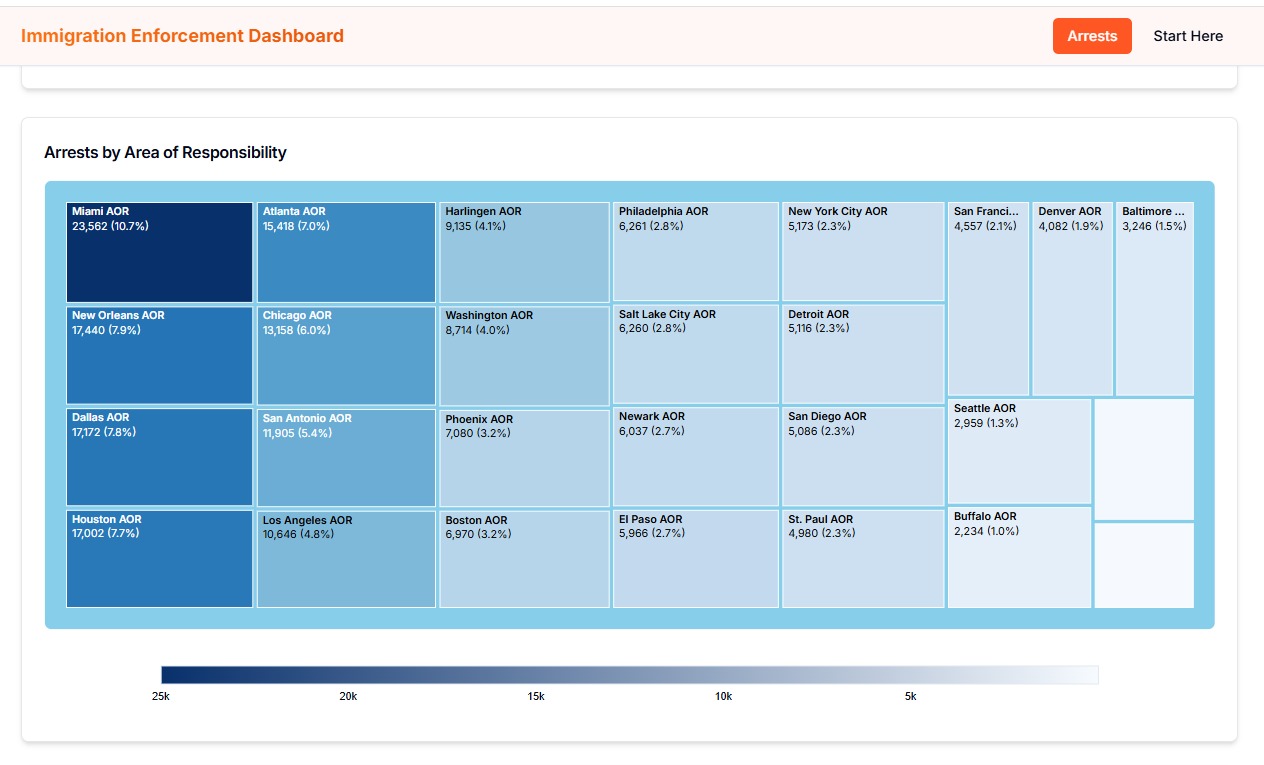
Days after federal corruption charges against him were dropped, Mayor Eric Adams appears poised to open New York City to President Trump’s mass deportation agenda in what Manhattan’s federal attorney described as a “quid pro quo”. Mr. Adams’ posturing has hinted at this for some time: the mayor has framed the recent influx of asylum-seeking migrants as an economic burden that “will destroy New York City.” “The long-term consequences have yet to materialize of what this crisis will do to our cities,” he told Tucker Carlson on January 22nd.

After crunching the numbers, we agree with Mr. Adams: New York City is just beginning to reap the benefits of this influx of hardworking people. We conservatively estimate that, if their earnings and employment rates are similar to the current undocumented population, the 316,000 asylum seekers who have come here since 2022 will contribute $8.62 billion annually to the city’s economy, a figure greater than the GDP of forty countries. Much of this economic activity will flow to public coffers: the asylum seeker population is projected to pay $942 million more in taxes than they receive in benefits each year. If ICE is allowed to wreak havoc on New York City, all these benefits will be lost.

This is not particularly surprising. Previous waves of immigrants have similarly fled desperate situations, arrived with limited resources, faced nativist backlash, and still become vital contributors to the city’s economy and culture. There’s no reason to believe today’s newcomers should be any different. With New York’s US-born population declining and demand for workers growing fastest in the industries most reliant on immigrant labor, they are arriving at an opportune time.

It’s true that New York City has spent substantial amounts on services for asylum seekers: a combined $5.2 billion in fiscal years 2023 and 2024, with another $4.5 billion budgeted for FY2025. These costs doubtless been have been inflated by Adams’ “emergency” decision to suspend background checks and competitive bidding requirements for contractors providing such services. The Comptroller’s investigation found several egregious examples of overpayment. One contractor received $117/hour for security guards and $201/hour for off-site managers. Despite this waste, spending on asylum seekers made up just 4.2% of the FY2025 budget.

Most importantly, these costs are not the product of an “open border.” Immigrants have been coming to New York City via the border for decades. In fact, the city’s undocumented population was 611,000 in 2012 and fell to 412,000 by 2022. Nor is the scale of the current influx unusual in recent times–during the 1990s, the city’s foreign-born population grew at a higher annual rate than it has during the 2020s.

Instead, the recent difficulty housing asylum seekers is a unique case created by a perfect storm of policies: a political stunt that brought people to cities where they lacked connections; an artificial housing shortage; an already-struggling, poorly run shelter system unequipped to house new arrivals; a lack of legal immigration pathways; and outdated laws that prevent asylum seekers from working.

Each wave of immigration to New York City has been beneficial to both the immigrants themselves and their adopted city. The only difference today is that arcane policies have forced both sides to make major upfront investments before they begin to enjoy those mutual benefits.

Before claiming asylum, people must physically come to the US. For nearly all the asylum seekers we spoke with as part of our ongoing study, this involved taking on substantial debt to finance a deadly, months-long overland journey. This debt can be a major obstacle as people try to establish themselves in New York.

In 2023, John borrowed nearly $30,000 to bring his family of five from Ecuador to the US border. A mechanic by trade, he quickly found work repairing e-bikes at a workshop in Queens, earning $1,200 a week. Yet over half of each paycheck goes to repaying his creditors back home (who have threatened to kill his parents should he miss a payment), leaving him unable to afford rent and trapping his family in the shelter system. He says he’ll have paid off enough debt to move to an apartment in New Jersey in three months.

Lacking a sponsor in the US, crossing the border was John’s only way to come here. Leave aside, for a moment, your beliefs about whether doing so was morally correct. The fact is, he’s here and contributing to our economy. Had he been able to come directly from Quito to New York, his spending power would be going to New York businesses instead of human smugglers.

Another problem: after applying for asylum, people must wait 180 days before receiving a work permit. Unless they have connections to support them, this effectively forces people to live off the state for six months. In practice, our conversations have made clear, it’s often much longer. In 2023, New York City began limiting stays in any one shelter to 60 days, forcing people to shuffle between different facilities. Many migrants are not informed that failing to report this change of address to USCIS within 10 days is a misdemeanor and can delay or derail their ability to get documents.

The experience of Carlos, who we spoke to outside a Manhattan shelter, exemplifies the bureaucratic absurdities that hold migrants back. Bused to NYC in late 2023 as part of Operation Lone Star, he immediately applied for asylum, citing political persecution in Venezuela. While waiting for his work permit, he has bounced between different shelters and worked temporary construction and moving gigs. He says his lack of documentation allowed these employers to exploit him, frequently not paying him in full.

Carlos told us a relative in Oklahoma has found him a job in trucking, his original profession. “The moment my papers arrive, I’m going to Oklahoma,” he says. “They’re waiting on me.” He was supposed to get his work permit months ago but had to restart the process when his address changed. He was most recently told his papers should arrive in 90 days.

The absurdity is infuriating. Due to decades-old laws, people itching to work linger in shelters against their wishes and at great financial cost, while crucial jobs across the country remain unfilled. The Independent Budget Office estimates the cost of missed work authorizations for asylum seekers at up to $1 billion in 2024 alone.

Even so, with US-born workers rapidly aging, rising immigration has done much to ease post-pandemic labor shortages, helping reduce inflation while maintaining economic growth. And asylum seekers are quietly integrating into the city’s economy. Of the 225,000 migrants who have passed through the shelter system, over 170,000 (77%) have moved out, and the number remaining in city care continues to dwindle.

Many interviewees, having recently gotten their work permits and found jobs after a long ordeal, expressed excitement to begin living independently and working towards the various dreams that kept them going through sweltering jungles and deserts. As asylum seekers increasingly fill the jobs that keep New York’s service-based economy moving, the investments made by both sides finally appear to be paying off. For deportations to derail asylum seekers’ budding lives as New Yorkers would be a human tragedy and an economic catastrophe

Marshall Plane is a Research Assistant at The Immigration Lab.

Ernesto Castañeda is the Director of the Immigration Lab and the Center for Latin American and Latino Studies and a Professor at American University.